Who is Responsible for Snow Removal at Plymouth Strip Malls?
The Responsibility Question Nobody Answers Until Something Goes Wrong
A customer slips on ice in front of a nail salon at a Plymouth strip mall. The salon owner says the landlord handles the parking lot. The landlord says the sidewalk in front of each unit is the tenant's responsibility. Nobody salted the walkway. Nobody documented anything. Now there's an injury, a potential claim, and a question nobody can answer cleanly: whose job was it?
I've seen this exact situation play out at multi-tenant commercial properties across Plymouth and the broader west metro. After 20-plus years of servicing strip malls, retail centers, and mixed-use properties, the question I hear most often from both landlords and tenants is the same one: who's responsible for what? The answer is almost always buried in the lease, and most people haven't read their lease carefully enough to know what it says about snow and ice.
We service strip mall properties across the south and west metro through our Plymouth snow removal service, and the contract discussion always starts in the same place: who owns which surfaces, and who's paying for what. Here's how the responsibility breaks down, where the gaps usually are, and what both landlords and tenants should do to protect themselves.
The Short Answer: Check Your Lease
In a multi-tenant commercial property, the lease is the governing document for nearly every maintenance responsibility, including snow removal. The lease dictates who contracts the work, who pays for it, and who's responsible for which surfaces.
The most common arrangement I see in Plymouth strip malls is that the landlord handles the parking lot, including plowing, ice management, and snow stacking, and passes the cost to tenants through Common Area Maintenance charges. The tenants are then responsible for the sidewalk directly in front of their unit, their entrance area, and any customer-facing outdoor space specific to their business.
CAM charges are a line item on the tenant's monthly rent statement covering their proportional share of maintaining common areas. Snow removal is typically bundled into CAM alongside landscaping, lot sweeping, and trash removal. The amount each tenant pays is usually based on their unit's square footage relative to the total property.
When the lease is silent on snow removal, which happens more often than it should, the situation defaults to general premises liability law. Under Minnesota statute 504B.161, landlords have obligations to maintain rental properties in reasonable condition, but "reasonable" is subjective when winter maintenance isn't defined in writing. Without a clear agreement spelling out who does what, both landlord and tenant end up pointing fingers when something goes wrong, and both can end up named in a claim.
If you're signing or renewing a commercial lease in Plymouth, look specifically for language about snow and ice maintenance, CAM inclusions, and whether the lease allows you to contract your own supplemental service. If the language is vague, get clarification in writing before you sign.
What Landlords Typically Handle
In the standard strip mall arrangement, the landlord or property management company is responsible for the shared areas of the property. From what I've seen across dozens of multi-tenant accounts, this typically includes the parking lot, the main access drives, fire lanes, shared sidewalks that aren't directly in front of individual units, dumpster access areas, and snow stacking or hauling from common areas.
The landlord contracts with a commercial snow removal company to service these areas. The contractor plows the lot, applies salt or deicer, manages snow stacking, and handles the logistics of clearing a property where each tenant may have different hours and different needs.
The cost gets passed through to tenants via CAM charges. In most leases, CAM is estimated at the beginning of the year, collected monthly, and reconciled at year end based on actual expenses. Some leases cap CAM increases year to year. Others don't. Understanding how your CAM works, especially for variable-cost items like snow removal, helps you anticipate winter expenses rather than getting surprised in the reconciliation.
The landlord also typically manages the relationship with the snow removal contractor, including setting the trigger depth, defining scope, and handling complaints about service quality. If the lot isn't being cleared to the standard you need, the first call should be to the property manager, not the snow removal company directly. The property manager controls the contract terms and is the one who can demand better performance or switch contractors.
One point that surprises many tenants: the landlord's snow removal scope usually ends at the front edge of the sidewalk. Everything from the sidewalk to the front door of your unit, including the entrance area and any exterior signage zone, is typically the tenant's responsibility.
What Tenants Are Usually Responsible For
Tenant responsibility for snow removal at a strip mall usually covers the sidewalk directly in front of the unit, the entrance area, and any outdoor space specific to the business like a patio, display area, or designated loading zone.
Sidewalk frontage is the most common tenant obligation. The lease typically defines this as the portion of the sidewalk running along the front of the leased space, from one side of the unit to the other. For some tenants, that means sending an employee out with a shovel and a bag of ice melt. For others, it means contracting a separate snow removal provider for sidewalk service.
Entrance clearing includes the area immediately in front of the door, the threshold, and any steps or ramp leading to the entrance. This is where customers are most likely to slip, because they're transitioning from an exterior surface to an interior one, often while pulling open a door and shifting their attention away from their footing. We see the same entrance transition risk at restaurant properties in Bloomington and medical offices in Edina, where the walkway-to-door transition zone is the highest-liability surface on the property.
Pro Tip: Walk the path from the farthest parking stall to your front door after every storm. If you wouldn't feel safe watching an elderly customer walk it, your ice management isn't adequate, and that's on you as the tenant, not the landlord.
The gap I see most often is tenants who assume their CAM charges cover everything outside their front door. That's usually not the case. CAM covers parking lot service and common areas. The sidewalk in front of your unit and the entrance itself are almost always your responsibility. If you're not maintaining them, nobody is.
When the Lines Get Blurry (and Who Gets Sued)
The liability question at a strip mall is where the responsibility discussion shifts from an operational issue to a legal one, and it's where I spend time with both landlords and tenants during pre-season walkthroughs.
If someone is injured on the property due to snow or ice conditions, both the landlord and the tenant can be named in a claim. The landlord is liable for the areas they maintain, typically the lot and common areas. The tenant is liable for their area, typically the sidewalk frontage and entrance. When the injury happens in a zone where responsibility is unclear, both parties get pulled in, and the legal costs start before anyone determines fault.
Documentation is the strongest defense for both sides. The snow removal contractor should maintain service logs with dates, times, areas cleared, and materials applied. If a claim is filed three weeks after an incident, those records are the evidence showing whether the property was maintained at the time in question. Without them, both landlord and tenant are relying on memory, which doesn't carry weight in litigation. The SIMA snow and ice resource center publishes documentation standards for commercial snow contractors, and it's a practice we follow on every property we service.
Triple net leases, which are common in strip mall properties, shift a higher percentage of maintenance costs and responsibilities to the tenant. In a triple net arrangement, the tenant may be responsible for their share of not just CAM but also property taxes, insurance, and structural maintenance. Snow removal responsibility in a triple net lease may fall entirely on the tenant, or it may remain with the landlord at the tenant's full cost. Read the lease carefully, and if you're not sure what your obligations are, ask before the first storm.
Shared responsibility scenarios create the most exposure. When both landlord and tenant are partially responsible for adjacent areas, and neither is documenting their work, the result is a property where the lot might be plowed but the sidewalks aren't treated, or the walkway in front of one unit is clear but the one next door is a sheet of ice. Consistency across the entire property is what protects everyone involved.
How to Structure Snow Removal at a Multi-Tenant Property
The simplest and most effective approach to strip mall snow removal is a single contractor handling everything: the parking lot, common sidewalks, and tenant-fronting walkways. When one company covers the entire property, there are no gaps between the landlord's scope and the tenant's scope. Every surface gets the same level of service, on the same schedule, with the same documentation.
This is the approach I recommend to property managers whenever the lease structure allows it. The landlord contracts the full scope and builds the sidewalk service into the CAM charges. Tenants pay a slightly higher CAM rate, but they don't have to manage their own sidewalk clearing, and the entire property benefits from consistent commercial snow removal service with unified documentation.
When a single-contractor approach isn't possible, perhaps because the lease assigns sidewalk responsibility to tenants and some tenants want to handle it themselves, clear communication between all parties becomes essential. The property manager should coordinate with the snow removal contractor and the tenants to ensure service timing aligns. A lot that gets plowed at 5 AM while the sidewalks don't get touched until 9 AM creates a dangerous inconsistency for early-morning customers.
Pre-season meetings between the landlord, the snow removal contractor, and the tenants set expectations before the first storm. I sit in on these meetings with our multi-tenant clients because they address service timing, communication during storms, who to contact for re-service requests, and where snow will be stacked. For properties with high-traffic tenants like restaurants or salons, the meeting is a chance to flag specific needs, like entrance de-icing before early openings or drive-through clearance for fast-food tenants.
According to Minnesota OSHA compliance standards, property owners and tenants share a duty to maintain safe conditions for workers and visitors. A coordinated snow removal plan helps both parties meet that obligation and creates the documentation trail that protects everyone if something goes wrong.
Service documentation should be visible to all parties. Our service logs are available to the property manager, who can share them with tenants on request. This transparency eliminates the "nobody told me the lot was plowed" complaints and gives everyone a shared record of what happened during each event. I've found that properties where documentation is transparent have fewer disputes between landlords and tenants over service quality, because the data answers questions before they become arguments.
If you manage a strip mall in Plymouth or you're a tenant looking for reliable snow removal for your storefront, contact us to discuss options. We also service small business properties in Blaine and HOA communities in Maple Grove, so we understand the tenant-landlord dynamic across different property types.
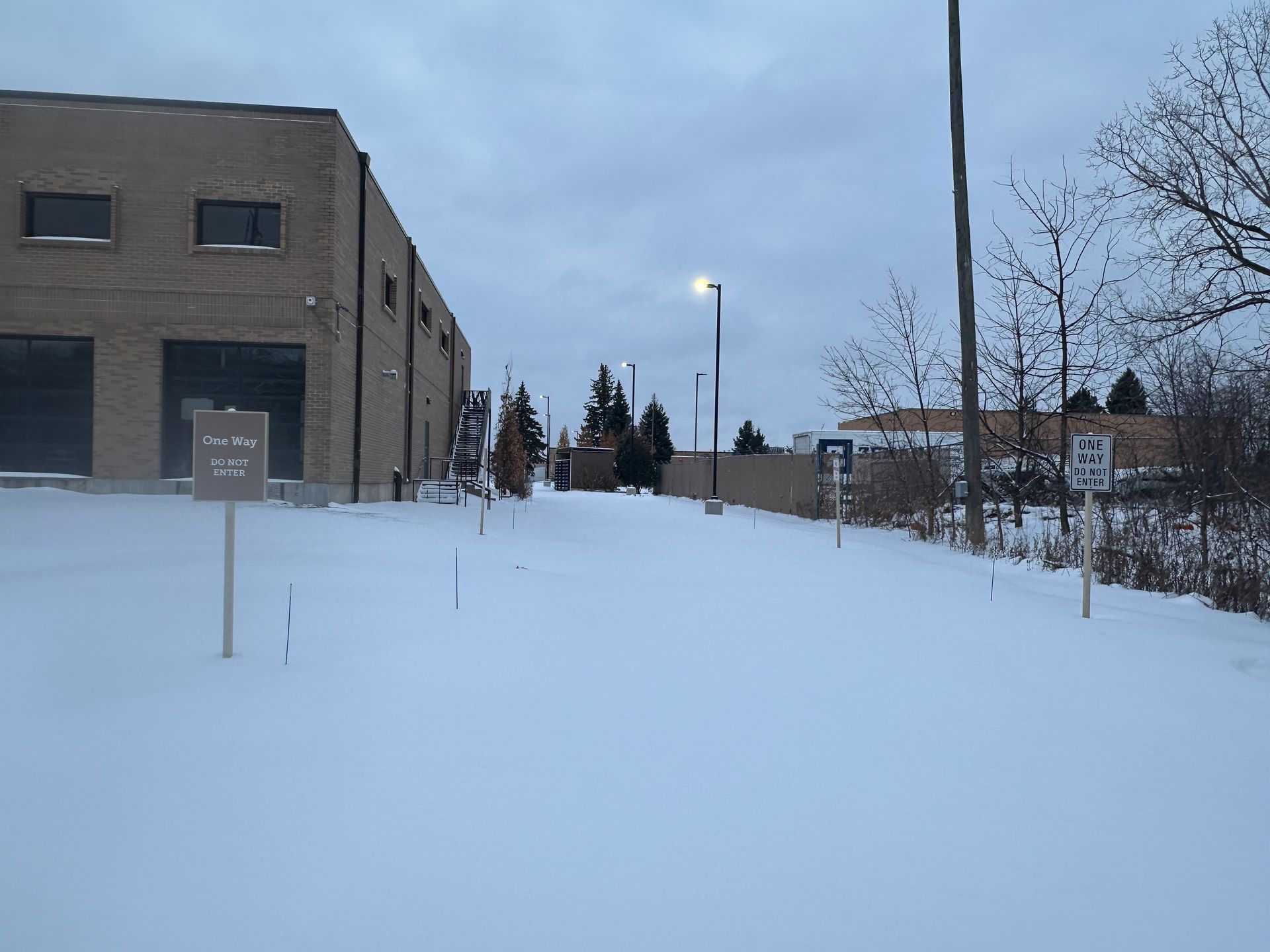
Snow stakes mark drive lanes and lot boundaries for safe plowing at multi-tenant properties in Plymouth
Frequently Asked Questions
What are CAM charges for snow removal?
CAM (Common Area Maintenance) charges are a tenant's proportional share of maintaining shared property areas, calculated based on your unit's square footage relative to the total leasable area. Snow removal is typically one of the largest variable-cost items in CAM because it fluctuates with winter severity. Some leases cap annual increases; others don't. Ask your landlord for a breakdown of what's included and how actual costs are reconciled at year end.
Is the landlord or tenant liable if someone slips on ice at a strip mall?
Both can be liable, depending on where the incident occurs and what the lease assigns. The landlord is typically liable for conditions in the parking lot and common areas. The tenant is liable for conditions on their sidewalk frontage and entrance. When responsibility is unclear, both parties get named in a claim. The strongest protection for both is a clear lease with defined maintenance zones, documented snow removal service, and adequate general liability insurance.
Do commercial tenants have to shovel snow in front of their business?
In most strip mall leases, yes. The sidewalk directly in front of the leased unit is typically the tenant's responsibility, including snow clearing and ice treatment. Some tenants handle this with staff; others hire a separate service for their storefront. If your lease includes this obligation and you neglect it, you're exposed to liability for any injury in that area regardless of what the landlord does with the parking lot.
What should a commercial lease say about snow removal?
A well-written lease should specify which party is responsible for each area: parking lot, common sidewalks, tenant frontage, entrances, and outdoor spaces. It should state how costs are allocated (CAM, direct billing, or tenant self-management), whether tenants can contract supplemental service, and what insurance requirements apply. If the lease is vague on snow and ice maintenance, request an addendum that clarifies responsibilities before signing.
Can a tenant hire their own snow removal company?
This depends on the lease. Most leases allow tenants to contract their own service for areas within their responsibility (sidewalk frontage, entrance) but prohibit work on common areas like the parking lot. Some landlords welcome tenant-contracted sidewalk service because it removes that task from property management. Others prefer a single contractor for consistency. Check your lease and discuss with your property manager before contracting independently.
Who handles snow removal in a triple net lease?
In a triple net (NNN) lease, the tenant assumes responsibility for most property expenses including maintenance, taxes, and insurance. Snow removal may fall entirely on the tenant, or it may remain with the landlord at the tenant's full cost, depending on the lease structure. Some NNN leases require the tenant to contract and manage their own snow removal for the entire property. Others keep the landlord in the management role but pass through the full cost. The specific language governs, so review it carefully.
About the Author
I'm Kent Gliadon, founder of KG Landscape and a graduate of the University of Minnesota Landscape Design program. For over 20 years, I've focused on integrating well-planned landscape design and installation work with properly engineered outdoor drainage solutions. I believe discerning homeowners deserve landscaping and drainage renovations that are carefully planned from the beginning, accounting for water movement, grading, soils, hardscaping, and future use, so problems are prevented before they occur. These articles explain how and why specific solutions are implemented and what it takes to maintain properties that truly last.
Ready to Start on Your Next Project?
Call us at (763) 568-7251 or visit our quote page.