The Best Organic Lawn Fertilizer for a Minnesota Lawn
What Makes the Best Organic Lawn Fertilizer?
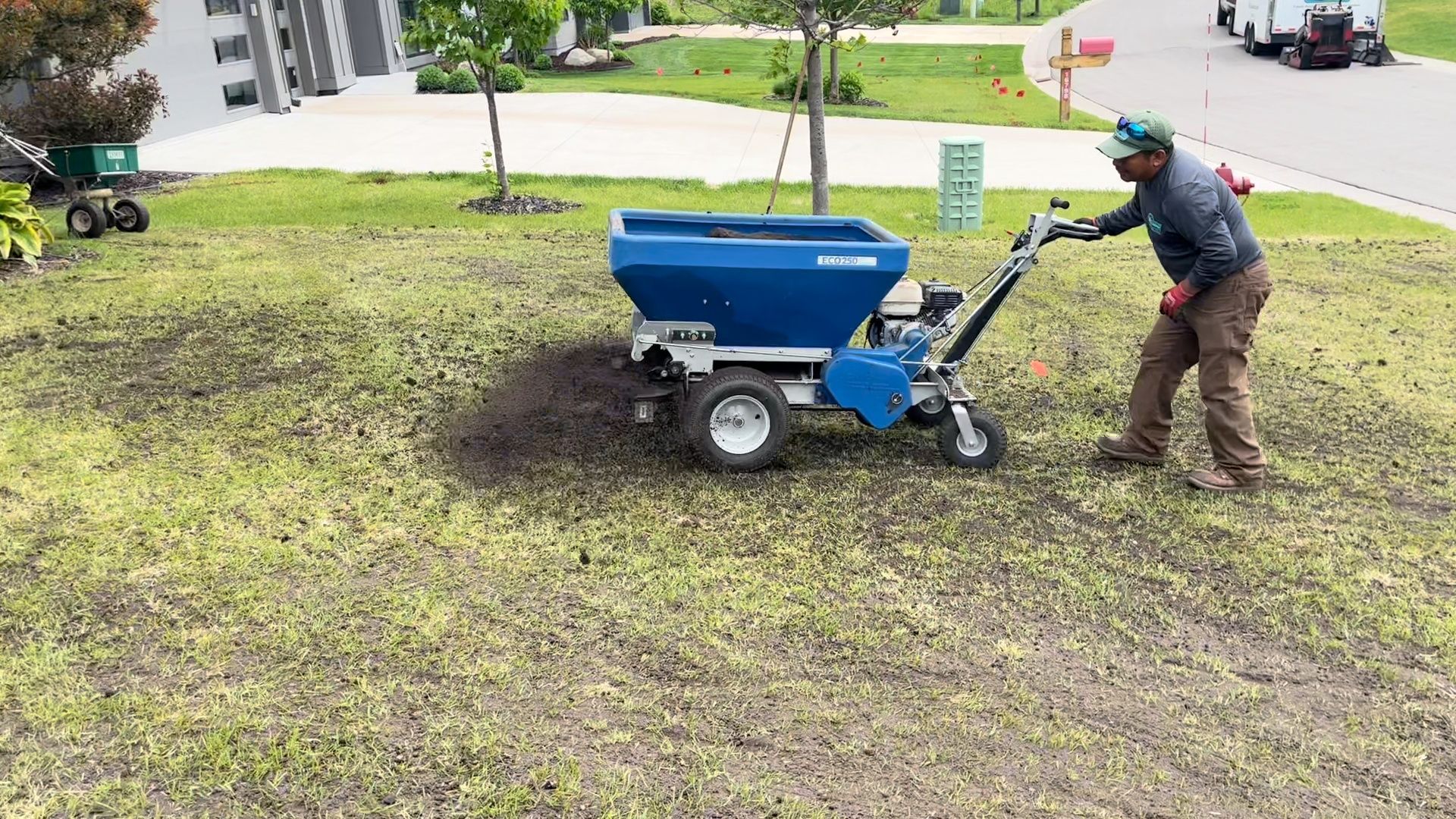
If you're hunting for the best organic lawn fertilizer, here's the honest starting point: there isn't one magic bag. The best organic lawn fertilizer is an OMRI-certified, slow-release product matched to your soil and your goals. I look for three things. It has to be genuinely organic, certified rather than just labeled "natural." It has to release slowly, feeding the lawn over weeks instead of in one burst. And it has to feed the soil, not only the grass.
That third point is the one most people miss, and it's the difference between organic feeding and a quick synthetic shot. A synthetic fertilizer pushes fast top growth and does nothing for the ground underneath. A good organic fertilizer feeds the soil life that, in turn, feeds the lawn, so the whole system gets stronger each season instead of more dependent on the bag. We build our entire organic lawn program around that idea, and it runs through everything else in our lawn care. Get the soil right and the fertilizer choice gets a lot simpler, because you're feeding a living system rather than propping up a dead one.
Common Types of Organic Lawn Fertilizer
It helps to know what's actually on the shelf, because "organic fertilizer" covers a range of materials with different jobs. Most organic lawn fertilizers are nitrogen sources, since nitrogen is what a Minnesota lawn needs most. Corn gluten meal, feather meal, blood meal, and poultry or turkey litter meal all deliver nitrogen that releases slowly as soil microbes break it down. They feed gently over weeks, which is why they won't scorch a lawn the way a heavy synthetic dose can.
Then there are the soil builders. Compost isn't a fertilizer in the strict sense, but it's the backbone of any organic program because it feeds the soil and improves its structure, especially on the heavy clay soil we see across the metro. Phosphorus sources like bone meal round out the list, but here's the Minnesota catch: most local soils already hold plenty of phosphorus, so adding more is usually wasted money and a runoff risk. That's why the best organic lawn fertilizer for most lawns here is a nitrogen-focused source plus compost, not a heavy all-in-one blend.
The Organic Fertilizers We Actually Use
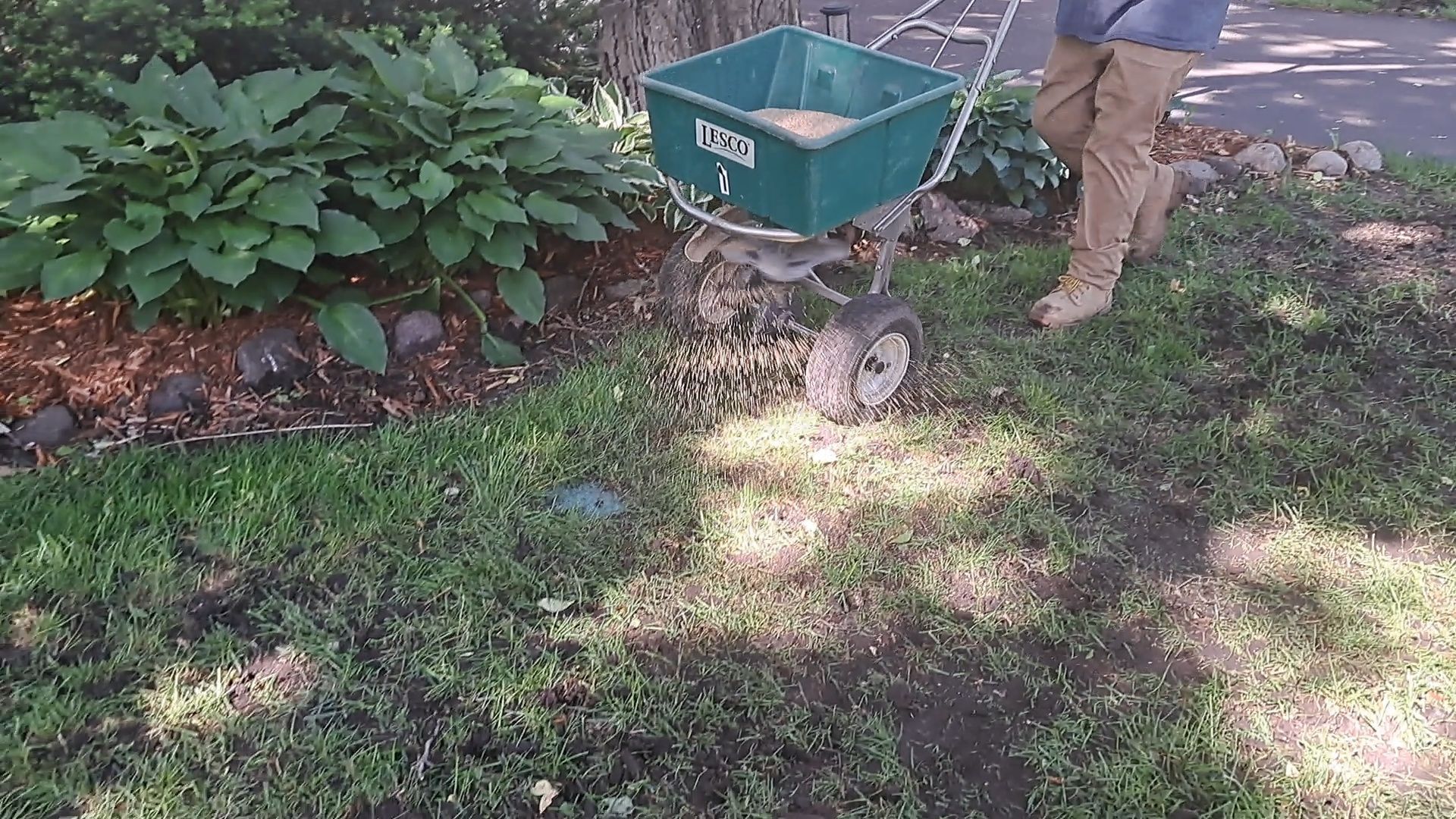
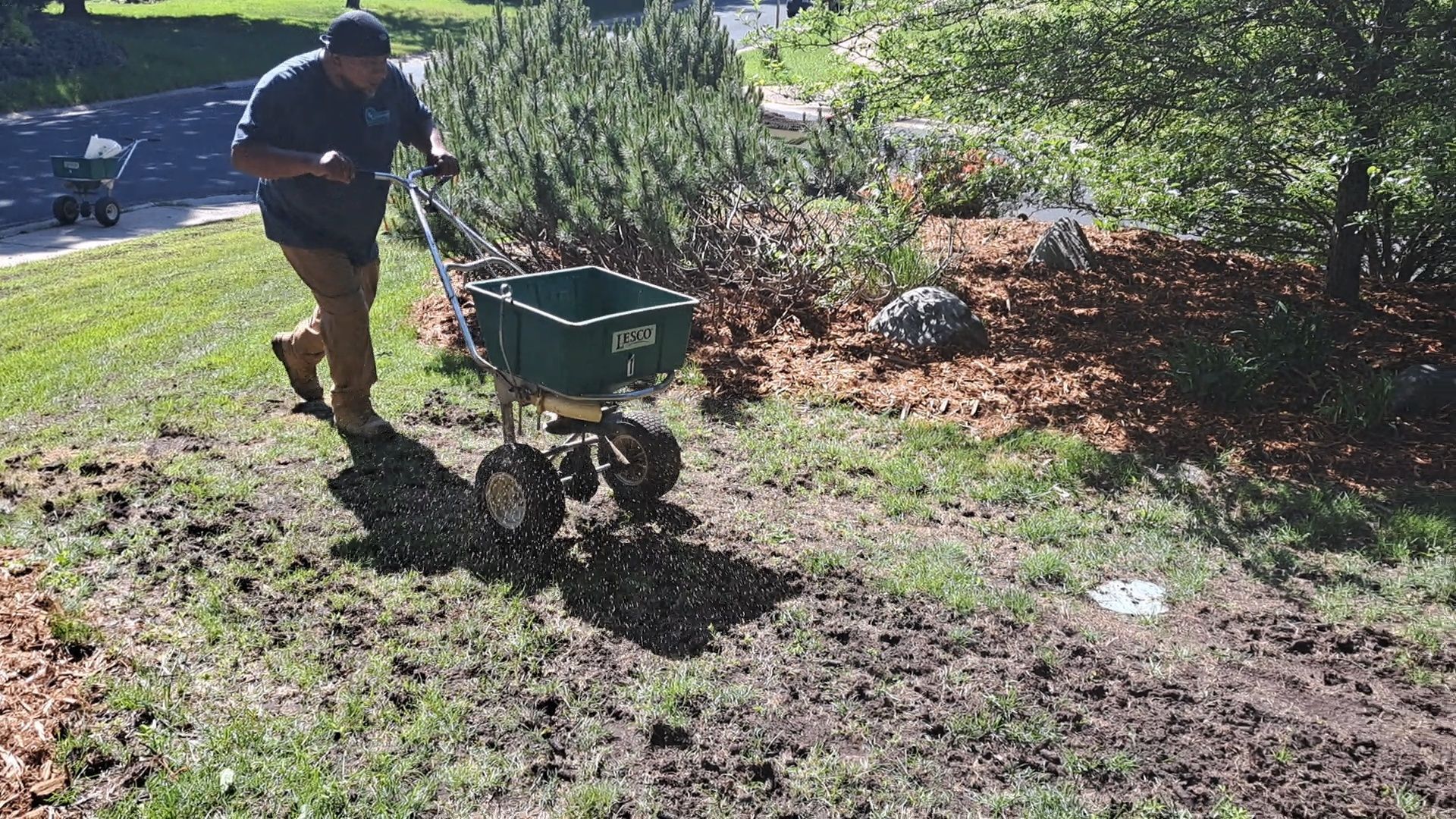
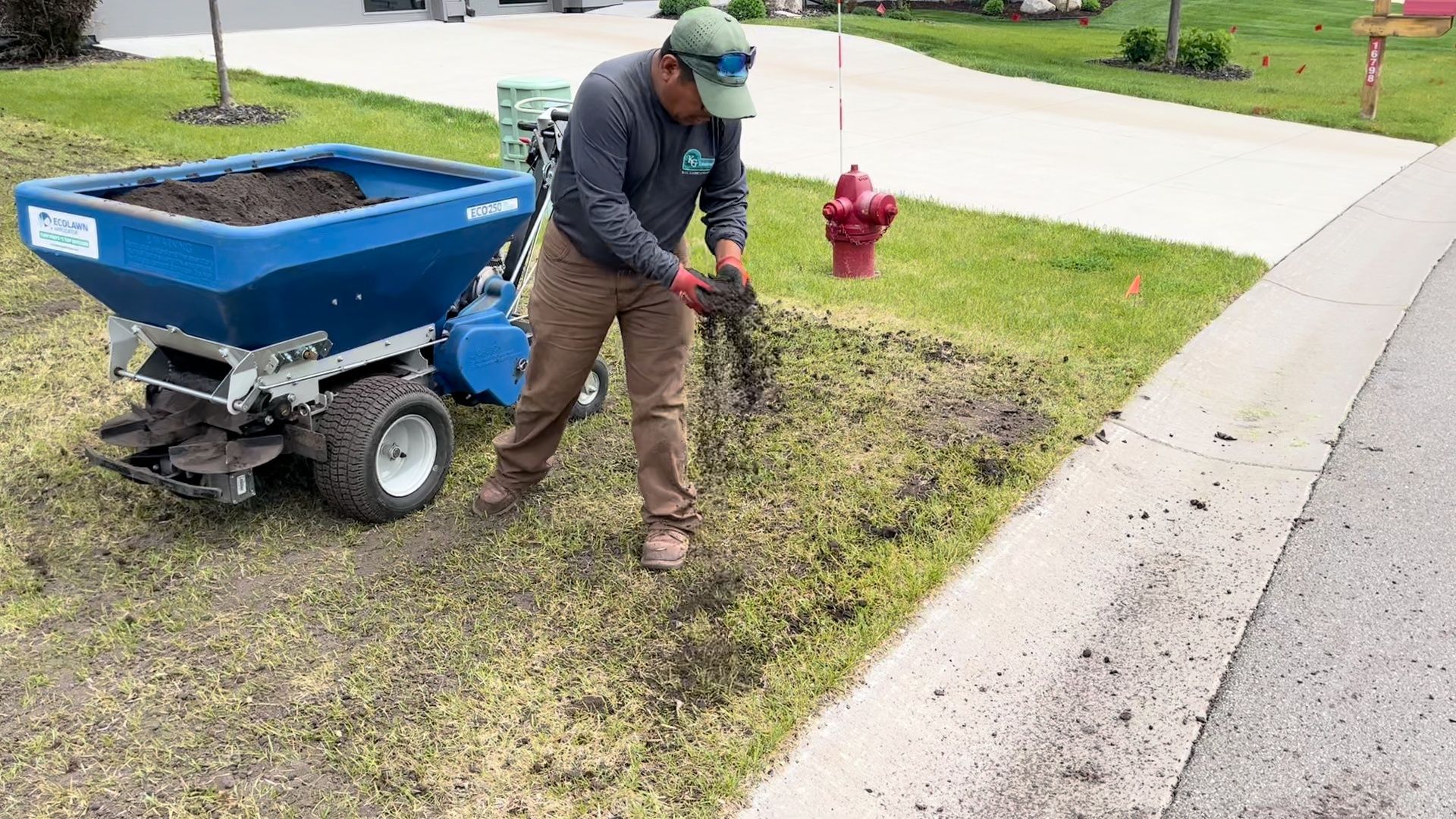
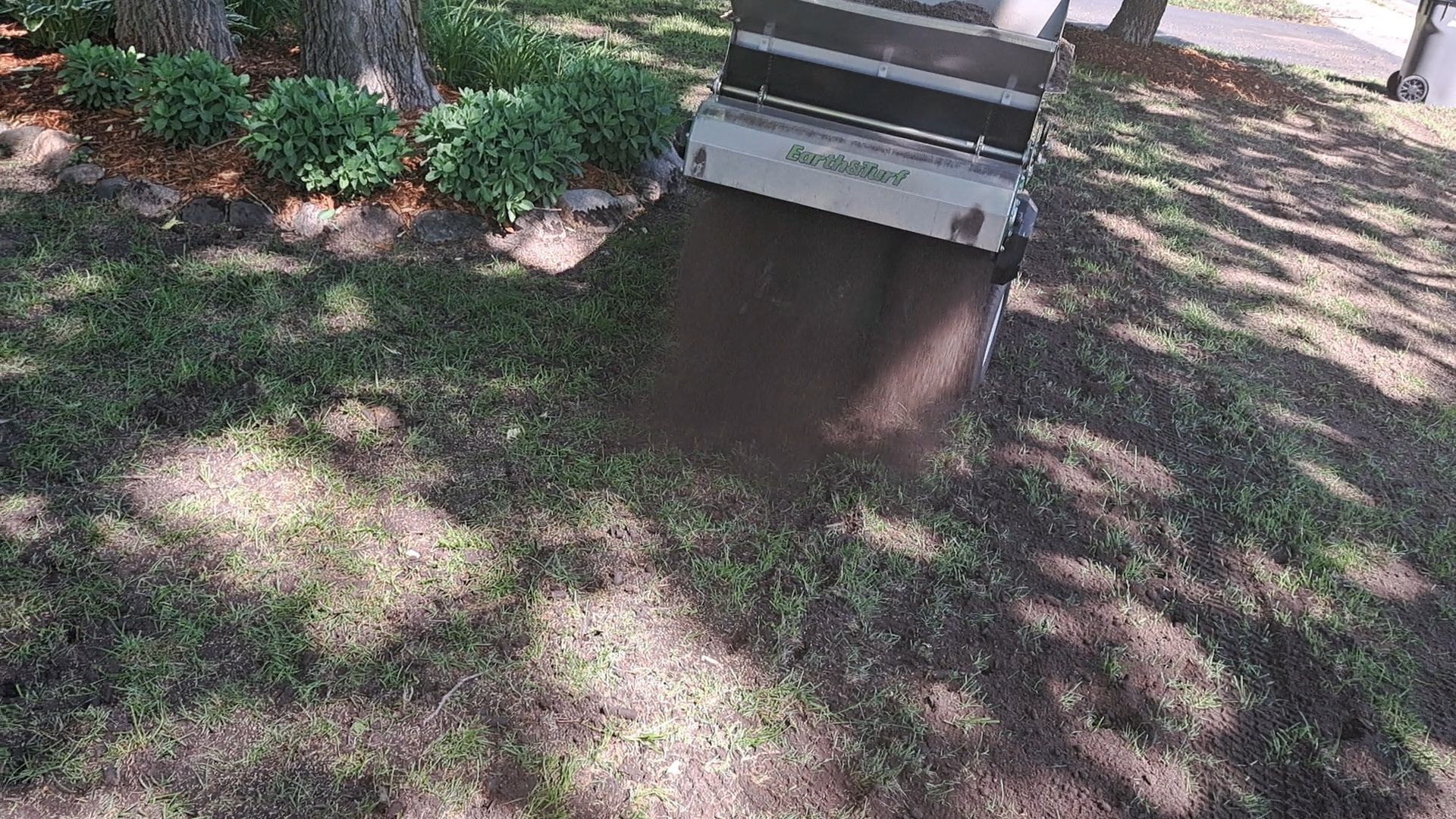
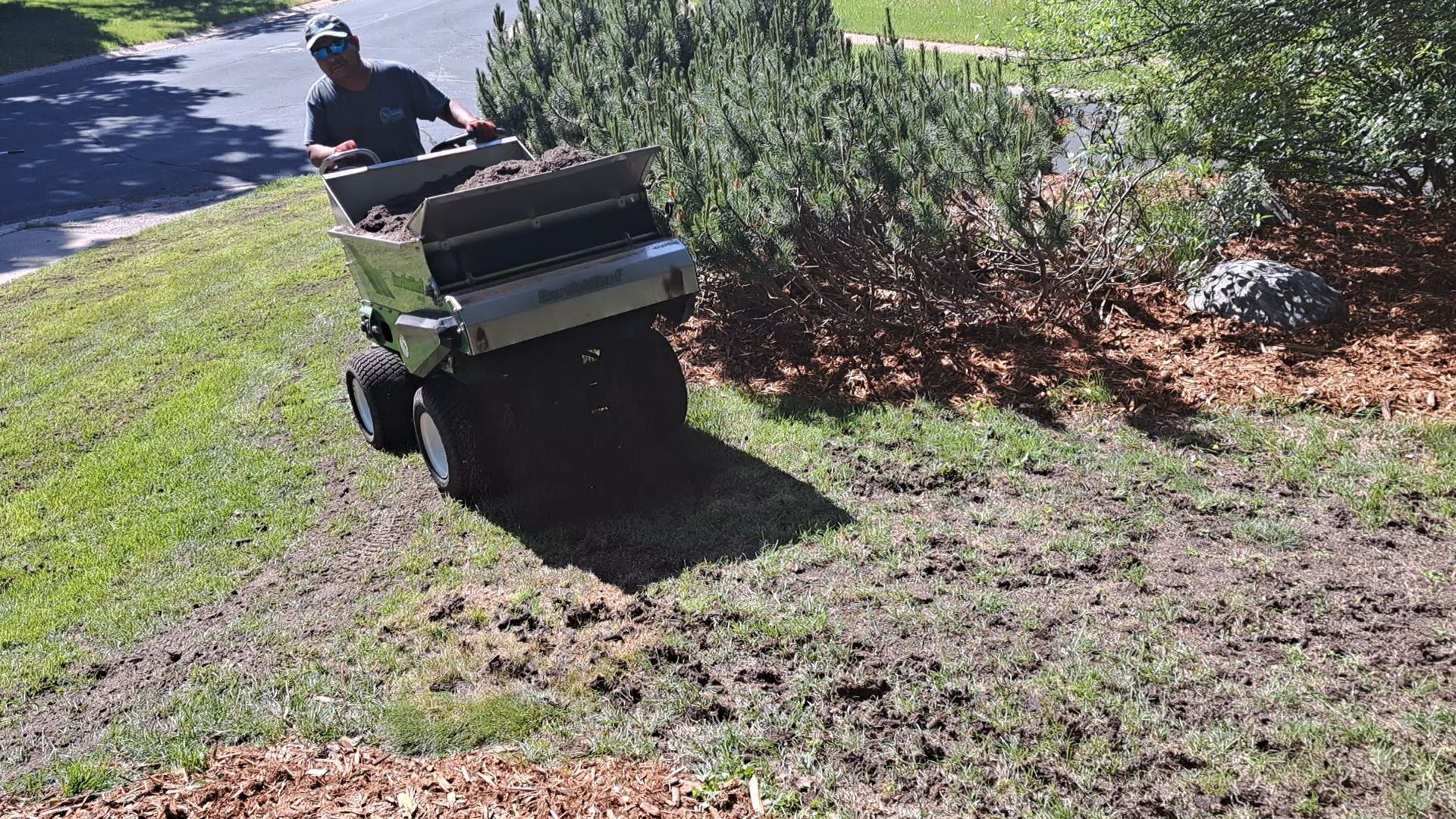
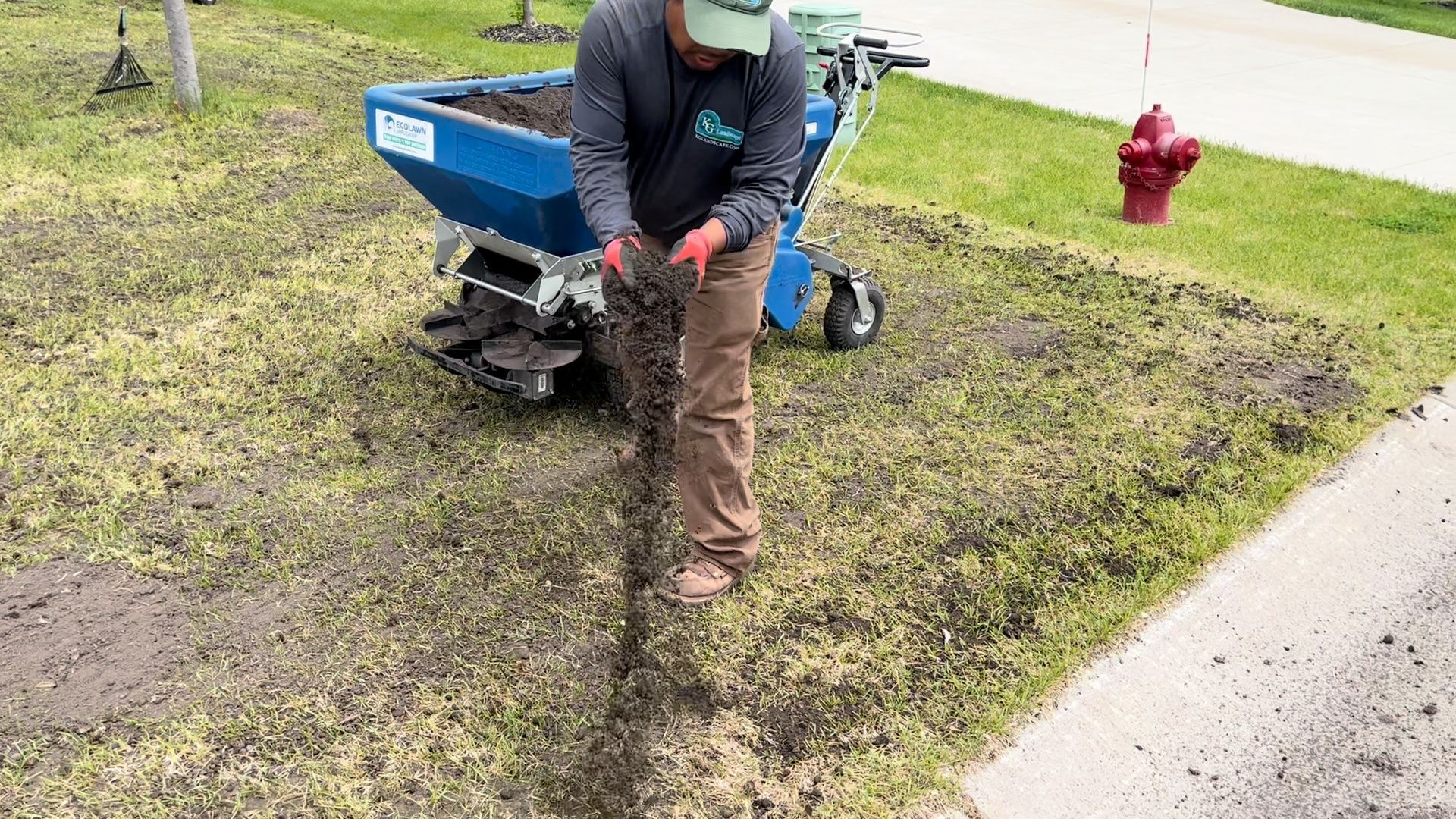
I'll tell you exactly what we put down, because "best" is easier to judge when it's specific. Our 100% Organic Lawn Treatment Package uses OMRI-certified, slow-release fertilizers across three timed applications. In spring we apply corn gluten meal, which feeds the lawn and offers a mild, natural pre-emergent effect on crabgrass. In early summer and again in fall we use turkey litter meal, an organic nitrogen source that releases gently as the soil works on it. Underneath all of it, compost is the base layer that builds the organic matter and soil life those fertilizers feed into.
What makes these the best organic lawn fertilizer choices isn't a brand name, it's that they're certified, slow-release, and they improve the soil while they feed. The OMRI listing is the part most homeowners skip, and it's the difference between a product truly approved for organic use and one that just sounds natural. When I look at a label, that seal is the first thing I check, and the absence of it is the first thing that makes me set a bag back down.
Match the Fertilizer to Your Soil
Here's the step almost everyone skips: before I pick a fertilizer, I want to know what the soil actually needs. A soil test tells you whether your lawn is short on nitrogen, sitting on plenty of phosphorus, or just starved for organic matter. Buying the strongest organic lawn fertilizer on the shelf does nothing if the real shortage is somewhere else, and it can even cause harm if you keep adding a nutrient the soil already has in excess.
Minnesota soils are often high in phosphorus already, so piling on more is wasted money and a runoff risk that ends up in our lakes. Matching the feeding to the soil is the whole point of our fertilization and weed control program. I'd rather put down less of the right thing than more of the wrong thing. For most organic lawns, that means a nitrogen-focused organic source plus compost, with phosphorus added only when a test says the lawn genuinely needs it.
Organic Feeding Works Best With the Basics
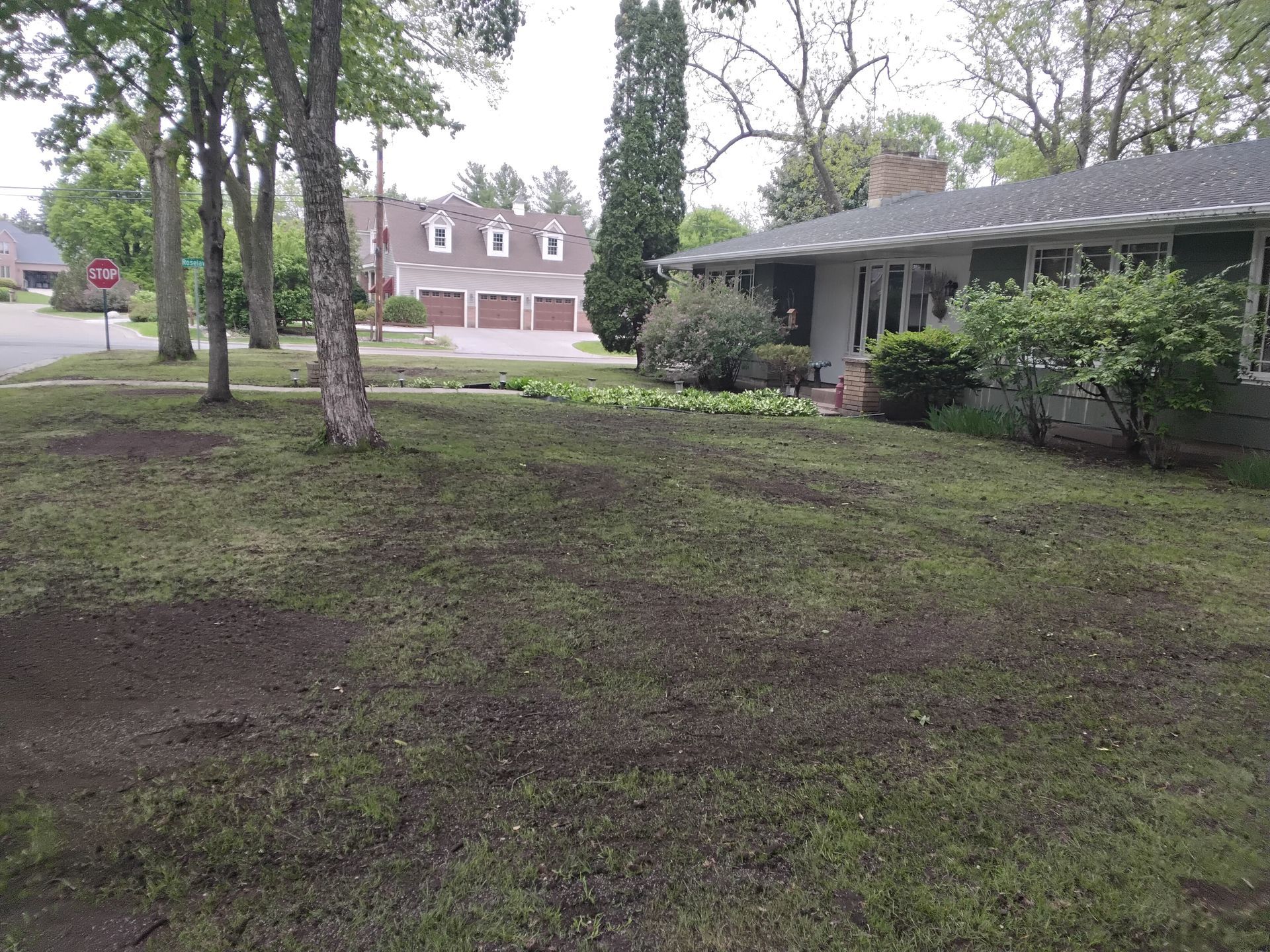
No organic lawn fertilizer works in a vacuum. The lawns that look best on an organic program are the ones where the basics are dialed in. Mow high, around three inches, and leave the clippings so they break down and feed the soil as a free extra application. Aerate and overseed in late summer so the soil can breathe and the turf stays thick enough to crowd out weeds on its own. Keep up with seasonal mowing and clean-ups so the lawn isn't fighting stress on top of the transition.
This is where organic feeding really pays off, because building healthy soil and feeding it organically reinforce each other. A thick lawn on living soil needs less fertilizer of any kind, which is the opposite of the synthetic treadmill where you feed harder every year just to hold even. If you also want to fill in thin or shaded spots, the right grass seed matched to your light is part of the same plan, because bare soil is wasted ground no fertilizer can fix.
Is Organic Lawn Fertilizer Worth It? The Honest Take
I won't oversell it. A fully organic program costs more than conventional fertilizer, and it means accepting a few more weeds, because there's no OMRI-certified product that selectively kills broadleaf weeds without harming grass. If a perfectly weed-free lawn is the only acceptable outcome, organic alone will frustrate you, and I'd rather tell you that up front than have you disappointed in July.
What you get in return is real: living soil, no synthetic herbicides, and a yard that's safer for kids and pets the day it's treated. For a lot of homeowners the right answer is our Transitional Organic Package, which keeps an organic foundation but allows a reduced amount of weed control, using far less broadleaf herbicide than a conventional plan while still feeding the lawn organically through part of the season. It keeps weeds in check while moving the soil in a healthier direction. We walk through the full picture in the benefits of organic lawn care, and we run both the 100% organic and transitional programs across Eden Prairie and the rest of the metro.
If you want help choosing the best organic lawn fertilizer for your yard, or deciding whether organic is the right fit at all, reach out for a free quote and I'll tell you straight.
Frequently Asked Questions
What is the best organic lawn fertilizer for Minnesota?
An OMRI-certified, slow-release nitrogen source matched to a soil test. We use corn gluten meal in spring and turkey litter meal later, with compost as the base. There's no single best brand. What matters is real certification, slow release, and a soil-building effect, not a label that just says "natural."
Is corn gluten meal a good organic lawn fertilizer?
Yes, as a feeding first and a weed helper second. It's a solid organic nitrogen source with a mild pre-emergent effect on crabgrass in early spring. Just don't expect it to match a conventional pre-emergent, and know it takes a few seasons of repeat use to show much weed benefit.
How often should you apply organic lawn fertilizer?
Two to three times across the growing season, usually spring, early summer, and fall. Organic sources release slowly, so there's little burn risk, but more still isn't better. Leaving clippings on the lawn adds a free feeding, so many organic lawns need less applied fertilizer than you would expect.
Is organic lawn fertilizer more expensive than synthetic?
Usually yes per application, and a full organic program costs more than a standard plan. You're paying for soil health and a chemical-free yard, not just green color. The gap narrows over time as the soil improves and needs fewer inputs. A transitional program is the lower-cost middle ground.
Will an organic fertilizer green up a lawn as fast as synthetic?
No, and that's intentional. Synthetic nitrogen is immediately available, so the green-up is fast. Organic releases slowly as microbes break it down, so color comes on gradually and lasts longer without the surge and crash. For steady color and healthier soil, the slower release is the advantage.
Are organic lawn fertilizers safe for kids and pets?
Largely, yes, and it's a top reason people choose them. A 100% organic program uses no synthetic herbicides or pesticides. We still suggest keeping kids and pets off any freshly applied product until it's watered in and dry, but a true organic lawn is a meaningfully safer surface for a family and a dog.
About the Author
I'm Kent Gliadon, founder of KG Landscape and a graduate of the University of Minnesota Landscape Design program. For over 20 years, I've focused on integrating well-planned landscape design and installation work with properly engineered outdoor drainage solutions. I believe discerning homeowners deserve landscaping and drainage renovations that are carefully planned from the beginning, accounting for water movement, grading, soils, hardscaping, and future use, so problems are prevented before they occur. These articles explain how and why specific solutions are implemented and what it takes to maintain properties that truly last.
Ready to Start on Your Next Project?
Call us at (763) 568-7251 or visit our quote page.