
Lawn Seeding & Reseeding Services
That Deliver Real Results
Delivering proven lawn renovation results for homeowners across Minneapolis, St. Paul, and the Twin Cities metro through expert timing, preparation, and follow-through.
Minnesota’s Lawn Seeding & Renovation Experts
Transform your lawn with expert seeding and reseeding services trusted across Minneapolis, St. Paul, and the entire Twin Cities metro area.
Since 2003, KG Landscape has delivered proven, science-backed lawn renovations tailored to Minnesota’s unique soils, climate, and growing conditions. If you want a thick, healthy lawn built to last, there’s no better team in the Twin Cities to get it done right.
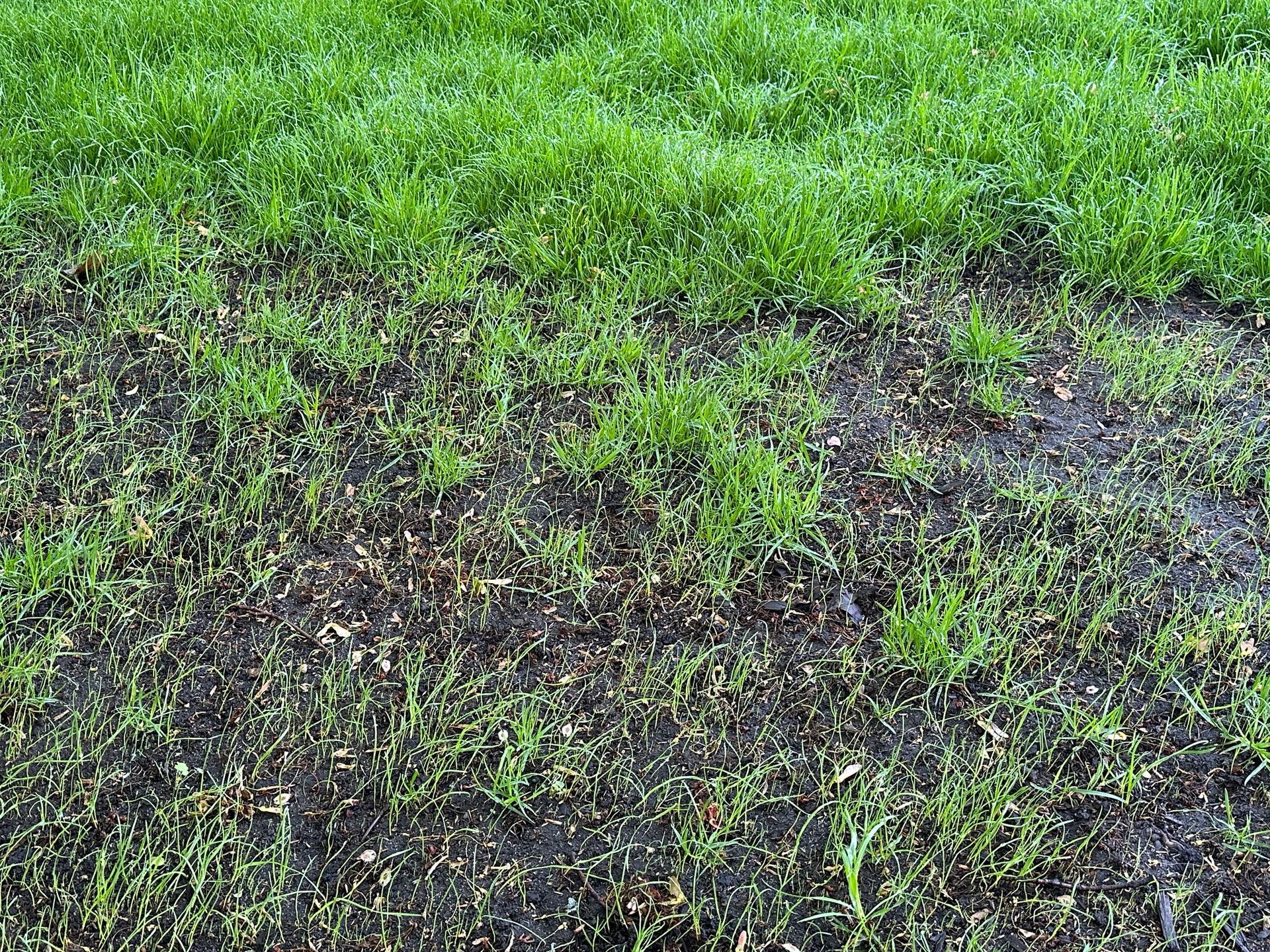
Complete Lawn Seeding & Renovation Solutions
At KG Landscape, we do more than install grass seed—we provide complete lawn renovation solutions designed to solve the underlying issues that prevent lawns from thriving.
Many lawn problems aren’t just caused by poor grass—they’re the result of deeper factors like soil conditions, grading, drainage, shade, or past installation methods. Simply adding seed without addressing these issues often leads to inconsistent or short-lived results.
That’s why we take a holistic approach to every project.
We evaluate your property as a whole and help you determine:
- What’s causing your lawn to struggle
- What needs to be fixed before seeding
- Which renovation approach or seeding method makes the most sense
- How to align the plan with your goals, budget, and long-term expectations
Our process and methods have been developed over more than 20 years in the lawn and landscape industry and are guided by our founder, Kent Gliadon, a University of Minnesota Turf Science graduate.
From selecting the right seed blends and seeding methods to managing timing, watering, and post-install care, we focus on the details that lead to consistent, long-term results.
If you’re looking for more than just a basic seeding service—and want a lawn that actually performs and lasts—we’re here to help you get there.
Should You Reseed Your Lawn?
Reseeding can deliver incredible results—but it’s not always the right first step. The key is understanding why your lawn is struggling and whether it needs improvement or a full reset.
In many cases, reseeding is a highly cost-effective way to restore and refresh a lawn without the higher cost of sodding—but only when the underlying conditions are properly addressed.
You may be a strong candidate for lawn reseeding if:
- Your lawn is mostly weeds or undesirable grass types
- The turf is thin, patchy, or inconsistent in appearance
- You have large bare or worn-out areas
- Soil conditions (such as heavy clay or poor topsoil) are limiting growth
- Grading, drainage, or compaction issues are affecting performance
- Previous overseeding or patching hasn’t produced lasting results
In many situations, reseeding is part of a larger renovation plan—not just a standalone service. Addressing underlying issues like drainage, soil quality, sunlight, irrigation, and overall yard layout is often what allows a new lawn to truly succeed.
At KG Landscape, we help you determine the right approach—whether that’s full reseeding or a combination of services designed to deliver long-term, reliable results.
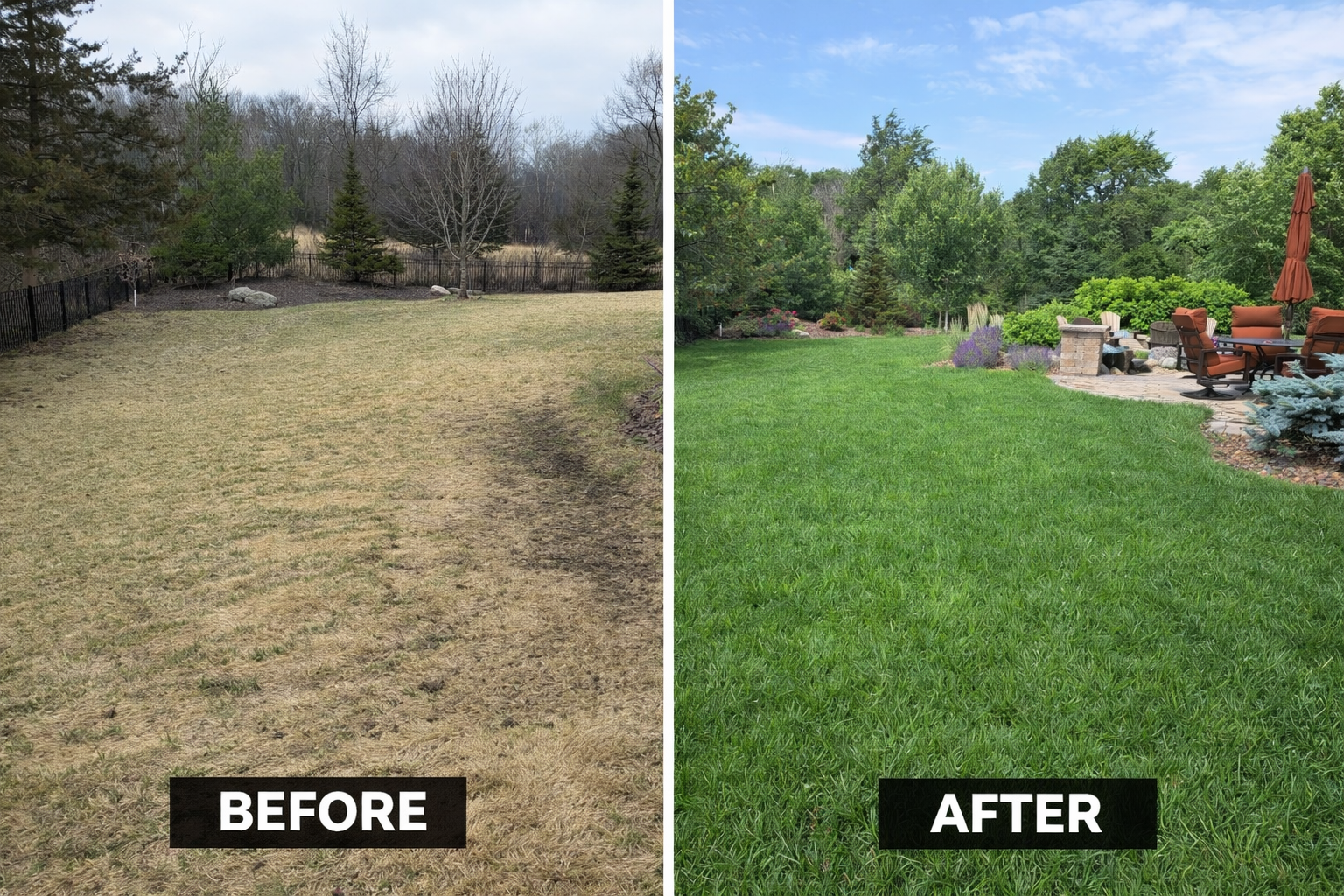
When to Reseed Your Lawn: What to Fix First for the Best Results
Many of the most successful lawn renovation projects in Minneapolis–St. Paul don’t start with seed—they start with a well-thought-out plan.
If you’re already investing in your outdoor space, it often makes sense to address underlying issues first, then complete seeding or reseeding as the final step. This approach helps prevent damage from future work and ensures your new lawn is built on the right foundation.
At KG Landscape, we take a holistic approach to lawn renovation. We identify and address the factors that caused the lawn to struggle in the first place—whether that’s grading, drainage, soil conditions, or previous wear and tear—before installing new seed.
By solving these issues upfront, we give your new lawn the strongest possible start and the best chance for long-term success.
Seeding After Landscaping & Yard Renovation Projects
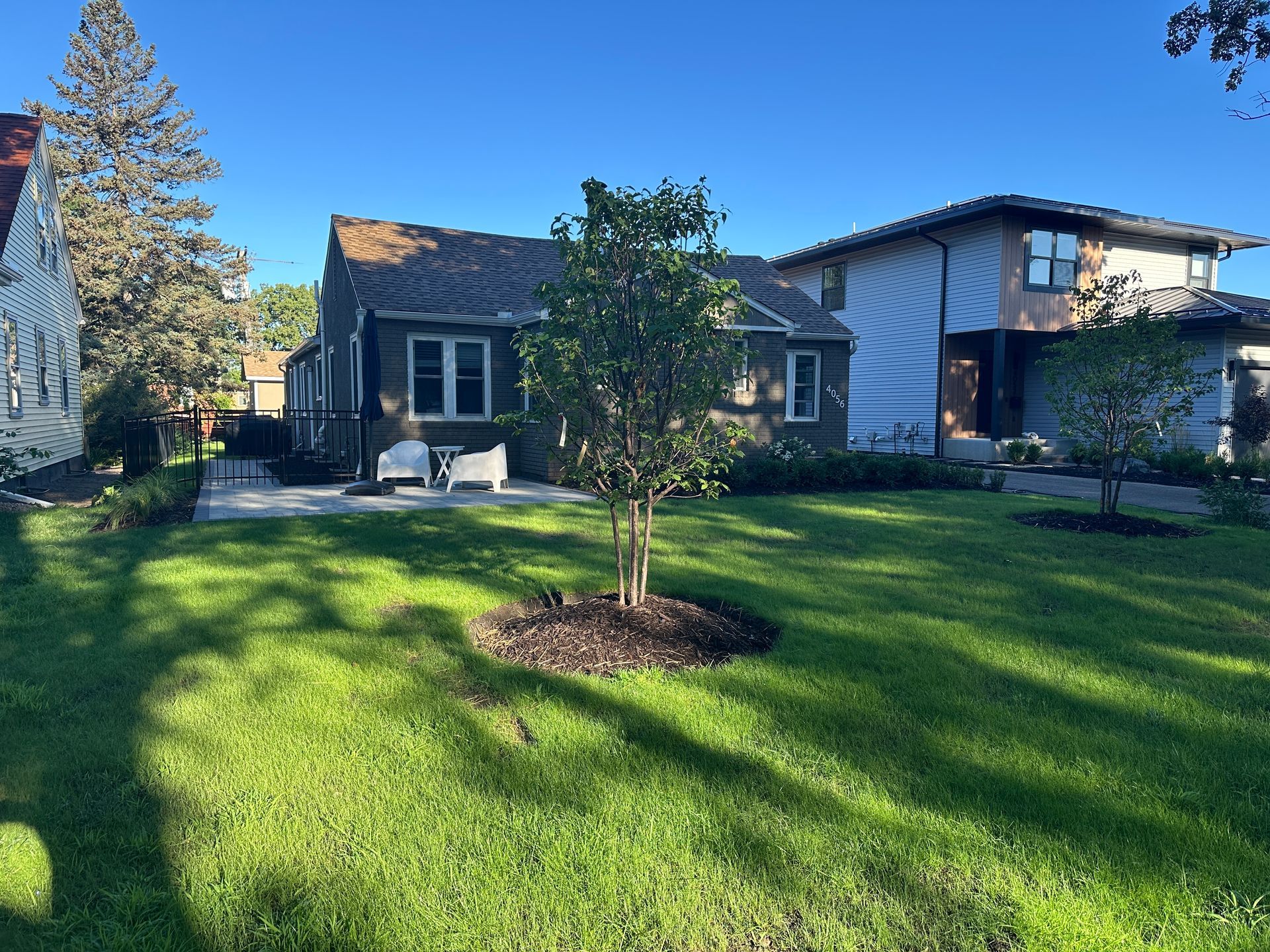
One of the best times to renovate your lawn is after completing a full landscape redesign. Many Twin Cities homeowners choose to tackle everything at once—creating a cohesive, functional outdoor space that meets all their long-term goals.
These projects often include:
- Patios and outdoor living spaces
- New plantings and privacy/screen plantings
- Retaining walls and grade changes
- Fencing and property enhancements
- Walkways, steps, and functional yard improvements
By completing these upgrades first, we can then perform lawn seeding as the final phase—ensuring your new lawn is installed once, and done right, without future disruption.
👉 Learn more about our Landscape Design & Installation Services

Fixing Yard Drainage Problems
Regrading to Fix a Poorly Drained Lawn
If your lawn holds water, stays soggy, or has areas that never dry out, seeding alone won’t fix the problem. Proper drainage must be addressed first to ensure long-term success. Our #1 first choice to correct lawn drainage issues is regrading to fix drainage issues.
We commonly regrade lawns to:
- Improve drainage away from the home
- Flatten steep or uneven areas
- Create usable lawn space for families and activities
- Build tiered or structured yard layouts
These changes can dramatically improve both function and appearance—while setting the stage for a successful lawn installation.
👉 Learn more about lawn regrading to fix drainage problems
Drain Tile - Fix Persistently Wet Lawns
In many Twin Cities properties, especially those with flat yards or heavy soils, water has nowhere to go.
Drain tile systems can:
- Remove excess subsurface water
- Prevent constantly wet or muddy conditions
- Improve soil structure for better grass growth
This is often the best solution when regrading is difficult, limited by existing features, or cost-prohibitive.

Underground Downspout Drainage Systems
Downspouts that empty directly into the yard can also create major problems—especially during heavy Minnesota rains.
These systems can:
- Dump large volumes of roof water into the lawn
- Cause erosion and washout
- Contribute to ongoing drainage issues
KG Landscape installs underground downspout drainage systems to safely move water away from your lawn and foundation—protecting your investment and improving overall yard performance.
👉 Learn more about Underground Downspout Drainage
Sump Pump Discharge Solutions
Many homes in the Minneapolis–St. Paul area have sump pumps that discharge large amounts of water into the yard—often in the same location.
This can lead to:
- Constantly wet, unusable lawn areas
- Washouts and erosion
- Failed seed establishment
We design solutions to redirect and properly manage this water so your lawn can dry out and establish properly.
Improving Sunlight: When Trees Limit Lawn Success
Sometimes the issue isn’t the grass—it’s the amount of sunlight reaching your lawn.
In many Twin Cities neighborhoods, mature trees provide shade, privacy, and character—but they can also prevent grass from establishing and thriving, especially in areas with limited southern exposure.
Before recommending seeding, we evaluate how shade is impacting your lawn’s performance and whether improving sunlight would lead to better long-term results.
Evaluation, Tree Trimming and Removal
Our team can help you:
- Identify areas where tree cover is limiting lawn growth
- Recommend selective pruning or thinning to increase light penetration
- Determine if tree removal is worth considering for long-term lawn improvement
These are property-specific decisions. Some homeowners prioritize maintaining dense tree coverage, while others want to improve lawn quality—and many are looking for the right balance between the two.
We’ll help you understand the tradeoffs and recommend a path forward that aligns with your goals, whether that means adjusting expectations, improving maintenance practices, or modifying the landscape to support a healthier lawn.
Get Started with Expert Guidance for Your Lawn
We make it easy to take the next step. Whether you’re ready to move forward or just exploring your options, our team will help you choose the right approach based on your lawn, your goals, and your budget.
Start with a Free Quote for Standard Lawn Improvement Services
For common services like aeration, overseeding, topdressing, fertilization, and weed control, we can often provide pricing based on your lawn size.
This is a simple and fast way to understand costs, compare options, and see what fits your budget before committing to a full site visit.
Get a Customized Plan with an On-Site Turf Consultation
For the most accurate recommendations, we offer professional on-site turf consultations.
One of our lawn renovation specialists will walk your property, evaluate existing conditions, and identify the underlying causes of your lawn issues—such as soil quality, drainage, shade, weed, grass type or wear patterns.
We’ll help you:
- Understand all available renovation options
- Prioritize improvements for long-term success
- Build a clear, customized plan tailored to your property and goals
Consultations typically range from $90–$150 and are fully credited toward any work you choose to move forward with.
Start with the right plan—so you get the best possible results.
👉
Request Pricing or Schedule Your Consultation
Choosing the Right Seeding Method for Your Lawn
The success of a lawn renovation doesn’t just depend on the seed—it depends on how that seed is installed.
At KG Landscape, we help you choose the right seeding method based on your property conditions, project scope, and long-term goals. While there are several approaches available, not all methods deliver the same level of consistency, durability, or long-term results.
For most residential lawn renovation projects in the Twin Cities—especially those involving grading, drainage work, or landscape improvements—we recommend a more controlled, precision-based approach to seeding.

Seeding with Soil Preparation & Seed Blankets (Our Preferred Method)
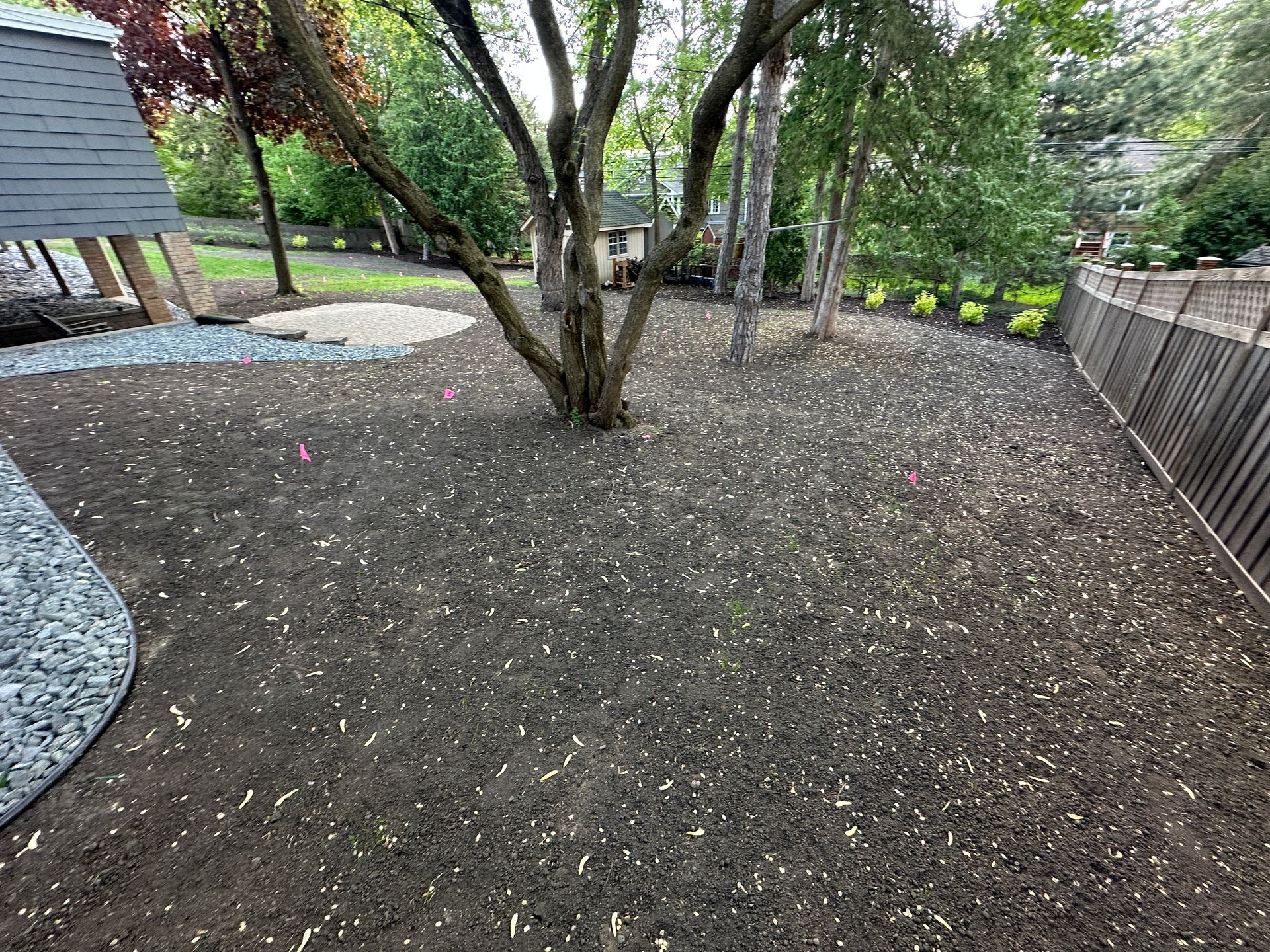
For the majority of our lawn renovation projects, we use a comprehensive seeding method designed to maximize germination, prevent erosion, and deliver consistent results.
This process typically includes:
- Loosening and conditioning existing soil
- Grading and smoothing the surface as needed
- Adding topsoil where beneficial
- Installing premium grass seed
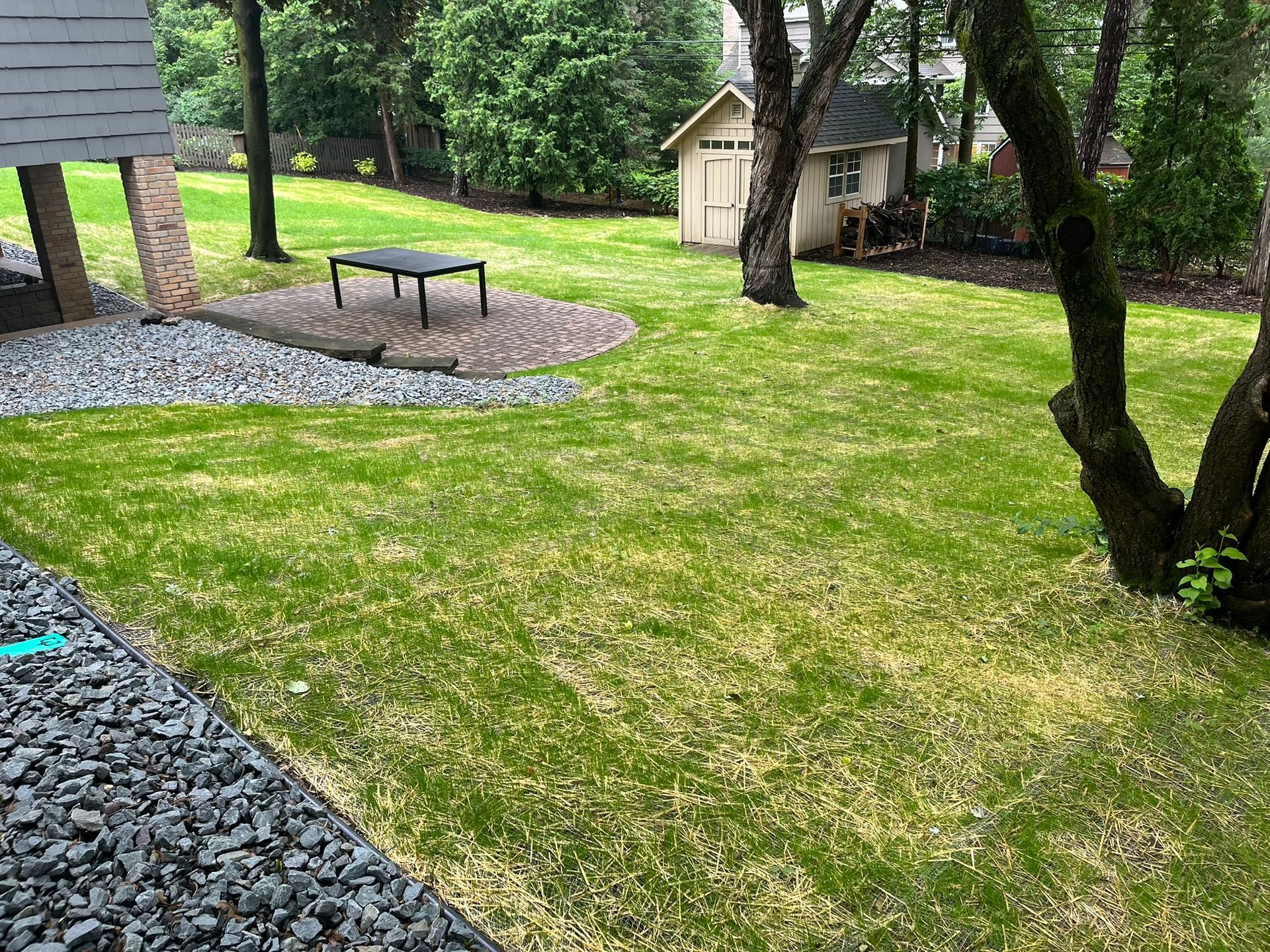
- Covering the area with seed blankets (straw matting)
Seed blankets play a critical role during establishment by:
- Protecting seed and soil from erosion and washout
- Retaining moisture for more consistent germination
- Creating ideal conditions for early growth
We use seed blankets as a temporary tool during the most critical early phase (typically the first 1–2 weeks). Once the lawn begins to establish, we remove them to ensure a clean, natural finished appearance without visible netting.
This method provides the most consistent, high-quality results for residential lawns and is our recommended approach for most projects.
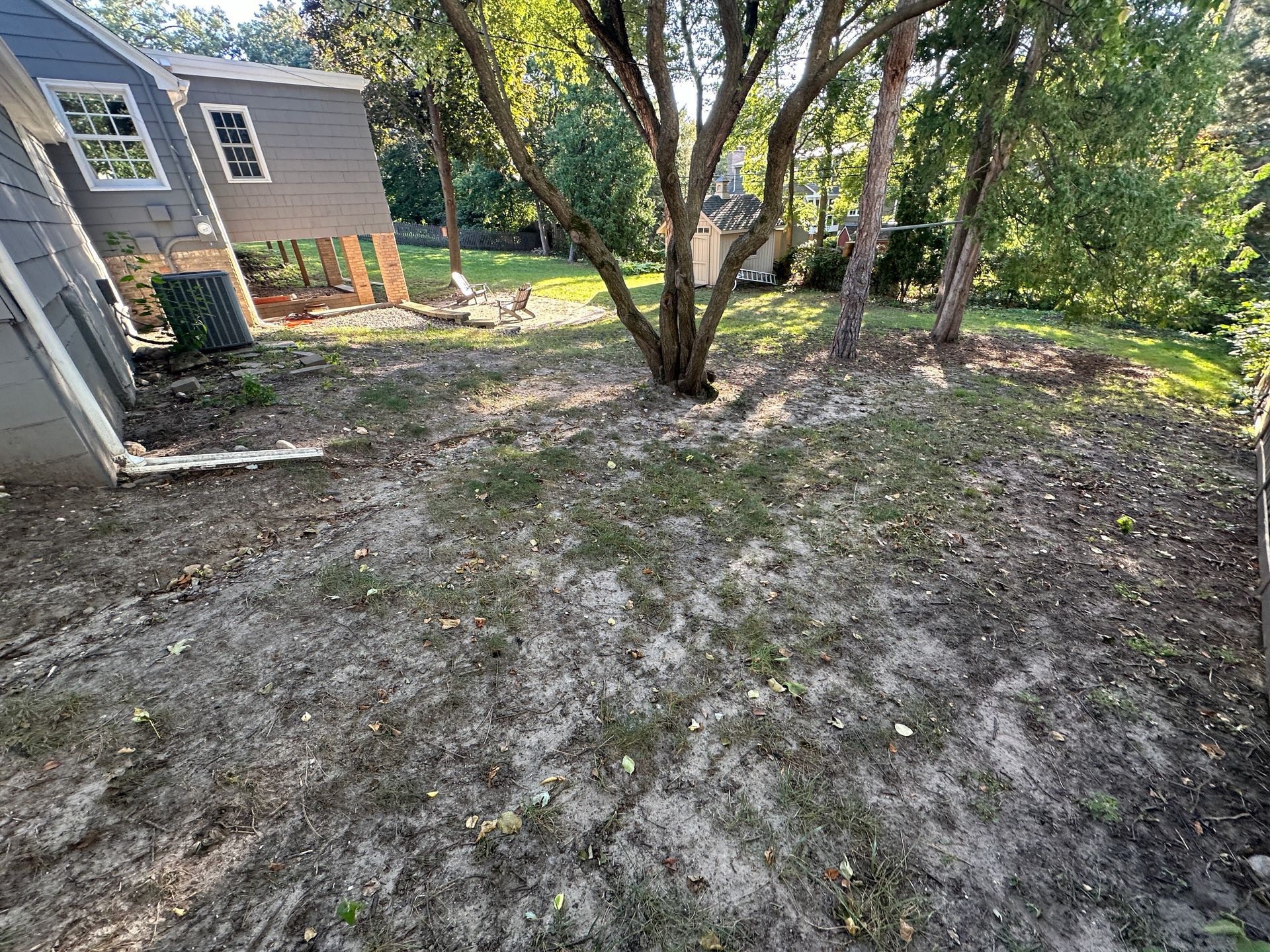

Aeration & Overseeding
For lawns that still have a solid base of existing turf, aeration and overseeding can be an effective way to improve density without a full renovation.
This process involves:
- Mechanically aerating the lawn to reduce compaction
- Creating openings in the soil for improved seed-to-soil contact
- Introducing new seed to thicken and improve the existing turf
Aeration and overseeding works best for lawns that are thin but still functional. For lawns with more severe issues—such as heavy weeds, poor soil, or grading problems—a full renovation approach is typically the better long-term solution.
Hydroseeding
Hydroseeding can be a useful option in certain situations, particularly as part of larger landscape or grading projects. However, for most residential lawn renovations, it comes with tradeoffs compared to more controlled seeding methods.
At KG Landscape, we do offer hydroseeding when it makes sense—but it is typically used within broader projects rather than as a standalone service.
When Hydroseeding Works Well
- Large, open, and relatively flat areas
- Sites that have been properly tilled or prepared
- Projects that include fresh topsoil installation
- Larger landscape projects where efficiency and coverage are priorities
When Hydroseeding Is Not the Best Choice
- Smaller residential lawns (less cost-effective)
- Sloped properties, including walkout or stepped yards
- Areas where erosion control is critical
- Projects requiring clean edges and precision
- Lawns near mulch, rock, or landscape beds (risk of overspray)
Hydroseeding can also result in less uniform coverage during early establishment. While thinner areas may fill in over time, it does not typically produce the same immediate consistency as more controlled seeding methods.
Hydroseeding vs. Seed Blankets
For most residential seeding and reseeding projects in the Twin Cities, we prefer traditional seeding with seed blankets.
Seed blankets provide:
- Superior erosion control and protection against washout
- Better seed-to-soil contact
- Improved moisture retention during germination
- More consistent, uniform coverage
- Cleaner results with greater precision around landscape features
Because of these advantages, seed blankets allow us to deliver more reliable, high-quality outcomes—especially on typical residential properties.
Hydroseeding still has its place, particularly on larger or more open sites, but when precision, consistency, and long-term performance are the priority, seed blankets are the method we most often recommend.
Helping You Choose the Right Lawn Renovation Plan
Every lawn is different, and choosing the right renovation approach isn’t always straightforward. Before jumping into reseeding, it’s important to understand the full range of options—and which one actually makes sense for your specific yard. At KG Landscape, we don’t believe in one-size-fits-all solutions.
Our team evaluates your goals, existing site conditions, and budget to recommend the best possible path forward—whether that’s reseeding, overseeding, sodding, or a combination of services. The result is a customized plan designed to deliver the best long-term outcome, not just a quick fix.
Lawn Seeding (with Seed Blankets)
Ideal balance between cost and effectiveness for small to mid-sized suburban lawns
- Excellent erosion control for sloped yards
- Cost effective compared to sodding
- Helps retain moisture for faster, more consistent germination
- Prevents seed washout from rain and watering
- Encourages healthier root development from the start
- Most uniform germination due to prevention of seed "wash-out"
Pro Tip: Seed blankets should be removed once the new grass reaches about 1–1.5 inches tall—typically 1–2 weeks after installation, depending on the season.
Sod Installation
Ideal when you want instant results.
- Immediate green lawn
- Higher upfront cost
- Requires proper prep and watering
Lawn Topdressing (with Overseeding)
Adding a thin layer of Rich sandy topsoil over an existing lawn
- Improves soil quality and helps seed establish.
- Adds organic matter
- Includes aeration and overseeding
- Smooths uneven surfaces
- Enhances seed-to-soil contact, improving germination outcome
👉 Learn more about Topdressing
Hydroseeding
Ideal for large relatively flat lawns
- Helps keep seed consistently moist during germination
- Reduces erosion compared to traditional seeding
- More cost-effective than sod for large areas

Choosing the Right Grass Seed for Your MN Lawn
Shaded Lawn Solutions in Minneapolis–St. Paul
Shaded lawns are one of the most common challenges we see across Minneapolis–St. Paul and the surrounding suburbs. If your grass is thin, patchy, or constantly struggling under tree cover, the solution isn’t just adding more seed—it requires the right strategy.
At KG Landscape, we take a holistic approach to shaded lawn improvement. We evaluate sunlight exposure, tree coverage, soil conditions, and long-term maintenance expectations to develop a plan that will produce a thicker, healthier lawn that can actually perform in low-light conditions.
Success in shaded areas comes down to choosing the right grass types, setting realistic expectations, and building a plan that supports long-term density—not just short-term improvement.
Best Grass Seed Options for Shaded Lawns
Shaded areas are one of the most common challenges for homeowners in the Minneapolis–St. Paul area. Choosing the right grass type is critical, as not all grasses perform well in low-light conditions.
We focus on proven options that balance appearance, performance, and long-term maintenance—while helping you understand the tradeoffs of each.
Fine Fescue Blends
Fine fescue blends are the most commonly used grass types for shaded lawns in Minnesota. These grasses are well-suited for low-light environments and are often included in premium seed mixes for shaded areas.
Fine fescues:
- Thrive in shaded conditions
- Require less direct sunlight than other turf types
- Provide a soft, fine-textured appearance
However, there are important tradeoffs to understand.
Fine fescues are “bunch-type” grasses, meaning they grow from a central crown and do not spread aggressively. Unlike Kentucky bluegrass, which spreads through underground rhizomes to fill in and repair itself, fine fescues rely on overseeding to maintain density.
Because of this:
- They are less durable under traffic
- They do not self-repair effectively
- They require ongoing overseeding to stay full and consistent
Fine fescue blends are an excellent choice for shaded areas—but they perform best when paired with a long-term maintenance plan.
Turf-Type Tall Fescue
Turf-type tall fescue is an increasingly popular option for Minnesota lawns—especially for homeowners looking for improved durability, better drought tolerance, and stronger performance in challenging conditions.
In shaded areas, turf-type tall fescue can often provide a thicker, more substantial lawn appearance compared to fine fescues. While both grass types prefer more sunlight, tall fescue’s wider blade creates a visually denser turf. In practical terms, fewer thick blades of tall fescue can appear fuller than a higher number of very fine fescue blades under the same shaded conditions.
Through turfgrass research conducted at the University of Minnesota, we’ve also observed that turf-type tall fescue can establish a denser stand in shade compared to fine fescue—making it a strong option when lawn density is a priority in low-light environments.
Drought Tolerance & Lower Water Requirements
Turf-type tall fescue is also known for its deeper root system, which allows it to access moisture more effectively than Kentucky bluegrass or perennial ryegrass.
Because of this, tall fescue lawns:
- Require less frequent watering once established
- Maintain color longer during dry periods
- Perform more consistently under heat and drought stress
For homeowners looking to reduce irrigation needs or improve lawn performance during Minnesota’s summer conditions, tall fescue can be a very practical long-term solution.
When Tall Fescue Makes the Most Sense
While tall fescue offers several advantages, it must be used correctly to achieve the best results.
Turf-type tall fescue has a noticeably wider blade and darker green color than Kentucky bluegrass, perennial ryegrass, and fine fescues. Because of this, it will stand out if mixed unevenly into an existing lawn.
For this reason:
- Tall fescue is best used as a full-lawn solution
- It should make up the majority of the turf (typically 90% or more)
- Spot-seeding shaded areas within a traditional lawn is not recommended (as the tall fescue will not match)
At KG Landscape, we can help overseed or fully reseed existing lawns to transition from traditional bluegrass/ryegrass mixes into a tall fescue-dominant lawn when it makes sense for your property and goals.
When installed and maintained properly, tall fescue can deliver a lawn that is:
- More drought-tolerant
- More durable
- Visually dense, even in partial shade
Ongoing Overseeding Is Essential for Shaded Lawns
Even with the best installation and care, shaded lawns require more ongoing attention than full-sun turf. The key to long-term success is setting the right expectations from the start.
Shade-tolerant grasses like fine fescues naturally thin over time, and factors like foot traffic, pets, and seasonal stress can accelerate that process. Because of this, periodic overseeding is not optional—it’s a necessary part of maintaining a healthy, consistent lawn in shaded areas.
We typically recommend aeration and overseeding every other year in shaded sections to:
- Continuously thicken turf
- Prevent thinning and bare spots
- Maintain a clean, consistent appearance
With the right plan in place—including routine overseeding, proper mowing practices, and seasonal care—you can absolutely maintain a thick, green lawn in shaded areas without constantly dealing with mud, patchiness, or decline.
Premium Kentucky Bluegrass for Full Sun Lawns
For lawns with full sun exposure—especially those with irrigation—the best possible turf option in Minnesota is Kentucky bluegrass.
Known as the gold standard for residential lawns, Kentucky bluegrass produces a dense, dark green, highly uniform turf that stands up well to traffic and naturally fills in over time through underground rhizomes.
At KG Landscape, we offer a premium, all-bluegrass seed blend for customers who want the highest level of lawn quality. This is not a standard store-bought mix—it’s a professionally selected blend similar to what is used on sports fields and golf course roughs.
Our bluegrass blends are made up of top-performing varieties selected for:
- Rich, dark green color
- Improved disease resistance
- Strong self-repair and spreading ability
- Excellent turf density and uniformity
- Performance under regular mowing and foot traffic
When installed and maintained properly, a full Kentucky bluegrass lawn delivers one of the thickest, most attractive lawn surfaces possible in the Twin Cities.
However, this option performs best in full sun conditions with proper watering. Lawns with significant shade or limited irrigation are typically better suited to blended seed mixes.
Our Go to Premium Seed Blend for Minnesota Lawns
At KG Landscape, we use a premium, professionally selected blend of Kentucky bluegrass, perennial ryegrass, and fine fescues—designed specifically for the mixed light conditions common across Twin Cities lawns.
Most properties include a combination of full sun, partial shade, and heavier shade. Our blend is built to perform across all of these environments, creating a consistent, durable lawn throughout the entire yard.
This mix provides:
- Fast germination from perennial ryegrass to quickly establish and stabilize new seed
- Shade tolerance from fine fescues to perform in lower-light areas
- Long-term density and self-repair from Kentucky bluegrass in sunny sections
We use a high-quality blend that includes multiple top-performing varieties of each grass type—including over 10 varieties of Kentucky bluegrass—selected to maximize durability, appearance, and adaptability.
Our standard mix is approximately:
- 60% Kentucky bluegrass
- 25% fine fescue
- 15% perennial ryegrass
This combination allows us to deliver a lawn that establishes quickly, holds up to traffic, and performs reliably across a wide range of conditions.
It’s not just about planting grass—it’s about using the right blend to give your lawn the best chance to succeed everywhere.
Timing, Fertilizer & Weed Control: The Keys to Seeding Success
Seeding alone does not create a great lawn. Precision in timing, preparation, and follow-through is what separates average results from exceptional ones.
At KG Landscape, we approach every lawn renovation and reseeding project with a high level of discipline and intention. We only perform this work during windows where we are fully confident conditions will support strong establishment—ensuring our customers receive true value and the highest probability of success.
A Seeding Process Built on Precision, Education & Experience in MN
Our process is structured, deliberate, and built on experience. We carefully track timing, conditions, and sequencing to ensure that no critical detail is overlooked. In lawn seeding, small missteps lead to poor outcomes—and that is not a standard we accept.
We do not cut corners or take unnecessary risks. If conditions are not right, we will recommend waiting. If a lawn is not properly prepared, we address those factors first. Every step is designed to give your new lawn the strongest possible start.
Doing the Work the Right Way
We are intentional about when and how we complete seeding projects because we understand how easily poor timing or improper applications can compromise results. Our responsibility is to ensure that everything surrounding the seed installation—before, during, and after—is aligned for success.
When you choose KG Landscape, you are not just hiring a service. You are working with a team that takes ownership of the outcome and stands behind the quality of the work.
Confidence in the Outcome
We take pride in being selective and honest in our recommendations. If we move forward with your project, it is because we are confident it can be done to a high standard.
That is why our customers do not have to ask, “What if it doesn’t work?”—because we have already done everything possible to make sure it does.
Killing Weeds Before Seeding
Whenever possible—especially for fall projects—we eliminate existing weeds first.
- Reduces competition
- Gives new grass a clean start
- Improves long-term results
Spring Seeding Strategy
Early spring is critical.
- Seed is installed before or just as soil temperatures reach germination levels
- Cool-season grasses (like Kentucky bluegrass, perennial ryegrass and fescues) can germinate in cooler temperatures—giving them a head start before weeds emerge.
- Allows at least 4 weeks of growth before applying crabgrass preventer
- Allows new cool seed grasses seedlings to emerge and fill in first
- Weed pressure is significantly reduced
- Lawn density improves faster - better results earlier in the season
This timing is essential to prevent invasive grasses like:
- Crabgrass
- Barnyard grass
- Other warm-season weeds
👉 Read our guide on how time correctly time seeding and overseeding for best results in MN
Preventing Crabgrass & Weedy Grasses When Seeding
We carefully time applications to prevent:
- Crabgrass
- Barnyard grass
- Other invasive warm-season grasses
👉 Read our guide on when to apply crabgrass preventer in Minnesota
Post-Germination Care
At KG Landscape, we track seeding dates carefully to guide the next steps.
We implement:
- Targeted post-emergent weed control
- Gradual fertilizer applications (“spoon-feeding”)
- Seasonal adjustments based on growth
👉 Read our guide on how soon after seeding can you spray for weeds
Fertilization for Long-Term Growth
New lawns require consistent nutrition.
- Early applications support establishment
- Mid-season treatments promote fill-in
- Fall fertilization strengthens roots and density

Why Choose KG Landscape for Lawn Seeding & Renovation in Minneapolis–St. Paul
When it comes to lawn renovation in Minnesota, the difference is in the details. We don’t just install seed—we guide you through a complete, professional process designed for long-term success in Twin Cities conditions. KG Landscape was founded and is still operated by Kent Gliadon, a University of Minnesota Turf Science graduate, and that expertise shows in every step of our work.
We invest more time in planning, timing, preparation, crew training, and clear communication than most companies in the industry—because better processes produce better lawns. From installation to aftercare and follow-through, we stand behind our work and take pride in being the best possible choice for customers needing lawn seeding and renovation services in Minneapolis–St. Paul and the surrounding suburbs.
Expert Guidance from Start to Finish
We begin with an on-site consultation anywhere in the Minneapolis–St. Paul metro area, providing honest, educated recommendations based on your specific property.
- No one-size-fits-all plans
- Customized renovation strategy
- Clear pricing options for different budgets
Built for Long-Term Success in Minnesota Conditions
Our process addresses the real causes of lawn failure—especially common in Twin Cities soils and weather patterns.
- Professional lawn regrading to correct slope and drainage
- Topsoil evaluation and installation (only when beneficial)
- Erosion control solutions for heavy rains and snowmelt
- Seed blanket installation for optimal germination
We also design and install drainage systems, including underground downspouts, to protect your lawn from future washouts—a common issue across Minneapolis–St. Paul properties.
Clear, Ongoing Care Instructions
A new lawn requires proper care—especially in Minnesota’s short growing season.
You’ll receive:
- Detailed watering schedules (weeks 2, 4, 6, and 8)
- Mowing guidelines based on growth stage
- Optional in-house mowing services
- Fertilization and weed control guidance
We also offer full-season lawn care programs tailored to Twin Cities lawns.
Continued Support You Can Rely On
Questions often come up after installation—and we’re here when they do.
- Phone and email support
- Expert advice based on your lawn’s progress
- Ongoing guidance throughout the season
Work We Stand Behind
We take pride in every lawn we renovate across Minneapolis, St. Paul, and surrounding suburbs.
Our team is committed to delivering results you can be proud of—and we stand behind the quality of our work.
Get a Thick, Healthy Lawn Started Today
If your lawn isn’t where you want it to be, reseeding could be the reset it needs. We’ll evaluate your property, recommend the right approach, and guide you through every step—from preparation to long-term care.
Let’s turn your lawn into something you’re proud of.
👉 request a quote online to get started
or