Compost vs. Fertilizer: What Your Minnesota Lawn Actually Needs
Compost or Fertilizer: What's the Real Difference?
If you're weighing compost vs fertilizer for your lawn, here's the short version: they do two different jobs, and they aren't interchangeable. Compost feeds the soil. Fertilizer feeds the grass. Both can help your lawn, but they solve different problems, and using one when you actually need the other is a common reason Minnesota lawns stay stuck.
Compost is decomposed organic matter. You add it to build better soil over time, the way you'd amend a tired garden bed. Fertilizer, whether it's a synthetic blend or an organic option, delivers nutrients straight to the grass plant for quicker growth. One is a long game. The other is a feeding. Knowing which your lawn needs starts with understanding what each one actually does.
What Compost Does for Your Lawn
Compost works on the foundation under your grass. As organic matter breaks down, it improves soil structure, helps the ground hold water and nutrients, and feeds the living web of microbes that make nutrients available to roots. The University of Minnesota Extension describes compost as a soil amendment that improves how soil holds moisture and feeds plants, rather than a quick source of nutrition. The EPA makes the same point from the other side: compost builds soil and reduces how much fertilizer you need, which is the whole compost versus fertilizer distinction in one line.
That matters a lot in the Twin Cities, where soils run to extremes. Heavy clay compacts and drains slowly, while sandy soil drains too fast to hold anything. Compost helps both, improving texture and the soil's ability to hold water and nutrients. If your real problem is bad clay soil, compost does work fertilizer simply can't.
What Lawn Fertilizer Does (and What It Can't)
Fertilizer feeds the grass plant directly, and the nutrient that matters most for a home lawn is nitrogen. Purdue Extension recommends roughly 2 to 4 pounds of nitrogen per 1,000 square feet per year for a dense lawn, applied in measured amounts. That feeding is what gives you the fast green-up compost won't.
Fertilizers come in two camps. Synthetic fertilizers release quickly and can burn the lawn if you over-apply them. Organic fertilizers, including bone meal and similar products, feed more slowly and add a little organic matter as a bonus. The catch is that fertilizer does nothing to fix compacted or lifeless soil. If you keep feeding a lawn that won't respond, the soil is usually the reason. Our fertilization and weed control program is built around correct timing and rates, and you can read more on how often to fertilize for a Minnesota lawn.
Compost vs. Fertilizer: Which Does Your Lawn Need?
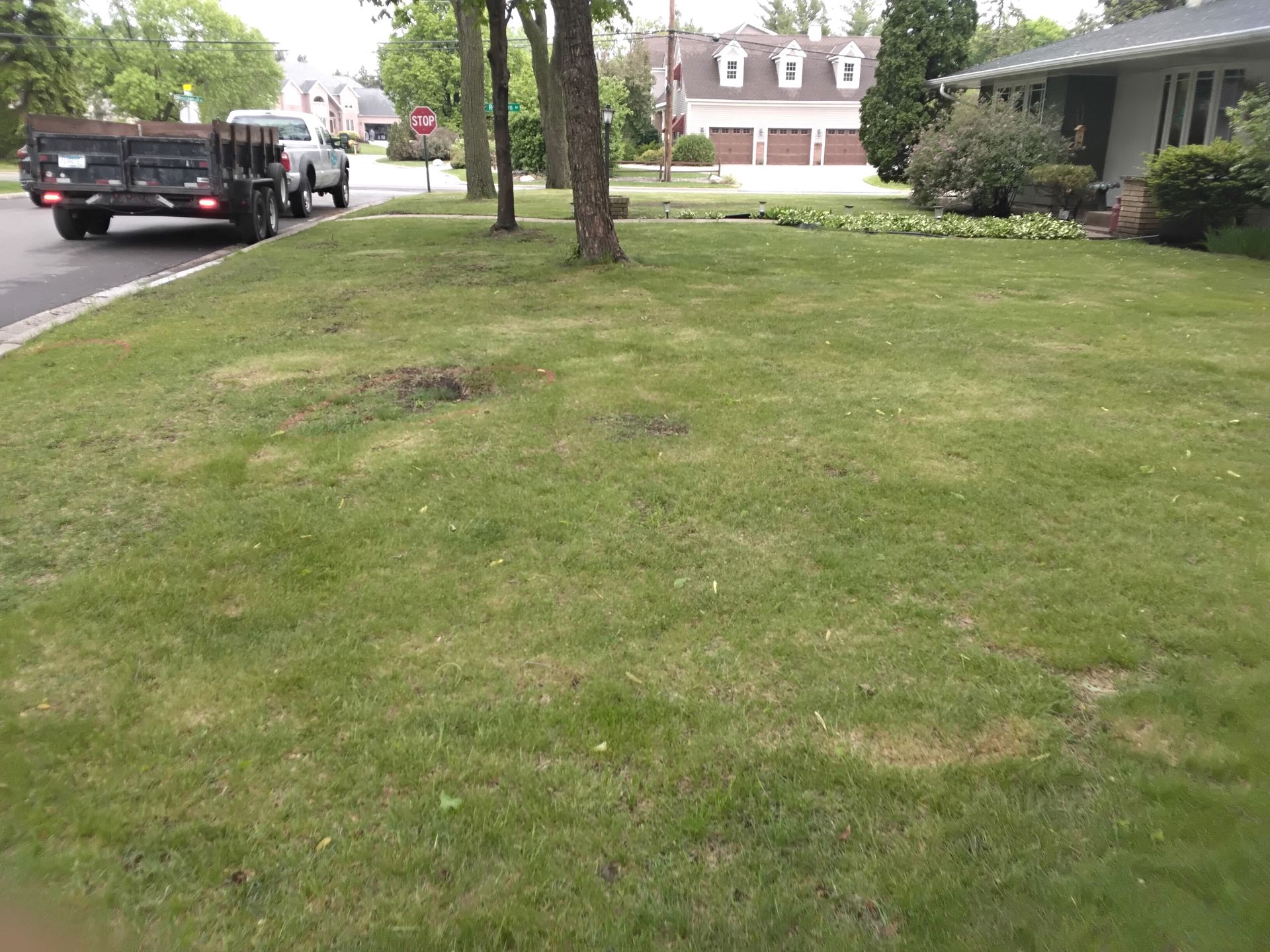
For most Twin Cities lawns, the honest answer is both, in the right order. On the heavy clay lawns we top dress around the metro, the ones that turn around fastest are almost always the lawns where we fixed the soil first, not the ones that just kept getting fed. If your grass is thin, pale, or slow despite regular feeding, start with the soil. If your soil is already decent and the lawn just needs a push, fertilizer does the job.
A soil test takes the guesswork out and tells you what's actually missing. We'd rather tell you your soil is fine than sell you compost you don't need. People also ask whether compost counts as a fertilizer on its own. It contains nutrients, but at low, slow-release levels, so it behaves more like a soil builder than a feeding.
How to Add Compost to an Existing Lawn
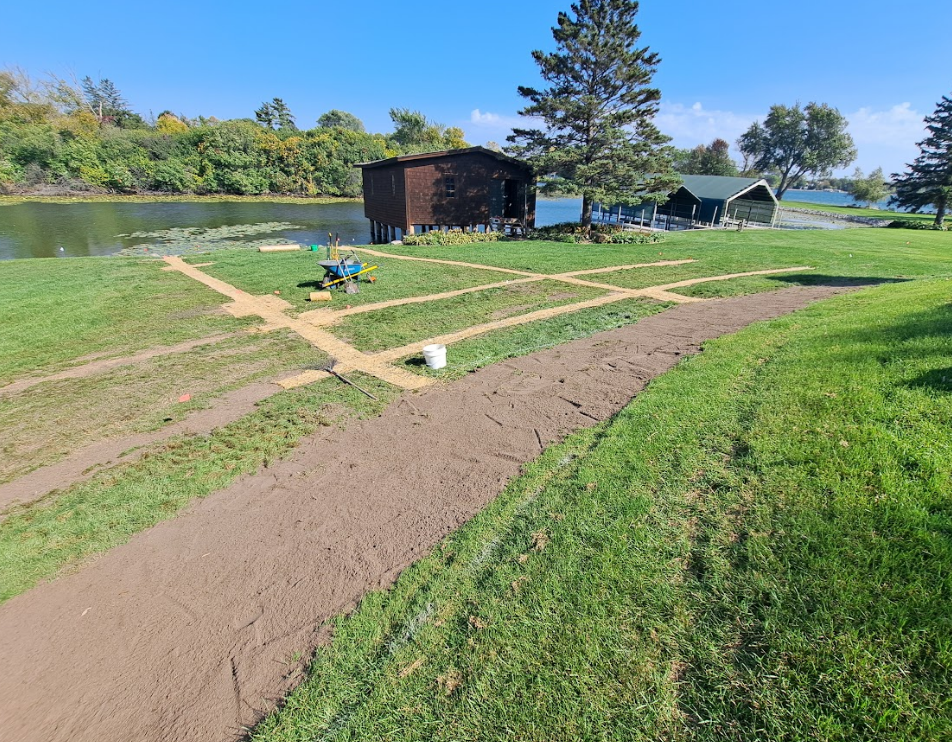
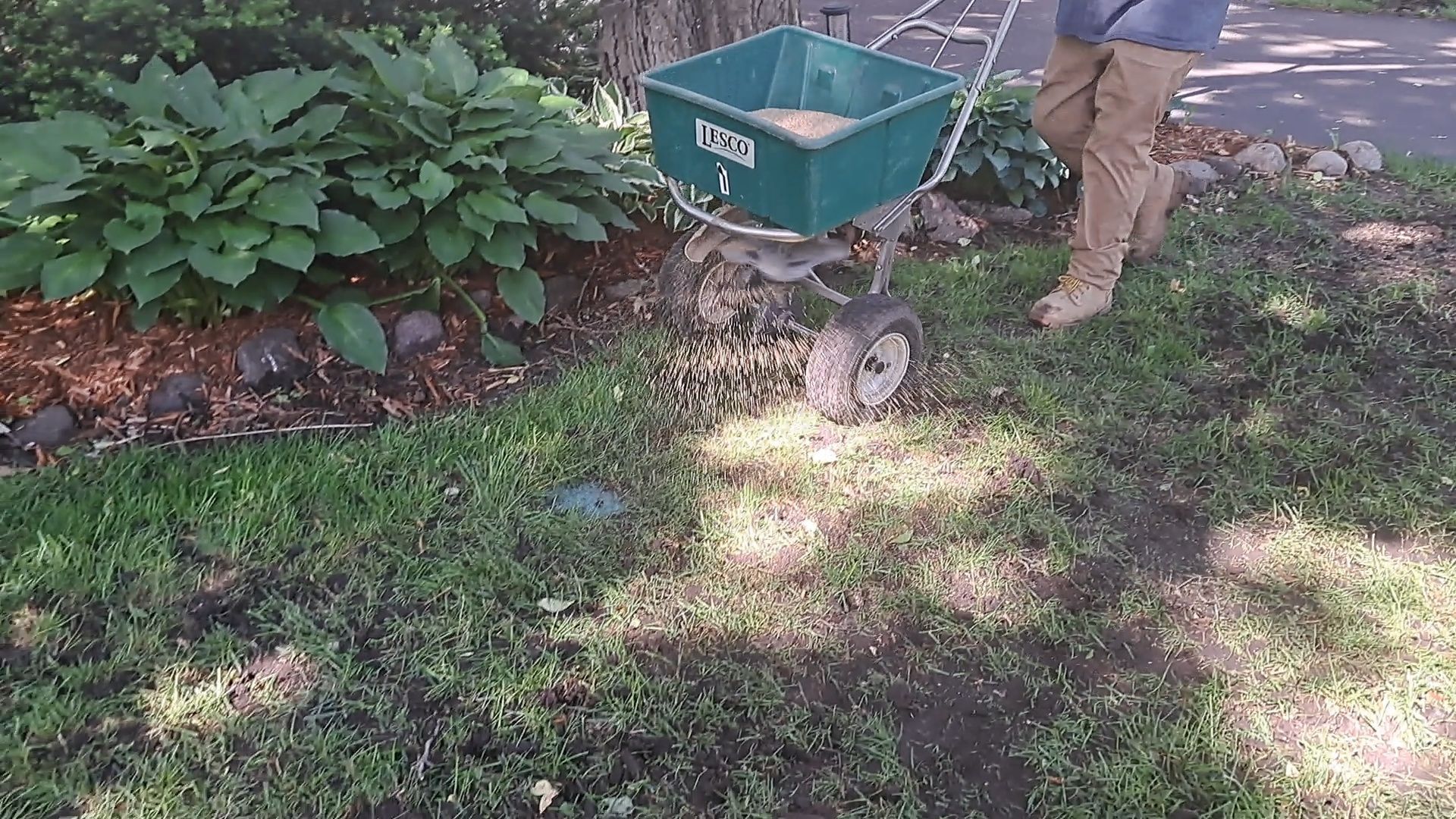
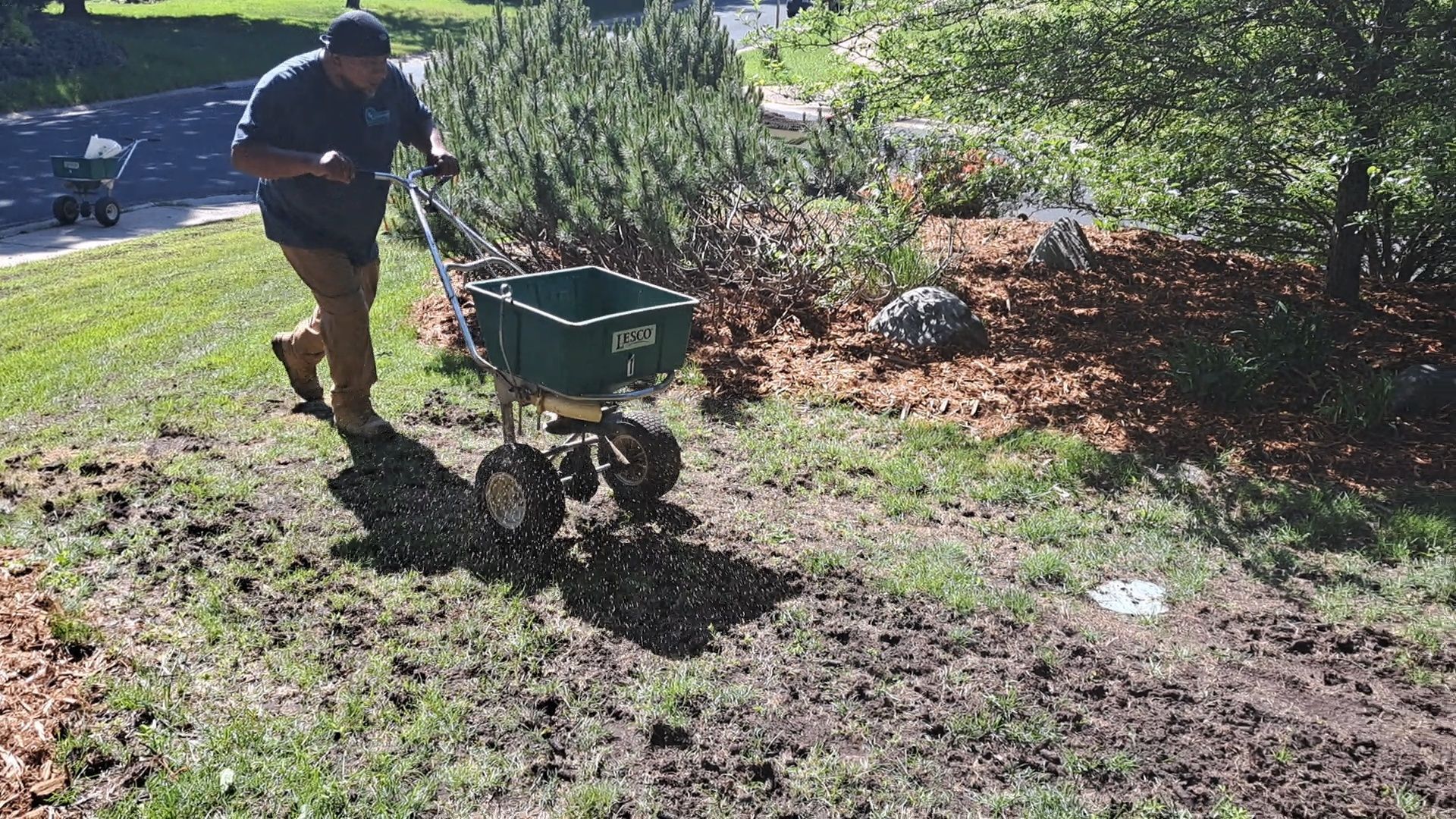
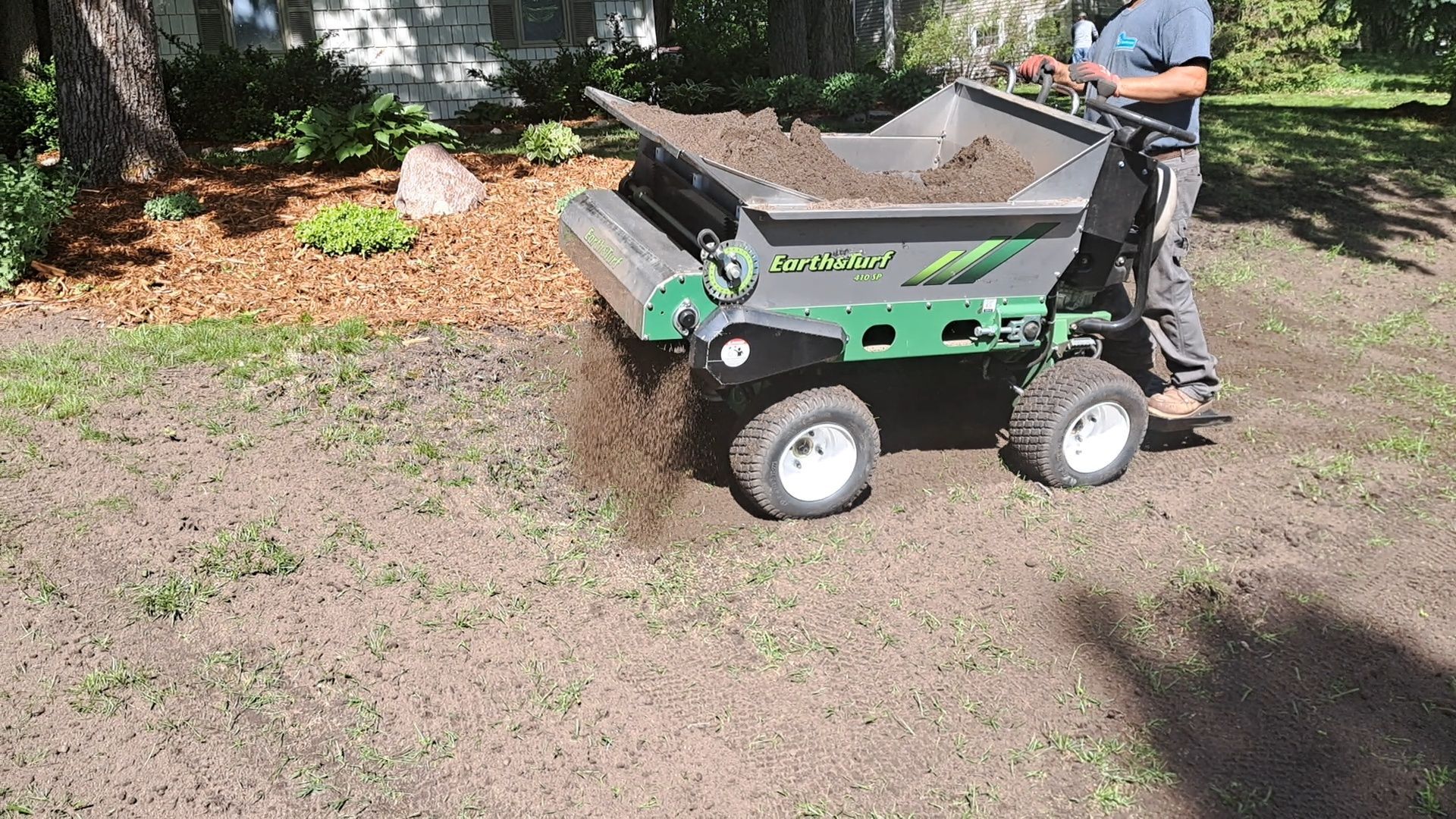
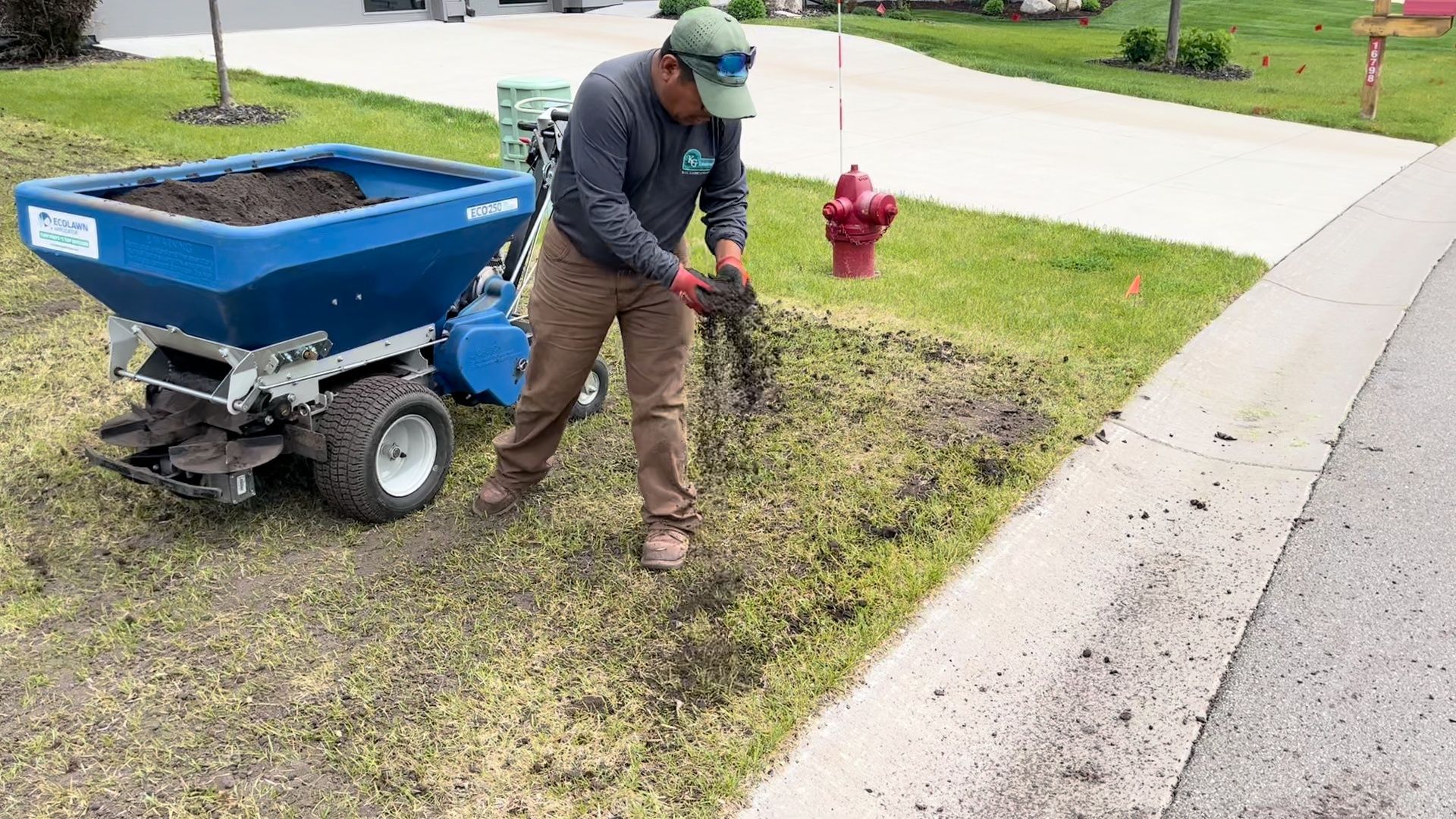
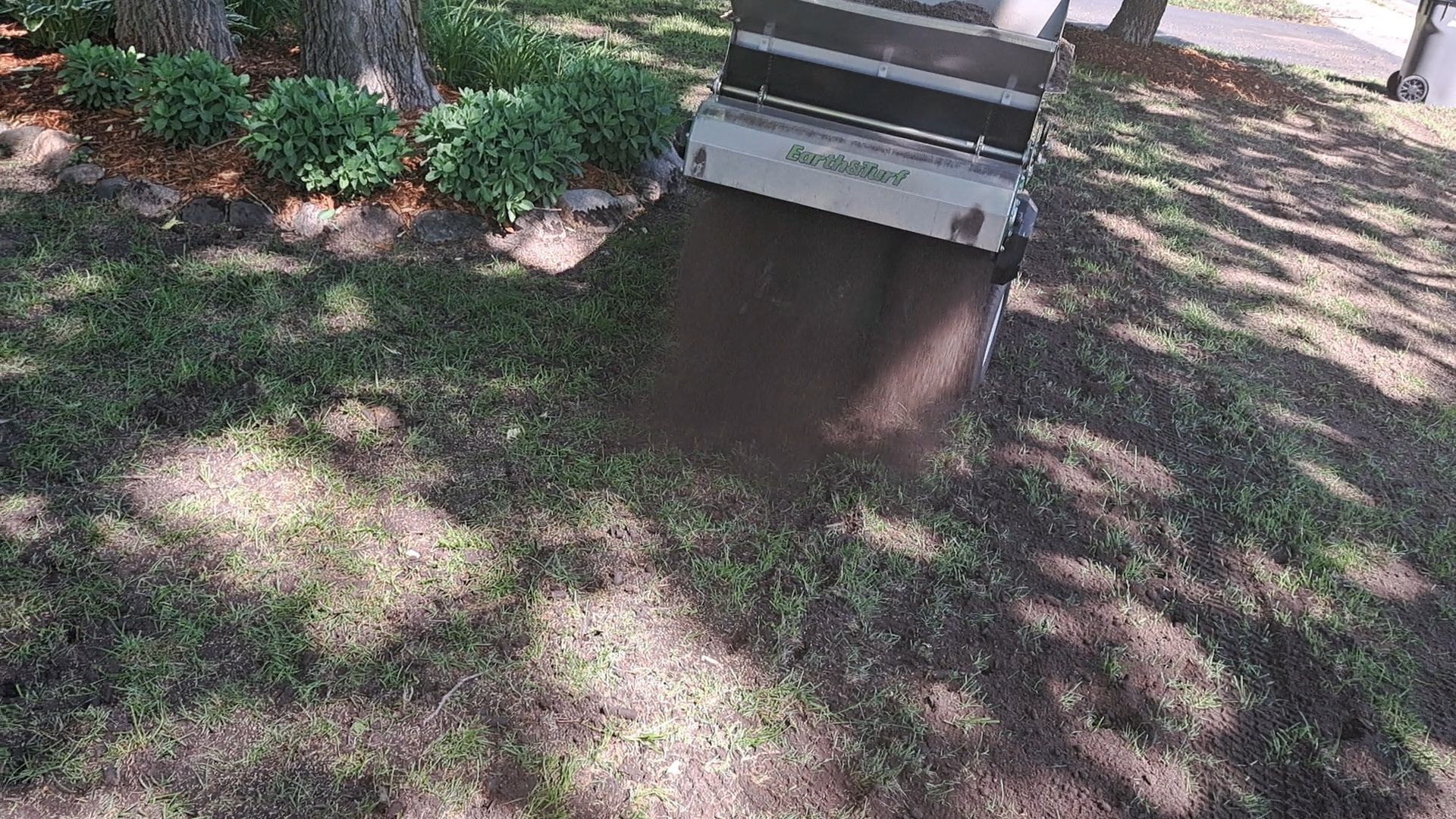
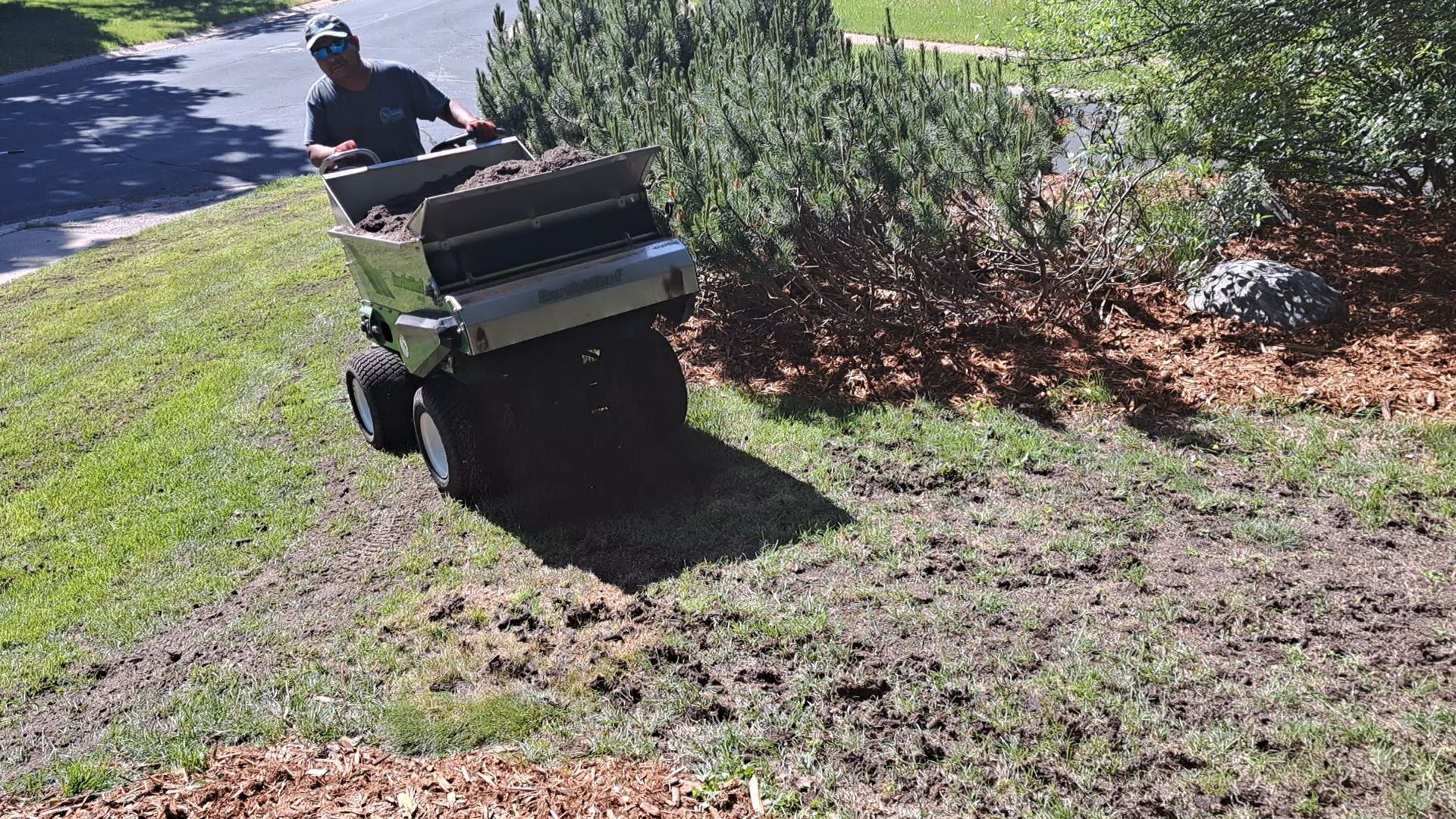
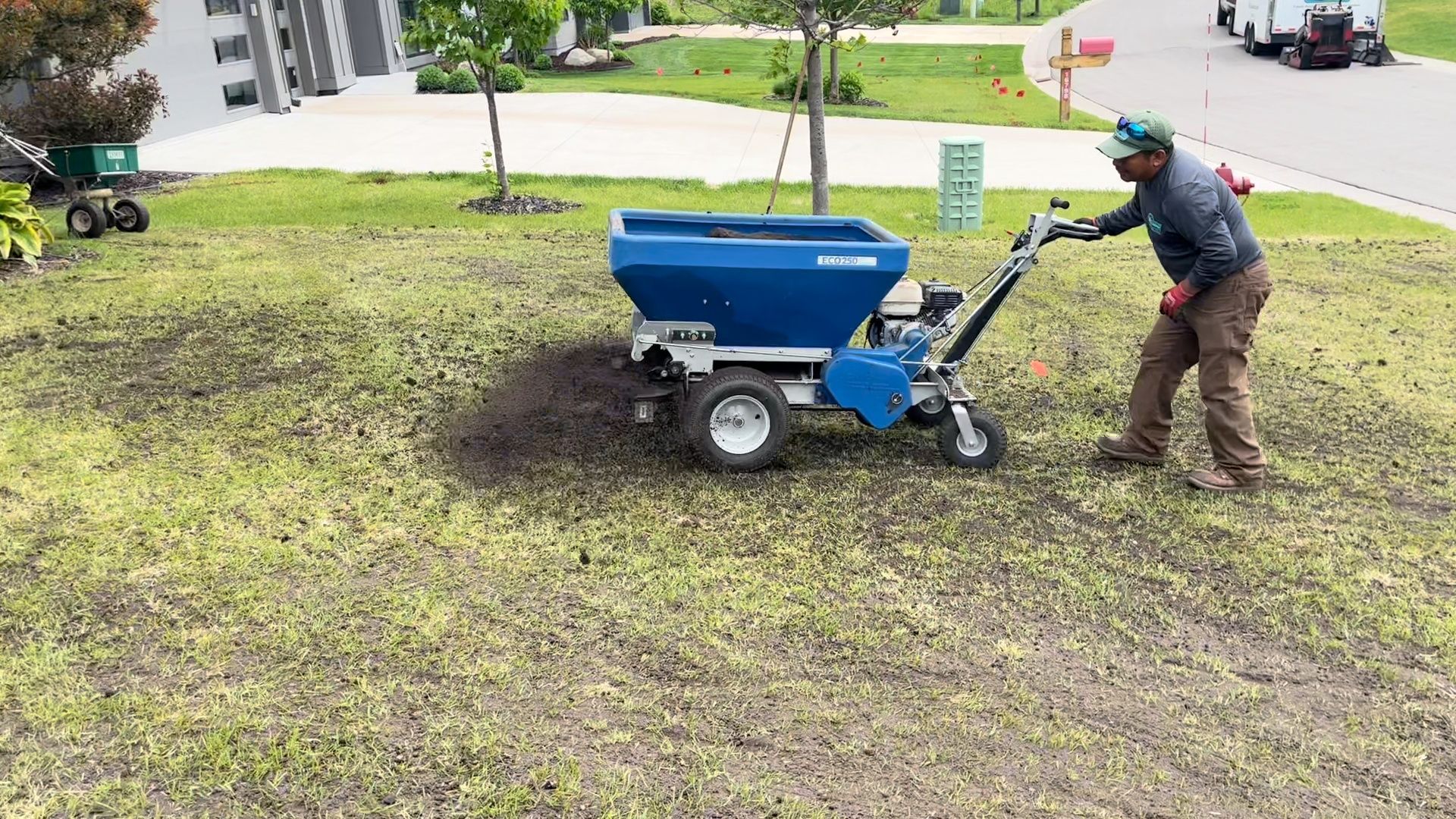
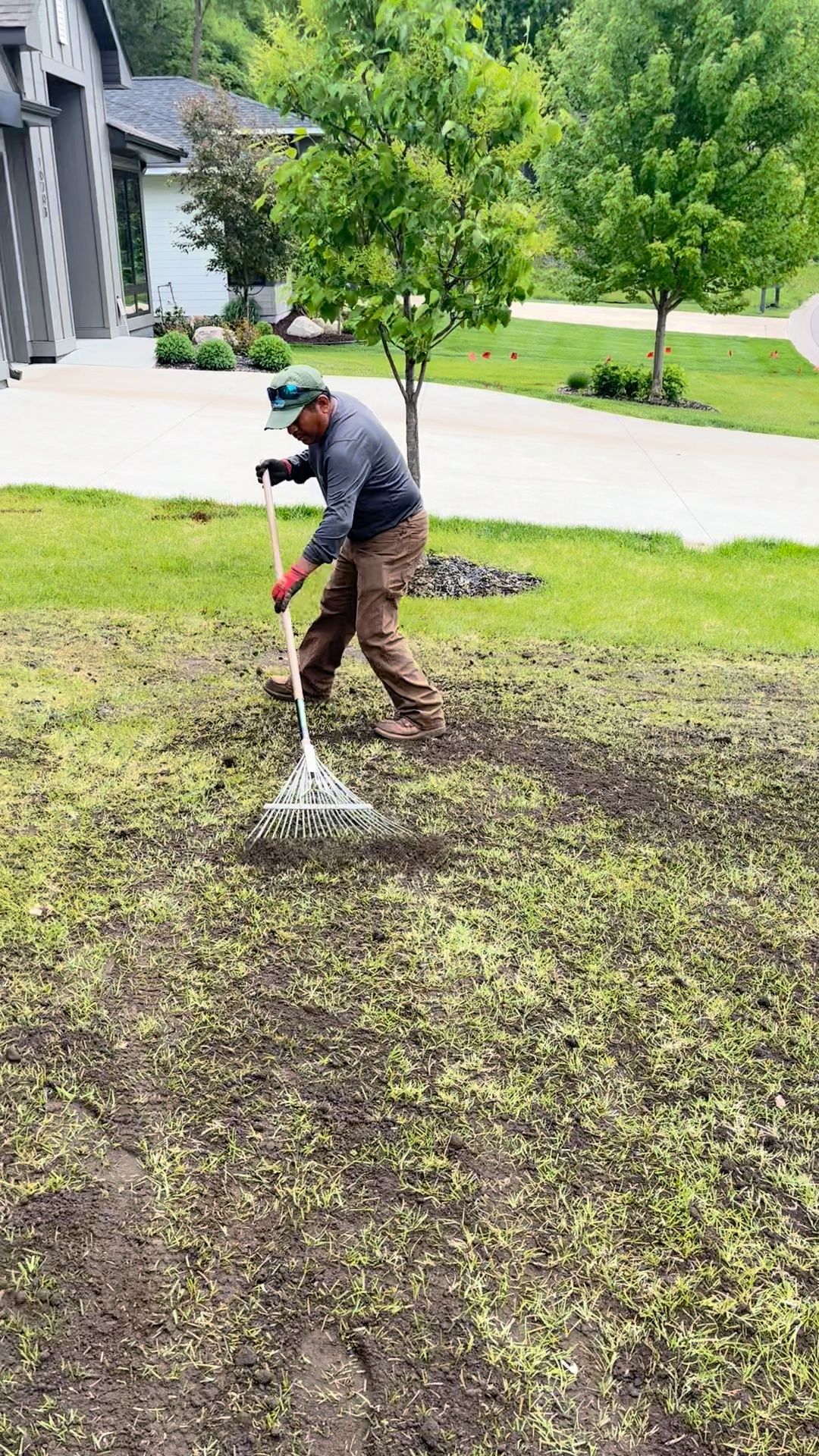
You don't till compost into a lawn you already have. You top dress it. Top dressing means spreading a thin layer of quality compost or soil, around a quarter inch, across the existing turf so it settles in without smothering the grass. Done right, it improves the soil under a lawn you get to keep.
KG Landscape has renovated Twin Cities lawns since 2003, and our work is led by owner Kent Gliadon, a graduate of the University of Minnesota Landscape Design program. Top dressing works best paired with core aeration and overseeding, which open the soil so the compost and any new grass seed reach the root zone. We see the biggest gains on the clay and sand lawns we renovate across Edina, Minnetonka, and Plymouth. You can see the full process on a patchy Maple Grove lawn we rebuilt with compost-based top dressing.
Where Organic Lawn Care Fits In
If you'd rather feed your lawn the slow, soil-friendly way, organic lawn care leans on the same principle as compost. Our organic lawn treatment program uses OMRI certified slow-release fertilizers, like corn gluten meal in spring and turkey litter meal later in the season, that feed the grass while adding organic material that builds soil health over time. It's compost thinking applied to a full-season feeding plan, and it pairs naturally with top dressing for lawns you want to improve from the ground up.
Whether your lawn needs better soil, the right feeding, or both, we can tell you which after a look at your yard. Reach out for a free quote and we'll point you to the fix that actually moves the needle.
Frequently Asked Questions
Is compost better than fertilizer for lawns?
Neither is better, because they solve different problems. Compost improves the soil so grass can grow well long term, while fertilizer feeds the grass for faster, greener growth now. A lawn with poor soil benefits more from compost, and a lawn with healthy soil that just needs a boost benefits more from fertilizer. The strongest results usually come from doing both, starting with the soil. A soil test is the easiest way to know which your lawn needs most this season.
Can compost replace fertilizer completely?
Sometimes, but not always. Compost releases a small amount of nutrients slowly, so a lawn with good soil and modest needs may do fine on compost and grass clippings alone. A lawn under heavy use, or one recovering from damage, often needs the targeted nitrogen that fertilizer provides. Think of compost as the long-term soil builder and fertilizer as the seasonal feeding. Many homeowners use compost to improve the foundation, then fertilize less often once the soil is genuinely healthy.
How often should you apply compost to a lawn in Minnesota?
Once a year is plenty for most lawns, usually in late summer or early fall when cool-season grasses do their best growing here. That timing lets the compost settle in and feed the soil heading into the strongest growth window of the Minnesota season. Spring works too if fall isn't an option. A thin layer is the rule, around a quarter inch, since piling it on can smother the grass you're trying to help rather than feed it.
Will compost burn my lawn the way fertilizer can?
No. Quality finished compost releases nutrients slowly and gently, so it won't scorch grass the way a heavy dose of synthetic fertilizer can. That's one of its real advantages. The main risk with compost isn't burning, it's applying too thick a layer and smothering the turf underneath. Keep it to a thin, even quarter-inch layer and rake it in. Fresh or unfinished compost is a different story, so use only fully composted, screened material on an established lawn.
Is bone meal a fertilizer or a soil amendment?
Bone meal is a fertilizer, specifically a slow-release source of phosphorus. It's organic, but it feeds the plant rather than broadly building soil the way compost does. Here's the Minnesota catch: many local soils already hold plenty of phosphorus, so adding more through bone meal often isn't necessary and can run off into waterways. A soil test tells you whether your lawn actually needs phosphorus before you spend money on it. When in doubt, build the soil with compost first.
What kind of compost is best for top dressing a lawn?
Use fully finished, screened compost with a fine, uniform texture so it sifts down through the grass and contacts the soil. Coarse or chunky material sits on top and looks messy. Well-aged, weed-free compost or a quality compost-and-sand topdressing blend works best, especially over clay, where the sand also helps with drainage. Avoid fresh manure or unfinished compost, which can carry weed seeds and burn tender grass. The goal is clean organic matter that disappears into the lawn within a couple of weeks.
About the Author
I'm Kent Gliadon, founder of KG Landscape and a graduate of the University of Minnesota Landscape Design program. For over 20 years, I've focused on integrating well-planned landscape design and installation work with properly engineered outdoor drainage solutions. I believe discerning homeowners deserve landscaping and drainage renovations that are carefully planned from the beginning, accounting for water movement, grading, soils, hardscaping, and future use, so problems are prevented before they occur. These articles explain how and why specific solutions are implemented and what it takes to maintain properties that truly last.
Ready to Start on Your Next Project?
Call us at (763) 568-7251 or visit our quote page.