Waterlogged by the Lake: How We Solved a Challenging Drainage Problem in Orono, MN
On the shores of Lake Minnetonka, perhaps the most famous of Minnesota's 10,000 lakes, an Orono, Minnesota homeowner was struggling with a back yard that was becoming more marsh than yard.
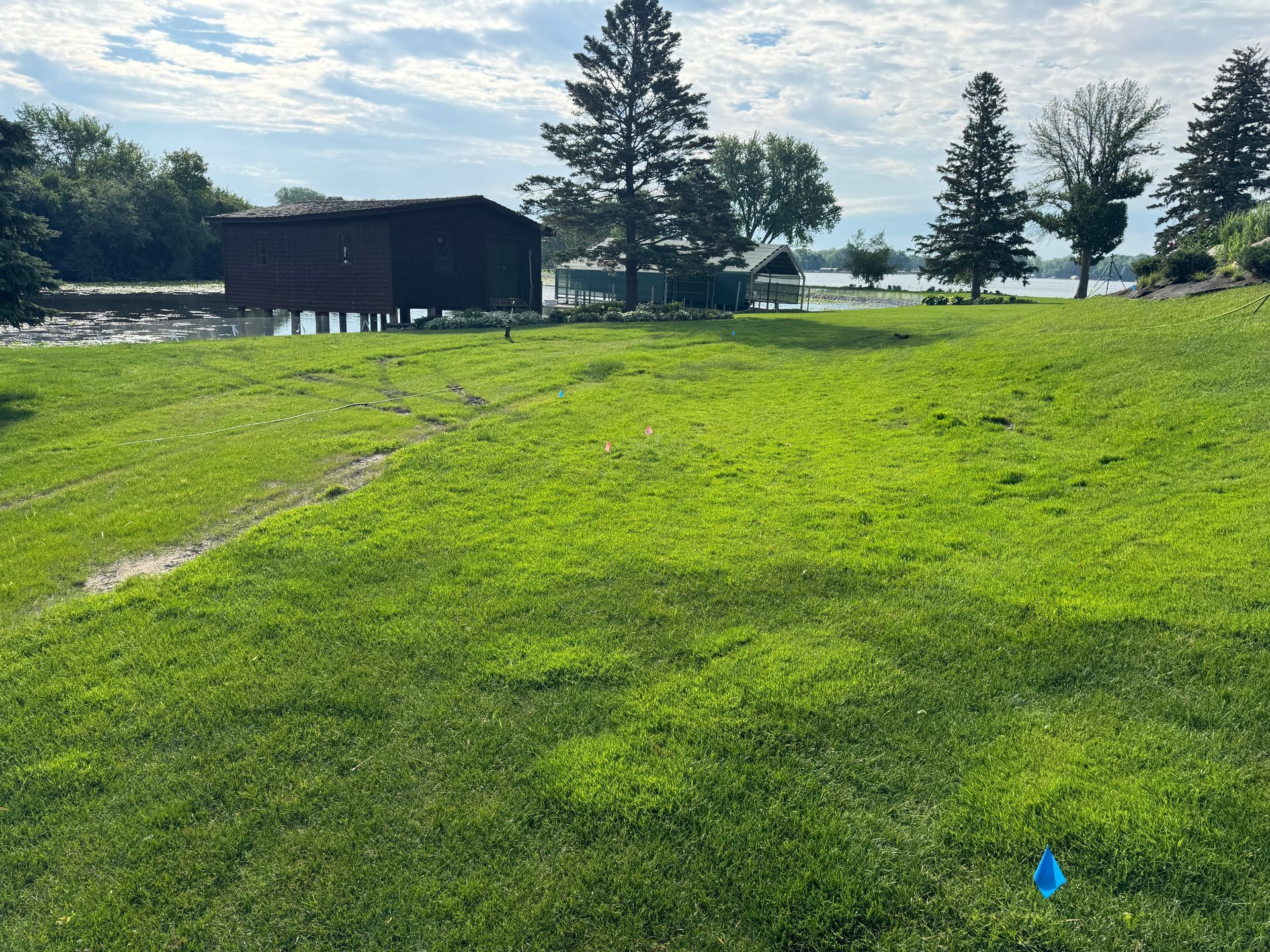
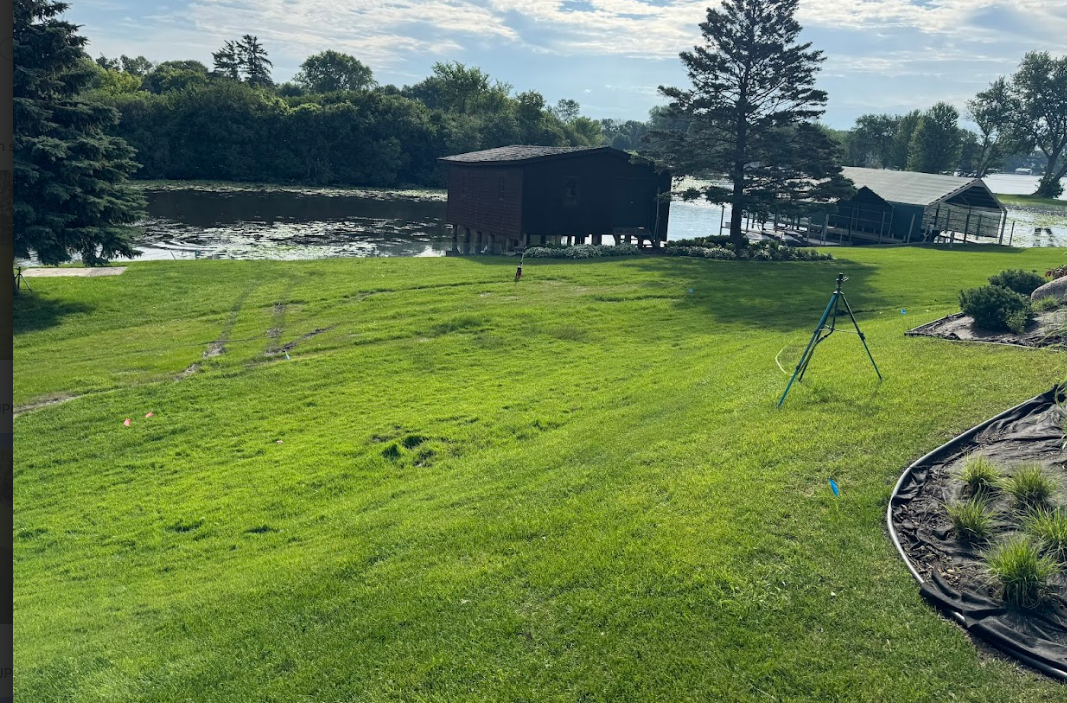
The yard was a scenic one. The back porch opened up to the top of a small hill, which rolled down toward the lakefront and the boathouse. This flat space between the hill and the water would be ideal for backyard barbecues, some low-stakes games of bocce and badminton, or simply a spot to lay down a towel and get some summer reading done.
Instead, this area was too waterlogged to enjoy. The runoff from the hilltop combined with unfavorable soil composition were limiting the use of the yard, closing off space while even diminishing the quality of the turf. How would this homeowner be able to reclaim this unusable land without disrupting the Lake Minnetonka shoreline that made the property so attractive? To find a solution, they turned to KG Landscape.
Assessing the Property: What Really Caused the Waterlogging?
We began this project by assessing the conditions of this lakeshore property in Orono. Much of the chronic drainage issues the lawn experienced had to do with the unfavorable terrain: water naturally flowed down from the higher elevation of the hill and collected in the low-lying turf. From there, the ground had no further slope to facilitate proper runoff. After snowmelt and rainfall, water remained trapped in this area for extended periods, creating consistently wet and muddy conditions.
We discovered that what made the issue worse was a common problem around Lake Minnetonka: compacted, clay-heavy soil composition, which leads to poor drainage and high moisture retention. Water from top of the hill had nowhere to go but down, and when it arrived at the base of the hill, where it met this drainage-unfriendly soil, it had nowhere to go at all.
Shorelines are delicate ecosystems, and because the problem area borders one, we knew that we were facing distinct constraints on how we could move water off the lawn without affecting the lakefront or adjacent landscape features. Previous struggles with these site-specific conditions had led to the ongoing soggy turf and declining lawn health we assessed, In order to restore usability to the homeowner's section of the lakefront, effective drainage that respected these delicate surroundings would be a critical concern for our team and our client.
Options We Considered
To address the drainage challenges on this Lake Minnetonka lake shore property in Orono, several realistic solutions were evaluated with careful consideration given to the flat grade, hillside runoff, heavy clay soil, and proximity to the shoreline.
Regrading the Lawn
When homeowners face drainage issues with their lawns, their first impulse is often to ask about a full regrading. Doing so can certainly be effective in many cases. By reshaping the lawn, we can often improve surface water flow, reduce minor pooling issues, and guide rainwater away from problem areas.
While this process is effective in many cases, it wasn't the right fit for this property. Here, the affected lawn area lies between a hill and the Lake Minnetonka shoreline, which limits the capacity for elevation changes significant enough to influence water flow. There was not enough fall to regrade the area effectively without affecting shoreline features, making regrading alone an insufficient solution to our problem.
Soil Amendment Only (Adding Sand or Organic Material)
Another option homeowners often consider is amending the existing soil by incorporating sand or organic material to improve drainage in heavy clay conditions.
Clay-heavy soil is notorious for compaction, which limits the roots' access to water, air, and nutrients. Clay's dense and tiny particles retain water without supplying it to root systems, leading to waterlogged surfaces and thinning turf. By amending the soil with sand, which resists compaction, we can improve the soil's permeability, improving drainage without the invasiveness of installing a more complex drainage system.
Soil amendments such as sand, peat, and topsoil can be a sufficient approach on their own when dealing with mildly compacted soil systems. Unfortunately, this Orono lakefront property had more going against it than just clay content. Here, the dense, heavy clay combined with the continuous hillside runoff to create a scenario where soil content alone would not ameliorate poor drainage. Simply blending sand or peat into the existing soil would not have created the exit for excess subsurface water that this site required. Without a defined discharge point, water would likely continue to collect between the hill and the shoreline.
Subsurface Drain Tile Grid Daylighting to the Lakeshore
When challenging terrain and soil composition lead to the persistent soil saturation we saw here in Orono, we often consider a more sophisticated intervention strategy. A subsurface drainage system using drain tiles and a grid of perforated piping is often our option when less invasive approaches are not enough to address the problem.
This system would capture excess subsurface water throughout the affected area, then safely redirect that water away from the lawn and into the riprap, or the protective barrier of rocks along the Lake Minnetonka shoreline.
Because this property is located directly on Lake Minnetonka, our team had to work with the utmost precision. We needed to design a system that would move water efficiently without disturbing the shoreline or surrounding landscape. Proper layout, pitching, and discharge location were critical to ensure water would exit the system in a controlled manner that fit within the site's constraints.
The Chosen Solution: Subsurface Drainage with Improved Soil Composition
To resolve the persistent drainage issues on this Lake Minnetonka property in Orono, we committed to our third option of a subsurface drain tile system as the primary approach, then supplemented that system with targeted soil replacement along the system's trench lines. While we declined to pursue soil amendment as a freestanding option, it would, in concert with the subsurface drainage, be a key aspect of our solution. This two-part approach would directly address the root cause of the problem: excess subsurface water collecting in heavy clay soil at the base of a hill, with limited natural slope to encourage drainage.
This integrated drainage approach aligned with the homeowner's goals of maintaining a healthy, usable lawn while protecting the integrity of their lakefront landscape.
How We Did It: A Step-by-Step Review of Our Process
Our project began with a careful site review and layout to confirm pipe routing, elevations, and discharge points along the Lake Minnetonka shoreline. Because the problem area was a flat lawn section at the base of a hill, proper sequencing was critical to ensure the system would effectively capture hillside runoff and move it safely to daylight in the riprap.
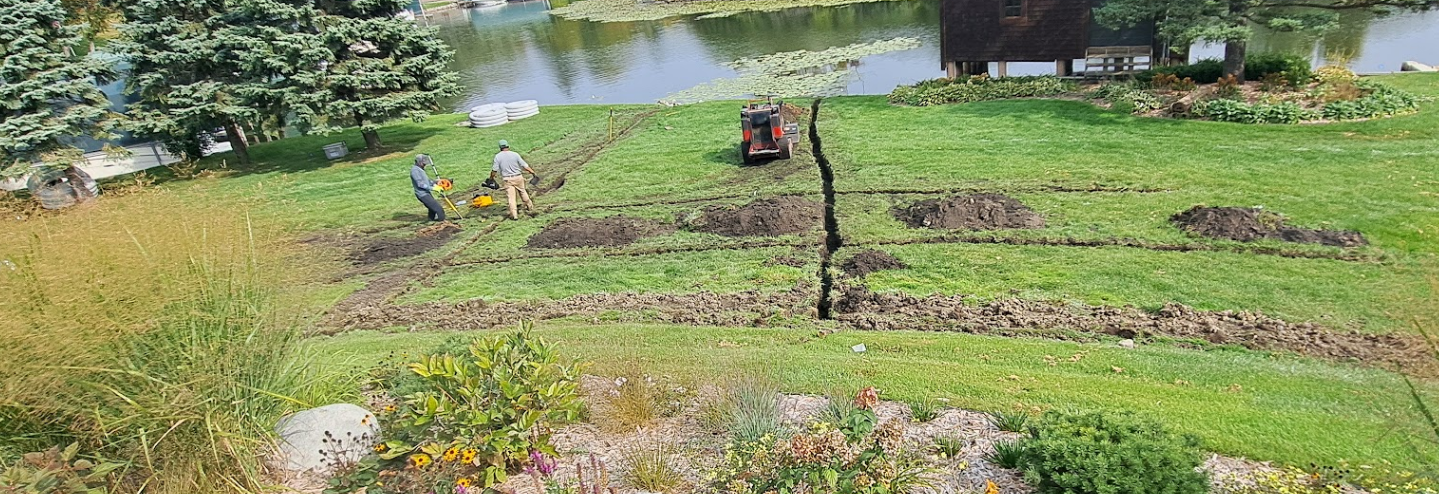
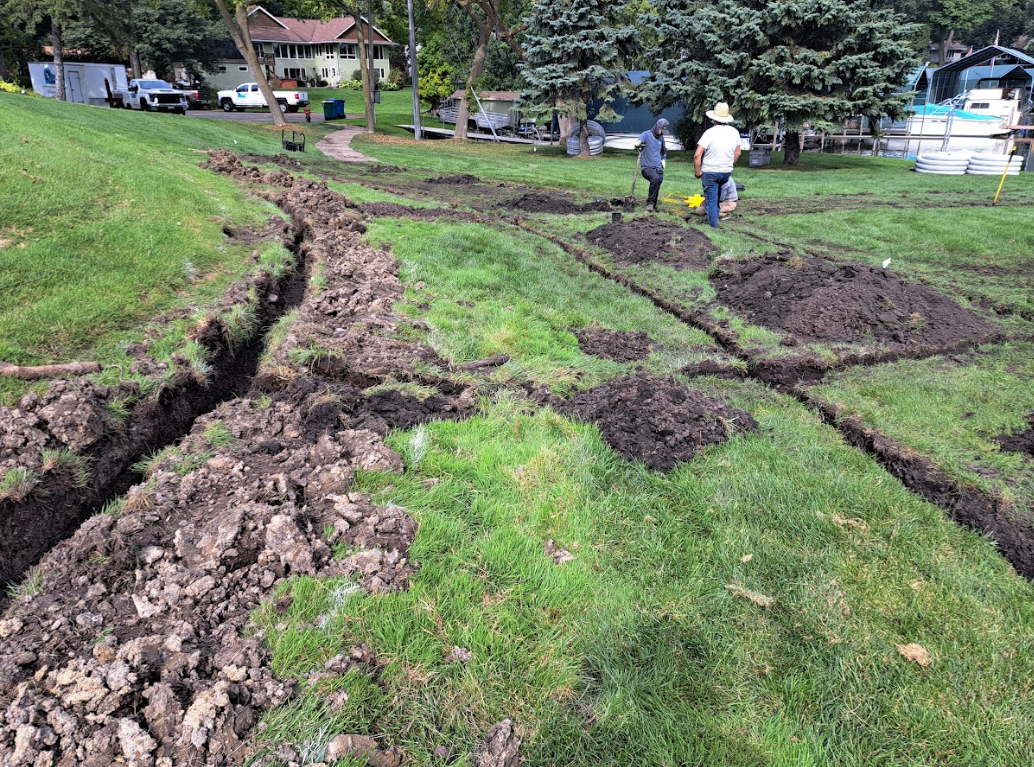
Prior to excavation, we identified and marked irrigation heads in the work zone in order to minimize disruption and allow for efficient coordination if adjustments were necessary. To limit disturbance to the surrounding lakefront landscape, we separated our installation into discrete phases. Our team completed the trenching for the 360-foot drain tile grid in a planned pattern across the saturated area, maintaining consistent pitch toward the two designated drain grates near the water.
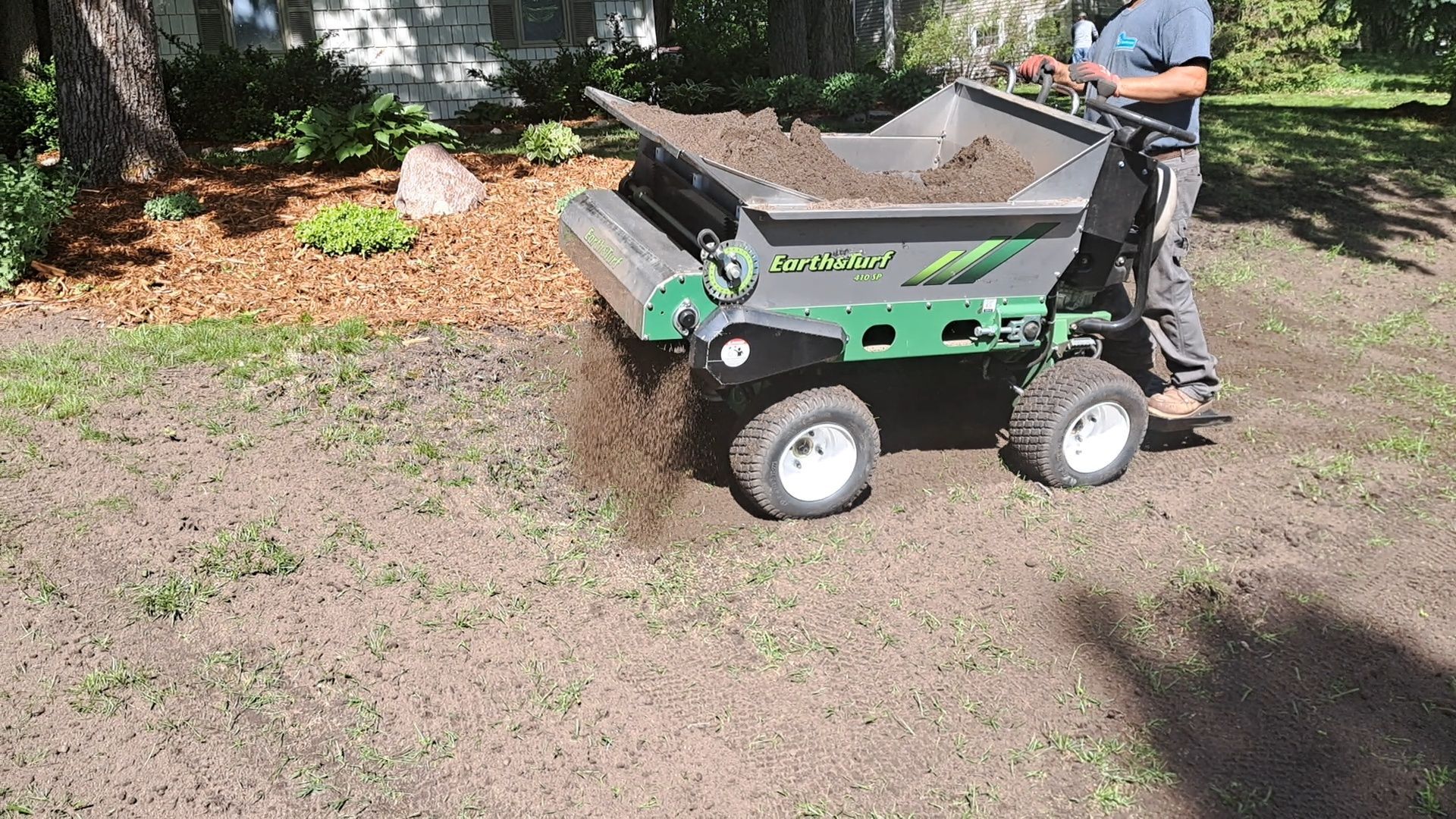
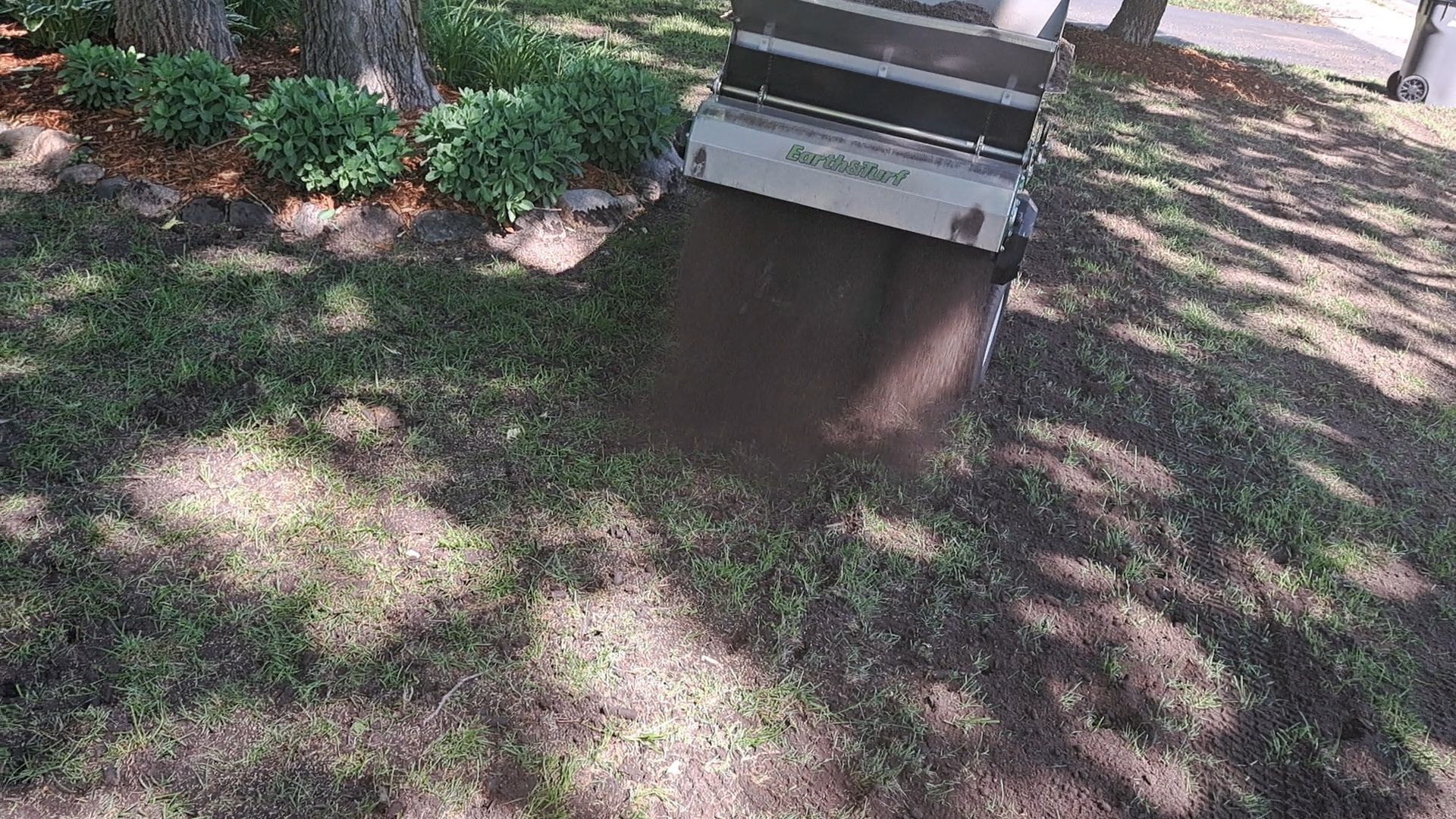
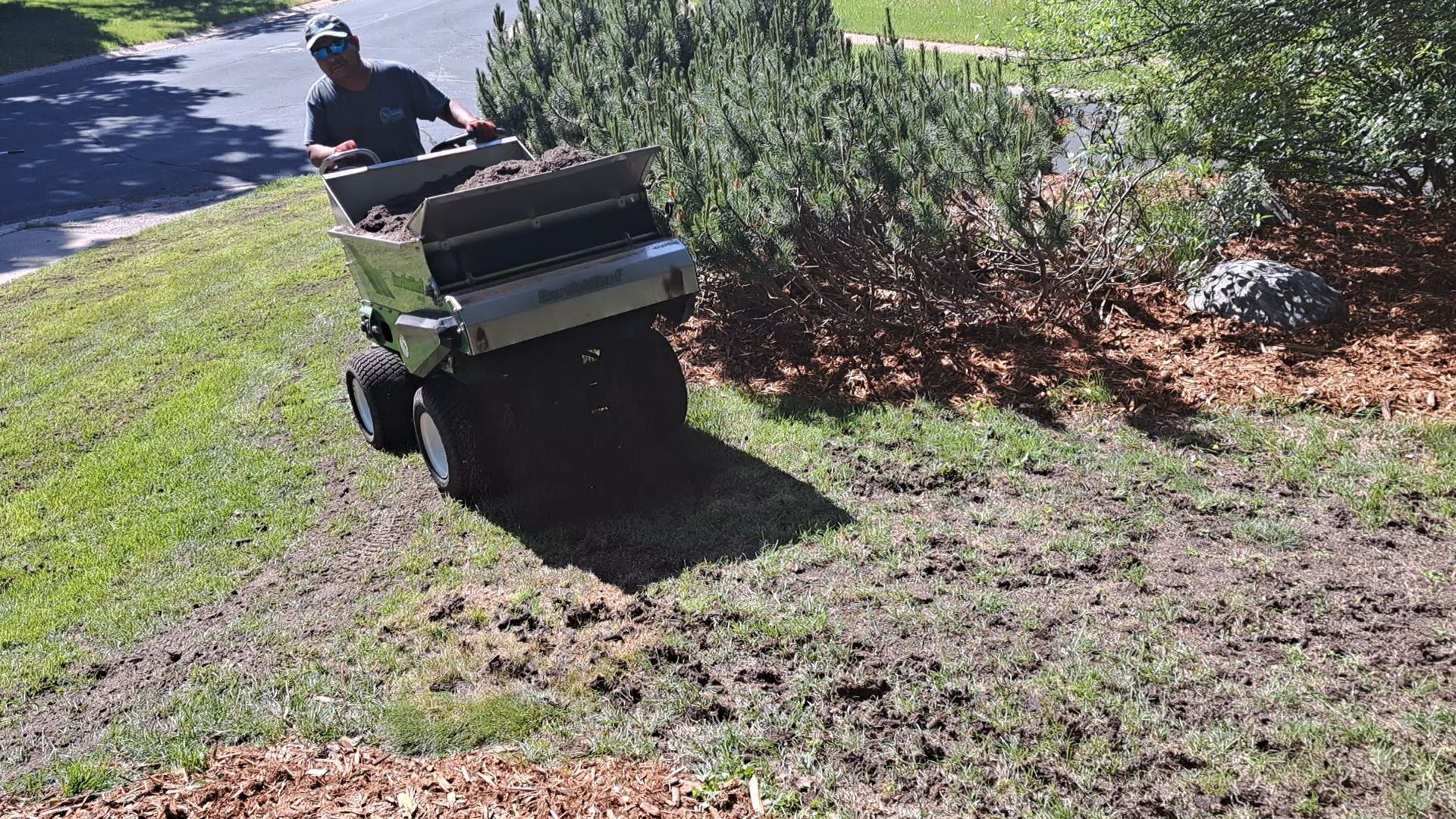
Because the native soil consisted of dense clay, we backfilled the excavated trench areas with a 50/50 sand-soil mix. This immediately improved the soil's permeability around the drain tile, allowing water to move more freely into the system rather than remaining suspended in the clay. By combining subsurface drainage with strategic soil improvement, our solution addressed both water collection and water movement: critical factors on a flat lawn area that had struggled with diverting hillside runoff.
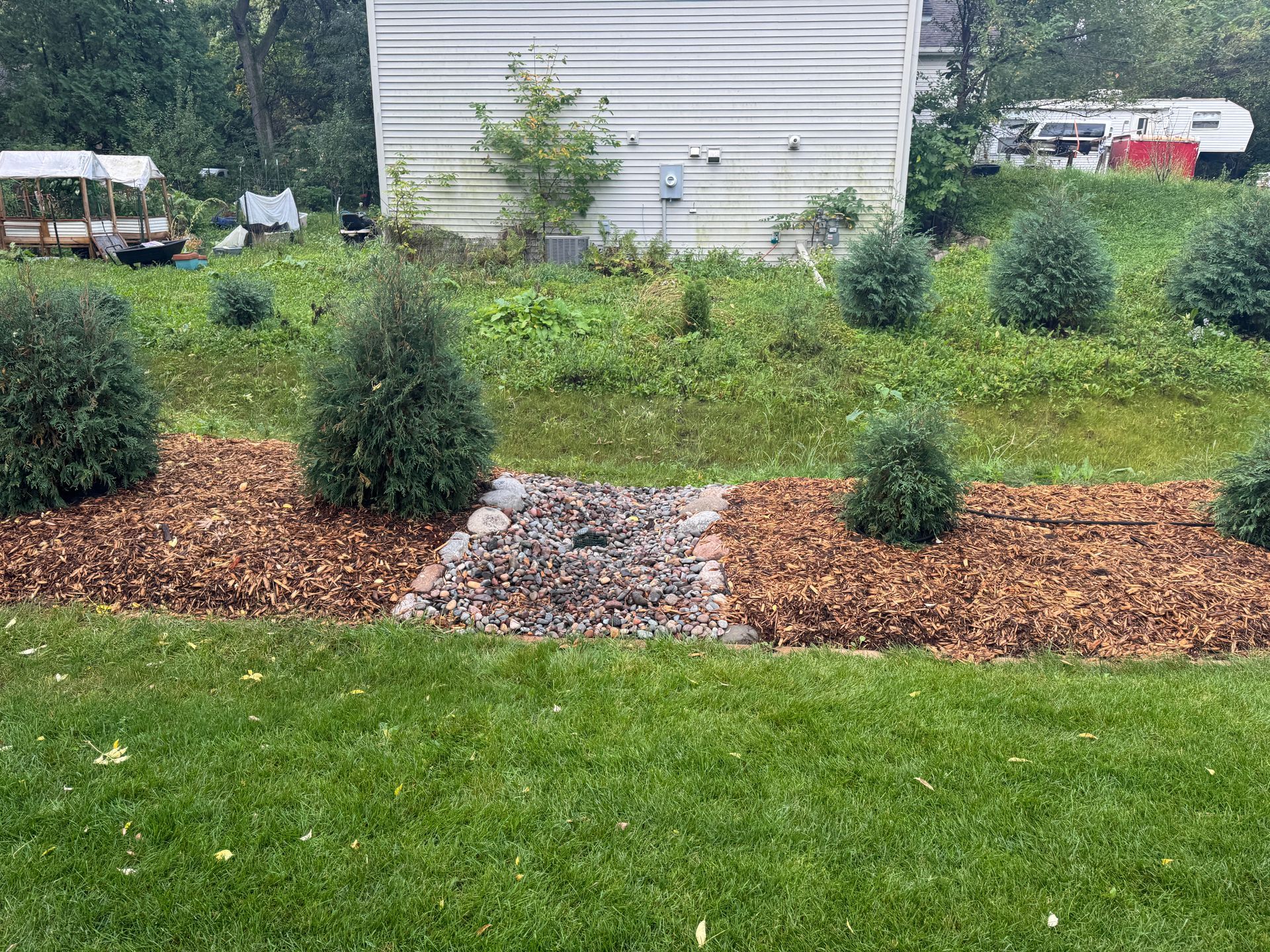
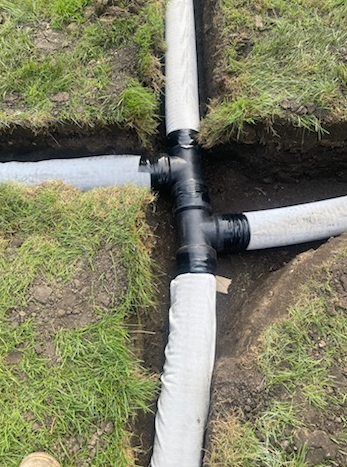
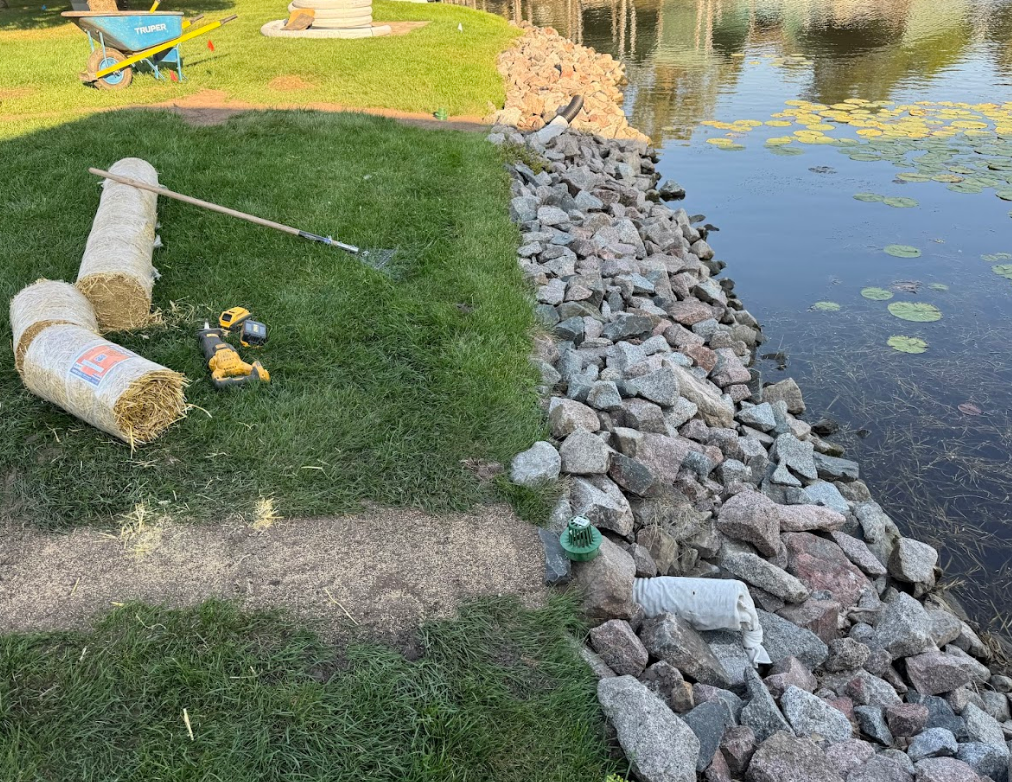
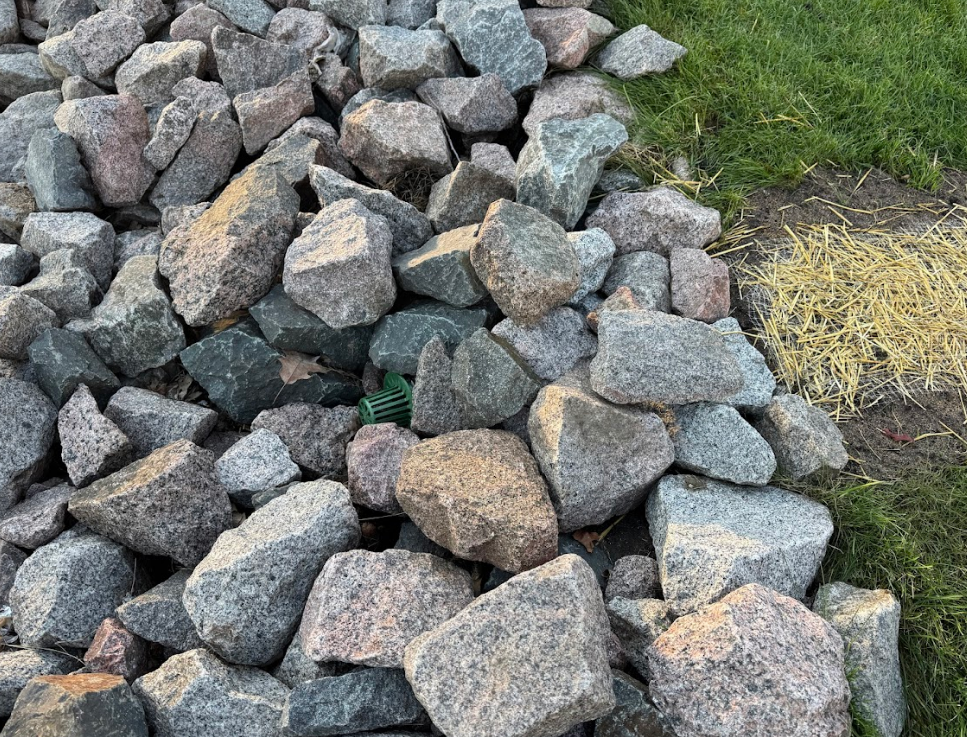
After we completed the trenching, we installed a 360-foot pattern of 4-inch perforated corrugated pipe with silt sock throughout the affected turf area to capture and redirect trapped groundwater. All lines were carefully pitched to allow water to move efficiently toward two drain grates. Both grates would daylight, or empty at ground level, into the riprap along the shore. This would ensure that the runoff has a defined and controlled discharge point that does not negatively affect the shoreline.
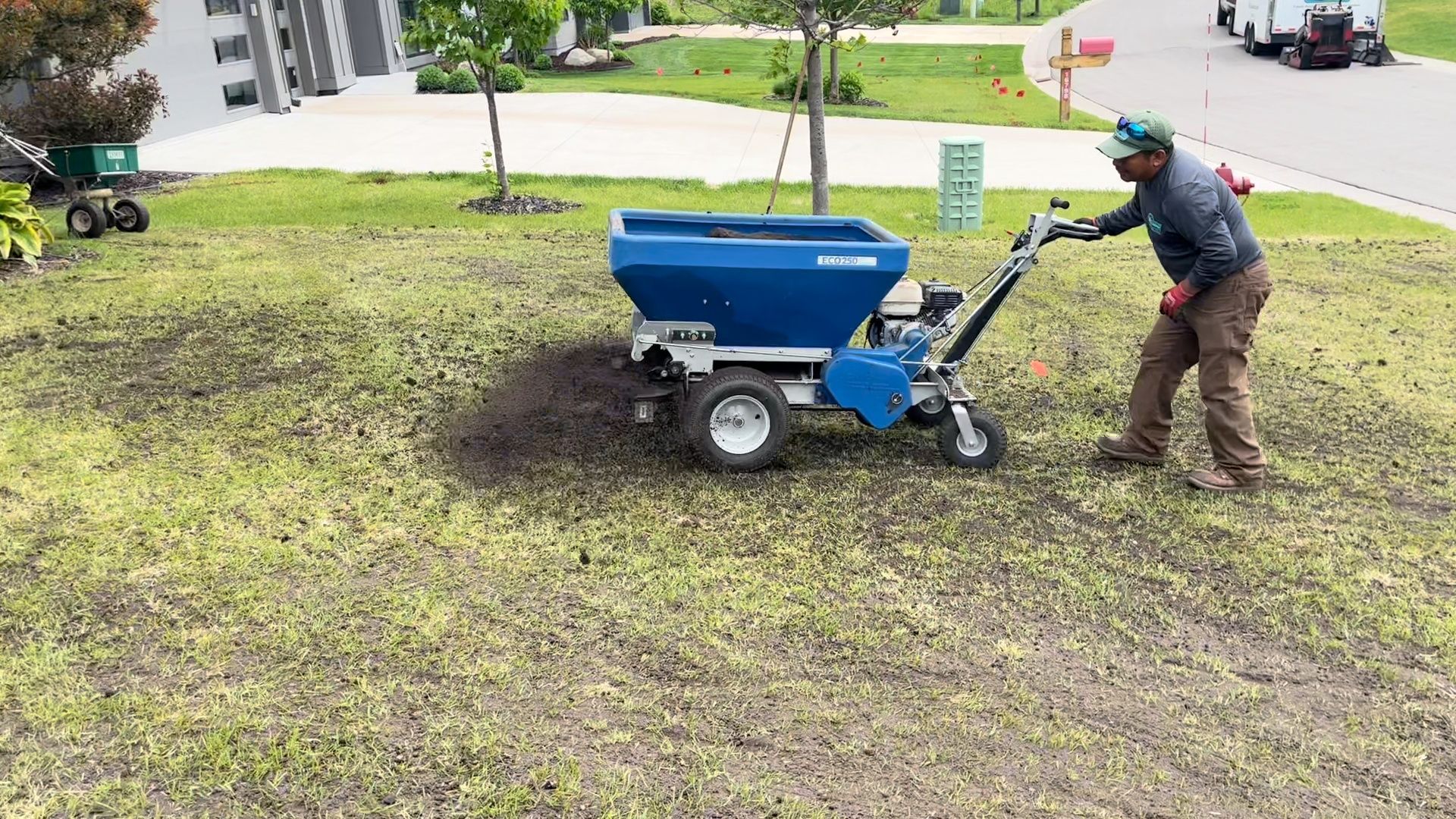
To prevent the later reintroduction of poorly draining clay soil, we hauled the clay-heavy soil off-site as we removed it from each trench, safely disposing of 13 cubic yards of compacted and waterlogged soil. We then backfilled the freshly dug trenches with a 50/50 sand-soil mix to improve permeability around the perforated 4-inch corrugated pipe with silt sock. By working in this sequence, we ensured that each section of pipe was properly placed, pitched, and surrounded with improved soil conditions before we performed the final grading.
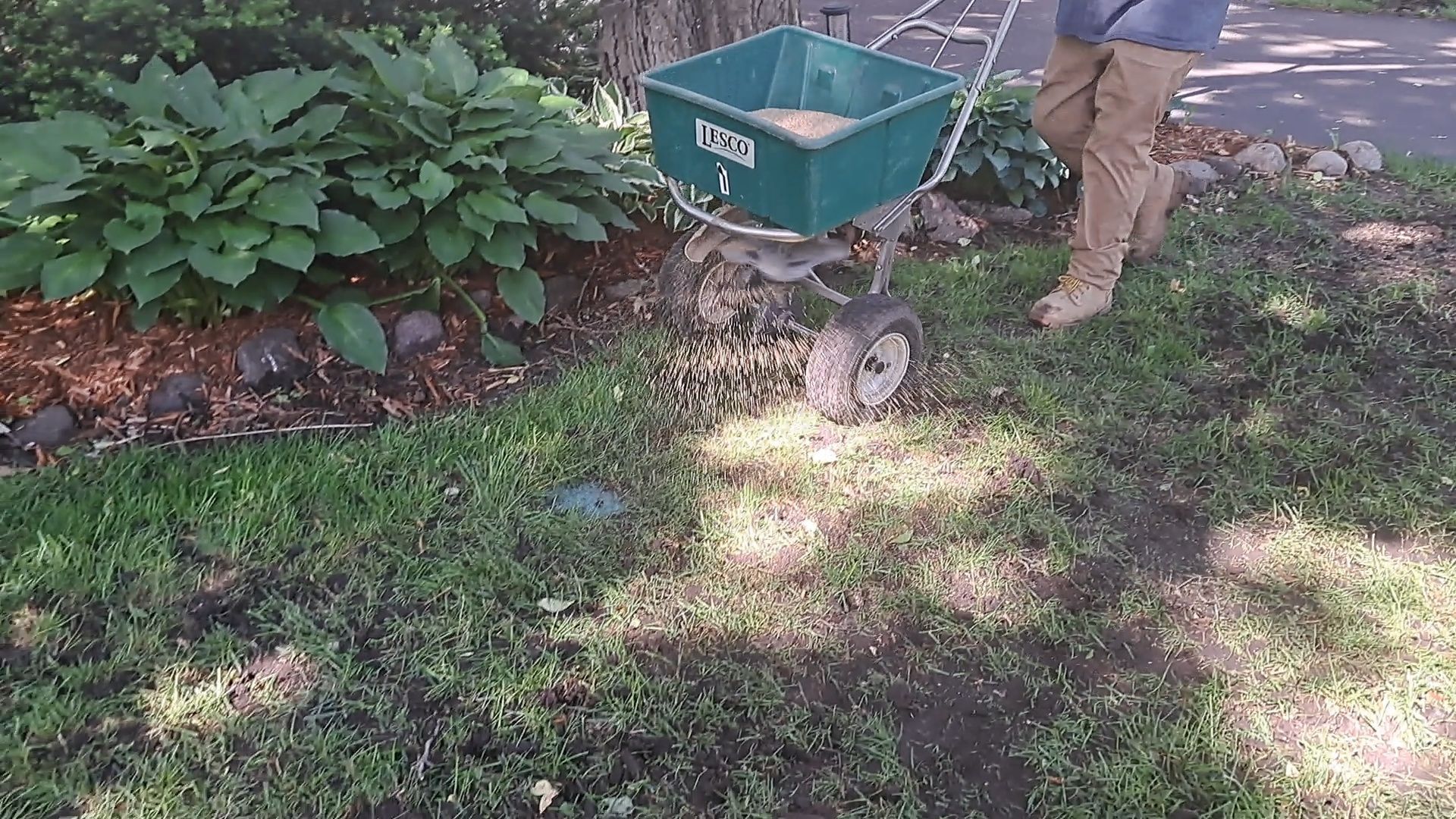
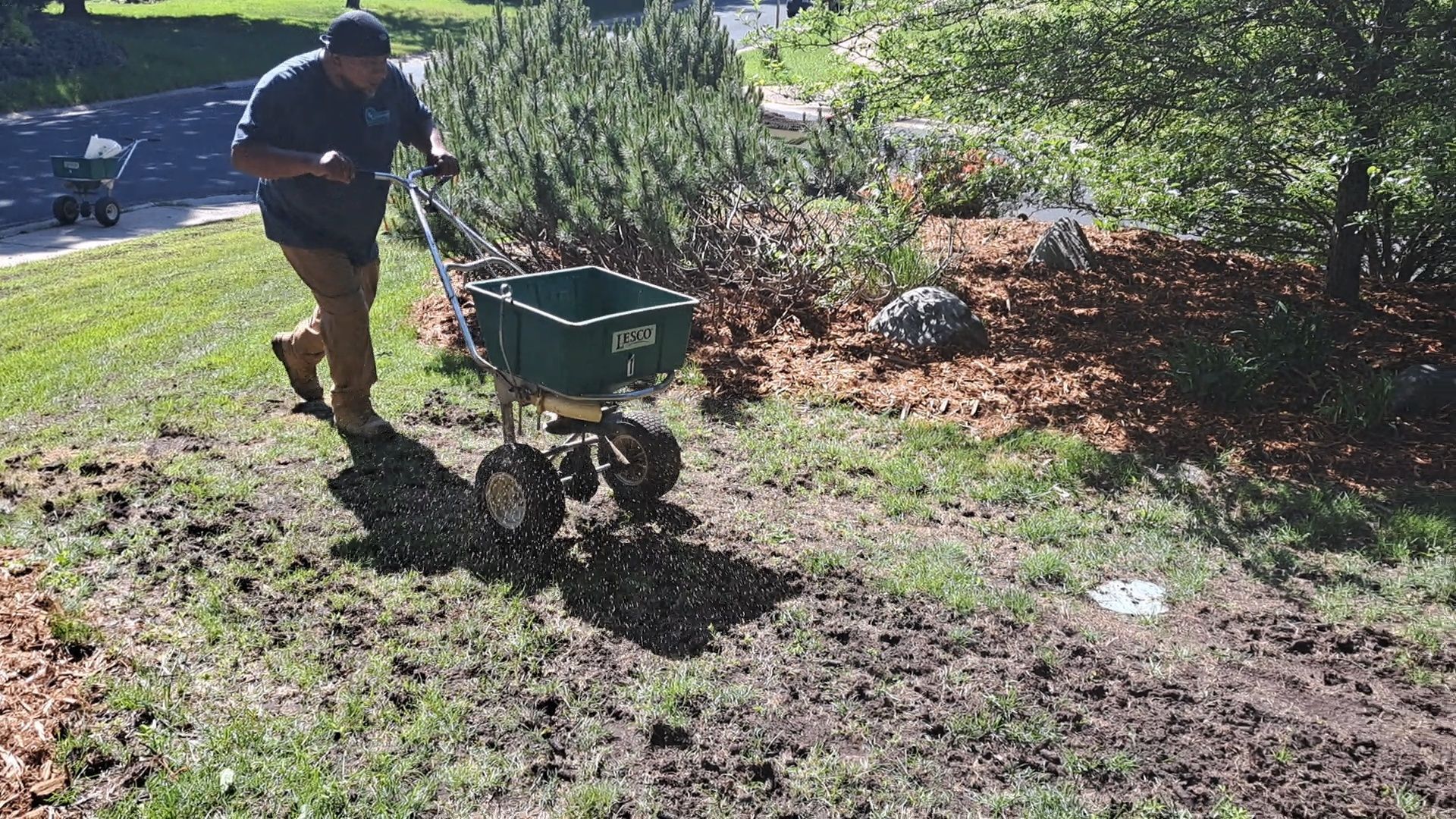
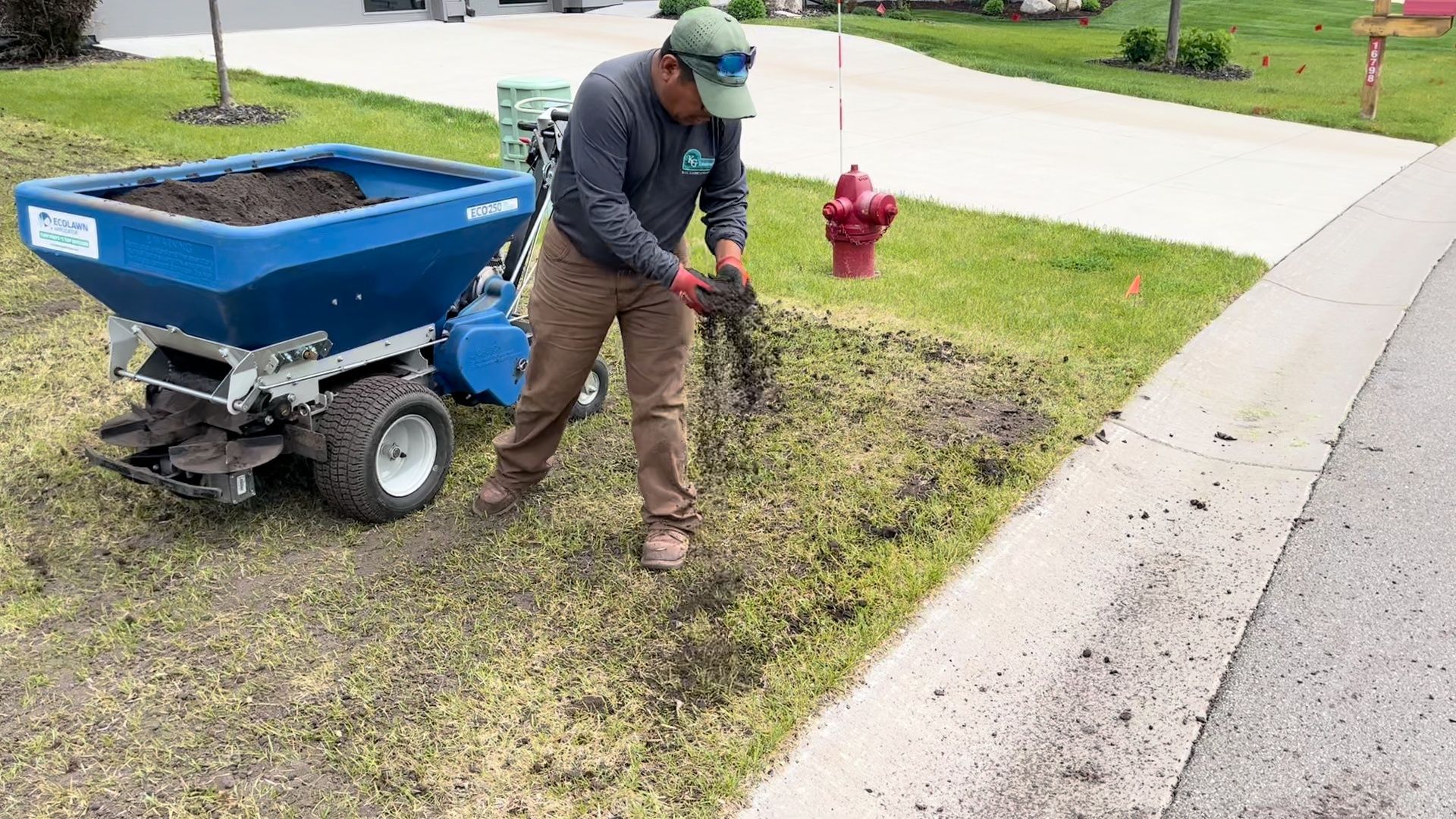
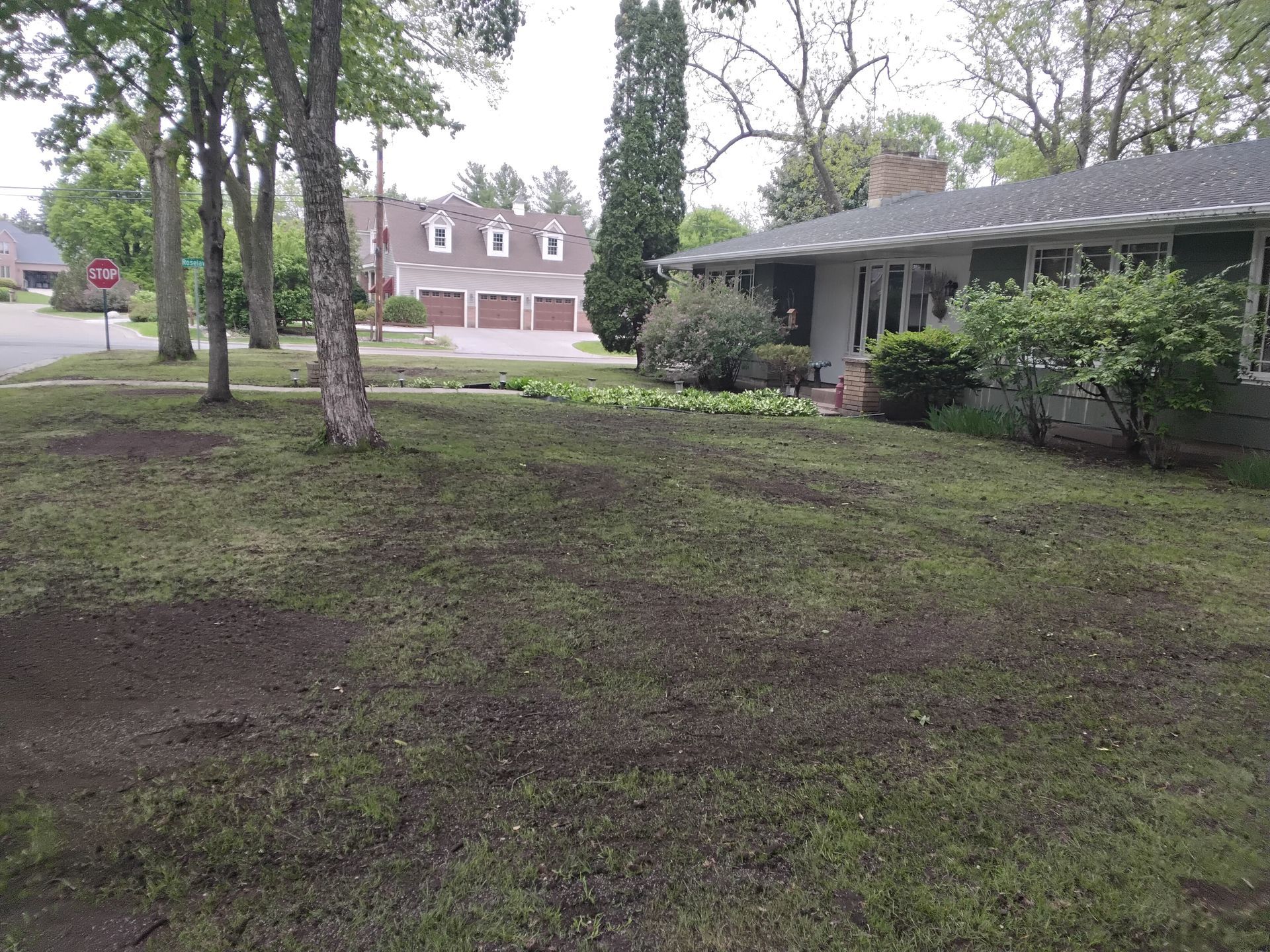
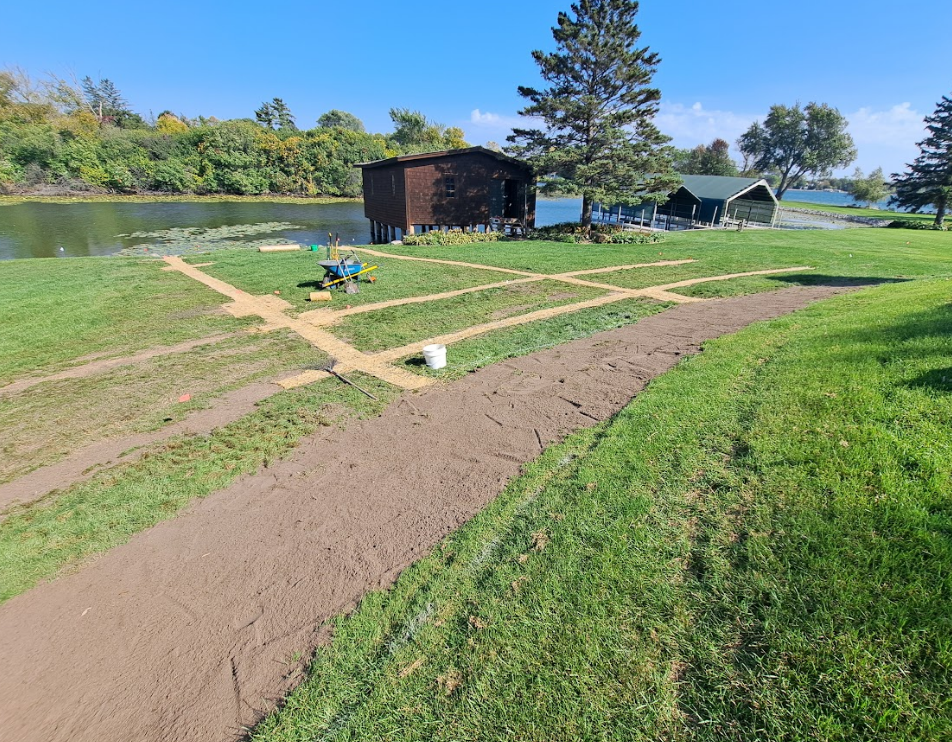
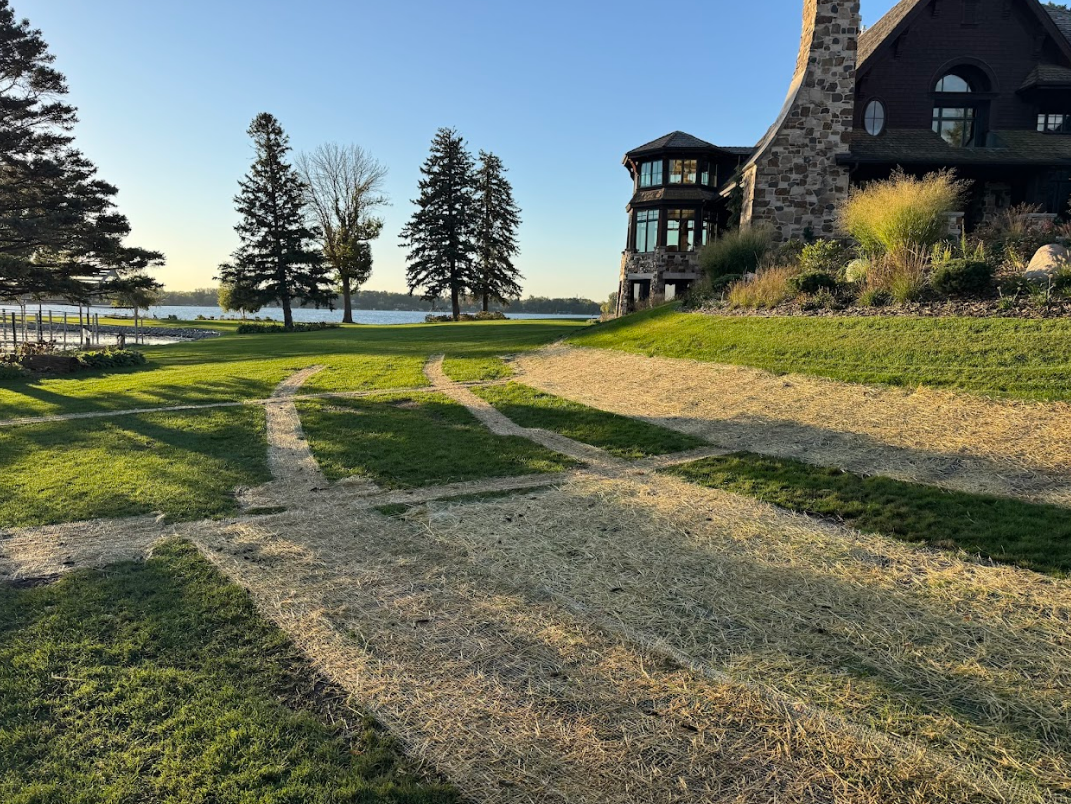
Throughout the project, our team paid special attention to protecting the Lake Minnetonka shoreline. Minimizing soil compaction and maintaining clean transitions between the lawn and riprap were critical to preserving the integrity of the lakefront. Once we installed the drainage infrastructure, we completed final grading and restored the turf we had disturbed. In some areas, this meant adding fresh soil, new seed, and straw matting to encourage growth. In others, we prepared the ground for new sod installation. Together, these next steps returned the lawn to a cohesive, finished appearance consistent with the rest of the Orono lakeshore property.
The Result: Successful Diversion of Excess Water to the Lake
With the completed drain tile system in place, the days of a waterlogged lawn sandwiched between the hill and lake were over. Our team significantly improved the lawn's drainage performance by capturing excess subsurface water and redirecting it away from the vulnerable flat space. Where clay-heavy soil once left this water with nowhere to go, the sandy soil along the trenches now captures this water and carries it into the perforated piping, where it drains to daylight at the riprap along Lake Minnetonka. Instead of rainwater pooling and lingering for days at the base of the hill, the lawn can now dry out more quickly and support healthy grass growth. This restored the usability of the space for recreation and lakefront enjoyment while also improving the overall appearance of the property, with a firm, even lawn surface that blends seamlessly with the surrounding shoreline landscape.
Why It Worked for Our Orono, Minnesota Client
This drainage solution was successful because it was anything but a one-size-fits-all, straight-from-the-catalog solution to our client's problems. This homeowner had a unique property with distinct conditions and concerns, so our team took a creative hybrid approach to addressing those concerns. This system, incorporating two drainage solutions along with careful consideration for a precious body of water, was a bespoke design specific to this Orono property. KG Landscape's tailored solution took soil conditions, elevation constraints, proximity to the shoreline, and homeowner expectations into account as it solved this challenging problem.
The flat lawn area at the hill's base created a natural collection point for runoff, while the clay-heavy soil prevented water from infiltrating and dispersing efficiently. Rather than rely on surface-level fixes, we dug deep to address the true source of the problem: subsurface saturation that a drain tile grid with more amenable soil could truly fix.
By incorporating a grid of perforated piping pitched toward controlled discharge points in the riprap, all 360 feet of the underground piping system worked within the property's existing layout instead of attempting to dramatically alter it. Our targeted removal of clay soil and its replacement with a 50/50 sand-soil mix further enhanced water movement directly around the drainage lines, improving performance in a soil profile known for poor permeability.
Equally important was the homeowner's goal of preserving a healthy, usable lawn that maintained the appearance and integrity of their lakefront landscape. Our final design allowed for effective water management without major shoreline disruption or excessive regrading—critical considerations on a Lake Minnetonka property.
Whether your home is beside a lake, a hill, or both, KG Landscape can solve your property's unique waterlogging issues, too, allowing you to fully enjoy your entire lawn again.
Ready to Start on Your Next Project?
Call us at (763) 568-7251 or visit our quote page.