Using Compost as Lawn Fertilizer: A Minnesota How-To
Can You Use Compost as Lawn Fertilizer?
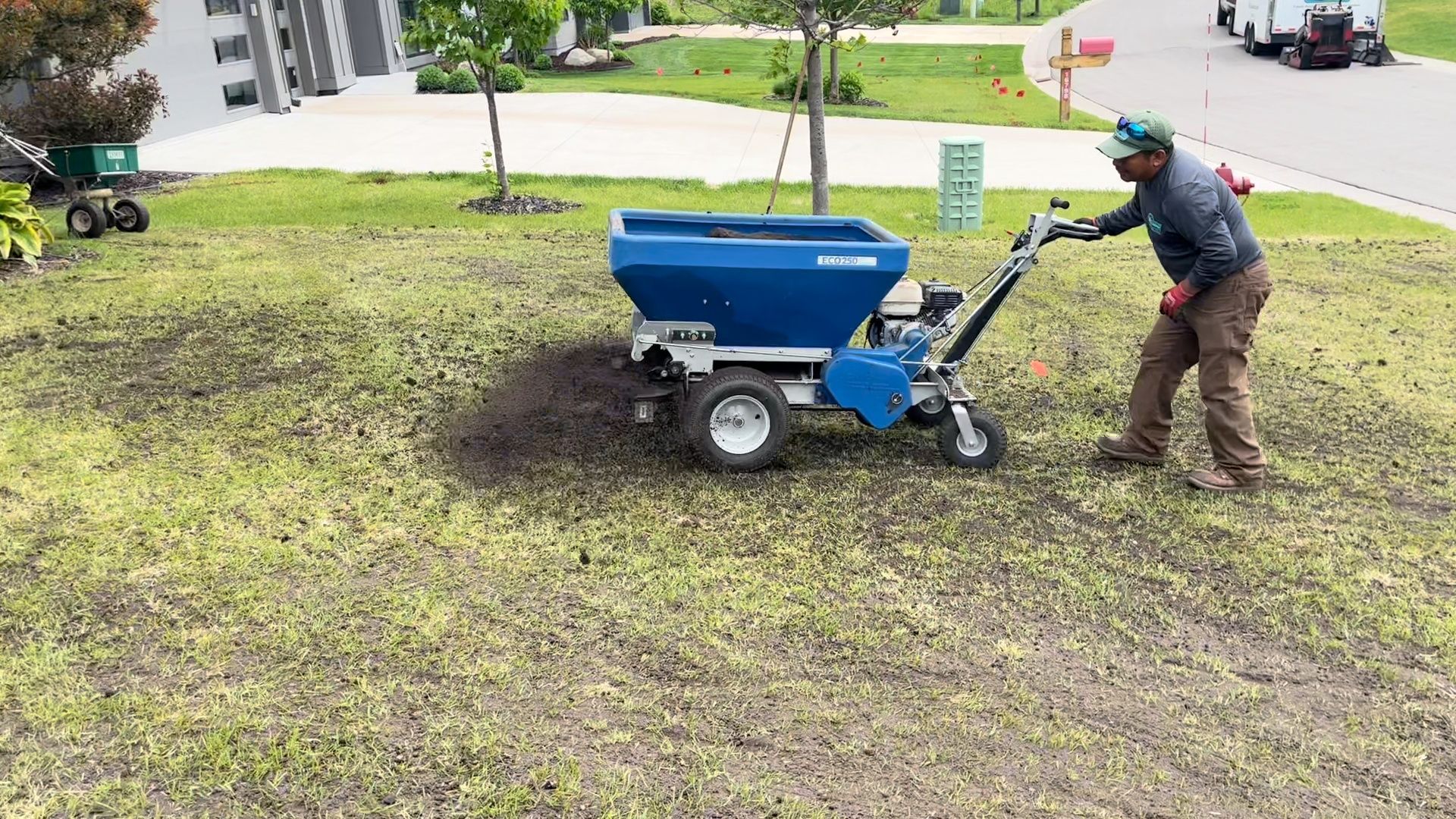
Can you use compost as lawn fertilizer? Yes, with one honest caveat: compost feeds your lawn slowly while it rebuilds the soil, so it works more like a long-term feeding than a quick one. On an existing lawn, the way we put compost to work is top dressing, spreading a thin layer across the turf so it settles into the soil. That's the whole method, and it's why using compost as lawn fertilizer really means top dressing with compost.
When a homeowner asks us about feeding their lawn the natural way, this is the conversation we have. Compost gives the grass a gentle, steady supply of nutrients and, more importantly, makes the soil better at holding and delivering everything else you put down. It's the move we reach for when a lawn is thin because the ground underneath is worn out, not because it missed a feeding. If you want the full range of services we use to keep a Minnesota lawn healthy, our lawn care page lays them out.
How Compost Feeds: A Slow-Release Layer of Organic Matter
Compost feeds differently than a bag of fertilizer, and the difference is the whole point. A thin layer of finished compost is mostly organic matter, with a modest, slow-release supply of nutrients. As soil microbes break that organic matter down, they release nutrients to the grass gradually and, at the same time, improve the soil's structure so it holds water and feeds roots better. Michigan State Extension describes compost as the way to build soil organic matter, which is exactly the long-term gain a synthetic feeding can't give you.
That dual job, feeding and soil-building at once, is why we lean on compost so heavily on tough metro soils. Most Twin Cities yards sit on dense clay that compacts and starves roots of air, or on sand that won't hold water or nutrients. A thin compost layer helps both, loosening clay over time and giving sand something to hold onto. When we treat a clay lawn, compost is doing two things at once: feeding this season and fixing the reason the lawn struggled in the first place.
How We Apply Compost as Lawn Fertilizer
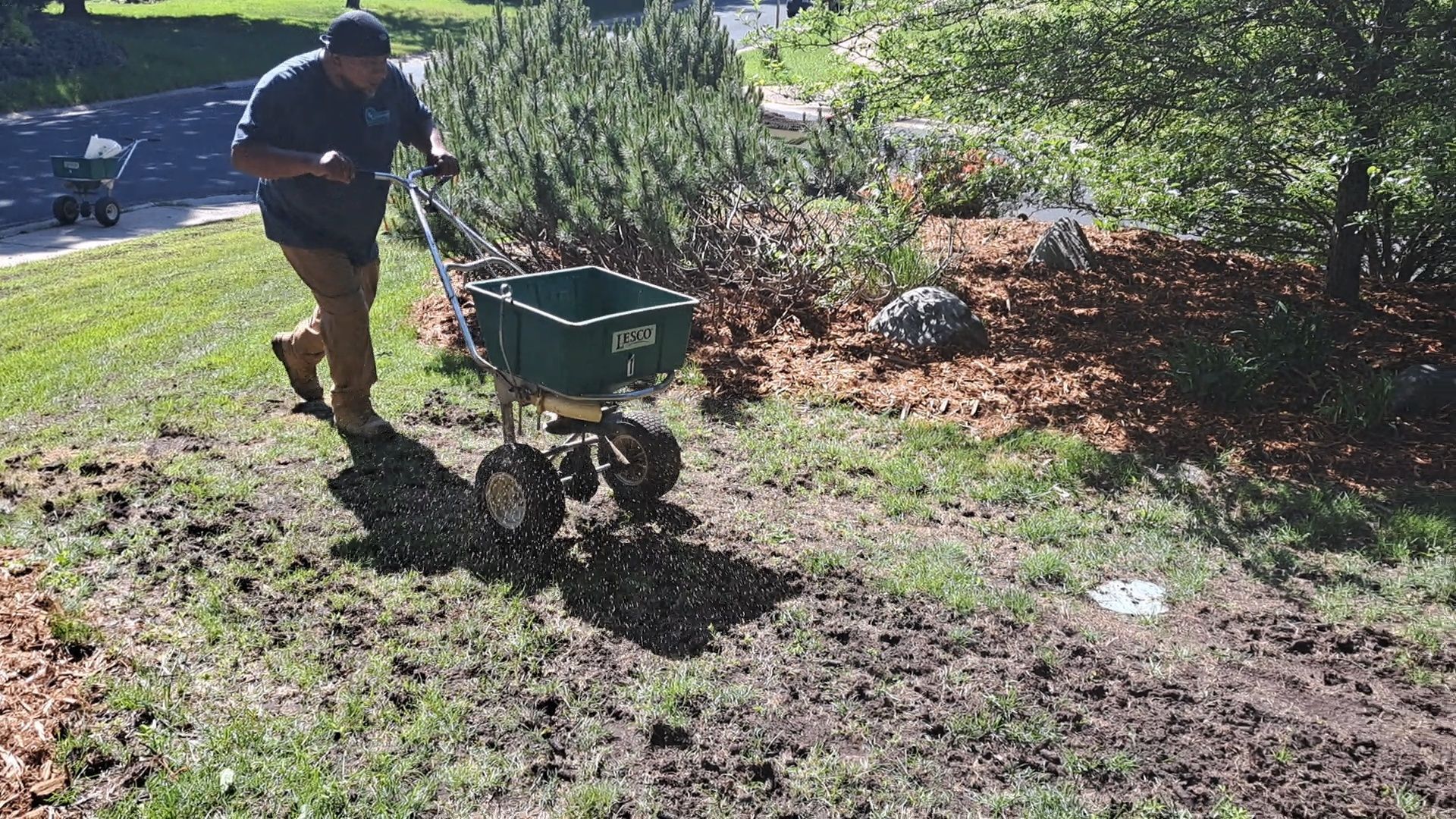
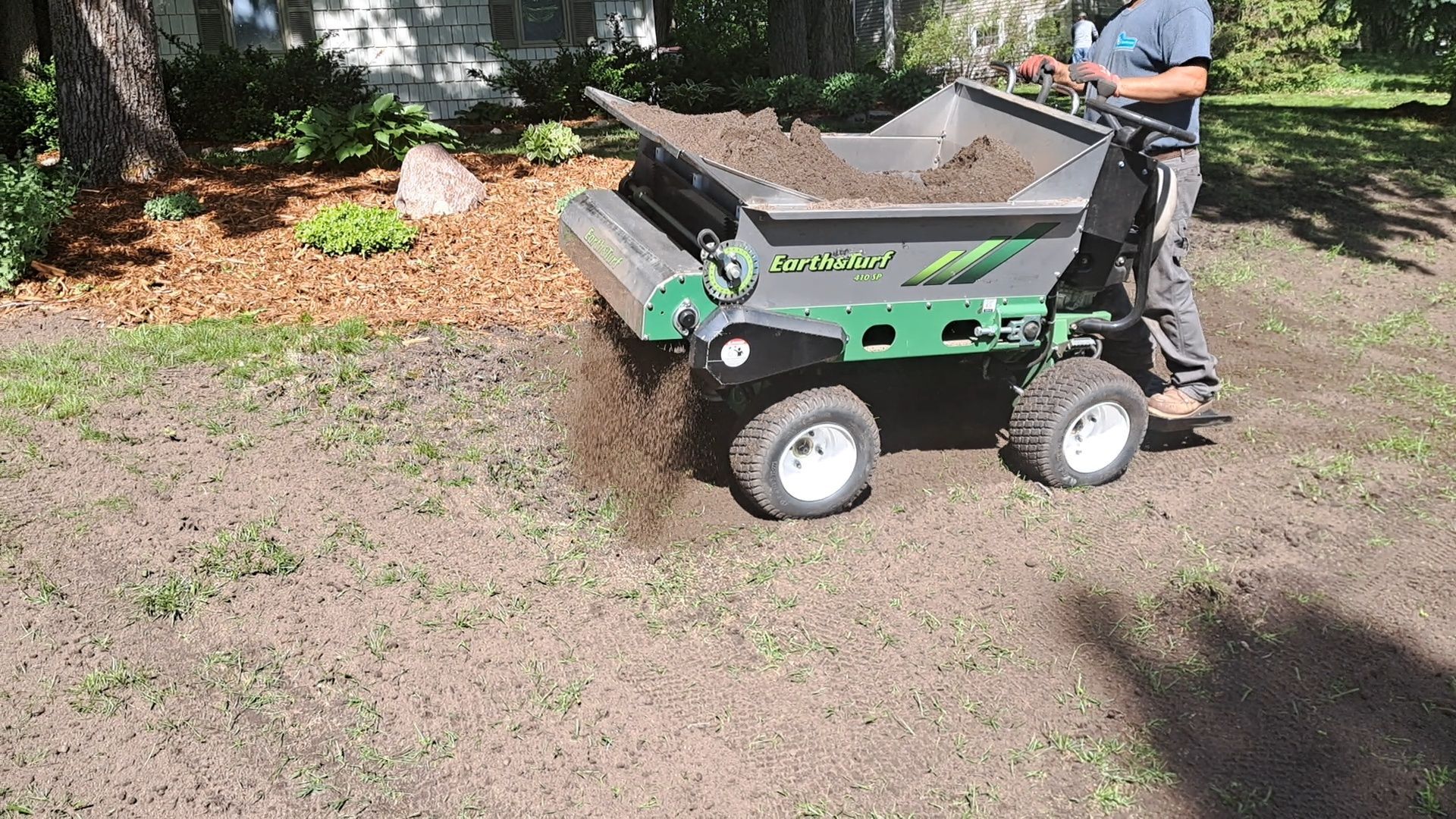
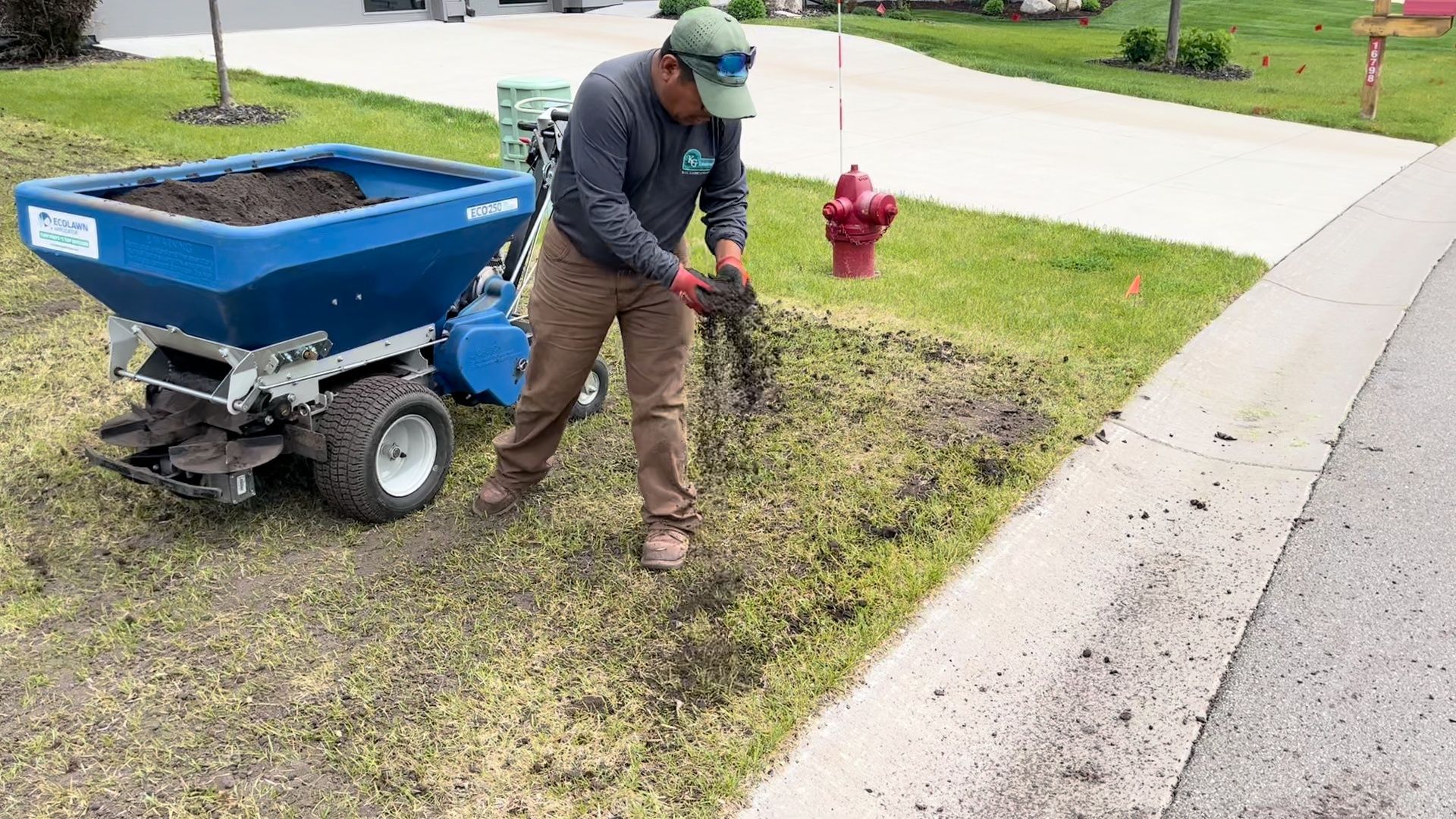
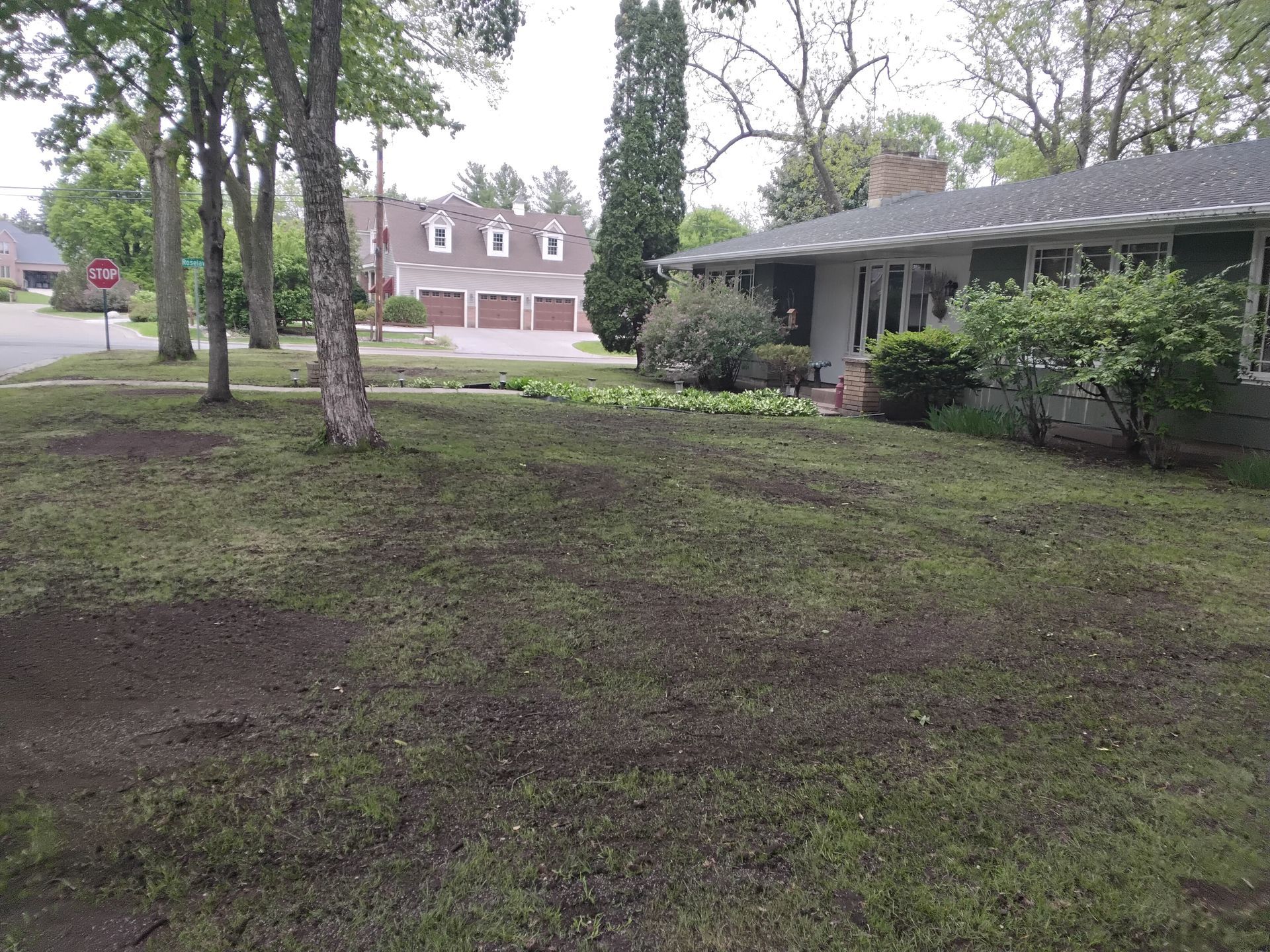
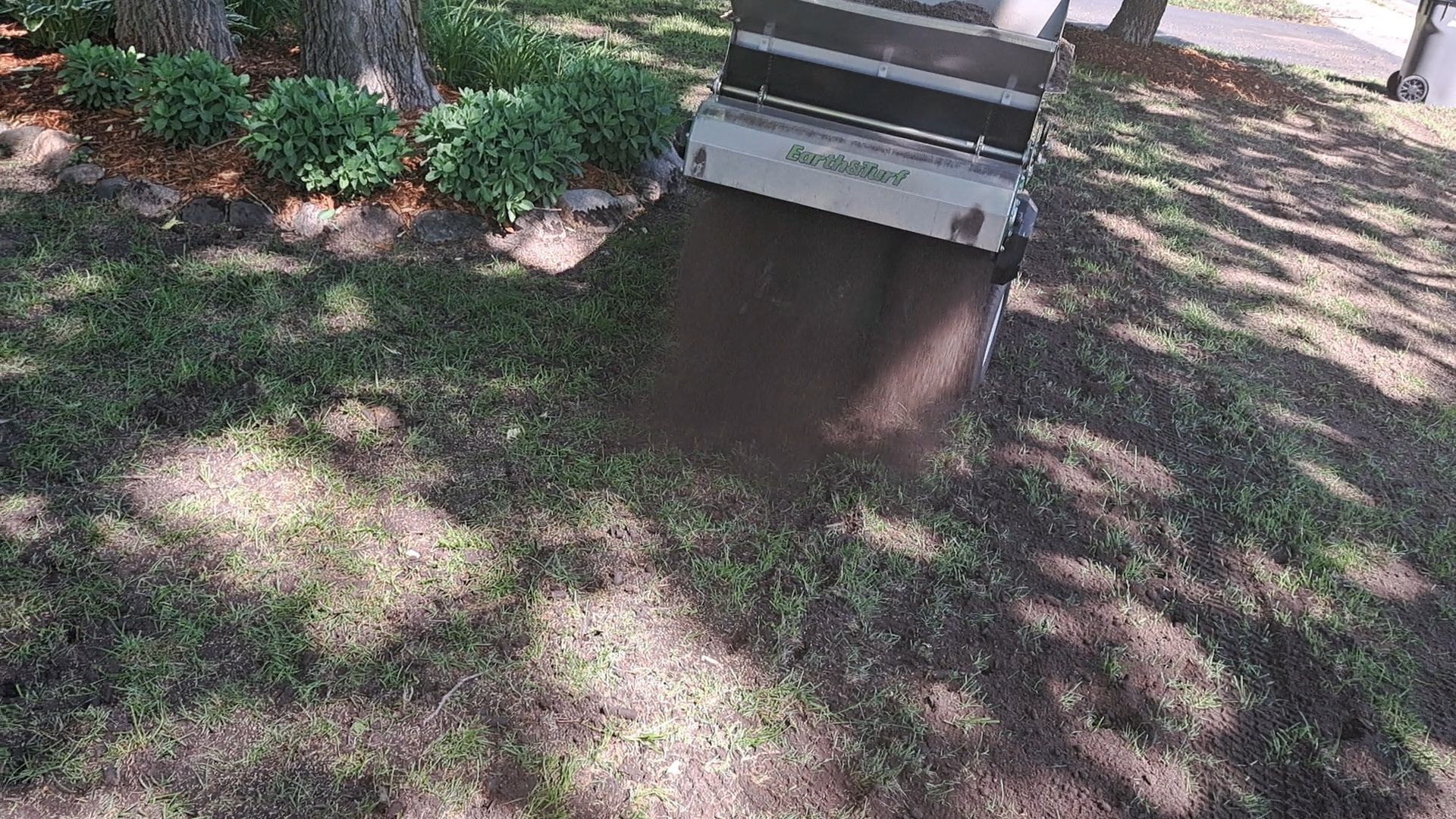
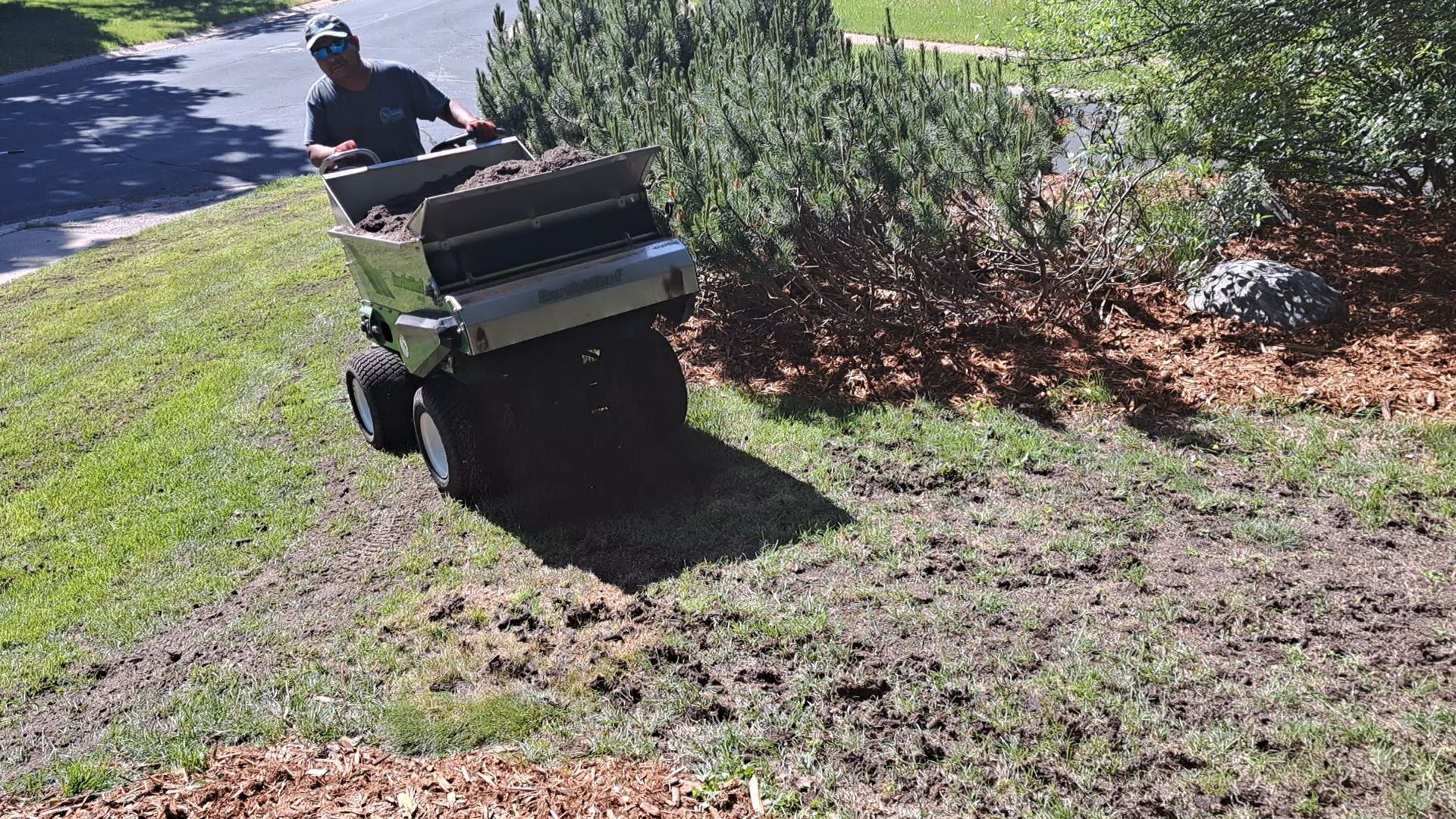
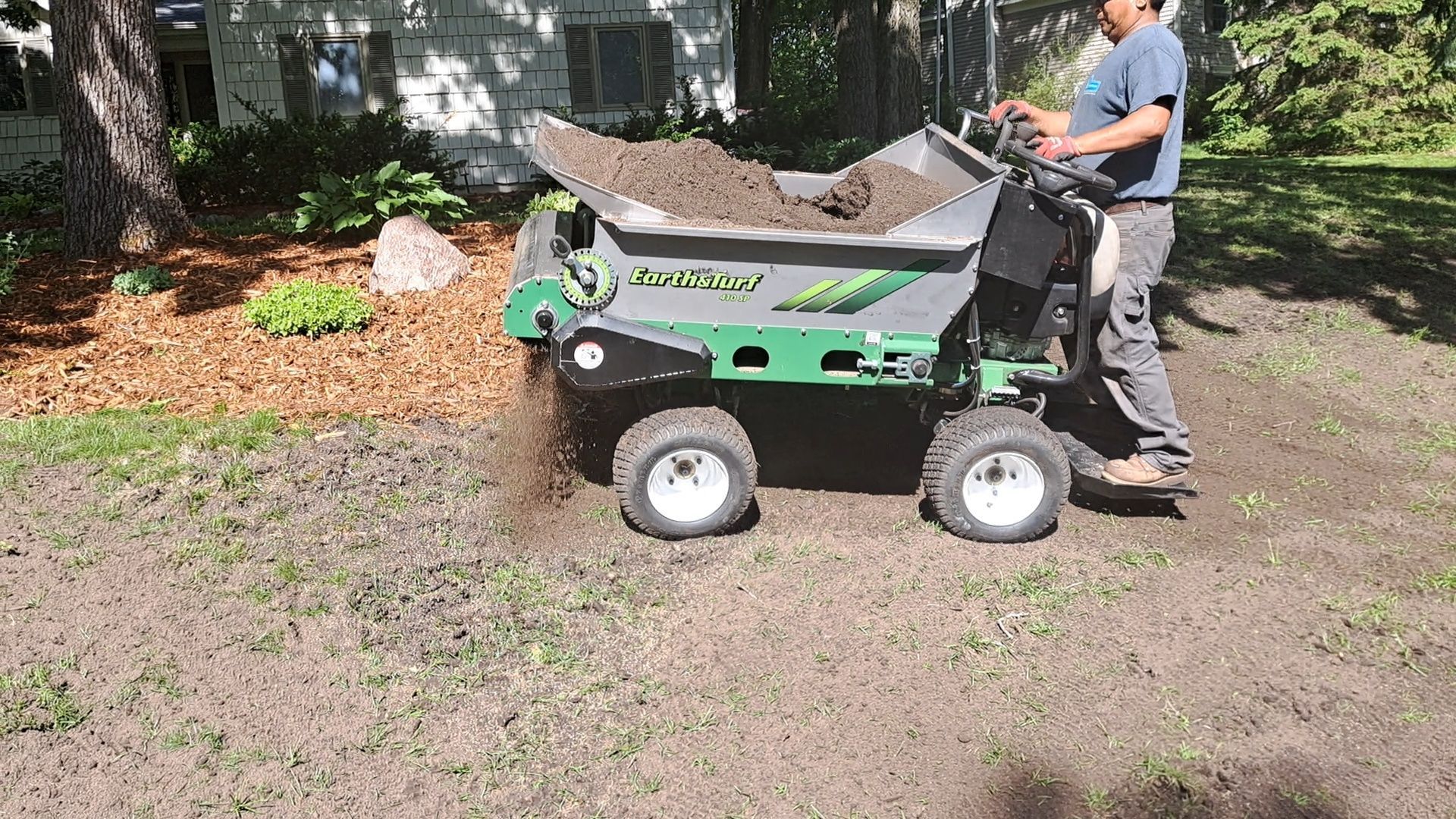
When we use compost as lawn fertilizer, here's how the job actually goes. We start with fully finished, screened compost, never coarse or unfinished material that can bring weed seeds. We run a double pass with the core aerator first, so the plugs and holes give the compost a direct path down to the roots. Then we spread a thin layer, about a quarter inch, and work it in so it disappears into the lawn rather than sitting on top. Going thicker for faster results is the most common mistake, and it smothers the grass.
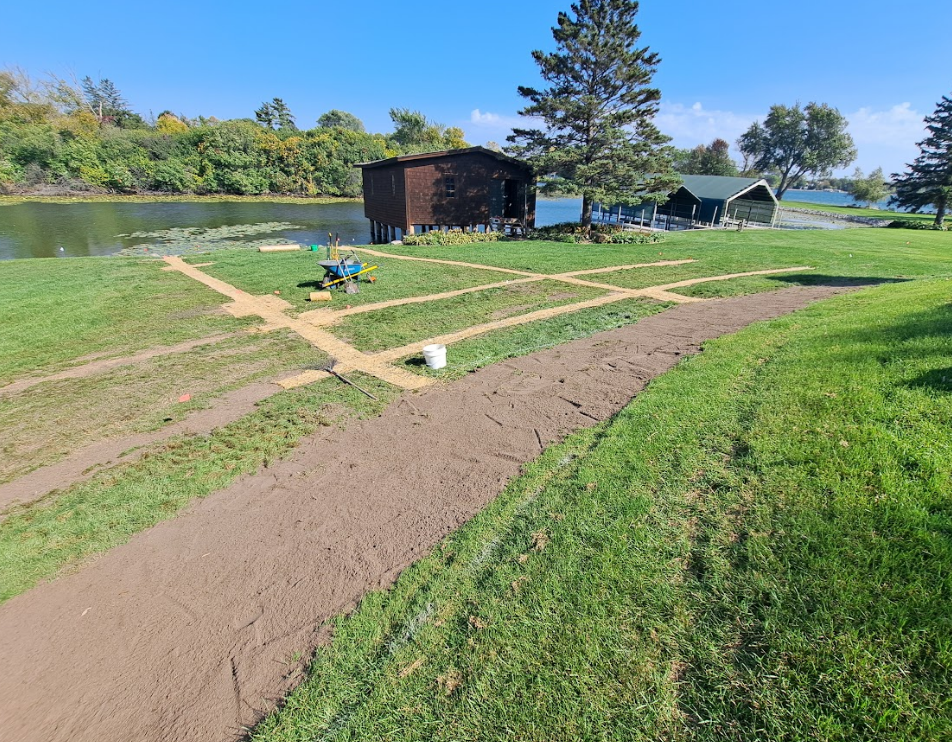
Pairing the top dressing with core aeration and overseeding is what turns a thin lawn around, because the same holes that take the compost also take new seed. This is the heart of our top dressing and lawn renovation work, and we plan each one around the yard's soil rather than a set package. You can see how it plays out on a thinning, uneven lakefront lawn we restored with topdressing in Minnetonka, and we do the same across Plymouth and the rest of the metro. The University of Minnesota Extension backs this approach to renovating a lawn for quality and sustainability.
When to Top Dress Compost in Minnesota
Timing is what makes compost pay off, and in Minnesota that means late summer into early fall. Applying compost then feeds the lawn and strengthens the soil while cool-season grasses are doing their hardest growing and storing energy for the cold months. A lawn that goes into winter dormancy on healthier, better-draining soil comes through the Minnesota winter in better shape and greens up faster in spring.
After we spread compost, we water it in lightly so it settles to the soil surface and the microbes can get to work. If you have an irrigation system, a deep, infrequent schedule helps the compost integrate without washing it off. The University of Minnesota Extension covers the basics of finished compost, and the short version for lawns is simple: use it fully composted, apply it thin, and time it for the growing season, not the heat of July.
Compost or Fertilizer: What to Realistically Expect
Here's the honest part. Compost won't match a synthetic feeding for speed or precision. If your lawn needs a fast green-up or a specific nutrient correction, fertilizer does that job better, which is why we often use both: compost to build the soil and a properly timed feeding to handle color and growth. Our fertilization and weed control program covers the feeding side on a real seasonal schedule.
For homeowners who want to lean into the soil-first, low-chemical approach, our organic lawn program uses slow-release organic inputs built on the same principle as compost. And if you want to understand why feeding the soil works at all, it comes down to the living part of the ground, which we cover in how to increase soil microbes.
Before we put anything down, we'd rather pull a soil test than guess, so you spend on what your lawn actually needs. If you're not sure whether compost, fertilizer, or both is right for your yard, reach out for a free quote and we'll tell you what the soil is asking for.
Frequently Asked Questions
How much compost should you put on a lawn?
A thin layer, about a quarter inch, is the rule for an established lawn. That works out to roughly three-quarters of a cubic yard of compost per 1,000 square feet. The temptation is to go thicker for faster results, but a heavy layer smothers the grass and does more harm than good. If a lawn needs more help than a quarter inch can give, we add it over two seasons rather than burying the turf in one pass. Thin and repeated beats thick and all at once.
Do you need to aerate before top dressing compost?
You don't have to, but on most lawns we do, because it makes the compost work far better. Core aeration pulls plugs and opens channels, so the compost and any new seed reach the root zone instead of sitting on the surface. On compacted clay, which is most of the metro, skipping aeration wastes half the benefit. The one time we might skip it is a loose, sandy lawn that isn't compacted. For a typical Minnesota lawn, aerate first, then top dress.
Can bagged compost work, or do you need bulk compost?
Bagged compost works fine for a small lawn or a patch, and it has the advantage of being screened and consistent. The catch is cost and volume: covering a full lawn a quarter inch deep takes a lot of bags, and bulk compost is far cheaper by the yard. For most full-lawn projects we use quality bulk compost. Whichever you choose, the real test is that it's fully finished, screened, and weed-free. Cheap, unfinished bulk compost can bring weed seeds you will fight for years.
Does compost help a lawn through a Minnesota winter?
Indirectly, yes. A fall top dressing feeds the lawn gently and improves the soil while the grass stores energy before winter dormancy, so it heads into winter stronger and greens up faster in spring. Compost also improves drainage and structure, which reduces the soggy, ice-prone spots that damage turf over a Minnesota winter. It won't shield grass from extreme cold the way snow cover does, but a lawn on healthier soil consistently comes through winter in better shape than one on hard, dead ground.
Can you put compost down in spring, or is fall better?
Both work, and fall is our first choice. Late summer into fall gives the lawn two cool growing seasons to use the compost before summer heat, and it pairs naturally with fall aeration and overseeding. Spring top dressing is a fine second option, especially if fall got away from you, but spring also means working around crabgrass preventer if you are seeding at the same time. If you only top dress once a year, do it in fall. If you want to push a struggling lawn, spring and fall both work.
How soon will I see results from using compost?
Slower than fertilizer, faster than you would fear. Most lawns show a real difference over one full season, with the biggest gains the year after the first application as the soil keeps improving. You won't get the week-one green flush a nitrogen feeding gives, and that catches people off guard. What you get instead is a lawn that holds color longer, needs less water, and thickens steadily. If you need a fast visual result for an event, pair the compost with a feeding and let the compost do the long-term work.
About the Author
I'm Kent Gliadon, founder of KG Landscape and a graduate of the University of Minnesota Landscape Design program. For over 20 years, I've focused on integrating well-planned landscape design and installation work with properly engineered outdoor drainage solutions. I believe discerning homeowners deserve landscaping and drainage renovations that are carefully planned from the beginning, accounting for water movement, grading, soils, hardscaping, and future use, so problems are prevented before they occur. These articles explain how and why specific solutions are implemented and what it takes to maintain properties that truly last.
Ready to Start on Your Next Project?
Call us at (763) 568-7251 or visit our quote page.