Is Compost a Fertilizer? What It Really Does for Your Lawn
Is Compost a Fertilizer? The Short Answer
Is compost a fertilizer? Not in the strict sense. Compost is a soil amendment that carries some nutrients, not a fertilizer built to feed the plant directly. Fertilizer delivers a measured dose straight to the grass. Compost does something broader and slower: it builds the soil those roots grow in.
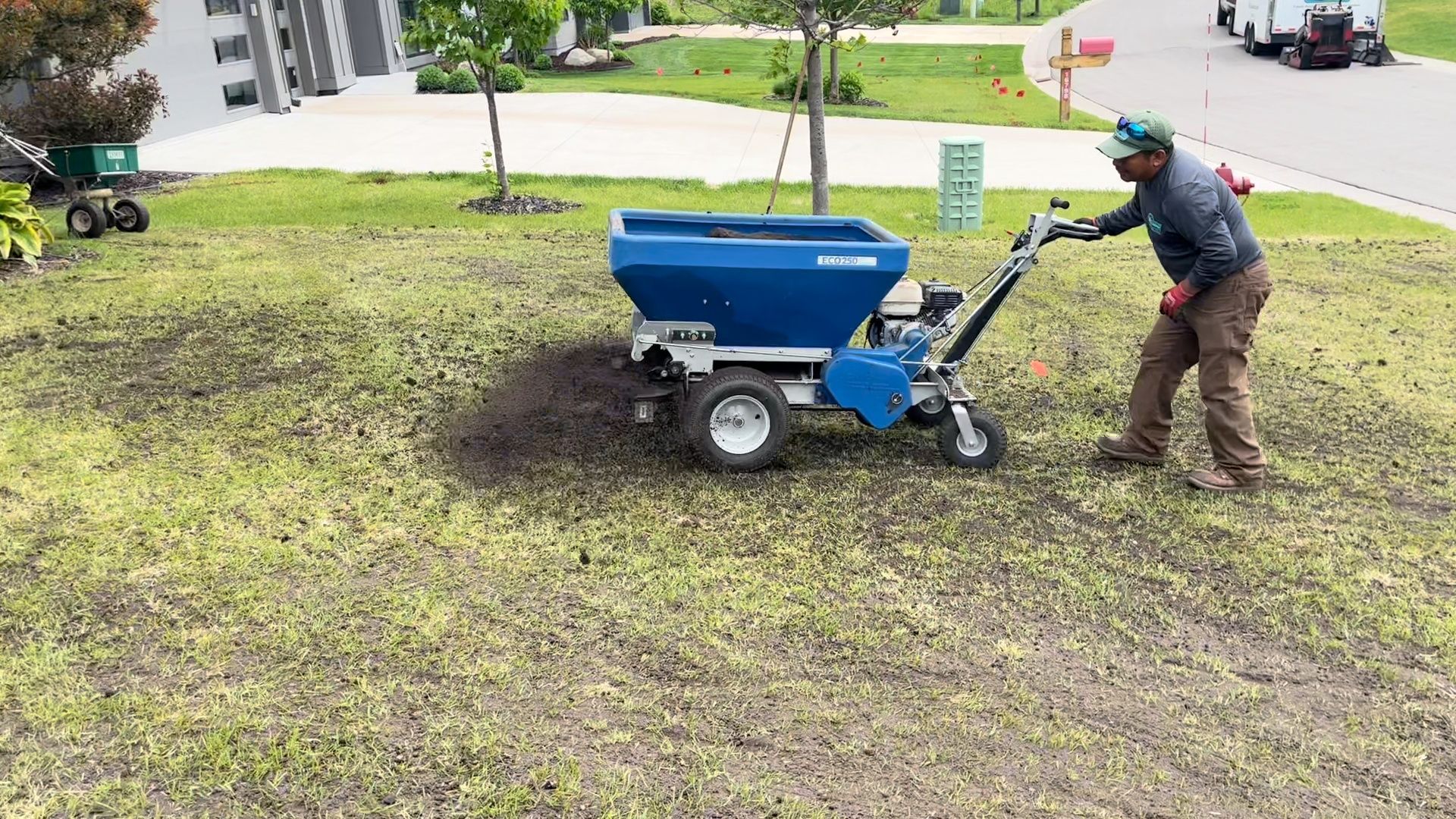
That distinction is the first thing we sort out on a site visit. When a homeowner calls us because their lawn won't thicken no matter how much they fertilize, the problem is almost never the fertilizer. It's the soil underneath, and compost is what fixes it. On an existing lawn, the way we actually put compost to work is top dressing, spreading a thin layer of finished compost across the turf so it works down into the soil. We don't till it into a lawn anyone wants to keep, and we never just pile it on. So the real question isn't only "is compost a fertilizer," it's what compost does and how it gets into a lawn that's already there. If you want the full menu of services we use to keep a Minnesota lawn healthy, our lawn care page lays them out.
What's in Compost, and Why Top Dressing Delivers It
Compost does contain nitrogen, phosphorus, and potassium, the same three numbers on a fertilizer bag, just in much smaller amounts. Where a synthetic fertilizer might be twenty-some percent nitrogen, finished compost usually runs in the low single digits for each. What it has in bulk is organic matter, plus micronutrients and a living population of soil microbes a bag of fertilizer can't offer. The University of Minnesota Extension treats compost as a source of organic matter first and nutrients a distant second.
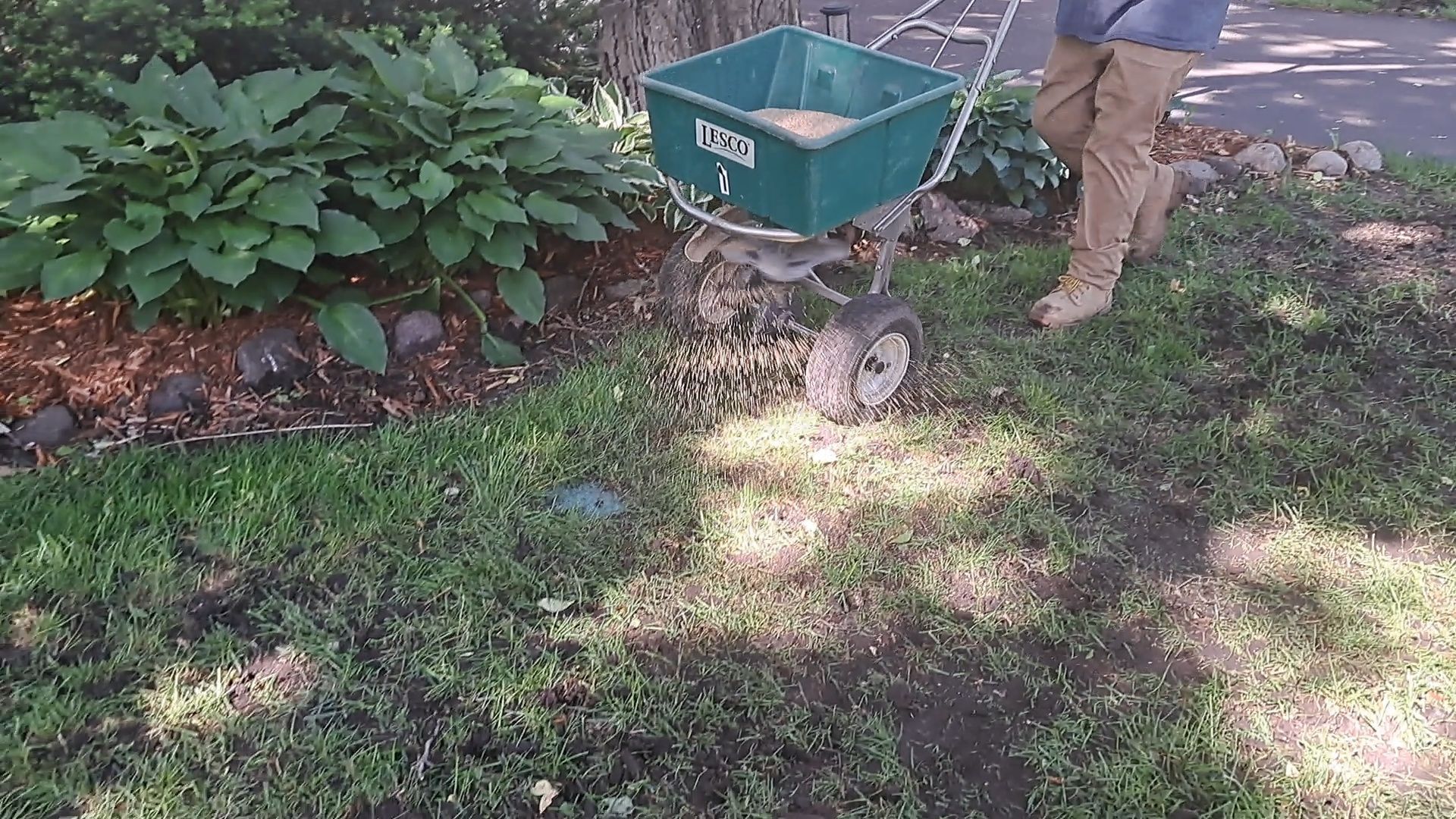
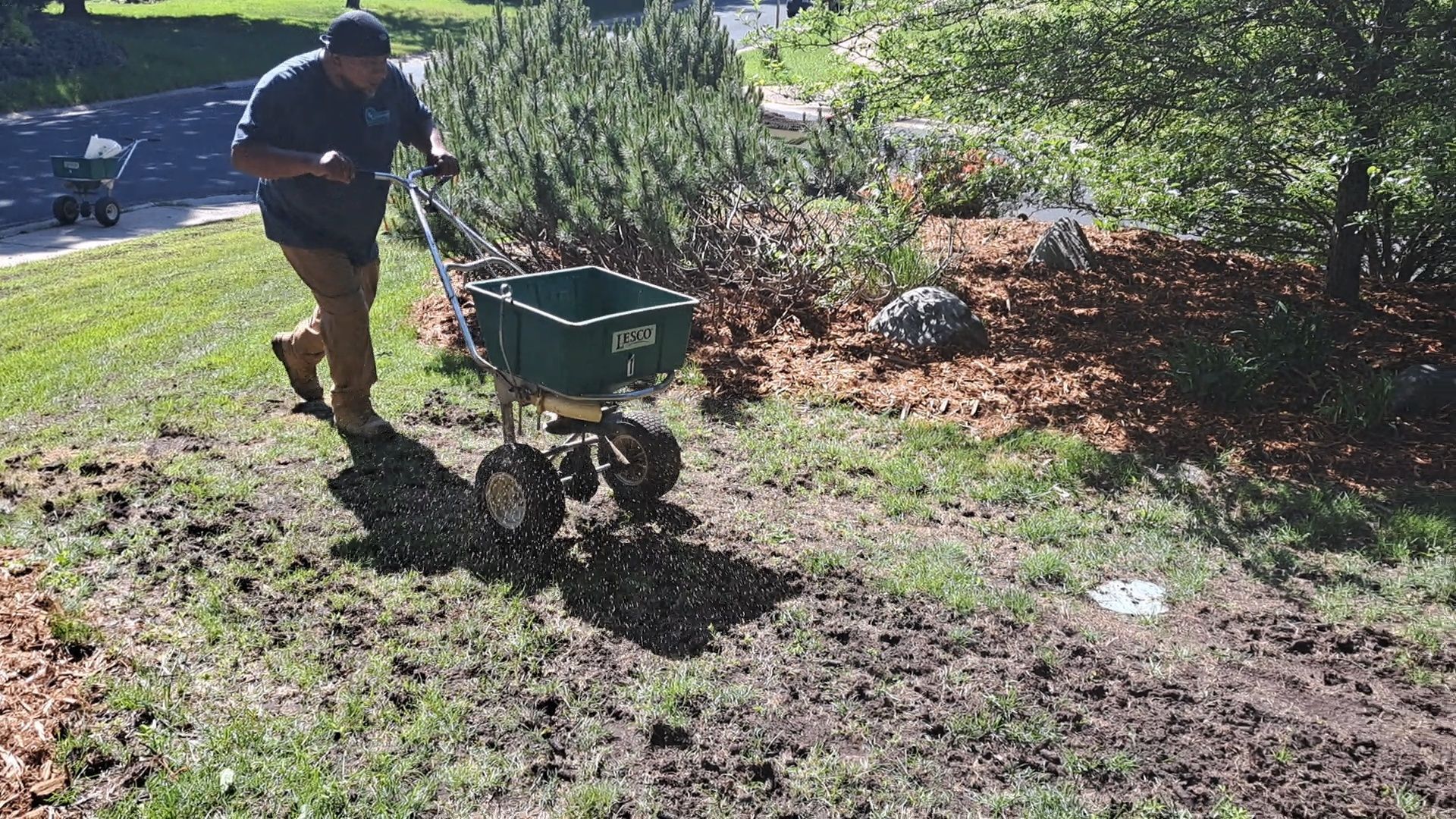
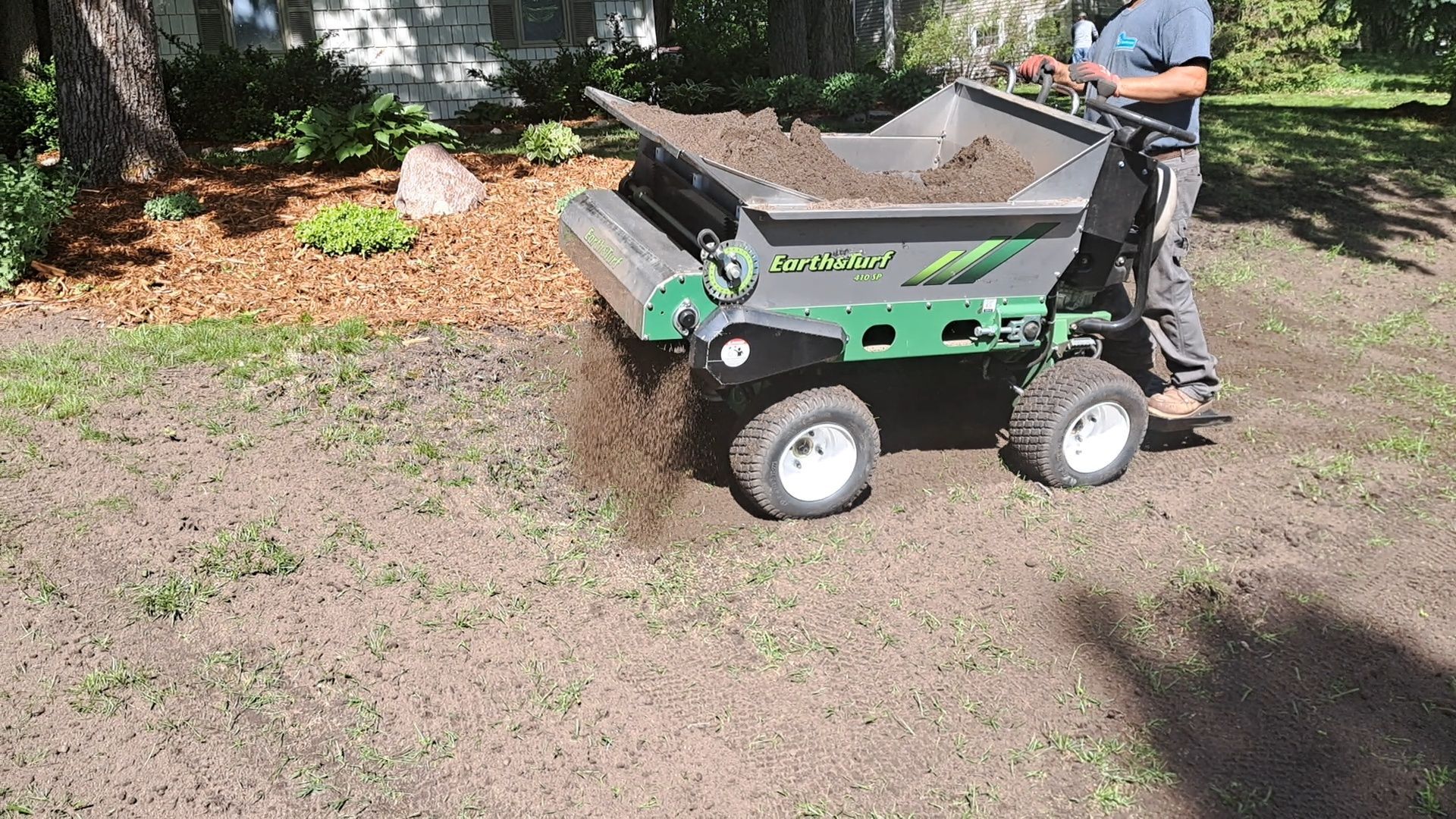
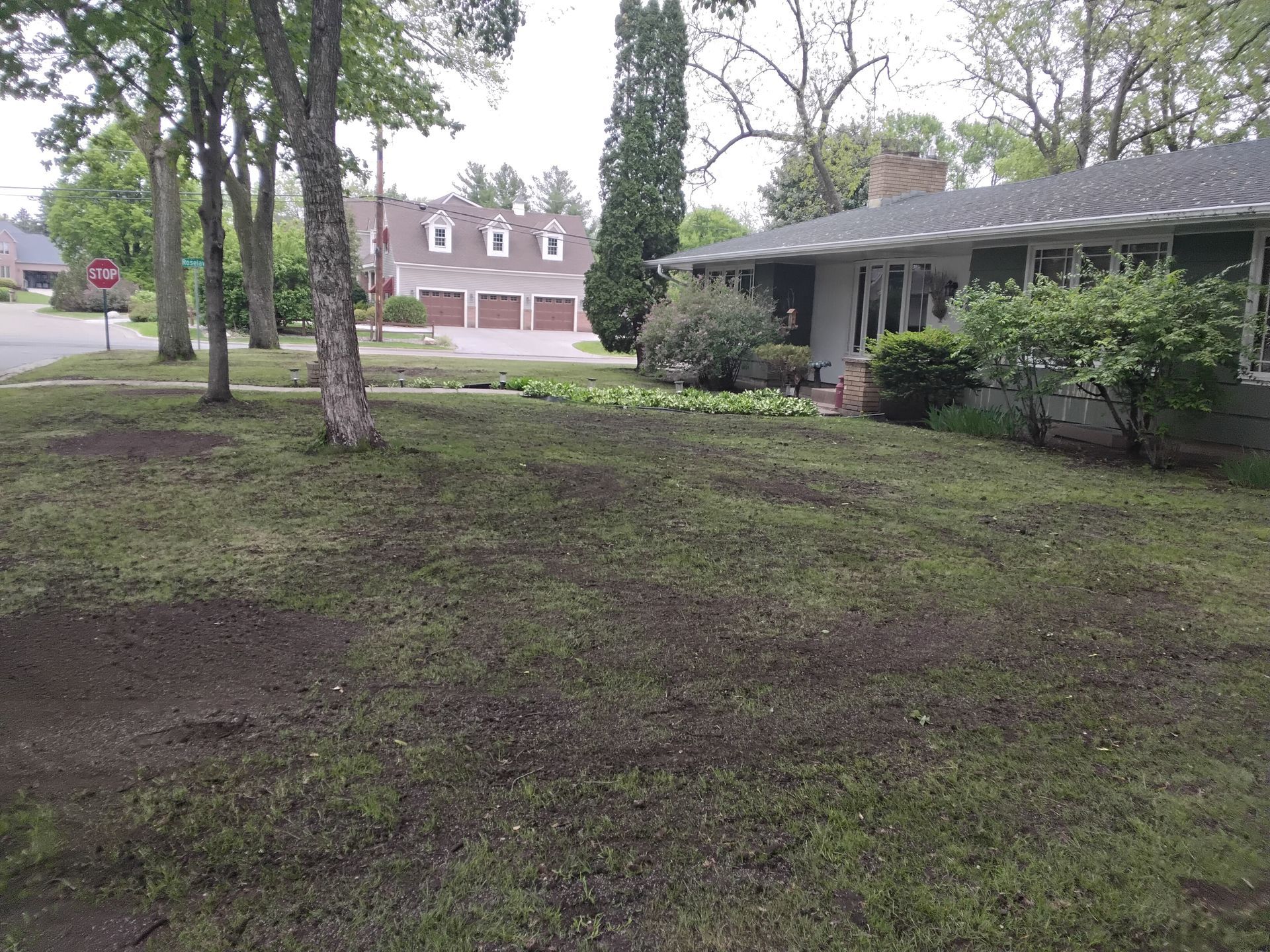
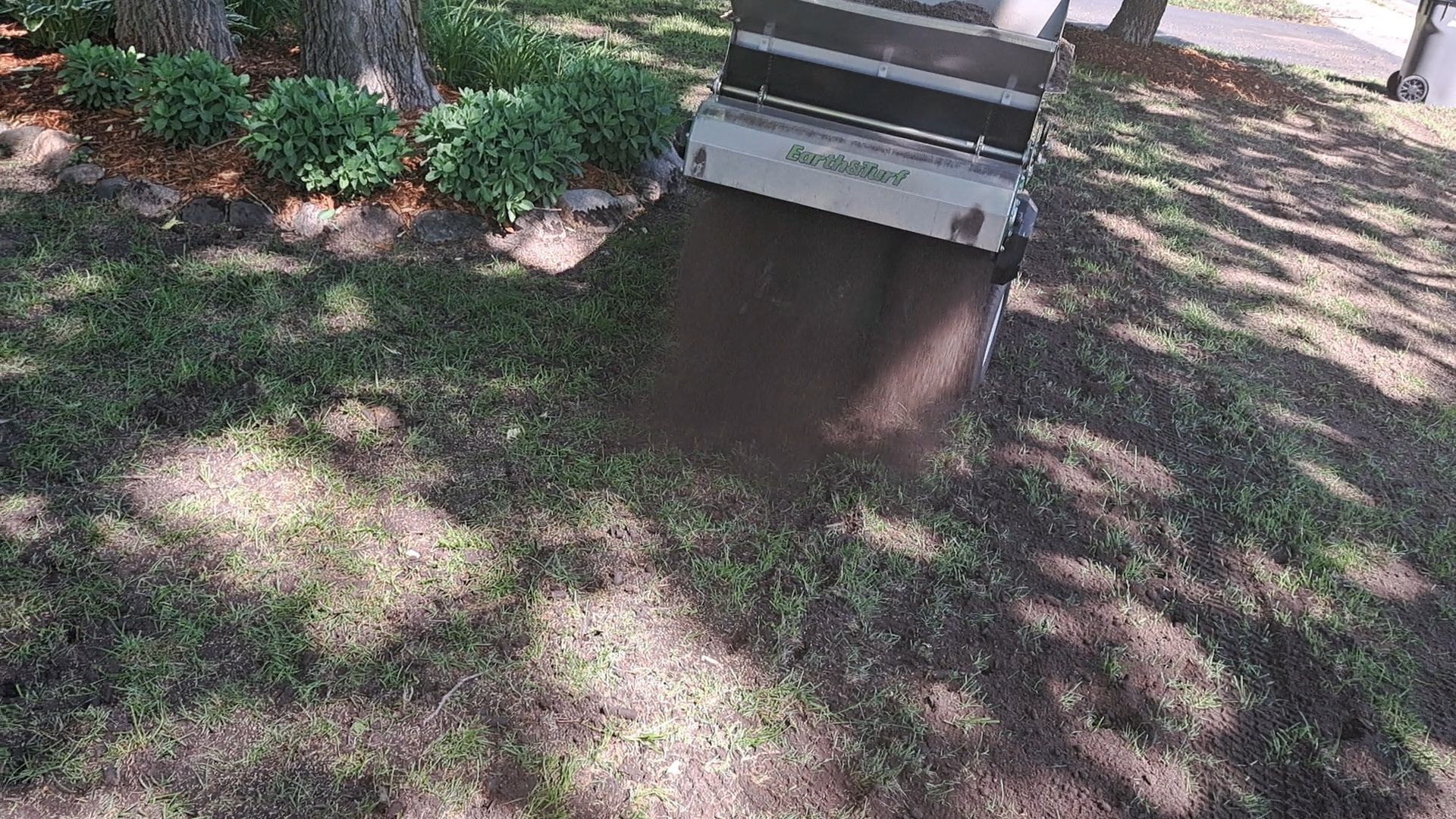
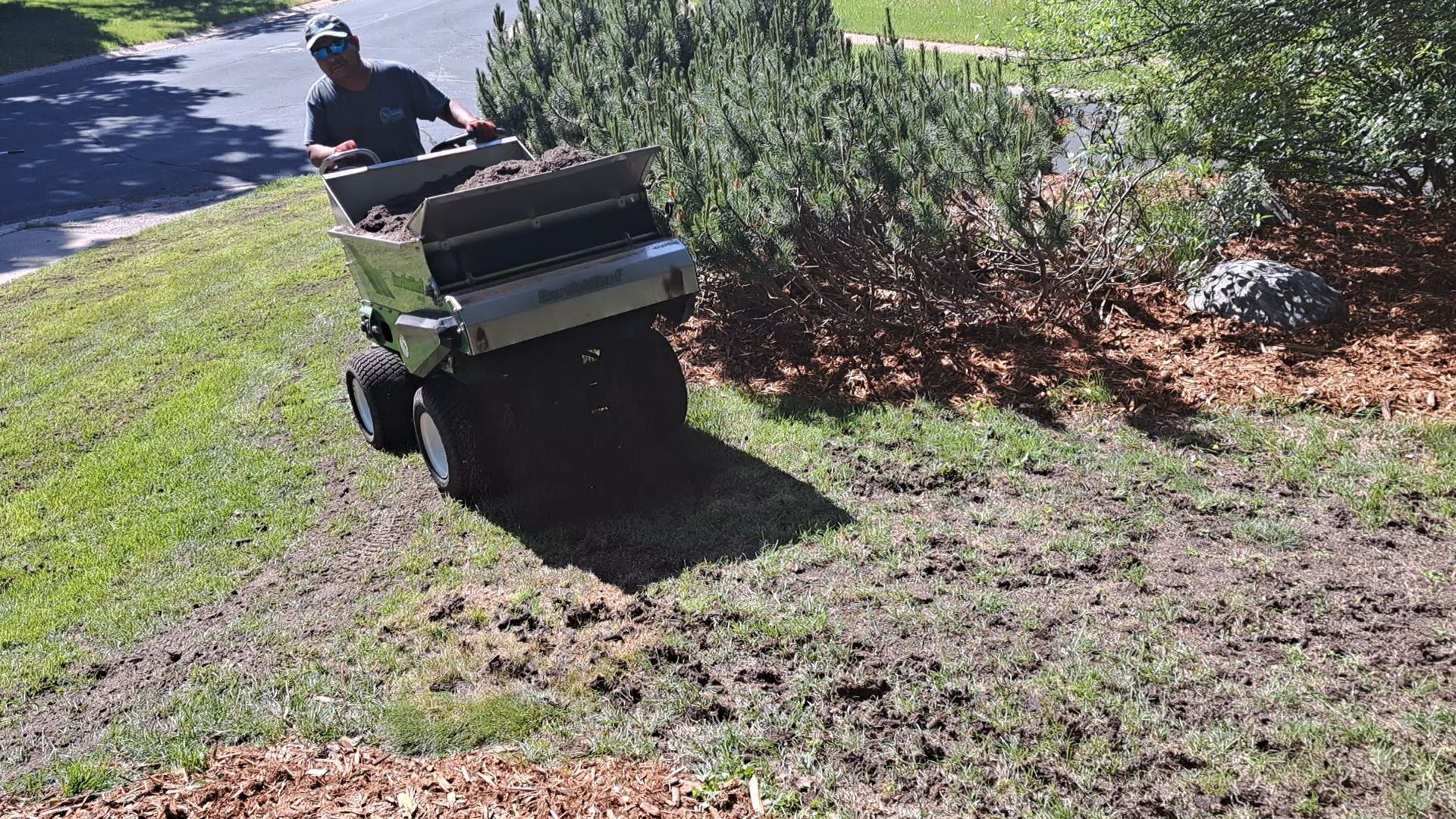
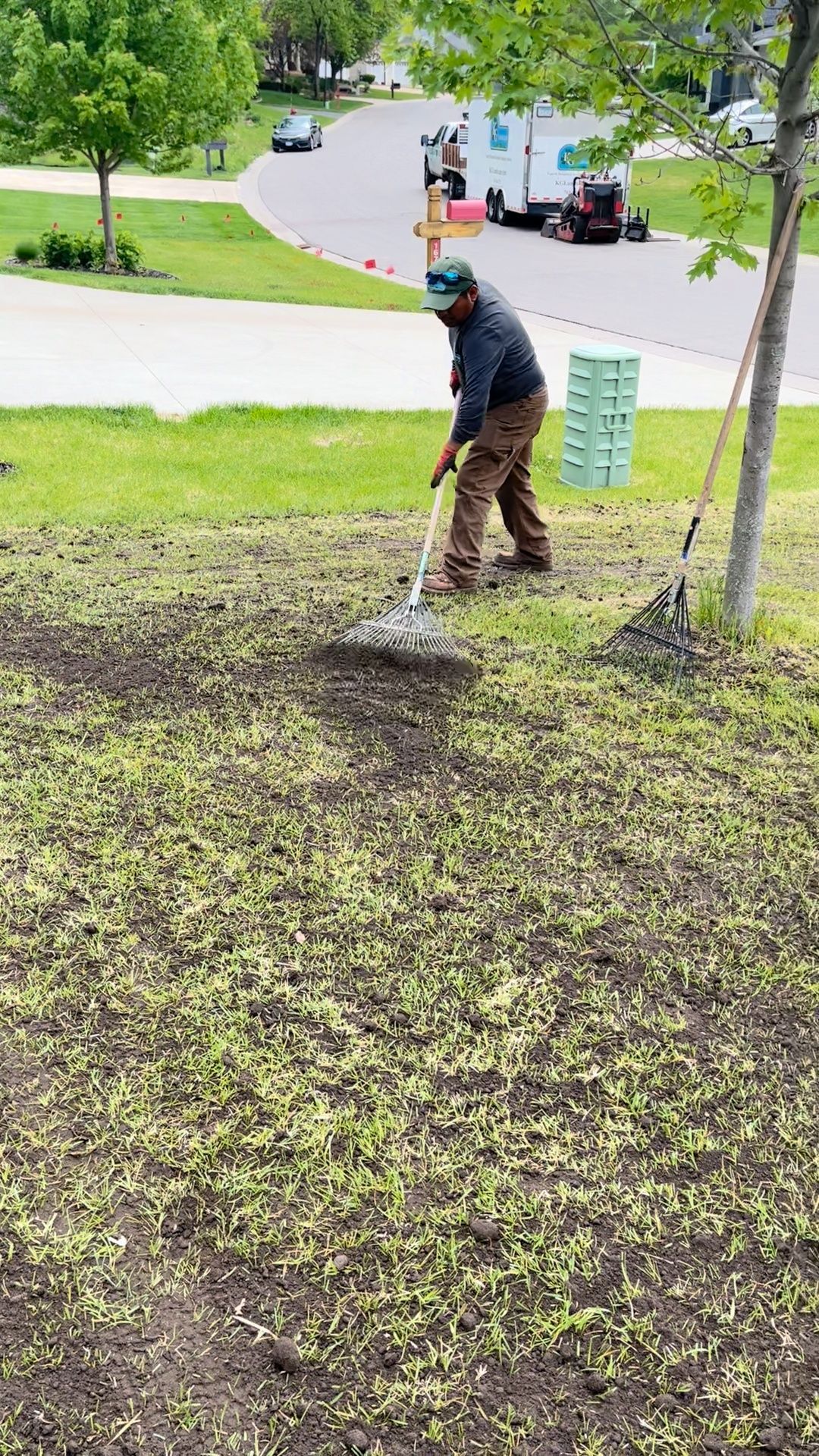
That low, broad profile is exactly why how we apply it matters so much. When we top dress, we use fully finished, screened compost and lay down a thin layer, around a quarter inch, so it sifts into contact with the soil and roots instead of smothering the grass. Dumped thick or left in a pile, compost does a lawn no good. Spread thin, it goes to work. Most Twin Cities yards we see sit on either dense clay that compacts and drains slowly or sand that holds nothing, and a thin compost layer helps both. It's why we top dress so many clay lawns across the metro, including a lot of work in Edina, where the soil under a struggling lawn is usually the real story.
How Top-Dressed Compost Releases Through the Soil
Compost feeds on a slow clock, and we plan around that. Finished compost has a balanced carbon-to-nitrogen ratio, so soil microbes break it down gradually and release nutrients over weeks and months instead of all at once. That slow release is the point. It feeds steadily, keeps improving soil structure as the organic matter integrates, and won't scorch a lawn the way a heavy dose of synthetic nitrogen can in a hot Minnesota July.
When we time a top dressing for late summer, it's because the process runs on soil temperature and moisture. Compost we lay down in late August keeps working gently into fall and starts again the next spring, right when our cool-season grasses want to grow. Oregon State Extension describes compost as a slow, steady trickle of nutrients that also improves how soil holds water, which is exactly what we're after. We're not feeding the lawn for a week. We're upgrading the ground it lives in, and top dressing is how we deliver that upgrade so the microbes can actually reach it.
Is Compost a Fertilizer, or a Soil Amendment You Top Dress?
Here's the rule we work by: you top dress compost to build soil, and you spread fertilizer to feed the plant. Different tools, different jobs, and the strongest lawns get both at the right time. Compost is the long game that makes everything else work better. Fertilizer is the seasonal feeding that delivers quick, visible growth. When we set expectations with a homeowner, this is the conversation, because someone who top dresses compost expecting a week-one green-up will be let down, when the real win was happening underground.
Bone meal is a useful contrast. It's organic, but it's a true fertilizer, a concentrated source of phosphorus aimed at the plant. Compost is the opposite: broad, dilute, aimed at the soil. Over time, top dressing with compost can genuinely cut how much fertilizer a lawn needs, because healthier soil holds and cycles nutrients better, but it won't replace a feeding outright. Before we add either, we'd rather pull a soil test than guess, and the University of Minnesota Extension makes that an easy first step that saves money and prevents runoff. Our fertilization and weed control program handles the feeding side on a real seasonal schedule, and we go deeper on the practical comparison in using compost as lawn fertilizer.
Top Dressing Compost on a Minnesota Lawn
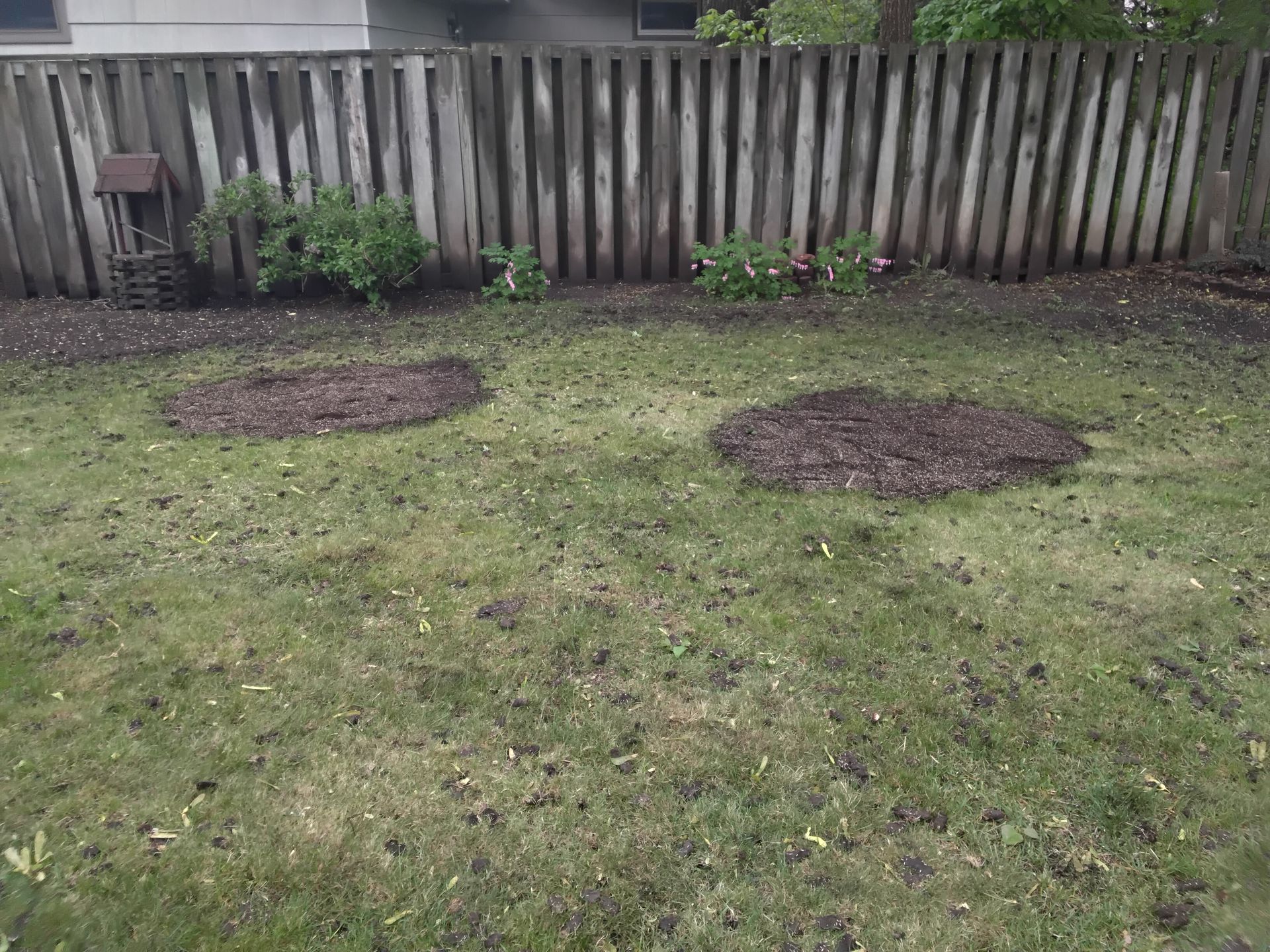
When we put compost to work on an established lawn, here's how the job actually goes. We start with fully finished, screened compost, never coarse or unfinished material that sits on top, looks rough, and can bring weed seeds. We run a double pass with the core aerator first, so the holes give the compost and any new seed a direct path to the root zone, then we spread a thin quarter-inch layer and work it in. Pairing the top dressing with core aeration and overseeding is what turns a thin lawn around, not compost on its own, and matching the grass seed to the yard's light and soil is part of the same job.
Timing seals it. We schedule this work for late summer into early fall, when cool-season grasses grow hardest and weeds are fading. KG Landscape has renovated Twin Cities lawns since 2003, and we plan each top dressing and lawn renovation around what a yard's soil actually needs rather than a one-size package. You can see how we approach it on a new-construction lawn we strengthened with topdressing and overseeding in Mendota Heights, where poor builder soil was the thing holding the grass back. When a homeowner wants the soil-first approach without the chemicals, our organic lawn program uses slow-release organic inputs built on the same principle as compost.
So, is compost a fertilizer? No, and that's the good news. It's the soil builder a feeding can't replace, and we deliver it through top dressing. If you're not sure whether your lawn needs compost, fertilizer, or both, reach out for a free quote and we'll tell you what the soil is actually asking for.
Frequently Asked Questions
Does compost have an NPK ratio?
Yes, but a low and variable one. Finished compost typically tests in the low single digits for nitrogen, phosphorus, and potassium, something like 1-1-1 in rough terms, compared with the double-digit numbers on a synthetic fertilizer bag. The exact ratio depends on what went into the compost and how finished it is. That's why we value compost more for its organic matter and soil-building than for hitting a specific nutrient target. If a lawn needs a precise nutrient correction, a fertilizer matched to a soil test does that job better.
Can you apply compost and fertilizer at the same time?
Yes, and we often do. Compost improves the soil's ability to hold and release nutrients, while fertilizer delivers a targeted feeding the grass uses right away. A lot of our renovations do both in one visit: aerate, overseed, top dress with compost, and apply a starter feeding. The one caution is to base the fertilizer rate on a soil test rather than guessing, since adding nutrients the soil already has is wasteful and can run off into local waterways. Used together thoughtfully, they cover both the short game and the long game.
How long does compost take to release its nutrients?
Slowly, over weeks to months, rather than in a quick hit. Soil microbes have to break the organic matter down before the nutrients reach the grass, and that runs on soil temperature and moisture. In a Minnesota season, a late-summer top dressing keeps feeding gently into fall and picks back up the next spring. This is why we don't reach for compost when a lawn needs a fast green-up, and why we do reach for it when the goal is steady, lasting improvement to the soil itself.
Is composted manure a fertilizer or a soil amendment?
It sits in between, and it depends on the product. Well-finished composted manure behaves mostly like compost: a soil amendment with a modest, slow-release nutrient bump. Fresher or more concentrated manure carries more available nitrogen and acts more like a fertilizer, which also means it can burn grass if misapplied. For lawns, we stick with fully composted, screened material so you get the soil benefit without the risk. Always confirm it's aged and weed-free before top dressing it onto turf you want to keep.
Will compost alone green up a lawn?
Partly, and slowly. Compost can deepen color over a season or two as the soil improves and the lawn roots more deeply, but it won't deliver the quick, dramatic green-up a nitrogen feeding does. If the goal is a fast visual change, fertilizer is the tool. If the goal is a lawn that stays greener with less effort year after year, compost is the better investment. Most of the thriving lawns we see use compost to fix the foundation and fertilizer to handle seasonal color, rather than asking either one to do everything.
Does compost reduce how much fertilizer a lawn needs over time?
Often, yes. As top-dressed compost builds organic matter and soil life, the soil gets better at holding and cycling nutrients, so less fertilizer runs off or leaches away and more reaches the grass. Over several seasons, we see lawns cut back on synthetic feeding without losing quality. It's a gradual shift, not an overnight one, and it usually won't take a lawn all the way to zero fertilizer. Think of compost as lowering the lawn's dependence on inputs rather than eliminating it.
About the Author
I'm Kent Gliadon, founder of KG Landscape and a graduate of the University of Minnesota Landscape Design program. For over 20 years, I've focused on integrating well-planned landscape design and installation work with properly engineered outdoor drainage solutions. I believe discerning homeowners deserve landscaping and drainage renovations that are carefully planned from the beginning, accounting for water movement, grading, soils, hardscaping, and future use, so problems are prevented before they occur. These articles explain how and why specific solutions are implemented and what it takes to maintain properties that truly last.
Ready to Start on Your Next Project?
Call us at (763) 568-7251 or visit our quote page.