What Should a Blaine Small Business Expect From a Snow Removal Company?
What Small Businesses in Blaine Should Know About Snow Service
I get calls every October from small business owners in Blaine who have had a snow removal company for a few years but aren't sure if what they're getting is what they should be getting. Maybe the lot wasn't cleared when they showed up to open. Maybe a customer mentioned the sidewalk was slick. Maybe they're just looking at the invoice and wondering what that number actually buys.
That uncertainty is more common than you'd think. After more than 20 years of servicing commercial properties across the north metro, I've walked hundreds of small business lots during pre-season assessments and found the same pattern: some kind of snow arrangement is in place, whether it's a handshake deal with a plow driver or a seasonal contract that hasn't been reviewed since it was signed. But there's a wide gap between "someone pushes snow off my lot" and a commercial snow service that actually protects the business. If you've never compared your current setup against a proper scope of work, you might not realize what's missing until something goes wrong.
The conversations I have with business owners in Blaine tend to start in the same place: what should this actually look like? Here's a straightforward answer.
What Commercial Snow Removal Actually Includes
A complete commercial snow removal scope covers more than just running a plow across the parking lot. It should address every surface a customer, employee, or delivery driver touches between their vehicle and your front door.
That means parking lot plowing, yes. But it also means sidewalk clearing, entrance treatment, ice management on walkways and high-traffic areas, salt or deicer application, and snow stacking in locations that don't block sight lines or eat up parking stalls. We handle all of this as part of our commercial snow removal services, and it's what separates a contracted scope from a guy with a plow who shows up when he feels like it.
The difference usually shows up in the details, and it's one I've seen play out at properties across Blaine for two decades. A plow driver pushes snow. A commercial snow operation manages the entire winter condition of your property. That includes knowing your trigger depth (the amount of snowfall that activates service), clearing sidewalks by hand where equipment can't reach, applying ice melt before and after storms, and documenting every visit with timestamps.
If your current arrangement doesn't include sidewalk service, ice management, or any form of documentation, you're getting a fraction of what commercial snow removal is supposed to be. That's not necessarily anyone's fault. Many small business owners sign up for the first quote they get and never compare it against a full scope. But understanding the difference matters, especially when liability is on the line.
Pro Tip: Ask your current snow removal provider for a copy of their service log from the last storm. If they don't have one, or if they don't know what you're talking about, that tells you everything you need to know about their documentation process.
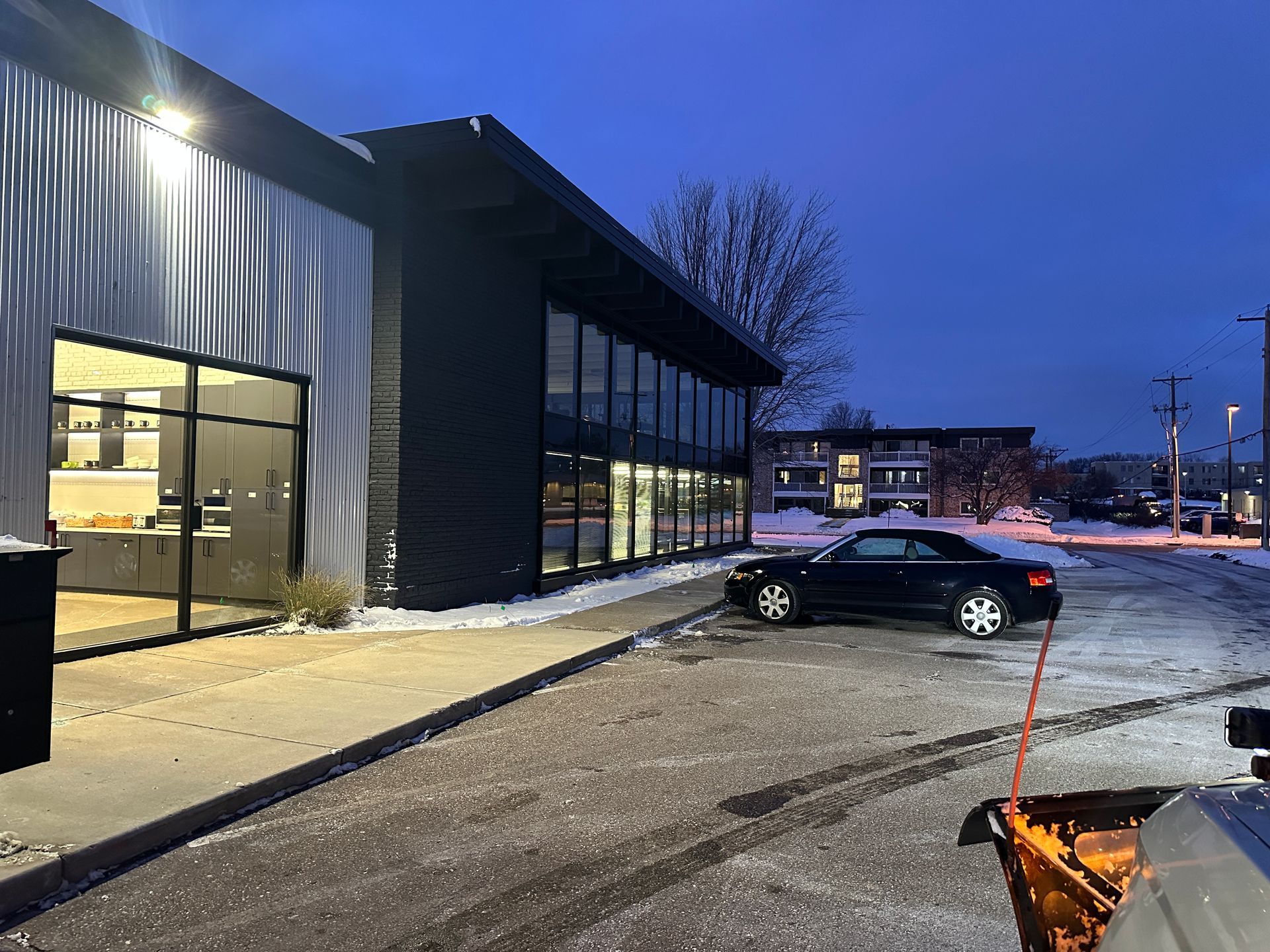
A properly maintained entrance keeps customers safe and your business accessible in Blaine
How Pricing Works for Small Commercial Properties
Snow removal pricing for small commercial properties in Blaine generally falls into two structures: per-push (also called per-event) and seasonal contracts.
Per-push means you pay each time the crew comes out. This works for some businesses because you only pay when it snows. But costs are unpredictable. A heavy winter with 20-plus plowable events gets expensive fast, and most per-push contracts charge extra for ice management, salt application, and sidewalk clearing. Those add-ons stack up.
Seasonal contracts lock in a flat rate for the entire winter. You pay the same amount whether it snows five times or twenty-five times. For budgeting, this is simpler. You know what December through March will cost before the first flake falls. Minnesota averages around 54 inches of snowfall per year according to the Minnesota DNR climate data, which is enough to make per-event pricing volatile from one season to the next.
What drives the price either way comes down to a few factors. Lot size is the biggest one. A 10-stall retail lot costs less than a 40-stall office building lot. Trigger depth matters too. A 1-inch trigger means more visits per season than a 2-inch trigger. Whether ice management and sidewalk clearing are included or billed separately makes a difference. And the frequency of service during multi-day storms (continuous passes versus one cleanup after it stops) changes the cost.
The cheapest quote is rarely the best value. Low bids often come with a narrow scope: no ice management, no sidewalks, no documentation, and sometimes no liability coverage. When a customer slips on your unsalted walkway and you can't prove the property was serviced, that savings disappears in a single claim. We wrote about this dynamic in detail in our piece on what skipping professional snow management actually costs, and the pattern holds whether you're in St. Louis Park or Blaine.
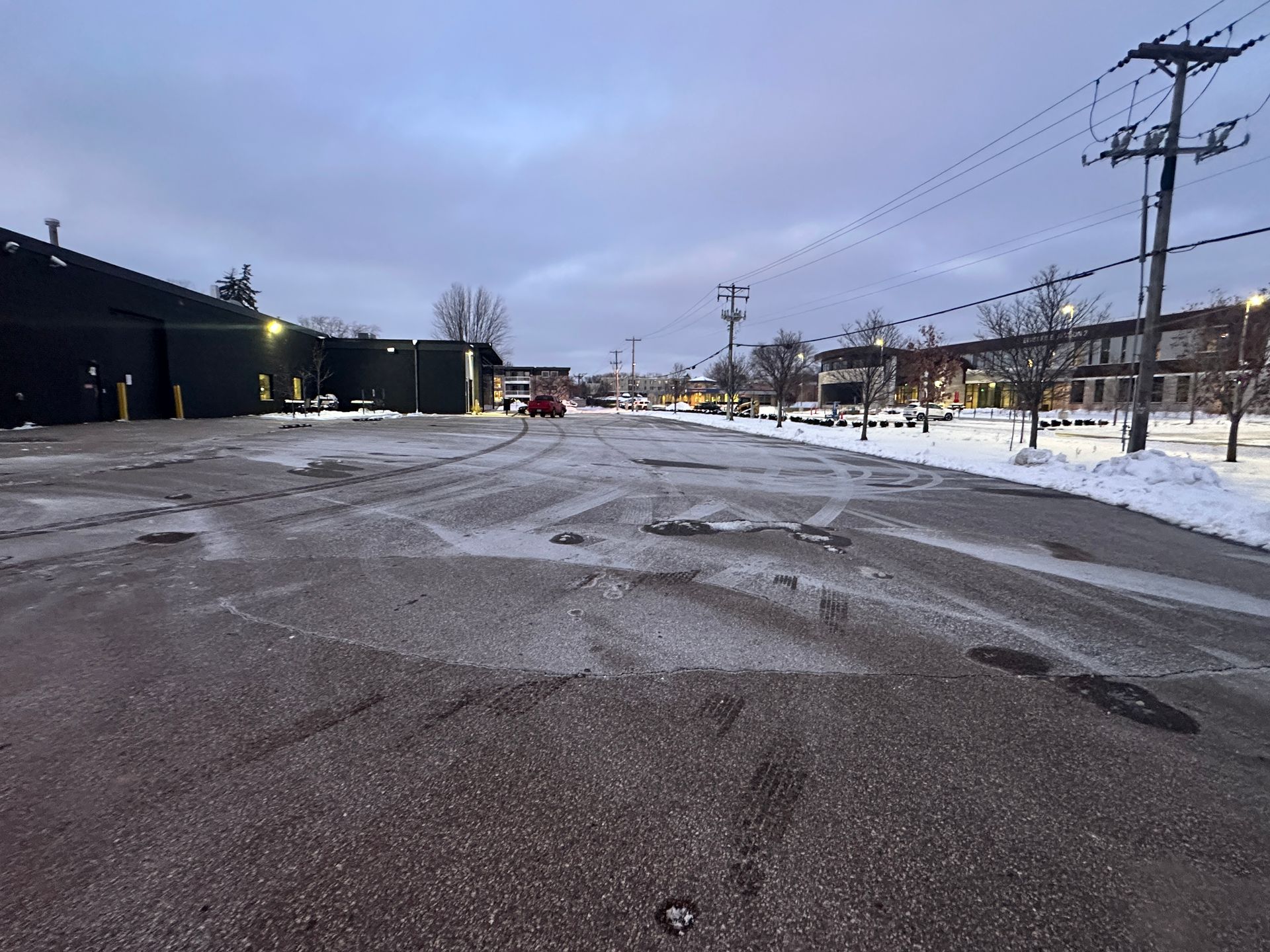
A fully salted and cleared lot — what reliable commercial snow service looks like
What to Look for When Hiring a Snow Removal Company
Choosing a snow removal company for your Blaine small business comes down to five things: insurance, response time, equipment, communication, and references.
Insurance is first because it's the most consequential. Your snow removal company should carry general liability insurance and be willing to add your business as an additional insured on their policy. This matters because if someone is injured on your property during or after a storm, the question of who maintained the lot becomes a legal issue. If your contractor has no insurance or inadequate coverage, you absorb that risk yourself. The National Safety Council identifies slips, trips, and falls as one of the leading causes of workplace injuries, and commercial properties without documented winter maintenance are particularly exposed.
Response time is the next thing to ask about. How quickly will crews be on site after the trigger depth is reached? For a small business that opens at 7 or 8 AM, the lot needs to be passable before your first employee or customer arrives. At KG Landscape, we build our routes so that properties with early openings are prioritized in the dispatch sequence. A company that "gets to you when they can" is not providing commercial-grade service.
Equipment should be appropriate for your lot size. A small retail lot doesn't need a highway plow truck. It needs a truck or compact loader that can maneuver around parked cars, light poles, and curb lines without tearing up the asphalt. I've run a range of equipment across our fleet since starting KG Landscape because a 15-stall strip mall lot and a 200-stall office park need different machines. I've seen damage from oversized blades on small lots, and it's always because the contractor sent whatever truck was available rather than what the property actually needed. Ask what equipment a contractor plans to use on your property specifically.
Communication during storms is something most people don't think to ask about until they need it. When it's snowing at 3 AM, how do you know if the crew came? Can you reach someone if conditions change mid-storm? I learned early in my career that proactive updates during events are what separate a contractor people keep from one they replace. The companies worth hiring have answers to these questions before you ask them.
Finally, ask for references from similar-sized properties. A company that primarily services large corporate campuses may not prioritize a 15-stall lot the same way. You want someone who understands small commercial properties and treats them like they matter, because to your business, they do. Our Blaine snow removal service page covers what we provide in the area specifically.
Contract Basics Every Small Business Owner Should Understand
If you're signing a snow removal contract for the first time, or if you've been operating on a handshake, there are a few terms worth knowing.
Trigger depth is the snowfall amount that activates service. A 1-inch trigger means crews come out after 1 inch of accumulation. A 2-inch trigger means they wait for 2 inches. Lower triggers mean more visits and higher cost, but also a cleaner, safer lot. For customer-facing businesses, a 1-inch trigger is usually the right call.
The contract should spell out exactly what's included. Parking lot plowing, sidewalk clearing, ice management and salting, and snow stacking should each be listed as separate line items or clearly described in the scope. If ice management isn't mentioned, assume it's not included, and ask about it.
Documentation is an underrated part of a good contract. Service logs with timestamps, GPS records, and condition photos give you proof that your property was maintained. That documentation is your first line of defense if there's ever a slip-and-fall claim. According to the Occupational Safety and Health Administration, slips and falls are among the most common causes of workplace injuries, and having documented proof of winter maintenance is a basic risk management step that too many small businesses skip.
The difference between "ice management" and "salting" is also worth knowing. Salting is reactive. Someone throws salt on ice after it forms. Ice management is a broader approach that includes pre-treatment before a storm (called anti-icing), reactive application during and after the event, and ongoing monitoring for refreeze. For commercial properties, ice management is the standard. Simple salting leaves gaps that create liability exposure between visits.
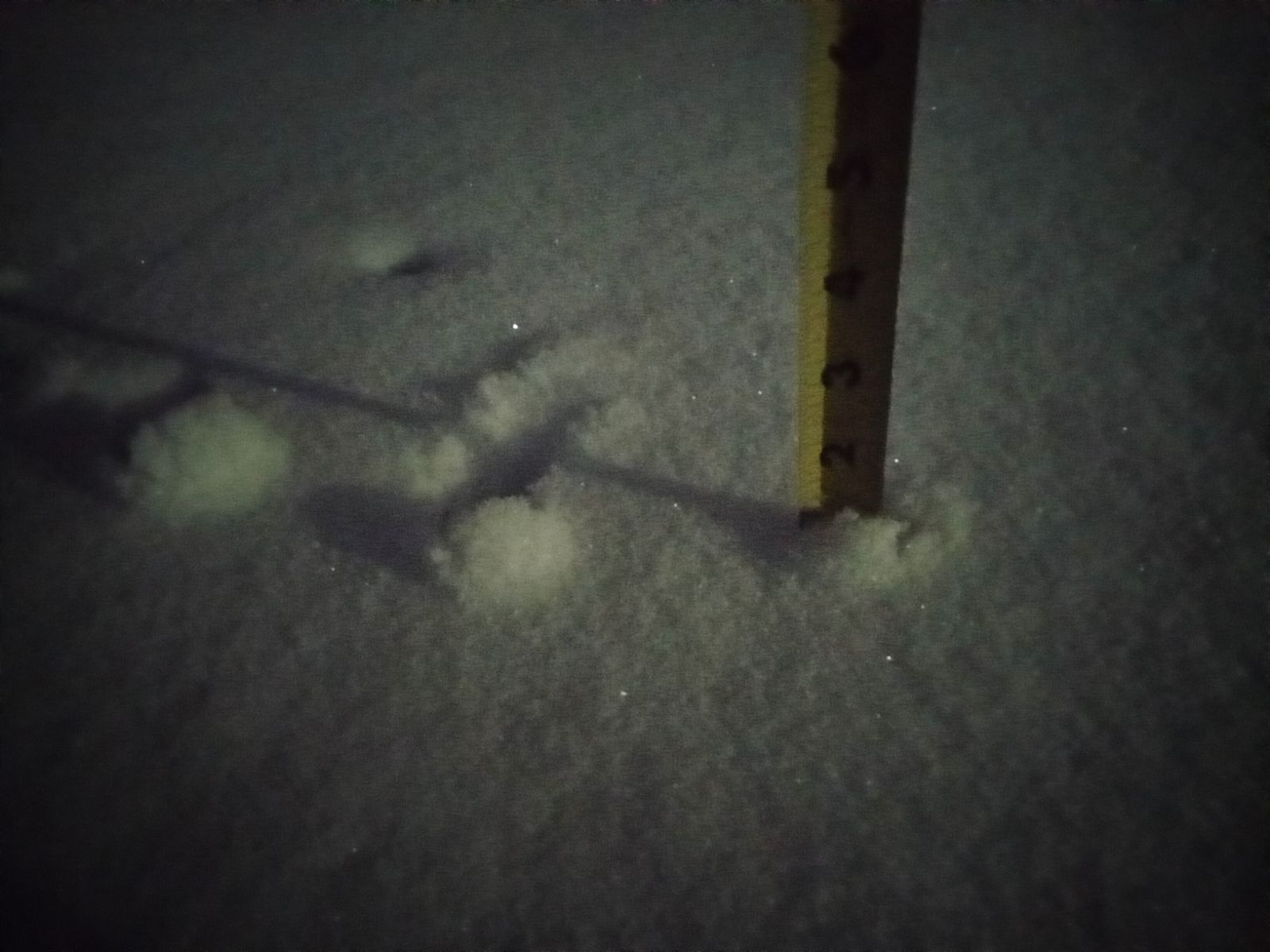
Measuring snowfall depth to determine when plowing service is triggered
When Your Current Setup Isn't Protecting You
There are a few signs that your current snow removal arrangement isn't doing what it should.
Inconsistent timing is the first one. If your lot is sometimes clear when you arrive and sometimes not, that's a reliability problem. Commercial snow removal should be predictable. Your property should be in the same condition every morning after a storm, regardless of whether it snowed 2 inches or 8. The businesses I work with expect that consistency, and we deliver it because our crews follow defined routes with committed response windows, not a loose list of properties they'll get to eventually.
No ice management is a red flag. Plowing moves snow, but it doesn't address the ice that forms underneath, the black ice that develops during temperature swings, or the slick spots on sidewalks and entrance areas. If your service is plow-only with no salt or deicer, your walkways are a liability problem. We cover this in our overview of snow removal services across Minnesota, and it's one of the most common gaps we see when businesses come to us after a bad experience elsewhere.
No sidewalk service is another gap. Many basic plow contracts only cover the parking lot. But your customers walk from the lot to your door. If that path isn't cleared and treated, the most dangerous part of your property is the part nobody is maintaining. If your business is in a strip mall or multi-tenant building , the lease may assign sidewalk responsibility to you as the tenant, which means the landlord's lot plowing doesn't cover your entrance at all.
No documentation is the gap that hurts the most when it matters. If a customer or employee slips on your property, one of the first questions an attorney or insurance adjuster will ask is whether the property was serviced and when. If you can't prove it, your position weakens significantly. The SIMA snow and ice management standards exist specifically to help commercial contractors maintain the kind of documentation that protects both the contractor and the property owner in these situations.
The cost of opening late because your lot isn't cleared is real too. If your employees can't get in and your customers can't park, you're losing revenue every hour. For a small business in Blaine, even a few hours of lost morning traffic during peak winter months adds up over a season.
If any of this sounds familiar, it might be time to compare what you're getting against what a full commercial snow removal contract looks like. We provide the same standard of service to small businesses in Blaine that we bring to properties in New Brighton and across the north metro. Reach out to our team to walk through what your property needs and what the right scope looks like for your situation.
Frequently Asked Questions
How do I know if my snow removal company is doing a good job?
Look for consistency and documentation. A good commercial snow removal company clears your property to the same standard after every storm, not just the easy ones. They should provide service logs with timestamps showing when crews arrived and what work was completed. If you're regularly arriving to find an uncleared lot, unsalted sidewalks, or no record of service, those are signs the arrangement isn't meeting commercial standards. We provide service documentation for every visit at every property we manage.
Does a small business really need ice management or just plowing?
Most commercial properties need both. Plowing removes accumulated snow. Ice management prevents and treats the ice that forms before, during, and after a storm, including black ice, refreezing, and compacted snow that turns slick. For any business where customers walk from a parking lot to a front door, ice management is where the real slip-and-fall risk lives. We include ice management as a core service in our commercial contracts because skipping it creates liability exposure that far exceeds the cost.
What insurance should a snow removal company carry?
At minimum, your provider should carry general liability insurance. Ask them to add your business as an additional insured, which extends their coverage to include claims made against your property related to snow and ice conditions. Confirm they also carry workers' compensation for their crews. Request a certificate of insurance before the season starts and verify it covers the full contract period.
When should I start looking for a snow removal contract?
The best time to secure a contract is late summer or early fall, ideally by September or October. Reputable commercial snow removal companies fill their route capacity before winter starts. If you wait until the first snowfall, your options narrow and pricing goes up. Early commitment also gives you time to review terms, confirm insurance, and set up communication protocols before conditions demand it.
What is a trigger depth and why does it matter?
A trigger depth is the snowfall amount that activates your service. A 2-inch trigger means crews won't come until 2 inches have accumulated. A 1-inch trigger means service begins sooner. For customer-facing businesses, a lower trigger is typically better because it keeps your property accessible throughout the storm. The trigger directly affects how many service visits happen per season, which impacts cost but also determines how clean your lot stays during active weather.
Can I negotiate the terms of a snow removal contract?
Yes, and you should. Snow removal contracts are not one-size-fits-all. You can negotiate trigger depth, service windows, what areas are included, whether ice management is part of the base scope, and how communication works during storms. Have these conversations before you sign, not after the first storm when you realize the sidewalks aren't being cleared.
About the Author
I'm Kent Gliadon, founder of KG Landscape and a graduate of the University of Minnesota Landscape Design program. For over 20 years, I've focused on integrating well-planned landscape design and installation work with properly engineered outdoor drainage solutions. I believe discerning homeowners deserve landscaping and drainage renovations that are carefully planned from the beginning, accounting for water movement, grading, soils, hardscaping, and future use, so problems are prevented before they occur. These articles explain how and why specific solutions are implemented and what it takes to maintain properties that truly last.
Ready to Start on Your Next Project?
Call us at (763) 568-7251 or visit our quote page.