Lawn Renovation Company MN
Topdressing, Grading, Seeding, Soil Amendment & Sodding
Serving Clients in the Greater Minneapolis - St. Paul
Metro Area, Since 2003
Lawn Improvement Options — We Help You Choose the Right Solution
We provide the most effective lawn renovation options in the Twin Cities. We can fix your lawn and keep it looking great with our ongoing care services. Whether your lawn needs a complete renovation, a few targeted improvements, or topdressing to eliminate bumpy areas, KG Landscape can help.
Custom Lawn Improvement Solution Options: Table Of Contents
Why Choose KG Landscape for Lawn Renovation
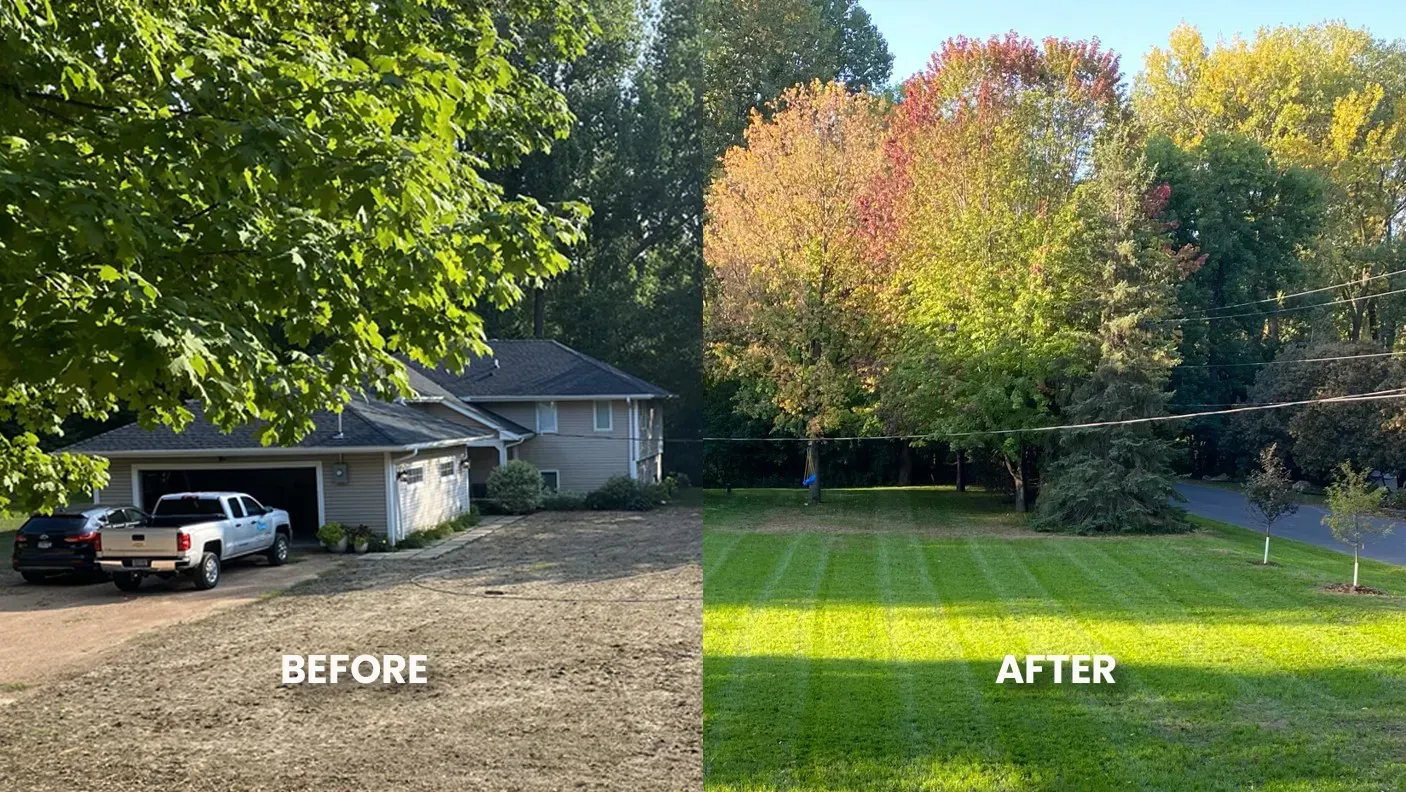
At KG Landscape, we transform tired, uneven, or struggling lawns into rich, thriving turf that fits your home and lifestyle. Since 2003, we’ve been helping homeowners throughout the Minneapolis–St. Paul metro solve even the toughest lawn challenges with smart, science-backed renovation solutions.
Our team is led by Kent Gliadon, a University of Minnesota landscape design & turf science program graduate with deep expertise in turf grass, landscape design, and soil health. That combination of practical know-how and technical insight means we don’t just do the work — we design the right work for your property’s unique conditions and goals.
Whether your lawn needs grading and leveling, topdressing, seeding and overseeding, or new sod installation, we guide you through every step of the renovation process with honest advice, tailored recommendations, and quality craftsmanship you can trust. With decades of experience and hundreds of satisfied Twin Cities clients, KG Landscape is your partner for a lawn that looks better and performs better.
Minnesota's Best Lawn Topdressing Service
Improve and Smooth Your Lawn
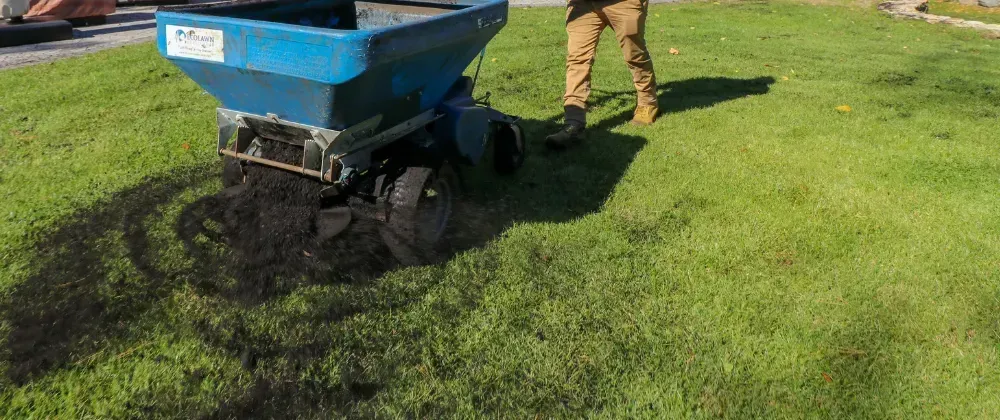
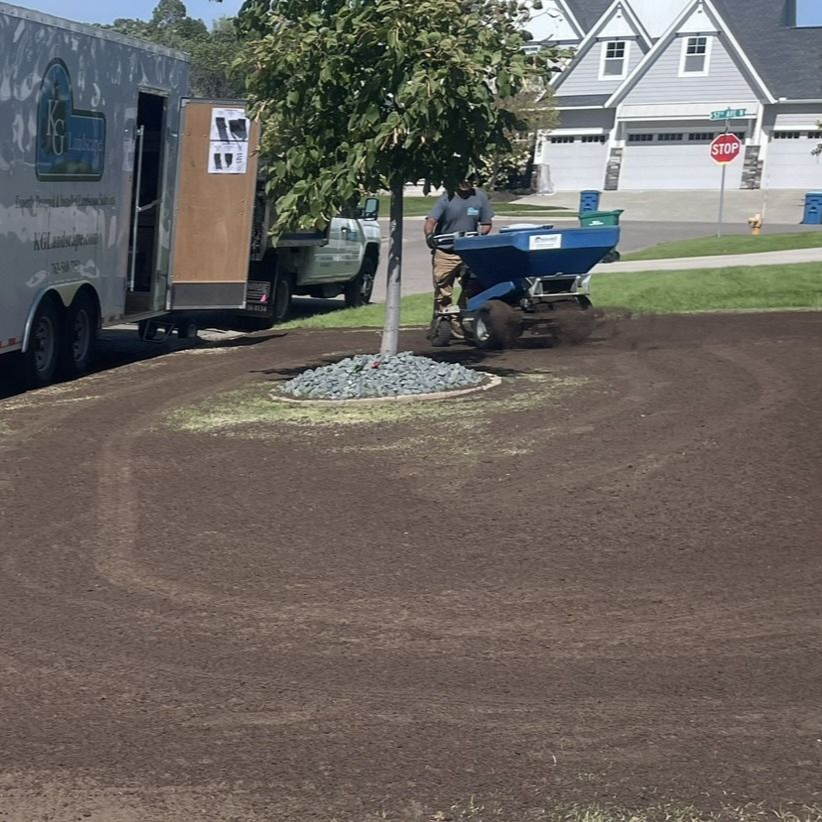
Our lawn topdressing service applies high quality soil, smooths out bumps in the yard, fills in bare spots with new grass seed, reduces compaction as well as increases water and nutrient absorption to turf root zone. Pretty cool right? With top-dressing, all of these improvements are accomplished without killing your existing grass!
What is Lawn Topdressing?
We refer lawn topdressing as the process of spreading a thin layer of high quality soil over top of an existing lawn, at a thickness of roughly 1/4" layer on average . The goal is to add enough soil to thoroughly cover the lawn in order to achieve the intended goals of the service, but not going so thick that you kill the existing grass below.
👉Visit Our Lawn Topdressing Page to Learn More
Check Out Our 13 Second Video on Topdressing
Our Topdressing Service Combines Several Additional Services to Maximize Results
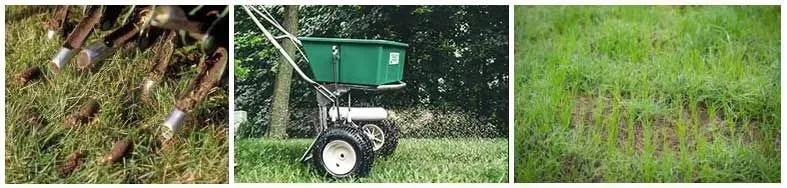
Top dressing is most effective when done at the same time as aerating and over seeding. This is because core aerating allows the new seed, soil amendments and fertilizer to penetrate into the yard.
Another huge benefit, is that seed germination rates when overseeding are greatly increased after topdressing, because all of the new seed in covered with soil, allowing the vast majority of the seed applied to germinate, not just the seed resting in the core aeration holes.
Topdressing is one of our most effective and highly recommended lawn renovation service options. We do a lot of top dressing in Edina, Minnetonka, Medina, Mendota Heights, Minneapolis, Maple Grove and Plymouth, as well as several other cities in the metro area, because of either heavy clay soils or virtually pure sand in certain places. Top dressing is also one of the best ways to repairs lawns damaged by grubs
Benefits of Topdressing Your Lawn
Did you know that golf courses in MN aerate and then top-dress their greens each year in the late summer or fall to reduce compaction, improve drainage and to ensure a smooth and firm putting/walking surface on the greens? In addition to aerating, topdressing your lawn at home can achieve all of these same benefits.
Topdressing also provides a number of additional benefits, including: increasing oxygen availability in the turf rootzone and improving water and fertilizer absorption. Below, is an overview of the key reasons to top-dress your lawn:
- Fills in Bare Spots: after overseeding your lawn, topdressing covers the entire surface of the yard to completely cover the new grass seed. This ensures ideal seed-to-soil contact and uniform seed germination throughout the entire lawn.
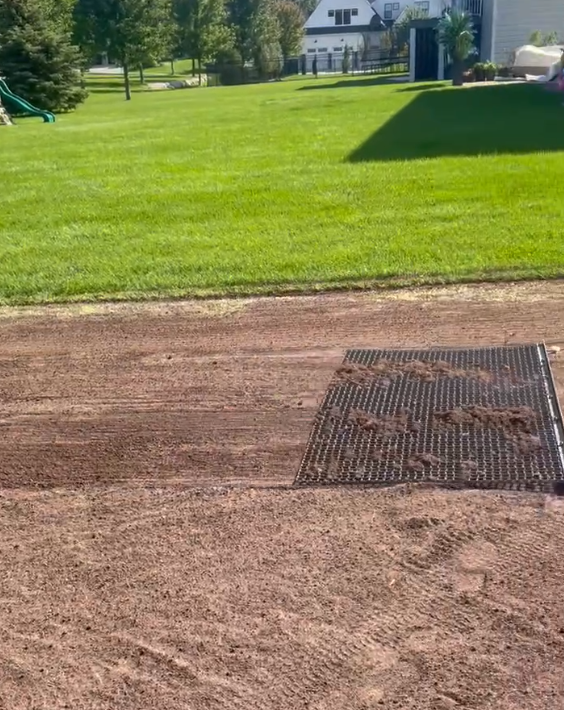
- Smooths Out Bumpy Lawns: Topdressing helps to smooth out a bumpy and uneven lawns by filling in the low spots with soil, without damaging the existing grass. Dragging the lawn with a screen/leveling bar like we do after applying topdressing mix is especially helpful for pulling soil into existing low spots.
- Improves Soil Quality: Topdressing can make it much easier to grow high quality grass by amending soils that are heavy in clay or extremely sandy. Adding organic matter to very sandy soil also helps the ground hold moisture longer and will reduce the amount of watering needed.
- Improves Drainage: we use a topdressing mix of sandy topsoil to help improve water infiltration in clay soils, reduce run-off and help prevent lawns from feeling soft or mushy. Topdressing with sandy topsoil is ideal for fixing mushy lawns, because sand stays firm even when wet (i.e. think of the firm and smooth sand at a beaches surf zone).
Lawn Grading - Yard Leveling - Regrading Services
When it comes to grading for improved yard drainage, such as creating drainage swales and grading with proper slope to ensure your lawn drains correctly, KG Landscape knows how to get the job done the right way.
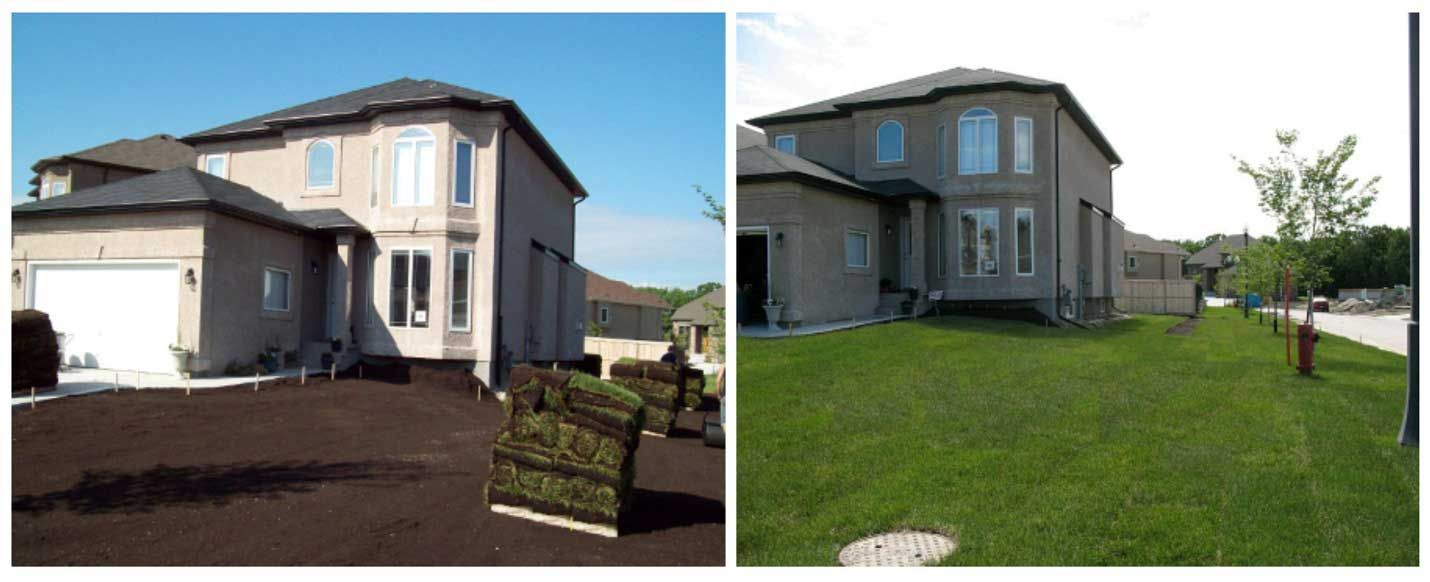
For those of you thinking, “Let’s just rip it all up and start over,” we can do that. Depending on your goals, budget and the current state of your yard, regrading and adding new topsoil or other soil amendments, might be your best option and will provide the fastest results.
👉Visit our Lawn Grading Services Page to Learn More
The 3 Reasons to Consider Regrading Your Yard
Drainage Problems
If sections of your yard are draining toward the house or low spots are pooling in the yard is often necessary to correct these problems. However, there may be other
drainage solutions worth considering as well. Improving your grading can create flat, usable lawn spaces and fix wet mushy areas in the lawn.
Bumpy / Uneven Lawn
No one likes walking or mowing a bumpy lawn. Re-grading an existing lawn might be necessary to smooth out uneven lawns to finally get the flat backyard most people want. These fixes will destroy your existing lawn and will require starting over with new seed or sod.
Poor / Bad Soil
If your soil is heavy clay or almost pure sand, the quality of your turf will be benefit greatly from the addition of new soil heavy in organic matter, such as a rich top soil mix. Adding 2" of top soil will greatly improve the ability of your lawn to retain the water and nutrients your grass needs. There are many options for soil amendments.

Lawn Seeding & Reseeding
If your lawn is thin, patchy, or overrun with weeds, seeding or full reseeding can completely transform it—but only when it’s done right. At KG Landscape, we take a comprehensive approach that goes far beyond simply spreading seed. We evaluate your soil, drainage, grading, sunlight, and existing turf conditions to determine the best path forward and ensure your new lawn has the foundation it needs to succeed.
From proper timing and seed selection to weed control, fertilization, and aftercare, every step of our process is designed to maximize germination, minimize competition, and deliver long-term results. Whether reseeding is the right solution—or part of a larger renovation plan—we’ll guide you through the smartest approach for your property and goals.
Reseeding After Lawn Leveling, Regrading & Topsoil Installation
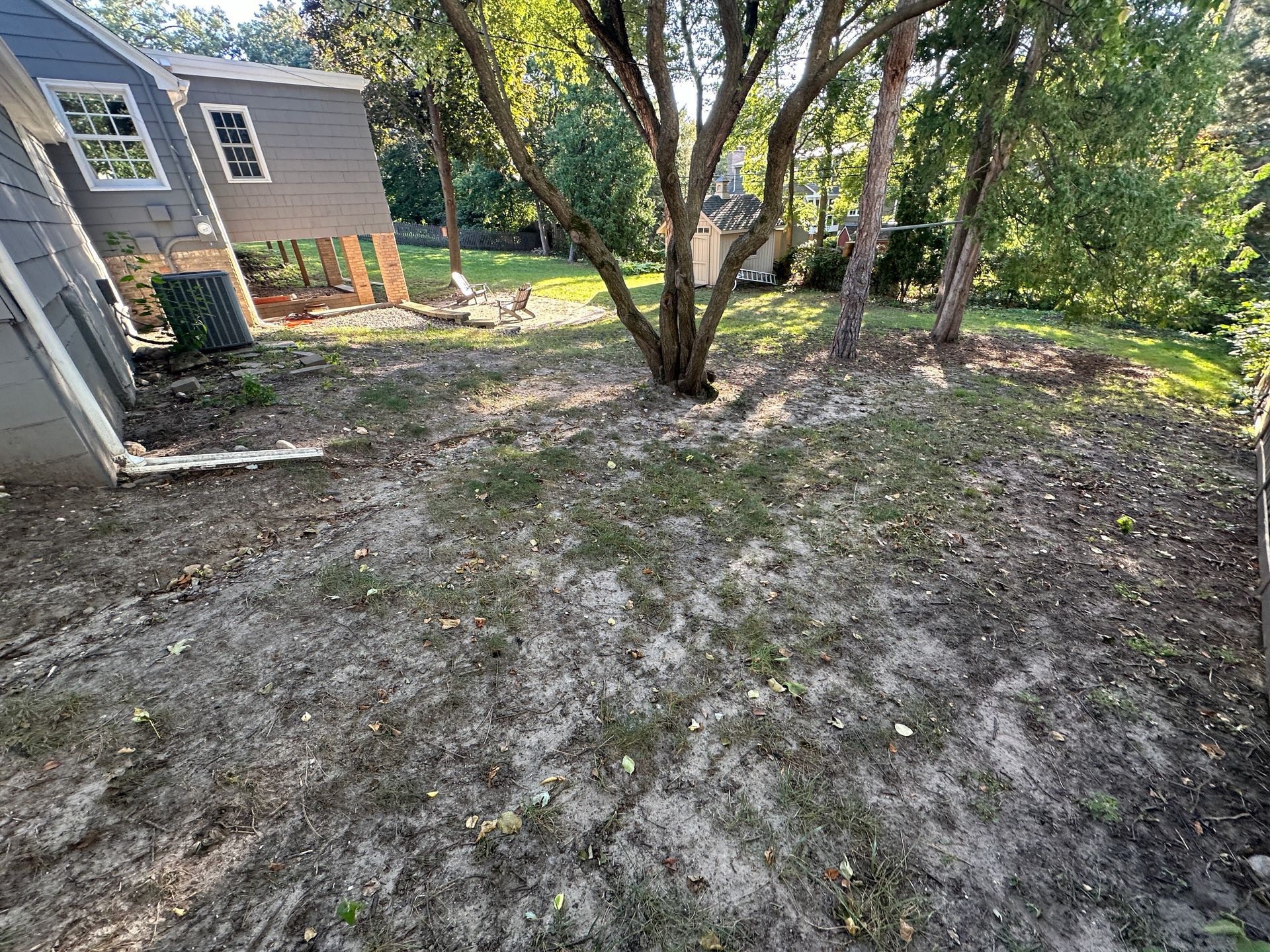
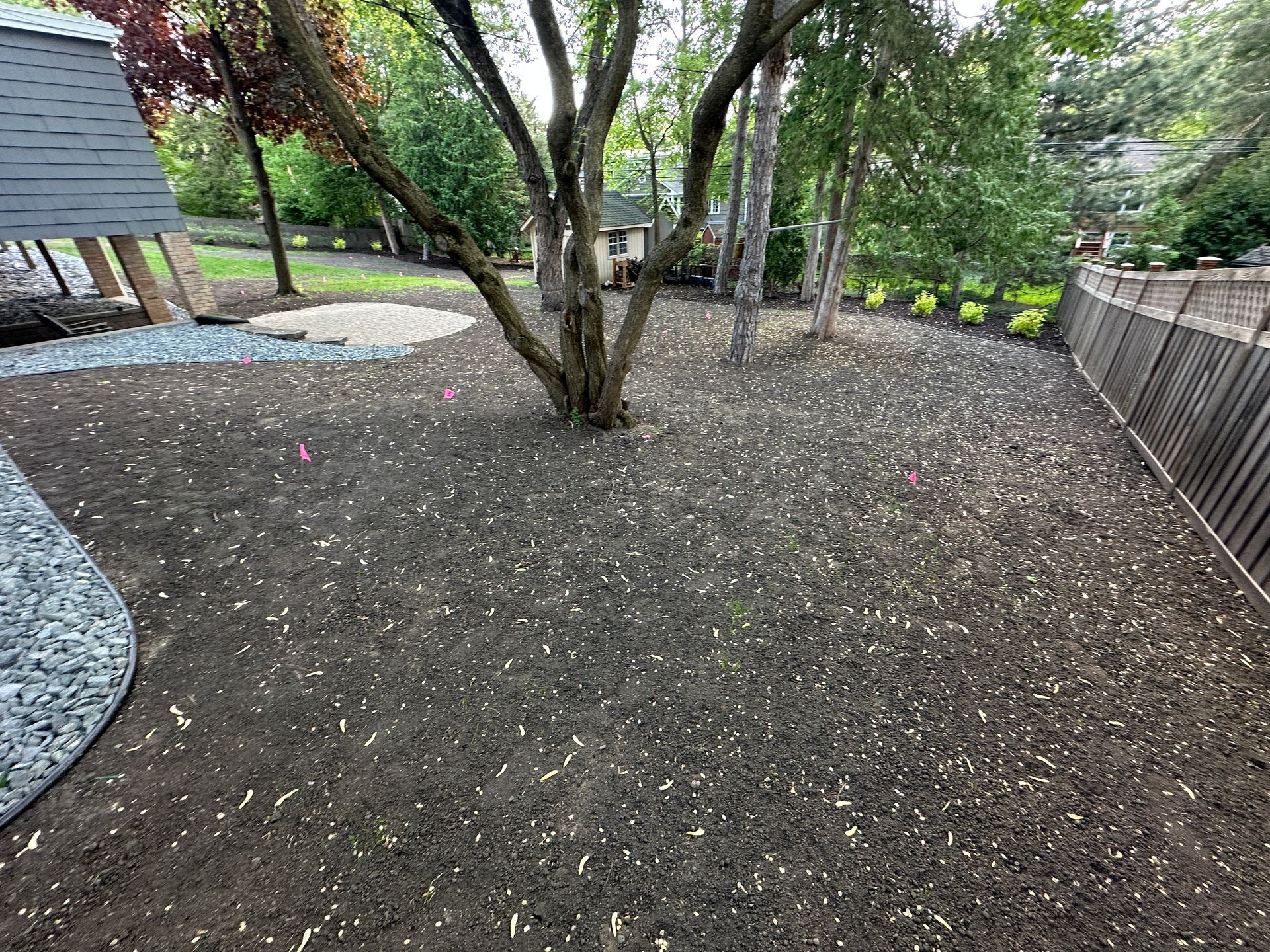
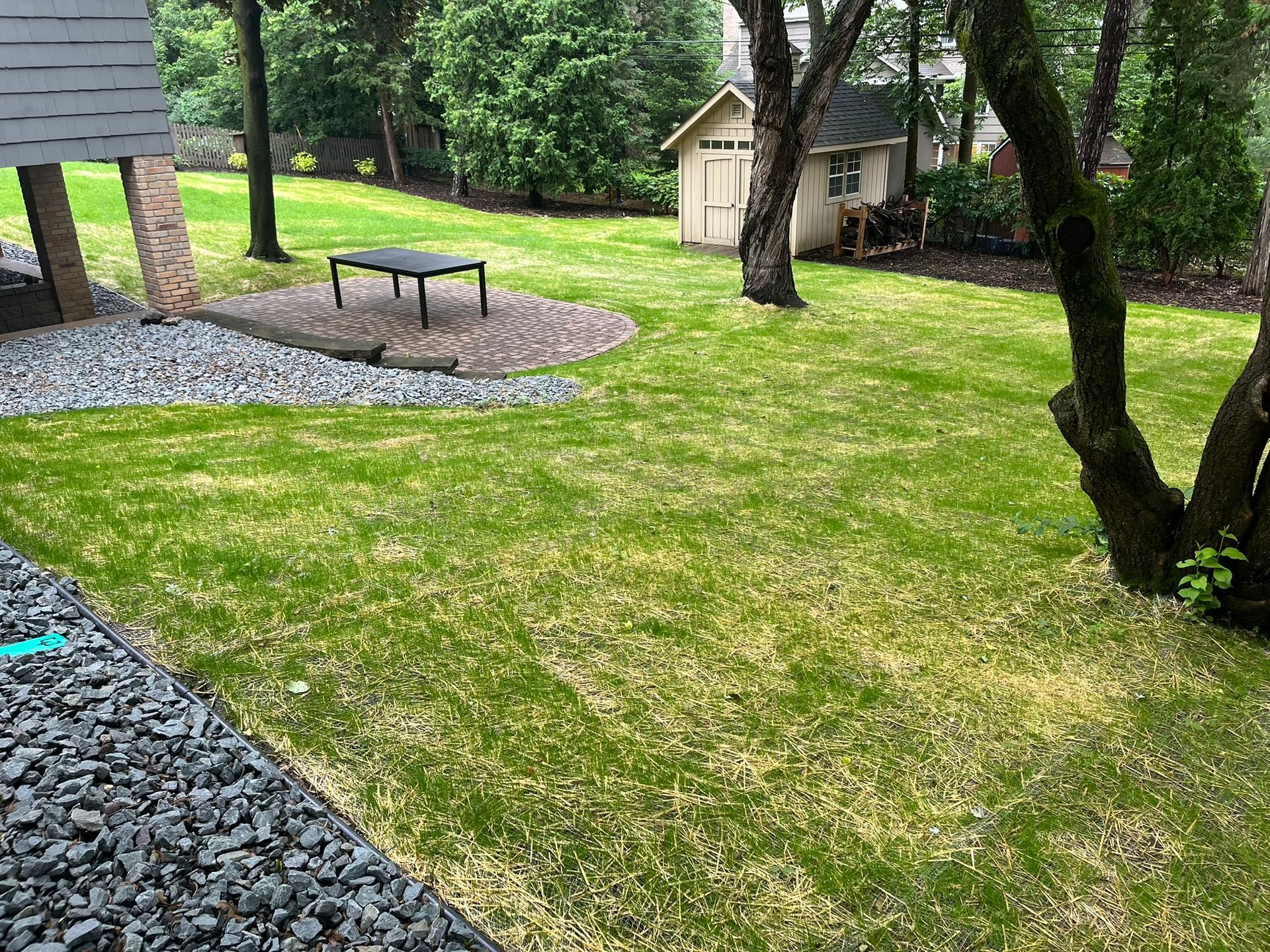
One of the best times to reseed a lawn is after improving the grade and soil conditions through leveling, regrading, and adding topsoil.
If your yard has been:
- Leveled with topsoil to smooth out bumps and low spots
- Regraded to improve drainage or overall usability
- Built up around trees to cover exposed roots and create a more even surface
- Renovated as part of a larger landscape project with patios, walls, or plantings
Seeding is the final step that brings everything together. By correcting the grade, improving soil quality, and installing topsoil where needed before seeding, we create the ideal foundation for strong germination and long-term lawn success—while ensuring your new lawn isn’t disturbed by future work.

Choosing the Best Seeding Method for Your Lawn
Not all seeding methods produce the same results, and choosing the right one depends on your lawn’s condition and your goals.
We help customers select the best approach between:
- Aeration & Overseeding for thickening existing turf
- Full Reseeding with Seed Blankets (our preferred method) for complete lawn renovation and optimal germination
- Hydroseeding for larger or more open areas where coverage efficiency is key
Our recommendations are based on what will deliver the most consistent, long-term results—not just what’s fastest or cheapest.
Reseeding After Fixing Yard Drainage Problems
If drainage issues aren’t addressed first, new seed will struggle—or fail entirely.
We commonly pair reseeding with drainage solutions such as:
- Underground downspout systems to redirect roof water away from the lawn
- Sump pump discharge solutions to eliminate constant wet or washed-out areas
- Drain tile systems to remove subsurface water in clay soils where lawns stay soggy
- Lawn regrading and swale creation to improve surface drainage and yard usability
By solving these underlying issues first, we create the proper conditions for seed to establish, grow, and thrive—resulting in a lawn that stays dry, usable, and healthy long after installation.
Benefits of Aerating and Overseeding Your Lawn
Get thicker Greener Grass, Reduce Soil Compaction and Improve Turf Density
All lawns are prone to compaction issues, caused by normal mowing practices and lawn usage. Compacted soils cause major problems when it comes to growing a healthy lawn. Compaction and prevents the water, air, and fertilizer needed by grasses from penetrating into the soil where they can be consumed by the grass roots. Clay soils are the most prone to compaction issues, but mot soil type can have compaction issues.
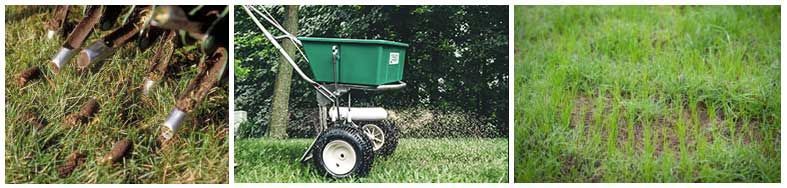
We use the core aeration method to reduce compaction and often times aerate and over-seed at the same time, which is a very effective way to increase turf density.
The cores removed by the aeration process open the soil allowing the new grass seed to get the seed-to- soil contact it needs to germinate.
Should you rake up the plugs after aerating? NO, the core’s themselves will break up and fill in the holes on their own in about 4 weeks through to rain and mowing. However they fill in the holes created by the core aeration with less compacted soil, which is exactly what we want!
Improve Your Lawn by Over-Seeding With New Grass Varieties
By overseeding, we mean applying new grass seed to an existing lawn as opposed to seeding a new lawn from scratch. Thin lawns will benefit greatly from aeration and over seeding. Over-seeding without aerating or otherwise breaking up the soil is not effective, as little to no seed will germinate. Seeds need seed-to-soil contact to germinate, which is what core aeration provides. We typically double aerate, meaning we run the aerator over the entire lawn 2 times in order to provide twice as many places (holes) for new seed to grow.
👉Visit our (Aeration & Overseeding) Services Page to Learn More
Using the best possible blend of grass seed for your lawn is very important. We use customized mixtures of the highest quality new varieties of grass seed to ensure your lawn looks great in the sunny areas as well as in full shade. Our Minnesota lawns are made up of 3 different types of grass: Kentucky bluegrass, perennial ryegrass, and fine fescues. Fine fescues perform best in shade, Kentucky bluegrass creates the densest turf, and perennial ryegrass germinates the fastest. These are all considered cool season grasses, which means they perform best in cool weather between 60-80 degrees.
When is the Best Time to Aerate and Overseed?
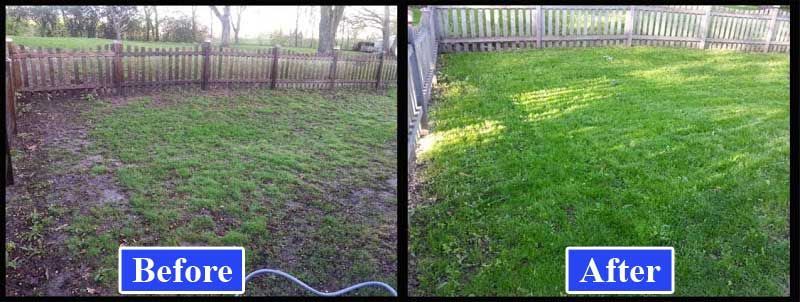
Cool season grasses have evolved to drop their seeds in mid-summer, germinate late summer to early fall, and then spend the fall getting strong enough to survive their first winter. This is why we highly recommend aerating in the late summer/earl fall for best results, although we do have an effective method to achieve great results in the spring if you just can’t wait. Check out our detailed article on Everything you need to know about Seeding and Best Timing for Seeding in MN
The biggest challenge to successfully overseeding in the springtime is that the pre-emergent crabgrass application in spring prevents not just crabgrass, but most seeds from germinating for about 10-12 weeks. Because of this, seeding in the spring needs to be done very early in the spring, prior to applying crabgrass preventer. Another option for spring seeding, is to use a specialty pre-emergent crabgrass preventer product called Tupersan, that will stop the crabgrass seeds from growing, but won’t prevent cool season seeds from germinating.
Clay Soil Improvement for Healthier Lawns
Many lawns in the Minneapolis – St. Paul area struggle because they sit on heavy clay soil — a common soil type in Minnesota that drains slowly, compacts easily, and limits root growth. At KG Landscape, we help homeowners turn that difficult clay into a foundation for thick, green, resilient turf. Our Clay Soil Improvement service focuses on enhancing soil structure so air, water, and nutrients can actually reach grass roots.
👉Visit our (Fixing Clay Lawns) Services Page to Learn More
We do this through proven techniques like:
- Soil amendment & organic matter integration to loosen compacted clay
- Topdressing with compost and soil blends, especially when paired with aeration & overseeding
- Smart drainage and grading solutions so water doesn’t pool and stress turf
These approaches are designed to work seamlessly with grading, topdressing, and sodding services — whether you’re installing a new lawn or renovating an existing one. In many cases, improving soil is the key step before successful sod installation or turf establishment.
Sod Installation - Sodding Your Lawn
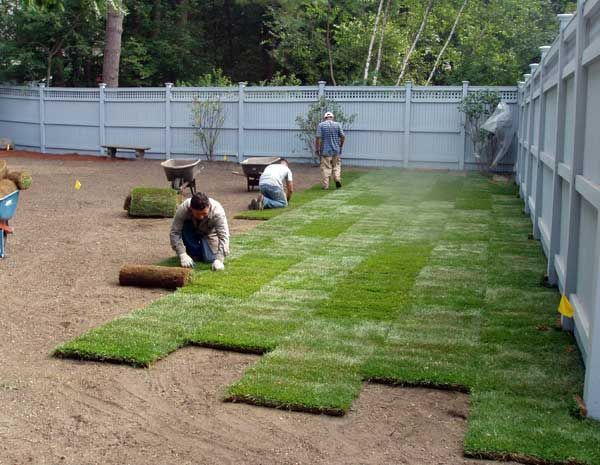
Sodding is the best way to instantly achieve a thick and green lawn. Sodding your lawn is more expensive than seeding, but comes with some obvious advantages. The first advantage is not waiting; your lawn is instantly green. Compared to seeding, sodding is more family friend in the sense that kids and pets can generally start using a sodded lawn within a week or two of installation.
In contrast to using sod, a seeded lawn can take about 8 weeks to come in (try keeping your kids and dogs off for 3 months!). If your lawn is seeded, you will have bare soil that will constantly be wet from watering, which can be a mess if your lawn in used during that period.
Some of our customers have us sod the front yard and seed the backyard to keep costs down. Another area where sodding makes a lot of sense is on hills and sloped lawn areas, where erosion can be a problem when trying to establish seed. Sod staples also help prevent sod installed on slopes from sliding down the hill.
Does Sod Grow Well in the Shade?
The types of grass used to grow traditional sod are sun loving varieties, consisting of primary of Kentucky bluegrass. For this reason, we recommend using sod in full sun to partial shade areas of your lawn and not in heavily shaded areas.
Sod installed in full shade with deteriorate within a year or two, as the sun loving varieties die off in the shade. To avoid this result, we recommend seeding any sections of your lawn that are heavily shaded, with a shade tolerant seed mix instead of sodding in those areas.
If you do wish to sod the shaded areas, that's ok too, just plan on doing some overseeding in those areas as needed in the future with shade tolerant grasses. Our shade seed mixtures consist of primarily fine fescue seed varieties.
Are There Any Shade Sod Options?
In the past, sod for shady lawns didn't exist. However, recently some specialty Minneapolis sod farms have begun growing shade sod suitable for lawns that receive reduced sunlight. These shade sod blends have varieties of Fescue grasses, which are specifically designed for shady areas and our Minnesota climate. These specialty shade sod varieties usually come with a high price point due to the special growing conditions at the shade sod farms. Fescue sod is a great option when a project calls for sod, but the conditions don't meet the sunlight requirements of traditional sod.
When Should you Fertilize a Newly Seeded or Sodded Lawn?
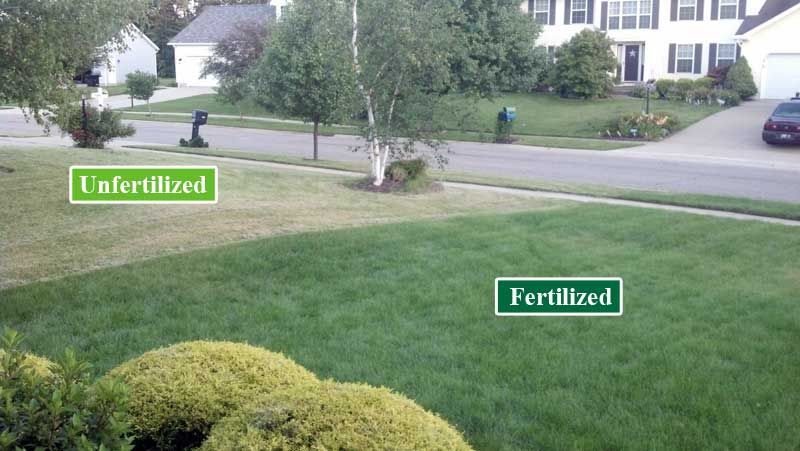
Lawns can thin out due to a number of reasons, but fertilization is crucial to maximize lawn health and turf density. No native soils in Minnesota naturally contain enough nitrogen to support high quality turf indefinitely. So fertilizing is a must to give your lawn the 3-4 lbs. of Nitrogen it needs to thrive every year. We recommend waiting 4-6 weeks after seeding, overseeding or sodding to apply lawn fertilizer.
Waiting until the late summer or fall to apply fertilizers to newly renovated lawns is ideal, in order to avoid burring out or damaging new seed or sod. Over fertilizing is a less of a concern when the weather is cool and when lawns are watered regularly via an inground sprinkler system.
If you’d like to learn more about out fertilizer and weed control programs,
👉 Visit our Fertilizer & Weed Control Page.
Weed Control Tips Before, During and After Lawn Renovations
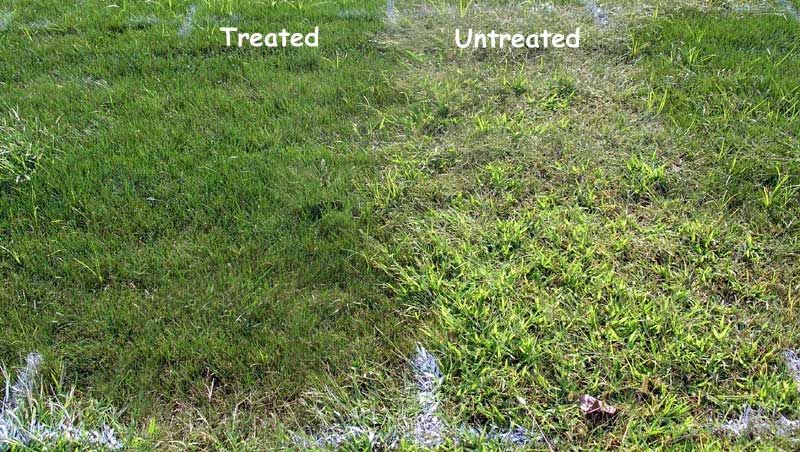
If you're lawn in currently overrun with weeds, we highly recommend having your lawn treated with a post emergent to kill existing weeds prior to seeding or overseeding. Preventing and removing lawn weeds is an important part of maintaining high quality turf in general and especially when over-seeding to increase turf quality, because killing the weeds prior to over seeding creates voids in the lawn once taken up by the weeds, where new seedlings can establish and fill in. Killing weeds prior to seeding as well as at the soonest safe time to do so after overseeding will help weeds don't overrun the yard and choke out the new grass seedlings you are trying to establish.
Correctly timing your lawn seeding and crabgrass pre-emergent is crucial! We take this timing very seriously as we know how important it is to achieve great overseeding results.
At KG landscape, we'll time this out perfectly for you to ensure top quality results. To learn more about how we time seeding and crabgrass preventer, check out our blogs on when to apply crabgrass preventer and everything you need to know about overseeding and correctly timing crabgrass preemergent.
Our conventional lawn treatment packages include fertilizers, a crabgrass pre-emergent application in the early spring and two broadleaf applications each year (spring and fall) to make sure your weeds don’t stand a chance.
How Soon After Seeding, Overseeding or Sodding Should You Spray Weeds or Apply Crabgrass Pre-emergent?
We recommend waiting at least 4-5 weeks after seeding, overseeding or resodding to spray for weeds. Spraying post emergent weeds control on young grass seedlings that are too young and fragile, can kill the new grass due to the stress. So we want the new seedlings to be established enough to withstand a weed killer treatment. This typically happens around the 3 time you cut the new grass.
You could technically spray new sod for weeds sooner that 4-5 weeks if the weather was cool (below 70 degrees), but odds are your new sod won't have any weeds early on and why risk adding stress to sod while you're working hard to get the roots to established.
Waiting until the late summer or fall to apply weed control treatments to newly renovated lawns is ideal, in order to avoid burring out or damaging new seed or sod during times of heat or drought stress.
During our hot weather periods in MN (July), weed killer can be "the straw that broke the camels back," so its not worth the risk.
Spraying for weeds in lawns that are watered regularly via an
inground sprinkler system is less likely to cause damage, since drought stress won't be much of a factor for well watered lawns when the temps are in the 80's or below. However, we always recommend that you avoid spraying for weeds during the hottest times of the year (85 degrees or more), even in regularity watered lawns.