
Fixing Clay Yards to Grow
Thick, Green Lawns in Minnesota
Helping Homeowners Optimize Their Soil to Grow Healthy Lawns in the Minneapolis - St. Paul Metro Area, Since 2003
A Twin Cities Lawn Expert’s Guide to Improving Clay Soils to Help Lawns Thrive
If you own a home in Minneapolis, St. Paul, or anywhere in the Twin Cities and your having a hard time getting your lawn to drain well and thrive like you'd hoped, then chances are your lawn sits on clay soil.
From Edina and Eden Prairie to Maple Grove, Woodbury, and Lakeville, clay-heavy soils are the norm across Minnesota.
Clay soil isn’t bad soil—but it is easily misunderstood. When handled incorrectly, it leads to poor drainage, shallow roots, and patchy turf. When amended correctly, it can support a thick, durable lawn that holds nutrients and withstands Minnesota’s climate.
Why Clay Soil Struggles — and Why It Can Still Grow Great Lawns
Clay soil is made up of extremely fine particles that pack tightly together. In Minnesota, this leads to:
- Slow drainage in spring
- Compaction from construction and foot traffic
- Limited oxygen at the root zone
- Shallow roots and thinning turf
But clay soil also has advantages. It holds nutrients well and, once structured properly, retains moisture better than sandy soils during dry summers.
Clay soil isn’t bad soil — it’s unfinished soil.
The Core of This Page: Amending Clay Soil Correctly
What “amending clay soil” actually means
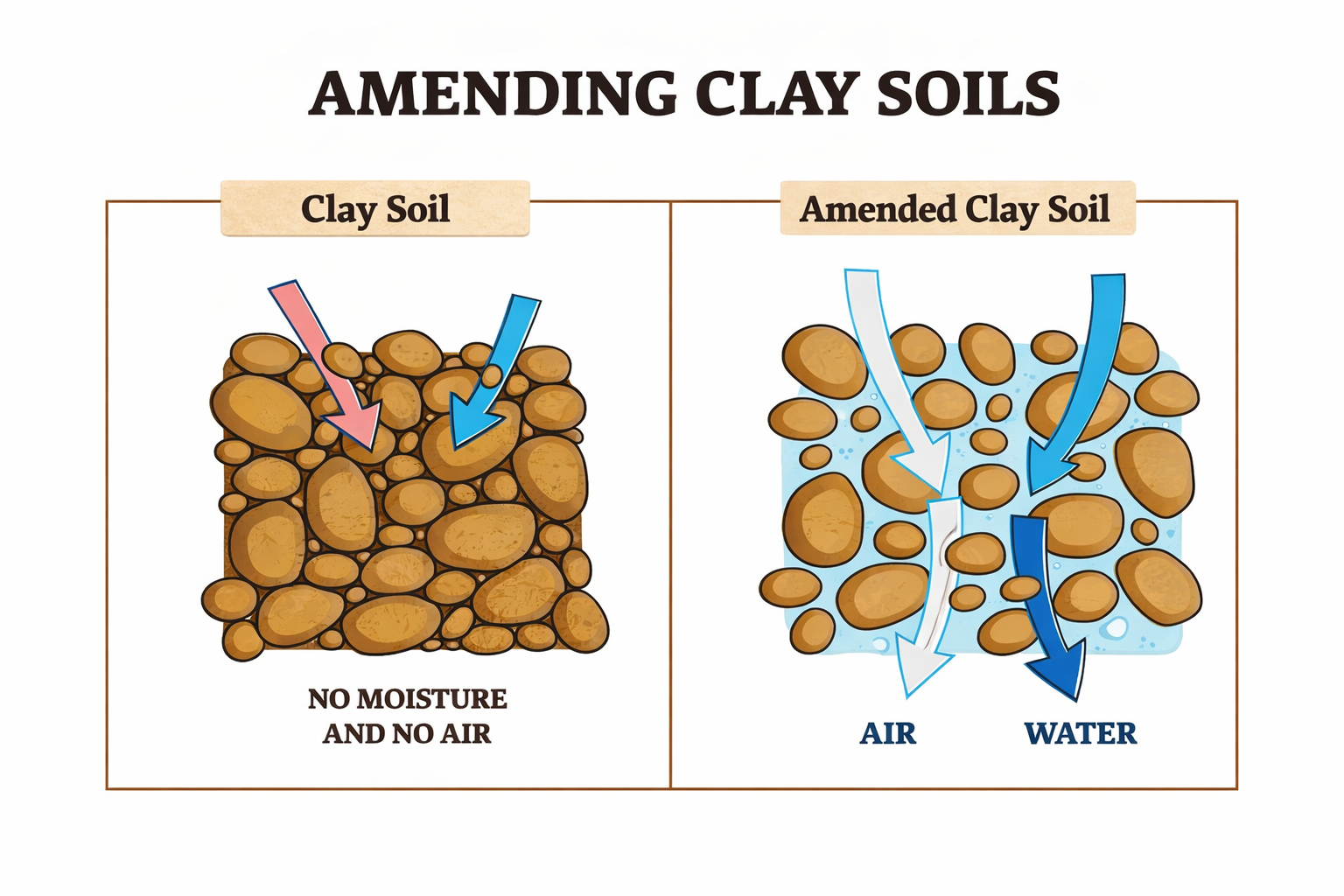
Amending clay soil is not about replacing it or covering it up. It’s about changing the soil structure so roots, air, water, and microbes can move freely.
For lawns, the most effective amendment is organic matter, properly incorporated at the right depth.
Organic matter:
- Separates compacted clay particles
- Improves drainage and moisture retention
- Feeds beneficial soil biology
- Allows deeper, stronger root growth
This is the single biggest factor in growing a thick, green lawn on clay soil.
Clay Lawns Also Require Proper Drainage Systems
Soil improvement alone can’t overcome water problems
Amending clay soil is essential—but it’s only part of the equation. In Minnesota, many clay lawn problems are caused not just by soil structure, but by how water moves across and through the property.
Clay soil drains slowly by nature. When excess water is directed toward the lawn or trapped in flat areas, even well-amended soil can remain saturated. This leads to:
- Standing water after rain
- Soft, unstable turf
- Shallow root systems
- Increased disease and turf loss
👉 proper yard drainage system solutions are critical.
Common Drainage Challenges in Clay Lawns
Improper Grading
Many properties in the Twin Cities were graded quickly during construction. Even small low spots or flat areas can cause water to sit on clay soils far longer than turf can tolerate.
Correct grading allows water to move away from the lawn instead of soaking into already-slow-draining soil.
Roof Water Dumping Into the Yard
One of the most overlooked issues we see is roof runoff being discharged directly into clay lawns.
When large volumes of water are repeatedly dumped in the same area, clay soil becomes saturated and compacted—regardless of how much organic matter is present.
The solution is underground downspouts, which:
- Capture roof water at the source
- Move it away from the lawn through buried piping
- Discharge it safely away from turf areas
This protects both the soil structure and the lawn above it.
Flat Yards That Need Drainage Support
Flat yards are often desirable for usability—but in clay soils, they can become drainage problem areas.
In these situations, soil amendment alone isn’t enough. Water needs a path to move, which often requires:
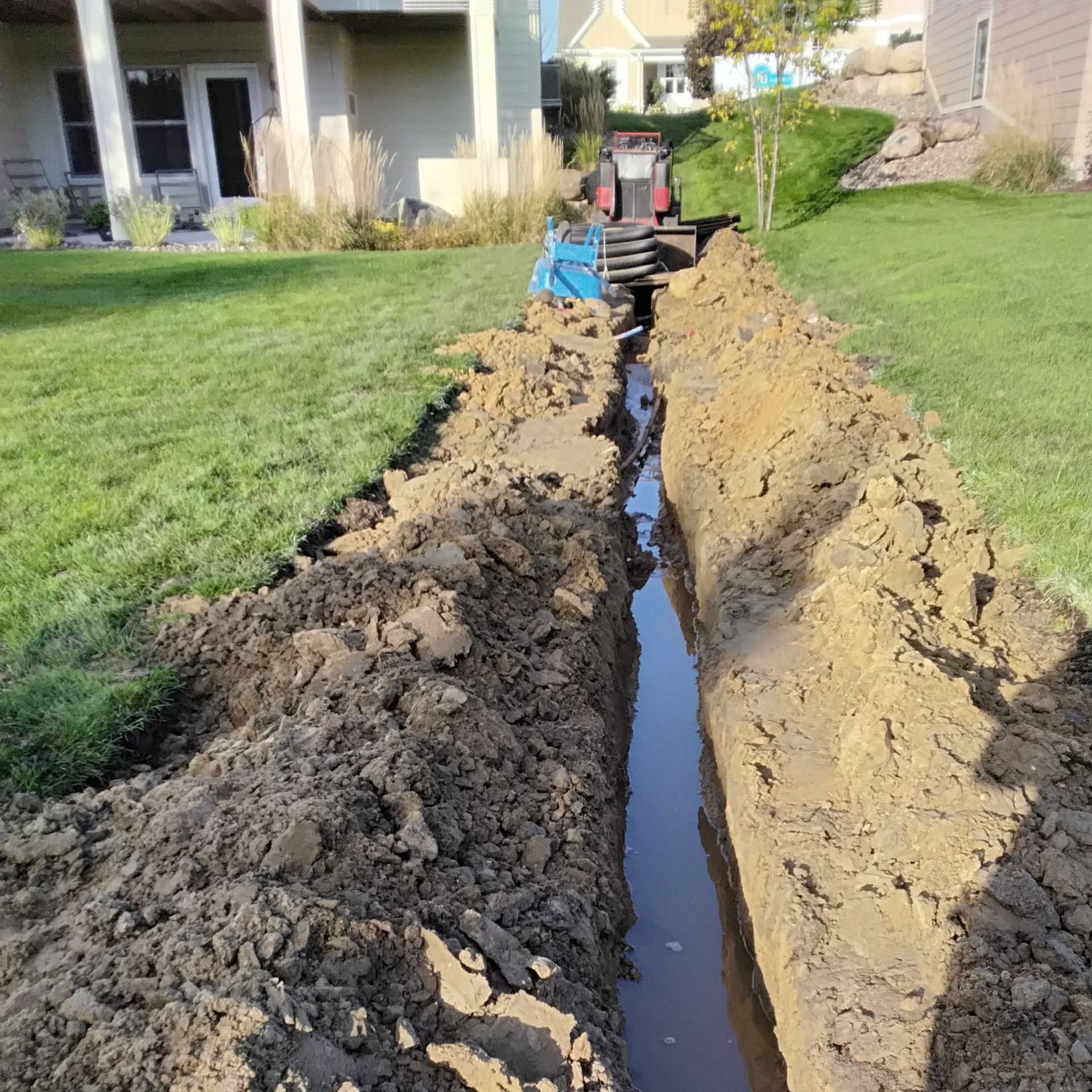
- Drain tile installed below the surface
- French drains to collect and redirect water
- Strategic grading paired with subsurface drainage
These systems allow lawns to remain usable and healthy even on properties where natural drainage is limited.
Why Proper Yard Drainage and Soil Amendment Must Work Together
Think of clay soil like a sponge that fills slowly and empties even more slowly. Adding organic matter improves how that sponge functions—but even with amended clay soil, if water has nowhere to go, the problems will remain
The most successful clay lawn solutions combine:
- Proper grading
- Targeted drainage systems
- Soil amendment
- Ongoing lawn care
When these elements work together, turf can thrive even in challenging clay conditions.
KG Landscape: Clay Soil & Drainage Specialists Since 2003
At KG Landscape, we don’t treat drainage and soil improvement as separate services. We design them together.
Since 2003, we’ve specialized in:
- Correcting grading issues
- Installing underground downspouts
- Designing and installing drain tile and French drains
- Preparing clay soils for long-term lawn success
Whether your lawn needs soil improvement, drainage correction, or both, our team designs solutions that work with Minnesota’s clay soils—not against them.
Amending Clay Soil Before a Lawn Is Installed
For new lawns or starting over from scratch
If you’re installing a new lawn—or completely renovating an existing one—this is when the most dramatic improvement can be made.
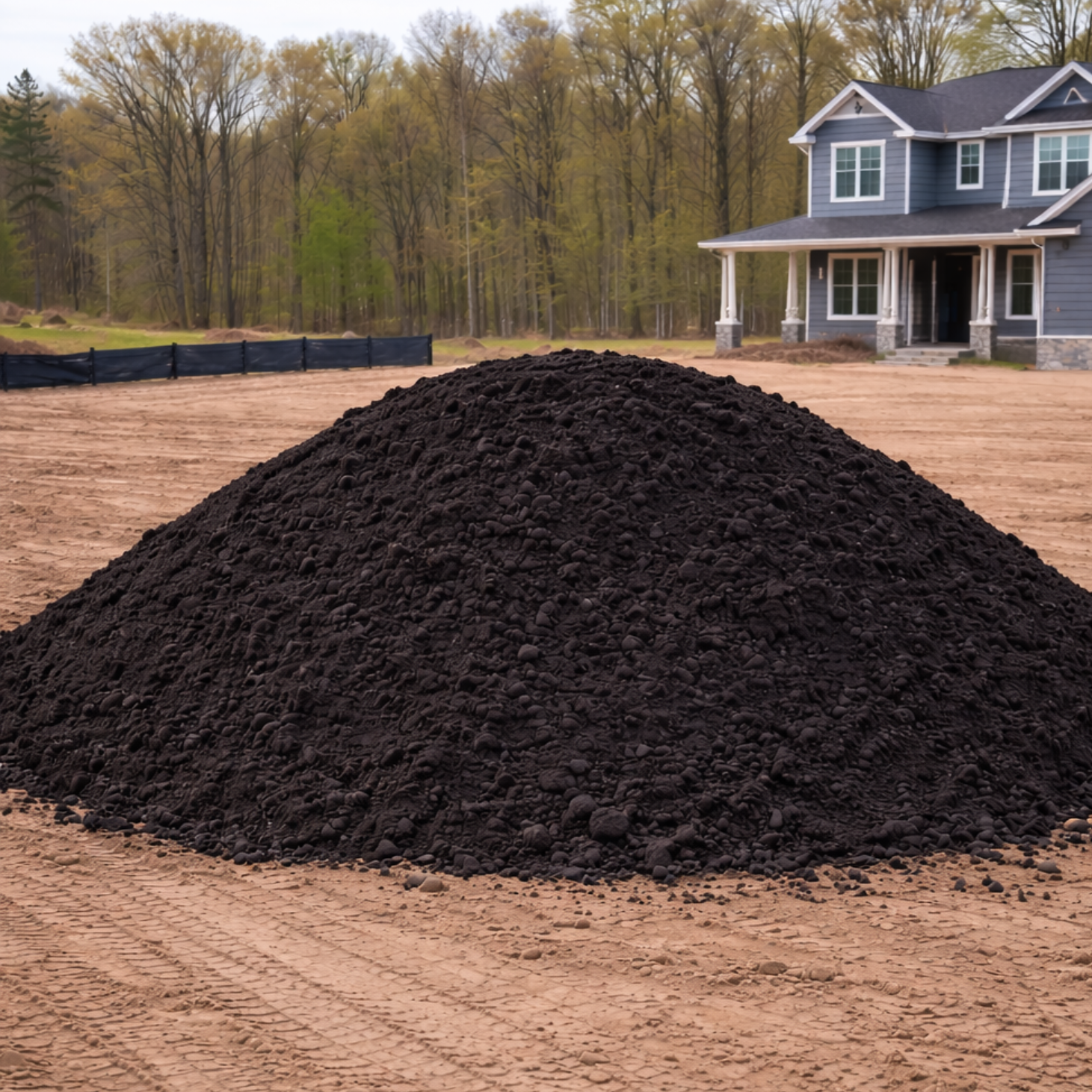
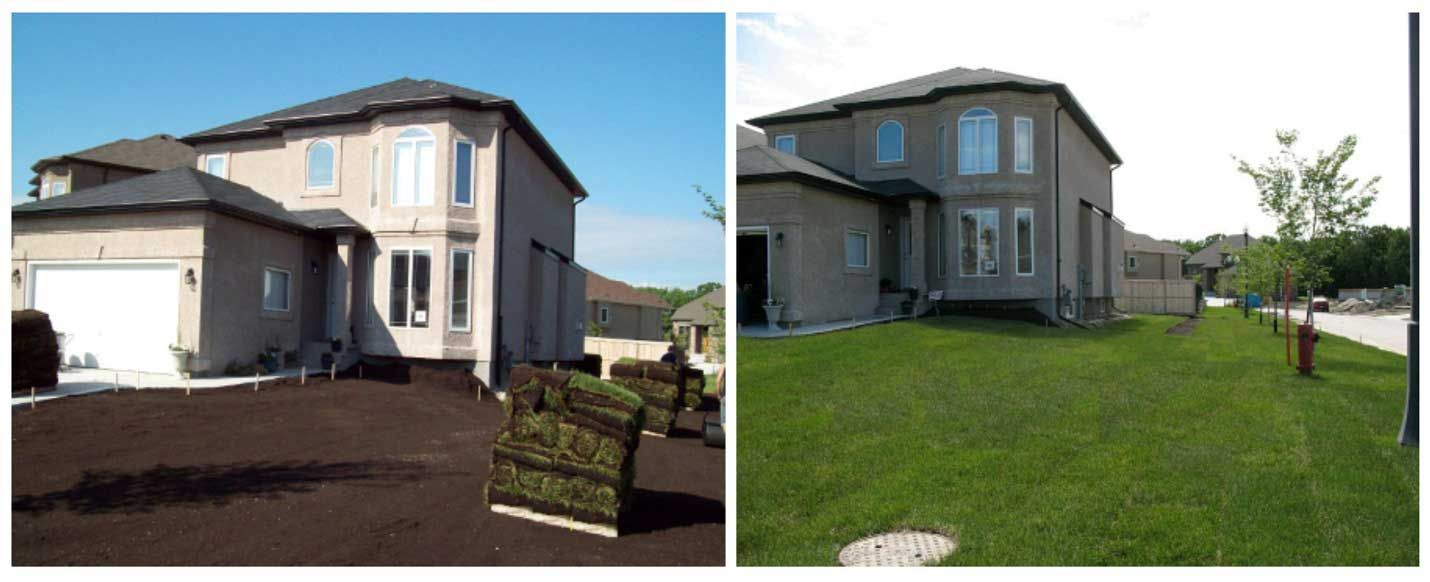
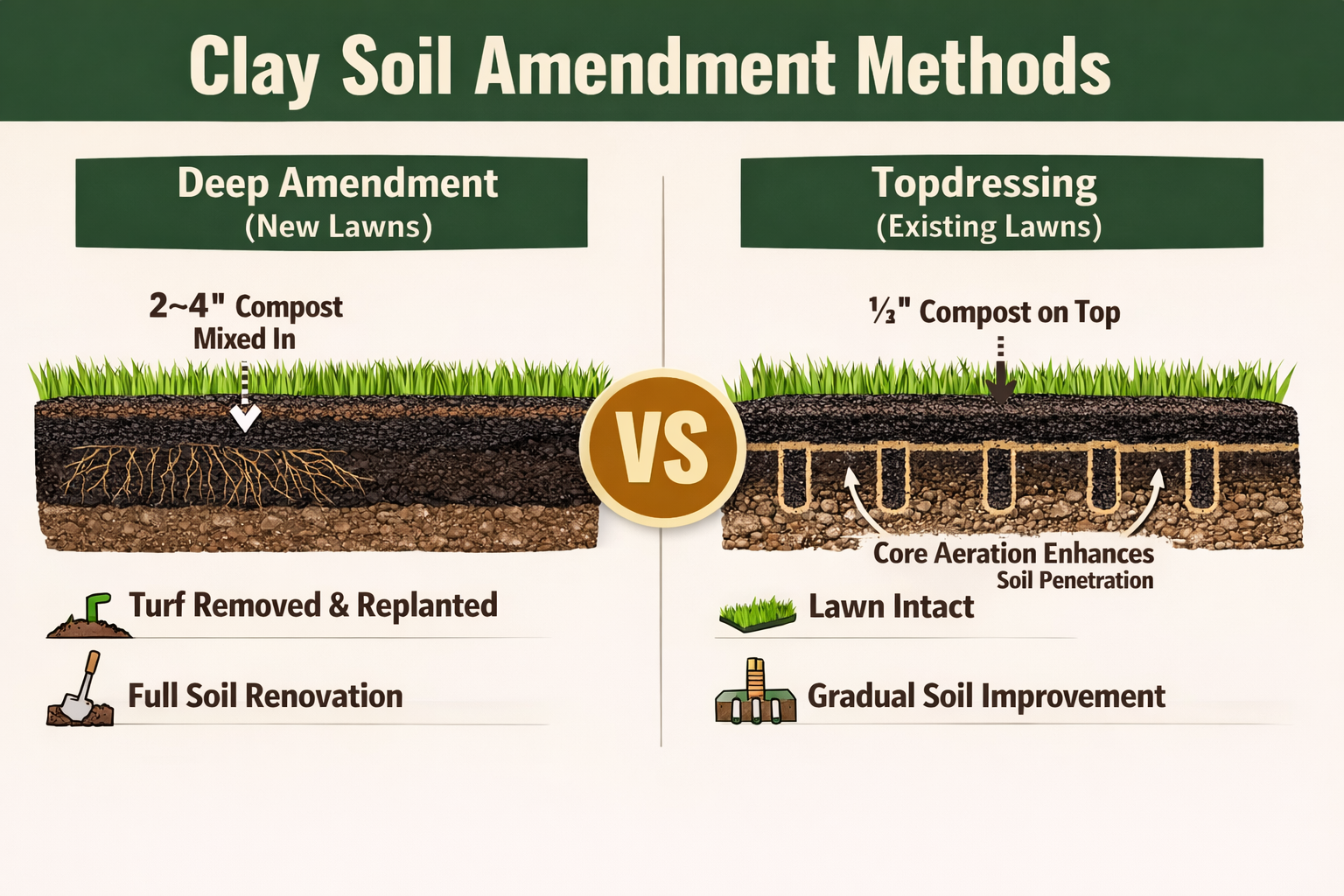
The most common situations in which we will add large amounts (2-4") of rich organic soil to the lawn is when we completely regrade for drainage fixes or leveling work, prior to a full lawn renovation or for new a completely new lawn being installed for a new construction home.
Proper soil amendment for new lawns
For new lawn installations in Minnesota, KG Landscape typically recommends:
- 2–4 inches of high-quality compost
- Incorporated into the
top 3–6 inches of native soil
This depth matters. Anything shallower only improves the surface, not the root zone.
This approach:
- Permanently improves soil structure
- Reduces drainage and compaction issues
- Creates ideal conditions for seed or sod establishment
Why this can’t be done on an existing lawn
You cannot add 2–4 inches of organic material on top of an existing lawn without:
- Burying the grass
- Smothering the crown
- The crown is the "heart" of the grass, where the shoots and roots meet at or just below the soil
- The crown shouldn't be buried by more that 3/4" soil
- Requiring complete reseeding or sodding
That’s why deep amendment is done before lawns are installed, not after.
Why You Can’t Add 2–4 Inches of Organic Matter to an Existing Lawn Without Starting Over
Deep soil amendment works before a lawn is installed because there is no turf to protect. Once grass is growing, adding multiple inches of compost on top would:
- Smother grass crowns
- Block sunlight and oxygen
- Kill existing turf
- Require complete reseeding or sodding
That’s why professional soil improvement after establishment must work with the lawn, not against it.
Amending Clay Soil After a Lawn Is Established
The most practical way to improve soil without starting over
Once a lawn is established, soil improvement must be done gradually. While adding 2–4 inches of organic matter and incorporating it into the soil is ideal, that approach isn’t realistic for an existing lawn. Doing so would bury the grass, destroy the turf, and require a complete renovation via or reseeding or sodding.
For most Minnesota homeowners, that level of disruption and cost simply doesn’t make sense—especially when there is already good grass in place.
Topdressing for Existing Lawns: A Practical Refresh Alternative
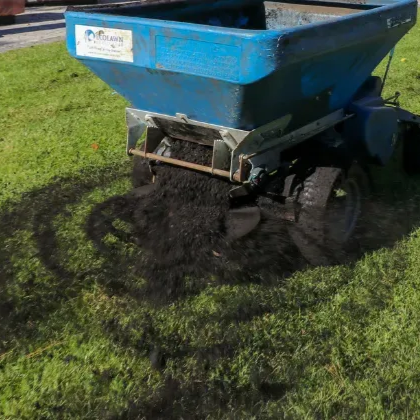
Topdressing involves applying a thin layer—typically ¼ to ½ inch—of compost or soil blend over the lawn surface.
When paired with core aeration, topdressing material works its way into the soil profile immediately.
👉 Check out our Lawn Topdressing Page to Learn More
Why this works on clay soil
- Organic matter gradually fills aeration holes
- Soil structure improves season by season
- Roots are encouraged to grow deeper
- Water and nutrients move more efficiently
After each topdressing application, clay soil becomes more open, biologically active, and better suited for thick turf growth.
Why This Method Makes Sense for Most Homeowners
While deep soil amendment is technically ideal, topdressing is often the smarter choice because it:
- Costs significantly less than full renovation
- Protects the investment already made in the lawn
- Improves soil without disrupting daily use
- Can be repeated annually for compounding benefits
For homeowners who already have decent grass coverage, this approach delivers real improvement without unnecessary risk or expense.
Why gradual soil amendment is often the best solution
The goal after a lawn is established isn’t to completely rebuild the soil overnight. It’s to improve soil structure over time while preserving the healthy turf you already have.
This is where topdressing, combined with core aeration becomes the most practical and cost-effective way to amend clay soil.
While it doesn’t deliver the instant transformation of deep soil amendment, it:
- Avoids tearing up the lawn
- Preserves established grass and root systems
- Spreads improvement costs over time
- Produces consistent, measurable results
For most established lawns in the Twin Cities, this approach delivers the best return on investment.
What Kind of Results to Expect
Topdressing is an excellent soil-building strategy that allows you to keep your lawn in tact. One treatment will provide noticeable gains, and several gets you even closer to the 2" that would have ideally been put down when the yard was built. After our topdressing service Homeowners typically see:
- Thicker, denser turf
- Improved drainage in problem areas
- Better fertilizer response
- Reduced stress during summer heat
Noticeable improvements can be seen after the first topdressing treatment, with very significant gains occurring when 2-3 applications are made every two or three years, with each year building on the last. This kind
How KG Landscape Approaches Established Lawn Soil Improvement
At KG Landscape, we focus on practical solutions that work in real Minnesota lawns. For established turf on clay soil, that usually means:
- Core aeration at the right time of year
- Compost topdressing at safe application rates
- Ongoing fertilization and weed control support
- Proper outdoor drainage systems (drain tile, Underground down spouts, French drains, etc.)
This approach allows homeowners to improve soil health without sacrificing the lawn they already have.
Fertilization & Weed Control: Why Soil Amendment Alone Isn’t Enough
Healthy soil is the foundation—but fertilization and weed control are what keep lawns thick and green.
Clay soils hold nutrients well, but they still require:
- Balanced fertilization
- Correct timing
- Weed pressure management
Without proper fertilization:
- Turf remains thin
- Weeds exploit open space
- Roots never reach their full potential
This is why soil amendment and fertilization must work together, not separately.
👉 This is where
KG Landscape’s fertilization and weed control programs
support long-term soil improvements and turf density.
Lime Treatments: When and Why They Matter in Minnesota Lawns
Lime is often misunderstood. It does not loosen clay soil or improve drainage directly.
Its role is to correct soil acidity (low pH).
Why established lawns may benefit from lime
Over many years, lawns that receive repeated fertilizer applications—especially ammonium-based fertilizers—can gradually become more acidic. Acidic soils can:
- Reduce nutrient availability
- Limit root development
- Decrease fertilizer effectiveness
In Minnesota, clay soils often start neutral to slightly alkaline, but long-term fertilization can change that balance.
When lime is beneficial
- Soil tests show low pH
- Turf performance declines despite proper fertilization
- Moss appears in shaded or stressed areas
Lime works best as a supporting treatment, not a standalone solution.
The Long-Term Payoff of Amending Clay Soil
When clay soil is amended correctly and supported with proper lawn care:
- Roots grow deeper
- Lawns become thicker and greener
- Fertilizer works more efficiently
- Weeds struggle to establish
- Turf holds up better to heat and traffic
This is how the best lawns in the Twin Cities are built.
Why KG Landscape Takes a Soil-First Approach
At KG Landscape, we don’t treat soil improvement as an add-on—it’s the foundation of everything we do.
Whether you’re:
- Installing a new lawn
- Renovating a struggling yard
- Improving compacted clay soil over time
We tailor our approach based on what the soil actually needs.