
Underground Downspout Drainage Solutions
Serving the Twin Cities and Surrounding Minneapolis- St. Paul Metro Areas
The Most Experienced Underground Downspout Installation Company in the Twin Cities
Protect your home and yard from water damage with properly designed underground downspout drainage systems. Since 2003, KG Landscape has helped Twin Cities homeowners eliminate soggy lawns, basement moisture, ice hazards, and erosion through thoughtful drainage planning and long-term, durable solutions.
What Is Underground Downspout Drainage?
Underground downspout drainage systems collect rainwater from your gutter downspouts and route it safely underground to discharge away from your home and landscape features.
How Underground Gutter Drainage Systems Protect Your Yard and Home
In the Minneapolis–St. Paul area, where heavy summer rain, snowmelt, and freeze-thaw cycles are common, directing roof runoff below the surface is critical for protecting your property.
These systems help prevent water from washing into planting beds around the foundation, reduce ice buildup on sidewalks and walkways during Minnesota winters, and protect patios, retaining walls, and other hardscape features from erosion and long-term water damage.
What Happens When Downspouts Drain at the Surface
- Water pools near foundation
- Can contribute to water / moisture in basements
- Downspout extensions may cause trip hazards
- Will cause basement problems when foundation grading is poor
- Downspout extensions don't look very nice in the landscape
- Can cause soggy lawns where downspouts empty into flat areas
- May cause ice buildup in winter
- May cause mulch erosion onto sidewalks
How Underground Downspouts Work
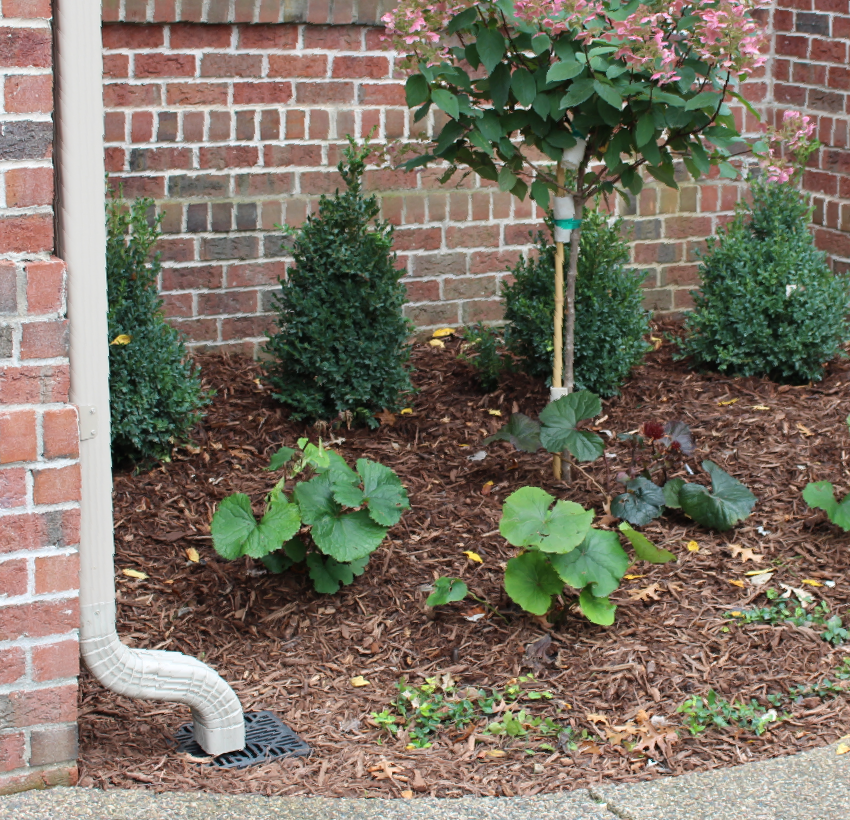
- Catch basins are installed below downspouts
- Water from downspout is ran directly into the catch basin
- KG will use aluminum or flexible poly connections to so that the downspout empty's within 0-2" of the top grate on the catch basin
- Solid piping is connected to the catch basin for the first 10-15' away from the foundation (underground pipe)
- KG then switches to perforated pipe after reaching 10-15' away from the house (helps with freeze protection)
- We discharge water from these systems via a pop-up or daylight emitter down hill and far away from the house
Common Drainage Problems We Solve in the Twin Cities
Soggy Yards Near the House & Basement Moisture Issues
Common Warning Signs in Twin Cities Homes
- Basement moisture or water intrusion when downspouts empty too close to the foundation
- Inadequate grading that fails to move roof runoff away quickly enough
- Excess water saturating soil near the foundation and entering through cracks, seams, and block joints
- Wet foundation block wicking moisture to the interior basement walls, increasing humidity
- Ongoing moisture issues made worse by clay soils and flat yard conditions common in the Minneapolis–St. Paul area
✅ Underground downspout drainage redirects this water away from the foundation, reducing soil saturation and helping prevent long-term basement moisture problems.
Water Pooling in Flat Backyards
Especially Common in Walkout Basement Homes
- Roof runoff from multiple downspouts directed downhill into the backyard
- Water slowing and pooling as the yard flattens behind the home
- Standing water near patios, deck footings, and rear foundation walls
- Clay soils preventing proper infiltration, increasing soggy lawn conditions
✅ Underground drainage systems move water beyond flat backyard areas to safer discharge locations.
Ice Buildup and Erosion Near Walkways
A Major Safety Issue in Minnesota Winters
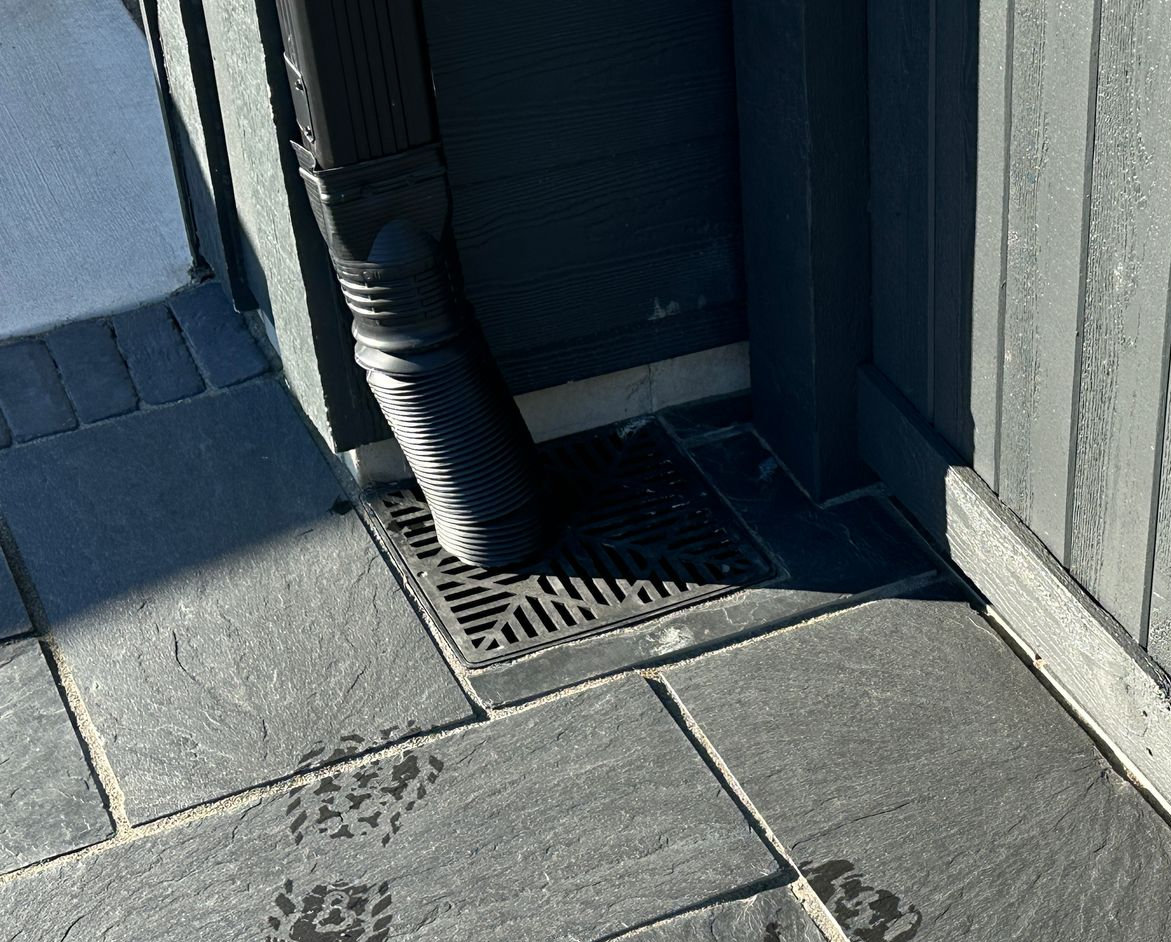
- Downspouts emptying onto front sidewalks or city sidewalks
- Freeze-thaw cycles creating ice buildup and slip hazards
- Erosion washing mulch and soil onto walkways
- Above-ground aluminum extensions creating trip hazards
✅ Running downspouts underground improves safety and keeps walkways clear year-round.
Homes with Hills Sloped Toward the House or Garage
When Water Naturally Flows the Wrong Direction
- Neighboring homes at higher elevations directing water toward your foundation
- Hillside runoff increasing moisture pressure near the house and garage
- Backyard slopes that trap gutter water with no natural outlet
✅ Underground downspouts allow water to be routed around the home to the front yard or another safe discharge area.
Where Underground Downspouts Are Most Commonly Installed
Underground downspouts are one of the most effective drainage solutions KG Landscape provides to homeowners throughout the Minneapolis–St. Paul area. During our on-site drainage consultations, we identify which downspouts are contributing most to yard, foundation, or basement moisture problems and recommend routing those downspouts underground using a properly designed underground drainage system.
With decades of experience installing underground downspouts in the Twin Cities, we understand that placement matters just as much as installation. Soil conditions, yard slopes, sidewalk and patio layouts, and Minnesota’s freeze-thaw cycles all factor into where and how downspouts should be routed underground.
Our expertise in strategic underground downspout placement ensures each system is installed at the right time, in the right place, and in the right way—moving water safely away from the home and preventing future drainage problems caused by improper design or installation.
Between the House and Front Sidewalks / Walkways
- Eliminates trip hazards
- Prevents ice buildup
- We build these into our new front walkway designs
- Cleaner, safer walkways
Between Garage and Sidewalk Areas
- Common near garbage can storage
- Keeps walk paths clear year-round
Patios and Hardscape Areas
- We run downspout underground when they would otherwise empty onto patio
- We design these underground drain pipes for new patios to ensure everything works together
- Catch basins are always installed below downspouts (can debris via cover and sediment via trap)
- Pipes routed under or around patios
Side Yards and Narrow Access Areas
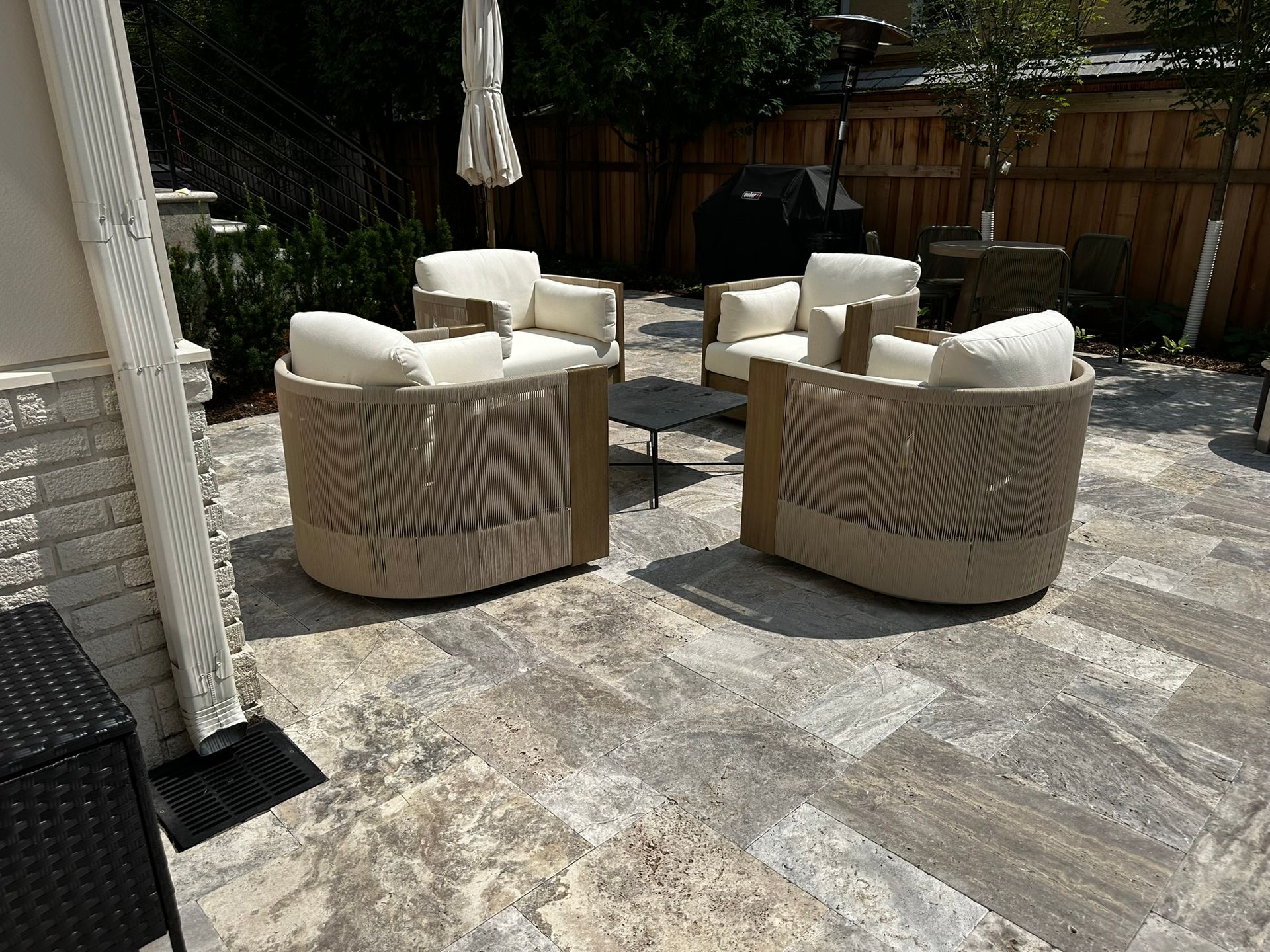
Side yards are one of the most common problem areas for downspouts in the Twin Cities, and homeowners frequently search for this without knowing the term.
- Side yard drainage problems
- Narrow yard drainage solutions
- Downspouts located between homes with limited drainage space
- Water trapped between foundations due to poor grading and clay soils
- Ideal locations for underground downspouts to prevent soggy turf
- Keeps narrow walk paths clear and usable
Combining Underground Downspouts and Sump Pump Solutions
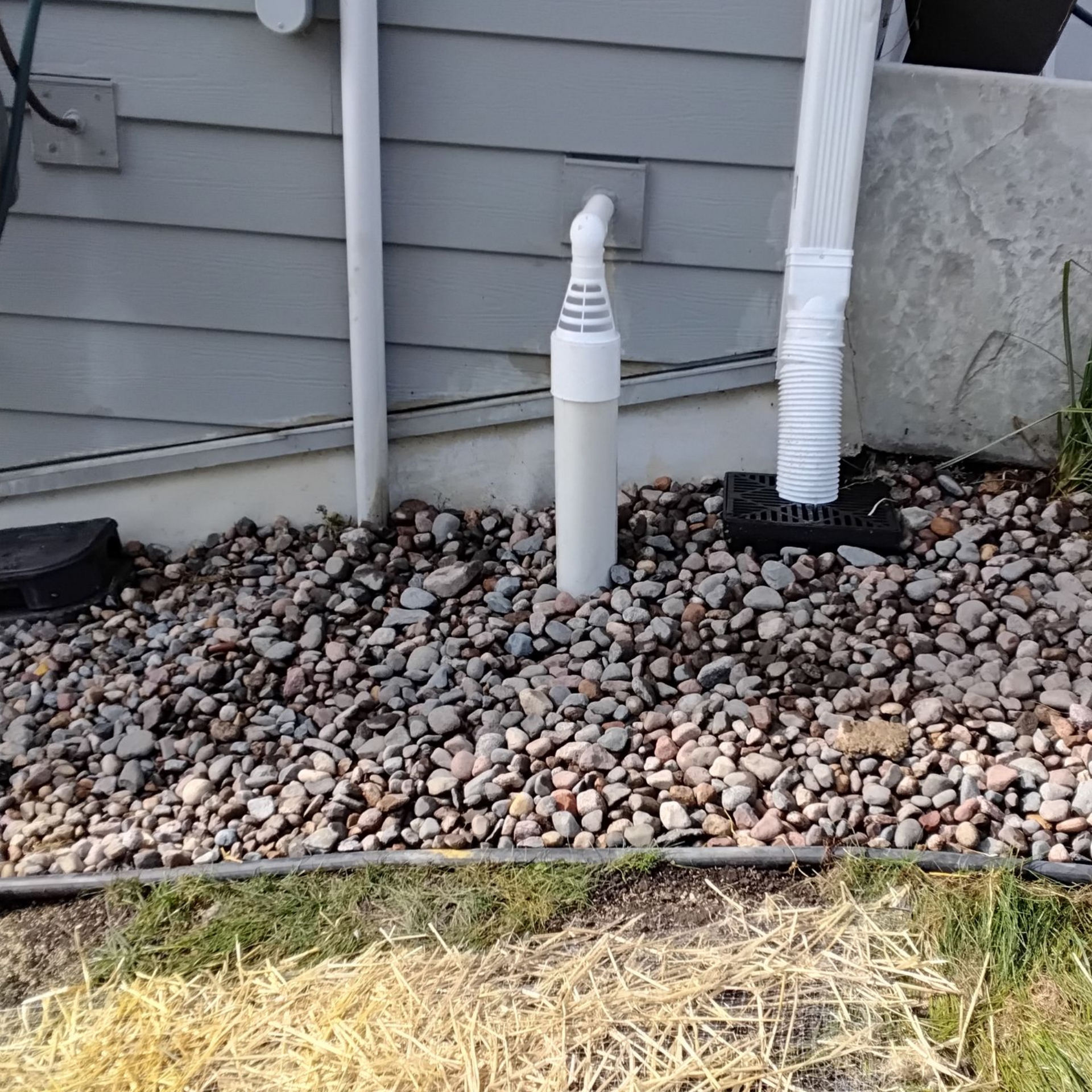
- A catch basin below the downspout and sump discharge with "Y" into a shared underground drain pipe
- Great way to "kill two birds with one stone."
- See example phot below of a project where we did this in Plymouth
Areas with Poor Grading or Limited Slope
- Locations where surface grading alone cannot carry water safely away
- Flat backyards (especially for homes with walkout basements)
- Common near foundations, patios, and flat backyard areas
- Requires careful elevation planning and discharge design
- May incorporate drain tile system in the lawn
- Underground systems allow water to be routed to better drainage zones
Solutions We Offer - How We Safely Discharge Water from Underground Downspout Systems
At KG Landscape, the success of an underground downspout system depends on where and how the water is discharged. Every system is carefully designed to move water away from the home, prevent backflow, and reduce freeze-thaw risks common in the Twin Cities.
Daylight Drainage Discharge Systems
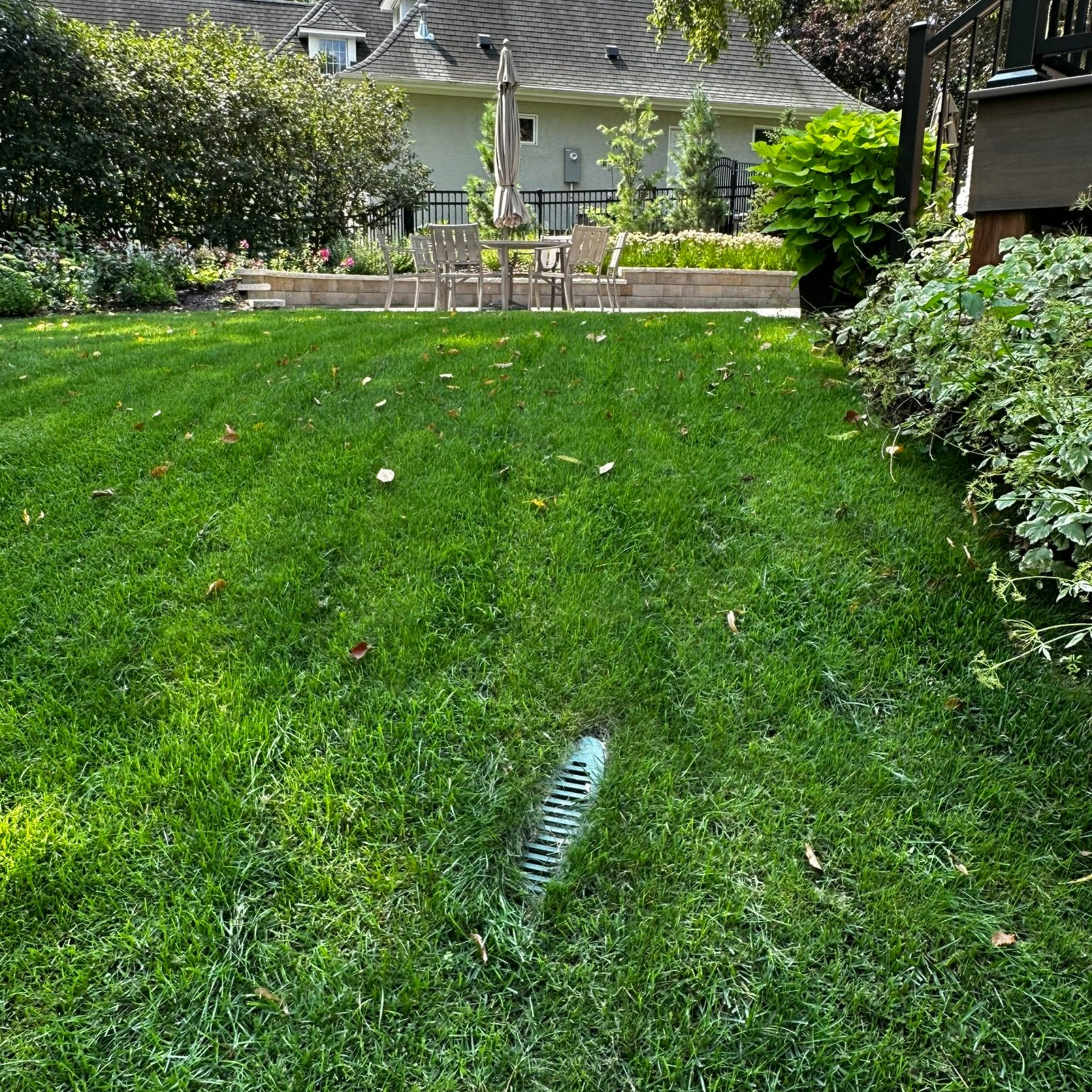
A daylight discharge system allows water to flow freely out of the underground drain pipe without creating a trap. Unlike pop-up emitters, daylight systems do not require the pipe to turn upward toward the surface. Instead, water moves through the pipe on a continuous slope and exits directly at the discharge point.
- Water flows straight through the pipe with no trapped section
- Pipe discharges downhill at the end of the system
- Requires sufficient slope and cannot be installed in flat yards
- Eliminates standing water in the line after rain events
Because there is no trap at the discharge end, daylight systems are our preferred option whenever site conditions allow. They are the most effective at reducing freeze-thaw issues in Minnesota’s climate.
KG Landscape always installs a protective grate or cap at the discharge point. Our preferred option is a 45-degree grate emitter, which sits flush with sloped lawns and hillsides. In non-mowed or naturalized areas, we may use flat cap systems where appropriate.
Discharging Water into Naturalized Backyard Areas
For backyards that border naturalized spaces such as wetlands, lakes, or prairie-style plantings, KG Landscape often discharges water from underground downspout systems into these areas.
- Directs roof runoff away from turf areas that can become soggy
- Uses naturalized landscapes to safely disperse water
- Helps prevent muddy lawns and standing water near the home
- Ideal for properties with prairie plantings or native vegetation
Creating Low Points to Improve Backyard Drainage
In some backyards, naturalized areas are slightly too flat for ideal daylight discharge. When this occurs, we can modify the landscape to improve drainage performance.
- Subtle low points carved into naturalized or landscaped areas
- Improves pipe pitch and drainage efficiency
- Allows water to discharge more quickly from the system
- Often makes daylight discharge possible where a pop-up emitter would otherwise be required
Pop-Up Emitter Discharge Systems
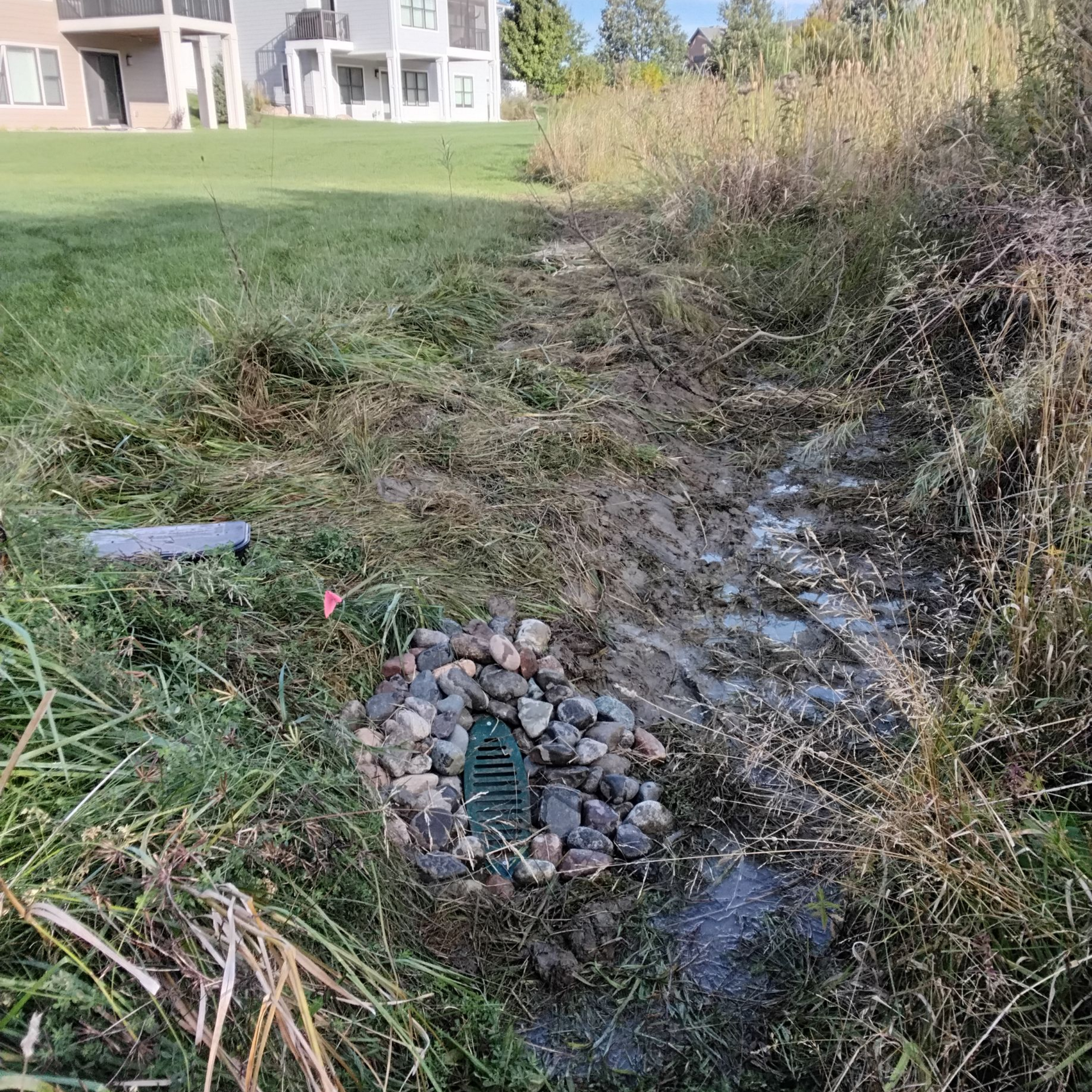
Pop-up emitters are the most common and effective way we discharge water from underground downspout systems.
- Flat, low-profile cap sits flush with the lawn and can be easily mowed over
- When water flows through the pipe, the top tab pops up to release water
- Water disperses downhill into the street, backyard lawn, or naturalized areas
- Prevents erosion and surface washout near the foundation
Proper elevation is critical
For water to discharge correctly, the pipe must fill to a level higher than the pop-up tab. We carefully measure elevations to ensure:
- No trapped water can ever flow back toward the house
- Proper pitch from the catch basin at the downspout to the discharge point
- Reliable flow during heavy rain events

Trapped Water Management & Freeze-Thaw Protection
Because some water can remain in underground lines after rain events, we design systems that allow this water to clear out safely and help prevent blockage from freezing .
- Non-perforated pipe used near the home for protection
- Perforated pipe installed once the line is at least 15 feet away from the house
- Tiny perforations allow trapped water to slowly weep into surrounding soil
- Helps prevent standing water in the line and reduces freeze-thaw risk
French Drain Integration at Discharge Points
In some situations, we enhance drainage performance by adding a French drain near the end of the system.
- Typically 10–20 linear feet near the discharge end
- Perforated pipe surrounded by crushed rock
- Rock bed installed approximately 12 inches below the pipe
- Creates void space that allows water to exit the system quickly
- Helps clear trapped water from the line after rain events
This added drainage capacity improves system reliability and longevity in Minnesota’s climate.
Discharge Points Near Property Lines and Shared Swales
When underground downspout drainage systems discharge near property lines—whether in backyards, side yards, or less commonly front yards—those discharge locations must be planned carefully to avoid unintended impacts on neighboring properties.
- Discharge points are often located within a few feet of a property line
- Commonly placed where a shared swale exists between neighboring lots
- Swales are designed to carry water in a specific direction through the neighborhood
- Final discharge may flow toward a street, city drainage system, or nearby wetland
Respecting neighbors and existing drainage patterns is critical
In many neighborhoods, yards are intentionally graded so water from multiple properties drains toward a shared swale or low area. In situations where one property sits higher than a neighboring yard, water will naturally move downhill regardless of improvements made on the upper property.
To manage this responsibly, KG Landscape focuses on:
- Directing water toward the downhill side of the property
- Avoiding single-point discharge that could cause erosion or concentrated wet spots for neighbors
- Allowing water to spread and sheet across the landscape when appropriate
- Routing water toward curb lines or streets whenever possible to keep runoff off neighboring properties
Our goal is to resolve drainage issues effectively while respecting property lines, existing grading, and maintaining good relationships between neighbors.
Rain Garden Integration
In yards where no natural low point exists to safely receive water from downspouts, KG Landscape may recommend creating a controlled, artificial low point designed to manage excess stormwater. Rain gardens are an effective solution when homeowners want to combine drainage improvements with eco-friendly landscaping.
- Designed to temporarily hold and absorb roof runoff after rain events
- Ideal for integrating pollinator gardens, native plantings, and prairie landscapes
- Helps manage stormwater naturally on your property
- Reduces runoff to lawns that could otherwise become soggy
KG Landscape designs rain gardens that balance effective drainage with your landscaping goals, creating functional spaces that support both water management and plant health.
Underground Dry Well Systems
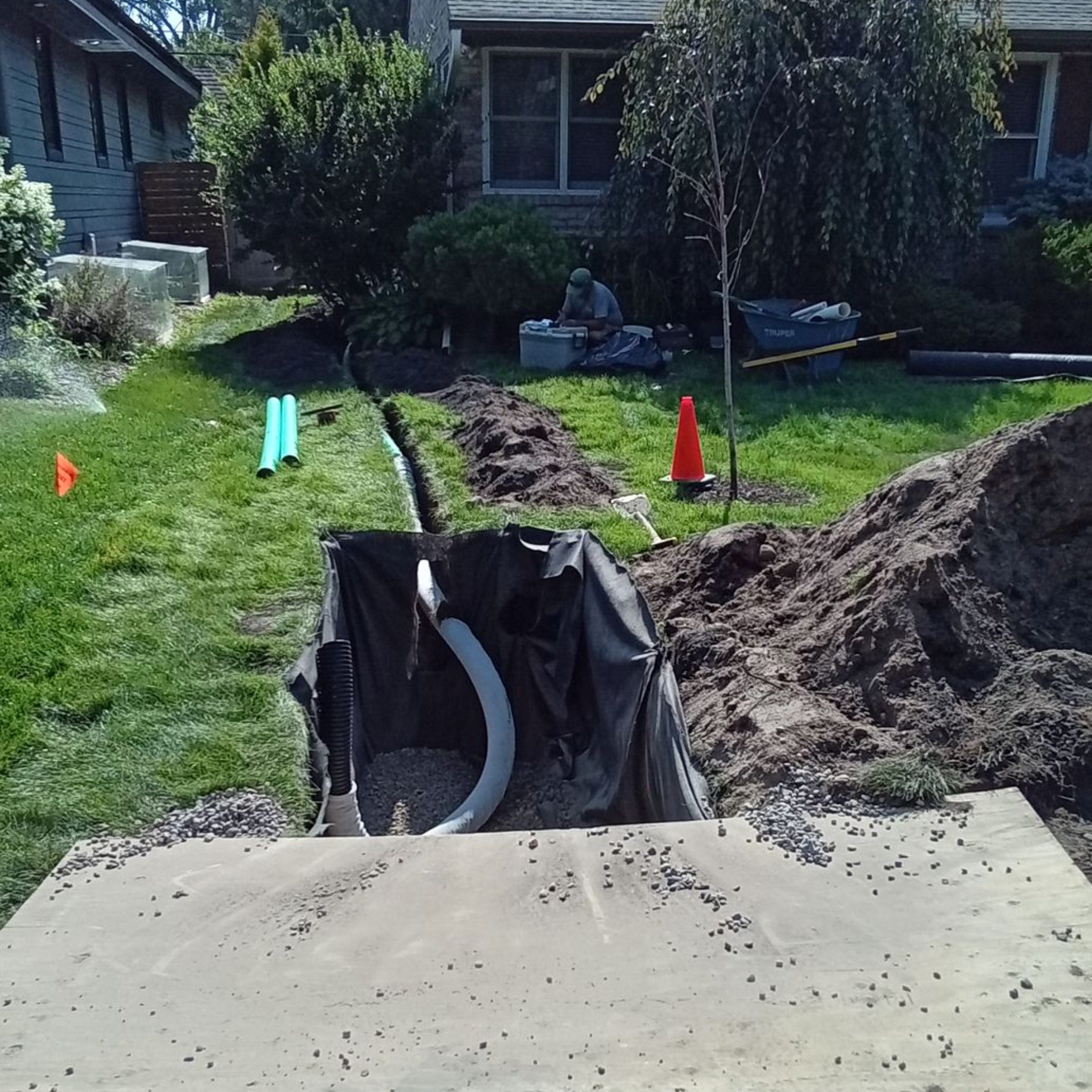
When no suitable surface discharge location exists, KG Landscape often designs underground dry well systems to manage water from underground downspouts, sump pump discharge, and other drainage features such as French drains.
- Holds and slowly absorbs large volumes of roof and surface runoff
- Ideal when rain gardens or surface features are not desired or feasible
- Common solution for small or urban yards in Minneapolis and St. Paul
- Installed entirely below grade with no visible impact on the lawn
Dry well systems allow water to be stored underground and released gradually into surrounding soil. Once installed, the area above the dry well remains usable lawn space, maintaining the appearance and function of the yard without added obstructions or grading changes.
Check out this case study example to see exactly how we used a dry wells to hold and absorb water in this Minneapolis yard with no other water outlet options.
Why Material Choice Matters for Underground Drainage
At KG Landscape, we bring over 20 years of experience designing and installing underground drainage systems throughout the Minneapolis–St. Paul metro. Over time, we’ve learned that long-term performance depends on thoughtful design and the right material choices for each specific condition.
Every underground downspout system we build is designed to maximize durability, protect nearby structures, and perform reliably through Minnesota’s freeze-thaw cycles.
The Catch Basin
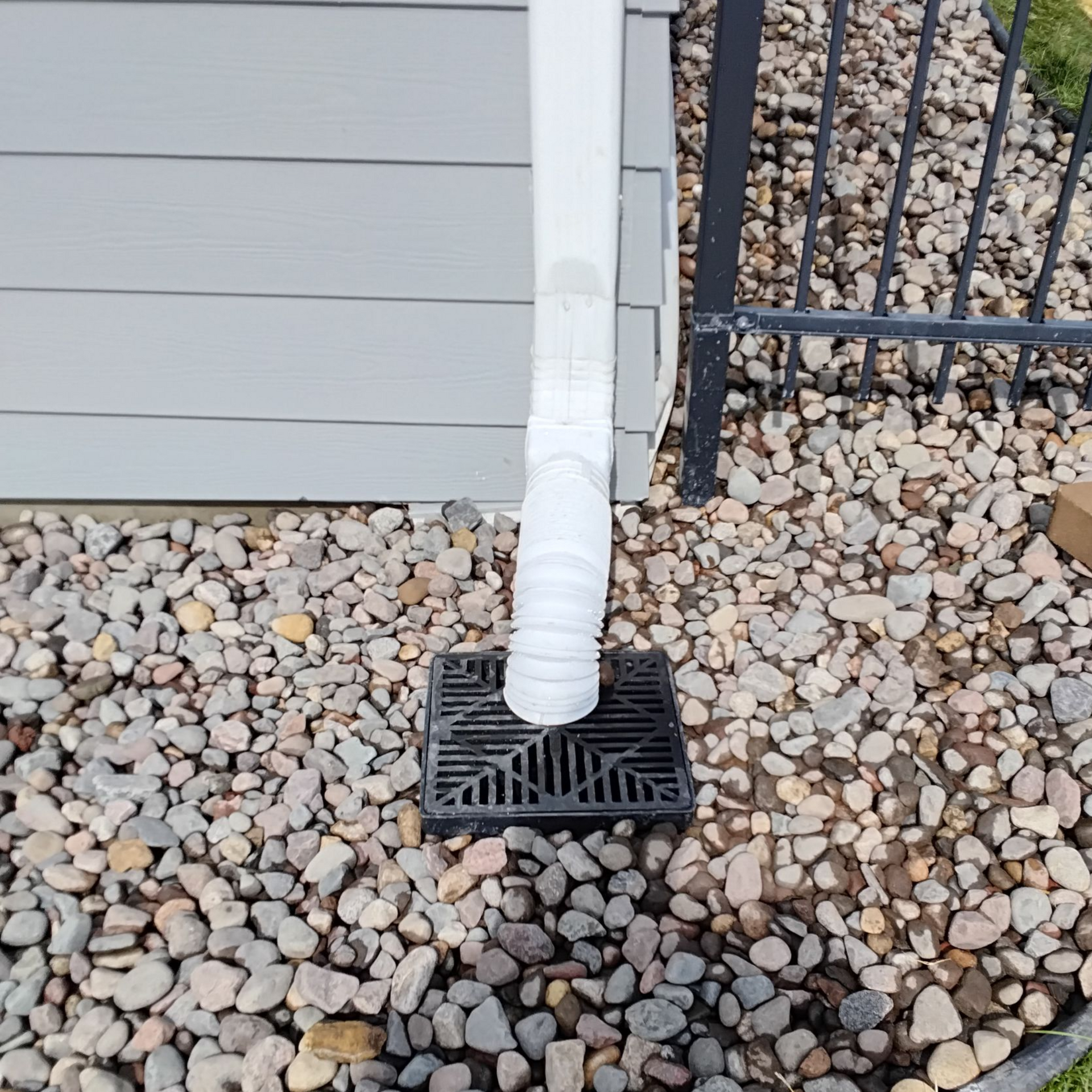
Rather than tying downspouts directly into underground piping, KG Landscape installs 12"x12" catch basin boxes beneath downspouts to protect the drainage system from debris.
- Grated top filters leaves and large debris before water enters the system
- Provides a clean-out and inspection point at the start of the system
- Prevents debris from washing directly into underground pipes
- Built-in trap at the bottom of the basin
- Outlet pipe begins 4–6 inches above the basin floor
- Allows roof granules, dirt, and small stones to settle safely at the bottom
- Reduces long-term clogging in underground pipes
- Removable grate allows easy access for future cleanout
Catch basins are a critical first layer of protection that help underground drainage systems remain functional for decades.
Corrugated Pipe vs. PVC Pipe
Both corrugated and PVC pipe have their place in underground drainage systems. The key is knowing when and where to use each material.
When We Use PVC Pipe
PVC pipe is used when maximum strength and long-term durability are required.
- Installed below patios, walkways, and other hardscape
- Used near retaining walls and structural features
- Ideal when routing pipe around trees with aggressive root systems
- Always non-perforated to prevent root intrusion and water seepage
- Highly resistant to crushing and long-term deformation
PVC is also commonly used in French drain systems installed beneath patios or hardscapes where access would be difficult if repairs were ever needed.

When We Use Corrugated Pipe
Corrugated pipe is flexible, efficient, and well-suited for many underground drainage applications.
- Flexible material adapts well to grading changes
- Easier to work around obstacles
- Provides some tolerance for freeze-thaw movement
- Commonly used for longer underground runs in lawn areas
For most residential underground drainage systems, corrugated pipe provides an effective balance of performance and adaptability.
Non-Perforated Pipe Near the Home
To protect the foundation, KG Landscape always begins underground downspout systems with non-perforated pipe.
- First 15 feet (or more) from the home uses solid pipe
- Prevents water from seeping into soil near the foundation
- Protects basements, footings, patios, and nearby structures
- Used near all sensitive areas where moisture is undesirable
When and Why We Use Perforated Pipe
After safely moving water away from the home, we may transition to perforated pipe depending on site conditions.
- Allows trapped water to drain from pop-up emitter systems
- Helps reduce freeze-thaw risks by clearing standing water
- Improves drainage in surrounding lawn areas
- Essential component of French drain systems
When perforated pipe is used:
- Pipe is wrapped in a silt sock to limit sediment entry
- French drain sections include crushed rock and heavy-duty filtration fabric
- Additional fabric protection may be added near trees or garden beds
These layers work together to keep water moving while protecting the pipe from clogging over time.
Drainage Challenges in Clay Soils & Walkout Basements
KG Landscape specializes in solving downspout drainage problems in yards with clay soil throughout the Minneapolis–St. Paul metro. While underground downspout systems are a key part of our work, we take a comprehensive approach to outdoor drainage by designing integrated drainage solutions tailored to each property.
Our systems often combine underground downspout drainage with sump pump discharge solutions, lawn drain tiling, and French drains in wet areas, around patios, and within foundation landscaping. By designing these components to work together, we address the root causes of drainage issues rather than treating symptoms.
With decades of experience, KG Landscape delivers long-term, durable outdoor drainage solutions built to perform reliably in Minnesota’s challenging soil and climate conditions.
Twin Cities Areas with Common Clay Issues
- Plymouth
- Minnetonka
- Maple Grove
- Medina
- Excelsior
- Chanhassen
- Mendota Heights
- Inver grove heights & North Oaks
- Certain neighborhoods in Minneapolis and St. Paul
- Parts of many other cities in the metro as well
Why Walkout Basements Create Drainage Problems
- Roof water directed downhill
- Side yards and neighbors water run into backyard
- Water in heavy clay soils follows the foundation draining downhill into backyard along the foundation
- Backyard receives most runoff from the downspouts (often both side yards and backyard downspouts)
Freeze-Thaw Damage to Patios and Deck Footings
- Water pooling near structures
- Soil movement and settling
- Wet clay soils expand and contract causing patios and deck footing to shift
Benefits of Underground Downspout Drainage
Underground downspout drainage systems solve multiple outdoor drainage problems at once. When properly designed and installed, they improve safety, protect structures, and create a cleaner, more functional yard—especially in Twin Cities soil and weather conditions.
Protects Foundations and Structures
- Moves roof runoff away from the foundation
- Reduces soil saturation near basement walls
- Helps prevent moisture intrusion and long-term foundation issues
Eliminates Trip Hazards
- Removes above-ground downspout extensions from walkways, helps improve curb appeal
- Keeps sidewalks, patios, and paths clear and accessible
- Improves safety around garages and entry areas
Reduces Ice Buildup in Winter
- Prevents water from freezing on sidewalks and driveways
- Reduces slip hazards during freeze-thaw cycles
- Keeps winter runoff directed away from pedestrian areas
Prevents Mulch and Soil Erosion
- Stops water from washing mulch onto sidewalks
- Protects planting beds and foundation landscaping
- Reduces erosion caused by concentrated roof runoff
Cleaner, More Functional Yard Space
- Eliminates soggy lawn areas near downspouts
- Keeps patios and outdoor living spaces dry
- Improves overall appearance and usability of the yard
About the Expert

Kent Gliadon is the founder of KG Landscape and a graduate of the University of Minnesota’s Landscape Design program. Since 2003, he has specialized in designing, constructing, and installing underground drainage systems as part of integrated outdoor water management solutions for residential properties throughout the Twin Cities.
Kent focuses on resolving drainage problems in existing landscapes—such as basement moisture, soggy yards, and water damage to patios and walkways—while also integrating proactive drainage solutions into new landscape design-build projects to prevent future issues and protect homes and landscape features long into the future.
How KG Landscape Delivers Underground Drainage Solutions
At KG Landscape, we take a thoughtful, proven approach to solving outdoor drainage problems. Our process combines expert evaluation, careful planning, precise installation, and long-term accountability to ensure every drainage system performs as intended.
Outdoor Drainage Consultation
Every project begins with an on-site outdoor drainage consultation.
- Consultation fee ranges from $90–$150, depending on project type and location
- One of our experienced drainage specialists meets with you at your property
- We evaluate drainage issues and discuss practical solutions
- Recommendations are presented using a good, better, best approach
- Ballpark pricing is discussed during the visit to guide decision-making
If you move forward with the project, 100% of the consultation fee is credited toward the installation cost.
Design & Planning
Following the consultation, KG Landscape develops a detailed plan for your drainage system.
- Written estimate provided outlining recommended drainage solutions
- $3,500 project minimum for yard drainage projects, including underground downspouts
- Drainage systems are designed specifically for your yard, soil conditions, and layout
- Pipe routes, discharge points, elevations, and materials are clearly defined
Professional Installation
Our installation crews work from detailed plans created by our drainage experts.
- Crews follow exact pipe locations, elevations, and design details
- Elevation tools including laser levels, transits, and altimeters are used to ensure proper slope
- Systems are installed to move water efficiently and prevent future issues
- Materials and methods are chosen for long-term durability in Minnesota conditions
Testing, Quality Control & Long-Term Support
Once installation is complete, every system is tested before the project is finalized.
- Drainage systems are checked to confirm proper flow and discharge
- We verify that everything performs as designed
- KG Landscape stands behind the work we install
- If a drainage issue ever arises related to our installation, we will return to address it
Our systems have an excellent track record of long-term performance. Many homeowners contact us years later for additional drainage improvements or landscape projects, a reflection of the quality, reliability, and customer service we provide throughout the process.
Our Service Area
KG Landscape provides professional underground downspout drainage and outdoor drainage solutions throughout the Minneapolis–St. Paul and Twin Cities metro area. Our team designs and installs drainage systems built specifically for Minnesota soil conditions, grading challenges, and weather patterns.
We proudly serve homeowners in the following communities:
Frequently Asked Questions About Underground Downspout Drainage
1. Should downspouts be run underground in Minnesota?
Yes. In Minnesota’s climate, underground downspout drainage is often the most effective way to manage heavy rain, snowmelt, and freeze-thaw cycles. Running downspouts underground helps move water away from the foundation, reduce ice buildup on walkways, and prevent soggy lawns—especially in clay soils common throughout the Twin Cities.
2. How far should underground downspouts drain away from the house?
Underground downspouts should discharge water far enough from the foundation so it cannot flow back toward the home. In most cases, this means routing water at least 15 feet or more away from the house, depending on yard slope, soil conditions, and available discharge locations.
3. What is better: a pop-up emitter or a daylight drain?
Daylight drainage is typically the preferred option when enough slope exists, because water flows freely without trapping water in the pipe. Pop-up emitters are used when yards are too flat for daylight discharge. Both systems can work well when designed and installed correctly, but daylight drains are less prone to freeze-thaw issues.
4. Can underground downspouts help fix basement moisture problems?
Yes. When downspouts empty too close to the home, excess water can saturate soil near the foundation and lead to basement moisture issues. Routing downspouts underground and discharging water farther away reduces soil saturation near the foundation and can help prevent moisture intrusion through foundation walls.
5. How much does underground downspout drainage cost in the Twin Cities?
The cost of underground downspout drainage varies based on the number of downspouts, pipe length, discharge method, and site conditions. In the Minneapolis–St. Paul area, projects typically require a professional evaluation to determine scope and pricing. KG Landscape offers on-site drainage consultations and applies the consultation fee toward installation when the project moves forward.
Request an On-Site Yard Drainage Evaluation
If you’re dealing with water collecting near your home, soggy lawn areas, or downspouts that aren’t draining properly, KG Landscape can help. Our team offers on-site yard drainage evaluations focused on identifying the most effective underground downspout and outdoor drainage solutions for your property.
During your visit, a drainage specialist will assess grading, soil conditions, downspout locations, and water flow patterns throughout your yard. We’ll outline practical solution options, explain how different drainage approaches may work for your site, and discuss estimated cost ranges to help you plan next steps.
When appropriate, we provide a written, fixed-price proposal for the recommended drainage work. If you move forward with installation, your evaluation fee is fully applied toward the project cost.