Eco-Friendly Lawn Care: A Practical Guide for Twin Cities Yards
What Eco-Friendly Lawn Care Actually Means
Eco-friendly lawn care gets talked about like it's a product you buy. It isn't. After more than twenty years working on Twin Cities lawns, I'd put it simply: it's taking care of your grass in a way that works with the yard instead of against it. You build healthy soil, you cut back on the chemicals you don't actually need, and you protect the health of your lawn and everything living around it at the same time. Done right, an environmentally friendly lawn isn't a compromise. It's usually a better lawn.
A lot of what people pay for in conventional care is fighting symptoms. Eco-friendly lawn care goes the other way and fixes causes, which is the same thinking behind organic lawn care. Feed the soil, mow correctly, water deeply, and most of the problems that send people reaching for the sprayer never show up in the first place. The rest of this guide is the practical version of that, the handful of things we actually do. If you want the full menu, our organic lawn program and lawn care pages lay it out.
Start With the Soil
Everything starts underground, so the first thing I want is a soil test. It's a few dollars and it tells you what your lawn is actually short on instead of guessing. Most homeowners are surprised to learn their soil already holds plenty of phosphorus, so dumping on more does nothing but run off into the lakes. A test points you at what to add and, just as often, what to skip.
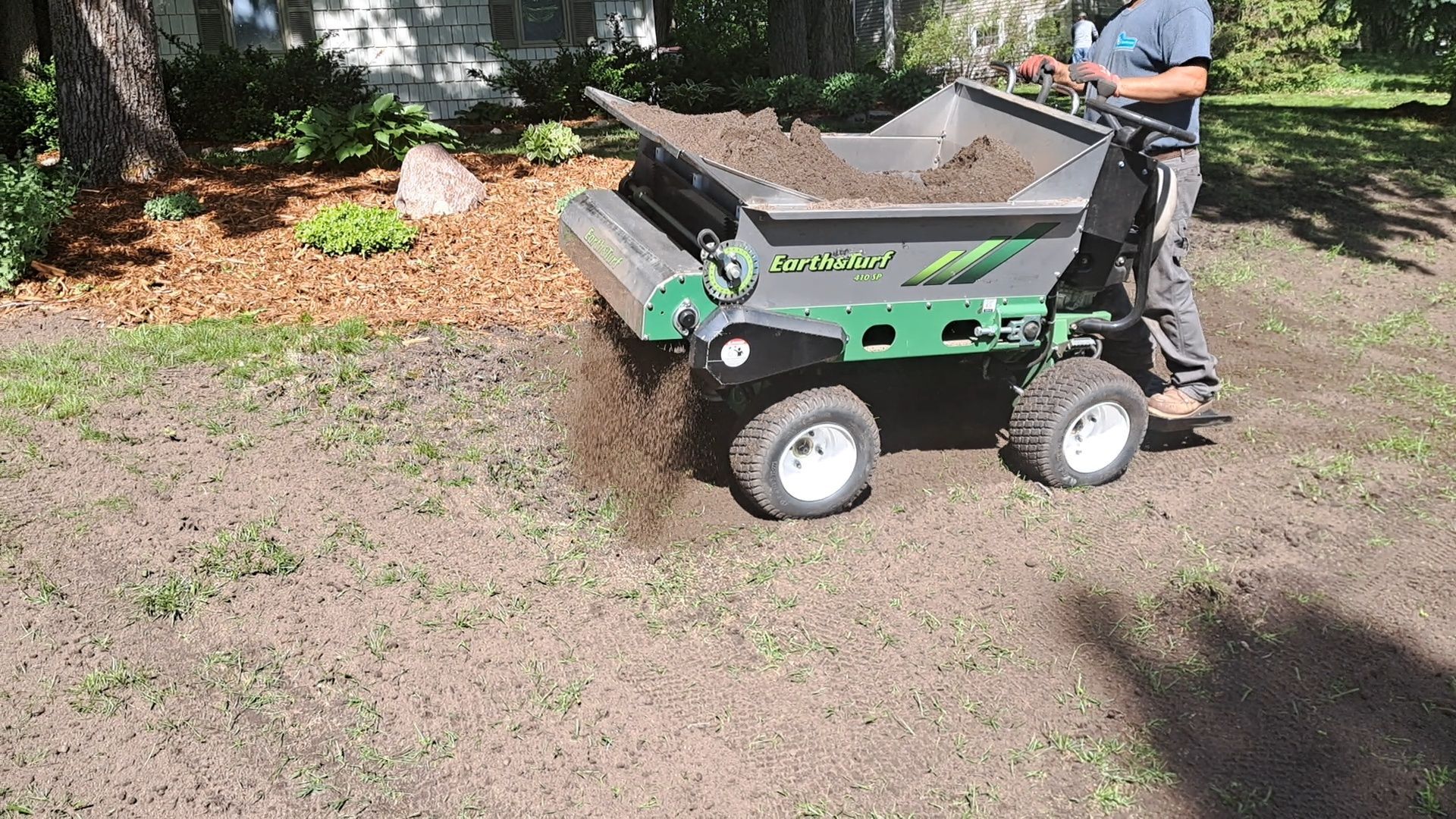
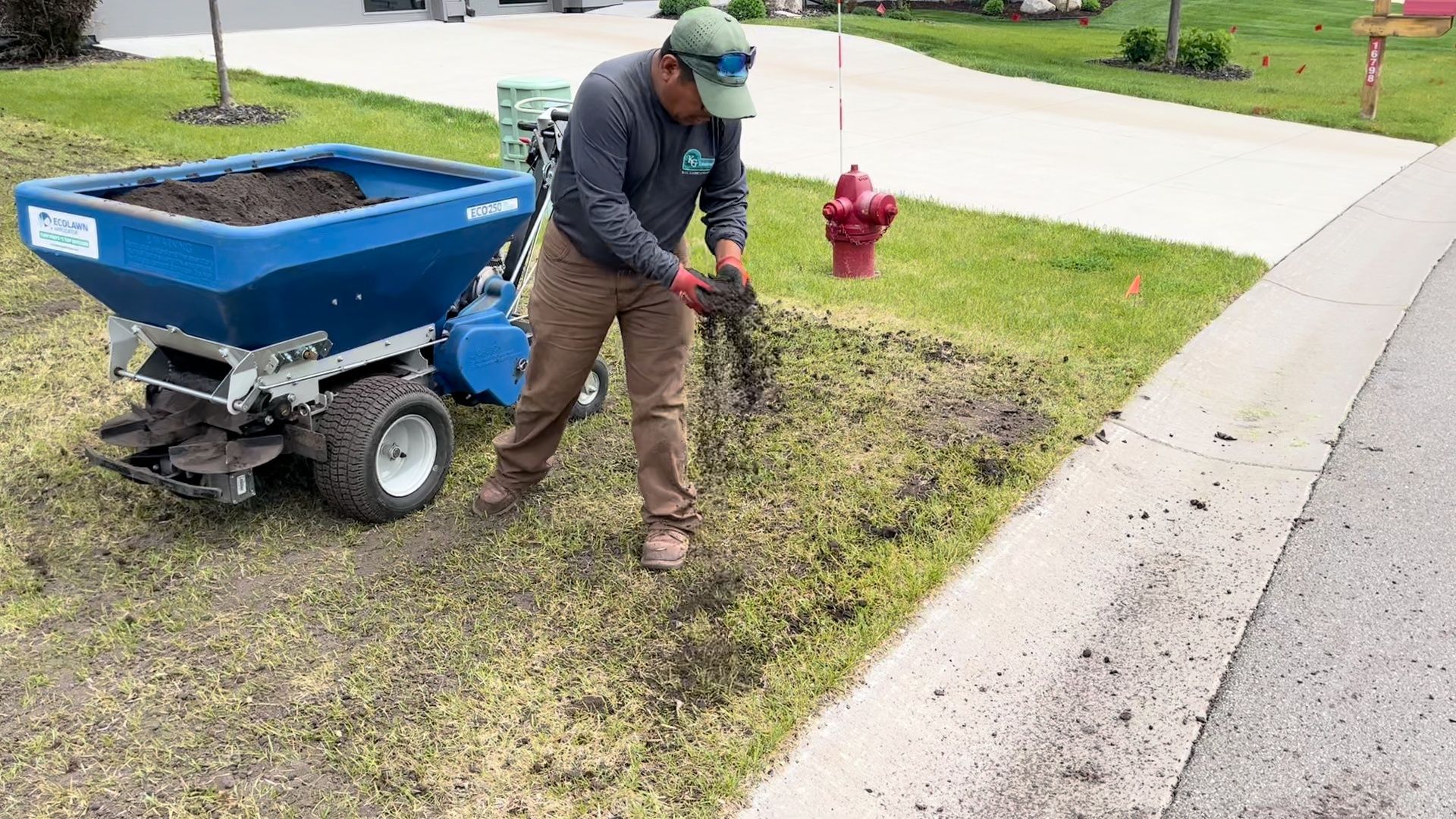
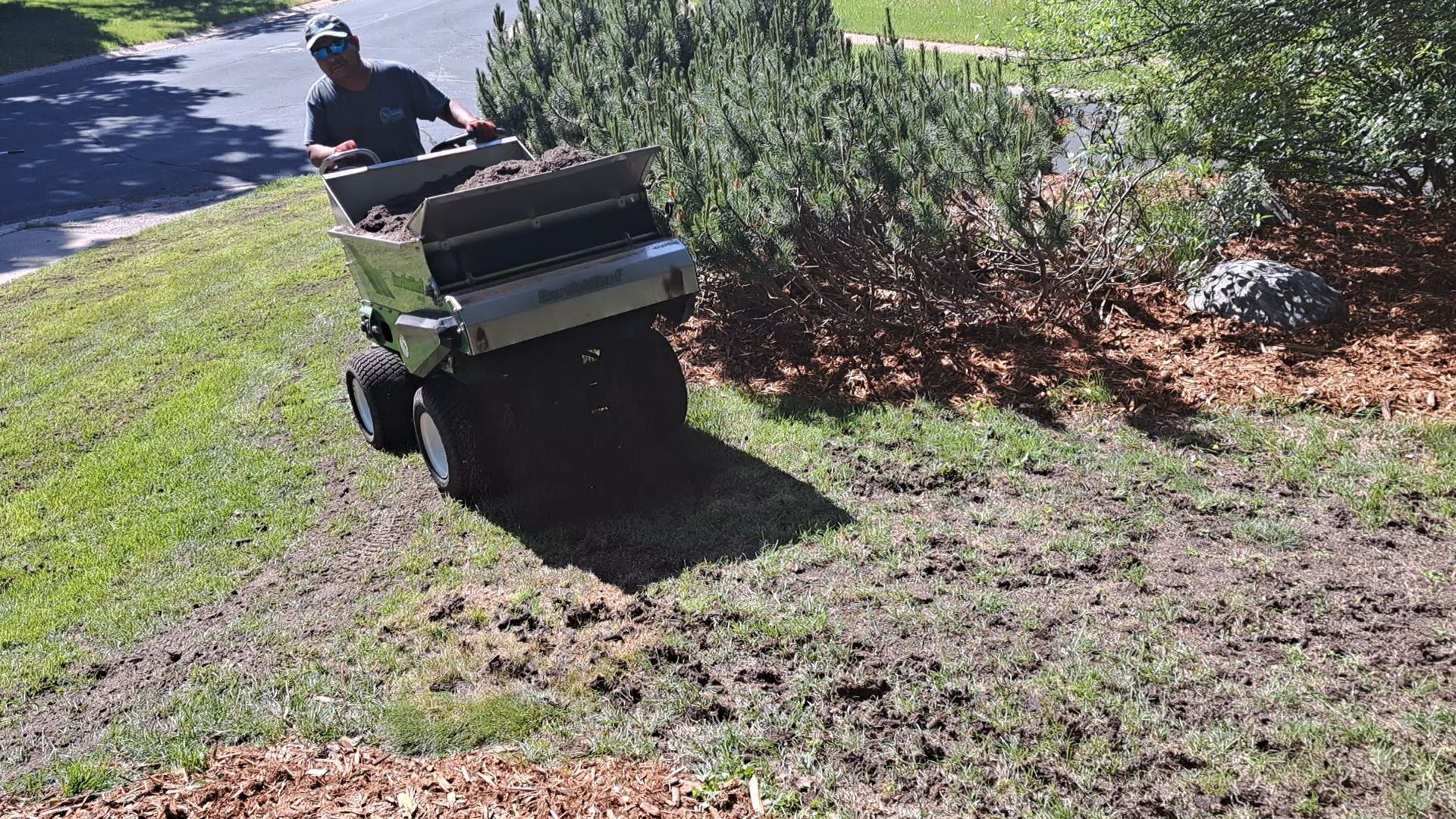
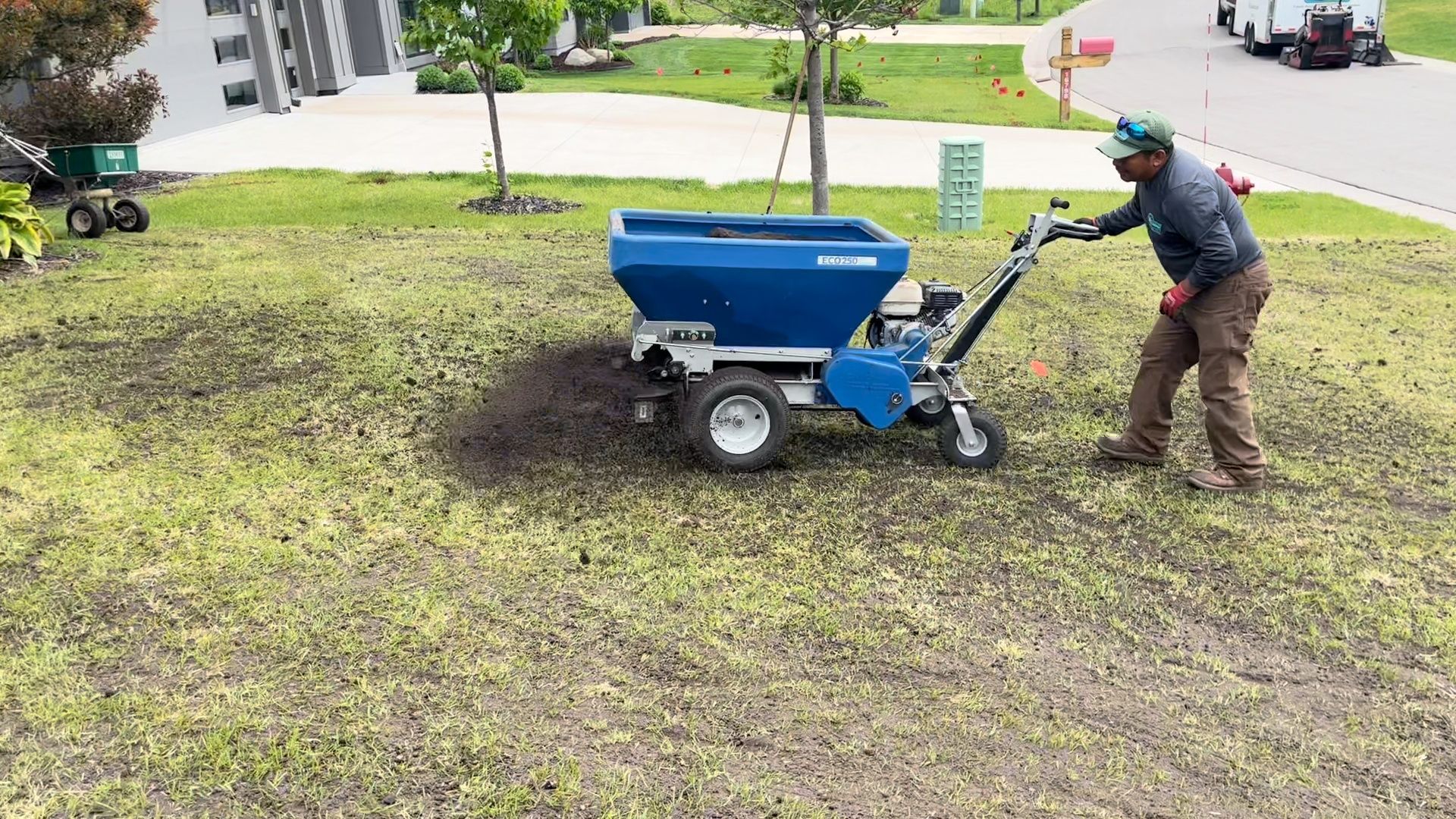
From there, we feed with natural fertilizers that release slowly and build the soil as they work, rather than synthetic blends that force a quick green-up and leave the ground no better off. That's the core of an eco-friendly approach, and it's why our fertilization and weed control program is built around timing and soil instead of volume. If you want the specifics on what to put down, I walk through it in the best organic lawn fertilizer for a Minnesota lawn.
Mow High, Sharpen the Blades, Leave the Clippings
If you only change one thing, change how you mow, because it's free and it does more for an eco-friendly lawn than any product. Mow high, around three inches. Tall grass shades out weed seeds, holds moisture, and grows deeper roots that get the lawn through a dry Minnesota August without constant watering. Cutting short does the opposite and basically invites crabgrass in.
Keep your mower blades sharp, too. A dull blade tears the grass instead of slicing it, which leaves a ragged, pale edge that's more prone to disease. And leave the grass clippings on the lawn. They break down in a few days and feed the soil for free, which beats bagging them and then buying fertilizer to replace what you hauled away. High, sharp, and mulched is the whole mowing recipe for a healthy lawn, and it costs you nothing but a higher deck setting.
Water Wisely and Pick the Right Grass
Watering is where good intentions go sideways. Short, daily sprinkling keeps roots shallow and wastes water. Deep and infrequent is the eco-friendly way: about an inch a week, in one or two soakings, early in the morning. That drives deeper roots and builds a lawn that can ride out dry spells on its own. An irrigation system tuned to your soil makes that easy and usually cuts your water use.
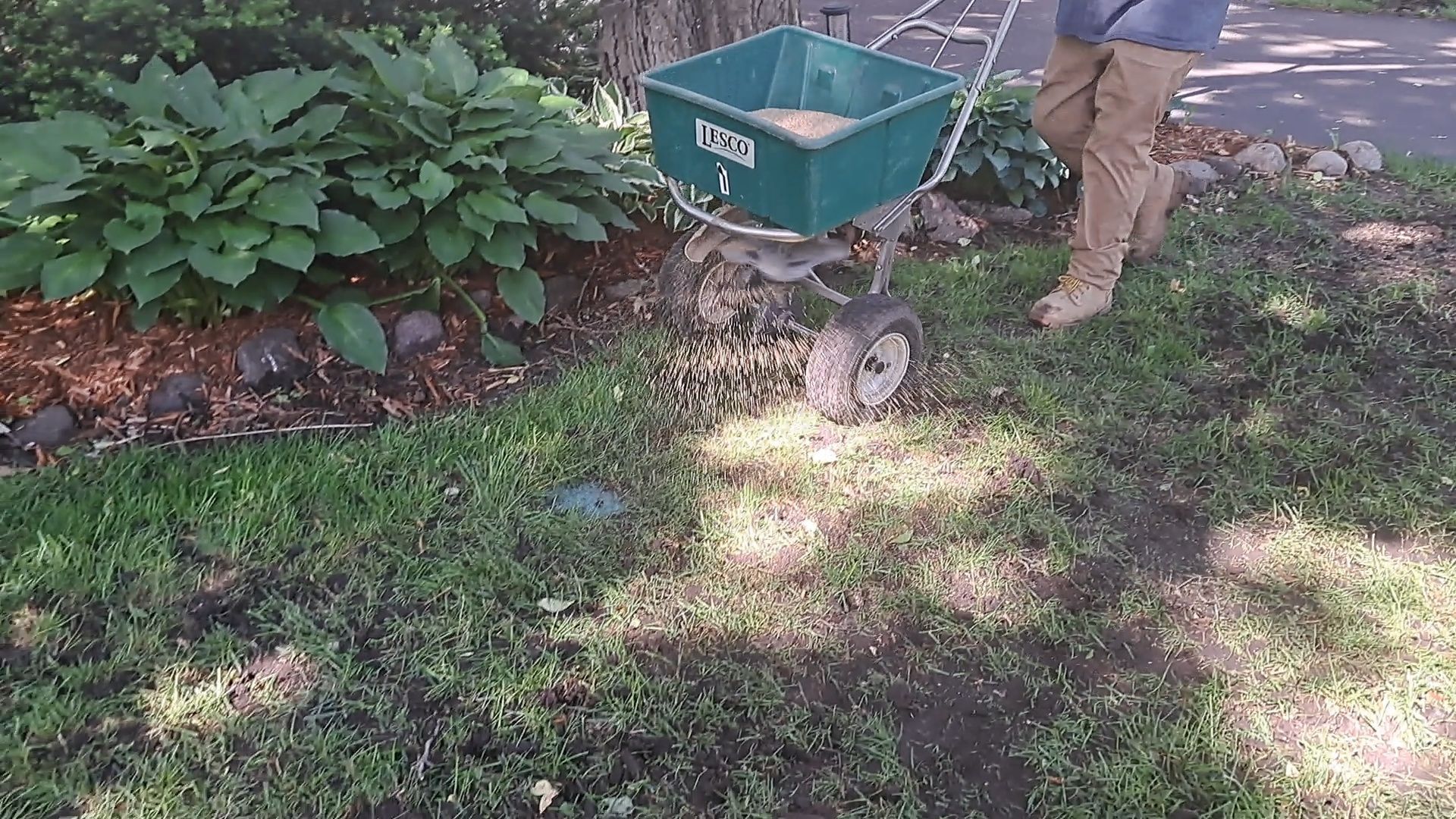
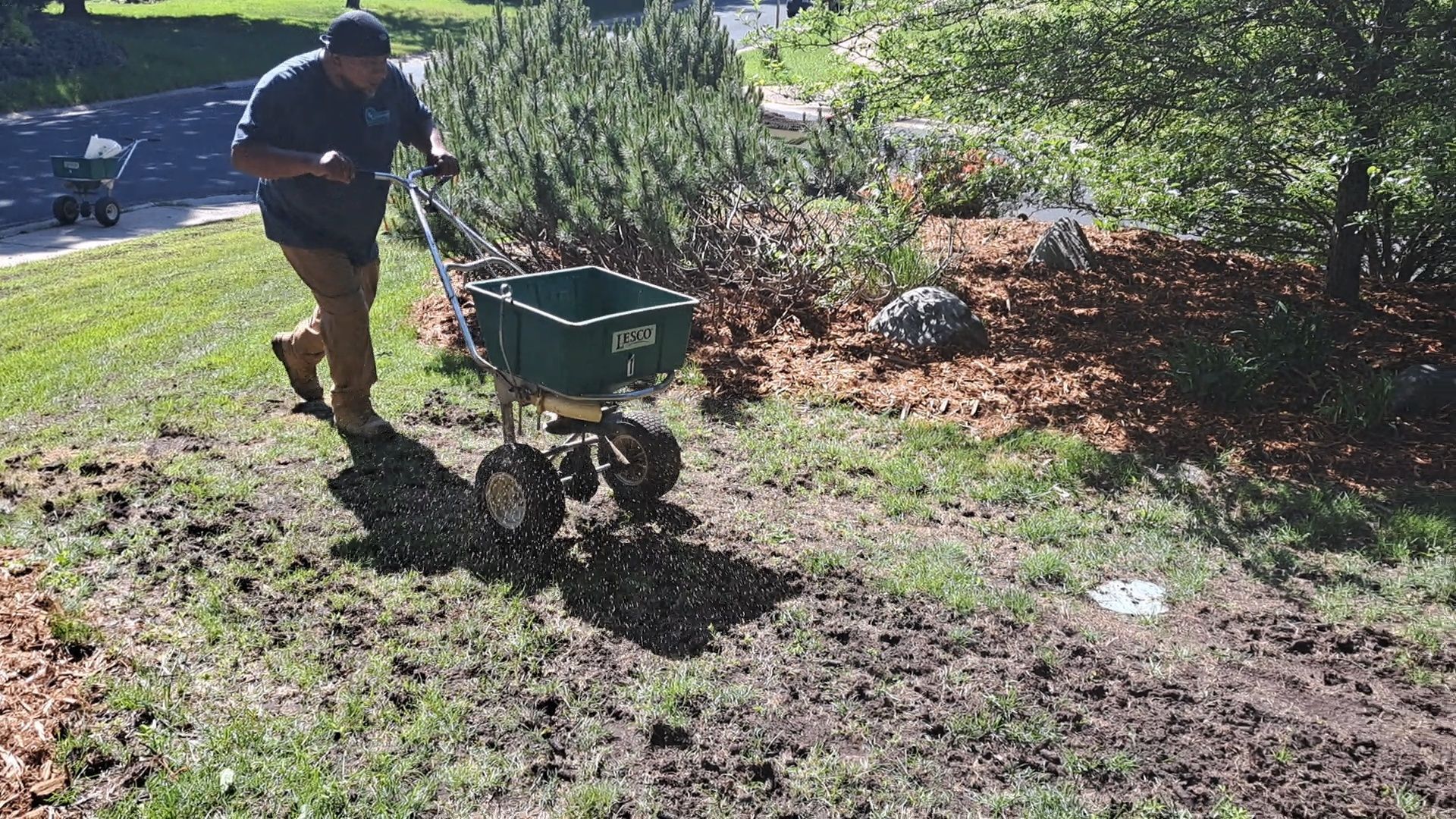
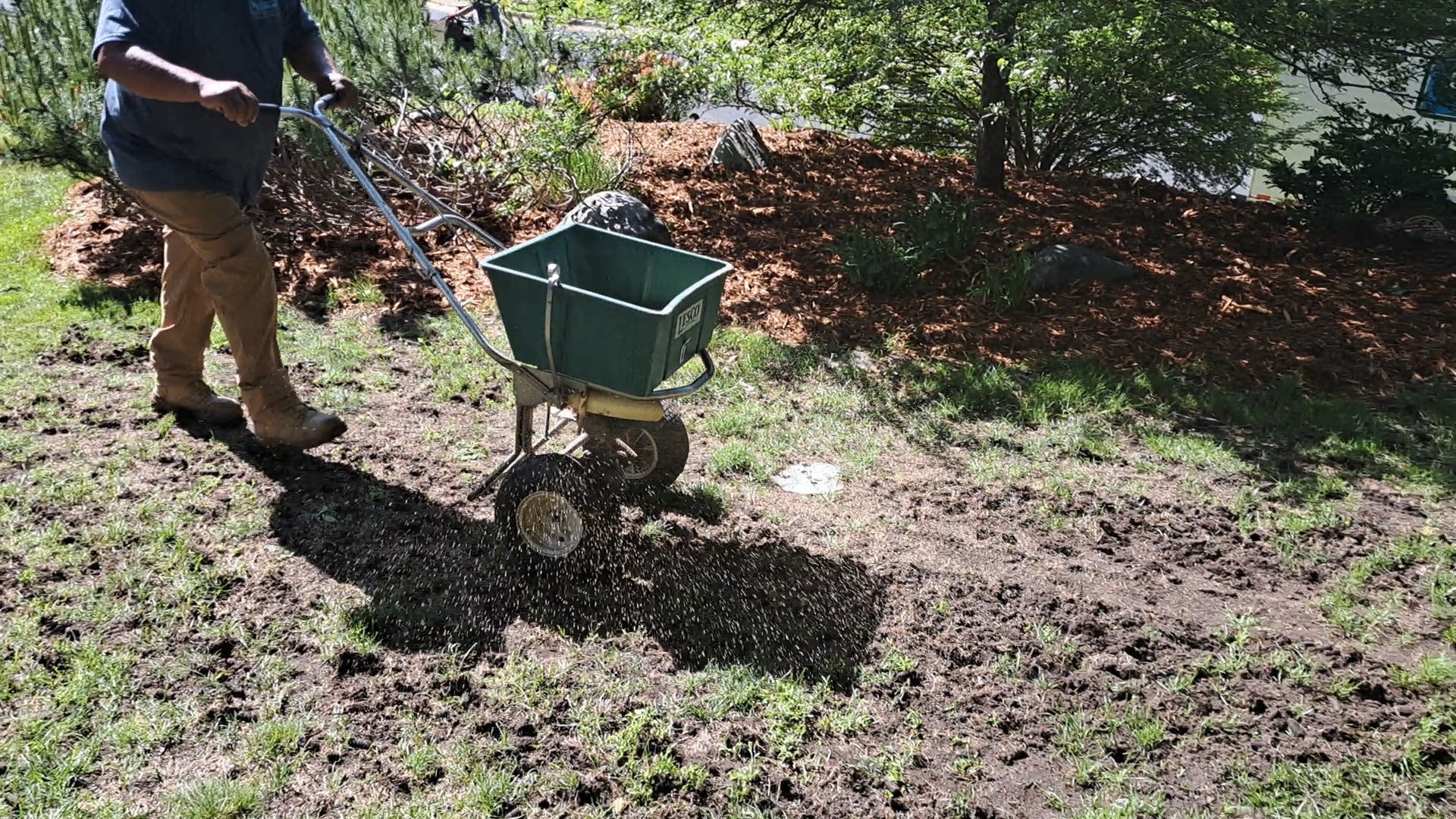
What you're growing matters as much as how you water it. Choosing the right grass seed for your conditions, leaning on fine fescues that want less water and fertilizer, sets the whole lawn up to need fewer inputs for years. The most eco-friendly lawn is one bred to be low-maintenance in the first place, not one propped up with extra everything.
Eco-Friendly Pest and Weed Management
The eco-friendly approach to bugs and weeds is to treat the lawn, not the calendar. That's what integrated pest management means: you watch for actual problems and handle them with the least aggressive tool that works, instead of blanket-spraying on a schedule. Most years, a thick, healthy lawn handles its own pests.
When something does show up, like white grubs chewing the roots in late summer, we identify it first and target it rather than carpet-bombing the yard. For weeds, gentler options like botanical oils and corn gluten have a place, though I'm honest that they're weaker than conventional products. And some of what people call weeds, like a little clover, actually belongs in an eco-friendly lawn. The Xerces Society makes a strong case for rethinking pesticides in the yard, and we lean that direction with pollinator-friendly plantings and clover lawns for clients who want them. Less spraying, more tolerance, healthier yard.
The Honest Tradeoff of an Eco-Friendly Lawn
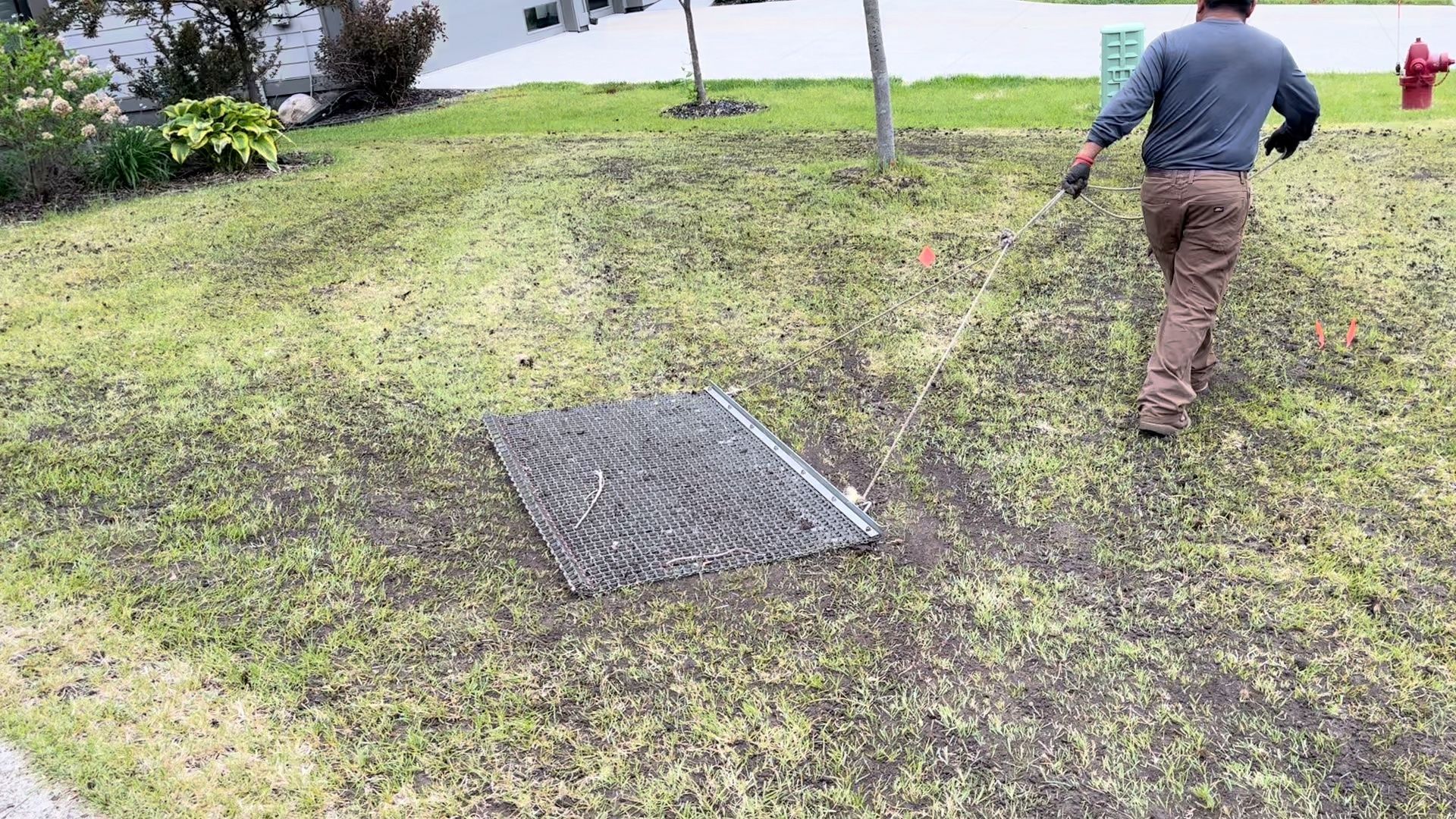
I won't pretend there's no tradeoff. An eco-friendly lawn means accepting a few more weeds and a look that's a little less golf-course than a heavily sprayed yard. There's no certified-organic product that wipes out broadleaf weeds without hurting the grass, so going chemical-free means living with some imperfection. If a flawless lawn is the only thing that will satisfy you, I'll say so up front.
What you get in trade is a yard that's safer for kids, pets, and pollinators the day it's treated, and soil that gets better every year instead of more dependent. For folks who want to ease into it, a transitional program cuts the chemicals back hard without going all the way. Some clients go further into low-mow, bee-friendly lawns, which the University of Minnesota has good resources on, and the EPA's healthy lawn guidance backs the whole approach. If you want help building an environmentally friendly lawn that still looks good, reach out for a free quote and I'll tell you what makes sense for your yard.
Frequently Asked Questions
What is eco-friendly lawn care?
It's caring for your lawn in a way that works with the yard instead of against it: building healthy soil, feeding with natural or organic inputs, mowing high, watering deeply, and spraying only when there's a real problem. The goal is a good-looking lawn that needs fewer chemicals and less water over time.
Is organic lawn care the same as eco-friendly lawn care?
They overlap but aren't identical. Organic lawn care specifically avoids synthetic fertilizers and herbicides. Eco-friendly lawn care is broader, including organic practices plus smart watering, high mowing, the right grass, and reduced inputs. You can be very eco-friendly with a transitional program that isn't fully organic.
How do I control grubs without harsh chemicals?
First confirm you actually have white grubs, since people often treat for them when they don't. A thick, well-rooted lawn tolerates a lot. When numbers are genuinely high, beneficial nematodes and targeted, lower-toxicity options work, applied to the problem area rather than the whole yard. Healthy soil and turf are the real long-term defense.
Do I have to let my lawn go weedy to be eco-friendly?
No, but you accept a little imperfection. There's no organic product that kills broadleaf weeds without harming grass, so chemical-free lawns carry a few more. The fix is a thick lawn that crowds most weeds out, plus some tolerance for clover, which pollinators love. A transitional program is the middle ground.
Does eco-friendly lawn care cost more?
Some of it costs less and some costs more. Mowing high, leaving clippings, and watering deeply save money. A fully organic feeding program costs more per application than conventional. Over time, as the soil improves and the lawn needs fewer inputs, the overall cost tends to even out or drop.
What's the most eco-friendly grass for a Minnesota lawn?
Fine fescues are the standout. They need less water, fertilizer, and mowing than Kentucky bluegrass and do well in our climate, especially in shade. For the most eco-friendly option of all, a bee lawn mixes fine fescue with low-growing flowers like clover and self-heal for pollinators and almost no inputs.
About the Author
I'm Kent Gliadon, founder of KG Landscape and a graduate of the University of Minnesota Landscape Design program. For over 20 years, I've focused on integrating well-planned landscape design and installation work with properly engineered outdoor drainage solutions. I believe discerning homeowners deserve landscaping and drainage renovations that are carefully planned from the beginning, accounting for water movement, grading, soils, hardscaping, and future use, so problems are prevented before they occur. These articles explain how and why specific solutions are implemented and what it takes to maintain properties that truly last.
Ready to Start on Your Next Project?
Call us at (763) 568-7251 or visit our quote page.