
How We Replaced a Struggling Lawn with Low Maintenance Ground Cover Landscaping in Minneapolis
Serving clients in the Minneapolis, St. Paul, Edina, Plymouth, Minnetonka & Blaine areas
A Shaded Lot Near Lake of the Isles
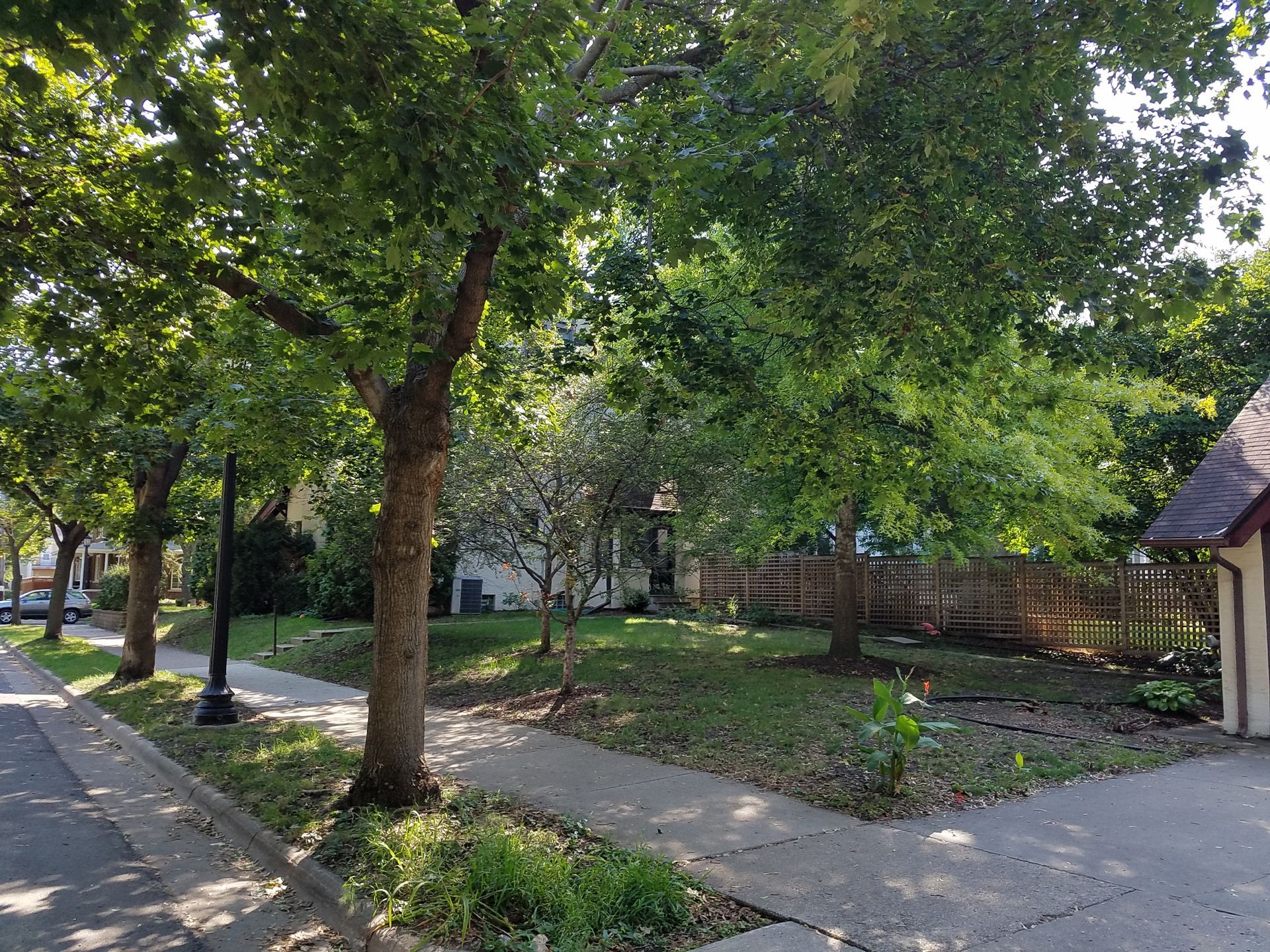
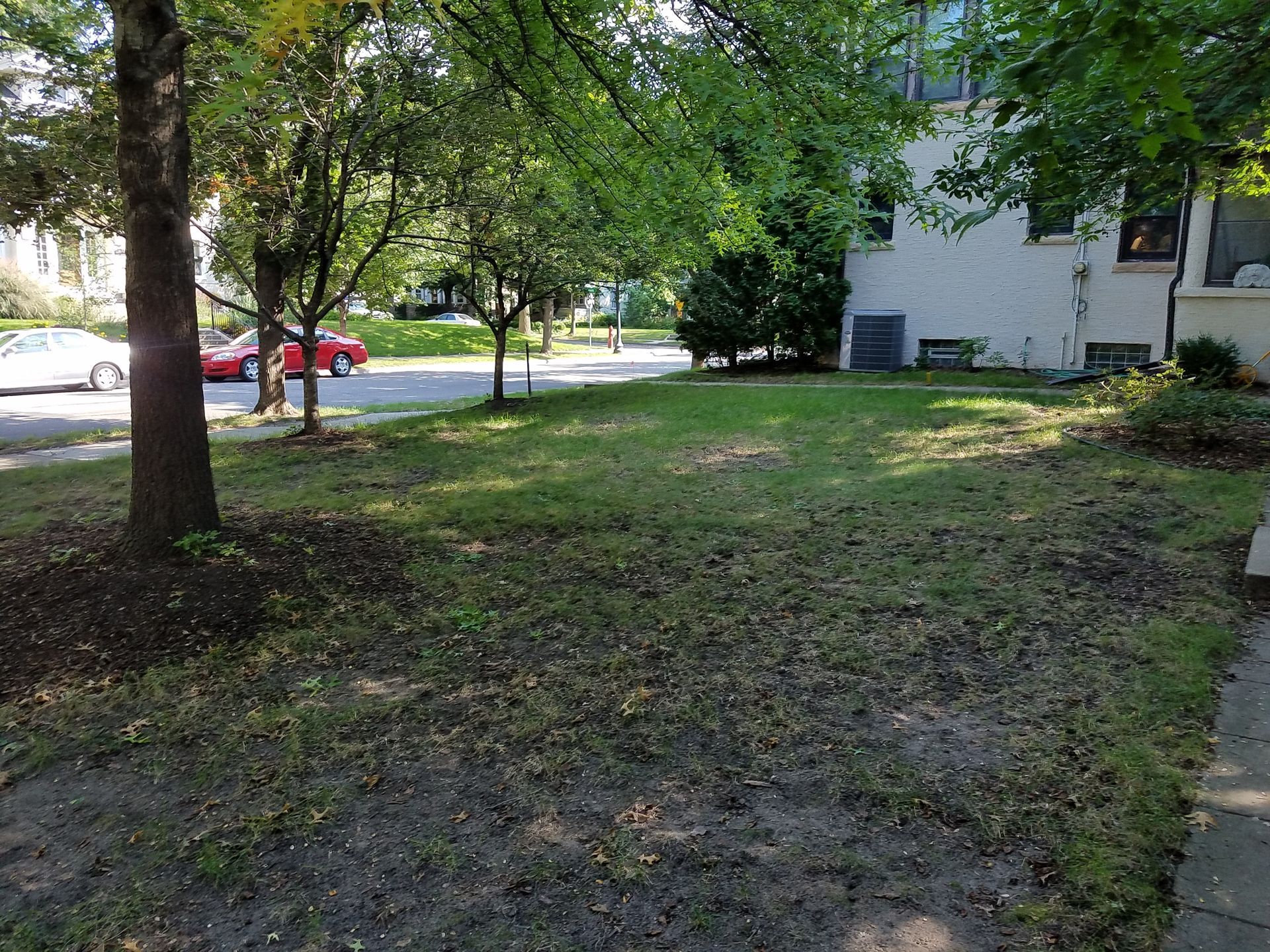
This home sits on a small urban lot near Lake of the Isles in Minneapolis. Mature trees fill the property. The shade is beautiful, but it made lawn care a constant battle.
The homeowners had lived there a long time. They were tired. Tired of reseeding thin grass that never filled in. Tired of mowing. Tired of spraying chemicals to keep weeds down in a lawn that was mostly weeds anyway. They'd recently retired and started traveling more. The last thing they wanted was to spend their weekends maintaining a yard that never looked good no matter how much effort they put in.
They also worried about runoff. Living near Lake of the Isles, they felt a responsibility to reduce chemicals and manage water properly. The environmental impact mattered to these homeowners.
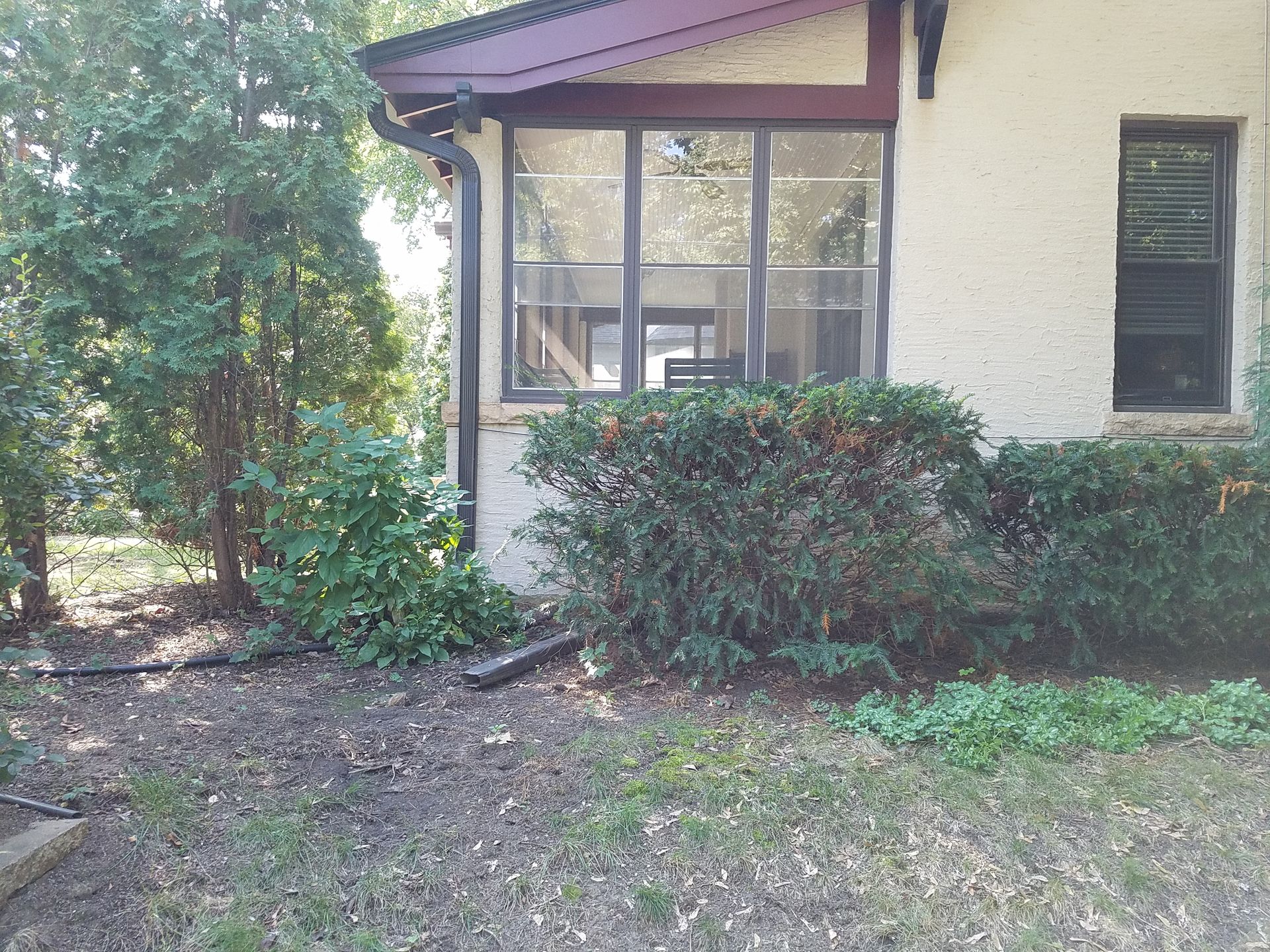
The yard had other problems too. A sloped side yard too steep to walk on. Narrow cracked sidewalks that were impossible to shovel in winter. Water draining toward the garage instead of away from it. Foundation damage from years of pooling. Overgrown shrubs that made the house feel dark and closed in.
They wanted a complete change. Something beautiful. Something low maintenance. Something designed to actually work in the conditions they had. They weren't just looking for low maintenance landscaping ideas — they wanted a complete transformation designed for the conditions they had.
KG Landscape evaluated the property, reviewed several design options with the homeowners, and implemented a complete landscape redesign in two phases. This case study walks through the problems we found, the options we considered, and how the final solution came together.
Project Snapshot
Location: Minneapolis, MN (near Lake of the Isles)
Property type: Residential home on a small urban lot
Top priorities: Fix grading and drainage issues, build retaining wall to create flat walkable space, design ground cover plantings to replace all lawn areas
Solution: A complete landscape redesign completed in two project phases
Timeline: Phase 1 infrastructure work, followed by Phase 2 plantings designed in 2022
Sloped Lawns and Pools of Water
This Minneapolis property had issues stacked on top of issues. Some were obvious. Others only became clear once we started evaluating the site.
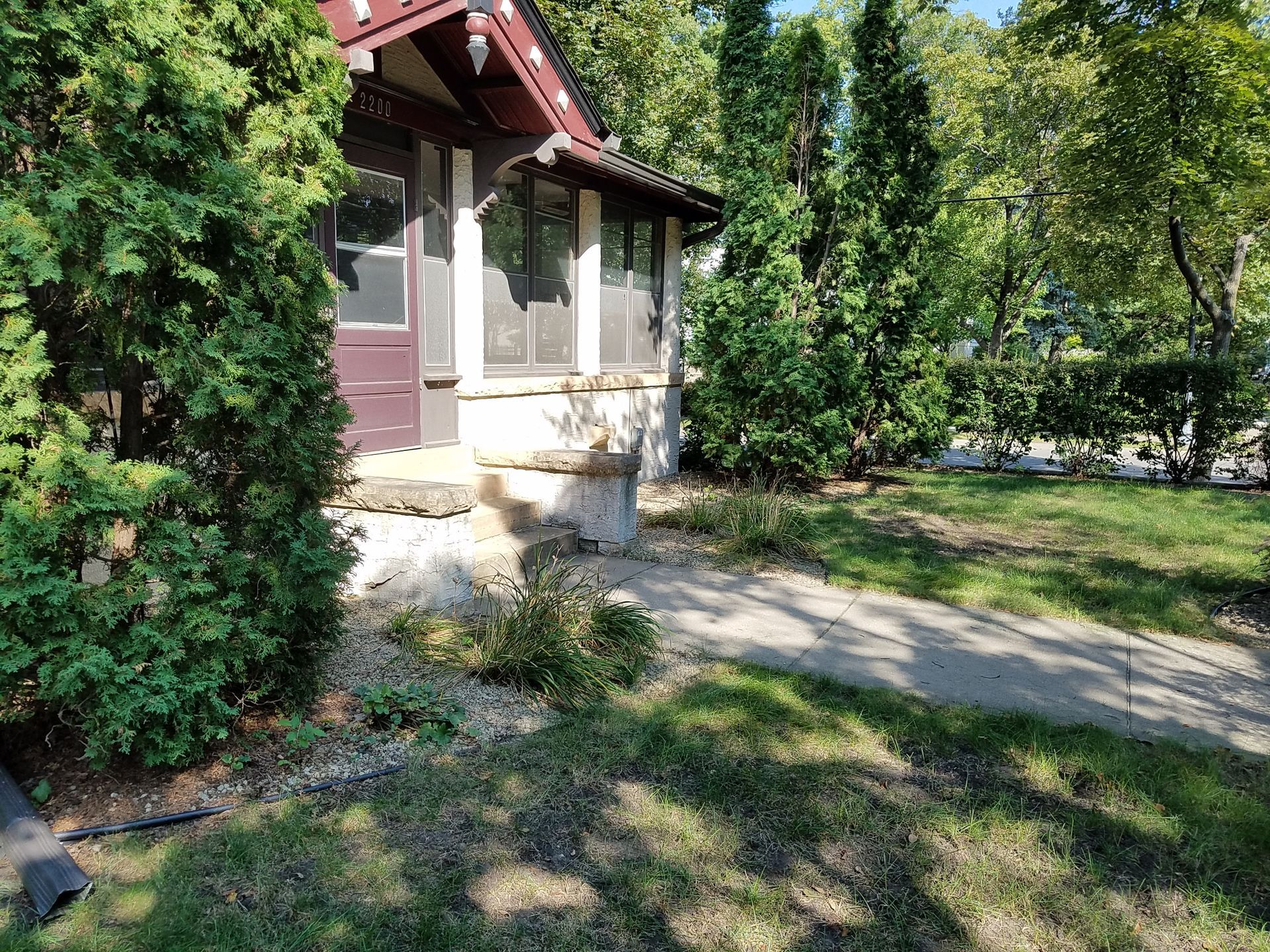
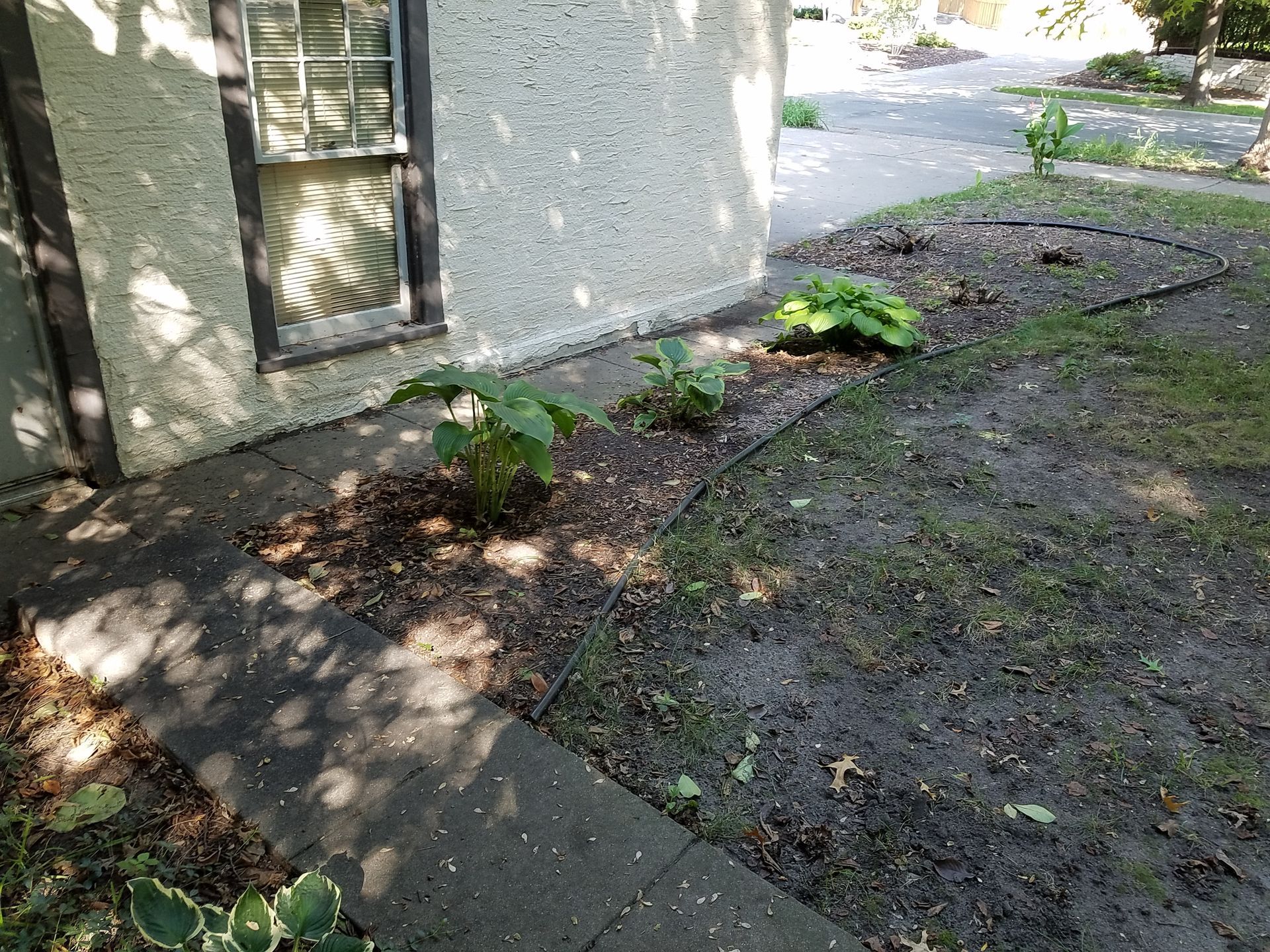
The lawn was thin and shaded. Grass needs sun. This yard didn't have much. Like many older Minneapolis neighborhoods with mature trees, the canopy creates conditions where turf struggles no matter what you do. The homeowners had been fighting that reality for years, reseeding every spring, watching it thin out by August. This is one of the most common challenges we see with front yard landscaping in the Twin Cities.
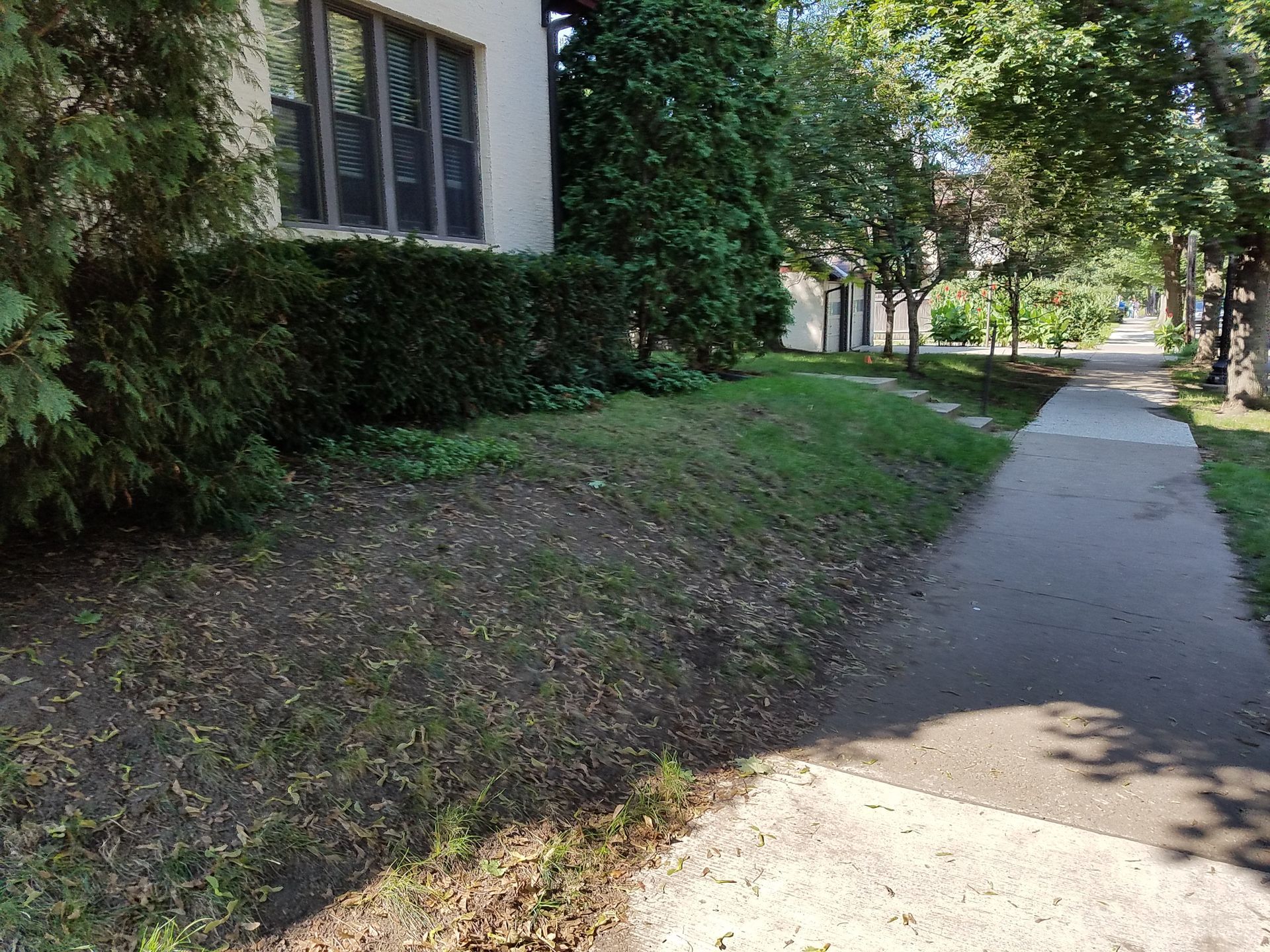
The side yard sloped steeply from the house down toward the property line. There was no flat space to walk. Getting from the front yard to the back meant going through the house or carefully navigating a hill.
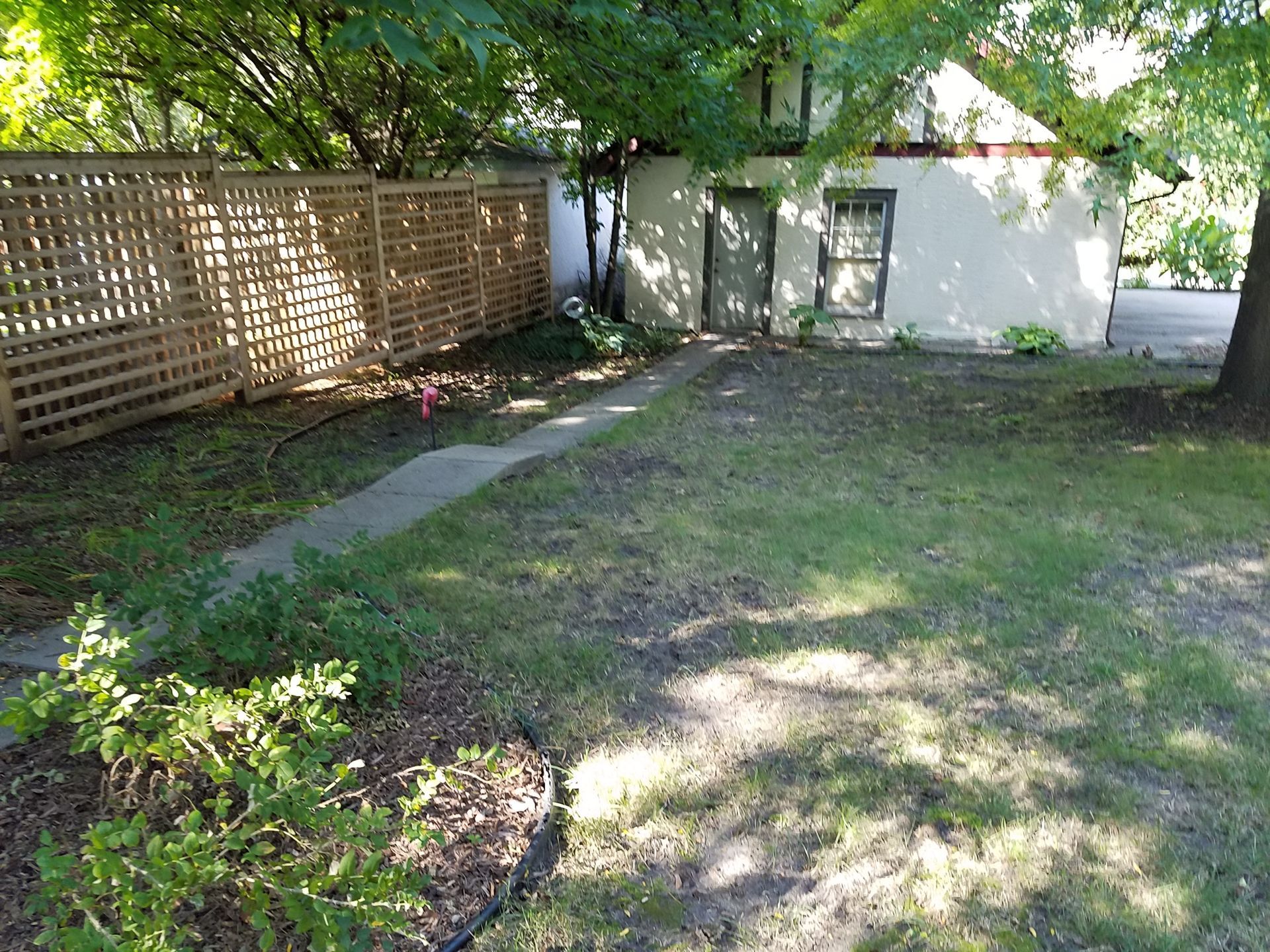
The cement sidewalks between the house and garage were narrow, shifted, and cracked. Winter maintenance was difficult. The sidewalks had also settled in ways that directed water toward the garage instead of away from it.
Water pooled against the garage foundation. Over time, this had caused cracks in the stucco siding. The adjacent sidewalk was heaving from freeze-thaw cycles made worse by the standing water.
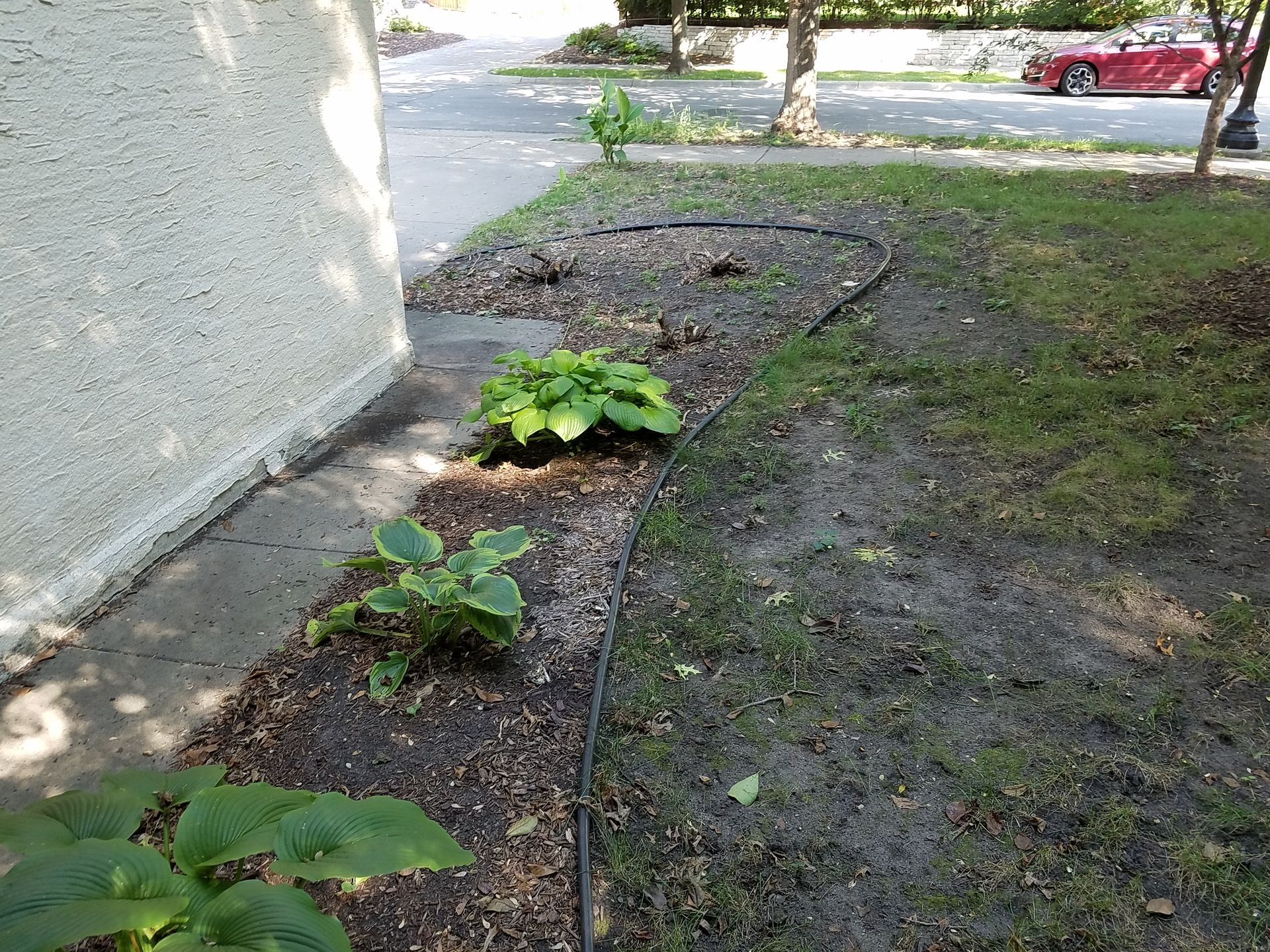
Downspouts emptied directly onto sloped areas, causing erosion along the property edges.
The foundation plantings were overgrown. Shrubs that had been there for decades now pressed against windows and covered parts of the house, making it feel dark and closed in.
What the Homeowners Wanted
The homeowners came to us with clear goals. They wanted to stop mowing. Completely. They wanted a yard that looked intentional and designed, not like they'd given up on it. They wanted to move through the space easily, with pathways that made sense. They wanted the drainage fixed. They wanted to reduce their environmental impact near Lake of the Isles.
They'd moved past ideas for getting rid of grass lawns and were ready to actually do it. They also wanted to keep the mature trees. The shade was part of why they loved the property. Any solution had to work with the shade, not fight against it.
Options Considered
We created several designs for these homeowners to consider, each taking a different approach to the same set of problems.
One option involved removing some of the mature trees to open the yard to full sun, which would have allowed for a pollinator garden design. We also considered replacing the existing grass with a clover lawn as a lower maintenance alternative. Different wall materials were explored as well, including natural boulder outcroppings as an alternative to a traditional retaining wall.
These designs were carefully considered and discussed between the homeowners and our team. After weighing each option against their goals — keeping the trees, eliminating all mowing, solving the drainage, and creating a space that looked designed — the homeowners selected a final plan they loved.
The Chosen Solution
The final plan addressed every issue on the property through a complete landscape redesign. Rather than working around individual problems, the design treated the yard as a connected system — drainage, grading, access, plantings — where each piece supported the others.
The retaining wall along the side yard would create flat, walkable space where a steep slope had made it impossible to move through the yard. New cement sidewalks would replace the narrow, cracked originals and allow for proper regrading away from the garage. A layered drainage system would solve the water pooling that had been damaging the garage foundation for years. And designed ground cover plantings would replace every square foot of lawn, giving the homeowners what they wanted most — a yard they'd never have to mow again.
The mature trees stayed. The design worked with the shade they created rather than fighting it. Every planting would be selected for the specific light conditions in each area of the yard.
The scope was large enough that we planned it as a two-phase project. Phase 1 would handle the infrastructure — walls, drainage, grading, sidewalks. Phase 2 would come later, removing the lawn and installing the plantings once the foundation work had settled.
Phase 1: Infrastructure and Drainage
Phase 1 was infrastructure. Drainage, grading, walls, sidewalks. The work that had to happen before any planting could succeed. In Minneapolis, where freeze-thaw cycles punish anything not built correctly, getting this foundation work right matters.
Building the Retaining Wall
The side yard slope was the first major challenge. We installed a retaining wall running the length of the side yard. This let us backfill behind the wall, creating a flat space the full width of the yard. Proper wall construction is critical in Minnesota's climate.
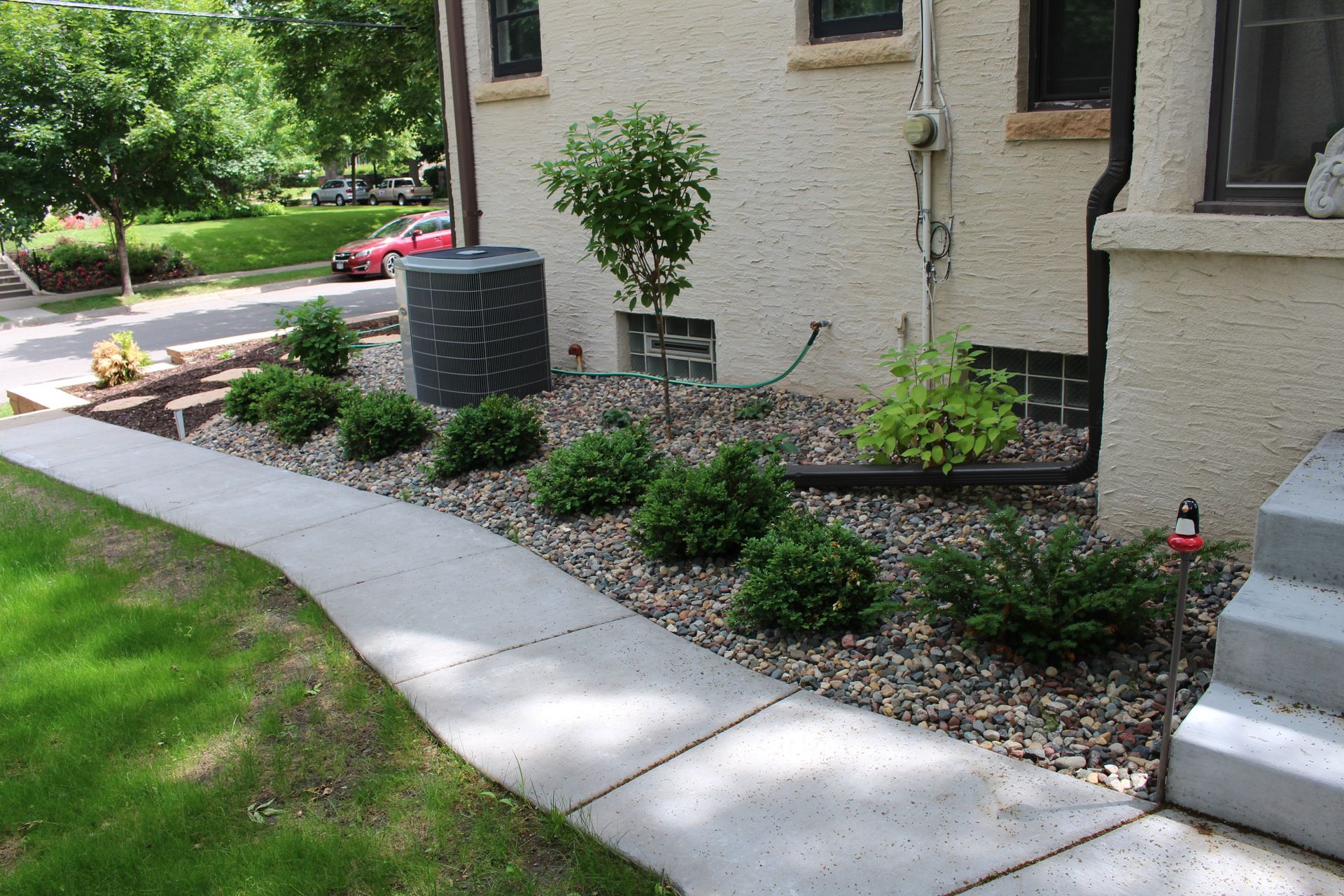
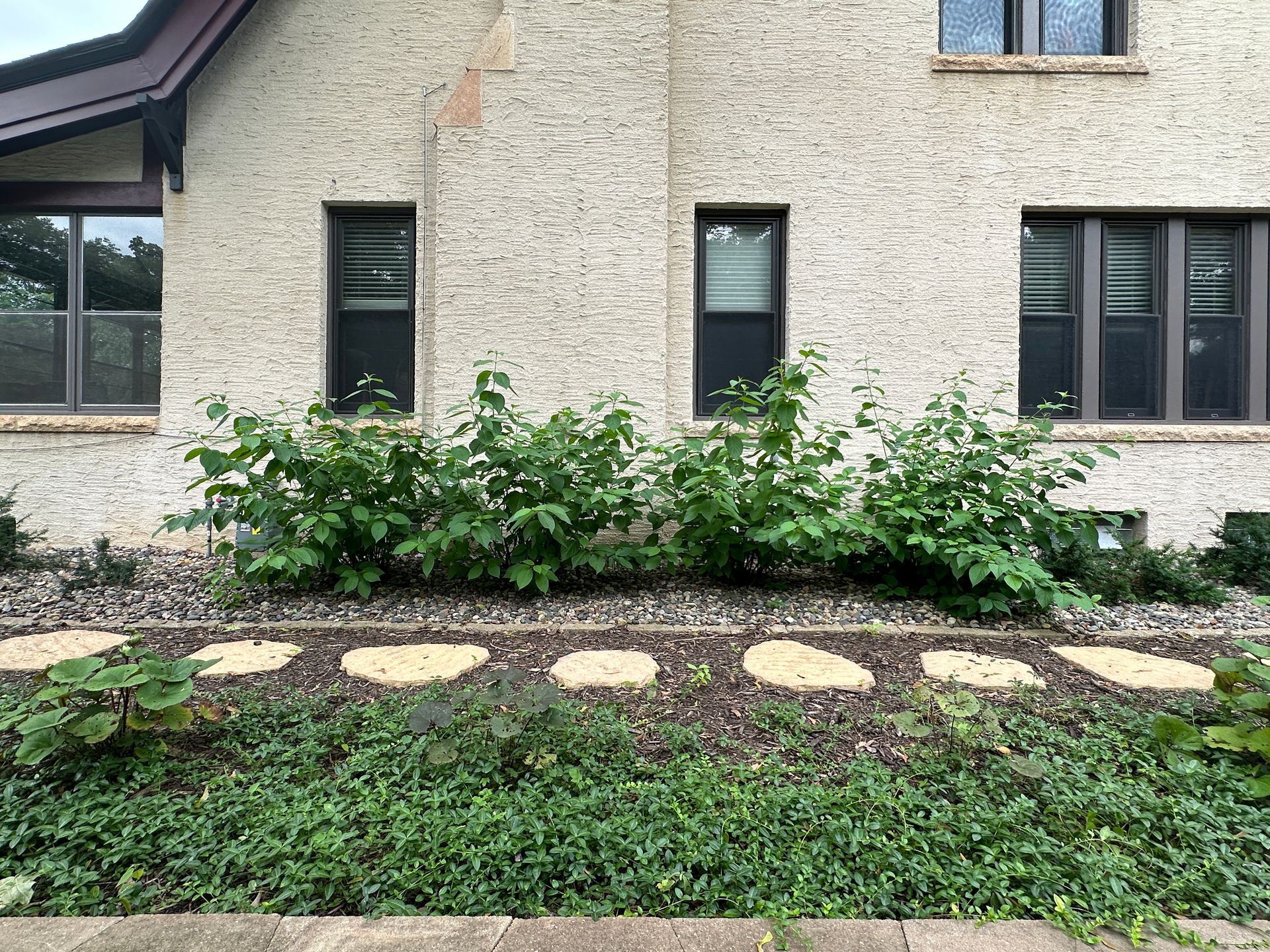
That flat space gave us 4-5 feet of usable width. Enough room for foundation plantings sized appropriately to the house, plus a stepping stone pathway between the plantings and the wall.
Before the wall, there was no way to walk along the side of the house without navigating a steep slope. After the wall, there's a level path connecting the front yard to the back.
Replacing the Sidewalks
The old sidewalks between the garage and house were narrow, cracked, and sloped the wrong direction. This is common in older Minneapolis homes where concrete has shifted over decades. We removed them and poured new concrete.
The new sidewalks are wider and easier to shovel in winter. More importantly, we regraded them to slope away from the garage. This was part of the larger drainage solution.
Solving the Drainage Problems
Water was causing damage throughout this Minneapolis property. The yard sloped toward the garage. Downspouts dumped water onto slopes where it caused erosion. Standing water against the garage foundation had cracked the stucco and was destroying the adjacent sidewalk.
We designed a layered drainage system to address all of it. As Landscaping Network explains, proper drainage is essential for any retaining wall to last.
Underground downspouts: We installed catch basins below the downspouts that had been causing erosion. The water now travels underground through drainage pipes and discharges through drain grates in the retaining wall. This keeps all that roof water away from the wall itself. Water is the leading cause of retaining wall failure over time, so this was crucial.
Drain tile behind walls: All sections of new retaining wall have drain tile behind them. Water that filters through the soil collects in the drain tile and passes through the wall via built-in drainage systems.
Dry well: This was the most critical piece. We installed a large dry well between the garage and the new retaining wall. To create it, we cut into the hill and regraded so the slope now moves away from the garage.
The dry well handles water from three sources: runoff from the hill that used to drain toward the garage, water from half the garage roof via underground downspout pipes, and water from the first 10 feet of sidewalk that now drains into the dry well rather than pooling against the foundation.
Foundation Plantings
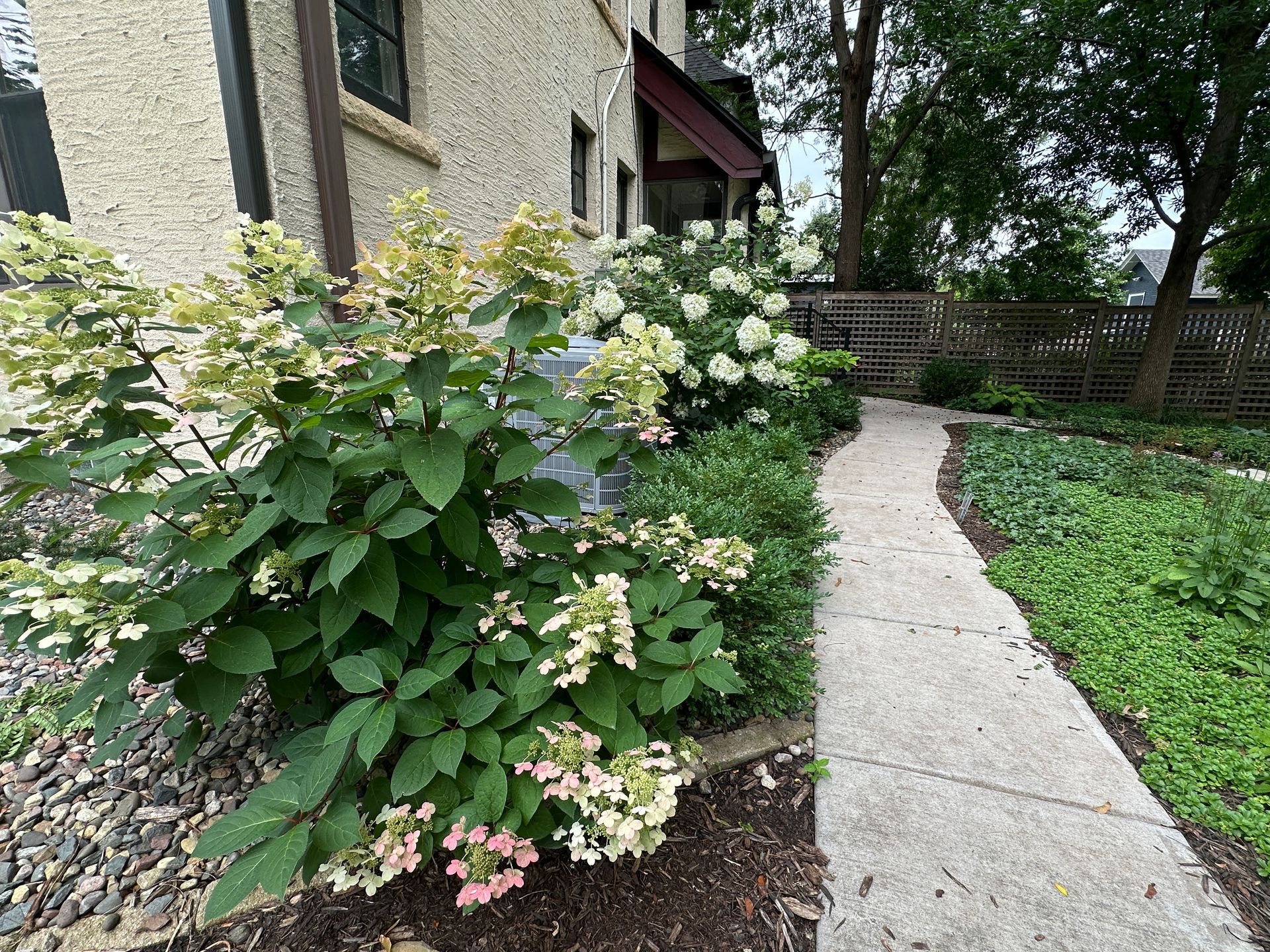
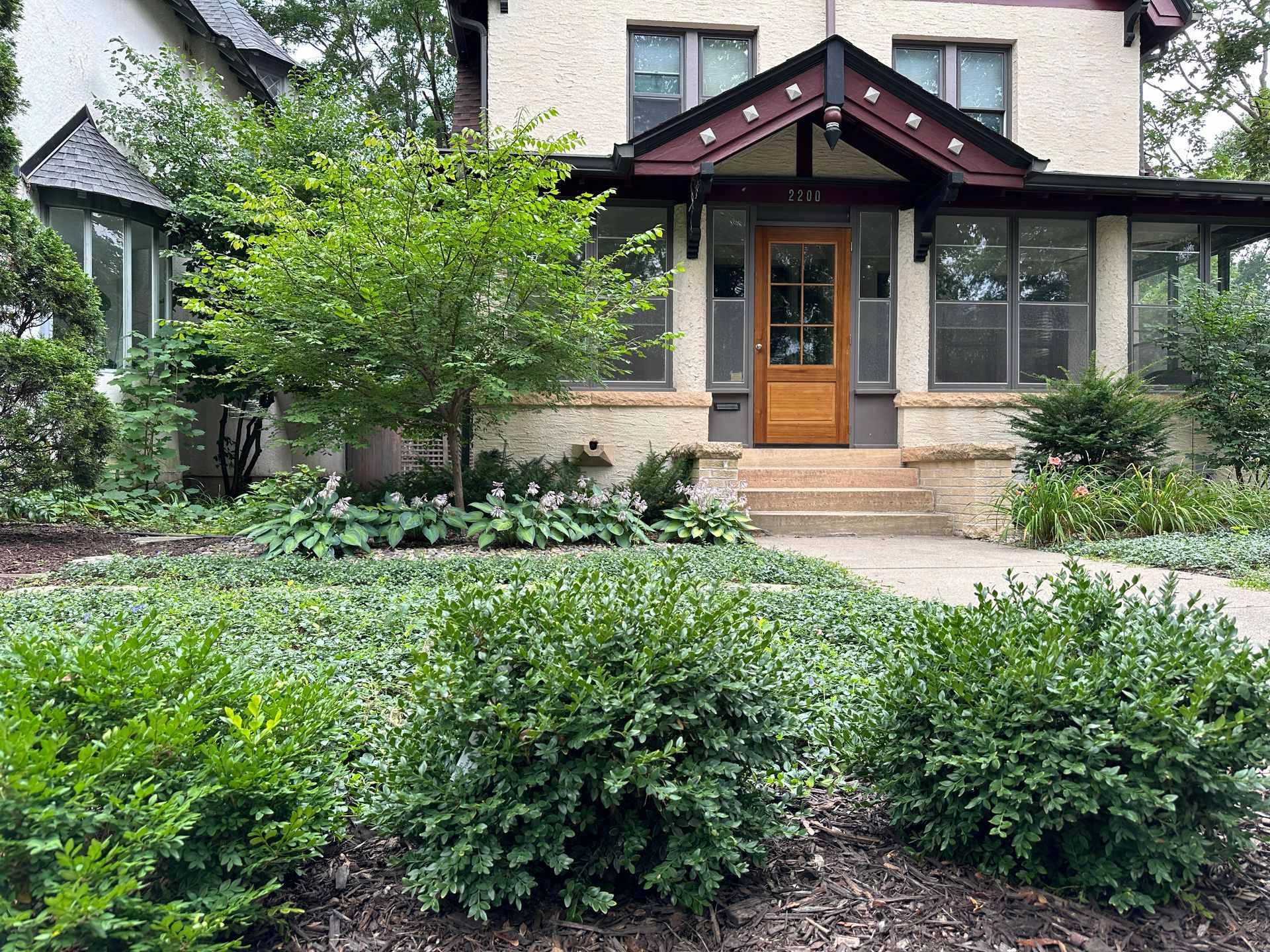
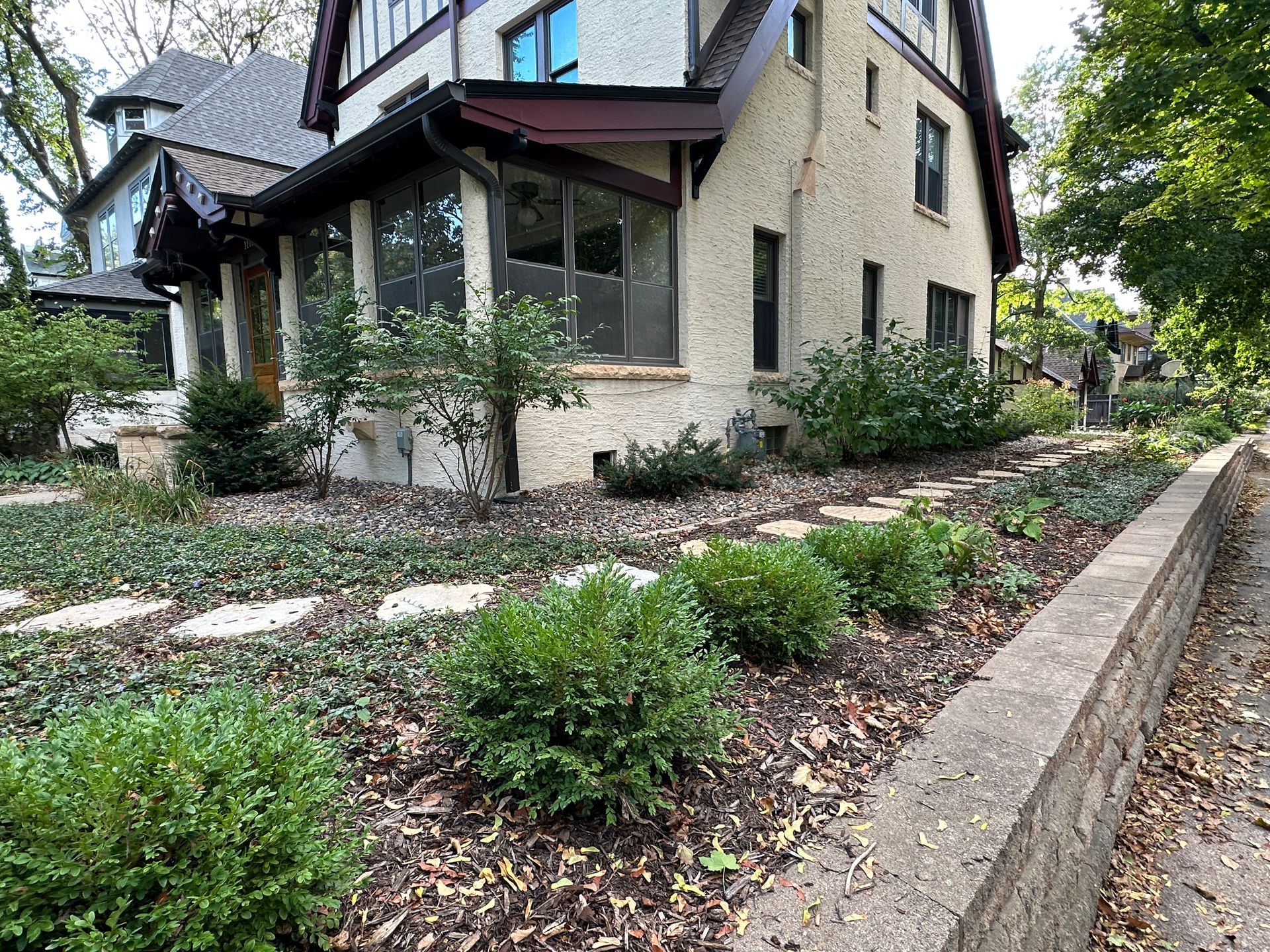
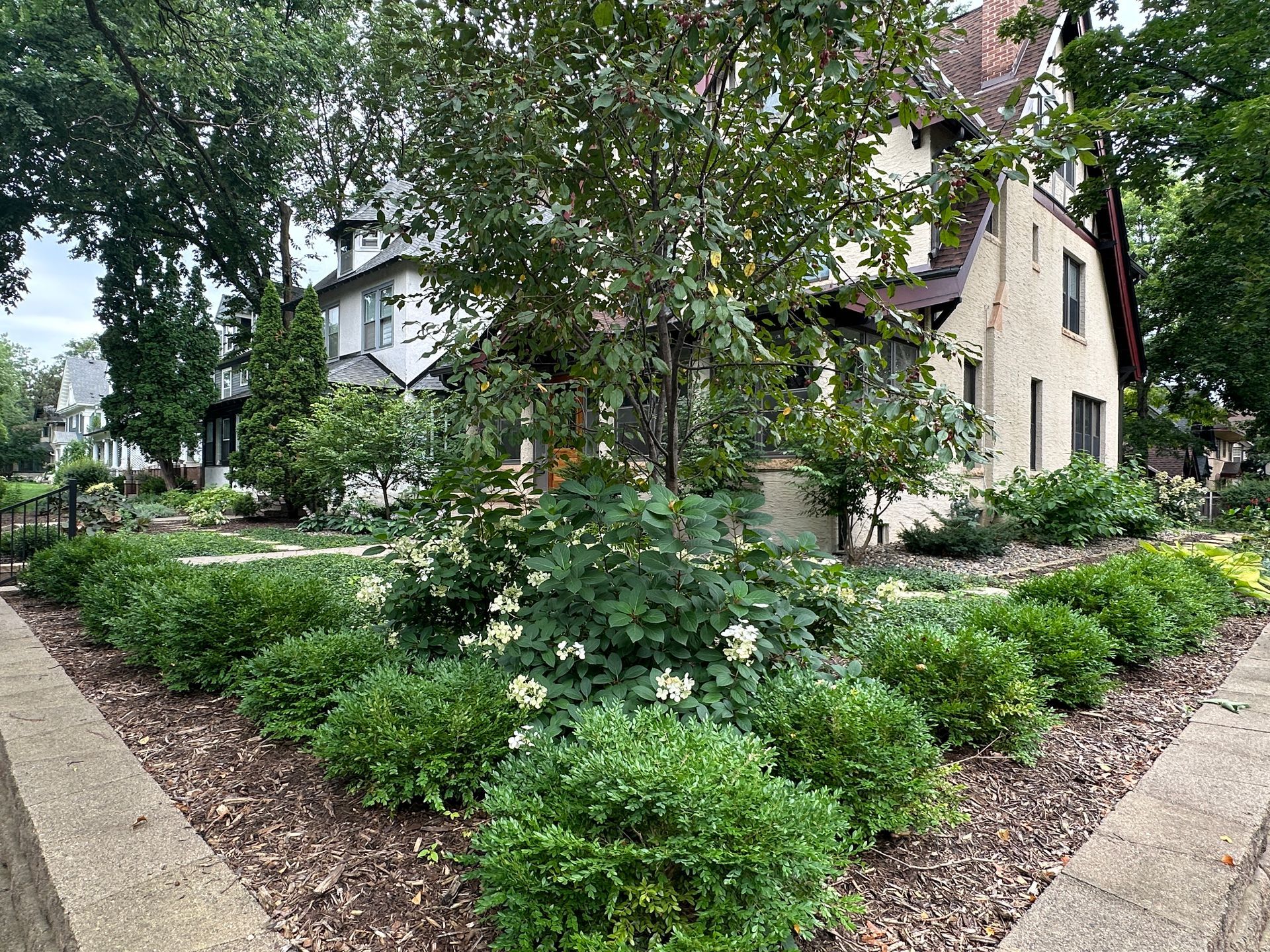
The existing foundation plantings were overgrown. Shrubs planted decades ago now covered windows and pressed against the house. We removed them and designed new plantings scaled appropriately to the space, following best practices for Twin Cities foundation beds.
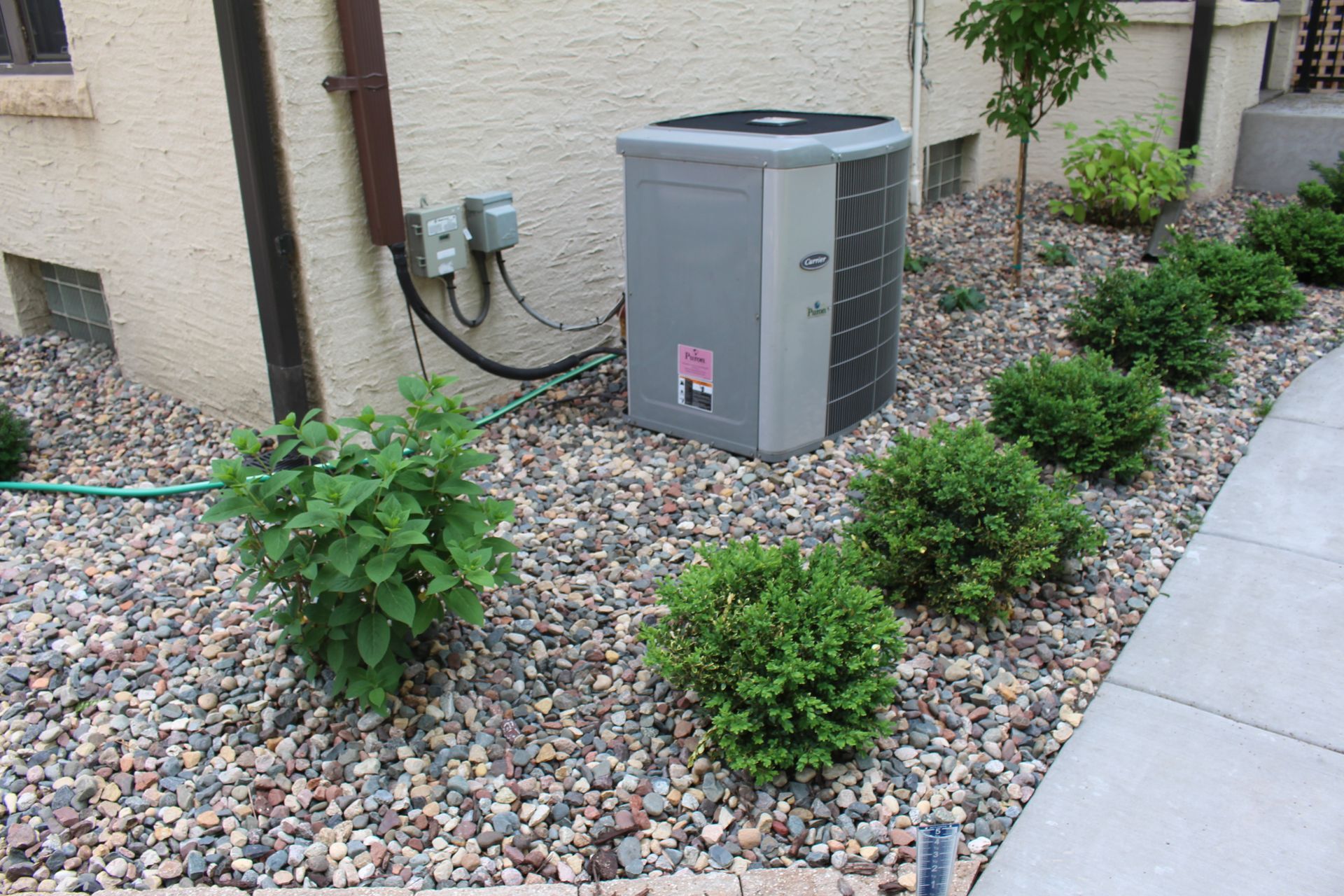
With the new retaining wall creating a flat planting area along the side yard, we had room to do this properly. The new plantings leave space between the plants and the house. They're selected for Minneapolis shade conditions. They won't outgrow the space in a few years.
Phase 2: Replacing the Lawn
Two seasons after Phase 1, the homeowners hired us back to complete Phase 2: removing all remaining lawn and replacing it with designed planting beds. The Phase 2 design was finalized in 2022.
This was the transformation they'd been waiting for. No more mowing. No more chemicals. No more fighting the shade. The infrastructure from Phase 1 was settled and working. Now we could focus on the plantings for this Minneapolis yard.
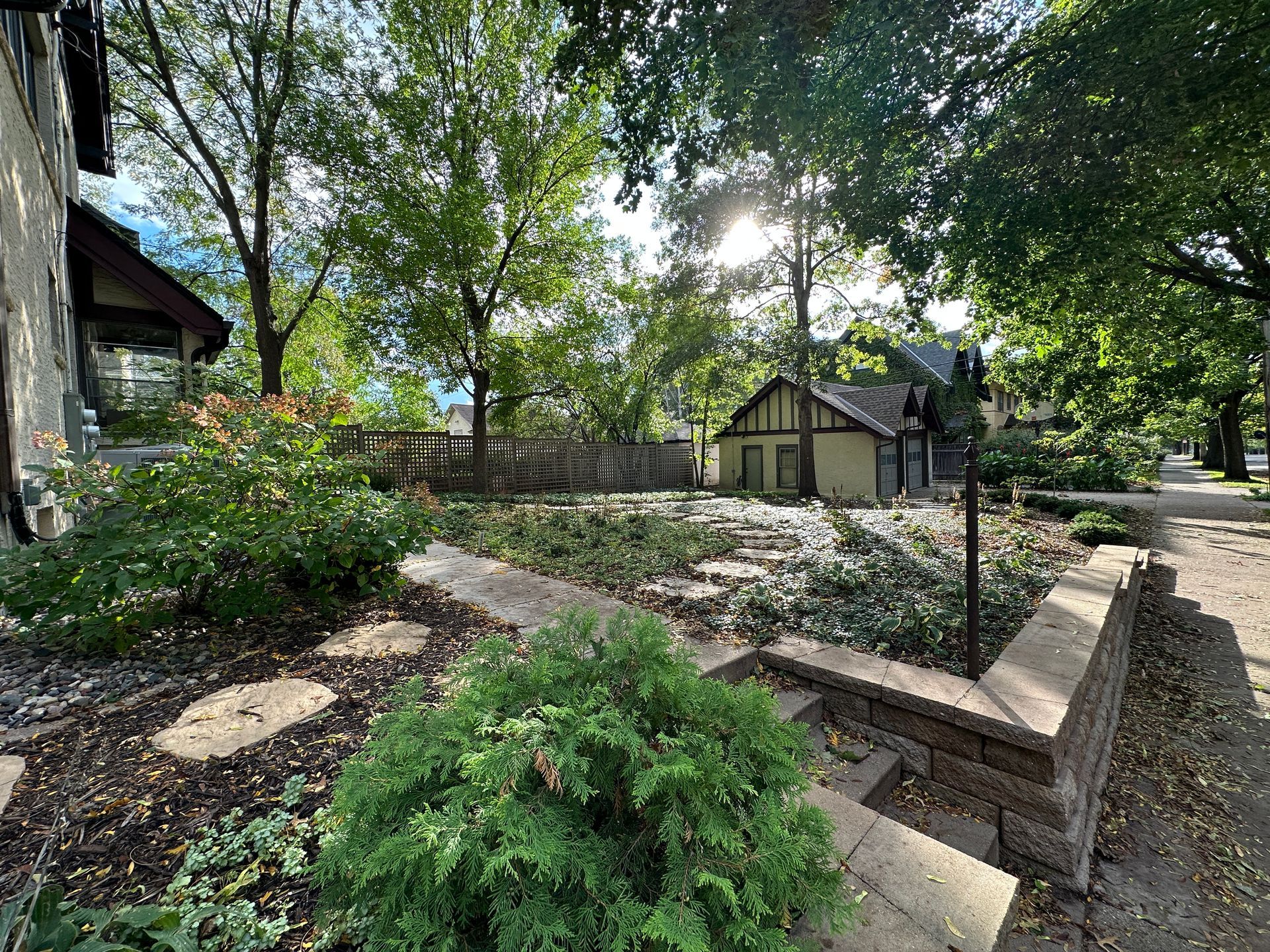
We maximized every bit of light and square footage, filling the space with beautiful ground covers and shade-loving plants designed to thrive in each area. The plantings yin and yang into each other, blooming at different times throughout the year.
The Front Yard: Ground Cover as Lawn
For the front yard, we wanted to maintain the look and feel of this Minneapolis neighborhood. A wild pollinator garden might not fit this established street. But a traditional lawn wasn't going to work in this shade.
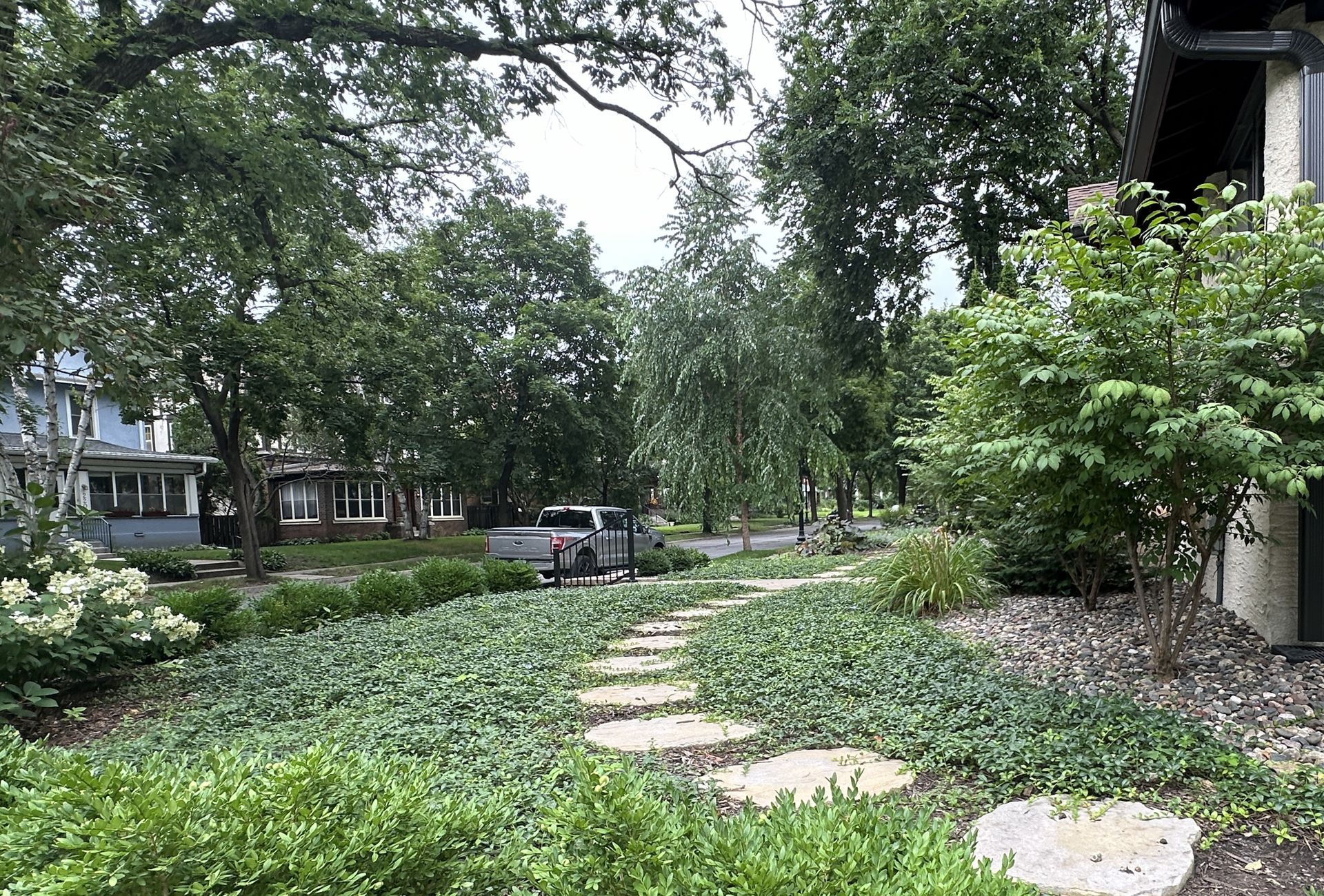
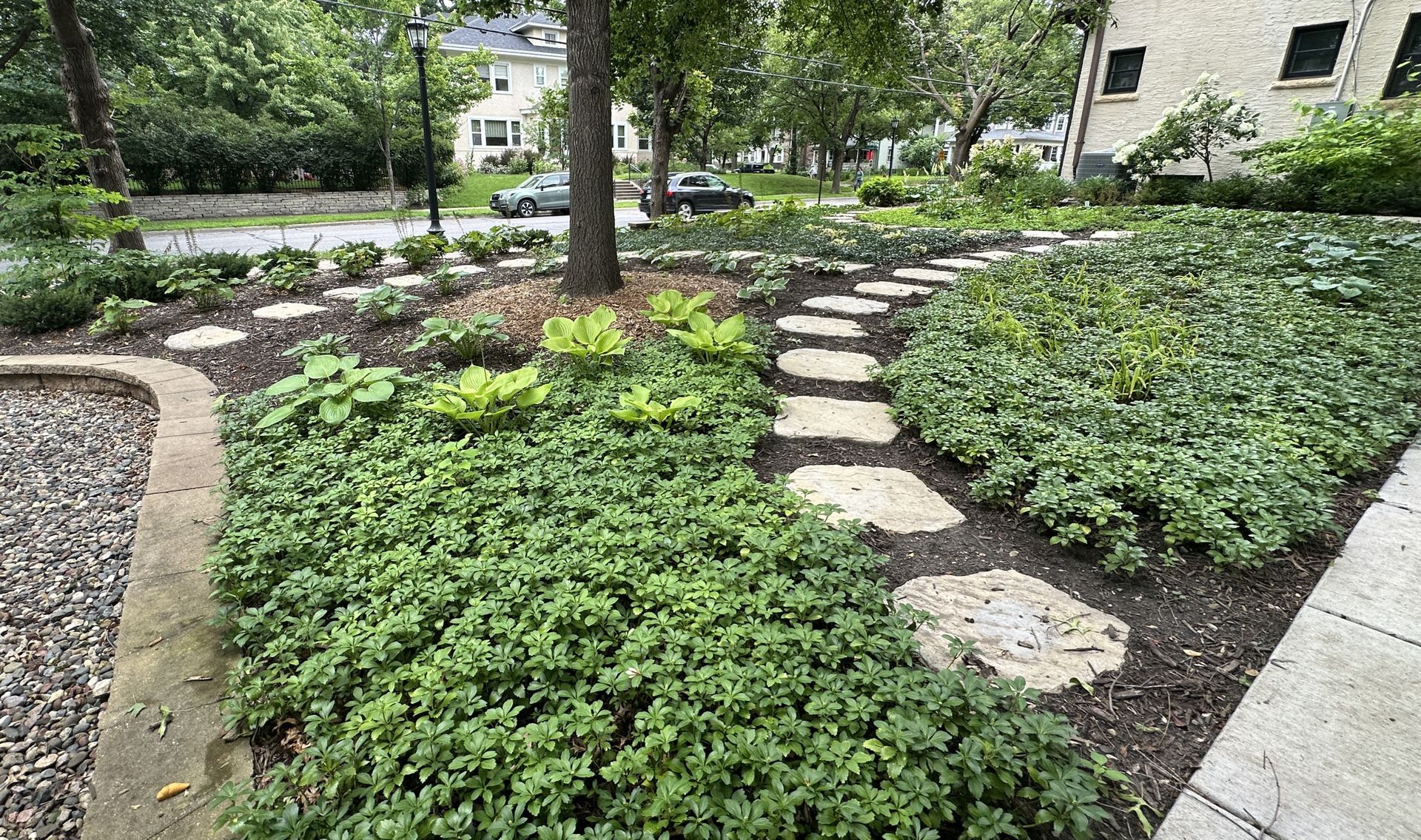
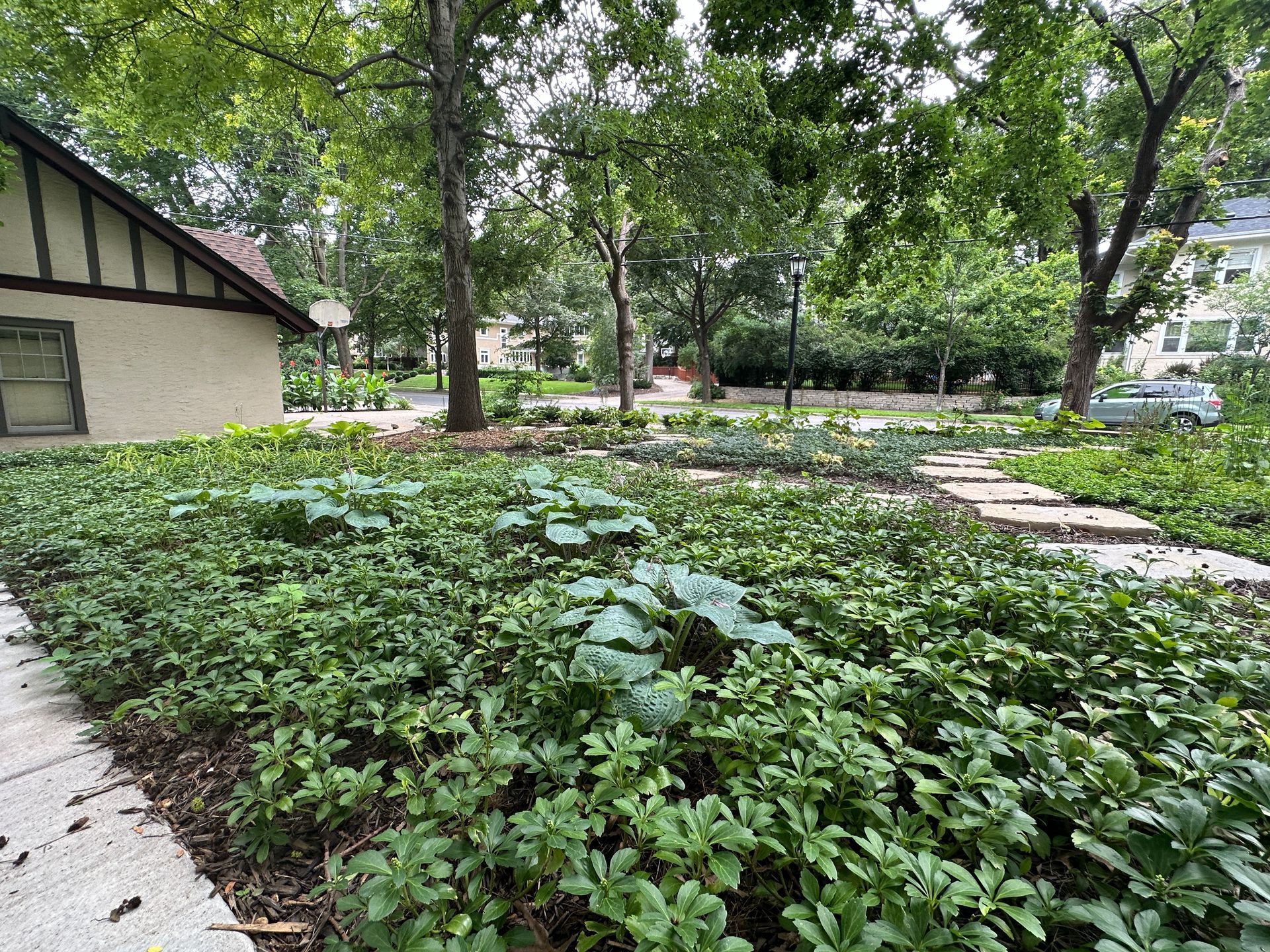
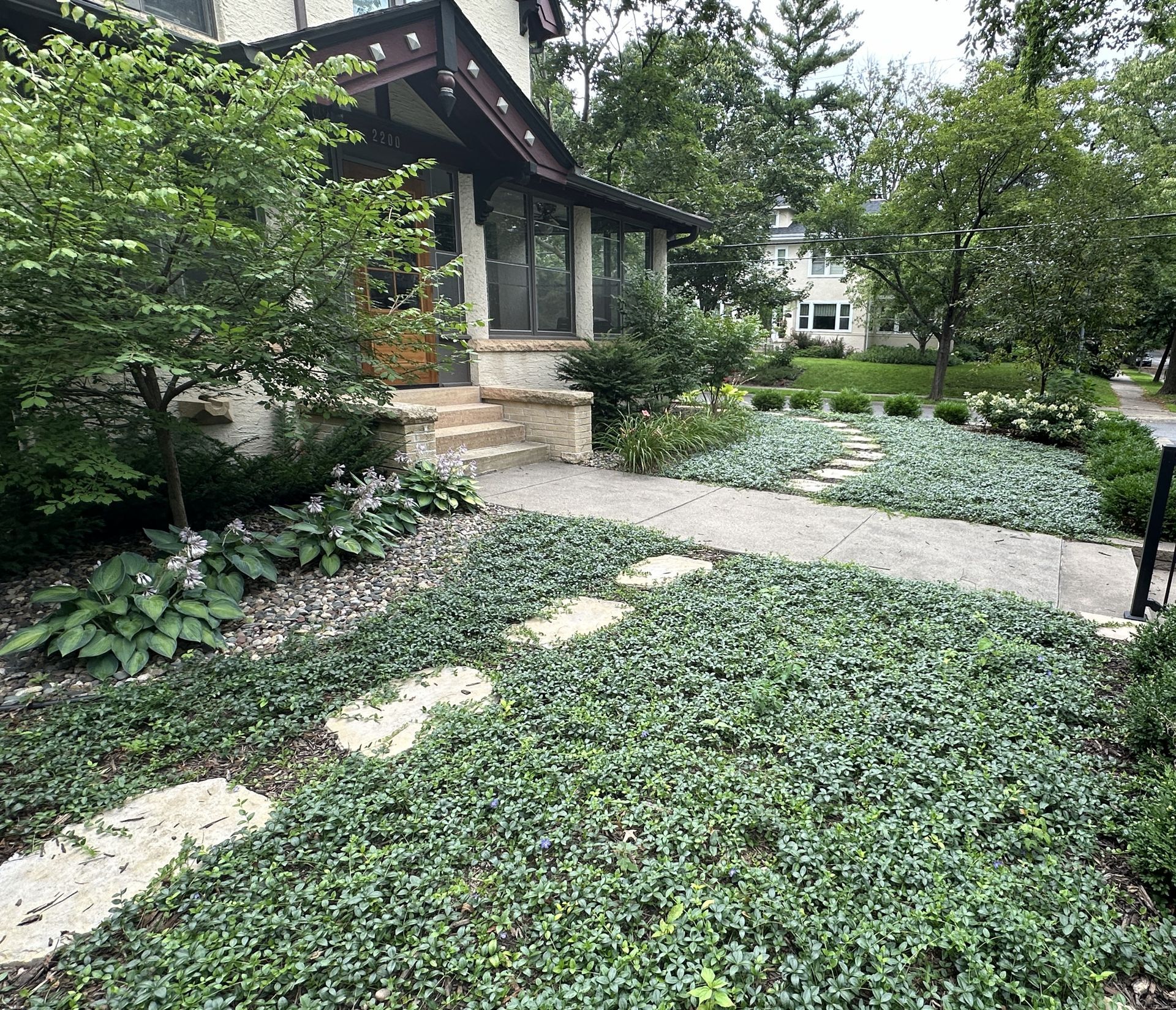
This is one of the more creative ground cover lawn ideas we've implemented — using two types of vinca to create the look and feel of a traditional lawn without any of the maintenance.From the street, it has the visual rhythm of a lawn. Green, even, maintained. But it requires no mowing, no watering, no chemicals.
Stepping stone pathways cut through the ground cover, providing access and visual interest.
The homeowners got what they wanted: a front yard that fits the neighborhood, but on their terms. We kept with the sense of place and vibe of the neighborhood, not working against it, but we did so in a creative new way using ground covers that met their goals.
The Backyard: Layered Shade Plantings
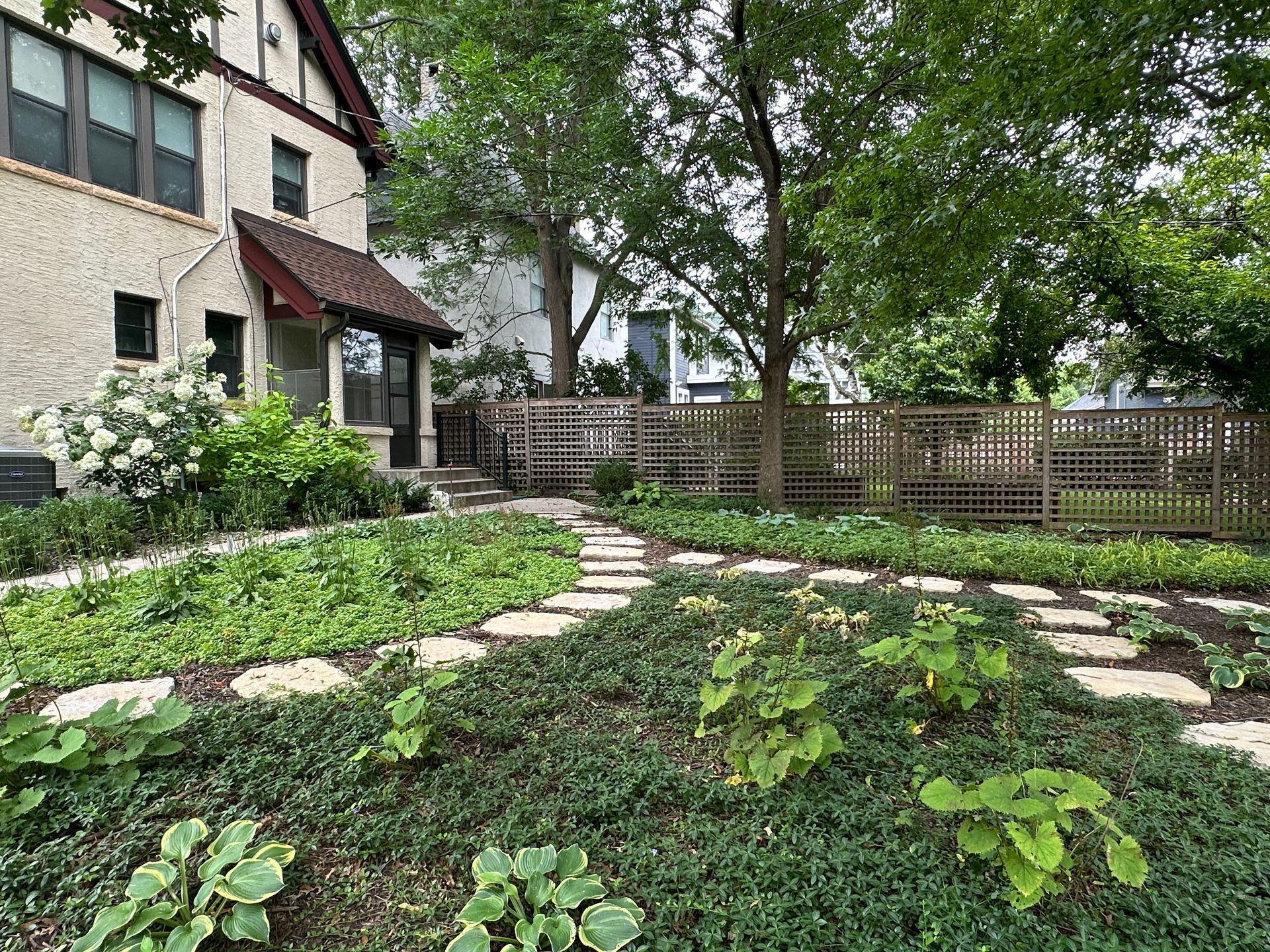
The backyard gave us more freedom. Instead of a uniform ground cover, we designed layered plantings that take advantage of every bit of light available in this Minneapolis shade garden.
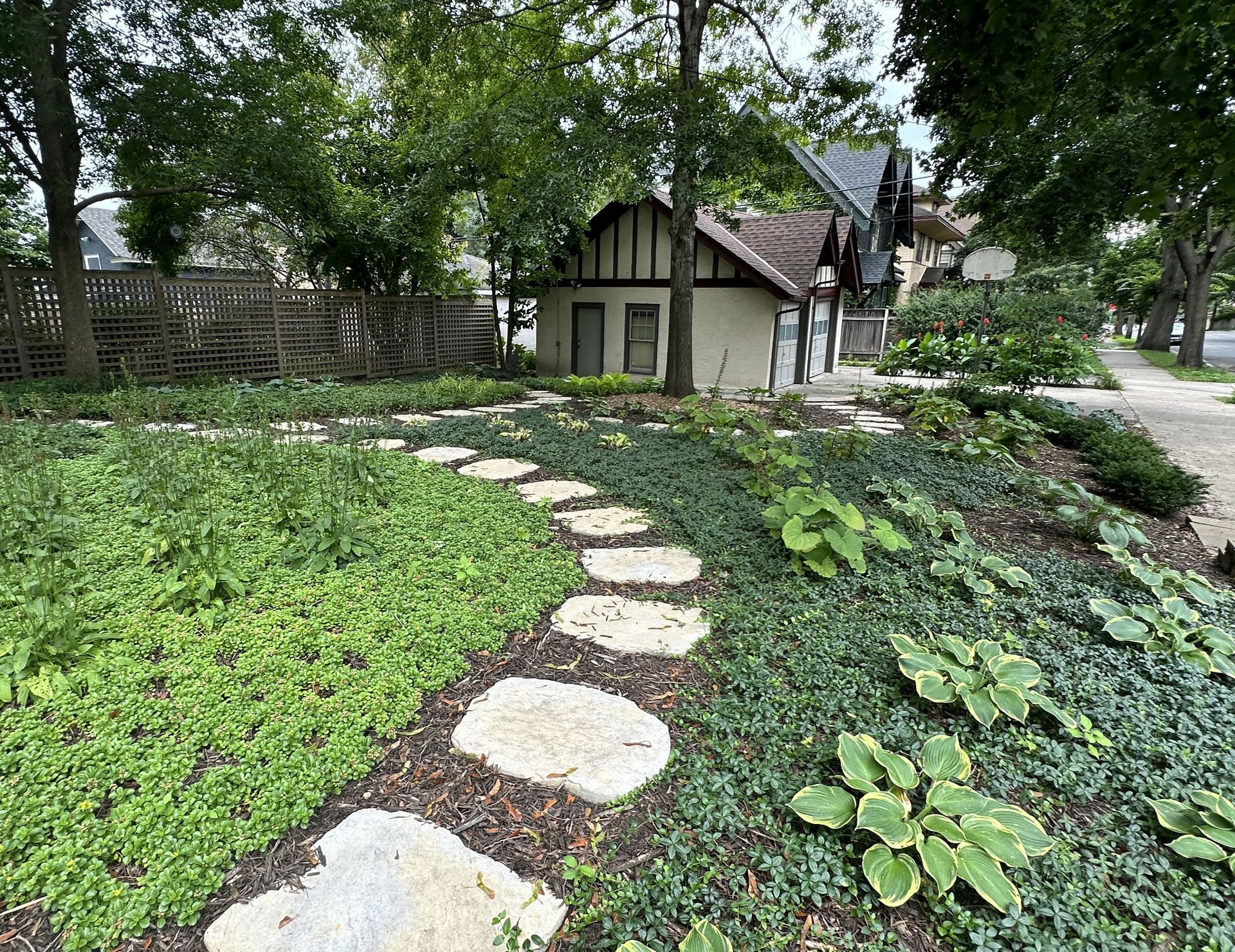
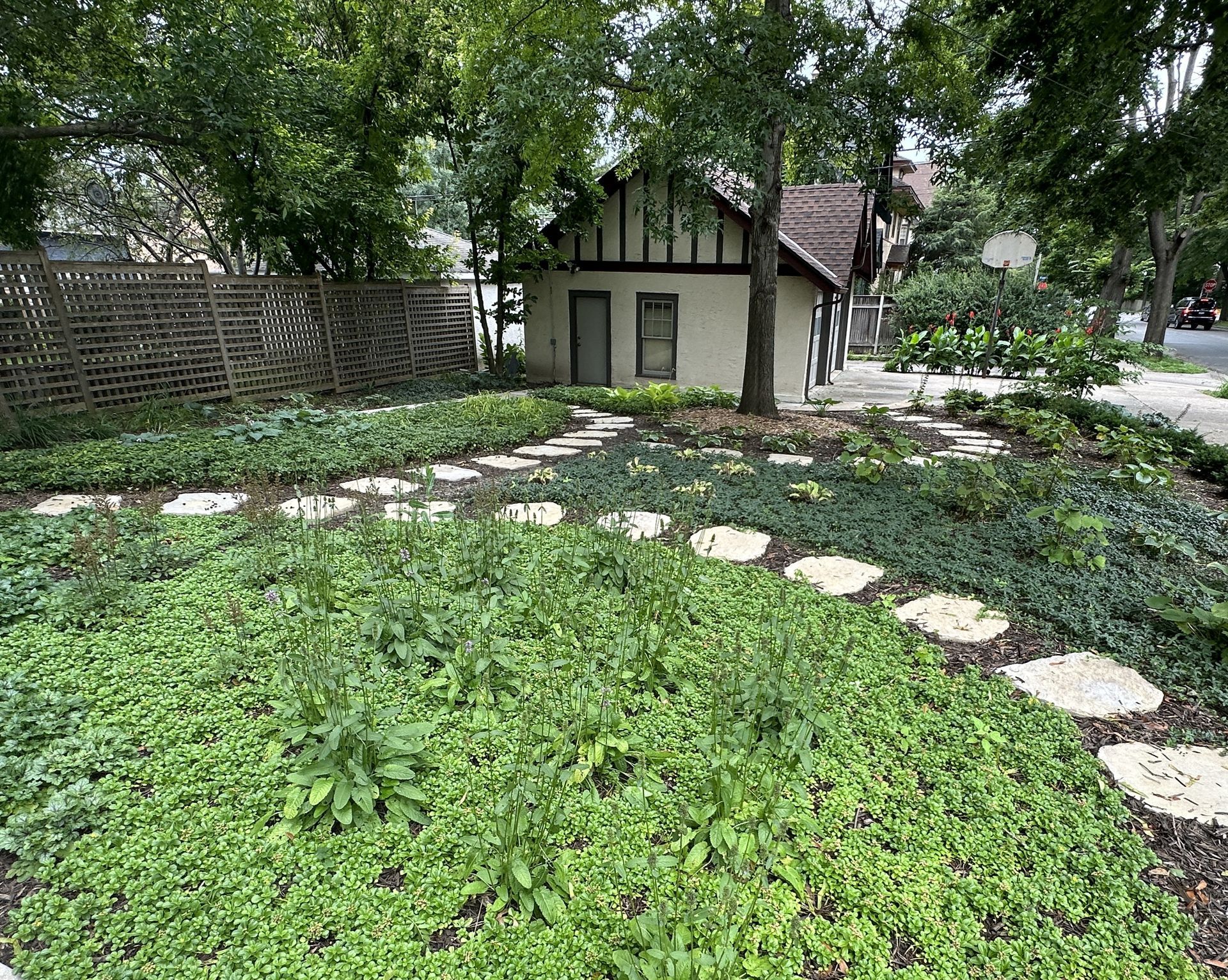
In areas with partial sun, we used sedum ground cover with interesting plants emerging through it. Maggie Daley Astilbe. Bowles Golden Sedge. These get the light they need to thrive.
In shadier areas, we used plants that actually want shade. Pink Revolution Foamy Bells, a beautiful low-growing flowering plant. Blue and Gold Spiderwort, which has lime green grass-like foliage and blooms an almost unreal violet-blue color.
For height and structure in the center of the yard and near trees, we used hostas selected for their leaf color and texture: Earth Angel (blue-green with white margins), Sum and Substance (lime green, huge), Humpback Whale (blue-green, the largest of the group), and Blueberry Muffin (small, blue). The University of Minnesota Extension's guide to growing hostas confirms these are among the most reliable perennials for shade in our climate.
A healthy hosta thriving in shade looks far better than a sad coneflower struggling because it was planted where it doesn't belong. Our designs are planned to succeed.
Privacy and Screening
The back corner of the yard opened directly to the street. Anyone walking by had a clear view into the backyard. The homeowners wanted screening for their Minneapolis home.
We planted yew shrubs along the edge to create an evergreen border. Yews provide year-round privacy and structure, which matters in Minneapolis where deciduous plants are bare for five months. In front of them, hostas. Anchoring the corner, a Pagoda Dogwood.
The layering creates depth. The evergreen yews screen the view. The hostas soften the base. The tree anchors the corner and adds height.
The Stepping Stone Pathways
The curvilinear stepping stone pathways are as much a design element as a functional one. They provide access for maintenance. They create flow through the space. And their shape became the backbone of the entire planting design.
Look at the after photos. The pathway curves guide your eye through the yard. They separate planting areas. They make the design feel intentional.
Without pathways, a yard full of ground covers and perennials can look like a tangled mess. That's what happens when these gardens aren't planned. The pathways give it structure. They're what makes the difference between "gave up on the lawn" and "designed this way on purpose."
Why this Design Worked
This design works because it was planned for the specific conditions of this Minneapolis property.
The shade isn't a problem to fight. It's a condition to design for. Every plant was selected because it thrives in shade, not despite it.
The ground covers eliminate mowing and chemicals. The homeowners don't water the front yard. They don't fertilize it. They don't spray it. They just enjoy it.
The drainage systems protect the garage and the new plantings. Water moves where it should instead of causing damage.
The pathways make maintenance easy. The homeowners can walk through and enjoy the space. When something needs attention, they can reach it.
The layering creates interest through the seasons. Evergreen yews provide winter structure. Hostas emerge in spring. Ground covers fill in through summer. The flowering plants bloom at different times.
The Result
We've never worked with happier customers.
We worked with them from initial planning through final design, through Phase 1 construction, and through Phase 2 completion two seasons later. They've hired us back since for additional improvements. We still hear from them occasionally, emails about how much they love the space.
Working with someone like this is the greatest pleasure of the work we do. To have them feel as much love and passion for the space we helped create as they do makes our work meaningful and gives us a strong sense of pride that we carry with us on every project.
The homeowners left us a five-star Google review. We thank them for the wonderful experience. And for the brownies Pat made for the crew just about every day they worked. Our crew wishes we could work just for them.

Frequently Asked Questions
How long does a two-phase project like this take?
Phase 1 (walls, drainage, sidewalks, foundation plantings) took several weeks. We then let it settle for two seasons before completing Phase 2. Phase 2 (removing lawn, installing ground covers and plantings) took additional time. Phasing allows homeowners to spread the investment and make sure the infrastructure is working before completing the plantings.
Will ground cover look as neat as a traditional lawn?
Depends on the ground cover and design. We used vinca in the front yard specifically because it has a uniform growth habit that reads like lawn from the street. The backyard used a mix of ground covers and perennials for a more naturalized look. We design based on context and what the homeowner wants.
What about maintenance?
Significantly less than a traditional lawn, but not zero. Ground covers don't need mowing, watering, or chemical treatments. But you'll do some weeding, especially in the first year or two while plants establish. Pathways may need occasional edging. Perennials may need dividing after several years. The difference is the type and amount of maintenance.
Can this work in my shaded Minneapolis yard?
Probably. Shade is one of the most common reasons lawns fail in Minneapolis. The mature tree canopy in older neighborhoods creates conditions where grass struggles. Ground covers and shade-loving perennials actually thrive in those conditions. The key is selecting the right plants for the specific light levels in your yard.
How do I get started?
Contact us to schedule a consultation. We'll visit your property, discuss your goals, and talk through options. If design work makes sense, we'll provide a proposal. Design fees are credited back toward the project when we do the work.
About the Author

I’m Kent Gliadon, founder of KG Landscape and a graduate of the University of Minnesota Landscape Design program. For over 20 years, I’ve focused on integrating well-planned landscape design and installation work with properly engineered outdoor drainage solutions.
I believe discerning homeowners deserve landscaping & drainage renovations that are carefully planned from the beginning—accounting for water movement, grading, soils, hardscaping, and future use—so problems are prevented before they occur. These case studies explain how and why specific solutions are implemented and what it takes to build landscapes that truly last a lifetime.