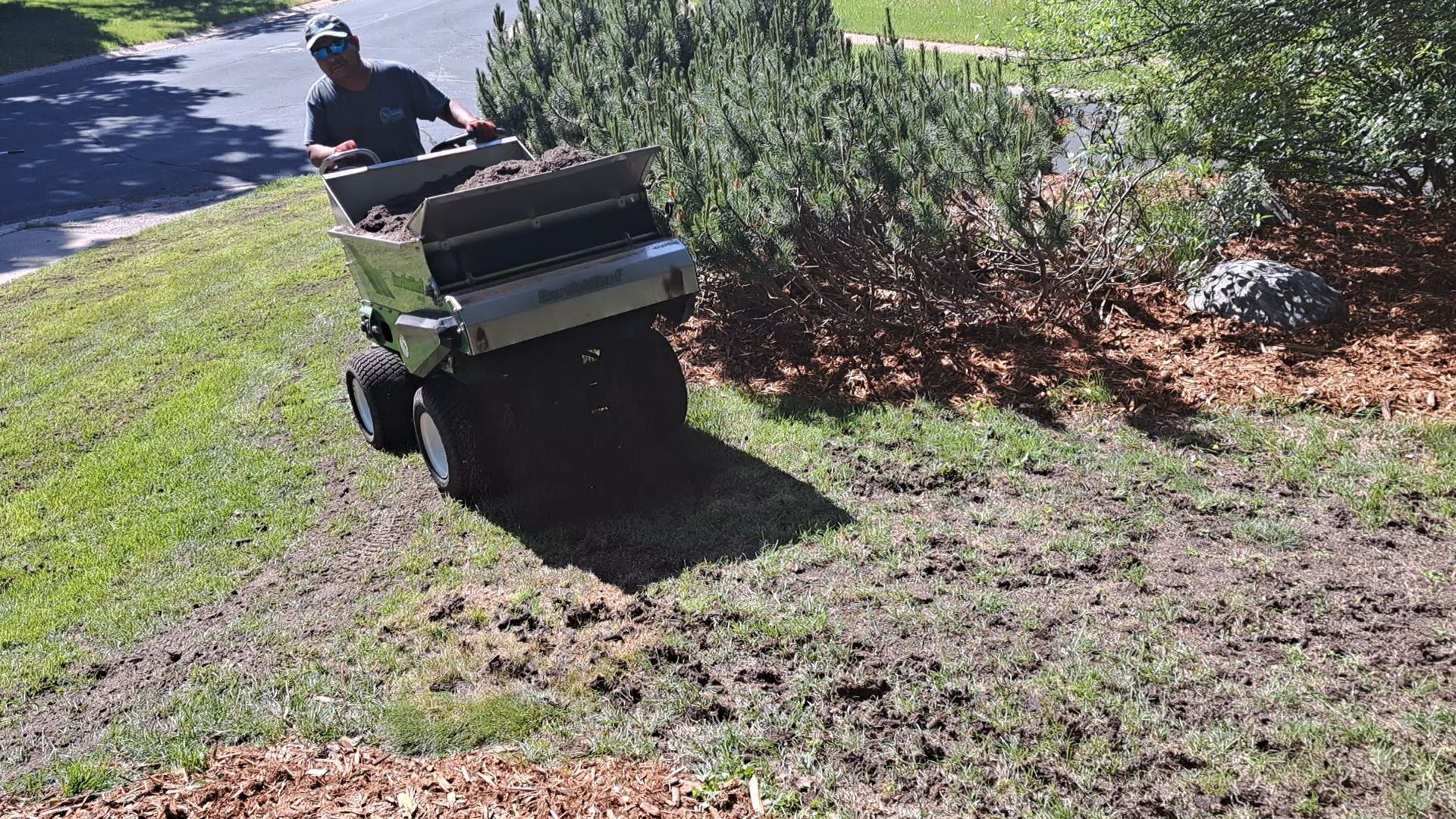
What Your Maple Grove HOA Snow Contract is Probably Missing
The Contract Problem Most HOA Boards Don't See Coming
Every winter, I hear the same story from HOA boards in Maple Grove. The snow removal company came, the bill showed up, but the lot still looks terrible. Residents are calling board members. Nobody's sure whether the contractor did what they were supposed to, and when the board pulls the contract to check, they realize the document doesn't actually define what "supposed to" means.
After 20-plus years of servicing HOA communities, I can tell you that most of the time the problem isn't the snow removal company. It's the contract. A vague scope of services, unclear trigger depths, no ice management language, and no documentation requirements create a setup where nobody can tell if the job is being done right because nobody defined what "right" looks like in the first place.
We service HOA communities across the west and north metro, and the contract review is one of the first things I do when an association reaches out. I sit down with the board, walk the property, and compare what they think they're getting against what the contract actually says. The gap is almost always wider than they expected. If your Maple Grove HOA is renewing a snow contract or shopping for a new provider, here's what the agreement should cover and where I see the biggest gaps.
Why HOA Snow Contracts Get Messy
The root cause of most HOA snow removal complaints is a contract that's too vague to be useful. When the scope says "snow removal for the property" and nothing else, every winter storm becomes a judgment call. Does snow removal include sidewalks? What about the mailbox cluster? How much snow triggers a visit? Who handles ice after the plow leaves?
Without clear answers to those questions in writing, the contractor makes assumptions. The board makes different assumptions. Residents make their own. By February, everybody's frustrated, and the real issue is that expectations were never aligned.
A well-written HOA snow removal contract prevents this by defining every detail before the season starts. It establishes which areas get cleared, in what order, with what equipment, at what trigger depth, and with what documentation. When a resident calls to complain about the lot at 9 AM, the board can pull the service log and show exactly when the crew arrived, what they cleared, and what conditions existed at the time.
This isn't about micromanaging the contractor. It's about protecting the board, the residents, and the association from disputes that grow out of unclear expectations. The Community Associations Institute publishes guidance on winterizing HOA operations, and contract specificity is a recurring theme in their recommendations.
What Should Be in the Scope of Services
The scope of services section is the core of any HOA snow removal contract. It should list every area the contractor is responsible for, with enough detail that there's no room for interpretation.
For most Maple Grove HOA communities, the scope should cover parking lots (primary and overflow), main access drives, fire lanes, sidewalks along buildings and common areas, mailbox access areas, dumpster pad access, and any pathways between buildings or to amenities like a clubhouse or pool area. Our Maple Grove snow removal service page outlines the typical scope we build for communities in the area.
Within the parking lot scope, the contract should specify snow stacking locations. Snow has to go somewhere, and if the contract doesn't say where, the contractor will push it wherever is convenient. That usually means stacking along the lot edges, which eats up parking stalls and blocks sight lines at intersections. It also means specifying a snow removal threshold. Once stacking reaches a certain height or volume, the contractor should haul snow off site. That hauling cost should be outlined so it doesn't come as a surprise in February.
Sidewalk service should be a separate line item or clearly described within the scope. Some contractors include sidewalks in the base price. Others treat it as an add-on. Hand shoveling for narrow walks and building entrances is different work than machine-clearing wide paths, and the contract should reflect which approach is used where. We see the same scoping issue at apartment complexes in Eden Prairie where sidewalks and building entrances get overlooked in the base contract.
If the scope doesn't name a specific area, assume it won't be serviced. Write everything down.
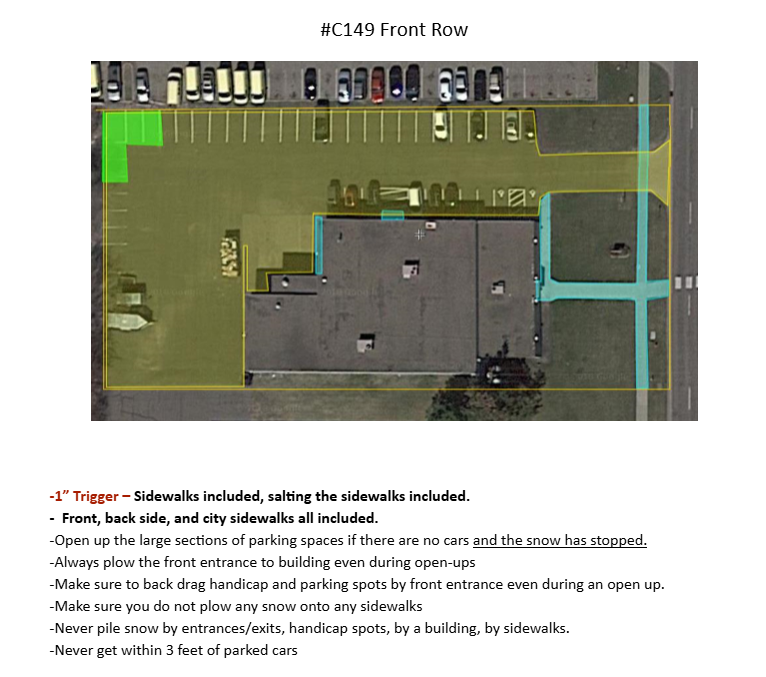
Complete snow removal service includes both lot plowing and sidewalk clearing
Trigger Depth, Response Time, and Service Windows
Trigger depth is the single most important number in a snow removal contract, and in my experience it's the one most boards gloss over.
A trigger depth of 1 inch means the contractor dispatches crews after 1 inch of accumulation. A 2-inch trigger means they wait for 2 inches. A 3-inch trigger means even more snow on the ground before anyone shows up. Each step up reduces the number of service events per season but increases the amount of accumulation residents have to navigate before it's addressed.
For a residential HOA community in Maple Grove, a 1-inch or 2-inch trigger is standard for parking lots and main drives. Sidewalks may warrant a lower trigger since pedestrians struggle with even minimal accumulation, especially in communities with older residents.
Response time is how quickly crews arrive after the trigger depth is reached. This should be a specific number in the contract, not "as soon as possible." A typical commercial response time is 1 to 2 hours after the trigger is hit, though this varies based on the contractor's route load and distance. At KG Landscape, we commit to specific response windows for every property we service because vague language creates exactly the kind of disputes that ruin contractor-board relationships.
The contract should also address multi-day storm protocol. When snow falls continuously for 12 or 24 hours, does the contractor make multiple passes to keep the lot manageable, or do they wait until the storm ends for a single cleanup? Continuous service costs more but keeps the property accessible throughout the event. For communities where residents need to get in and out during a storm, continuous service is the better approach. Minnesota averages around 54 inches of snowfall per year according to the Minnesota DNR, and that snowfall doesn't arrive in neat single-day increments.
Service windows matter too. Overnight clearing is standard for HOA properties so that lots are passable by morning. But the contract should specify a target completion time, like "primary lots and drives cleared by 6 AM for events ending before midnight." Without that language, you're relying on the contractor's judgment about when "done" needs to happen.
Ice Management Is a Separate Conversation
One of the most common gaps I find when reviewing HOA snow contracts is ice management. Many contracts include plowing but either leave out ice treatment entirely or bury it as a vague add-on. I've reviewed contracts for communities that were paying for full winter maintenance and discovered ice treatment wasn't mentioned anywhere in the document. That gap can cost the association significantly if someone slips on untreated ice.
Ice management and salting are not the same thing. Salting is reactive: someone spreads salt on ice after it's already formed. Ice management is a broader protocol that includes pre-treatment before a forecasted storm (called anti-icing), reactive application during and after the event, and monitoring for refreeze in the days following. We cover the full de-icing and salting process on our service page because the distinction matters more than most boards realize.
Pre-treatment is especially important for HOA properties because it prevents ice from bonding to the pavement in the first place. A thin layer of brine applied before a storm makes post-storm cleanup faster and more effective. It also reduces the total amount of salt needed, which matters for communities near lakes, ponds, or storm drains where salt runoff is a concern. The Minnesota Pollution Control Agency runs a Smart Salting training program that many commercial applicators now follow, and we incorporate those practices into our ice management approach to balance effectiveness with environmental responsibility.
Material type should be specified in the contract. Rock salt is the cheapest option but is less effective below 15 degrees, which is a regular occurrence in Maple Grove winters. Calcium chloride works at lower temperatures but costs more. Sand-salt mixes provide traction but don't melt ice. The right choice depends on the surfaces being treated, the temperatures during typical storms, and the association's budget.
Sidewalk ice management deserves its own mention. Walkways between buildings, building entrances, and mailbox areas are where residents are most likely to slip. These areas need attention separate from the parking lot, often with different materials and more frequent application.
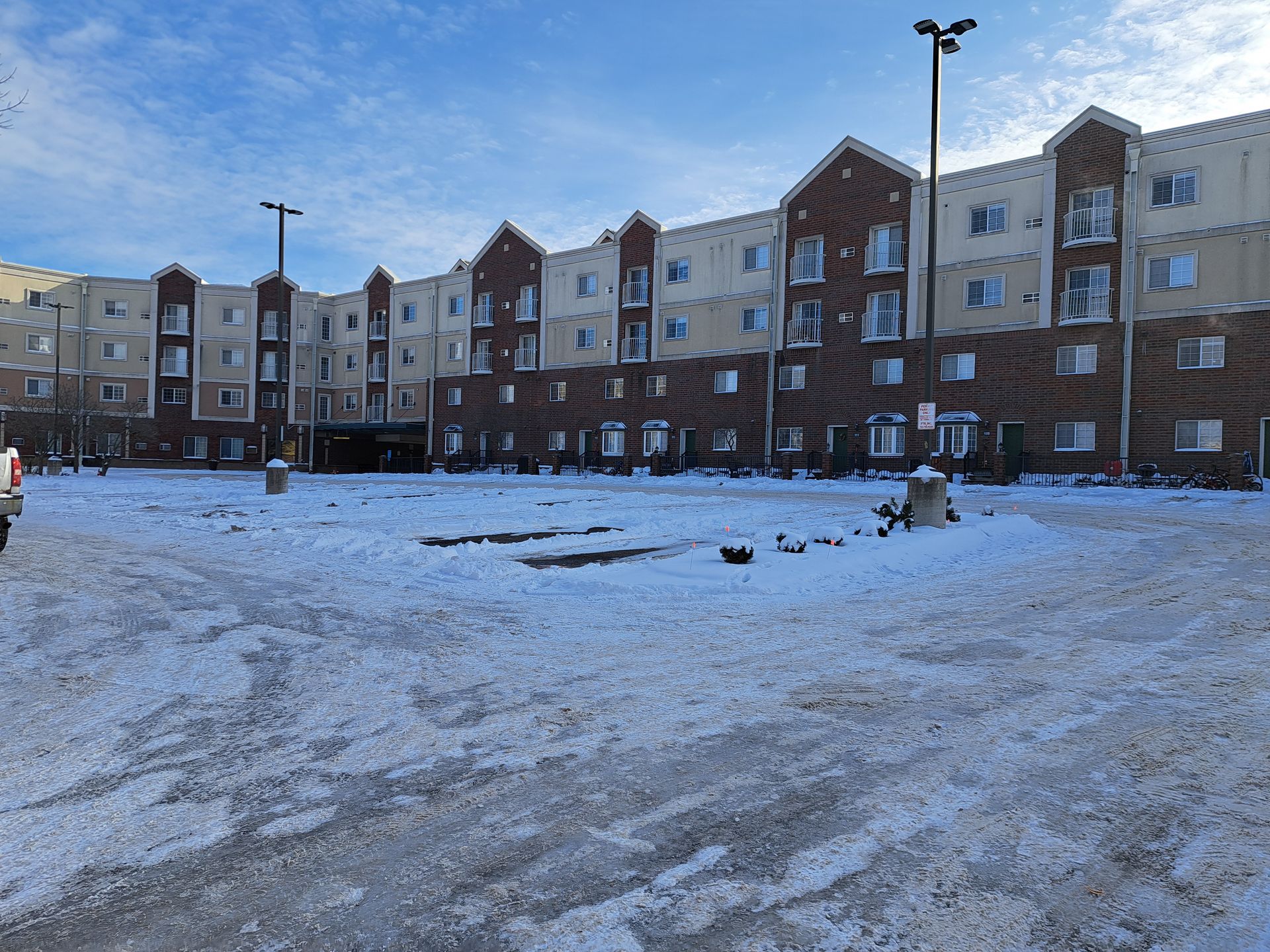
Ice management keeps shared parking areas safe for residents and visitors
Insurance, Liability, and Indemnification
This is the section of the contract that protects the HOA when something goes wrong, and it's the one most boards don't read carefully enough.
Your snow removal contractor should carry general liability insurance with limits appropriate for commercial work. The industry standard minimum is $1 million per occurrence, though many associations require $2 million or more. Ask for a current certificate of insurance before signing and verify it's valid for the entire contract period.
The HOA should be listed as an additional insured on the contractor's policy. This means that if someone is injured on the property and the claim involves snow and ice conditions, the contractor's insurance responds alongside the association's coverage. Without additional insured status, the association may be left defending the claim alone even though the contractor was responsible for maintaining the property. At KG Landscape, we carry the coverage our commercial clients need and add additional insured designations as standard practice.
Indemnification language matters. A well-written indemnification clause states that the contractor agrees to defend and hold harmless the association for claims arising from the contractor's negligence. This doesn't eliminate the HOA's liability entirely, but it establishes who bears primary responsibility when winter maintenance was the contractor's obligation.
Documentation requirements should also live in this section. The contractor should maintain service logs with dates, times, areas serviced, materials applied, and weather conditions. Timestamped records are the single most effective defense in slip-and-fall litigation involving commercial properties. If the association faces a claim three months after an incident, those logs are the evidence that reasonable care was provided. Without them, you're relying on memory, which doesn't hold up well.
Per-Event vs. Seasonal Contracts
HOA boards in Maple Grove generally choose between two pricing structures: per-event and seasonal.
Per-event contracts charge for each service visit, usually based on snowfall range. A 1-to-3-inch event might be one price, 3-to-6 inches another, and anything over 6 inches a higher rate. Ice management applications are typically billed separately.
Seasonal contracts charge a flat fee for the entire winter, usually November through April. The contractor handles everything within the scope regardless of how many events occur. The association pays the same amount whether it snows five times or thirty.
For most Maple Grove HOAs, seasonal contracts make more sense. The snowfall variability in Minnesota makes per-event pricing volatile. Seasonal contracts give the board a fixed number for budgeting and financial planning, which matters when assessments and reserves are calculated months in advance.
One thing to watch: make sure ice management is included in the flat rate, not billed as an add-on per application. Some contractors offer a low seasonal plow rate but charge per ice treatment, which effectively makes it a hybrid contract with unpredictable costs. We wrote about the real costs of inadequate snow management for commercial properties in St. Louis Park, and the dynamics are the same for HOA communities: paying less upfront often costs more when service gaps create liability.
If your HOA is evaluating snow removal options for next season, contact us to discuss what scope and pricing structure makes sense for your community. We also have experience with commercial landscape design and installation for HOA common areas, including communities in Medina and across the west metro, so we understand the year-round relationship between a property and its maintenance needs. Our integrated lawn renovation project in Robbinsdale is a good example of the kind of comprehensive property work we do beyond winter.
Frequently Asked Questions
How much does HOA snow removal cost per season in Maple Grove?
Cost varies significantly based on property size, number of parking areas, sidewalk footage, and ice management scope. A small townhome community with one lot costs much less than a large condo association with multiple lots, garages, and pathways. The pricing structure (per-event versus seasonal) also impacts total cost. Get quotes from at least three contractors with identical scopes so you're comparing the same services rather than different definitions of "snow removal."
Who is liable if a resident slips on ice in an HOA community?
Both the association and the snow removal contractor can be named in a lawsuit. The association has a duty to maintain common areas in a reasonably safe condition. The contractor has a duty to perform the work specified in their contract. The key factors are whether the contractor performed the agreed-upon services, whether the contract adequately addressed winter conditions, and whether documentation exists to show what was done and when. Listing the HOA as additional insured on the contractor's policy provides the strongest layer of protection.
How far in advance should an HOA sign a snow removal contract?
Sign by September or early October. Reputable commercial snow removal companies fill their capacity before the season starts. Waiting until November means fewer options, less leverage, and higher pricing. Early signing also gives the board time to review insurance certificates, walk the property with the contractor, and communicate the plan to residents before winter arrives.
What documentation should the HOA require from the contractor?
Require service logs for every visit that include the date, arrival and departure times, areas serviced, equipment used, and materials applied with approximate quantities. GPS tracking data provides independent verification of when crews were on site. Timestamped photographs of conditions before and after service add another layer. These records let the board verify the contractor is performing to the contract and provide critical evidence if the association ever faces a slip-and-fall claim.
Should an HOA choose a per-event or seasonal contract?
For most Maple Grove communities, seasonal contracts offer better budget predictability. Minnesota winters produce enough events that per-event pricing can swing dramatically year to year. The risk of a heavy winter blowing the budget is real with per-event pricing. Whichever model you choose, confirm that ice management is included in the base pricing rather than billed separately per application.
What's the difference between snow removal and snow management for an HOA?
Snow removal in the traditional sense means clearing snow through plowing and shoveling. Snow management is a broader service that encompasses pre-storm preparation, active plowing, ice prevention and treatment, post-storm monitoring, documentation, and communication. For HOA communities where residents rely on safe access around the clock, snow management is the appropriate standard. A plow-only contract leaves significant gaps in ice control and ongoing monitoring that create both safety and liability exposure.
About the Author
I'm Kent Gliadon, founder of KG Landscape and a graduate of the University of Minnesota Landscape Design program. For over 20 years, I've focused on integrating well-planned landscape design and installation work with properly engineered outdoor drainage solutions. I believe discerning homeowners deserve landscaping and drainage renovations that are carefully planned from the beginning, accounting for water movement, grading, soils, hardscaping, and future use, so problems are prevented before they occur. These articles explain how and why specific solutions are implemented and what it takes to maintain properties that truly last.
Ready to Start on Your Next Project?
Call us at (763) 568-7251 or visit our quote page.