Healthy Lawn Care in Minnesota: The Habits That Actually Matter
What Healthy Lawn Care Actually Means in Minnesota
Healthy lawn care in Minnesota isn't about the next product on the shelf. It's a handful of habits done consistently, matched to our climate and our grasses. Minnesota lawns are cool-season grasses, mostly Kentucky bluegrass, fine fescue, and perennial ryegrass. They do their best growing in the cool, moist stretches of spring and fall, and they slow down or go semi-dormant in the heat of July and August. Work with that rhythm instead of against it and the lawn mostly takes care of itself.
Most of the struggling lawns we see around the Twin Cities aren't missing some secret treatment. They're mowed too short, watered too often and too shallow, and growing in soil nobody has touched in years. Those three habits cause more thin, weedy, stressed-out lawns than any pest or disease. Fix them and you fix the lawn. The rest of this guide walks through the habits that matter most, roughly in the order they matter. If you want the full picture of the services that keep a lawn healthy through a Minnesota year, our lawn care page lays them out.
Mow High, and Mow Often Enough
Mowing height is the single easiest thing to get right, and the most common mistake homeowners make. Set the mower to three inches or higher and leave it there. Taller grass blades shade the soil, crowd out germinating weeds, and grow deeper roots that reach water and nutrients during our dry mid-summer stretches. Scalping a lawn short does the opposite. It stresses the plant, bakes the soil, and rolls out a welcome mat for crabgrass.
The other half is frequency, and it's tied to the one-third rule: never remove more than the top third of the blade in a single cut. During the spring flush that can mean mowing more than once a week, then far less in summer when growth slows. Keep the blade sharp too, since a dull blade tears grass and leaves a ragged, disease-prone edge. Leave the clippings on the lawn. They break down within days and return nitrogen to the soil, which the University of Minnesota Extension notes is worth about one free fertilizer application a year. We handle height and timing through the season as part of our mowing and seasonal clean-up work.
Water Deeply, Not Daily
Short daily watering is one of the most common ways people accidentally weaken a lawn. It trains grass roots to stay near the surface, where they dry out the moment you skip a day or the heat spikes. Deep, infrequent watering does the opposite. Aim for about one inch of water per week, including rainfall, delivered in one or two longer soakings rather than a daily sprinkle. That drives roots down and builds a lawn that can ride out a dry week without going crispy.
Timing and soil both matter. Water early in the morning so the blades dry through the day, which keeps fungal disease in check. The University of Minnesota Extension points out that heavy clay holds water and needs less frequent watering, while sandy soil drains fast and needs shorter, more frequent runs. Most Twin Cities yards lean one way or the other, so the same schedule won't fit every lawn. If you're guessing at how much water your system actually puts down, an irrigation system calibrated to your soil takes the guesswork out and usually saves water too.
Feeding Is Part of Healthy Lawn Care, but Soil Comes First
Fertilizer feeds the grass, and a Minnesota lawn does need nitrogen to stay thick and green. Here, timing beats volume. The most valuable feedings come in late summer and fall, when the grass is storing energy for winter and spring green-up, not in the heat of July when a heavy dose can burn the lawn. Our fertilization and weed control program is built around that seasonal schedule rather than a one-size calendar.
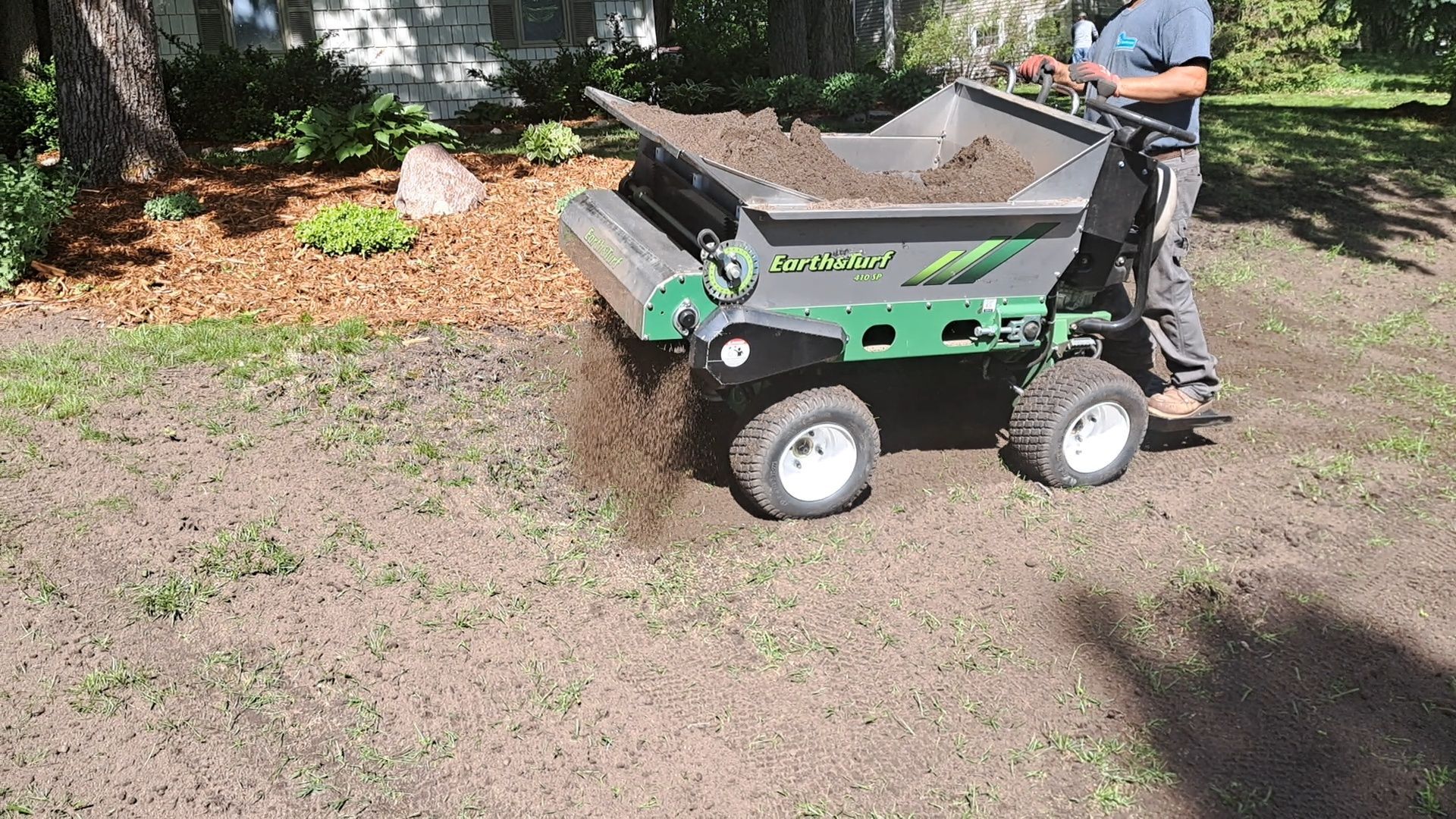
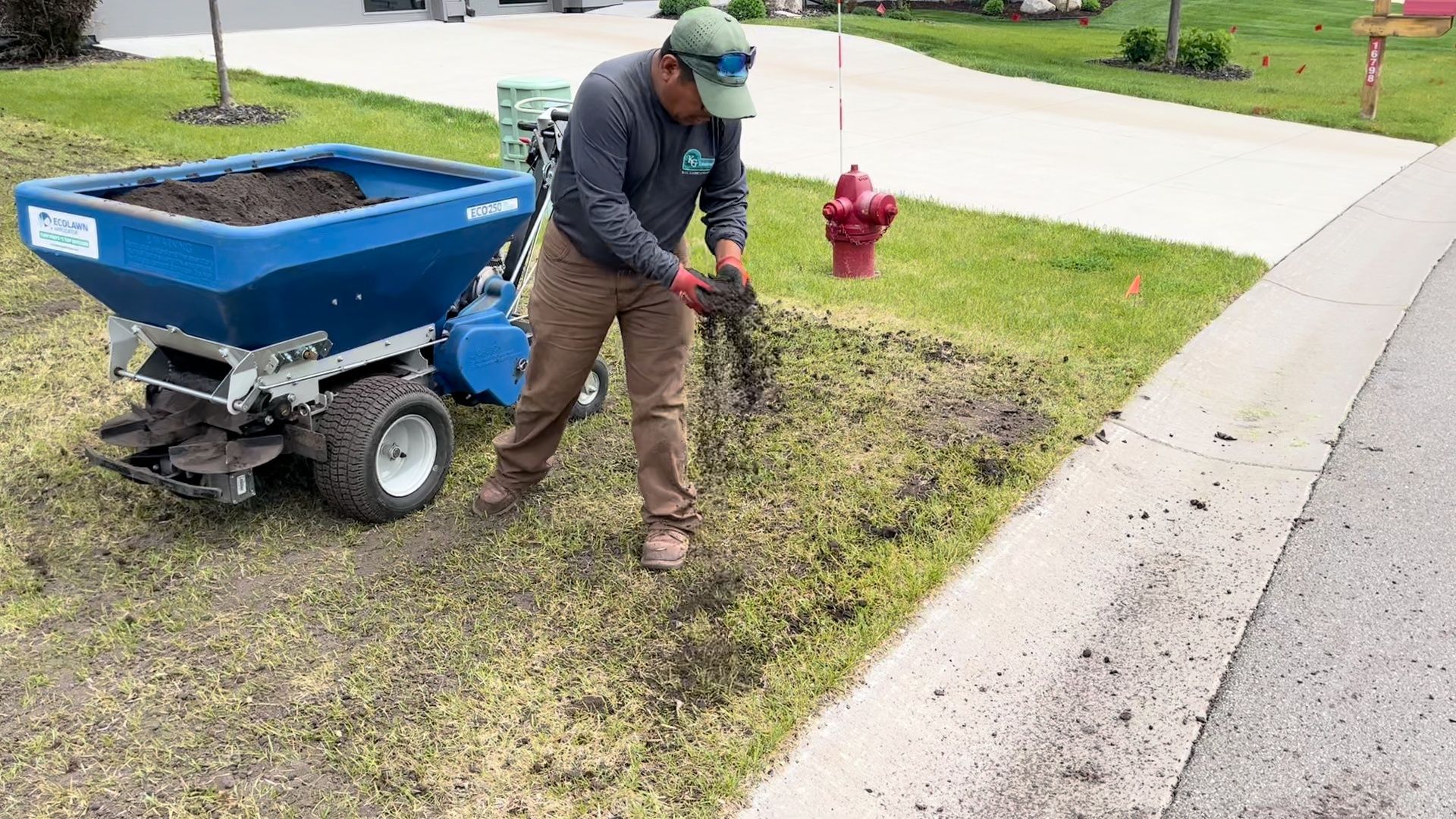
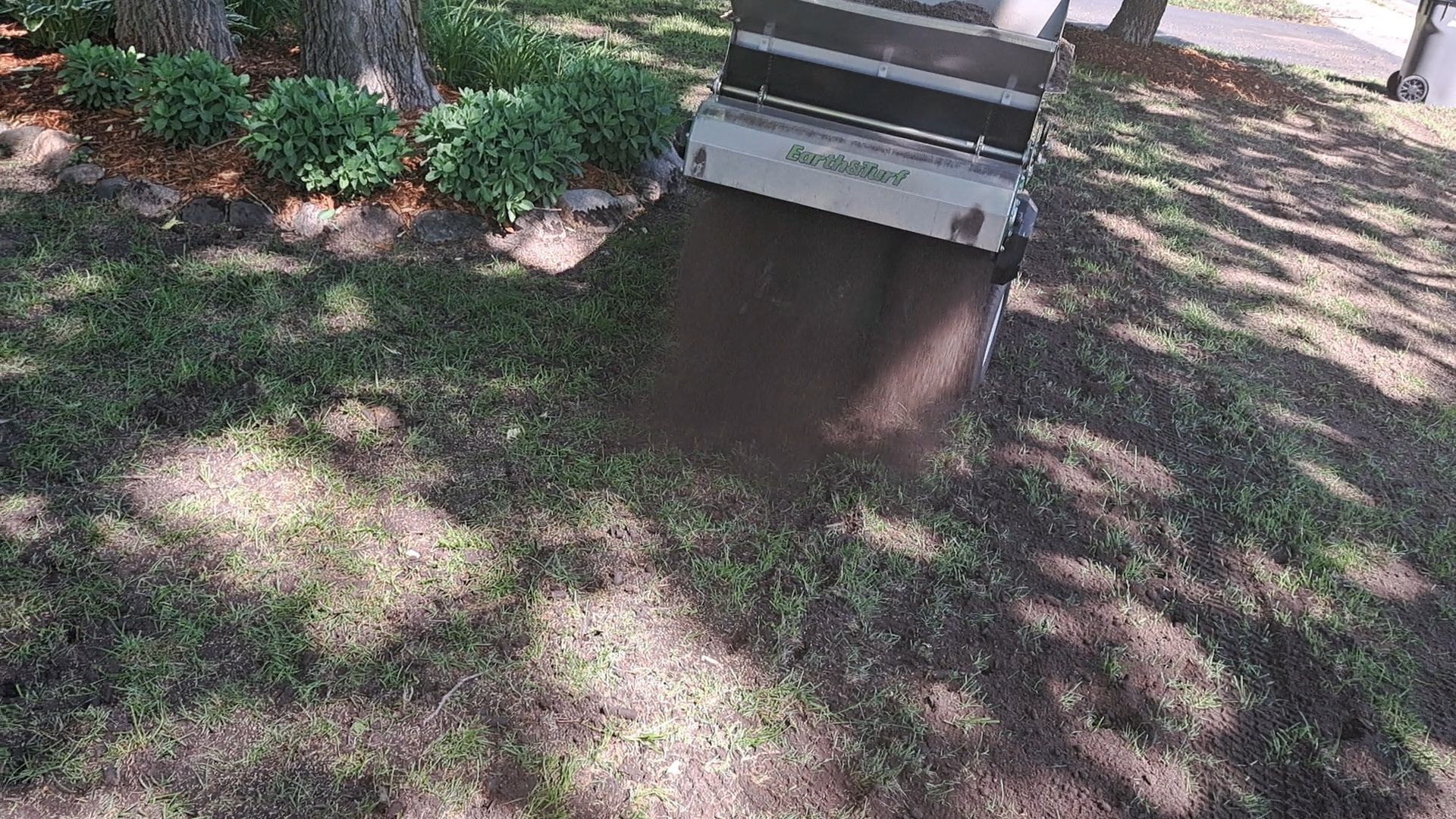
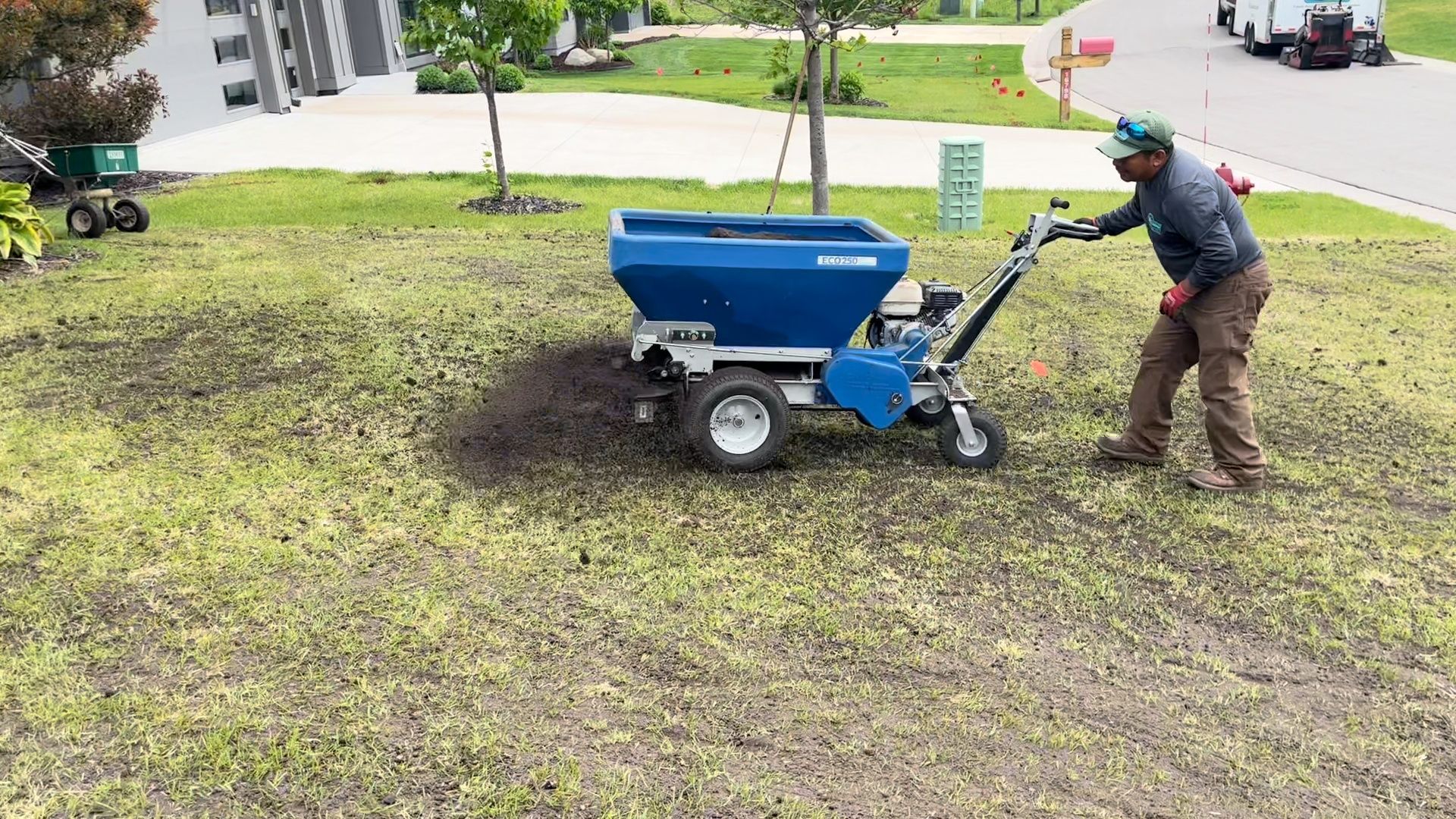
Here's the part most lawn advice skips. Feeding a lawn growing in poor soil is like watering a houseplant potted in gravel. If your lawn stays thin and pale no matter how much you feed it, the soil underneath is usually the reason, and the fix is top dressing and lawn renovation, not another bag of fertilizer. A soil test takes the mystery out and tells you what's actually missing before you spend a dime. We dig into the feed-versus-build-the-soil tradeoff in compost vs. fertilizer, which is worth reading before you commit to a program.
Where Organic Lawn Care Fits In
A healthy lawn and an organic lawn aren't separate goals. They're the same goal reached two ways. Organic lawn care leans on the soil-first thinking above: feed the soil with slow-release, natural inputs and the grass follows. Our organic lawn program uses OMRI certified fertilizers, like corn gluten meal in spring and turkey litter meal later in the season, that feed the lawn while adding the organic matter that builds long-term soil health.
It's worth being honest about the tradeoff, because we'd rather set the right expectation than oversell. Going fully organic means accepting a few more weeds, since there's no certified-organic product that selectively kills broadleaf weeds without harming grass. What you get in return is a lawn built on living soil, no synthetic herbicides, and a yard that's safer for kids and pets. For homeowners who want most of those benefits without giving up weed control entirely, a transitional approach that reduces chemicals rather than eliminating them is often the right middle ground.
Thicken a Thin Lawn With Aeration and Overseeding
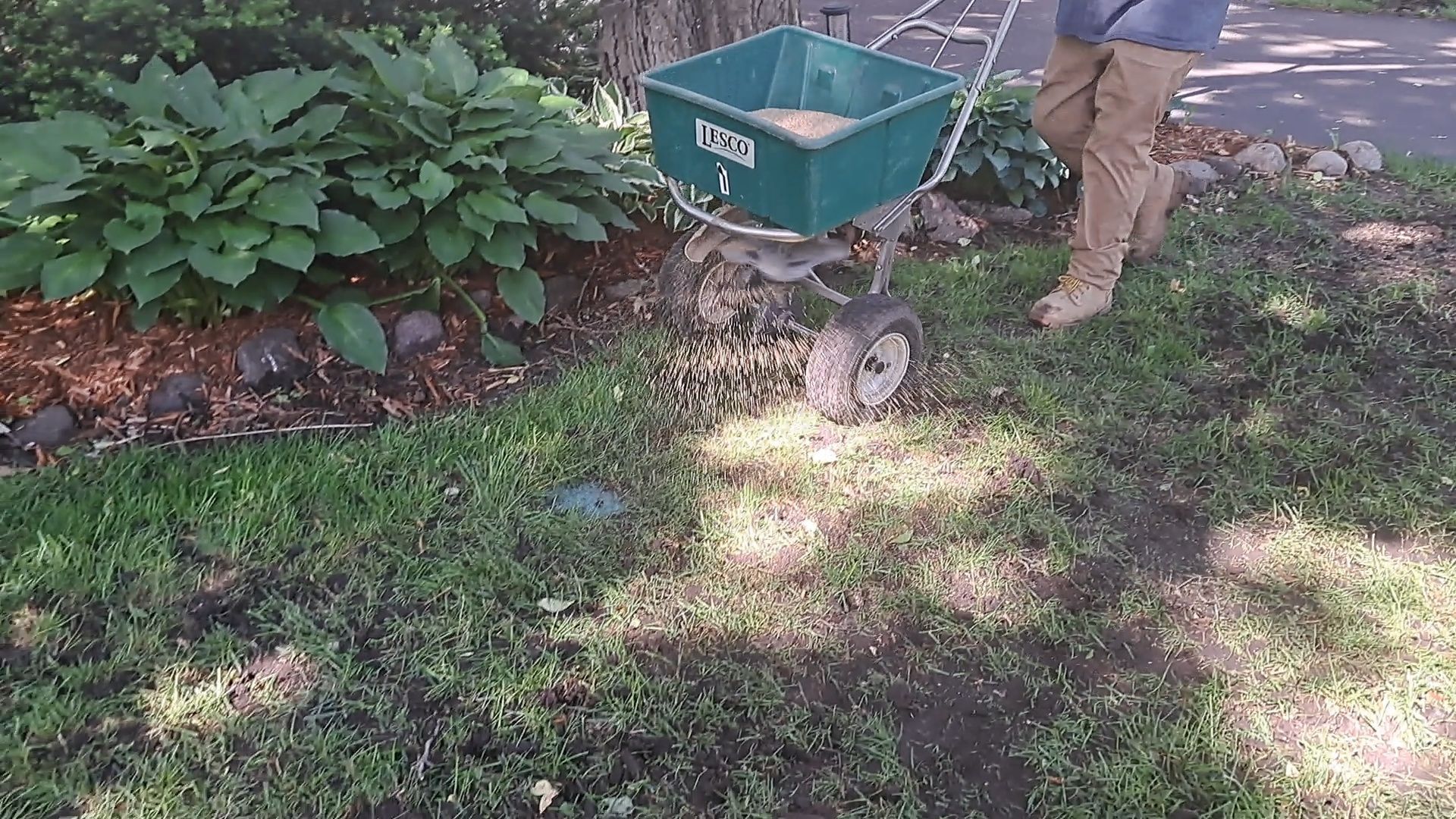
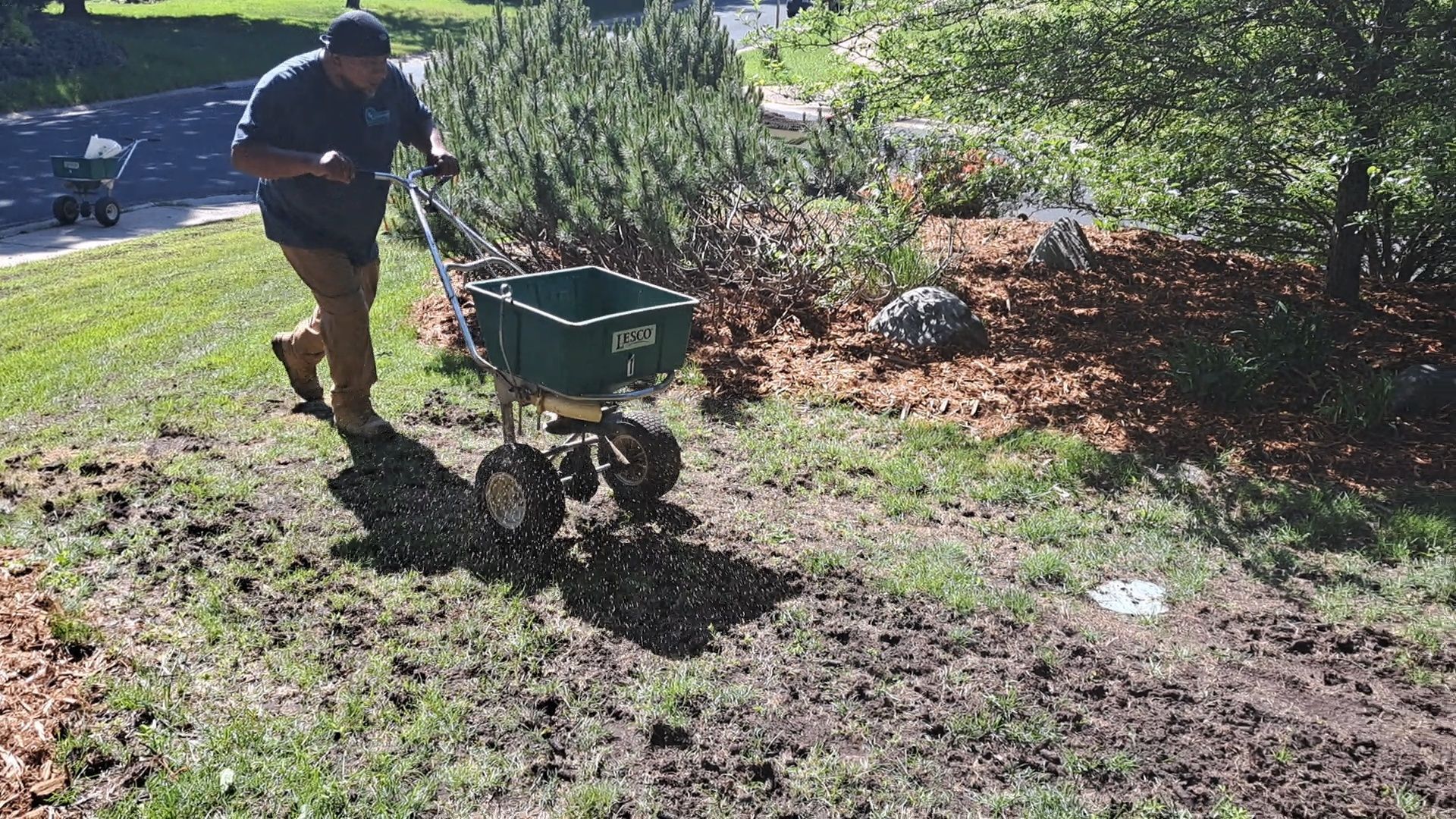
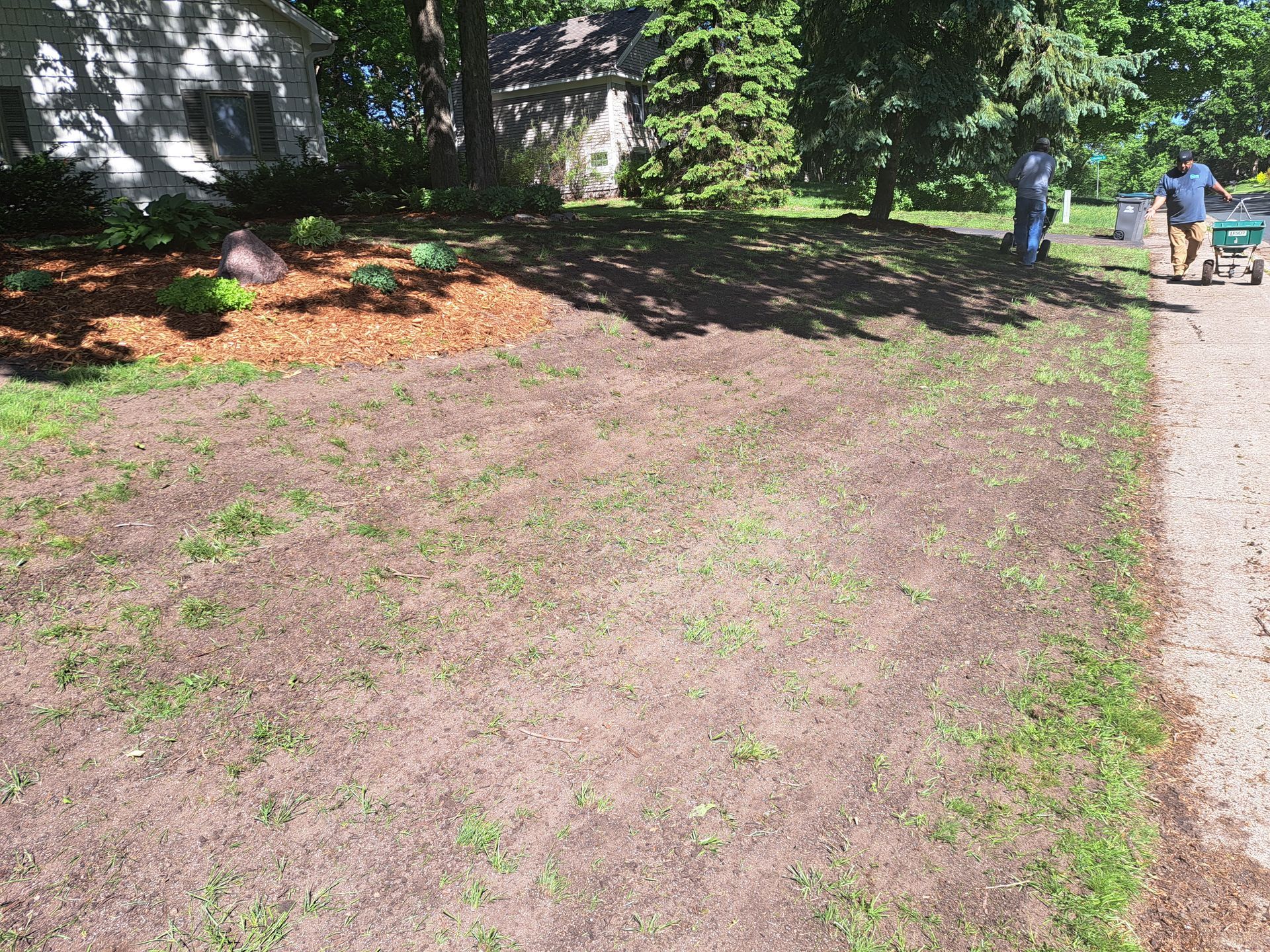
A thick lawn is its own best weed control, and the way you build one is aeration and overseeding. Core aeration and overseeding pulls small plugs that relieve compaction and open the soil, so new seed makes real contact and germinates instead of sitting on top and washing away. Done in late summer, when soil is warm and weeds are fading, it's the highest-return thing you can do for a tired lawn.
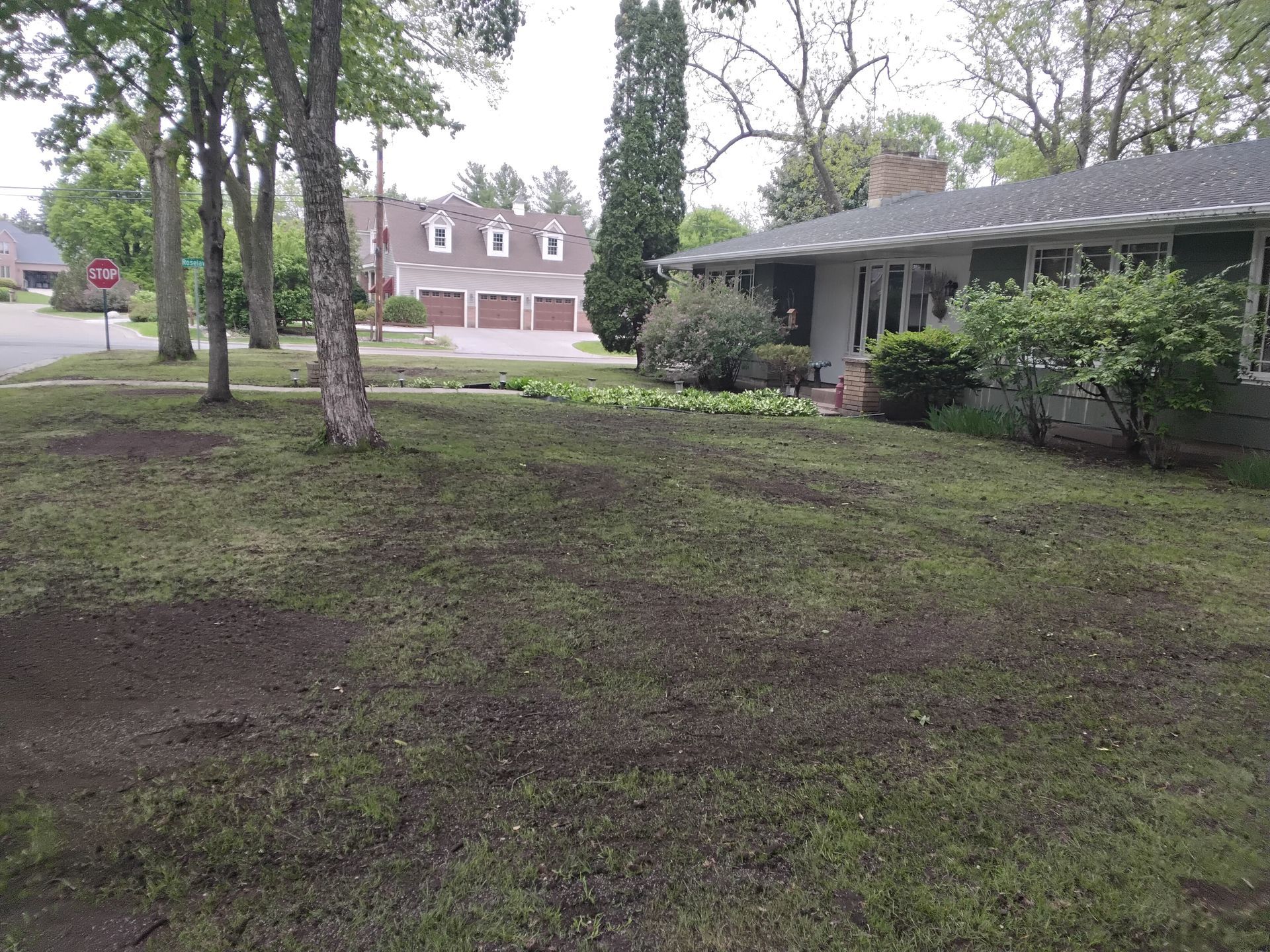
Seed choice matters as much as the work itself. We match the seed to the conditions, leaning on fine fescues for shade and Kentucky bluegrass for sun and density, often blending both. KG Landscape has done this across the Twin Cities since 2003, and as a graduate of the University of Minnesota Landscape Design program, I plan each renovation around what a yard's soil, light, and slope actually allow rather than a generic mix. You can see the approach on a compacted, neglected Minneapolis front lawn we renewed with double-pass aeration and overseeding. For a season-by-season checklist you can keep, Purdue Extension is a solid reference.
None of this requires a complicated program or a shelf of products. Mow high, water deep, feed on schedule, build the soil, and thicken the lawn when it thins. If you'd rather hand the routine off, or you're not sure where your lawn is actually struggling, reach out for a free quote and we'll tell you what it really needs.
Frequently Asked Questions
How often should you water a new lawn versus an established one in Minnesota?
New seed and sod need frequent, light watering to stay moist, often once or twice a day for the first two to three weeks until the grass establishes. An established lawn wants the opposite: deep, infrequent watering of about an inch a week. The switch trips people up. Once new grass has been mowed a few times, taper off to the deep-and-infrequent schedule so roots chase the water down instead of staying shallow and vulnerable to heat.
Should I keep watering my lawn if it goes brown and dormant in summer?
You have two valid choices: keep it green or let it rest. A healthy Kentucky bluegrass lawn can go dormant and brown during a hot, dry Minnesota stretch and bounce back when rain and cooler weather return. If you choose dormancy, give it about a half inch of water every two to three weeks so the crowns survive, and ease off mowing. If you'd rather keep it green, commit to the full inch a week consistently, because flipping back and forth between dormant and green stresses the lawn more than either approach on its own.
Should I leave grass clippings on the lawn or bag them?
Leave them, in almost every case. Clippings are mostly water and break down within days, returning nitrogen and organic matter to the soil. They do not cause thatch, which is a common myth. The exception is when the grass got tall and you're removing long, heavy clumps that could smother the lawn, or when the lawn is diseased. Otherwise, mulching clippings back into the lawn is free fertilizer and one less bag to haul to the curb.
What grass seed works best for shady Minnesota yards?
Fine fescues are the best choice for shade in Minnesota. Creeping red fescue and hard fescue tolerate low light and need less water and fertilizer than other types, which makes them well suited to spots under trees and on the north side of a house. Kentucky bluegrass, by contrast, wants full sun and thins out in shade. Matching the seed to the light is the difference between a shady area that fills in and one you keep reseeding every year.
When is the best time of year to repair a thin Minnesota lawn?
Late summer into early fall, roughly mid-August through September, is the prime window. Soil is still warm enough for fast germination, nights are cooling, and there's less weed competition than in spring. New grass also gets two cool seasons, fall and the following spring, to establish before facing summer heat. Spring repair works in a pinch, but spring seeding competes with crabgrass and the crabgrass preventer most lawns need, so fall is the smarter bet for lasting results.
How do I know if my lawn problem is the soil and not the grass?
A few signs point to soil. If the lawn stays thin or pale despite proper mowing, watering, and feeding, the soil is the likely culprit. Water that puddles or runs off suggests compaction or heavy clay, while a lawn that dries out within a day or two often sits on sand. Dig a small plug and look: healthy soil is dark, crumbly, and full of roots. Hard, pale, or rock-like soil tells you to fix the foundation before spending more on products.
About the Author
I'm Kent Gliadon, founder of KG Landscape and a graduate of the University of Minnesota Landscape Design program. For over 20 years, I've focused on integrating well-planned landscape design and installation work with properly engineered outdoor drainage solutions. I believe discerning homeowners deserve landscaping and drainage renovations that are carefully planned from the beginning, accounting for water movement, grading, soils, hardscaping, and future use, so problems are prevented before they occur. These articles explain how and why specific solutions are implemented and what it takes to maintain properties that truly last.
Ready to Start on Your Next Project?
Call us at (763) 568-7251 or visit our quote page.