Why a Dry Creek Bed with Planting Design Was the Perfect Solution to Fix a Wet Side Yard in Edina
A Side Yard That Couldn't Be Used
A Side Yard That Couldn't Be Used
A wet side yard is one of those problems that gets worse the longer you ignore it. For one Edina homeowner, the situation had gone well past frustrating. The sump pump discharged directly into the side yard, and during wet stretches, the ground stayed so saturated it was impossible to walk on for weeks at a time. Standing water sat with nowhere to go. The view from the kitchen window was the neighbor's house, with no screening and no privacy. It was the kind of space most people just stop thinking about.
But this homeowner didn't want to just fix a drainage problem. They wanted to actually use the space, to look out their kitchen window and see something worth looking at. That meant the solution had to handle water management, create privacy, and improve the view, all without making the yard feel engineered or artificial.
The Challenge: A Wet, Unusable Side Yard
Edina's older neighborhoods have tight lot lines and mature tree canopies, which means side yards often sit in shade with limited air circulation and slow-draining soil. Add a sump pump that runs constantly during spring snowmelt and summer storms, and you get a yard that functions more like a seasonal pond than a usable outdoor space.
This side yard had all of those conditions working against it. The sump pump discharge had no proper outlet, so water pooled across the surface and kept the soil waterlogged long after the rain stopped. The ground was soft enough to leave footprints in for weeks. Nothing was planted intentionally, so the only view from inside the home was an open sightline straight to the neighboring property. It was wet, exposed, and essentially abandoned.
The typical approach would be to address drainage separately from landscaping. Install a pipe, redirect the water, and deal with the rest later. We see this constantly with new construction properties in Bloomington and other suburbs where builders treat grading, drainage, and planting as three unrelated line items. The result is usually a drainage fix that looks like infrastructure, plantings that don't account for water flow, and a homeowner who ends up spending twice to get half the result.
The Design Approach
KG Landscape started this project by looking at it from the homeowner's kitchen window. That's not a typical starting point for a drainage project, but it changed everything about how we designed the solution. If the view from inside the home was the biggest frustration, then the design had to work from that perspective first.
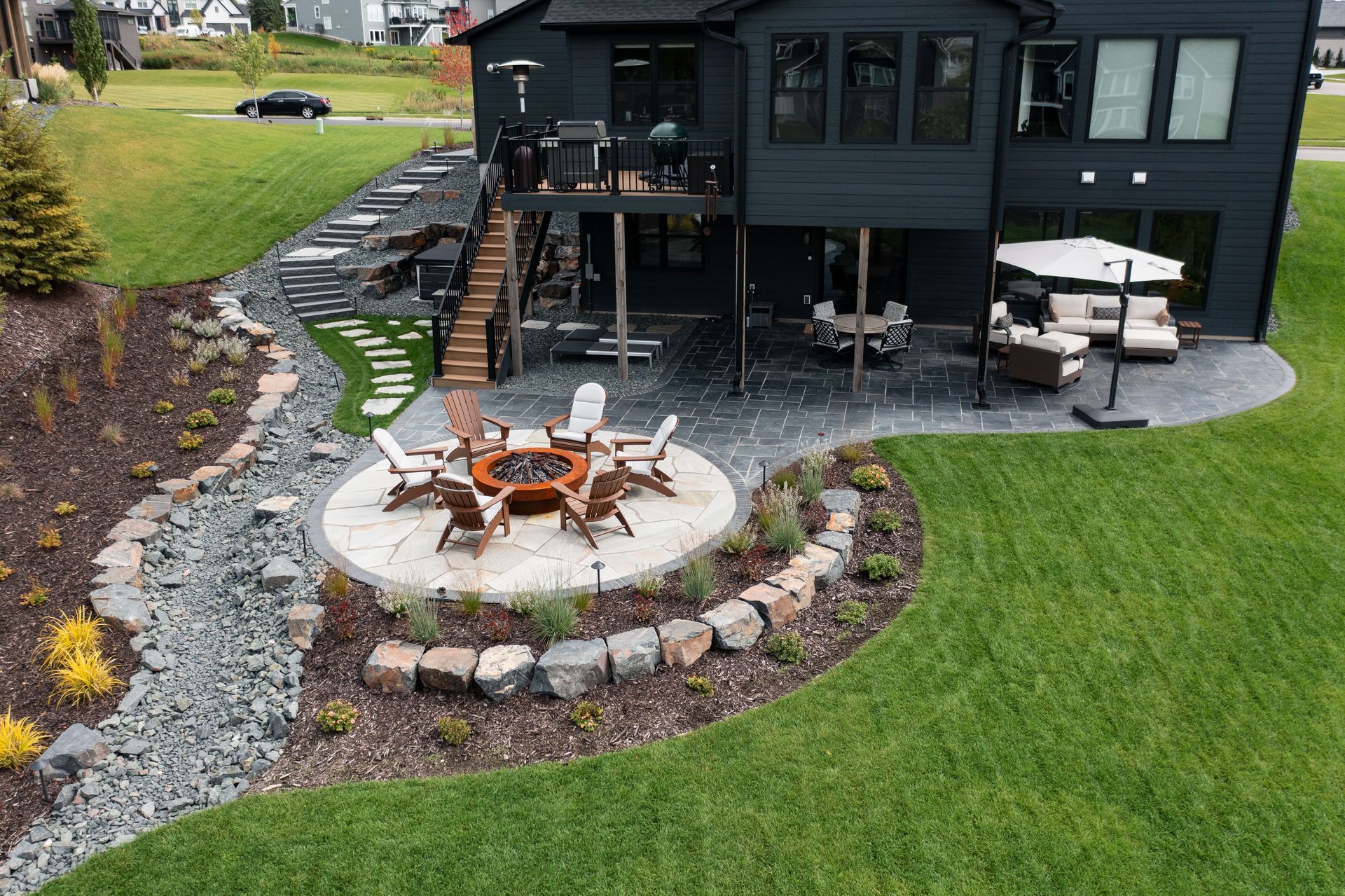
We planned the dry creek bed, screen plantings, and overall grading as one integrated system. The creek bed path followed the natural low point where water already collected. The plantings were positioned to screen the neighbor's house from the exact sightlines the homeowner used every day. The result is a landscape design that solves three problems with one plan, not three separate fixes bolted together. It's the same integrated approach we bring to our Edina landscaping projects and across the surrounding Twin Cities suburbs.
Why a Dry Creek Bed Was the Perfect Drainage Solution
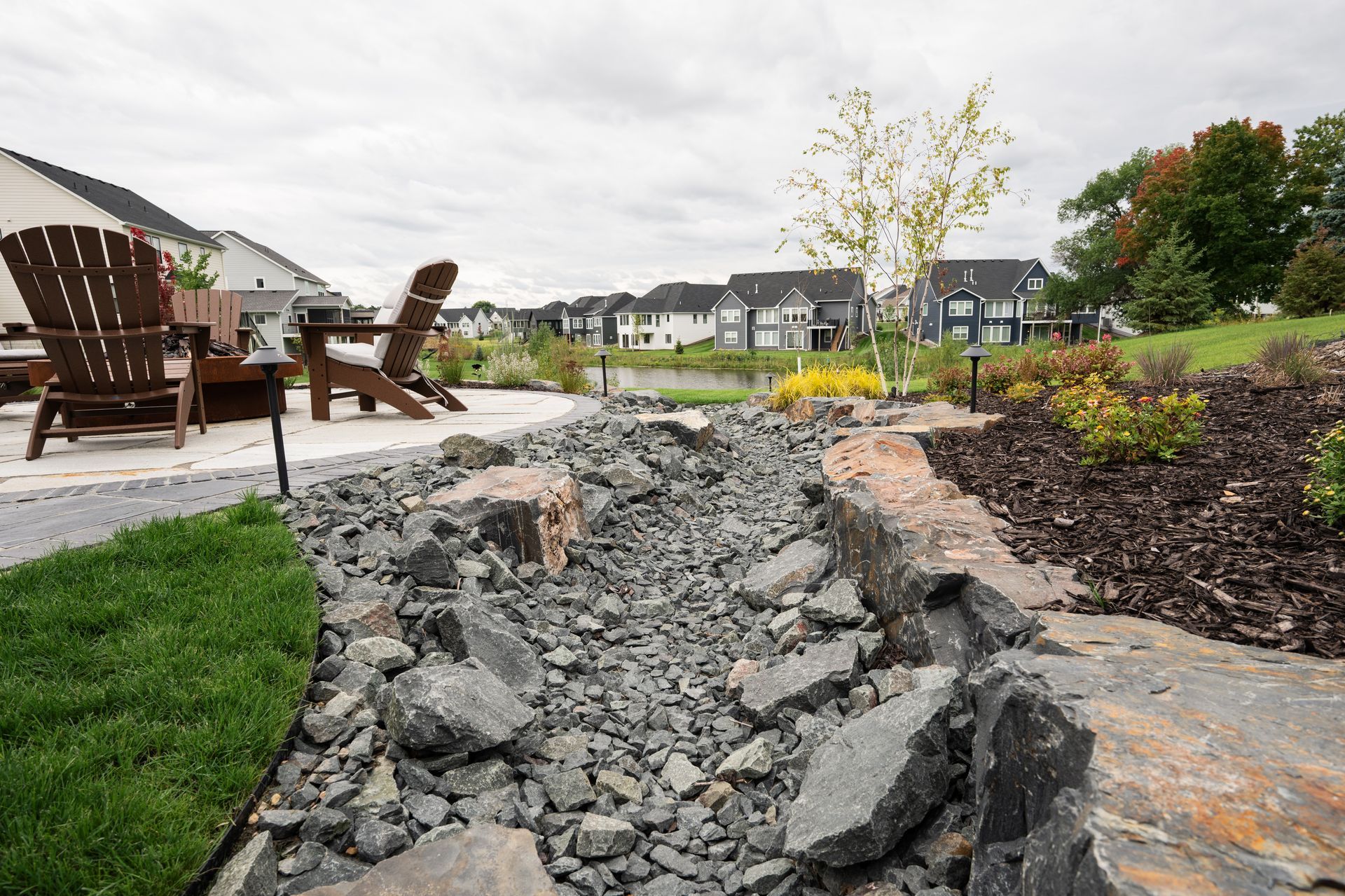
A dry creek bed works by giving water an intentional path to follow. Instead of pooling across a flat surface, runoff and sump pump discharge move through a shallow, stone-lined channel that slows the flow, reduces erosion, and lets water percolate into the soil gradually.
For this yard, a dry creek bed made more sense than a French drain or underground pipe for a few reasons. The sump pump runs frequently, which means the drainage solution needs to handle repeated, concentrated flow, not just occasional stormwater. A buried pipe would move the water but do nothing for the appearance of the side yard. A creek bed handles the same volume while sitting right on the surface as a visible, finished feature. And once it's built, maintenance is minimal. An occasional leaf clearing and a stone check after heavy storms is about all it takes.
Construction starts with excavating a shallow channel along the natural drainage path. We line the base with landscape fabric to keep soil from migrating into the stone and reducing drainage capacity over time. A gravel base layer goes down first for stability and water movement, then progressively larger river rock on top. Stone sizing matters in Minnesota, where the freeze-thaw cycle puts more stress on drainage features than most other climates. Smaller stones wash out during heavy rain, and undersized rock can shift during seasonal ground movement. We use a mix of sizes, with larger anchor stones along the edges and smaller rounded river rock in the channel, to create a bed that looks natural and holds its position through the seasons.
The creek bed connects directly to the sump pump discharge point, giving that water a designed route instead of letting it spread across the yard. We've written about other Edina drainage projects where the same principle applies: give water somewhere to go before it becomes a problem.
Turning Drainage Into a Feature
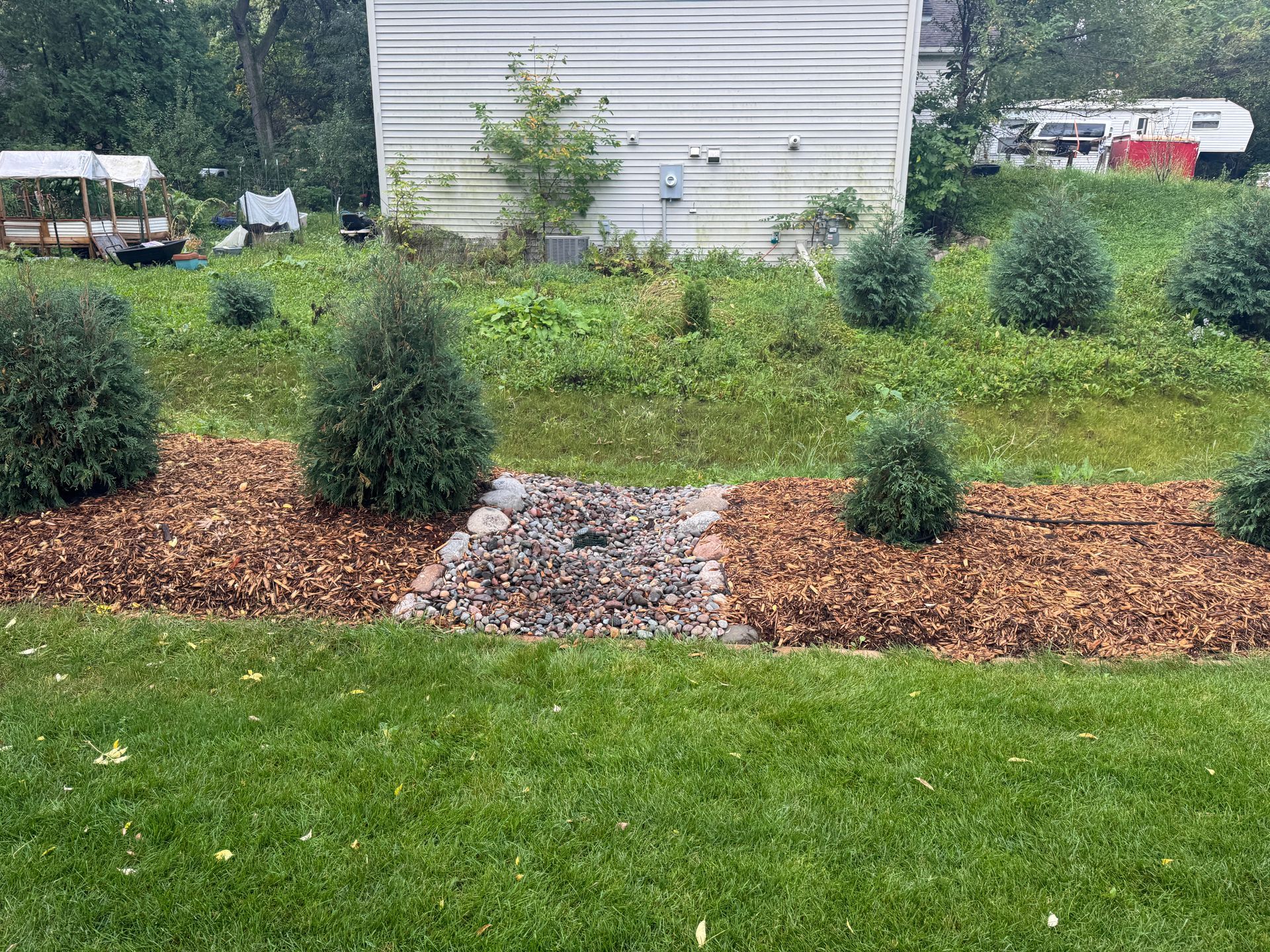
Most drainage solutions are meant to be hidden. The creek bed takes the opposite approach. It becomes a visual feature in the yard, a natural stone path that adds texture and movement to the landscape even when it's dry. It's the same philosophy behind the waste bin enclosure we designed in Plymouth, where a functional problem became a design opportunity. The stone selection, the curve of the channel, and the way it integrates with the surrounding plantings all make it feel intentional rather than utilitarian.
Creating Privacy with Screen Plantings
The second problem was the completely open sightline to the neighboring property. Screen plantings solved this, but the plant selection had to account for the conditions. This is a shaded side yard with wet soil, which rules out a lot of common screening choices.
We used a layered approach, combining evergreen and deciduous species at different heights to build year-round coverage that fills in naturally over time. For wet, shaded conditions in the Twin Cities, plants like red osier dogwood handle saturated soil and partial shade while growing 6 to 9 feet tall, according to the University of Minnesota Extension's native plant guide. Arborvitae provide evergreen structure where drainage is adequate closer to the bed edges. Layering these with lower perennials at the base creates a planting that screens at multiple heights and doesn't look like a wall of identical shrubs.
The planting matures over two to three growing seasons. Faster-growing deciduous shrubs fill in within the first year, while evergreens build density more gradually. By year three, the layered screen reaches full coverage and continues to improve as the root systems establish.
Strategic placement matters as much as plant selection. We positioned the tallest plantings where they would block the most direct sightlines from inside the home, not just from the yard. That meant mapping the views from the kitchen and living areas and working backward to determine where screening would have the most impact.
Improving the View from Inside the Home
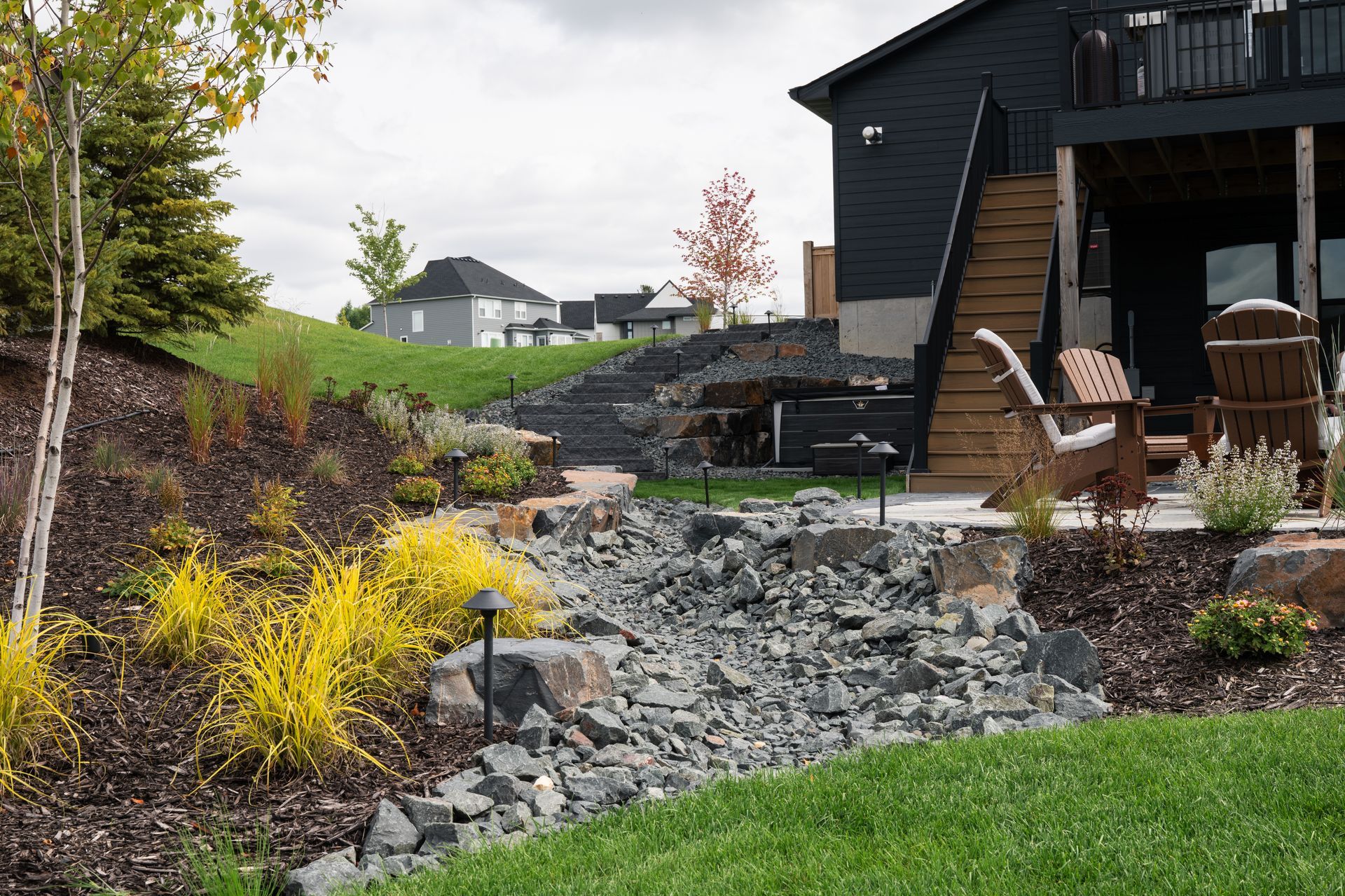
This is where the project came together. Before the work, the homeowner looked out their kitchen window and saw soggy ground, no screening, and the neighbor's siding. After, they see a designed creek bed winding through layered plantings that frame a private, green view. That shift changes how you experience your own home. A kitchen window that used to face a problem now opens onto something you actually want to look at while you're making coffee or doing dishes.
Designing from the inside out is something we apply to a lot of projects, but it was especially important here. The kitchen window is where this homeowner spends most of their time looking at the yard. If the design didn't work from that vantage point, it didn't matter how good it looked standing outside.
Maximizing Previously Unusable Space
A side yard that was literally unwalkable for weeks at a time is now a functional, attractive part of the property. The creek bed handles the water, the plantings provide privacy, and the overall design turned dead space into a feature that increases property value. Side yards are some of the most underused square footage on a lot. For Edina properties where lot sizes don't leave much room to spare, reclaiming that space with a purposeful design makes a measurable difference in both curb appeal and what the home is worth.
Project Highlights
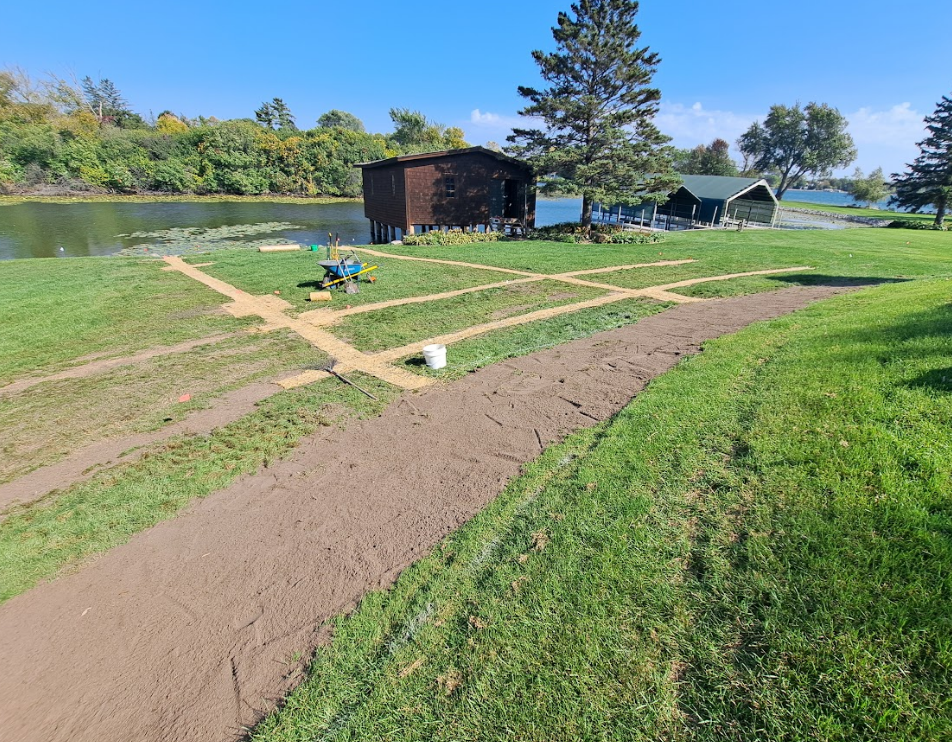
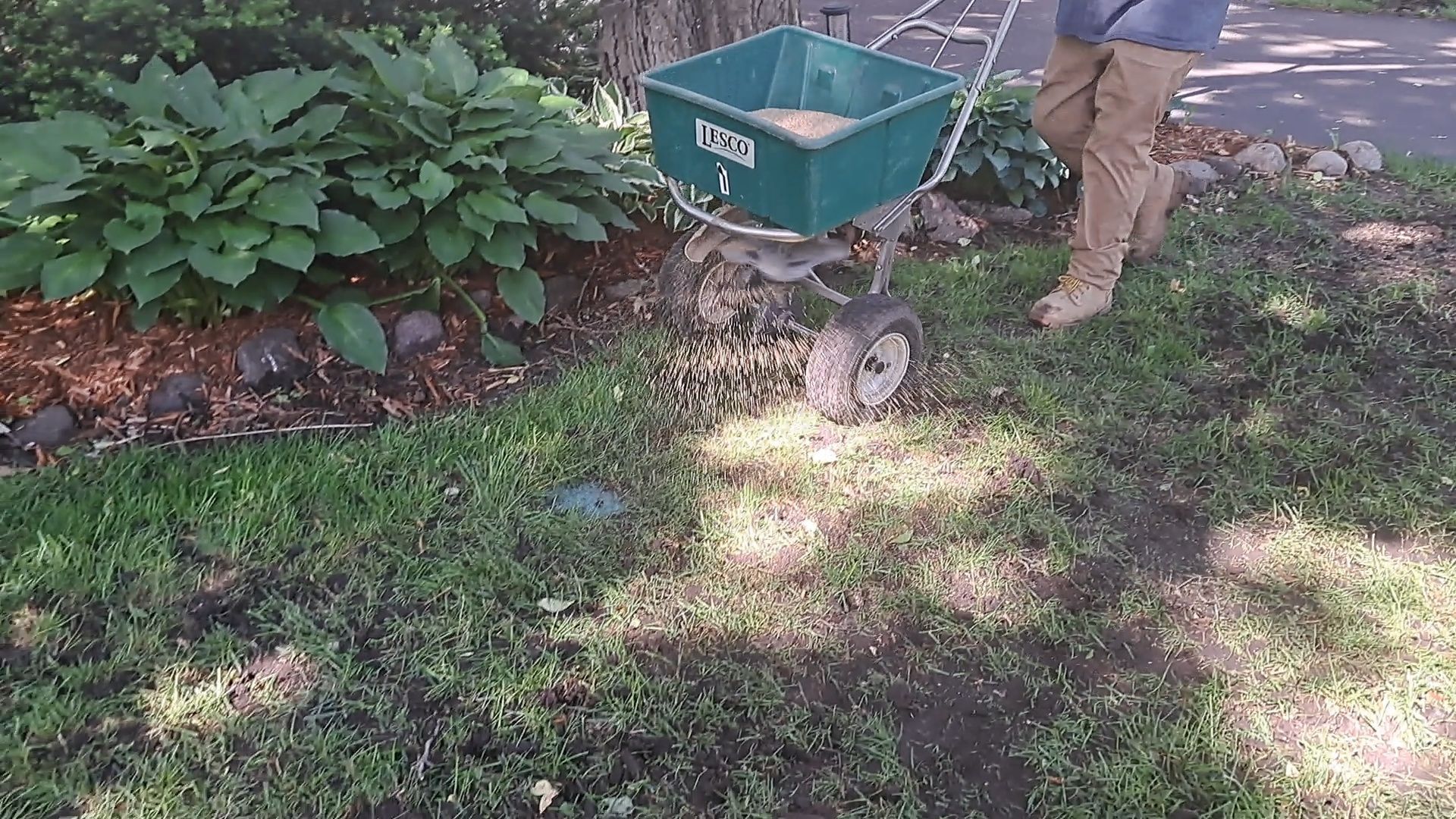
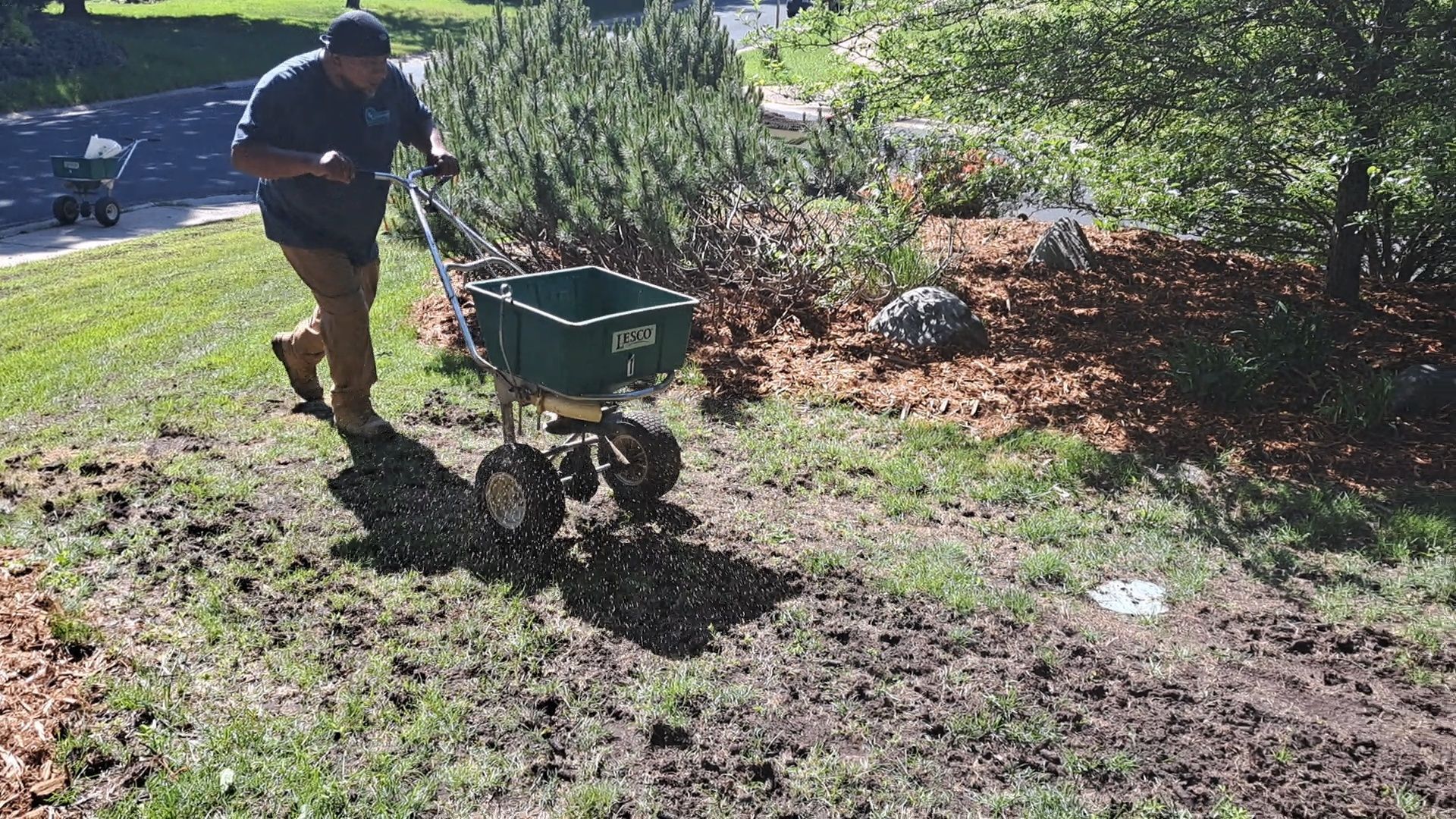
The project photos show the full arc of this transformation. The before images capture the saturated side yard and open sightline to the neighboring property. During installation, you can see the creek bed taking shape with the gravel base and stone placement. The finished photos show the completed creek bed with established screen plantings framing the new view from the home.
Why This Approach Works in Edina
Edina's clay-heavy soils hold water rather than draining it, which is why so many properties in the area deal with standing water after rain or snowmelt. Older neighborhoods with established trees create shade conditions that limit what you can plant. And lot setbacks put neighbors close enough that privacy is a constant concern.
This project addressed all three of those conditions with a single, integrated design. We see the same combination of tight lots, mature shade, and poor drainage on properties across the west metro, from Edina to Mound and everywhere in between. The specific design changes, but the integrated approach stays the same.
Your Side Yard Doesn't Have to Stay That Way
We've been designing and building landscapes across the Twin Cities since 2003, and projects like this one are exactly why we lead with design before we pick up a shovel. If you have a side yard in Edina that stays wet, looks neglected, or offers no privacy, there's a good chance it can be transformed the same way. The first step is understanding what's causing the water problem and designing a solution that handles drainage, screening, and appearance together.
Explore our Edina landscaping services, learn more about our outdoor drainage solutions, or schedule a consultation to talk about what's possible for your property.
Frequently Asked Questions
How much does a dry creek bed cost compared to a French drain?
A dry creek bed and a French drain can fall in a similar price range, but they serve different purposes. A French drain is buried infrastructure designed purely to move water underground. A dry creek bed sits on the surface and manages water while functioning as a landscape feature. For a side yard where appearance matters, a creek bed delivers drainage and design value in one installation. The right choice depends on your property's specific drainage needs, slope, and how visible the area is from your home.
Will a dry creek bed handle sump pump discharge year-round?
Yes, when designed properly. A creek bed sized for sump pump output can handle the repeated, concentrated flow that sump pumps produce during spring snowmelt and summer storms. The key is proper channel depth, adequate stone sizing to prevent washout, and a gravel base that allows water to percolate rather than pool. We design creek beds to manage the volume your sump pump actually produces, not just light rainfall.
What plants work for screening in a shaded, wet side yard in Minnesota?
Several species thrive in the shade and moisture conditions common to Twin Cities side yards. Red osier dogwood is a native shrub that actually prefers wet soil and grows 6 to 9 feet tall, making it an excellent screening plant. Arborvitae provide evergreen structure where soil drainage is adequate. Layering deciduous and evergreen species at different heights creates year-round privacy that fills in naturally over two to three growing seasons.
How long does it take for screen plantings to provide full privacy?
Most screen plantings provide meaningful coverage within the first growing season, especially when you combine faster-growing deciduous shrubs with evergreen structure plants. Full, dense screening typically develops over two to three years as plants reach mature height and width. Proper spacing at installation is critical. Plants placed too far apart take longer to fill in, while plants placed too close compete for light and root space.
Can a dry creek bed work on a flat yard without much slope?
It can, with the right design. A creek bed on a flat yard needs to be excavated deeper at the discharge end to create enough grade for water to move. Even a slight pitch, just a few inches over the length of the bed, is enough to direct flow. On truly flat properties, we sometimes combine a creek bed with a dry well at the terminal end to give water somewhere to go. The design accounts for your yard's actual grade, not an ideal slope that doesn't exist.
Does a dry creek bed require maintenance?
Very little. Occasional leaf removal keeps the stone clean, and you may need to reposition a few stones after a particularly heavy storm. The landscape fabric underneath prevents weed growth through the bed. Screen plantings around the creek bed benefit from standard pruning and seasonal care, but the creek bed itself is one of the lowest-maintenance drainage solutions available.
Ready to Start on Your Next Project?
Call us at (763) 568-7251 or visit our quote page.