Nobody Moved Their Cars at Your Eden Prairie Apartment Complex. Now What?
The Car Problem Every Property Manager Knows
It's 4 AM. Six inches of snow fell overnight. The plow crew shows up at your Eden Prairie apartment complex and finds exactly what they expected: 80 cars still parked in their stalls. Nobody moved. Nobody read the notice. Nobody set an alarm.
This is the single most common complaint property managers have about apartment snow removal, and after more than 20 years of servicing apartment communities, I can tell you it happens at nearly every complex, every storm, all winter long. The crew can't plow what they can't reach, and they can't reach anything buried behind a row of parked vehicles.
We plow apartment communities across the south and west metro, and this conversation comes up before I sign every single apartment contract. I walk the lot with the property manager, count the stalls, look at the overnight occupancy pattern, and talk through what's realistic. The solution isn't one thing. It's a combination of realistic expectations, a two-pass service approach, resident notification systems that actually produce results, and a contract that accounts for the logistics of plowing a lot full of cars. Here's how we handle it.
Why Apartment Lots Are the Hardest to Plow
Apartment complexes are a fundamentally different snow removal challenge than office parks, retail centers, or standalone commercial buildings. The reason is simple: the cars never leave.
An office park lot empties at 5 PM and stays empty until 7 AM. A retail lot clears out by 9 PM. An apartment lot has vehicles in it around the clock. Overnight, which is the prime window for commercial snow removal, is when occupancy is highest. The people who need the lot plowed are the same people whose cars are preventing the plowing.
Fire lanes add another layer. Regardless of how many cars are parked in the lot, fire lanes and emergency access routes must remain clear at all times. This is a code requirement, not a preference. If the fire department can't get a truck through the lot because snow is blocking the lane, the property is in violation. Our crews prioritize fire lanes on the first pass even when the rest of the lot is inaccessible, because that's a non-negotiable item on every apartment contract we manage.
Volume compounds the problem. A 60-unit complex might have 80 to 120 vehicles on site at any given time. A 150-unit complex with surface parking can have 200-plus. More cars means more obstacles, longer service time, and harder cleanup. Snow stacking in apartment lots is also tighter than on most commercial properties. There's less open perimeter space, and the areas available for stacking are often next to sidewalks, building walls, or landscaping. Once stacks reach a certain height, they reduce visibility for drivers backing out of stalls. Hauling snow off site becomes necessary sooner at apartment complexes than at most other commercial property types.
How the Two-Pass Approach Works
The standard solution for apartment snow removal is a two-pass system. It accounts for the reality that cars will be there the first time the crew comes through and that some will leave later in the morning.
The first pass happens early, usually between 3 and 6 AM. Crews clear everything they can reach: driving lanes, fire lanes, empty stalls, guest parking areas, and open sections of the lot. The goal isn't perfection. It's functionality. Residents who need to leave for work can get out. Emergency vehicles can get through. The primary driving routes are passable.
The second pass happens mid-morning, typically between 9 and 11 AM, after commuters have left for work. This is when crews come back and clean up the stalls that were occupied during the first pass. They plow out the now-empty spaces, address the windrows left between rows, and do a more thorough cleanup of areas that were inaccessible earlier.
What happens when cars still haven't moved by the second pass varies by property. Some complexes accept that certain stalls won't be cleared until the vehicle eventually leaves. Others send maintenance staff to re-notify residents. The snow removal crew typically isn't responsible for tracking down individual residents, but the property manager should have a plan for persistent non-compliance.
Between passes, snow stacking continues. The crew pushes snow to designated areas during the first pass and refines the stacks during the second. In heavy winters, stacking areas fill up within a few storms, and hauling becomes the only option. Your contract should address snow hauling as a separate line item with clear pricing, because it will be needed at some point during the season. Our Eden Prairie snow removal service includes hauling provisions in every apartment contract for this reason.
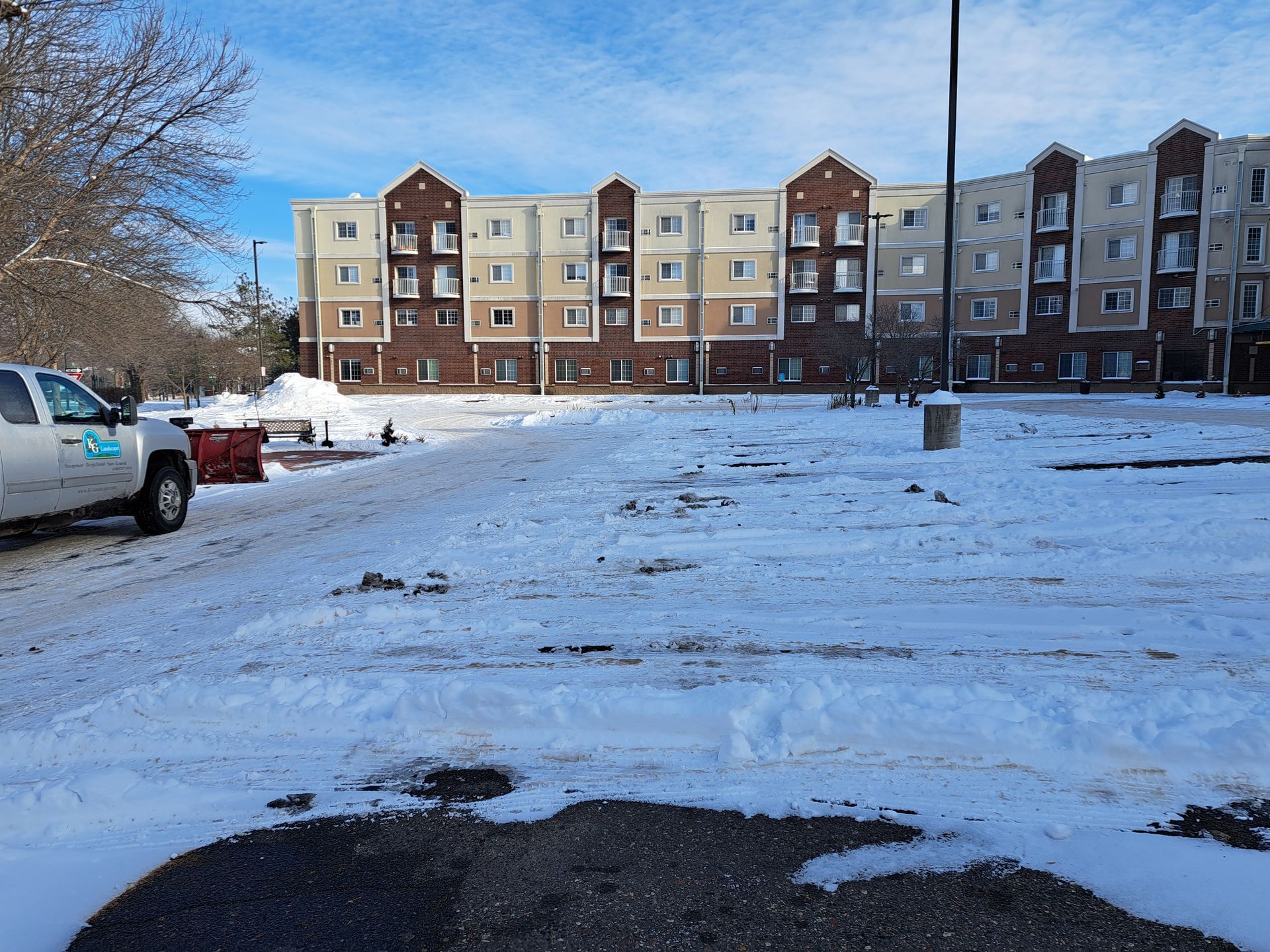
The second pass catches the spots that were blocked by parked cars during the initial plowing in Eden Prairie
Resident Notification That Actually Produces Results
The two-pass approach only works well if a meaningful percentage of residents actually move their cars. That requires notification systems that people see, read, and act on.
The most effective notification is advance notice, ideally 24 hours before the storm. Property managers who send a text or push notification the day before a forecasted storm see significantly better compliance than those who rely on permanent signage alone. The message needs to be specific: which lots will be plowed, what time residents should move by, and where to park temporarily during clearing.
Permanent signage at lot entrances is a baseline, not a solution by itself. Signs that say "Snow Emergency: Move Vehicles by 6 AM" are easy to ignore after the tenth time a resident drives past them. Temporary signage like orange cones with attached notices placed at entrances before a storm gets more attention because it breaks the normal visual pattern.
Vehicle policies need teeth. Some complexes have lease clauses that authorize fines for vehicles not moved during a declared snow emergency. Others have towing provisions. Whether you enforce these policies is a management decision, but having them in the lease gives you options. Without a written policy, you have no mechanism to compel compliance. We've worked with property managers at communities across the metro who've seen dramatic improvements in compliance simply by adding snow removal cooperation language to their lease renewals.
The communication channel that works best varies by community. Younger-skewing complexes respond to texts and app notifications. Older communities may respond better to door hangers or calls. The right channel is whichever one your residents actually check.
Sidewalks, Entrances, and Accessibility
Parking lot clearing gets the most attention, but sidewalks and building access points are where residents are most likely to fall.
Every apartment complex has pedestrian paths residents use daily: the walk from the lot to the building entrance, the path between buildings, the route to the mailbox, the walk to the dumpster, and any outdoor stairways or ramps. These paths need to be cleared and treated independently from the parking lot, and they need attention on a schedule that accounts for when residents are actually using them.
ADA accessibility standards require that accessible routes be maintained in usable condition. For apartment complexes, that means the path from accessible parking stalls to building entrances must be clear, and any ramps or curb cuts along that route must be free of ice and snow. This is a federal requirement, and it applies to winter conditions the same way it applies to permanent building features.
Building entrance areas are high-priority ice management zones. Residents track snow and moisture into vestibules on their shoes, creating slick conditions right at the threshold. Entrance mats help, but they're not a substitute for treating the exterior surface in front of the door with appropriate deicing materials. Our de-icing and salting service addresses these transition zones specifically because that's where the fall risk concentrates.
Stairways and ramps require hand attention. Plow equipment can't clear stairs, and even small utility vehicles may not fit on building ramps. These areas need hand shoveling and ice treatment, often on a separate schedule from the parking lot. They're also where fall risk is highest, so they deserve priority.
Mailbox and dumpster access are easy to overlook in a contract but create real problems when they're not addressed. Mail carriers won't deliver to inaccessible mailbox clusters, and waste haulers may skip a pickup if the dumpster pad is buried. Both situations generate resident complaints that land on the property manager's desk.
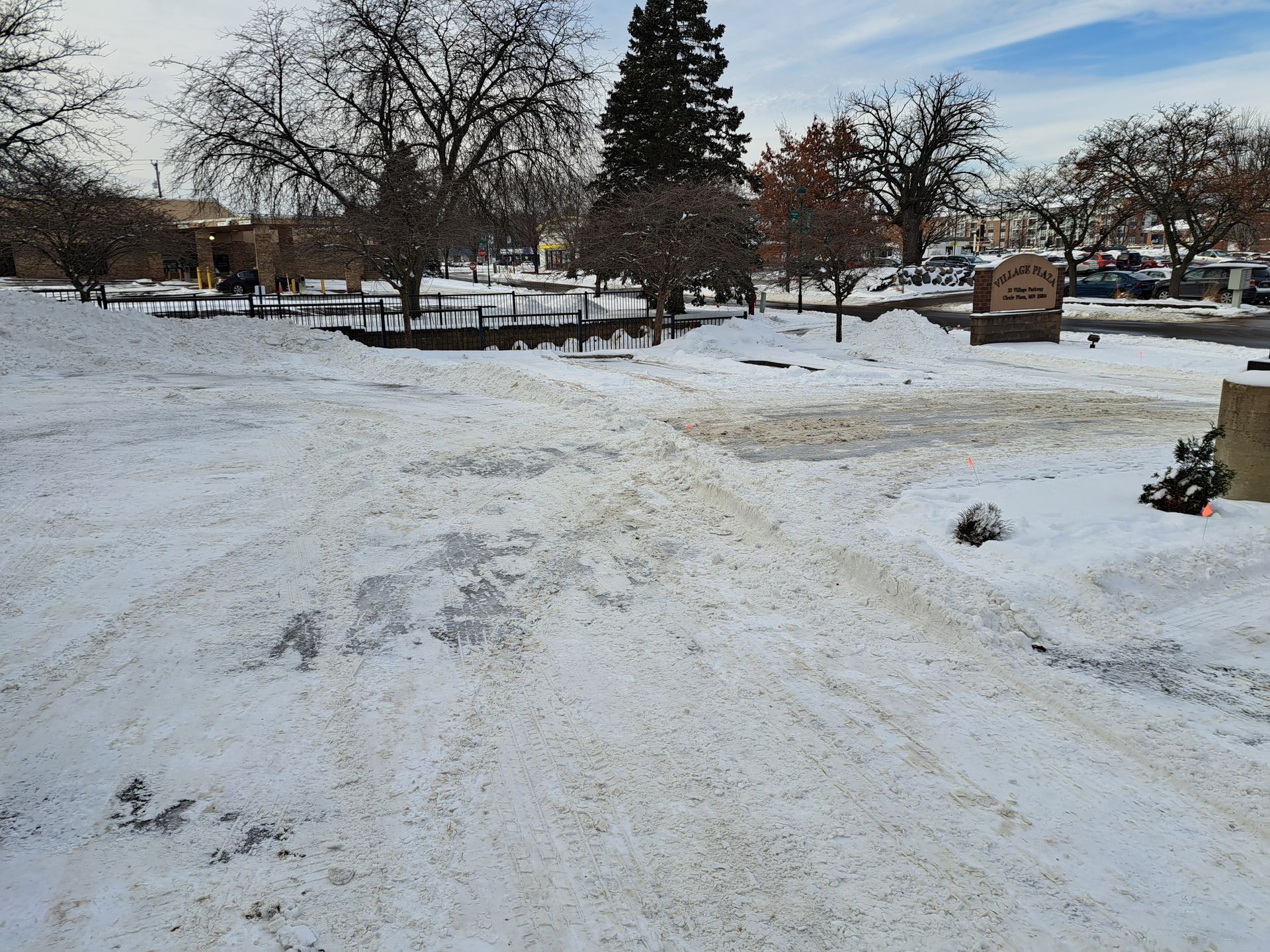
Apartment building entrances and walkways need dedicated clearing for resident safety
What Property Managers Should Expect From Snow Service
Managing snow removal at an apartment complex in Eden Prairie means setting realistic expectations for both the contractor and the residents.
The most important expectation to set is that the lot won't be perfect by 6 AM if cars are everywhere. A two-pass system is standard because it's the only approach that works around resident vehicles. Property managers who expect a spotless lot from a single overnight pass at a fully occupied complex are going to be disappointed, and their contractor is going to be frustrated trying to meet an impossible standard. I have this conversation during the first meeting with every apartment property manager because it sets the tone for the entire season. Honest expectations from day one prevent the February phone calls that both of us would rather avoid.
Documentation should be a contract requirement. Service logs with timestamps, areas completed during each pass, and materials applied give the property manager a record of what happened and when. This is essential for responding to resident complaints ("the lot wasn't plowed" versus "the lot was plowed at 4 AM but your car was there") and for defending against liability claims. The SIMA snow management standards identify service documentation as a top recommended practice for commercial contractors, and it's something we provide for every property we service.
Communication during multi-day events matters more at apartment complexes than almost any other property type. Residents are home. They're watching the lot. They're calling the management office to ask why their neighbor's stall was plowed but theirs wasn't. Having regular updates from the contractor about when the next pass is scheduled reduces the volume of complaints and lets the property manager relay accurate information.
End-of-season condition assessment is a practical step many contracts skip. After five months of plowing, the lot surface may have blade damage, stacking areas may need landscape repair, and curbs or bollards may have been hit. A spring walkthrough with the contractor identifies damage early and establishes whether it's covered under the contract. We do this walkthrough with our apartment clients because winter services and landscape maintenance are connected, and damage from one season affects the other. Some properties need drainage corrections for wet or clay-heavy areas once the snow melts and underlying grading issues reveal themselves.
The same operational challenges that make apartment lots difficult apply at senior living facilities in Minneapolis, where the resident vulnerability is even higher and the liability exposure is more significant. If your property serves an older population, the ice management and accessibility standards need to reflect that.
If you manage an apartment complex in Eden Prairie and need a snow removal plan that accounts for the car problem, contact us to set up a property walkthrough.
Frequently Asked Questions
Can an apartment complex fine residents for not moving cars during snow removal?
This depends on the lease terms. If the lease includes a snow emergency vehicle removal clause, the property manager can issue fines or arrange towing for non-compliant vehicles. Without a written policy, enforcement options are limited. Many complexes add cooperation language during lease renewals, requiring residents to move vehicles to designated temporary parking by a specific time during declared snow events.
How much notice should residents get before snow removal?
The standard recommendation is 24 hours advance notice when storms are forecast. Some properties use a tiered system: advance notice when storms are predicted, and a same-day reminder 2 to 4 hours before crews arrive. The notification method matters as much as the timing. Texts and app notifications reach residents faster than posted signs alone.
What is a two-pass snow removal approach?
A two-pass approach splits removal into two separate visits. The first pass happens early morning and clears everything accessible: driving lanes, fire lanes, empty stalls, and open areas. The second pass happens mid-morning after commuter vehicles have left, cleaning up stalls and areas that were blocked during the first pass. This is standard for apartment complexes because overnight lot occupancy makes a single complete clearing impossible.
Does an apartment complex need separate sidewalk service?
Yes. Sidewalk clearing, entrance treatment, stairway shoveling, and ice management on pedestrian paths are all separate from parking lot plowing. The contract should specifically name every pedestrian area that will be serviced. Sidewalks and walkways are where the majority of slip-and-fall incidents occur at apartment complexes.
Who is responsible for snow removal at an apartment building?
The property owner or management company is responsible for maintaining safe conditions, including snow and ice management. The work is typically contracted to a commercial snow removal company, but contracting it out doesn't transfer the liability. If a resident or visitor is injured on an icy walkway, the property can be held liable regardless of whether a contractor was supposed to handle it. A comprehensive contract with documentation and insurance requirements protects the property manager's interests.
How does snow hauling work at apartment complexes?
When stacking areas fill up, snow has to be loaded into trucks and removed from the property. This is significantly more expensive than standard plowing because it requires additional equipment and labor. Hauling is typically billed per load or per hour and is triggered when stacks reach a pre-agreed height or begin to impede parking, sight lines, or emergency access. Your contract should include hauling provisions with clear pricing.
About the Author
I'm Kent Gliadon, founder of KG Landscape and a graduate of the University of Minnesota Landscape Design program. For over 20 years, I've focused on integrating well-planned landscape design and installation work with properly engineered outdoor drainage solutions. I believe discerning homeowners deserve landscaping and drainage renovations that are carefully planned from the beginning, accounting for water movement, grading, soils, hardscaping, and future use, so problems are prevented before they occur. These articles explain how and why specific solutions are implemented and what it takes to maintain properties that truly last.
Ready to Start on Your Next Project?
Call us at (763) 568-7251 or visit our quote page.