Framing Better Views: Landscape Design and Screen Plantings for Privacy in Wayzata
When the View from Your Yard Is Someone Else's House
Privacy is one of those things you do not think about until you do not have it. For one Wayzata homeowner, the issue was not a fence or a wall. It was what they saw every time they looked out the window or stepped into the yard: a direct, unobstructed sightline to the neighboring property. No buffer. No screening. No separation between their outdoor space and their neighbor's.
The problem was not just visual. It changed how they used the yard. Relaxing on the patio felt exposed. The view from the kitchen window offered no sense of retreat. What should have been a private outdoor space felt like a shared one. The solution needed to do more than block a view. It needed to create a landscape that felt intentional, layered, and worth looking at from every angle, both inside and outside the home.
The Problem: Unwanted Views and Lack of Privacy
Wayzata's residential lots sit closer together than most homeowners expect. Mature neighborhoods with established homes often have lot lines that put houses within clear view of each other, especially along side yards and rear property lines. Fences help in some cases, but a six-foot fence does nothing to screen a second-story window or block sightlines from elevated decks. And in many neighborhoods, fences alone do not match the aesthetic standard homeowners want.
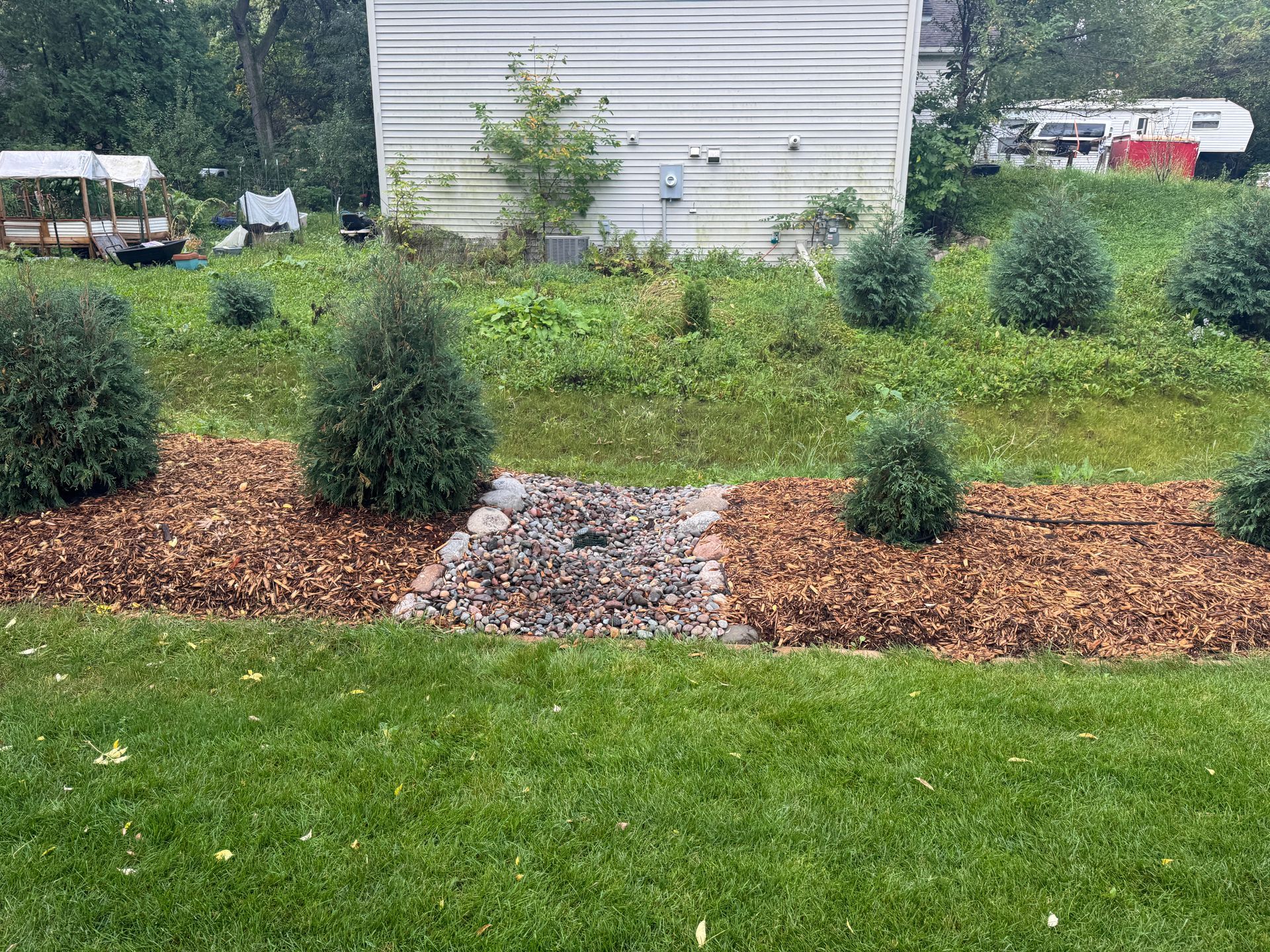
This property had multiple exposure points. The side yard offered a wide-open view of the neighbor's home. The backyard had partial coverage from existing trees, but the canopy was high enough that ground-level views were completely unscreened. Standing water in the lower sections of the yard also limited where plantings could go without first addressing drainage. It was a layered problem that required more than a row of arborvitae pushed against the property line. We see this constantly, including on new construction properties in Bloomington where builders leave homeowners with grading and privacy issues that should have been addressed before the landscaping went in.
A Design-First Approach to Privacy
Most homeowners start with the plants. They pick species they like, place them where the view bothers them most, and hope for the best. That approach creates screening gaps, awkward spacing, and plantings that do not account for how the yard is actually used.
We start with the design. Before selecting a single plant, we mapped every sightline from inside the home and from the primary outdoor living areas. The kitchen window. The living room. The patio. Each one had a different angle and a different screening need. A planting that blocks the view from the patio might do nothing for the kitchen window if it is positioned six feet too far in either direction.
This landscape design process treated privacy as a design objective, not an afterthought. We planned screening, drainage improvements, and ornamental plantings as one integrated system. It is the same approach we bring to Wayzata landscaping projects across the area, and it is why the results hold up years after installation.
Using Screen Plantings to Block Views
Screen plantings work best when they are layered, not lined up. A single row of identical evergreens creates a wall effect that looks artificial and leaves gaps as plants mature unevenly. Layered screening uses plants at multiple heights, mixing evergreen and deciduous species to build depth and year-round coverage.
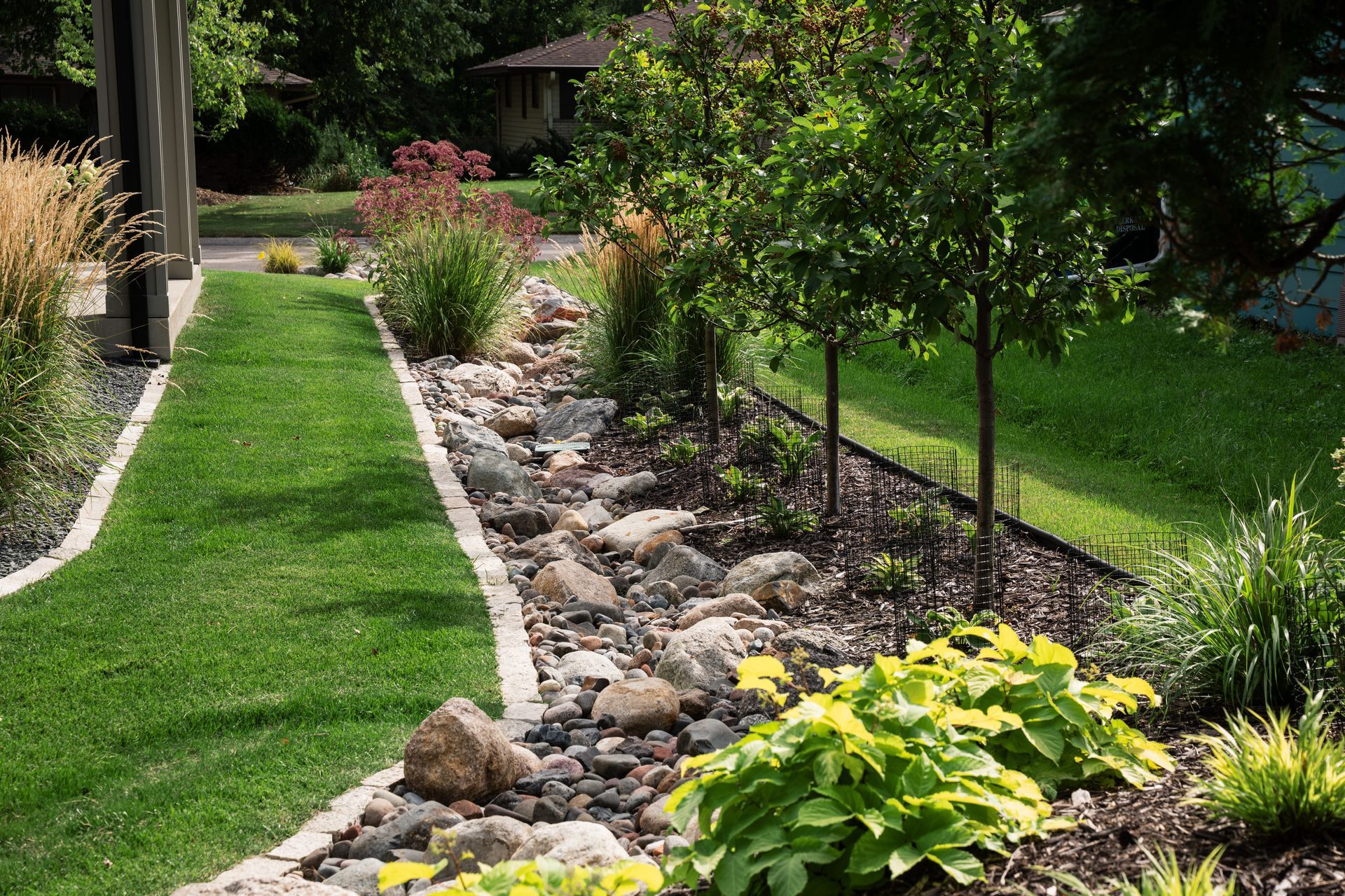
For this property, we used taller evergreens along the most exposed sightlines to provide immediate structure and winter screening. In front of those, mid-height deciduous shrubs fill the visual gap between the canopy and the ground plane. Low perennials at the base soften the transition to lawn and add seasonal color. The result is a planting that reads as a natural landscape feature, not a privacy barrier.
Plant selection for Wayzata needs to account for the specific conditions on each property. Soil type, sun exposure, moisture levels, and wind patterns all affect what will thrive long-term. The Minnesota Department of Natural Resources plant finder is a useful starting point for understanding which native species are suited to local conditions. We select from both native and adapted species depending on what each planting zone requires, always prioritizing plants with proven performance in the Twin Cities climate.
Strategic spacing is just as important as species selection. Plants placed too close together compete for light and root space, leading to thin, leggy growth. Plants placed too far apart leave screening gaps for years. We space based on mature width, not nursery pot size, so the planting fills in naturally within two to three growing seasons without overcrowding at maturity.
Designing the View from Inside Out
This is where most screening projects fall short. A planting can block the neighbor's house from the yard and still do nothing for the view from the kitchen window. If you spend more time looking at your yard through glass than standing in it, the design has to work from the inside first.
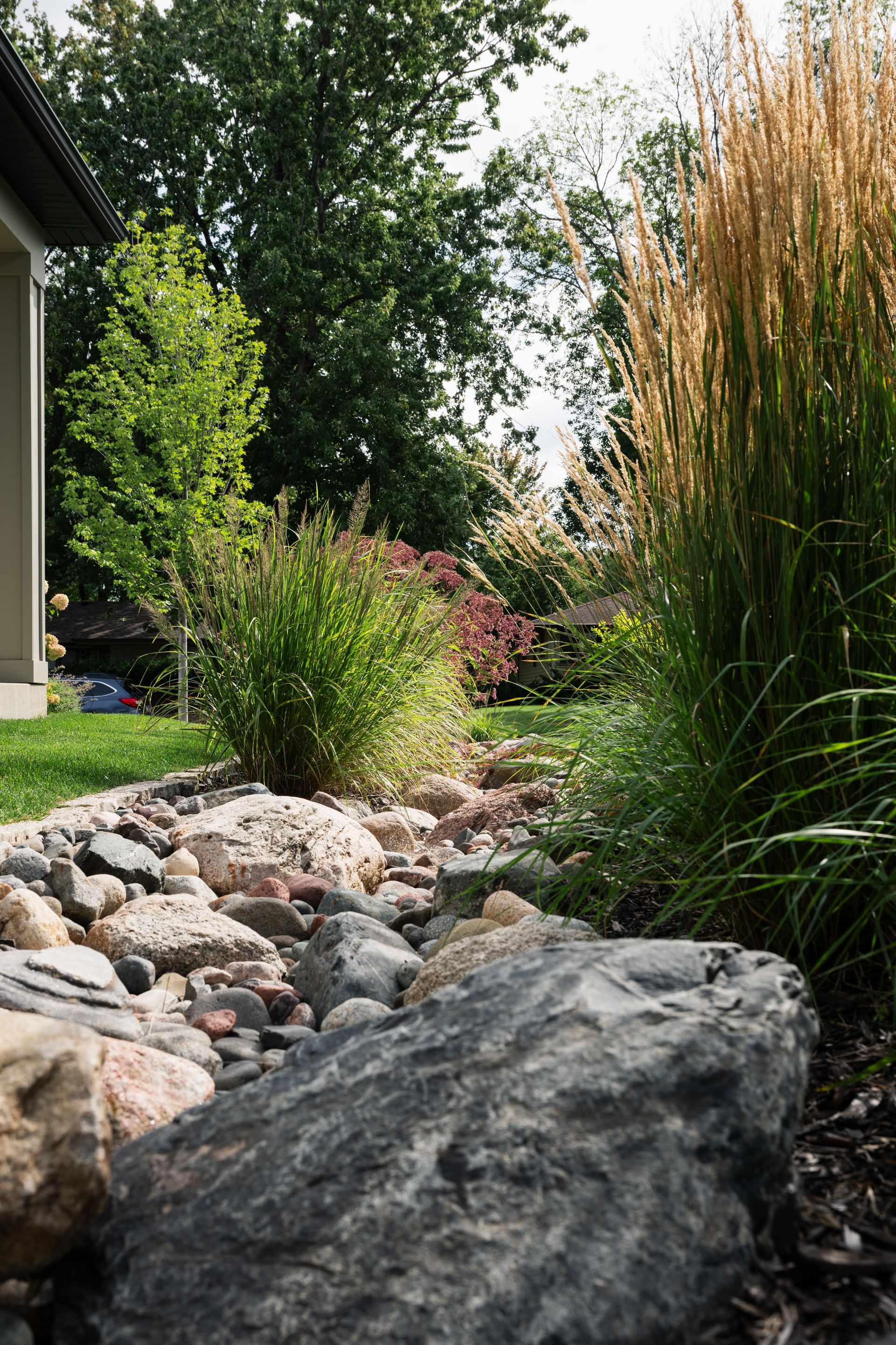
We designed this project the same way we approach drainage projects in Edina: by standing where the homeowner stands and designing backward from what they see. The tallest screening went where it would block the most disruptive sightlines from interior rooms. Ornamental plantings were positioned to create a foreground layer that gives the eye something to land on before reaching the screening behind it. The view from the kitchen shifted from a flat look at the neighbor's siding to a layered composition of textures, heights, and seasonal interest.
Before the project, this homeowner avoided looking out certain windows. After, those same windows became focal points in the home. That kind of shift does not happen by accident. It happens because the design was planned from the vantage points that matter most.
Combining Beauty with Function
The best screen plantings do not look like screen plantings. They look like a designed landscape that happens to provide privacy. That was the goal here: a yard that feels lush, intentional, and complete, with screening built into the overall composition rather than bolted on as a separate element.
The ornamental layers serve double duty. Deciduous shrubs provide spring bloom and fall color while filling the mid-height screening zone. Perennial groundcovers stabilize slopes, reduce maintenance, and add texture at the base of the planting beds. Where the lower yard held standing water, we incorporated subtle grading adjustments and moisture-tolerant species to manage drainage without the need for visible infrastructure. This subtle drainage integration is similar to how we approach drainage solutions in Wayzata, where water management and design work together rather than separately.
The planting plan also accounts for maintenance. Species were selected for manageable growth rates and minimal pruning requirements. A well-designed screen planting should not require constant trimming to maintain its shape or density. The goal is a landscape that improves with age, filling in and maturing over time rather than demanding more work each season. It is the same philosophy behind the waste bin enclosure we designed in Plymouth: every element in the landscape should look better over time, not demand more work.
Project Highlights
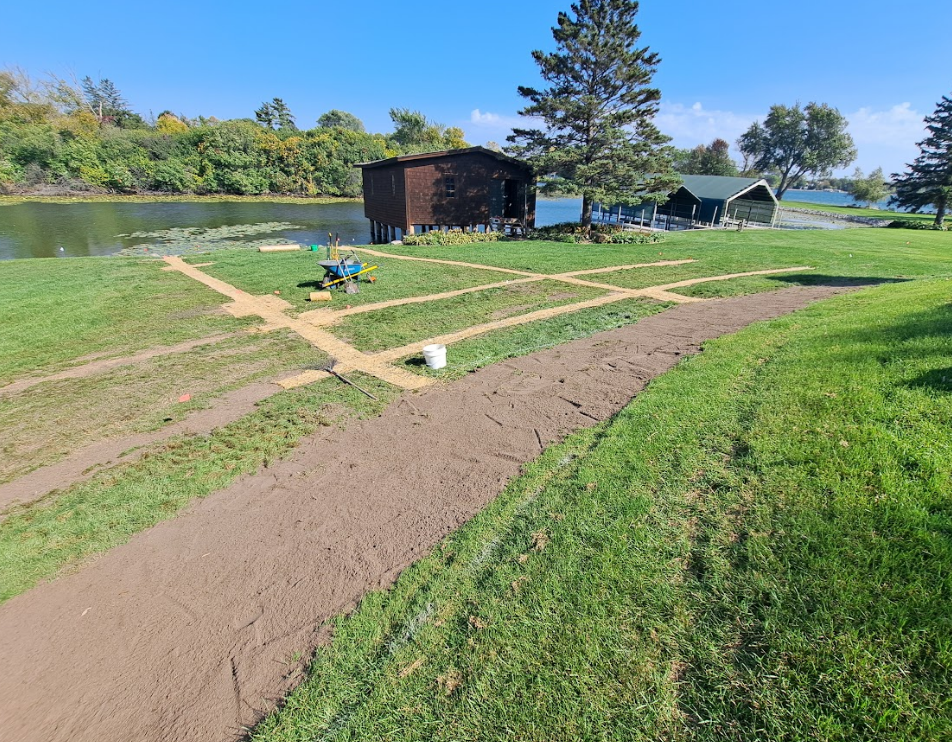
The project photos show the transformation from an exposed, unscreened yard to a layered private landscape. Before images capture the open sightlines to the neighboring property and the flat, unplanted areas that offered no visual interest. Installation photos show the planting layout taking shape with the layered approach visible in the spacing and height variation. Finished photos show the completed design from both yard level and interior window vantage points, demonstrating how the screening works from the perspectives that matter most.
Why This Approach Works in Wayzata
Wayzata properties share a set of conditions that make thoughtful screening essential. Lot sizes are generous but not limitless, so neighbors are close enough that privacy matters. Many homes sit on slopes or have grade changes that create elevated views into adjacent properties, making ground-level fencing insufficient on its own. Established neighborhoods have mature trees that provide canopy shade but little screening at eye level.
These conditions require screening solutions that go beyond plant selection. The design has to account for topography, sightline angles, soil conditions, and the homeowner's actual use patterns. We have seen this same combination of challenges on properties across the west metro, from Wayzata to Excelsior and Orono. The plant palette changes from site to site, but the design-first approach stays the same. And the long-term return is real. Thoughtful screening increases usable outdoor space, improves curb appeal, and raises property value in neighborhoods where privacy is a premium feature.
Your Yard Can Be Private and Beautiful
We have been designing and building landscapes across the Twin Cities since 2003. Privacy screening is one of the projects we do most often, and the results speak for themselves years after installation. The good news is that screening does not have to mean sacrificing beauty. When it is designed as part of the overall landscape plan, it makes the entire property better, not just the sightline it was built to block.
If your Wayzata property has unwanted views, exposed sightlines, or outdoor spaces that feel too open, we can design a solution that handles privacy while creating a landscape you actually want to spend time in. We lead with design before we pick up a shovel, and that is why our screening projects hold up and improve with age. The first step is a site visit to map the sightlines and understand what the yard needs.
Explore our Wayzata landscaping services, see how we approach landscape design, or schedule a consultation to talk about what is possible for your property.
Frequently Asked Questions
How tall do screen plantings need to be to block a neighbor's view?
It depends on the sightline angle, not just the distance between properties. A neighbor on level ground may only need 8 to 10 feet of screening, while a neighbor on a raised deck or second floor may require 15 feet or more. We map the specific sightlines from your property, including views from inside your home, and select species that will reach the height needed at maturity. Layering at multiple heights ensures coverage even as individual plants grow at different rates.
Will screen plantings provide privacy in winter?
They can, with the right plant mix. Evergreen species like spruce, pine, and arborvitae provide year-round coverage since they hold their foliage through winter. Deciduous shrubs lose their leaves but maintain branch structure that still reduces visual transparency. A well-designed screen planting combines both types so that winter screening remains effective even when deciduous plants are bare. The evergreen layer does the heavy lifting from November through April.
How long does it take for screen plantings to fill in?
Most layered screen plantings provide meaningful privacy within the first growing season, especially when fast-growing deciduous shrubs are combined with evergreen structure plants. Full, dense coverage typically develops over two to three years as plants reach mature width and canopy density. Proper spacing at installation is critical. We space based on the mature size of each species so the planting fills in naturally without overcrowding.
Can I plant screening on the property line?
In most Twin Cities municipalities, you can plant on or near the property line, but setback requirements vary. Some cities require plantings to be set back a certain distance from the property line, sidewalks, or utilities. We check local ordinances for your specific property before finalizing the design. Placing plantings slightly inside the property line also ensures you maintain full access for maintenance without encroaching on your neighbor's property.
Do screen plantings require a lot of maintenance?
Well-selected screen plantings require minimal ongoing care. The first two years involve regular watering to establish root systems, especially during dry summer stretches. After establishment, maintenance is limited to occasional pruning to maintain shape, seasonal mulch application, and monitoring for any pest or disease issues. We select species with manageable growth rates specifically to reduce long-term maintenance demands. A properly designed screen should look better each year with less effort, not more.
How is a designed screen planting different from just planting a row of trees?
A row of identical trees creates a flat, one-dimensional barrier that often has gaps at the base, grows unevenly, and looks institutional. A designed screen planting uses multiple species at different heights, textures, and growth habits to create a three-dimensional composition. It provides better coverage, looks more natural, and integrates with the overall landscape design. It also accounts for the specific sightlines on your property, placing the tallest screening where it has the most impact rather than spacing everything uniformly along the property line.
Ready to Start on Your Next Project?
Call us at (763) 568-7251 or visit our quote page.