How Topdressing Restored a Thinning, Uneven Lawn on a Lakefront Property in Minnetonka, MN
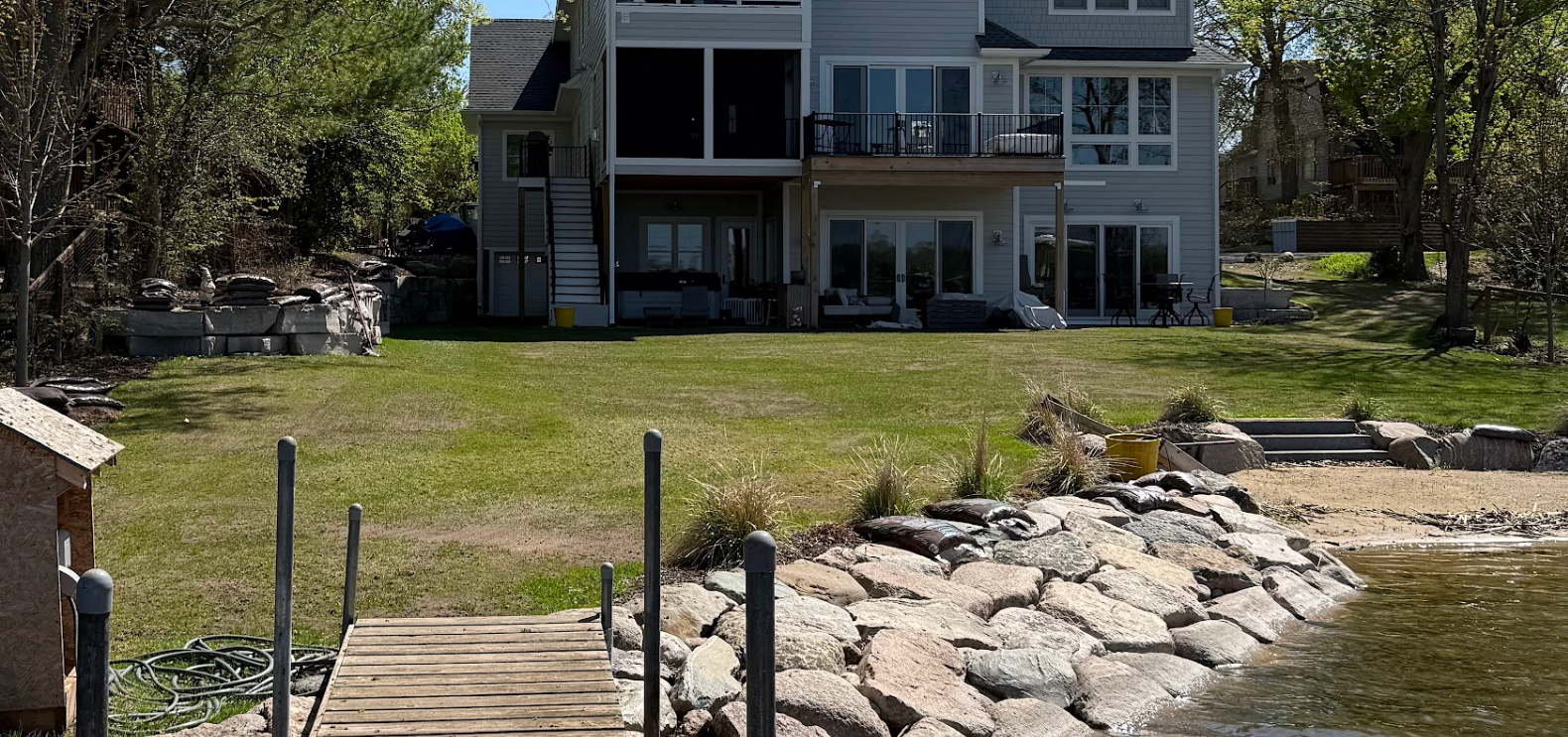
Waterfront property along one of Minnesota's 10,000 lakes can make a summer in the Upper Midwest truly worthwhile. However, in the case of one client in Minnetonka, Minnesota, the deteriorating condition of that lakefront lawn was impeding their ability to enjoy outdoor life to its fullest. Thinning turf, uneven grading, and soft soil with poor drainage were making it difficult for their lawn to hold up to the rigors of regular summertime usage.
Our client needed their back yard to perform two important jobs. The first was to expand their living space by making the yard a viable area for outdoor recreation and relaxing. The second was for the yard to act as a reliable connection between the patio and the beach, something the treacherous soil made difficult. With aging parents enjoying the space as well, a surface with sure footing was a must.
Our team evaluated the lawn and came up with a plan to make our client's yard the functional, resilient, and beautiful space it had the ability to be. By strengthening the soil and increasing turf density through heavy topdressing, we were confident that we would be able to deliver a yard that was fully equipped for both the quiet moments and rambunctious fun of lake life.
The Problem: A Lumpy Lawn with Limited Use
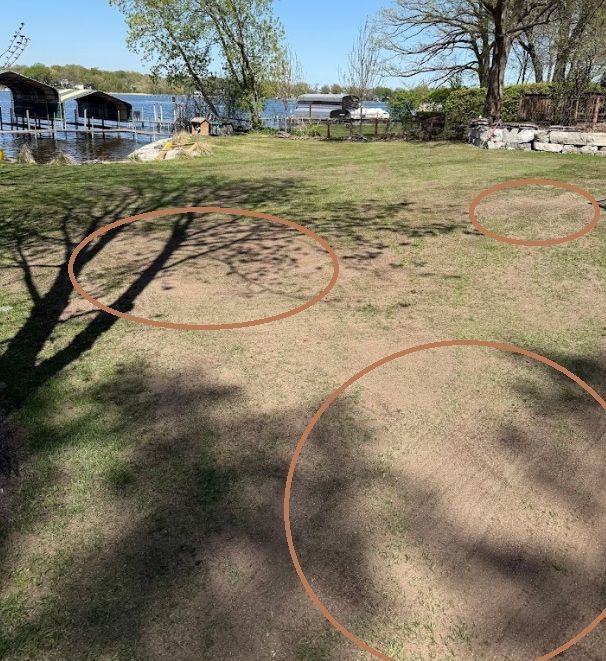
During our initial consultation, our team identified several key issues with the client's lawn. The first opportunity for improvement that we noticed was a common one among our projects: heavily compacted soil, which, over time, had settled into a series of uneven bumps. Such soil also struggles to support healthy grass growth, which was the case here as well. The turf density, riddled with thinning areas, did not meet the homeowner’s expectations—or ours. The bumpiness of the soil also exacerbated the thinness of the grass by causing lawnmowers to scalp the ground, cutting too close and creating even more bare patches.
In addition, the soil retained too much water, making the ground mushy and slippery. This created unstable footing, especially on the path leading down to the dock and beach, making walking and mowing uncomfortable and potentially hazardous for older guests.
Such problems would not resolve themselves on their own. Without proper treatment, these conditions would continue to worsen over time, leading to further turf decline, increased maintenance challenges, and continued safety and usability issues.
Options We Considered: Good, Better, Best
We presented our client with three options for fortifying their lawn. All three would improve turf density, but each would come with its own benefits and drawbacks.
Light Topdressing
The first option we offered was a light topdressing treatment in conjunction with double-pass core aeration and overseeding. In this three-step process, we begin by removing a matrix of small chunks of earth, or "plugs," from the ground in order to increase roots' access to air, water, and nutrients.
Topdressing itself involves the placement of a thin layer of topsoil or other organic matter over the existing ground without performing regrading. A starter fertilizer often helps to catalyze fresh growth as well. Over time, the new seed capitalizes on the nutrient-rich topsoil to yield a dense and healthy lawn.
Finally, overseeding, or the supplementation of existing grass cover without tearing out roots, fills the fresh holes in the soil with new seed, addressing thinning turf.
Topdressing with aeration and overseeding improves the thickness of the turf, but does not address major concerns with grading or evenness. Only a quarter-inch of topsoil is typically involved in a topdressing treatment, which is not enough on its own to smooth out most irregularities in the terrain.
Heavy Topdressing for Lawn Leveling and Soil Improvement
We also presented a variant on our typical topdressing. In this option, we also set out to address the issues we discovered in our initial assessment: lawn leveling, soil compaction, turf density, and long-term soil improvement.
As with light topdressing, this treatment would include double-pass core aeration to relieve compaction as well as overseeding the lawn. However, rather than topdressing with conventional topsoil, we proposed a 60/20/20 blend of sand, soil, and peat to improve soil structure and deliver added nutrients through the addition of peat. Unlike the quarter-inch application of topsoil, we would apply half an inch of this blend, which would go farther in improving drainage and correcting unevenness across the lawn.
Full Lawn Renovation with Soil Improvement
The most drastic approach we put forward would involve essentially starting from scratch. In order to completely eliminate the lumps and slopes that led to poor drainage and uncertain footing, it would be necessary to regrade the entire lawn, once and for all smoothing out the ground and leaving a gentle incline that maximized drainage and protected the home's foundation.
This option would have involved removing the entire existing lawn and rebuilding it from the ground up to achieve the most precise leveling results. Of our three options, a full lawn regrade represents the best possible solution for creating the fully recontoured, smooth, and uniform yard that our client desired.
By starting from scratch, our team would be able to correct every grade transition and contour with a level of precision that simply isn't possible with less invasive methods such as topdressing. No other option can match the consistency, control, and final result achieved through a complete lawn regrading process.
A complete rebuild would begin by stripping the existing lawn of all established turf. After using skid-steer loaders to completely regrade and recontour the lawn for proper leveling and drainage, we would amend and condition the soil to improve structure, compaction, and long-term performance. After a final grading to achieve a smooth, uniform lawn surface, we would finish the lawn with either sod or seed to establish new turf.
The most extensive lawn renovation option is also the most invasive. To perform a total renovation requires the complete removal of the existing lawn and starting turf growth from scratch. This bears a significantly higher cost due to the increased labor, specialized machinery, and soil materials that a full lawn regrading requires. Finishing with sod or a full reseeding adds further cost considerations, along with a longer establishment and recovery period. As thorough as this approach can be, costs and timeline simply make it prohibitive for some clients.
The Solution We Chose: Heavy Topdressing with a Soil-Sand-Peat Blend
After reviewing all three of our lawn repair options with the homeowner, we agreed that a heavy topdressing would be the best solution for correcting the unevenness of this Minnetonka lakefront lawn. The smoothing properties of heavy topdressing would address the bumpy, settled areas by smoothing the lawn surface while double-pass aeration and overseeding would sufficiently address the soil compaction, poor soil quality, and low turf density of the lawn.
Unlike a full lawn renovation, heavy topdressing would be able to correct the uneven grade without the disruption or added expense of stripping and reseeding the entire lawn or installing sod. Further complicating a full renovation was the irrigation system that was already in place. To undergo a full renovation would have required additional modifications to the existing irrigation system to accommodate the major grade changes a regrading would impose, such as resetting irrigation heads and valve boxes.
From a cost perspective, heavy topdressing provided a far more efficient solution. The quote for topdressing on this lawn fell in the mid-thousands, while a full lawn renovation with new sod would have cost in excess of $10,000. This made heavy topdressing the most effective long-term solution. Not only would this process meet the client's expectations for a revitalized lawn, it would also minimize downtime and expenses, allowing them to enjoy the lawn sooner than they would have with a full renovation.
How We Performed a Heavy Topdressing Service in Minnetonka
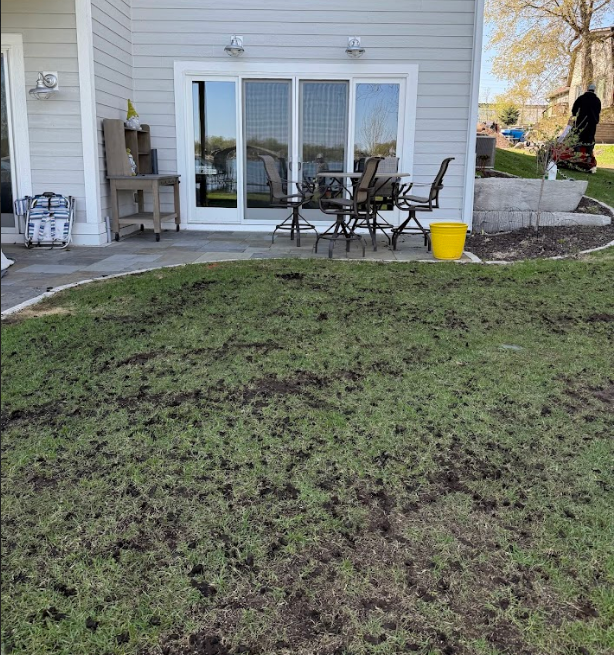
We began with double-pass core aeration to relieve soil compaction. While this soil did not suffer from the clay-heavy composition that typically leads to compaction in Minnesota yards, it still benefited from aeration and the opportunity to allow more air and water into the soil.
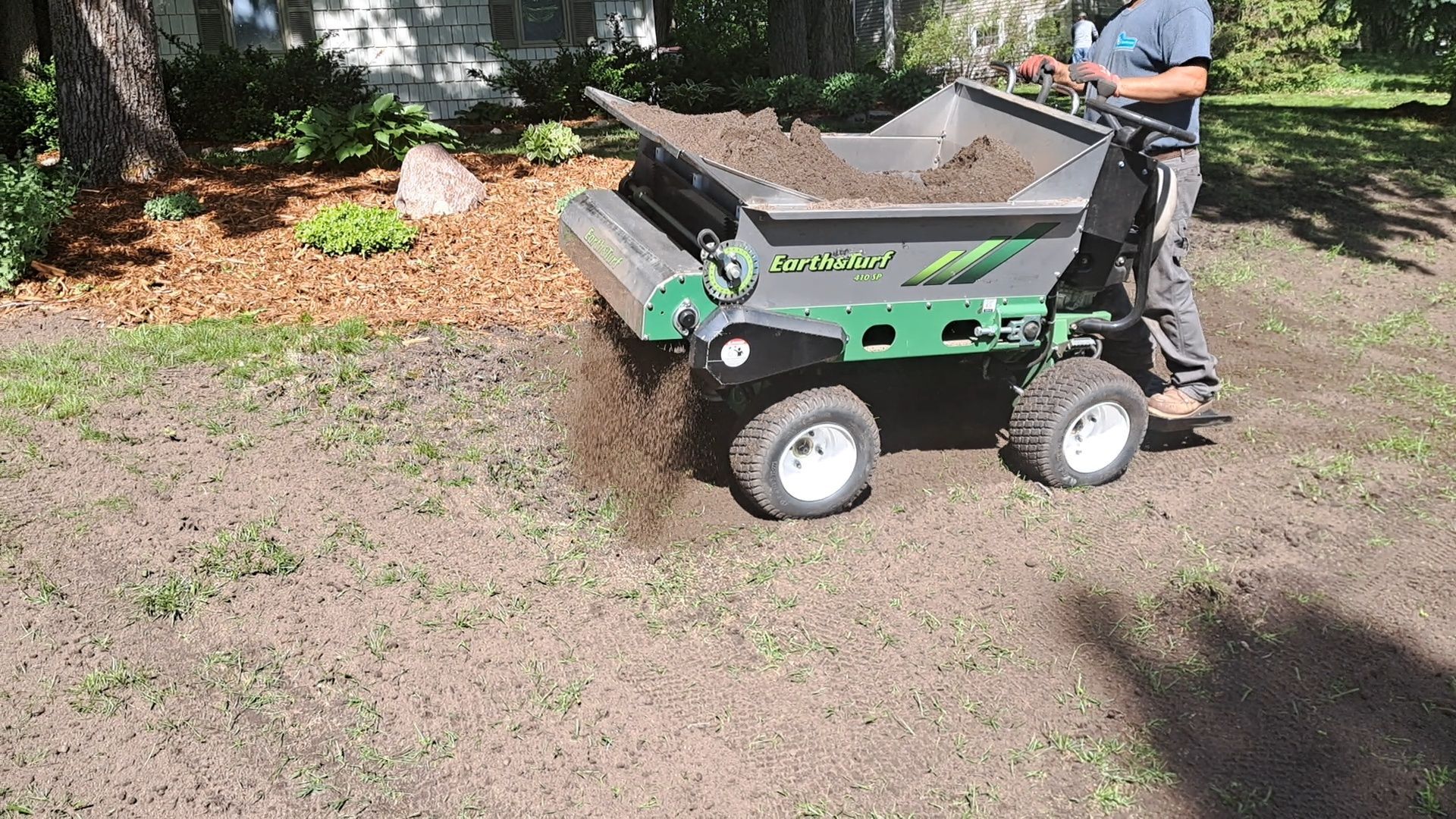
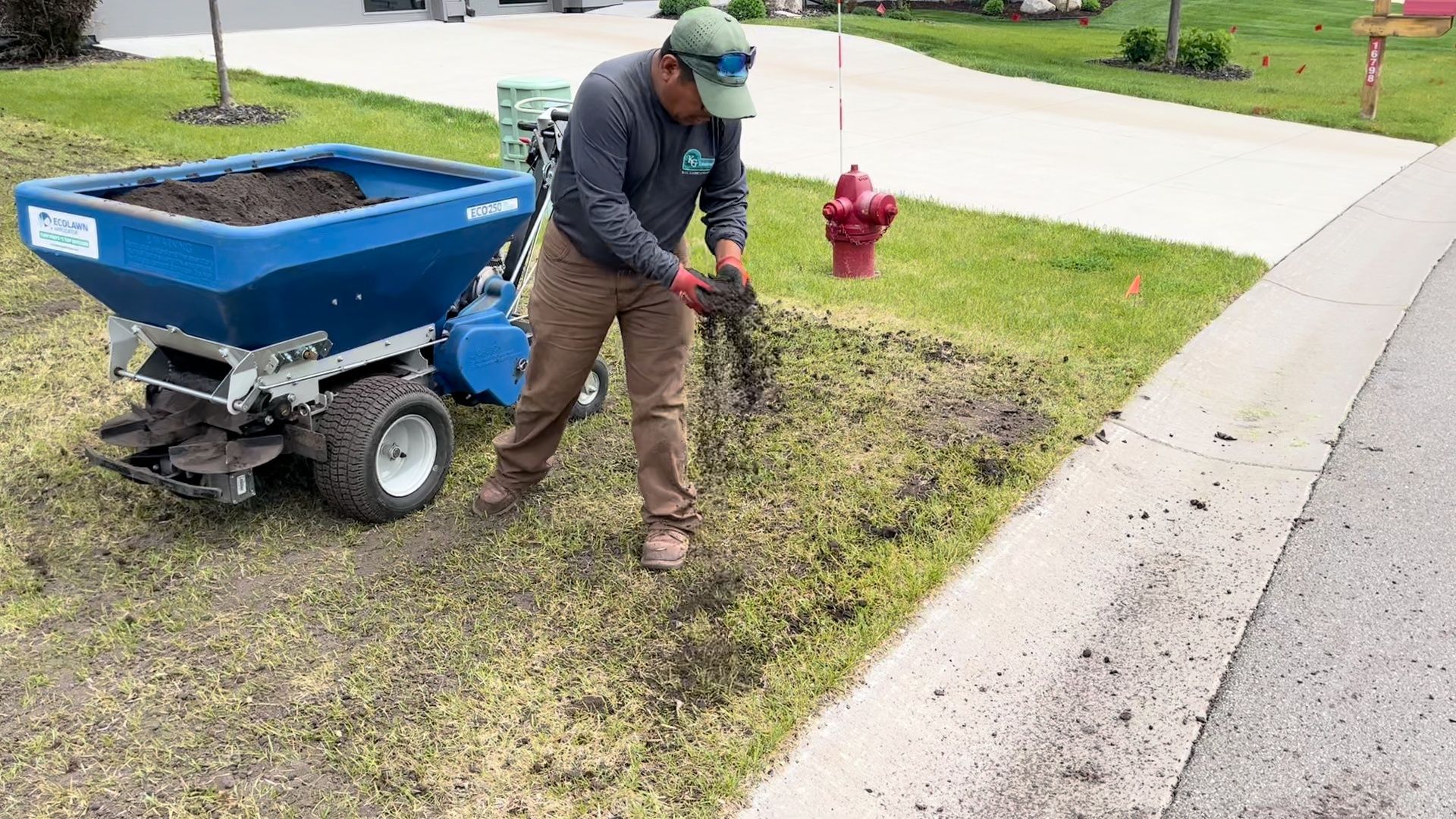
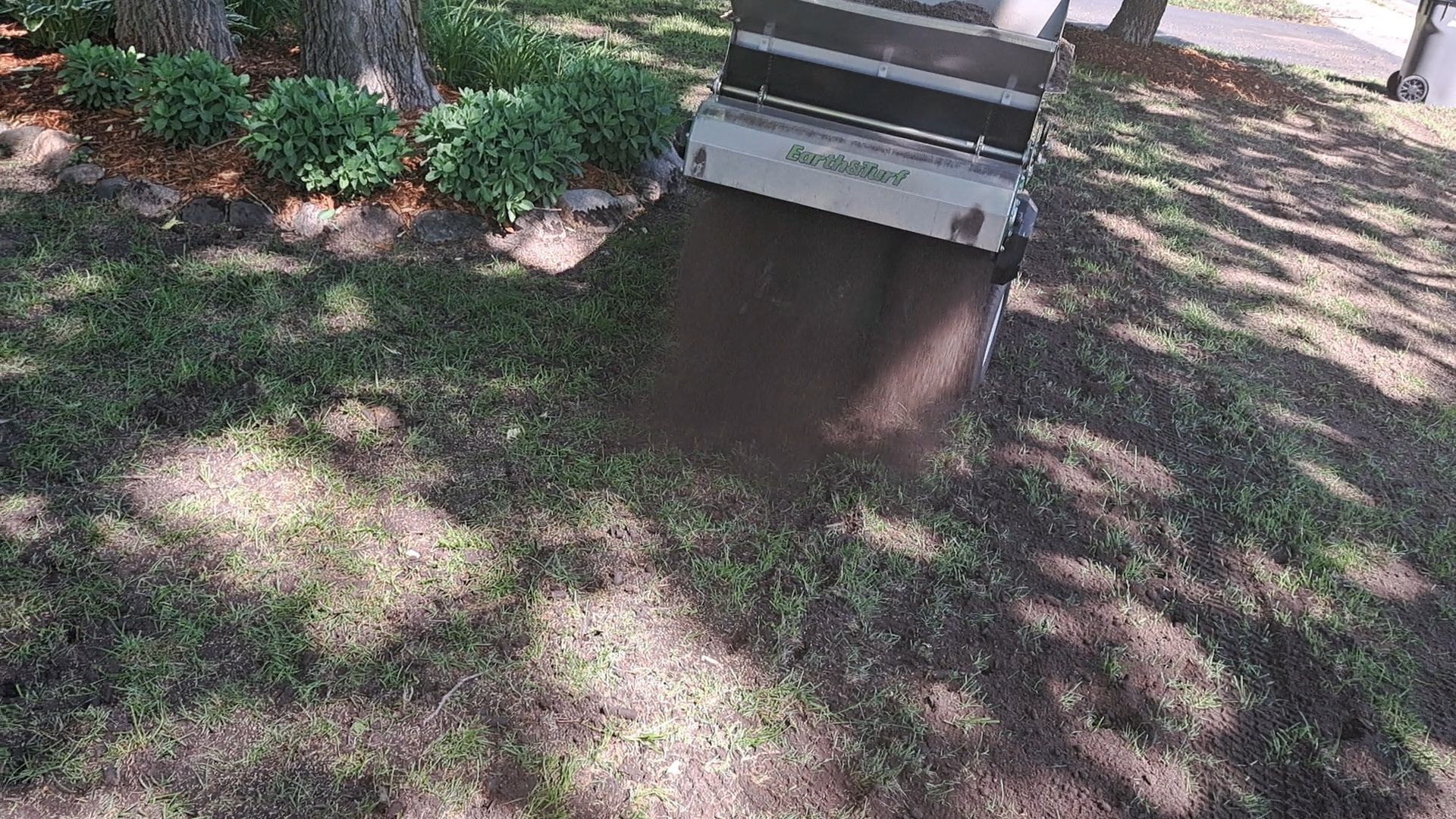
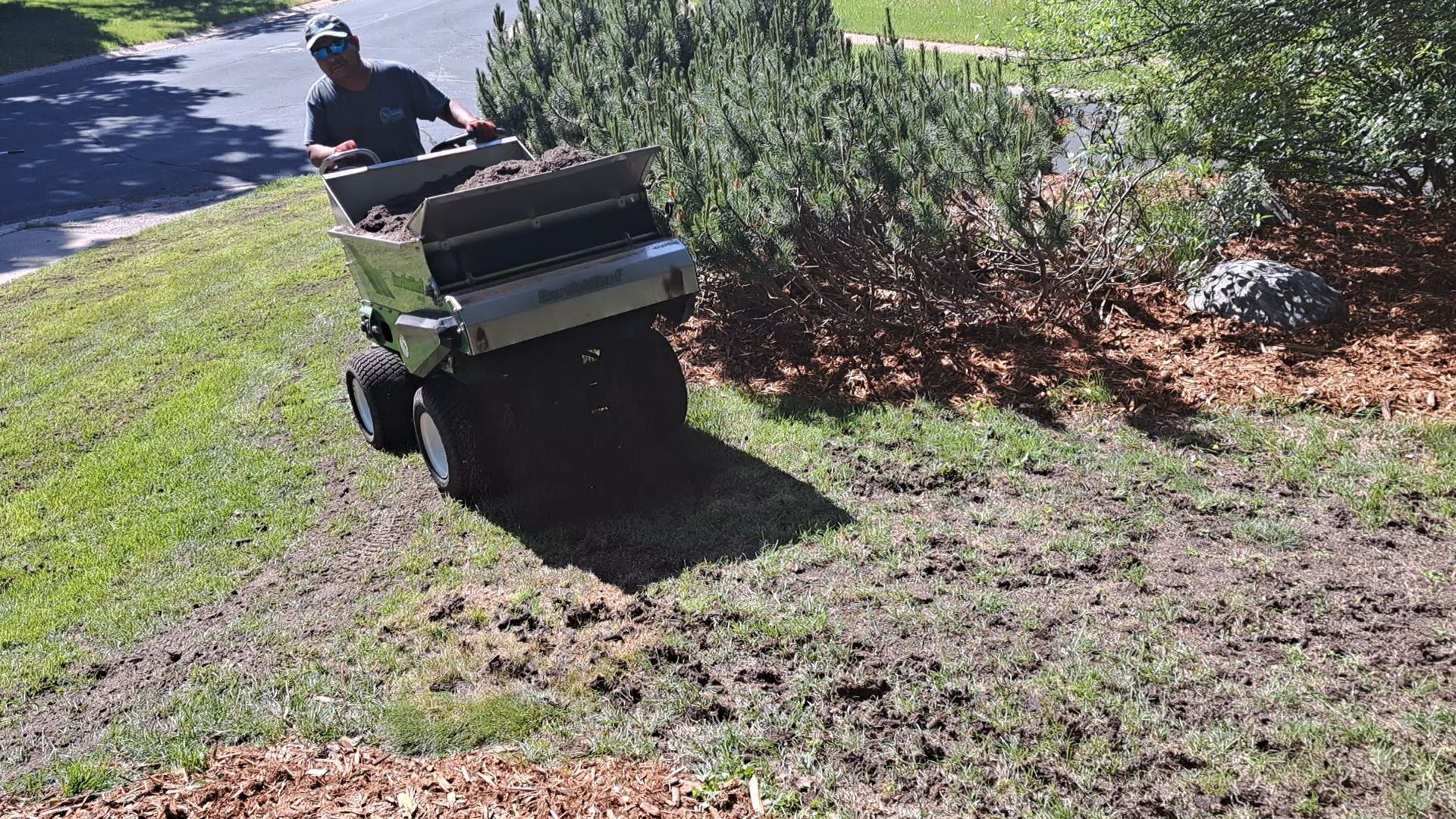
Following aeration, we applied approximately 11 cubic yards of our 60/20/20 blend of sand, soil, and peat blend across the entire lawn, using a consistent 1/2" depth across the yard. This application smoothed uneven areas and improved soil structure. By adding sand to the soil, we were able to further encourage greater airflow to the roots and help the soil thaw sooner after freezes, both of which would assist in maintaining the evenness of the ground. The peat and soil would provide added nutrients for the new and existing grass.
After a consistent layer of topdressing, we concentrated on uneven areas, thinning areas, low spots, and other spots that required special attention. Where necessary, we redirected topdressing material into areas of the turf that needed it most.
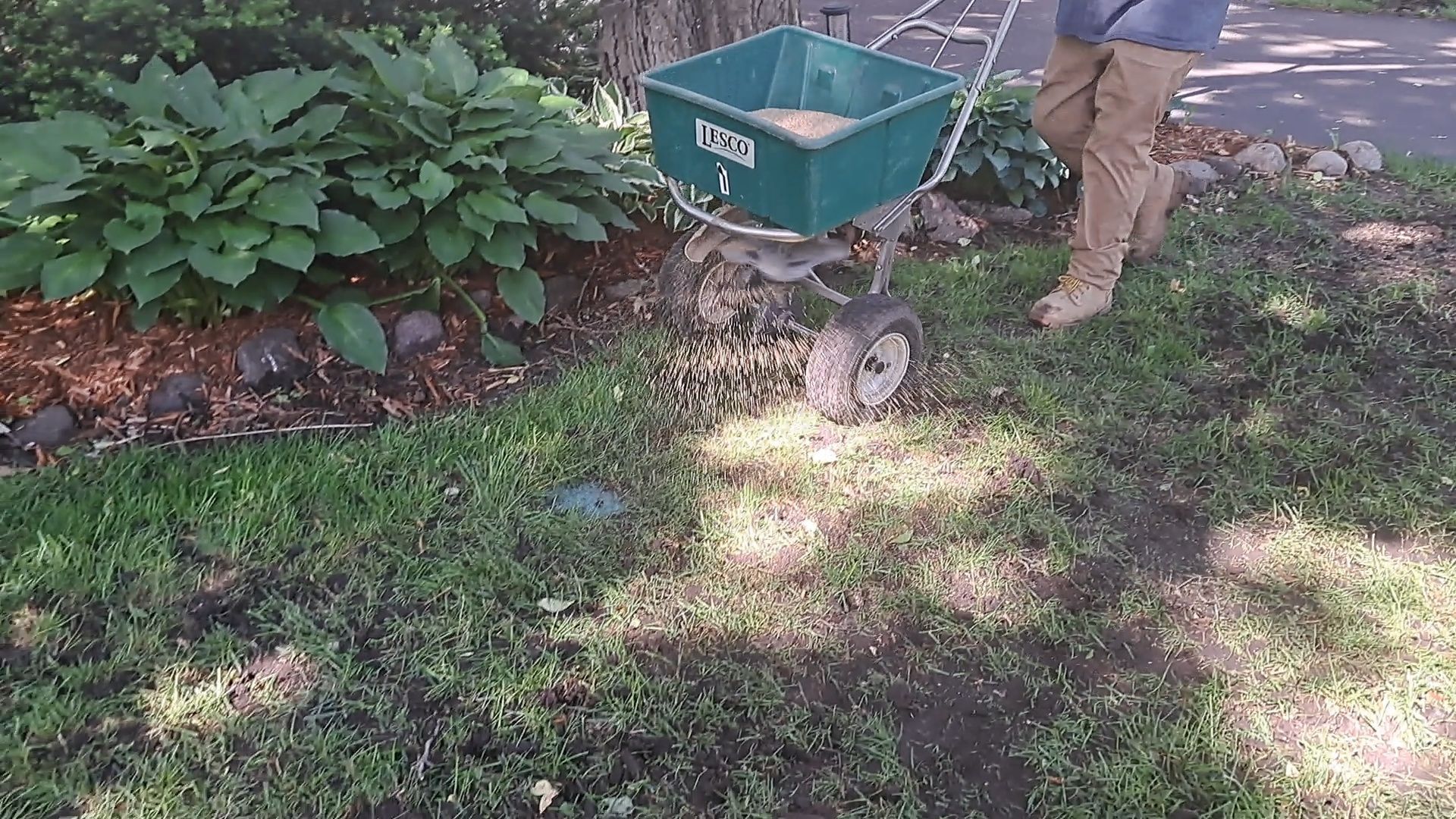
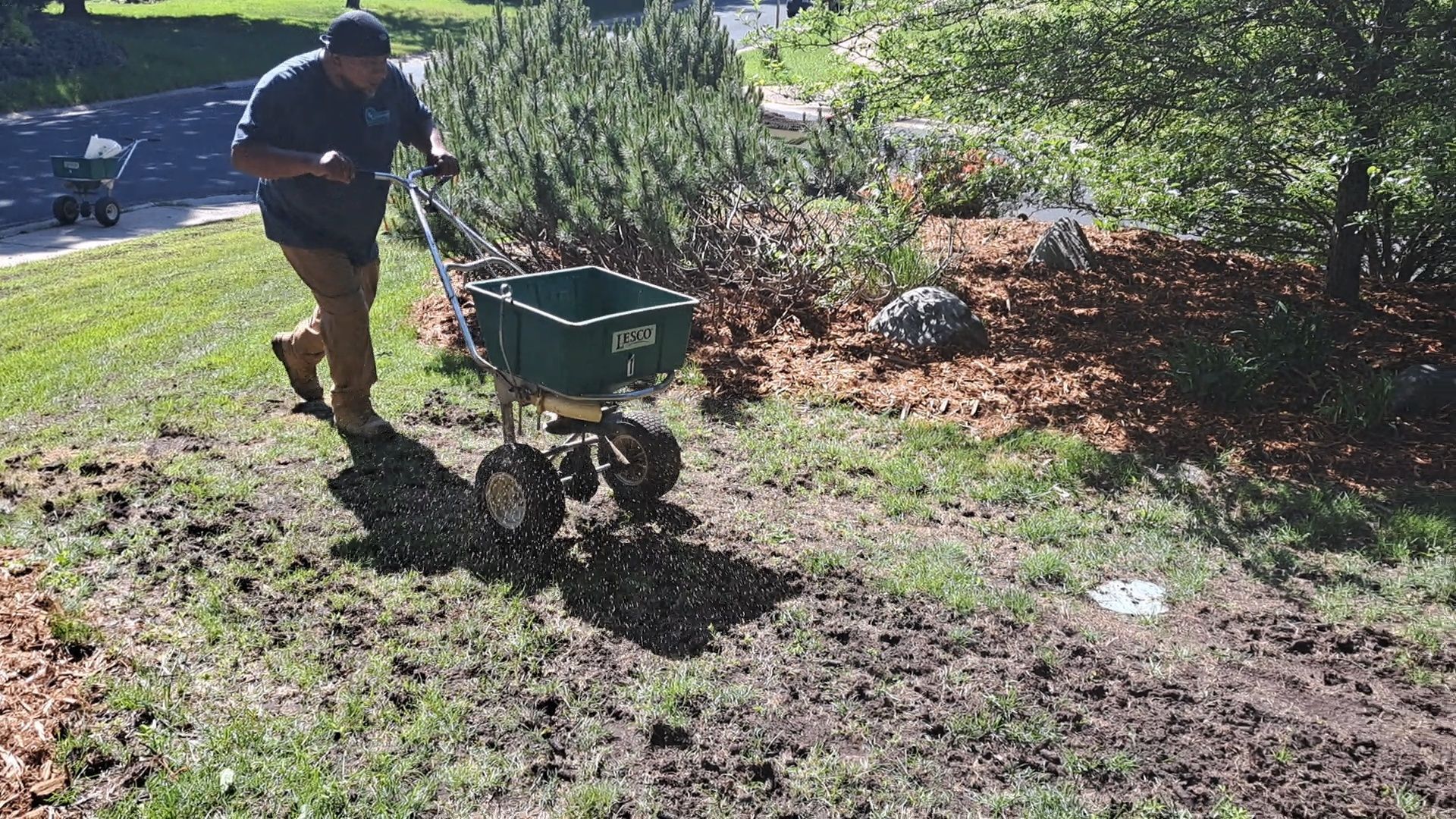
We then overseeded the lawn using a premium sun and shade seed mix at a density of 5 pounds per 1,000 square feet. Following overseeding, we applied a starter fertilizer with Mesotrione pre-emergent crabgrass control (21-22-4). This formulation supports allows new grass seed to germinate while preventing weed competition during establishment.


The Results of a Heavy Topdressing Treatment
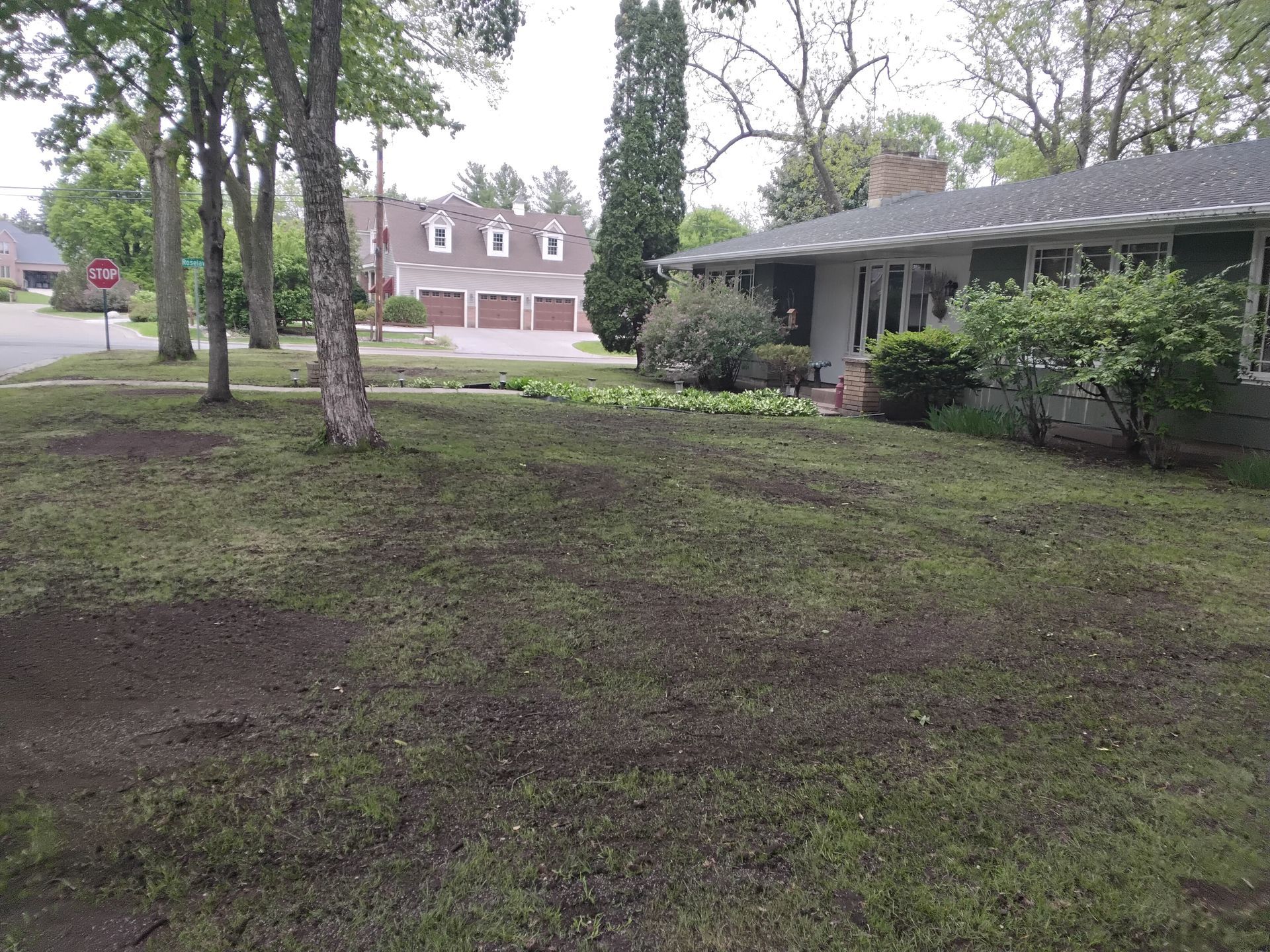
After our team completed the full heavy-topdressing plan, the homeowner immediately noticed a smoother, more stable lawn surface. Walking to and from the dock and beach was significantly easier for the homeowner and for older family members. The client also noticed that mowing was more consistent and no longer scalped the lawn. This restored the lawn as a comfortable option for family activities and entertaining. Topdressing with a sand-soil-peat mix smoothed out the previously uneven bumps and mushy low spots, resulting in a lawn that felt firm, level, and safe to walk on.
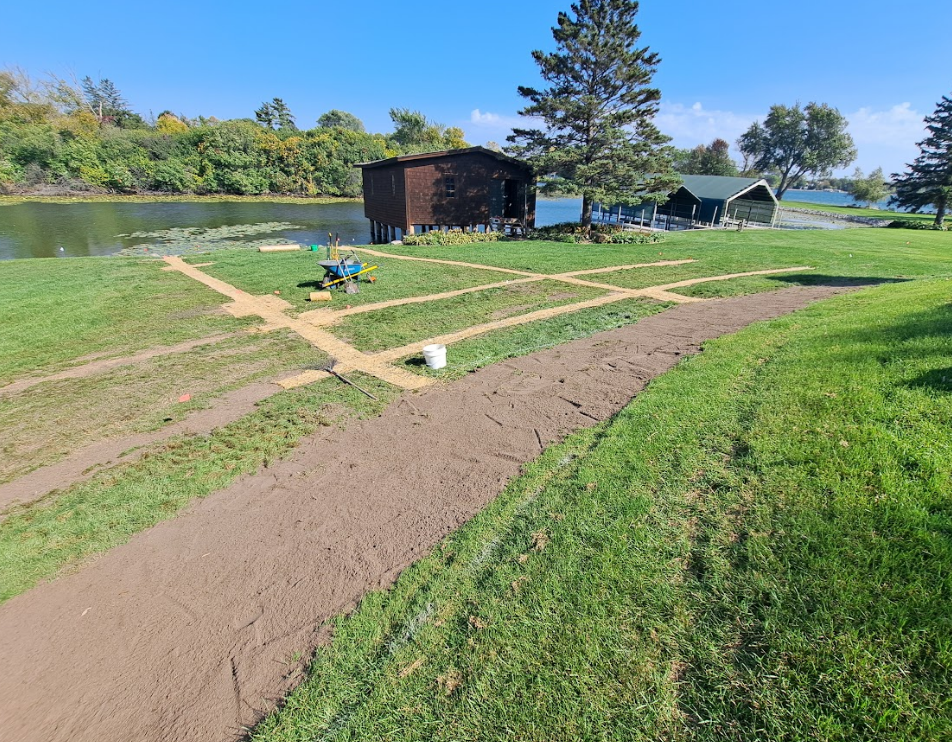
Our team used a drag to apply an even 1/2" layer of topdressing material and work it into the turf. This process allowed material to settle into low spots and soften high areas without creating any major changes to the existing grade. The final result was a smoother, more uniform lawn surface with improved usability and appearance—not to mention a very satisfied homeowner.
As the turf established itself, new grass filled in quickly across the lawn. Improved soil conditions, core aeration, and overseeding worked together to create exceptional lawn density, a thicker, more uniform lawn, and a deeper, healthier green turf.

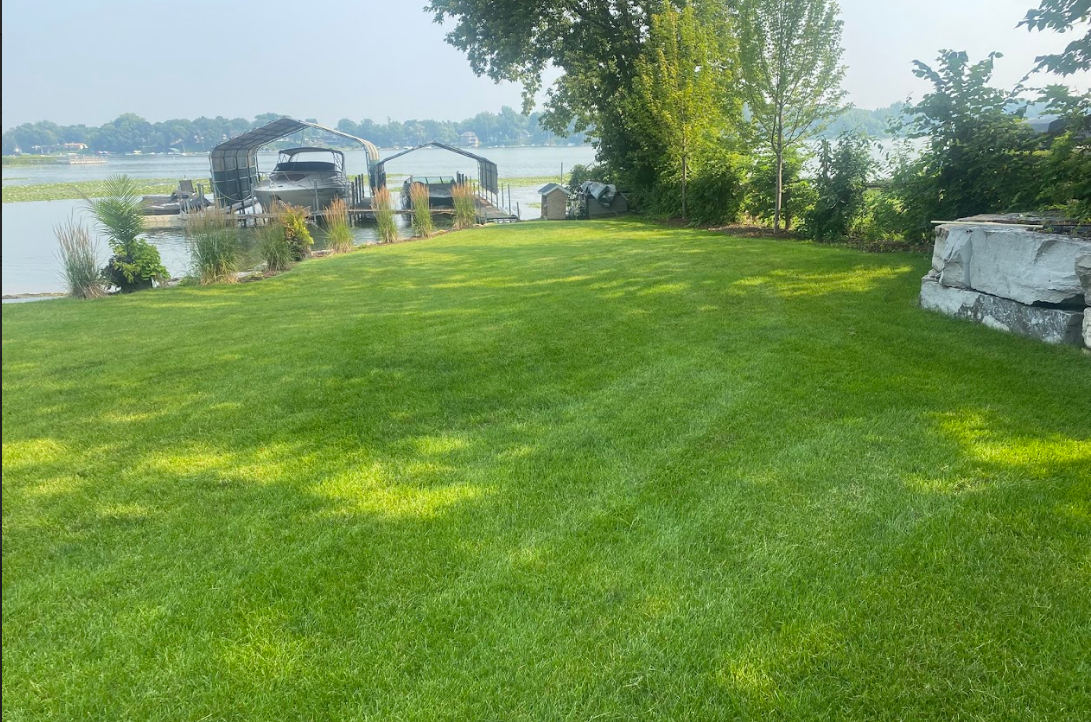
Visible Results Over Time
Revisiting the lawn three months after our team completed the topdressing service clearly show a significant improvement in lawn density, color, and overall turf health, demonstrating the long-term effectiveness of heavy topdressing in improving lawn care for this Minnetonka home.
If you are experiencing similar lawn issues on your lakefront property, reach out to KG Landscape. We serve homeowners throughout the Lake Minnetonka area, including Excelsior, Minnetrista, and Mound. Our team can evaluate your property and create a tailored lawn care and topdressing solution to fit your specific needs.
Ready to Start on Your Next Project?
Call us at (763) 568-7251 or visit our quote page.