Why New Construction Landscaping Fails in Bloomington and What to Do About It
The yard looked fine when you closed on the house. Green. Graded. Sod laid down. Maybe some foundation shrubs along the front. The builder checked the landscaping box, you moved in, and everything seemed normal.
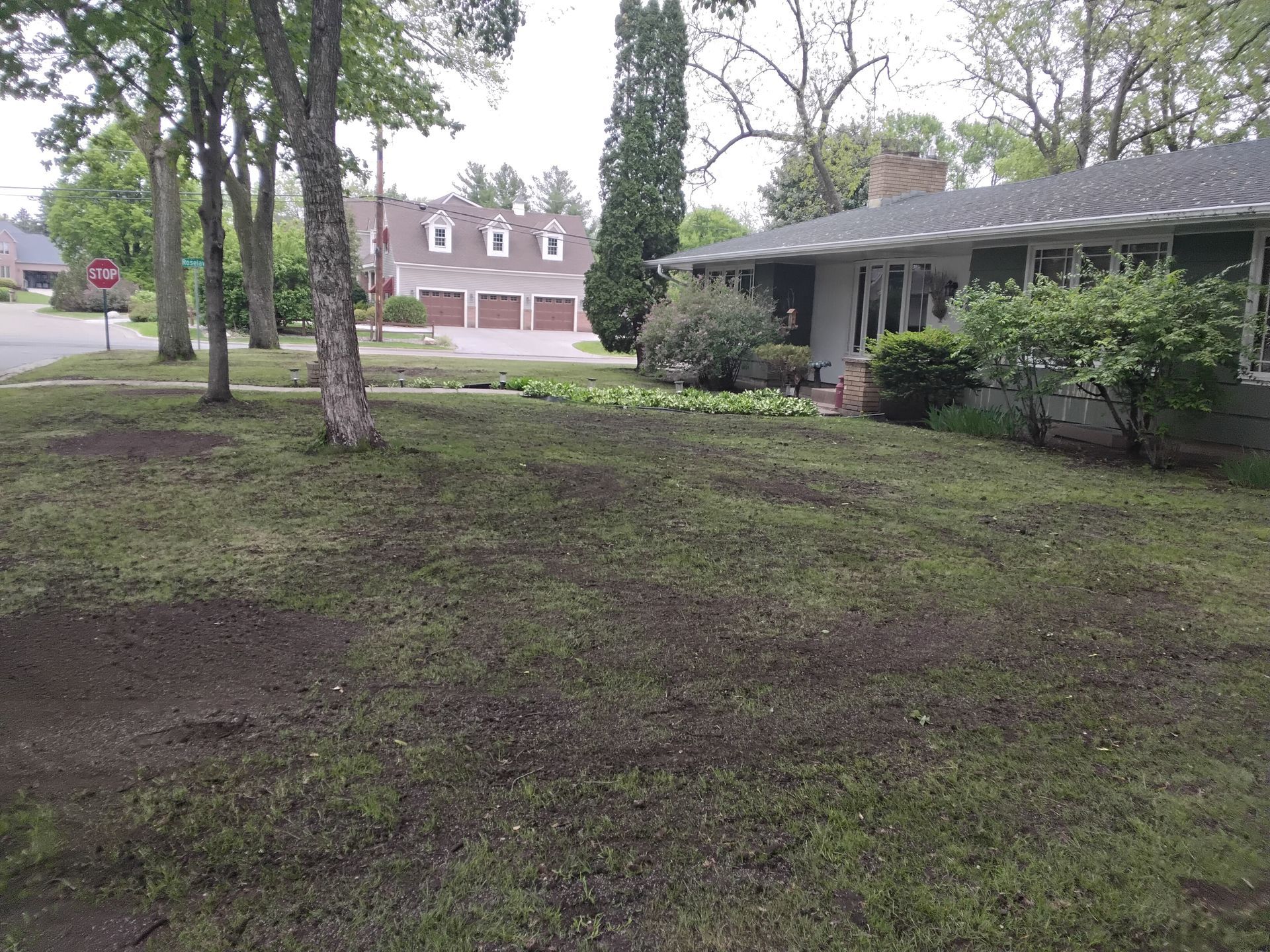
Then the first full growing season hit, and the grass started thinning in patches. The sod turned yellow in places despite regular watering. Standing water appeared in the back corner of the yard after every rain. By year two, the bare spots outnumbered the healthy areas, and no amount of fertilizer or reseeding made a lasting difference.
This is the pattern we see repeatedly on newer homes in Bloomington. The new construction landscaping that passed inspection at closing was never designed to perform beyond the first impression.
Understanding why gives you a clear path to fixing it.
What Builders Are Required to Do With Your Yard
Builders are in the business of building homes and selling them. The yard is a line item that needs to meet minimum requirements for occupancy and pass the city's erosion control standards. That typically means establishing vegetation cover on disturbed soil. The threshold is functional, not aspirational.
In practice, this is what happens on most new construction sites in Bloomington. Heavy equipment compacts the soil during months of construction activity. The native topsoil gets scraped off or buried under subsoil and fill. When construction wraps, a thin layer of topsoil goes back over the compacted surface. Sod or seed gets applied. The irrigation runs for a few weeks. At closing, the yard looks green.
What you can't see is what's underneath. Two to four inches of topsoil sitting on top of compacted clay, construction fill, and sometimes buried debris. The grass roots have nowhere to go. Water can't infiltrate the compacted layer below the topsoil. And the grading that was done to pass inspection may not be adequate for long-term drainage.
Bloomington's ongoing infill construction and redevelopment projects mean this isn't limited to brand-new subdivisions. Any property where a new home replaced an older one likely went through the same soil disruption and minimal restoration process.
The Soil Problem That Shows Up After the First Year
Soil is the foundation of every landscape, and new construction treats it as an afterthought. The heavy equipment used during building, excavators, concrete trucks, material deliveries, compresses the soil to the point where it becomes nearly impervious to water and root penetration. A study from the University of Minnesota Extension confirms that soil compaction from construction equipment is one of the primary causes of lawn failure on new homes.
The topsoil layer that goes back on top is usually too shallow. A healthy lawn needs six to eight inches of quality topsoil for proper root development. Many new construction yards in Bloomington have two to four inches, and that topsoil is sitting on compacted clay that functions more like a parking lot than a growing medium.
The grass establishes quickly in the topsoil layer because sod comes with its own root system. It looks healthy for the first season. But as the roots try to push deeper into the compacted subsoil, they hit a wall. The grass can't access deeper moisture or nutrients. It becomes dependent on frequent watering, and any disruption, a hot week, a missed irrigation cycle, a heavy rain that saturates the shallow root zone, causes it to stress.
This is why new construction lawns look fine in year one and start declining in year two. The sod was always living on borrowed time, surviving in a thin topsoil layer that couldn't sustain it once conditions got anything less than ideal.
What It Looks Like When the Problems Compound
New construction soil problems don't stay contained to the lawn. They cascade.
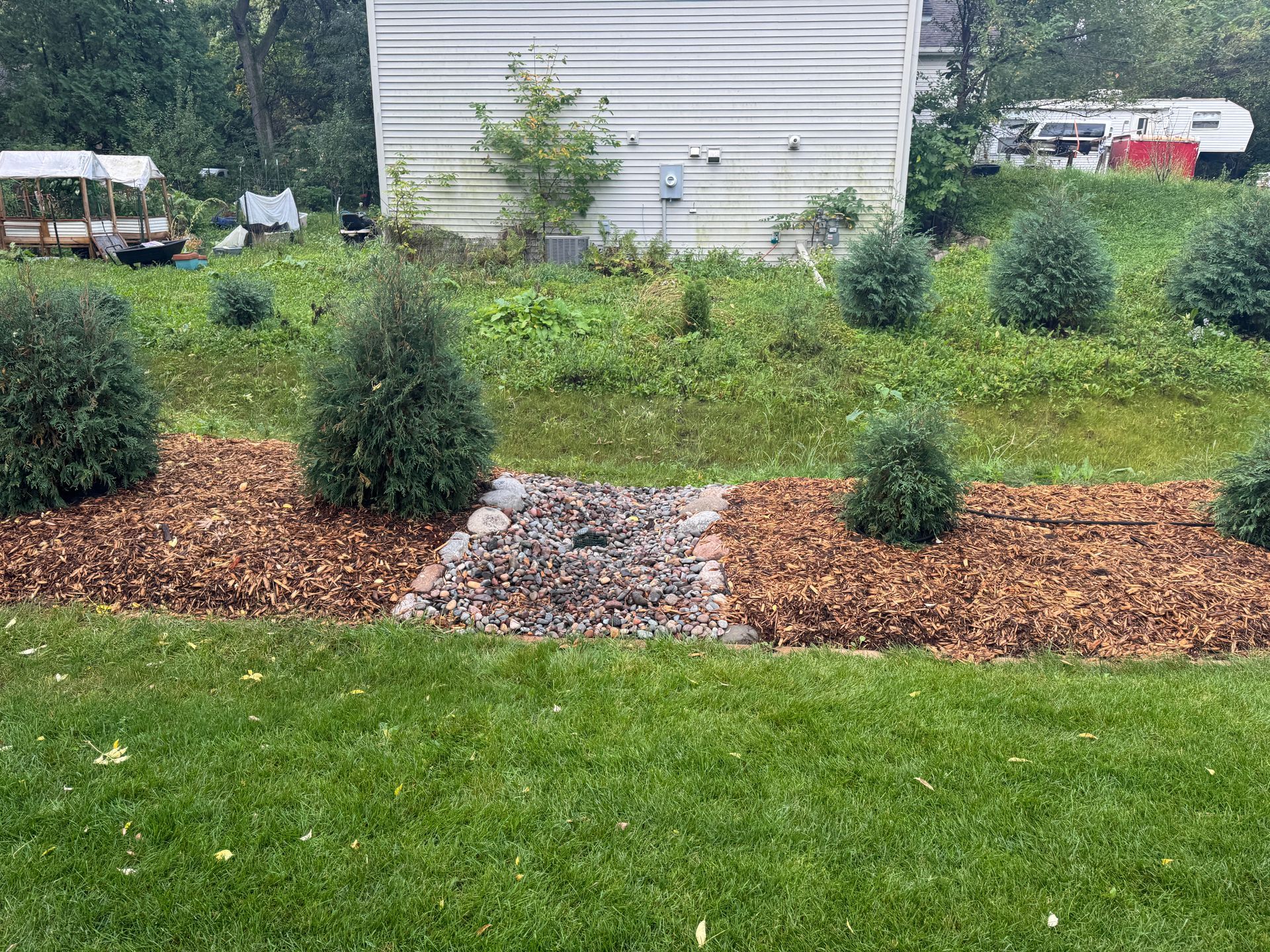
Compacted soil can't absorb rainfall effectively. Instead of soaking into the ground, water runs across the surface and collects in low spots. The grading done by the builder may direct some of this water away from the foundation, but it often creates new problems in other areas of the yard. Soggy corners, standing water along fence lines, and saturated side yards are common on Bloomington properties within a few years of construction.
The thin topsoil layer erodes during heavy rains, especially on slopes. What little quality soil exists gets washed away, leaving the clay subsoil even more exposed. Grass thins further. Bare patches appear and won't fill in because the remaining soil can't support new growth.
Foundation plantings, typically builder-grade shrubs installed at minimum size, struggle for the same reasons. Their root zones are constrained by the same compacted soil, and they were often planted too shallow in the thin topsoil layer. By year three or four, some of them are dead, and the ones that survive look stressed.
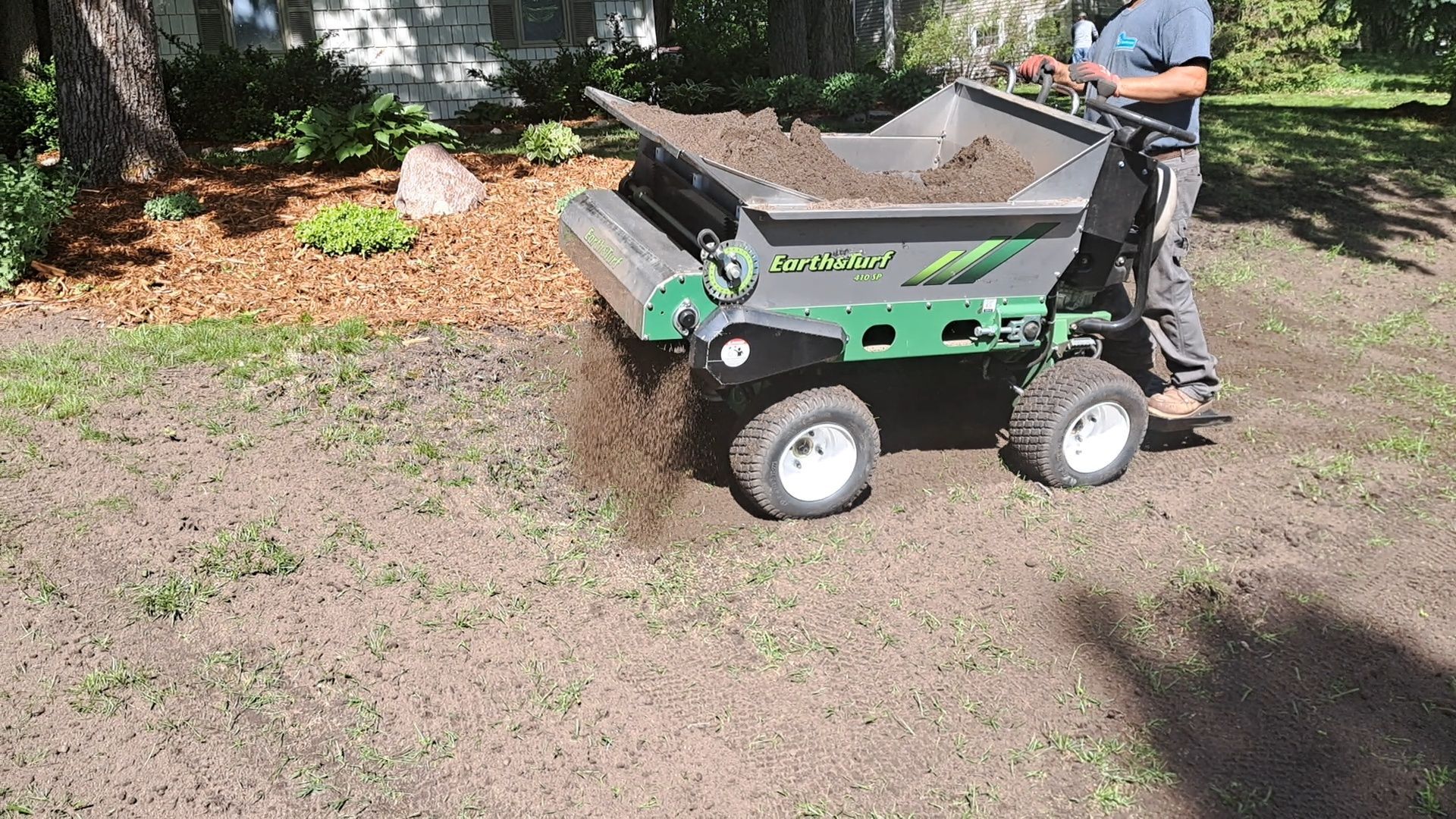
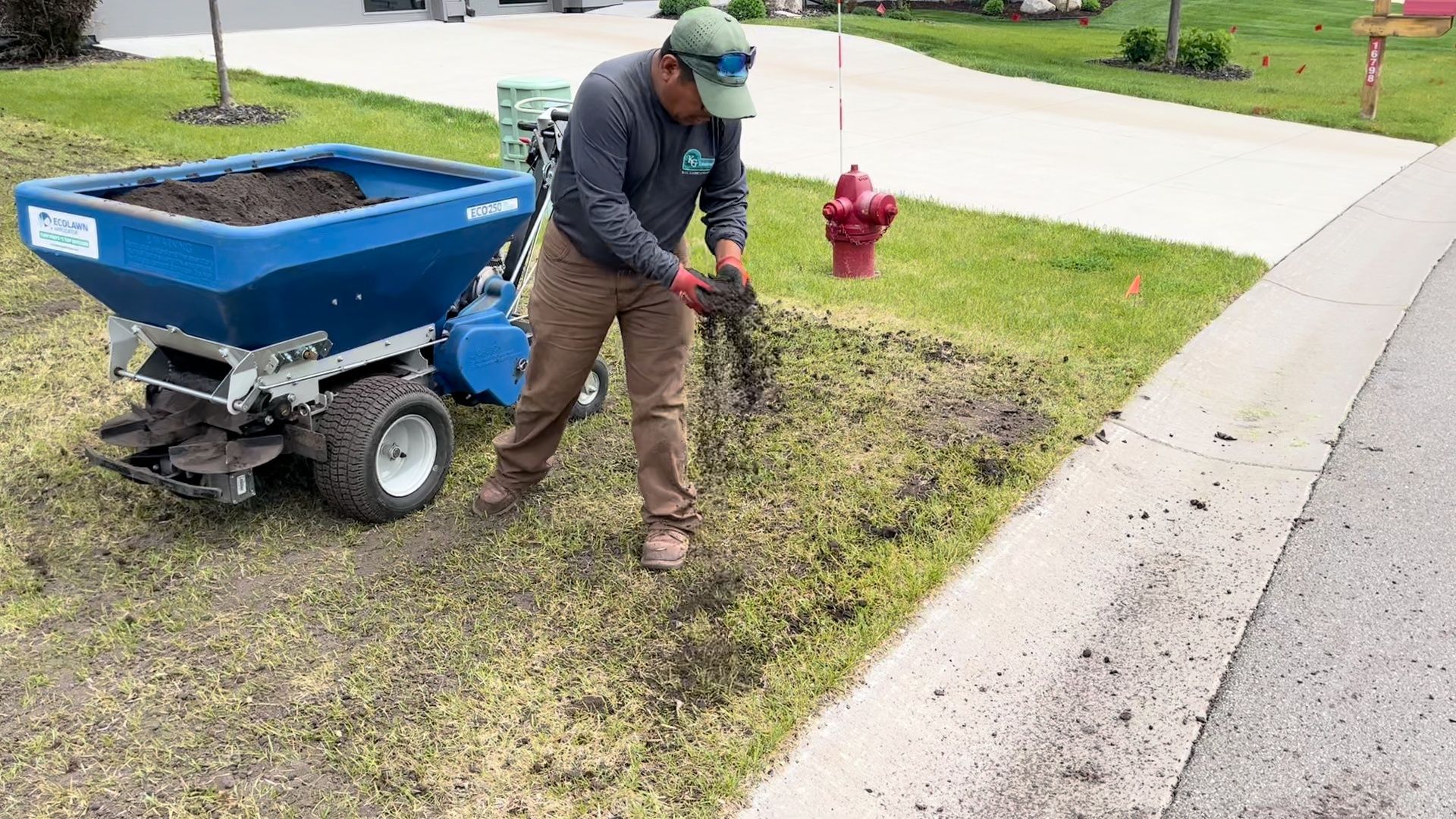
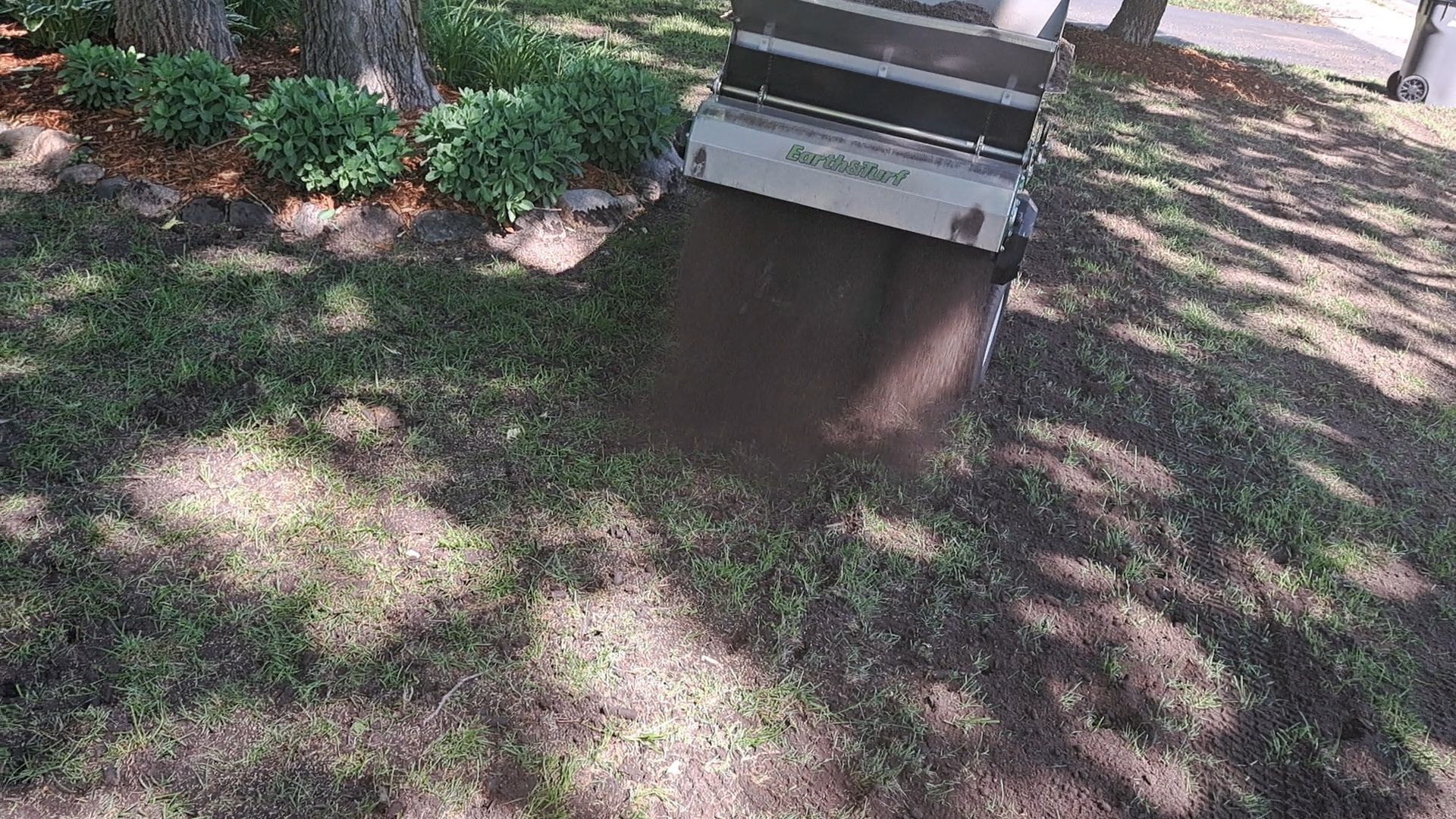
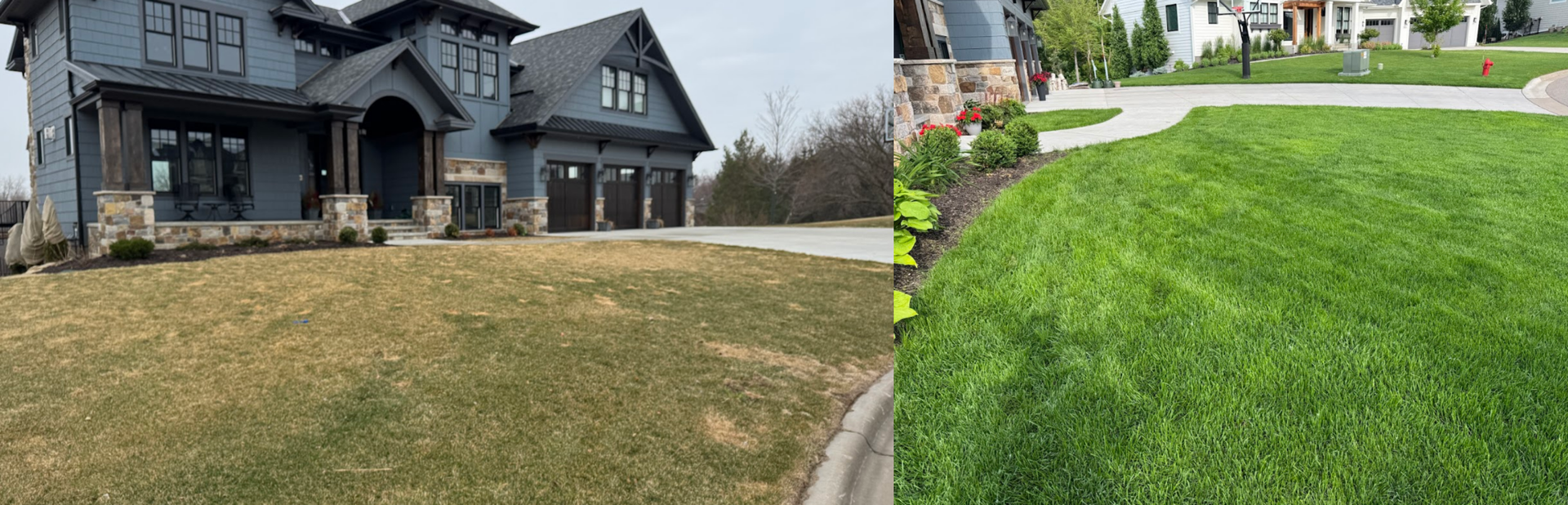
We assessed a Maple Grove yard that was dealing with exactly this pattern. Despite what seemed like ample sunlight and water, the turf was thin and patchy with bare spots that wouldn't improve. The soil turned out to be clay-heavy and compacted with insufficient topsoil depth. The yard was failing to thrive not because of anything the homeowner was doing wrong, but because the soil conditions left behind by construction couldn't sustain healthy grass. We addressed it with compost-based topdressing, double-pass aeration, and overseeding with a durable athletic-grade seed blend designed for the conditions.
How This Plays Out Differently on Infill Lots vs. Subdivisions
Bloomington's mix of property types creates different versions of this problem. In newer subdivisions, the soil disruption is extensive because the entire site was cleared and graded at scale. Every lot goes through the same compaction process. But at least the grading tends to be somewhat consistent across the development.
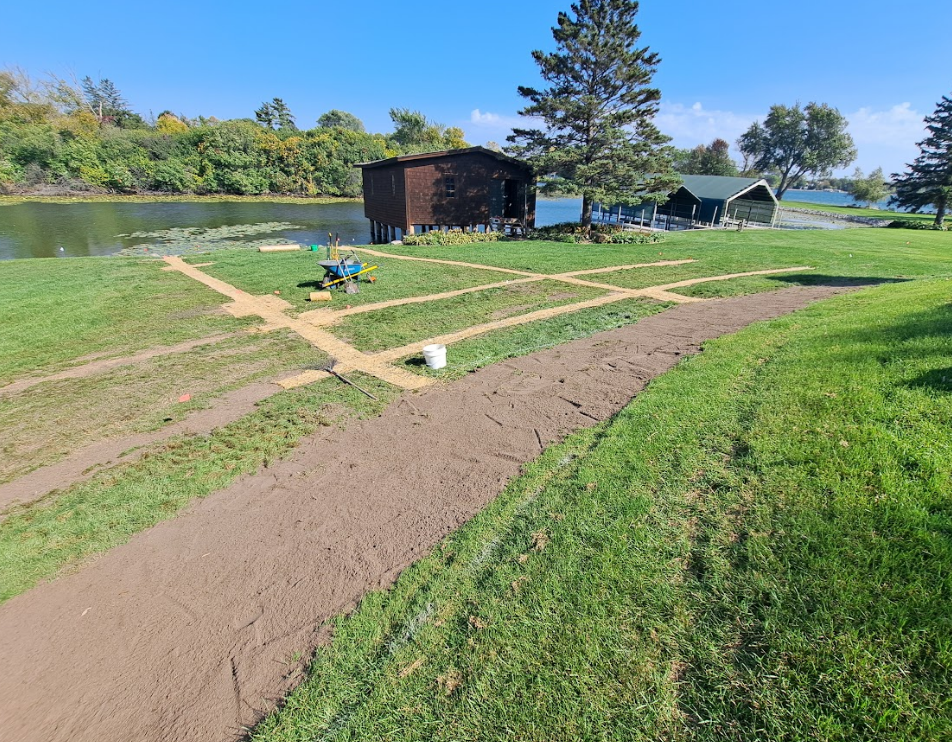
Infill construction, where a new home replaces an older one on an existing lot, can be even more challenging. The demolition and construction process disrupts soil that may have been healthy and established for decades. The new foundation changes the grade. Utility connections get trenched through the yard. The result is a patchwork of soil conditions: some areas compacted, some areas filled, some areas with intact original soil, all covered by the same thin topsoil layer and sod.
We've written about this same builder-grade landscaping issue in Blaine, where homeowners were dealing with yards that looked fine from the street but weren't performing underneath the surface. The dynamics are the same across the metro. Builders install what passes inspection, and homeowners inherit the limitations.
Fixing New Construction Landscaping the Right Way
The instinct when a new lawn is failing is to throw more seed, more fertilizer, and more water at it. That approach treats symptoms without addressing the cause. If the soil underneath is compacted clay with insufficient topsoil, adding more seed to the surface is like planting in a pot with no drainage.
The right process starts with an evaluation of what's actually going on below the surface. How deep is the topsoil? What's the compaction level? Is the clay content preventing infiltration? Are there drainage issues caused by the grading? The answers determine the solution.
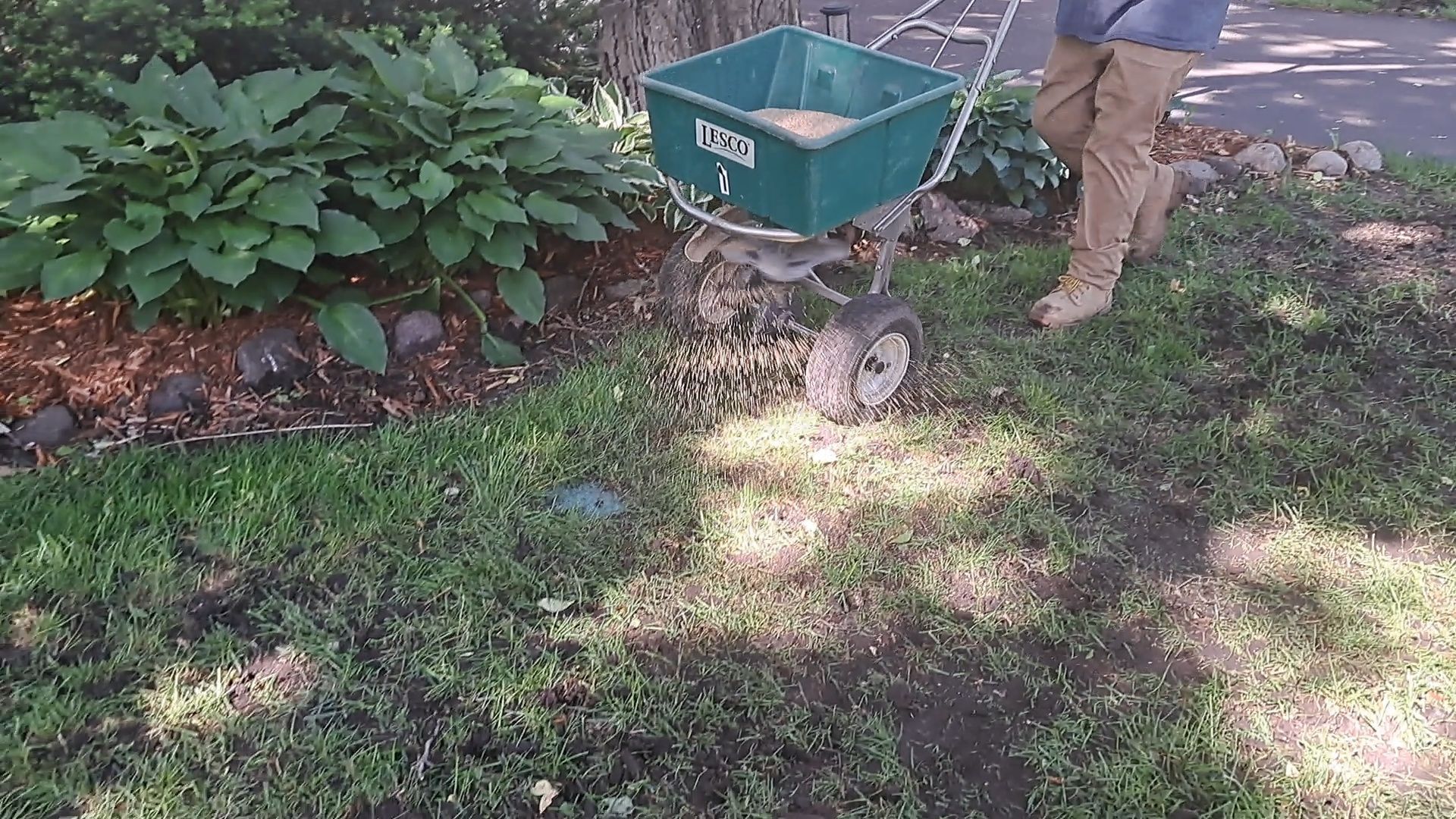
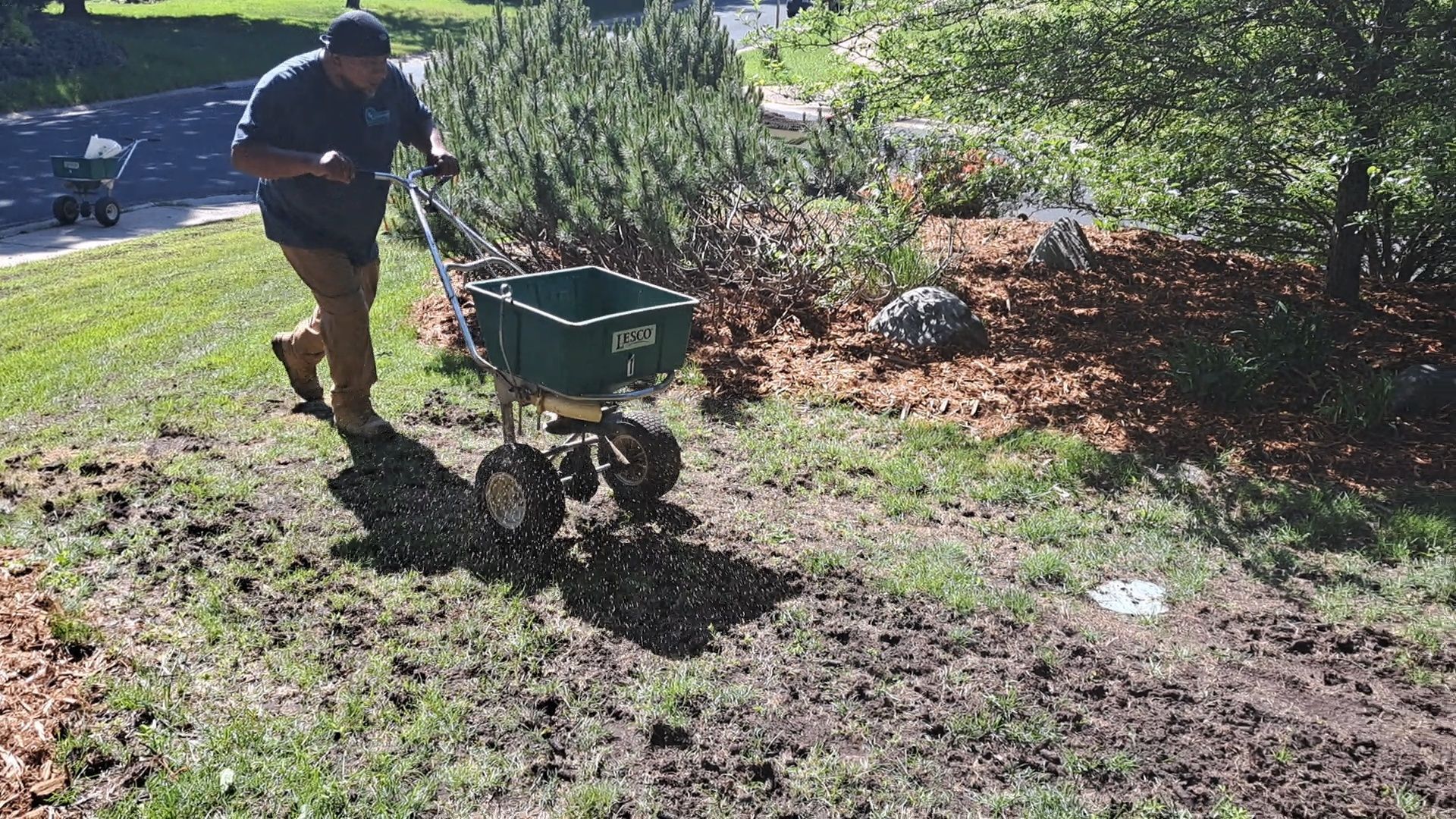
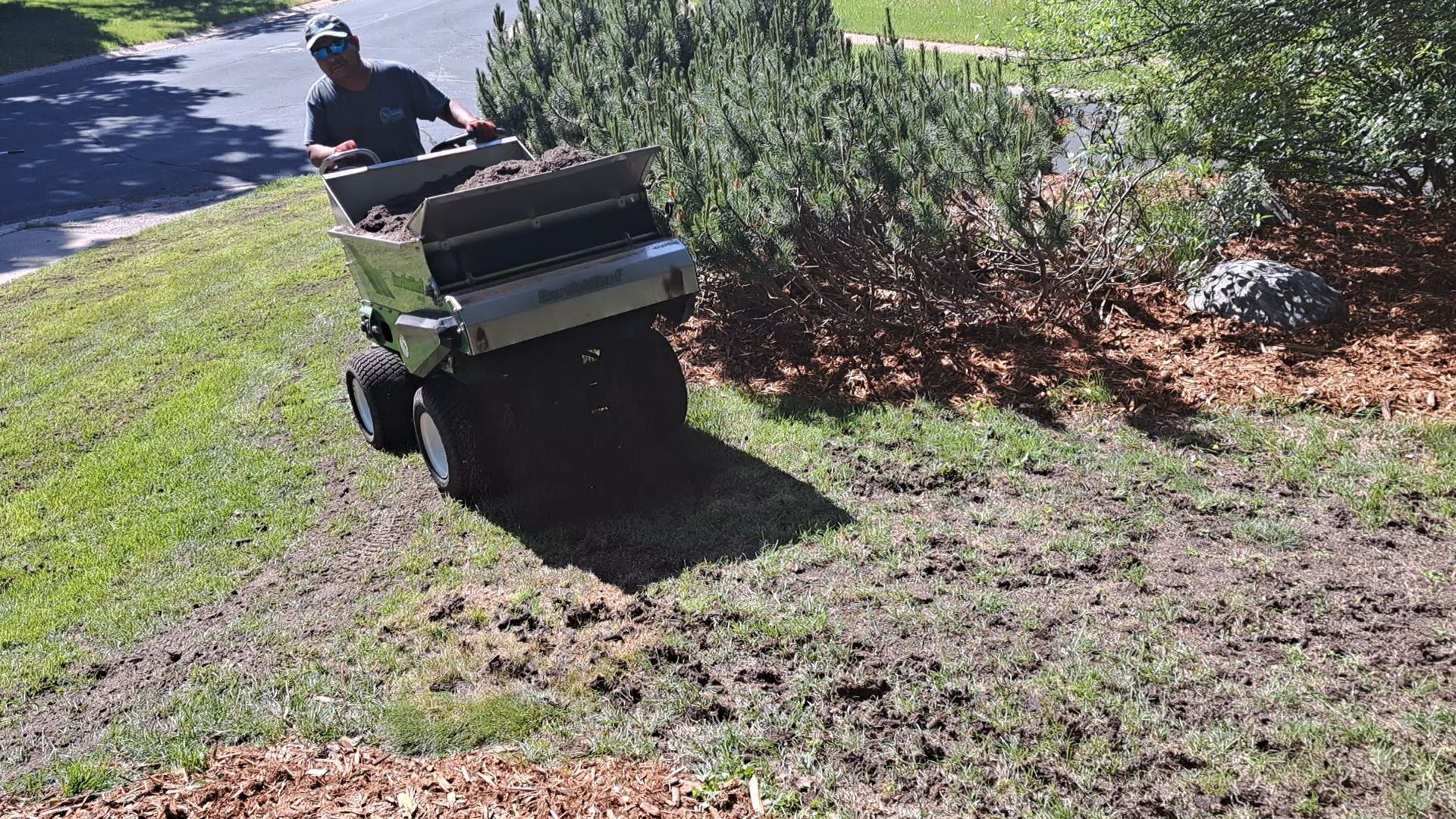
For lawns with moderate soil problems, aeration and topdressing can make a significant difference. Deep core aeration punches holes through the compacted layer and allows air, water, and organic matter to reach the root zone. Topdressing with quality compost or topsoil builds up the growing medium over time. Overseeding with grass varieties suited to the actual conditions, not the generic seed the builder used, establishes turf that can handle the site.
For yards with severe compaction, poor grading, or drainage problems, the work may need to include regrading, soil amendment, and subsurface drainage before the lawn can be successfully re-established. This is more involved, but it addresses the root cause rather than masking it.
The timeline matters too. Many homeowners wait three or four years before acting, hoping the lawn will improve on its own. It won't. Compacted soil doesn't loosen itself. Eroded topsoil doesn't regenerate. The earlier you address the soil conditions, the less extensive the remediation needs to be.
What to Expect After Proper Remediation
Once the soil is corrected, the results are noticeable within one growing season. Grass that struggled in shallow, compacted soil responds quickly to a deeper, healthier root zone. Water infiltrates instead of pooling. The lawn fills in and stays filled in because it has the soil structure to sustain growth through dry spells and heavy use.
The yard your builder gave you was designed to look good at one moment: closing day. A properly remediated lawn is designed to perform for years. The difference is what's underneath, and that's the part worth investing in.
Contact KG Landscape to evaluate your Bloomington property.
Frequently Asked Questions
Why is my new lawn dying when I water it regularly?
Overwatering a lawn on compacted soil actually makes the problem worse. The water can't penetrate the compacted layer, so it saturates the shallow topsoil and suffocates the roots. The grass yellows and thins despite adequate moisture on the surface. The issue is soil structure, not watering frequency. Aerating the soil and improving the topsoil depth gives roots room to grow and water somewhere to go.
Can I make my builder fix the landscaping?
Builder warranties on landscaping are typically limited in scope and duration. Most cover sod establishment for one year, and the warranty may only require that the builder reseed failed areas rather than address the underlying soil conditions. Review your warranty documentation for specifics, but most homeowners find that meaningful improvement requires work beyond what the builder's warranty covers.
How much topsoil does a new lawn actually need?
The University of Minnesota Extension recommends six to eight inches of quality topsoil for healthy lawn establishment. Many new construction properties have two to four inches. The gap between what's recommended and what's installed explains why so many new lawns fail after the first season. Topdressing can gradually increase topsoil depth, though severely deficient yards may need more aggressive soil building.
Is it normal for new construction sod to fail?
It's common, but it's not inevitable. Sod failure on new construction is almost always related to soil conditions, not the sod itself. Sod installed on compacted clay with minimal topsoil will establish initially and then decline as the root system can't develop properly. Sod installed on well-prepared, adequately deep topsoil performs the way homeowners expect it to.
How long after construction should I wait to renovate the landscaping?
One full growing season is enough to identify the problems. Waiting longer doesn't help, because compacted soil and poor grading don't improve on their own. If your lawn is struggling by the end of the first full summer, schedule an evaluation that fall. The sooner the soil conditions are addressed, the faster the lawn recovers and the less total remediation is needed.
Should I test my soil before renovating a new construction yard?
A soil test identifies pH, nutrient levels, organic matter content, and composition. It's useful information for determining the right amendments and fertilizer program. The University of Minnesota Soil Testing Laboratory offers affordable testing for homeowners. Combined with a physical evaluation of compaction and topsoil depth, a soil test gives a complete picture of what the lawn needs to succeed.
Ready to Start on Your Next Project?
Call us at (763) 568-7251 or visit our quote page.