A Rustic Flagstone Patio Built for Gathering Around a Custom Gas Fire Feature in Wayzata
A Space Built for Connection

The best outdoor spaces have a purpose. They are not just patios. They are places where people sit down, stay, and talk. This project in Wayzata started with a clear goal: build a gathering space that draws people in and keeps them there. The answer was a rustic flagstone patio centered around a custom gas fire feature, designed from the ground up for comfort, conversation, and year-round use.
The patio needed to feel warm and natural, not manufactured. It needed to function as a true extension of the home without looking like a builder added it as an afterthought. And it needed to hold up through Minnesota's freeze-thaw cycles without constant maintenance. The result is a space that works as well in October as it does in June, anchored by a fire feature that makes it usable well beyond the typical outdoor season.
The Vision: A Rustic Patio Designed for Connection
This homeowner wanted a space that felt intimate. Not a large entertaining deck. Not a concrete slab with a portable fire pit. Something that felt intentional, grounded, and warm. A place where four to eight people could sit around a fire and have a real conversation without shouting across a sprawling patio.
That vision shaped every design decision. The material had to feel organic and rooted in the landscape, which ruled out manufactured pavers and stamped concrete. The layout had to create a natural gathering circle, which meant the fire feature had to sit at the center, not off to the side. And the scale had to match the intended group size, large enough to be comfortable but small enough to feel enclosed and connected.
We approached this the same way we approach all Wayzata landscaping projects: design first, materials second. Understanding how the homeowner wanted to use the space determined the layout, and the layout determined everything else.
Patio Design Centered Around the Fire Feature
Most patios are designed as flat surfaces first, with fire features and furniture added later. That approach produces spaces where the fire pit sits awkwardly in a corner or where the seating arrangement never quite feels right. When the fire feature is an add-on, it reads like one.
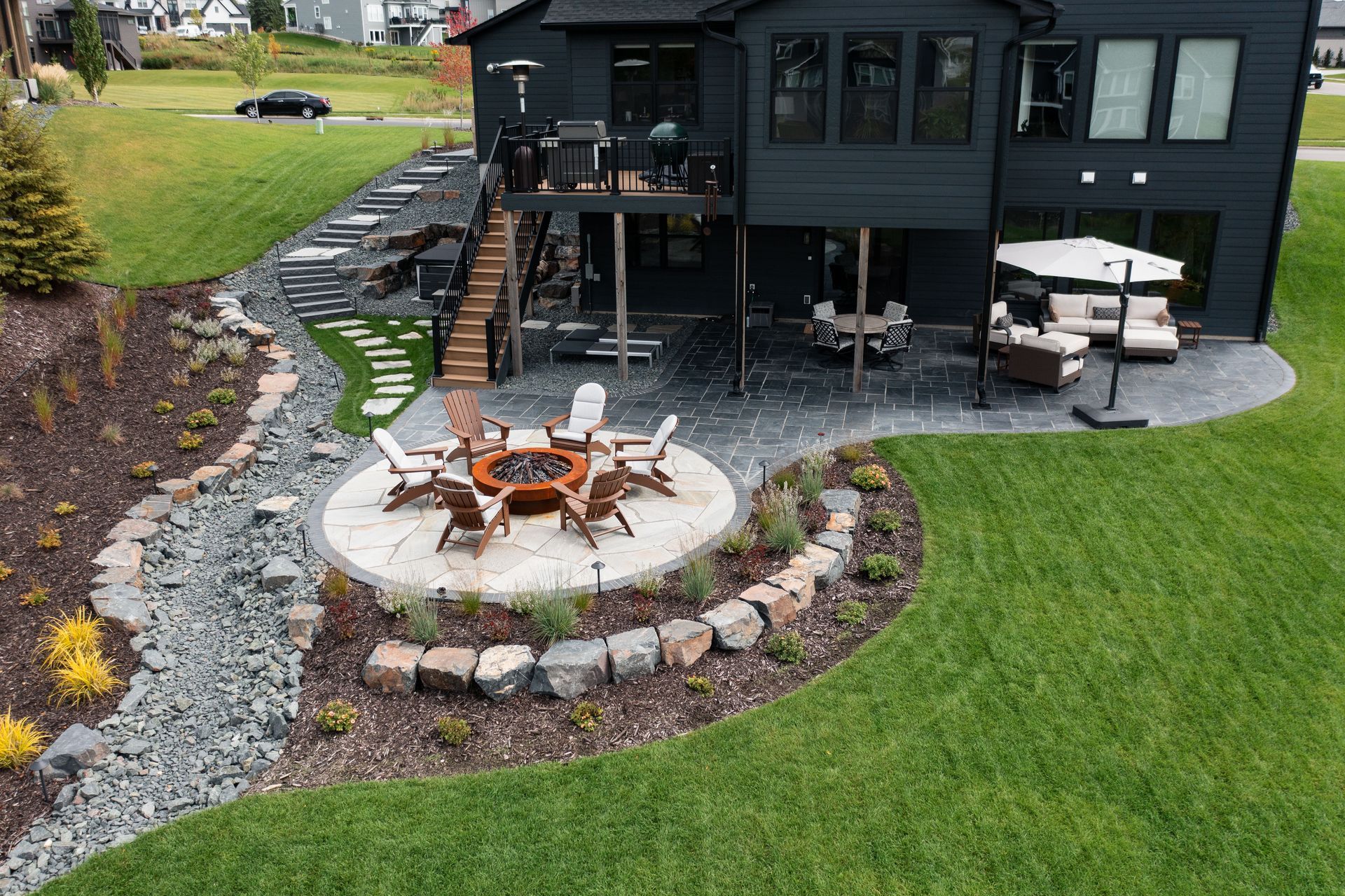
This patio was designed around the fire feature from the start. The circular layout radiates outward from the flame, with every seat oriented toward the center. The spacing between the fire feature edge and the seating area allows people to extend their legs comfortably without being too far from the heat. There is no dead zone and no awkward angle where someone sits with their back to the group.
The circular form also creates a defined destination within the larger yard. You step onto the patio and immediately understand where to go and where to sit. That kind of intuitive layout does not happen by accident. It happens because the design started with the gathering point and worked outward, not the other way around.
Natural Stone Patio: Rustic Beauty and Durability
Flagstone was the right material for this patio because nothing else achieves the same combination of texture, warmth, and durability. Each piece is unique in shape, color, and surface pattern. Laid together, the stones create an organic mosaic that looks like it belongs in the landscape rather than sitting on top of it.
The rustic aesthetic serves a practical purpose too. Flagstone's natural surface variation provides traction in wet conditions, which matters on a patio that gets used from spring through late fall. The irregular joints between stones allow for subtle drainage through the patio surface, reducing the risk of pooling without the need for visible grates or channels.
Durability is where natural stone patios earn their long-term value. The Natural Stone Institute publishes testing standards for freeze-thaw resistance, and flagstone consistently performs well in climates like ours. It handles Minnesota's freeze-thaw cycles without the surface spalling and color fading that affects many manufactured paver products over time. A flagstone patio installed on a properly prepared base will look better at year fifteen than most alternatives look at year five. That kind of longevity is exactly what we prioritize in our natural stone patio projects across the Twin Cities.
The stone selection for this project balanced color warmth with the surrounding landscape. Earth tones with subtle variation create visual interest without competing with the fire feature or the plantings around the patio edge.
Custom Gas Fire Feature as the Focal Point
The fire feature is what turns this patio from a pleasant place to sit into a place people want to be. It anchors the space visually and functionally. Without it, the patio is a circle of stone. With it, the patio has a purpose.
Gas was the right choice for this project. A gas fire feature lights with a switch and produces a clean, steady flame with no smoke, no ash, and no wood storage or ash cleanup. That ease of use changes how often the space gets used. When starting a fire takes five seconds instead of twenty minutes, the patio becomes a weeknight destination, not just a weekend event.
The custom design integrates the fire feature into the patio structure itself. The fire bowl sits within a natural stone surround that matches the flagstone surface, creating a seamless look where the fire appears to rise from the patio rather than sitting on top of it. Fire glass fills the bowl, adding light reflection and a clean visual line. The gas connection runs below the patio surface with accessible shutoff valves, so the infrastructure is completely hidden.
This installation meets all applicable clearance and safety standards for outdoor gas fire features. Proper clearance from combustible materials, adequate ventilation, and accessible gas shutoffs are built into the design from the beginning rather than retrofitted after the fact. We cover more about how fire feature design shapes the entire patio experience in our guide to fire pit design.
Raised Patio Design for Definition and Function
This patio sits slightly above the surrounding grade, and that subtle elevation makes a significant difference. A patio flush with the lawn reads as part of the yard. A patio raised even six to eight inches reads as a room. The elevation creates a visual boundary that defines the gathering space without needing walls, railings, or any vertical barrier.
The raised edge also serves as informal seating. On a warm evening with more guests than chairs, the patio border becomes additional perching space. It is wide enough to sit on comfortably and sturdy enough to handle the weight. The capstone detail on the raised edge matters here. The right cap creates a finished, comfortable surface that ties the raised patio visually to the flagstone below. That kind of dual-purpose design is what separates a thoughtful build from a basic installation.
The transition from yard to patio is handled with natural stone steps and subtle grade changes that feel intentional rather than abrupt. It is a small detail that makes a large difference in how the space is experienced.
Built-In Drainage: Function Hidden in the Design
Patio drainage is one of the most overlooked aspects of patio construction and one of the first things to cause problems when it is done poorly. A circular patio with a fire feature at the center presents a specific challenge: water naturally flows toward the lowest point, and if that point is around the fire feature base, you get pooling, staining, and long-term damage to gas components.
We designed the drainage into the patio structure from the beginning. The flagstone surface has a subtle pitch that moves water outward from the center toward the patio edge. Below the surface, a compacted gravel base and drainage layer handle water that penetrates through the stone joints. At the raised patio edge, water exits through concealed weep openings that are invisible from above but effective at keeping the surface dry.
The fire feature base has its own drainage detail. The stone surround includes a concealed channel that routes any water away from the gas components and out through the patio base. After a heavy rain, this patio is dry and usable within minutes, not hours. That reliability is what makes the space genuinely functional rather than fair-weather only. Getting patio drainage right from the start is one of the advantages of professional landscape design over DIY builds, where water management is often the first thing to get cut from the plan and the first thing to cause problems.
Project Highlights
The project photos show this design from concept through completion. The circular flagstone patio with the gas fire feature at center. The natural stone surround and fire glass detail. The raised edge creating definition against the surrounding landscape. Stonework close-ups showing the joint pattern and surface texture that give the patio its rustic character. And the drainage integration that keeps the surface dry without any visible infrastructure.
Why This Patio Works So Well in Wayzata
Wayzata homeowners invest in their outdoor spaces because the setting demands it. Homes here have yards worth using, and the expectation is that outdoor spaces look as considered as interior rooms. A standard concrete patio with a portable fire pit does not meet that standard. A designed flagstone patio with a custom fire feature does.
The natural stone aesthetic is particularly well-suited to Wayzata's residential character. It complements the mature landscaping and established architecture that define the area without looking overdone or out of place. And the durability matters in this climate. Minnesota's weather is hard on outdoor surfaces. Flagstone handles the freeze-thaw cycles, the spring runoff, and the summer heat without the surface degradation that sends homeowners back to the contractor every few years. Once installed correctly, this is a low-maintenance space that looks better each year as the stone develops character and the surrounding plantings fill in.
The gas fire feature makes this a three-plus season space. Comfortable use extends well into October and starts again in early April, adding roughly six to eight weeks of outdoor time on either end of what an unheated patio provides. For a community that values outdoor entertaining and relaxation, that extended season represents real return on the investment. We see the same demand for year-round gathering spaces on properties across the west metro, from Wayzata to Minnetonka and Medina.
Gather Around Something Worth Building
We have been designing and building landscapes across the Twin Cities since 2003, and projects like this are why we do it. A patio that brings people together, built from materials that last, centered around a feature that extends the season and anchors the space. That is outdoor living done right.
If your Wayzata property is ready for an outdoor gathering space that goes beyond the basics, the first step is a conversation about how you want to use the space and what the site allows. We lead with design, build with craftsmanship, and deliver spaces that hold up and get better with age.
Explore our Wayzata landscaping services, browse patio fire pit ideas for inspiration, or schedule a consultation to talk about what is possible for your property.
Frequently Asked Questions
How much does a flagstone patio with a fire feature cost?
Cost varies based on patio size, stone selection, fire feature complexity, and site conditions. A smaller gathering patio with a basic gas fire feature starts at a different investment level than a large raised patio with a custom stone surround and integrated drainage. We scope every project individually based on a site visit because walkout conditions vary significantly. A consultation is the most accurate way to get a realistic budget.
Is flagstone more expensive than pavers?
Flagstone generally costs more per square foot for material and installation because each stone requires individual fitting rather than uniform placement. However, flagstone's longevity and minimal maintenance often make it the better long-term value. Natural stone does not fade, and it handles freeze-thaw cycles without the surface spalling that affects some manufactured products. Over a 15 to 20 year span, the total cost of ownership for flagstone is often comparable to or better than pavers that need periodic replacement or resurfacing.
How long does a gas fire feature last?
A well-built gas fire feature with quality components lasts 15 to 20 years or more with minimal maintenance. The burner and gas lines are the primary wear components, and these can be serviced or replaced without disturbing the stone surround. Annual inspection of gas connections and a seasonal cleaning of the fire glass or lava rock is typically all that is needed. The stone structure itself is essentially permanent.
Can I use a gas fire feature in winter in Minnesota?
Yes. Gas fire features operate in any temperature, and the radiant heat makes the immediate gathering area comfortable even on cold evenings. Most homeowners use the fire feature regularly from early April through late October, with occasional use in November and March. The gas supply is not affected by cold weather, so the limitation is personal comfort rather than equipment performance.
Does a raised patio require a retaining wall?
Not always. A patio raised six to eight inches can be built with a natural stone edge that functions as both a border and a low seat wall without the structural engineering that taller retaining walls require. Higher elevation changes, typically above 18 to 24 inches, may require a designed retaining wall with proper drainage and footer specifications. We assess the grade on each property and design the edge treatment to match the elevation needed.
How do you prevent water from pooling on a circular patio?
The surface is pitched subtly outward from the center, directing water toward the patio edge. A gravel drainage layer below the flagstone handles water that penetrates through the stone joints. At the raised edge, concealed weep openings allow water to exit without visible drains or channels. The fire feature base has its own drainage channel to protect gas components from moisture. This layered approach keeps the surface dry and usable within minutes after rain.
Ready to Start on Your Next Project?
Call us at (763) 568-7251 or visit our quote page.