How French Drains Around Your Patio and Deck Footings Prevent Frost Heave Damage in Plymouth MN Clay
The Drainage Your Patio Contractor Probably Didn't Include - A Mistake We Never Make
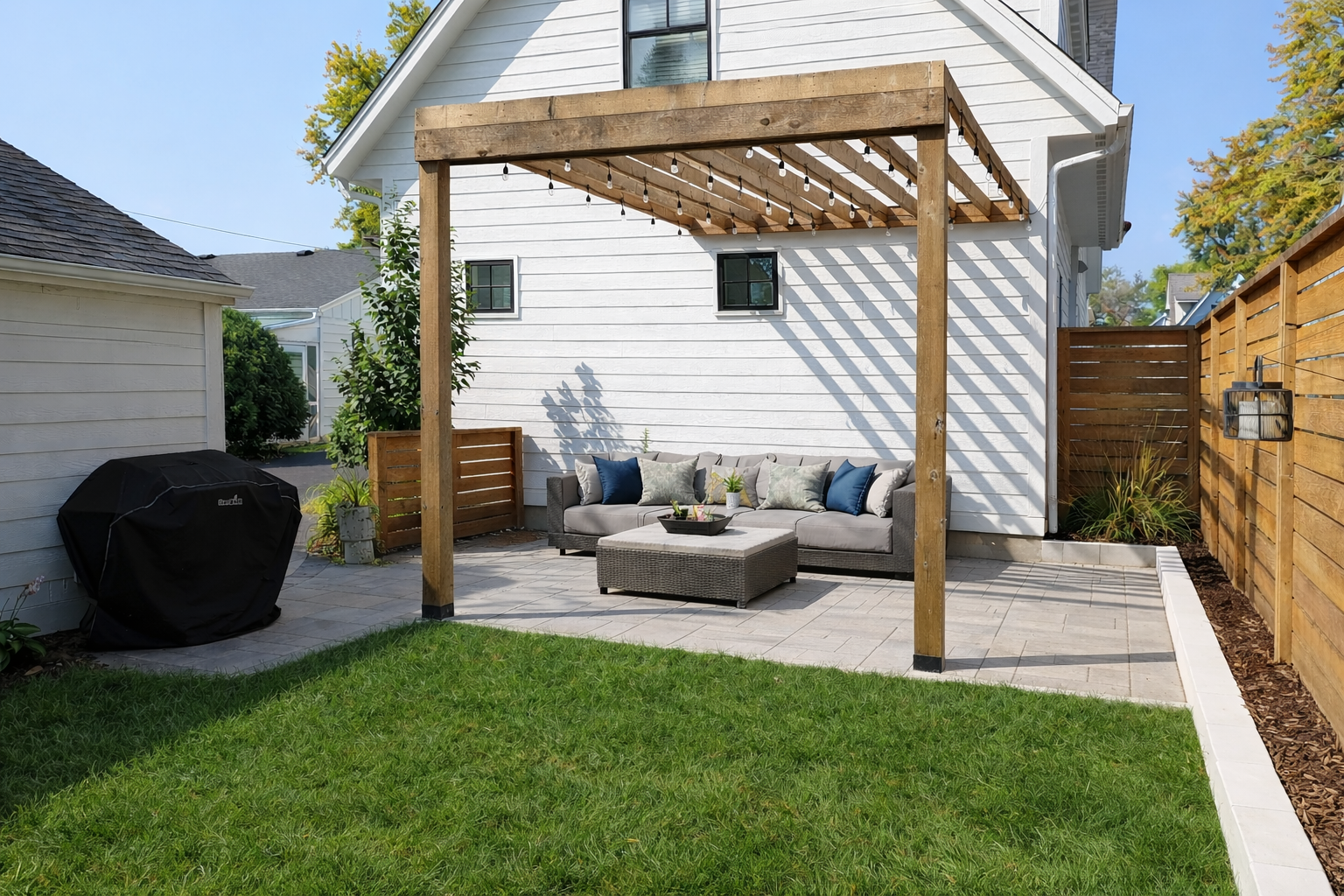
Your patio looks great. The pavers are level, the pattern is clean, the color matches the house. But nobody talked about what happens when water gets under it.
In Plymouth, that conversation matters. Clay soil holds water. When that water freezes, it expands. When it expands under your patio, the patio moves. Same with the concrete pad at the bottom of your deck steps. Same with your deck footings.
Most patio installations focus on the base material and the surface. Compact the gravel, screed the sand, lay the pavers. That's the standard process, and on well-draining soil it works fine. But Plymouth clay isn't well-draining soil. Water that gets into the base doesn't leave. It sits there until it freezes.
French drains around patios and deck footings fix that problem. They give water somewhere to go before it saturates the soil underneath your hardscape.
How Water Gets Under and Around Deck Footings
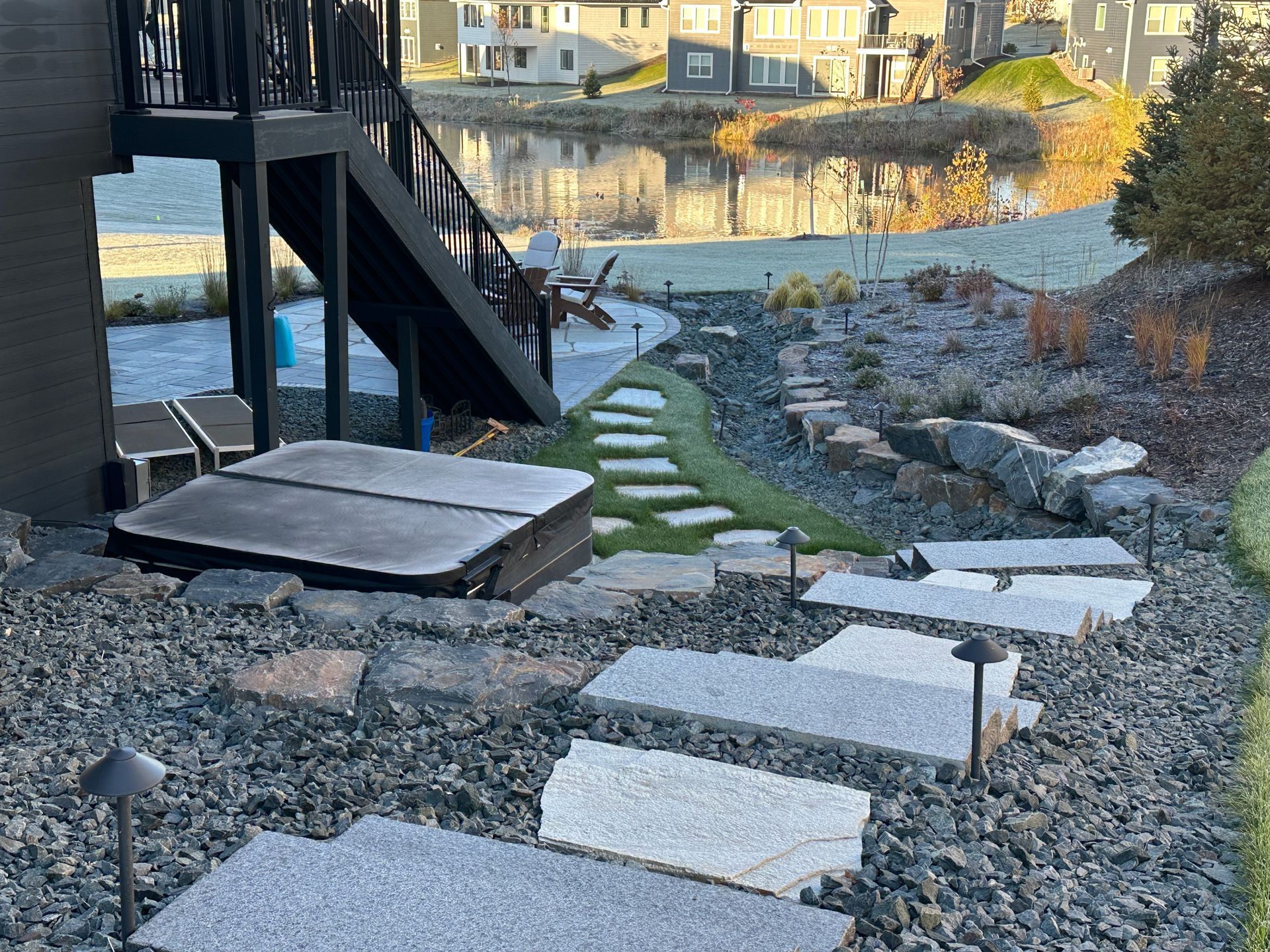
In walkout basement homes, the backyard typically flattens out at the base of two sloped side yards — and that low, level area naturally becomes a collection point for water. Rainwater flows down the side yards from roof gutters, surface runoff, and often neighboring properties, all converging at the back of the home. When that water reaches the flattened yard, it slows down, gathers, and migrates into the soil right where patios, deck posts, and footings are located near the basement patio door.
Over time, this constant saturation keeps soils wet around the foundation and structural supports, creating movement during freeze-thaw cycles as water expands and contracts in the soil. That shifting can contribute to patio settling, deck footing movement, edging displacement, and long-term structural stress. It also leads to persistent muddy lawn conditions in the most heavily used parts of the yard — directly outside patio doors, along side-yard access routes, and around deck stair landings.
How Water Travels Along the Homes Foundation
Water problems in the backyard don’t always start there. Groundwater and surface runoff from the front yard can infiltrate the soil and move underground toward the back of the home, especially in clay-heavy conditions. During construction, soil around the foundation is loosened for backfilling, creating a path of least resistance where water can travel along the sides of the foundation wall before emerging at grade level in the backyard.
When this subsurface flow combines with surface runoff from the side yards, it intensifies saturation within the first 25 feet of the home — the exact area where patios, decks, fence gates, landscape edging, and primary access points are located. The result is chronic moisture, soil instability, freeze-thaw damage, shifting hardscapes, stressed deck footings, and ongoing wet conditions that make this zone one of the most common and frustrating drainage pain points for walkout basement homes, particularly those built on clay soils in Plymouth.
Why Walkout Basement Yards Tend to Collect Water Near the Back of the House
Surface runoff from adjacent areas. Rain that lands on the lawn next to your patio and can soak into the clay soils when there's not enough slope to move that water away quickly. Other times, water runs toward the patio edge and soaks into the soil right there. Also, If your patio sits lower than the surrounding grade, even by a little, water collects against it.
Subsurface water migration. Clay soil moves water laterally. If the soil 10 feet away from your patio is saturated, that moisture will slowly migrate toward the gravel base under your patio, because gravel is easier to move through than clay.
Roof runoff. Downspouts near the patio dump water right where you don't want it. Even with splash blocks, that water soaks into the clay and spreads.
Foundation seepage. Water running down the side of your house ends up at the base of the foundation, which is usually right next to where your patio connects to the house.
The gravel base under a patio is designed to provide drainage, but it needs somewhere to drain to. In clay soil, it's surrounded by material that won't absorb the water. So the base fills up and stays full.
Check our detailed case study about how we solved a wet backyard and shifting patio problem in Plymouth MN using underground downspout drains and a sump pump discharge system
What Happens to Wet Soil Under a Patio
Saturated clay under a patio is a problem waiting for winter.
When temperatures drop, the water in the soil freezes. Ice crystals form and expand. The expansion creates upward pressure on everything above it, including your patio. The concrete or pavers lift. Sometimes evenly, sometimes not.
When it thaws, things settle. But the soil has been disturbed. Air pockets form. The base material shifts. The next freeze pushes things a little further.
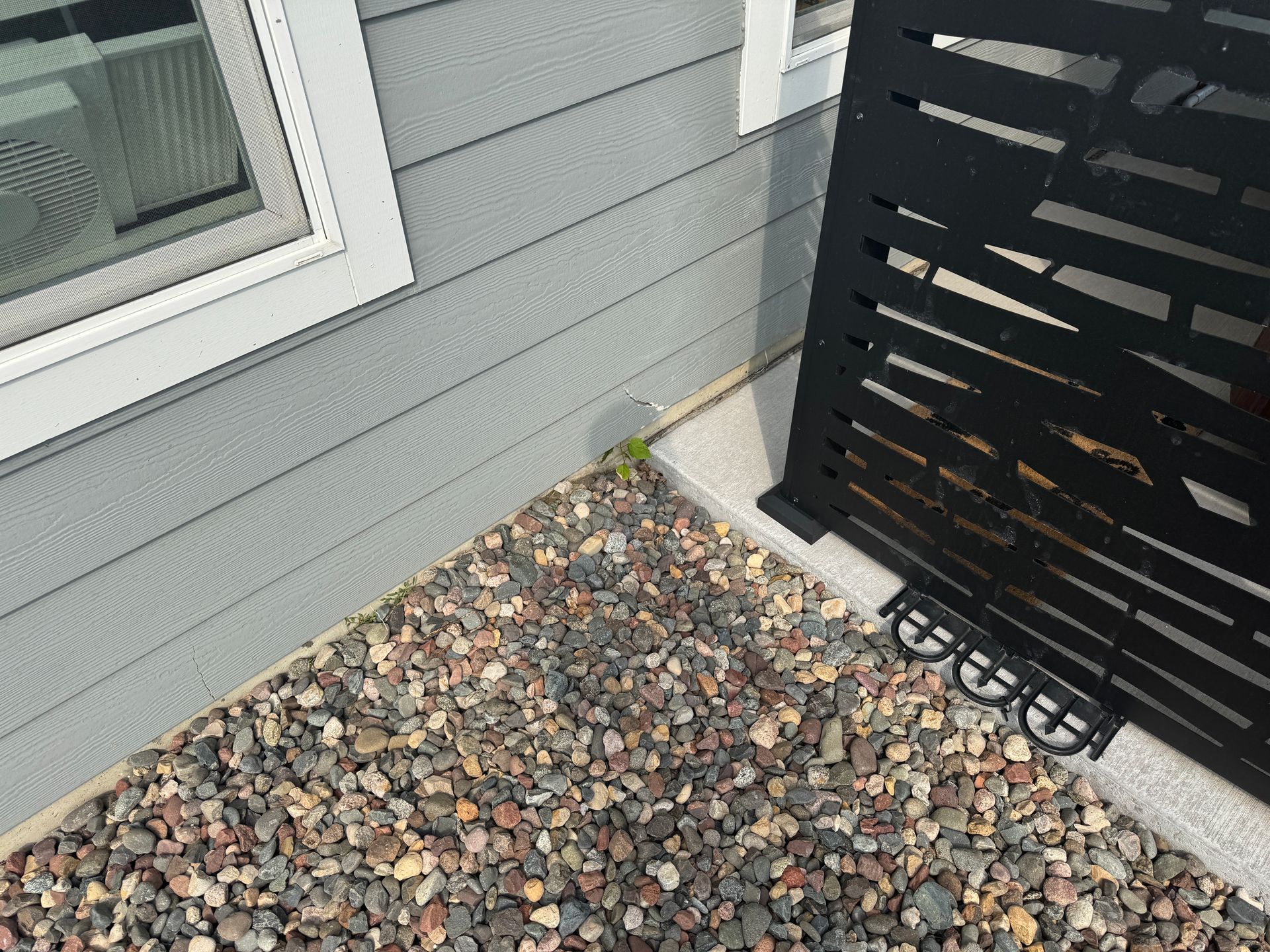
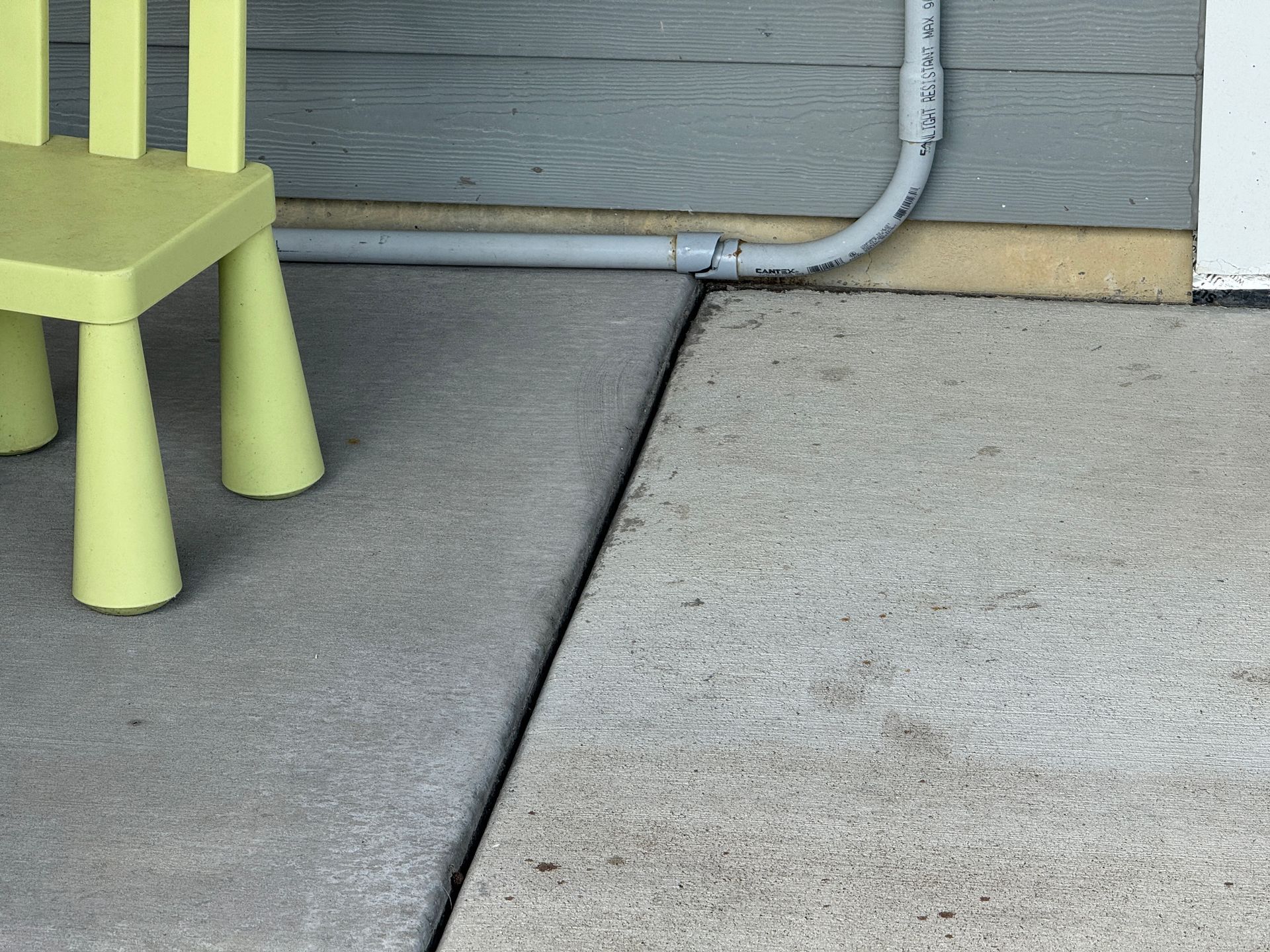
Over repeated cycles, you get pavers that are no longer level, concrete slabs that crack, edges that lift and create trip hazards, and the patio pushing into your house, damaging siding or door frames.
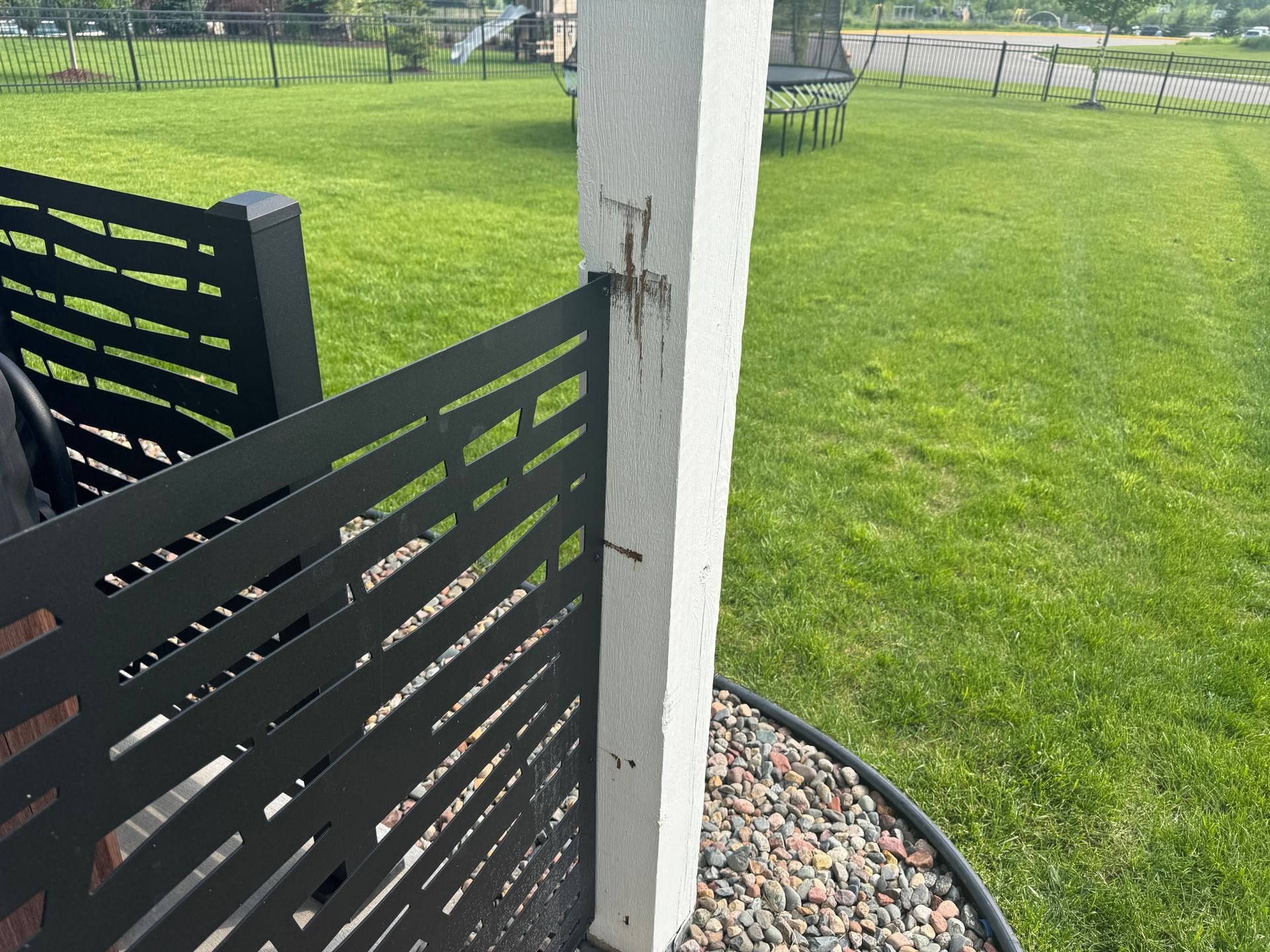
See Example Photos of Damaged Caused by Heaving Patio
How Frost Heave Lifts Patios that Don't have Proper Drainage Systems
We’ve seen patios in Plymouth lift 2 to 3 inches against the house during a bad winter. That’s more than enough to crack siding, bend trim, and even rack a sliding door frame so it won’t open or close properly. Replacing siding is expensive. Replacing a sliding door is worse.
The main culprit around here is wet clay soil.
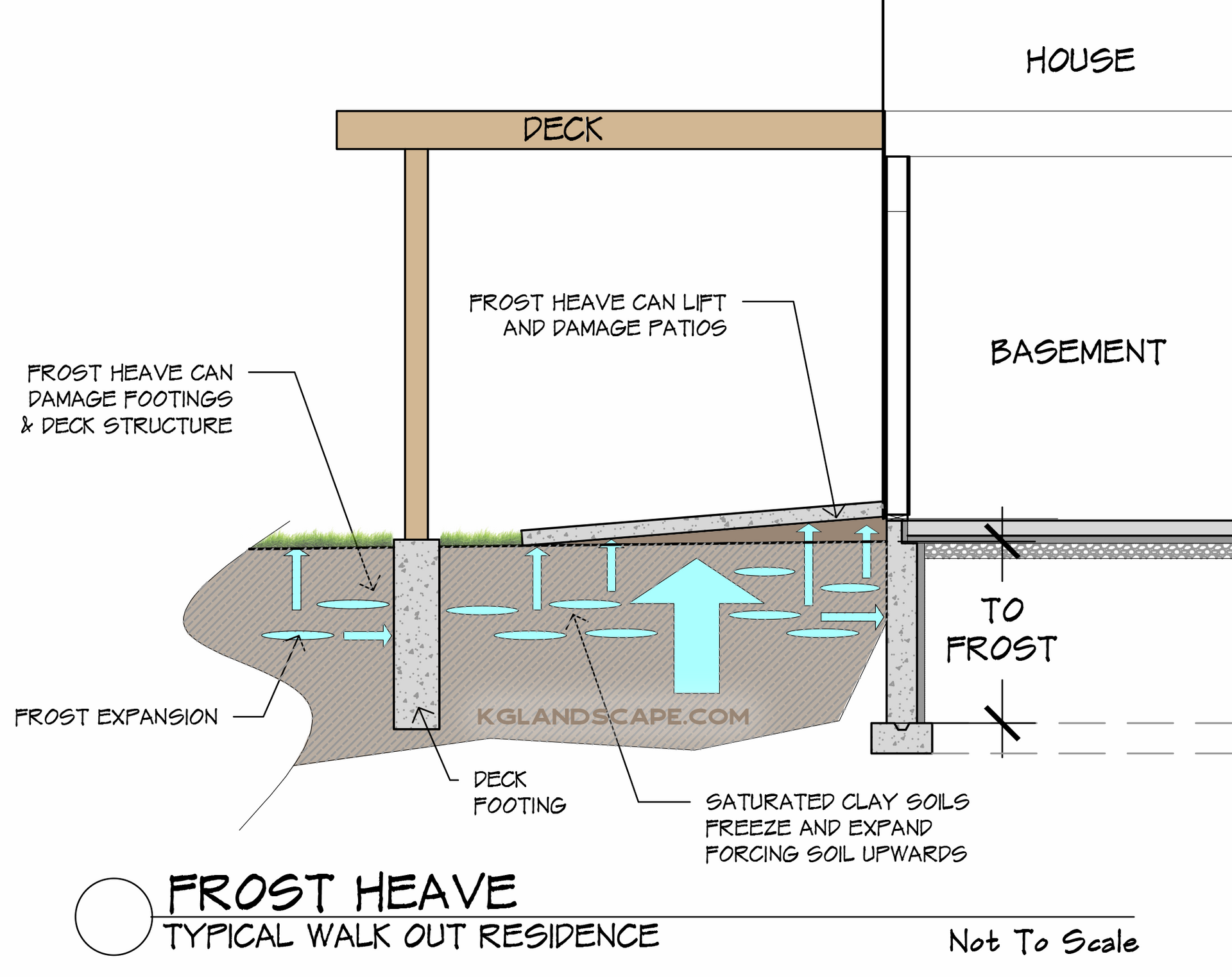
Clay holds water like a sponge. In the fall and early winter, that soil becomes saturated from rain and snowmelt. When temperatures drop, the trapped water freezes. Water expands about 9% when it turns to ice, and in clay soils that expansion has nowhere to go but up. This creates frost heave — upward pressure that can literally lift concrete slabs, pavers, and patio bases several inches.
Because patios are often installed right against the foundation, that upward movement pushes directly into the house. If the patio base isn’t deep enough, doesn’t drain well, or wasn’t built with proper frost protection, the risk is even higher. Each freeze-thaw cycle adds stress.
Over time, that repeated movement can crack concrete, shift pavers, damage siding, and put serious pressure on door frames and thresholds.
The problem isn’t just the cold — it’s cold plus water plus clay. When those three combine, the ground becomes powerful enough to move heavy hardscape.
How French Drains Protect Your Patio
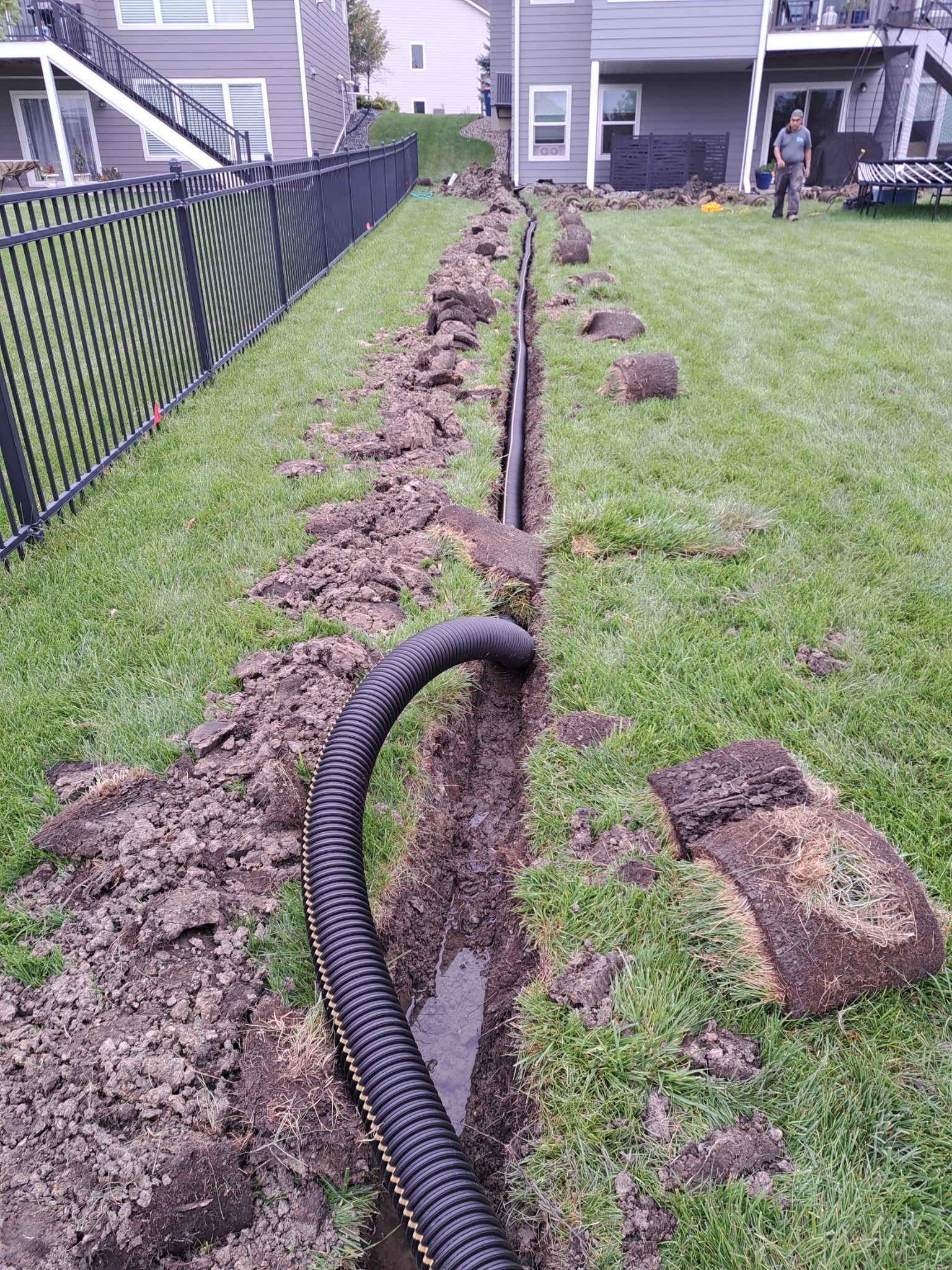
A French drain is a perforated pipe set in gravel, installed in a trench around the perimeter of your patio. Water that would otherwise saturate the soil under and around the patio drains into the gravel, enters the perforated pipe, and flows to an outlet away from the problem area.
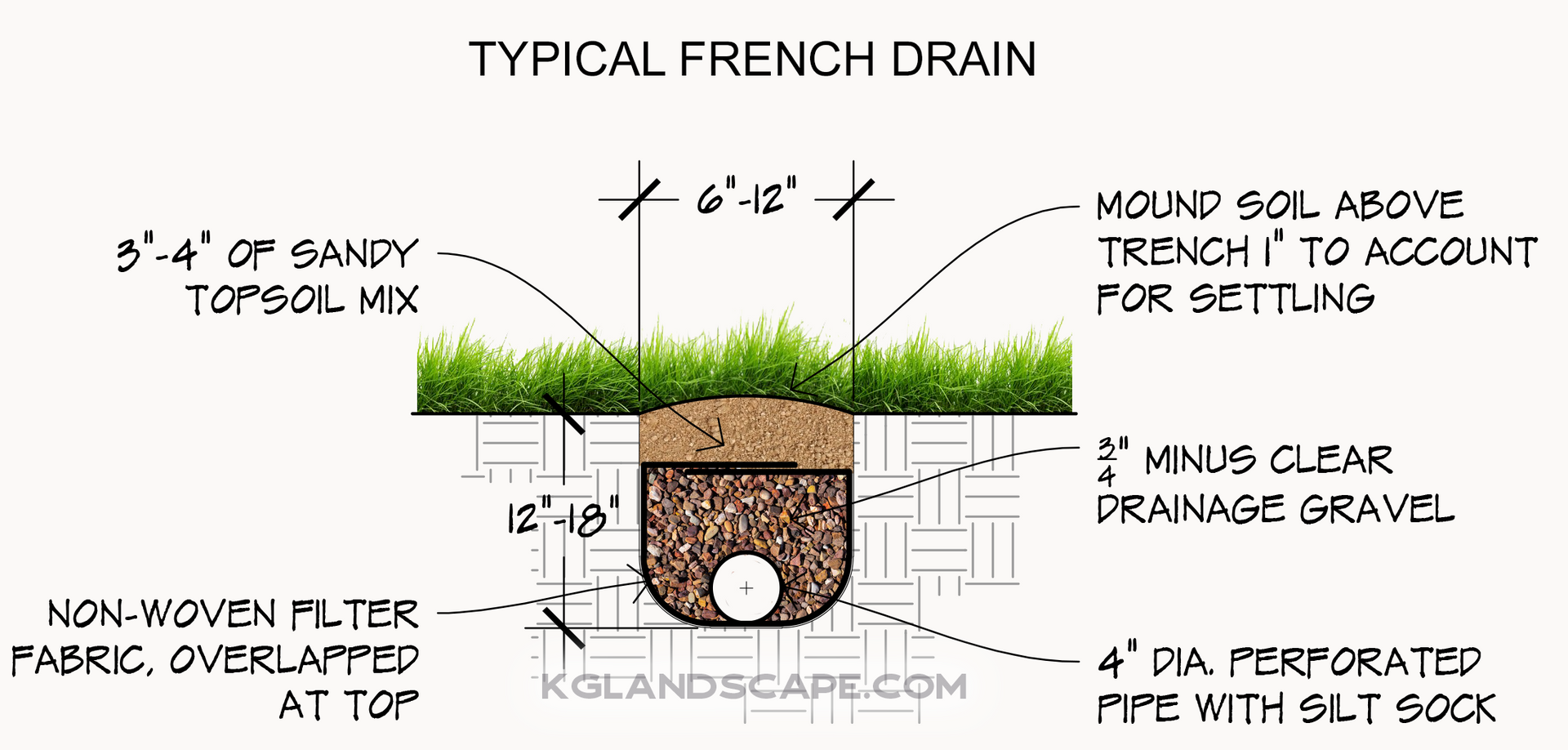
The concept is straightforward: give water an easier path than saturating your patio base.
Drain Tile Installation Around Patio
For a patio on Plymouth clay, we typically install drain tile along the foundation side of the patio, where water running down the house tends to collect, and extend it around the perimeter. The drain connects to a larger pipe that carries water to a discharge point at a lower elevation.
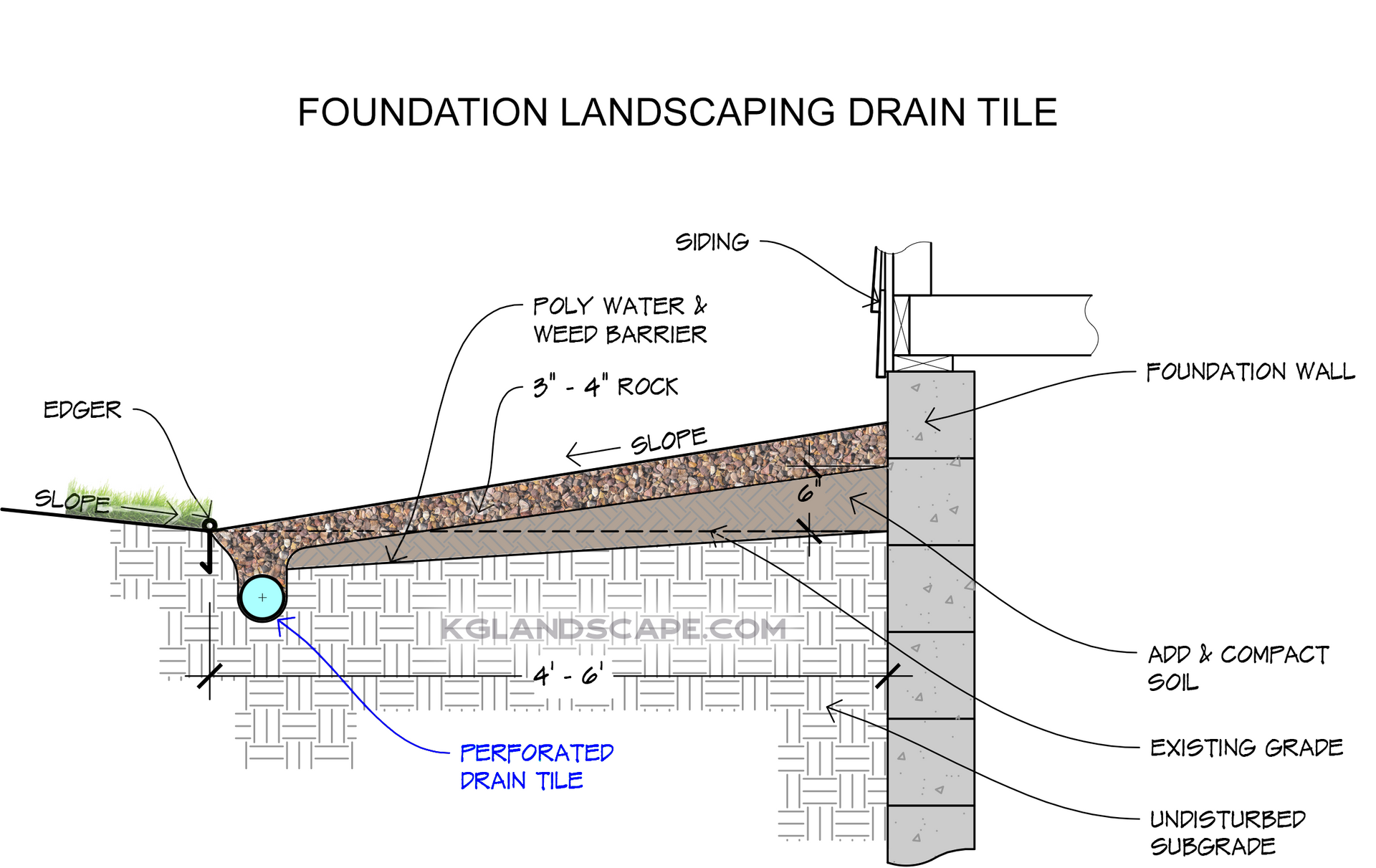
The drain tile does two things. First, it intercepts water before it gets under the patio. Second, it pulls moisture out of the soil that's already there. Clay drains slowly, but it does drain if there's somewhere for the water to go. A French drain creates that somewhere.
For decks, the same principle applies to the footings. Deck posts sit on concrete footings that are supposed to be below the frost line. But the soil around those footings can still heave and push against them. If that soil stays dry, it doesn't move. French drain sections running past deck footings keep that soil dry.
What a Proper Installation Looks Like
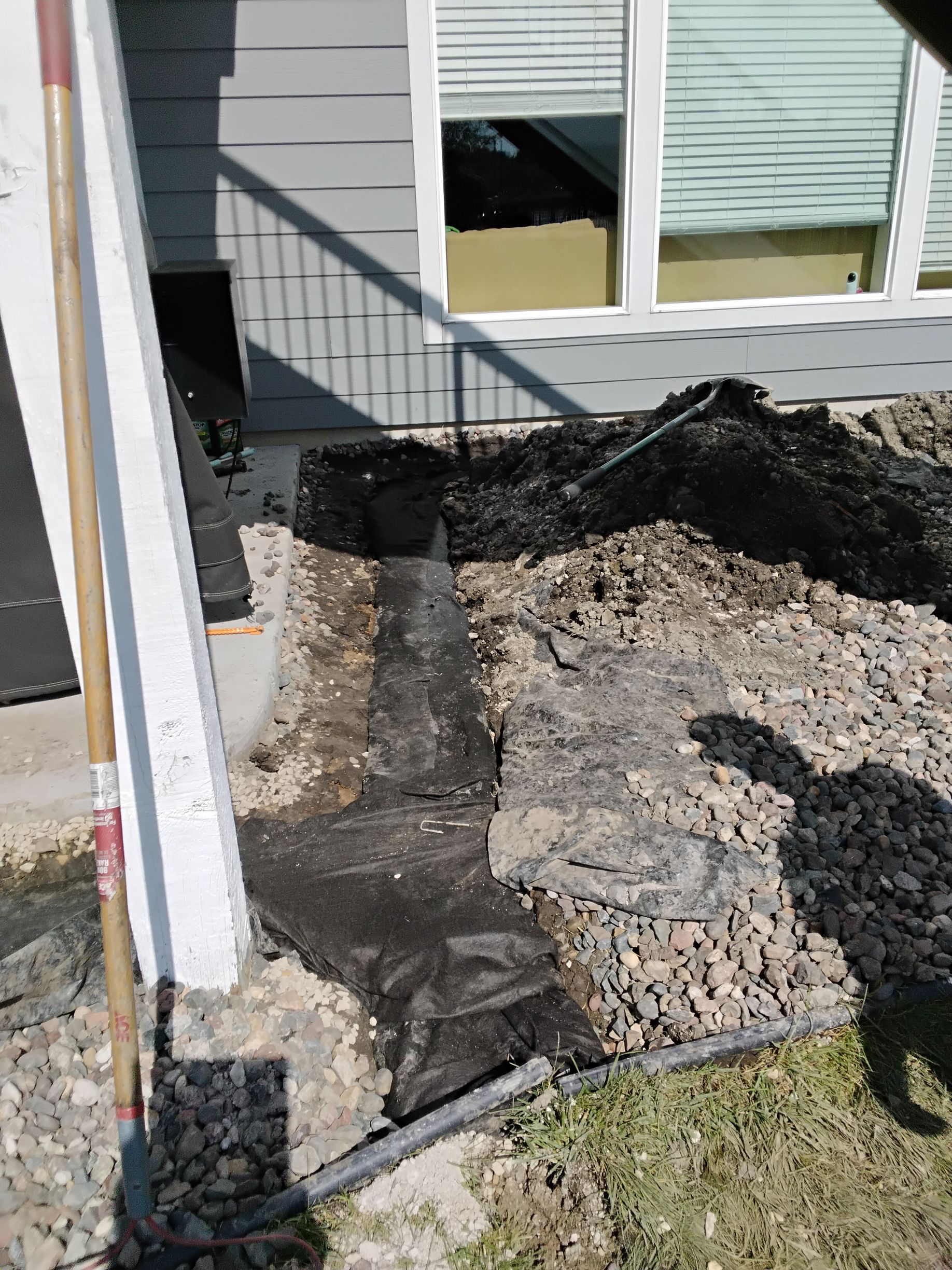
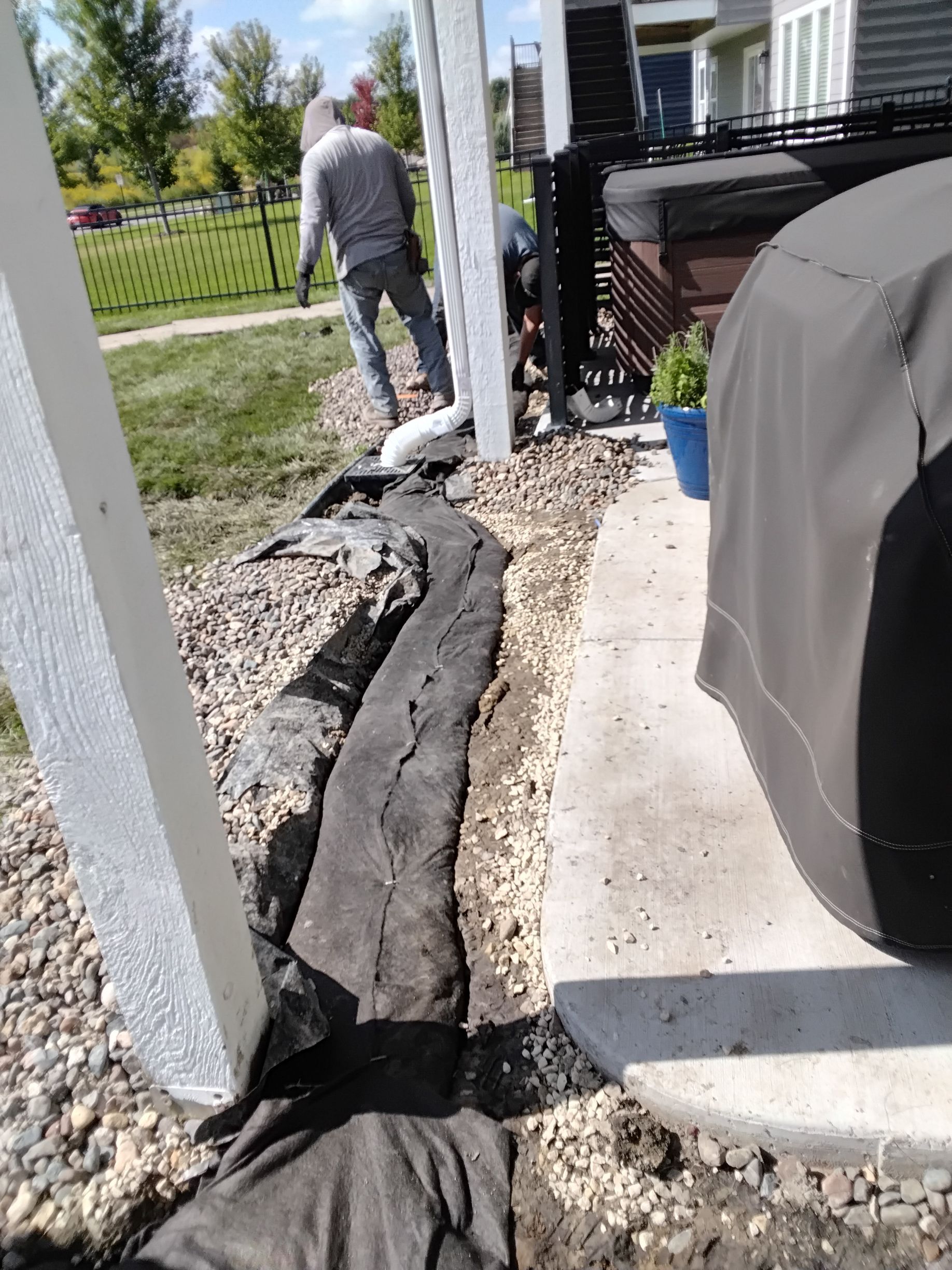
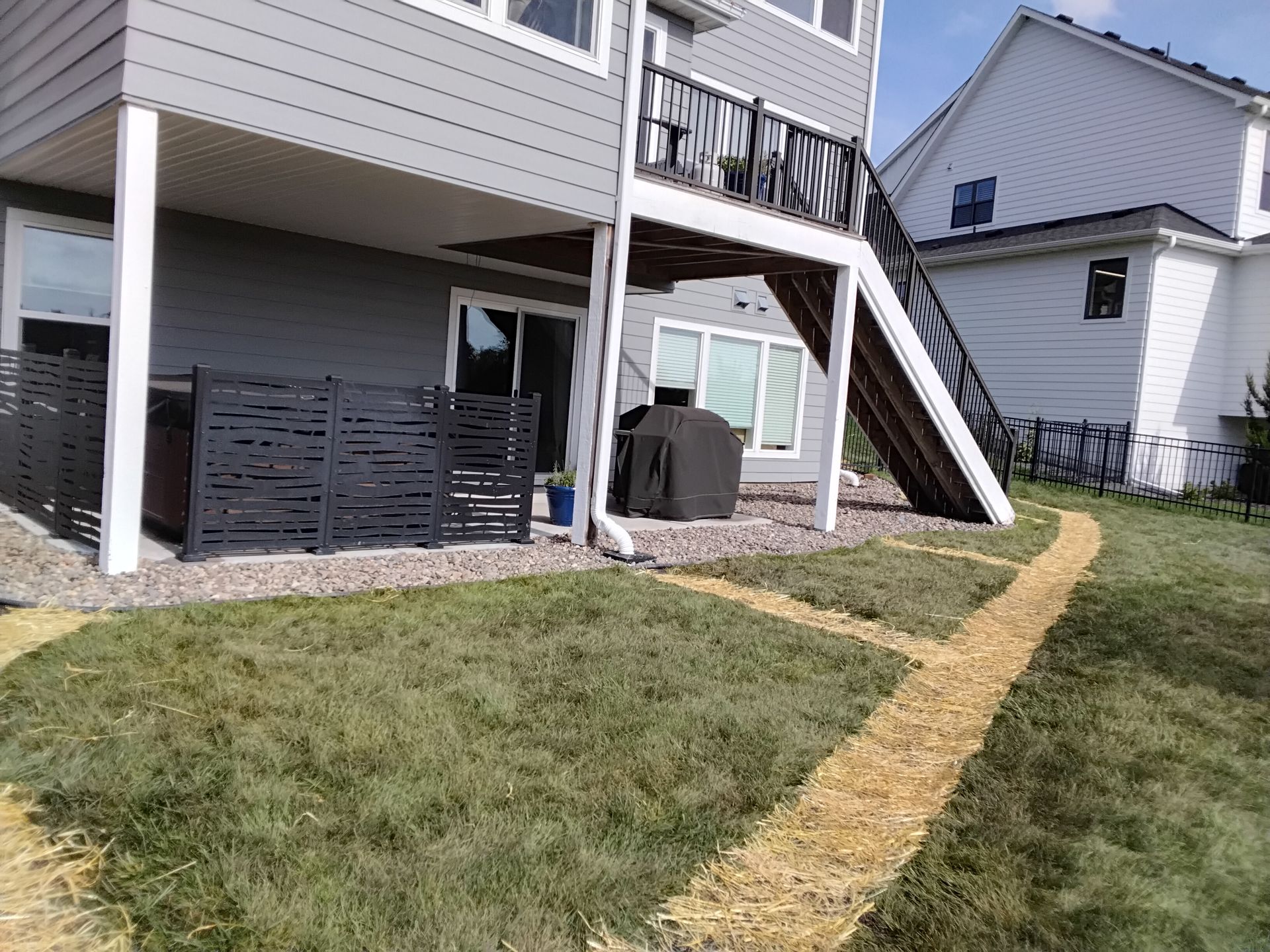
We worked the Plymouth project shown in these example photos where the homeowner's patio had heaved badly enough to crack the siding, and the deck landing was tilted from frost heave around the footings. Both problems traced back to saturated clay.
The solution included French drains along the entire back foundation of the house, extending around the perimeter of the patio. We ran additional sections past the deck footings and out to a connection point where everything tied into a main drain line.
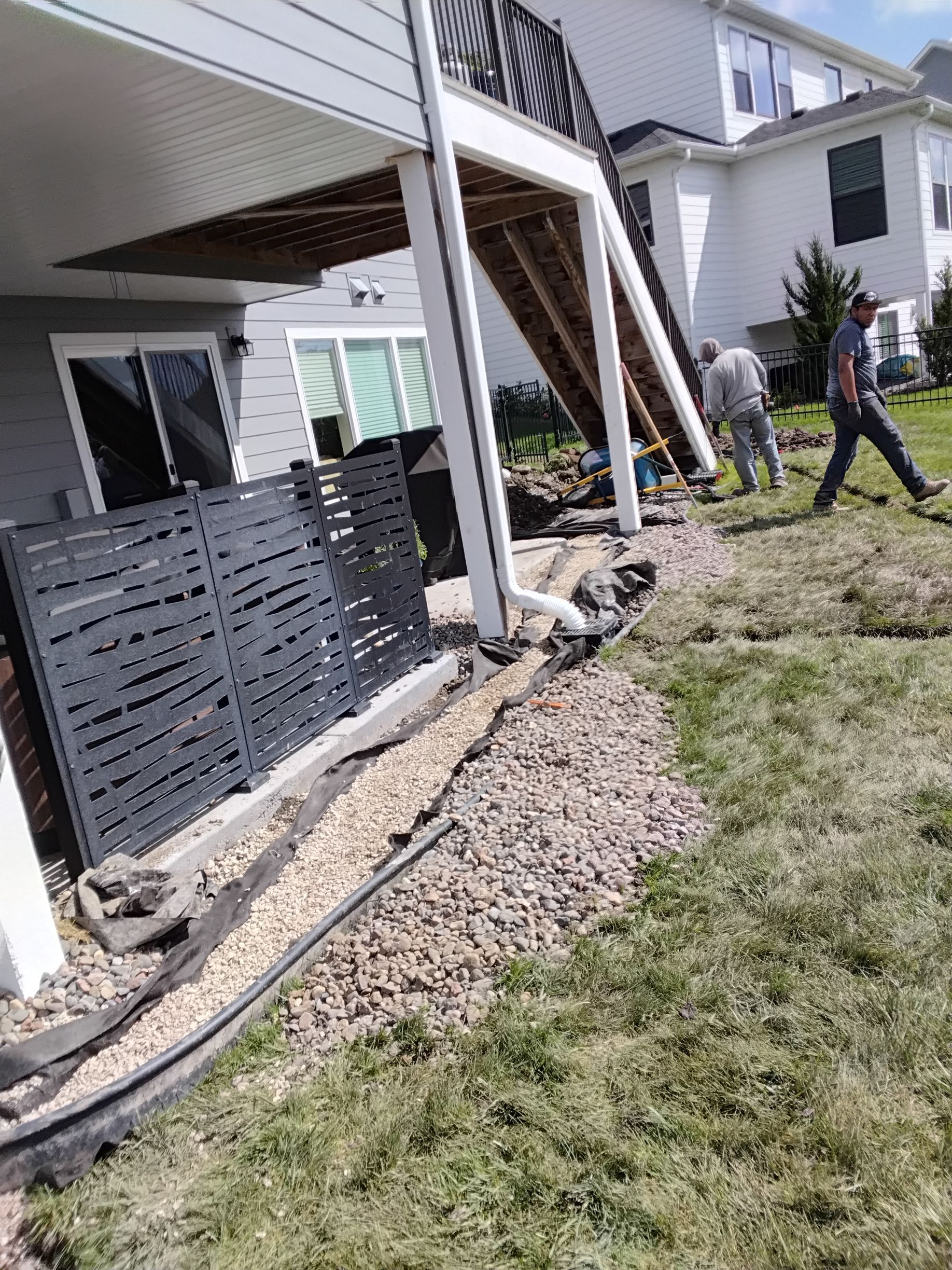
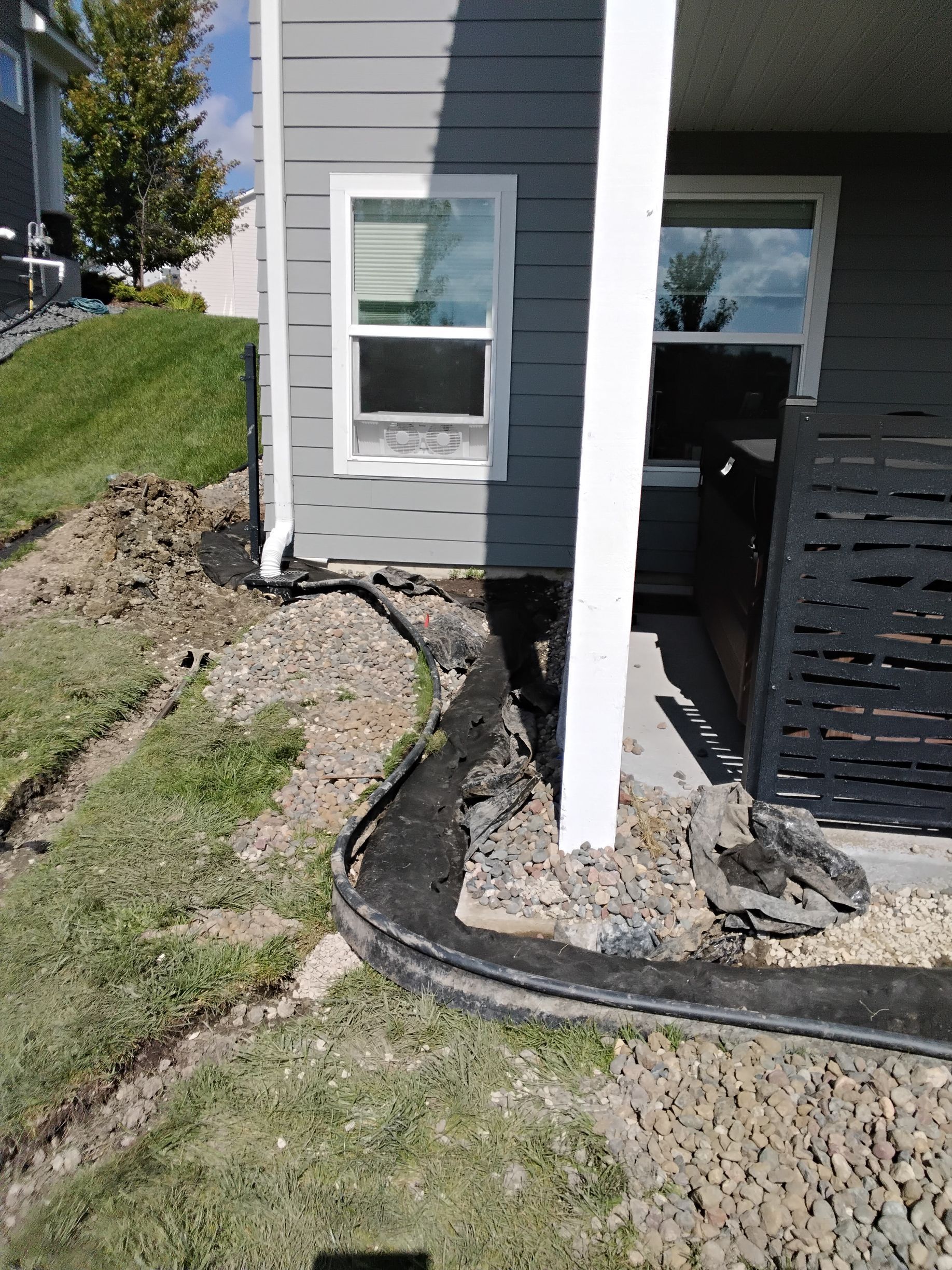
Installation Details
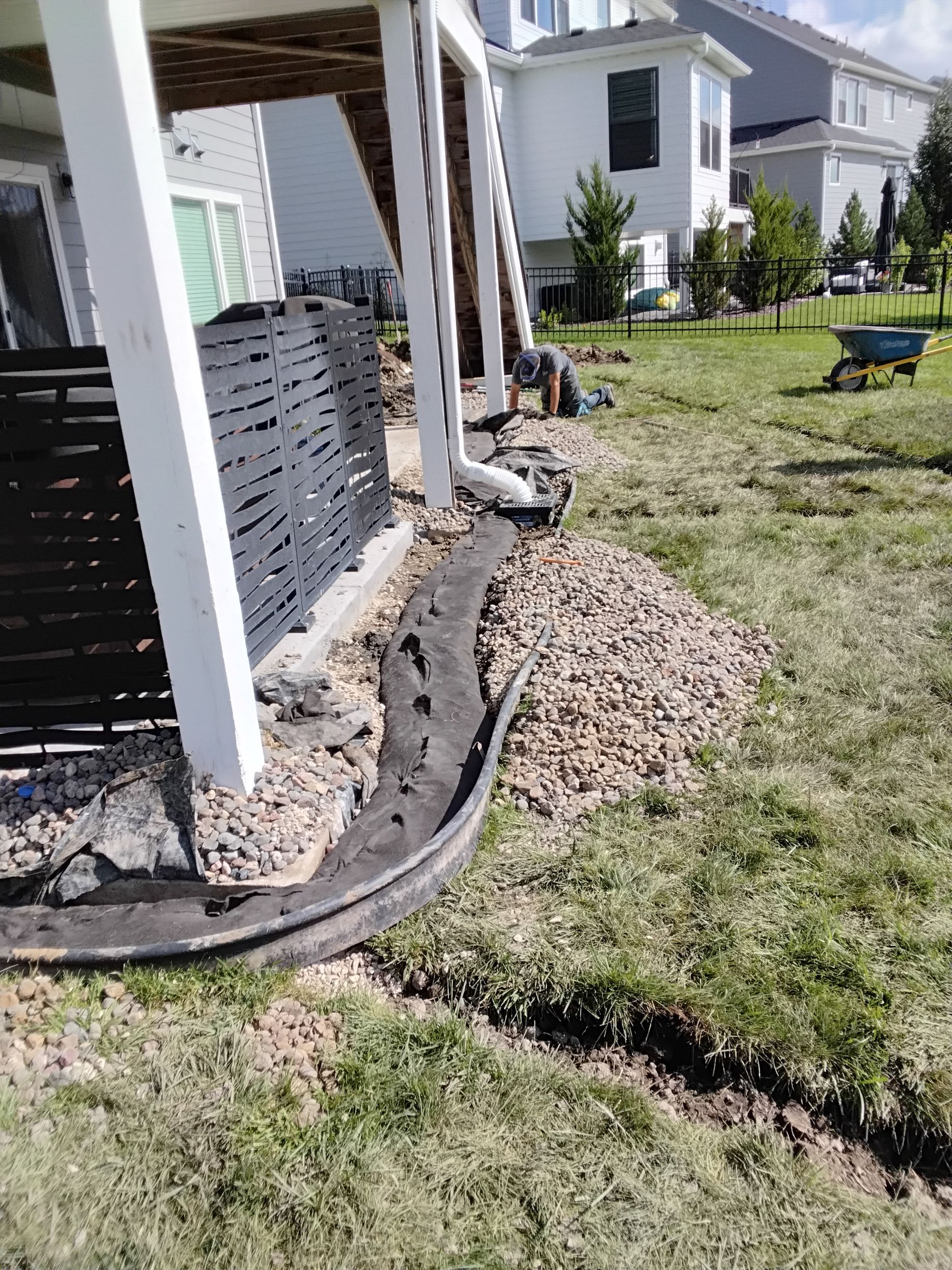
The trenches were dug to proper depth and slope, lined with landscape fabric, the perforated 4" pipe with a protective silt sock cover was installed with a predetermined slope to send water quickly out of the problem areas and out toward the outlet location at the back corner of the property. Then we filled the trenches and back filled around the drainage pipe with drain rock. Then we wrapped the filtration fabric completely around the rock backfill and drain pipe to protect everything from sediment infiltration.
After backfilling and restoring the landscape beds with new weed barrier fabric and refreshed rock, the system is invisible. But it's working constantly, pulling water away from the patio and footings before it can freeze and cause damage.
When to Add French Drains
Before you build a new patio. If you're planning a patio on Plymouth clay, include perimeter drainage in the design from the start. It's much easier and cheaper to install drain tile during construction than to retrofit it later. The trenching is already happening, the equipment is already there, and the landscape beds around the patio haven't been finished yet.
After you've seen frost heave damage. If your existing patio is lifting, cracking, or pushing against the house, that damage will continue until you address the moisture. Retrofitting drainage around an existing patio is more involved, but it's the only way to stop the cycle. We typically trench around the perimeter, install the drain tile, backfill with drain rock, and restore the landscape beds. The patio itself usually doesn't need to be removed unless the damage is severe enough to require replacement.
When you're fixing other drainage problems. If you're already addressing wet areas in your yard, extending the system to protect your patio makes sense. Tying everything together into one comprehensive system is more effective than piecemeal fixes.
We put together a showing how French drains, underground downspouts, and sump pump discharge all work together on a Plymouth property that was dealing with severe frost heave. The patio drainage was one piece of a larger system.
The Difference Drainage Makes
Dry soil doesn't heave. That's the whole principle.
A patio sitting on clay that stays saturated will move every winter. A patio with French drains around the perimeter, where water is constantly being pulled away from the base, stays stable. The freeze-thaw cycles still happen, but there's not enough moisture in the soil to cause significant expansion.
The deck footings stay put. The landing at the bottom of the steps stays level. The patio doesn't push into your siding.
That's what drainage buys you: a patio and deck that look the same in year 10 as they did in year 1.
Frequently Asked Questions
Can I install French drains around an existing patio?
Yes. It requires trenching around the perimeter, which means temporarily removing edging, pulling back landscape rock or mulch, and cutting through any roots in the way. The drain tile gets installed, backfilled, and the landscaping gets restored. It's more disruptive than including drainage in a new build, but it's absolutely doable and often necessary to stop ongoing frost heave damage.
How deep do French drains around a patio need to be?
Typically 12 to 18 inches, depending on the situation. The drain needs to be deep enough to intercept water before it gets under the patio base, and it needs slope to move water toward the outlet. In some cases, we go deeper near the foundation to catch water migrating down the basement wall.
Will French drains work in heavy clay soil?
Yes. Clay drains slowly, but French drains give water an easier path. The drain rock and perforated pipe create a channel that water will move toward because it's easier than pushing through clay. The key is proper installation with the right materials and adequate slope to keep water moving.
How long do French drains last?
A properly installed French drain with quality materials should last 20 years or more. The main failure points are crushed pipes, clogged fabric, or blocked outlets. Using the right stone, a silt sock on the pipe, and ensuring the outlet stays clear all extend the system's life.
Do I need French drains if my patio has a thick gravel base?
A thick gravel base helps, but it's not enough on its own in clay soil. The gravel provides drainage space, but if the surrounding clay is saturated, water migrates into the base and stays there. You need a way to get that water out. That's what the French drain provides.
Protect Your Plymouth Patio and Deck
If you're building a new patio on clay soil, include drainage in your plan. If your existing patio is already showing frost heave damage, adding drainage is the only way to stop it from getting worse.
We've been designing and installing drainage systems for Plymouth properties for over 20 years. We can evaluate your situation and show you exactly what it takes to keep your patio and deck stable through Minnesota winters.
About the Author
Kent Gliadon is the owner and principal designer at KG Landscape, a Minneapolis-based landscape design and build company serving homeowners across the Twin Cities for over 20 years. Kent studied landscape architecture and earned a bachelor's degree in Environmental Horticulture at the University of Minnesota, with emphasis in turf science and landscape design.
Protect Your Patio for the Long Run
Your patio should add value and enjoyment to your home for decades — not shift, crack, or press against your siding after a few harsh winters. In Plymouth’s wet clay soil, proper drainage is what keeps your investment stable year after year.
A professionally installed French drain helps control moisture around your patio and deck footings, reducing freeze-thaw movement and long-term structural stress. It’s not just about preventing damage this winter — it’s about keeping your patio level, solid, and looking great for the long haul.
👉 [Protect Your Patio – Request a Quote]
Build it right. Drain it right. Keep it nice for the long run.
Ready to Start on Your Next Project?
Call us at (763) 568-7251 or visit our quote page.