Tips for Turning Builder-Grade Landscaping to Designer Curb Appeal in Minnesota
When the Inside of Your Home Looks Better Than the Outside
New construction homes in the Twin Cities usually come with landscaping. The builder puts in some shrubs along the foundation, a few small trees, mulch beds, and a concrete walkway to the front door. It's functional. It meets code. And it looks exactly like every other house on the street.
The inside of these homes is often impressive. Custom finishes, thoughtful layouts, quality materials. But the outside tells a different story. The landscaping is an afterthought, installed to check a box rather than to complement the architecture or give the home any real character.
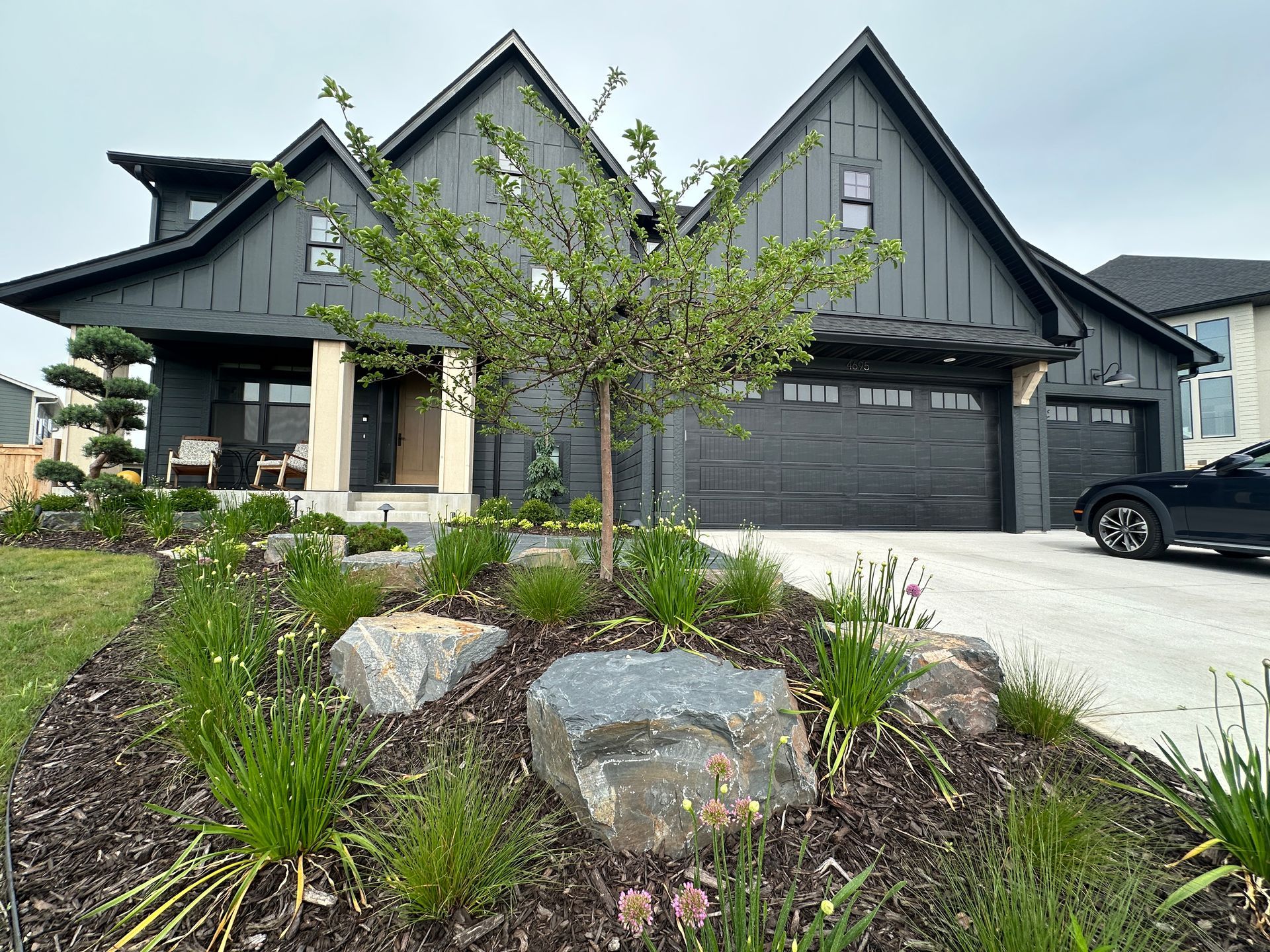
This Plymouth project started with exactly that situation. The homeowners had purchased a new home in the Hollydale neighborhood. The house itself was beautiful. Dark siding with a rustic-modern feel. But the front yard was basic builder-grade landscaping that didn't match the quality of the home or the neighborhood. They wanted something they could actually be proud of.
The Problem With Builder-Grade Landscaping
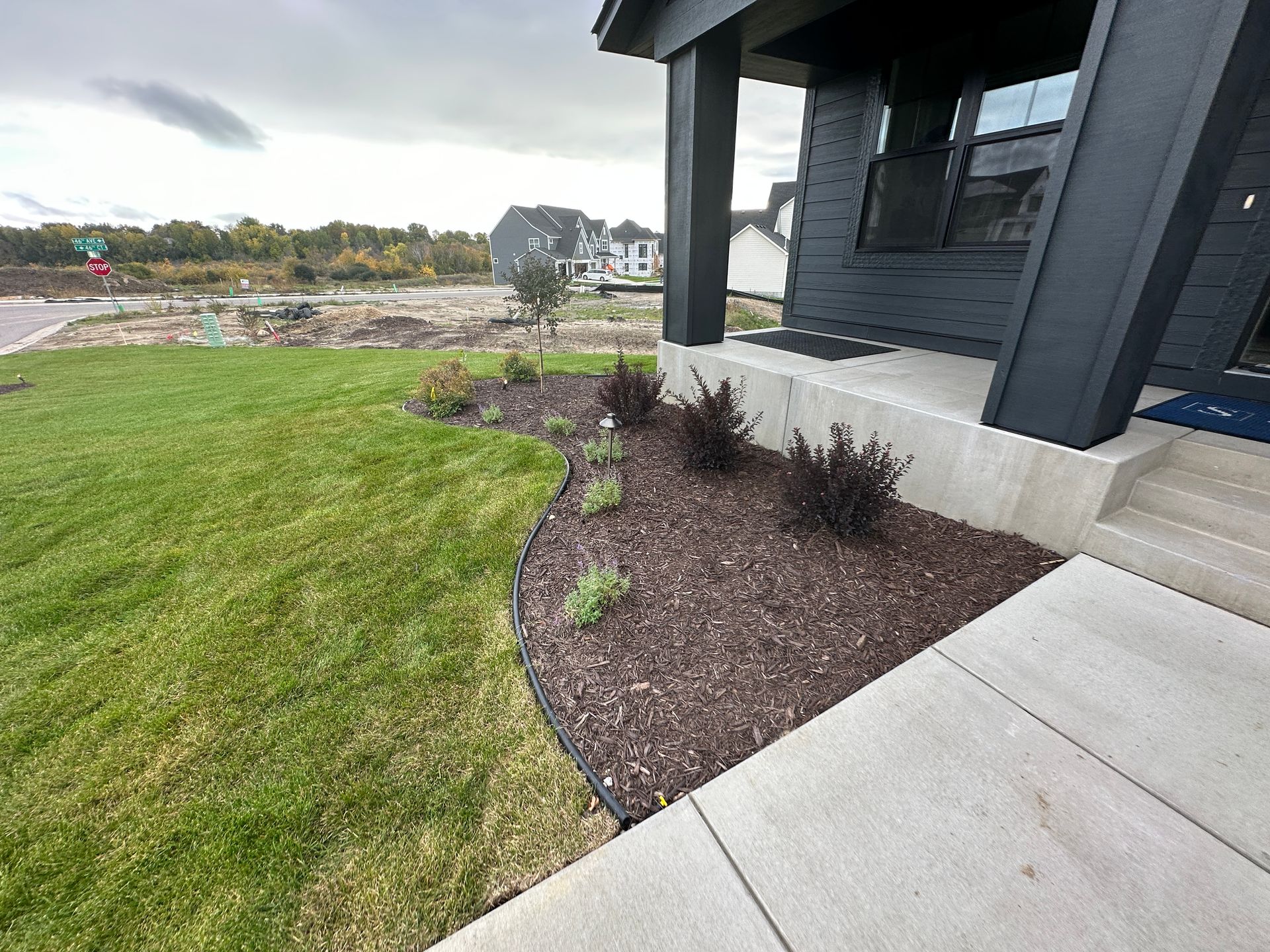
Builder landscaping isn't bad. It's just generic. The goal is to make the house look finished at closing, not to create something distinctive.
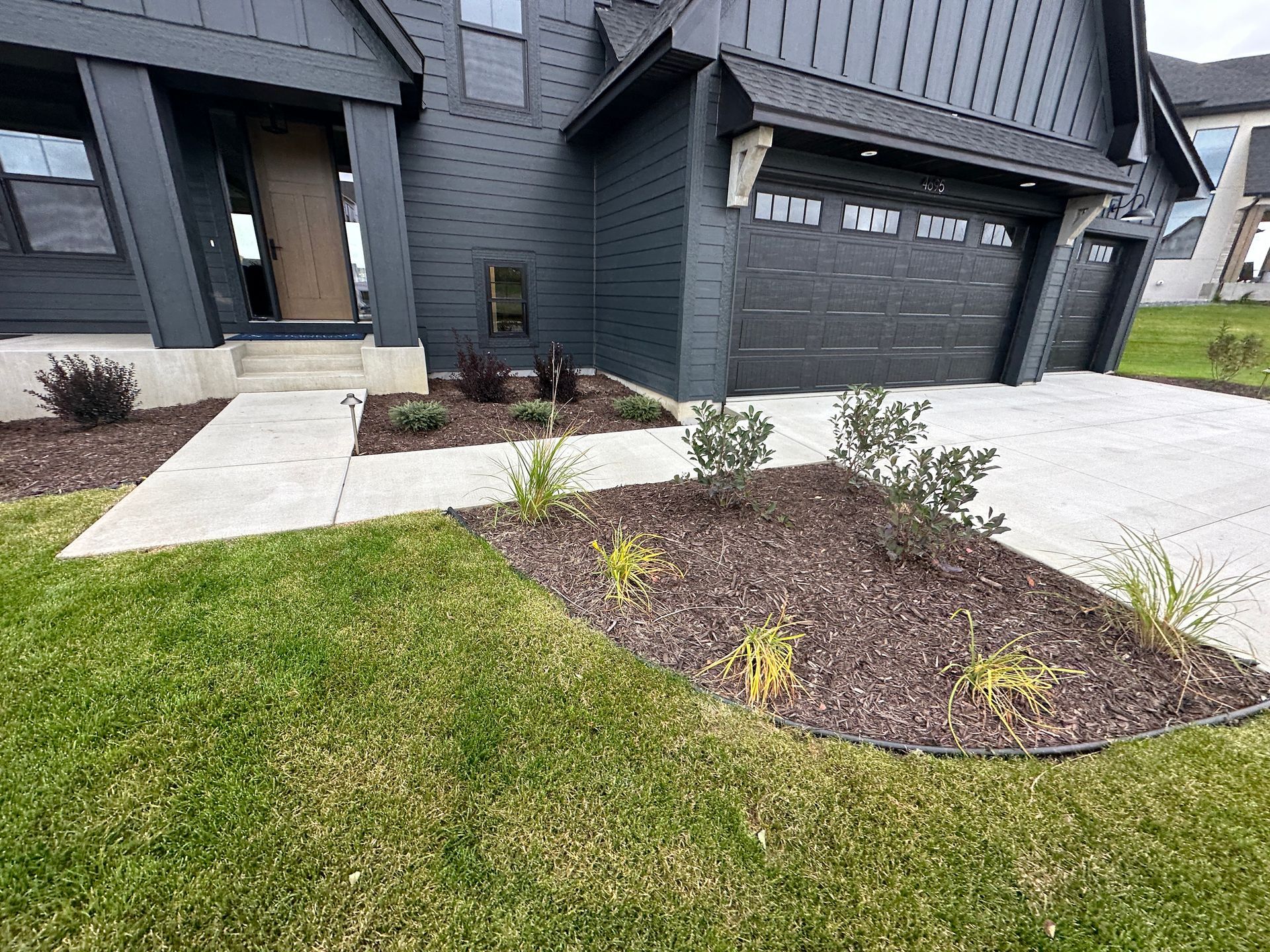
You get a straight concrete walkway, usually at a 90-degree angle from the driveway to the front door. Foundation shrubs that are chosen for low cost and easy installation. Mulch beds with clean edges. Maybe a tree or two.
It works. But it doesn't do anything for the home. The landscaping doesn't connect to the architecture. It doesn't pull out the colors or materials that make the house interesting. It doesn't create any sense of arrival when you walk up to the front door.
In Plymouth's Hollydale neighborhood, the homes range from $1.5 to $4 million. At that level, generic landscaping stands out for the wrong reasons. The house says one thing and the front yard says another.
Tip #1: Start With the Walkway
The concrete walkway was the first thing to go. A straight shot of gray concrete doesn't belong in front of a home with dark siding and a modern-rustic aesthetic. We see this mismatch constantly on new builds throughout Plymouth and the west metro.
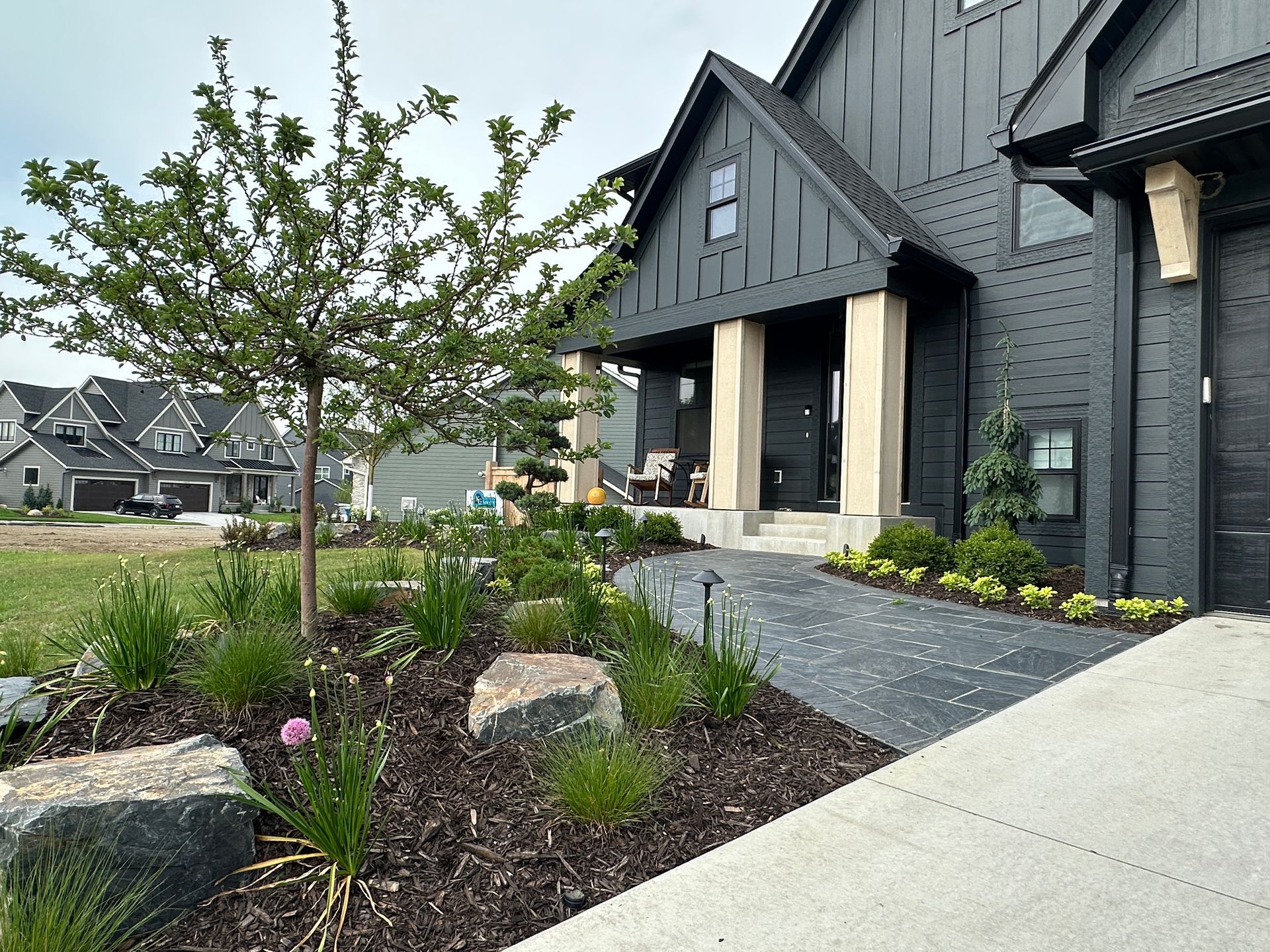
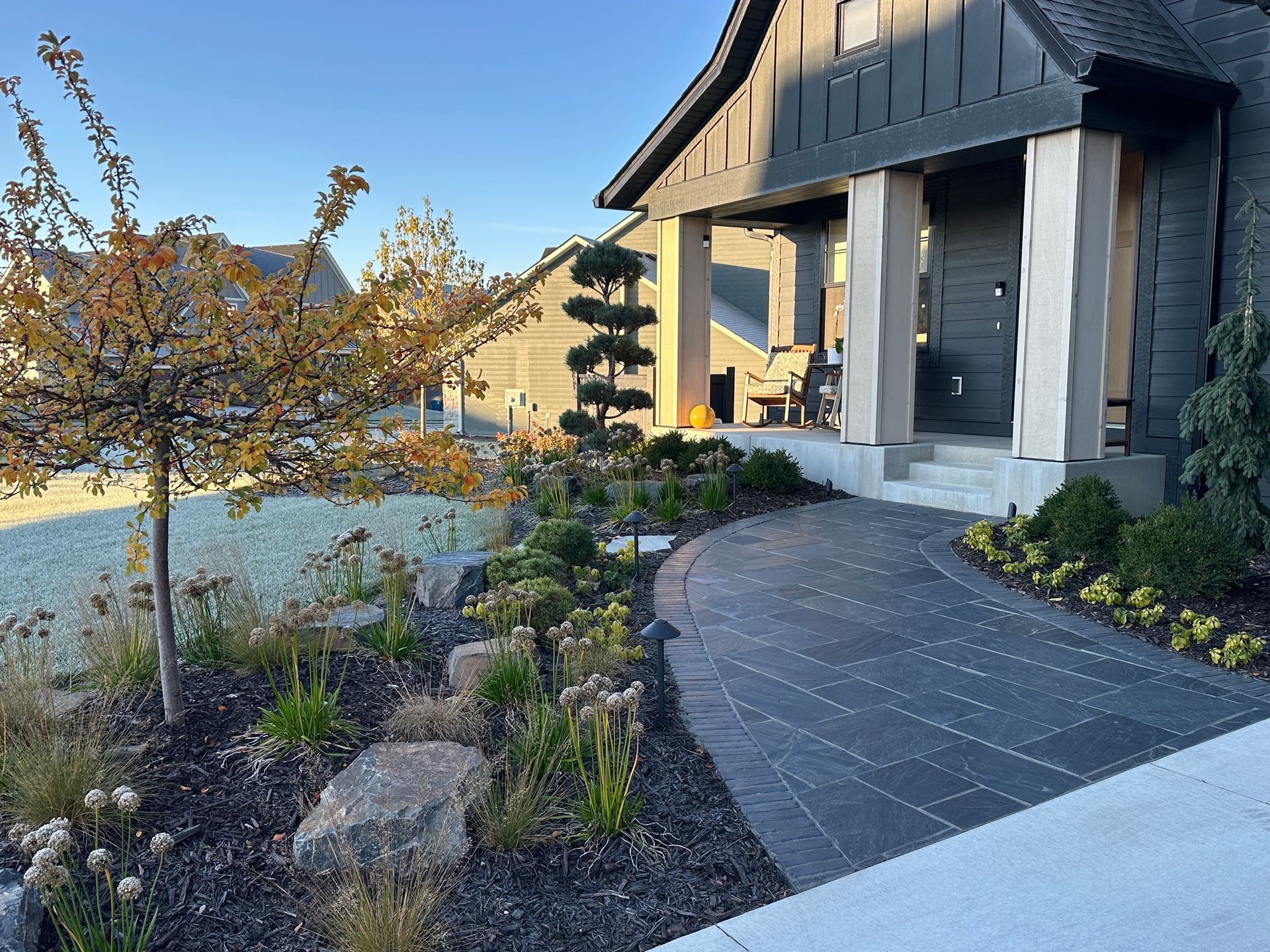
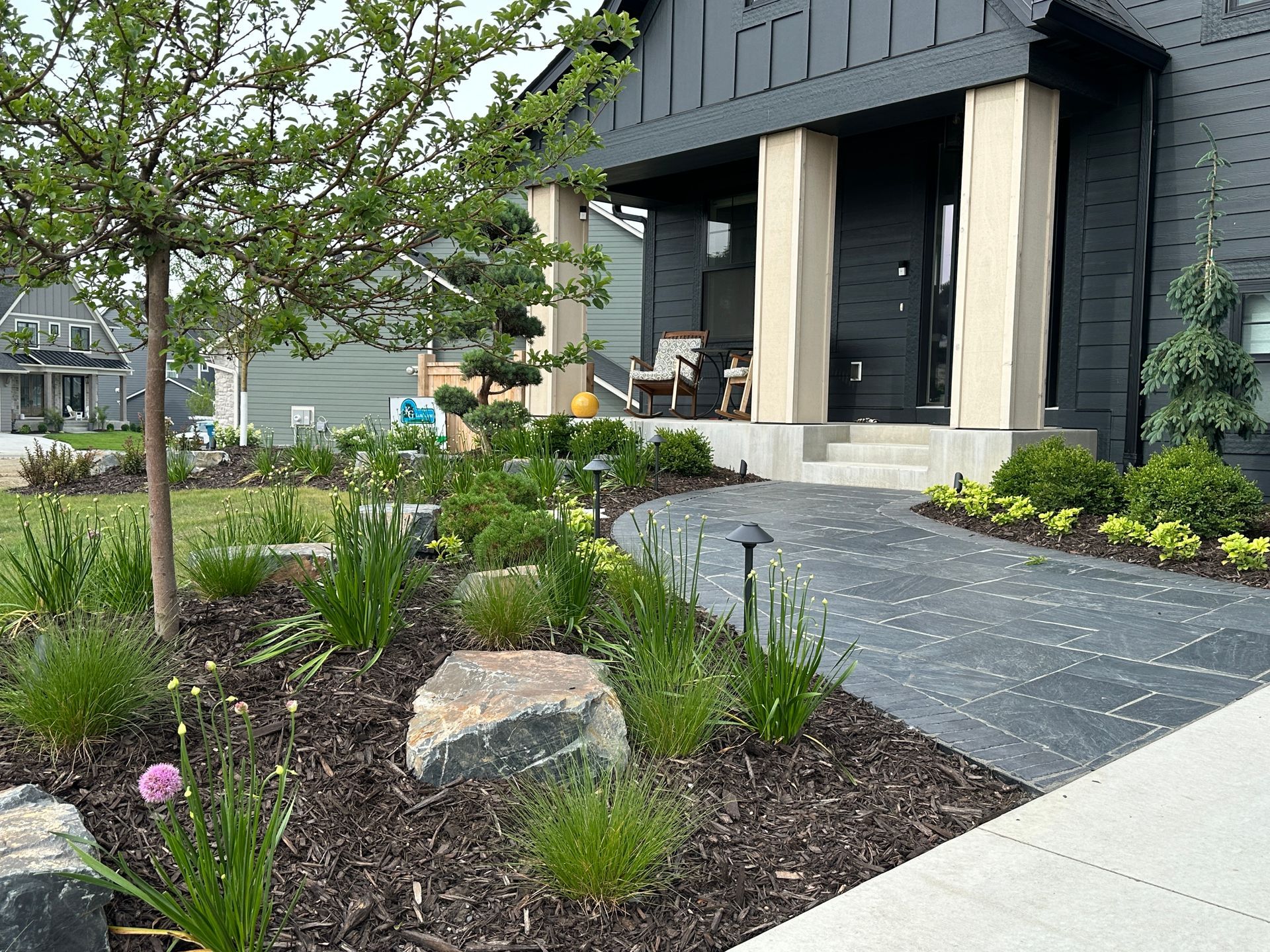
We replaced it with black natural stone flagstone, cut and patterned to create a custom front entry. The dark stone pulls the siding color down into the landscape. Instead of the house sitting on top of generic landscaping, the two now connect. The walkway feels like it belongs there.
We used steel edging along the walkway for a clean, modern line. The stone itself has natural variation in color and texture, which gives it character without looking busy. Walking up to the front door now feels intentional, like you're approaching something designed rather than something assembled.
The flagstone connects to stepping stones that cut through to the main yard, using the same material we installed in the backyard around the fire pit area. That continuity matters. When you see the same stone in the front and back, the whole property feels cohesive.
Takeaway: A custom stone walkway that connects to your home's color palette makes everything else look more intentional.
Tip #2: Create Privacy at the Entry
Think about what you see when standing at your front door. Most builder landscaping ignores this. Usually, you're looking at the neighbor's house., their garage, their driveway. There's no sense of enclosure or privacy. This is true in Hollydale and in most Twin Cities neighborhoods where homes are relatively close together.
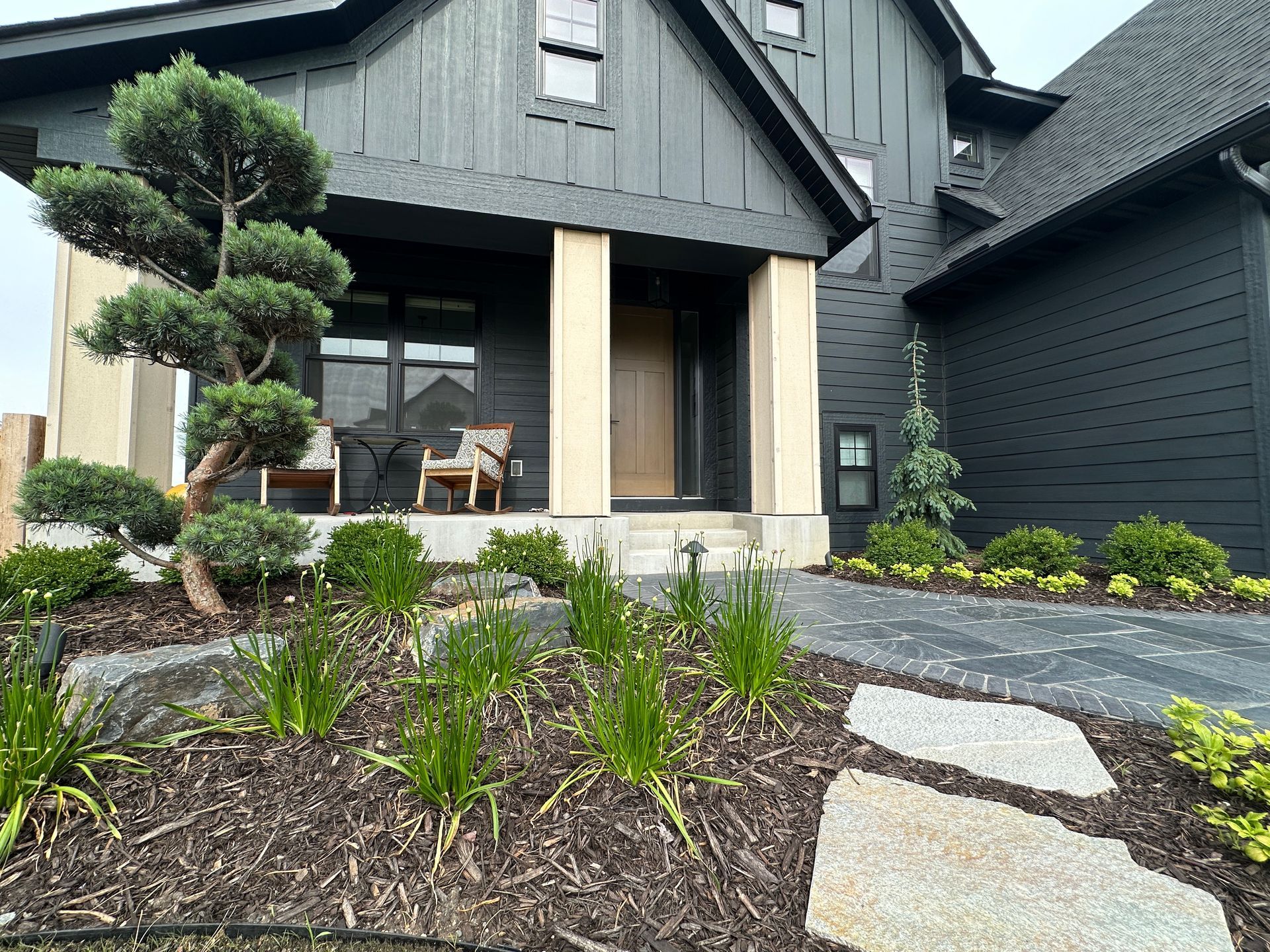
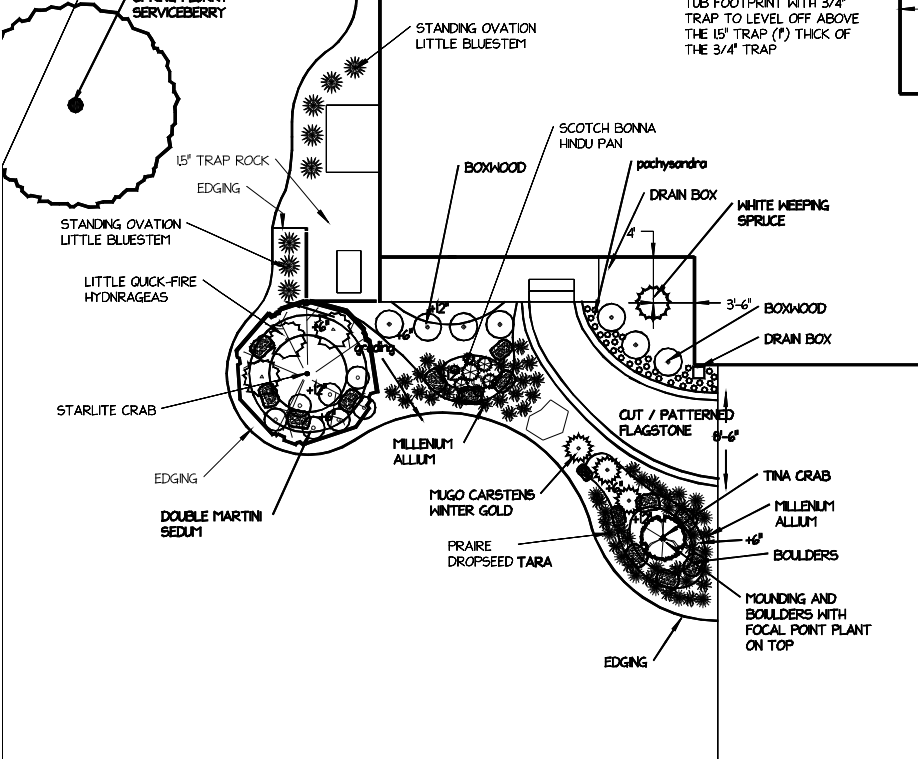
We planted strategically to change that. A Starlight Crabapple and a Serviceberry tree anchor the corner of the front yard, positioned to block the view of the neighboring property. When you walk up the front path and look toward the door, your eye stops at the plantings instead of wandering to the house next door.
As these trees mature and fill in, the effect will become even stronger. The front entry will feel like its own space, screened from the surroundings. You'll be looking at the landscape and the front door, not the neighborhood.
This is something we think about on every front yard project we design. What do you see from the street? What do you see walking up? What do you see standing at the door? Each view matters.
Takeaway: Strategic tree placement can screen neighboring views and make your entry feel like its own space.
Tip #3: Build a Planting Plan That Works in All Four Seasons
Your front yard needs to look good in January, not just June. Minnesota has four seasons, and if everything in the landscape is flowering perennials, you're looking at bare stems from November through April. You need structure.
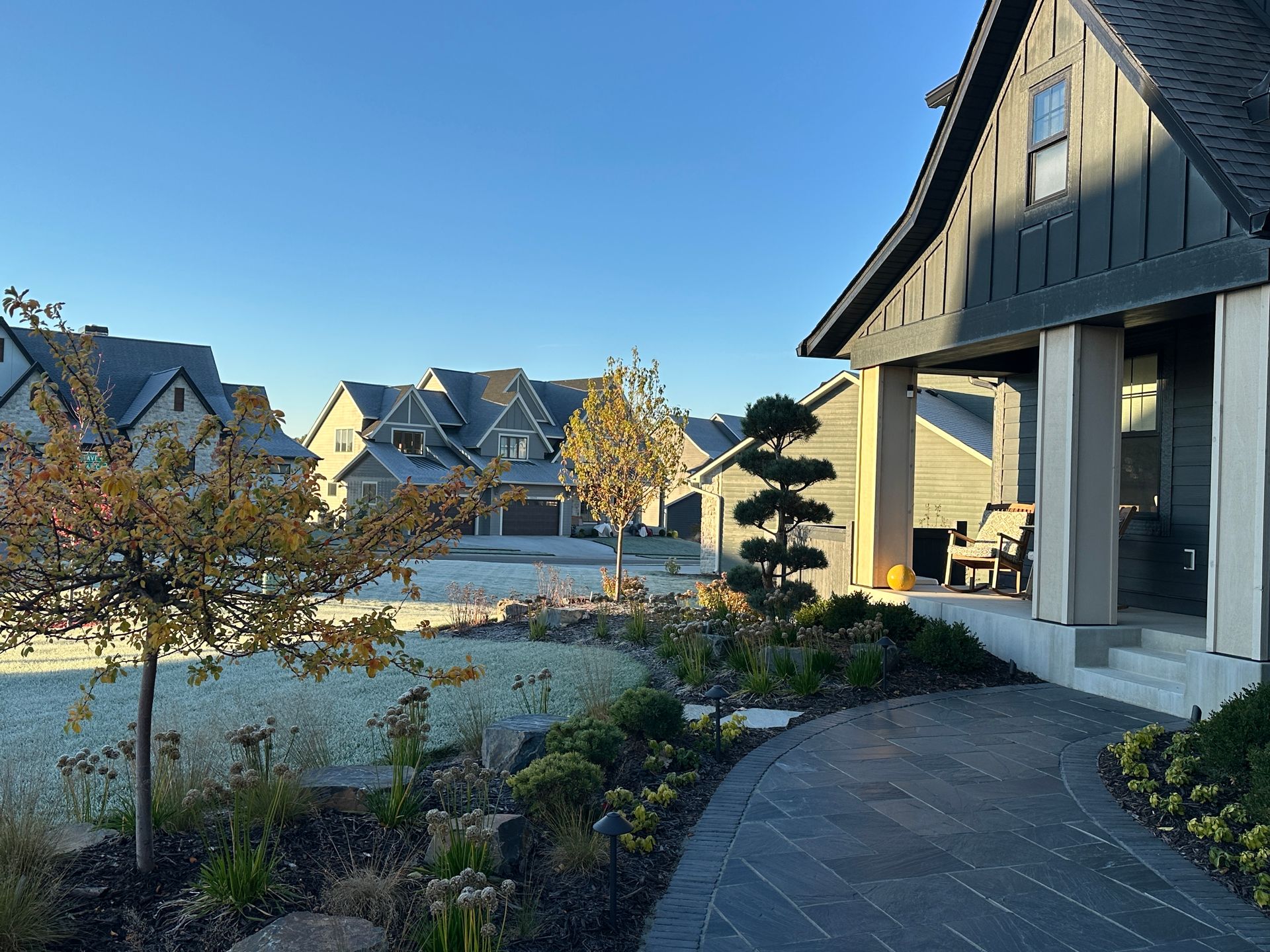
The bones of this design are evergreens and boxwoods along the foundation. They hold their shape and color through winter. When everything else dies back, these plants keep the front yard from looking abandoned.
For focal points, we used a Scotch Bonsai Pom-Pom Topiary and a White Weeping Spruce. Strong visual presence year-round. Then we layered in flowering elements: a Tina Crabapple with white spring blooms and interesting branching structure, hydrangeas for summer, Millennium Allium and Prairie Dropseed grasses for texture. Carsten's Winter Gold evergreens add a yellow-green color that shifts through the seasons.
The University of Minnesota Extension has good resources on plant hardiness for this climate. The key is mixing plants with different peak seasons so something always looks good.
Takeaway: Layer evergreens for structure, then add flowering elements for seasonal color. Something should always look good.
Tip #4: Use Boulders and Soil Mounding to Add Depth
Flat landscapes feel static. Adding elevation creates visual interest even when nothing is blooming.
This is especially useful in the Twin Cities where winter strips away a lot of the color.
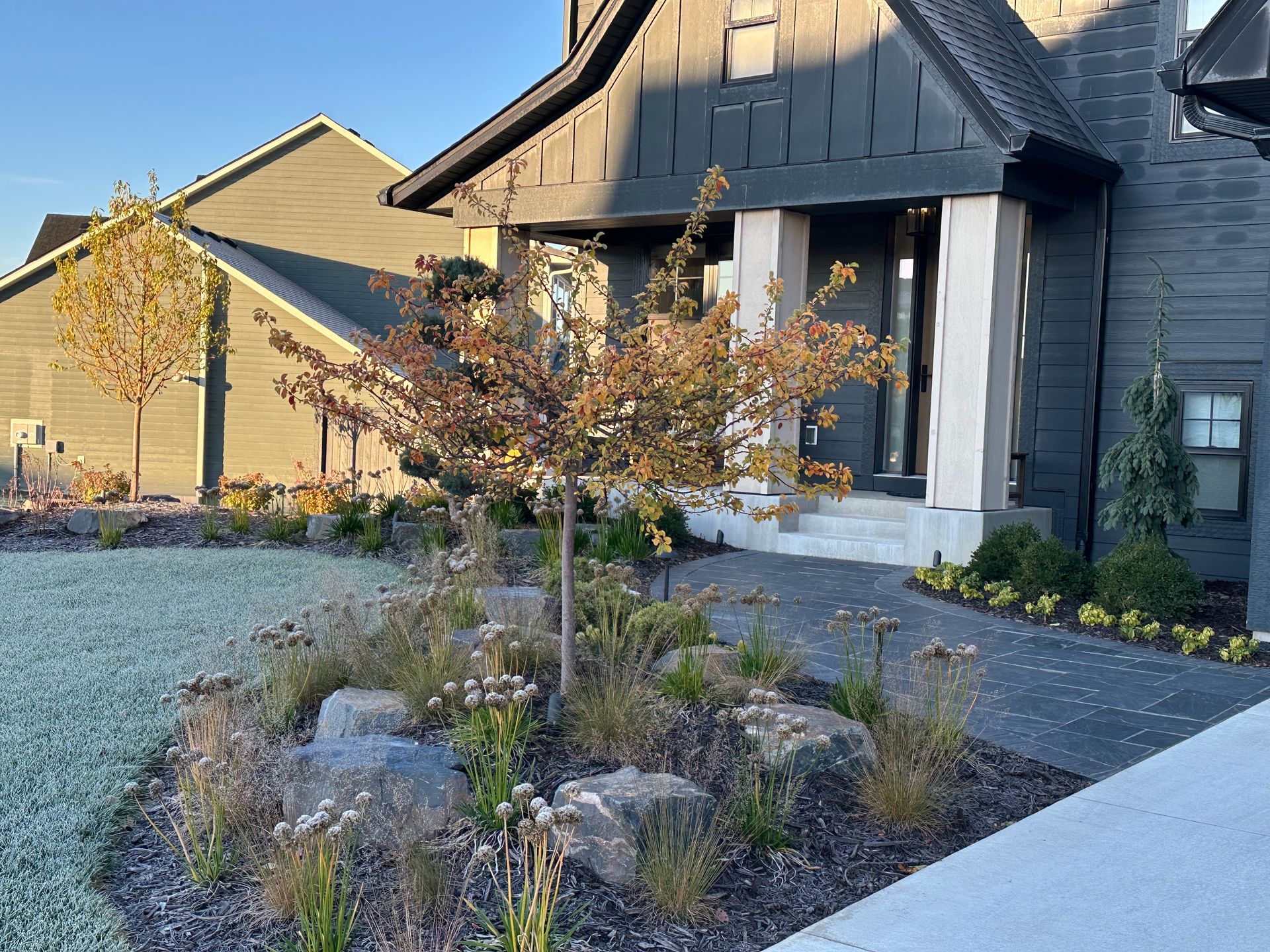
We built soil mounds in the primary garden space between the walkway and the driveway, then installed boulder outcroppings that look like they emerged naturally from the slope. The effect is that the house feels built into the landscape rather than dropped onto a flat lot.
The boulders also help cover the raised concrete front stoop. Most new construction homes have this block of concrete at the front door that looks utilitarian. Stone and plantings wrap around it and soften the edges.
This mounding creates the main focal point of the front yard. Draws your eye, gives the garden depth. The boulders provide interest even in January when everything else is dormant.
Takeaway: Mounding and boulders create focal points that hold up through winter when plants are dormant.
Tip #5: Connect Downspouts to Underground Drainage
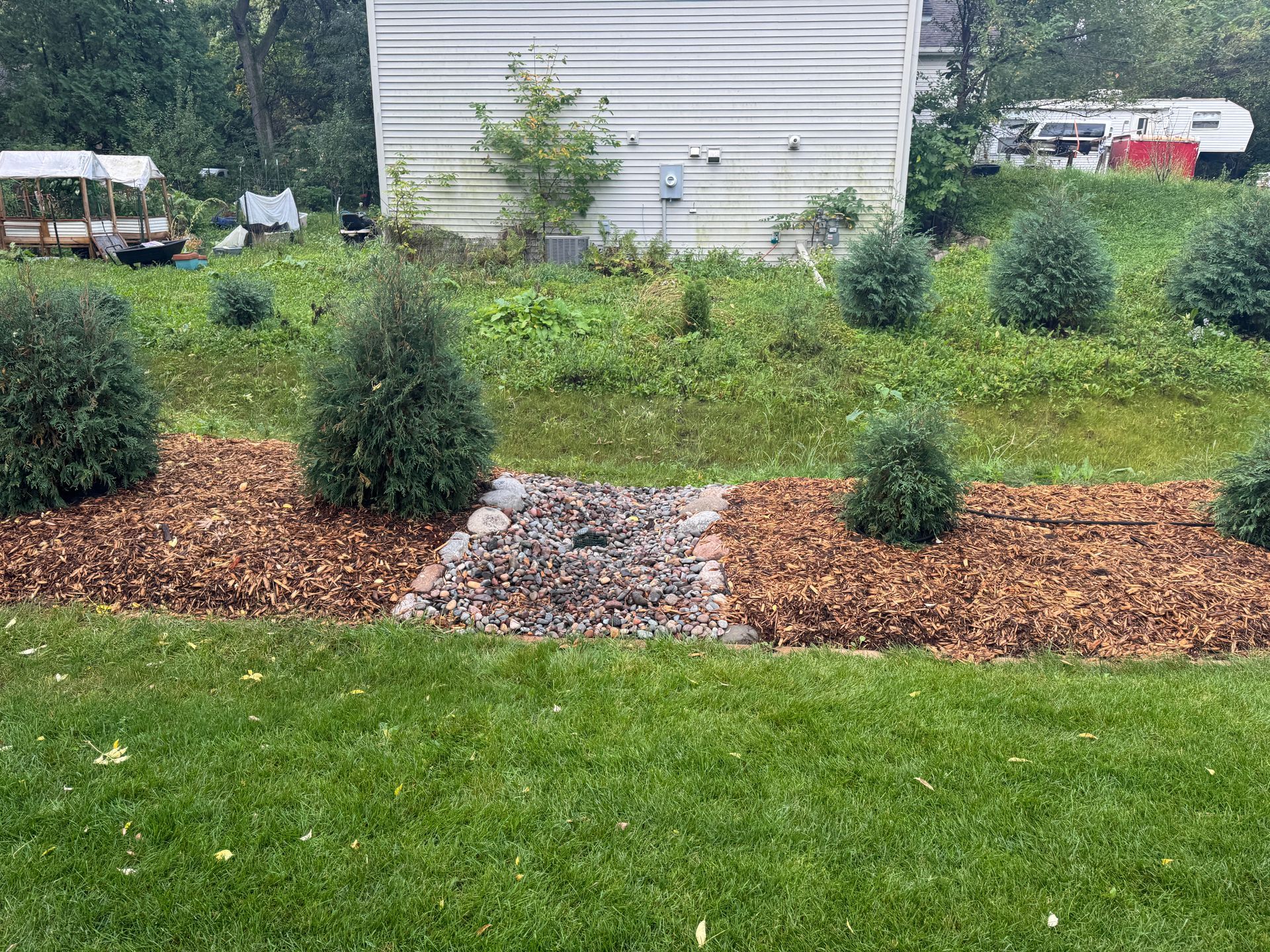
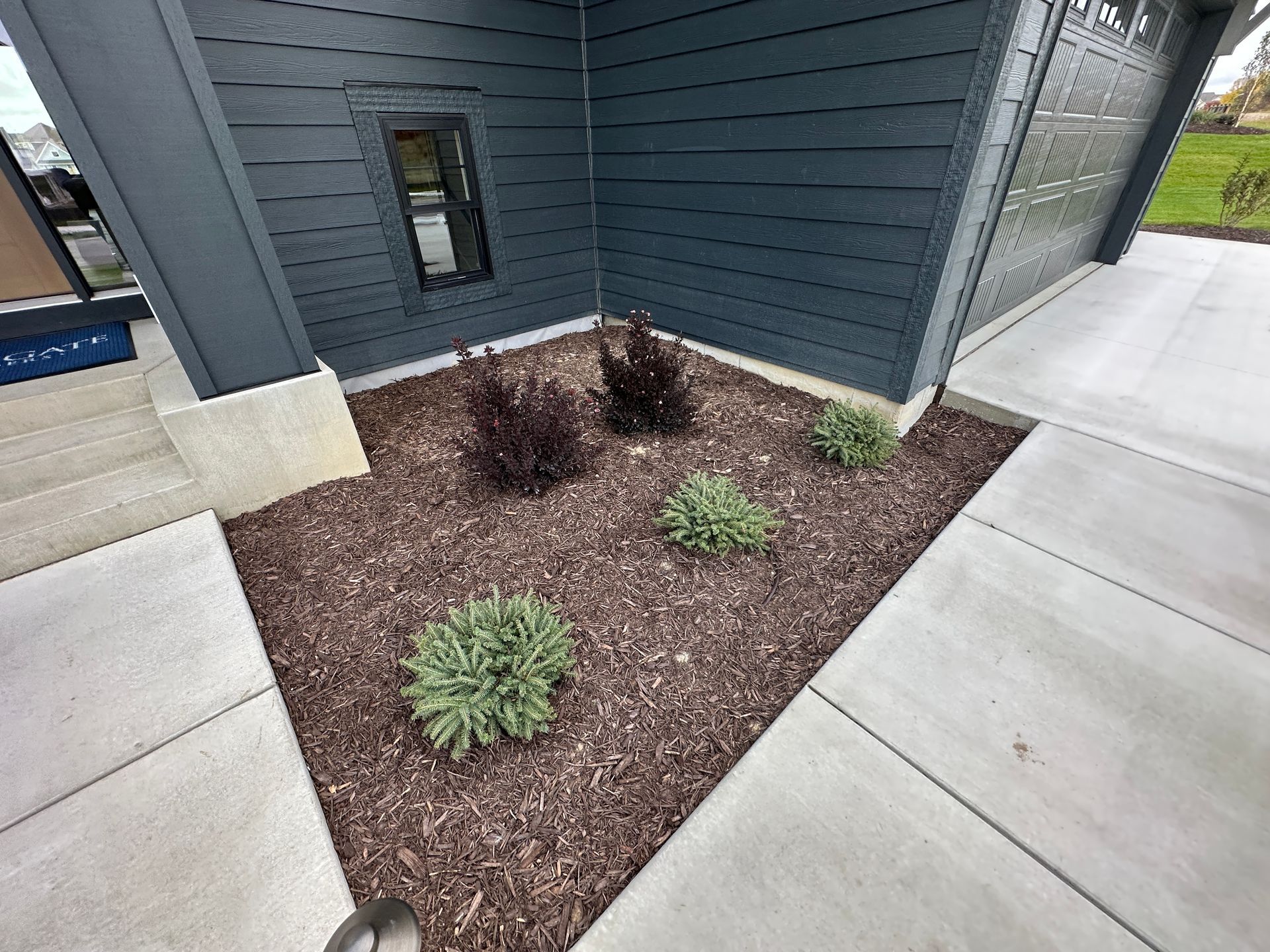
Downspouts ruin a lot of front yards. Water dumps onto the walkway, erodes the beds, and creates ice sheets in winter. Most builder landscaping just lets the downspouts discharge onto the surface. You end up with splash blocks or plastic extensions snaking across the mulch.
We connected all the downspouts to underground drainage systems. The water from the roof lines between the walkway and the home now travels through buried pipes and discharges through a pop-up emitter near the street.
Three benefits. The custom flagstone walkway is protected from erosion. No ice buildup on the path during winter. And no ugly extensions cluttering the front of the house.
This kind of detail separates designed landscapes from basic installations. You can have beautiful plantings and expensive stone, but if water is pooling or eroding the beds, the whole thing falls apart eventually.
Takeaway: Underground drainage protects your investment and eliminates ugly extensions.
Tip #6: Install Landscape Lighting for Safety and Curb Appeal
A front yard should look as good at night as it does during the day. In the Twin Cities, that matters for about half the year when it's dark by 5pm.
We installed pathway lights along the walkway so you can see where you're stepping after dark. Uplights on the focal point evergreens and trees create some drama and highlight the plantings. Additional uplights on the columns at the front porch tie the lighting to the architecture.
The American Society of Landscape Architects notes that well-designed landscape lighting increases both safety and curb appeal. A lit entry is more welcoming, more secure, and shows off the landscaping instead of hiding it in shadows.
This property also has lighting integrated into the side yard steps and hot tub area, creating continuity between front and back.
Takeaway: Pathway lights for safety, uplights for drama. A lit entry is more welcoming and shows off your landscaping after dark.
Tip #7: Use Consistent Materials Throughout
Small choices add up to big impact. The dark brown mink-colored mulch provides a backdrop that makes the plants pop. Steel edging keeps the bed lines crisp. The stepping stone path to the backyard uses flagstone that matches the fire pit area in back.
This Plymouth property also includes a custom waste bin storage area on the side and a private hot tub retreat carved into the slope. All of it uses the same material palette. Black stone, boulders, dark mulch. Walk the property from front to back and everything connects.
That kind of cohesion doesn't happen by accident. It happens when someone looks at the whole property and thinks through how the pieces relate, rather than treating each area as its own project.
Takeaway: When materials, colors, and style connect across front, side, and back yards, the whole property feels intentional.
What Changed for This Family
The homeowners bought a house they loved. Inside, everything was right. Outside, the builder landscaping was forgettable. They looked at their front yard and felt like it belonged to a different house.
Now they pull into the driveway and the front yard matches what they have inside. The flagstone connects to the dark siding. The plantings have structure through all four seasons. The boulders and mounding give it depth. The entry feels private. At night, it's the best-lit house on the street.
Their neighbors have noticed. In Hollydale, where the homes are expensive and the landscaping is often generic, this one stands out. Not because it's flashy. Because it's designed.
If Your Front Yard Doesn't Match Your Home
Builder landscaping is a starting point. If your front yard feels generic, or if it doesn't connect to your home's architecture, that can change.
The process starts with understanding what you want the front entry to do. Curb appeal, privacy, year-round interest, a sense of arrival. Once the goals are clear, we can design something that fits.
If you're in Plymouth or elsewhere in the Twin Cities and your front yard isn't where you want it to be, we're happy to talk through what's possible.
Contact KG Landscape to start a conversation.
We have more examples of front yard work in our project gallery.
Frequently Asked Questions
How much does a front yard redesign cost?
It depends on scope. Replacing a walkway, adding plantings, and installing lighting costs less than a full redesign with boulders, mounding, drainage work, and extensive plantings. Projects like the Plymouth, MN example, which included all of those elements, represent a significant investment. We provide detailed estimates after seeing the property and understanding your goals.
How long does it take for new plantings to fill in?
Most shrubs and perennials establish within one to two growing seasons. Trees take longer, usually several years to reach mature size. We design with both the immediate look and the long-term result in mind. The landscape looks good at installation and continues to improve as plants grow.
Can you match the landscaping to my home's architecture?
Yes. We look at colors, materials, and style, then select plants, stone, and design elements that complement the home. A modern house gets different treatment than a traditional one. The goal is for the landscaping to feel connected to the architecture, not separate from it.
What's the best time of year to do a front yard project?
Spring and fall are ideal for planting in Minnesota. Cooler temperatures and reliable moisture help plants establish. Hardscape work can happen throughout the construction season. We recommend starting the design process in late winter so installation can happen in spring or early summer.
Do you work on builder-grade landscapes in other Plymouth neighborhoods?
Yes. Plymouth has a lot of new construction with builder-grade landscaping. We work on new homes that need an upgrade and older homes that need a refresh. The approach is the same: understand the home, understand the goals, design something that fits both.
About the Author
Kent Gliadon is the owner and principal designer at KG Landscape, a Minneapolis-based landscape design and build company serving homeowners across the Twin Cities for over 20 years. Kent studied landscape architecture and earned a bachelor's degree in Environmental Horticulture at the University of Minnesota, with emphasis in turf science and landscape design.
Ready to Start on Your Next Project?
Call us at (763) 568-7251 or visit our quote page.