Why Golden Valley Lawns Die Every Spring (Hint: It's Not Winter Kill)
Why Golden Valley Lawns Die
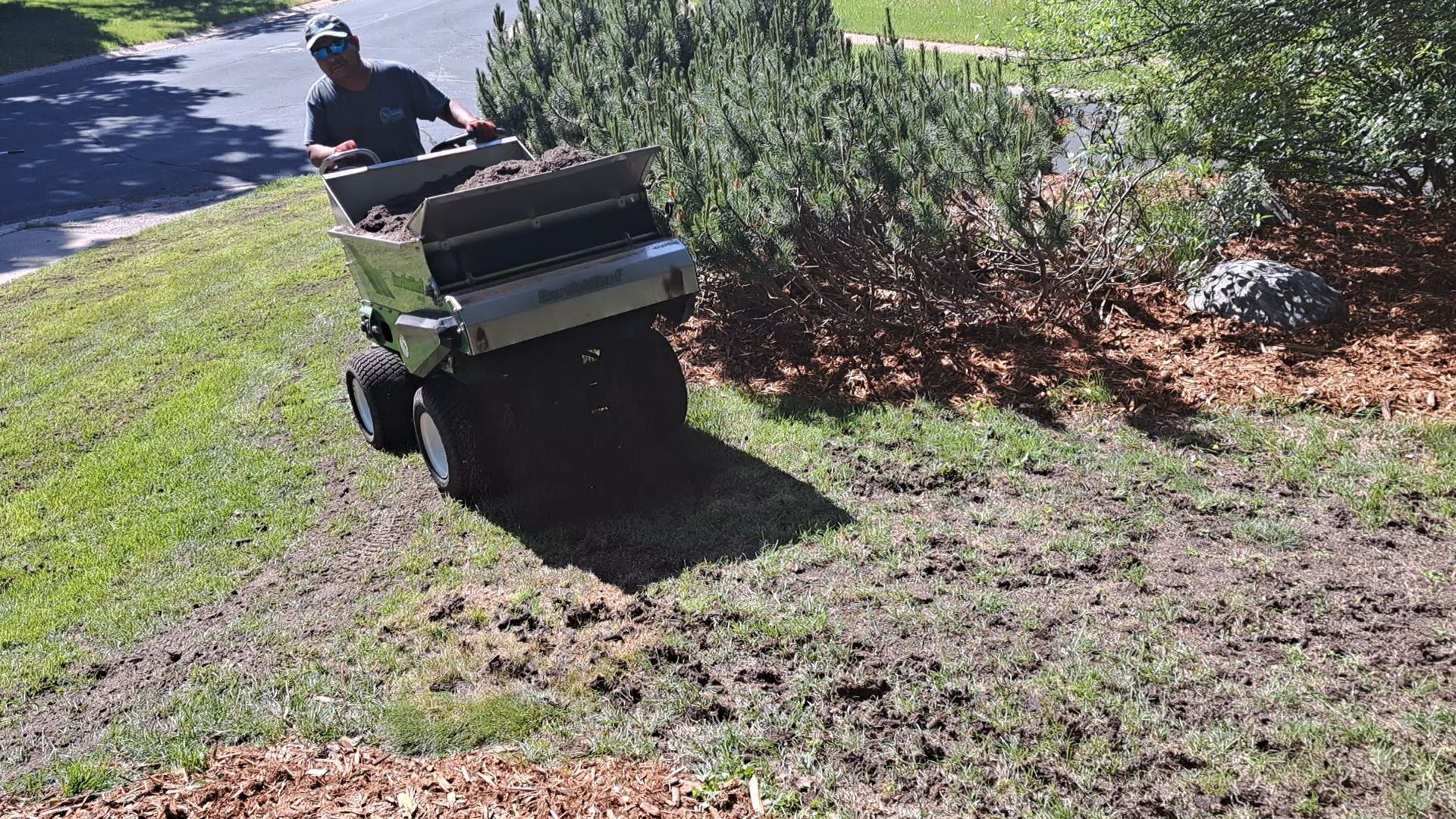
Every spring, the same thing happens. Your Golden Valley lawn comes out of winter looking damaged—brown patches, thin areas, spots that just won't recover. You assume it's winter kill. The harsh Minnesota winter did its damage, and now you're dealing with the aftermath.
But here's what I see repeatedly: the problem isn't winter. It's drainage.
Your lawn might be graded properly on the surface. Water runs off toward the street like it should. But if you're in a clay soil area—and much of Golden Valley is—what happens on the surface doesn't tell the whole story.
The lawn is graded properly, but because it's clay, whatever soaks in just takes forever to dry out. That prolonged saturation, especially through freeze-thaw cycles in late winter and early spring, is what's actually killing your grass. Not the cold. Not the snow. The water that's sitting in clay soil with nowhere to go.
This guide explains why Golden Valley lawns struggle despite proper grading, how mature trees make the problem worse, and what actually fixes recurring spring damage. If you've been reseeding the same dead patches year after year, the issue isn't your grass—it's what's happening underneath.
The Clay Soil Problem Hiding Under Your Lawn
Your lawn looks properly graded. After rain, water flows across the surface toward the street or drainage areas. Everything appears to be working correctly. But clay soil changes the equation entirely.
Clay doesn't drain like other soils. When water soaks into clay, it doesn't percolate through and dissipate the way it would in sandy soil. It sits. For days. Sometimes longer. The lawn is graded properly on top, but because it's clay underneath, whatever soaks in just takes forever to dry out.
The Practical Impact
This isn't abstract—it affects how you can actually use your yard. After rainfall, you're waiting two to three days before you can mow. The lawn is so wet you can't even walk on it without tearing it up. The grass looks fine from a distance, but the soil is saturated, and the root zone is drowning.
The Spring Damage Cycle
In late winter and early spring, this saturation becomes critical. Freeze-thaw cycles mean that water in the soil alternates between freezing and thawing repeatedly. Grass roots sitting in saturated clay through this cycle sustain damage that looks like winter kill but isn't.
The grass didn't die from cold exposure. It died from prolonged saturation during the transition period when freeze-thaw is most active. The roots were essentially drowning in waterlogged soil that couldn't drain, then freezing, then thawing into saturated conditions again.
Golden Valley Context
Golden Valley's established neighborhoods—Brookview, Valley Square, areas near Theodore Wirth—have the clay soil composition that creates these conditions. The mature landscaping and tree-lined streets that make these neighborhoods attractive also contribute to drainage complexity, as we'll see in the next section.
Pro Tip: Test your soil's drainage by digging a small hole about twelve inches deep and filling it with water. If the water is still sitting there after twenty-four hours, you have clay soil that's retaining moisture—and that's likely contributing to your spring lawn problems regardless of how your surface drains.
When Watering Your Lawn Creates Problems
You want a green lawn. During dry periods, you run your irrigation system to keep the grass healthy. That's standard lawn care practice. But in clay soil, irrigation can create problems rather than solve them.
Here's what happens: you're watering with irrigation and getting natural rainfall. The clay can't process the combined volume. Water that would drain through sandy soil in hours sits in clay for days. Add irrigation on top of natural rainfall, and the soil never gets a chance to dry out.
The Saturation Spiral
The grass shows stress from heat or dry conditions on the surface. You water more. The soil can't drain what you're adding. The root zone stays saturated even as the surface looks dry. The grass struggles not from lack of water but from too much water that won't drain away from the roots.
This is where proper drainage becomes essential—not to handle rainfall alone, but to handle the combination of rainfall and irrigation that clay soil can't process on its own. Properties in this situation often need drain tile. Surface grading handles what runs off the top. Underground drainage handles what soaks in and won't drain naturally. Without both working together, you're fighting a losing battle against soil that fundamentally doesn't drain well.
The Tree Root Problem Nobody Told You About
When your Golden Valley home was built, the lot was graded to direct water toward the street. Swales in side yards, subtle slopes across the lawn—these features were designed to move water off the property efficiently.
Then the trees matured.
What Happens Over Time
As trees grow—particularly silver maples, which are common in established Golden Valley neighborhoods—their root systems lift the surrounding soil. The swale that used to direct water toward the street gradually becomes blocked or reversed. The grade changes so slowly you don't notice year to year, but the drainage path that worked twenty years ago doesn't work now.
Side Yard Drainage Failure
Many Golden Valley properties have side yards designed to channel water from the backyard to the street. Mature trees planted in these side yards grow roots that physically block the drainage path. Water that used to flow through now pools and sits.
The surface still looks like it should drain. The grade appears correct to the eye. But the root mass underneath has created a dam that stops water movement entirely.
Trees Destroying Existing Drain Tile
If your property has drain tile installed years ago, mature trees can destroy it over time. Tree roots lift pipes, reversing the pitch that makes drainage work. Roots infiltrate the pipe itself, clogging and entangling until there's no flow at all.
When I assess properties with failing drain tile near mature trees, the situation is often beyond repair. It's so entangled in the roots that there's no saving it—the system needs to be redone fresh and clean, with routing that accounts for where roots are now, not where they were when the original system was installed.
The Assessment Question
When trees are blocking drainage, there are typically two approaches: regrade the swale to route water around the tree, or evaluate whether the tree makes sense to keep if it's blocking critical drainage paths.
If you can fix the problem with regrading, that's often the better solution. It addresses the actual cause rather than adding drain tile as a workaround for a blocked flow path. Regrading to restore proper drainage is less of a band-aid than installing drain tile to compensate for grade that no longer works.
Pro Tip: To estimate a tree's critical root zone—the area where roots are most dense and active—measure two-thirds of the canopy diameter. Any drainage work within this zone will encounter significant roots and must account for them in the design and routing.

What Actually Fixes Clay Soil Drainage
Understanding the solution hierarchy helps you evaluate what level of intervention your Golden Valley property actually needs.
Good: Proper Surface Grading
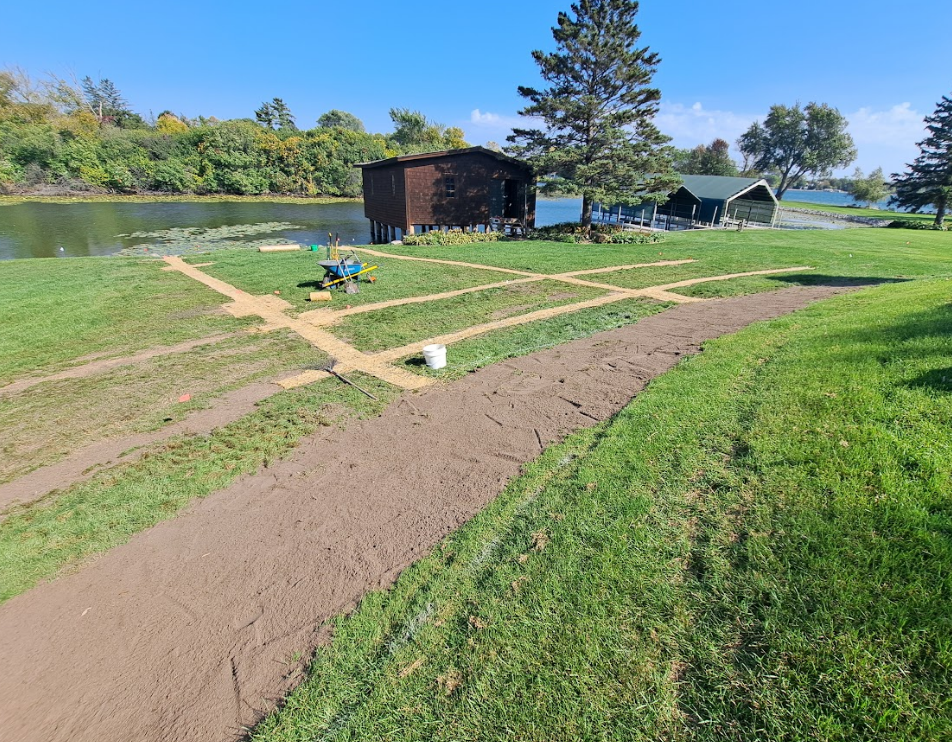
The foundation of any drainage system is proper surface grading—six inches of drop within the first ten feet from your foundation, quarter-inch per foot slope across the lawn, water directed toward the street or designated drainage areas.
For many properties, this is where drainage starts and ends. But in clay soil areas like Golden Valley, proper grading alone often isn't enough. The surface drains correctly, but the soil underneath can't process what soaks in fast enough to prevent saturation problems.
Better: Underground Downspout Routing
Roof runoff is a major water source that many homeowners underestimate. When downspouts discharge at the foundation and that water spreads across the lawn, it's adding volume to soil that's already struggling to drain.
Underground downspout routing moves roof water directly to the street or a drainage area without it ever hitting your lawn. Less water entering the soil means less saturation to deal with. Even if the clay still drains slowly, it has less total volume to process.
Best: Drain Tile System
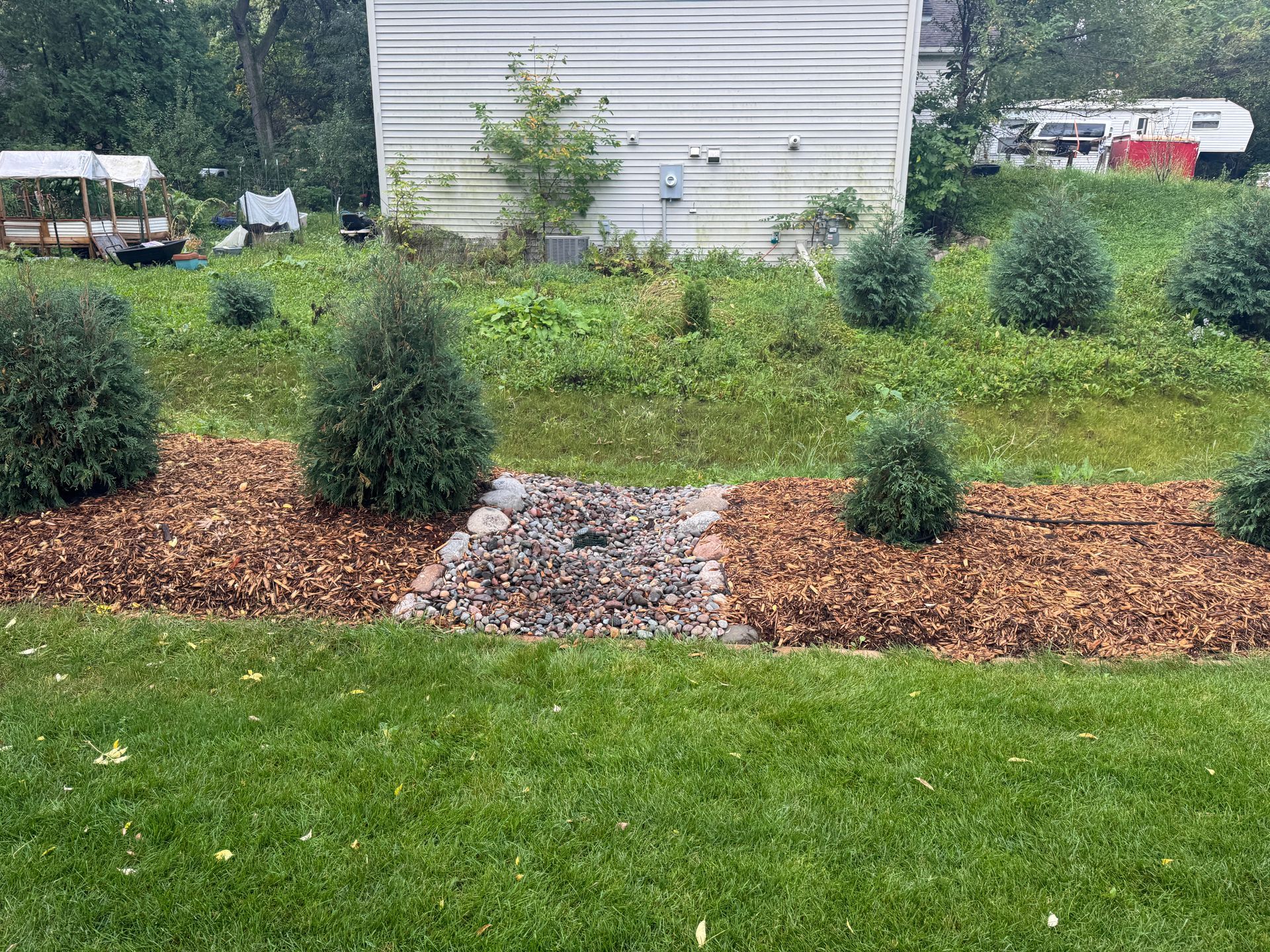
For Golden Valley properties with persistent clay saturation, drain tile provides active drainage that surface grading simply can't achieve. Instead of waiting for clay to slowly percolate water through over days, drain tile collects subsurface water and routes it out of the problem area.
This is the solution when proper grading isn't enough—which in clay soil areas, it often isn't. Drain tile doesn't replace proper grading; it supplements grading by handling what surface slope can't address.
The Assessment Process
Not every Golden Valley property needs drain tile. Some can solve drainage problems with regrading alone, especially if mature trees have altered original grade patterns over the years. Others need the full solution—proper grading, underground downspouts, and drain tile working together as a system.
The right answer depends on your specific soil composition, current grade conditions, and where water is actually going on your property.
What Golden Valley Properties Face
Golden Valley's appeal comes partly from its established neighborhoods—mature trees, mid-century homes, developed landscapes with character. But those same characteristics create drainage complexity that newer developments don't face.
Mature trees that provide shade and neighborhood character also lift soil and block drainage paths over decades. Homes built forty or fifty years ago have drainage infrastructure that may no longer function as originally designed. Landscapes that have evolved over years of additions and changes may have inadvertently altered original grading patterns.
Similar Challenges Nearby
The clay soil issues affecting Golden Valley are shared with Plymouth, Maple Grove, Minnetonka, and Medina. If you're familiar with drainage problems in those communities, Golden Valley faces similar conditions—compounded by the established tree canopy and older infrastructure that comes with mature neighborhoods.
The Positive Reality
Golden Valley lots are generally sized to allow proper drainage solutions. Unlike tighter urban lots where space constraints limit options, most Golden Valley properties have room for regrading, drain tile routing, and the drainage infrastructure that clay soil requires. The solutions exist and can be implemented; it's a matter of diagnosing the specific problem and applying the right level of fix.
Frequently Asked Questions
How do I know if my lawn problem is drainage or something else?
If dead patches appear every spring in the same locations year after year, drainage is the likely culprit. If your lawn stays soggy for days after rain, clay saturation is causing problems. If you can't mow for two to three days after rainfall because the ground is too soft, your soil isn't draining adequately.
Winter kill typically affects exposed, elevated areas. Drainage damage follows low spots and areas where clay soil holds water longest. A professional drainage assessment can confirm whether soil saturation is the underlying cause of recurring spring damage.
Does Golden Valley have clay soil?
Golden Valley has variable soil composition with significant clay content in many areas, particularly in established neighborhoods. The clay issues here are similar to those in Plymouth, Maple Grove, and Minnetonka.
Many Golden Valley properties have clay underlying a topsoil layer—the surface drains fine, but water that penetrates hits clay and stops moving. Soil testing or a drainage assessment can confirm your specific property's conditions.
How much does drainage repair cost in Golden Valley?
Costs vary significantly based on scope. Regrading to restore drainage paths represents a lower investment. Underground downspout routing falls in the moderate range. A full drain tile system to actively drain clay soil is a higher investment but solves persistent saturation issues that surface solutions can't address.
The key is accurate diagnosis—an assessment identifies what level of solution your property actually needs rather than guessing at the scope.
Can I fix lawn drainage myself?
Minor grading adjustments are possible as DIY projects if you understand proper slope requirements. Underground downspout routing requires proper pitch verification to function correctly. Drain tile installation requires equipment and expertise to ensure the system actually drains rather than just sitting in the ground.
The bigger risk with DIY drainage work is misdiagnosis—spending money on solutions that don't address the actual problem. Professional assessment ensures you're fixing the real cause rather than treating symptoms.
The Framework That Works
Spring lawn damage in Golden Valley isn't inevitable. It's diagnosable, and it's fixable—once you understand that the problem usually isn't winter but drainage.
The hierarchy that addresses clay soil issues:
First, evaluate surface grading. Is water flowing away from the foundation and toward drainage areas, or has grade shifted over time as trees matured and soil settled?
Second, address roof runoff. Are downspouts routing water underground to the street, or dumping it onto already-saturated clay soil where it compounds the problem?
Third, evaluate subsurface drainage. Does the clay soil need active drainage to handle what surface grading can't move fast enough?
For most Golden Valley properties with recurring spring damage, the answer involves at least two of these levels working together. Clay soil that's been saturating and freezing through late winter needs more than proper surface grade—it needs a drainage system designed for what clay actually does.
If your lawn has been dying every spring despite your best efforts at reseeding and lawn care, stop treating the symptoms. Address the drainage underneath, and the spring damage cycle ends.
Contact KG Landscape for a Golden Valley drainage assessment.
Ready to Start on Your Next Project?
Call us at (763) 568-7251 or visit our quote page.