
How We Solved Sump Pump Discharge Water Pooling in SW Minneapolis, MN Using a Dry Well
Project Overview
This case study highlights how KG Landscape designed and installed a sump pump drainage solution with a dry well to resolve chronic water pooling at a home in Southwest Minneapolis, MN, near Lake Bde Maka Ska.
The homeowner was dealing with an overactive sump pump that discharged large volumes of water into the yard, creating soggy lawn conditions and standing water that persisted long after rainfall events. Due to site elevation constraints and existing landscaping, a custom dry well drainage system was the most effective and least disruptive solution.
About the Author

I’m Kent Gliadon, founder of KG Landscape and a graduate of the University of Minnesota Landscape Design program. For over 20 years, I’ve focused on integrating well-planned landscape design and installation work with properly engineered outdoor drainage solutions.
I believe discerning homeowners deserve landscaping & drainage renovations that are carefully planned from the beginning—accounting for water movement, grading, soils, hardscaping, and future use—so problems are prevented before they occur. These case studies explain how and why specific solutions are implemented and what it takes to build landscapes that truly last a lifetime.
The Problem: Overactive Sump Pump Causing Water Pooling & Soggy Lawn
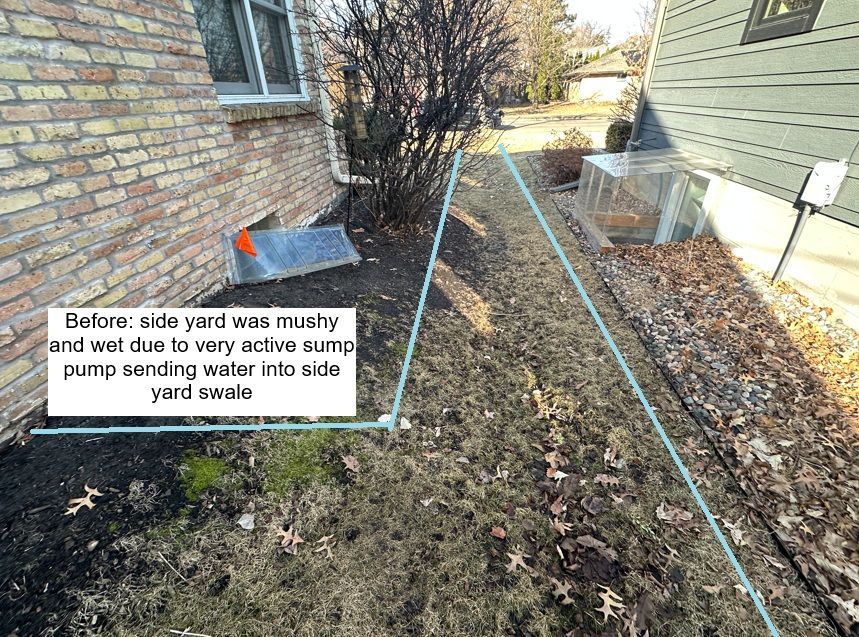
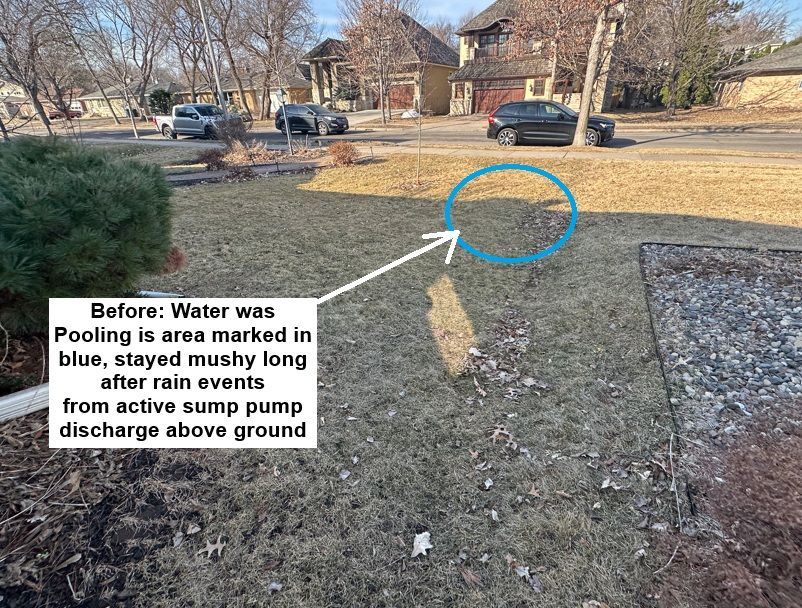
The customer’s sump pump ran frequently, not only during rainstorms but often for several days afterward. The sump pump discharge emptied into the side yard and flowed toward a low area in the front yard, where water collected and pooled with no functional outlet.
Because the water had nowhere to drain, the homeowner was forced to wait for the soil to slowly absorb the excess moisture over time. This resulted in:
- Constantly wet and soggy turf
- Extended dry-out periods
- Could almost never mow where sump pump water discharged
- Limited use of the lawn
A major contributing factor was that the
front lawn sits lower in elevation than the city sidewalk, making it impossible for surface water to drain naturally toward the street without major regrading.
Why Drainage Issues Like this Are Common Near Lake Bde Maka Ska
In Southwest Minneapolis neighborhoods near Lake Bde Maka Ska(formerly Lake Calhoun), Lake of the Isles and Lake Harriet, drainage problems like this are common.
These areas are underlain with porous limestone rock formations, which can cause lawns and soil to settle and sink over time. As a result, many properties now sit below the elevation of city sidewalks and streets, even though they were originally graded to drain toward the road.
When yards settle lower than the sidewalk:
- Water becomes trapped on the property
- Traditional surface drainage no longer works
- Sump pump discharge has nowhere to go
Evaluating Drainage Options for This Southwest Minneapolis Property
In some cases, the best solution for sump pump drainage problems is full lawn regrading, which involves importing fill and rebuilding the slope from the home’s foundation to the street so water can drain properly.
However, this home—located in Southwest Minneapolis near Lake Bde Maka Ska—already had:
- Established lawn areas
- Existing landscape beds
- Site conditions the homeowner did not want to disturb
- No real desire to completely redo the front yard landscaping, which is what would have been needed to completely regrade the front yard to drain from the house all the way to Xerces Ave in front.
Regrading would have required removing and rebuilding much of the existing landscape, which was not desirable given that the only main issue was sump pump drainage and water pooling. At this point in the decision-making process, we were able to reference an important real-world example that helped guide the final solution.
Fun Fact: We Installed A Proven Dry Well Sump Pump Drainage Solution For the Neighbor Right Next Door about 5 years Prior
An important factor in selecting this drainage approach was that KG Landscape had installed the exact same type of dry well sump pump drainage system at the neighboring home immediately to the north approximately five years earlier.
That neighboring property had nearly identical conditions:
- A very active sump pump
- A yard that sat lower than the city sidewalk
- No practical way to drain water to the street
At the time of this project, we spoke directly with the homeowner next door, who confirmed that the dry well drainage system installed five years earlier had been working perfectly, with no recurring water issues or surface pooling.
Because both homes share:
- The same soil conditions
- Similar elevations
- The same neighborhood near Lake Bde Maka Ska
This gave the homeowner additional confidence that a dry well designed to absorb sump pump discharge would be a reliable, long-term solution.
Using proven drainage solutions within the same immediate neighborhood allows KG Landscape to recommend systems backed not only by design & engineering principles, but by documented real-world performance.
The Chosen Solution: Underground Sump Pump Drain Pipe Emptying into to a Dry Well
After reviewing all available options, KG Landscape recommended installing an underground sump pump discharge system connected to a dry well. This solution allows the overactive sump pump to discharge water into a subsurface dry well designed to hold and absorb large volumes of water, preventing pooling at the surface and eliminating soggy lawn conditions.
A dry well was the ideal choice because:
- It manages high sump pump output
- It works well when yards sit lower than sidewalks
- It avoided major regrading and landscape disruptions that would have being required if we were to regrade to slope the yard to drain into the street
- It was more cost effective and bringing in soil fill and completing redoing the front yard
Sump Pump Discharge & Dry Well System Design & Installation Process
The sump pump drainage system includes:
- A frost guard / ice guard air gap at the sump pump discharge
- Underground piping directing water away from the foundation
- A dry well for water storage and infiltration
- A pop-up emitter for overflow and system venting
Why Dry Well Depth Matters for Sump Pump Drainage
The most important part of a dry well designed for sump pump discharge is the volume below the elevation of the incoming pipe. Water always drains downward—everything above the pipe elevation is secondary.
In this project, the dry well was installed at the lowest point of the yard, maximizing its ability to absorb both sump pump water and incidental surface runoff. We also installed this dry well below the 42" frost line in Minneapolis, which ensures it can work properly in the winter and the drainage system is protected from freeze damage
Dry Well vs. French Drain
This dry well functions similarly to a French drain system, using drainage rock and filtration fabric to store and disperse water underground. However, since this drainage area was focused at a specific low point, a dry well was a better fit
Installation Process for This Project — Step-by-Step
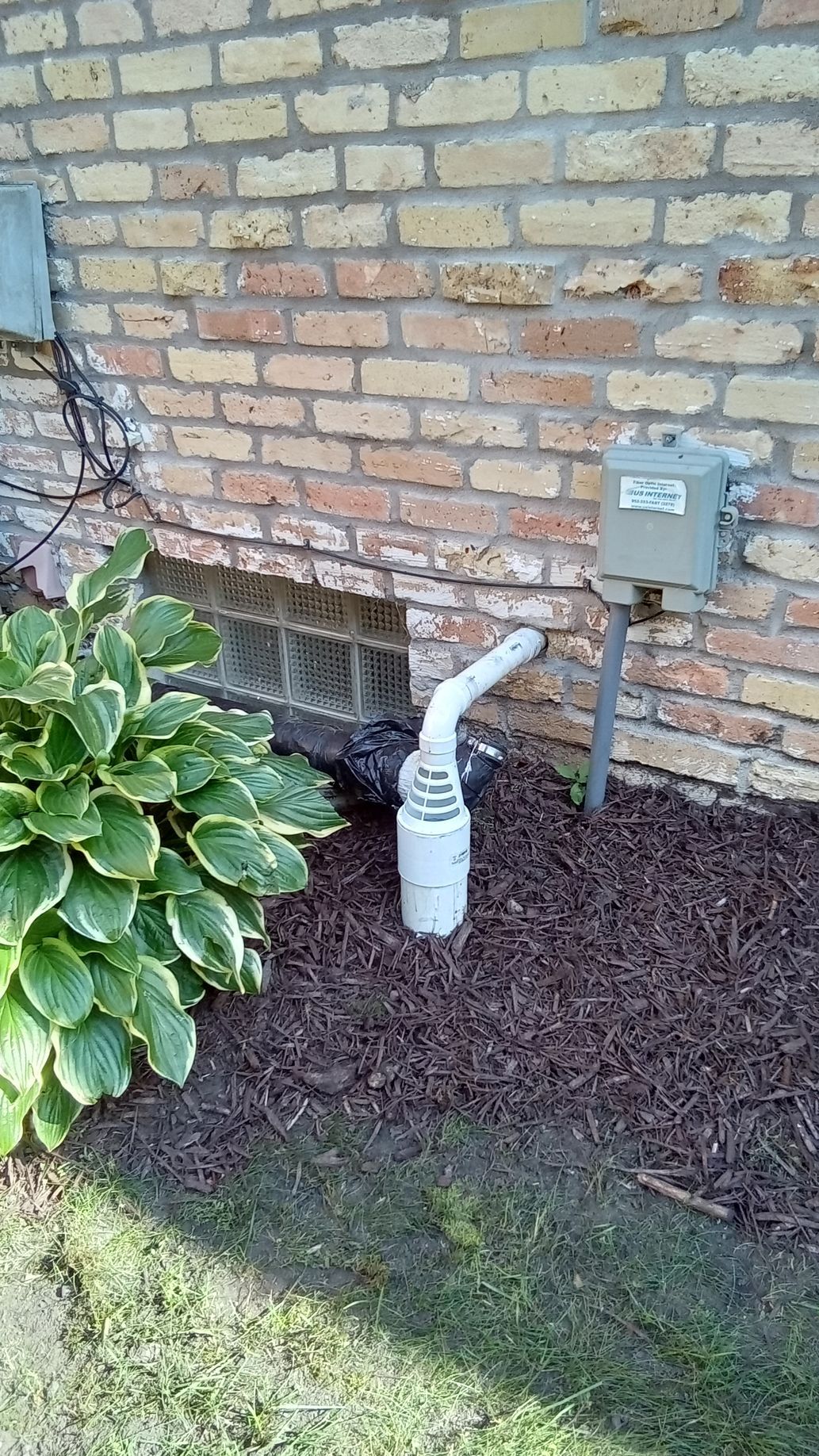
New Exterior Sump Pump Discharge with Air Gap
Sump pumps connected to underground drain pipes must have an air gap. We installed a PVC pipe frost guard system with an air gap to ensure the sump pump can continue operating if the underground pipe ever freezes or becomes blocked by snow or ice. See photos below
Trenching & Underground Drain Pipe Installation
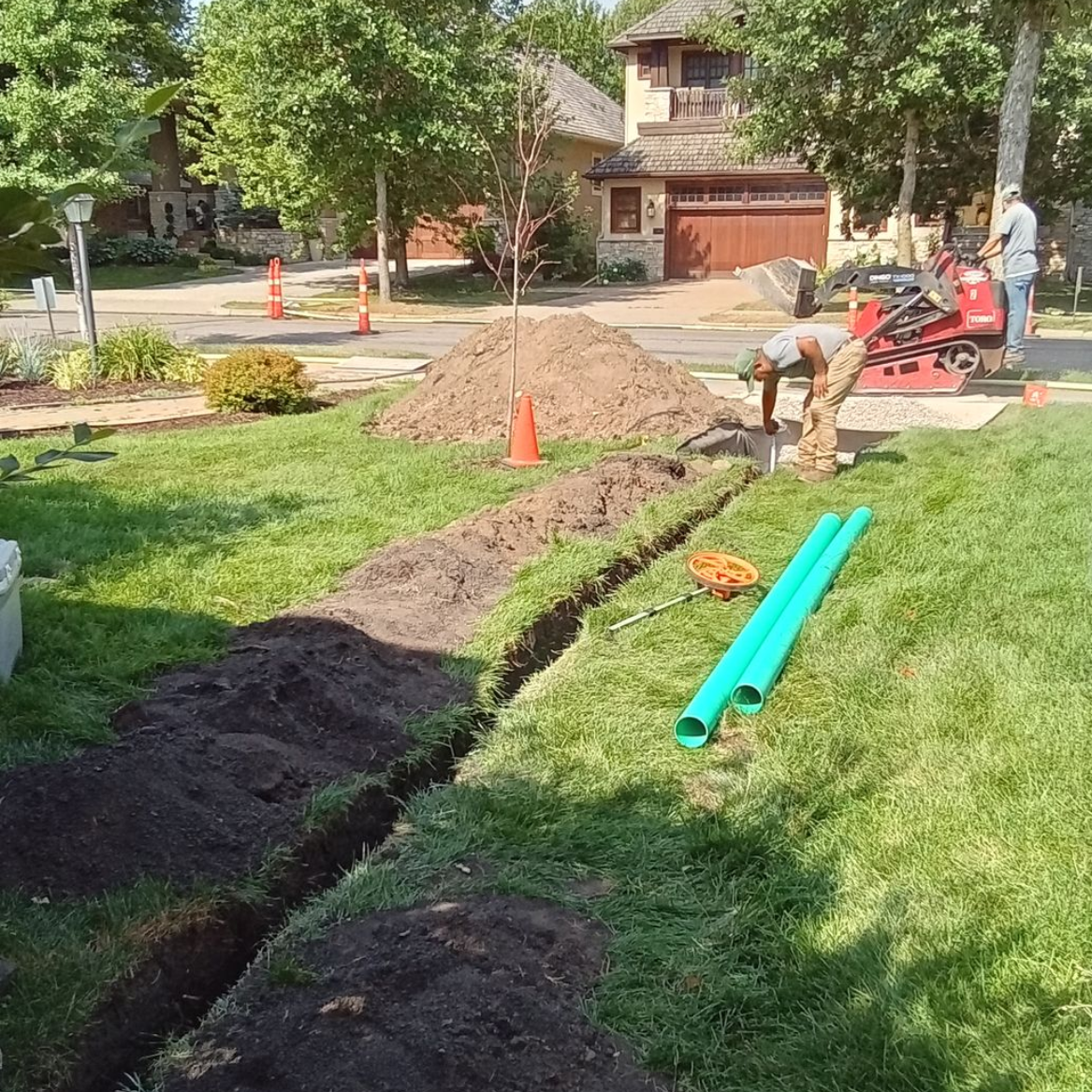
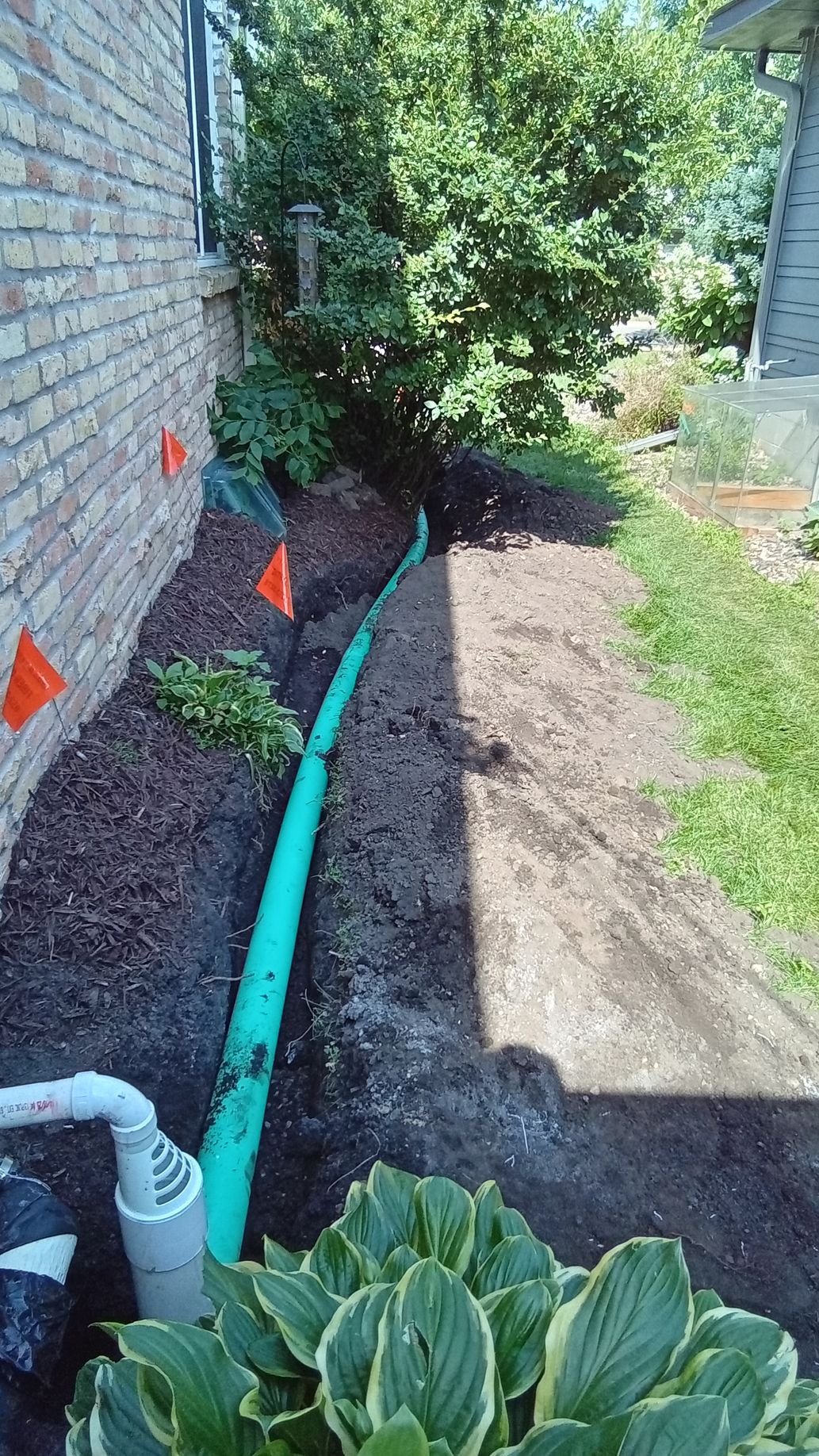
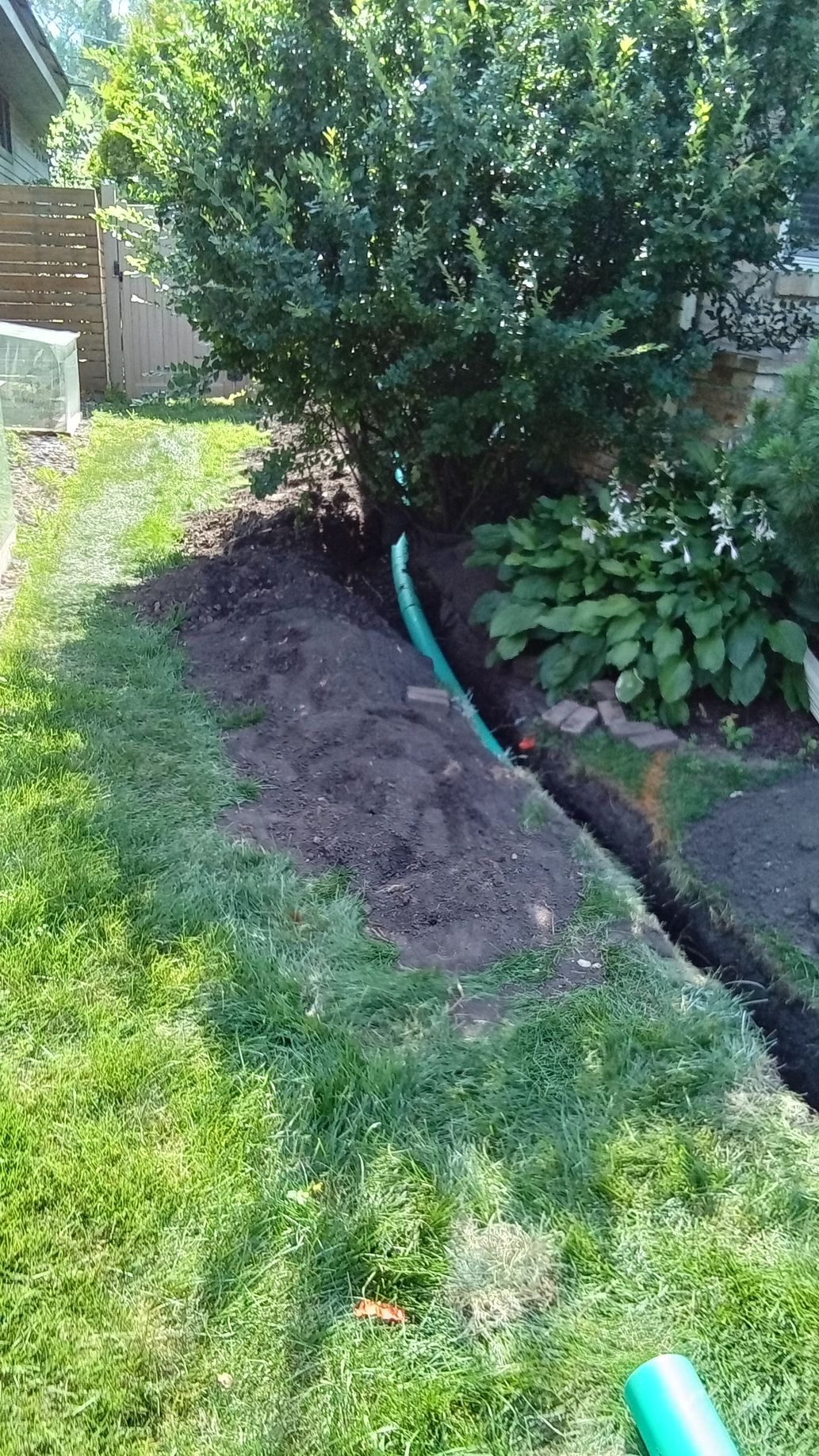
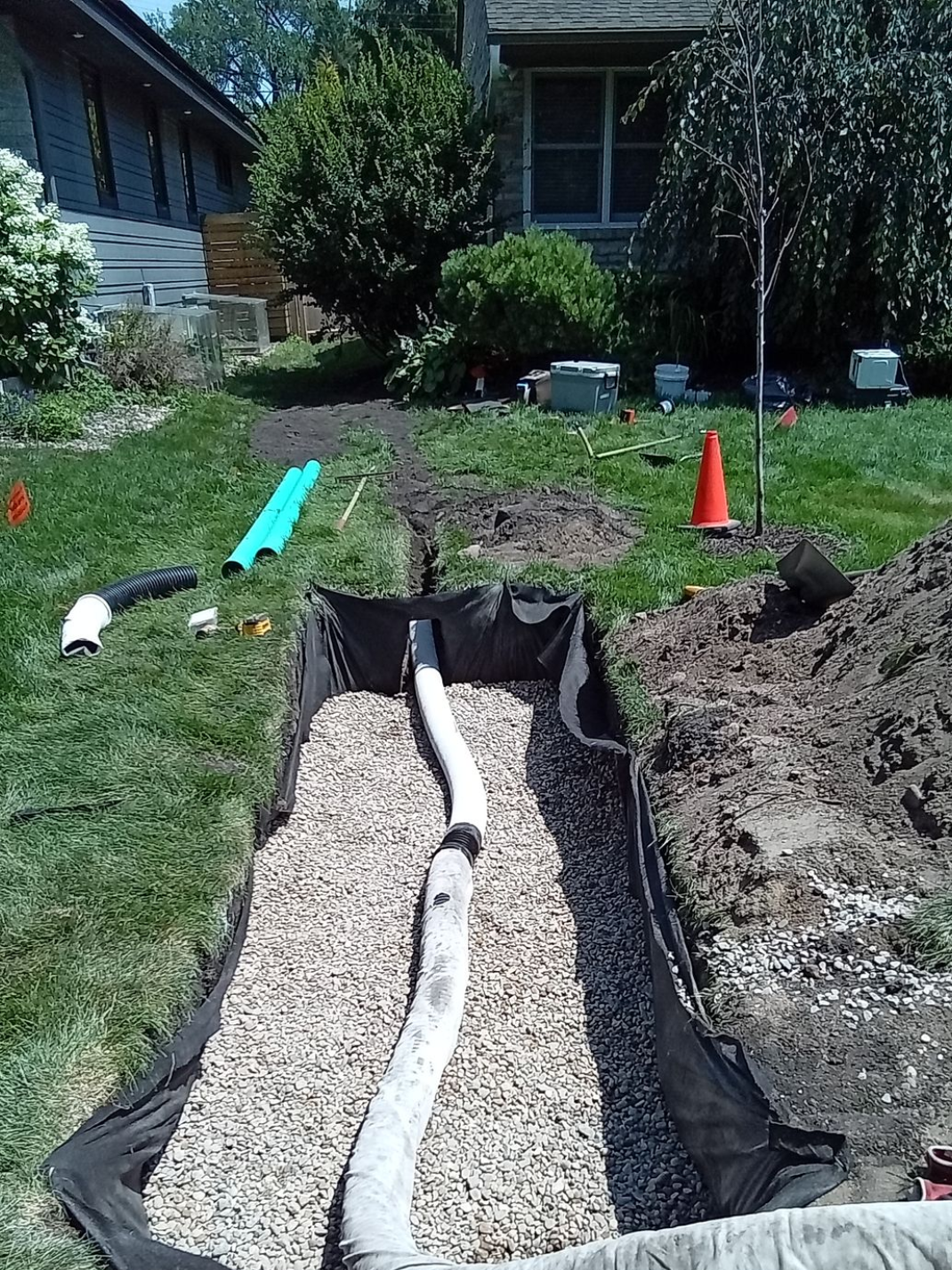
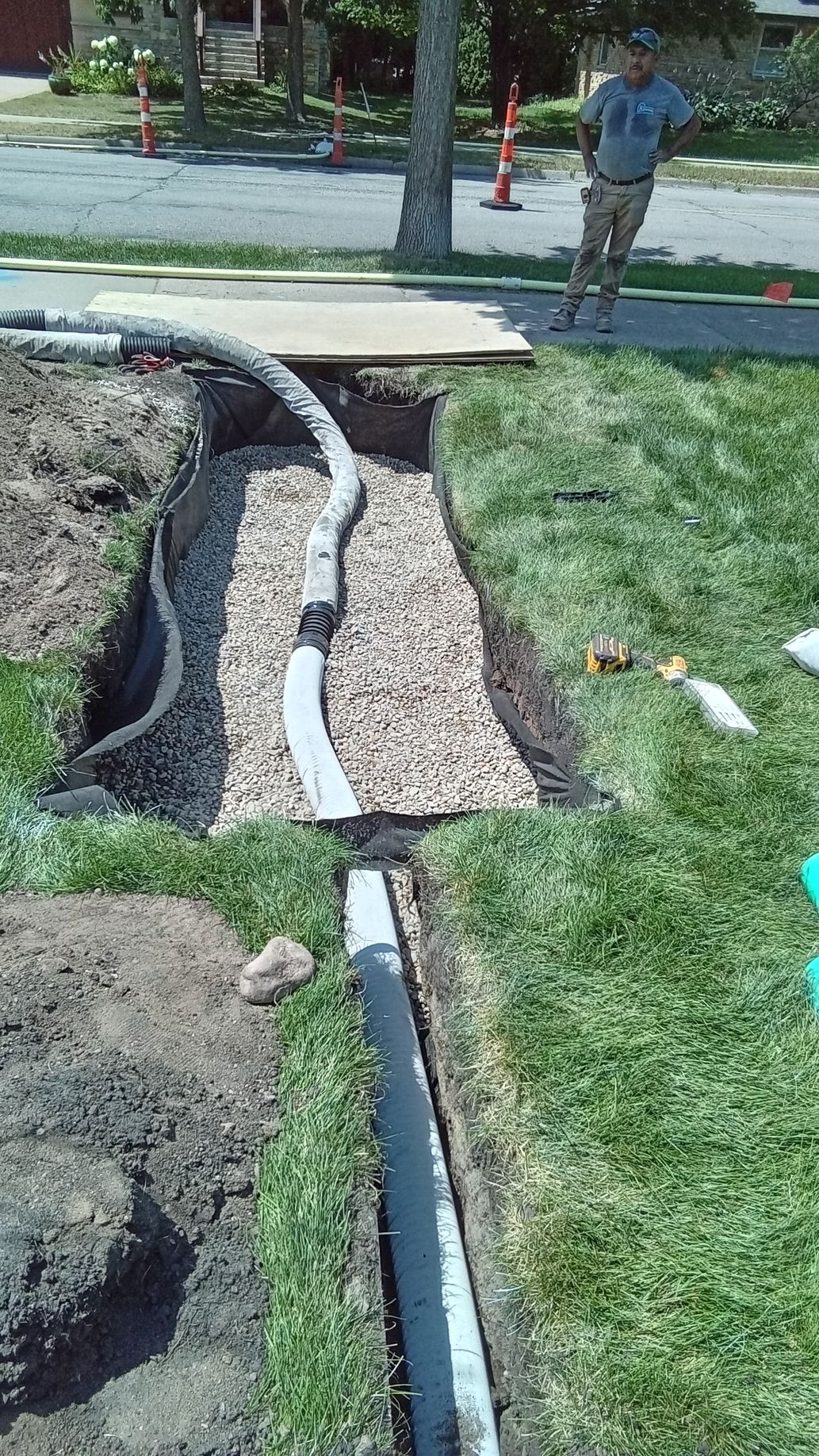
When installing underground sump pump discharge lines near a home’s foundation, we always use non-perforated PVC pipe for the first 15 feet. That exactly what we did for this project (see green pipe in photos below)
We do this because:
- PVC is more durable than corrugated pipe
- This section is the most critical and problematic if it ever fails
- We do not want water filtering into soil near the foundation
Using non-perforated pipe prevents water from:
- Entering the soil near the foundation
- Re-entering the basement drain tile
- Creating a circular cycle of water pumping in and out of the home
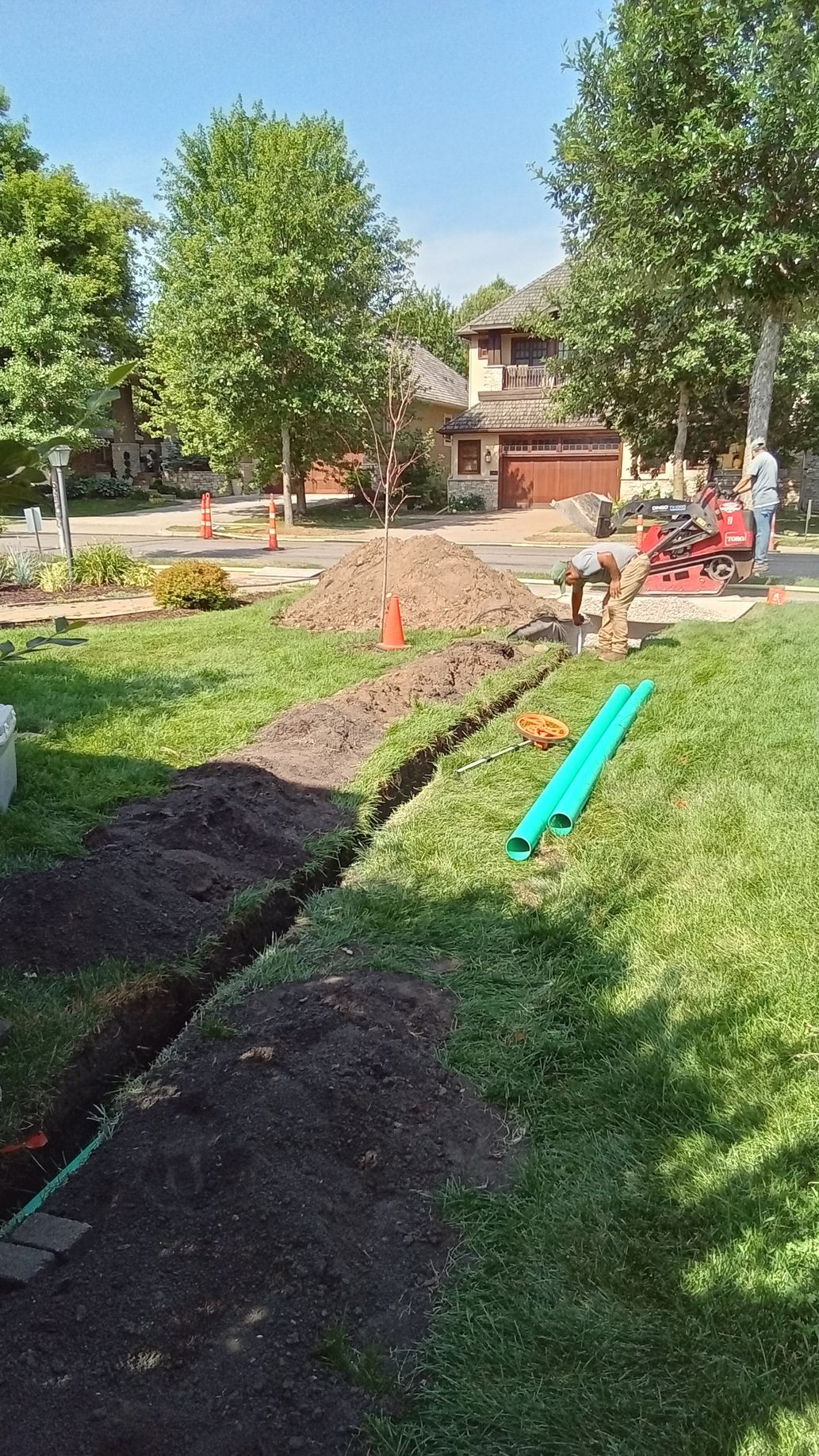
Excavation of the Dry Well
At KG Landscape, we design dry well systems based on:
- The volume of water from the sump pump
- Any additional drainage the system may need to accommodate
- Getting below the frost line to help prevent freezing damage and ice blockage
As we did for this customer, we always provide detailed drawings with fixed height, width, and depth so our crews can execute each project precisely as designed.
We use altimeters and laser transits to ensure:
- Proper slope in the drain pipe
- Accurate elevations throughout the system
- Ensure dry well is built per design
Careful planning and precise installation ensure long-term performance.
Installing the Dry Well
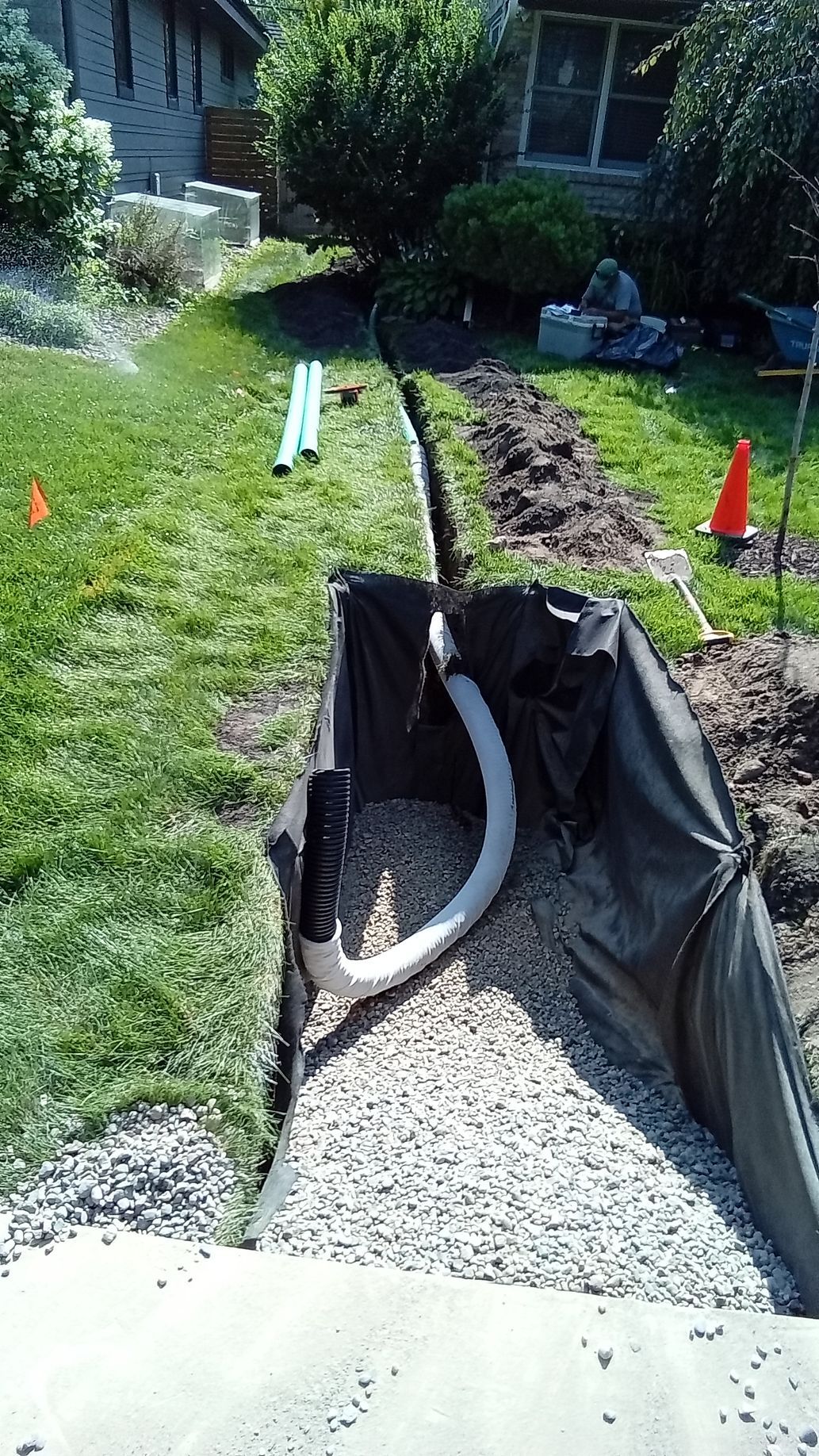
For this case study project, the most critical design consideration was the portion of the dry well below the elevation of the sump pump discharge pipe. Because water flows downward—not upward—only the area beneath the incoming pipe directly affects sump pump drainage performance. Material placed above that elevation does not impact how effectively the system handles sump discharge.
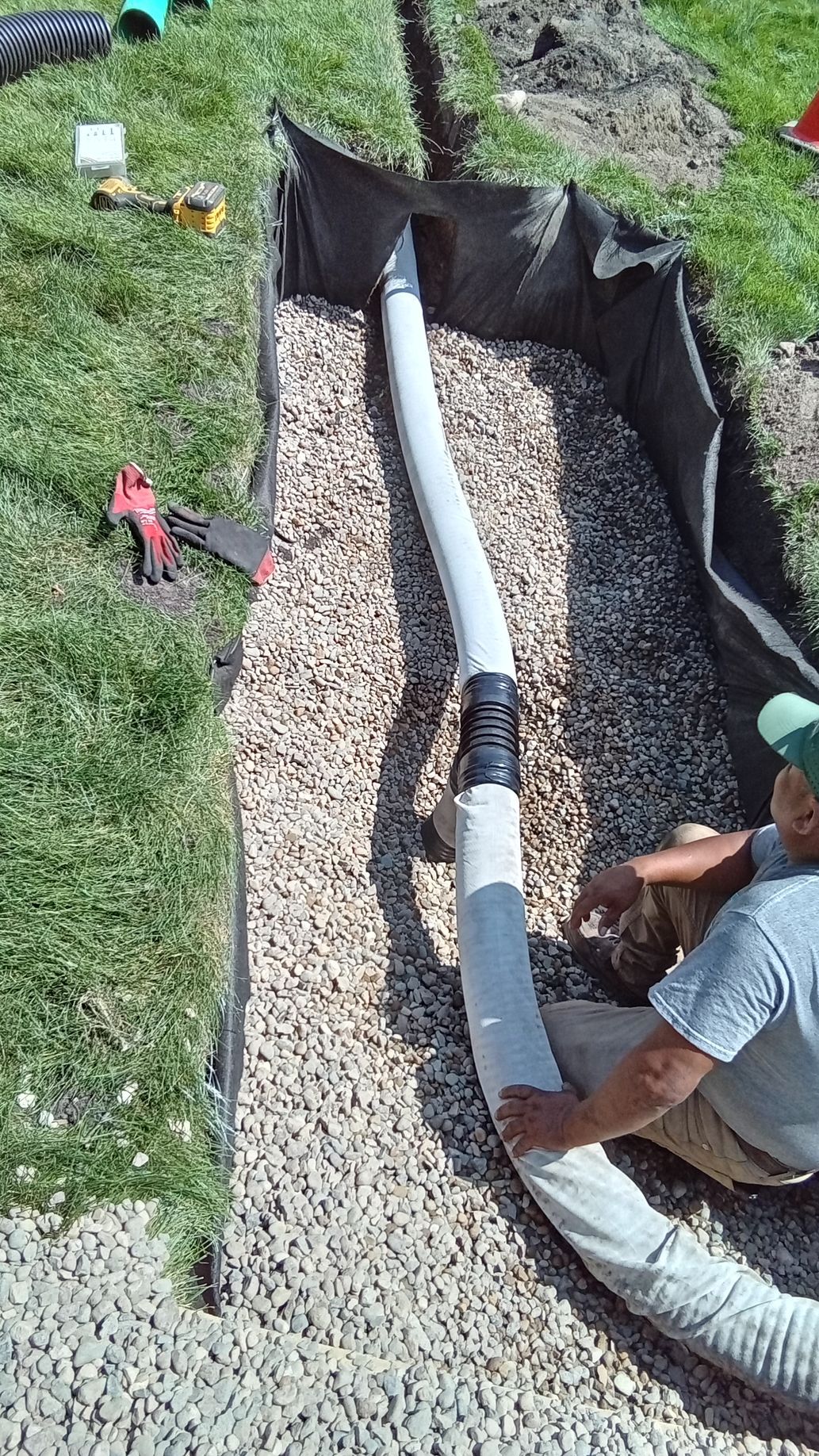
- Line the excavation on all sides with filtration fabric.
- Fill the dry well with ¾" clear drainage rock up to the elevation where the sump pump discharge pipe enters the system.
- Install a T-fitting on the discharge pipe, with a vertical section extending down to the bottom of the dry well to help speed up drainage.
- Install a vent pipe with a grate or pop-up emitter to allow the system to breathe and provide an overflow outlet.
- Continue filling with drainage rock to the top of the pipe, stopping approximately 6–12 inches below the finished lawn elevation.
- Cover the top of the dry well with filtration fabric, fully enclosing the system to protect it from soil infiltration and clogging.
- Backfill above the dry well with a sandy, well-draining soil mix that supports healthy turf growth.
- Set and install the air vent emitter at the surface.
- Lightly compact the soil and leave the area approximately 1 inch higher than the adjacent lawn to allow for natural settling.
Because this dry well was installed at the lowest point of the yard, using drainage-friendly backfill above the pipe elevation helped improve surface water infiltration while maintaining proper grading and lawn restoration.
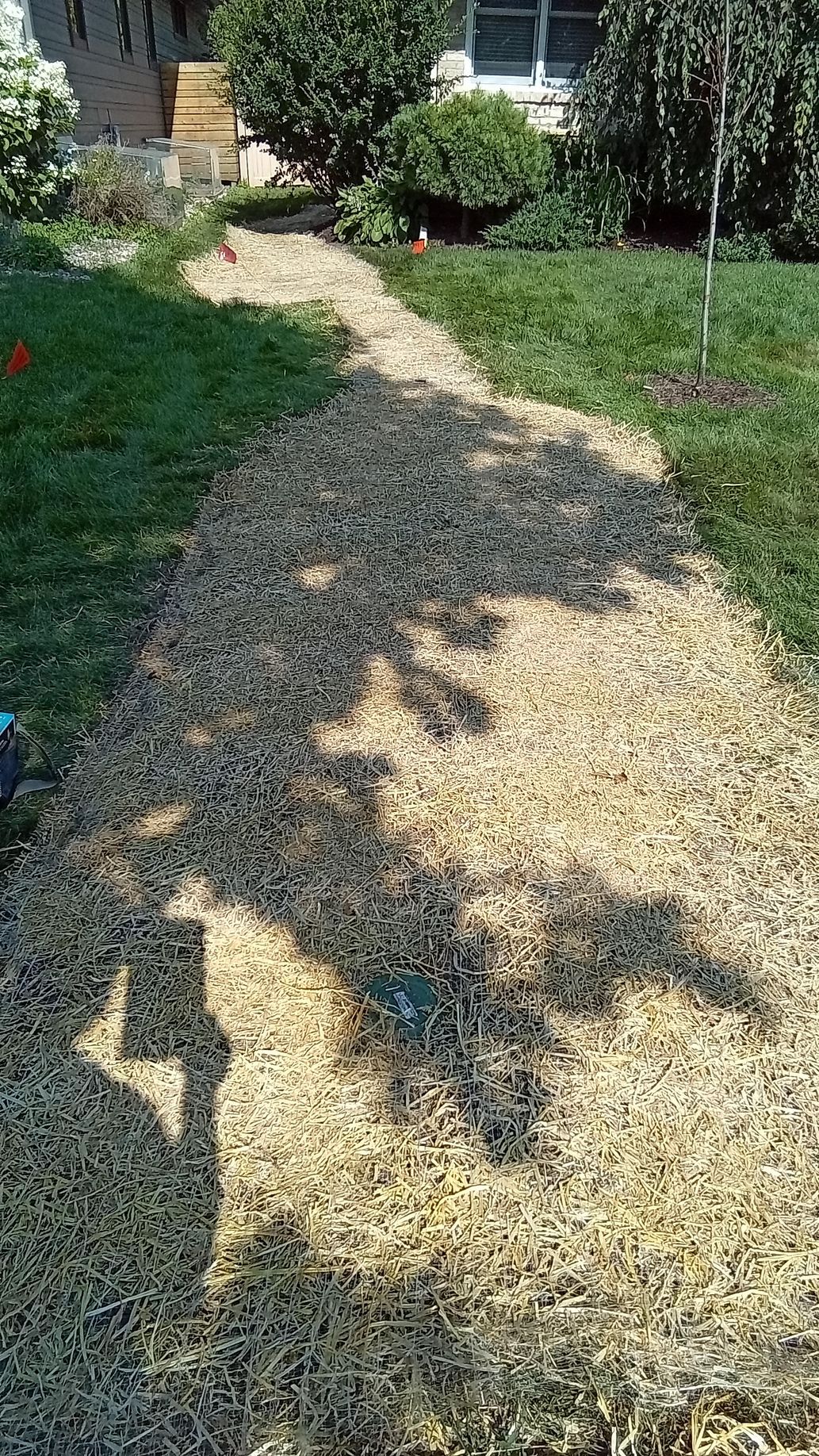
Lawn Restoration After Drainage Installation
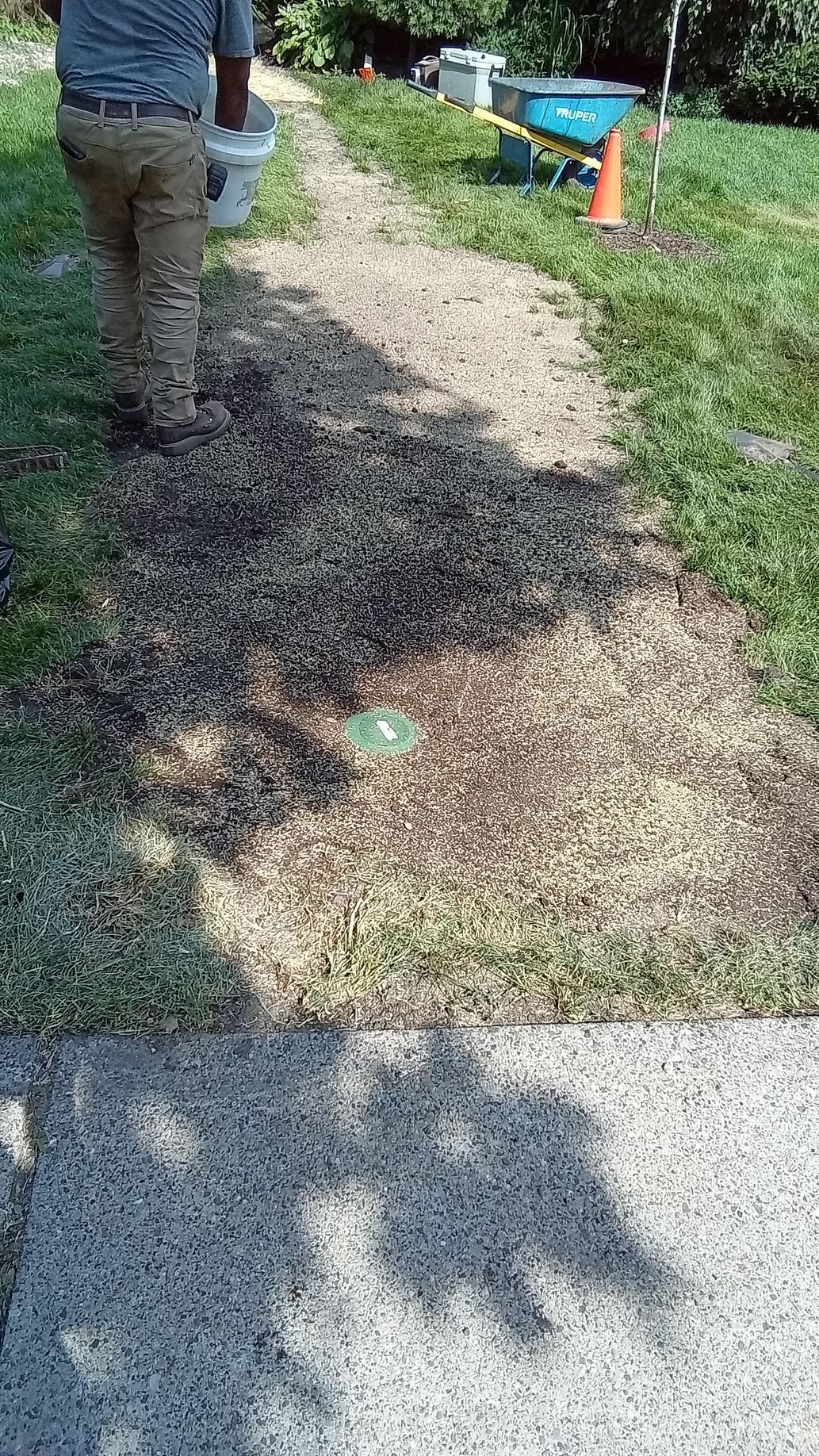
As with all drainage projects, KG Landscape repaired all lawn areas disturbed during installation, including:
- Light soil compaction
- Mounding soil slightly to allow for settling
- Seeding disturbed areas
- Installing straw matting seed blankets
This method consistently produces fast, high-quality lawn recovery. Resodding options are also available.
Pro Tip: Seed blankets should be removed once grass reaches approximately 1.5 inches tall.
RESULTS: Sump Pump Drainage Problem Completely Resolved
The results of this sump pump drainage and dry well installation were immediate and long-lasting.
Project Results
- ✅ Water pooling issue completely fixed
- ✅ No more wet or soggy lawn conditions
- ✅ Sump pump discharge is fully managed underground
- ✅ Front yard now dries normally after rainfall
We checked in with the homeowner three months after installation, including after multiple rain events. At that time:
- The dry well was performing exactly as designed
- No standing water was observed
- The lawn surface remained firm and usable
The homeowner confirmed she was extremely happy with the results and relieved that the ongoing drainage problem had finally been solved.
Customer Testimonial
“Before this project, our sump pump ran constantly and the front yard stayed wet for days. There was always water pooling and it never really dried out. Since KG Landscape installed the dry well and new sump pump drainage system, the issue is completely gone. We checked everything again a few months later after more rain, and the lawn stayed dry. We’re extremely happy with how it turned out and wish we had done it sooner.”
— Homeowner, Southwest Minneapolis
Planning Drainage and Landscaping Project Together:
At KG Landscape Every Project is Custom Designed to for Success
If you’re considering a drainage solution project along with other landscaping or hardscaping upgrades, working with one specialized contractor can make the entire process smoother and more effective.
At KG Landscape, we regularly integrate drainage renovation projects with broader landscape design and installation work so everything functions together as a single, well-planned system.
We commonly coordinate drainage improvements with:
- New patios and hardscape construction
- Front yard and backyard landscaping renovations
- Walkways, steps, and outdoor living spaces
- Lawn renovation, grading, and planting
By addressing drainage first—or designing it at the same time as other landscape improvements—we ensure water is managed properly before new surfaces and plantings are installed. This helps prevent future issues such as standing water near patios, saturated planting beds, or premature failure of hardscape elements.
This integrated approach is especially important for properties in Minneapolis where yards may sit lower than sidewalks or have experienced long-term settlement. Planning drainage and landscaping together often saves time, reduces rework, and results in a cleaner, more cohesive finished project.
Whether your project involves a sump pump drainage or dry well installation, or a larger landscape or hardscape renovation, KG Landscape can design and install systems that work together seamlessly from below grade to the finished surface.
If you’re planning drainage improvements now—or considering future landscaping upgrades—contact KG Landscape to schedule a site evaluation and discuss how a coordinated drainage and landscape plan can save time, protect your investment, and deliver better long-term results.
Learn How KG Landscape Can Help with Your Sump Pump Drainage Project - Our Process
Would you like to have an experienced and specialized outdoor drainage expert come to your home, to professionally evaluate your drainage problem and make expert recommendations as to how to fix your specific drainage concerns the right way?
Request an Onsite Drainage Consultation
When you schedule a drainage consultation with us, an experienced member of our team will meet you at your home to evaluate your yard as a whole. We take a holistic approach to understanding the drainage issues you’re experiencing and provide clear, practical guidance on how we believe those problems can best be resolved.
During the visit, we’ll walk through good, better, and best drainage solution options and discuss ballpark cost ranges to help guide the decision-making process. We also take your short- and long-term plans into account — whether this is your forever home or you’re planning to move in the near future. In some cases, we recommend French drains; in others, we don’t.
Our recommendations are always based on the specific conditions we observe and the circumstances unique to your property. No matter what, you can expect thoughtful, professional recommendations for outdoor drainage solutions we believe will best meet your needs.
If the work we recommend falls within our area of expertise, we’ll provide a written estimate with a fixed price for our crew to complete the proposed drainage solution. Should you choose to move forward with the project, 100% of your drainage consultation fee is credited back toward the installation.
Our goal is to perform the drainage work we recommend and keep our talented crews focused on the work they do best. For that reason, we do not offer consultations for homeowners planning to complete the work themselves or for properties located outside of our service area.
Our French Drain Project Steps - From Start to Completion
- Call or complete a Quote Request Form to set up a consultation
- Meet with our expert onsite and discuss options
- We'll make recommendations and provide a written estimate for our team to install the recommended solutions
- To book installation work, submit deposit payment and sign the estimate
- We'll schedule your project for our next available opening
- Our office team will communicate by email with updates on project timing
- We'll call to have all public utilities marked in your yard
- Then we complete project and ensure you are 100% happy with our work
- Lastly, we'll send out the final invoice after work has been completed