
Our Landscape Design Process
Providing Thoughtful and Comprehensive Landscape Design Work for Customers Throughout the Twin Cities, Since 2003
A Proven, Comprehensive Design Process
We listen carefully, then apply deep design and construction experience to translate your goals into a creative solutions—delivering landscapes that are more thoughtful, cohesive, and enduring than you imagined on your own.
- Design Consultation
- Conceptual Design Creation
- Conceptual Design Review
- Design Development & Costing
- Final Design and Proposal
- Installation
How Our Design Process Works
At KG Landscape, excellent outdoor spaces start with smart planning and thoughtful design. For homeowners throughout the Minneapolis–St. Paul area, our design team takes the time to understand your goals, your preferred style, and how you hope to use your outdoor space. From the first discussion to the final details, we work as a true partner to bring your ideas to life.
Our approach balances creativity with clarity. The process is clearly defined, but adaptable — guided by professional experience and shaped around your priorities, budget, and long-term goals. Beginning with an on-site consultation and moving through design development, revisions, and installation planning, we make sure you always know what’s happening and what comes next. The result is a landscape that’s both visually compelling and built to perform in Minnesota’s demanding conditions.
For More Information About Our Landscape Design Services and to See Examples of Our Work
👉visit our pillar landscape design services page
Whether your project focuses on outdoor living spaces, plantings, or addressing site challenges like drainage or grading, everything starts with listening. By understanding your property and its limitations, we’re able to create a custom design that feels intentional, functional, and uniquely yours.
Our Landscape Design Process
Step 1: We Start with an Onsite Design Consultation
If you are interested in hiring KG landscape for your landscape design and installation project, the first step is to reach out to schedule a landscape design consultation via phone call or online quote request.
There may or may not be a design consultation fee depending on the type of design and installation work you’re interested in. Fees range from $0 to $150 for design consultations and KG will always inform you of any applicable fees before scheduling the initial consolation. KG does not engage in landscape design work for projects less than $10,000.
At this initial meeting, one of our landscape designers or estimators will talk with you about the work you are considering and discuss some general options and ideas. It’s important for us to understand your wants and needs to help design features that fit your taste and budget.
We know it’s important for customers to have a basic understanding of the costs for the services they want before getting too far into the process, so we will often times provide a verbal ballpark costs for the type of projects you are describing during a consultation when possible.
An example would be, “a patio like the one you are describing typically runs about $15k - $25K.” Or "a complete backyard renovation like this could run between $50 - $100K based on our experience." These initial "ballpark cost" conversations help guide our discussions and recommendations so we can focus on the improvements your most interested in. A precise bid for your landscape project will be provided after the completion of the Final Design, which is the last step in our design process.
Goals of the Landscape Design Consultation
- Learn about the customers wants/needs to determine if KG is a great fit for the project
- Discuss general options and ideas for the project and inform the customer of the rough ballpark costs for the type of improvements they are considering.
- Provide the customer with a fixed price for the landscape design services required and get the site measurements and pictures needed to get started on the design.
Design Services Pricing
During the initial landscape design consultation, you will be provided with a price for the landscape design services needed for your project. This price covers all of the design work, concepts plans, revisions, communications and meetings needed to provide you with a design you’ll love.
Pricing for landscape design work varies with the size and complexity of the project involved, but typically ranges from $500 – $3,000. Once payment is received for landscape design services, KG can get started on your design. The design process takes anywhere from 3-6 weeks to complete depending on the time of year and complexity of the job.
Getting Started With Design Work
Most often, customers that are looking to get the ball rolling on a project will decide to commence design services with a payment to the designer during the step #1 initial design consultation. This way the designer can get the information, pictures, and measurements they need to start on the design that same day.
Our Guarantee
If you're concerned about paying for a design and then receiving a plan that you don’t even like or is too expensive, don’t be! It's never happened in over 20 years in business! We will make revisions as needed until you have a plan you like enough to have installed, guaranteed.

Step 2: Conceptual Design Creation Phase
The goal of the conceptual design phase is to use our creative expertise and extensive experience to explore the very best ways a project can be accomplished. During this phase, we study a variety of layouts, spaces, and styles to uncover solutions that are both functional and visually compelling.
We involve our customers early in the design process by asking thoughtful questions, discussing initial ideas in person during the design consultation, reviewing inspiration images provided by the customer, and having open, collaborative conversations about how the space will be used. This early engagement helps ensure the design direction aligns with the customer’s goals, lifestyle, and aesthetic preferences.
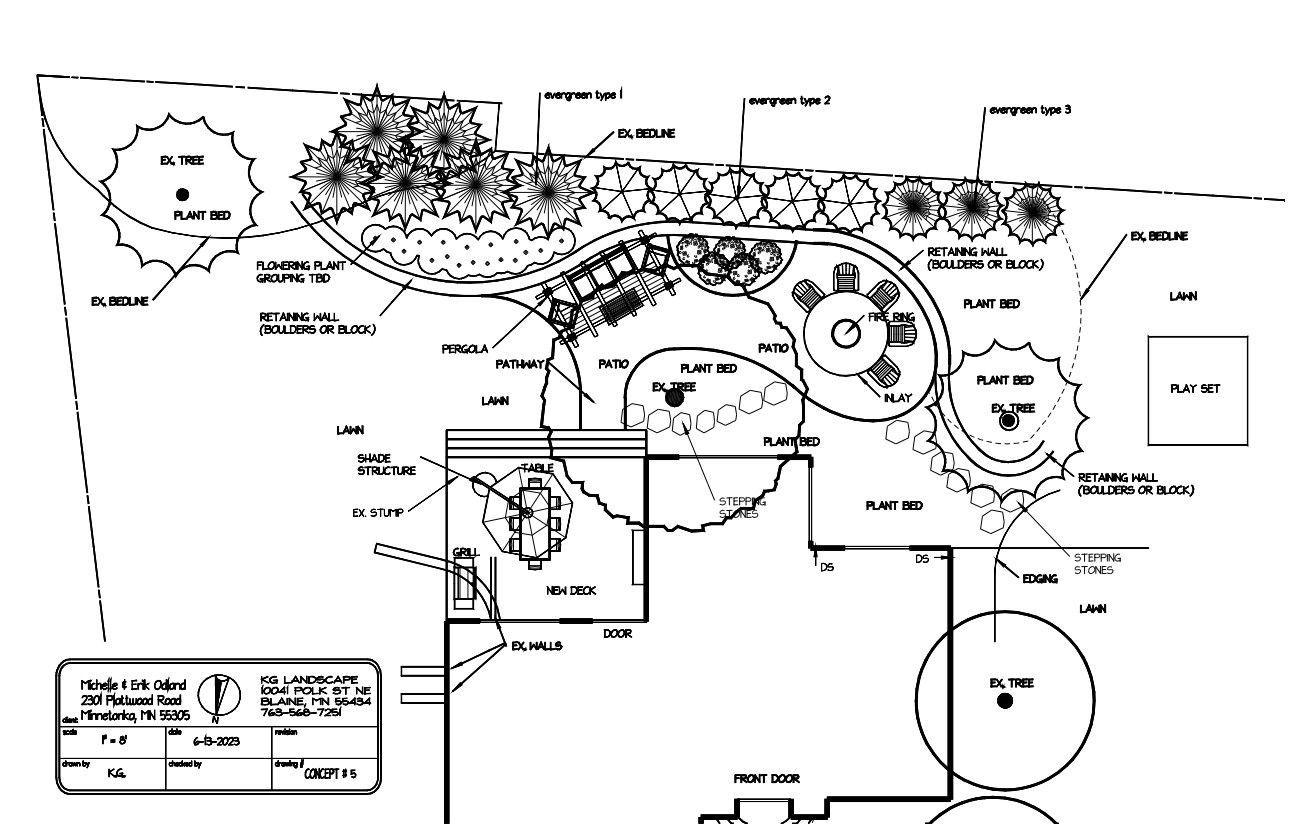
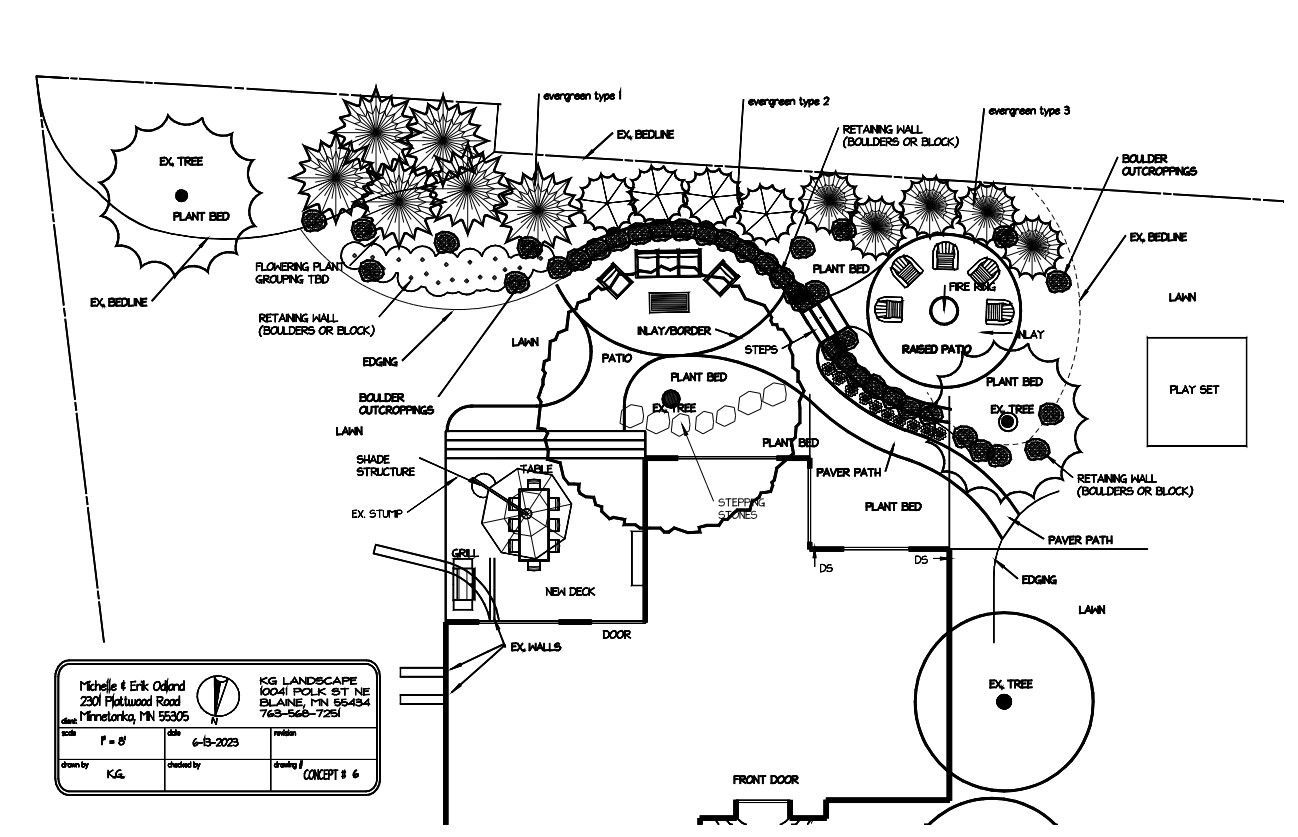
Rather than spending extensive time developing a single design that may not fully meet a customer’s expectations, KG Landscape most often prepares multiple conceptual layout options—typically ranging from 2-7 designs. These concepts allow customers to see what is possible and compare different approaches side by side, such as variations in patio shape, layout, and spatial organization. Many design companies present only one “take it or leave it” option; our approach empowers customers to make informed decisions by exploring multiple ideas.
Landscape Features and Design Considerations
During the conceptual design phase, KG Landscape explores the layout and placement of key landscape features identified as priorities during the initial design consultation. This stage allows us to thoughtfully test different ideas and relationships between features to determine what works best for the property and the homeowner’s goals.
These features may include wood structures such as fencing and gates, as well as the design and placement of pergolas or other overhead elements above a patio space. We carefully consider how these structures interact with the home itself—evaluating sightlines from windows, connections to decks, changes in elevation, and how the structures relate to the home’s architecture and surrounding landscape.
During this phase, we also begin thinking about how these features influence circulation, privacy, shade, and overall functionality of the outdoor living space. By exploring multiple configurations early in the process, we can identify opportunities and avoid limitations, setting the stage for a well-integrated design that balances aesthetics, usability, and long-term enjoyment.
Determining the Size and Function of Outdoor Living Spaces
One of the most important conversations we have during the conceptual design phase is determining the appropriate size of the outdoor living space. When designing a new paver or natural stone patio, we work closely with homeowners to ensure the space is sized correctly to support how they plan to use it—both day to day and when entertaining.
Rather than guessing, we focus on function first. This includes understanding how many people the space should comfortably accommodate and how the patio will feel once furniture, grills, and other features are in place.
Understanding Furniture, Activities, and Core Uses
A key part of this discussion centers on what furniture and activities the homeowner envisions for the patio. We talk through questions such as:
- What type of seating will be used?
- Will there be dining, lounging, or both?
- Is a grill or outdoor kitchen a priority?
These answers help determine how many core spaces the patio should include and how much room each space requires to function comfortably without feeling crowded.
Designing Single-Core and Multi-Core Patio Space Layouts
Some patio designs focus on a single primary use. A one-core-space patio might include a fire pit seating area or a dining space with a table and chairs.
Other projects benefit from two or more clearly defined core spaces. A common two-space patio layout includes a dining area for meals and grilling, along with a separate lounge space where outdoor furniture can be arranged and left in place. In this scenario, the dining area and the lounge area are considered two distinct core spaces.
For larger outdoor living areas, we often design three primary core spaces. These typically include a dining space, a lounge space, and a dedicated fire feature area, allowing each activity to have its own purpose-built zone.
Creating Flexible and Interchangeable Outdoor Spaces
In some cases, homeowners want the functionality of three uses without increasing the overall patio size. One way we achieve this during the conceptual design phase is by creating flexible layouts. For example, a two-core-space patio may include a movable fire pit that allows one area to function as either a lounge space or a fire feature area, depending on how the space is being used.
This approach creates versatility while maintaining a manageable patio footprint. Although the space may not support all three uses simultaneously without rearranging furniture, it allows homeowners to adapt the space based on their needs.
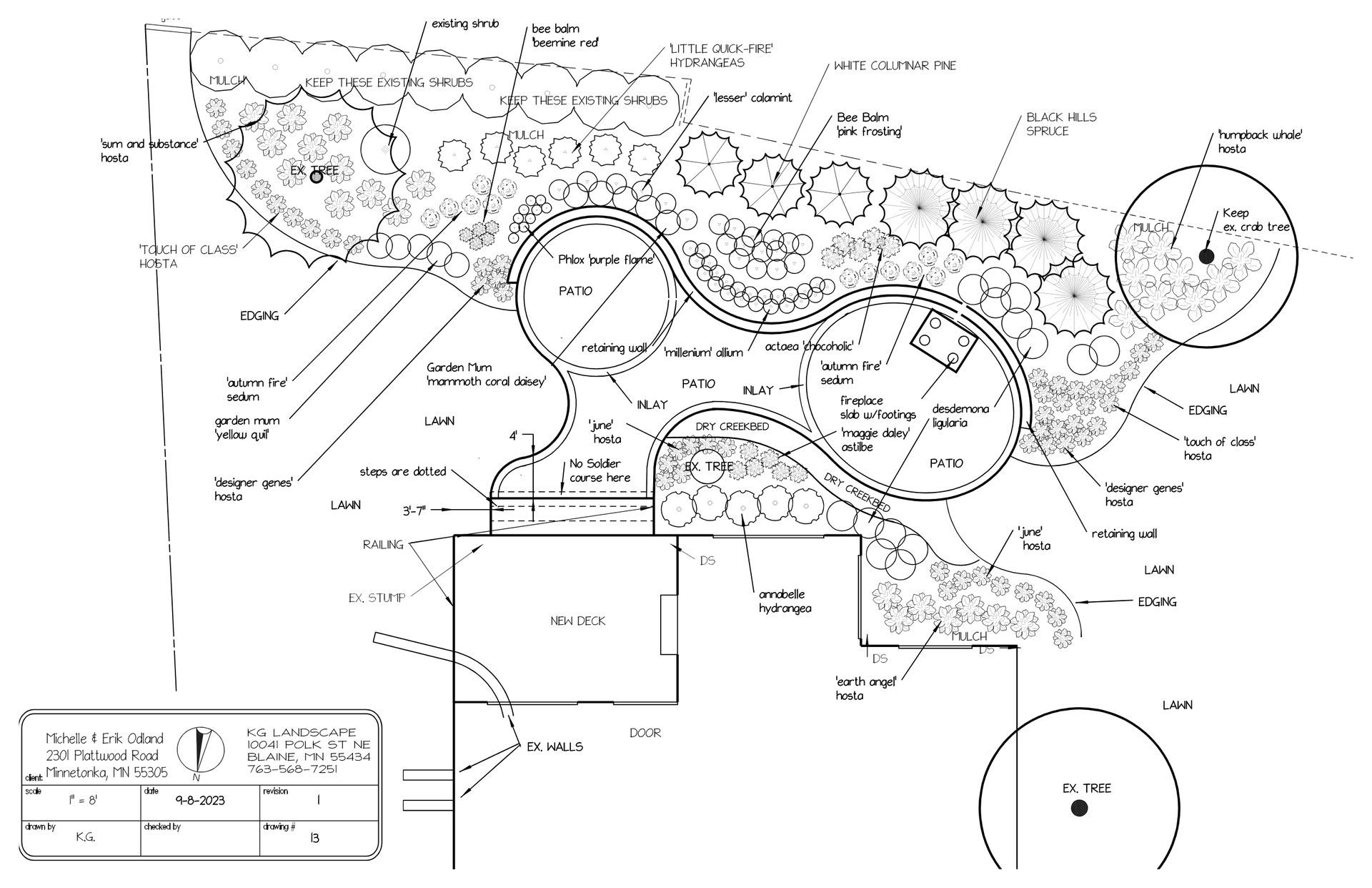
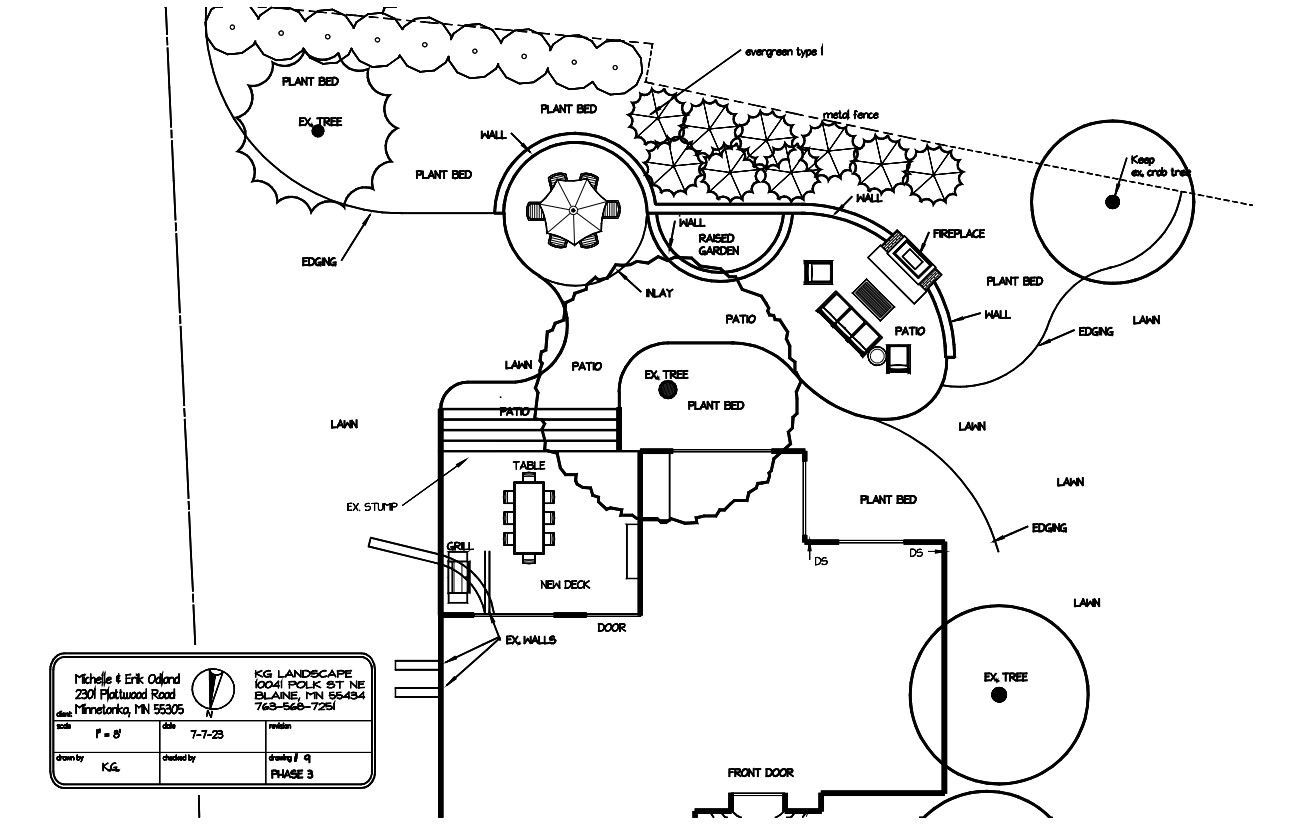
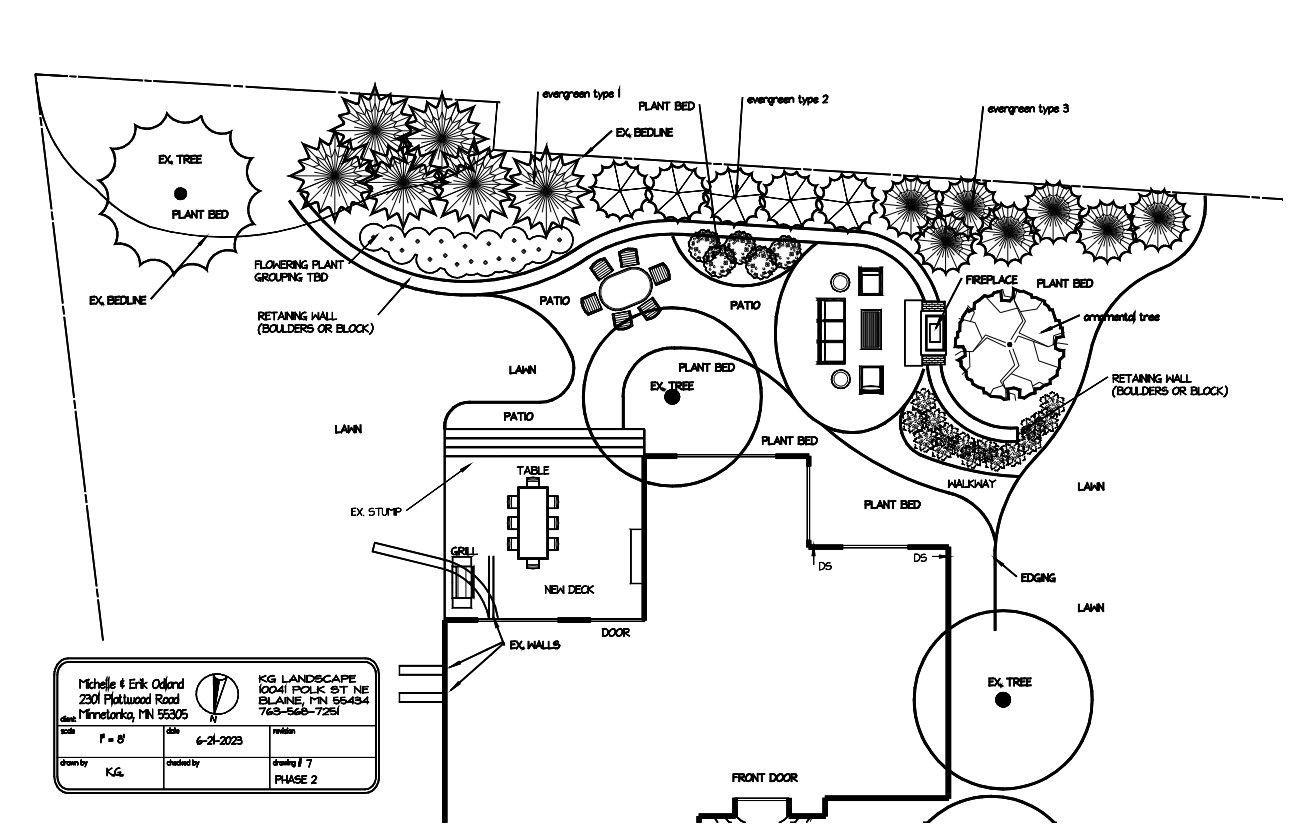
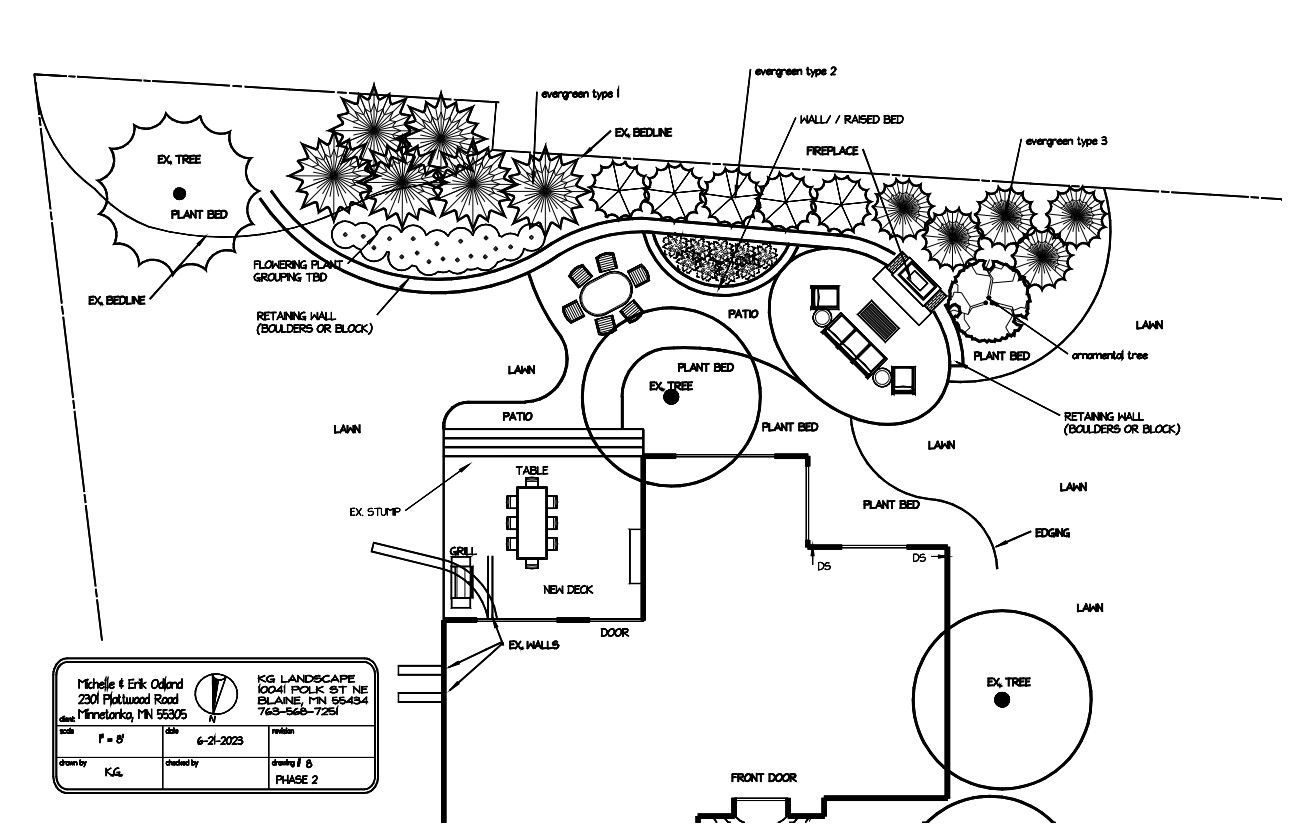
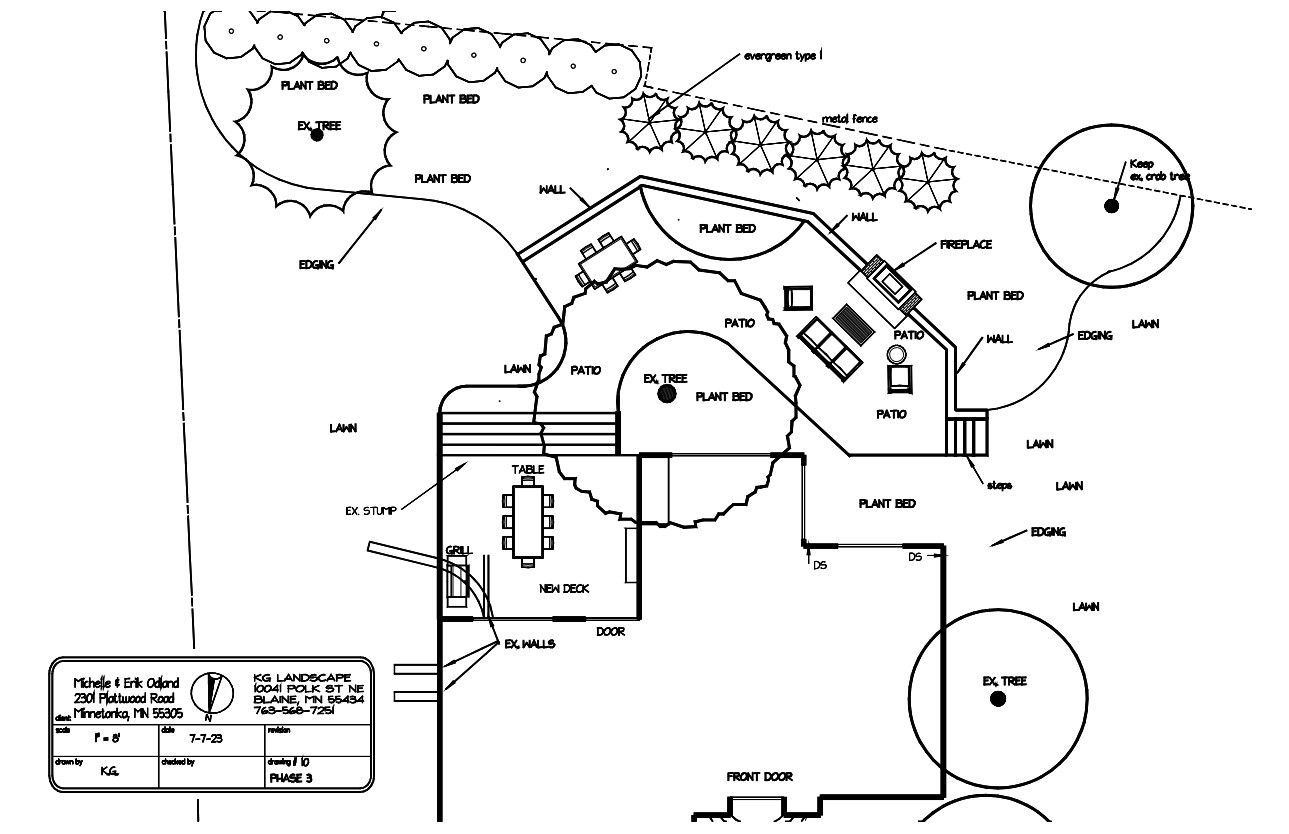
See Real Conceptual Design Examples that We Created for Backyard Patio & Outdoor living Space Project in Minnetonka
Below is an example of the conceptual design phase for a patio design and installation project completed for a customer in Minnetonka. They approached KG Landscape with the goal of creating a beautiful outdoor living space for dining, grilling, and relaxing. This Minnetonka landscape design client worked directly with owner and lead designer Kent Gliadon to explore multiple layout options and refine the design into a space that perfectly suited their needs.
Step 3: Concept Design Review
Once the initial concepts are complete, we schedule a focused review meeting to explore them together. This typically takes place over a video call or phone call, allowing us to walk through each design in real time and answer questions as they arise.
This step is less about presenting drawings and more about creating understanding. The conversation provides insight into how each concept was developed, what problems it solves, and how it connects back to your priorities for the space.
Understanding the Design Thinking
During the review, your designer will explain each concept individually, outlining how the layout functions, how the space may be experienced day to day, and how specific design decisions support different ways of using the landscape.
We’ll discuss how circulation, feature placement, and spatial relationships work together, while also addressing site-specific considerations such as views, yard grading, access, and existing conditions. This open dialogue helps clarify which ideas resonate most and why.
Aligning on the Right Direction
By the end of the review, you’ll have a clear sense of how each concept performs and which approach best reflects your vision. With this shared understanding, we can confidently establish a preferred direction for the next phase of design.
In many cases, the final direction draws from more than one concept—combining the most successful elements into a single, cohesive plan. This refined approach becomes the foundation as we move into Step 4: Design Development.
For many clients, this stage is where everything clicks. The ideas take shape through conversation, and the possibilities of the space become tangible and exciting.
Step 4: Design Development & Refinement
After the concept review is complete, we begin shaping your feedback into a clear and intentional design direction. Insights shared during the review—what stood out, what raised questions, and what felt right—inform how the plan evolves as we refine the overall layout to better match your vision, preferences, and how you intend to live in the space.
At this point, the focus shifts from exploration to decision-making. We identify the landscape elements that best support the goals of the project and often merge select ideas from multiple concepts. This allows the design to move forward as a unified solution, thoughtfully tailored to your property rather than constrained by a single preliminary concept.
Developing the Design in Detail
As the plan advances, greater definition and resolution are introduced. The design begins to take on a sense of scale, structure, and realism. We also start building in the core outdoor drainage solutions that will ensure water is expertly managed within your new outdoor space, ensuing well drained and long lasting features.
During this phase, we continue refining the overall organization of the space while developing key components such as:
- Preliminary planting strategies and plant palette direction
- Hardscape layouts, including patios, walkways, and material transitions
- Elevation changes
- Placement and layout of steps and landings
- How individual elements interact to create a functional, cohesive outdoor environment
- Features light landscape lighting and irrigation
These refinements ensure the design is not only visually compelling, but also functional, constructible, and carefully considered. Each iteration brings the plan closer to a complete and well-resolved landscape design.
Preparing for the Next Phase
Once the updated design reaches an appropriate level of clarity, we are often able to provide a preliminary cost range based on the proposed scope of work. Depending on the project, this may be reviewed during a follow-up meeting or shared in advance to allow time for consideration before the next discussion.
Every landscape project progresses at its own pace, shaped by the complexity of the site and the clarity established in earlier conversations. Throughout this phase, our priority is to move forward with confidence—ensuring the design fully aligns with your goals before advancing toward final plans and implementation planning.
Step 5: Final Design & Proposal
The final design phase brings clarity and resolution to the overall landscape plan. At this stage, the design is fully developed to clearly define the scope, intent, and details of the project so it can be accurately reviewed and priced.
The final drawings outline all key elements of the landscape, including specific plant selections, proposed materials and finishes, design intent for hardscape features, anticipated grading or drainage considerations, and the general locations of elements such as irrigation or landscape lighting. These plans are created to clearly communicate what is included in the project and how the various components relate to one another.
While the design is highly detailed, it is intended to support understanding, coordination, and cost development—not to serve as construction blueprints.
Establishing Clear Pricing
Once the final design details are confirmed, we prepare a fixed-price proposal based on the scope illustrated in the plans. With the design clearly defined, we are able to provide accurate and transparent pricing for the work shown.
You’ll receive a detailed proposal that breaks the project into organized sections or line items, making it easy to understand what is included and how the overall investment is structured.
Next Steps Toward Construction
After reviewing and approving the final design and proposal, clients who choose to move forward can authorize the project by signing the agreement and submitting the required deposit to reserve a place on our schedule.
Once the agreement was signed and the deposit received, a start date was scheduled. Start dates are typically booked several weeks in advance, depending on the time of year and overall project volume.
This phase marks the transition from design planning to construction preparation, providing the clarity and confidence needed to move forward.
From Design Approval to Project Start Date
What happens after you sing up? Once your final landscape design and written estimate are approved, your project officially moves from planning into our construction schedule.
To secure your place, a 30% deposit is required as well as a signed proposal. At that point, your project is locked into our installation queue, meaning your spot is reserved in our project order. Any projects approved after yours are scheduled to begin once your installation is complete.
Project Scheduling & Timeline
When your project is added to the schedule, we will provide an estimated installation window. This time frame typically ranges from 3-8 weeks until estimated project start dates.
Please note that timelines can vary depending on:
- Seasonal demand
- Current project volume
- Weather conditions
- The progress of projects ahead of yours
Because landscaping is both weather-dependent and sequential, scheduling remains flexible to ensure each project is completed with the proper care and attention.
Ongoing Communication & Updates
While you wait for your project start date, our your designer will remain your primary point of contact. As your installation approaches, we’ll provide updates on:
- Your expected start window
- Any schedule adjustments
- A clearer ETA as your project moves closer to the top of the schedule
If weather or project timing causes changes, we’ll communicate proactively so you always know where things stand.
A Thoughtful, Organized Approach
This scheduling process allows us to maintain quality, manage expectations, and deliver consistent results for every client. By sequencing projects carefully, we ensure your
landscape installationreceives the time, craftsmanship, and attention it deserves.
Project Execution, Communication & Completion
Once your project moves into construction, your landscape designer remains actively involved throughout the entire build and continues to be your primary point of contact. Clear communication during this phase is essential to delivering a finished landscape that matches the approved design and proposal.
Throughout the project, this may include:
- On-site check-ins and walk-throughs as needed
- Ongoing communication between the designer and installation crew
- Coordination to ensure design intent, materials, and details are executed as planned
This hands-on approach allows us to manage details in real time, address nuances as they arise, and maintain a high level of accuracy and professionalism during construction.
Quality Review & Final Walkthrough
Once installation is complete and the project has been built according to the approved design and proposal, the work is inspected by your designer to confirm that all elements meet our quality standards.
For most projects — especially larger installations — we then schedule a final walkthrough with you. During this time, we:
- Review the completed work together
- Address any remaining questions
- Discuss maintenance best practices and watering guidelines
- Ensure you feel confident caring for your new landscape
Our goal is to make sure you are completely satisfied and comfortable with your finished outdoor space.
Project Close-Out & Ongoing Support
After the walkthrough is complete and everyone is satisfied with the finished work, the project is considered complete and the final invoice will be issued. Final payment can be made by check or online ACH payment.
At KG Landscape, we take tremendous pride in the quality of our craftsmanship and stand behind our installations. If you ever have questions after your project is complete — or if something doesn’t seem quite right — our team is always happy to answer questions or revisit the site to review any concerns.
KG Landscape Management stands behind every one of our completed projects. We cherish your choice to have our company perform your landscape design and construction.
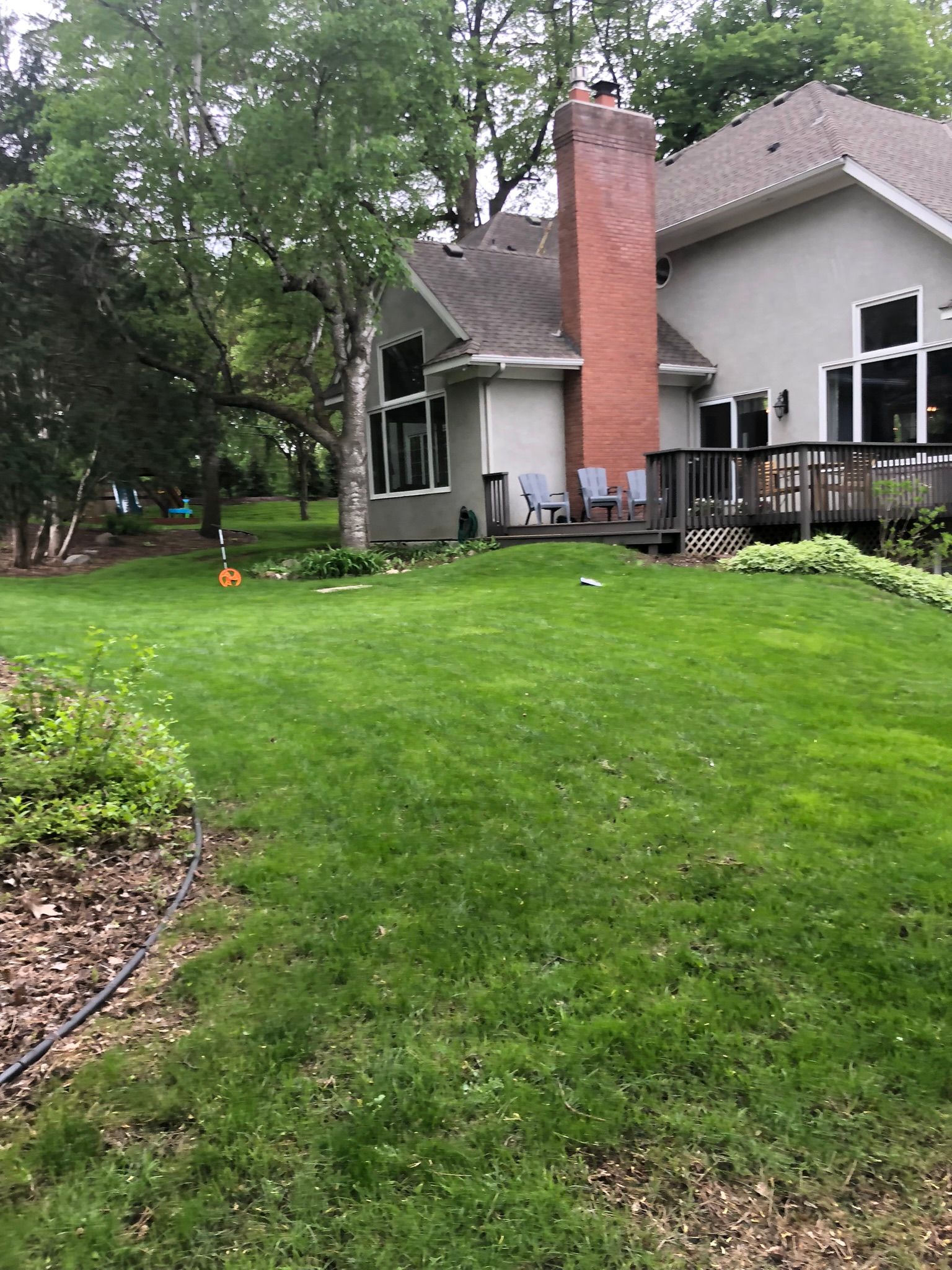
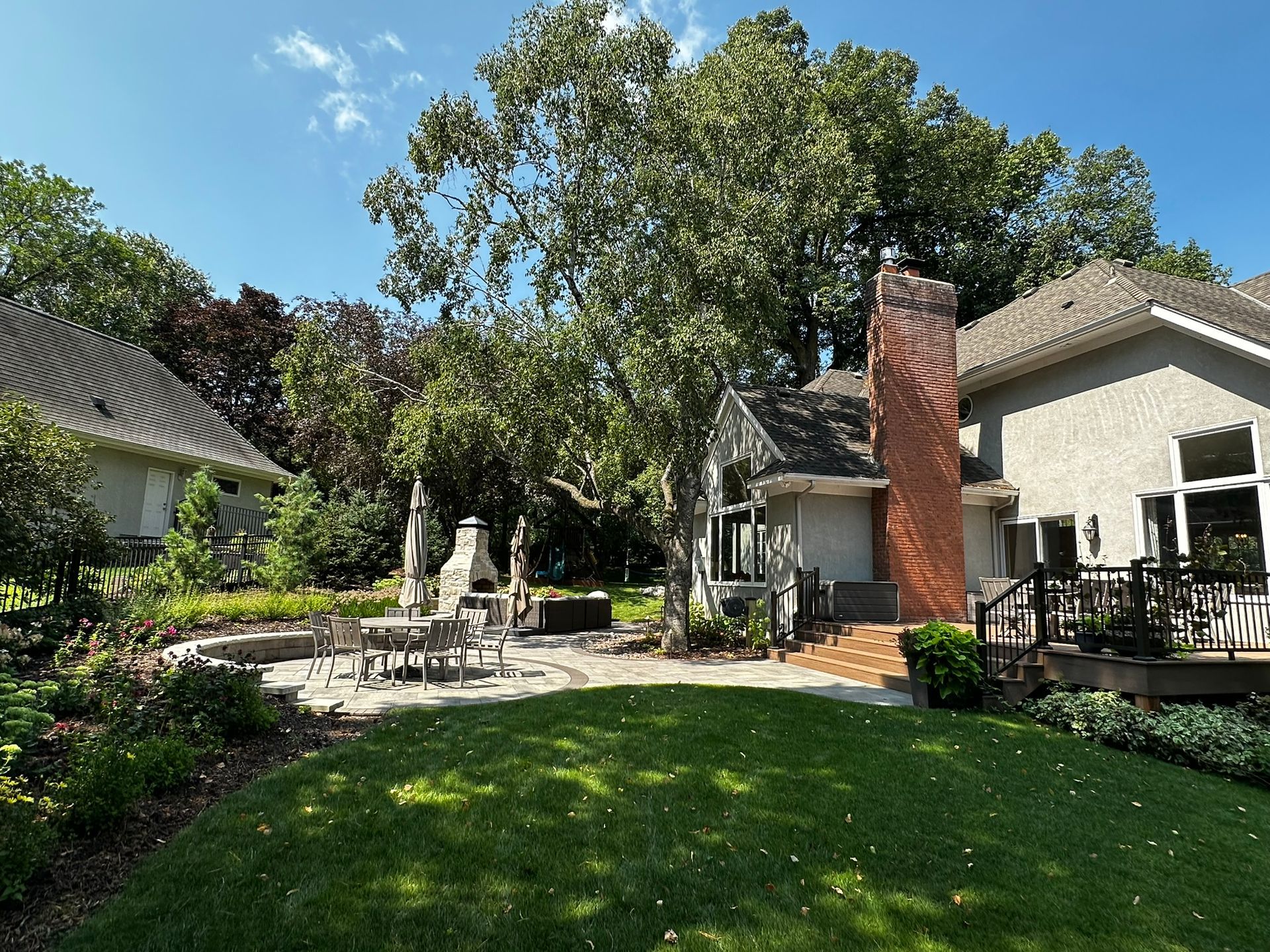
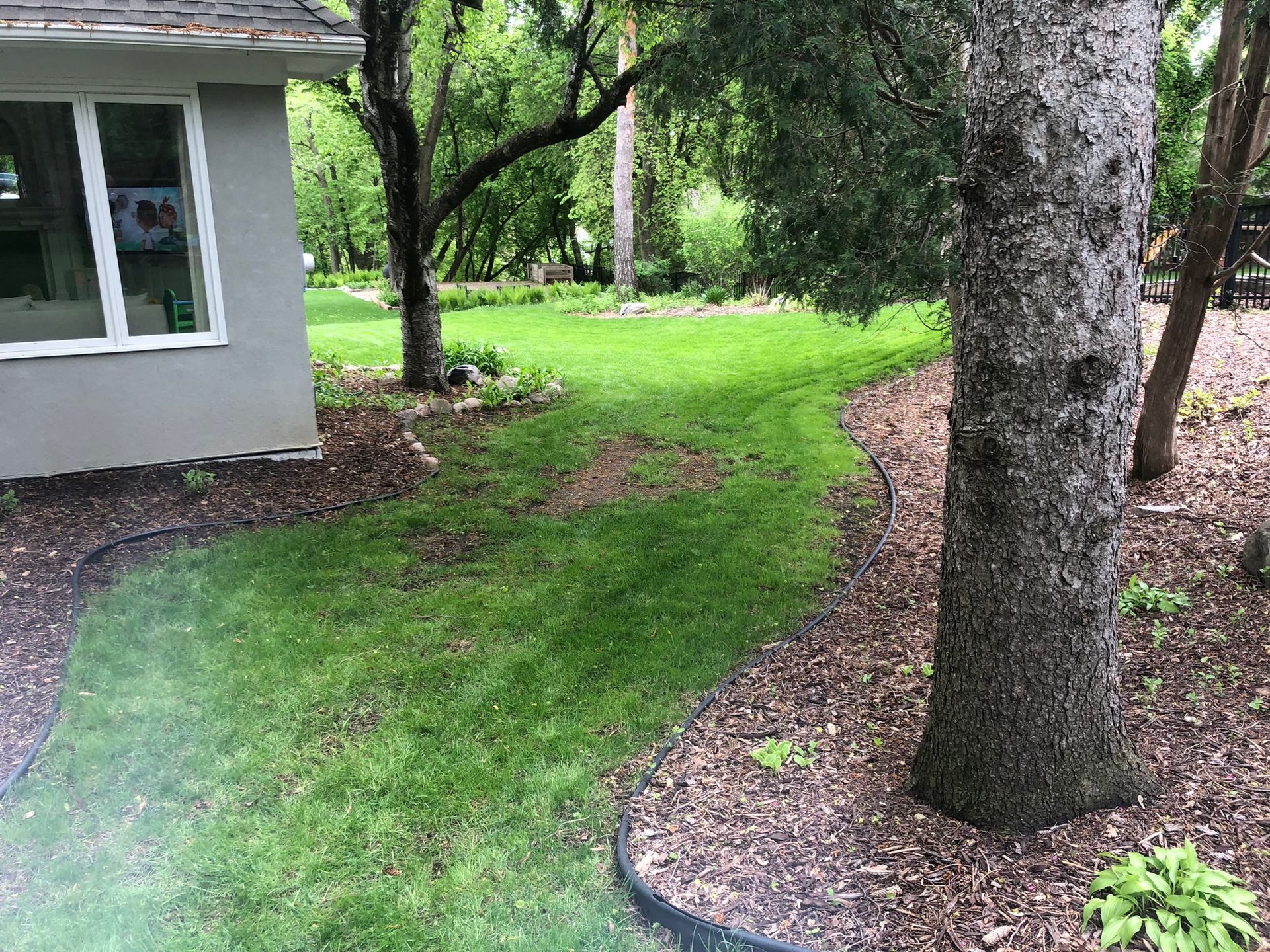
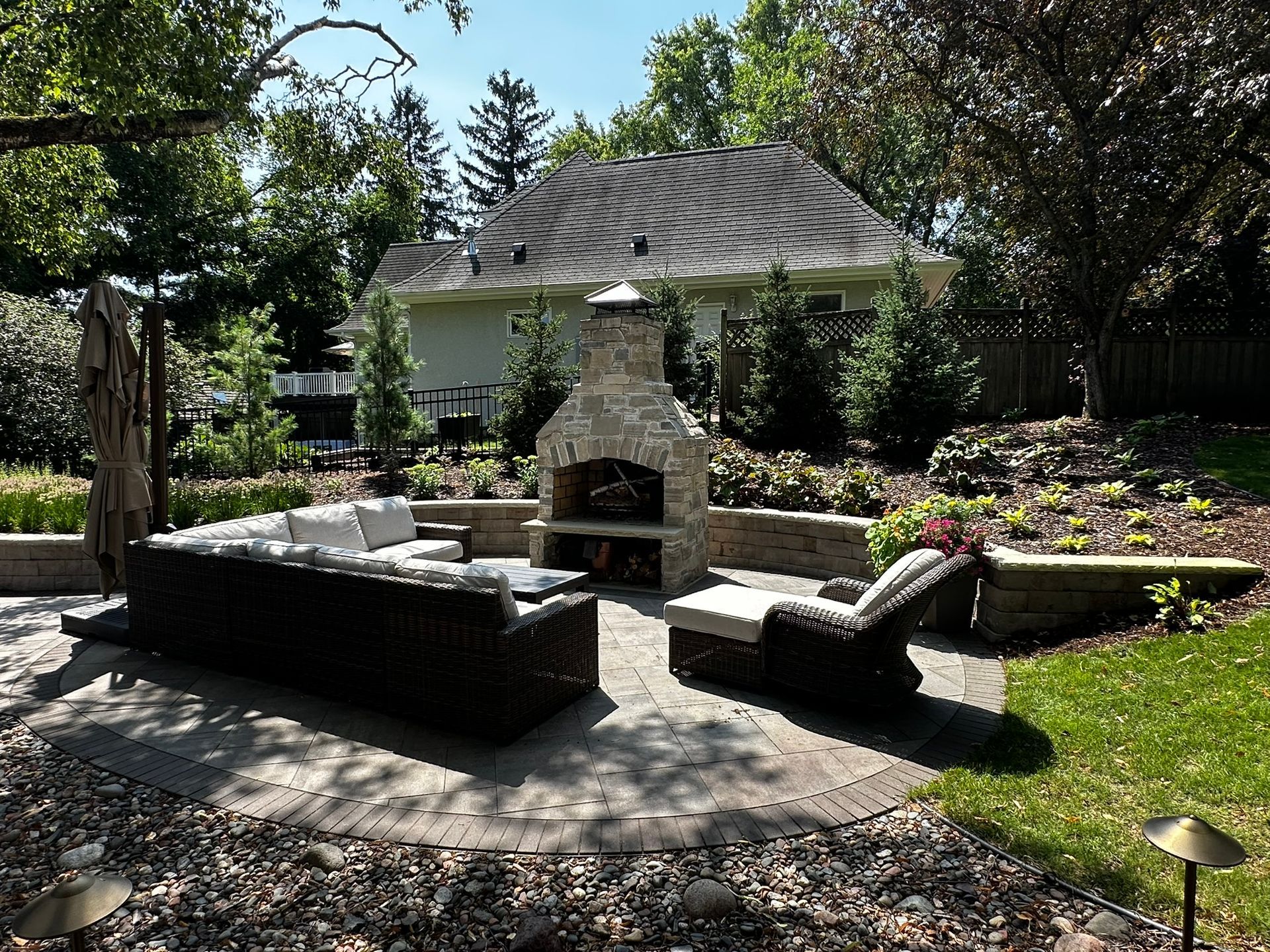
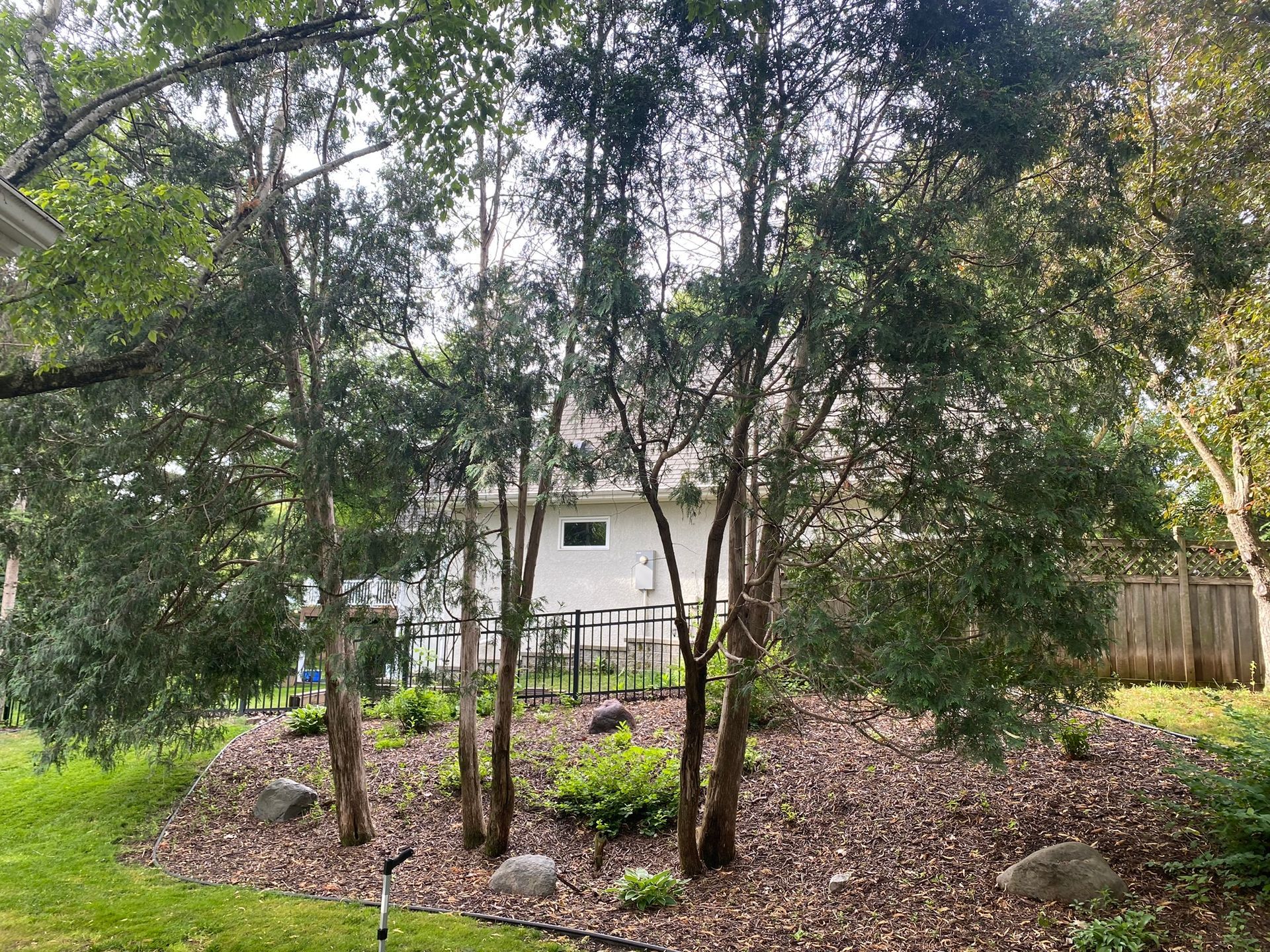
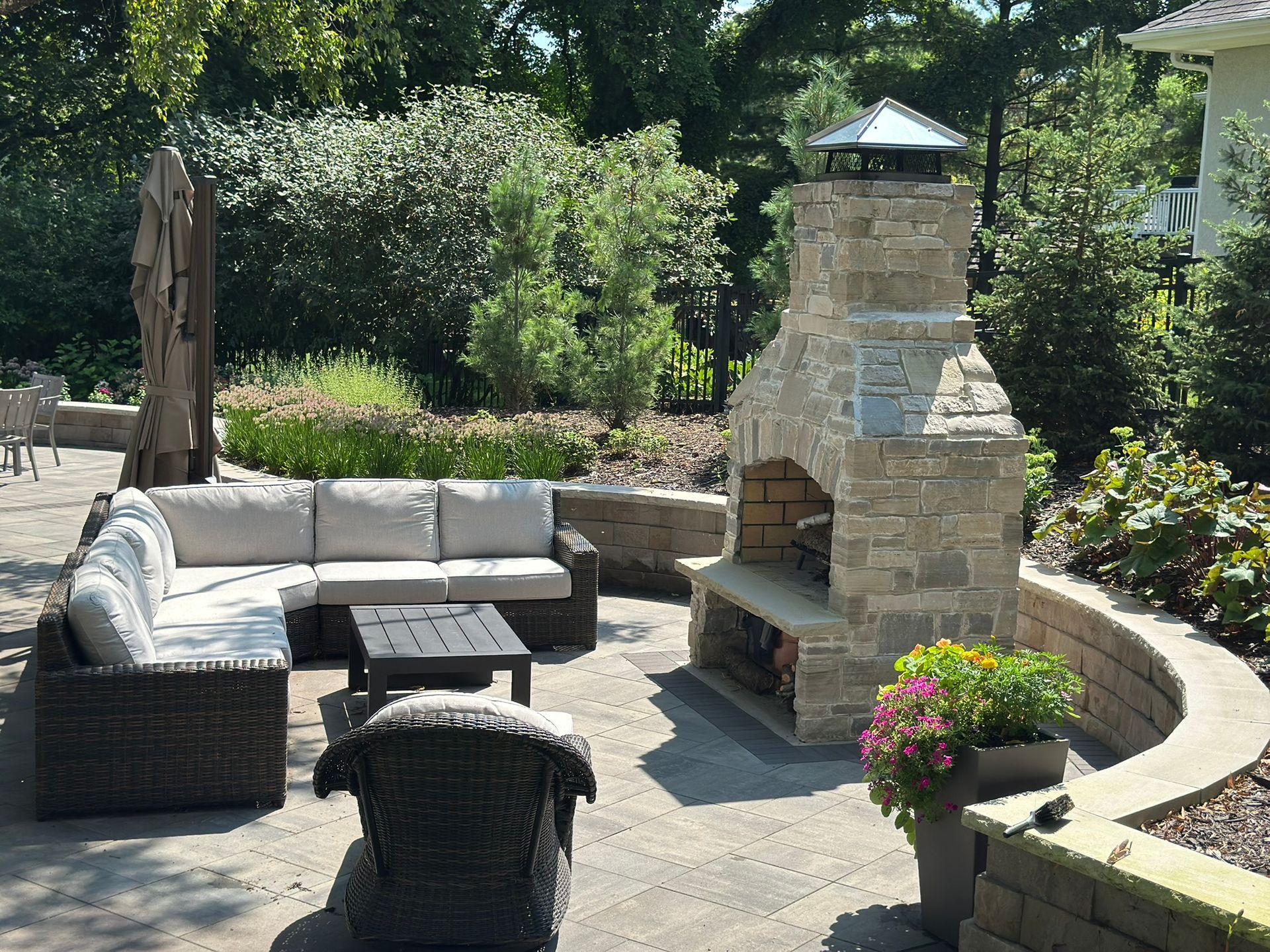
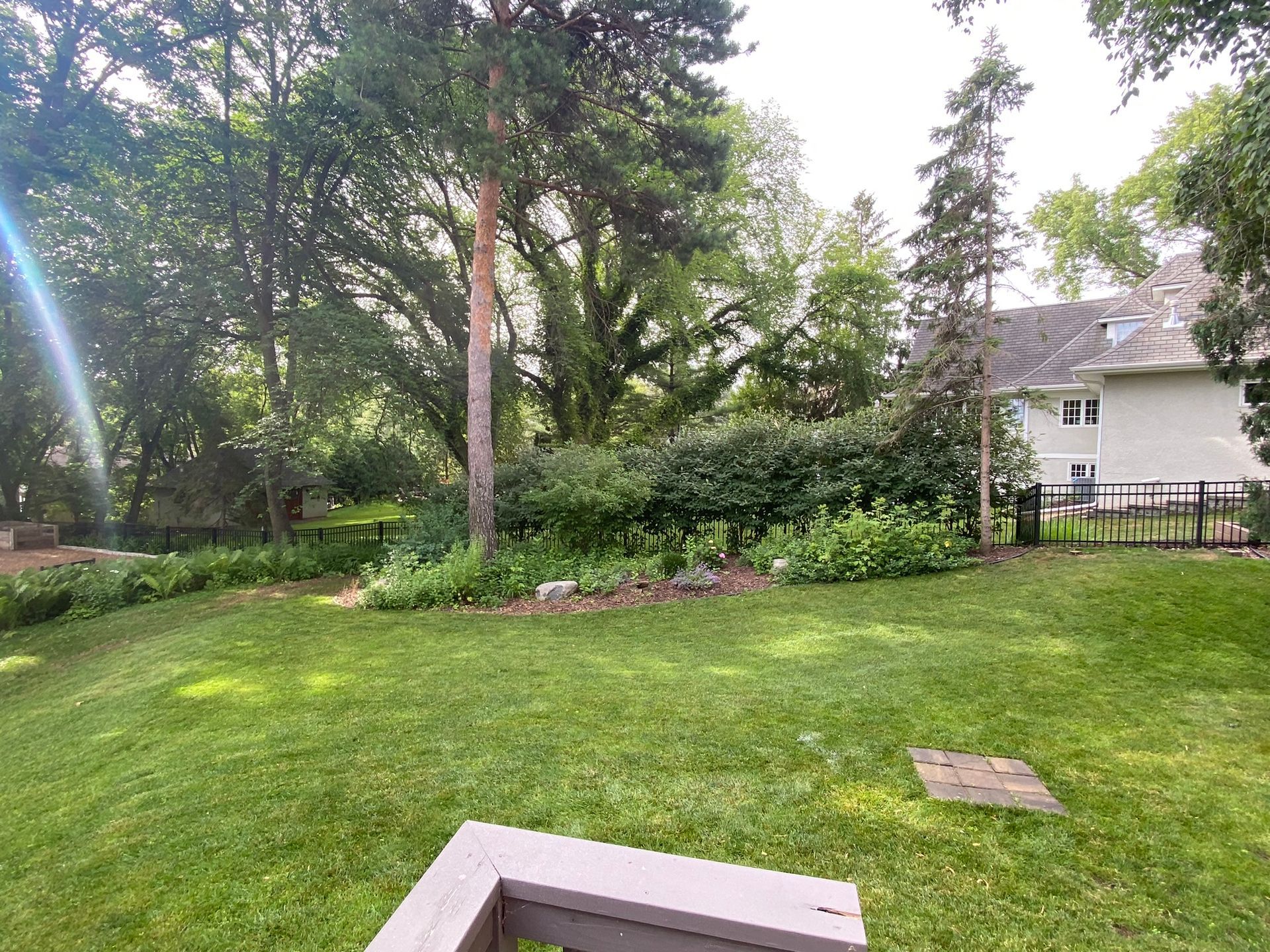
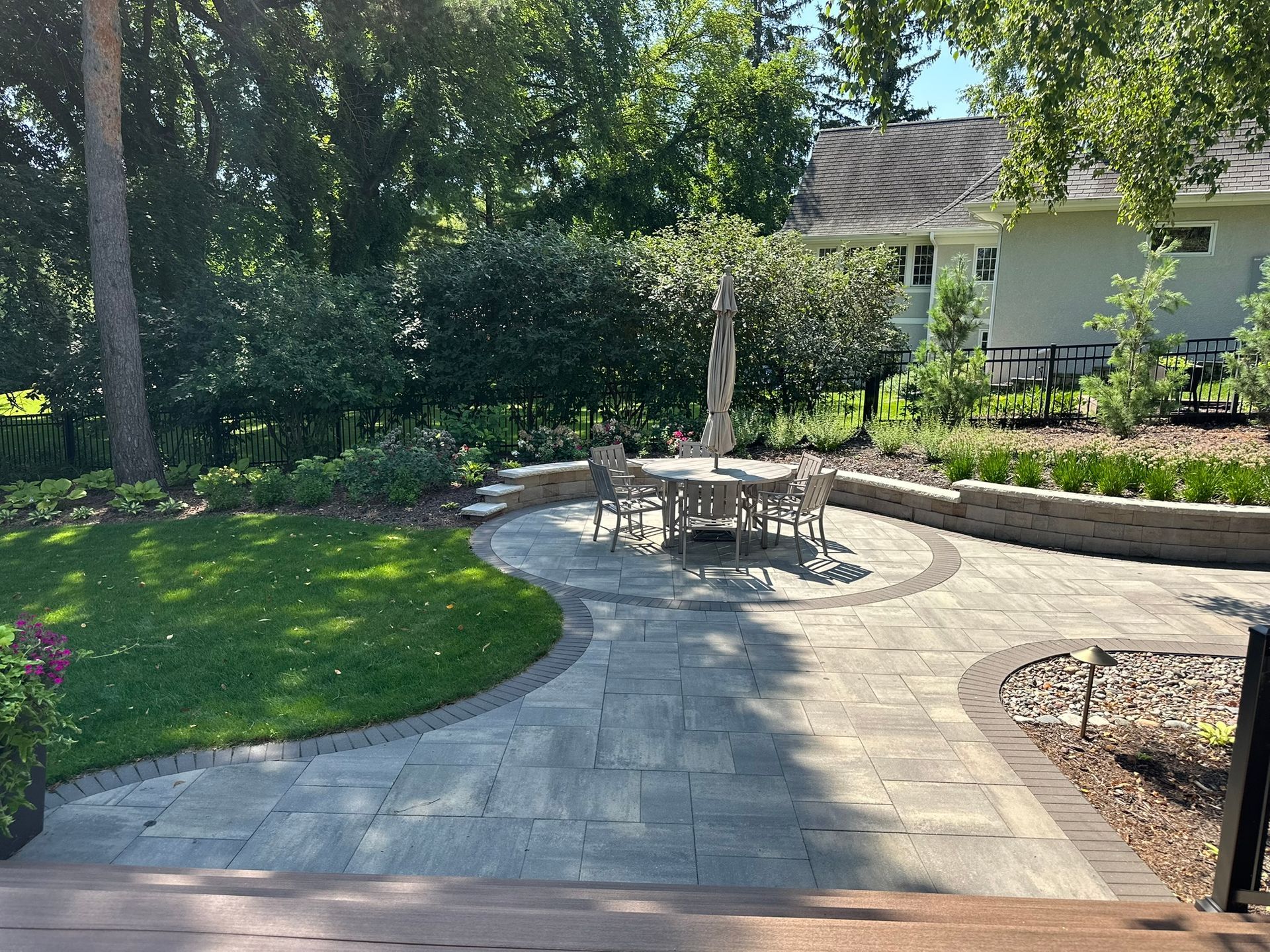
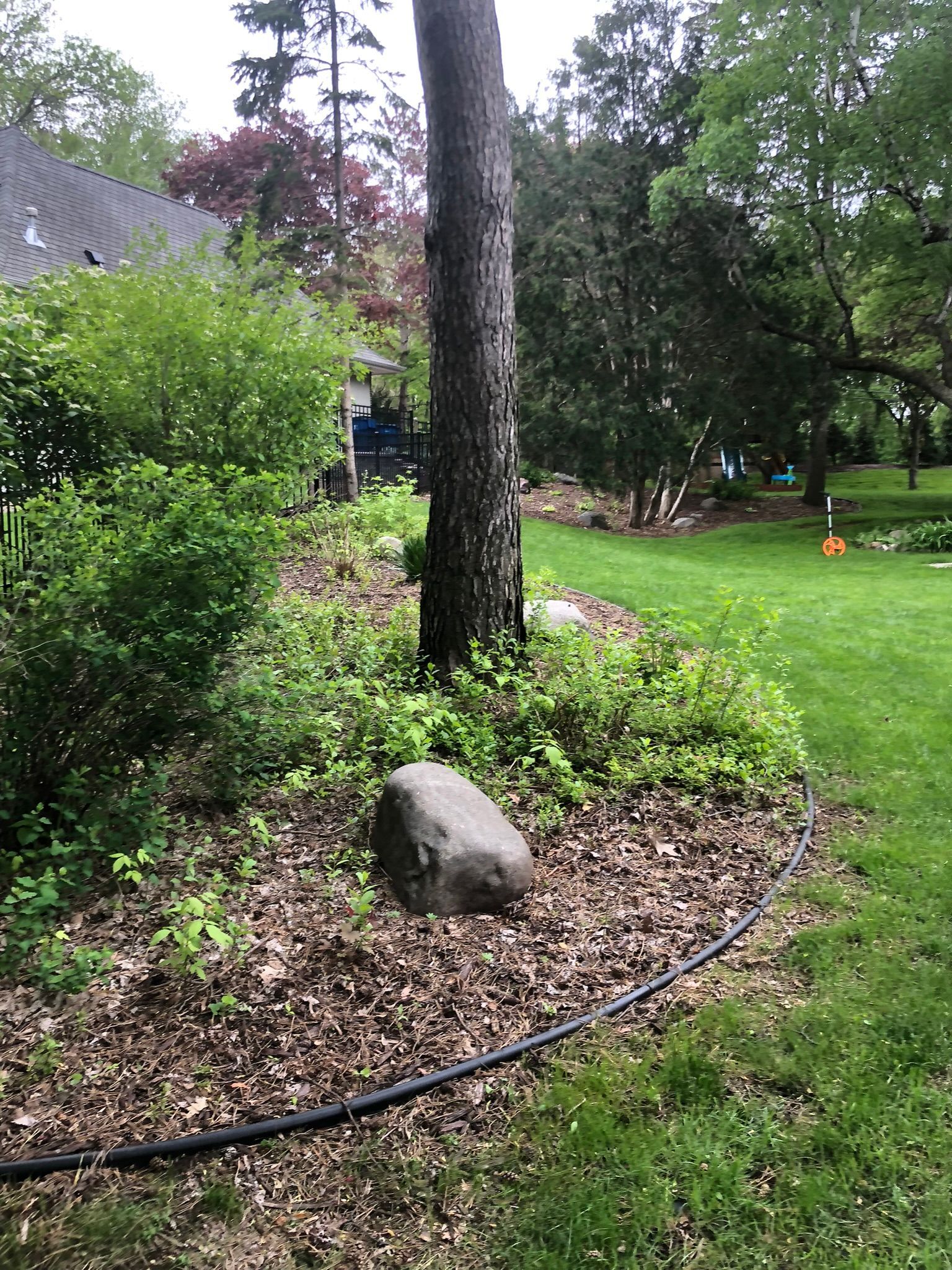
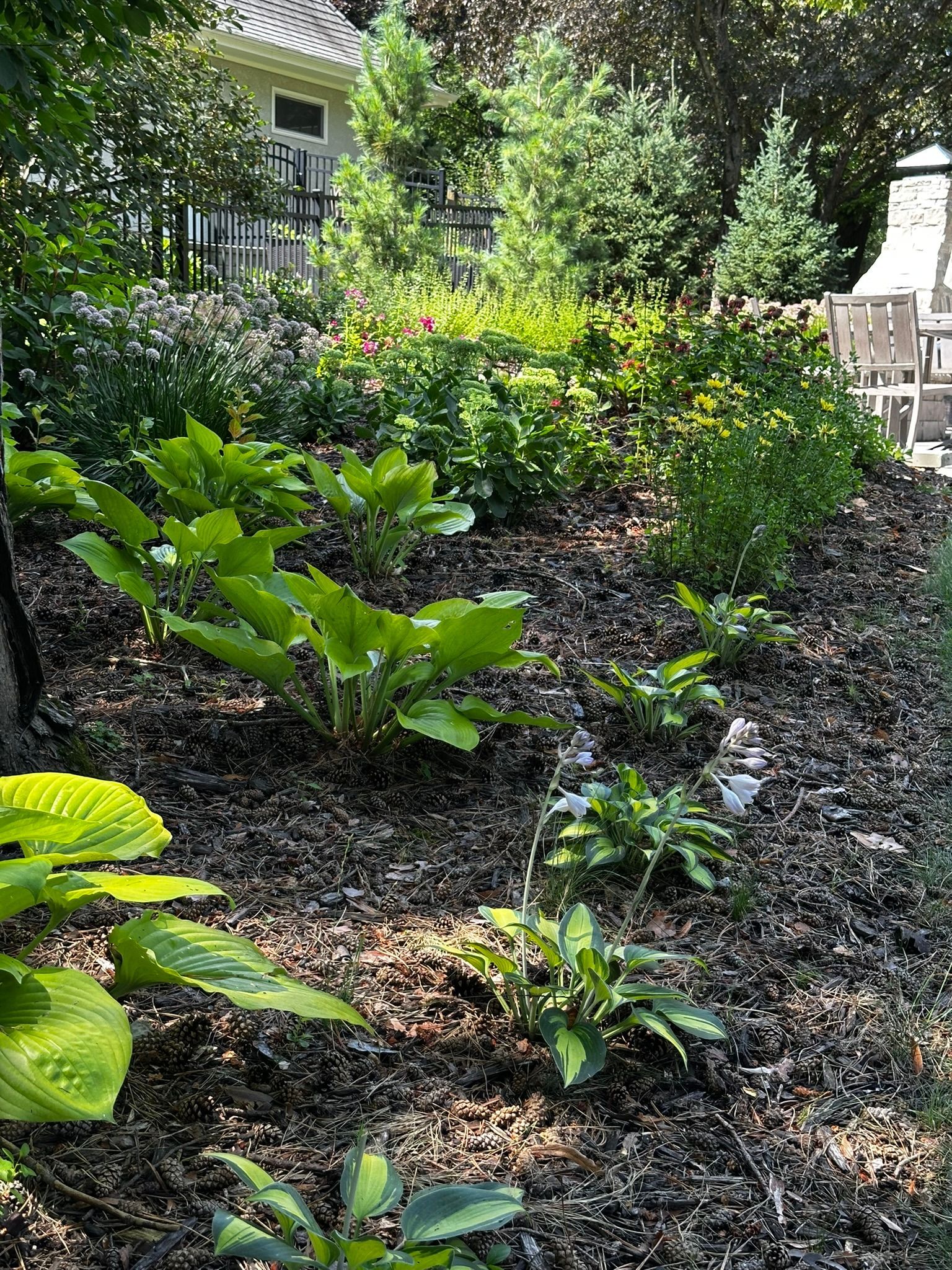
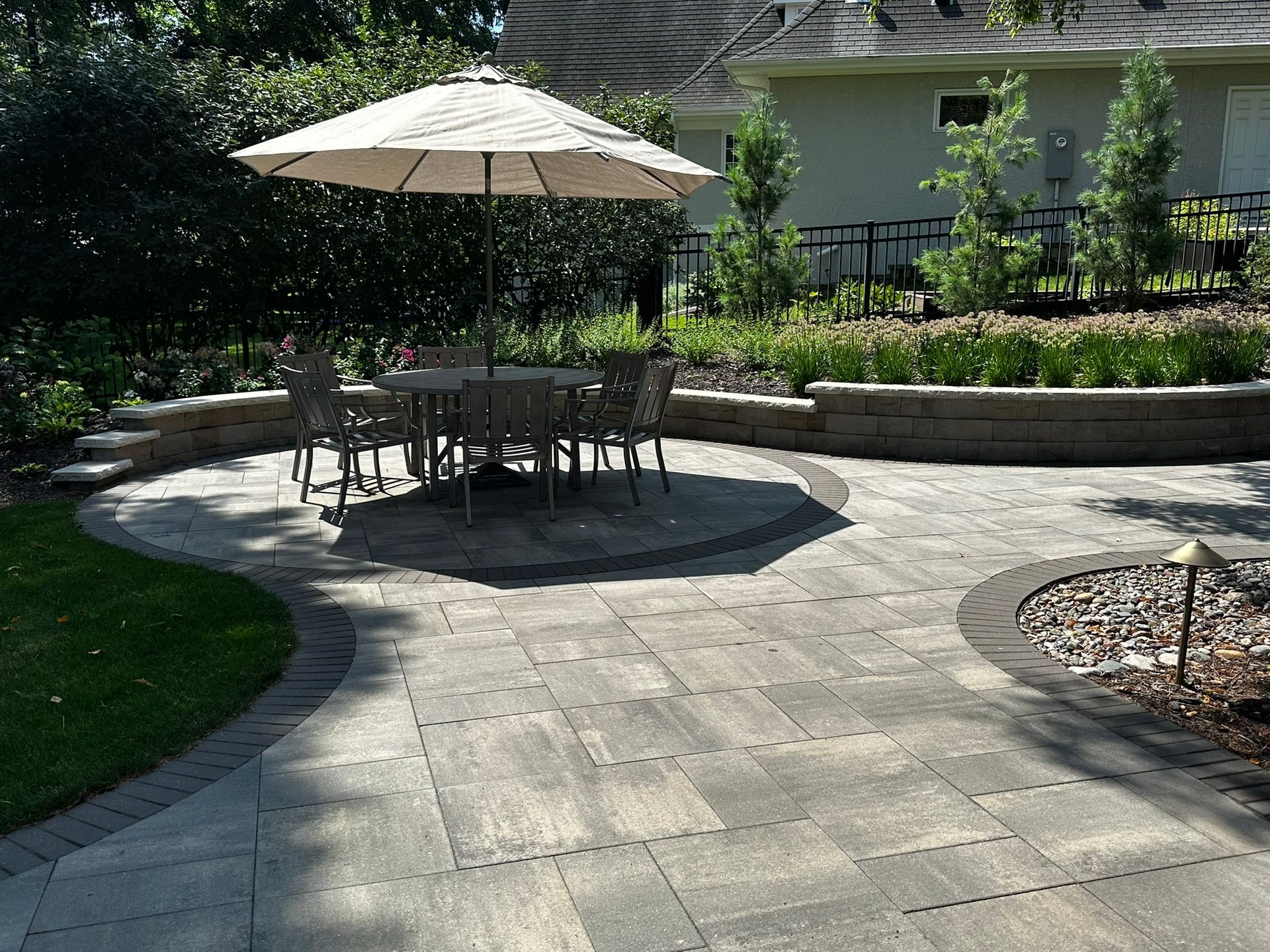
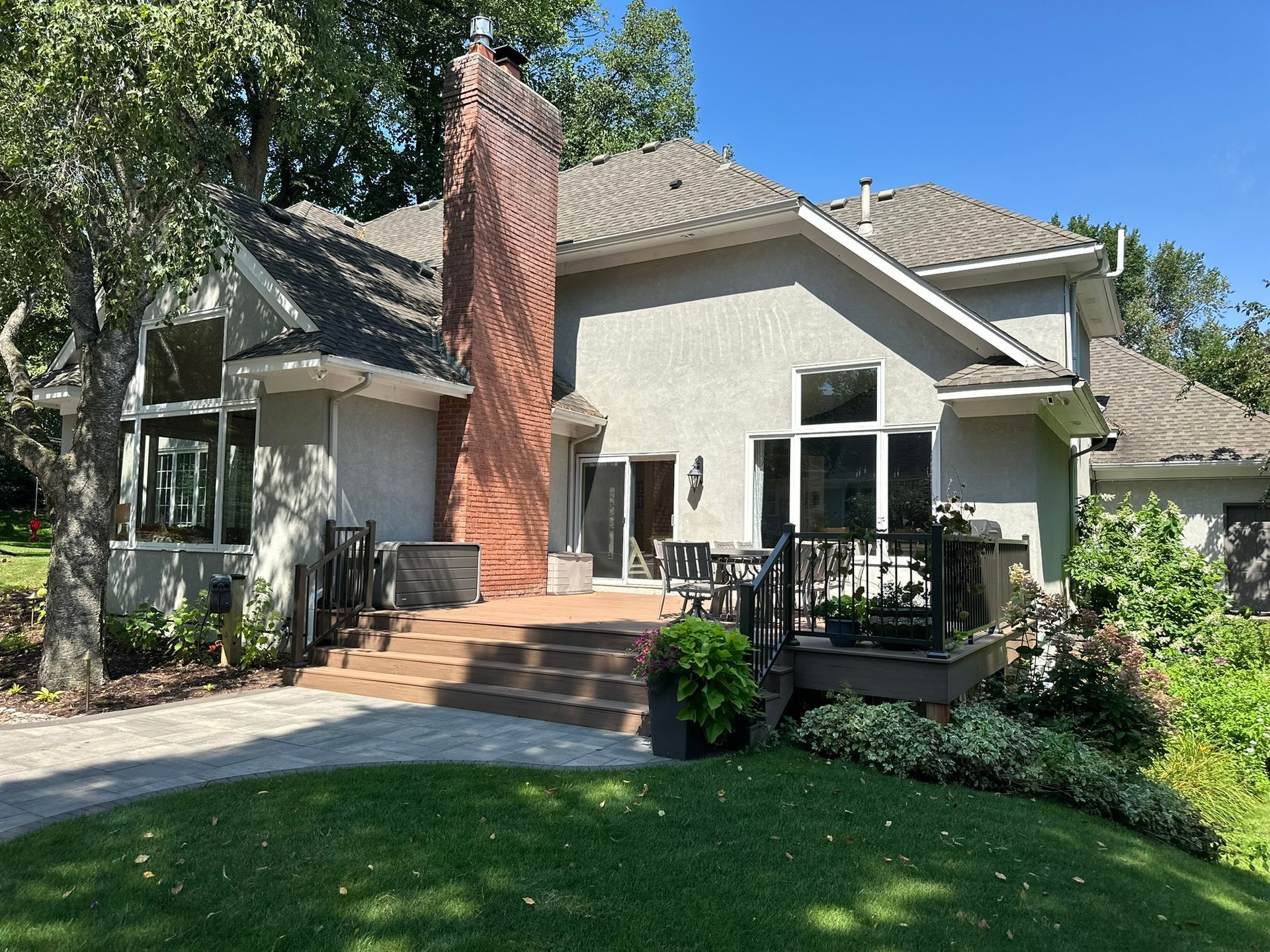
Before and After Photo Gallery of Our Minnetonka Backyard Renovation Design & Installation Project Below


Ready to Start Your Landscape Design?
If you’re planning a landscape project in the Twin Cities and want a thoughtful, well-defined design process from start to finish, we’d love to talk.
Our design approach is built to help homeowners gain clarity, confidence, and a clear path forward—whether you’re just beginning to explore ideas or ready to invest in a complete outdoor transformation.
The first step is a conversation. We’ll learn more about your property, your goals, and how you’d like to use your outdoor space, and help you determine whether our design services are the right fit.
Serving homeowners throughout Minneapolis, St. Paul, and the surrounding Twin Cities area.