
How We Fixed a Wet Muddy Backyard in Plymouth by Designing a Drainage System That Actually Works Together
Serving clients in the Minneapolis, St. Paul, Edina, Plymouth, Minnetonka & Blaine areas
A Plymouth Backyard With Major Drainage Problems
This property sits in the Enclave at Elm Creek, one of Plymouth's newer developments. Walkout basement. Nice setup for getting from the house to the backyard. The problem was the backyard itself.
Water from both side yards plus most of the roof was draining into a flat backyard built on Plymouth's heavy clay soil. The yard stayed wet for days after every rain. Muddy. Unusable. And all that saturated clay was causing serious damage.
The homeowner had already tried to fix some of this. Another landscape company installed catch basins below the downspouts and ran some drain pipe. But they didn't address the larger drainage issues around the foundation. The clay soil kept heaving, which raised the drain boxes they'd installed and broke the system. Money spent, problem not solved.
By the time we got involved, the damage was extensive. Patio lifting and cracking the siding. Deck footings heaving. Fence posts popping out of the ground. Landscape edging buckled. The previous catch basins were sticking up out of the soil.
We evaluated the site, identified every source of water contributing to the problem, and designed a comprehensive drainage system that addressed all of them. French drains along the foundation and around the patio. Underground downspouts. Sump pump discharge tied into the system. Everything connected, everything draining to the same outlet at the back of the property.
This case study walks through what we found, what we considered, and how we solved it.
Project Snapshot
Project Location: Plymouth, MN (Enclave at Elm Creek)
Property Type: Residential, walkout basement
Primary Issue: Persistently wet backyard causing frost heave damage to patio, deck, fence, and landscape features
Solution Installed: Comprehensive drainage system including French drains, underground downspouts, and sump pump discharge integration
The Problem
The backyard was a mess. Persistently wet and mushy, even days after rain. The lawn had muddy mower tracks. You couldn't walk through certain areas without getting your boots soaked.
But the standing water was just the symptom. The real damage was happening underground.
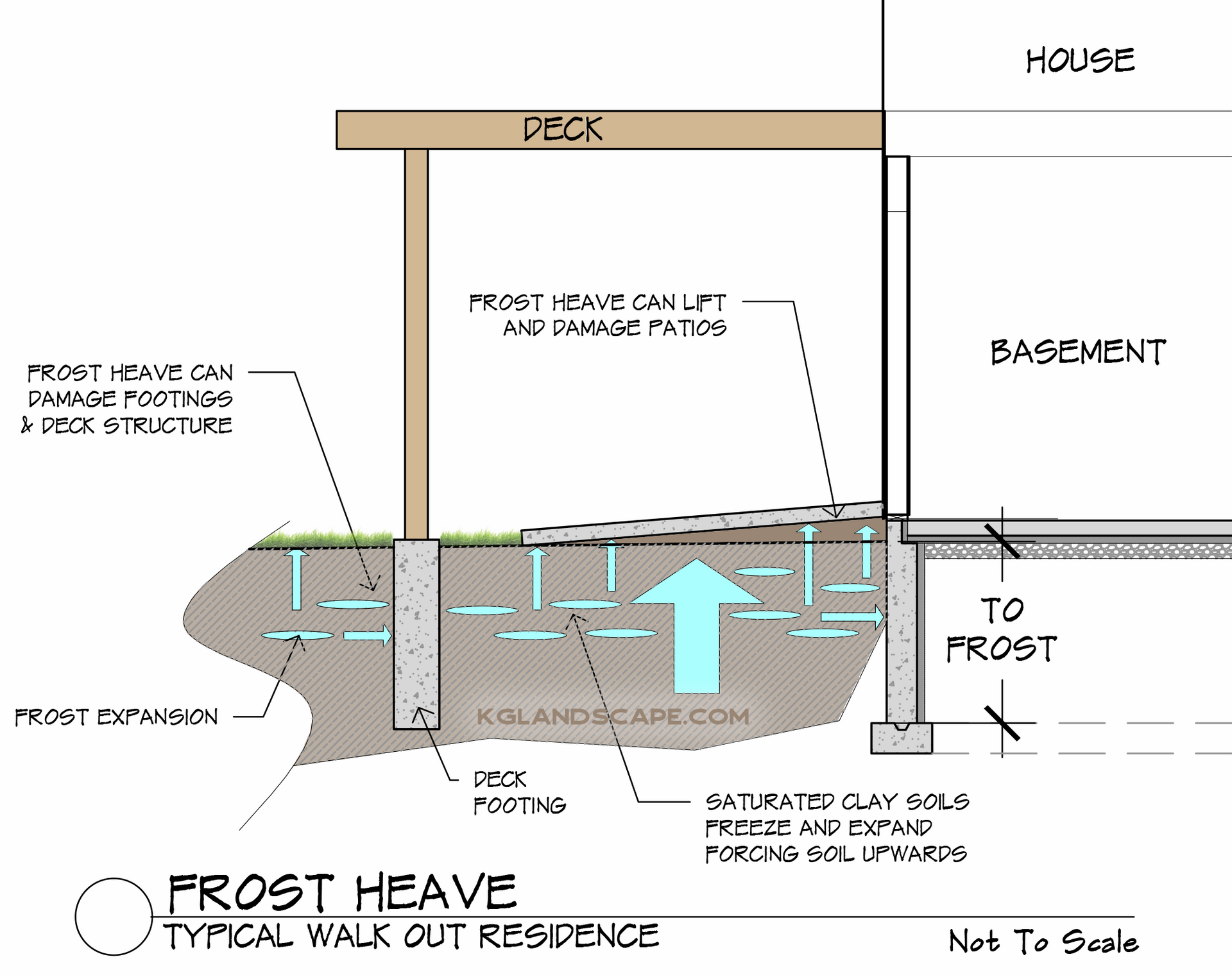
Plymouth clay soil holds water. When that water freezes in winter, the soil expands. When it thaws, it contracts. This freeze-thaw cycle is called frost heave, and it destroys things. The University of Minnesota Extension documents how frost action in clay soils can lift structures several inches over a single winter. Concrete lifts. Footings shift. Posts pop out of the ground. Anything sitting in saturated clay soil is going to move.
Here's what we found:
The patio was lifting and breaking the siding. The concrete had heaved so badly during winter freeze cycles that it pushed up against the house and cracked the vinyl siding. This same issue can break sliding patio doors when it gets bad enough.

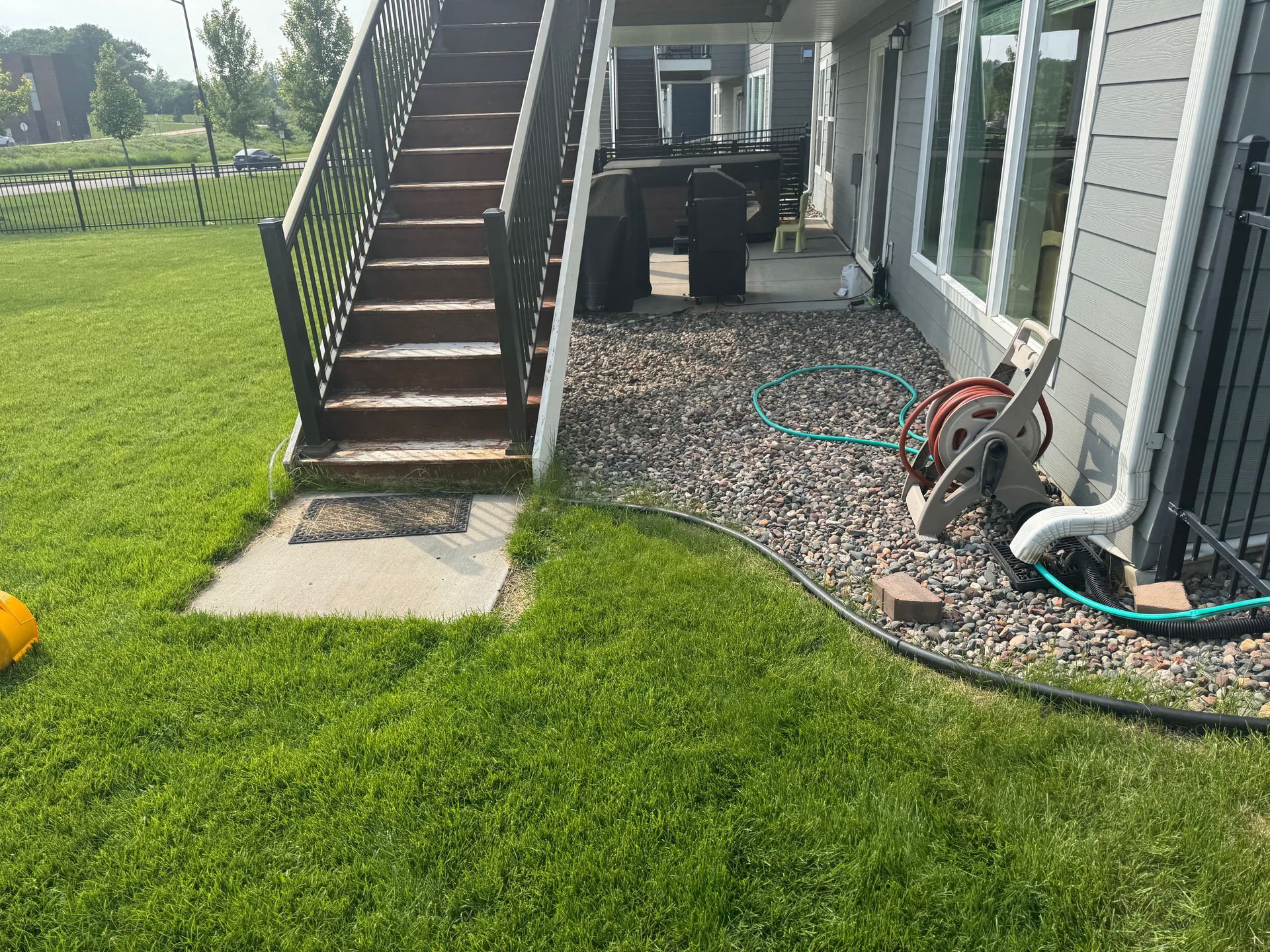
The deck landing was crooked. The paver pad at the bottom of the deck steps had heaved unevenly. It was tilted now, which made the steps feel wrong and created a trip hazard.
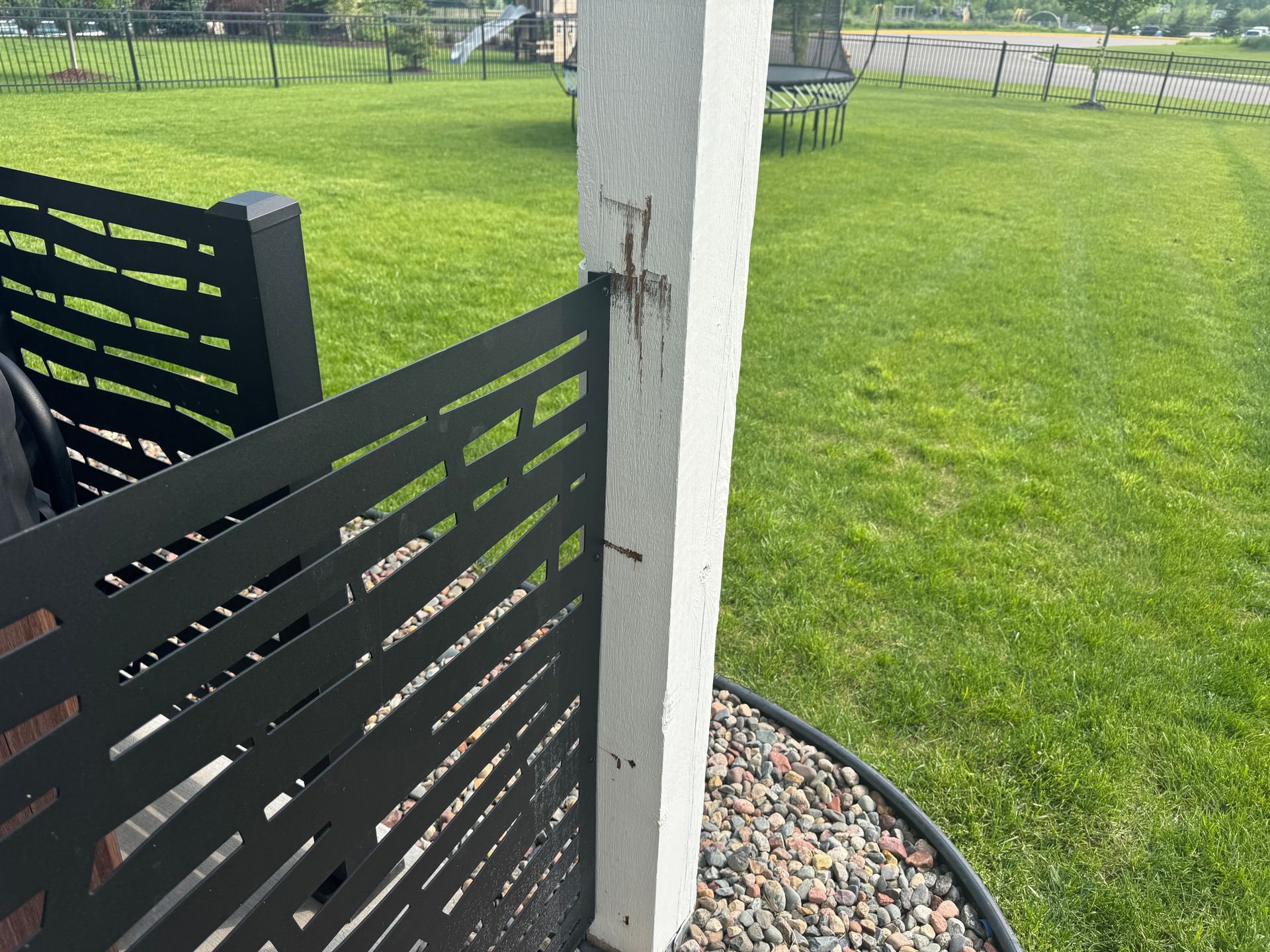
The deck footings were heaving. You could see where the fence panel connected to a deck footing was scraping against it. The footing was lifting in winter, raising that section of deck higher than it should be.
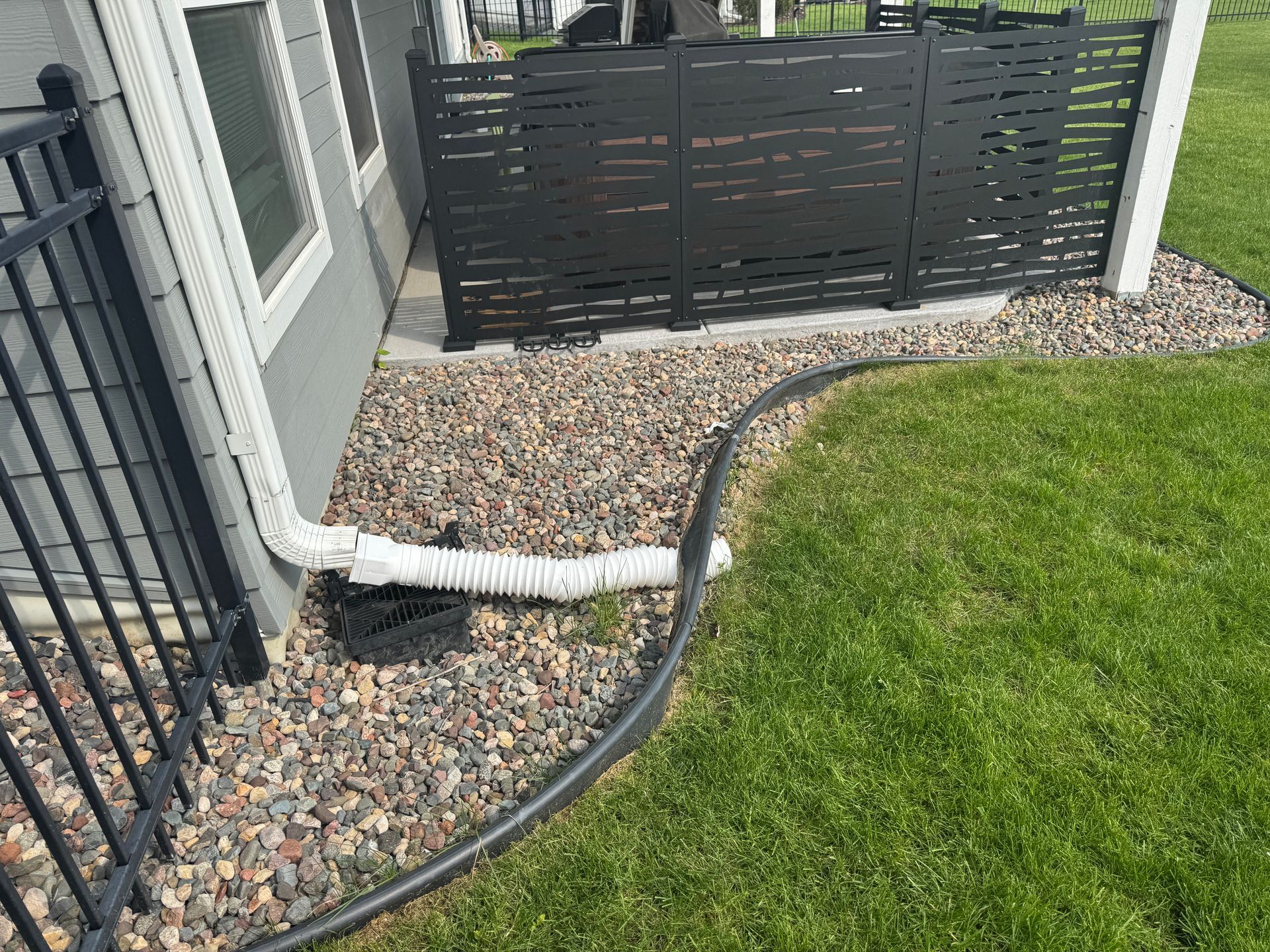
The catch basins were popping out of the ground. The drain boxes the previous company installed were now sticking up above grade. The frost heave had pushed them right out of the soil. The landscape edging was buckled and damaged. Fence posts along the back of the house were lifting too.
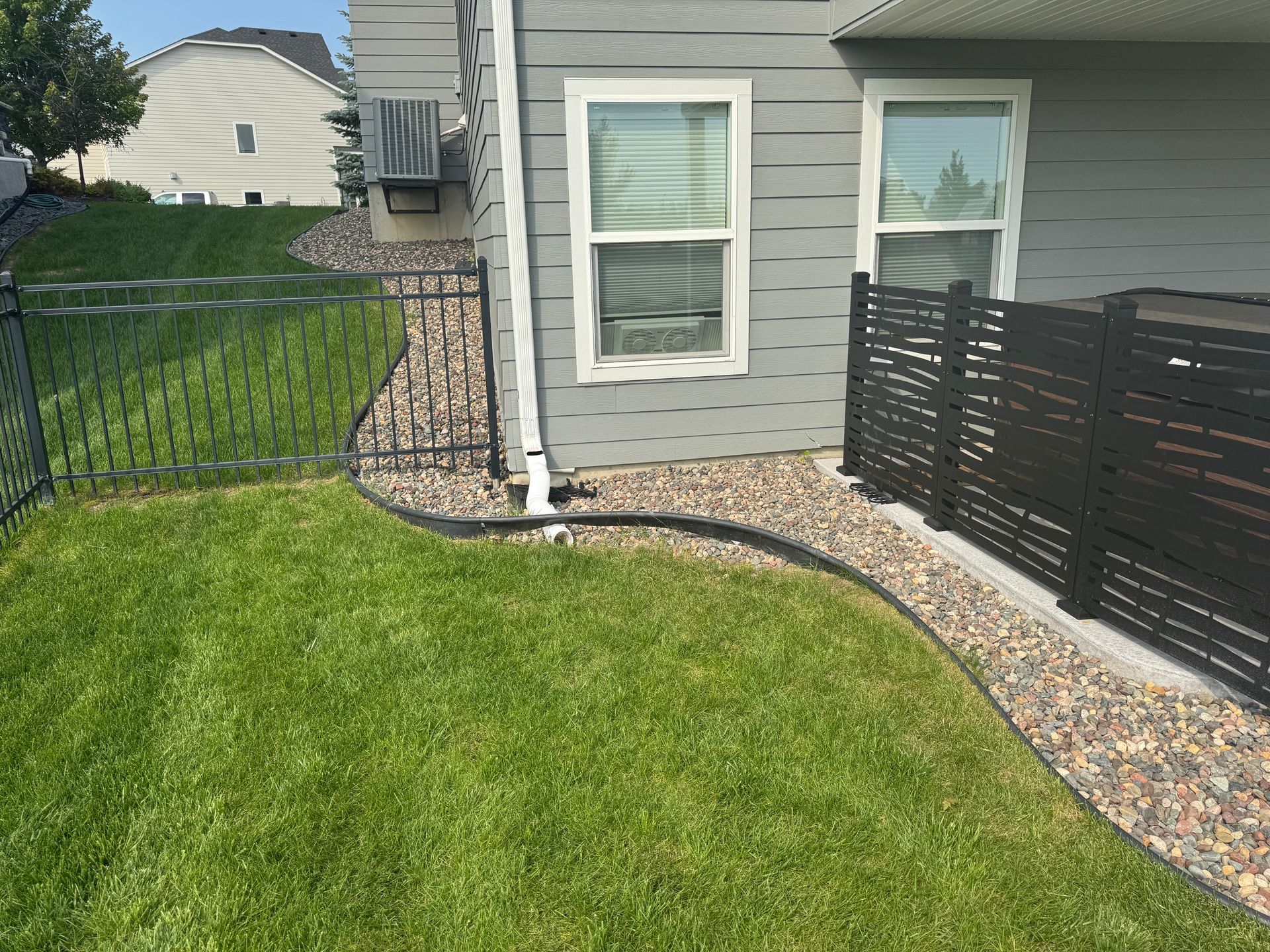
The homeowner mentioned that when they'd tried to dig holes to plant some shrubs, the holes filled with water immediately. Even in areas covered with landscape rock, the soil underneath was saturated. The foundation landscaping beds were holding water right against the house.
The property setup made things worse. This is a walkout basement, which means the side yards slope down toward the backyard. All that water from the sloped side yards, plus runoff from the roof, was collecting in a flat backyard with nowhere to go. The clay soil wouldn't absorb it fast enough, so it just sat there. Wet clay. Freeze. Heave. Damage.
What We Considered
After our drainage consultation in Plymouth, we evaluated a few approaches.
One option was regrading the backyard to increase the slope between the house and the back edge of the lawn. More slope means water moves faster, which means less soaks in. But this yard didn't have any additional drop available. The backyard met up with a boulevard at the property line, and we couldn't change the grade out there. Regrading alone wasn't going to solve this.
It became clear early on that this problem needed a comprehensive network of drainage components working together. Not one fix. A system.
When we're figuring out how far to go on a project like this, the question is always: what's the minimum work that will actually solve the problem? Sometimes addressing the worst issues is enough. But for this Plymouth property specifically, we recommended a combination of solutions that would work as one cohesive system. Each component handling a different source of water. Everything tied together. Everything draining to the same place.
That's the only way we could guarantee the problem would actually be solved.
The Solution We Designed
The drainage plan came together in four parts.
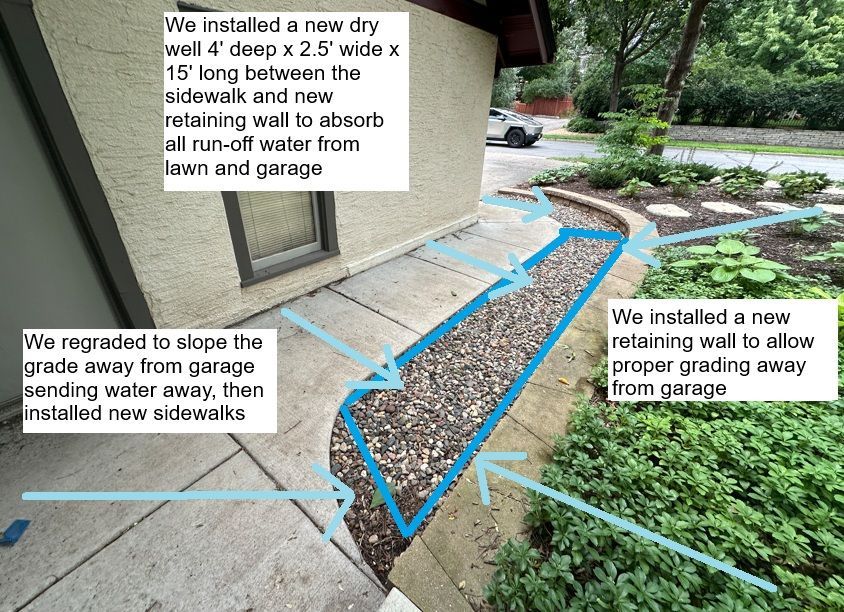
French drains along the foundation and around the patio.
We designed
drain tile to run along the back of the house within the foundation landscaping beds. This would collect water pooling directly against the foundation. We extended these French drains around the entire perimeter of the patio, which does two things: keeps the soil around and below the patio dry, and keeps the soil around the deck footings dry. Dry soil doesn't heave. That's how you prevent frost damage to patios and decks in clay soil.
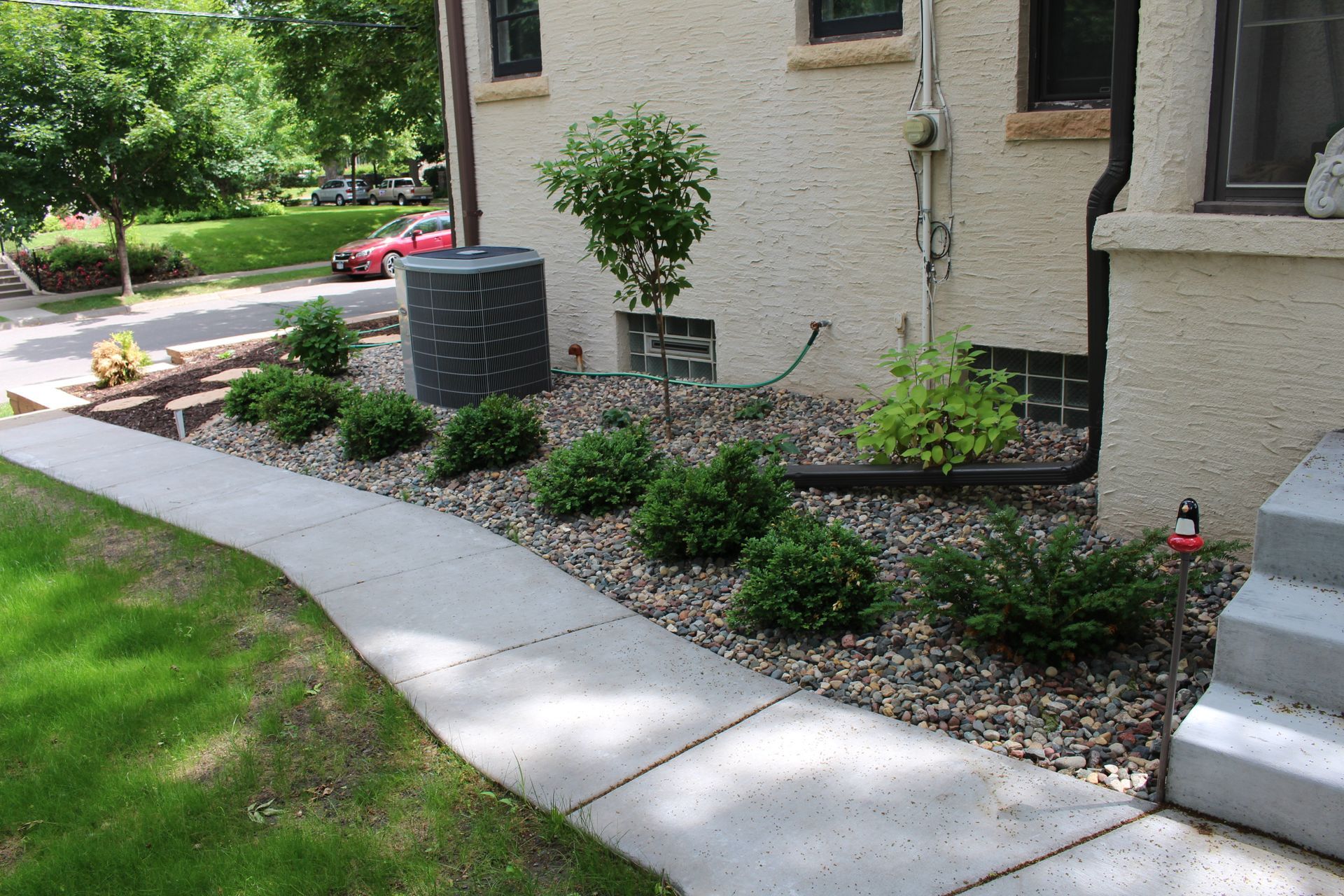
Additional French drain sections at the problem corners.
Both back corners of the house, where the sloped side yards met the flat backyard, were extremely waterlogged. One of these corners connected to the deck landing area. We installed additional French drain sections, roughly 15 to 20 feet long, running from these corners into the main drainage system. Extra drainage power where the water was worst.
Underground downspouts with new catch basins.
The roof was dumping a lot of water into this backyard. We installed new catch basins below each downspout and ran underground pipe that tied into the larger primary drainage line. No more water pooling at the base of the downspouts. No more surface erosion. All that roof water now goes straight underground and out to the back of the property.
Sump pump discharge integration.
The sump pump discharged at the front corner of the house, but that water was running down the side yard slope and ending up in the backyard anyway. We tied the sump pump discharge into the new underground drainage system. While we were at it, we also captured the downspout at the front corner of the house that had been contributing to the problem. One system handling everything.
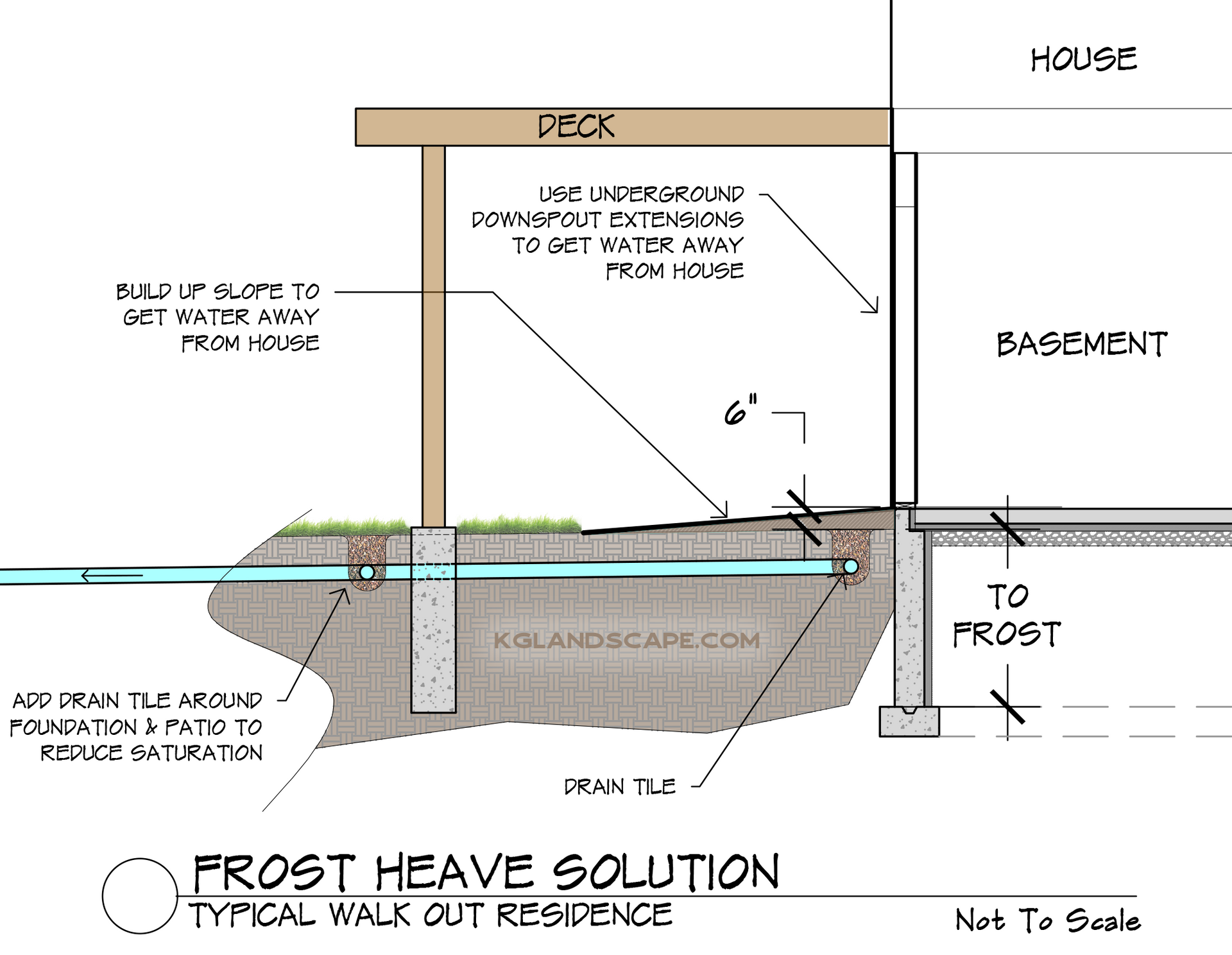
The entire system drains to an outlet at the far back of the yard, which sits lower than the rest of the property. Water from the French drains, the underground downspouts, and the sump pump all flows to the same place and exits the problem area completely.
Every source of water we identified during the site evaluation got addressed. The French drains protect the foundation, patio, and deck footings from frost heave. The underground downspouts eliminate roof water as a source of saturation. The sump pump tie-in stops that water from running back into the backyard. Everything works together.
How We Installed It
Projects like this start with detailed plans. We provide our crews with drainage layouts showing elevations, intended slopes, and exactly where each component goes. Clear direction combined with experienced crews and site visits from the designer means the system gets installed exactly as designed.
Before work started, we called in utility locates to mark and flag all public utilities. Water, gas, electric, sewer. Our crews hand dig around those to prevent damage.
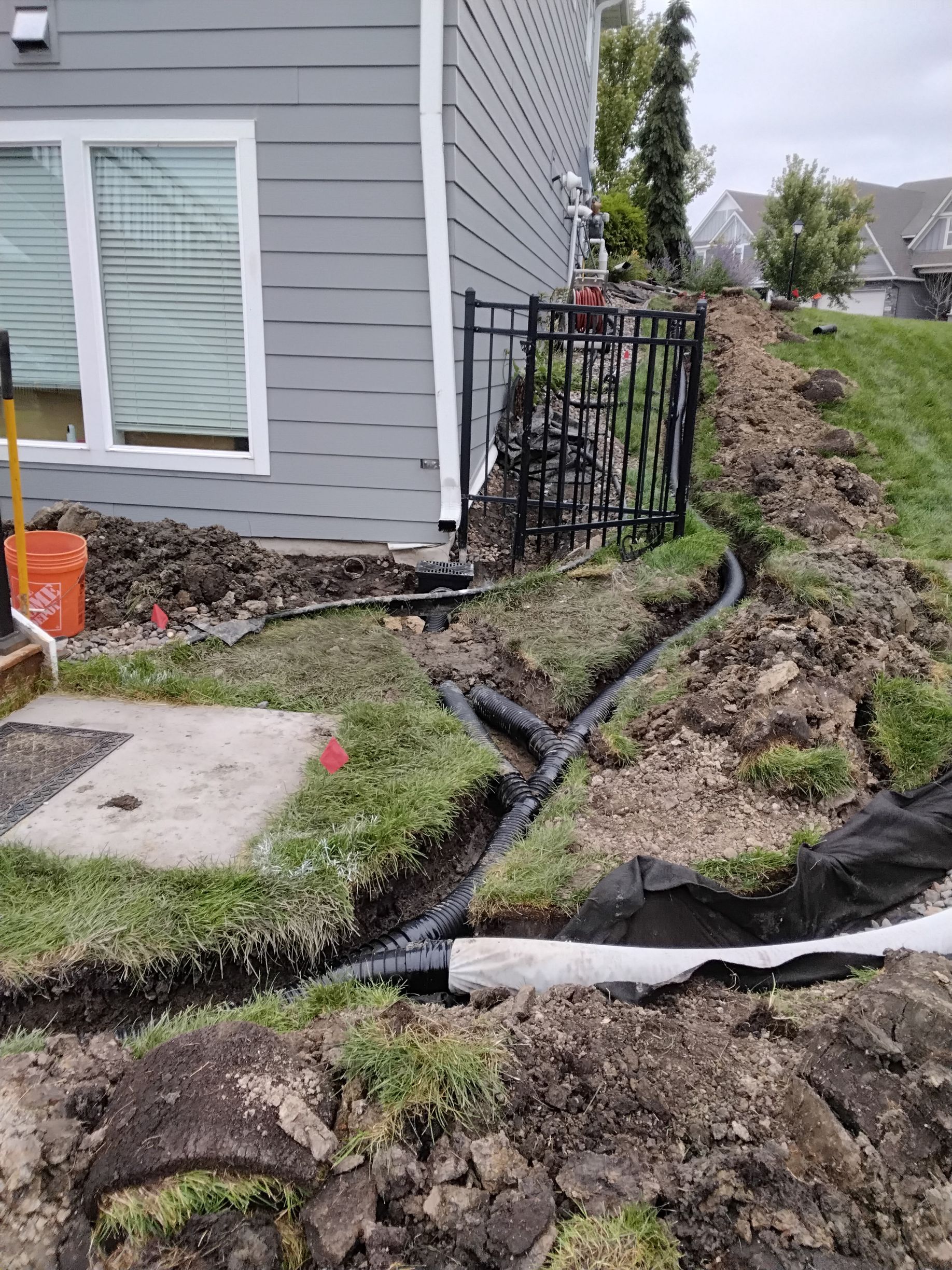
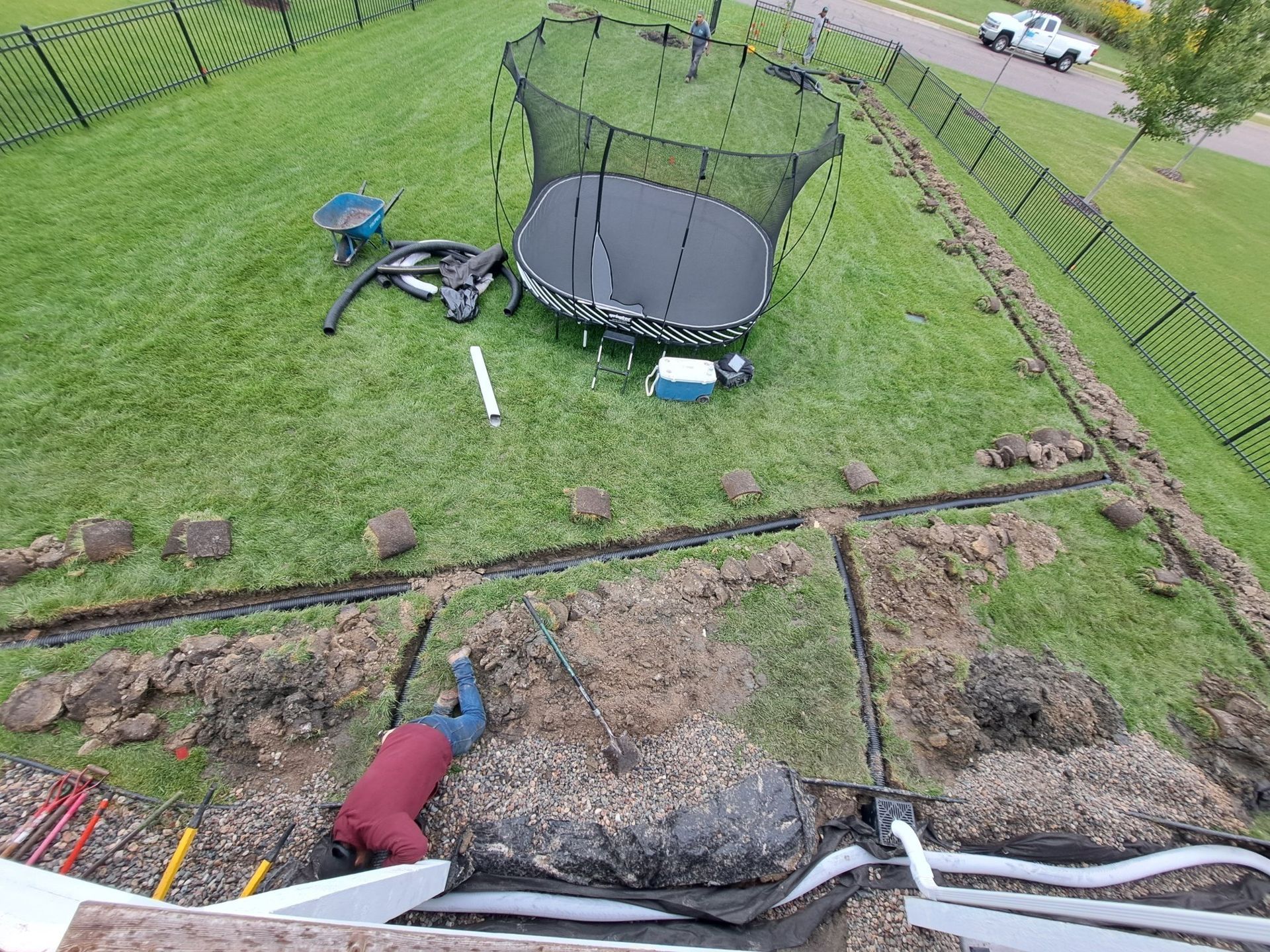
We used boards to protect the lawn from equipment traffic. Turned on the irrigation system to locate heads and map the likely paths of underground irrigation lines. The foreman marked out the path of every drainage component, then the crew raked back landscape rock and cut out sod along the trenching routes.
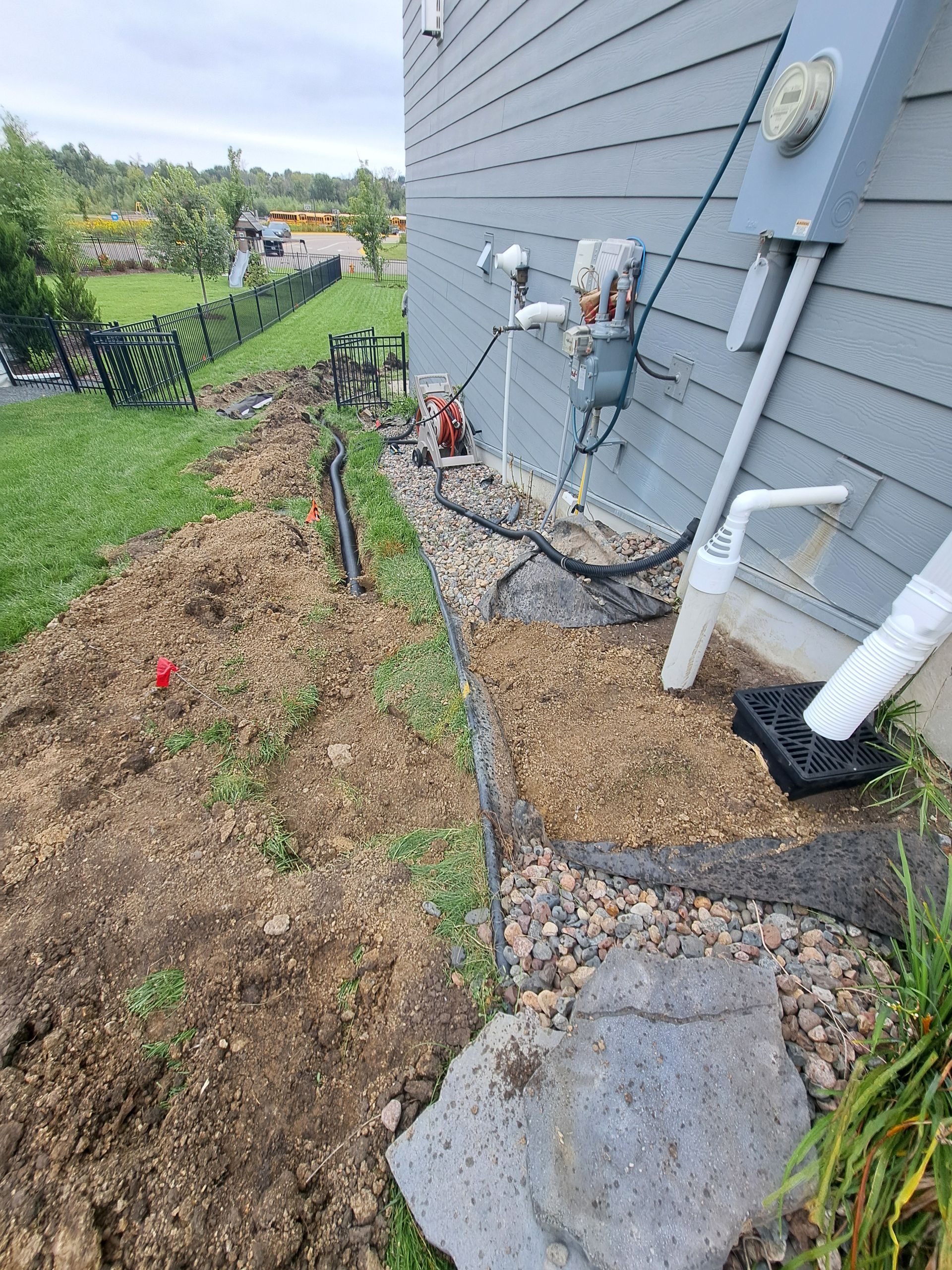
Trenching came next. We set elevations at the components near the house first, installed the catch basins and the new sump pump PVC discharge line that would run underground down the side yard.
[IMAGE: Crew installing new sump pump discharge and underground downspo...]
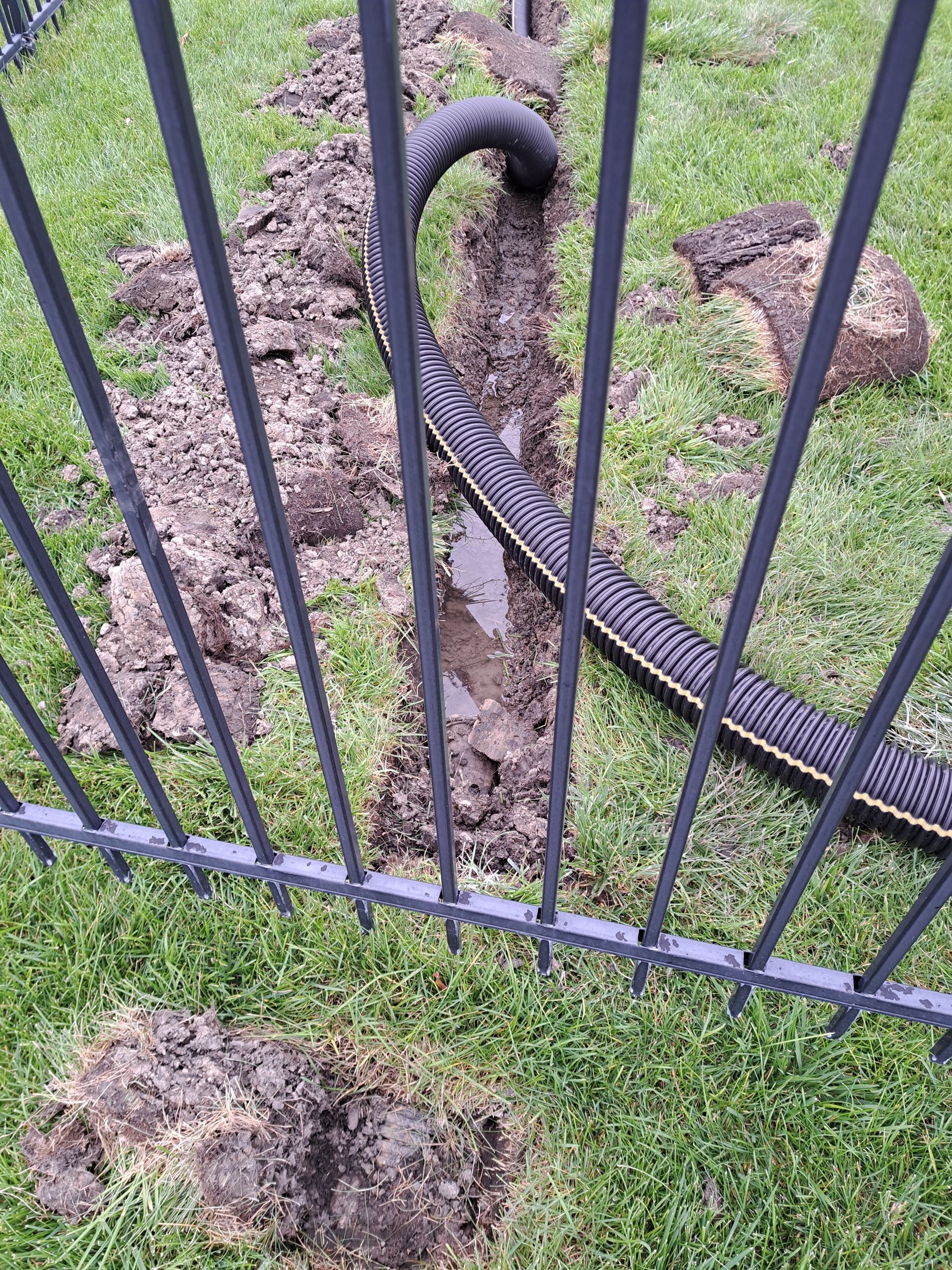
Then we trenched for the French drains, setting elevations to maintain proper slope toward the outlet. The French drain trenches were already collecting water during installation, which tells you how saturated that soil was.
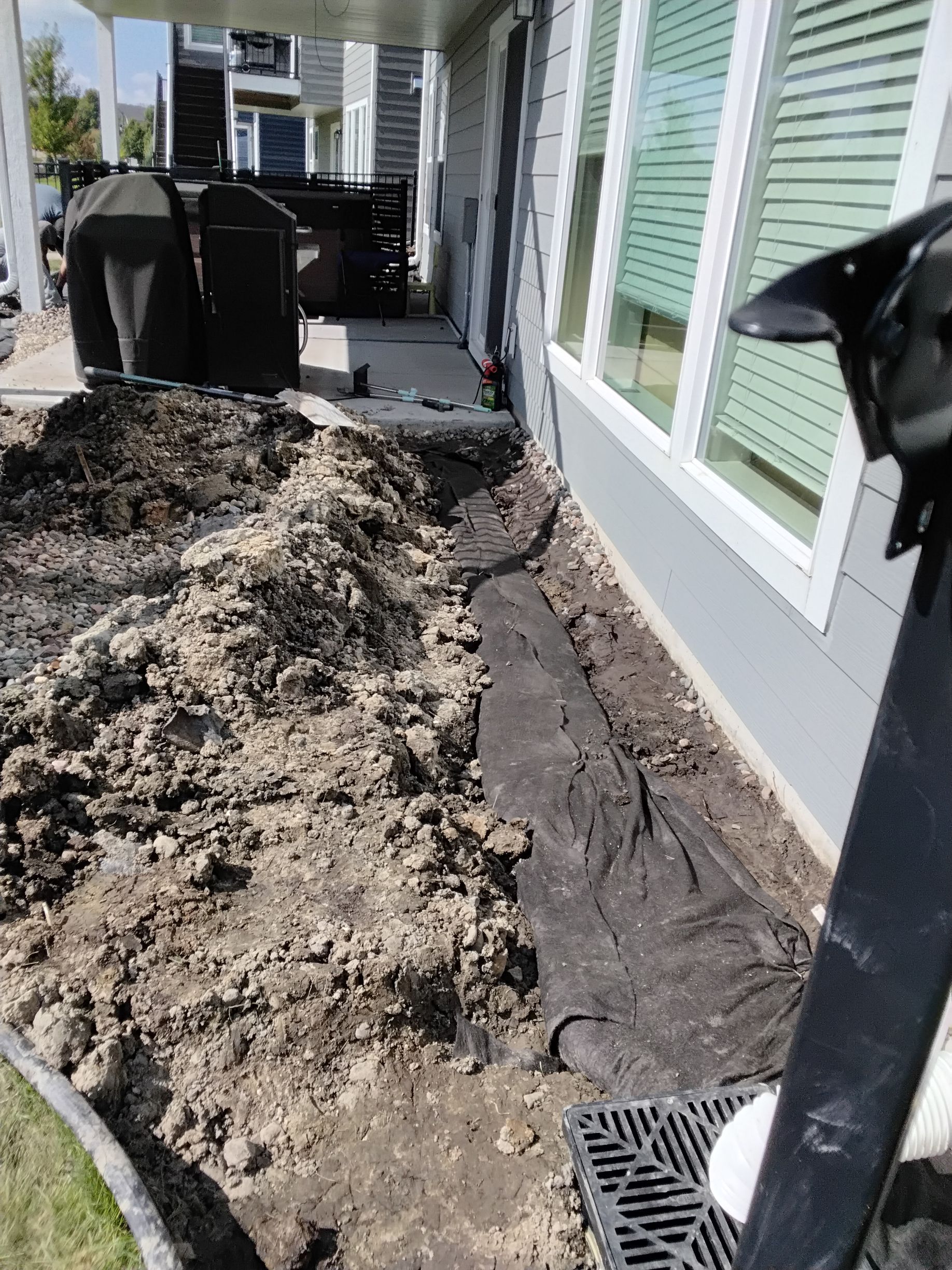
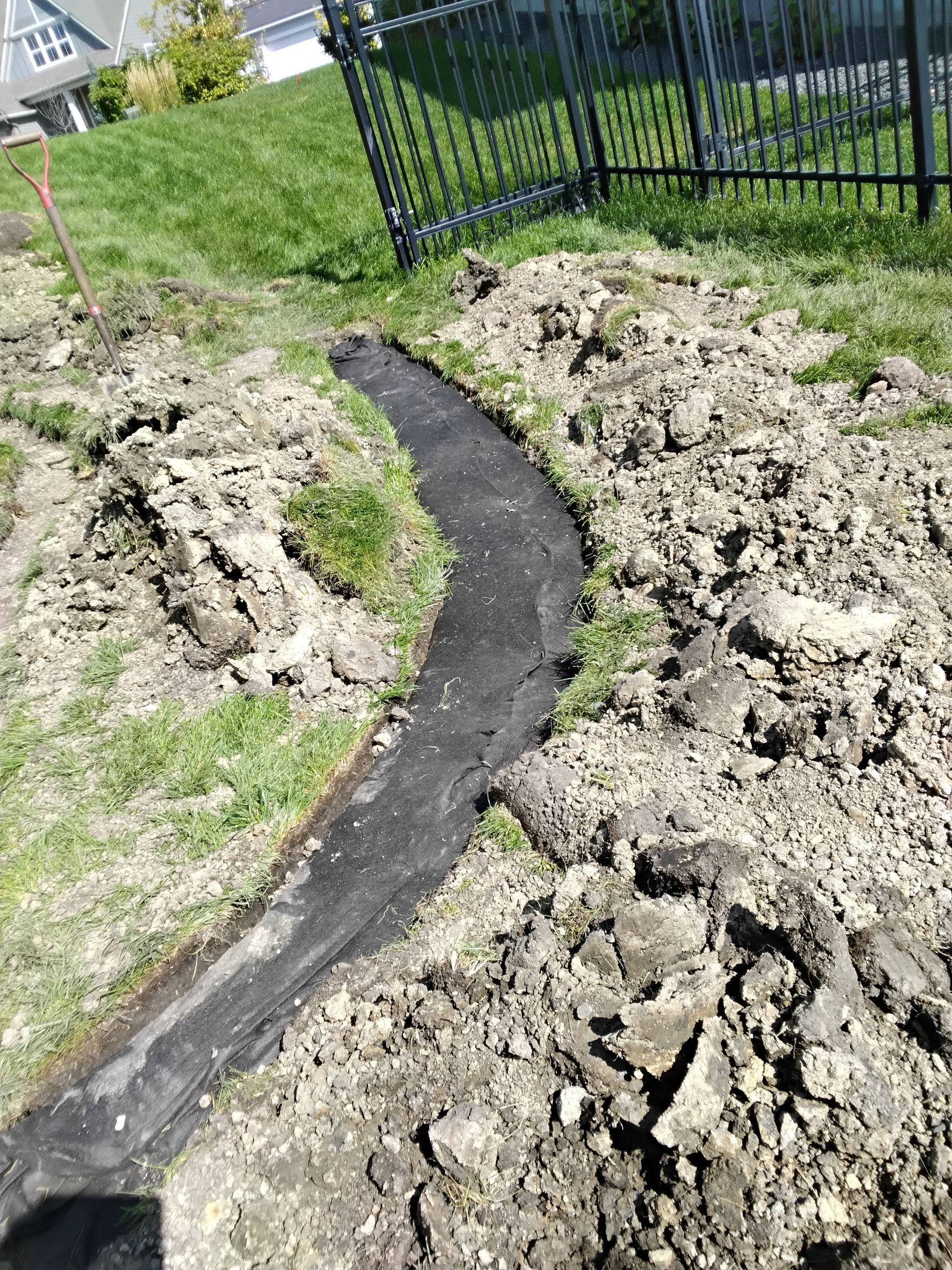
We installed the French drain sections around the patio and deck footings, then connected everything into the main 4-inch drain line running to the back of the property.
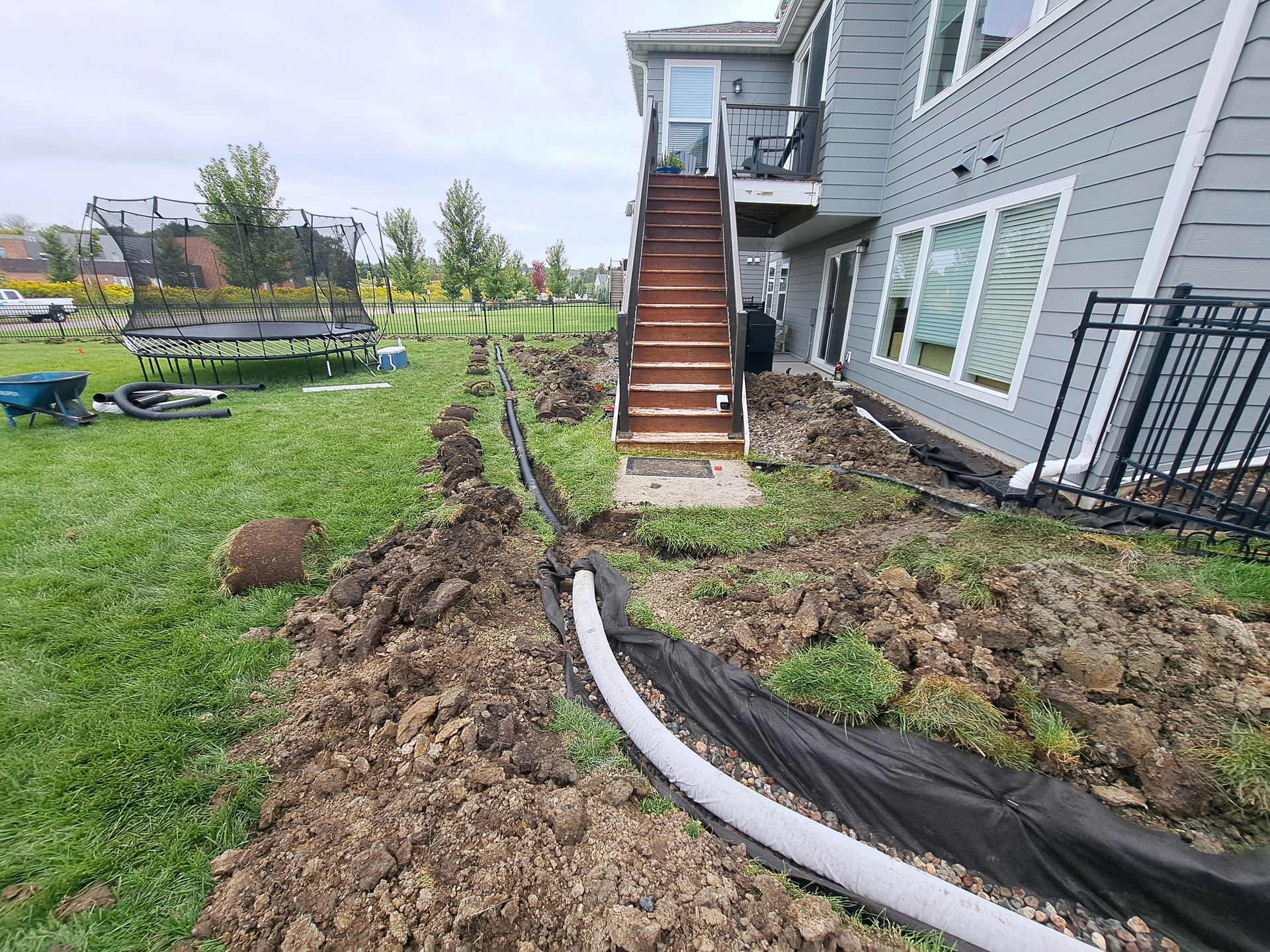
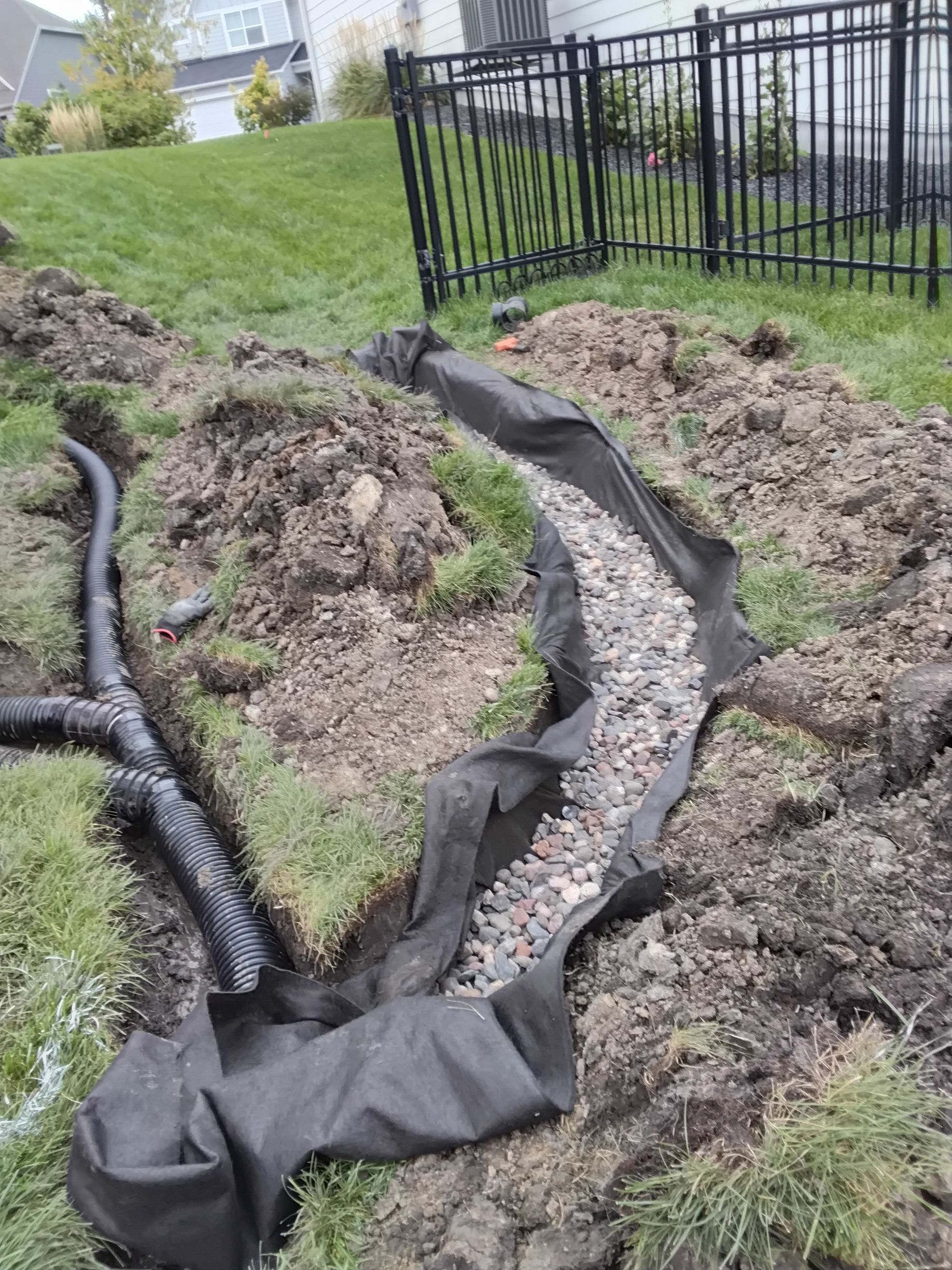
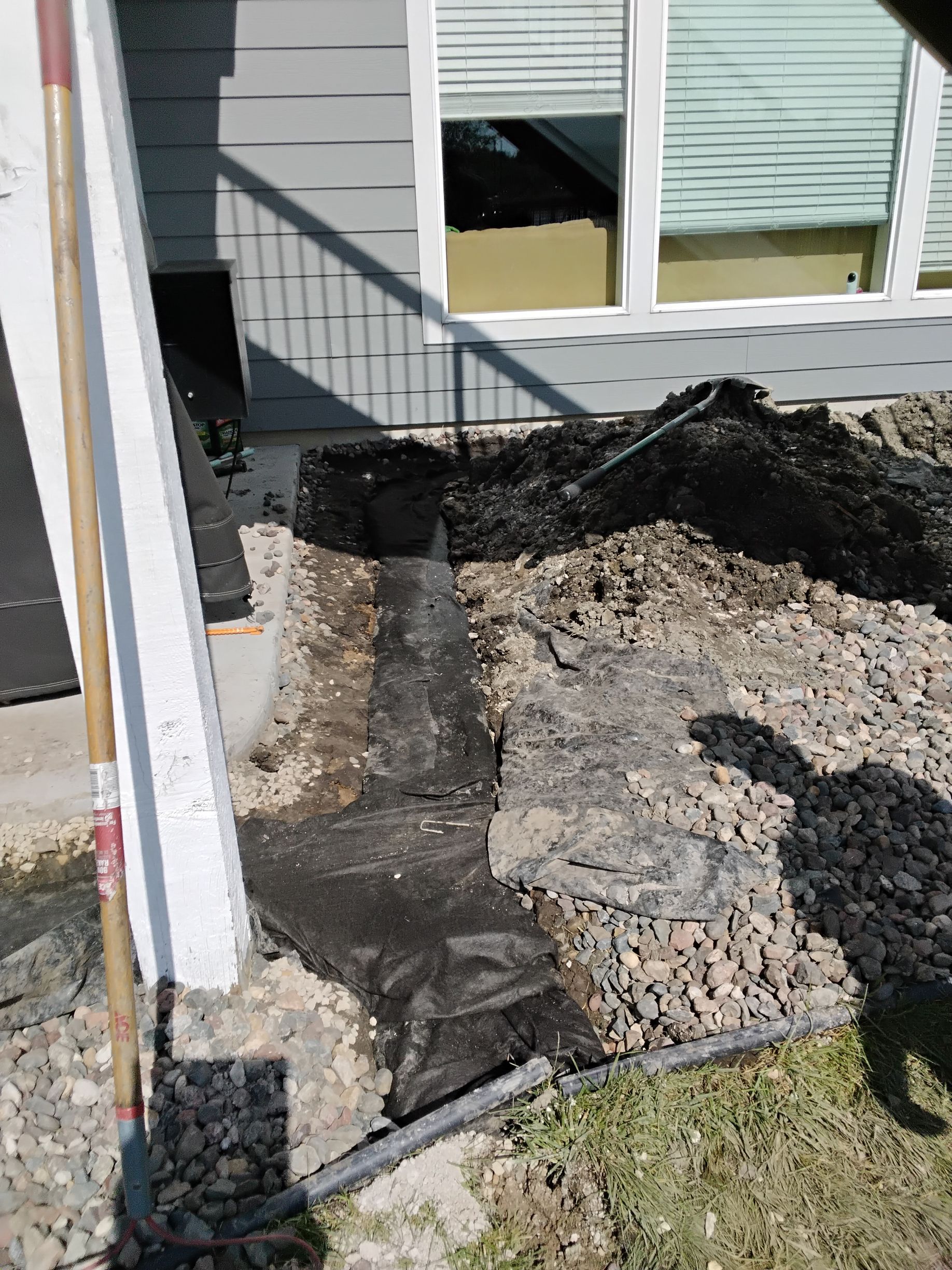
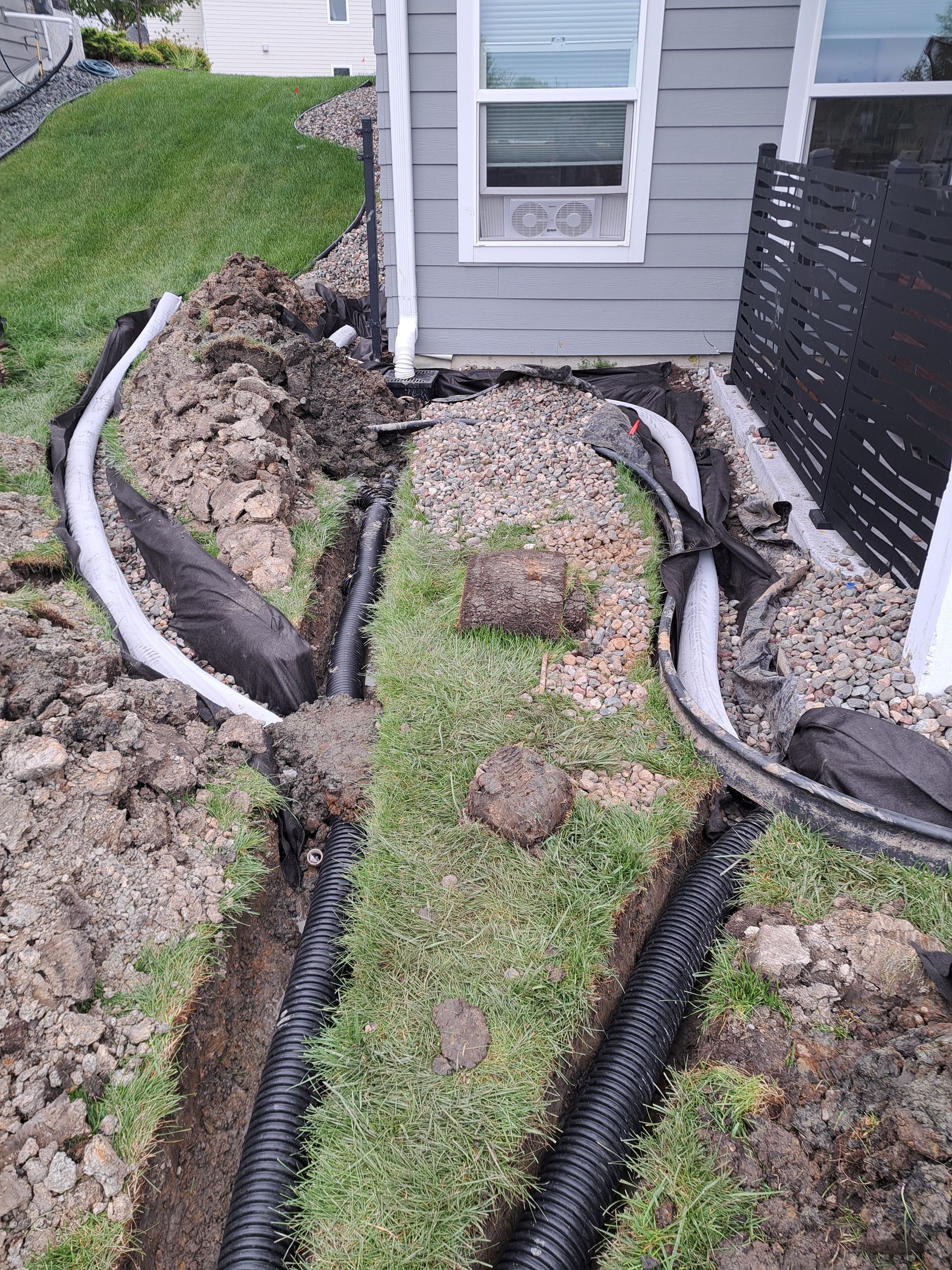

After each component was installed and connections were made, we tested the system to make sure water flowed as intended. Then we backfilled, repaired the trenched areas, and got everything back into shape.

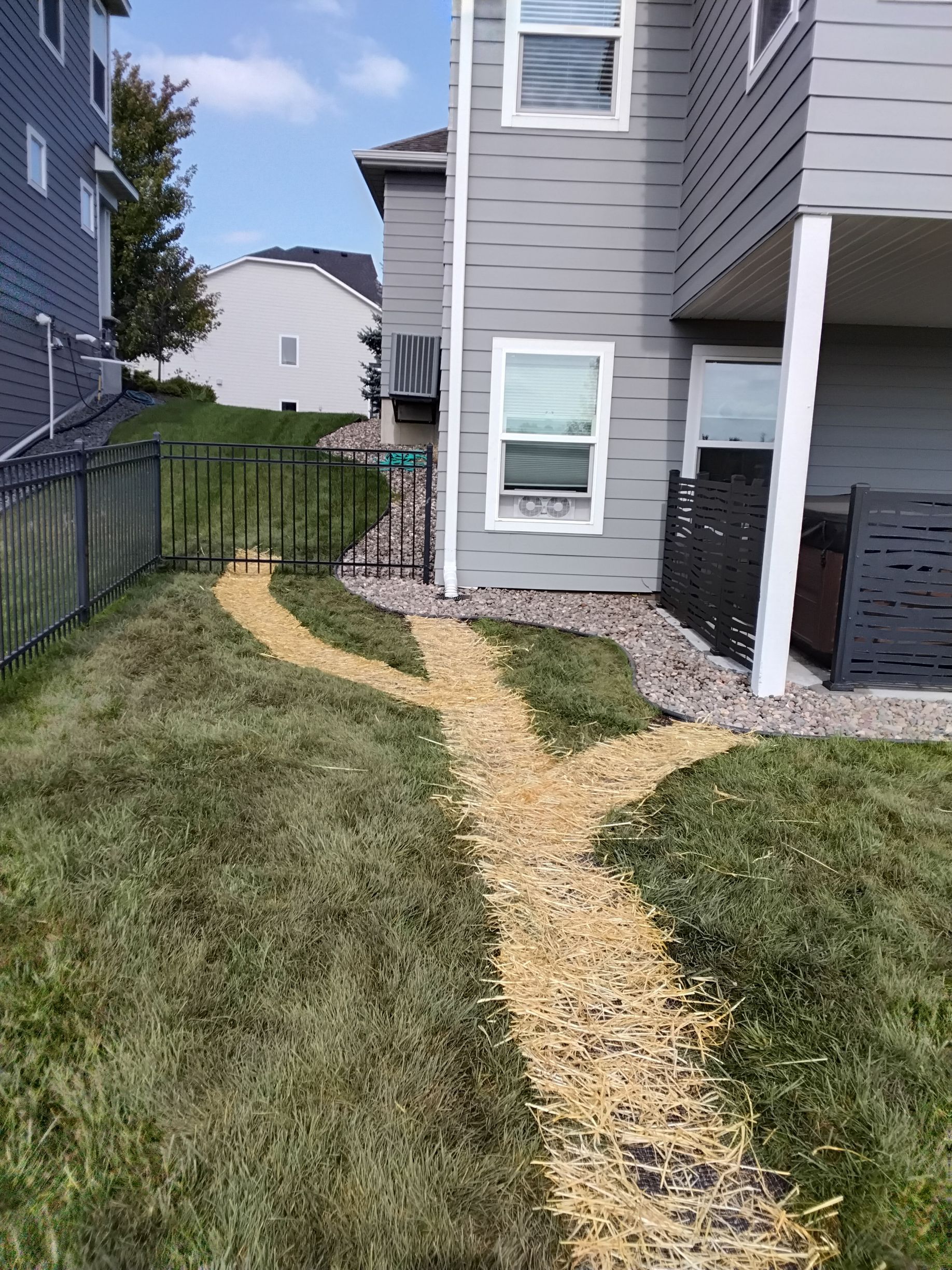
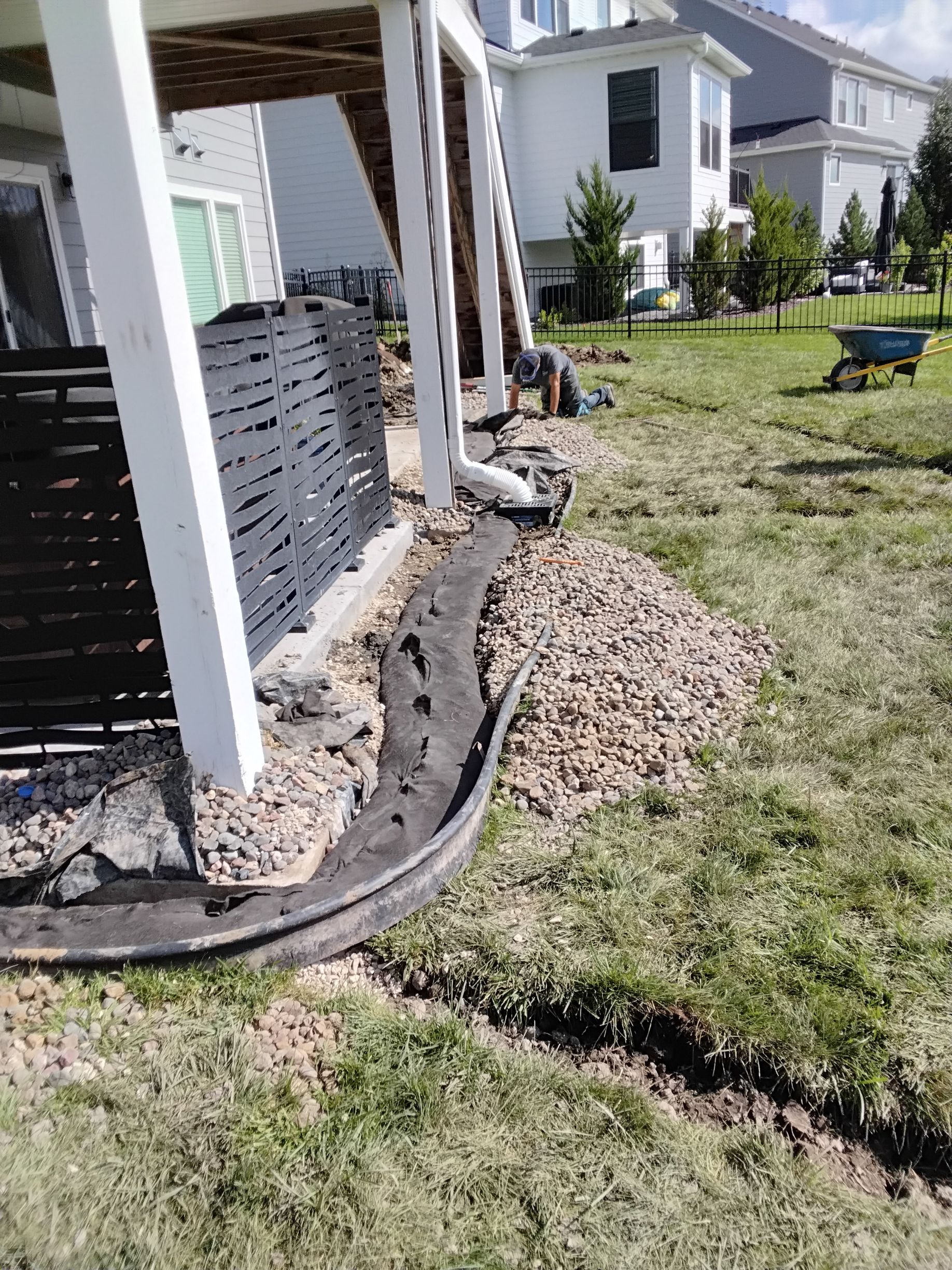

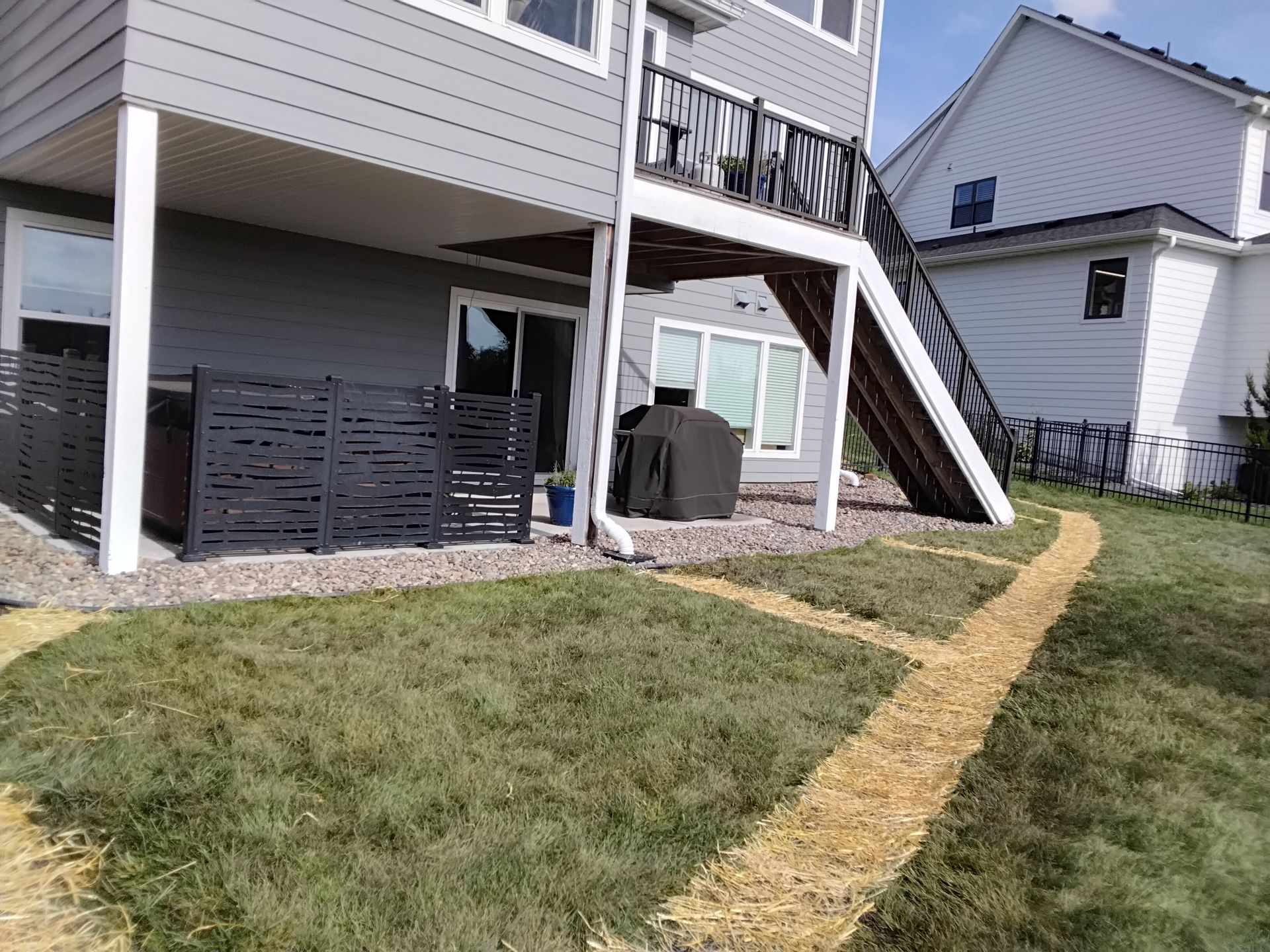
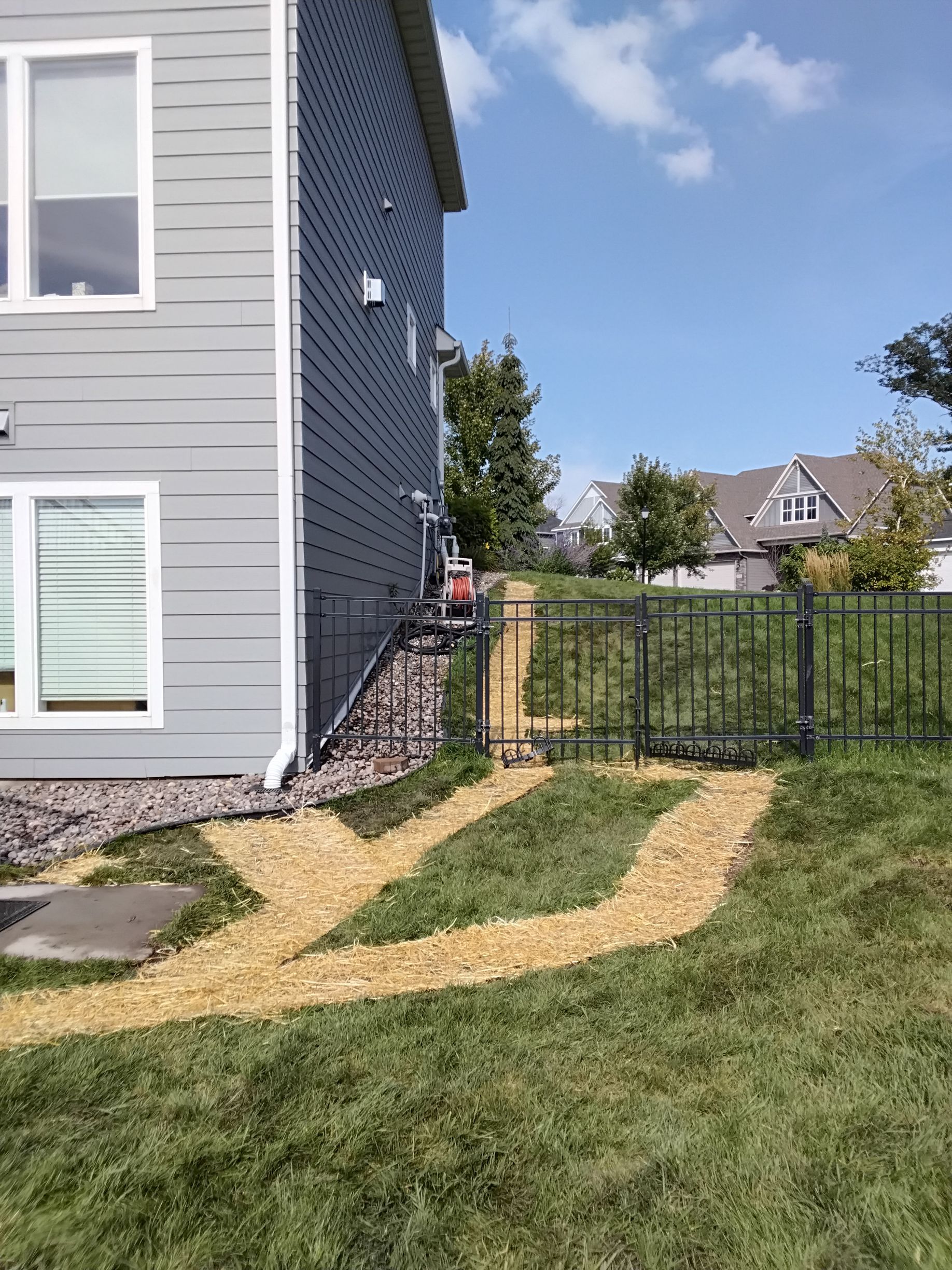
We tested the irrigation system to make sure any repairs were done properly. Seeded and blanketed the trenched lawn areas. Cleaned up the site and left everything tidy.
The Result
The drainage system works. All of it.
The wet lawn areas that used to stay muddy for days now drain as fast as the front yard. The corners near the gates and deck steps, which were the worst spots, dry out completely after rain. The homeowner can actually use the backyard now without sinking into mud.
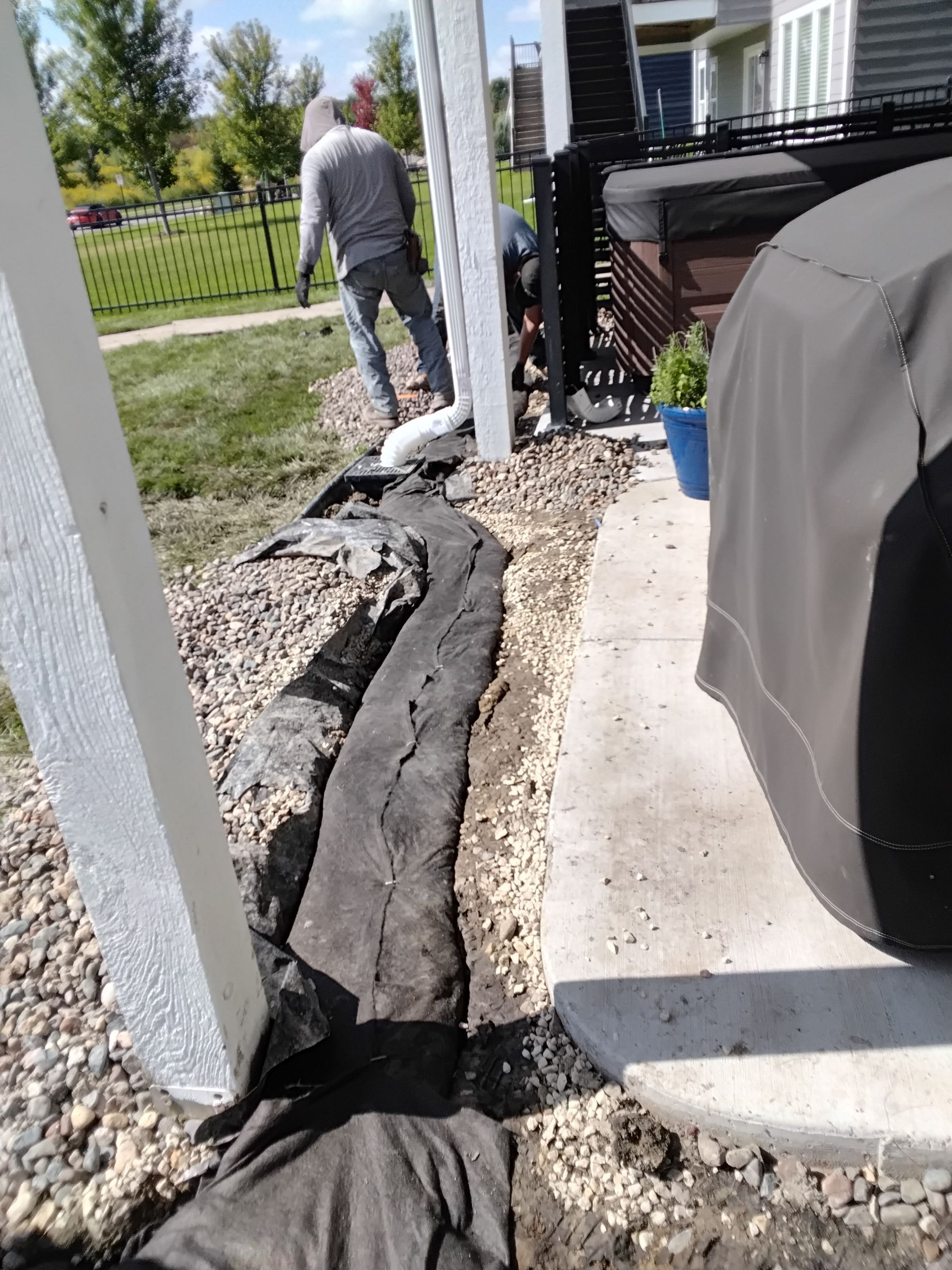
We repaired all the damaged landscape edging and drain boxes that had been popping out of the ground. Everything looks clean and finished.
More importantly, the conditions that caused all that frost heave damage are gone. The soil around the patio, the deck footings, and the foundation stays dry now. Dry soil doesn't heave. The patio won't lift into the siding anymore. The deck footings won't shift. The fence posts and edging will stay where they belong.
The homeowner wanted peace of mind. He wanted to know his yard would be usable after rain. He wanted to stop watching his patio and fence get destroyed every winter. We've stayed in touch, and the system is doing exactly what we said it would do.
Why This Solution Worked
Comprehensive drainage systems like this one are necessary when you're dealing with Plymouth clay soil and a walkout lot where water from the side yards flows into a flat backyard. A single French drain wouldn't have been enough. Just fixing the downspouts wouldn't have been enough. The problem had multiple sources, so the solution needed multiple components.
The key was designing everything to work together. French drains protecting the foundation and hardscape. Underground downspouts capturing roof water. Sump pump discharge tied in so it doesn't contribute to the problem. One outlet at the back of the property where all that water can leave.
This isn't a one-size-fits-all approach. It's a system designed for this specific property, this specific soil, and this specific drainage pattern. That's what it takes to actually solve the problem rather than just treating symptoms.
For a patio or outdoor living space built on clay soil, drainage planning like this is essential. You can build a beautiful patio, but if the soil underneath stays saturated, frost heave will destroy it. The drainage has to be part of the plan from the start.
Frequently Asked Questions
Why does clay soil cause so much frost heave damage?
Clay holds water. It doesn't drain well, so it stays saturated longer than sandy or loamy soil. When saturated soil freezes, the water in it expands. That expansion pushes up on anything sitting in or on the soil: patios, footings, posts, edging. When it thaws, things settle back down, but often not to where they started. Repeat that cycle dozens of times over a Minnesota winter and you get serious damage. The solution is keeping the soil dry so there's less water to freeze.
Can I just fix the worst drainage problem and see if that helps?
Sometimes. It depends on how many sources of water are contributing to the issue. If your only problem is a downspout dumping water in a bad spot, fixing that one thing might be enough. But if you've got water coming from multiple directions, roof runoff, side yard slopes, sump pump discharge, you usually need to address all of them. Fixing one while ignoring the others often means the problem continues. We evaluate the full picture before recommending how far to go.
How do I know if my drainage problems need a comprehensive solution like this?
Signs that point to a bigger issue: damage to multiple features (patio, deck, fence, edging), water pooling in several areas rather than just one, previous fixes that didn't last, and heavy clay soil. If your sump pump runs constantly, that's another indicator that the outdoor drainage isn't handling enough of the water. A site evaluation can identify all the sources and help determine what level of solution makes sense.
Will this kind of drainage system protect my patio from frost heave?
Yes, if the system is designed correctly. The goal is to keep the soil around and underneath the patio dry. French drains installed around the perimeter of a patio collect water before it can saturate the soil below. When the soil stays dry, there's much less expansion during freeze cycles. We've seen patios on clay soil that heave inches every winter. After installing proper drainage, they stay stable.
How long does a drainage system like this last?
The components we use, solid PVC pipe, perforated drain tile, quality catch basins, are designed to last 20 years or more. The main things that cause problems over time are crushed pipes, clogged inlets, or blocked outlets. We install systems with proper slope, use appropriate backfill material, and make sure outlets drain to locations that won't get covered or blocked. With reasonable care, these systems perform for decades.
Is Your Plymouth Property Experiencing Similar Issues?
If your backyard stays wet, if you're seeing damage from frost heave, or if previous drainage fixes haven't solved the problem, a site evaluation is the first step. We'll identify what's causing the issue and whether a targeted fix or a comprehensive system makes more sense for your property.
We've been solving outdoor drainage problems in Plymouth and across the Twin Cities for over 20 years. Every yard is different, but we haven't seen a drainage problem we can't fix.
About the Author

I’m Kent Gliadon, founder of KG Landscape and a graduate of the University of Minnesota Landscape Design program. For over 20 years, I’ve focused on integrating well-planned landscape design and installation work with properly engineered outdoor drainage solutions.
I believe discerning homeowners deserve landscaping & drainage renovations that are carefully planned from the beginning—accounting for water movement, grading, soils, hardscaping, and future use—so problems are prevented before they occur. These case studies explain how and why specific solutions are implemented and what it takes to build landscapes that truly last a lifetime.