Tips to Create a Private Hot Tub Retreat on a Steep Side Yard
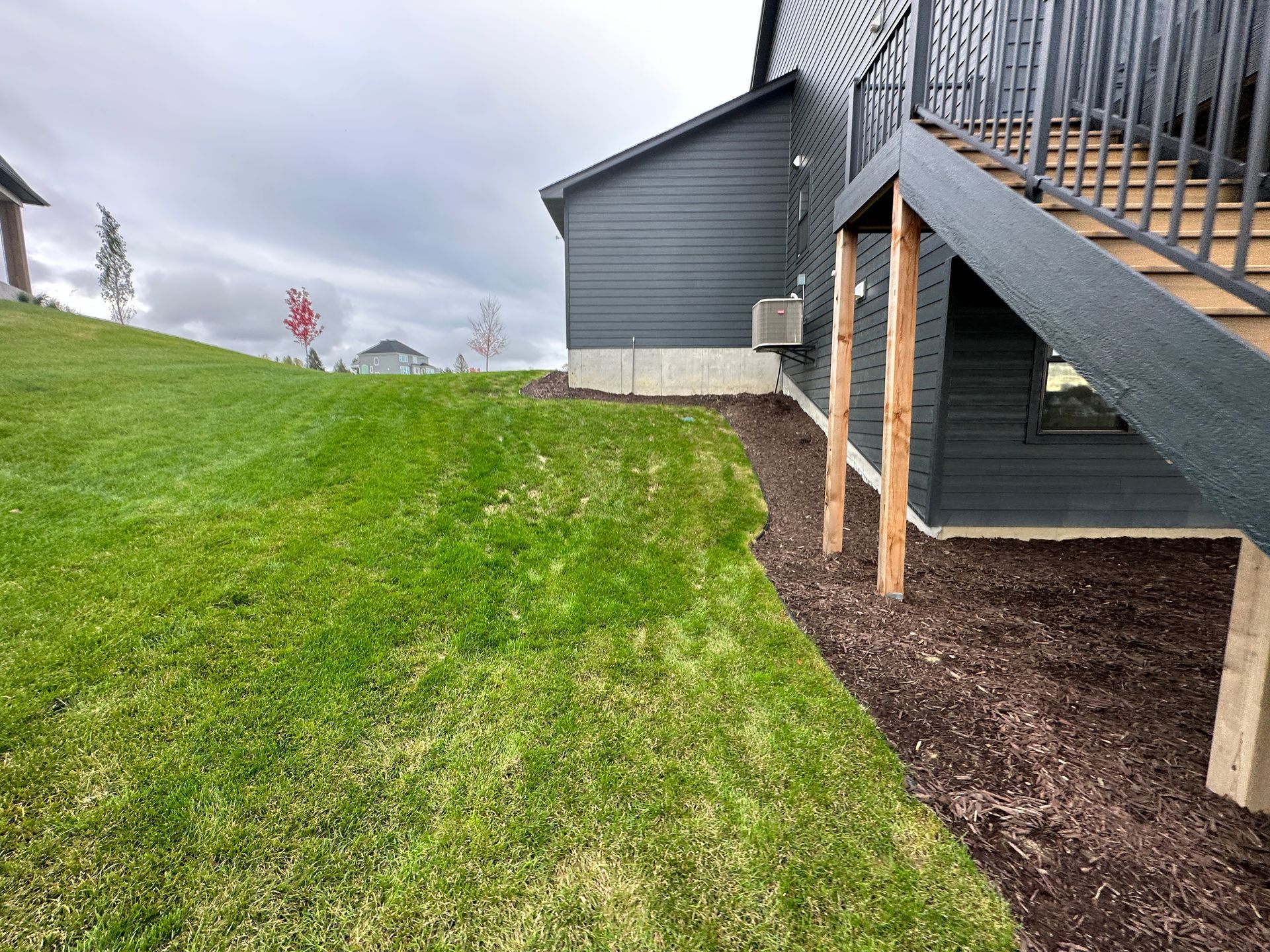
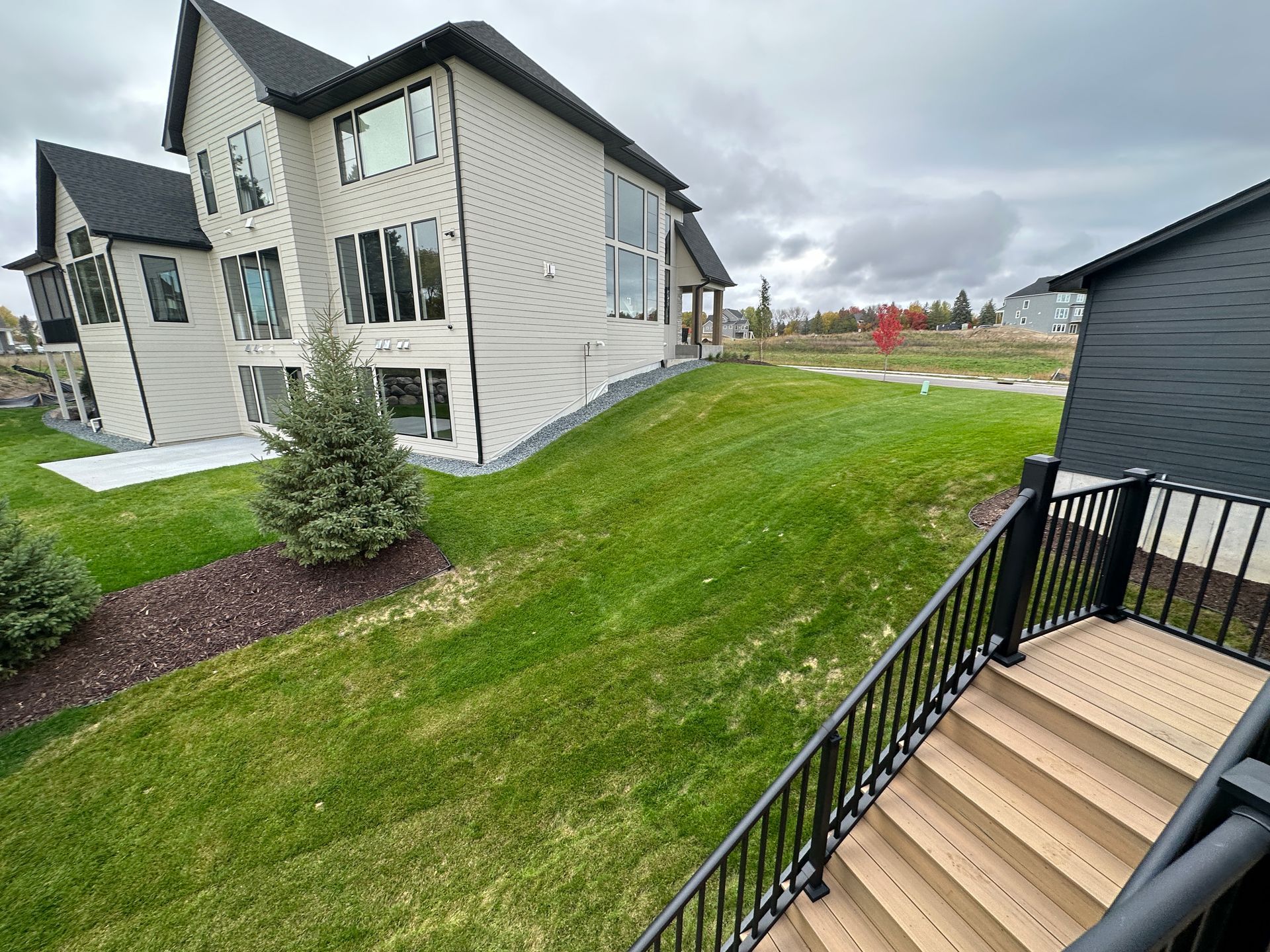
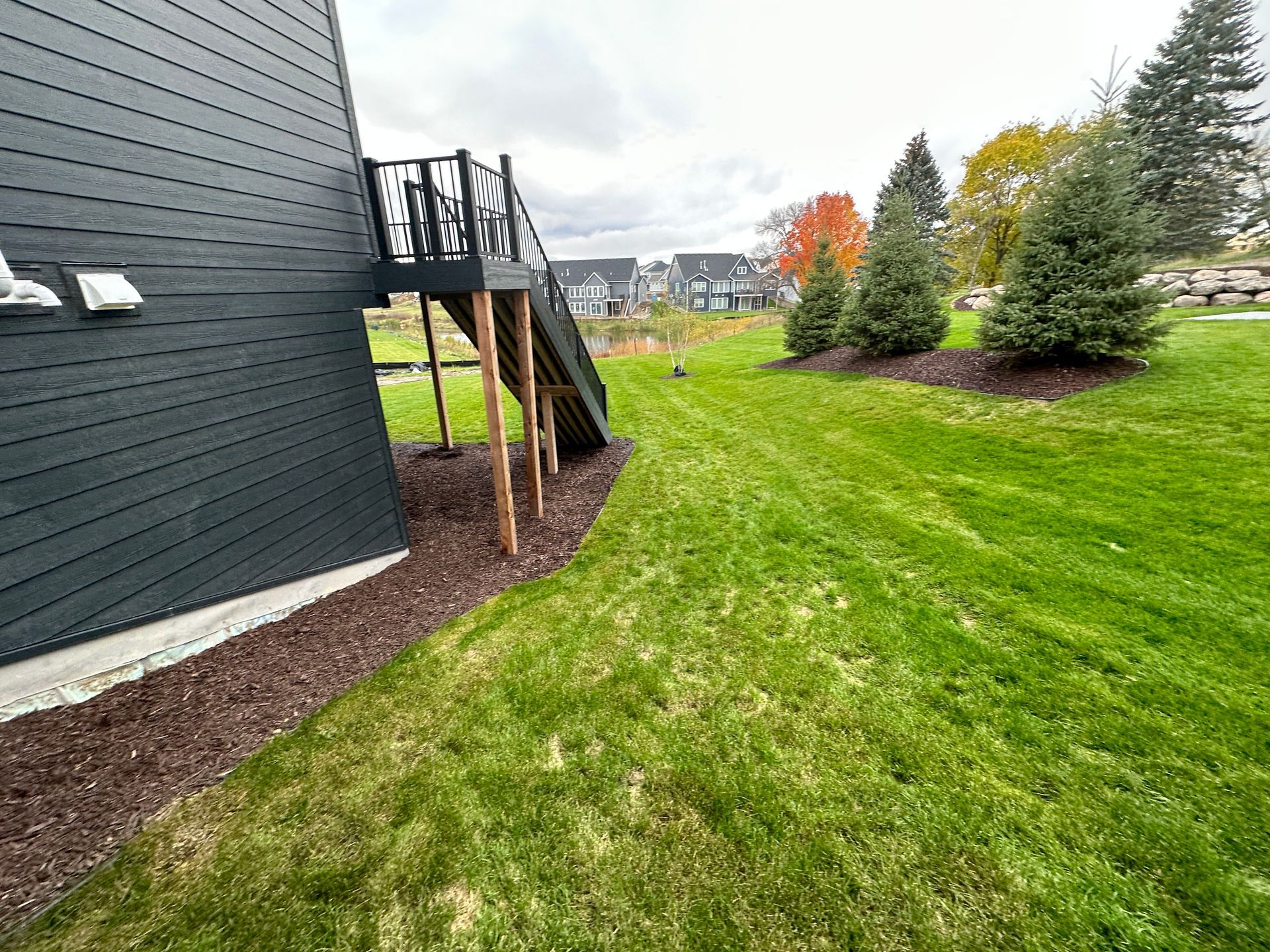
Homes with walkout basements usually come with a tradeoff. You get that nice lower-level access to the backyard, but the side yards are steep. Both sides of the house slope down from the front to the back, and most of the time those areas just sit there. Too steep to mow easily. Too uneven to use for anything. You walk up and down a wet grassy hill to get from the front yard to the back.
This Plymouth, MN project started with exactly that situation. The homeowners had a new home with a walkout basement and two sloped side yards that weren't doing anything useful. They wanted to add a hot tub, but the obvious spot under the deck wouldn't work. That location would block the views from their basement windows. They needed somewhere else to put it.
The side yard had potential. But it also had problems. The slope was steep. A sump pump discharged behind the garage, sending water through the area. The neighbor's property sat higher, adding even more runoff. Any solution had to deal with all of that water while creating a space that would actually hold up over time.
Finding the Right Spot for a Hot Tub
Where you put a hot tub matters more than most people realize. It's not just about finding flat ground. You have to think about privacy, access, views, and how the location affects the rest of the property.
Under the deck is the default choice for a lot of Twin Cities homes. It's out of the way and somewhat protected from weather. But it's not always the right answer. In this case, putting the hot tub under the deck would have blocked the homeowners' views from the walkout basement. They'd be looking at the back of a hot tub instead of their backyard.
The side yard offered a better option. We could cut into the slope to create a flat pad, position the hot tub for privacy from neighbors, and keep the basement views open. The challenge was everything else that came with that location: the grade, the water, and the need to connect this new space to the rest of the yard in a way that made sense.
Dealing With Water First
Before building anything on a slope that receives heavy water flow, you have to solve the drainage. If you don't, whatever you build won't last.
This side yard had water coming from two directions. The sump pump behind the garage discharged into the area constantly. And the neighbor's property, which sat at a higher elevation, sent runoff down the hill whenever it rained. That's a lot of water moving through a space where we wanted to install stone steps, a hot tub pad, and retaining walls.
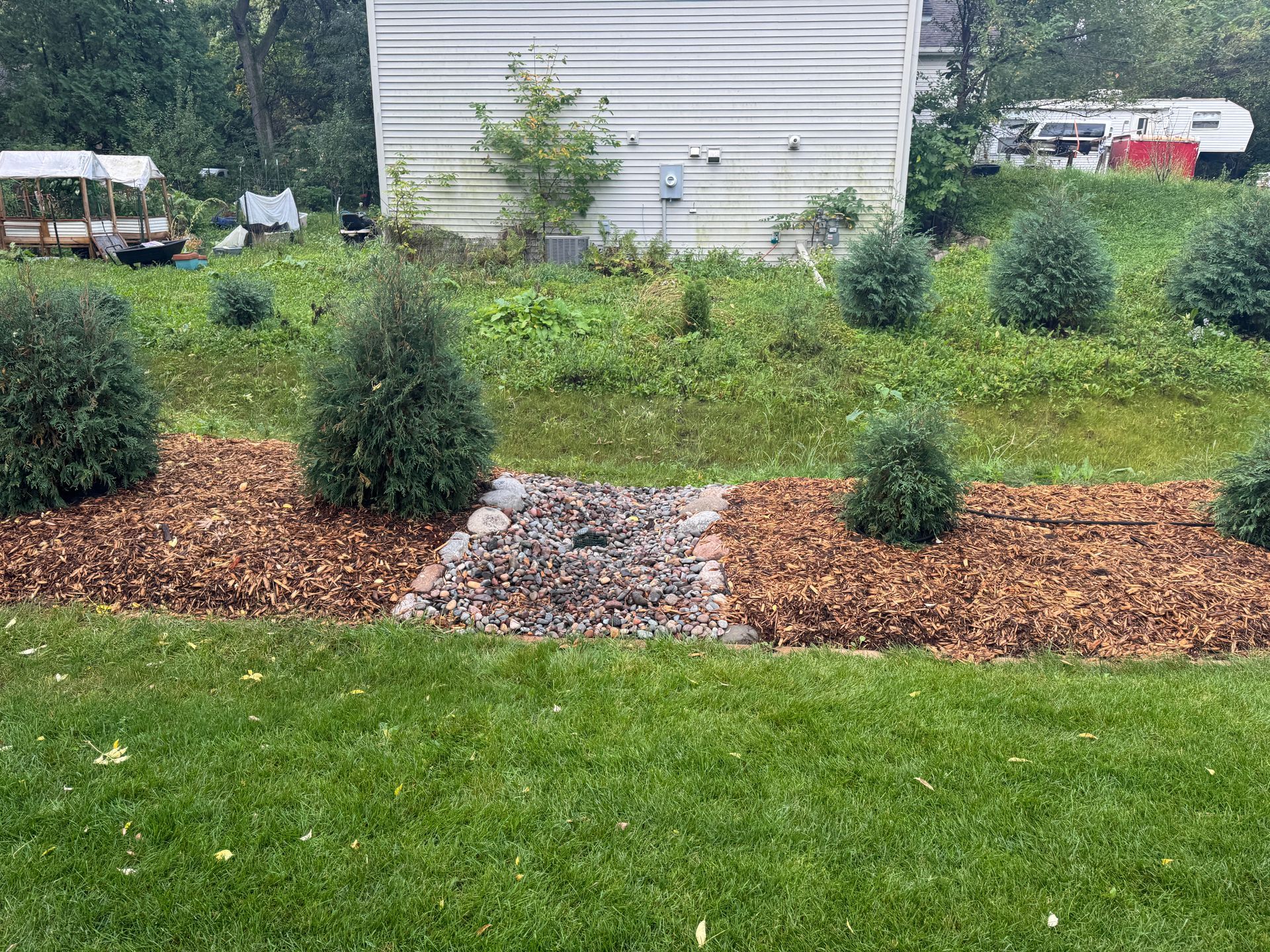
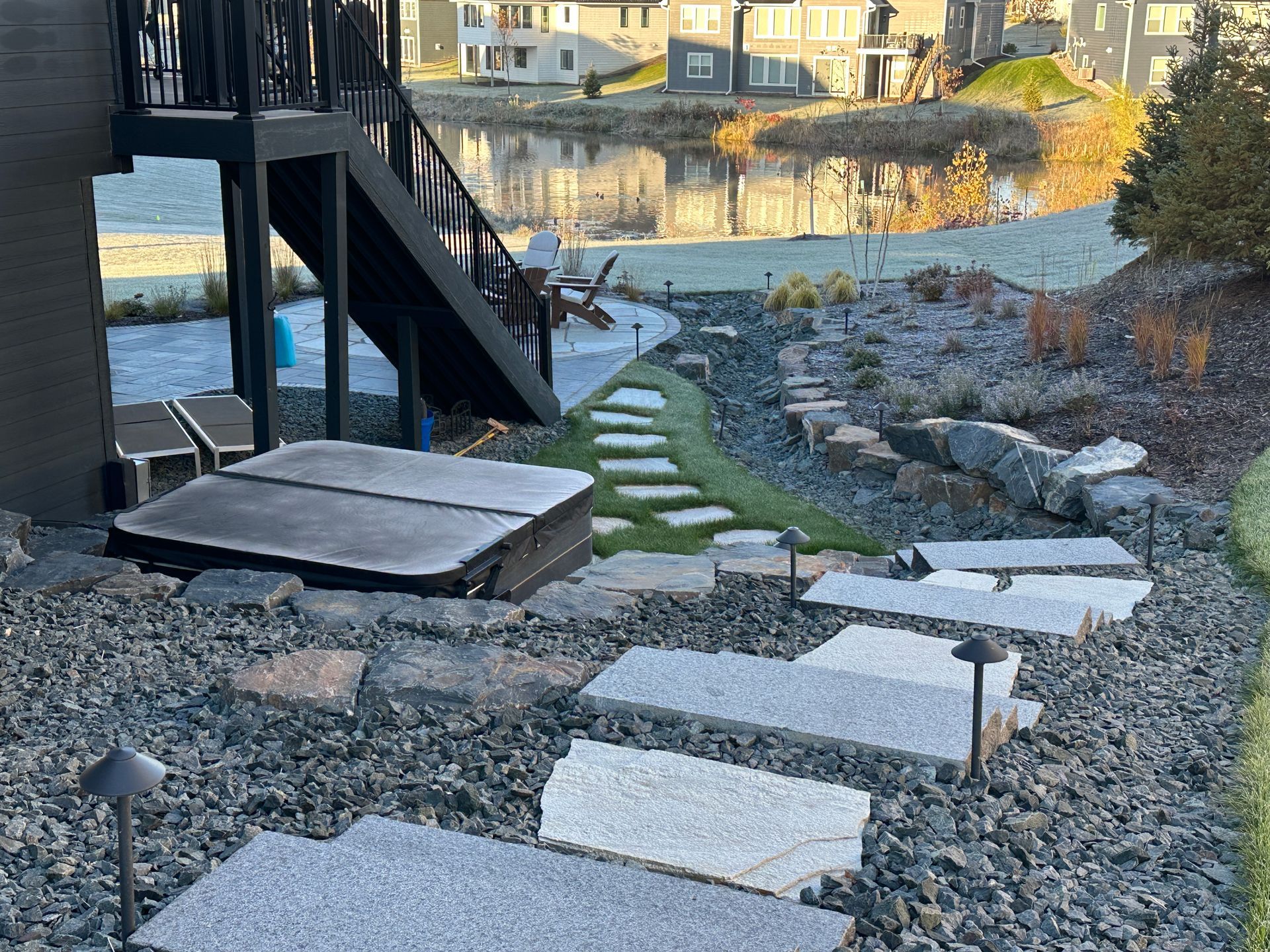
We designed a layered drainage system. A reinforced dry creek bed runs alongside the steps, giving water a clear path to follow. The sump pump discharge connects to an underground pipe that routes beneath the hot tub wall and feeds into the creek bed. At the bottom, a drain captures everything and sends it through an underground pipe that discharges at the far end of the backyard, well away from the house and any structures.
This approach handles both the constant sump pump flow and the occasional heavy runoff from the neighbor. The drainage solutions we use on sloped properties vary depending on the situation, but the principle is the same: figure out where water wants to go, then give it a controlled path to get there.
Cutting Into the Hill
With drainage addressed, we could create the hot tub space. This meant cutting into the hillside to carve out a flat area where none existed.
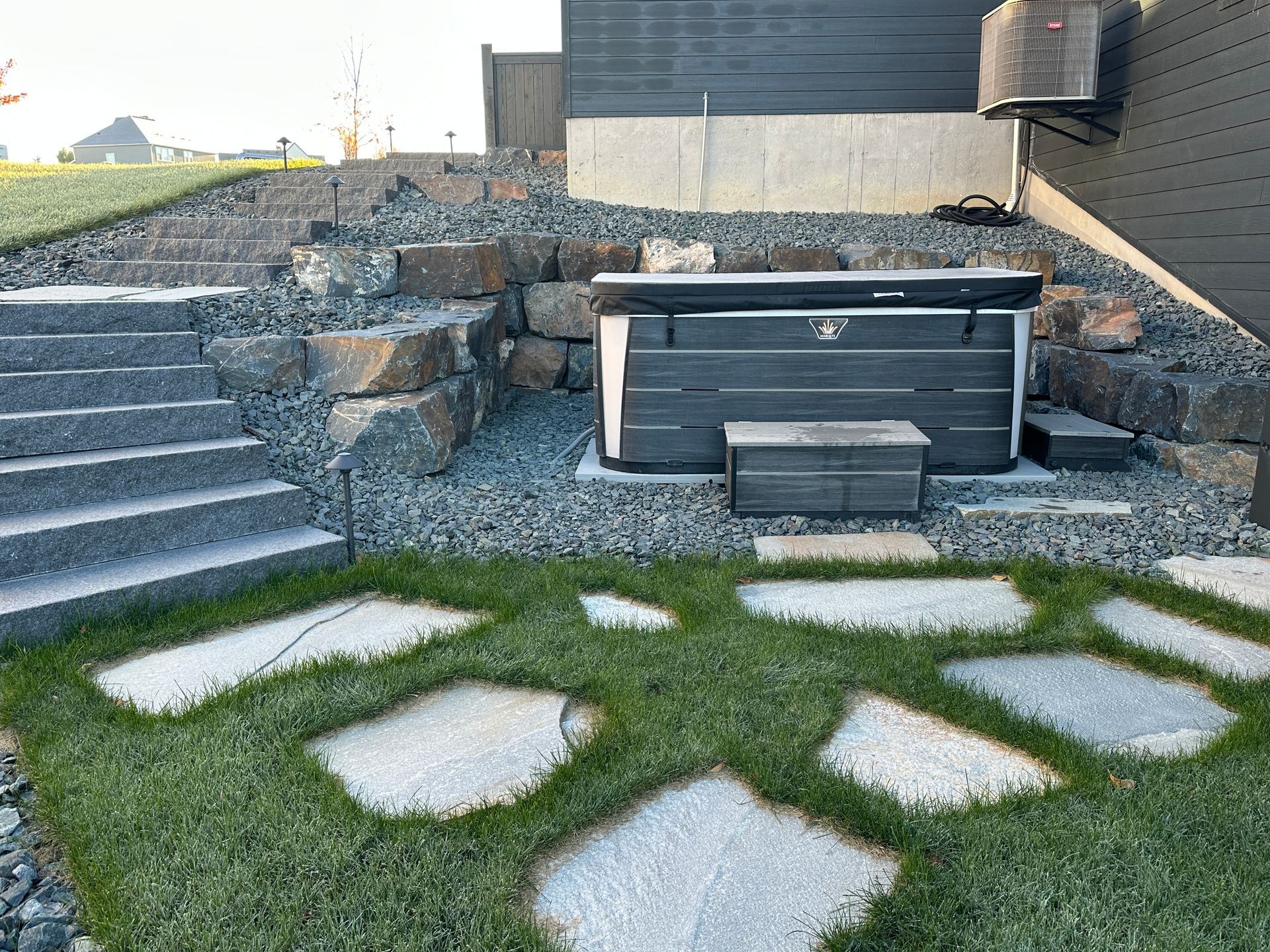
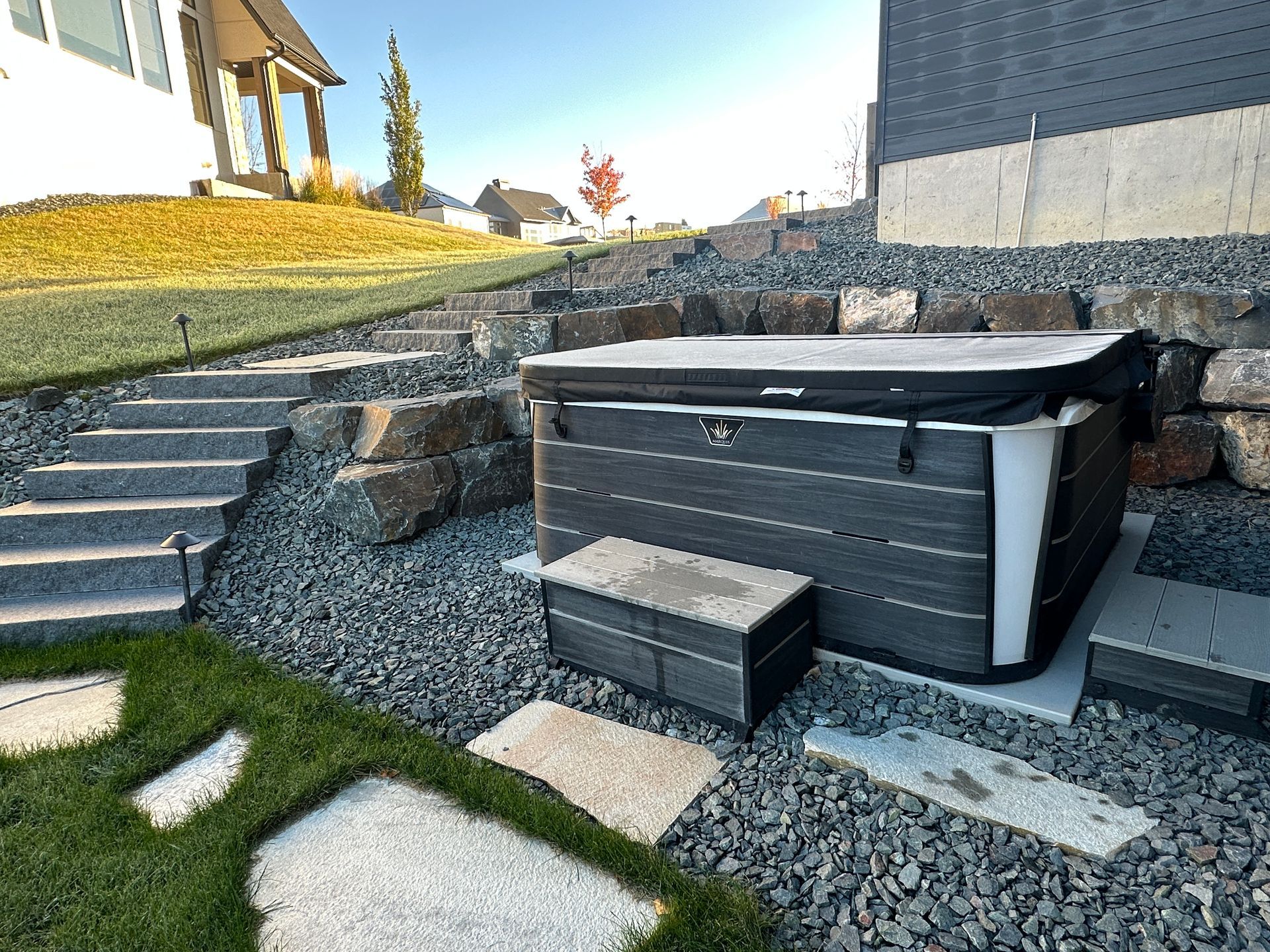
We excavated into the slope and installed a boulder retaining wall behind the hot tub to hold back the soil. The wall does two things: it creates the structural support needed to maintain the flat pad, and it defines the space visually. The boulders give the hot tub area a backdrop and make it feel like an intentional destination rather than something dropped onto a hillside.
The hot tub sits at a level that preserves the basement window views. From inside the lower level, the homeowners look past the hot tub and out to the backyard. From the hot tub, they have privacy from the neighbors thanks to the wall and the positioning.
We've done similar work creating usable space on hilly properties throughout Plymouth and the west metro. Walkout basements are common here, which means steep side yards are common too.
Building the Steps
The hot tub area needed a way to get to it. Before, the homeowners walked up and down a steep grass hill to move between the front and back yards. That's not pleasant, and it's not safe when the grass is wet.
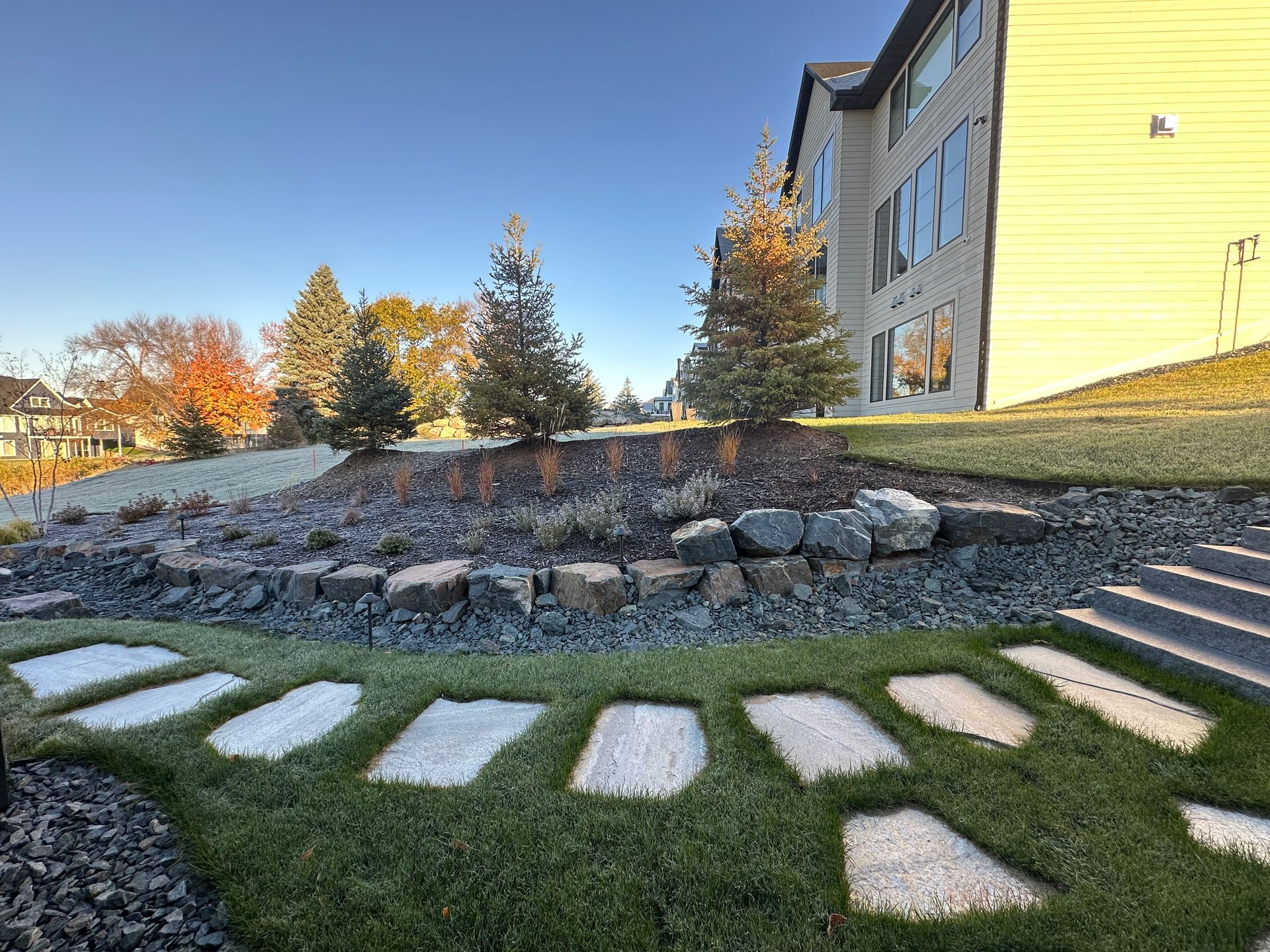
We installed a custom set of stone steps running down the slope. The treads are honed granite, which provides good grip even when wet. The layout follows the natural grade rather than fighting it. The steps start as a straight run near the top, then curve gently as they descend, guiding you naturally toward the main outdoor living area.
Along the way, the steps connect several destinations: the
trash and waste bin enclosure alongside the garage, the hot tub landing, and the backyard patio. What used to be a slope you avoided is now a pathway you actually use.
Replacing Grass With Rock
The steep sections of this side yard used to be grass. Mowing them was difficult and unpleasant. The slope was too steep for a standard mower, and walking a push mower across wet grass on a hill is nobody's idea of a good time.
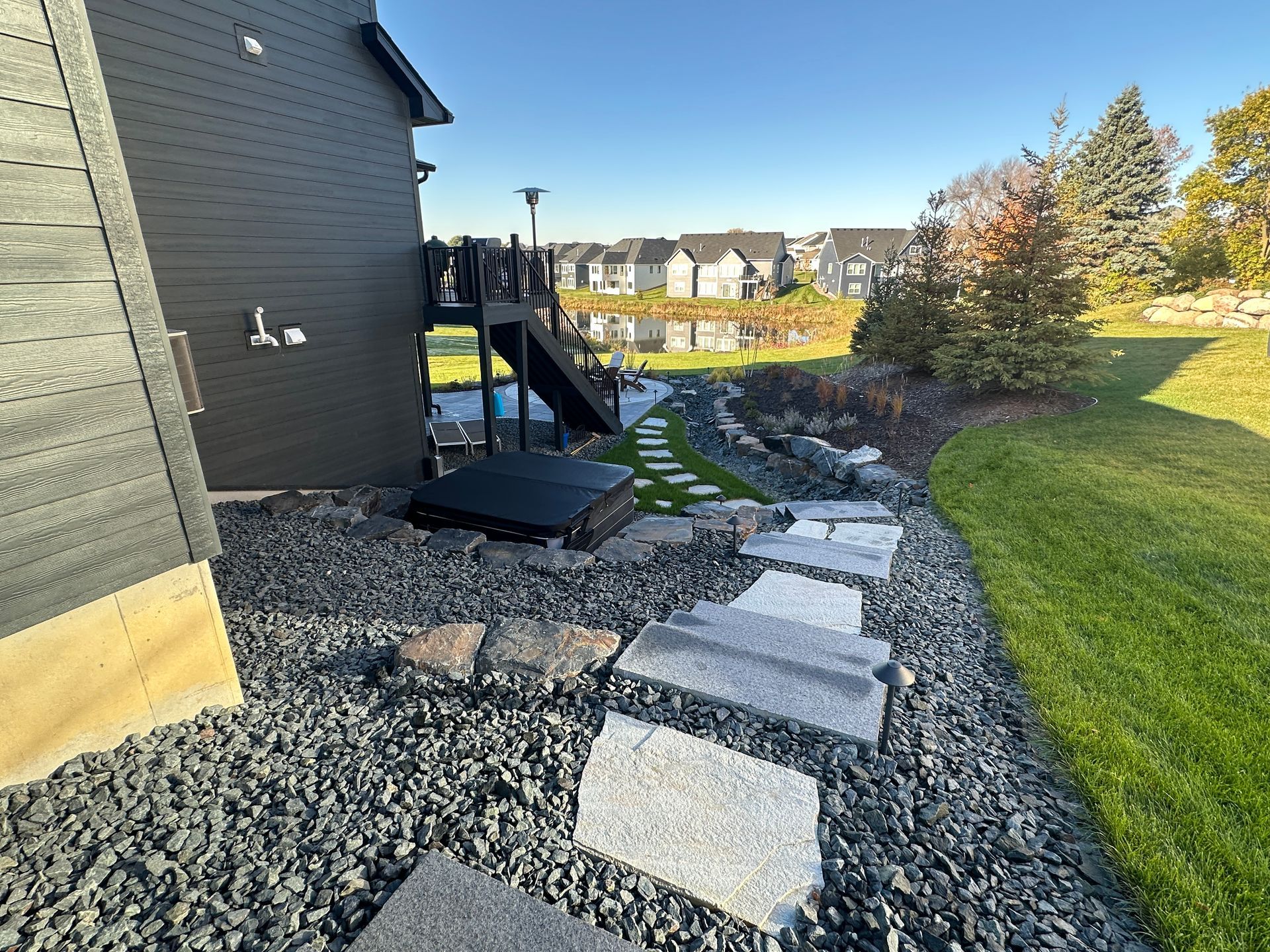
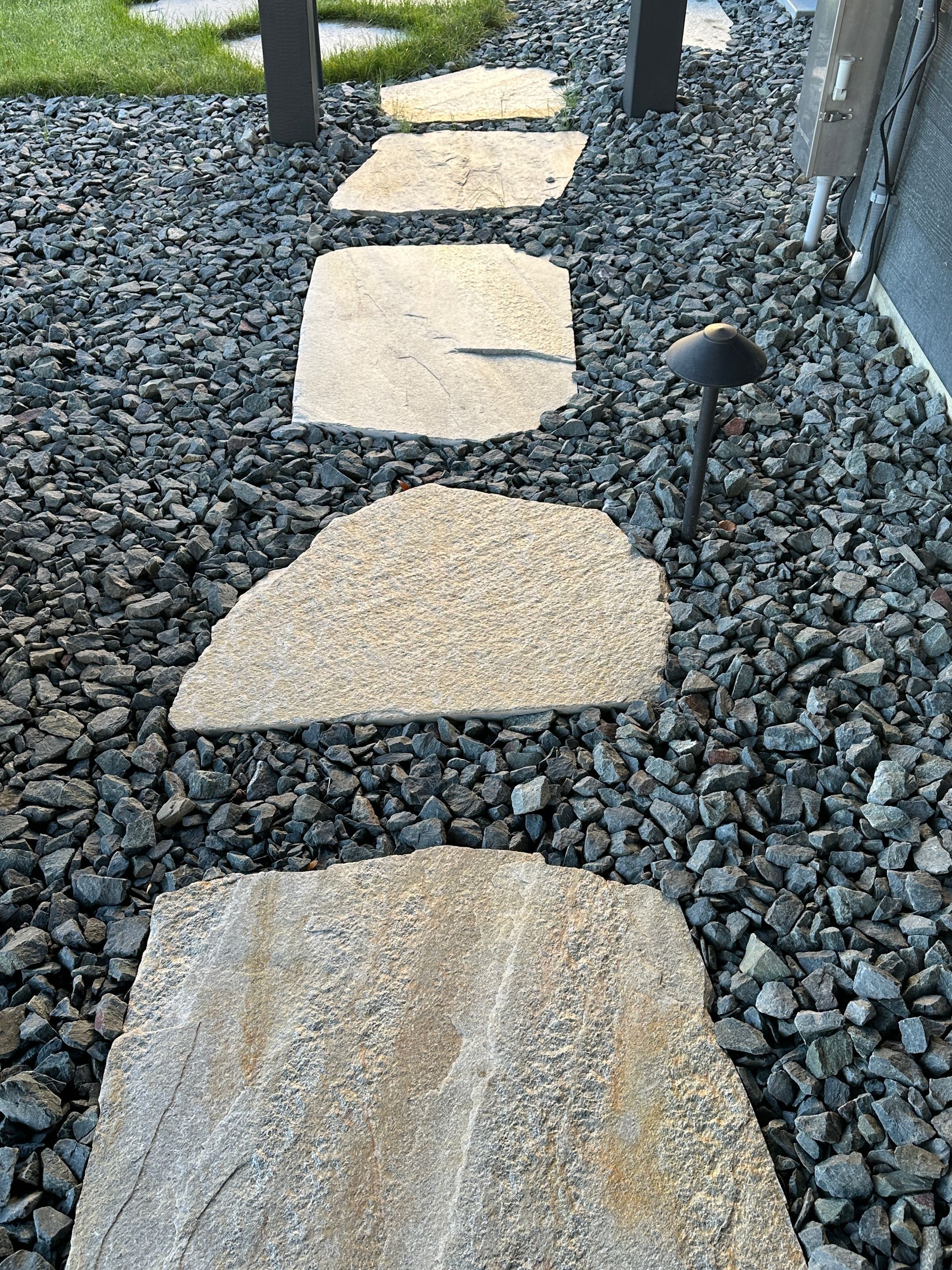
We removed all the grass from the side yard and replaced it with decorative rock. The rock ties together the different elements: the stone steps, the hot tub pad, the dry creek bed. It creates a cohesive look while eliminating a maintenance headache.
The decorative rock also helps with drainage. Water moves through it more easily than it would across compacted turf, and there's no soil erosion to worry about. The rock bed stays in place.
Choosing Materials That Work Together
One thing that separates a good landscape project from a forgettable one is how the materials relate to each other. If every element looks like it was chosen separately, the result feels disjointed. If the materials share a visual language, the whole property feels intentional.
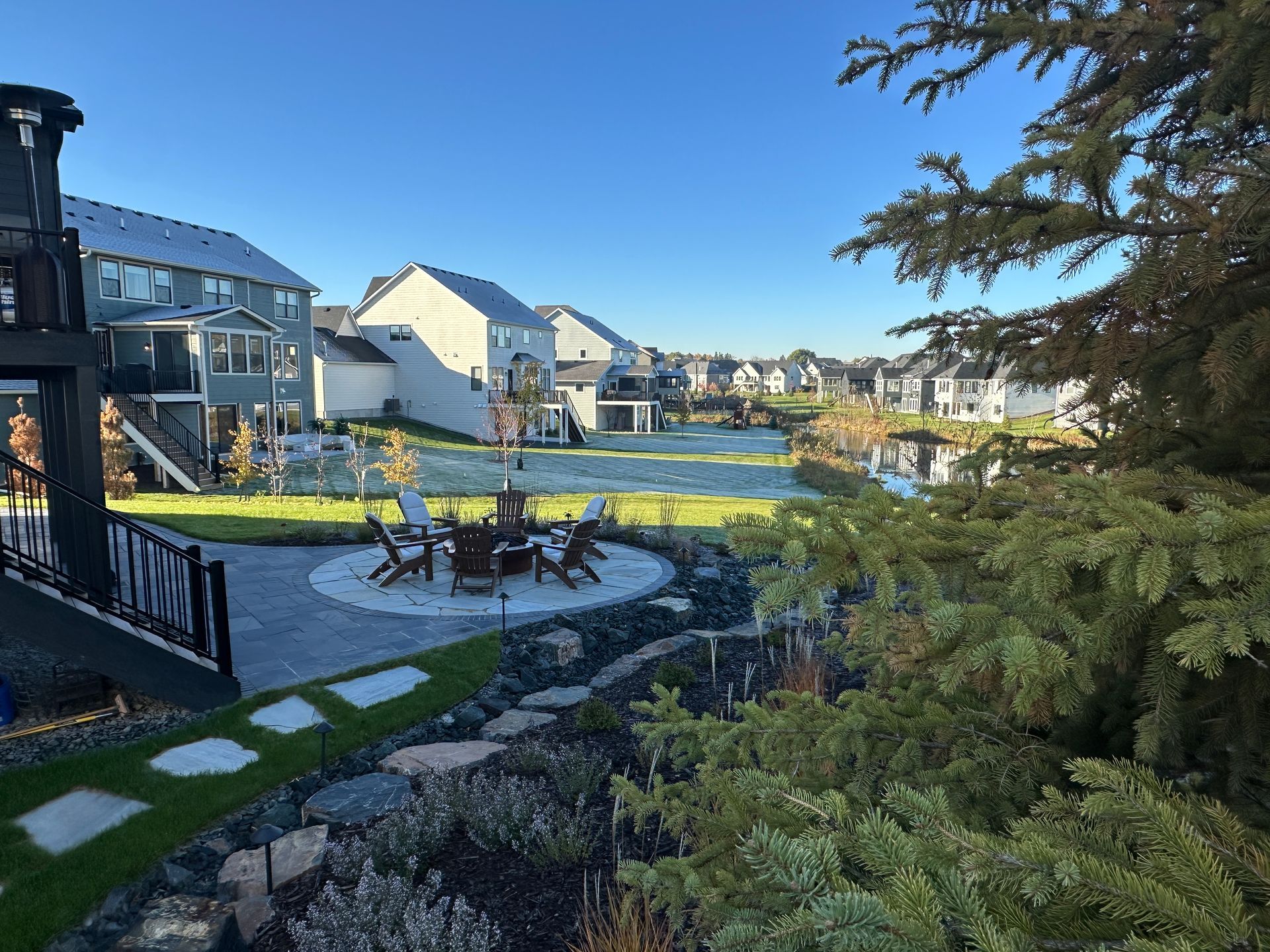
For this project, we sourced stone from a Montana quarry. The stone has a natural sparkle and rust-colored veining that shows up across the steps, the hot tub pad, and the flagstone pathways. Those rust tones complement the boulders in the retaining walls and tie into the home's black siding.
The same thinking carried through to the fire pit area in the backyard, which uses matching flagstone. When you move from the front yard down the steps, past the hot tub, and into the main outdoor living space, everything feels connected.
We wrote about how material choices tie a property together in another article about this same Plymouth project.
Lighting the Path
Stone steps on a slope need lighting. Without it, the path isn't usable after dark, which limits how much value you get from the investment.
We installed landscape lighting along the walkway. The lights are positioned to illuminate the treads so you can see where you're stepping. They also highlight the dry creek bed and the plantings along the path, which makes the side yard feel like a designed space rather than a utility corridor.
The lighting extends the usability of the hot tub area into the evening. You can walk down from the house after dark, use the hot tub, and walk back up safely.
What the Homeowners Got
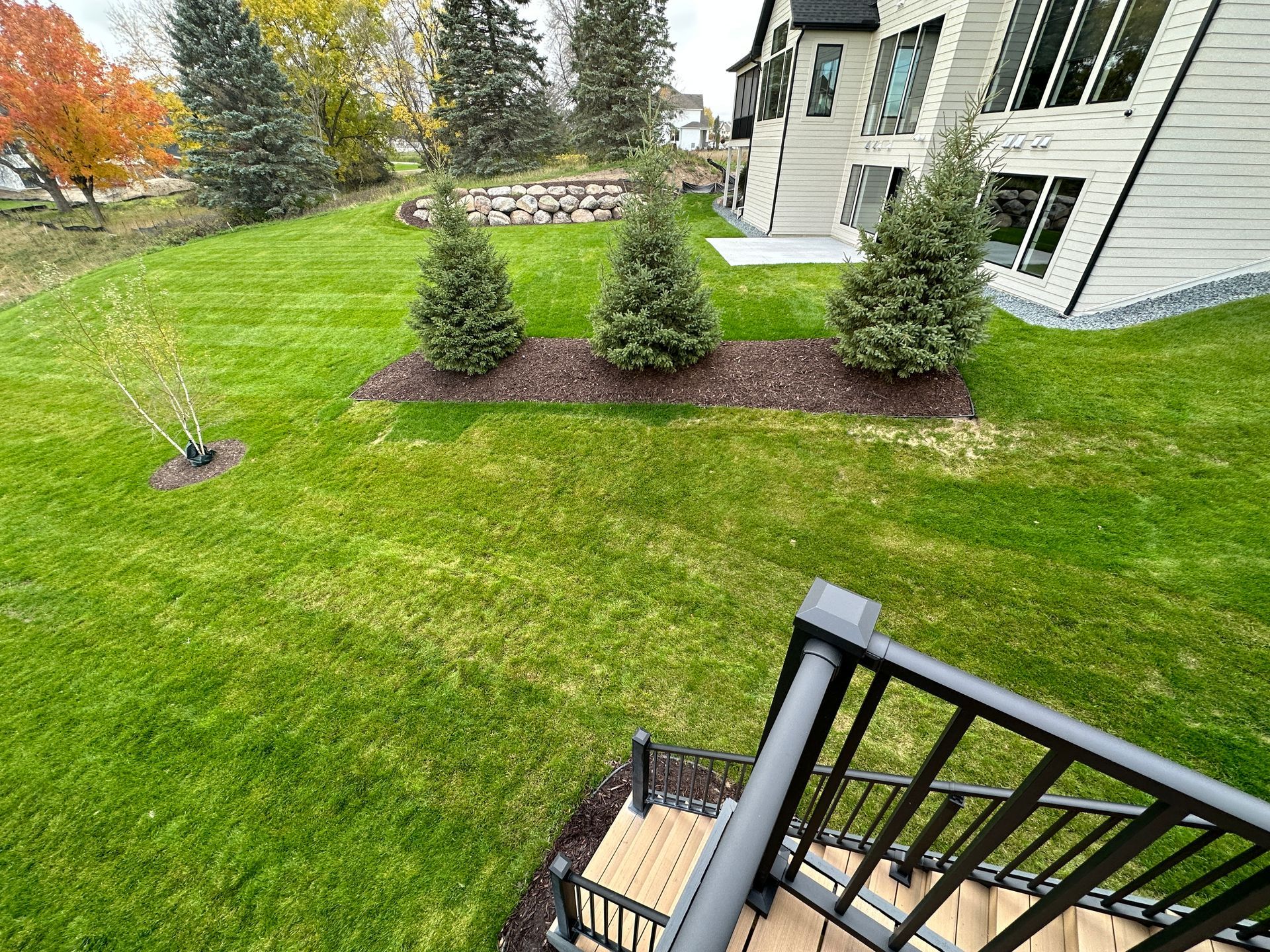
This project solved several problems at once. The steep side yard that used to be wasted space is now a pathway and a destination. The hot tub has a private location that doesn't block basement views. The drainage system handles heavy water flow from multiple sources. The grass that was difficult to maintain is gone.
The homeowners use the side yard now. They walk down the steps instead of across a wet hill. They sit in the hot tub and look out at their backyard. They don't worry about water pooling against the house or eroding the slope.
That's what happens when you approach the design process by looking at the whole situation rather than just the immediate request. The homeowners came to us wanting a hot tub. What they got was a hot tub plus functional side yards, proper drainage, safe access, and a landscape that works together as a whole.
If You Have a Walkout Basement
Steep side yards are one of the most common challenges we see on Twin Cities properties with walkout basements. The terrain that makes a walkout possible also creates slopes that feel unusable.
They don't have to stay that way. With the right approach to grading, retaining walls, drainage, and materials, those side yards can become functional parts of your property. A hot tub retreat. A pathway. A space that actually gets used instead of mowed and ignored.
If you're in Plymouth or the surrounding metro and you have a side yard that's not working, we can talk through what might be possible.
Contact KG Landscape to discuss your project.
Frequently Asked Questions
Can you put a hot tub on a sloped yard?
Yes, but it requires excavation and retaining walls to create a flat, stable pad. The slope has to be cut into and supported properly, or the pad won't hold up over time. Drainage is critical too, since water will naturally flow toward any flat area you create on a hillside. We evaluate the grade, soil conditions, and water patterns before designing a solution.
How do you handle drainage on a hillside with a sump pump?
Sump pumps discharge water constantly, not just when it rains. That water has to go somewhere. We typically route the discharge into an underground pipe that connects to a larger drainage system, like a dry creek bed or a buried drain line. The goal is to move the water away from structures and toward an appropriate discharge point at the edge of the property.
What kind of stone works best for outdoor steps on a slope?
We often use honed granite treads because they provide good traction when wet. The texture grips underfoot better than polished stone. Beyond function, the stone should complement the other materials in the landscape. Color, veining, and finish all matter for the overall look.
How long does a project like this take?
A project involving excavation, retaining walls, drainage systems, steps, and finish work typically takes several weeks. Design and planning happen before construction begins. Weather can affect scheduling in Minnesota, especially for projects that involve concrete or mortar. We provide timeline estimates as part of our proposals.
Do you work on other walkout basement properties in Plymouth?
Yes. Plymouth has a lot of walkout basements, which means a lot of steep side yards. We've worked on many properties with similar conditions. The solutions vary depending on the specific site, but the approach is the same: understand the drainage, figure out what the homeowners want to accomplish, and design something that addresses both.
About the Author
Kent Gliadon is the owner and principal designer at KG Landscape, a Minneapolis-based landscape design and build company serving homeowners across the Twin Cities for over 20 years. Kent studied landscape architecture and earned a bachelor's degree in Environmental Horticulture at the University of Minnesota, with emphasis in turf science and landscape design.
Ready to Start on Your Next Project?
Call us at (763) 568-7251 or visit our quote page.