Luxury Landscape Design Detail: Outdoor Waste Bin Storage in Plymouth, MN
Where It Starts
You pull into your driveway and walk toward the front door. The landscaping looks sharp. The walkway is clean. And the side of the garage? No trash cans in sight.
That last part matters more than you might think. In high-end landscape work, the difference between good and great often comes down to the places most people overlook. A thoughtfully designed waste bin storage area won't be the first thing anyone notices. But that's the point. When even the utilitarian spaces are handled well, the whole property feels more complete.
This Plymouth project is a good example. We're going to walk through how we approached a simple problem, where to put the waste bins, and turned it into a feature that fits seamlessly with the rest of the landscape. And we'll show you what that attention to detail looks like across the entire property.
Why Waste Bin Storage Matters
Nobody wants to look at trash cans. Not you, not your neighbors, not anyone driving by.
On a lot of properties, the bins end up in one of two places: inside the garage, taking up space and adding smell, or outside on the side of the house, visible from the street or the neighbor's yard.
Neither option is great. Storing waste in your garage means dealing with odors, especially in the summer, and losing valuable storage space that could be used for tools, bikes, or seasonal items. Leaving bins exposed on the side of your house affects curb appeal and isn't particularly neighborly. Your home might look beautiful from the front, but a row of trash cans on the side tells a different story.
According to the National Association of Realtors, curb appeal significantly influences buyer perception and home value. Every visible element contributes to that first impression, including the areas most people overlook.
The question we asked on this Plymouth project was: what if we designed this area with the same care we put into the rest of the property?
The Challenge: A Sloped Side Yard
The side yard on this property presented a few challenges. The grade wasn't flat. It sloped away from the house, which made it difficult to use for storage or as a walkway to the backyard. There was also a downspout at the corner of the garage that would have been directly in the way of any new feature.
We needed to create a flat space wide enough to store the bins comfortably and still allow easy access through to the backyard. The homeowners used this path regularly, so it had to be functional, not just attractive. And we needed to do it in a way that looked intentional, like it had always been part of the design.
Building Up the Space
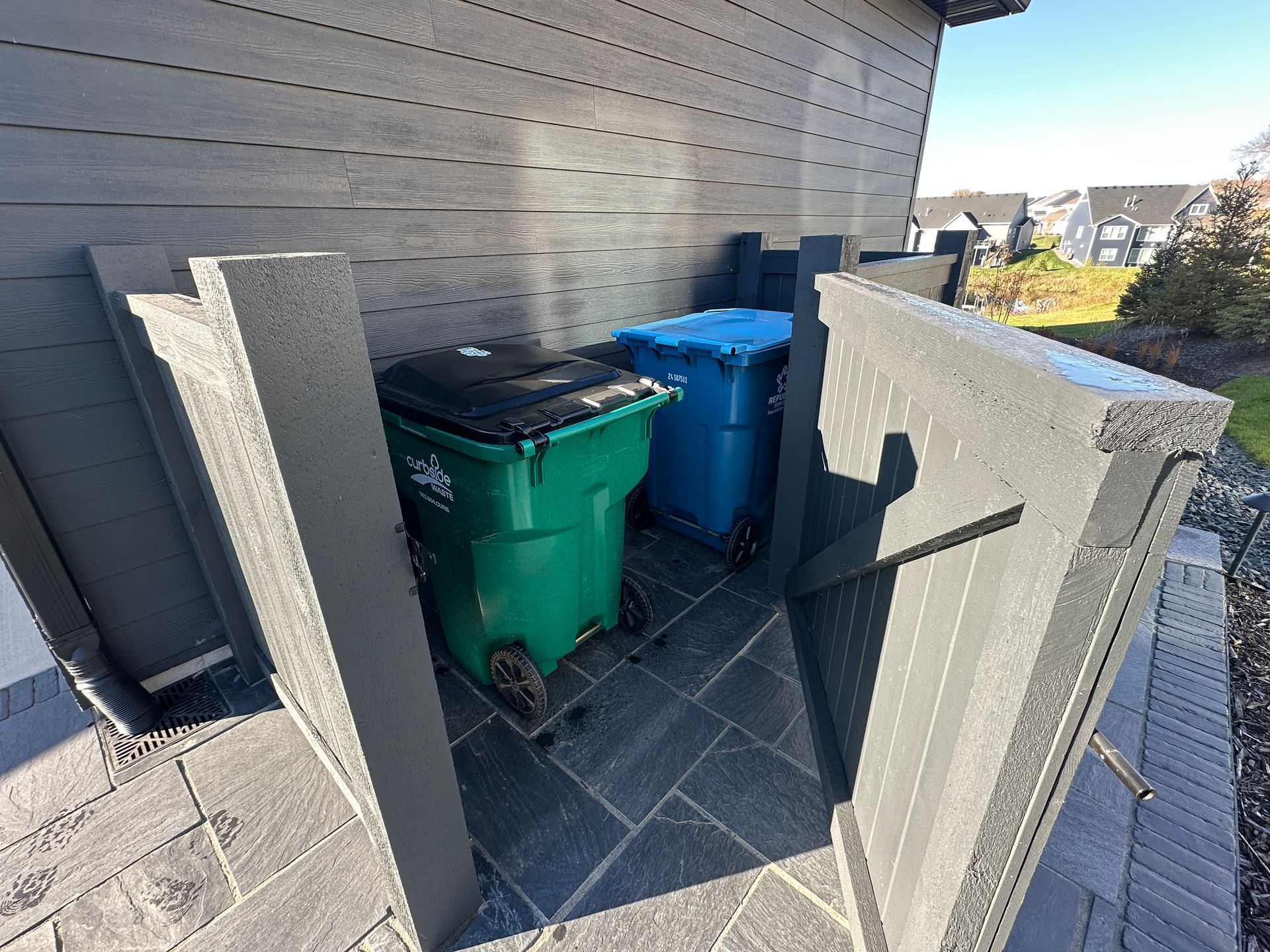
To create a level area on the sloped side yard, we built up the grade and installed pavers that match both the front entry walkway and the backyard patio. Using the same black natural stone throughout the property ties everything together.
This consistency matters. When you walk from the front yard to the side yard to the backyard, the materials are the same. The color is the same. The quality is the same. It feels like one property designed with one vision, not a collection of separate projects done at different times with whatever materials happened to be available.
The American Society of Landscape Architects emphasizes that material continuity is one of the foundational principles of residential landscape design. It creates visual flow and makes properties feel larger and more intentional.
More information on how matching materials creates a unified look is available on our custom patios in Plymouth page.
Screening the Bins From View
The pavers created a functional space. But bins sitting on nice pavers are still bins. The next step was screening them from view.
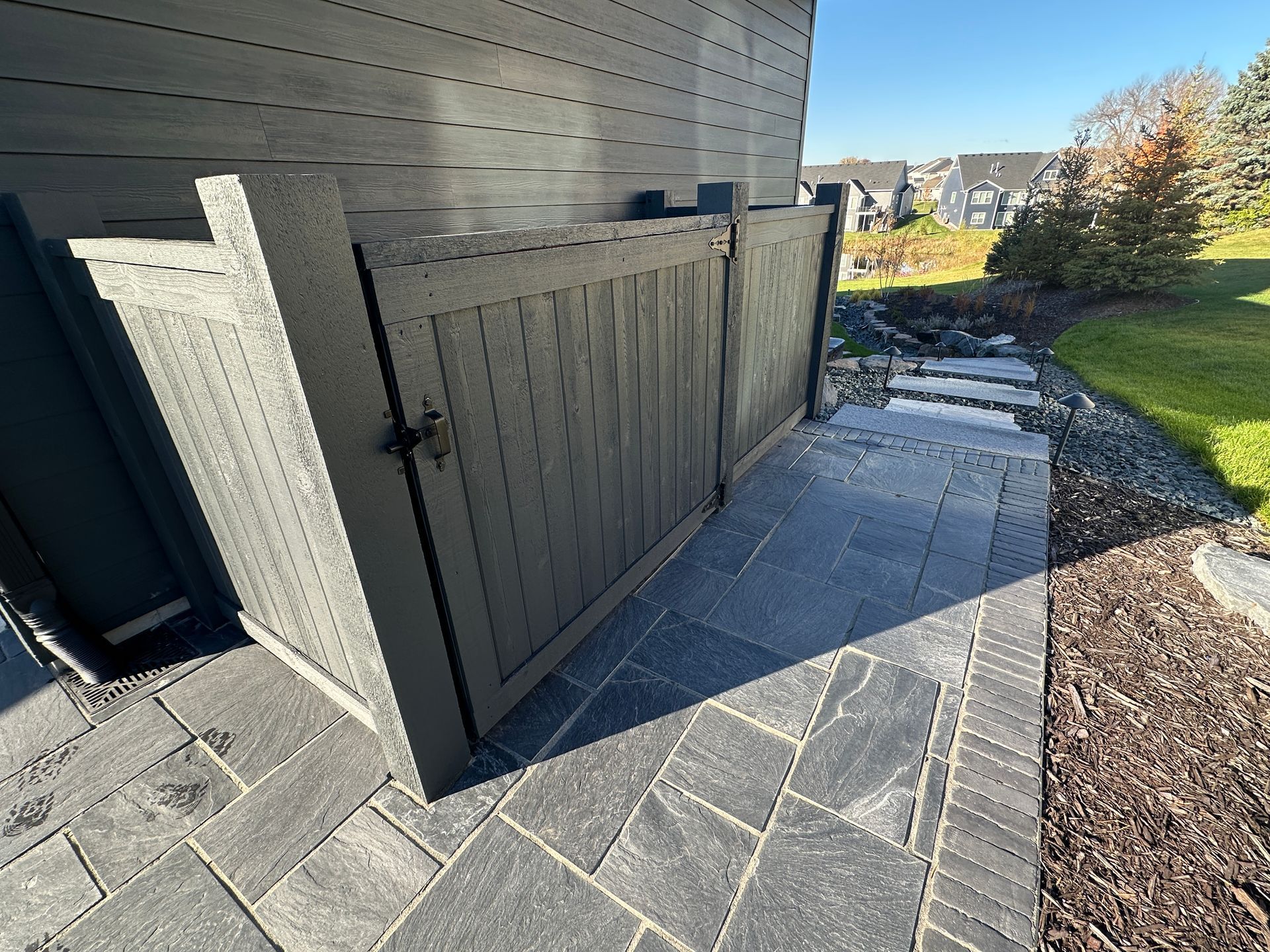
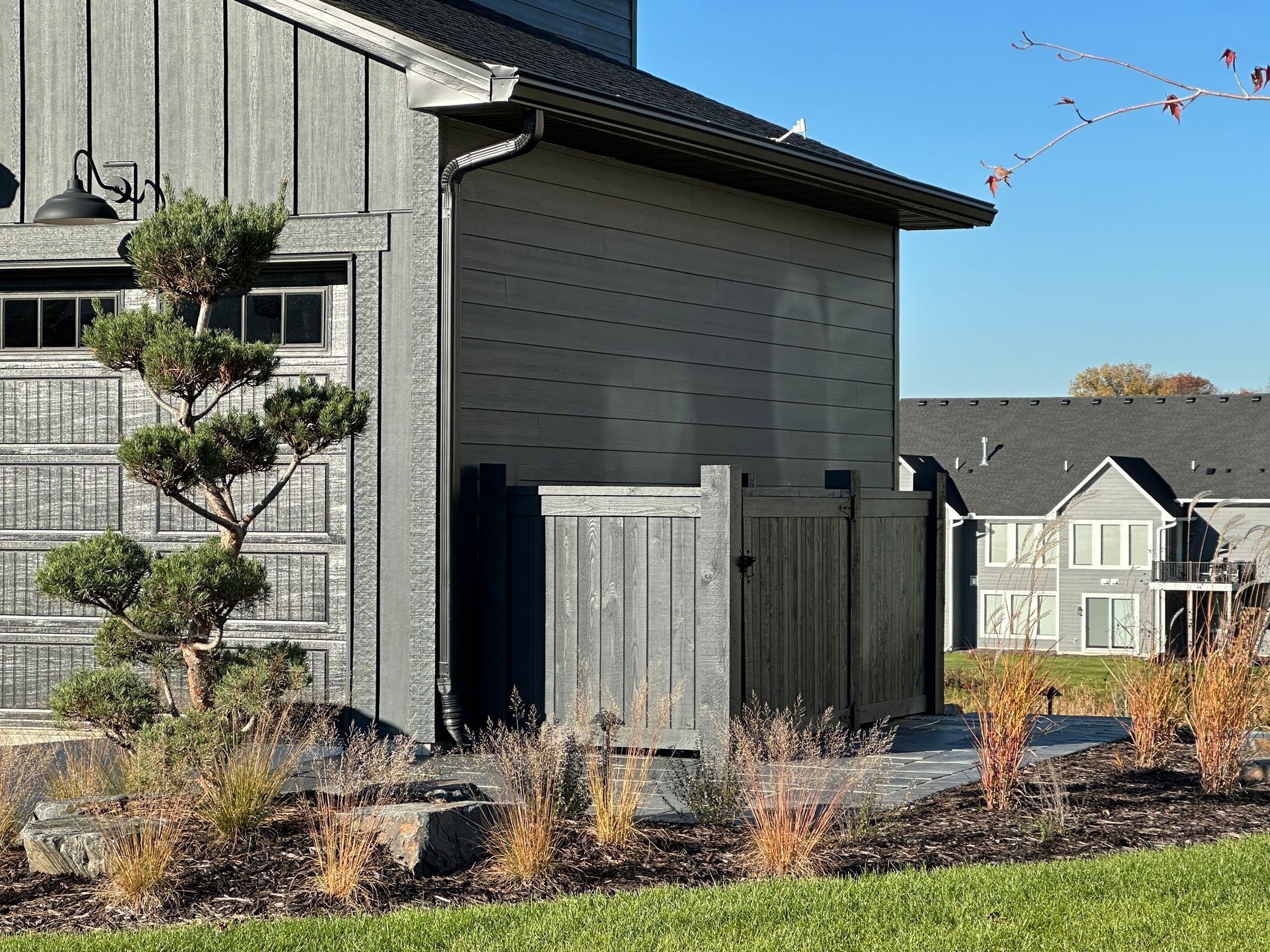
We designed a custom cedar fence with tongue and groove construction. This isn't a prefab fence panel from a home improvement store. The cedar was selected for durability and appearance. It weathers well in Minnesota and develops a natural patina over time if left unstained. The tongue and groove design gives it a clean, finished look with no gaps between boards.
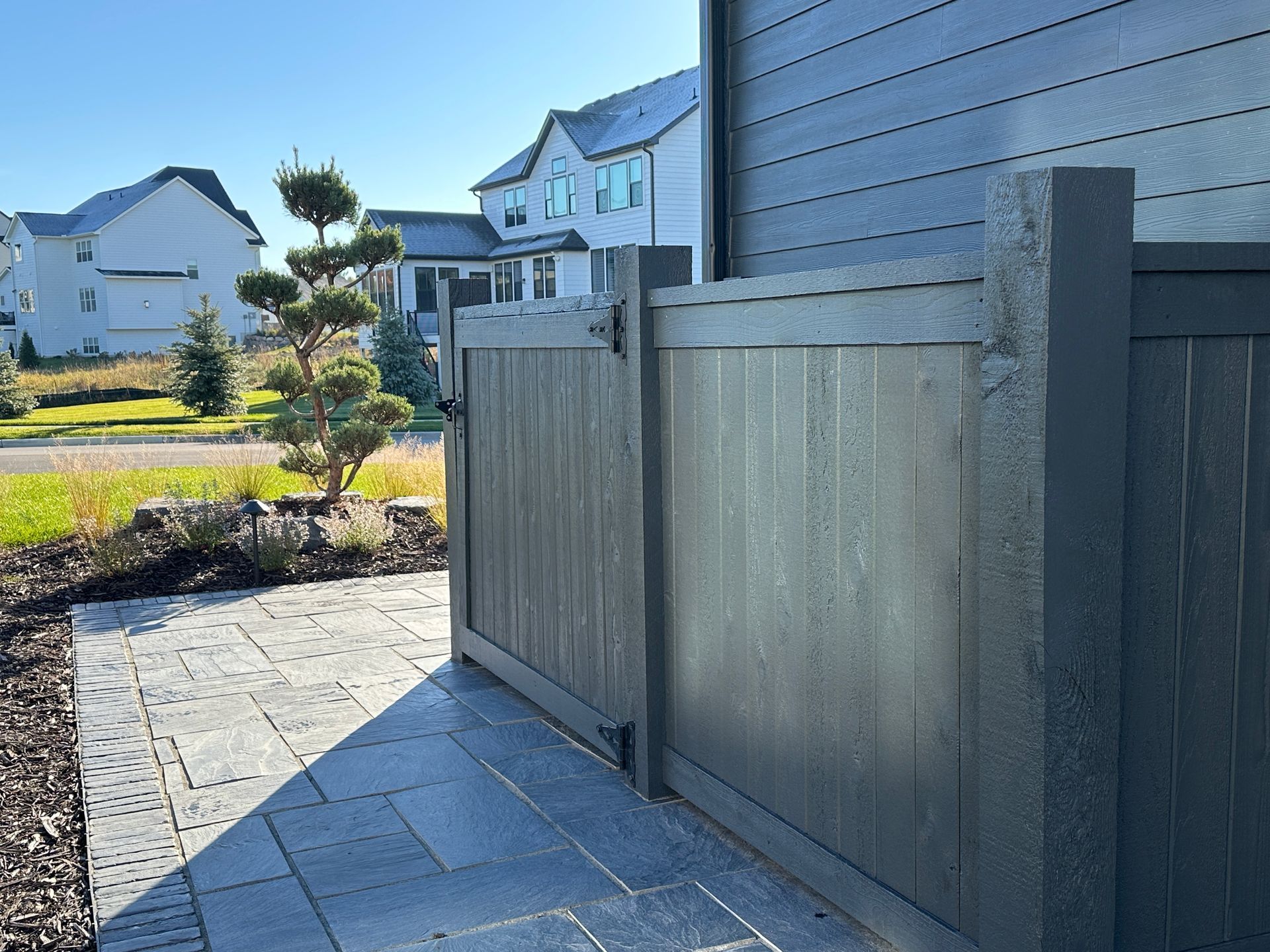
We used larger 6x6" posts instead of standard 4x4" sizing. This makes the gate stronger and more stable, and it gives the whole structure a more substantial appearance. Standard posts can look flimsy next to a well-built home. Larger posts feel proportional and solid.
Matching the House
Here's where the details add up. We painted the fence to match the house siding.
A natural wood fence would have been fine. It would have screened the bins and looked decent. But painting it to match the house makes it almost disappear. Your eye doesn't stop there. It doesn't draw attention. It just looks like it belongs.
This kind of detail takes extra planning. A conversation with the homeowner about paint colors. Coordination during installation. But the result is a feature that feels like part of the home rather than something added on.
The Cedar Shake and Shingle Bureau notes that cedar accepts paint and stain well, making it a good choice for custom applications where color matching is important.
Solving the Downspout Problem
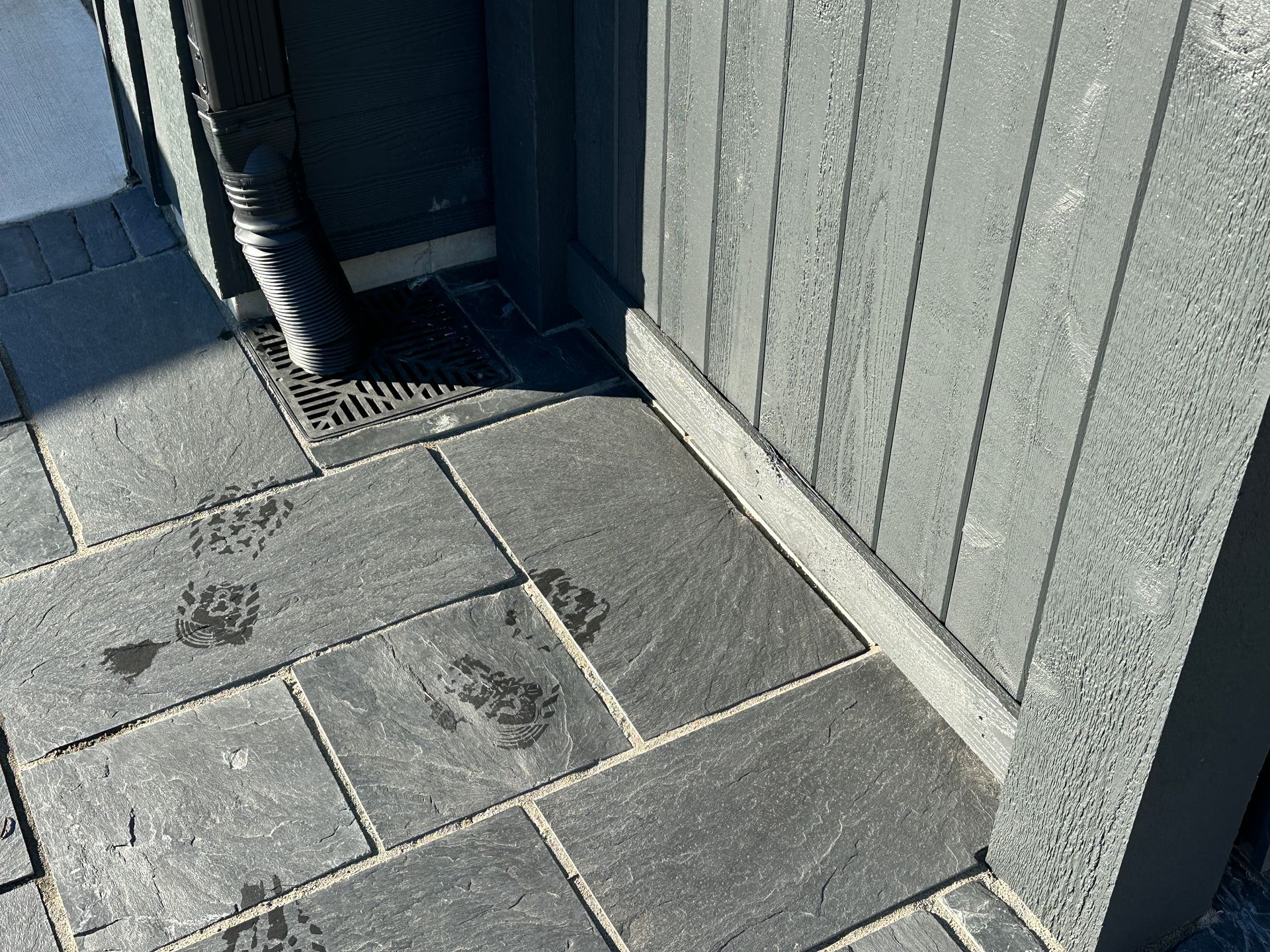
That downspout at the corner of the garage could have been a problem. If we'd left it as-is, it would have hung over the walkway and disrupted the clean look we were going for. Water would have discharged directly onto the new pavers, creating drainage issues and potential ice problems in winter.
Instead, we installed an underground downspout with a catch basin at the corner of the garage. The water gets captured, diverted below the new feature through buried pipe, and discharged away from the foundation. No visible downspout cluttering up the space. No water pooling on the walkway.
This is what it looks like to think through problems before they become compromises.
More information on how we handle downspout drainage is available on our outdoor drainage services page.
Adding Screen Plantings
The fence blocks the view from most angles, but we also added screen plantings to block the view from the road and neighboring properties. This creates multiple layers of screening. The fence handles close-range views. The plantings handle longer sightlines from the street or across the yard.
The plantings also soften the overall look. A fence alone can feel harsh, even a well-built one. Adding greenery makes the area feel more like part of the landscape and less like a utility zone. The plants provide texture and color that changes with the seasons.
The Bigger Picture: A Property Designed as a Whole
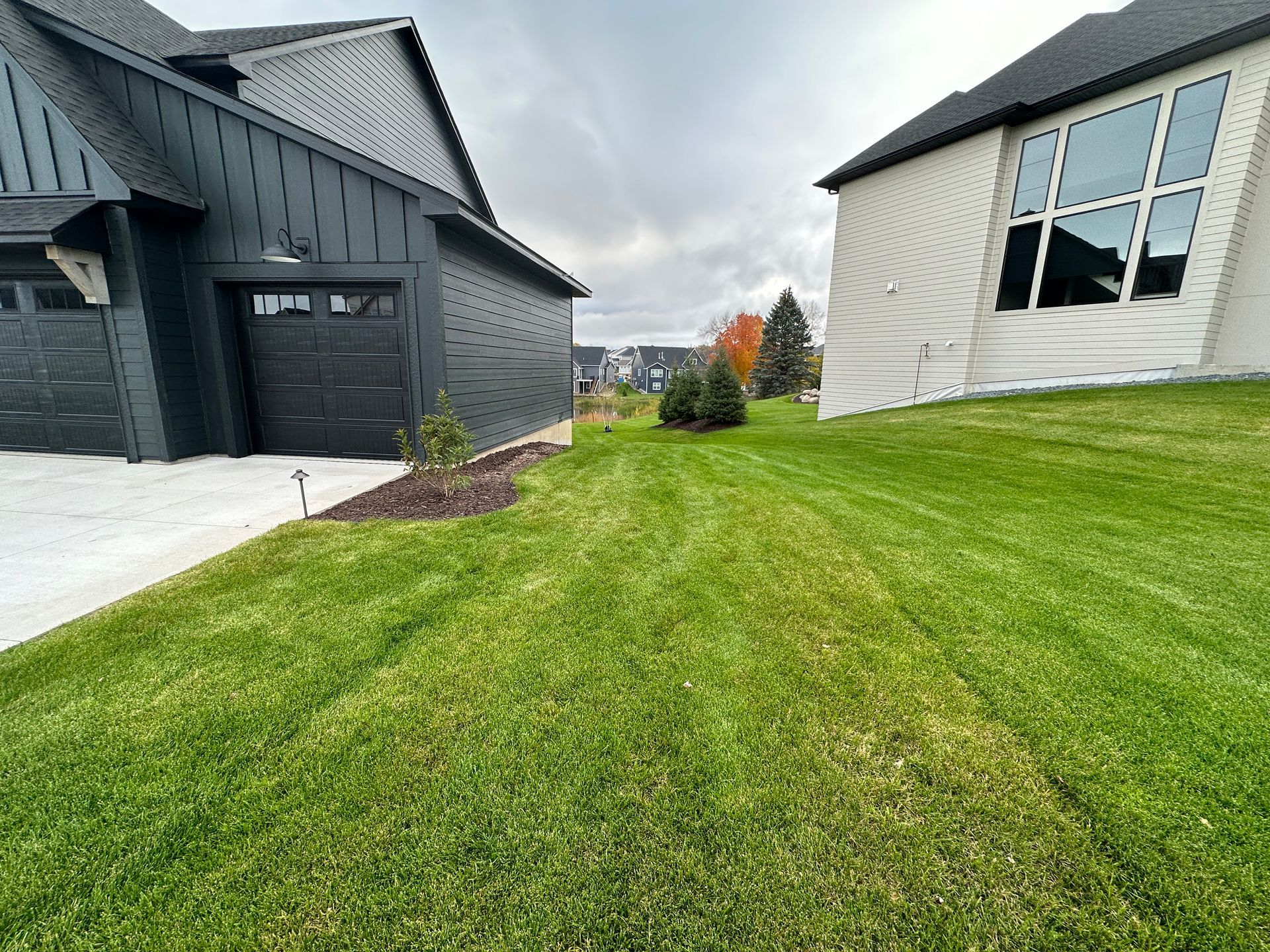
The waste bin storage area is one detail in a larger Plymouth project. What makes this property work is that every part received the same level of thought.
The Front Entry
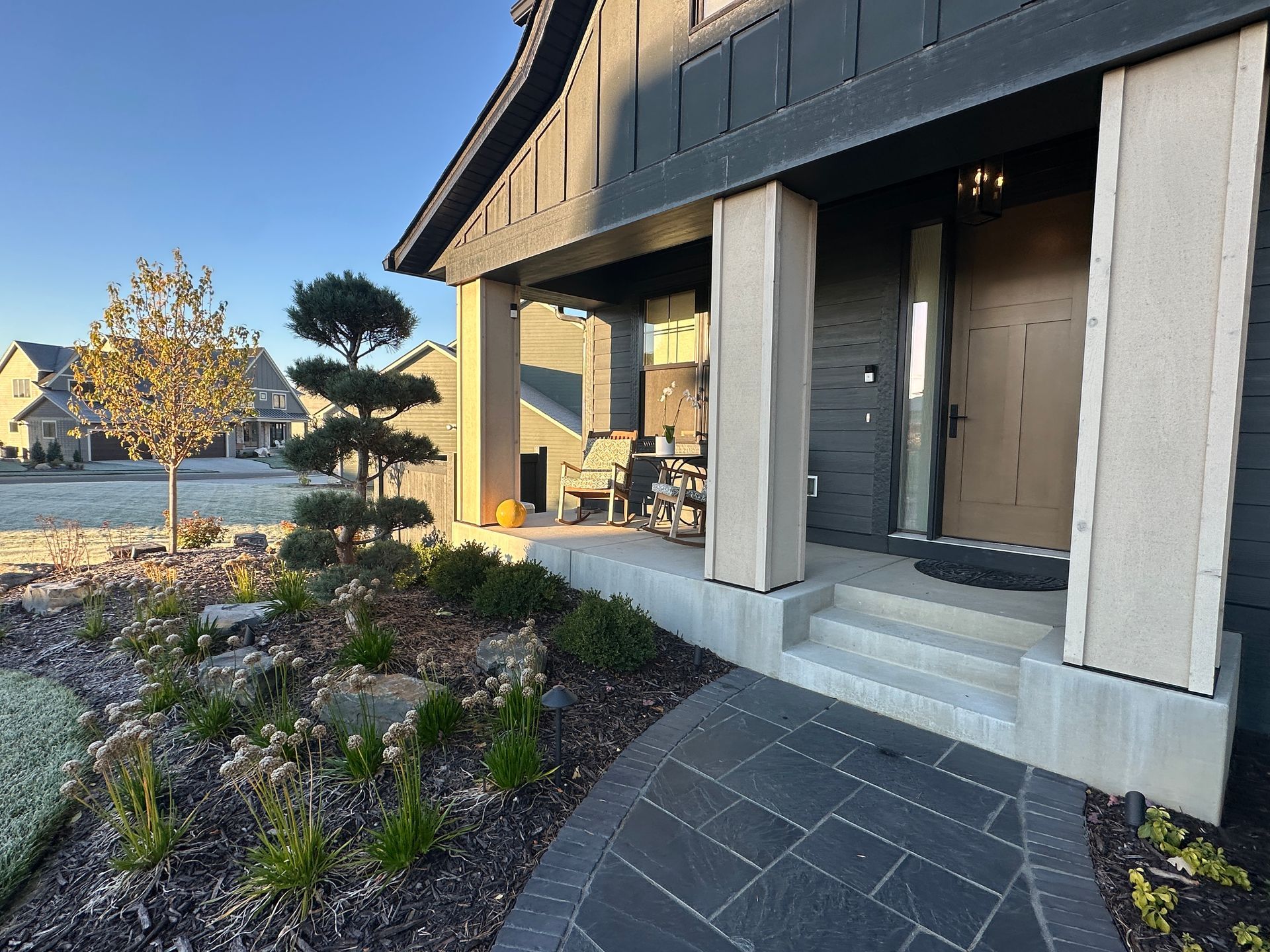
The front walkway sets the tone before you reach the front door. We used the same black natural stone pavers here, laid in a pattern that feels substantial and welcoming. The plantings frame the entry without crowding it. The scale feels right. Wide enough to walk comfortably, detailed enough to notice.
When guests arrive, this is their first impression. It signals that the homeowners care about their property and that whoever designed it knew what they were doing.
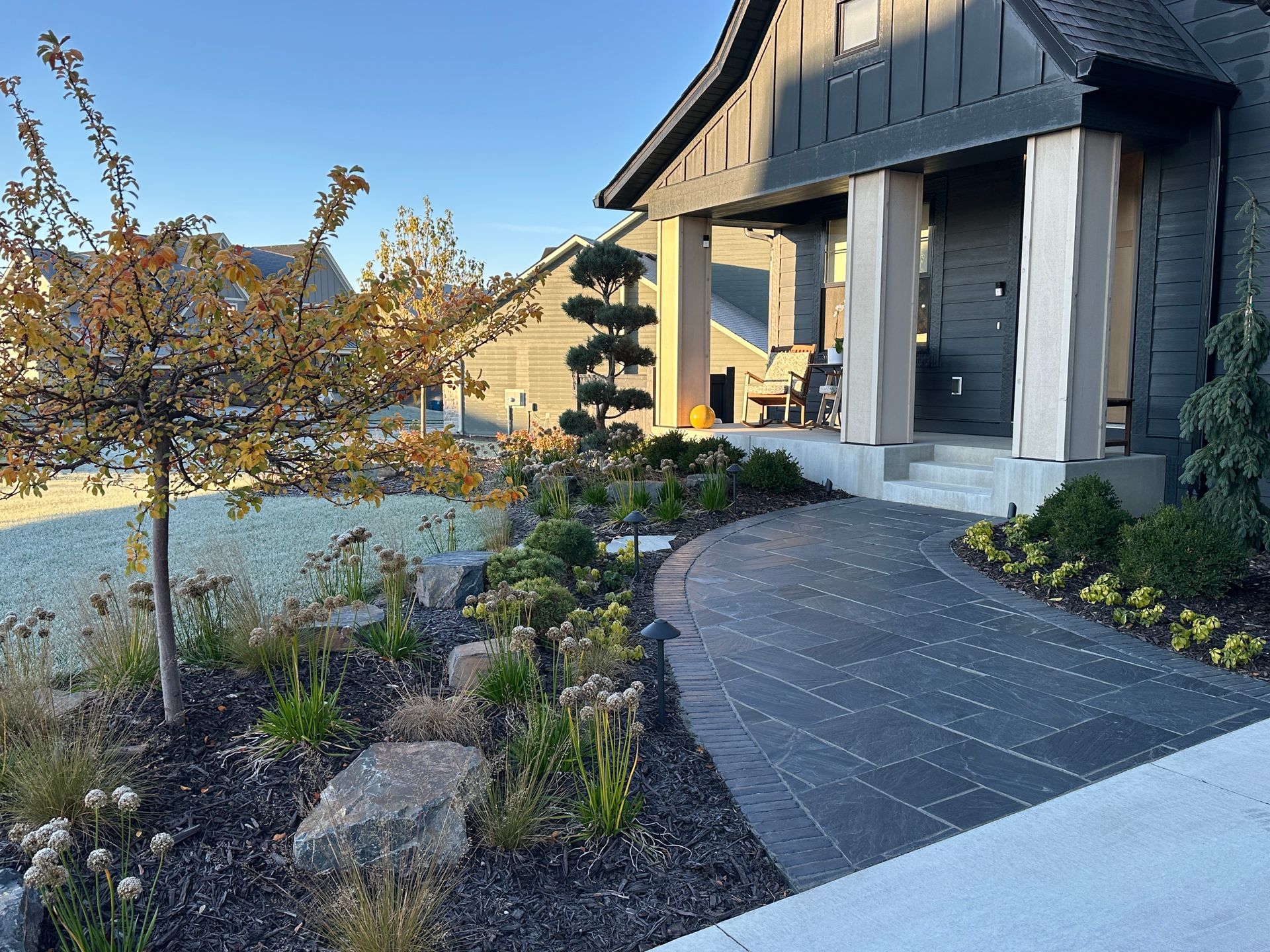
For more on front entry design, visit our front yard landscaping page.
The Backyard
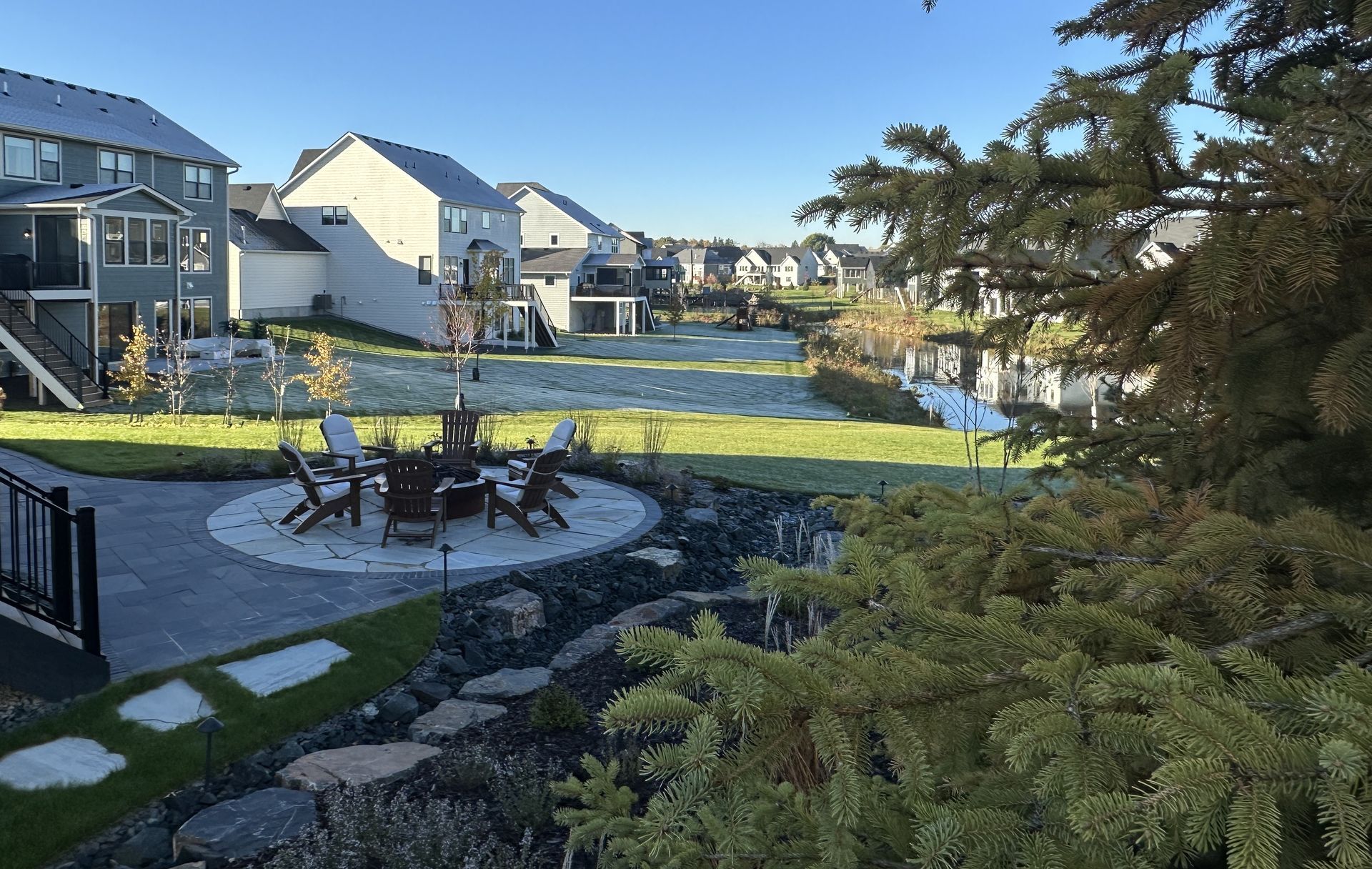
The backyard is where this family spends most of their outdoor time. We built a raised flagstone fire pit area that serves as a natural gathering spot. The kind of place where conversations go late into the evening.
The same black natural stone connects the backyard to the front and side yards. Standing at the fire pit, you're looking at a landscape that feels unified and intentional. The materials, the craftsmanship, the attention to drainage and grading. It's all consistent.
What Ties It Together
Walk this property from front to back and you'll notice something. The pavers match. The quality of construction is consistent. The plantings complement each other. Even the waste bin storage area, a spot most people would overlook entirely, was designed to fit.
That's what comprehensive landscape design looks like. Not just a nice patio or a pretty front walkway, but a property where everything works together.
The Standard for Every Project
If this is how much thought goes into a waste bin storage area, imagine what the rest of a project looks like.
That's the real point here. Anyone can build a patio. Anyone can plant some shrubs along a walkway. What separates thorough work from average work is the willingness to think through every detail. The drainage. The material choices. The paint color on a fence. The decision to use larger posts because they'll look better and last longer.
This Plymouth project is an example of what's possible when nothing gets overlooked. The homeowners don't think about their waste bins anymore. They're stored neatly, screened from view, accessible when needed, and invisible the rest of the time. The front entry looks sharp. The backyard is ready for guests. The side yard isn't an eyesore.
These aren't dramatic transformations. They're the accumulation of good decisions. And they add up to a property that feels more complete and more enjoyable to live in.
If you're in Plymouth or the surrounding Twin Cities area and there's a corner of your property that's been bothering you, or you're thinking about a larger project, we'd be glad to talk through what's possible.
Get in touch with KG Landscape.
More information on our design process is available on our landscape design process page.
Frequently Asked Questions
How much does a custom waste bin storage area cost?
Cost depends on what's involved. A basic screening solution with standard fencing costs less than a fully integrated feature like this one, which included grading work, custom cedar fencing with paint, matched pavers, underground drainage, and screen plantings. Most projects in this category range from a few thousand dollars for simple screening to more for comprehensive solutions. We can design options at different levels based on your priorities and budget.
Can you add a waste bin storage area to an existing landscape?
Yes. This feature can be added as a standalone project or integrated into a larger renovation. If you already have pavers or materials elsewhere on your property, we can often match or complement them to keep the look consistent. Even if your existing landscape uses different materials, we can design a storage area that fits with the overall style of your home.
What materials work best for screening trash bins?
Cedar is a strong choice for fencing in Minnesota because it's durable, weathers well, and accepts paint or stain if you want to match your house. Other options include composite materials or painted wood. Screen plantings like evergreens, ornamental grasses, or dense shrubs can supplement fencing for additional coverage. The best approach depends on the sightlines you need to block, the style of your home, and how much maintenance you want to take on.
How do you handle drainage issues in side yard projects?
We assess drainage during design. If downspouts, grading, or water flow create issues in the project area, we address them with underground drainage, catch basins, regrading, or a combination. The goal is to solve drainage problems before they affect the new feature. Ignoring drainage often leads to problems later. Pooling water, ice buildup, or erosion.
Do you work on projects in Plymouth, MN?
Yes. We serve homeowners throughout Plymouth and the greater Twin Cities metro area. Our Plymouth landscaping services page has more information on the work we do in the area.
Ready to Start on Your Next Project?
Call us at (763) 568-7251 or visit our quote page.