Why Lake Homeowners Are Replacing Wooden Steps with Stone: A Minnetonka and Orono Guide
Homeowners Are Replacing Wooden Steps with Stone
The wooden steps down to the lake were rotting when they bought the house. The previous owners had let them go—treads soft in places, posts shifting, the whole structure questionable every time someone walked down to the dock. Two months later, there's stone. Steps that will outlast the house itself.
This is a project I do regularly for lake homeowners in Minnetonka, Orono, Excelsior, Minnetrista, Mound, and across the Twin Cities lake communities.
Here's the reality about wooden steps to water: they all fail. Treated lumber, cedar, composite framing with wood structure—if wood is in contact with soil, it rots. No exceptions. The question isn't whether your wooden lake steps will fail. It's whether you address them now or deal with a bigger problem later.
This guide covers why wooden lakeside steps fail, why stone is the better long-term choice, and what the replacement process looks like for lake properties. If you've inherited failing steps from a previous owner—or you're watching your own steps deteriorate—this is the information you need.
I tear out a decent amount of wood steps and replace them with stone. If wood steps are already rotting, there's no point to repair them. Stone is better—it lasts longer. That's just the reality.
The Problem with Wood Steps to Water
Wooden steps down to lakes, streams, and ponds are common because they're easier to install than stone. No heavy equipment required—the step frames can be built on site and filled with soil. Lower complexity, lower upfront cost, and the work can be done without specialized hardscape skills.
That's why so many lake properties have wooden steps. It's not because wood is the right material for the job.
Why Wood Always Fails
Wood in contact with soil rots. This includes treated lumber. This includes cedar. This includes any wood product marketed as "rot-resistant." The ground contact, the moisture from the lake environment, and Minnesota's freeze-thaw cycles combine to break down wood over time.
There are no exceptions to this. It's not a matter of quality or installation technique. It's the nature of the material in that environment.
The Timeline
Wooden lake steps typically show significant deterioration within ten to fifteen years. Some fail faster depending on soil contact, drainage patterns, and sun exposure. But they all fail eventually.
The soft spots in treads, the posts that shift when you put weight on them, the structural members you can push a screwdriver through—these aren't signs of poor installation. They're the inevitable result of wood in ground contact near water.
The Inheritance Problem
Many lake home buyers discover this problem when they purchase. The previous owners knew the steps were failing but deferred the repair—it wasn't their problem anymore. Now the new owners are dealing with steps that are questionable at best and dangerous at worst.
If you've recently bought a lake home and the steps to water seem sketchy, you're not imagining things. You've inherited someone else's deferred maintenance.
Pro Tip: If you're buying a lake home, inspect any wooden steps to water carefully before closing. Push on treads, check posts for softness, look at where wood meets soil. Failing steps are a negotiating point—or at minimum, a project to budget for immediately after purchase.
The Case for Stone Steps to Your Lake
Stone steps are better. They last longer. That's not a sales pitch—it's just accurate. When I tear out rotting wooden steps, I replace them with new stone steps, because there's no point putting in another material that will fail the same way.
What Stone Steps Mean
Natural stone or manufactured stone block steps set on proper base material. These aren't decorative—they're structural. Properly installed stone steps handle the same traffic as wooden steps but without the deterioration timeline.
The Longevity Advantage
Stone doesn't rot. It doesn't soften. It doesn't become structurally questionable after a decade of exposure to moisture and soil contact.
Stone steps installed correctly will outlast the homeowner, potentially outlast the house itself. The maintenance requirement is essentially zero compared to wood, which needs staining, sealing, and eventually full replacement regardless of how well you maintain it.
The Terrain Factor
Lake properties often have significant grade changes from house to water. That slope is exactly where you need steps that won't shift, settle unevenly, or become unsafe over time.
Stone handles slope installations better than wood because each step is a substantial, stable element rather than a frame filled with soil. The weight and mass of stone work in your favor on a slope—gravity keeps things in place rather than working against the structure.
The Aesthetic Reality
Lake properties are investments. The approach to the water is a primary feature—it's why you bought lakefront in the first place. Stone steps look appropriate to that setting in a way that deteriorating wood doesn't.
This isn't about showing off or impressing the neighbors. It's about the property looking like the investment it represents. Rotting wooden steps undermine that, regardless of how nice the rest of the property looks.

What Lakeside Step Replacement Involves
Understanding the process helps you evaluate whether it's time to move forward.
Assessment
The first step is understanding what you're working with. How many steps total? What's the total elevation change from top to bottom? What's the soil composition on the slope? Are there drainage considerations—water running down the slope during rain? Is there existing retaining structure that affects the step design?
Lake properties vary significantly. A gentle slope to a dock is different from a steep bank down to the shoreline. The assessment determines the project scope.
Removal
Existing wooden steps come out completely. There's no point salvaging rotting structure or building on top of a failing foundation. The wood is removed, and the slope is prepared for proper step installation.
This is often where homeowners realize how far gone the old steps actually were. Wood that looked marginal from above often reveals extensive rot once it's pulled out.
Base Preparation
Stone steps require appropriate base work—similar principles to any hardscape installation. The base material and compaction prevent settling and shifting over time. This is where the longevity of stone steps actually comes from: not just the material on top, but the preparation underneath.
Installation
Stone steps are set individually, with each step level and properly positioned relative to the ones above and below. The rise (height) and run (depth) of each step should be consistent for safe, comfortable use. Proper installation accounts for drainage so water doesn't pool on treads or undermine the structure.
The Equipment Reality
One reason contractors default to wood is that stone installation often requires equipment to move and place heavy materials. For steep slopes or significant elevation changes, this can mean specialized access planning. It's more complex than wood—but the result lasts decades instead of years.
Pro Tip: When getting quotes for lakeside step replacement, ask about base preparation and drainage planning—not just the stone selection. The longevity of your steps depends more on what's underneath than what's visible on top.
What Lake Minnetonka and Orono Properties Face
Lake properties across Minnetonka, Orono, Excelsior, Minnetrista, and Mound have specific considerations that affect step replacement projects.
Shoreline Considerations
Lake property landscaping often have shoreline regulations affecting what can be built and where. Step replacement that stays within the existing footprint is typically straightforward, but any expansion or significant modification may require permits or approvals. Understanding the regulatory context is part of project planning.
Access Challenges
Getting equipment and materials to the lakeside of a property can be more complex than standard backyard projects. Steep slopes, limited access routes, and proximity to water all affect how the work gets done. This is part of why experienced lake property contractors matter—the logistics differ from typical residential work.
Timing
Lake homeowners want to use their properties during summer. The ideal time for step replacement is spring before peak season or fall after the season winds down. Planning ahead means the work happens when it's least disruptive to your lake enjoyment.
When to Stop Repairing and Start Replacing
The repair-versus-replace decision is where many lake homeowners get stuck.
The Repair Temptation
When wooden steps start showing problems, the instinct is to repair. Replace a few treads. Sister a failing post. Address the obvious issues and get a few more years out of the structure.
This approach has a place for steps that are relatively new with isolated problems. But for steps showing widespread deterioration, repair is just delaying the inevitable—and often costs more in the long run than replacement.
Signs It's Time to Replace
Multiple treads feel soft or bouncy underfoot. Posts move when you push on them. Visible rot appears at soil contact points on multiple structural members. Previous repairs are now failing themselves. The structure is more than fifteen years old with original wood components.
Any of these signals that repair has run its course.
The Real Math
If wood steps are already rotting, there's no point to repair them. You're putting money into a structure that's fundamentally failing. That money is better spent on stone steps that won't need the same repair cycle.
Over a twenty-year horizon, the homeowner who replaces with stone typically spends less total than the one who repeatedly repairs and eventually replaces wood with wood again.
The Safety Factor
Failing steps aren't just an aesthetic issue—they're a safety issue. A step that gives way unexpectedly. A railing that pulls loose under weight. A tread that breaks underfoot on a slope down to water.
These are real injury risks, especially on slopes leading to the lake. If you're questioning whether your steps are safe, that's your answer. Uncertainty about safety means it's time to address the problem.
Frequently Asked Questions
How much does it cost to replace wooden lake steps with stone?
Costs vary significantly based on the number of steps, total elevation change, site access, and stone selection. Stone installation costs more upfront than wood replacement—but the long-term cost comparison favors stone because there's no recurring repair or replacement cycle.
Rather than relying on general estimates, get a site-specific assessment. Lake properties vary too much for meaningful ballpark figures. The investment reflects your property value and eliminates a recurring problem permanently.
How long do stone steps last compared to wood?
Wooden steps in ground contact typically show significant deterioration within ten to fifteen years. Stone steps with proper base preparation have essentially indefinite lifespan—they'll outlast most homeowners and potentially the house itself.
Stone maintenance is minimal: no staining, no sealing, no structural repairs.
Can wooden lake steps be repaired instead of replaced?
Minor repairs on newer steps with isolated problems can be worthwhile. But widespread deterioration—rot at multiple soil contact points, soft treads throughout, structural movement—means replacement is the better investment.
Repeated repairs typically cost more over time than one-time stone replacement. If you're questioning whether the steps are safe, the answer is replacement rather than another round of repairs.
What's the best time of year to replace lakeside steps?
Spring before peak lake season or fall after the season winds down. Avoid mid-summer when you want to be using the property and enjoying water access.
Planning ahead matters—scheduling in advance ensures work happens at optimal timing. A winter assessment allows spring installation so you have new stone steps ready for full summer enjoyment.
Making the Investment Work for You
Lake properties are for enjoying. The steps down to your water should be something you use without thinking—not something you worry about every time someone walks down to the dock.
If your wooden steps are showing their age, the question isn't whether they'll eventually need replacement. It's whether you address them now, on your schedule, or later when failure forces the issue at a less convenient time.
Spring installations mean new stone steps ready for the full summer season. Fall installations mean the problem is solved before winter and ready for next year. Either approach beats waiting for a safety issue or complete failure to force your hand.
For Lake Minnetonka homeowners—Minnetonka, Orono, Excelsior, Minnetrista, Mound, and surrounding communities—with wooden steps that are past their prime, a site assessment identifies what replacement involves for your specific property. Stone steps are a one-time investment that outlasts the problem they solve.
Contact KG Landscape to discuss lakeside step replacement for your property.
Ready to tie your new stone steps into a full lake-home landscape plan?
Stone steps are often the “first domino” in a bigger upgrade—especially on sloped lake lots in Minnetonka and Orono. We can design and build steps that match (and function with) the rest of your outdoor space, like:
- Patios + landings that make the path feel intentional
- Retaining walls / boulder edging to stabilize slopes and create usable space
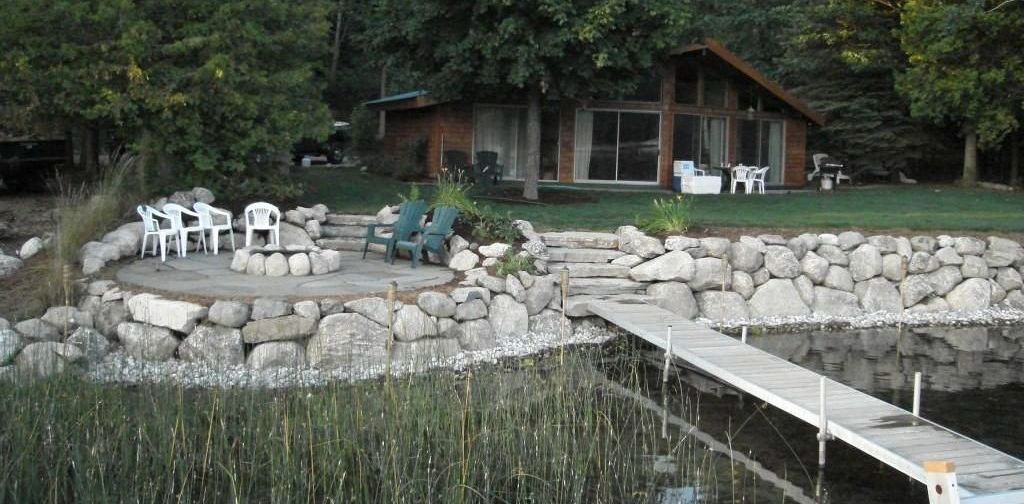
- Walkways that connect the house, shoreline, fire pit, and dock
- Drainage improvements to move runoff away from steps and prevent washouts
- Low-maintenance plantings + lighting for safer evening access and a finished look
Want help planning the whole layout? Start with our design-build team here: Landscape Design / Install (https://www.kglandscape.com/landscaping-services).
Prefer to see how our projects run from start to finish? Here’s our
Landscape Design Process
(https://www.kglandscape.com/landscape-design-process-minneapolis-st-paul).
Our step-building approach (and how it connects to the bigger project)
- Site + grade evaluation (slope, soil, drainage paths, shoreline considerations)
- Layout + materials (stone type, tread/risers, landings, walls/edging as needed)
- Base + drainage (proper excavation, compaction, and water management)
- Install + finishing touches (stone setting, joints, lighting conduit, planting zones)
- Long-term durability check (freeze/thaw readiness, erosion control, safe access)
Ready to Start on Your Next Project?
Call us at (763) 568-7251 or visit our quote page.