Building a Strong Grading Foundation Before Installing Hardscapes and Plantings
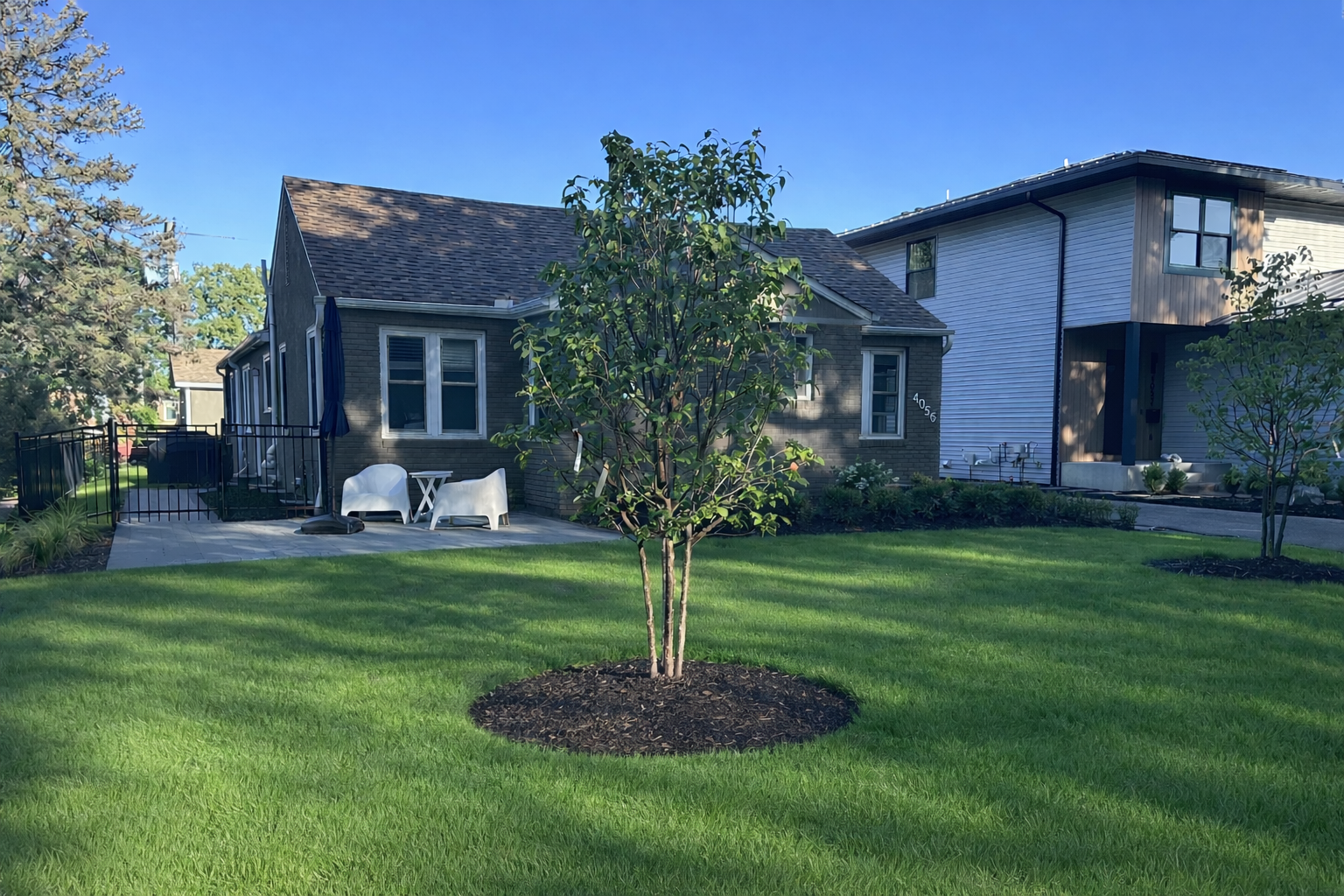
Recently, a client in St. Louis Park came to us hoping to reimagine their yard. Their goal was to install a new patio that would allow them to enjoy meals, get-togethers, and leisure time outdoors during Minnesota's precious warm months.
That may have been the end result they were looking for, but after we comprehensively surveyed the property, it was clear that there was more work to do before we could identify an ideal position for the patio, let alone install it. As tempting as it can be to “skip to the good part,” a deliberate and thorough run-up to patio installation ascertained that this project would be a long-lasting addition to the home.
Making the Grade: What Grading Is and Why It Matters
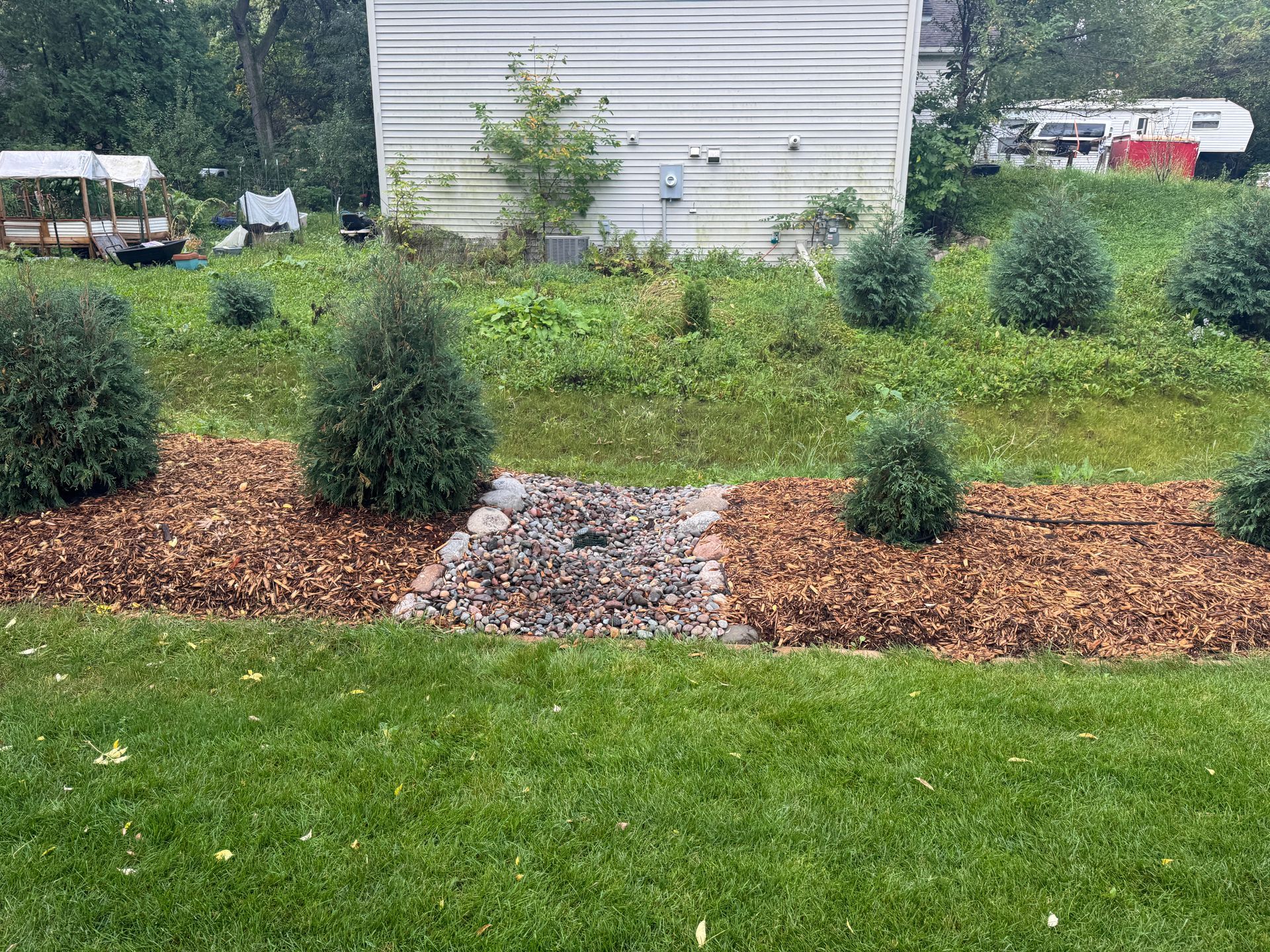
Landscape grading, or the adjustment of the ground's elevation and slope to manage drainage and erosion, is a crucial first step to any hardscape installation. Our team identified several inflection points around the property that we would have to address before we could proceed with building the patio:
- the slope of the ground along the foundation and driveway was not steep enough
- the window wells along the bottom of the foundation were too short
- long downspouts were jutting out into the yard
- the front yard required regrading and erosion control.
The goals of this plan were threefold. Of course, we needed to protect the eventual hardscape from the pooling and erosion that would come from poor drainage. Perhaps even more important was protecting the home's foundation: with more paved surface area, water could be diverted to the soil along the foundation, leading to stress and eventual seepage. Finally, we wanted to preempt later issues with grading that could transpire over the years. By anticipating these issues, we extended the lifespan of our entire project, hoping to solve drainage issues for the next 30 years.

Improving Grading Along Walls and Hard Surfaces
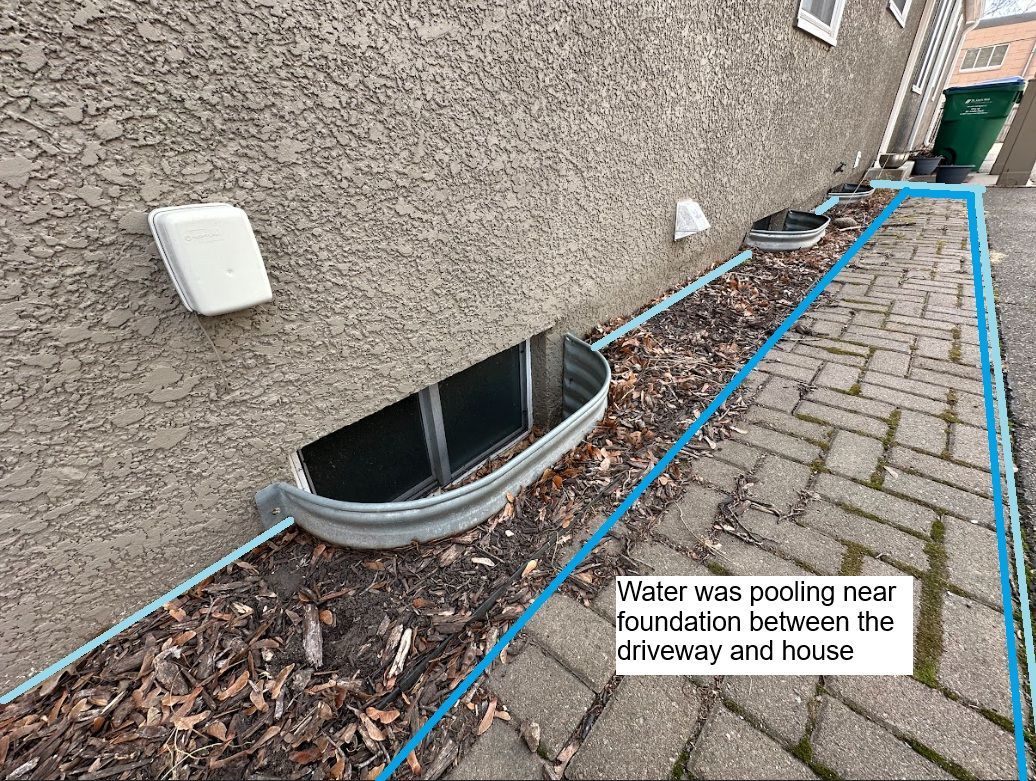
In examining the property to add a new hardscape, our team started by assessing the lot's primary hardscape: its driveway. This was where we identified our most urgent concern. Between the house and driveway, the ground was almost perfectly flat. A paved walkway in that space exacerbated the problem.
This posed a problem during rainy seasons but especially during post-winter thaws: as accumulated snowfall melted, it had nowhere to drain to, and would simply pool between the driveway and the foundation. This oversaturated soil places high pressure along the foundation walls, eventually causing them to bow and crack. Once water, that universal solvent, works its way into the walls, concrete can weaken and mold can develop, causing health issues not just for the structure itself but for its residents. Ensuring this water did not collect where it shouldn't was key to our long-term approach to landscape design.
Around back, while the grading situation was not as dire as the strip of land beside the driveway, our team was still concerned with the slope of the ground near the foundation. As in the front, the ground was simply too flat for the amount of precipitation the Upper Midwest receives.
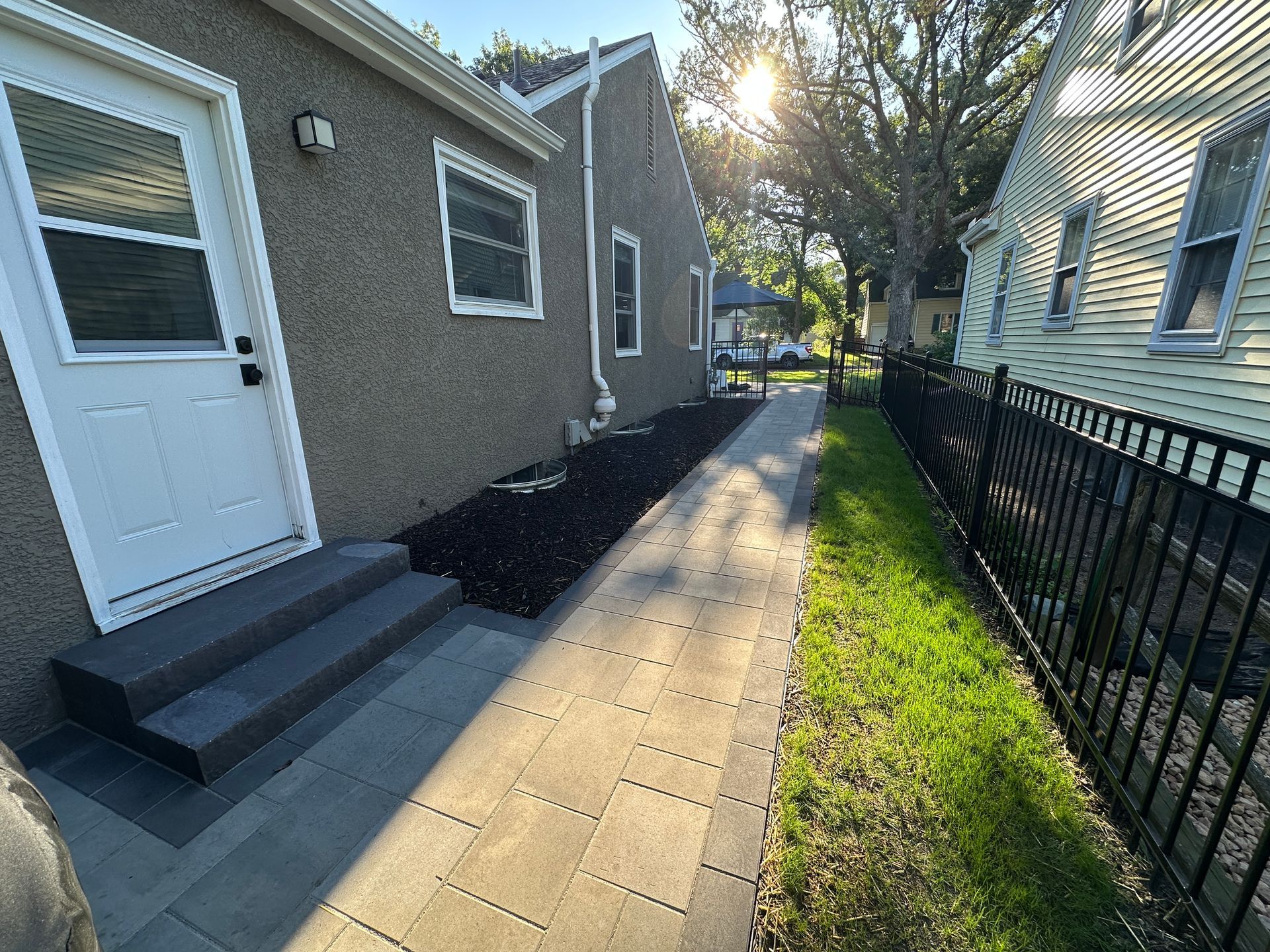
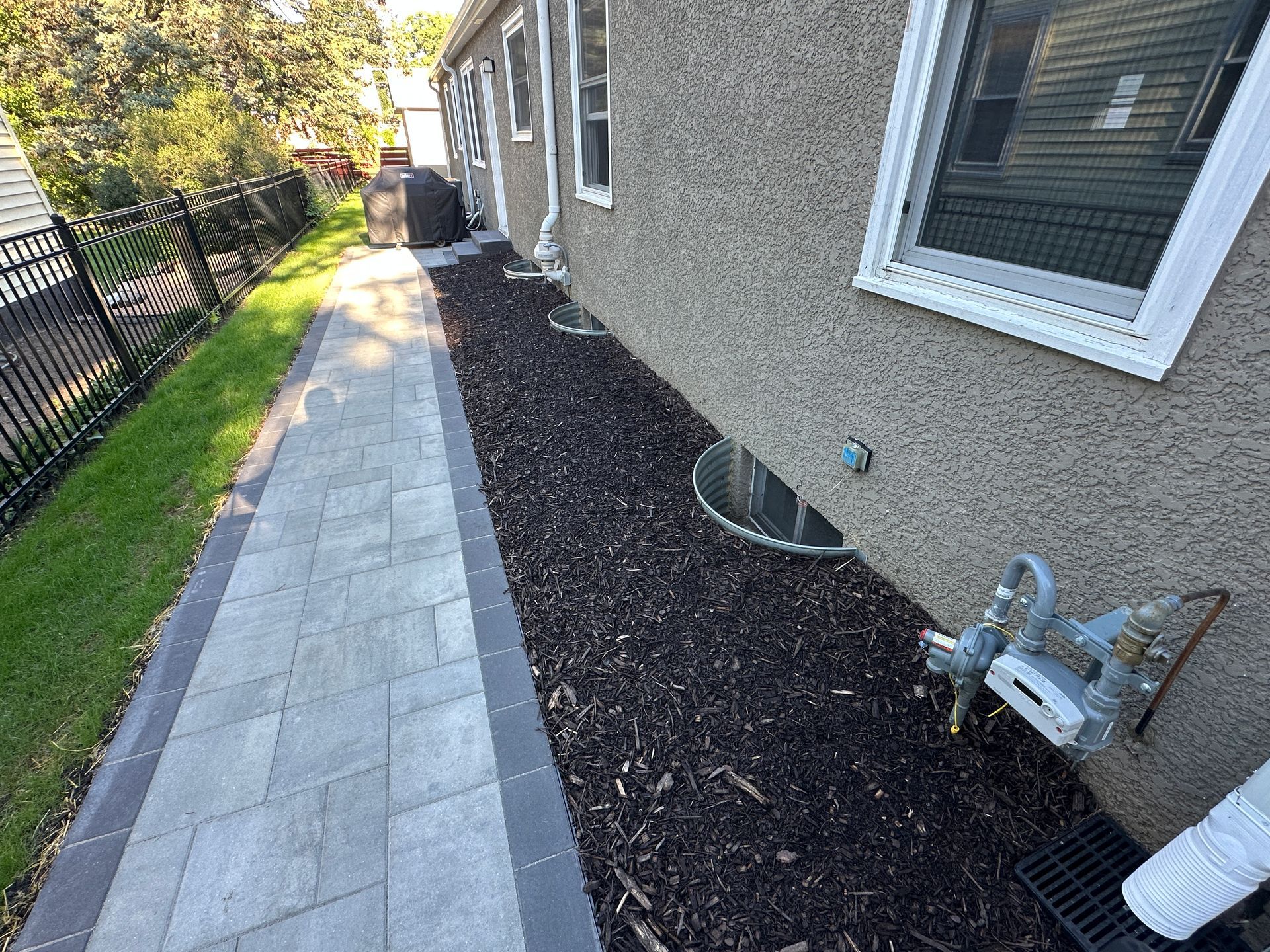
To address this, we began by removing the old pavers the previous homeowner had installed, whose flat surface helped cause water to pool near the house. We then devised a formula for consistent soil elevation: we raised the soil around the perimeter of the house by six to seven inches with a slope of ten feet. This would allow water to move well away from the foundation during storms and melts. However, our work around the foundation wasn't done just yet.

Strengthening Your Slopes with New Window Wells
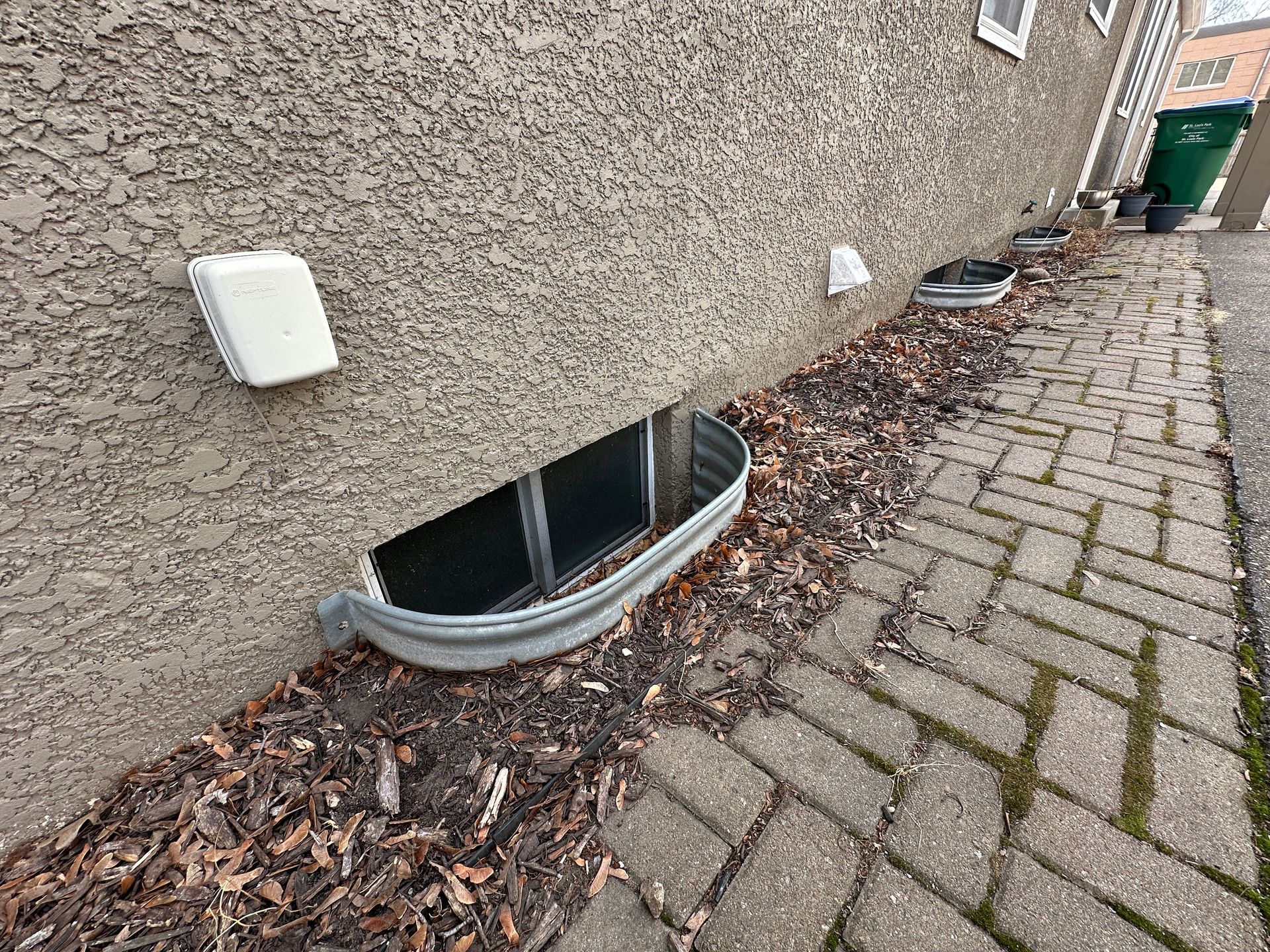
Whether your basement is finished or unfinished, window wells are crucial to the foundation of your home. Not only do they let light into a typically dark part of your home, they also help keep water from infiltrating your basement. However, they need to be installed at a proper height to do so, and our team discovered that the window wells were too shallow to function properly—especially once we improved grading around the foundation.
We installed a series of new window wells on the house, which were deeper and taller than their predecessors. These new editions now extended 10 inches above the previous flat grade, which gave us the necessary clearance to elevate surrounding soil levels. The additional clearance also allowed for us to add mulch when it came time to beautify the landscaping along the perimeter. These window wells were instrumental in allowing us to safely raise the grade while still providing window clearance and an emergency egress option.

Resolving Downspout Outlets for Better Drainage
Drainage issues start at the top—of the house, that is, with your home's system of gutters and downspouts. In addition to keeping the gutters clean, properly managing where they divert rainfall is key to a healthy gutter system. In this case, we found several opportunities for improvement with the downspouts in place. Most notably, the downspout in the side yard extended far from the house, where water was pooling. While this was preferable to draining along the side of the house, of course, it still represented a tripping hazard for the walkway we intended to build connecting the patio with the side door.
As a long-term solution, we installed an underground PVC downspout extension, which would run below the new walkway and outlet near the property line. This accomplished two goals: it hid the downspout from view, improving aesthetics and safety, while also acting as a bulwark against erosion from water flow.
While we don't shy away from ambitious projects, we also had to keep our client's budget in mind while reviewing the rest of the downspouts. In order to stay aligned with our priority—installing a new patio—we identified that the remainder of the downspouts did not need to be relocated underground in order to function properly.
Lawn Renovation and Hardscape Integration
Finally, we took a look at the front yard, the site we chose for the new patio, and examined how we could best improve the grading and drainage closest to the hardscape.
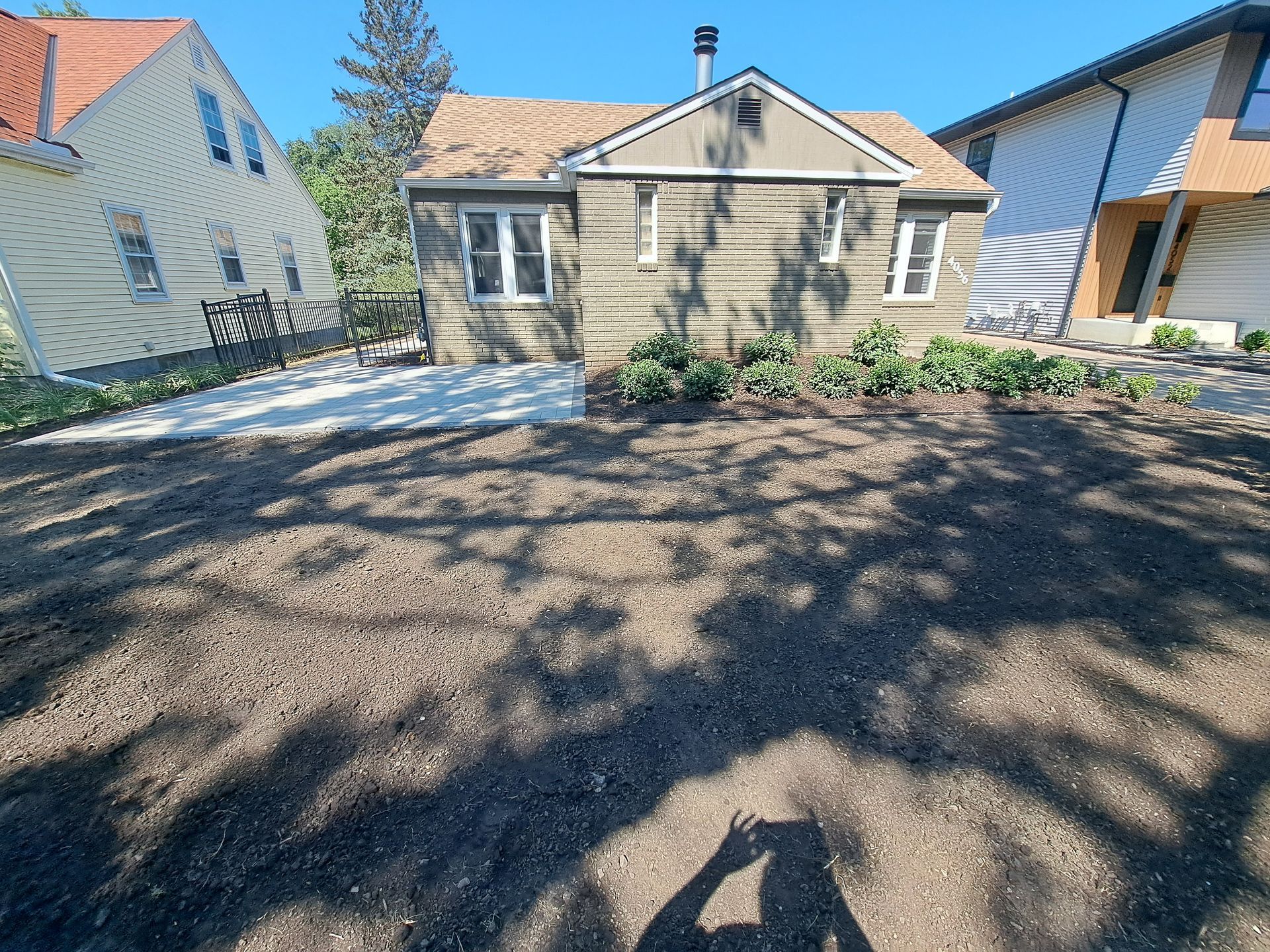
We began by removing a large mature tree that had been growing dangerously close to the side of the house, leaving only inches of space between the trunk and the siding. Removing this tree and its roots were not just a safety measure for the good of the house, but an opportunity to rethink the grading of the front yard to optimize drainage. With the tree out of the way, we were able to continue our standard of a six-inch elevation sloping ten feet down from the side, making sure that water was safely diverted away from the entire foundation.
We also took time to determine elevations for the patio and its adjoining walkway. The two step risers at the side door helped to determine that elevation for ideal integration into the surroundings.
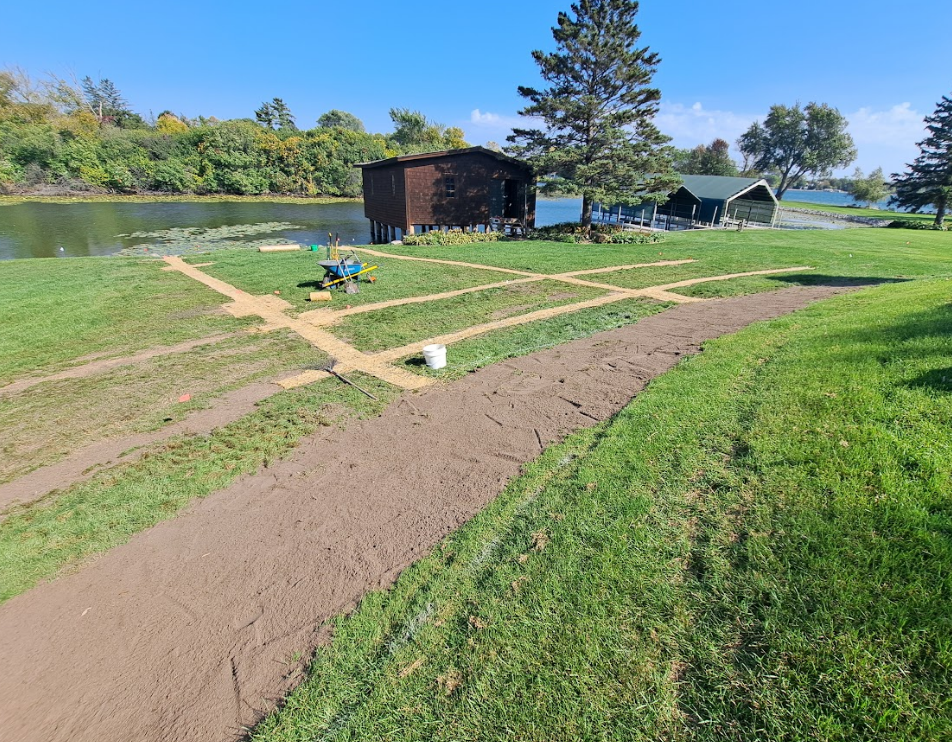
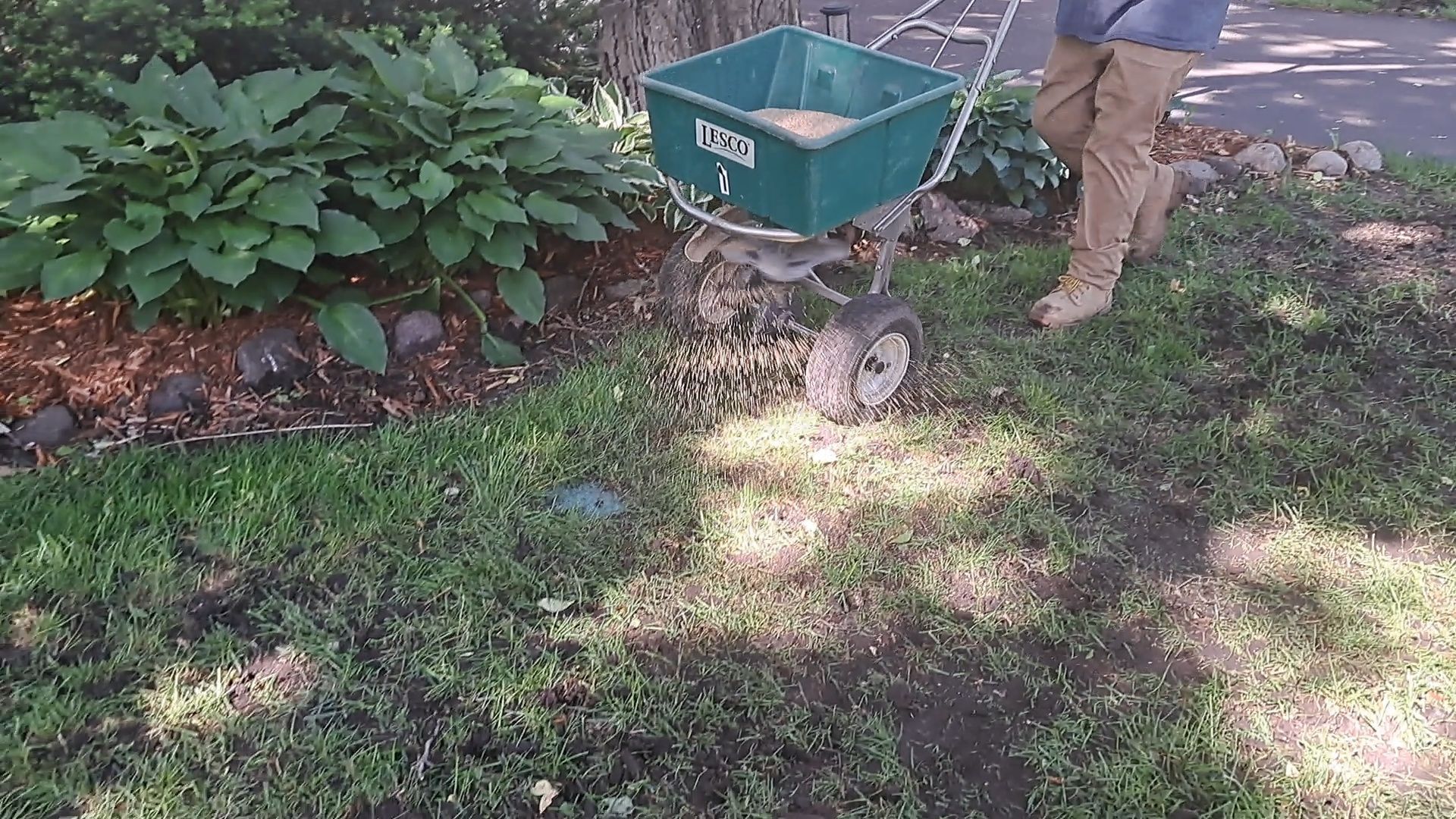
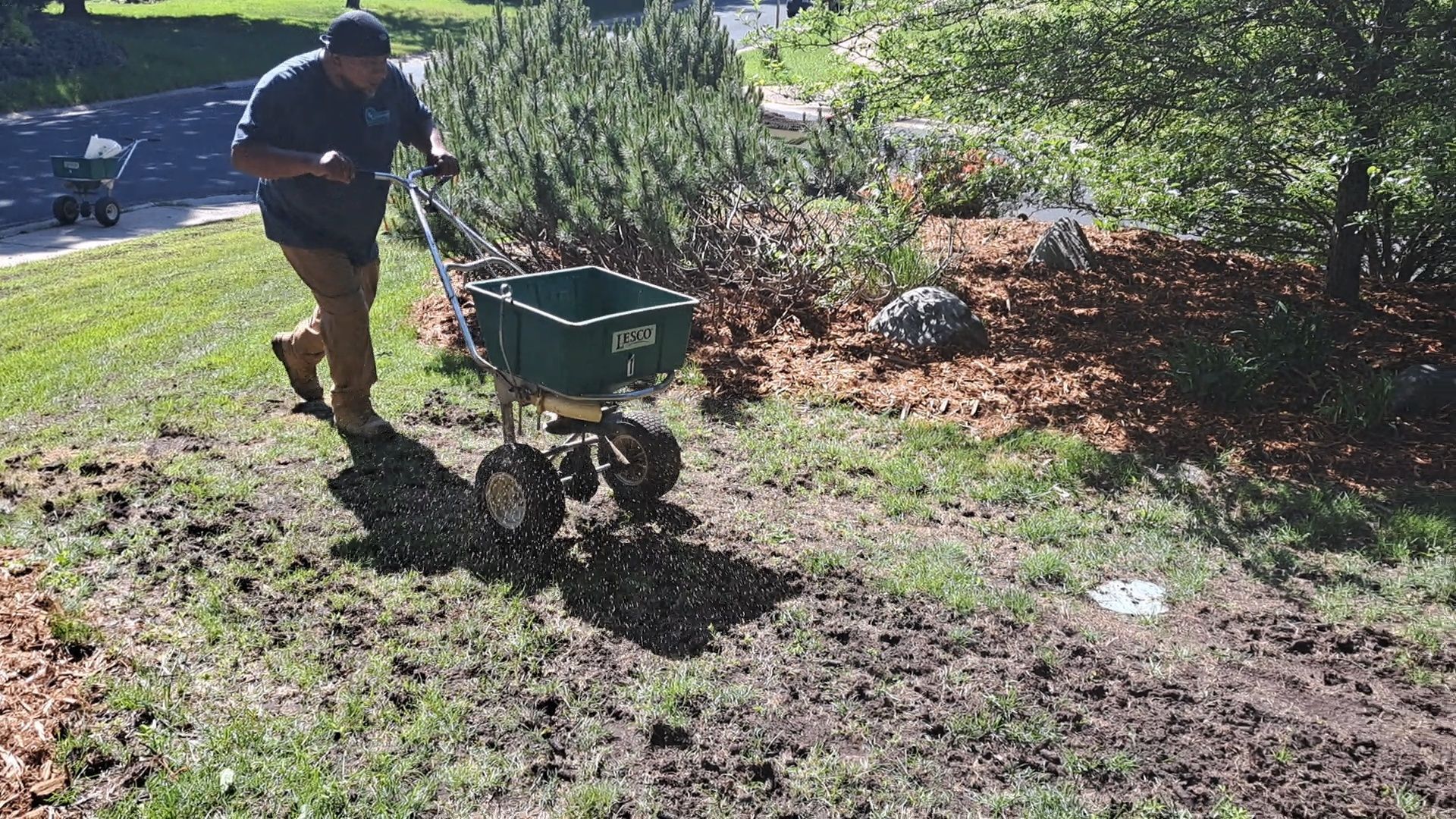
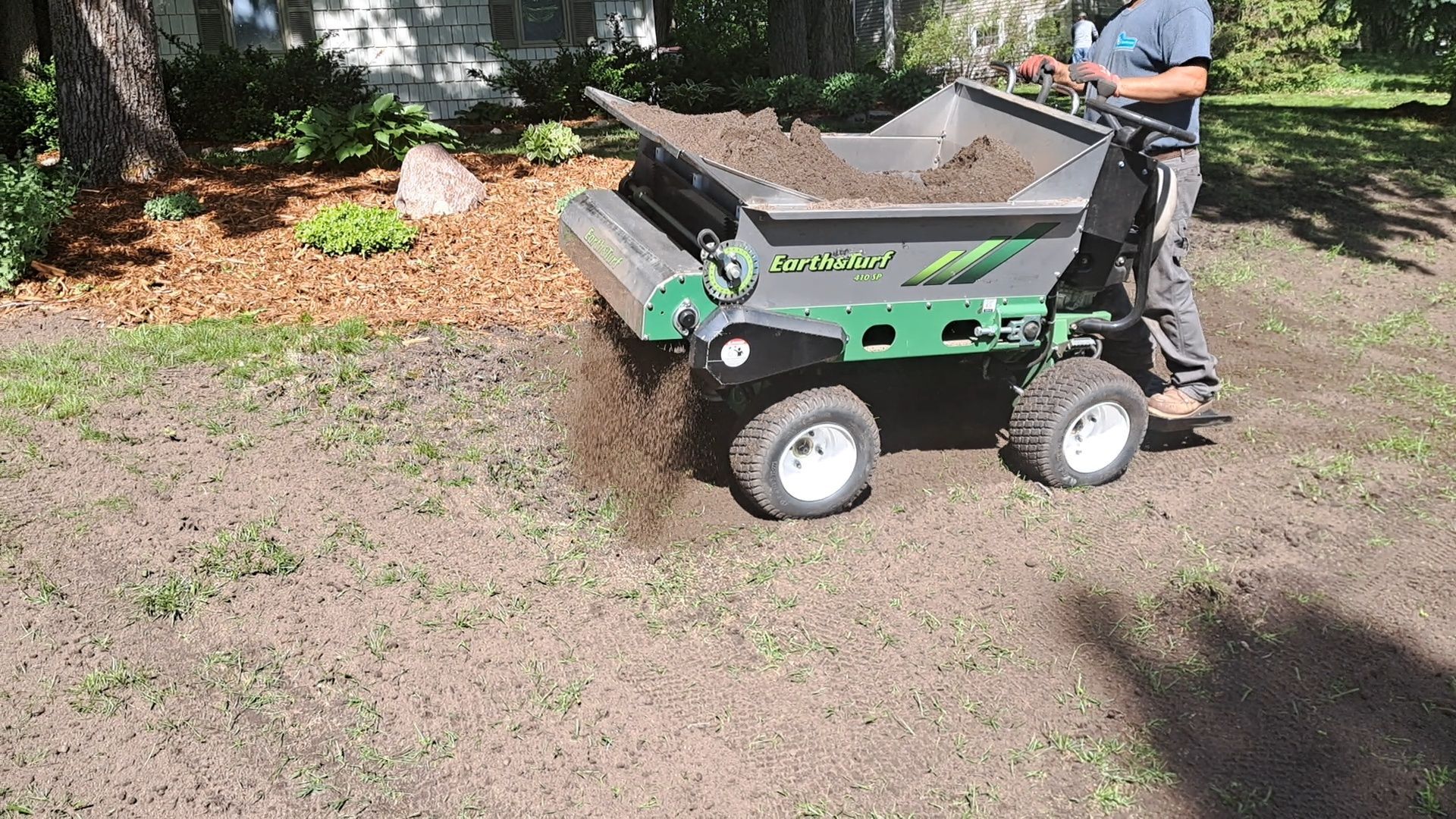
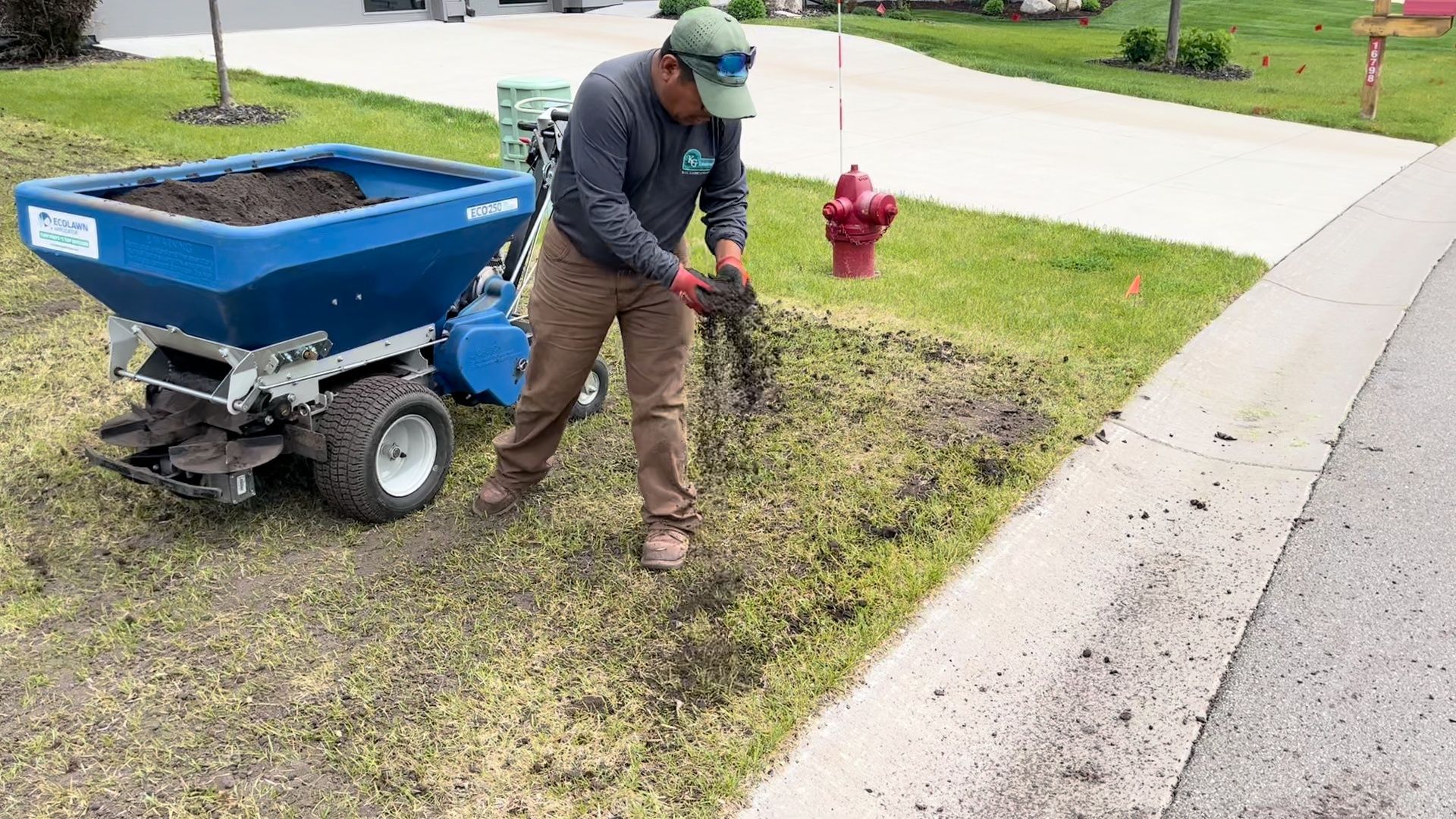
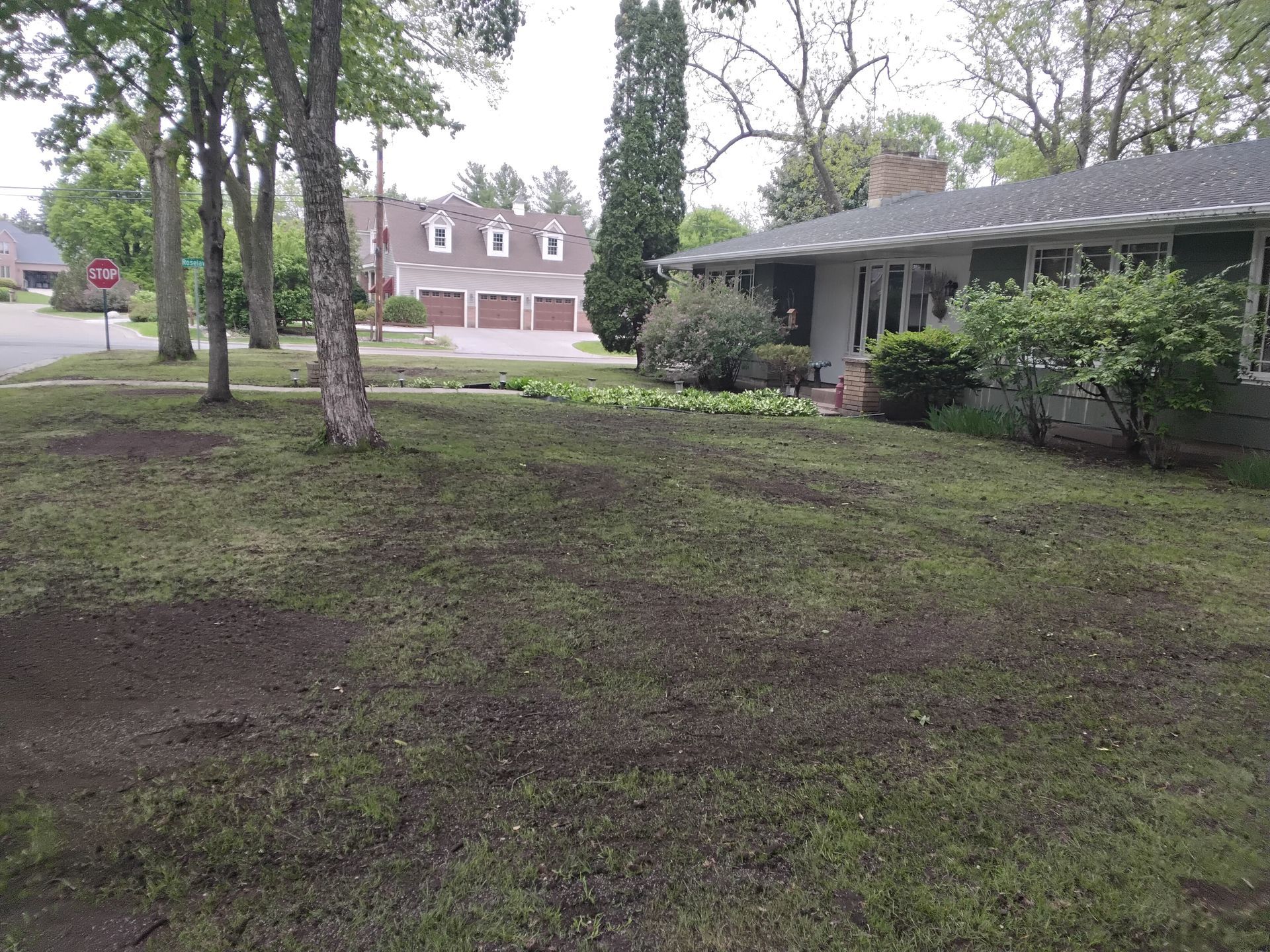
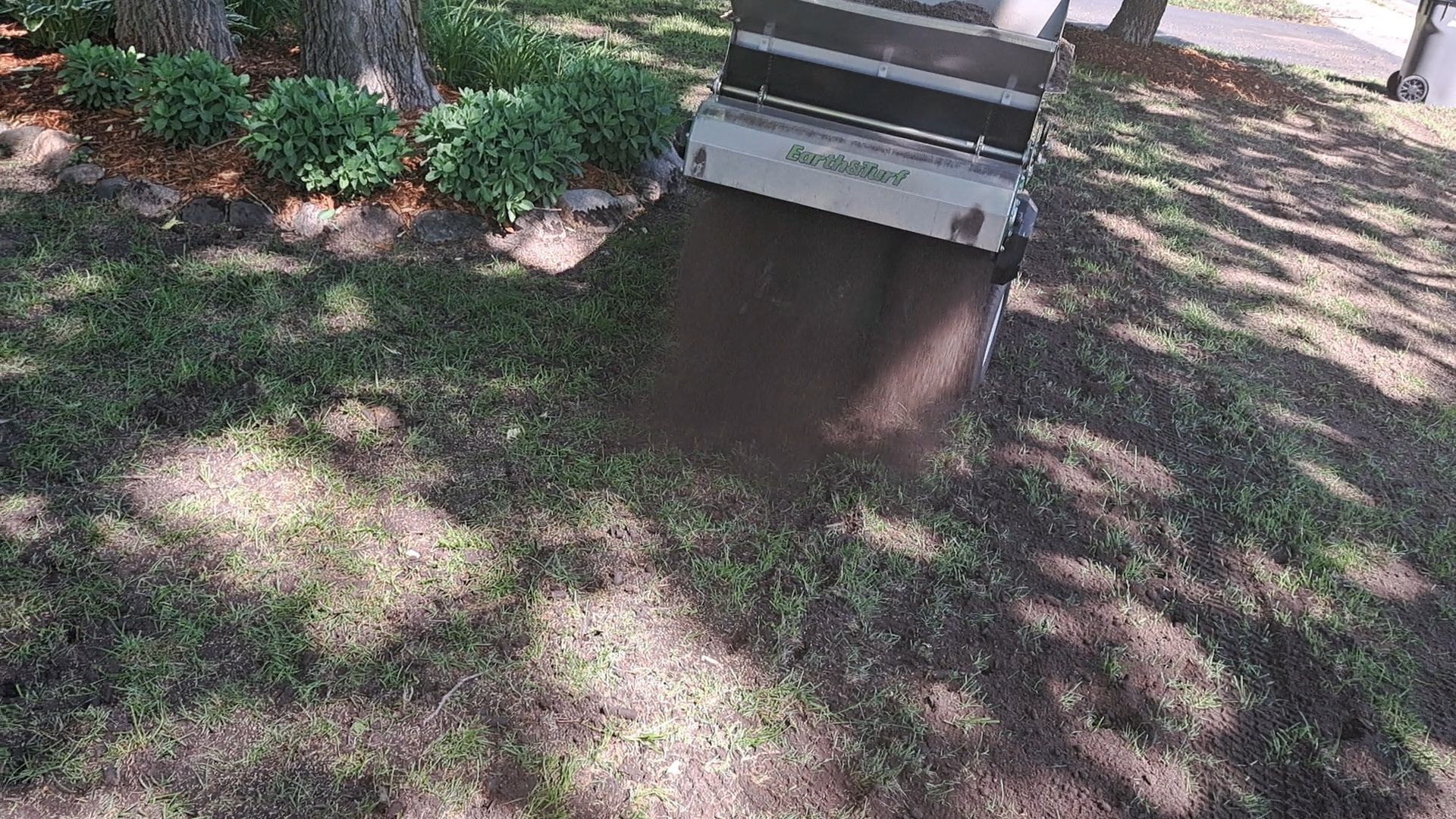
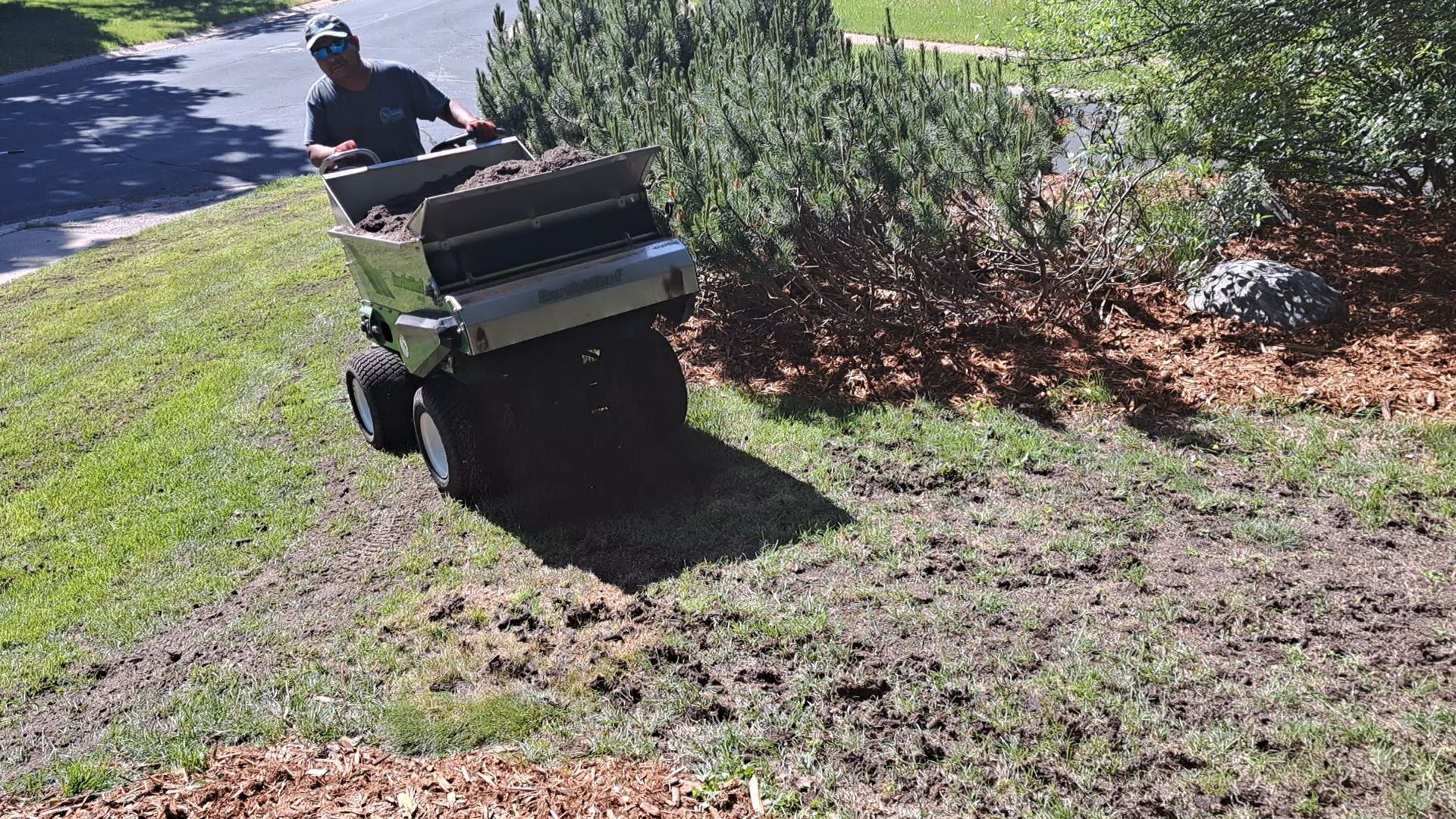
But grading is about more than the simple geometry of elevations and pitches. It's also about maintaining those formulas through strong management of the soil. We began by tearing out the old grass,
tilling and smoothing the full front lawn. We moved on to installing new grass seed and covering the yard with straw blankets for erosion control. Together, the straw and grass roots form a network that will prevent the grading from losing integrity over time. The end result beautifies the lawn considerably, too.
Our Long-Term Drainage Philosophy
After this thorough approach, we were indeed able to get to the real fun part: building a patio that would allow these St. Louis Park homeowners to make the most of every sunny day and starry night. But we didn't get there without examining every way that water could dampen their spirits. At KG Landscape, we don't wait for our clients to call us back with water problems. Instead, every renovation project we undertake includes a proactive approach to long-term drainage solutions.
Our projects are meant to be more than superficial, cosmetic improvements that can't stand the test of time. We want to ensure that each landscape we craft, no matter the size of the property, is built on a stable and sustainable foundation. We look to prevent erosion, seepage, flooding, and all the other issues that water can bring. We hope that each of our projects lasts not only years but decades, providing future homeowners or even multiple generations with a quality landscape to enjoy. That all begins with our commitment to good grading: the small slopes and angles that many people never see or feel as those features reliably preserve homes and lawns for years to come.
Ready to Start on Your Next Project?
Call us at (763) 568-7251 or visit our quote page.