A Complete Outdoor Living and Landscaping Transformation in St. Louis Park
Why St. Louis Park?
Many people think of moving to the suburbs as making a series of tradeoffs. But in St. Louis Park, Minnesota, one of the Twin Cities' longest-standing suburbs, trades seem to be win-win. The city's impressive system of parks allows all residents to enjoy great public space, but its solid postwar housing stock allows for cozy and attractive private space as well. Modern conveniences and shopping are balanced with the walkable neighborhoods and quality public schools that young families have always sought out.
Best of all, St. Louis Park's proximity to downtown Minneapolis and all its opportunities for work and play comes with the lower density that allows homeowners to enjoy a little breathing room outdoors that might not be available downtown. In St. Louis Park, you can finally have—and enjoy—a lawn.
Enjoying such a lawn was the goal of these new arrivals to St. Louis Park. They fell in love with a modest but dignified home in town that, after a long search, had everything they were looking for.
Everything they were looking for, that is, within the four walls of their new home. When it came to the yard, there was room for improvement—but not much room to work with. Lots in St. Louis Park, like most postwar suburbs in the Midwest, tend toward the compact, and have challenged many homeowners over the years to make the most of their valuable space.
What Our Client Was Looking For
Perhaps the previous homeowners didn't want to take up the challenge, but our new residents placed a premium on enjoying outdoor life at home. They just weren't sure where to start. The back yard lacked a patio, but couldn't reasonably accommodate adding a deck, either, and for a family that wanted to make the most of every Minnesota summer, adding comfortable outdoor living space was a must. Additionally, the landscaping was also in need of a fresh look to modernize the home's exterior and boost curb appeal. The new homeowners also identified drainage concerns that would have to be resolved before spring, when thaws and rainfall would pose problems for their new home's foundation.
Three problems spanning both form and function: our team was able to solve all of them. By taking a creative approach to patio design and making a thorough assessment of the site's grading, we were able to
revitalize this St. Louis Park home, improving the aesthetics while remaining true to the neighborhood's scale and character. Here's how.
The Challenges
Sometimes, one of the most challenging aspects of such a landscape transformation is letting go of our preconceived notions—namely, that a patio's place is always in the back yard. Our mind's eye conjures up barbecues and big umbrellas in the back of the property, either fenced in or set off with hedgerows. But an unbiased look at the property itself revealed that a patio might not be an intuitive fit for this particular back yard.
What To Build and Where To Build It?
The first challenge we noticed was the access point. The home's interior lacked a back door that could smoothly open to a patio, and adding one would not have readily lent itself to the house's layout. However, an extant side door that the previous homeowners used to access their back yard could have opened to an L-shaped outdoor space, or perhaps a courtyard along the side of the house. The narrowness of the side yard precluded a courtyard concept, while forcing people to turn a corner to access the patio proved awkward in practice.
The biggest challenge, however, was a simple lack of square footage. There's a fine line between cozy and cramped, and fitting a functional patio into this space would have crossed that line. Even if the homeowners had been able to fit a full complement of patio furniture into the available space, such tight quarters would have made it hard to negotiate that space once family members and guests went outside to enjoy it. Rather than shoehorn a patio in for the sake of being conventional, our team took a different approach.
It was time to think outside the back. The front yard, on the other hand, offered more space to work with, but came with its own set of constraints. A front patio would lie under the shade of a very tall and mature tree, planted just inches from the side of the house. So should a patio incorporate the tree or remove it?

Improving Curb Appeal by Making Tough Calls
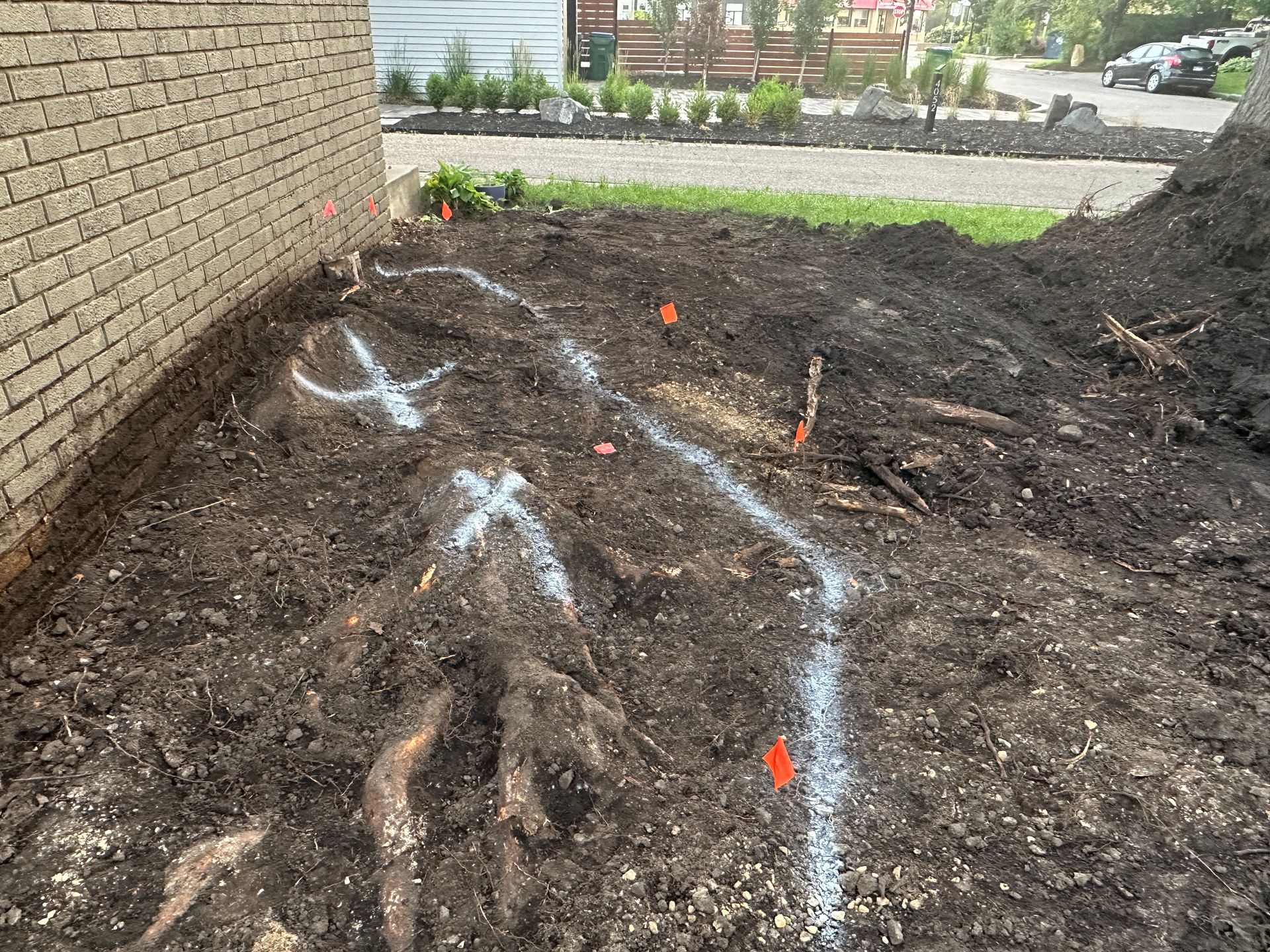
Most homeowners are understandably reluctant to part ways with an old-growth tree, especially in inner-ring suburbs such as St. Louis Park. After all, it's these trees that lend such towns the prestigious appellation of "leafy suburb." Unfortunately, in this case, just as Icarus flew too close to the sun, this tree grew too close to the house. Its proximity to the structure raised real long-term concerns: root infiltration, foundation stress, and damage to siding and shingles, to name a few.
Perhaps most worrisome of all was that it was a codominant-stem, or two-trunked tree. Beneath that beautiful symmetry and impressive span was a heightened risk of damage during a massive storm—damage that a front-yard patio would surely incur should the tree not survive a storm. While saying goodbye wasn't an easy decision, it was the rational one, and we moved forward with plans to reimagine the newly open space.
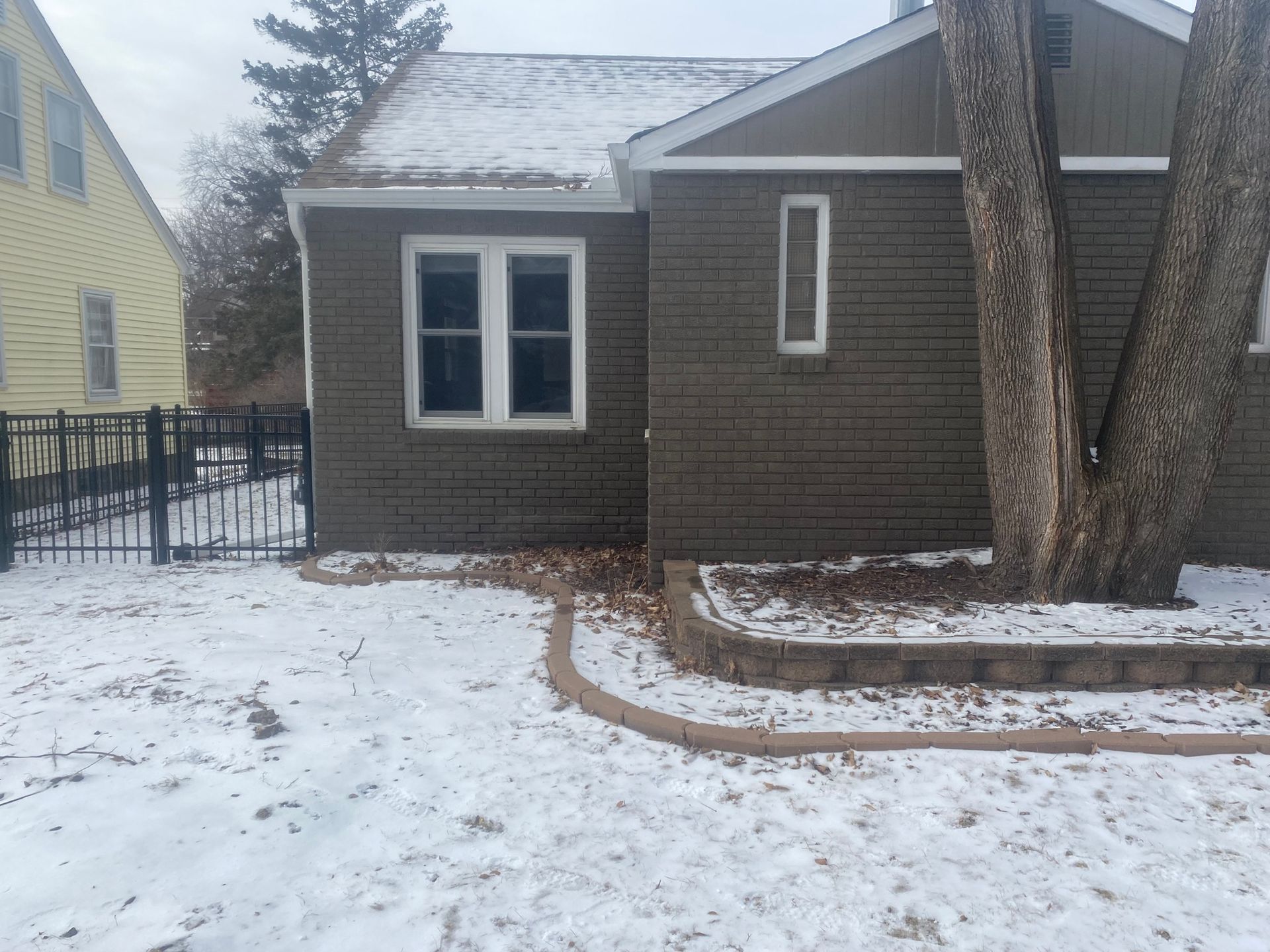
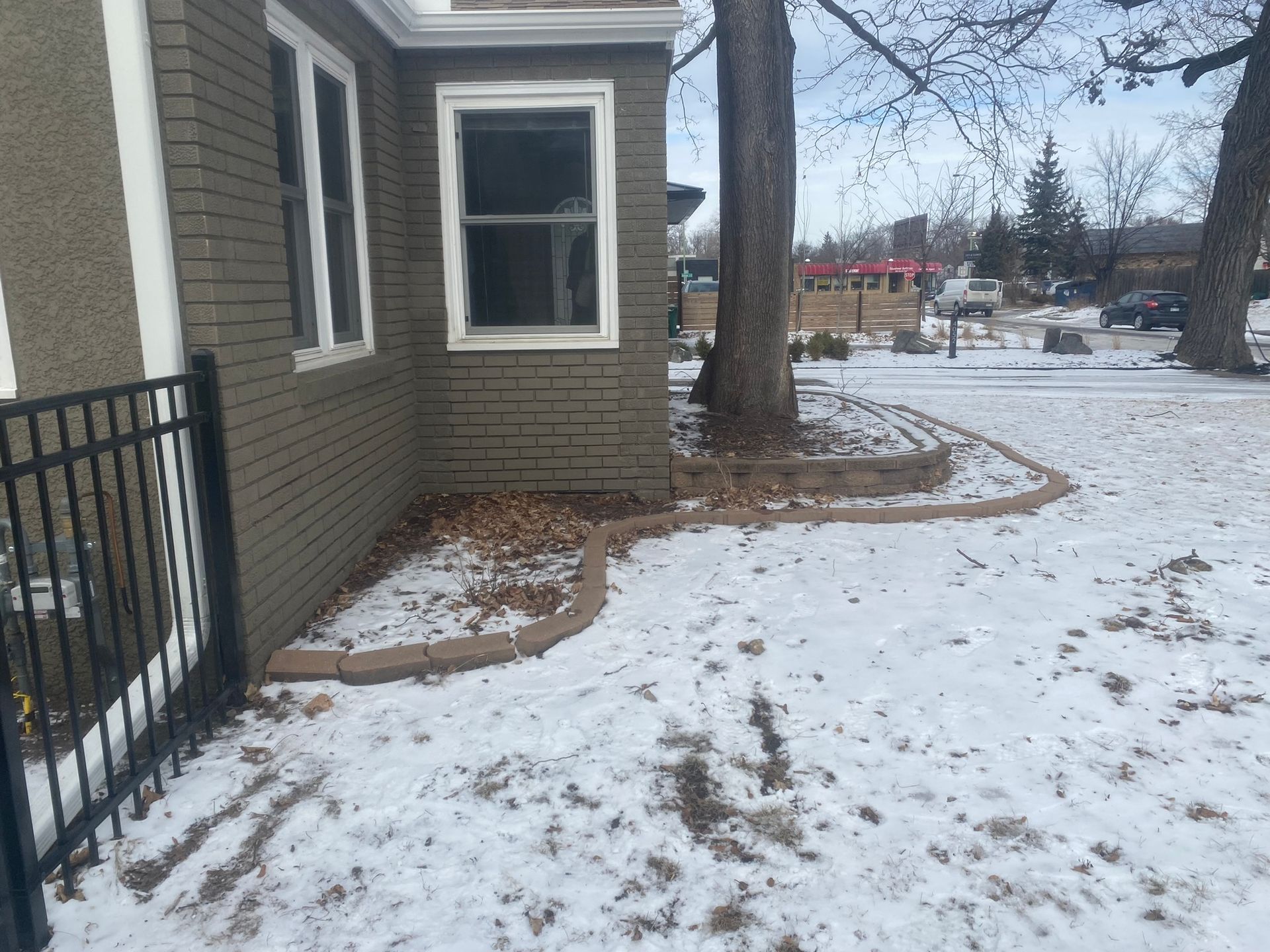
Those plans began with assessing the retaining walls that had surrounded the tree and a modest garden along the front of the house. While applying light terracing with retaining wall blocks is a favorite of weekend warriors looking to add accents to their yards and gardens, the march of time can cause these terraces to lose their shape. Blocks settle, slide out of position, and even erode, which is not only aesthetically displeasing but weakens the efficacy of terracing as drainage management.
By the time we got a good look at the terracing that was in place, some of the blocks—especially along curves—had shifted and settled, giving the lines an uneven and ramshackle look. Rather than try to jostle and nudge the blocks back into place or recreate the terracing with fresh blocks, we decided to dig up the retaining wall and start anew with fresh greenery and mulch.
Addressing Drainage and Grading
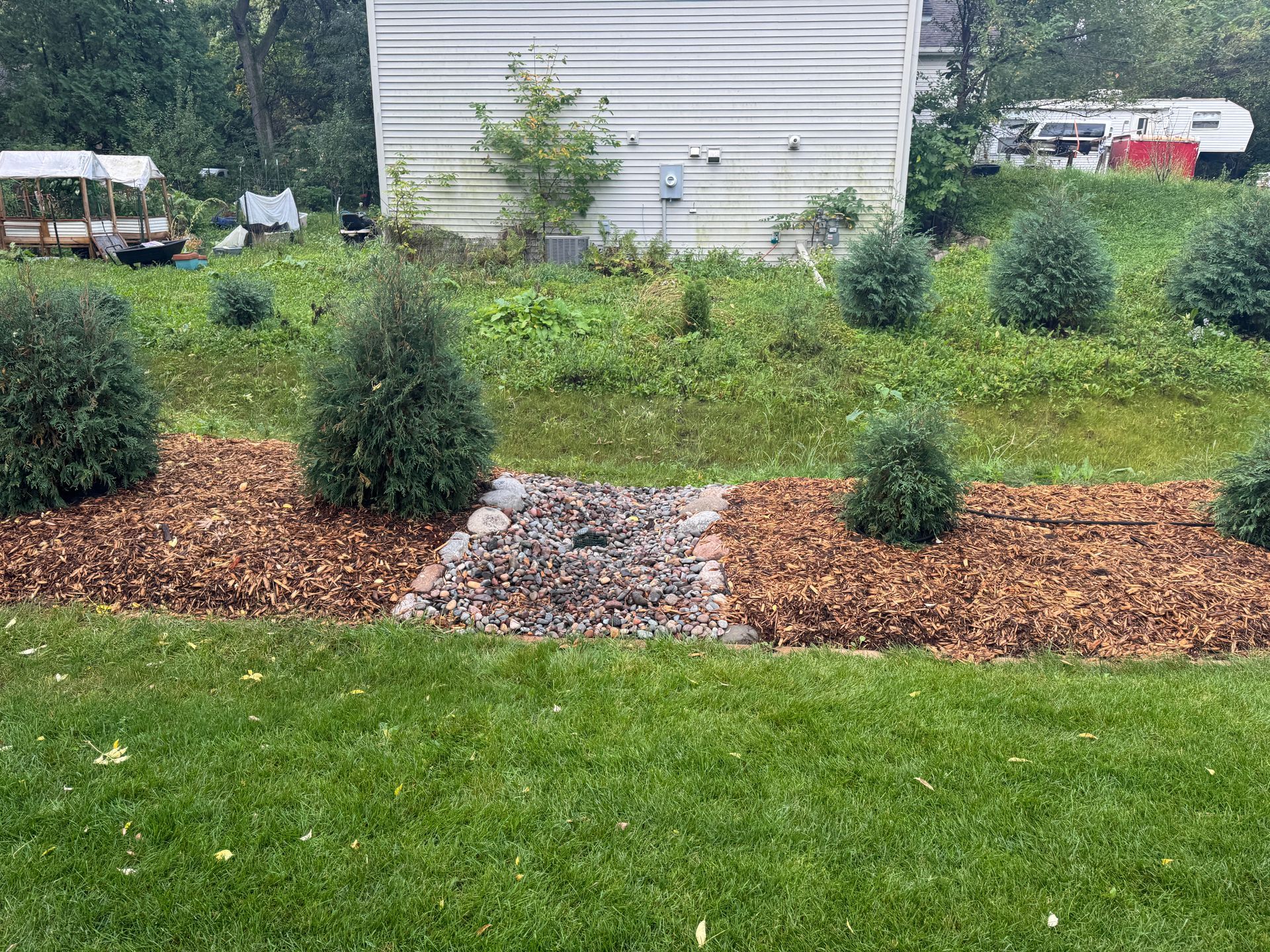
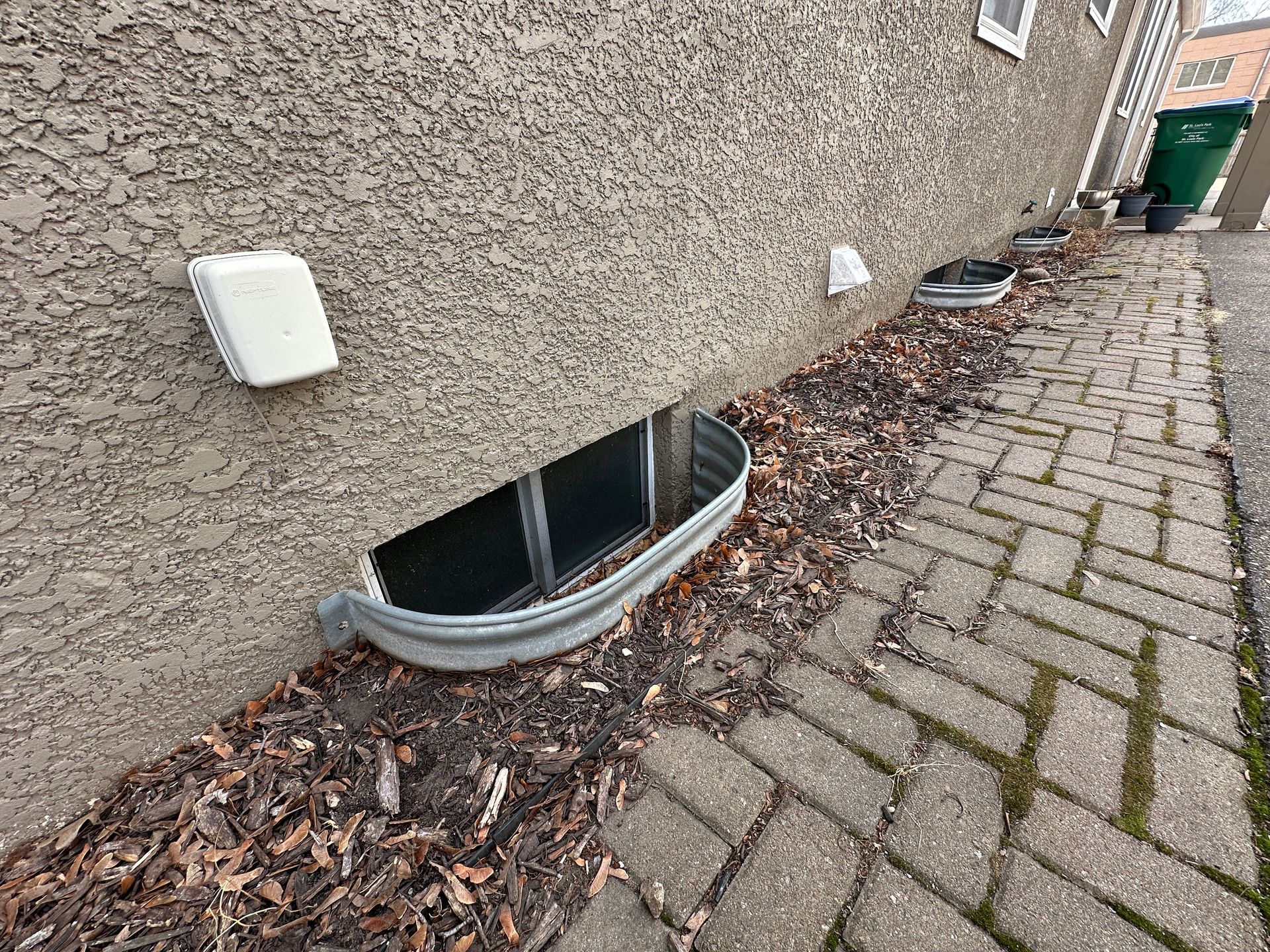
With the old tree sent to the sawmill and the terracing removed, it was time to consider some of the other issues along the perimeter of the house—namely, one that could make all our plans for fun summer nights and attractive landscaping for naught. We noticed that the grading directly around the house was flat to a fault, causing rainfall to pool along the unpaved ground and saturate the soil near the foundation. Over time, this could place a greater burden on the foundation, possibly even leading to cracks and seepage following heavy storms. While the easy solution would have been to simply build up the soil along the sides, the home's shallow window wells—rising only about four inches above grade—did not allow for a quick fix.

Options We Considered
A Tight Squeeze in the Back
Our first option was to make the most of our limited space with a traditional backyard patio. This would have seen users enter from a side door around the corner, some 25 feet away. However, the combination of the house, garage, and fence would have boxed the space in, lending a claustrophobic feel to the patio. We contemplated flanking the sides of the house and garage with greenery, and while this would have lent a natural and organic touch to the space, it would have further narrowed what was already a tight space. Once furniture came into play, there simply would not have been enough room to enjoy the area comfortably.
A More Spacious But Unconventional Move to the Front
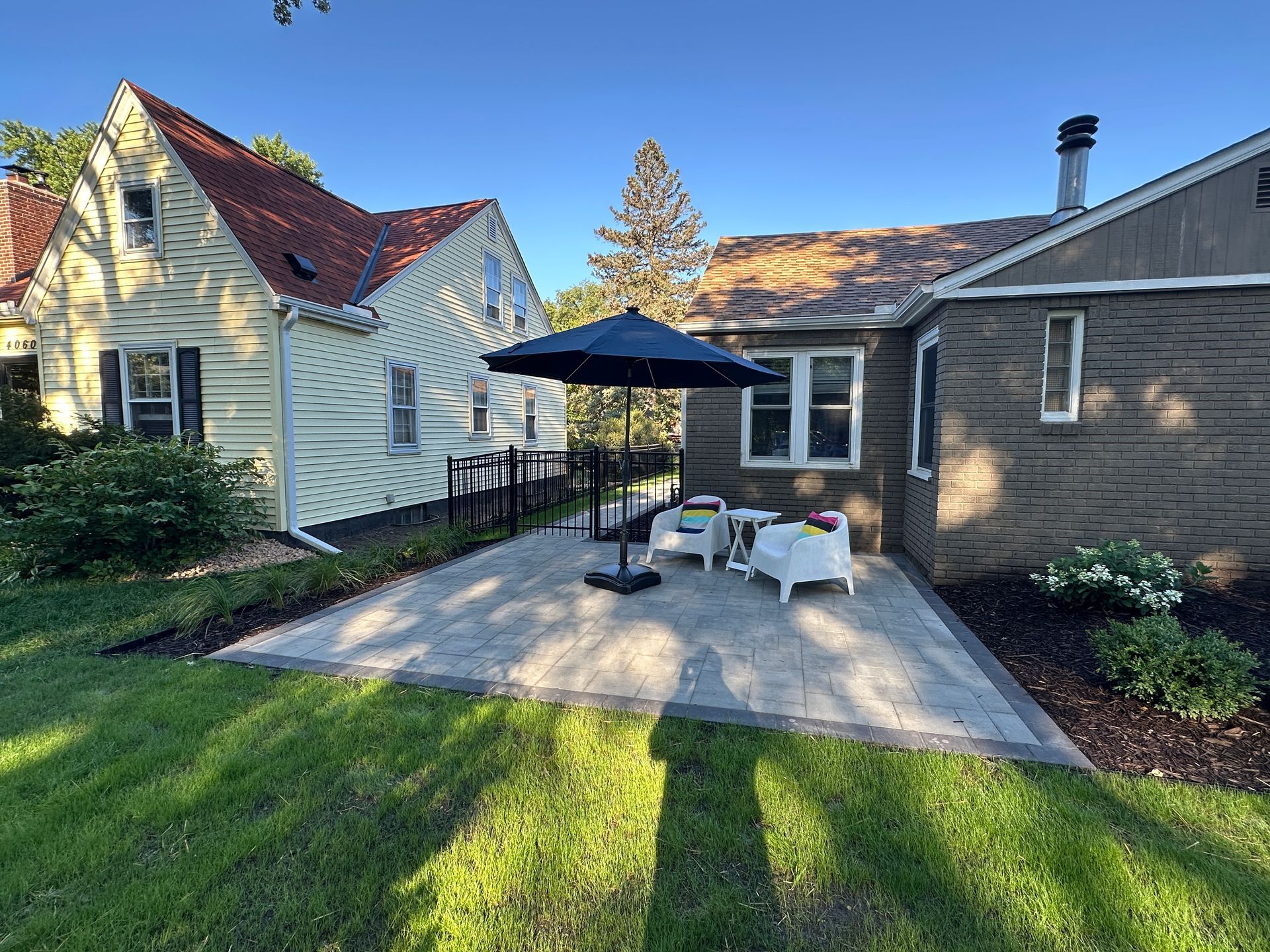
We then considered flipping the script and placing a patio on the front lawn instead. After consulting with the homeowners, we began to see an enormous amount of promise in this plan. This approach offered more than just a little more leg room for the lounge chairs. In a sense, it was a new spin on an old outdoor space: the majestic front porch, where families could while away the hours in charming surroundings with a front-row seat to the streetscape. St. Louis Park is, after all, a city of walkable neighborhoods and good neighbors, and establishing an outdoor living space right near the street would allow our homeowners to leisurely interact with fellow members of their new community.
The Result
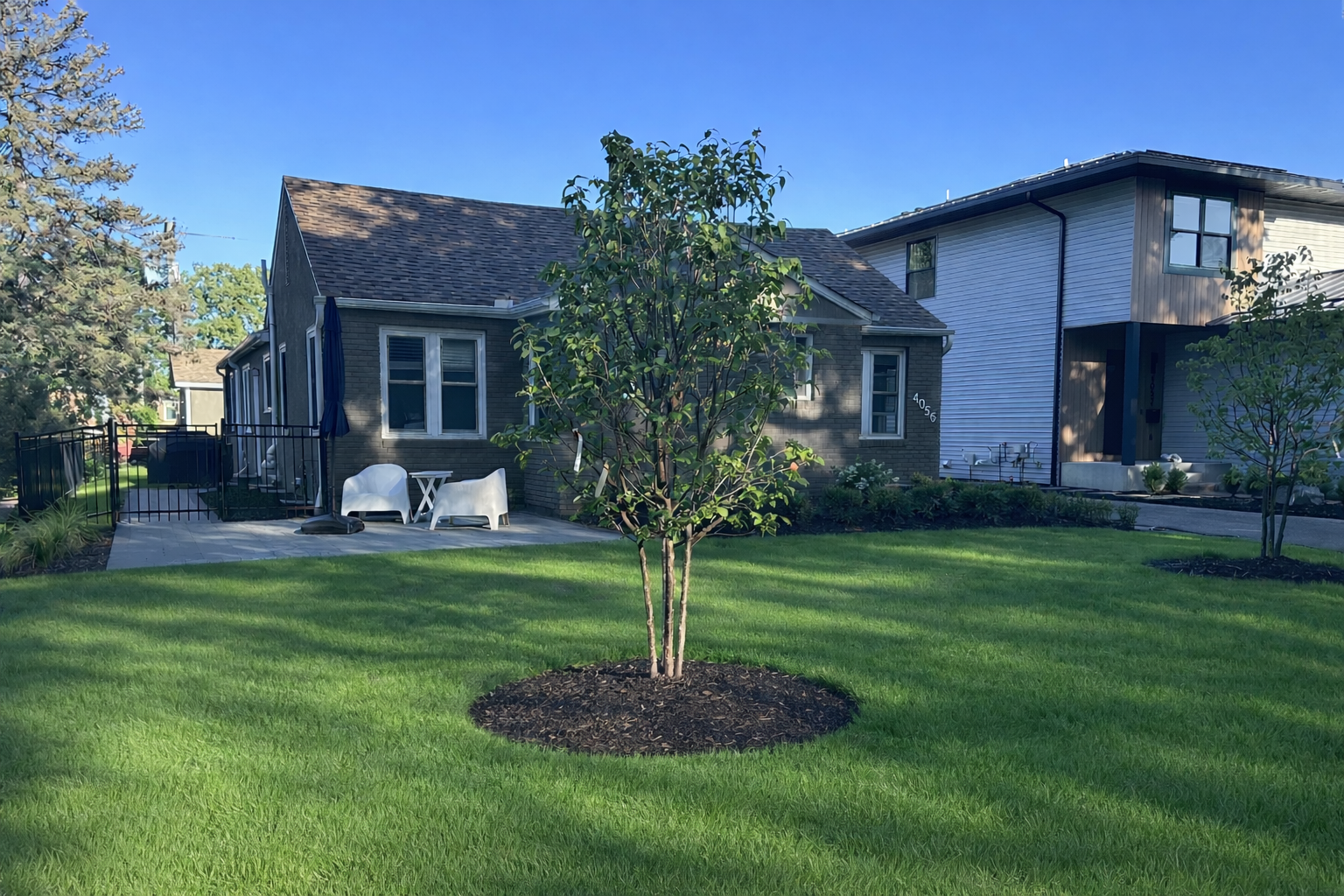
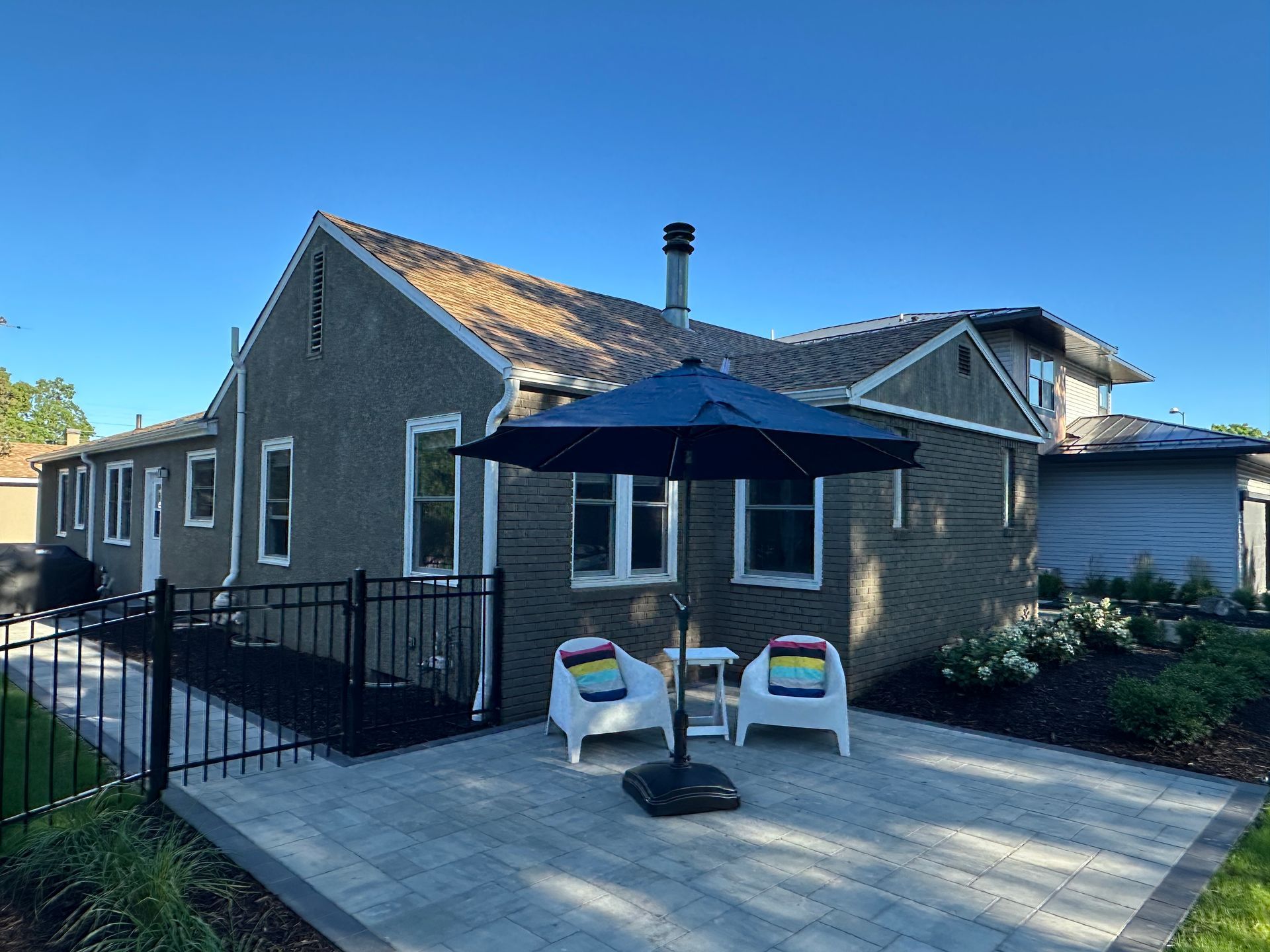
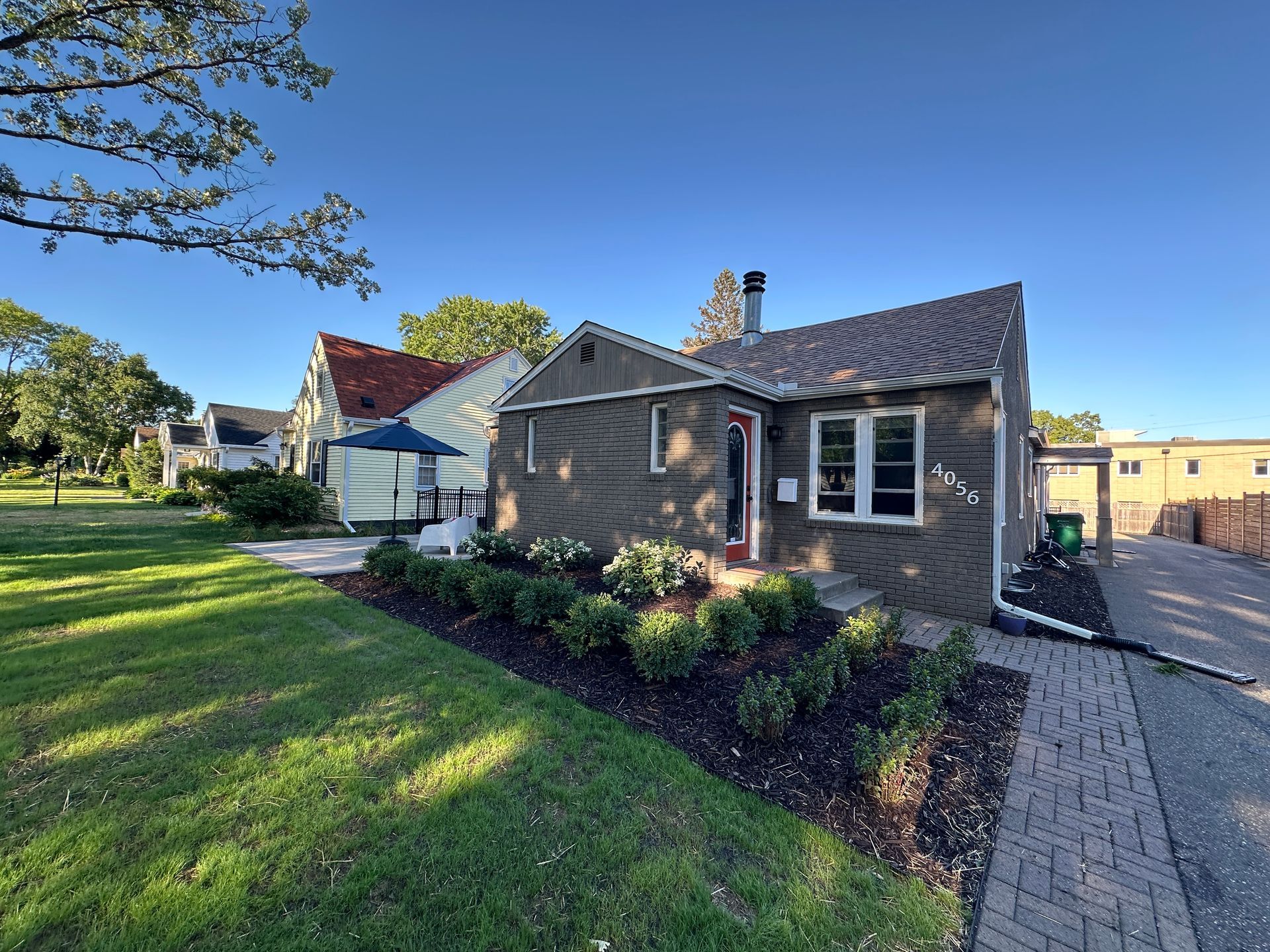
Today, our St. Louis Park family is looking forward to another summer of alfresco dinners and conversations that run deep into the night—all from the comfort of their own home. It's additional usable space, and they're using it well. They're also enjoying peace of mind knowing that their new home should not be jeopardized by seepage or storm damage. And with two new trees swiftly growing to replace the forked tree they said farewell to, the front yard has never looked better to passersby.
The Solutions We Chose
After discussing our options with the homeowners, we agreed on a plan that would address all their concerns regarding patio development, curb appeal, and drainage concerns. To summarize:
- We used a crane to remove an old-growth tree in the front yard that dangerously abutted the house.
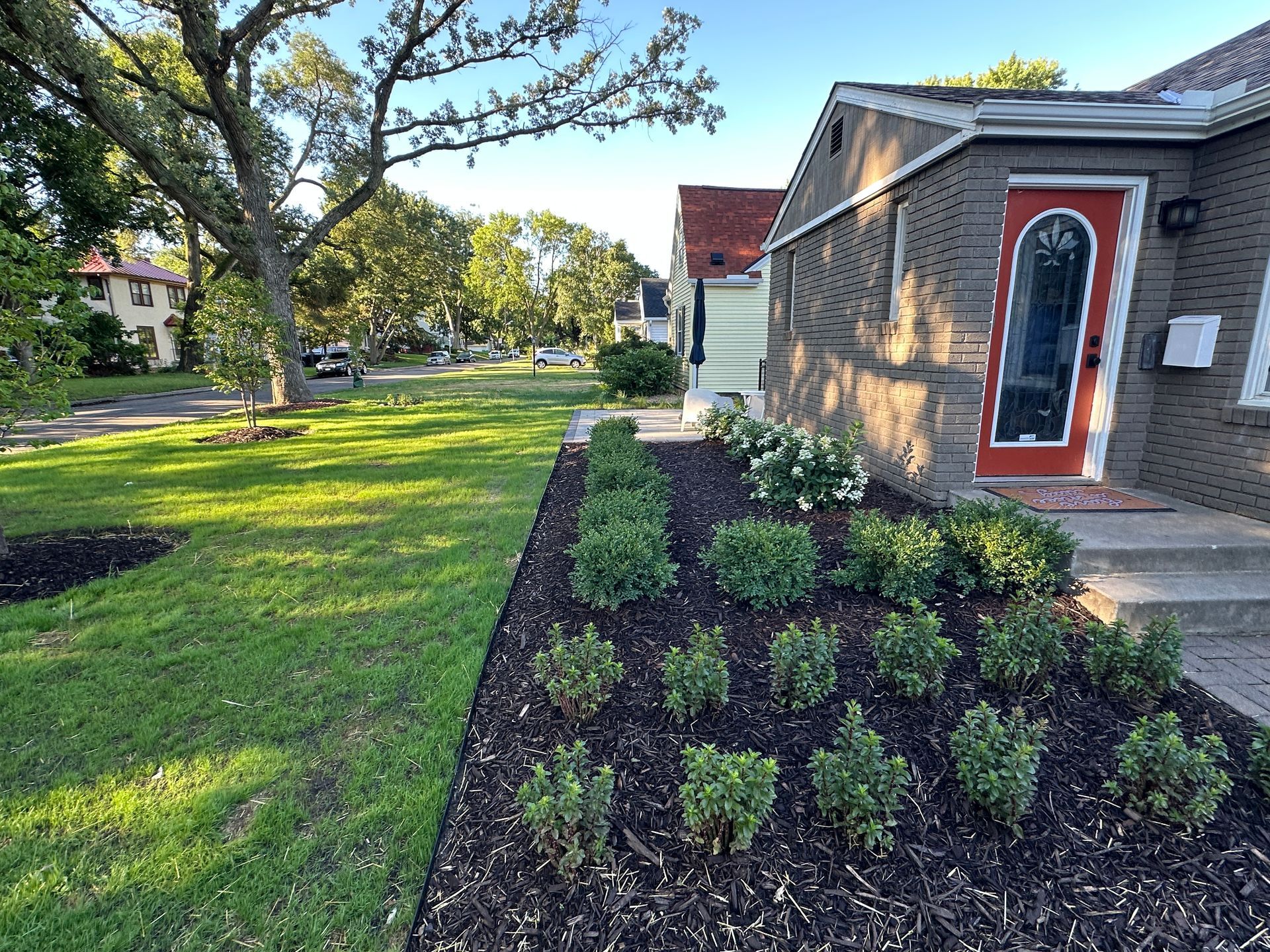
- We removed a system of retaining walls in the front yard that had begun to degrade and fail.
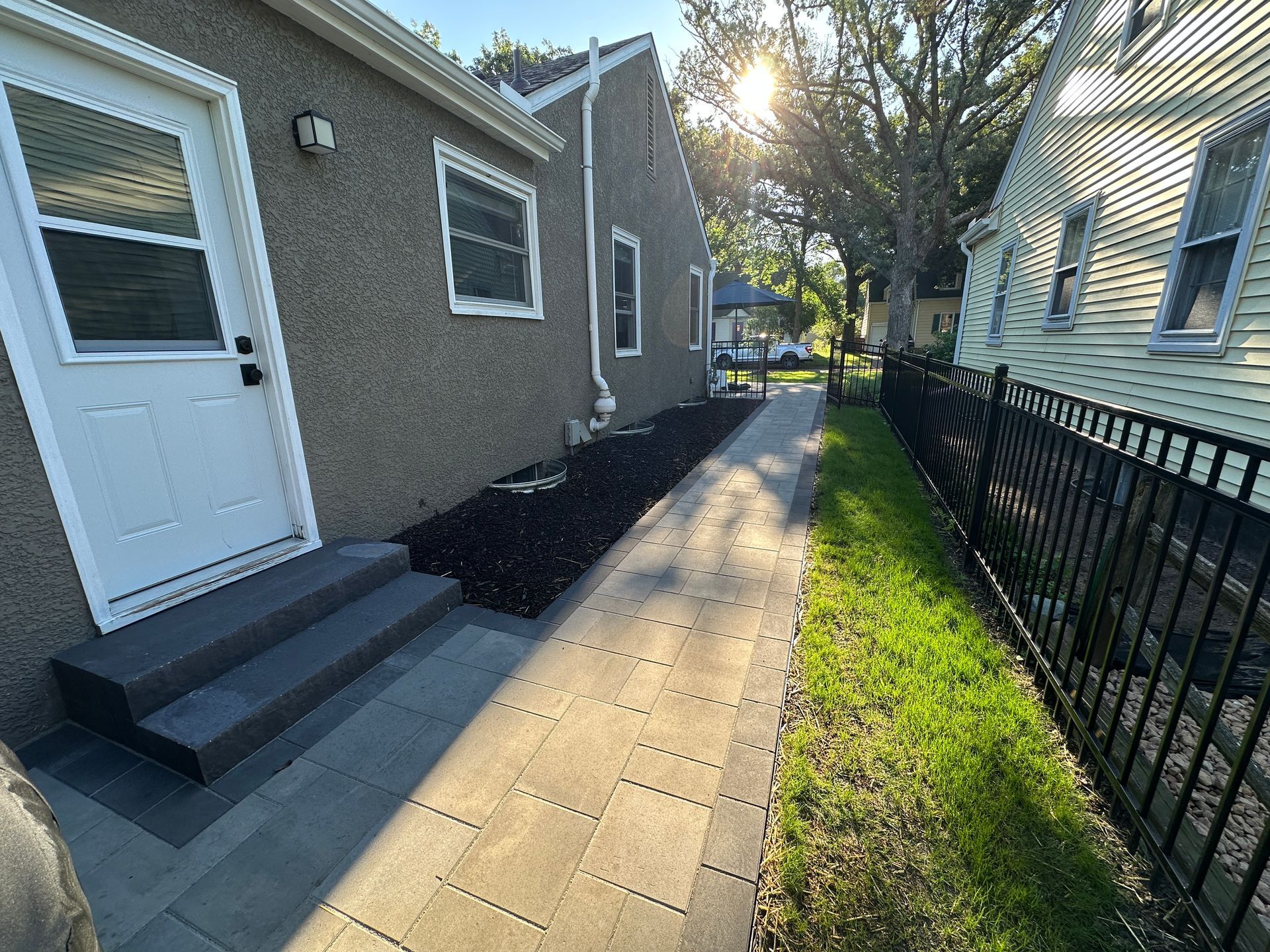
- We removed the shallow window wells around the basement windows and installed deeper window wells that would allow us to regrade the soil around the foundation. This allowed us to divert rainfall away from the foundation, protecting it from the stress of waterlogged soil.
- We installed a new landing for the side door and repaved the walkway to the new patio.
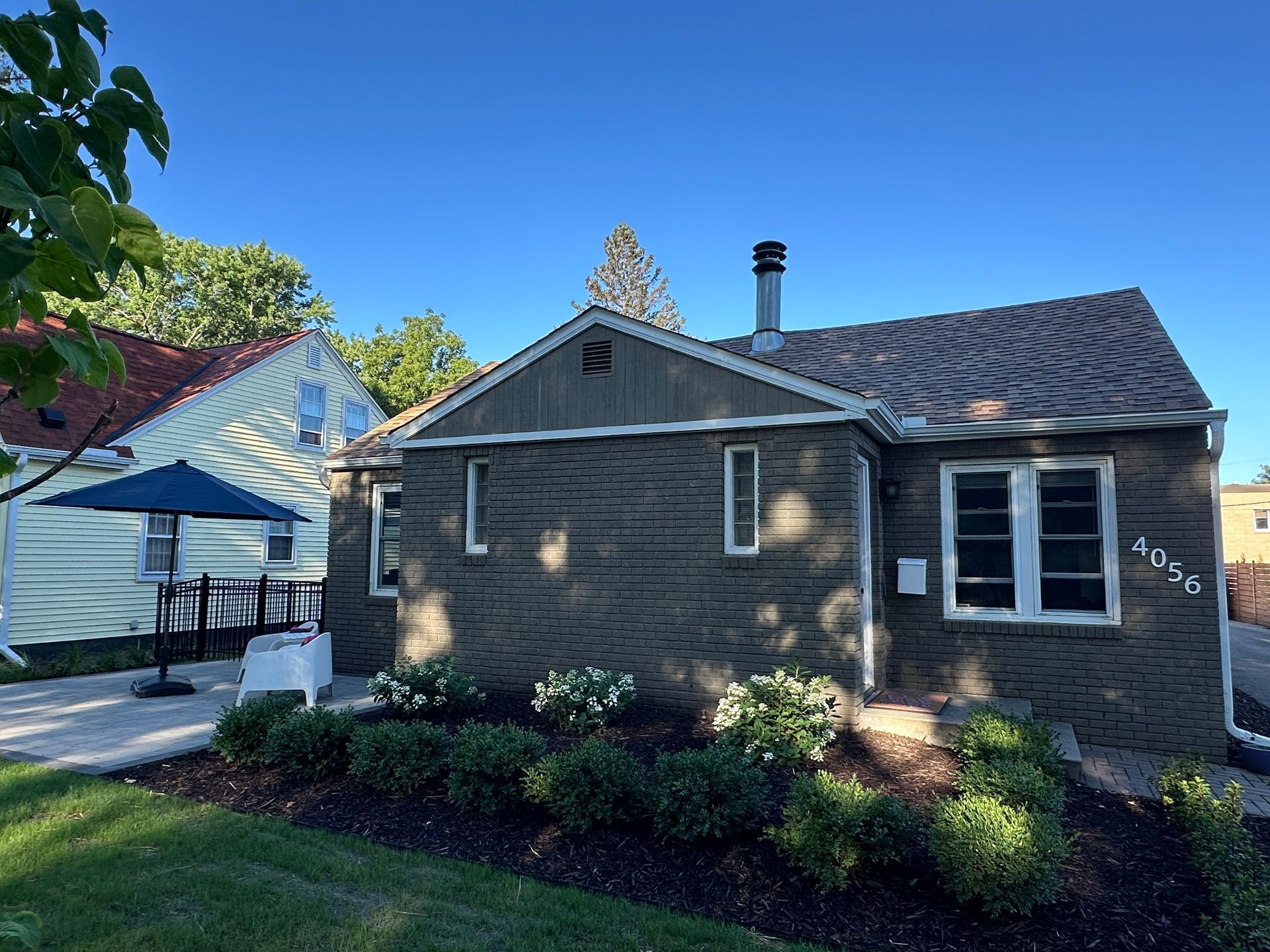
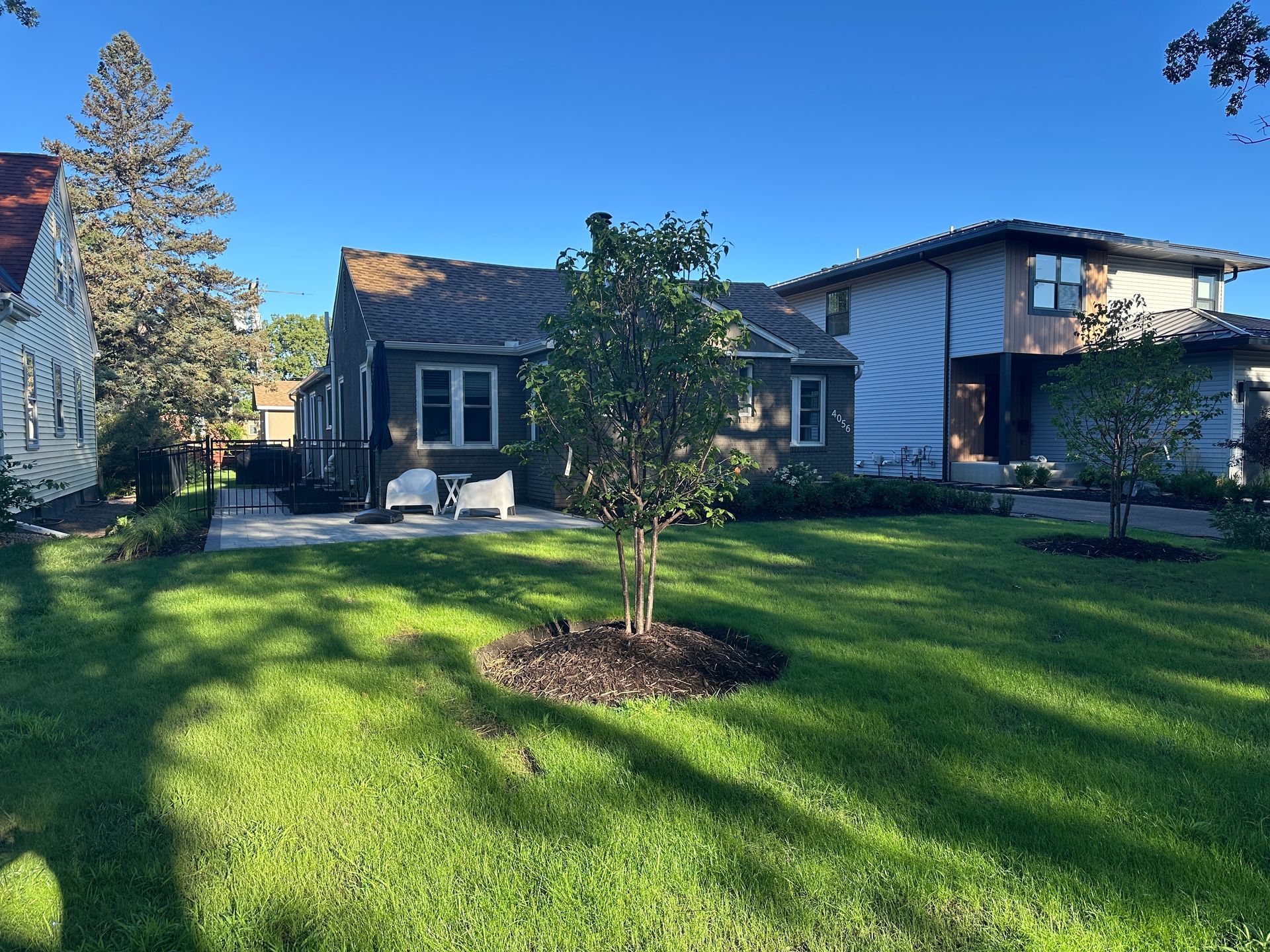
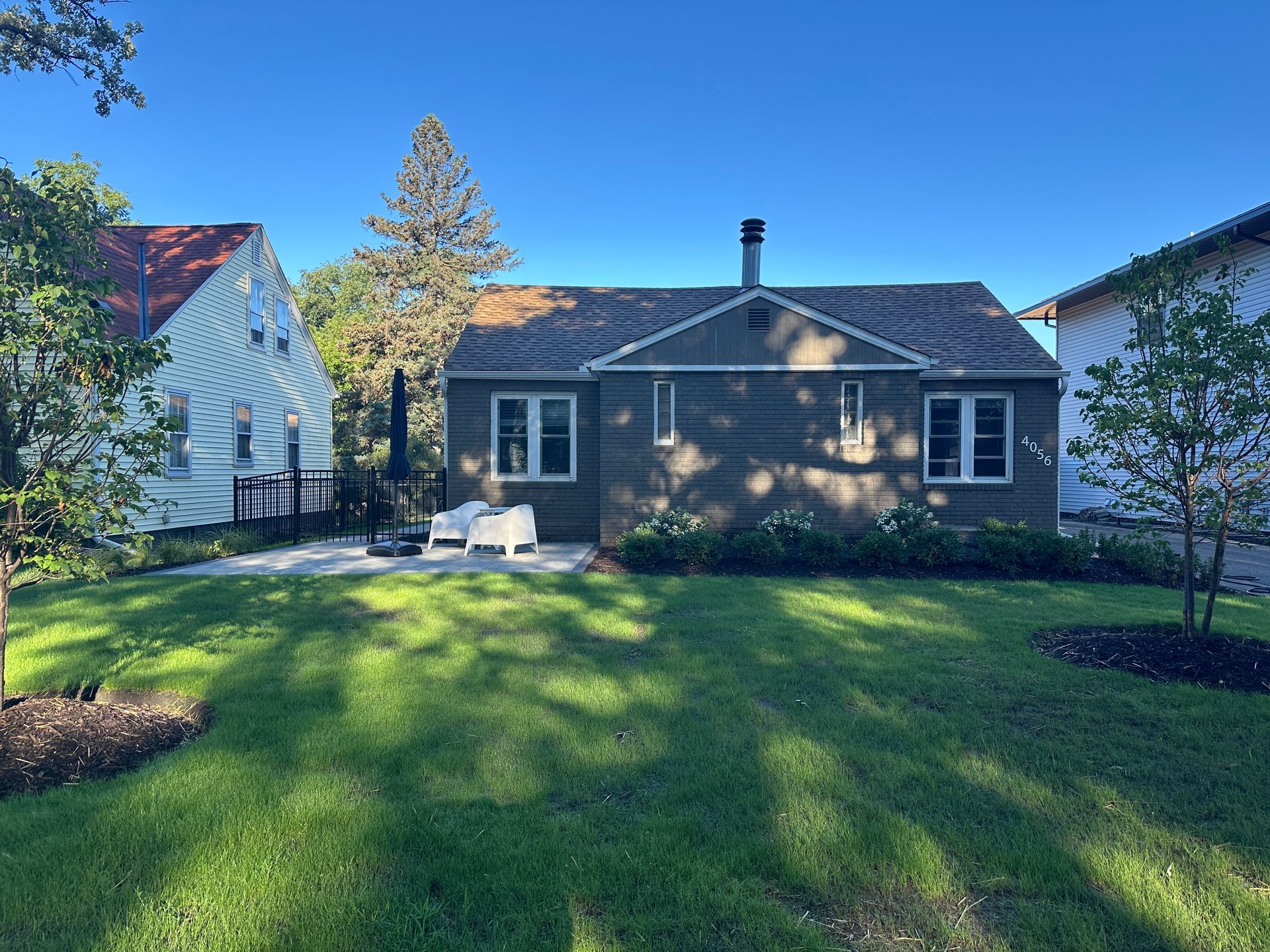
- We designed and installed a front-yard patio, making the most of limited space.
- We adjusted existing fencing, posts, and gate elevations to align with the new patio and walkway grades, rather than compromising the drainage design.
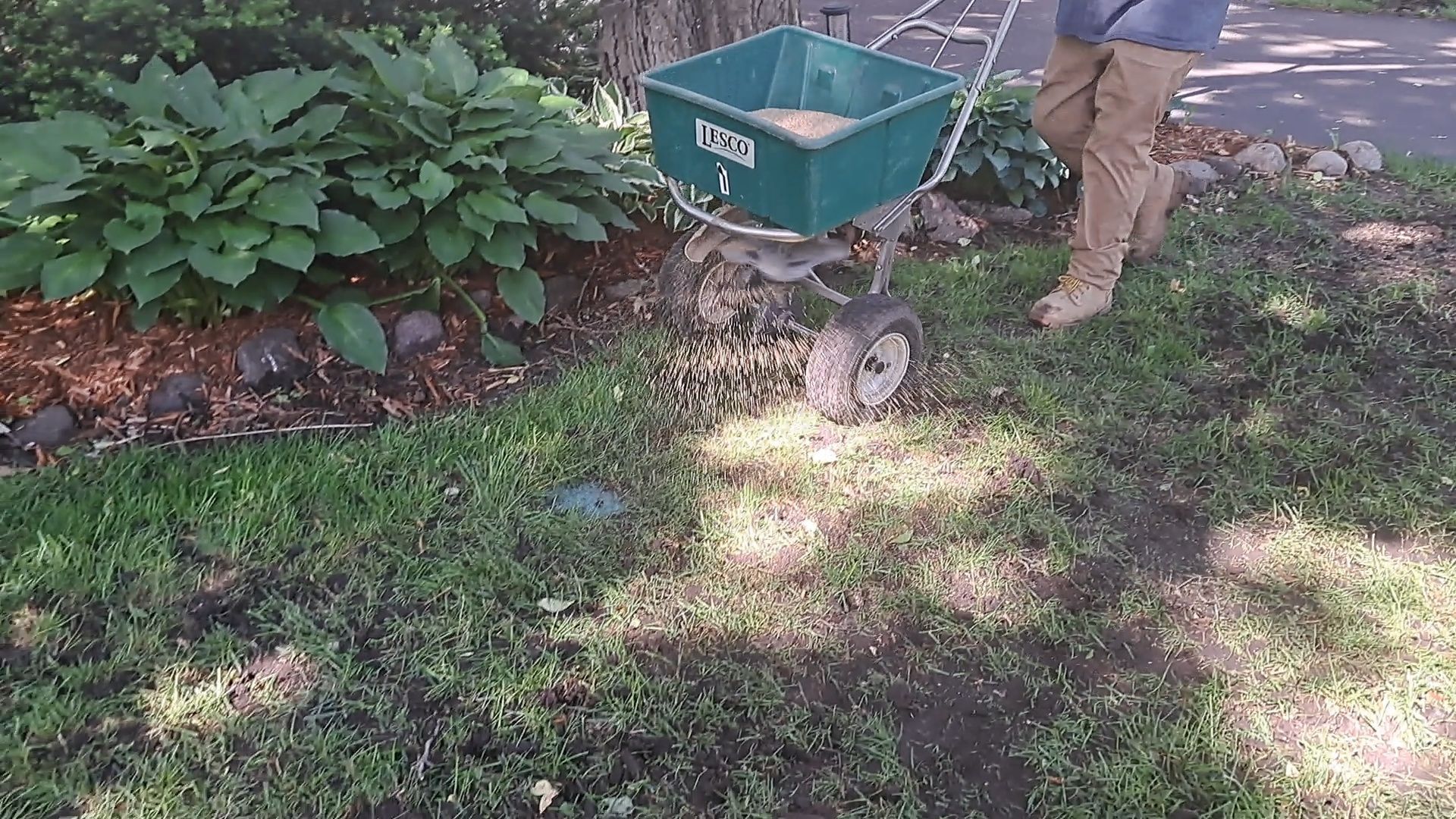
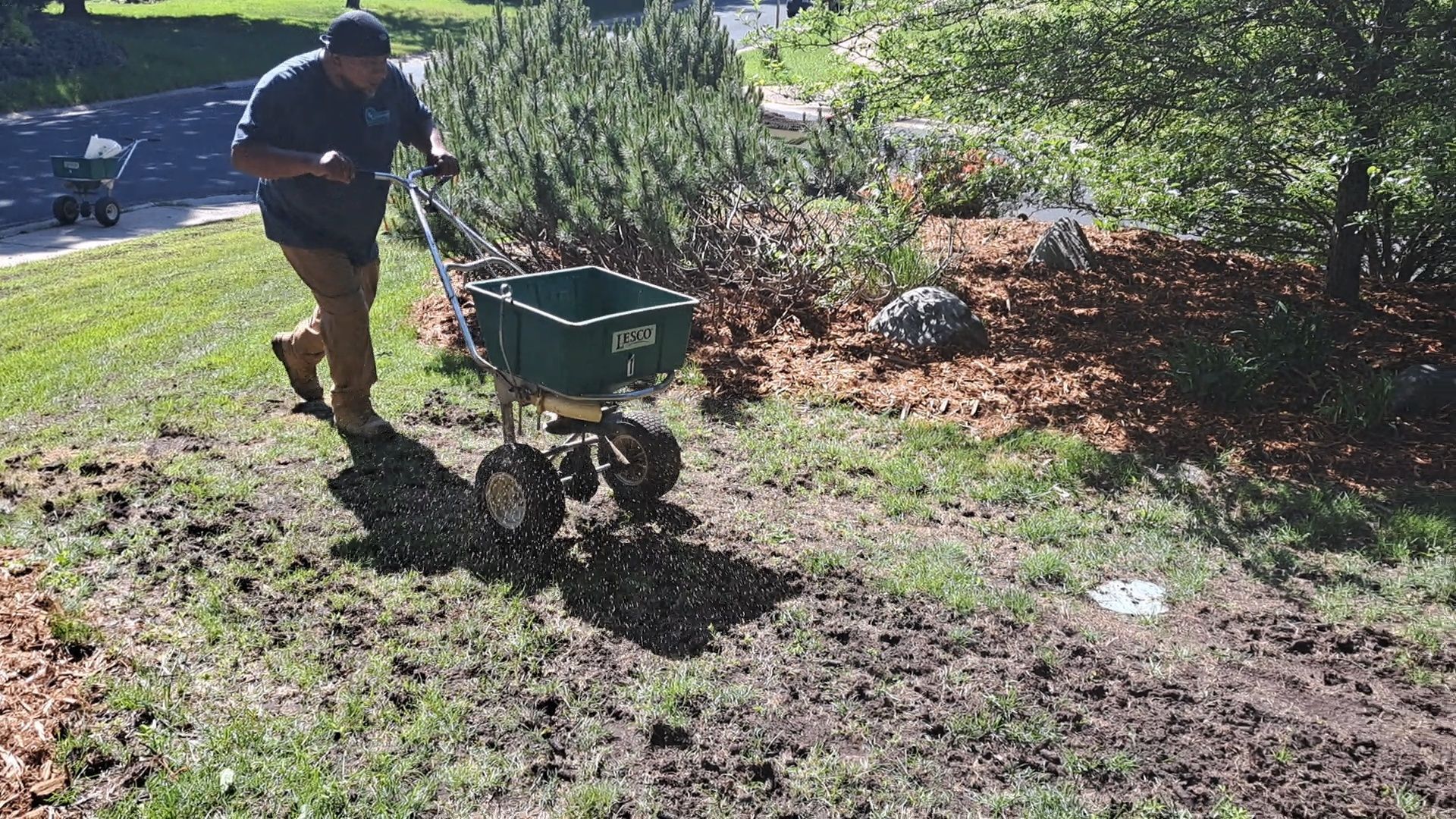
- We regraded and reseeded the front lawn, leading to superior drainage and lusher grass.
- Remember the old tree that had to go? We balanced its loss by planting two new trees at the very front of the lawn, increasing curb appeal and maintaining St. Louis Park's character as a suburb of tree-lined streets.
Why It Worked
You simply won't find one-size-fits-all solutions to older and cozier homes. As the years have gone by, smaller lots and older housing stock necessarily require a bespoke approach, and that was the case here in St. Louis Park. Our goal was to make sure our solutions not only fit the property but fit the neighborhood, too, respecting the scale of the home's surroundings. Every design choice we made kept in mind that we were working with a respectable mid-sized house and intending to keep it that way—no additions that tiptoe right up to the lot lines with no regard for the gestalt. No one would mistake our improvements for a new house that was airdropped into the neighborhood. It was simply a logical progression that made sense in context.
This was also a successful project because while we were pleased with the curb appeal, we put just as much work into the structural details that your average neighbor would never see at first glance. With outdoor living space becoming a large part of this home's experience, it was critical to ensure that the elements would not compromise that space. The drainage solutions we implemented not only protected the patio and walkway from pooling water but also protected the foundation from long-term damage.
A cute and convenient home in St. Louis Park may not be an estate on the shores of Lake Minnetonka. That doesn't mean that homeowners don't deserve an elegant and comfortable outdoor space. By focusing on smart planning and making practical construction choices, we were able to deliver a budget-conscious, achievable solution that met each of the homeowners’ goals with
thoughtful and high-quality solutions.
Ready To Make the Most of Your Outdoor Space?
If you need help transforming your outdoor space in St. Louis Park or the surrounding Twin Cities suburbs, KG Landscape is here to help. Our experienced team specializes in custom and scale-appropriate designs just like this one. Contact us today to discover how we can improve the appearance, functionality, and long-term health of your home. Together, we can make the best possible version of your space.
📍
Local Twin Cities expertise
💧 Proven drainage solutions
🏡 Designed for tight urban lots
Ready to Start on Your Next Project?
Call us at (763) 568-7251 or visit our quote page.