When Your Eden Prairie Landscaping Needs More Than Maintenance
There's a particular kind of frustration that comes with a landscape that used to look great. The plantings were proportional when they went in. The patio made sense for how the family used the yard. The beds, the borders, the layout: it all worked. And then, slowly, it stopped working.
This is where a lot of Eden Prairie homeowners find themselves right now. Properties built or landscaped in the early to mid-2000s are reaching a tipping point. Trees have tripled in size. Foundation plantings that once framed the front entry now block the windows. Patio pavers have settled unevenly. The kids who played on the swing set are teenagers who want something different from the backyard. What was once a well-designed landscape has become a maintenance burden that no longer fits how the property is actually used.
Landscape renovation in Eden Prairie is not about ripping everything out and starting from scratch. It's about recognizing that landscapes are living systems with lifespans, and that sometimes the smartest investment is a thoughtful reset rather than another year of trying to keep something going that has outgrown its original design.
How a Landscape Outgrows the Property It Was Designed For
Landscapes age differently than houses. A roof has a predictable lifespan. Siding fades on a schedule. But plantings grow at their own pace, root systems shift drainage patterns, and the family's needs change in ways nobody anticipated when the yard was first designed.
The arborvitae hedge that provided privacy at four feet tall is now twelve feet tall and shading out the perennial bed behind it. The ornamental grasses that looked airy and modern at install have spread into thick clumps that crowd the walkway. The patio that was sized for a couple and a grill is too small for the family that now hosts weekend gatherings with friends and extended family.
This isn't a failure of the original design. It's what happens when living things mature and families evolve. The landscape that worked for your property in 2010 was designed for 2010. It was not designed for how you live in 2026.
Eden Prairie's established neighborhoods, particularly those near Bryant Lake, along Flying Cloud Drive, and throughout the developments south of Highway 62, are full of properties in exactly this position. The homes are well maintained. The landscaping just hasn't kept up.

The Difference Between Refreshing and Renovating
Homeowners often try to solve a renovation-level problem with maintenance-level effort. They trim back the overgrown shrubs. They patch the patio. They add a few plants where the old ones died out. These are reasonable responses, and sometimes they buy another year or two. But if the underlying layout no longer functions, maintenance just preserves something that isn't working.
A refresh addresses surface issues. Pruning, mulching, replacing a few plants, sealing the patio. A renovation addresses the system. It asks whether the grade is still moving water correctly, whether the hardscape connects to how the family actually uses the yard, whether the planting design makes sense for the mature canopy that has developed overhead.
The practical signs that you've crossed from refresh territory into renovation territory are usually pretty clear. If your foundation plantings are encroaching on the house, the patio has settled enough to hold puddles, sections of the yard have become unusable, or you're spending more on maintenance than the enjoyment you're getting from the space, that's renovation territory.
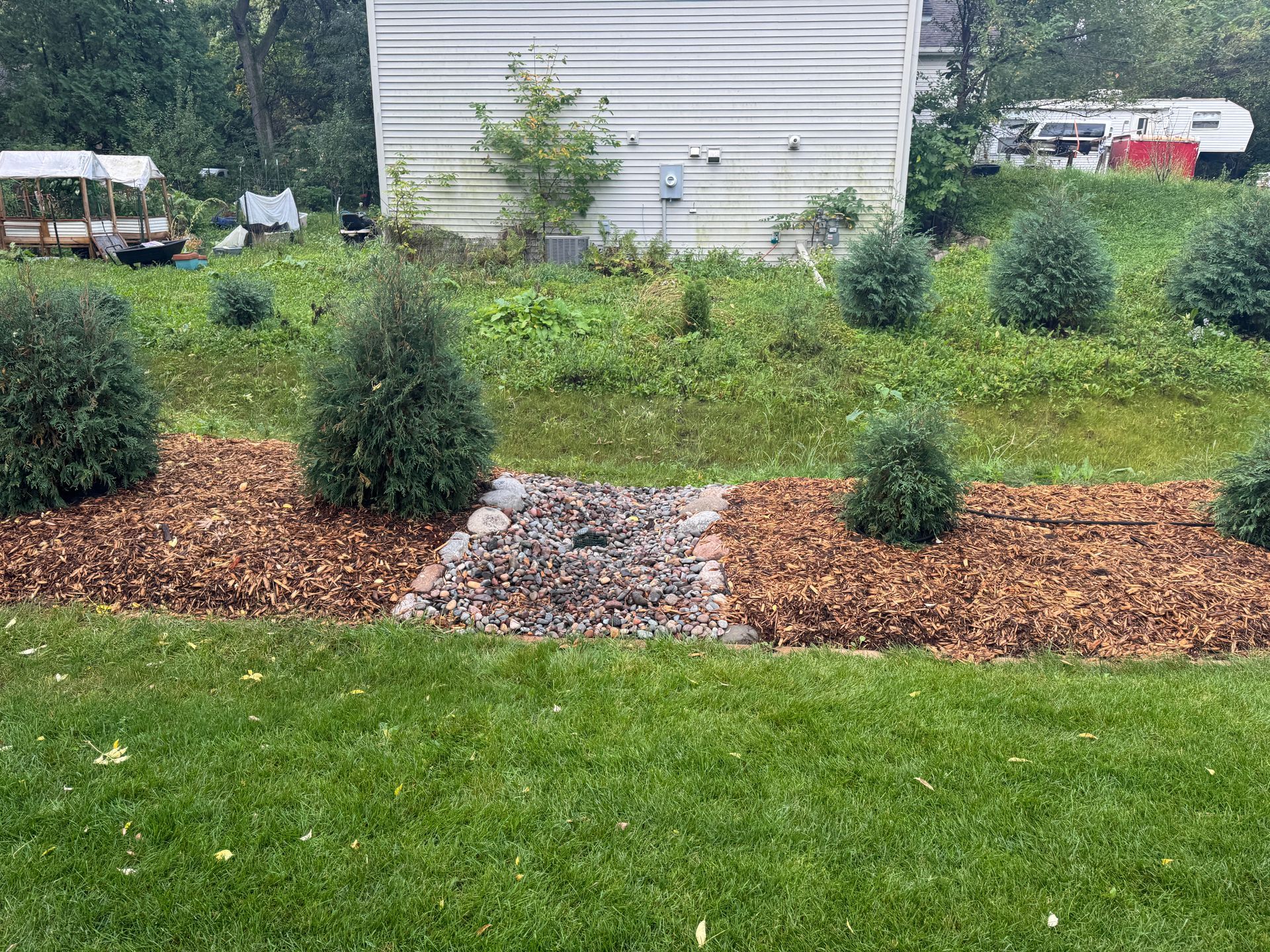
It's also worth noting that drainage problems frequently develop as landscapes mature. Root systems change how water moves through soil. Settled hardscape redirects surface runoff. The grading that worked when everything was new may not work anymore, and water finding its way toward the foundation is a problem that gets more expensive to fix every year you wait.

What a Full Landscape Renovation Actually Involves
A renovation starts with an honest conversation about what stays and what goes. Mature trees with good structure and health usually stay. They provide shade, privacy, and character that would take decades to replace. Beyond that, everything is on the table.
The process typically works in this order. First, we evaluate the site: grading, drainage patterns, soil conditions, sun exposure, existing infrastructure like irrigation or lighting. Then we address the structural issues. Grading and drainage come before any design work, because there's no point building a beautiful patio on ground that isn't shedding water properly.
Once the site is sound, the design phase considers how the family actually wants to use the space. That sounds obvious, but it's the step most often skipped in piecemeal projects. When you add a fire pit here and extend the patio there and plant a new bed over in that corner, the result feels like a collection of decisions rather than a cohesive outdoor space. A renovation designs the whole property as one system.
We worked with an Edina family who was dealing with exactly this situation on a property with a 25-foot slope. The original landscaping had never addressed the grade in a meaningful way, and the family had essentially lost the entire backyard to an unusable hillside. The renovation turned that slope into flat lawn space, a sport court for the kids, and a fire pit area. It went from the part of the property everyone avoided to the most used outdoor space they had. That kind of transformation is only possible when you step back and redesign the whole site rather than trying to fix individual pieces.
Renovating Shared Landscapes: Condos and HOA Properties
Single-family homes are not the only Eden Prairie properties hitting this lifecycle moment. Townhome communities, condominium associations, and multi-unit developments face the same challenges, often compounded by years of deferred maintenance and the difficulty of getting multiple owners to agree on a plan.
Shared landscapes tend to decline in a slow, cumulative way. The irrigation system loses efficiency. Lighting fixtures fail one at a time and don't get replaced. Plantings die and get removed instead of replaced. After a decade or more, the common areas look tired, and the property values start to reflect it.
We completed a full courtyard renovation for a condominium association in St. Anthony that had been dealing with exactly this pattern. The shared spaces had declined over years of piecemeal maintenance. Plantings were sparse, the lighting was outdated, and the irrigation system needed a complete overhaul. The renovation included over 150 new plants, updated LED landscape lighting, and a rebuilt irrigation system. The result brought the common areas back to a standard that matched the homes.
Eden Prairie has dozens of townhome and condominium communities that are old enough to need this kind of work. If your association is debating between another year of patching and a real renovation, the math almost always favors renovation once the maintenance costs start climbing and the curb appeal starts slipping.
Planning Around the Minnesota Growing Season
Timing matters for landscape renovation in Minnesota, and it affects both the scope of what can happen and the cost.
Spring is the most popular time to start a renovation, but that also means it's the busiest season for landscape contractors. If your project involves significant hardscape work, starting in late spring or early summer gives the best conditions for concrete, mortar, and paver installation. Planting can happen from spring through early fall, though fall plantings benefit from cooler temperatures and more consistent moisture.
Larger renovations can be phased over two seasons. Hardscape and grading in one year, plantings and finishing details in the next. This approach spreads the cost and allows the structural work to settle before the finishing layers go in. It also means you're not trying to cram every element of the project into one narrow weather window.
The one thing that should not be phased is drainage. If the renovation addresses grading or drainage issues, that work needs to happen first, regardless of what else is on the plan. Building new features on top of unresolved water problems is the most expensive mistake you can make in a renovation.
What a Renovation Is Really Worth
The temptation with an aging landscape is to keep spending on maintenance and avoid the larger investment. That's understandable. A full renovation is a significant project. But there's a point where the math shifts, and annual maintenance costs on a landscape that no longer functions are just money spent preserving a problem.
A well-designed landscape renovation in Eden Prairie does several things at once. It brings the outdoor space in line with how the family actually lives. It addresses drainage and structural issues that are only going to get worse. It restores or improves the property's curb appeal, which directly affects home value in a market where buyers pay attention to outdoor spaces. And it resets the maintenance clock. A properly designed and installed landscape should give you a solid 15 to 20 years before the next major decision point.
If your Eden Prairie property is at that inflection point where the landscaping has outgrown its original design, the question isn't whether to renovate. It's whether to do it now or spend another year maintaining something that isn't working. Most homeowners, once they make the decision, wish they'd done it sooner.
Contact KG Landscape to discuss your renovation project.
Frequently Asked Questions
How do I know if my landscaping needs a renovation or just maintenance?
If the issues are cosmetic, like overgrown shrubs, faded mulch, or a few dead plants, maintenance can handle it. If the layout no longer fits how you use the yard, the hardscape has settled or cracked, drainage patterns have changed, or you're spending increasing amounts on upkeep with diminishing results, that's renovation territory. The distinction is whether the underlying design still works or whether it has been outgrown.
How much does a full landscape renovation cost in Eden Prairie?
Costs vary significantly depending on the scope. A renovation that includes regrading, new hardscape, drainage work, and a complete planting design will range from the mid-five figures for a standard lot to well into six figures for larger properties with significant grade changes or extensive outdoor living features. A professional site evaluation gives you a realistic estimate based on your specific conditions.
Can I renovate my landscape in phases?
Yes, and it's common. The important thing is to do the structural work first: grading, drainage, retaining walls, and major hardscape. Plantings, lighting, and finishing details can follow in a later phase. What you want to avoid is building new features before addressing water management or soil issues, because those underlying problems will eventually damage whatever you build on top of them.
What happens to existing trees and mature plantings during a renovation?
Healthy, well-placed mature trees are almost always worth keeping. They provide shade, privacy, and character that take decades to replace. During a renovation, tree protection measures keep heavy equipment and grade changes away from root zones. Smaller plantings and shrubs are evaluated individually. Some get relocated, some get replaced, and some stay where they are if they still serve the new design.
How long does a landscape renovation take in Minnesota?
A typical full renovation takes four to eight weeks of active construction, depending on the scope. Projects with significant grading, retaining walls, or phased construction may extend across more of the season. Design and planning happen before construction begins, and we recommend starting that process in late winter or early spring to be ready for the building season.
Do I need a permit for landscape renovation in Eden Prairie?
- Permits are typically required for retaining walls above a certain height, significant grading changes, and any work that affects stormwater management. Simple planting renovations usually don't require permits. The City of Eden Prairie's building inspections department can confirm requirements for your specific project, and we handle permit applications as part of our process when they're needed.
Ready to Start on Your Next Project?
Call us at (763) 568-7251 or visit our quote page.