Designing the Perfect Outdoor Living Space: Backyard Patio and Landscaping for Walkout Basements in Chanhassen
The Untapped Potential of a Walkout Basement
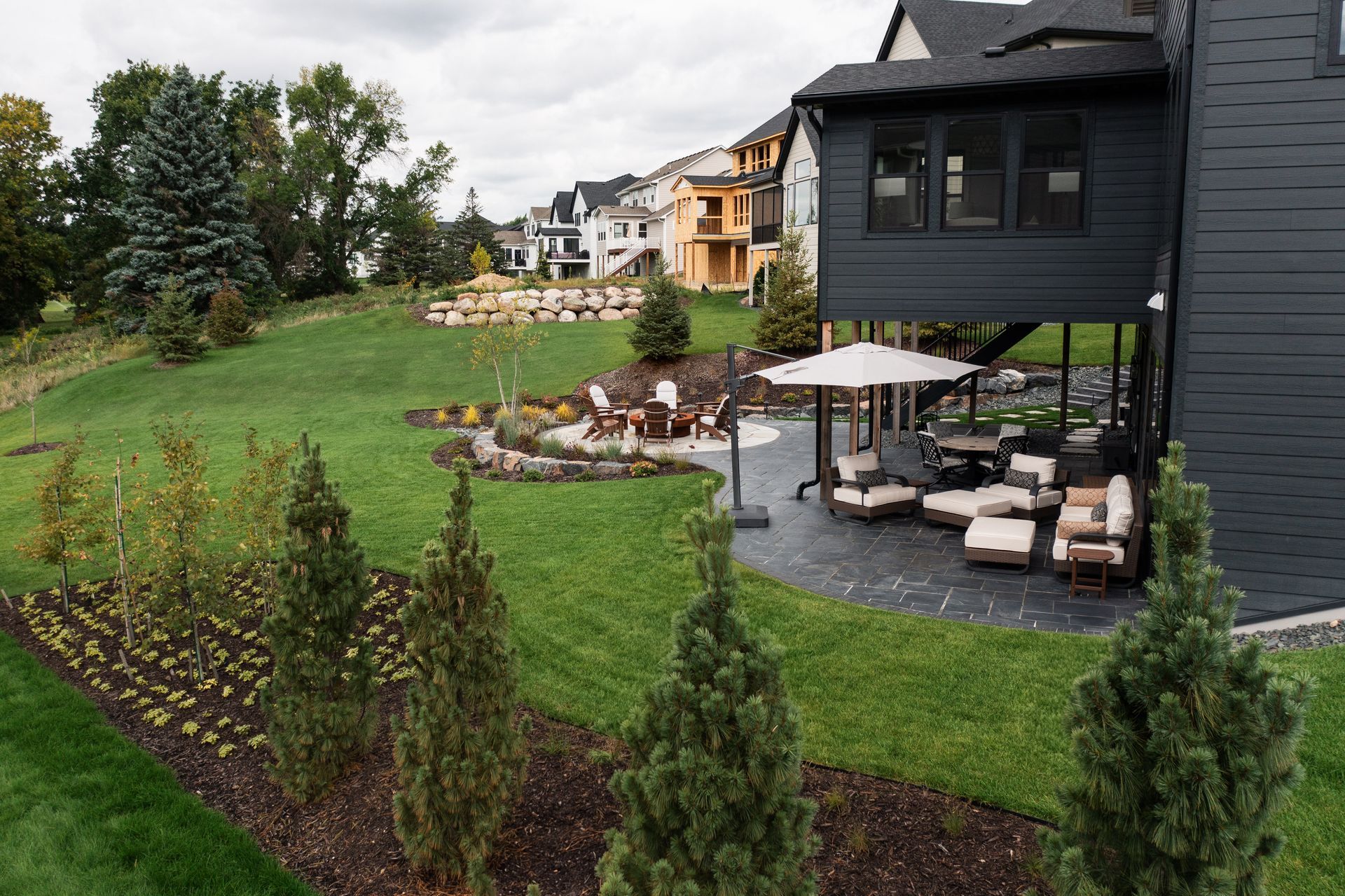
Walkout basements are one of the most common home features in Chanhassen, and one of the most underused. The grade change that creates the walkout also creates a natural opportunity: a lower-level outdoor space that connects directly to the interior of the home. But most homeowners never develop that space. The walkout opens onto bare ground, an unfinished slope, or a patch of lawn that gets muddy every spring. The door exists, but the destination does not.
That is a missed opportunity. A walkout basement patio, designed correctly, creates an entirely separate outdoor living area. It is sheltered, private, and connected to the home in a way that upper-level decks and patios never quite achieve. The challenge is that walkout spaces come with grade changes, drainage demands, and design constraints that standard patio projects do not. Getting it right requires a plan that addresses elevation, water management, and usability from the start.
Why Walkout Basements Are Perfect for Patio Design
The grade change that defines a walkout basement is exactly what makes it ideal for a patio. The lower elevation creates a sense of enclosure that upper-level outdoor spaces lack. You are surrounded by the landscape rather than sitting above it. Retaining walls, the home itself, and the rising grade on either side naturally frame the space, making it feel intimate and protected without needing fences or screening.
This natural enclosure also means walkout patios tend to be more private than upper-level spaces. The sight lines from neighboring properties are partially blocked by the grade change itself, and intentional plantings along the upper slope complete the screening. The direct connection to the lower level extends the living space in both directions. A well-designed walkout patio makes the transition from interior to exterior feel seamless, and that immediacy changes how often the space gets used.
A Landscape Design Approach to Outdoor Living
A patio is only as good as the plan behind it. Walkout basement patios fail when they are treated as standalone hardscape projects, disconnected from the slope above, the drainage patterns around them, and the way the homeowner actually moves through the space.
We design walkout patios as part of the broader landscape. The patio layout, the fire feature placement, the planting beds, and the grading all get planned together. This is the same integrated approach we use on Chanhassen landscaping projects across the area, and it is why these spaces hold up and function well over time.
The design process starts with understanding how the homeowner wants to use the space. Is this primarily for family dinners? For hosting friends around a fire? For quiet mornings with coffee? The answer shapes everything from the patio footprint to the seating layout to where the focal point goes. Designing without that conversation produces a patio that looks fine but does not fit how people actually live. It is the same problem we see on new construction properties in Bloomington where builders install patios and landscaping as separate line items with no connection to how the homeowner actually uses the space.
Creating a Functional Patio Space
Scale and proportion matter more on walkout patios than almost any other type. The enclosed setting means the patio feels smaller than it measures, so undersizing is a common mistake. A patio that looks generous on paper can feel cramped once you add chairs, a fire feature, and foot traffic.
We size walkout patios based on intended use and furniture layout, not just square footage. A gathering space needs room for seating, movement around the seating, and a buffer between the fire feature and any walls or plantings. A dining space needs clearance for chair pull-back and serving access. These functional dimensions drive the patio size, not an arbitrary number.
The connection to the surrounding landscape is equally important. Planting beds along the edges of the patio soften the hardscape and create a visual transition to the yard. Retaining walls that define the grade change can double as informal seating or display surfaces for container plants. Every element serves at least two purposes: function and appearance. It is the same thinking behind the waste bin enclosure we built in Plymouth, where a purely functional problem became a design feature. This is what we mean when we talk about patio installation that integrates with the landscape rather than sitting on top of it.
Incorporating Fire Features into the Design
A fire feature turns a patio from a place to sit into a place to gather. For walkout basement patios, it serves as the natural focal point, the element that anchors the space and gives it purpose. Without a focal point, a patio is just a flat surface. With one, it becomes a destination.
Gas fire features are particularly well-suited to walkout spaces. They light instantly, produce no smoke (which matters in the enclosed setting of a walkout), and require no wood storage or ash cleanup. A fire feature that takes 30 seconds to start gets used weekly. One that requires 20 minutes of prep gets used twice a season.
Placement within the patio layout is critical. The fire feature should be positioned to create a natural gathering circle, with seating oriented toward the flame from multiple angles. On a walkout patio, this usually means centering the fire feature within the patio footprint rather than pushing it to an edge. That central placement encourages conversation and creates the intimate, campfire-style atmosphere that makes these spaces so appealing.
The fire feature also extends the usable season. In Minnesota, the window for comfortable outdoor time is shorter than most of us would like. According to the National Weather Service Twin Cities climate data, average evening temperatures in the metro drop below 50 degrees by mid-October. A gas fire feature adds six to eight weeks of comfortable use on either end of the season, making the investment in the patio space pay off across more months of the year.
Designing for Elevation and Transitions
Grade changes are the defining characteristic of walkout basement landscapes, and they are also the biggest source of problems when they are not handled correctly. Water runs downhill, and a walkout patio sits at the bottom of the hill. Without proper grading and drainage, every rain event sends water straight to the patio and the basement door.
We design walkout patios with drainage built into the plan from the beginning. The patio surface pitches away from the foundation. Subsurface drainage channels collect water at the low side and route it away from the home. Retaining walls include drainage aggregate and weep systems to prevent hydrostatic pressure from building behind them. None of this is visible in the finished product, but all of it is essential to long-term performance.
The transition from the upper yard to the lower patio level also needs intentional design. A steep slope with no structure looks unfinished and erodes over time. Terraced retaining walls, stepped planting beds, or natural stone transitions create usable space on the slope while managing the grade change in a way that looks designed rather than left over. We have seen the consequences of ignoring grade transitions on properties throughout the west metro. The terracing mistakes we documented in Eden Prairie show exactly what happens when elevation changes are treated as an afterthought.
Project Example: A Patio Designed for Gathering
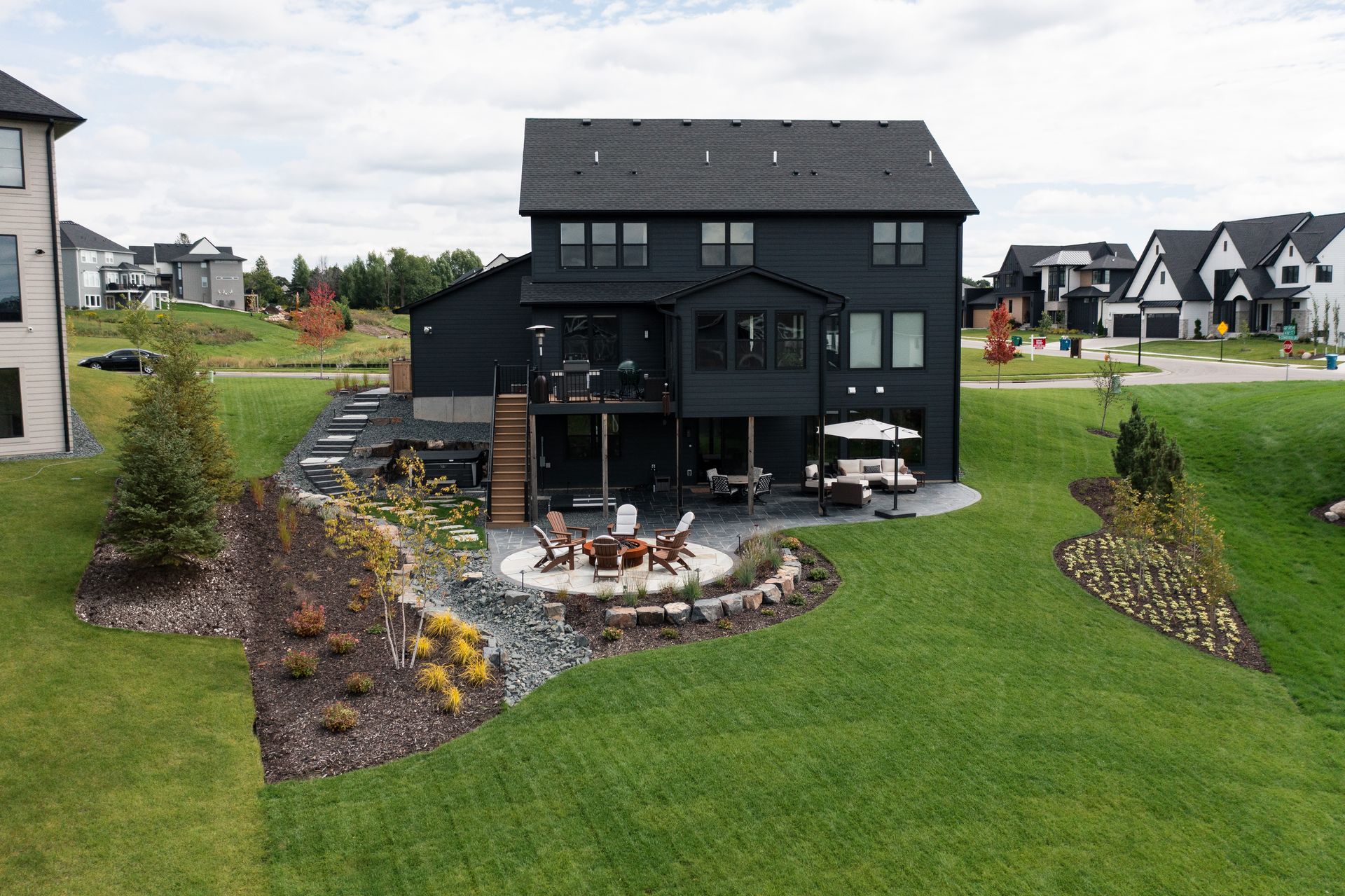
Here is an example of a patio we designed that illustrates these principles. A circular flagstone patio built around a custom gas fire feature, with seating oriented to encourage conversation and the layout sized for comfortable gathering. The natural stone surface provides a rustic, organic aesthetic that blends with the surrounding landscape rather than looking like a stamped concrete pad dropped into the yard.
The circular form creates a defined "room" within the larger outdoor space. The fire feature sits at the center, with the stone pattern radiating outward. The result is a space that naturally draws people inward toward the flame. No one has to be told where to sit or how to arrange the chairs. The layout does that work on its own.
The patio connects to the surrounding landscape through planting beds that step up in height from the patio edge toward the upper yard. This layered transition softens the grade change and provides seasonal color and texture that frame the gathering space. Drainage is integrated into the patio base and the surrounding grade so water moves away from the space without visible channels or grates.
[Photo captions: Circular flagstone patio with custom gas fire feature at center. Seating layout designed for conversation. Natural stone surface and pattern detail. Planting beds creating transition from patio to upper landscape. Drainage integration at patio edge.]
Why This Works Well for Homes in Chanhassen
Chanhassen's rolling topography means walkout basements are standard on a large percentage of homes. The grade changes that make walkouts possible also create the conditions for effective lower-level outdoor spaces, as long as those conditions are designed for rather than worked around.
Homeowners want to use their yards for more than mowing, and walkout basements offer a built-in starting point for outdoor living that feels private, connected, and usable. The Minnesota climate makes fire features especially valuable here. A gas fire feature extends the usable season by six to eight weeks on either end, turning what would otherwise be a three-season patio into a space that gets used from early April through late October. We see the same opportunity on properties across the south and west metro, from Chanhassen to Eden Prairie and Hopkins.
Key Design Takeaways
Start with an integrated plan that addresses landscape, drainage, and grade changes together. Create a focal point like a fire feature that anchors the space and gives it purpose. Design for actual use by measuring for furniture and movement, not just square footage. And treat the walkout as a destination, not just a door. The space beyond it should feel like a designed extension of the home.
Build the Outdoor Living Space Your Walkout Was Made For
We have been designing and building landscapes across the Twin Cities since 2003, and walkout basement patios are one of the most rewarding projects we do. The combination of enclosure, privacy, and direct home connection makes these spaces ideal for outdoor living when they are designed with intention.
If your Chanhassen home has a walkout basement that opens onto unused space, there is a good chance it can become the best outdoor room on your property. The first step is a site visit to assess the grade, drainage, and design opportunities.
Explore our Chanhassen landscaping services, learn more about patio installation, or schedule a consultation to talk about what is possible for your walkout space.
Frequently Asked Questions
How much does a walkout basement patio cost?
Cost depends on size, materials, and features. A 200 to 400 square foot patio with no fire feature starts at a different price point than a 500-plus square foot space with a custom gas fire feature, retaining walls, and integrated drainage. We scope every project individually because walkout site conditions vary significantly. A site visit is the most accurate way to get a realistic budget.
Can I build a patio at the base of a walkout without drainage problems?
Yes, but only with proper design. The number one risk with walkout patios is water flowing downhill toward the basement door. We design every walkout patio with a surface pitch away from the foundation, subsurface drainage channels at the low side, and drainage aggregate behind any retaining walls. These elements are built into the patio base during construction, not added as fixes after problems appear. When drainage is part of the original design, walkout patios perform reliably through Minnesota's heavy spring runoff and summer storms.
What type of stone works best for a walkout basement patio?
Natural flagstone and concrete pavers are both excellent choices. Flagstone provides an organic, rustic aesthetic with irregular shapes and natural color variation. Pavers offer a more uniform appearance with a wider range of colors and patterns. Both handle Minnesota's freeze-thaw cycles well when installed on a properly prepared base. For walkout patios, we often recommend flagstone because its natural texture complements the surrounding landscape and the gathering atmosphere most homeowners want.
Do I need a permit for a walkout basement patio in Chanhassen?
Permit requirements depend on the scope of the project. A ground-level patio typically does not require a building permit in most Twin Cities municipalities, but retaining walls above a certain height (usually 4 feet), electrical connections for gas fire features, and any work that changes drainage patterns may require permits or inspections. We handle the permit research and applications for every project so homeowners do not have to navigate the process themselves.
How does a gas fire feature work in an enclosed walkout space?
Natural gas or propane feeds a burner concealed beneath fire glass, lava rock, or decorative stone, controlled by a valve or electronic ignition. Because there is no wood combustion, there is no smoke accumulation in the sheltered walkout area. We position the fire feature with adequate ventilation clearance, which the open side of a walkout naturally provides.
Will a fire feature really extend my outdoor season in Minnesota?
It will. A gas fire feature produces enough radiant heat to keep a gathering circle comfortable well into October and starting again in early April. That adds roughly six to eight weeks of usable outdoor time compared to an unheated patio. For homeowners who invested in a walkout patio specifically to use it, the fire feature is what turns a three-season space into a four-season one for most practical purposes.
Ready to Start on Your Next Project?
Call us at (763) 568-7251 or visit our quote page.