Common Terracing Mistakes That Cause Failures on Eden Prairie Slopes
Terracing a slope should be straightforward. Build some walls, level out some flat areas, plant a few things, move on. At least that's how it looks from the outside. The reality is that terracing involves soil mechanics, water management, structural engineering, and material science all working together. When any one of those elements is wrong, the whole system eventually shows it.
Eden Prairie sits on rolling terrain. Plenty of properties have slopes in the back or side yards that limit how the space can be used. Terracing is the right solution for most of them. But the number of terracing projects we've seen fail, sometimes within just a few years of being built, tells us that the difference between terracing that lasts and terracing that doesn't comes down to a handful of specific mistakes that keep getting repeated.
Building the Walls Before Solving the Water
This is the most common terracing failure we see, and it's the most preventable. A homeowner or contractor looks at a slope, decides where the walls should go, and starts building. The walls look great when they're finished. Then the first heavy rain season arrives, and water builds up behind the wall with nowhere to go.
Soil holds water. When you cut into a slope and place a wall against it, you've created a dam. Every time it rains, water moves through the soil and collects against the back of that wall. The weight of water-saturated soil pressing against a retaining wall is enormous. It's called hydrostatic pressure, and it's responsible for more retaining wall failures than bad materials, poor construction, or anything else.
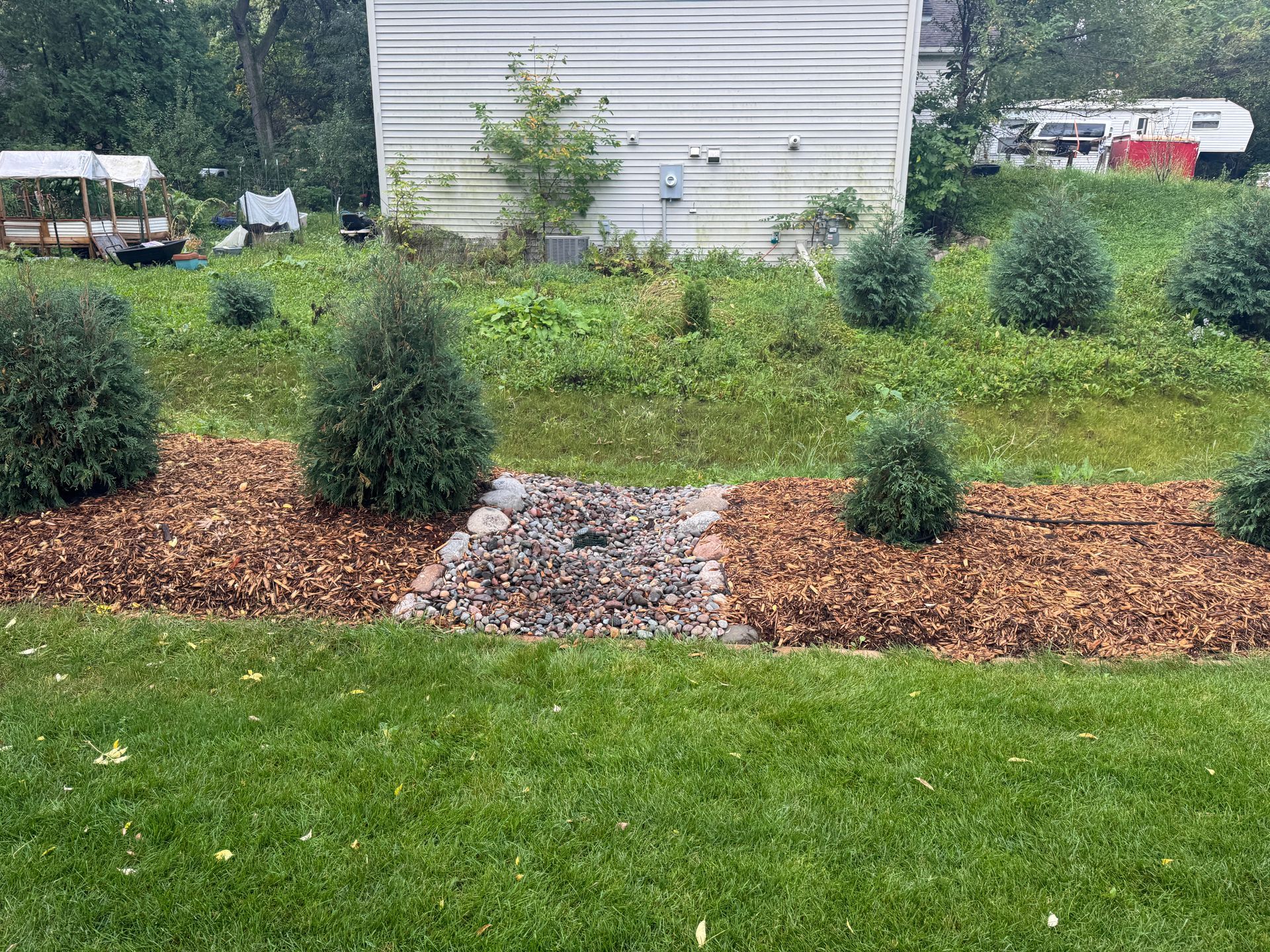
The fix is not complicated, but it has to happen during construction, not after. Drainage aggregate, typically clean crushed stone, goes behind the wall. A perforated drain pipe at the base of the wall collects water and routes it to a safe discharge point. Weep holes or a drainage mat allows water to pass through the wall rather than building up behind it.
If the terracing plan doesn't include a drainage plan, it's not a real plan. It's a structure waiting to fail. We've rebuilt walls on Eden Prairie properties where the original contractor skipped drainage entirely. The walls were well built. The stone was quality material. But without drainage behind them, hydrostatic pressure eventually pushed them out of alignment.

Undersizing the Wall for the Load It's Carrying
Retaining walls work against gravity. They hold back soil that would otherwise continue sliding downhill. The force that soil exerts on a wall increases with the height of the soil being retained, and it increases faster than most people expect.
A two-foot wall holding back a gentle slope is a manageable project. A four-foot wall holding back a steep grade is an engineering problem. The forces involved roughly double for every additional foot of height, depending on the soil type and moisture content. A wall that's adequate for two feet of soil may be completely inadequate at four feet.
Eden Prairie's clay-heavy soil makes this worse. Clay retains water, and wet clay is significantly heavier than dry sand or loam. It also expands when it freezes. A retaining wall on an Eden Prairie slope needs to be designed for wet clay conditions, not the best-case soil type listed in a manufacturer's installation guide.
For walls above four feet, most municipalities in Hennepin County require an engineered design stamped by a licensed structural engineer. Even for shorter walls, the principles of proper base preparation, setback ratios, and geogrid reinforcement apply. A wall that looks proportional to the slope isn't necessarily strong enough for it. The math has to work, not just the aesthetics.
Skipping the Base to Save Time
The base course is the least visible and most important part of a retaining wall. It sits below grade, buried under gravel and eventually soil or mulch. Nobody sees it once the wall is finished. Which is probably why it's the step most likely to be rushed.
A proper base starts with excavation below grade, typically six to twelve inches depending on wall height. The trench is filled with compacted gravel, leveled precisely, and the first course of block or stone is set partially buried. This buried course anchors the wall and prevents the base from sliding forward under pressure.
When the base is set on topsoil, organic material, or uncompacted fill, the wall settles unevenly as that material decomposes or compresses. You end up with a wall that leans, develops gaps between courses, or separates at the corners. The damage shows up gradually, usually starting at the lowest point of the wall where the most weight concentrates.
In Eden Prairie's clay soil , proper base preparation also means ensuring adequate drainage beneath the wall. Clay holds water at the surface, and a wall sitting in saturated soil will be subject to frost heave regardless of how well the base was compacted. Drainage aggregate under and behind the wall keeps the base zone dry and stable through freeze-thaw cycles.
Treating Walls, Steps, and Access as Separate Projects
A terraced slope needs to be usable. That sounds obvious, but it's the detail that gets left out of too many terracing projects. The walls get built, the flat areas get created, and then the homeowner realizes there's no good way to get from one level to another. Or the terraces are too narrow to serve any real purpose. Or the steps that were added as an afterthought don't connect naturally to the rest of the property.
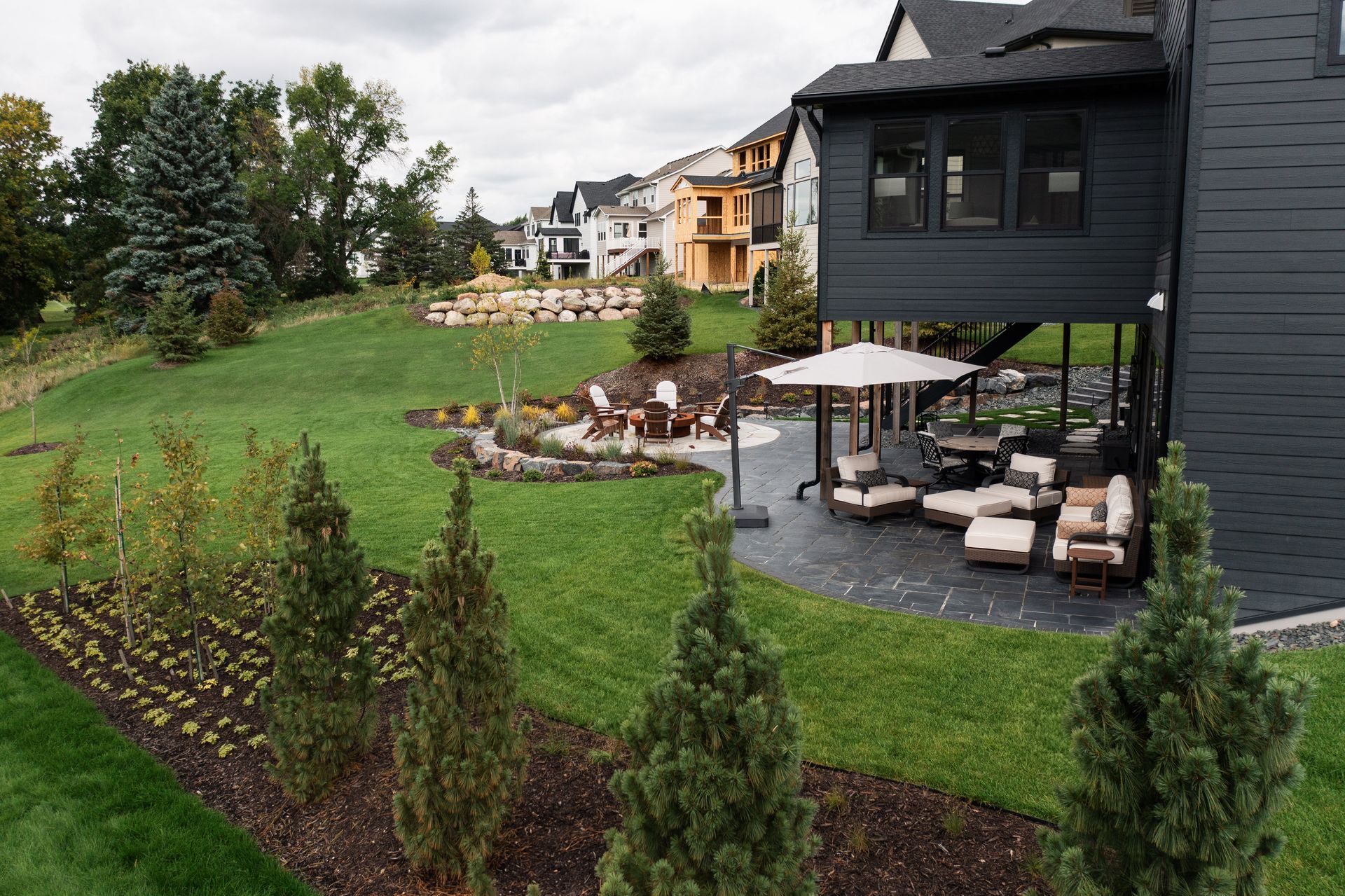
Terracing works when every element is designed together. Where the walls go determines where the flat areas are. Where the flat areas are determines where steps and pathways need to connect them. How wide the terraces are determines what you can actually do on them. A terrace that's three feet deep is a planting bed. A terrace that's eight feet deep is a usable space for furniture, a fire pit, or a play area.
We worked on a Plymouth property with a steep side yard that illustrates how all of these elements have to work as one system. The homeowners wanted to create usable space on a slope that was too steep to mow and too uneven for anything else. The project required boulder retaining walls to hold back the hillside, a layered drainage system to manage water from a sump pump and neighboring property runoff, stone steps with honed granite treads running down the full length of the slope, and decorative rock replacing the unmowable grass. Every piece depended on the others. The drainage had to be solved before the walls could go in. The walls had to be positioned to create the right-sized flat areas. The steps had to connect each level while following the natural grade. The result turned a wasted hillside into a connected series of outdoor spaces, including a hot tub retreat, with safe access throughout. That only happened because the design treated the slope as one integrated project.
Choosing the Wrong Materials for Minnesota Conditions
Not all retaining wall materials perform equally in a freeze-thaw climate. Natural stone, manufactured block, boulder walls, and poured concrete each have different strengths and weaknesses depending on the application.
Manufactured segmental retaining wall block is the most common choice for residential terracing in the Twin Cities. It's engineered for interlocking stability, available in a range of styles, and designed to handle freeze-thaw when installed correctly. The key word is correctly. Even good block fails when the base, drainage, and backfill aren't done right.
Natural stone and boulder walls work well on slopes where a more organic look fits the property. Boulders are particularly effective for shorter walls and transitions between grade levels because they provide mass and visual weight without requiring as much structural engineering. They also age well in Minnesota's climate, developing character rather than deteriorating.
The material choice should account for the wall's purpose, the load it's carrying, the aesthetic of the property, and the long-term maintenance expectations. A wall that looks right but isn't rated for the structural requirements of the site is going to disappoint you in a few years.
Getting Eden Prairie Terracing Right the First Time
Terracing a slope is not a weekend project, and it's not a project where cutting corners shows up right away. The problems from poor drainage, inadequate bases, and undersized walls take a year or two or three to become visible. By then, the cost to fix them is often more than the cost of doing it correctly in the first place.
The right approach starts with a thorough site evaluation. What's the grade? What's the soil type? Where does water come from, and where does it need to go? What does the homeowner actually want to use the terraced space for? Those answers drive the design. The walls, drainage, steps, and plantings all follow from there.
Eden Prairie properties with slopes have real potential. A well-terraced yard turns unusable grade into the best outdoor living space on the property. The investment is significant, but it's an investment that pays off every time you walk out the back door and use the space that used to just sit there. The key is doing it once, doing it right, and making sure every piece of the system works together from day one.
Contact KG Landscape to discuss terracing for your Eden Prairie slope.
Frequently Asked Questions
How much does terracing cost in Eden Prairie?
Terracing costs depend on the height and length of the walls, the materials chosen, the complexity of the drainage system, and the site access conditions. A simple two-tier terrace on a moderate slope costs significantly less than a multi-level project with engineered walls, steps, and integrated drainage. We provide detailed estimates after evaluating the specific slope and the homeowner's goals for the space.
Do I need a permit to build a retaining wall in Eden Prairie?
Walls above four feet in exposed height generally require a building permit and an engineered design in Hennepin County. Shorter walls may not require a permit, but they still need proper construction to perform in Minnesota conditions. We confirm permit requirements as part of the project planning process and handle applications when they're needed.
What's the best retaining wall material for Minnesota?
Manufactured segmental block is the most versatile option for residential terracing. It's engineered for freeze-thaw, available in many styles, and designed for interlocking structural stability. Natural boulder walls are excellent for shorter walls and organic aesthetics. The best material depends on the height, the load, the look, and how the terraced area will be used. According to the Minnesota Stormwater Manual, retaining structures also need to account for stormwater management in their design.
How tall can a retaining wall be without engineering?
The common threshold is four feet of exposed height. Below that, a well-built wall with proper base, backfill, and drainage typically performs without a formal engineering plan. Above four feet, the structural forces become significant enough to require professional engineering. Some sites with poor soil or steep grades may benefit from engineering even on shorter walls.
Can I terrace a slope myself?
Short walls under two feet on gentle slopes are within the capability of an experienced DIYer. Anything taller, steeper, or involving drainage systems is best handled professionally. The consequences of a failed retaining wall go beyond aesthetics. A wall that gives way can damage structures, flood lower areas, and create safety hazards. The base preparation, drainage, and structural calculations are the critical parts, and they're the parts most likely to be done incorrectly without professional experience.
How long do retaining walls last in Minnesota?
A properly built retaining wall with correct base preparation, adequate drainage, and appropriate materials should last 25 to 50 years or more. The walls that fail prematurely almost always fail because of drainage problems, inadequate bases, or undersized construction. The wall material itself is rarely the weak link. It's what's behind and underneath the wall that determines longevity.
Ready to Start on Your Next Project?
Call us at (763) 568-7251 or visit our quote page.