Why Front Steps Crack in Eden Prairie and How to Fix Them Right
You notice it in spring. A new crack across the top step that wasn't there last fall. Or the whole stoop has shifted slightly away from the house, leaving a gap where the landing meets the front door threshold. Maybe the steps have been slowly deteriorating for years, and this is the season you finally decide to deal with it.
Cracking, settling, and crumbling front steps are one of the most common problems on Eden Prairie homes built in the 1990s and 2000s. These steps were poured as part of the original construction, and most of them are reaching the end of their functional life. The damage isn't cosmetic. It's structural, it's progressive, and patching it only delays the inevitable.
Front step repair in Eden Prairie starts with understanding why the steps failed in the first place. Because if the replacement doesn't address the cause, you'll be dealing with the same problem again in a few years.
What Minnesota Winters Do to Concrete Steps
Concrete is strong in compression but vulnerable to water. In a climate like Minnesota's, where temperatures cycle above and below freezing dozens of times each winter, that vulnerability gets tested constantly.
The process works like this. Water seeps into the surface of the concrete through tiny pores and hairline cracks. When temperatures drop below 32 degrees, that water freezes and expands. The expansion pushes the crack slightly wider. When it thaws, more water enters the now-larger opening. The next freeze pushes it wider again. Over a single winter, a hairline crack becomes a visible one. Over ten or fifteen winters, the surface of the steps starts to spall, flake, and break apart.
De-icing salt accelerates the damage. Salt lowers the freezing point of water on the surface, which means more freeze-thaw cycles happen at the interface between treated and untreated concrete. The salt itself also penetrates the concrete and creates chemical reactions that weaken the material from within. Eden Prairie homeowners who salt their steps every winter are, paradoxically, speeding up the deterioration they're trying to manage.
The Portland Cement Association notes that proper air entrainment during the original concrete pour is critical for freeze-thaw resistance. Many residential steps, especially those poured quickly during home construction, weren't mixed or cured to the standard needed for long-term performance in this climate.
The Problem Underneath: Why the Real Damage Is Below the Surface
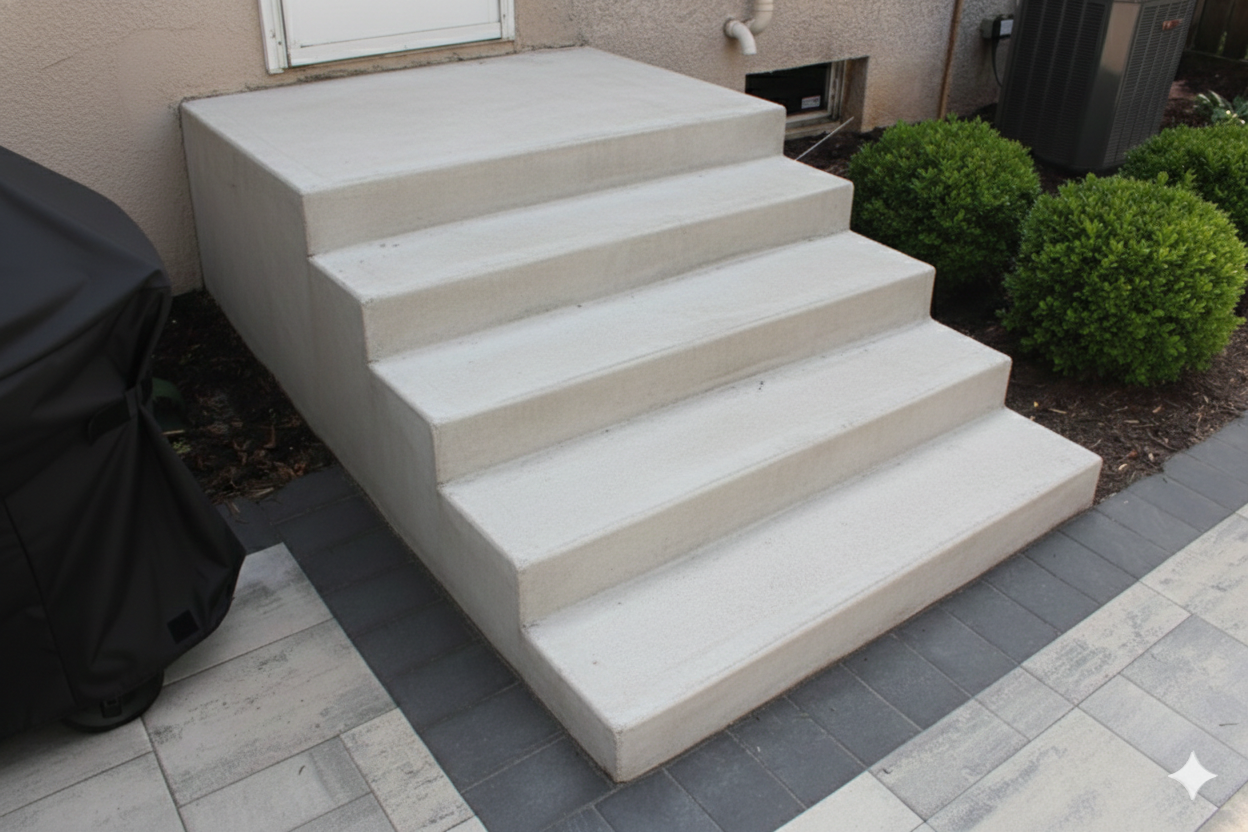
Surface cracking gets your attention, but the more serious issue is usually what's happening below the steps. A crumbling surface on an otherwise stable set of steps is annoying. Steps that have shifted, settled, tilted, or separated from the house are a structural failure, and no amount of surface patching will fix them.
Most front steps in Eden Prairie were built on one of two foundations: a poured footing that extends below the frost line, or compacted backfill from the original construction. The ones built on proper footings tend to stay put. The ones built on backfill tend to move.
Here's why. When a house is built, the excavation for the foundation creates a zone of disturbed soil around the perimeter. That soil gets backfilled and compacted, but it never reaches the density of the undisturbed ground next to it. Over time, backfilled soil continues to settle. Steps built on top of that settling soil move with it. They sink, tilt, or pull away from the house.
In Minnesota, the frost line sits at 42 inches below grade. Any structure that doesn't have footings extending below that depth is subject to frost heave. When the ground freezes, it expands upward. Structures without deep footings get pushed up with it. When the ground thaws, they settle back down, but not always to the same position. After years of this annual lifting and settling, steps end up shifted, cracked, and out of alignment.
If your front steps have separated from the house, tilt to one side, or feel like they shift slightly when you walk on them, the footings have either failed or were never adequate in the first place.
Knowing When Repair Makes Sense and When It Doesn't
Not every cracked step needs full replacement. The key is distinguishing between surface damage on a stable structure and surface damage caused by structural movement.
If the steps are level, firmly seated, still tight to the house, and the damage is limited to surface spalling or minor cracks in the concrete face, a repair or overlay might be reasonable. A skilled mason can resurface concrete steps with a bonded overlay or stone veneer if the underlying structure is sound.
If the steps have moved, though, repair is a temporary fix at best. You can patch a surface crack on a step that's actively settling, but the crack will return because the cause hasn't been addressed. Resurfacing steps that have separated from the house might look good for a season, but the gap will reopen.
The honest assessment is this: if the steps have shifted, settled, or separated, the right repair is replacement with proper footings. Anything else is spending money to delay the same project you'll eventually need to do anyway.
What Proper Step Replacement Looks Like
Replacing front steps is more involved than pouring new concrete where the old steps sat. Done correctly, the process addresses the structural cause of the failure so the new steps don't repeat the same pattern.
The first step is demolition and inspection. Once the old steps are removed, you can see what's underneath. Was there a footing? How deep? What's the soil condition? This is where you find out whether the original steps were built on solid ground or on backfill that has been settling for twenty years.
New footings go in below the frost line . In the Twin Cities, that means 42 inches deep. These footings are the foundation that everything else sits on, and they're the reason properly built steps don't shift or settle over time.
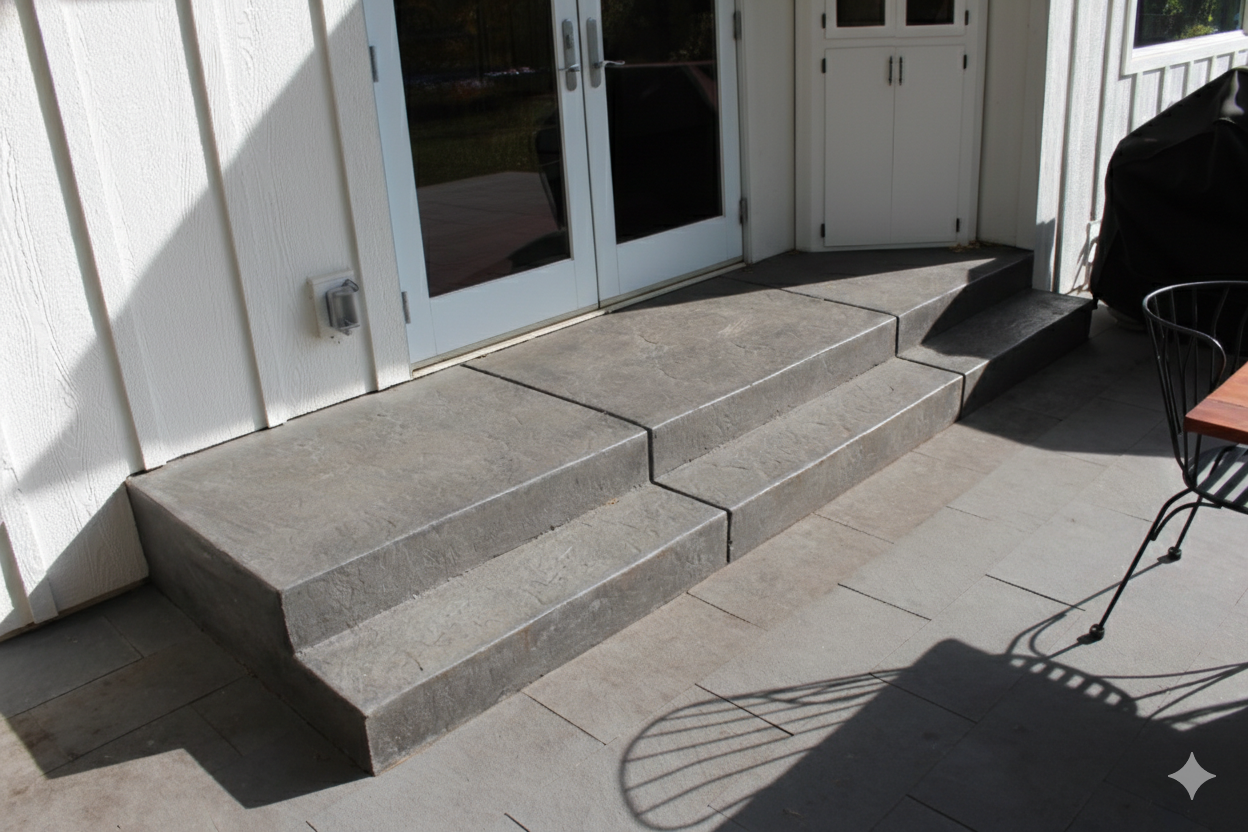
On our steps and stoops projects, we only face concrete steps and landings that are built on correct frost footings. Each tread gets full-depth coping stone so the front edge is finished cleanly with no exposed concrete. The landing at the door is typically four feet deep minimum, which gives enough space to open the door comfortably and stand safely without backing down the steps.
Material choices make a significant difference in both longevity and appearance. Stone-faced concrete is one of the most popular options for Eden Prairie homes because it combines the structural reliability of concrete with the finished look of natural stone. The concrete core provides mass and stability, while the stone face handles the visual presentation and stands up to freeze-thaw much better than bare concrete surfaces.
Matching Steps to the Home's Architecture
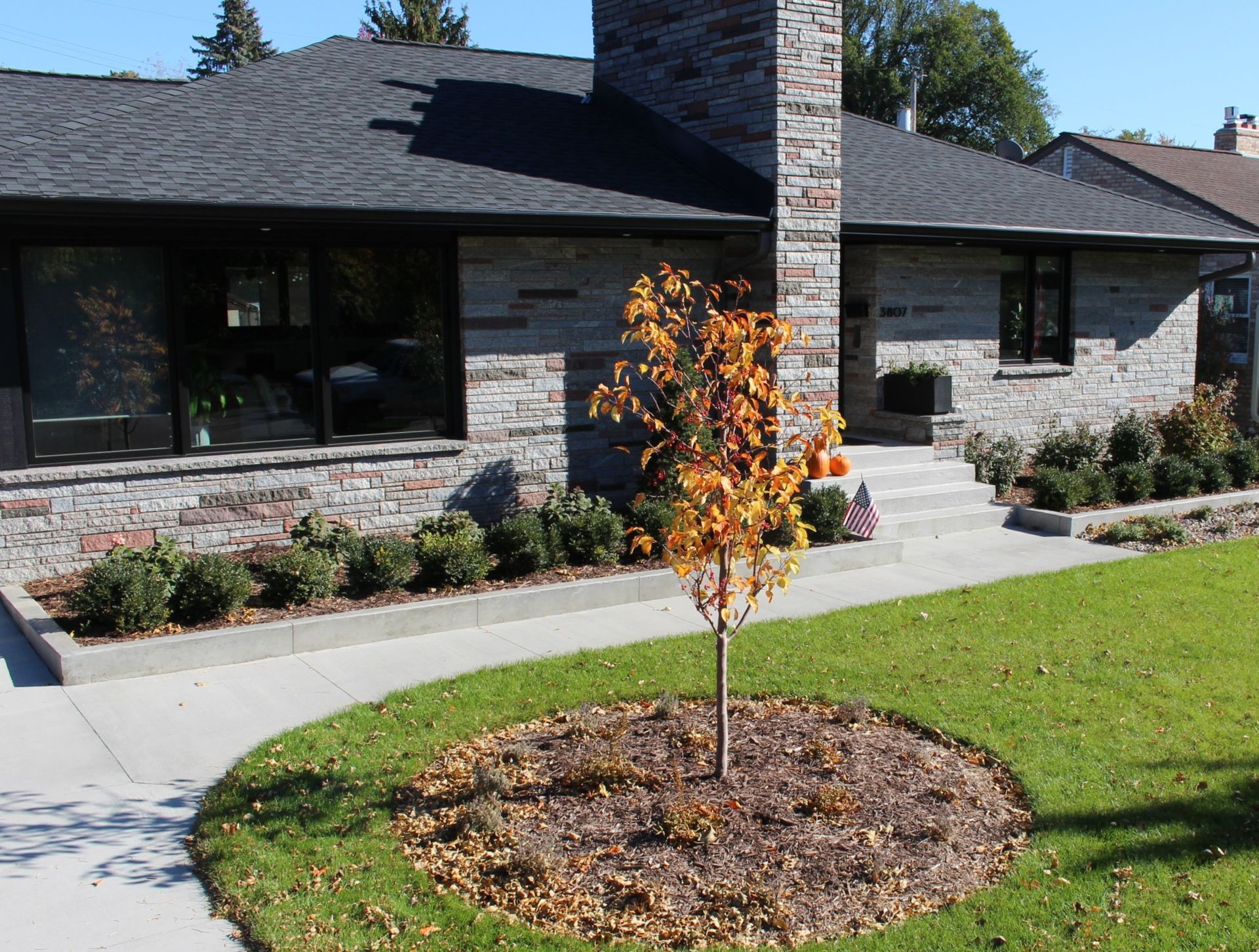
Front steps are one of the first things people see when they approach a house. They set the tone for the entire front entry, and when they're done well, they elevate the curb appeal of the whole property.
Eden Prairie has a range of architectural styles, from traditional colonials and split-levels to contemporary and mid-century modern homes. The step design should match the house. A traditional home looks right with stone-faced steps and a wide stoop. A modern home might call for something cleaner and more minimal.
We designed a set of floating steps for a mid-century modern home where the architecture demanded a specific aesthetic. The treads create a suspended look that matches the home's angular lines, with clean edges and open risers. But underneath that visual design, each tread sits on properly engineered footings. The look is modern. The structure is built for Minnesota.
Beyond the steps themselves, consider how they connect to the walkway and the broader front yard landscape. Steps that transition into a matching stone walkway create a cohesive entry sequence. Integrated lighting on the steps and path improves safety and highlights the investment. A well-designed railing adds both function and style, especially on entry stoops that sit more than a couple of steps above grade.
Why This Is a Fall or Spring Project
Timing matters for step replacement in Minnesota. Concrete and mortar need temperatures above freezing to cure properly, which limits the realistic work window to roughly April through November. Stone installation is best done when conditions are stable enough for the mortar to set without risk of freeze damage.
Fall is an underrated time to schedule this work. Most homeowners think about their front steps in spring when the winter damage is fresh, which means spring is the busiest season for this type of project. Scheduling in early fall means shorter lead times and completion before winter hits.
If your Eden Prairie front steps are cracked, settled, or separating from the house, the best time to address it is before another freeze-thaw season makes the problem worse. Each winter cycle that passes with compromised steps means more structural movement, more surface damage, and a larger scope of work when you eventually replace them.
Contact KG Landscape to schedule an evaluation of your front steps.
Frequently Asked Questions
How much does it cost to replace front steps in Eden Prairie?
Front step replacement costs depend on the size of the stoop, the materials chosen, and whether the existing footings need to be replaced or can be reused. A standard front entry with stone-faced concrete steps, proper frost footings, and a four-foot landing typically falls in the range that makes it a worthwhile investment compared to repeated patching. We provide specific estimates after evaluating the existing conditions.
How deep do footings need to be for front steps in Minnesota?
Footings in the Twin Cities metro need to extend at least 42 inches below grade to sit below the frost line. This prevents frost heave from lifting and shifting the steps each winter. Steps built without footings at this depth are at risk of movement, which causes cracking, settling, and separation from the house over time.
Can you put stone over existing concrete steps?
If the existing concrete is structurally sound, level, and firmly seated, a stone veneer can be applied over the surface. If the steps have settled, shifted, or separated from the house, veneering over them is a cosmetic fix on a structural problem. The movement will eventually crack the new stone as well. An honest evaluation of the existing structure determines whether overlay is viable.
How long do stone front steps last in Minnesota?
Stone-faced concrete steps built on proper frost footings can last 30 years or more with normal maintenance. The stone face weathers gradually and develops character rather than deteriorating the way bare concrete does. The key to longevity is what's underneath: the footings, the base, and the drainage around the steps all affect how long the finished product performs.
What's the difference between a stoop and front steps?
A stoop is the landing platform at the top of the steps, directly in front of the door. Steps are the treads that get you from ground level up to the stoop. Most front entry projects include both. The stoop should be at least four feet deep so you have room to stand comfortably while opening the door, and wide enough for the entry to feel proportional to the house.
Do I need a permit to replace front steps in Eden Prairie?
Permit requirements depend on the scope of work. Simple step replacement on existing footings may not require a permit, but new footing work, changes to the stoop size, or additions like railings may trigger permit and inspection requirements. The City of Eden Prairie's building department can confirm what's needed, and we handle permit applications when they're part of the project scope.
Ready to Start on Your Next Project?
Call us at (763) 568-7251 or visit our quote page.