Early Warning Signs of Yard Drainage Problems in Bloomington, MN
Most drainage problems don't announce themselves all at once. They build gradually, season by season, until the evidence is impossible to ignore. A soft spot in the yard that shows up during spring snowmelt. Grass that thins along the same path every year. A basement that smells damp after heavy rain even though you've never seen actual water come in.
By the time a Bloomington homeowner calls about drainage, the problem has usually been developing for years. The damage to the lawn, the soil, and potentially the foundation has been accumulating quietly. The earlier you recognize what's happening, the simpler and less expensive the solution tends to be.
These are the warning signs that tell you your Bloomington yard has a drainage problem, listed in roughly the order most homeowners notice them.
Standing Water That Sticks Around After Rain
Every yard has low spots that hold a little water during a heavy storm. That's normal. What isn't normal is water that's still sitting in the same place 24 or 48 hours after the rain stopped.
Healthy soil in a well-graded yard should absorb and redirect surface water within a day. If water is lingering longer than that, one of two things is happening: the soil can't absorb it, or the grade isn't moving it.
Bloomington sits on soil that's heavy in clay content, particularly in the neighborhoods east of I-35W and through the areas between Old Shakopee Road and the Minnesota River bluffs. Clay soil absorbs water slowly and holds it stubbornly. When that clay is compacted from years of foot traffic, mowing, and settling, the absorption rate drops even further. Water sits on the surface because it has nowhere else to go.
Standing water is the most visible symptom, but it's rarely the only one. By the time you're noticing puddles, the drainage issues underneath have usually been developing for a while.

Soft, Spongy Ground Near the House
This one is easy to miss and the most important to catch. If the ground along your foundation stays soft or spongy after rain, water is collecting where it should be draining away.
Negative grading is the most common cause. Over time, soil settles around the foundation perimeter. What was once a slope moving water away from the house becomes a flat area, or worse, a slope moving water toward it. The settling can be subtle. You won't see it standing in the yard. But you'll feel it when you walk along the house and the ground gives more than it should.
Foundation water intrusion starts long before you see visible water in the basement. Moisture wicks through concrete block and poured concrete foundations, raising humidity levels in the basement and creating conditions for mold and structural damage. By the time you see efflorescence (white mineral deposits) on basement walls or smell that characteristic musty dampness, the water has been working its way in for multiple seasons.
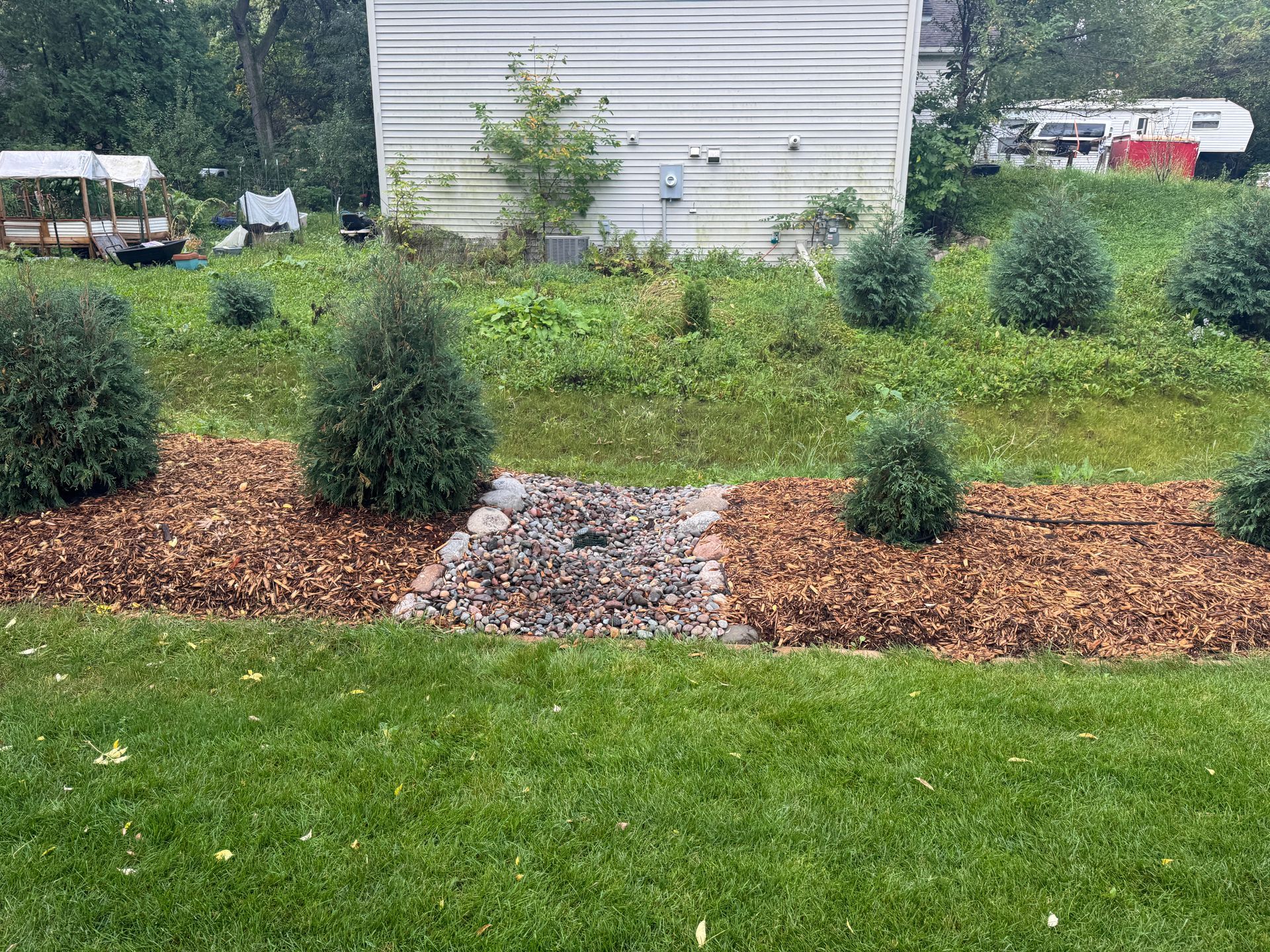
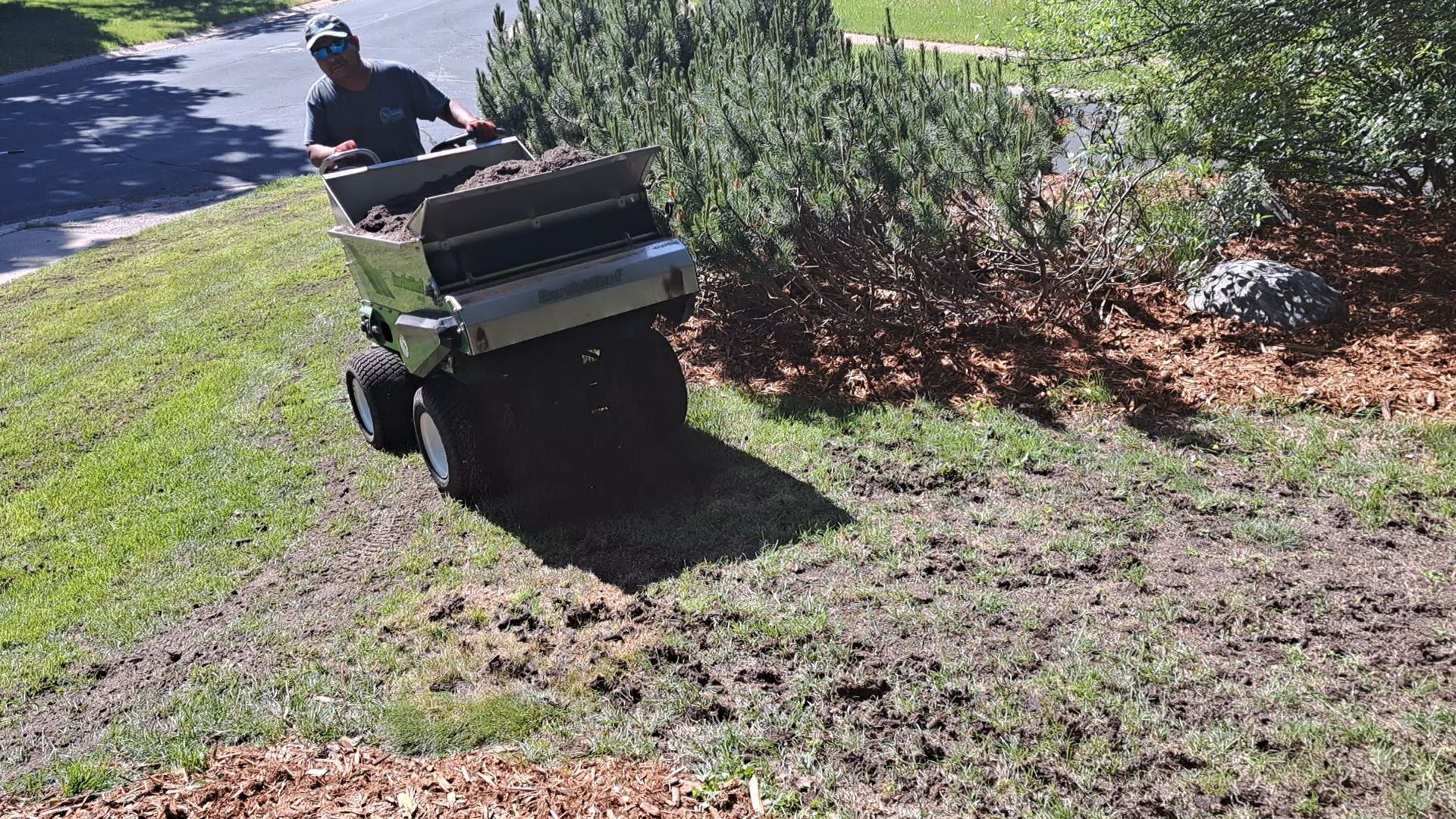
A homeowner in St. Paul's Macalester-Groveland neighborhood contacted us because standing water had progressed past lawn damage and was reaching the foundation. The yard had negative grading near the house, a single overloaded downspout handling all the roof runoff, and compacted soil that couldn't absorb anything. We installed catch basins, underground drain pipes routed to the city storm sewer, and restored the lawn with topdressing and seed blankets. The system replaced what one overwhelmed downspout was trying to manage on its own. The approach combined a 4-inch underground drain pipe connected to a 12-inch catch basin beneath the downspout, with a second catch basin in the lawn for surface water collection during heavy rain.
That project followed a pattern we see across the metro: the problem starts with water lingering in the yard and progresses to the foundation if it's not addressed.
A Side Yard That Never Fully Dries
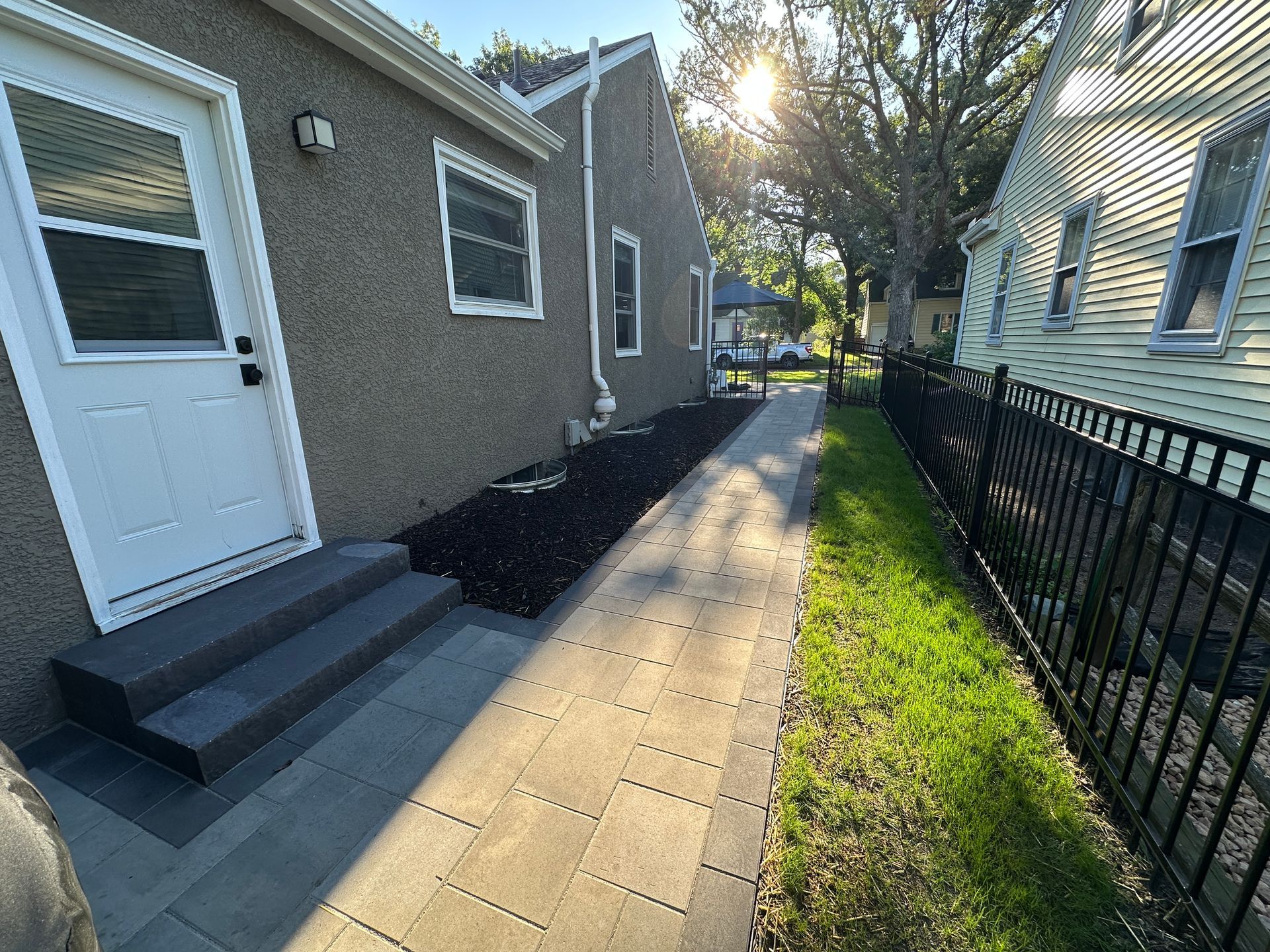
Side yards are drainage battlegrounds, especially in Bloomington's older neighborhoods where houses sit close together. These narrow corridors between homes collect water from multiple sources: roof runoff from both properties, surface water from the front and back yards, and sometimes sump pump discharge from basement systems.
The combination of concentrated water flow and restricted air circulation means side yards dry slowly under the best conditions. When the soil is clay, which it usually is in Bloomington, these areas can stay saturated for weeks after the last significant rain.
A persistently wet side yard isn't just unpleasant to walk through. It's an active problem. Saturated soil against the foundation wall creates hydrostatic pressure that can force moisture through the concrete. Root systems in the wet zone become waterlogged and die, leaving bare soil that erodes further. The ground stays soft and unstable.
We worked on a property where the clay side yard wouldn't dry out even weeks after rain. Underground downspouts and drain tile working together gave the water somewhere to go. The downspouts captured roof runoff and routed it away from the foundation. The perforated drain tile collected groundwater from the saturated clay and directed it to a discharge point. Together, those two systems addressed both the surface water and the subsurface water that had been keeping the side yard permanently wet.
If your Bloomington side yard squelches when you walk through it days after rain, the problem won't resolve on its own. Clay doesn't drain faster as it ages. It needs mechanical help.
Grass That Thins, Dies, or Turns to Moss in the Same Spots Every Year
Drainage problems show up in the lawn before they show up anywhere else. Grass roots can't survive in waterlogged soil. If the same patches of your lawn thin out, die back, or develop moss every year while the rest of the yard stays green, those patches are telling you where water is collecting or where the soil stays too wet for too long.
Moss is a particularly clear indicator. Moss thrives in damp, shaded, acidic conditions. If it's establishing in your lawn, the conditions in that area are fundamentally wrong for grass. No amount of reseeding will overcome a drainage problem. The water issue has to be corrected first, and then the turf can be re-established in soil that can actually support it.
Bare patches along downhill slopes are another common pattern. Water running across the surface carries soil and seed with it, leaving erosion channels that widen each season. The Minnesota Stormwater Manual notes that residential properties with poor drainage contribute to broader stormwater management challenges, but the immediate concern for homeowners is the damage to their own yard and foundation.
Downspouts That Dump Water Right Next to the House
This is the simplest drainage problem to spot and one of the easiest to fix early. If your downspouts discharge directly at the foundation, all the water your roof collects during a storm is being concentrated in the worst possible location.
A typical Bloomington home's roof sheds thousands of gallons during a heavy rain event. Downspouts concentrate that volume into a few specific points around the perimeter. If those points are right against the house with no extension, splash block, or underground routing, the soil in those areas stays permanently saturated. The foundation absorbs moisture constantly. The grass dies in the splash zone.
Underground downspout extensions route roof water through buried pipes to a discharge point well away from the house. It's one of the most cost-effective drainage improvements available, and it eliminates one of the biggest contributors to foundation moisture on Bloomington homes. Combined with proper grading away from the foundation, underground downspouts can solve a surprising percentage of residential drainage complaints without the need for more extensive systems.
What to Do When You Recognize These Signs
Drainage problems share one characteristic: they get worse with time, never better. The settling that created negative grading doesn't reverse. The compacted clay doesn't loosen. The erosion channels don't fill in. Each season that passes without correction means more soil loss, more compaction, and more water finding its way toward the foundation.
The first step is a professional evaluation of the property's grading, soil conditions, and water patterns. Where is the water coming from? Where is it going? Where should it be going? The answers determine whether the solution is as simple as regrading and extending downspouts or as involved as a subsurface drain tile and catch basin system.
The good news is that most residential drainage problems in Bloomington have well-established solutions. French drains, underground piping systems, catch basins, regrading, and combinations of these approaches can resolve even severe water issues when they're designed for the specific property conditions. The key is matching the solution to the actual problem rather than guessing.
Spring and early summer are the best times to evaluate drainage because the problems are most visible when snowmelt and spring rains put the system under stress. If you see the warning signs during spring, schedule the evaluation before summer dry weather hides the evidence.
Contact KG Landscape to evaluate drainage on your Bloomington property.
Frequently Asked Questions
How much does it cost to fix drainage problems in Bloomington?
Drainage solutions range from a few hundred dollars for downspout extensions and minor regrading to several thousand for comprehensive systems with catch basins, underground piping, and French drains. The cost depends on the source and severity of the water problem, the soil conditions, and the extent of the system needed. A site evaluation identifies the specific issue and the most cost-effective solution for your property.
Can I fix yard drainage myself?
Minor improvements like adding downspout extensions, building up soil against the foundation for positive grading, and improving surface drainage with simple swales are manageable DIY projects. Subsurface systems, catch basins, and French drains require excavation, proper pipe sizing, correct slope calculations, and knowledge of local discharge regulations. Incorrect DIY drainage work can redirect water toward neighboring properties or fail to solve the original problem.
Will regrading my yard fix standing water?
It depends on the cause. If the standing water results from flat or negative grading that traps surface water, regrading can solve it by creating a positive slope away from the house and toward an appropriate discharge point. If the problem is subsurface water, compacted clay that can't absorb rainfall, or concentrated roof runoff, regrading alone may not be sufficient. The evaluation determines whether surface corrections are enough or whether subsurface systems are needed.
How do French drains work in clay soil?
French drains are gravel-filled trenches with a perforated pipe at the bottom. In clay soil, the drain collects water that would otherwise sit in the clay and routes it through the pipe to a discharge point. The gravel provides a channel that water flows through much faster than it can move through clay. In Bloomington's clay soils, French drains are especially effective because they provide the drainage path that the native soil can't.
Does homeowners insurance cover yard drainage problems?
Standard homeowners insurance typically covers sudden water damage, like a burst pipe, but does not cover gradual drainage problems or the cost of correcting them. Foundation damage caused by long-term poor drainage is generally considered a maintenance issue, not a covered event. This is one reason early intervention matters: fixing a drainage problem before it causes foundation damage costs significantly less than repairing both the drainage and the foundation.
When is the best time of year to install drainage in Minnesota?
Spring through fall is the viable window, with spring and early summer being ideal. The ground needs to be unfrozen for excavation, and completing the work before the heaviest rain season provides immediate benefit. Fall installations work well too, with the system in place to handle spring snowmelt. Winter installation isn't practical because frozen ground prevents proper excavation and pipe placement.
Ready to Start on Your Next Project?
Call us at (763) 568-7251 or visit our quote page.