Using Topdressing and Overseeding To Strengthen New Construction in Mendota Heights, MN
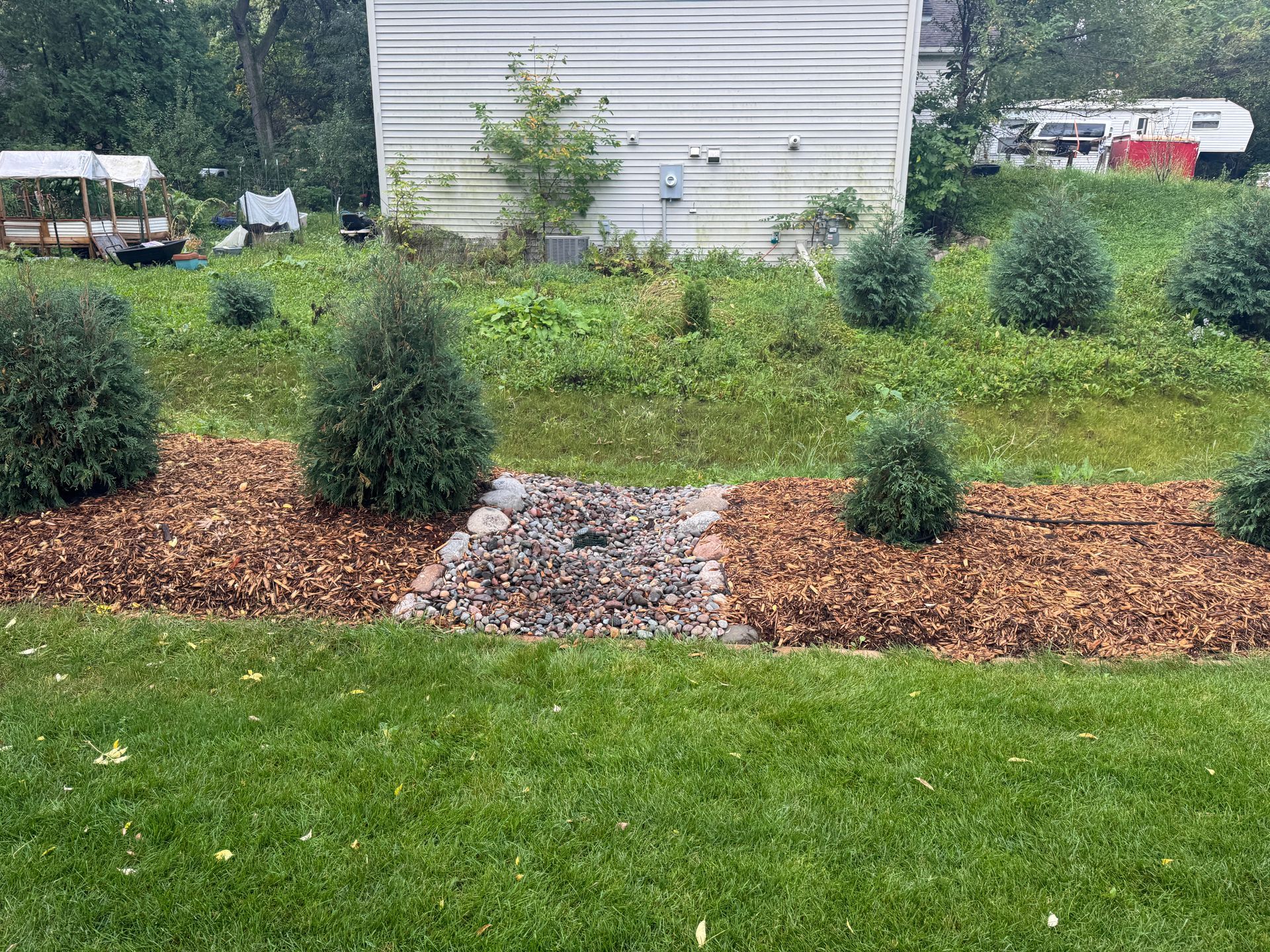
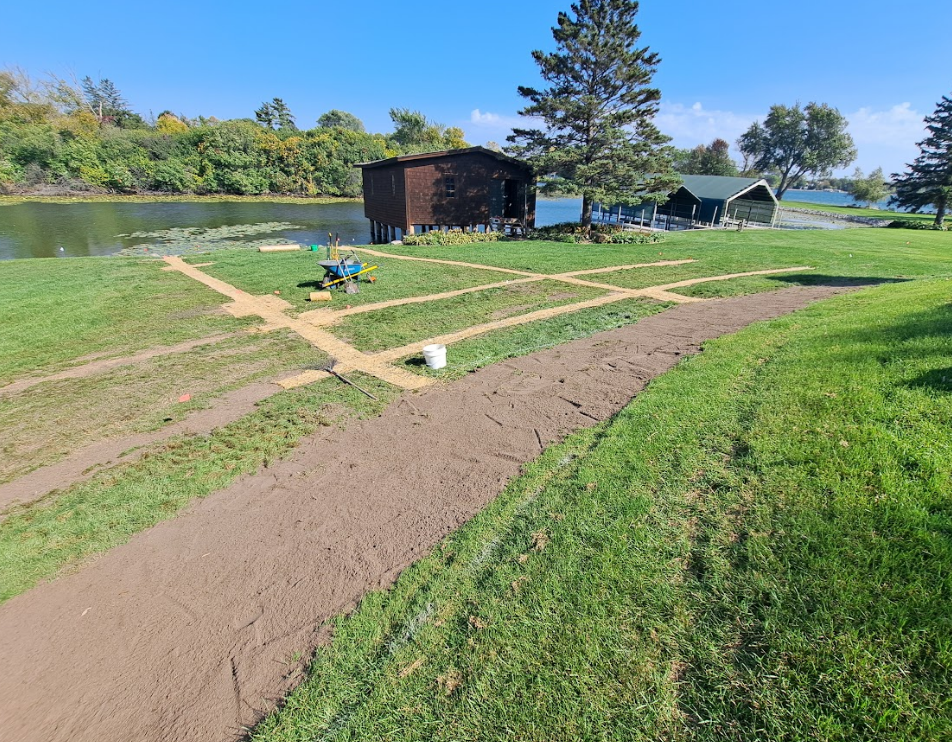
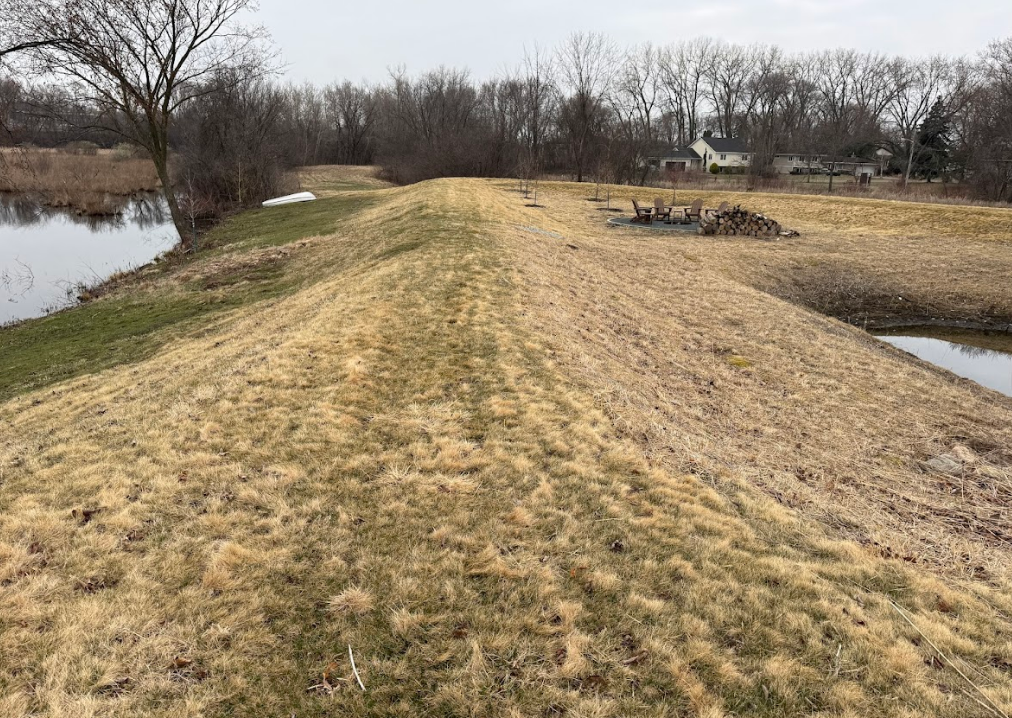
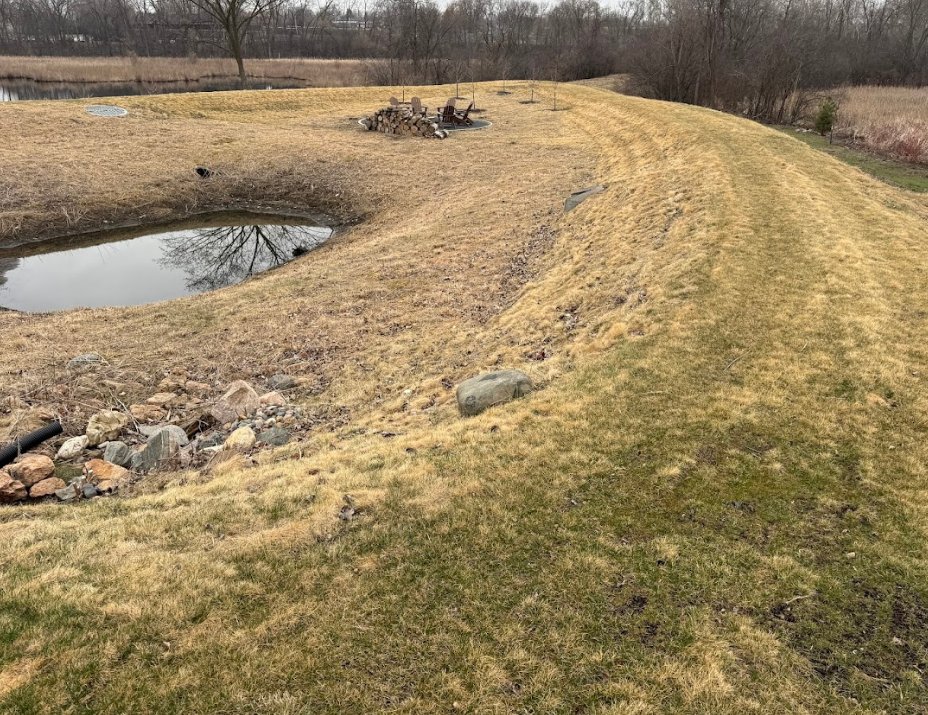
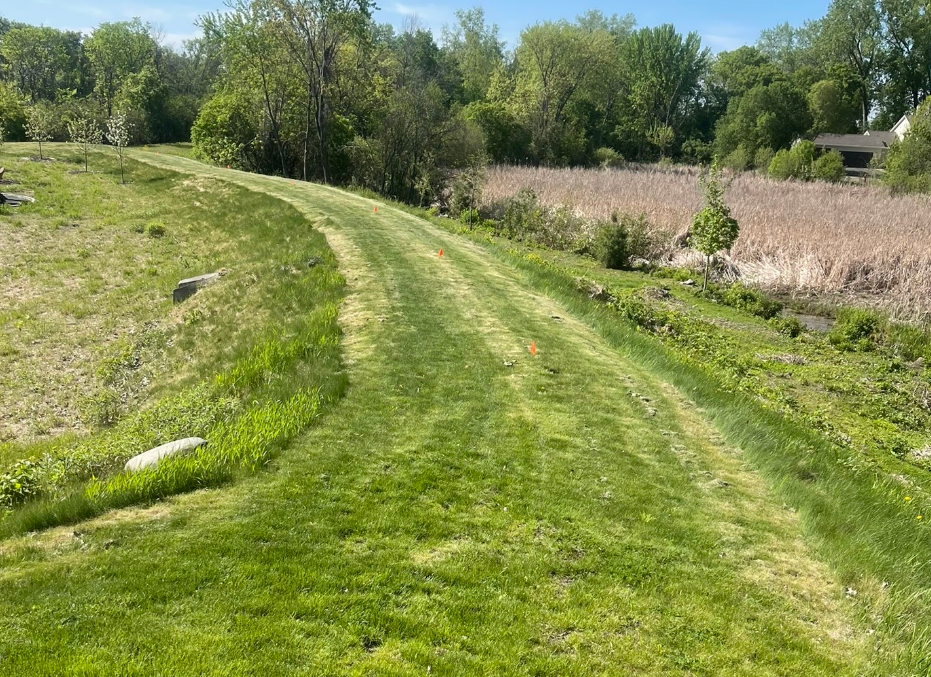
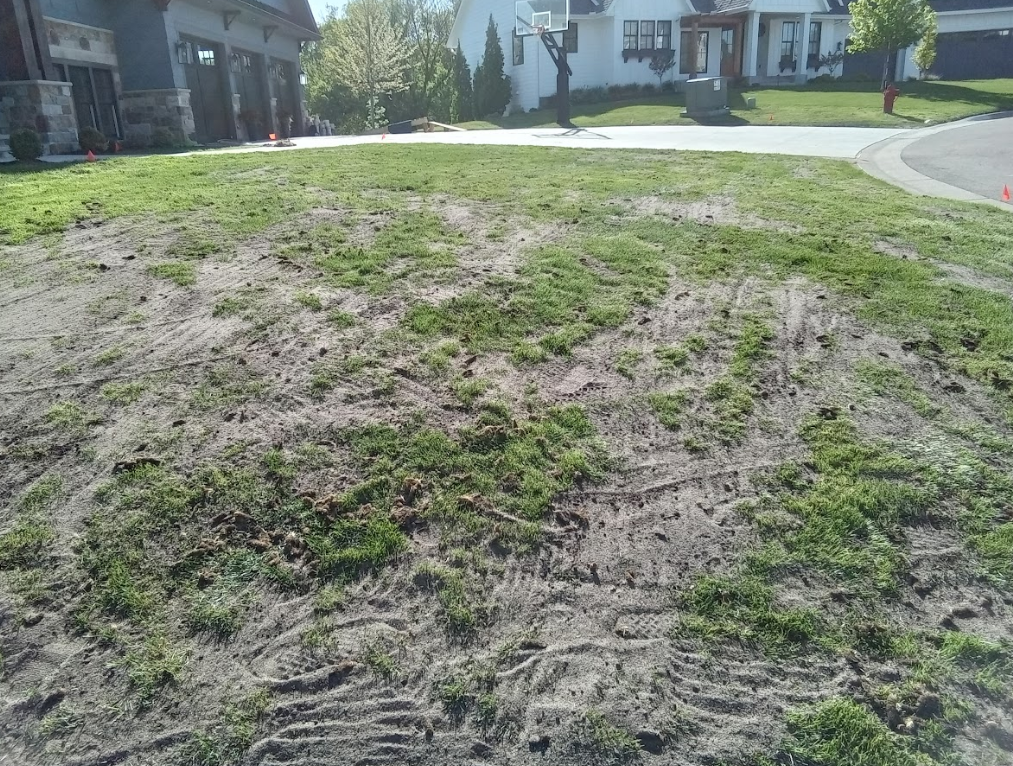
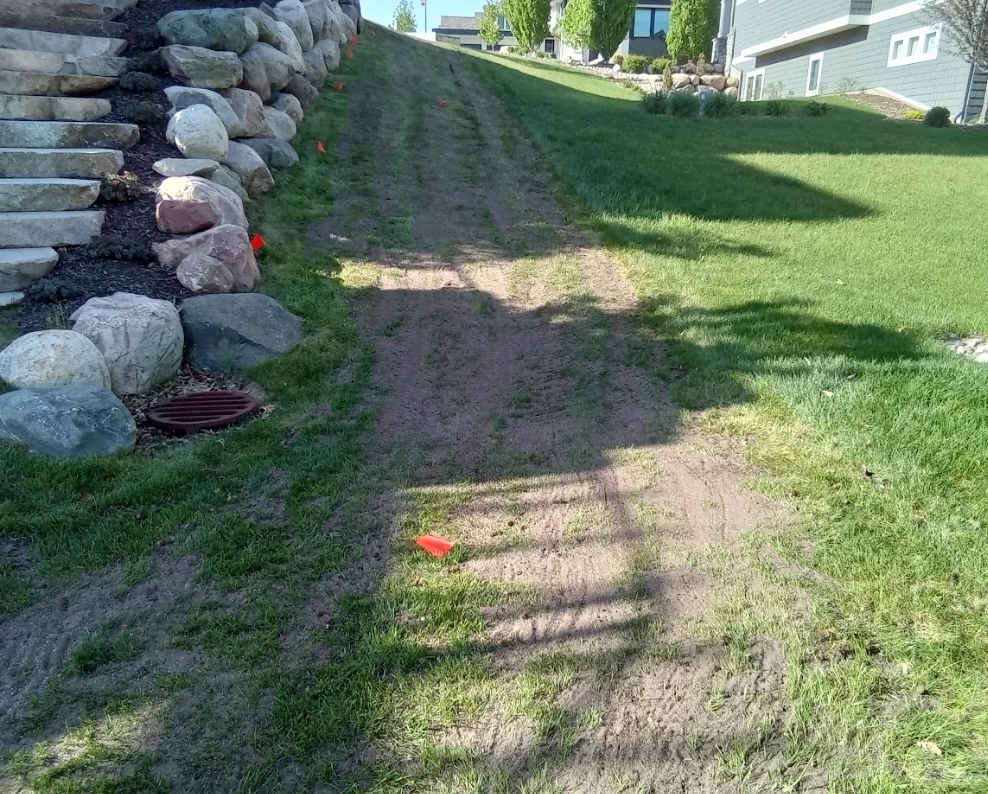
New construction doesn't always mean there's no room for improvement. We saw that for ourselves at this residential property in Mendota Heights, Minnesota, just outside St. Paul. The new home featured a large backyard with a small pond as its central landscape element. Encircling the pond was a ring-shaped berm. While the raised feature added visual interest, the elevation changes around the pond contributed to ongoing runoff and soil movement, leading to severe turf damage and visible erosion. It didn't take long for the grass on the raised ring to became thin and patchy, with bare areas forming where soil had already washed away.
Beyond the pond area, the entire yard struggled with poor lawn establishment following new construction, resulting in inconsistent growth and thin turf coverage throughout. This new homeowner contacted KG Landscape to help put the finishing touches on a new lawn that hadn't gone quite as planned.


Additional Issues We Discovered
Before we proposed solutions to the client, our team performed an initial assessment of the property to discover whether other issues may be contributing to the lawn's poor health. Indeed, we identified several additional stress factors that were preventing this lawn from thriving.
One was salt damage on the grass along the driveway. Salting the pavement after snowfalls had caused discoloration and dying grass in areas adjacent to the driveway and walkway. As is often the case, a client's dogs were a contributing factor to poor grass health as well, as we noted dog spots scattered across the lawn.
Another common issue that we face with Minnesota lawns is compacted, clay-heavy soil, and we discovered that here in Mendota Heights. This soil composition tends to absorb and retain water without nourishing the root system, which makes it harder for lawns to establish dense and healthy turf. This challenging soil combined with slope-related runoff and continuous turf stress to limit root development and prevent new grass from fully taking hold, ultimately detracting from the appearance and usability of the backyard.
Options We Considered
There were three approaches that we proposed to our client, from least to most invasive.
Targeted Repair with Topdressing, Aeration, and Overseeding
Our first option focused on improving the existing lawn without a full renovation. Core aeration would relieve soil compaction across the property, including areas where dog activity had had the most effect. Where turf loss and erosion have occurred, we would add imported soil on an as-needed basis to rebuild the surface and support turf recovery.
Depending on site conditions, this could include screened topsoil, a 60/20/20 topdressing mix, or compost to improve soil structure and organic content. We would complete the repair by overseeding with a standard sun/shade mix throughout the main lawn. This hardy seed would improve density and recovery in thin areas, including salt-damaged sections along the driveway. A low-mow fescue mix ideal for slopes and reduced maintenance would be our choice for the raised ring and berms surrounding the pond. All seeded areas would receive a starter fertilizer with mesotrione at the time of application.
Partial Renovation Focused on the Raised Ring and High-Stress Areas
This approach would prioritize the most severely damaged areas of the property. We would begin by selectively regrading and amending the raised ring around the pond to address erosion and soil instability. Additional soil would be brought in where necessary, using screened topsoil, a 60/20/20 topdressing blend, or compost, depending on grading and soil quality requirements. We would then reseed the area with a low-mow fescue mix to improve slope stability. Areas suffering damage from salting or dog activity would also receive targeted soil improvements and overseeding. Finally, we would aerate and overseed the remainder of the yard with a sun/shade mix. As with the more targeted repair, we would apply a starter fertilizer containing mesotrione to all seeding.
Full Lawn Renovation with Area-Specific Seeding
This most comprehensive option, a full lawn renovation, would address the widespread turf failure related to new construction, erosion, salt damage, and repeated turf stress. The lawn renovation would begin by correcting grading issues across the lawn. We would follow regrading by rebuilding low or eroded areas with imported soil materials such as screened topsoil, a 60/20/20 topdressing mix, or compost, improving soil conditions across the entire property. We would then reseed the entire yard, using a sun/shade mix in the main lawn areas and a low-mow fescue mix on the raised ring and berms for enhanced erosion control and durability. All seeded areas would receive a starter fertilizer with mesotrione to promote strong, uniform establishment.
Our Chosen Solution: Targeted Topdressing
After careful consideration of these options, our client agreed that heavy topdressing, along with aeration and overseeding, was the ideal solution to their struggling lawn. Topdressing would address both the visible turf damage and the underlying causes of failure: soil compaction, poor post-construction soil quality, and runoff driven by slope and elevation changes around the pond and berm areas. At the same time, this approach would preserve lawn features the clients did not wish to abandon in a full renovation.
By using double-core aeration prior to topdressing, we would open the soil profile to improve infiltration and root development, directly targeting the soil compaction that had prevented the lawn from ever fully establishing. The heavy but controlled topdressing with a 60/20/20 mix would rebuild the low and eroded areas without burying existing turf, allowing our team to correct the lawn while maintaining the slopes of the property.
Site conditions played a major role in this decision. The raised ring and berms required a solution that would stabilize soil on slopes, manage water movement, and reduce erosion risk, while the rest of the yard needed improved growing conditions after new construction. Using area-specific seed mixes—a sun/shade mix for the main lawn and a low-mow fescue for berms—ensured the turf selection would be the right fit for sun exposure, maintenance expectations, and slope performance. The inclusion of a mesotrione starter fertilizer supported strong establishment while minimizing early weed pressure in disturbed soil.
How We Revitalized the Lawn Using Heavy Topdressing
The project, which covered approximately 13,000 square feet of lawn area,followed a deliberate sequence to maximize soil improvement and turf establishment while protecting existing site features. The process began with double-core aeration, completed in two passes: one in a primary direction and a second pass perpendicular to the first. This cross-pattern approach increased plug removal, relieved compaction more effectively, and created ideal conditions for soil incorporation and seed-to-soil contact.
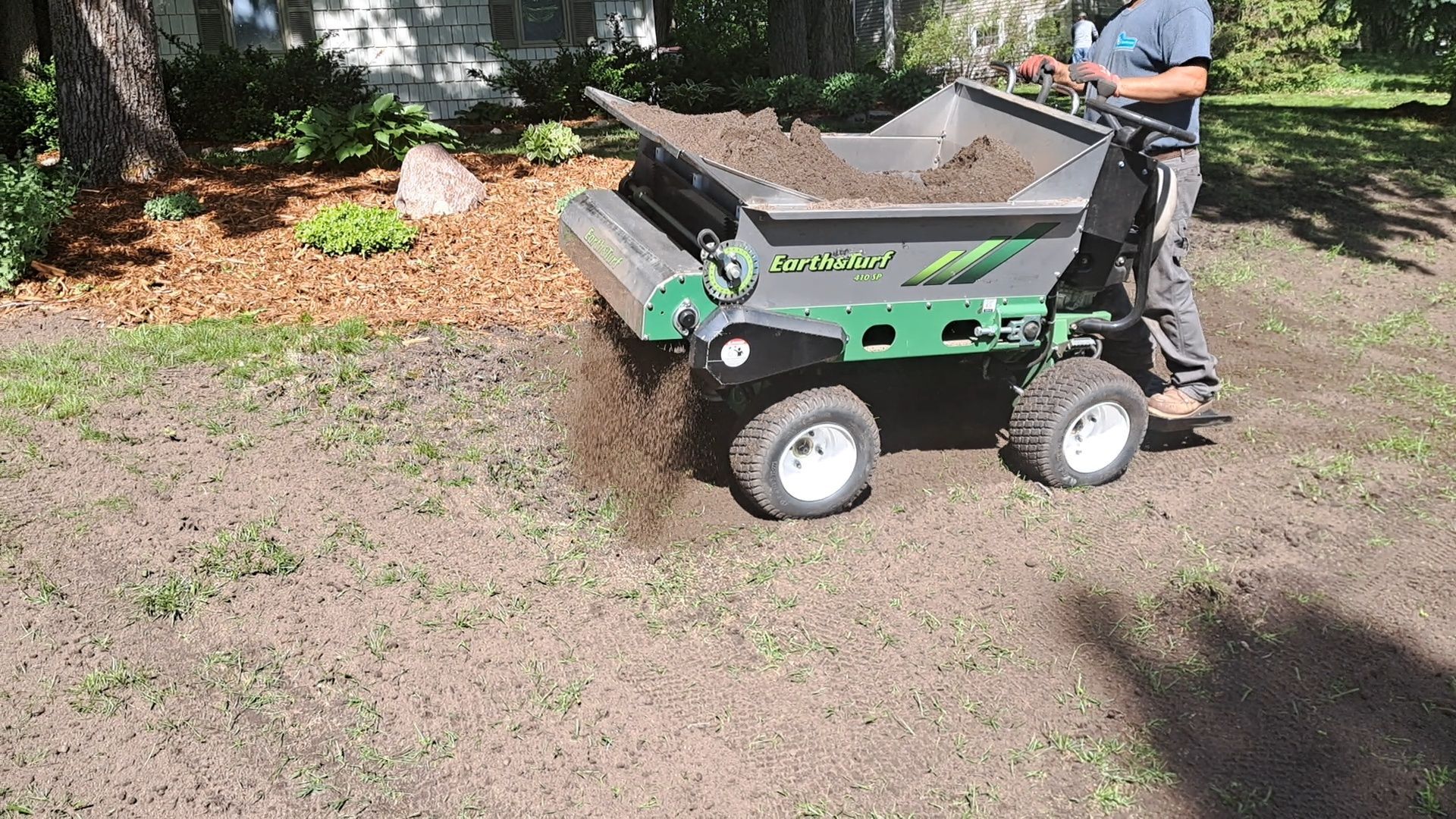
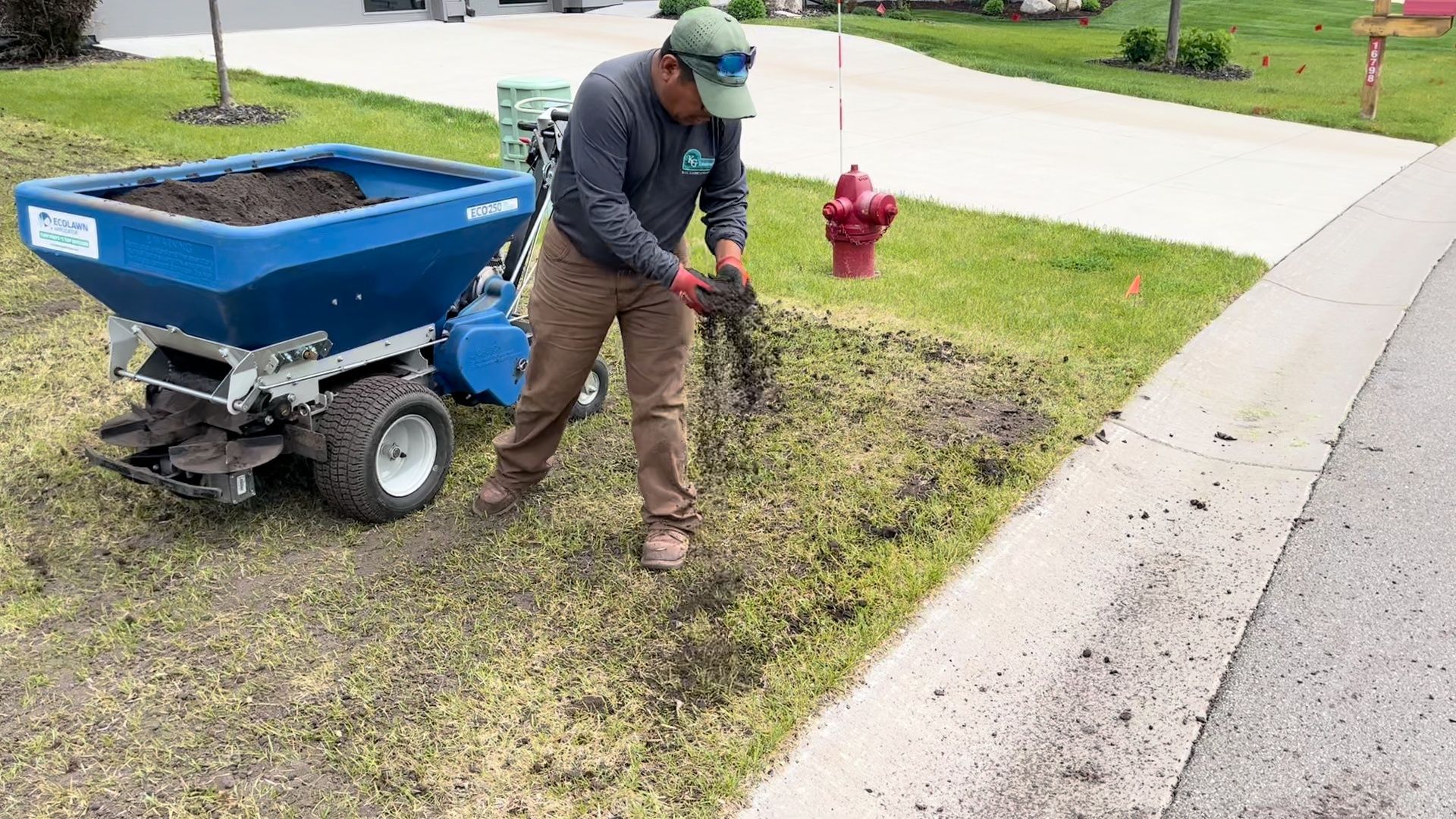
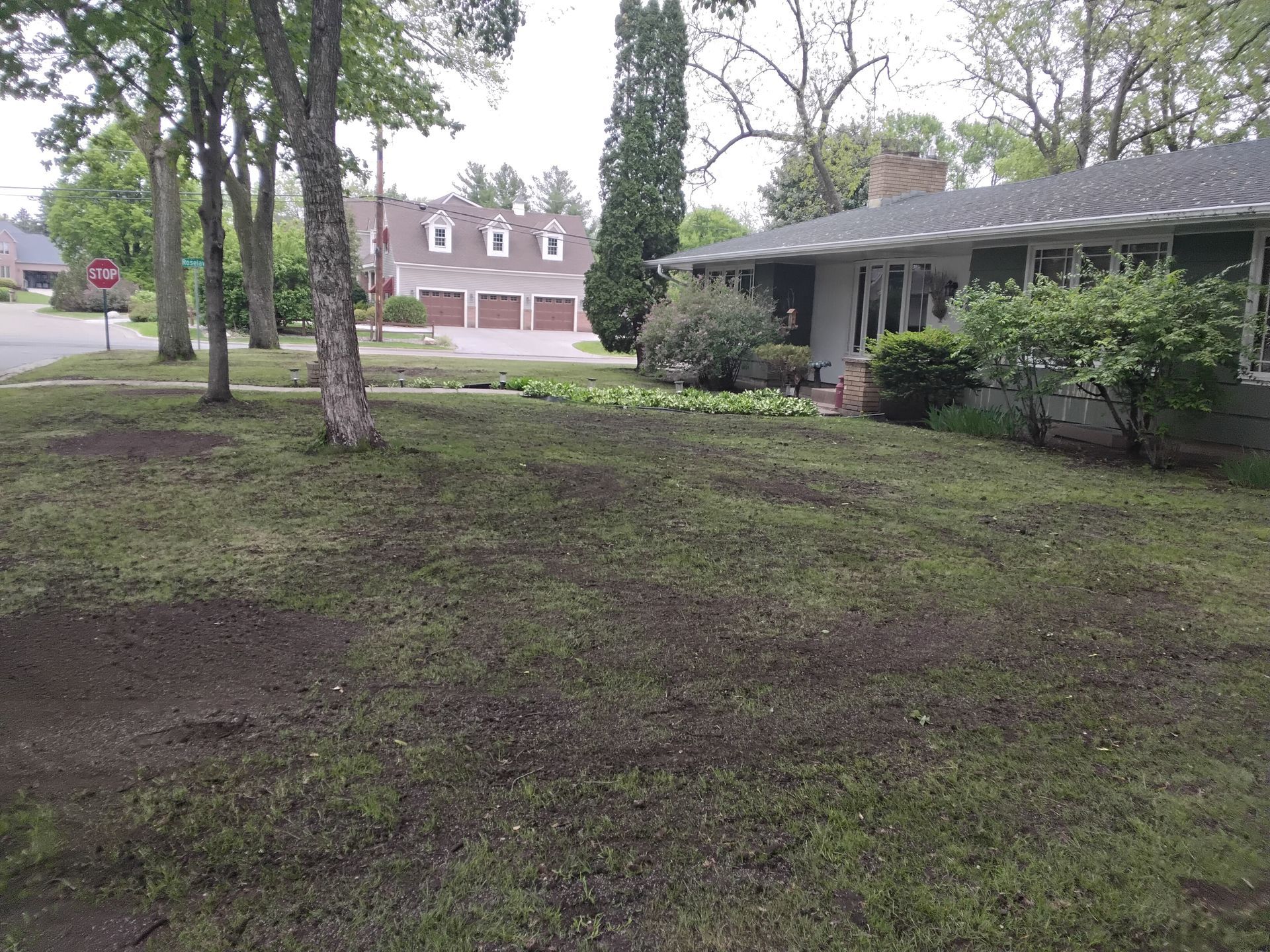
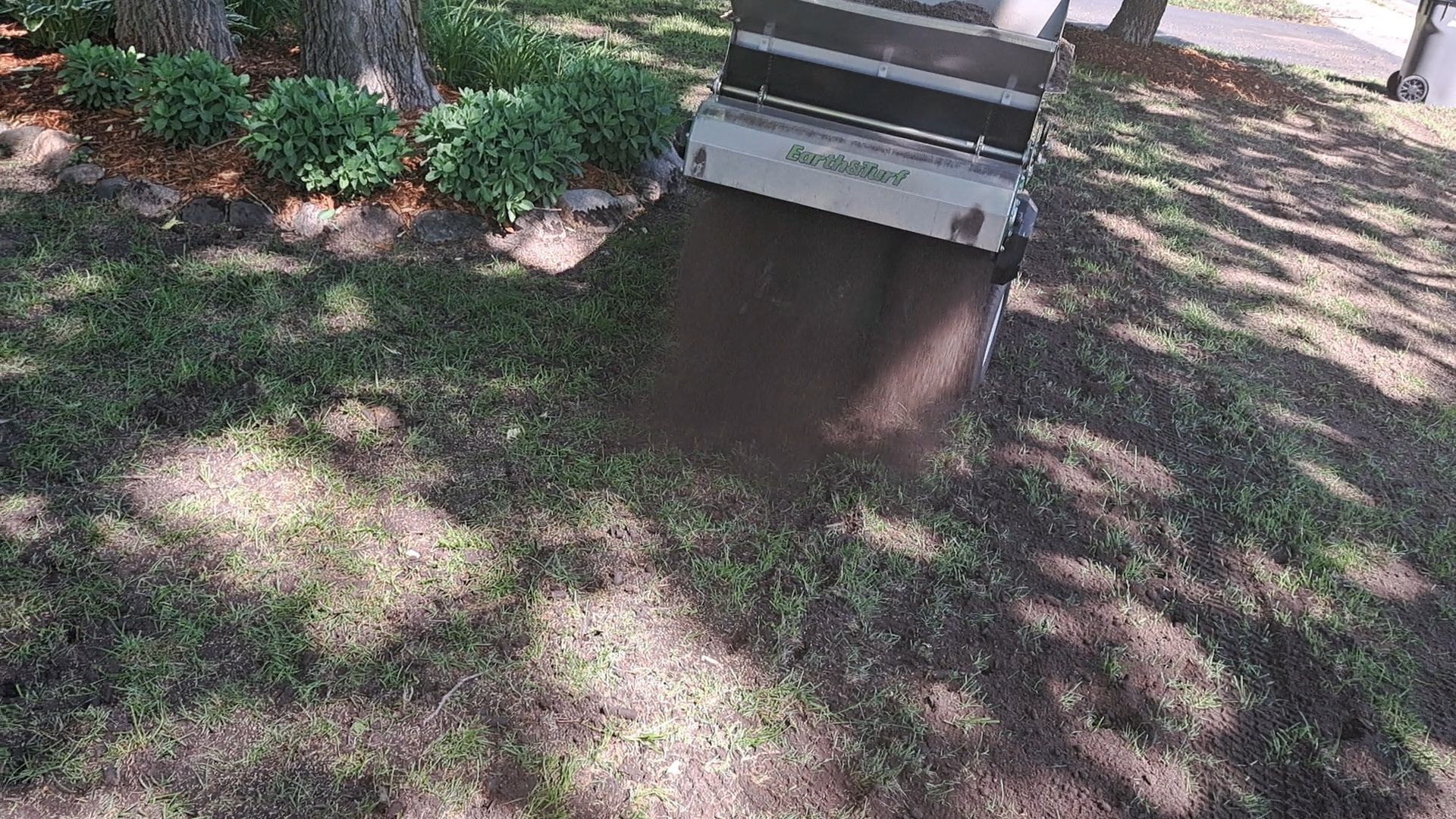
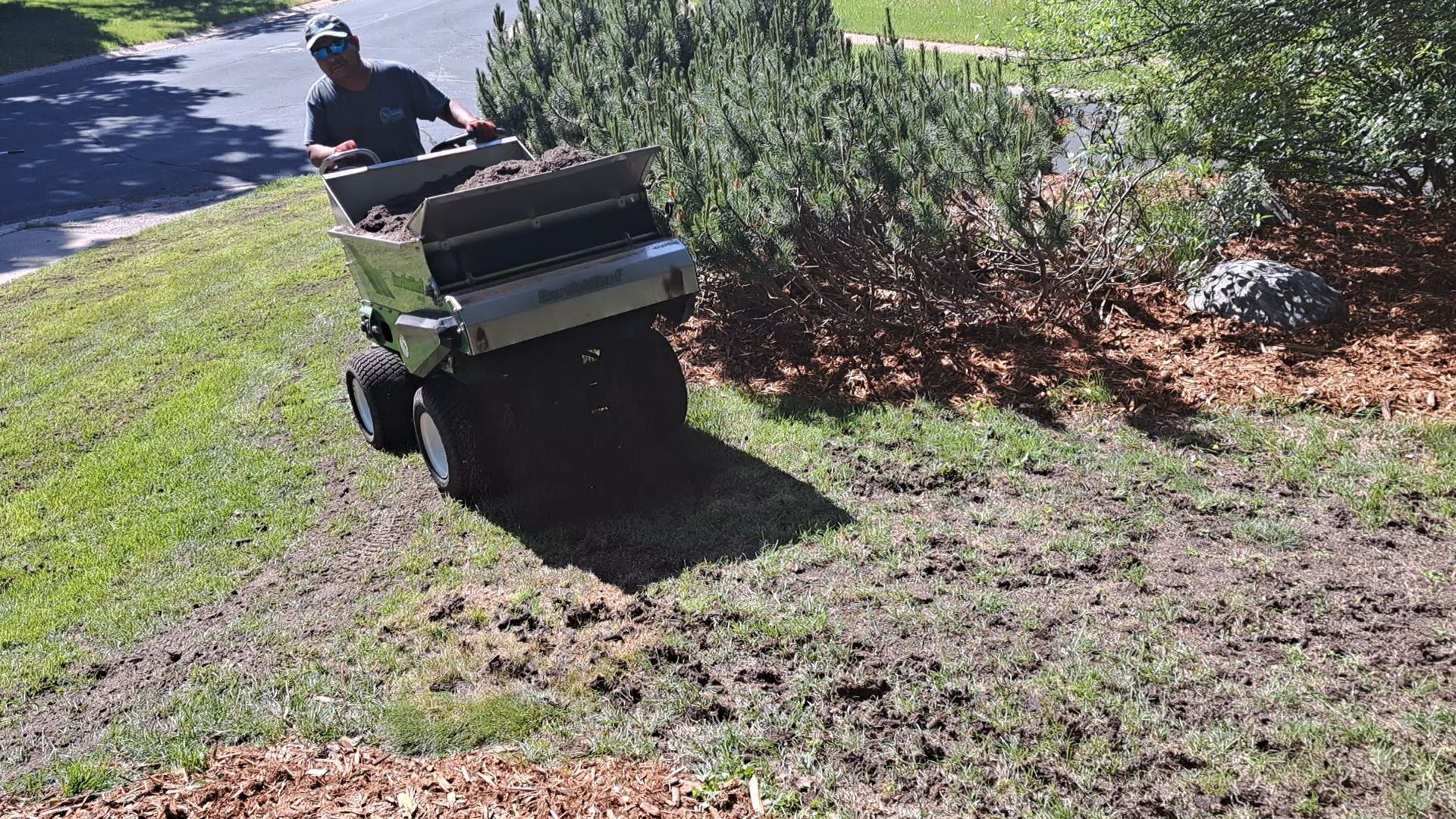
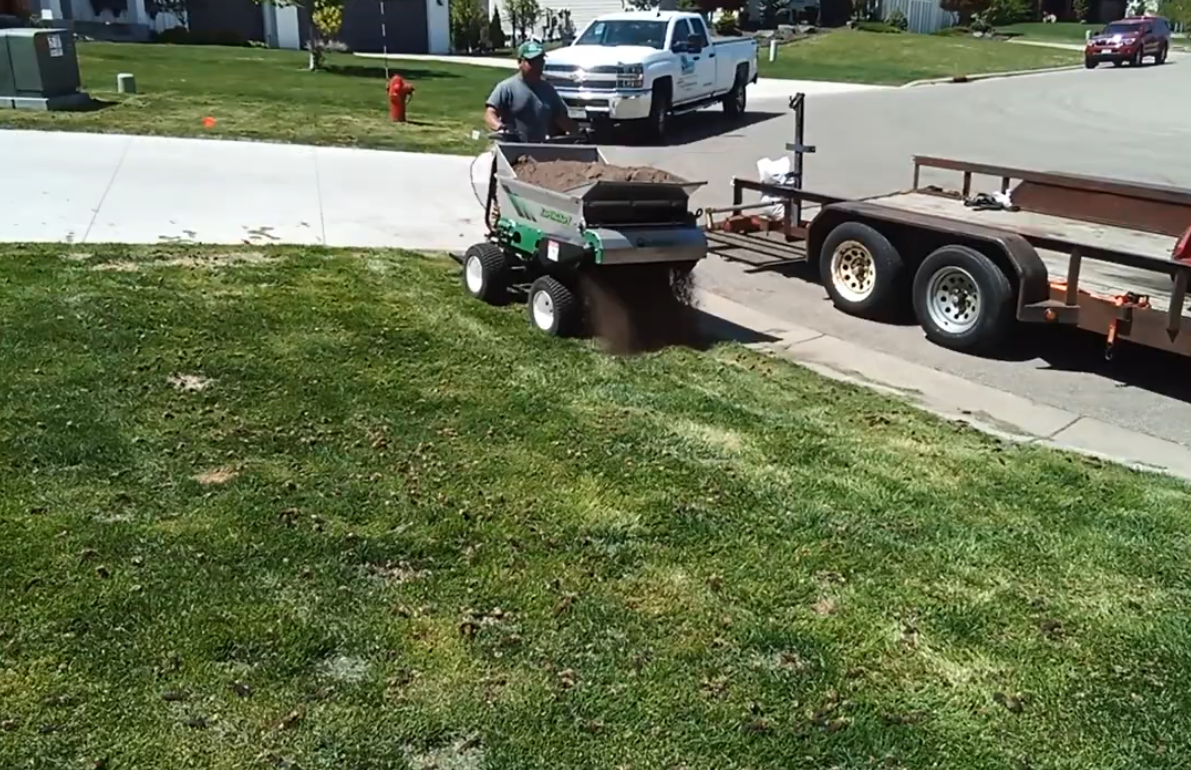
Following aeration, we completed heavy topdressing using a 60/20/20 mix of sand, soil, and peat, bringing 16 cubic yards of material to the site. We applied the material directly over existing turf and aeration plugs to rebuild low areas, improve soil structure, and stabilize erosion-prone sections. We then raked and dragged the topdressing material into the turf where needed to ensure even distribution and integration with the existing lawn surface.
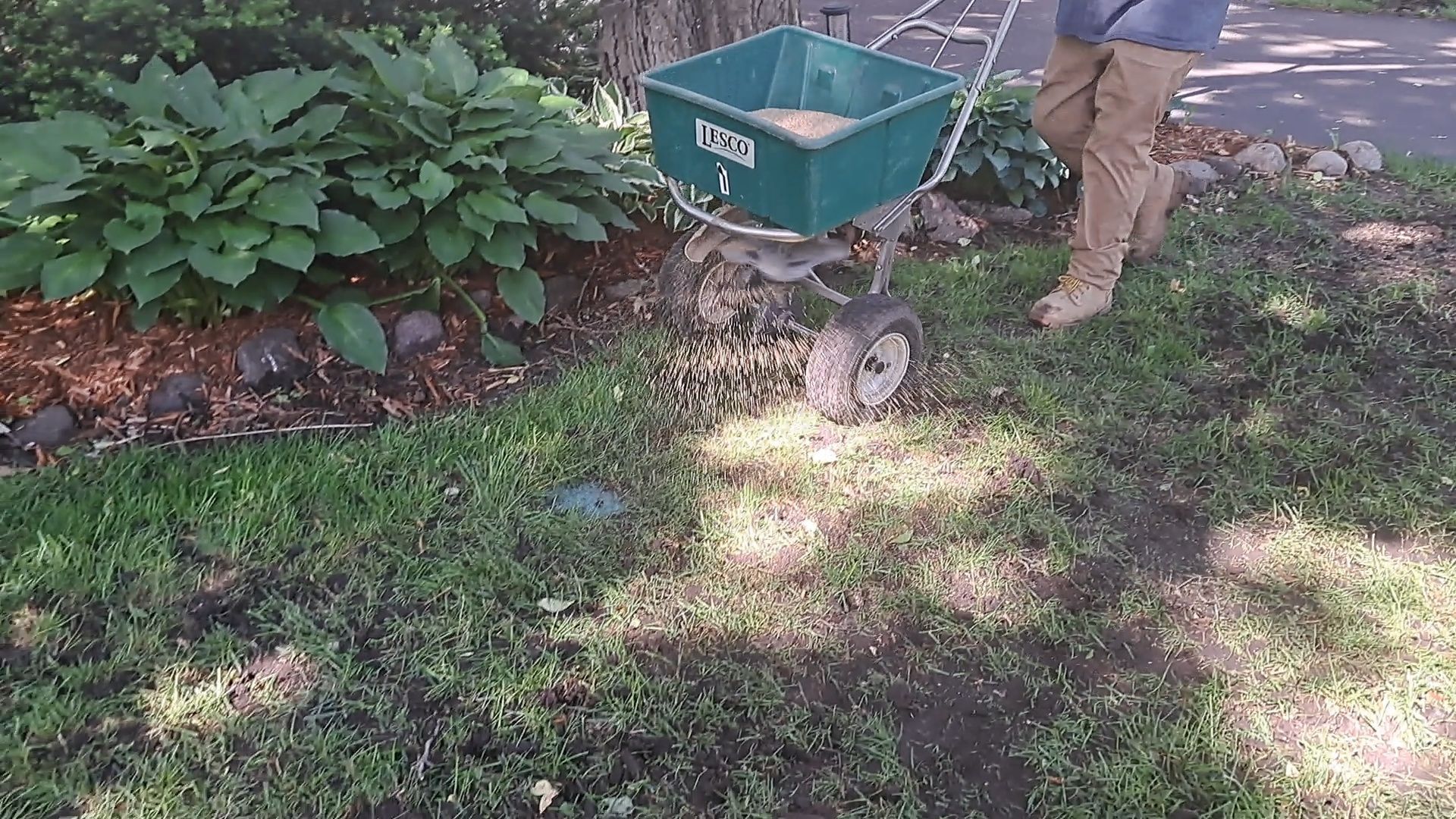
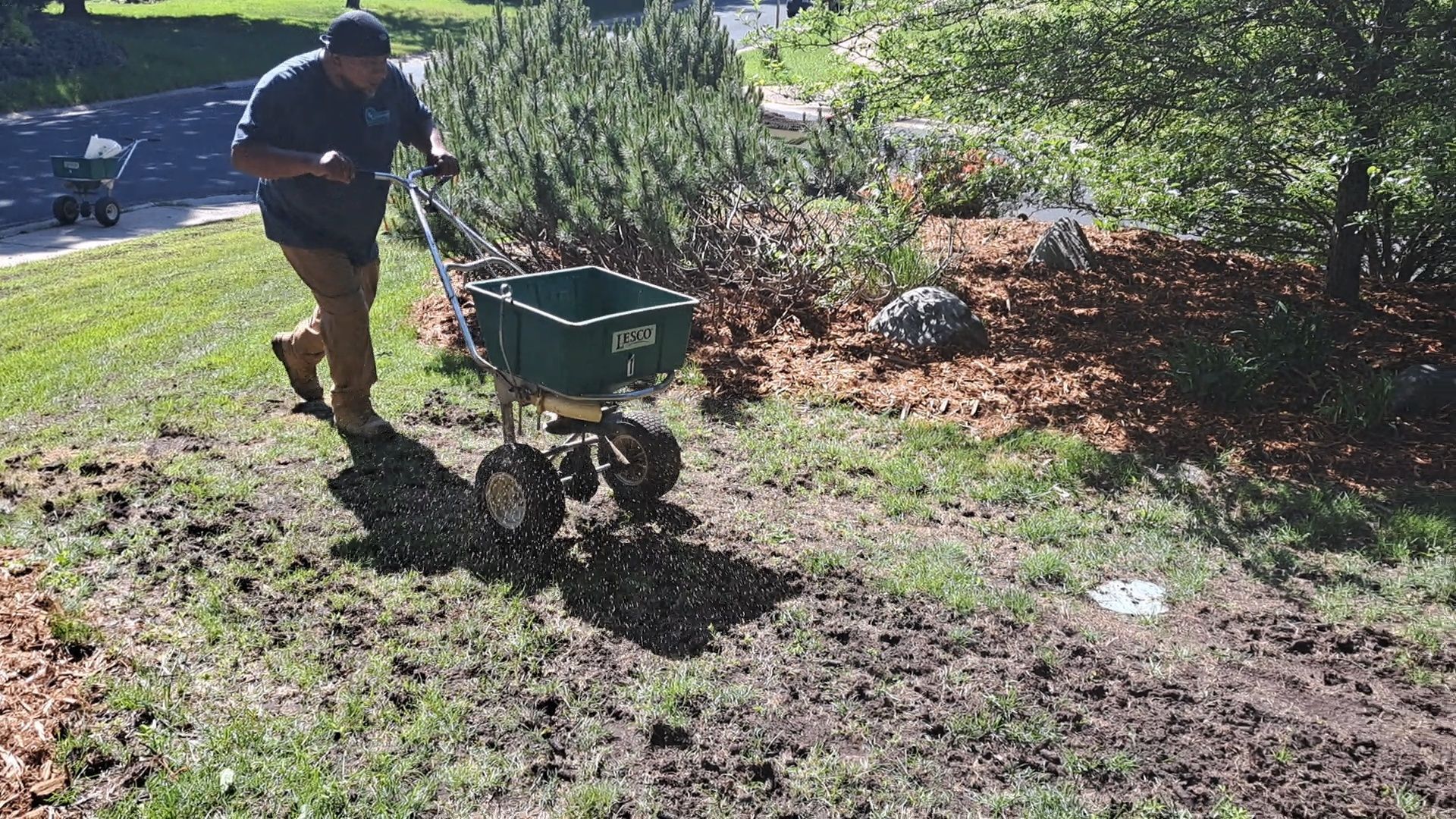
Once topdressing was complete, we overseeded the lawn was at a consistent rate, with seed selection coordinated by area. The main lawn areas received KG Landscape's standard sun/shade mix, while the raised berm areas in the backyard received a low-mow fescue seed mix ideal for improved performance on slopes and reduced maintenance. We applied different fertilizers following seeding, with mesotrione-based starter fertilizer (21-22-4) used in the main lawn areas to support establishment and early weed suppression and a non-mesotrione fertilizer for the fescue sections along the berms.
Throughout the installation, our team practiced careful site management around the pond, berms, driveway edges, and access points to protect existing landscape features and ensure clean, efficient execution. This phased and coordinated approach allowed the project to address compaction, erosion, salt-impacted zones, and overall poor turf establishment in a controlled and effective manner.
The Result of Our Topdressing Solution
The completed topdressing treatment significantly improved drainage performance across the property. Aeration and topdressing sufficiently relieved soil compaction and corrected surface inconsistencies that had allowed water to pool and run off unchecked. Double-core aeration combined with topdressing improved infiltration and reduced erosion, allowing water to move through the soil profile rather than carrying it downhill. The stabilized berms and raised ring around the pond now shed water evenly, helping to protect surrounding landscape features.
Usability of the space improved immediately following installation. Previously thin, uneven areas were now smooth and stabilized, which enhanced access to key features of the yard such as the firepit area. The improved turf coverage and corrected grading made the space safer and more comfortable to walk through, while also allowing for consistent use without tracking soil or creating ruts.
The project also delivered a noticeable upgrade in appearance and maintenance efficiency. The lawn now has a more uniform, finished look with fewer bare spots and a healthier color throughout. Stabilized slopes and improved turf density made the area much easier to mow, reducing scalping and uneven cuts. As the turf continues to establish, the Mendota Heights property is transitioning from a patchy, erosion-prone lawn into a cohesive, functional landscape that complements the home and supports long-term performance.
Why This Solution Worked for This Mendota Heights Property
This solution was effective because it not only responded to the site-specific conditions and the homeowner's goals, but it also did not try to do too much. It was important to address the issues with drainage, root development, and soil quality, but our client was not ready to abandon the landscaping features that were already in place. This required a creative solution that took the unique conditions of new construction into account.
By using double-core aeration and topdressing, we were able to improve the soil profile and create conditions that allowed the turf to establish itself evenly after initial struggles with erosion and compacted soil.
The layout of the property, especially the raised ring and berms surrounding the pond, required a solution that could manage elevation changes and soil movement without disrupting the landscape feature. Heavy topdressing managed those changes by correcting surface inconsistencies and reducing erosion without making fundamental changes. The use of a low-mow fescue mix on the berms provided durable turf capable of holding soil and performing well on slopes. These improvements also allowed for the creation of a smooth, walkable path around the pond, meeting the homeowner's goal of improved access and usability.
By tailoring soil amendments, grading adjustments, and seed selection to each area of the yard, the project delivered a lawn that is easier to maintain, safer to navigate, and visually cohesive. The end result reflects a customized approach built around the property’s unique soil conditions, layout, and functional goals, demonstrating why this solution worked so well for this specific site.
Ready to Start on Your Next Project?
Call us at (763) 568-7251 or visit our quote page.