How We Used Double-Pass Aeration and Overseeding To Renew a Compacted, Neglected Front Lawn in Minneapolis, MN
You've probably heard this saying, in reference to a task that might fall somewhat sort of action-packed: "it's about as exciting as watching grass grow." And while it's true that grass growth isn't something that calls for a front-row seat, it's also something you want to keep an eye on over time. As easy as it can be in the summer months to let lawns go dormant and simply rely on sparse rainfall, years' worth of this laissez-faire approach can take its toll on a lawn.
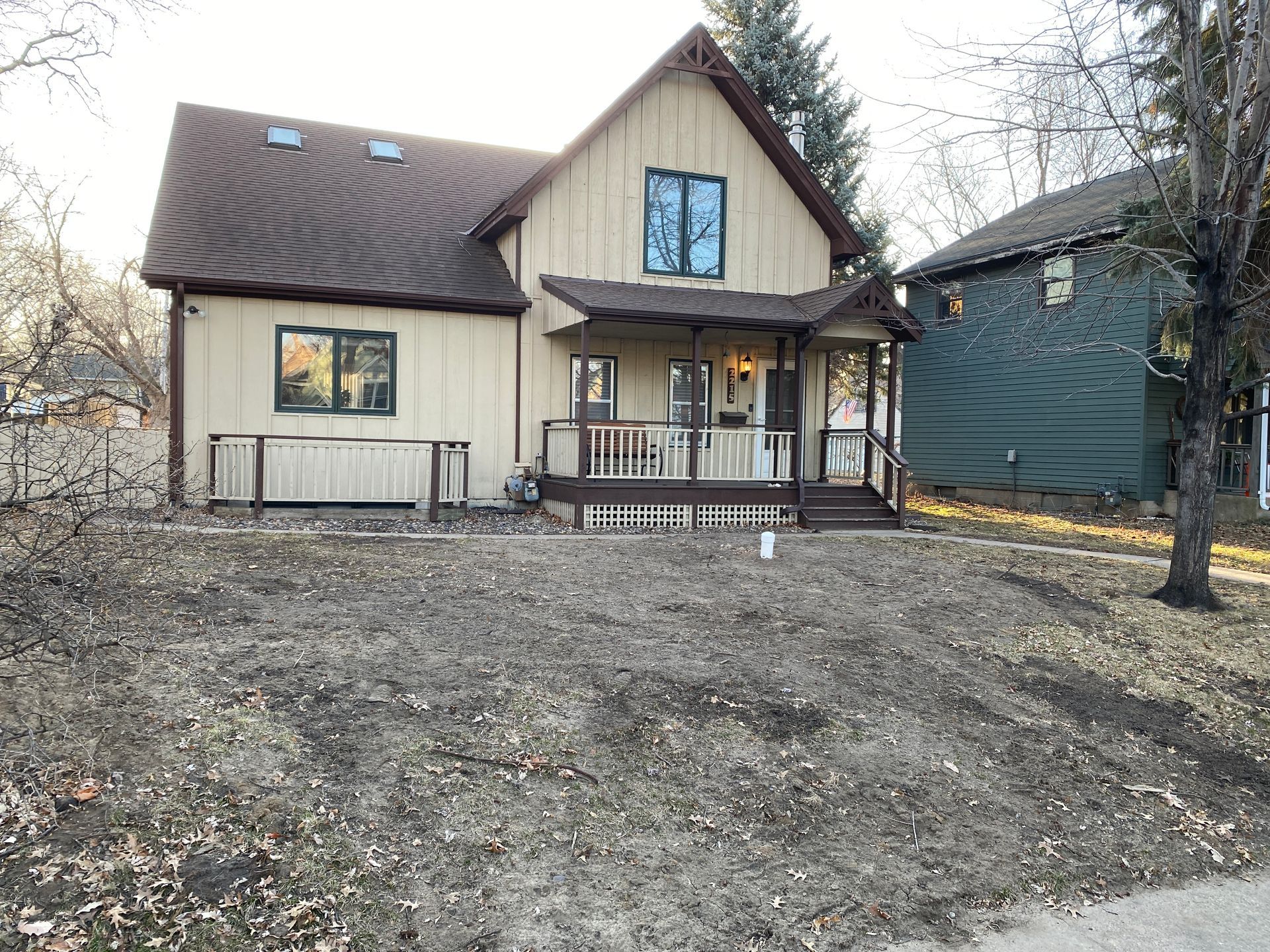
That's what we found in Minneapolis's Seward neighborhood on the south side of the city. The green space that should greet guests, neighbors, and passersby was no longer a property putting its best foot forward but rather a small patch hoping to be ignored.
When our team chose to give this lawn some much-needed attention, we found a host of issues. The soil was hard and compacted, physically dense but not nutrient-dense, making it challenging for roots to take hold and for the soil to retain water. These compromised growing conditions led to bare spots across the lawn as well. After our assessment, we realized the lawn needed a comprehensive strategy of aerating and seeding that would go beyond basic services. In doing so, we successfully revitalized our client's lawn--and the resultant growing of grass was pretty exciting after all.
The Problem: Restoring a Long-Overlooked Lawn
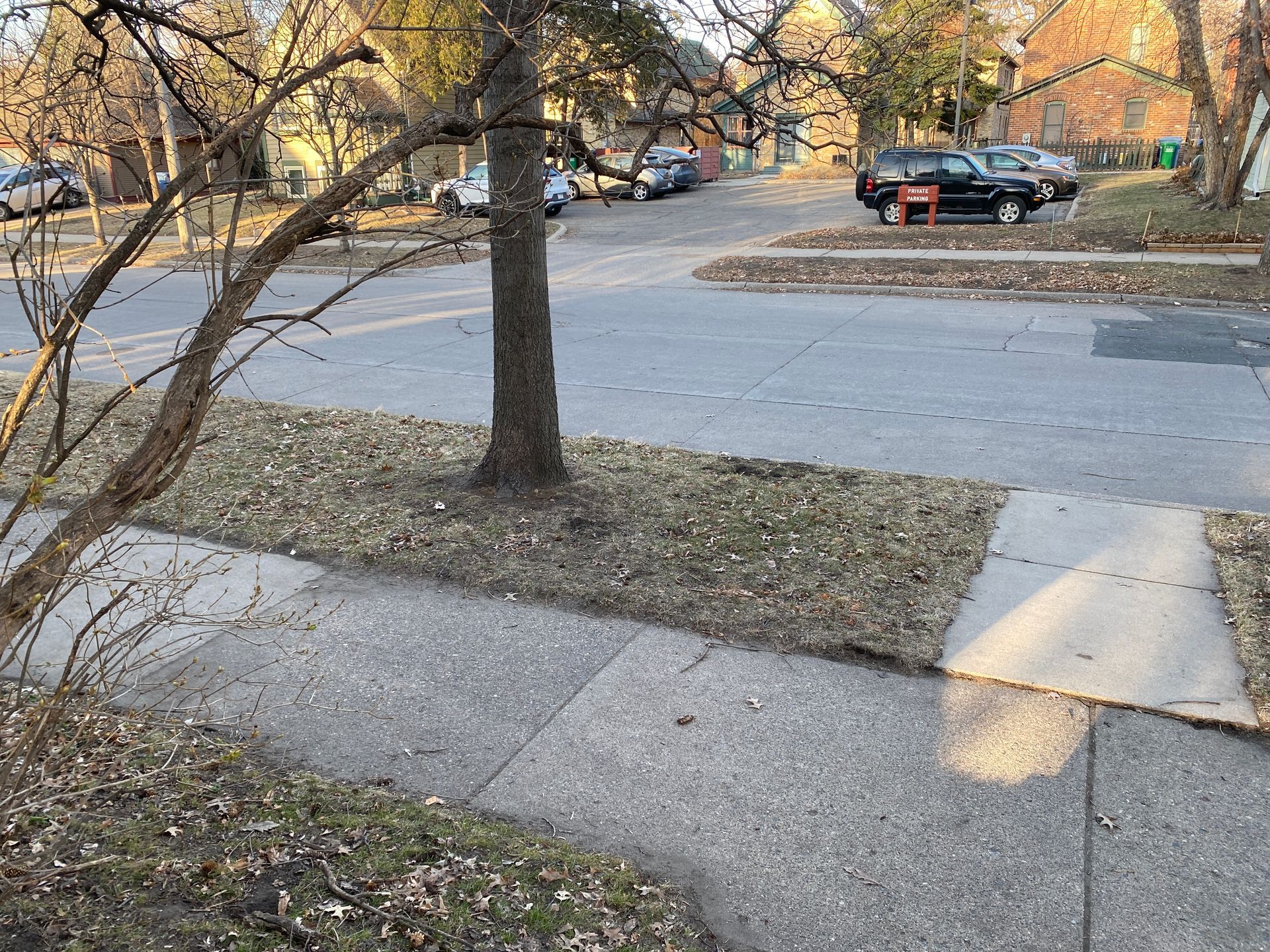
Let's begin by getting a feel for the neighborhood. Single-family homes in Seward tend to be close to the street, typically set back between 30 to 40 feet from the curb. Tree-lined parkways between the sidewalk and street make the front lawn proper smaller still. Most houses have rear garages and alleys, keeping driveways from breaking up the streetscape. It is a classic urban community.
Because these lawns are smaller and more condensed, Seward homeowners typically go in one of two directions. One is to lean into the smaller size by landscaping as much of the lawn as possible. Some opt for terracing between the house and lawn or hedgerows along the sidewalk, while others embrace biodiverse native landscaping for a natural, untrammeled look. The other is a minimalist approach that simply makes the most of open space.
Our client wanted to embrace a wide-open front lawn, but previous years of poor maintenance had made it hard to do so. The lawn had not seen professional work in the last 15 years, and it had begun to show. After offering several options, we decided on a two-pronged approach to lawn revitalization: a double-pass aeration combined with overseeding to restore the lawn to its natural verdance. Together, these two treatments would once again make this lawn a good fit for its homeowner and the neighborhood.
Options Under Consideration: A Pyramid of Choices
There are typically three approaches we take to turf that has been this deteriorated: single-pass aeration, double-pass aeration with overseeding, and topdressing. Each one builds on the previous approach.
Single-Pass Core Aeration
Single-pass core aeration with no additional services is a more budget-minded approach to renewing a tired lawn, but still one that can be effective on its own in many instances. Core aeration differs from traditional spike aeration by not just performating the soil but also extracting thousands of small "plugs" of soil from the ground. This strategic removal of compacted soil loosens the remaining soil and opens broader avenues for air and water to reach the root system.
Core aeration on its own would have addressed the soil quality on this lawn, but it not would have affected the paucity of the turf itself. While we offered the option, it would not have been enough to fully restore the lawn in question.
Double-Pass Core Aeration with Overseeding
Older lawns that have seen long-term decline often benefit from the tandem of double-pass core aeration and overseeding. Just like single-pass core aeration, we pull out plugs of soil, but by covering the lawn twice, with the second pass often perpendicular to the first, we effectively double the efficacy of the treatment.
"Overseeding" may sound like too much of a good thing, but it simply refers to fortifying the existing turf with fresh grass seed rather than starting anew. Overseeding is ideal for lawns that have numerous bald spots or thin coverage throughout, and by combining it with core aeration, the newly aerated soil is full of holes where the new seed can take root. The end result of overseeding is a lush and hardy lawn without significant alterations to grading or drainage. Because the client was happy with the slope of their lawn, there was no need to start from scratch.
Full Topdressing
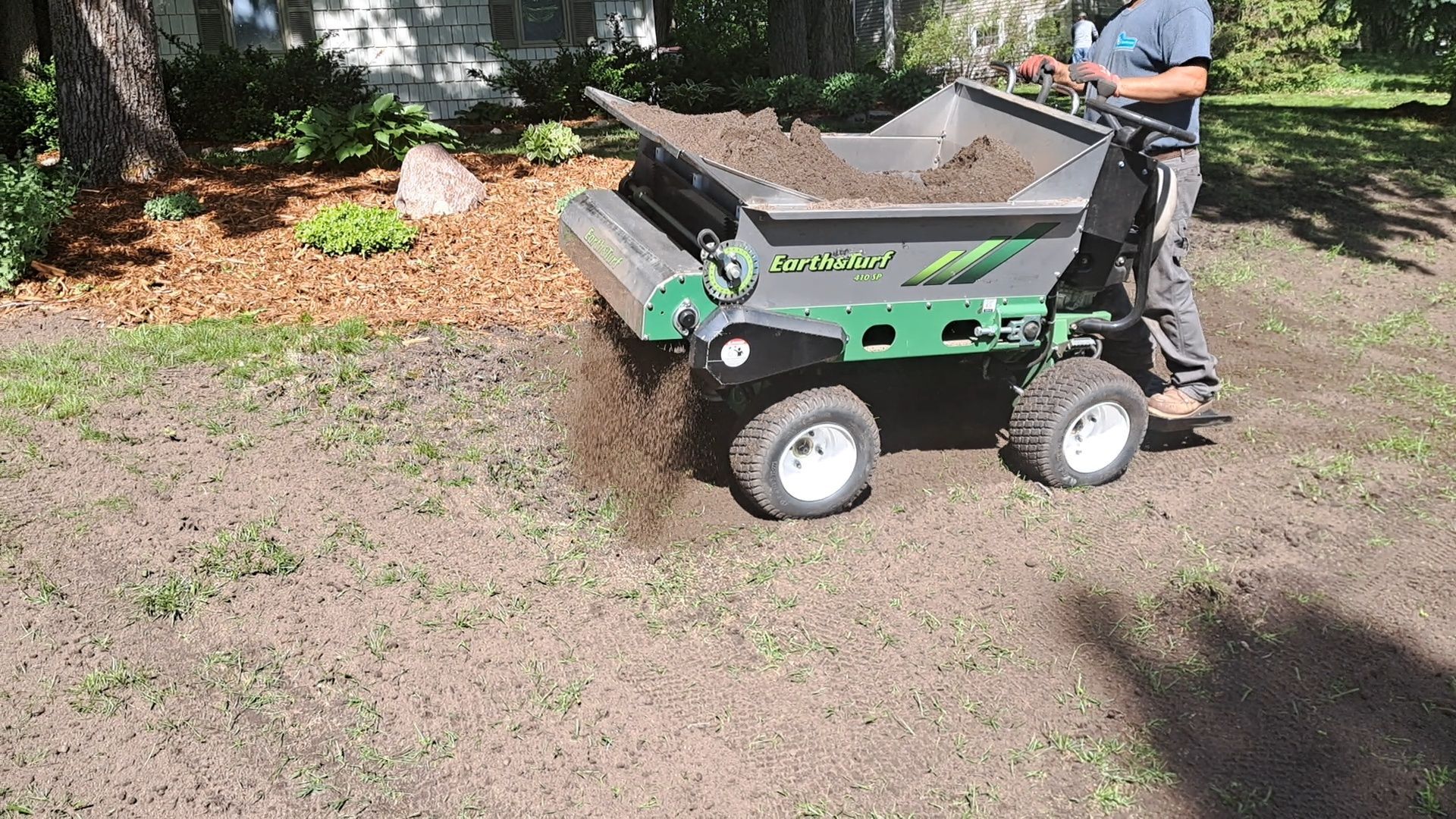
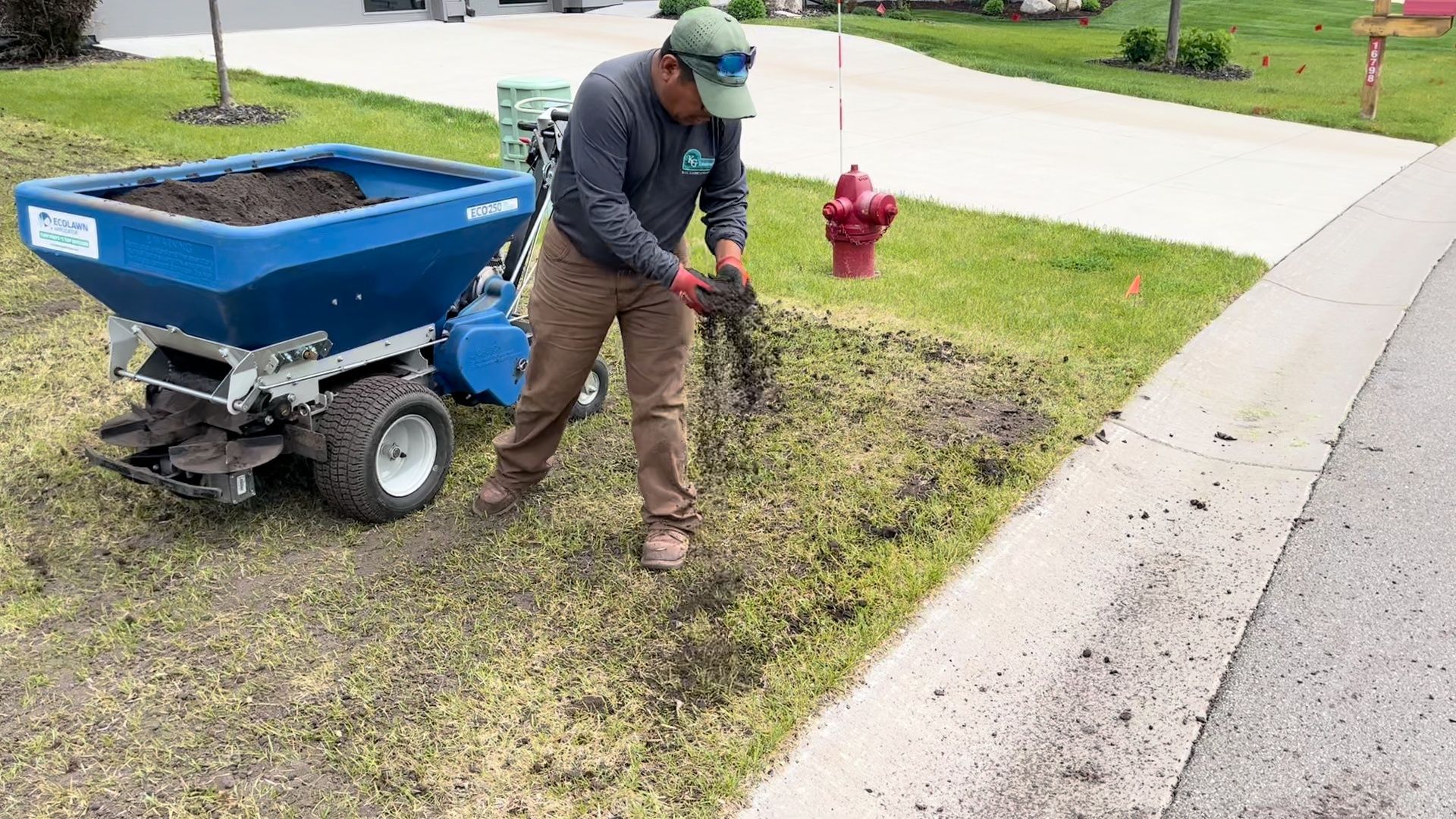
The pinnacle of this pyramid is our topdressing service. Topdressing builds on both the double-pass aeration and overseeding by adding a fresh layer of topsoil over the entire lawn. This additional topsoil can level off the bumps and ruts in well-compacted terrain, and in conjunction with overseeding, nutrient-rich topsoil provides ideal growing conditions for new seed. Fresh topsoil can also reduce thatch, the complex layer of dead plant matter beneath the surface, by encouraging the microbial growth that breaks fibrous materials down.
This thorough approach can deliver optimal results for many clients. However, the costs outweighed the benefits in this specific case. As we mentioned earlier, Seward homes rely on alleyways, which would have complicated our access to the yard by forcing us to block the street for the duration of the project. The additional material and labor costs of such a project in these tight quarters increased the cost to approximately $1,500. Budgeting came into play here, as we and our client agreed access concerns or added expenses would have made a comprehensive topdressing service cost-prohibitive.
Our Solution: Double-Pass Aeration and Overseeding
After considering our options, the client ultimately committed to our double-pass aeration twinned with overseeding. This solution represented the intersection of our client's two biggest concerns: the badly diminished soil quality of the lawn and the unique conditions of a small lot in this dense and walkable neighborhood. Single-pass core aeration without overseeding would not have restored the density of the grass cover, while topdressing was too drastic and costly a service for this space.
Our top priority on this project was getting air, water, and nutrients back into the compacted and depleted soil. This particular lawn was not unique to South Minneapolis, where similarly older homes often have compacted soil. Years of foot traffic and rainfall without the proper steps necessary to rehabilitate the lawn lead to this condition across the city. The slope of the lawn toward the sidewalk, which assists in drainage, made it critical for us to optimize the ground's compromised water infiltration. Double-pass aeration would accomplish this by penetrating four inches into the soil, bringing those vital nutrients into the root zone.
Overseeding would address the most worn-out spots on the lawn and work in concert with the existing network of roots to build an overall denser and healthier turf. By eliminating bald patches of compacted soil that struggle to properly absorb rainfall, we expected the lawn's drainage performance to improve considerably. Best of all, we would be able to accomplish all these goals without struggling with the constraints of the lot and neighborhood streets. This was an especially important consideration due to local drainage considerations outlined by the City of Minneapolis, of which Seward is a part.
How We Did It: Reviving a Lawn in Time for Summer
There are two ideal seasons for a full lawn restoration: spring, when cool soil temperatures and residual moisture from winter thaws make the ground conducive to germination, and fall, when cool nights and more consistent rainfall than the on-and-off downpours of spring provide strong growing conditions as well. While some feel that autumn is often the best time to overseed, the calendar dictated that we not wait another six months to get started. Finding a perfect window during the spring season allowed us to capture just the right levels of heat and moisture for fast and reliable root development.
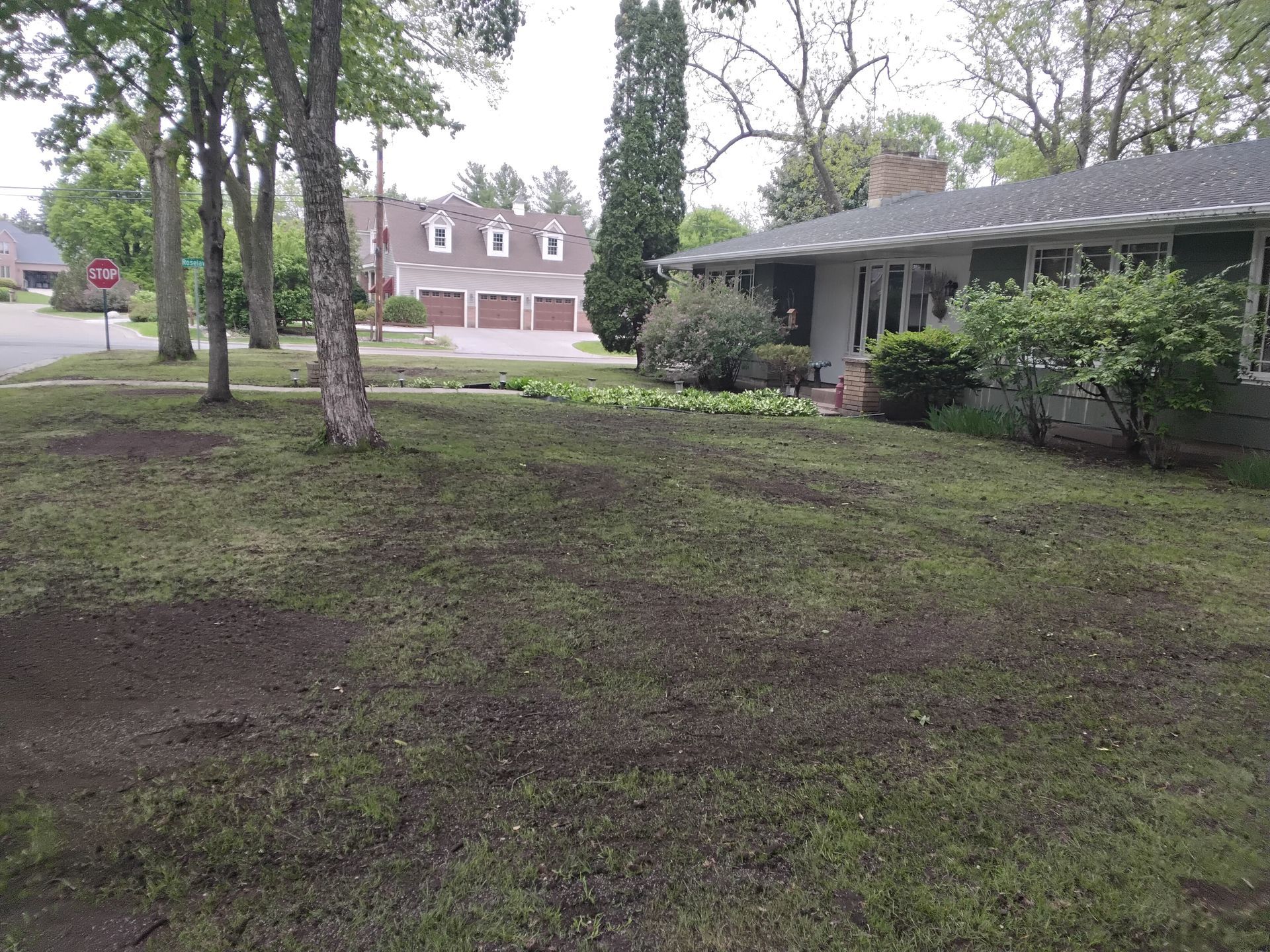
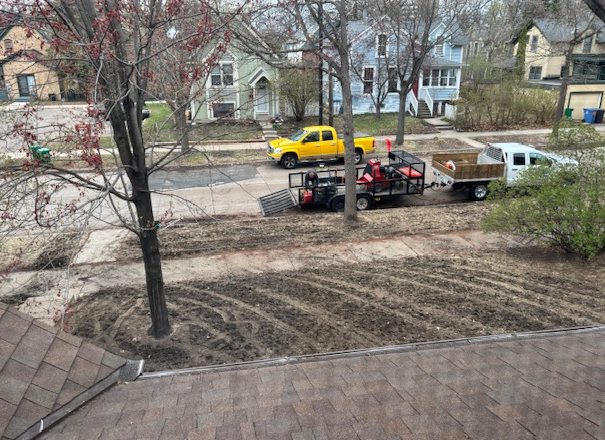
We began by relieving years of the soil compaction common in South Minneapolis residential yards. A double-pass aeration of the front lawn finally let this poor soil breathe again. By removing soil plugs across the lawn, we allowed air, water, and nutrients to access the grass roots while also preparing the soil for new seed.
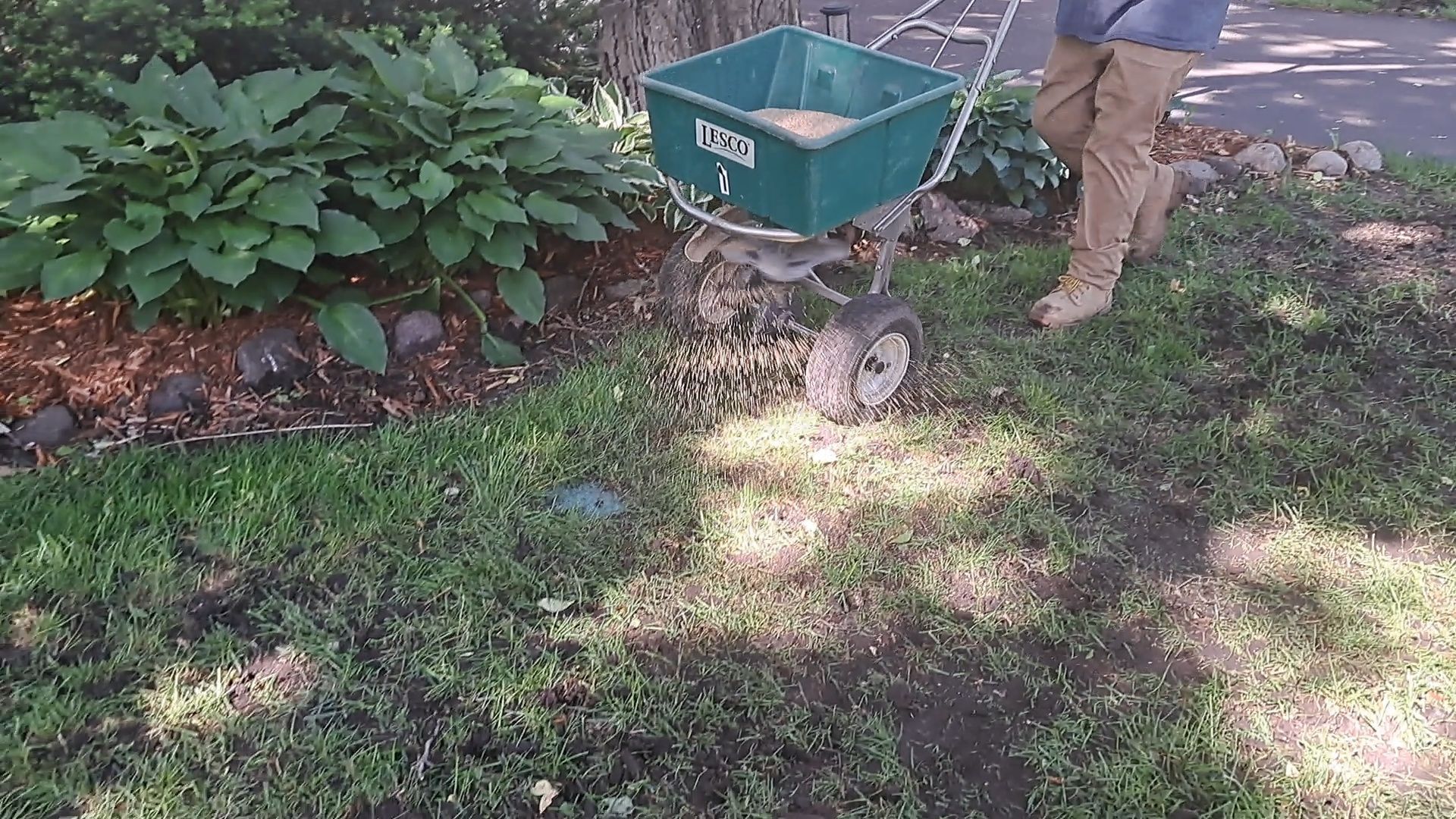
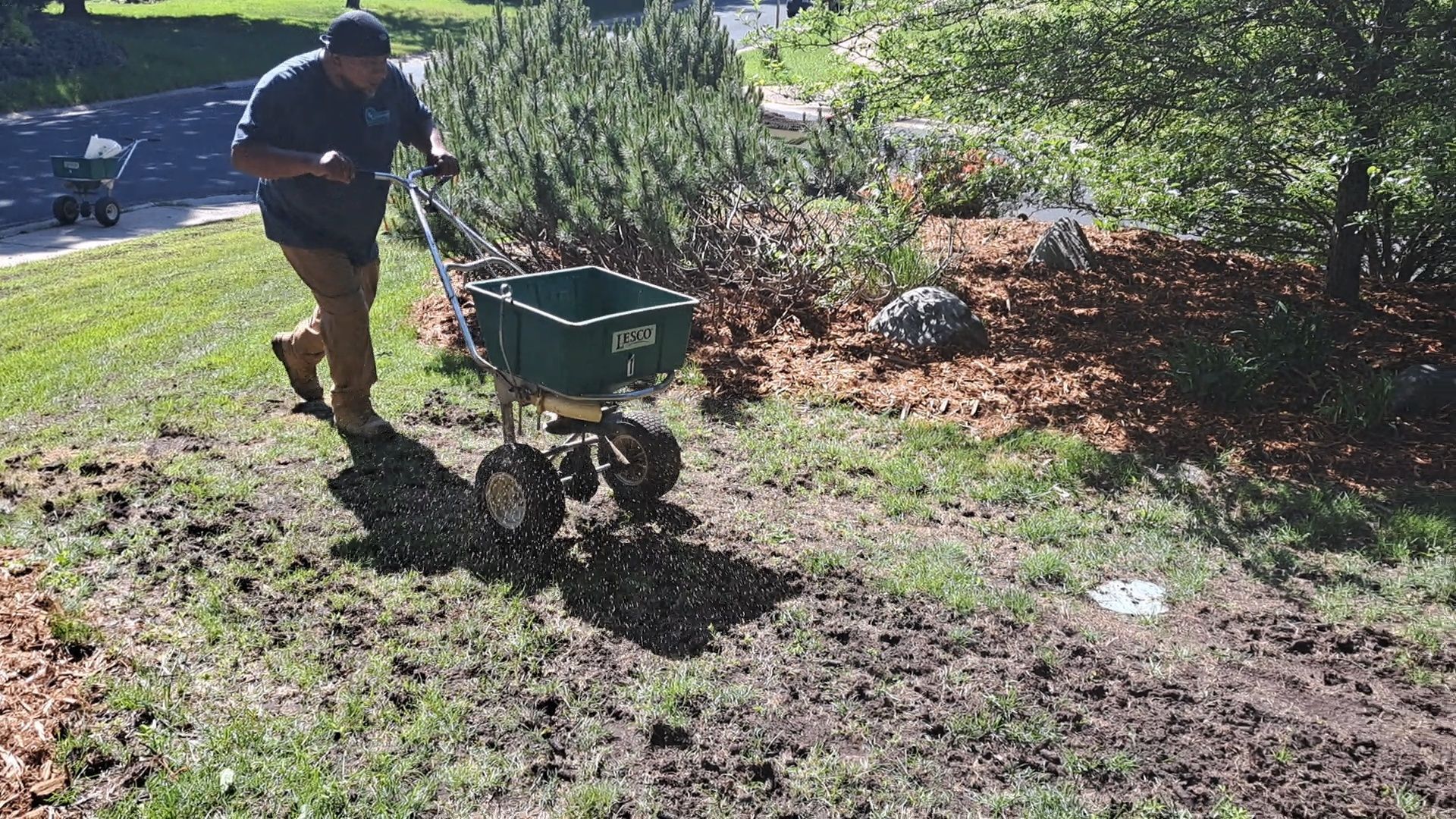
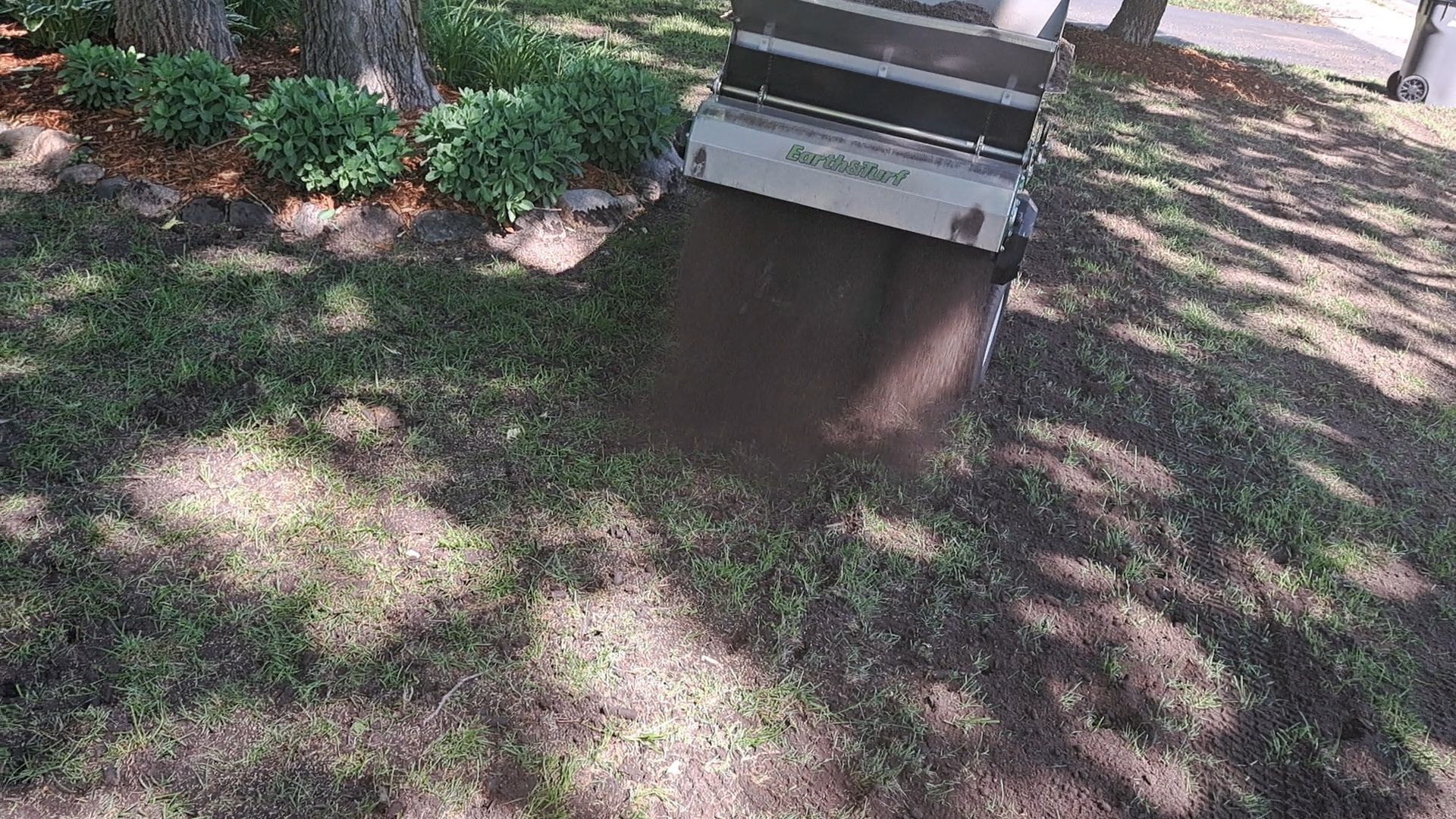
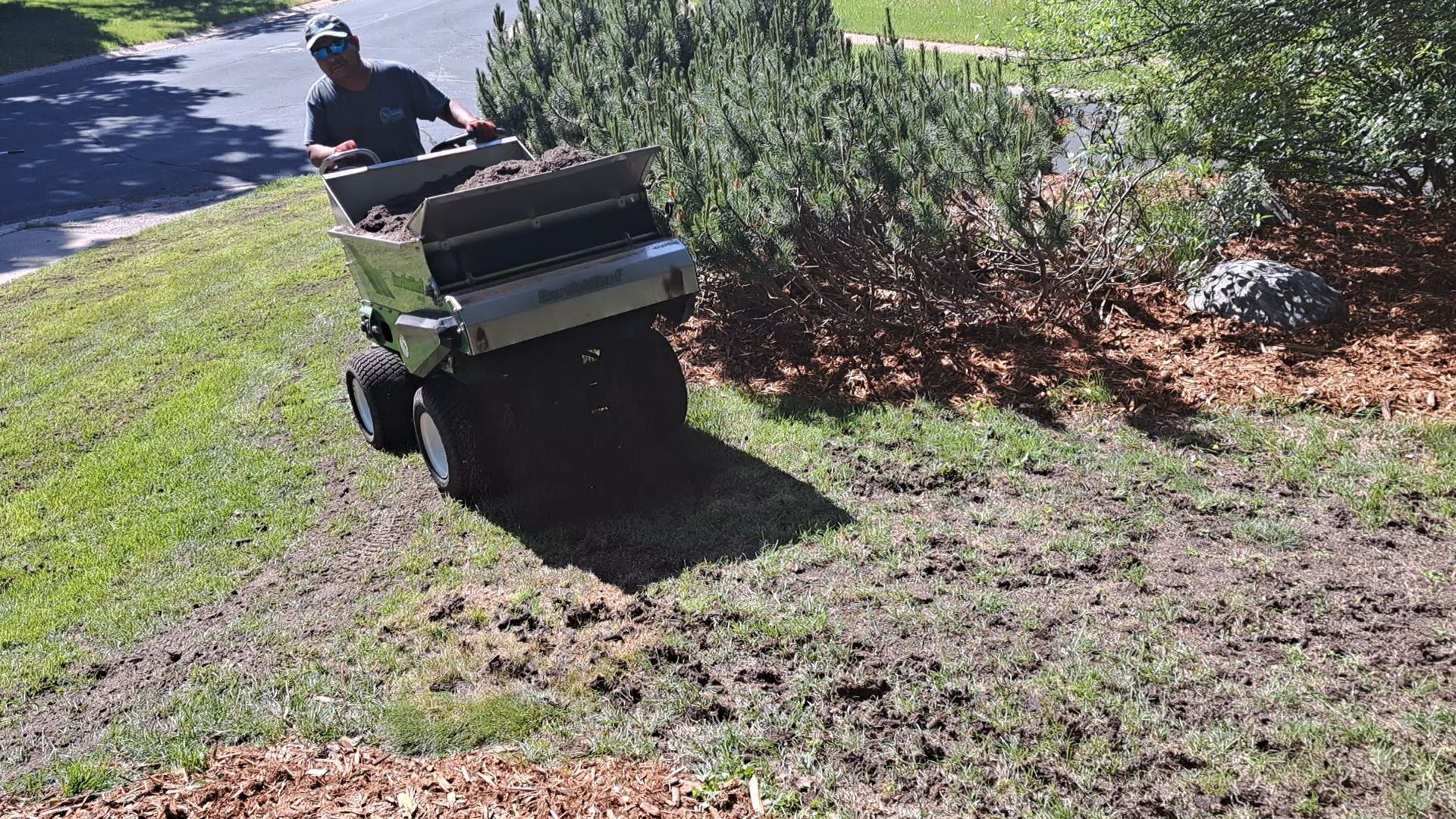
Once we completed both rounds of core aeration, we overseeded the lawn with a calibrated drop spreader to provide even coverage across the entire space. What was not even, however, was how much sunlight the yard received. Shadows from houses and the canopy of trees both lent a great deal of shade to the front lawn. To accommodate these shifting light conditions, we chose a sun-and-shade grass seed mix that would perform admirably even during hours that select areas did not receive full sunlight.
To accelerate the germination process, we immediately applied a starter fertilizer following our overseeding, giving the new grass a jump start as it headed into the warmer months.
Critical to our entire process was the sequence and timing of each phase of the project. Minimizing disruption to not only the property but to the dense neighborhood was an addition goal of our client and our team, and by delicately scheduling and coordinating every step, we were able to set the stage for a successful and sustainable lawn recovery that both the client and the neighborhood would come to appreciate.
The Result: A Newly Green Lawn
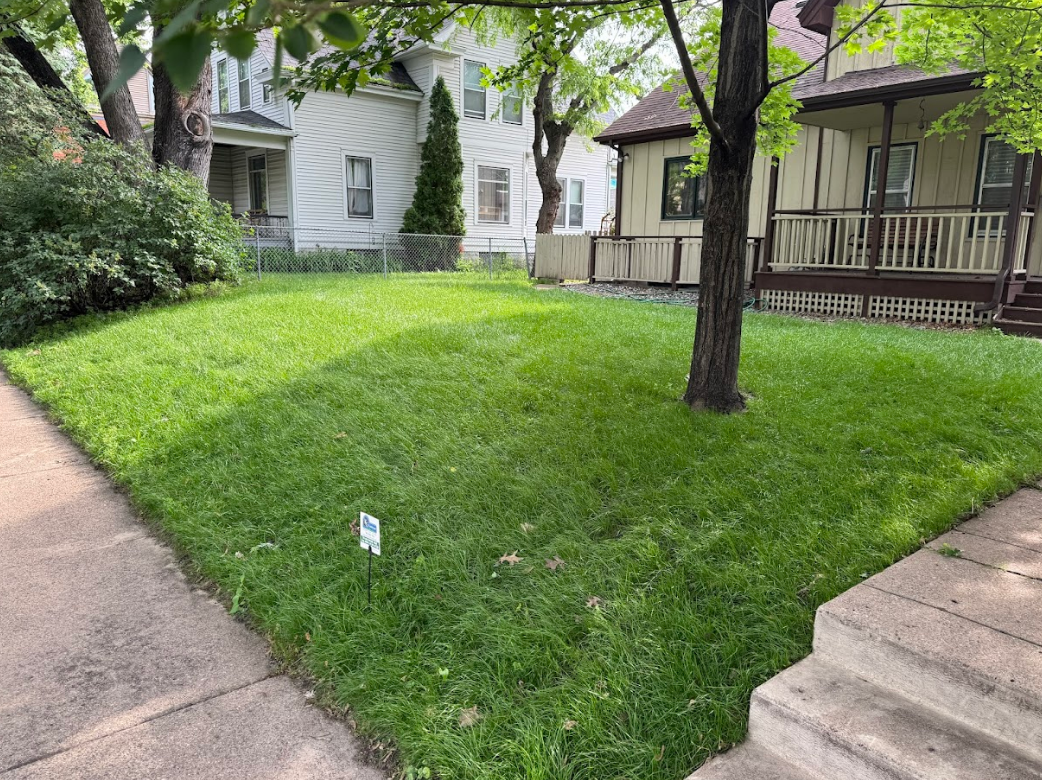
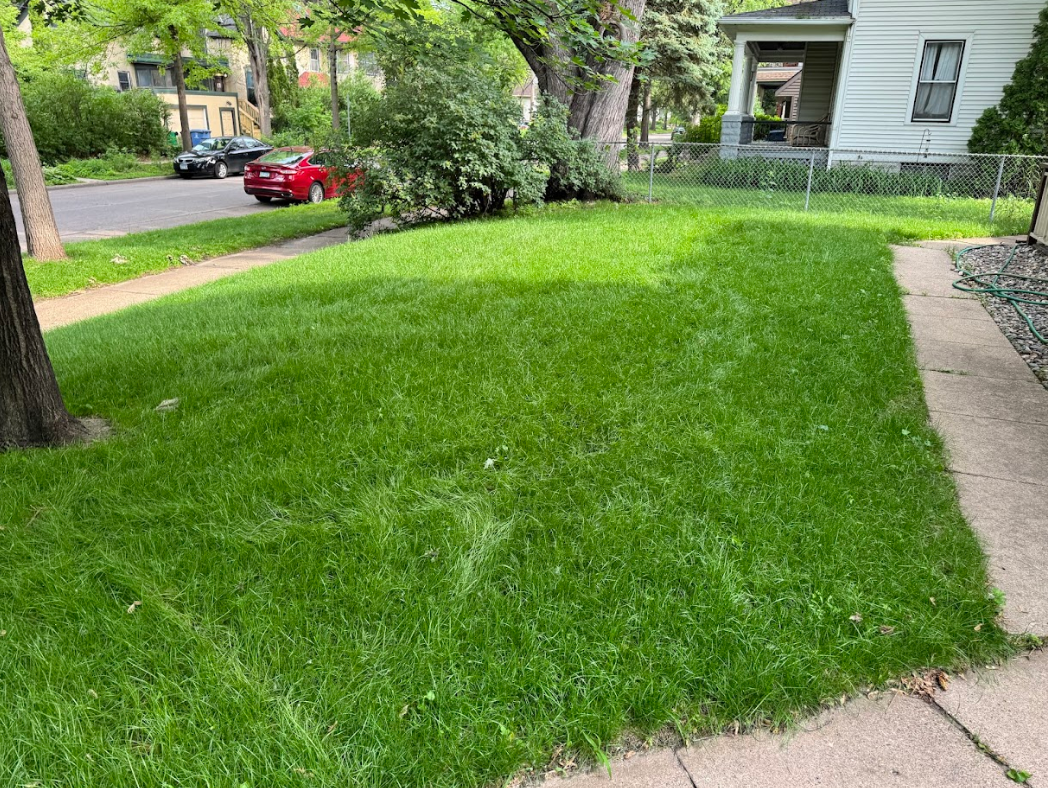
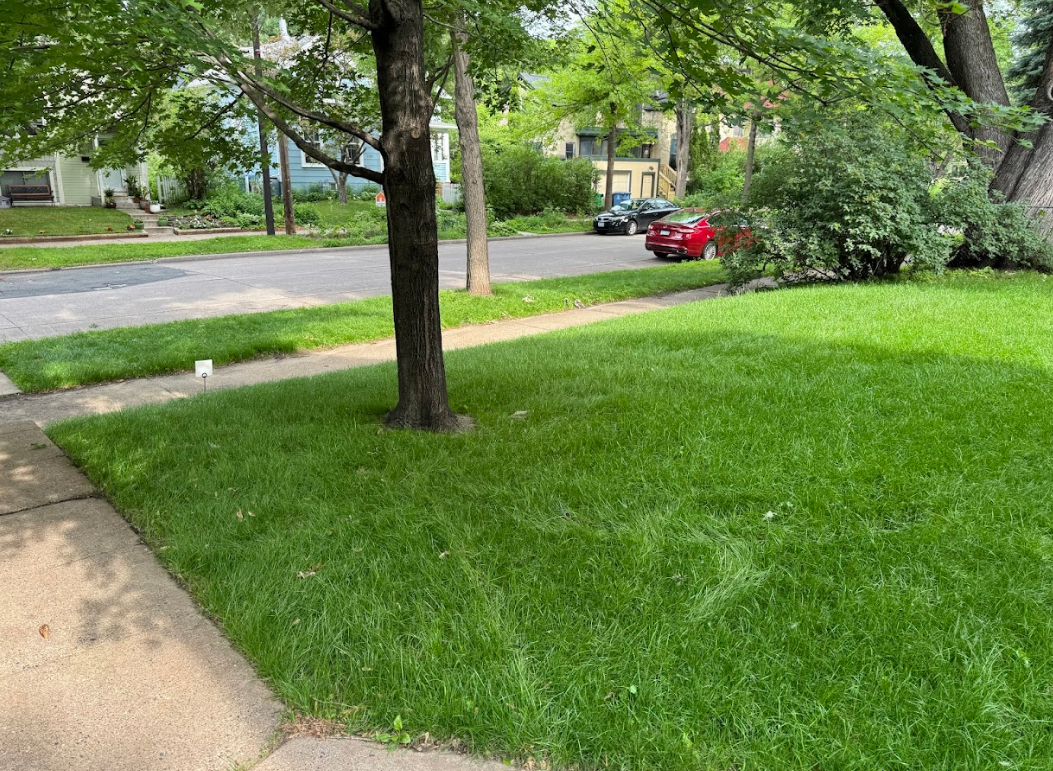
No overseeding project is an overnight sensation. However, by July, we were able to see clear progress throughout the lawn. As the lawn displayed full and dense grass with no drainage concerns, the double-pass core aeration and overseeding were a clear success. Rainfall that at one time would have pooled or drained away due to insufficient water infiltration now reached the root zone and nourished the grass. The grass grew admirably throughout the lawn, even in areas that didn't receive as much sunlight as others. Even the parkway between the street and sidewalk saw improved density, beautifully complementing the main section of the lawn.
Not only did these improvements bolster the aesthetics and functionality of the lawn, they also improved usage of the space. Now that the ground was no longer riddled with bare patches and weak blades of grass, it became easier to imagine a variety of new uses for the space, from family badminton games in the summer to future enhancements such as flower beds or gardens all year round.
Next Steps After a Lawn Renovation
Though the project itself may be complete, the work is never fully done. After all, neglecting to properly maintain the lawn is what brought us here in the first place. We gave our clients a guide to the steps they should take to keep their new front lawn lush and beautiful for years to come.
Following the overseeding, the regular applications of fertilizer and weed control are key to preserving the new lawn's condition. Controlling the growth of weeds, especially in concert with fertilization of the whole lawn, can be a delicate highwire act that requires applicators not to affect the germination of desired plants.
KG Landscape is proud to provide this service after seeding--not just following our initial project but on a sustaining basis as well. To ensure that you encourage the right plants to grow while discouraging the wrong ones, we strongly recommend exploring membership in one of our fertilizer and weed control programs. We take pride in providing this ongoing care to our projects, protecting your investment as well as ours, so that you can enjoy your new lawn for years and years.
Why It Worked for Our Minneapolis Client
Double-pass core aeration partnered with overseeding led to a successful outcome because it was not only the right fit for the site's conditions, but it met the client's goals without exceeding them. By thoroughly aerating this well-worn urban soil, we were able to overcome the lawn's challenges of poor root growth, insufficient air and water infiltration, and access to nutrients. Moreover, we were able to do so without presenting our client with the unnecessary challenges or expenses that a full topdressing service would have provided.
The slope of the front lawn, which gently descends from the house to the sidewalk, made it especially important for us to optimize drainage and let no water go to waste. The newly dense root system and freshly aerated soil stabilized the soil and fed it the moisture it needed with even distribution and the ensuing uniform growth.
Most importantly, our solution met our client's goal of healthy and aesthetically pleasing front lawn that fit the character of a South Minneapolis property, making the most of every square foot with lush grasses. KG Landscape believes that every lawn at every size can be at its most beautiful, from expansive exurban lawns to the tight-knit front yards of South Minneapolis. It may not be exciting, but we're glad to watch the grass grow.
Ready To Make the Most of Your Outdoor Space?
If you need help revitalizing your lawn in Minneapolis or the surrounding Twin Cities suburbs, KG Landscape is here to help. Our experienced team specializes in custom and scale-appropriate designs just like this one. Contact us today to discover how we can improve the appearance, functionality, and long-term health of your home. Together, we can make the best possible version of your space.
📍
Local Twin Cities expertise
💧 Proven drainage solutions
🏡 Designed for tight urban lots
Ready to Start on Your Next Project?
Call us at (763) 568-7251 or visit our quote page.