Low Maintenance Front Yard Landscaping Ideas for Minneapolis Urban Lots
When the Lawn Stops Working
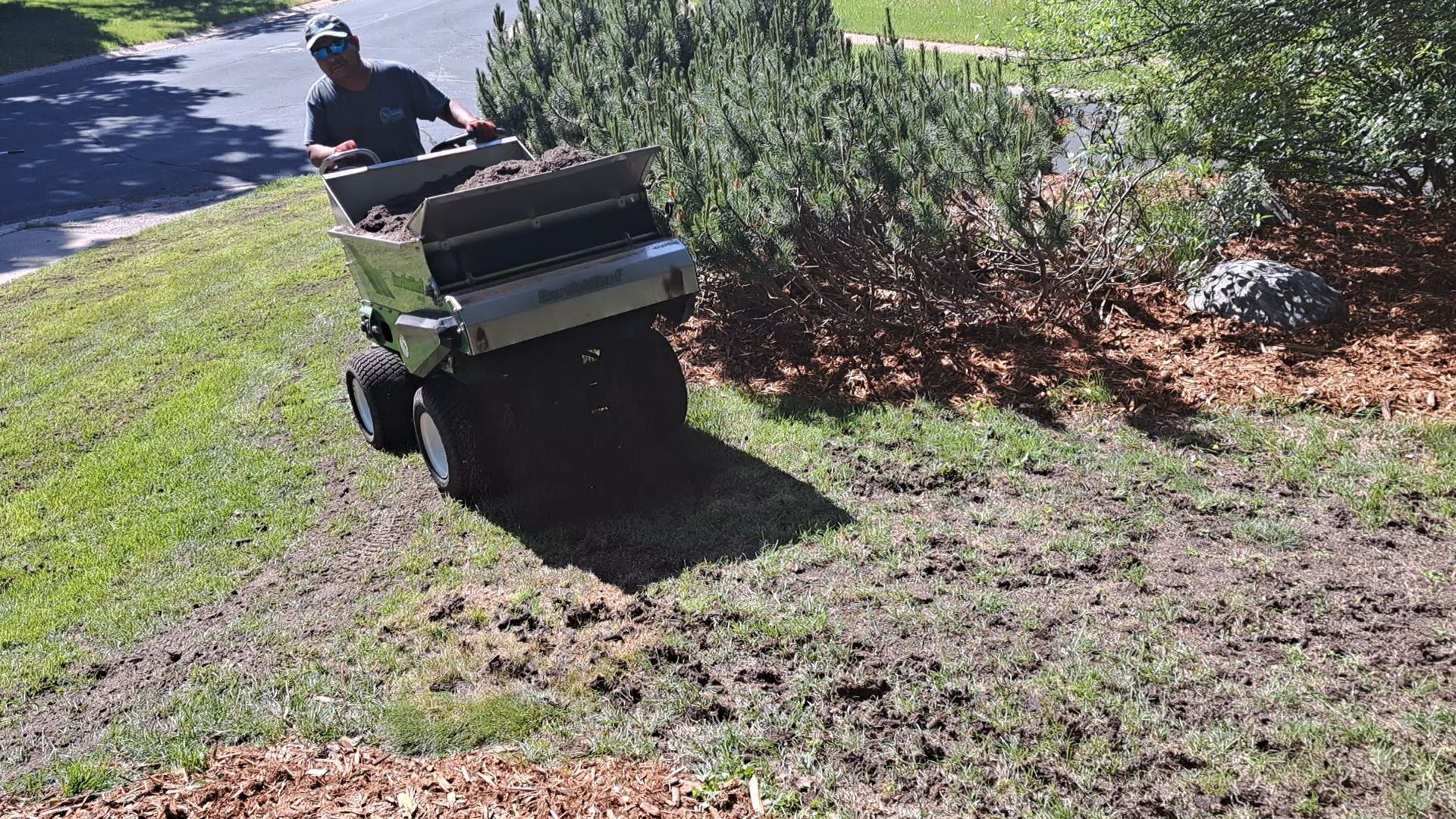
You've tried everything. Overseeding in spring. Watering through the dry weeks of August. Shade-tolerant grass mixes that the bag promised would work. Every year it's the same: the lawn looks decent for a few weeks in June, thins out by mid-summer, and by fall you're staring at bare patches again.
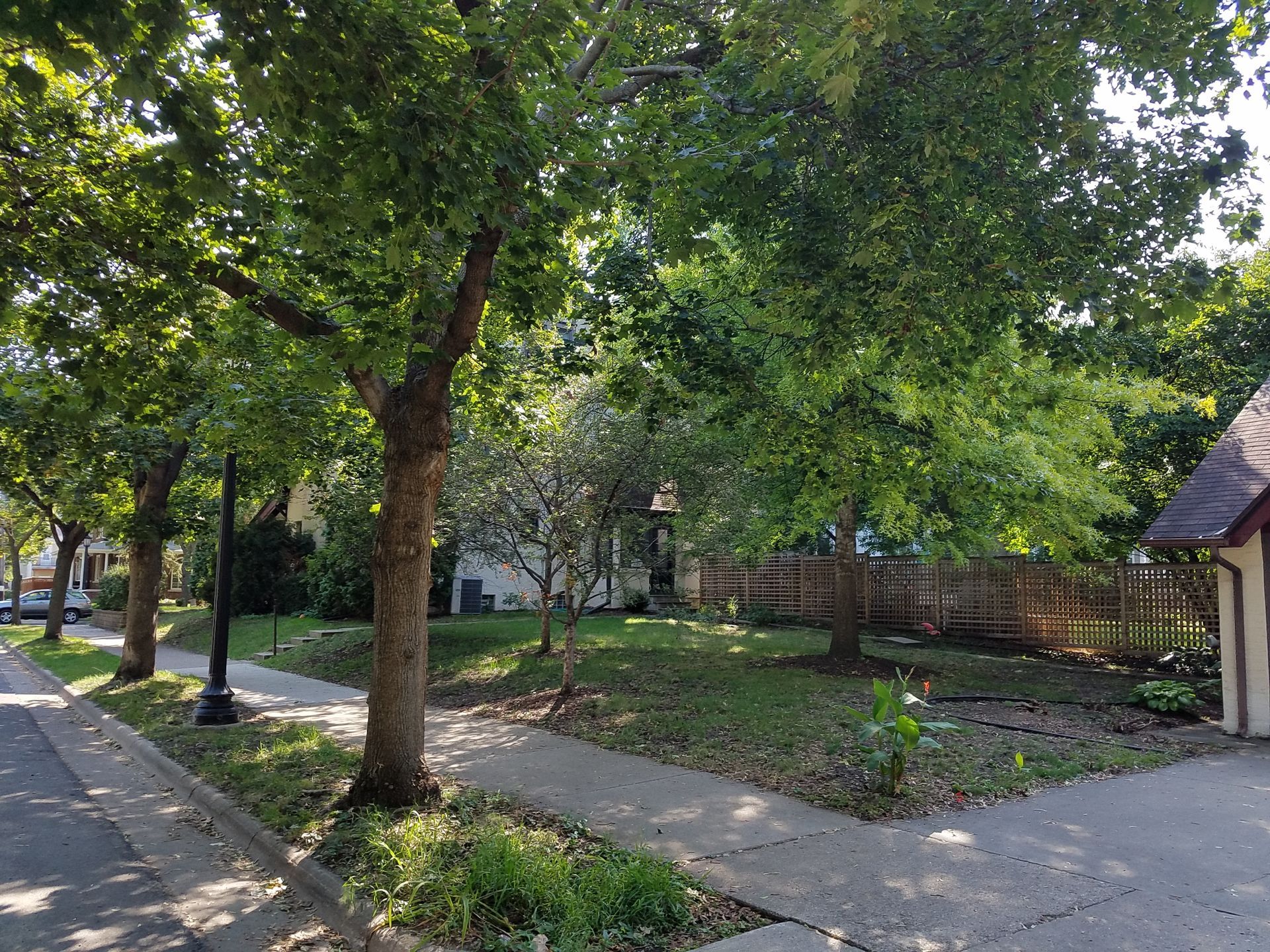
This is the reality for a lot of Minneapolis homeowners with mature trees. The shade is beautiful. It keeps the house cool. It gives the neighborhood character. But grass needs sun, and when the canopy fills in, the lawn underneath doesn't stand a chance.
At some point, the question shifts from "how do I fix this lawn" to "what else could I do with this space?" That's when
low maintenance front yard landscaping starts to make sense. Not because you've given up, but because you've realized the yard could actually look better without grass.
Work With the Shade, Not Against It
The biggest mistake we see in Twin Cities yards is fighting the conditions instead of designing for them.
A homeowner plants coneflowers because they love the blooms. The plant tag says "full sun to part shade" so they figure it'll work. But their yard gets maybe two hours of direct light. The coneflowers stretch toward whatever sun they can find, get leggy, bloom weakly, and look sad by August. Meanwhile, the hostas in the neighbor's yard are thriving.
We'd rather see a planting that's actually healthy. A vibrant Earth Angel hosta looks far better than a struggling coneflower that was planted in the wrong spot. The University of Minnesota Extension's shade gardening guide makes the same point: plant selection should start with understanding your light conditions. Our designs are planned to succeed. That means we're honest about what will and won't work in each area of the yard.
Ground Cover Instead of Grass
What's changed in the last decade or so is how Minneapolis homeowners think about ground covers. Instead of tucking pachysandra under a shrub, people are using them as full lawn replacements.
No mowing. No fertilizing. No herbicides. Once established, most ground covers need almost nothing. They spread to fill gaps, crowd out weeds naturally, and look better every year instead of worse.
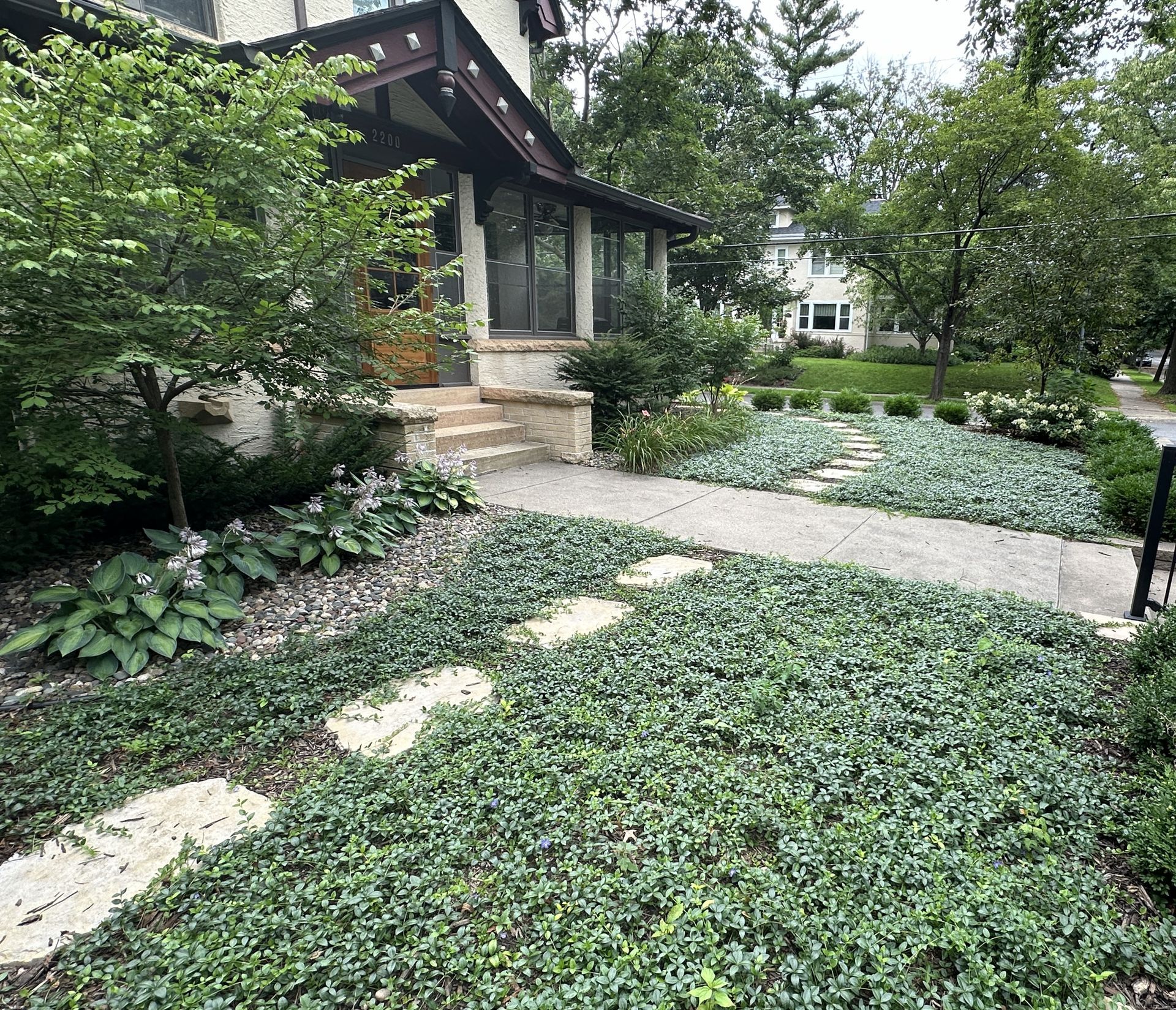
For front yards in established neighborhoods, the trick is choosing something that reads like a lawn from the street. Vinca works well. It has a uniform growth habit and height, so instead of looking like you gave up on the grass, it looks intentional. Green, even, maintained. Just not grass.
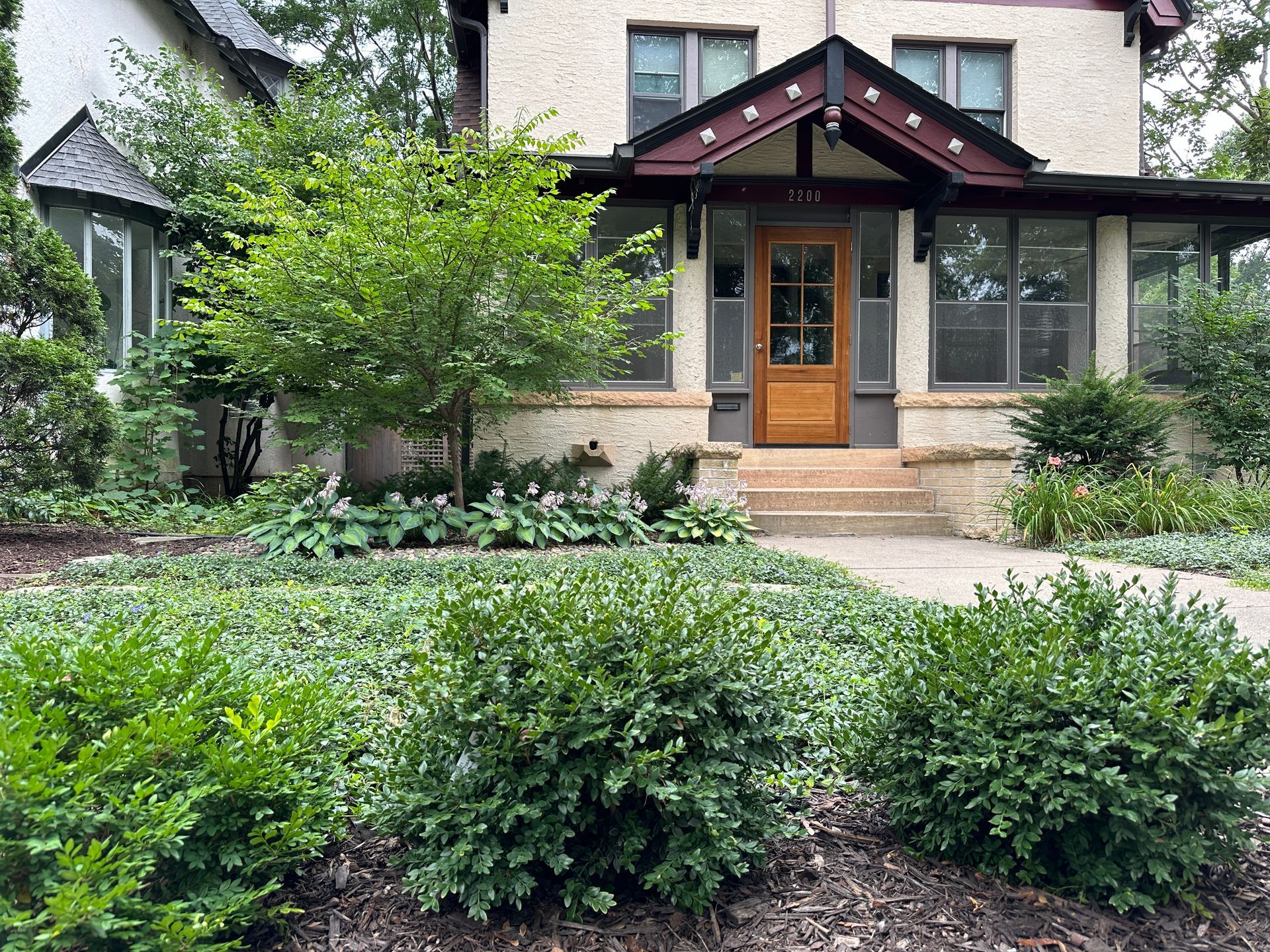
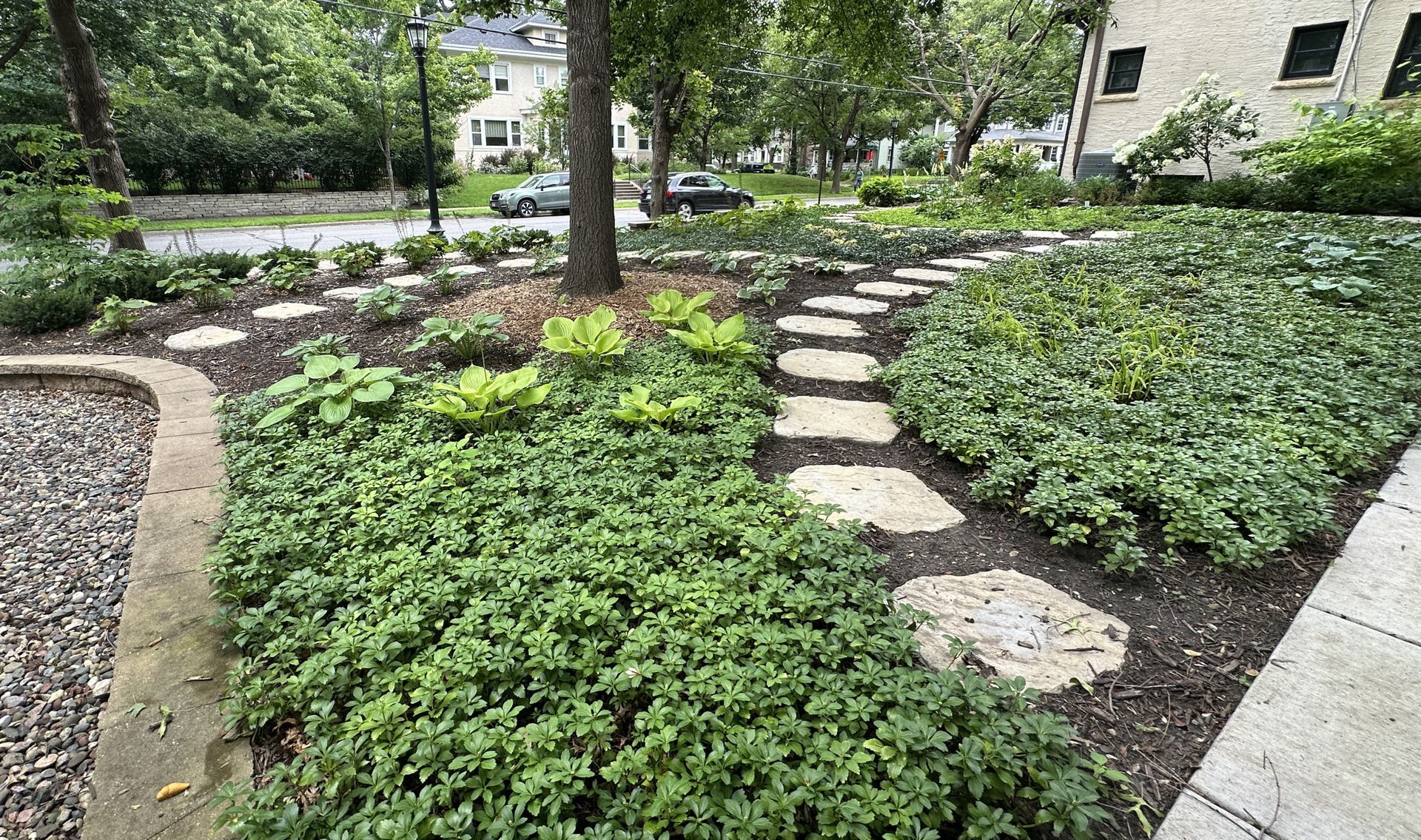
We recently completed a low maintenance landscaping project near Lake of the Isles where the homeowners replaced their entire front lawn with two types of vinca. From the street, it has the visual rhythm of a traditional yard. They haven't mowed, watered, or applied chemicals since it went in.
Backyards offer more flexibility. Mix ground cover types, let different textures play off each other, create more naturalized looks. Sedum in the sunny spots. Hostas where it's shaded. Stepping stones threading through.
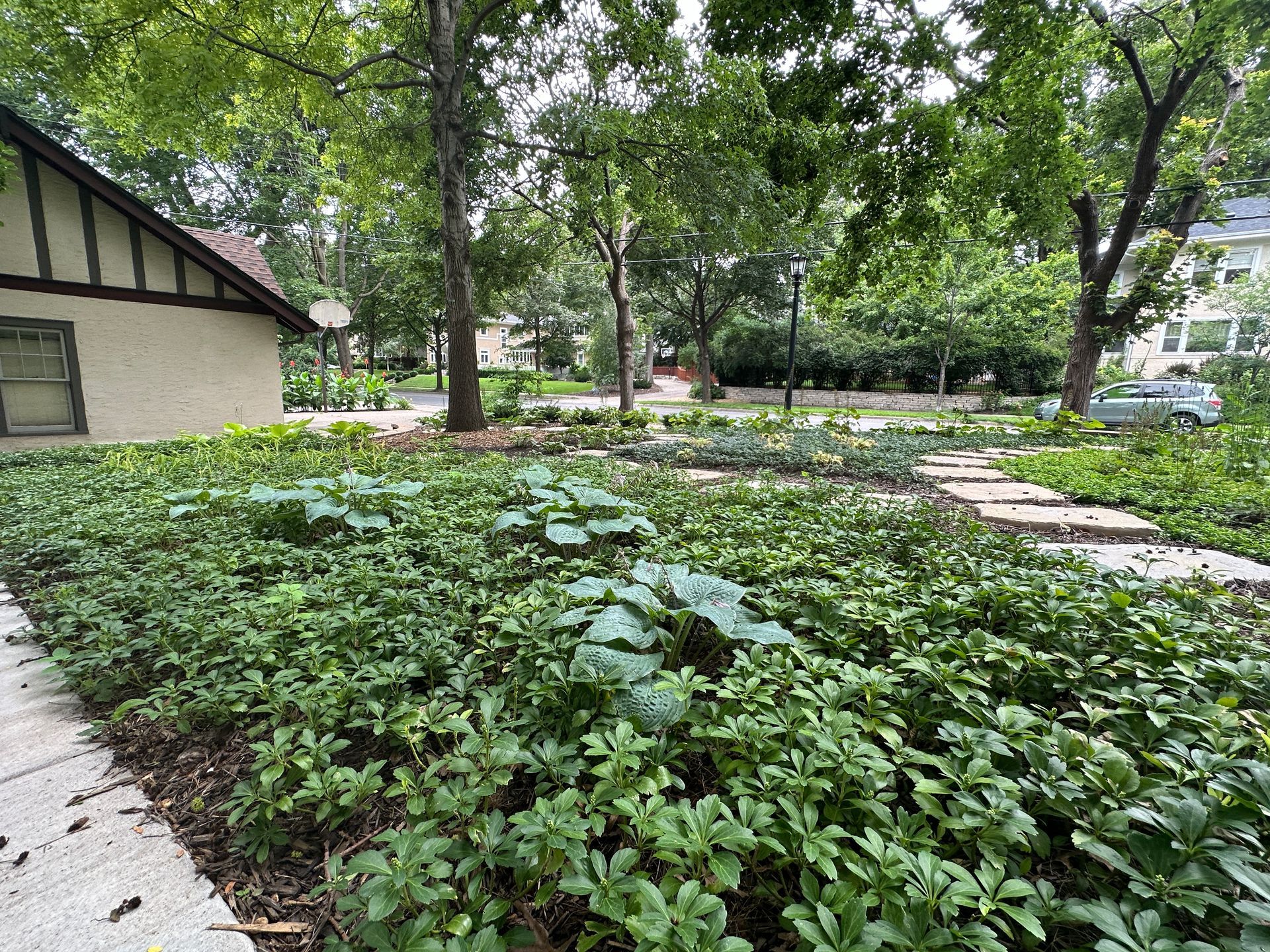
You Need Pathways
When you have grass, you can walk anywhere. Replace that grass with ground covers and perennials, and suddenly you need a way to move through the space.
Stepping stones solve this. They give you access for maintenance, create a route through the yard, and if they're designed well, they become part of the look. We think of pathways as the backbone of the planting design. The curves define the beds. The shape guides your eye. Without that structure, a yard full of perennials can look like a tangled mess. With it, everything has a place.
Paver pathways and boulders also give you something to look at in winter. A pollinator garden looks great in July. Come November, you're looking at brown stems. The hardscape anchors the view when everything else is dormant.
Layering for Year-Round Interest
The Twin Cities growing season is short enough without your yard going dormant in October and not waking up until May.
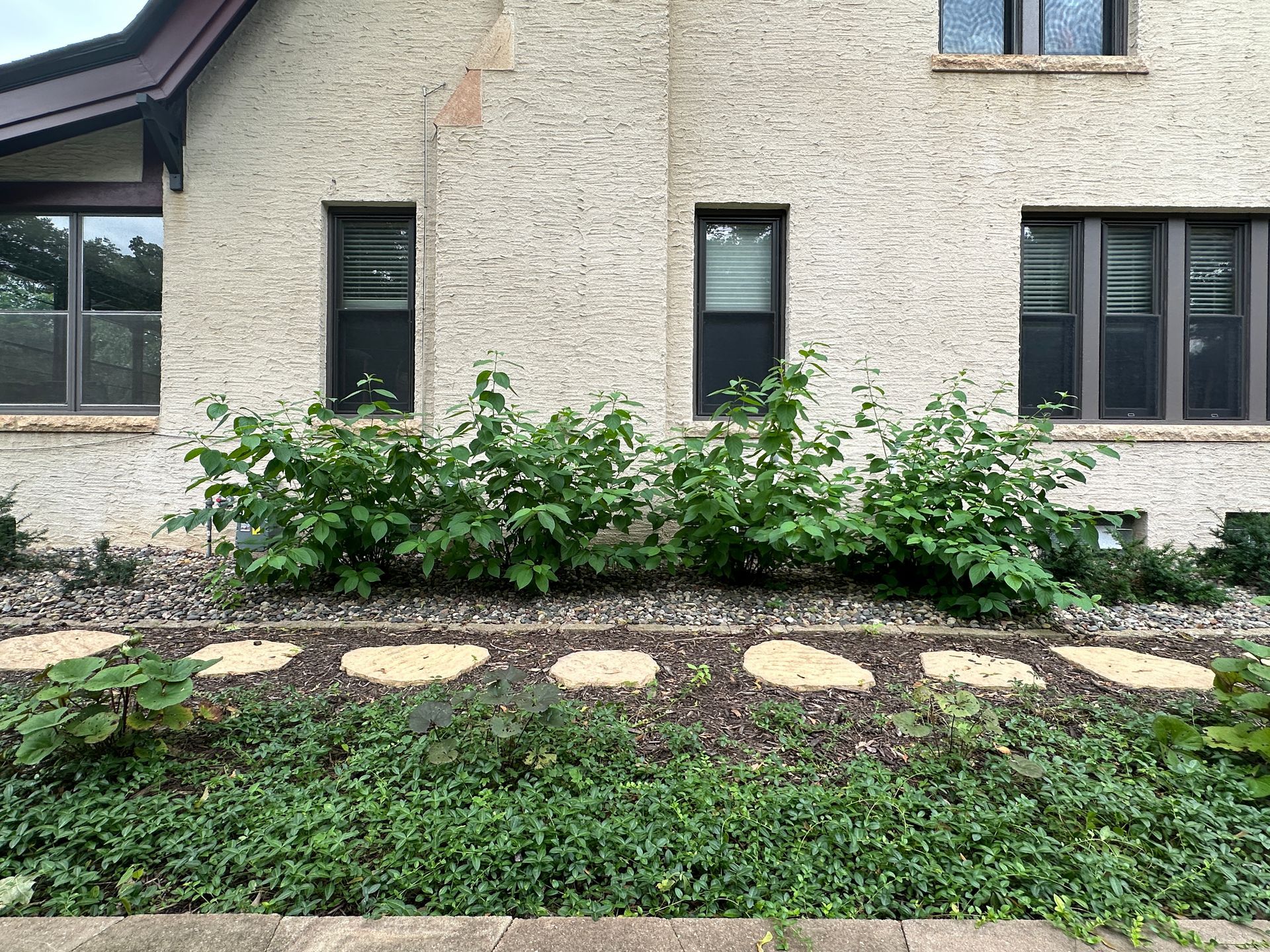
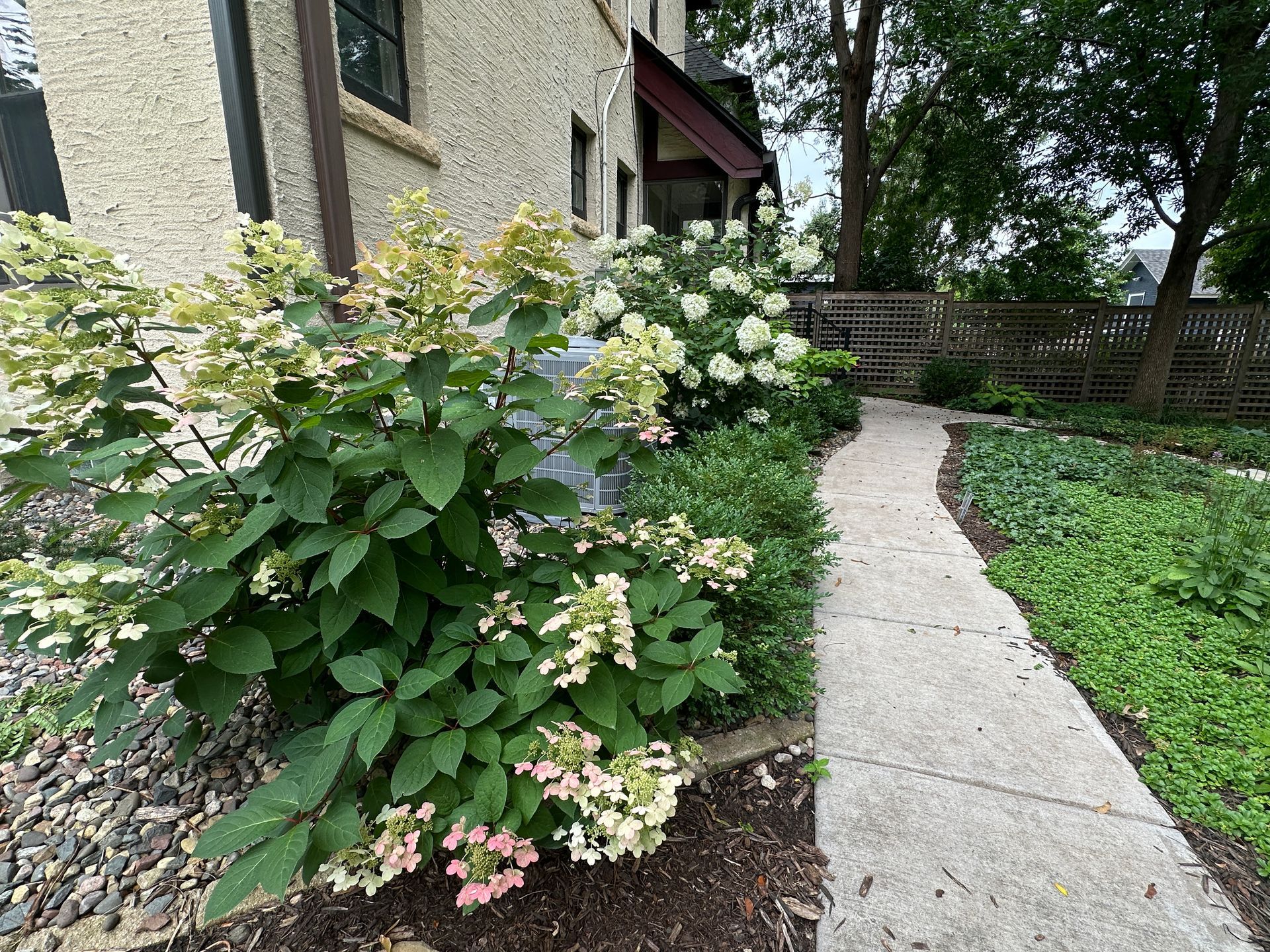
Height layering helps. Taller plants near the house or along the back. Medium heights in the middle. Shorter plants toward the front. This creates depth and makes the space feel larger. It also lets you screen things you don't want to see, like the neighbor's AC unit, or create privacy without building a fence.
But the bigger issue is what happens outside of summer. Evergreens are the backbone here. Yews, boxwoods, dwarf conifers. They're there in January when everything else is bare. They give structure to the beds and make the space feel intentional even in the dead of winter. Then you build around them with flowering perennials and ground covers for the growing season.
Think of it this way: ornamental tree in the corner, hydrangeas below, shorter flowering perennials in front. Summer, you've got blooms at three levels. Winter, the tree's branching structure and whatever evergreens you've included still give you something to look at. The yard doesn't disappear for five months.
Slopes
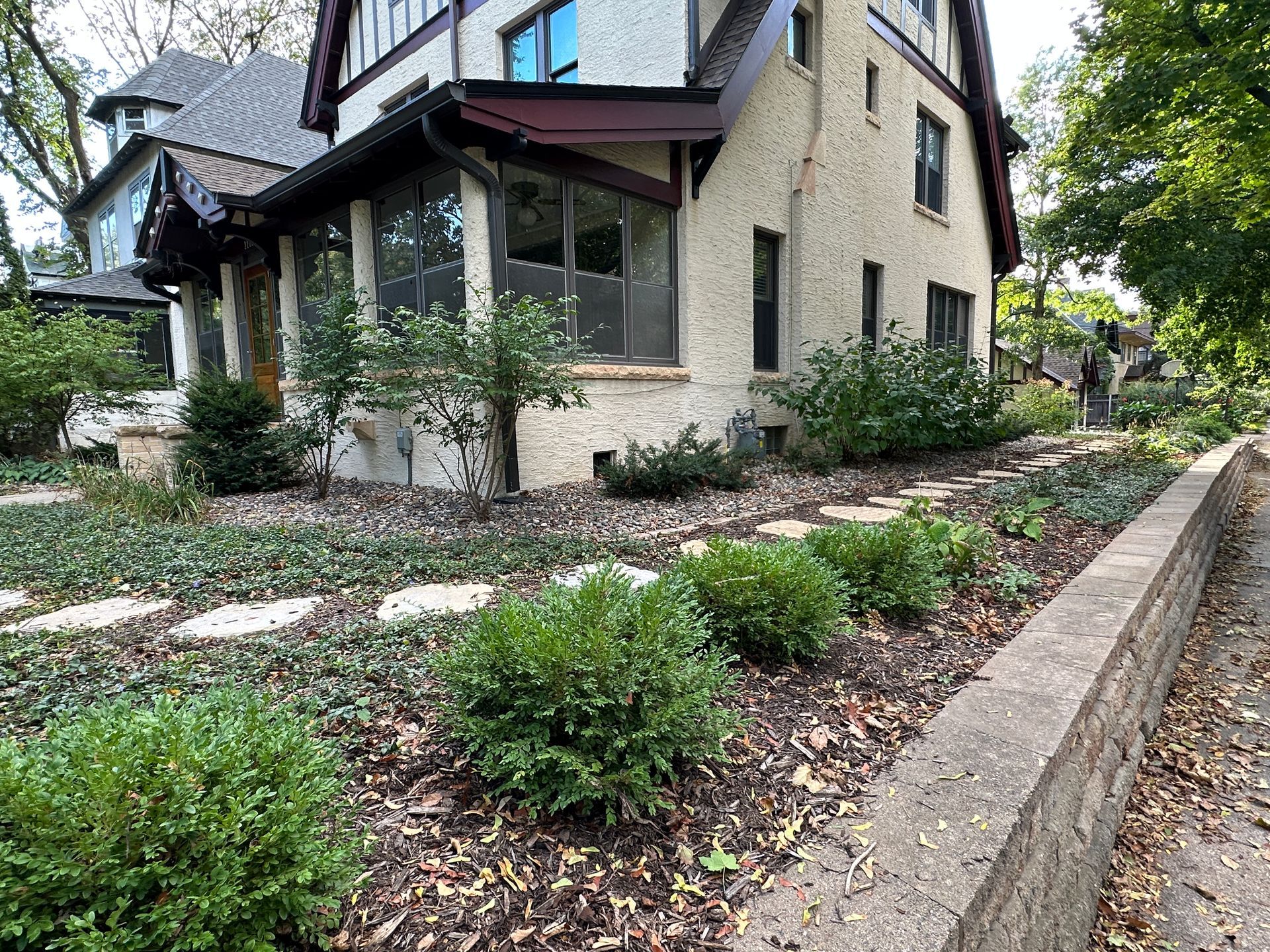
If you have a steep section, that's the first place to stop mowing. Pushing a mower across a 30-degree grade is asking for an injury. And the grass on slopes rarely looks good anyway.
Ground covers with spreading root systems hold soil better than turf. Retaining walls can turn an unusable slope into terraced beds with flat areas for walking. In one Minneapolis project, the side yard was too steep to even walk on. We built a wall along the length, backfilled to create a flat pathway, planted the remaining slope with ground covers. Now they actually use that part of their property.
Keep Grass Where It Works
Low maintenance doesn't mean no grass. If you have an area with good sun, decent drainage, and flat ground, that's probably fine for turf. Kids need somewhere to run. Dogs need somewhere to do their business.
Keep grass where it's thriving and easy to maintain. Replace it where it's struggling or where mowing is a pain. A lot of Minneapolis homeowners end up with a hybrid: lawn for the sunny flat areas, ground covers and plantings for the shaded or sloped sections. If you're not ready to give up grass entirely, clover lawns need less water, less fertilizer, and less mowing than traditional turf.
Drainage Still Matters
Replacing your lawn doesn't fix drainage problems. Can make them worse, actually. Established turf absorbs some water. Bare soil or improperly graded beds can send it straight toward your foundation. The Minnesota Stormwater Manual notes that landscaping choices directly impact how water moves across a property.
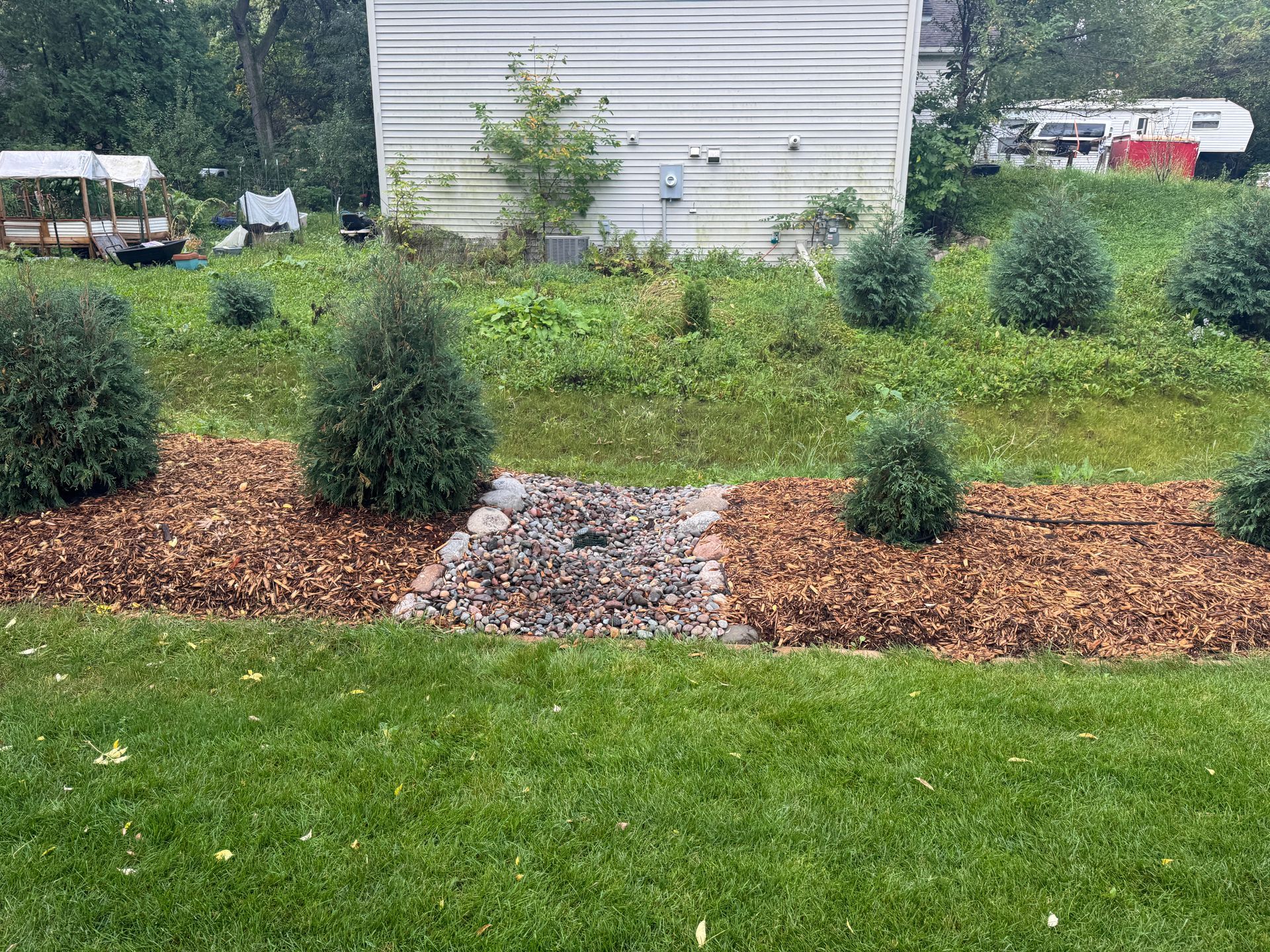
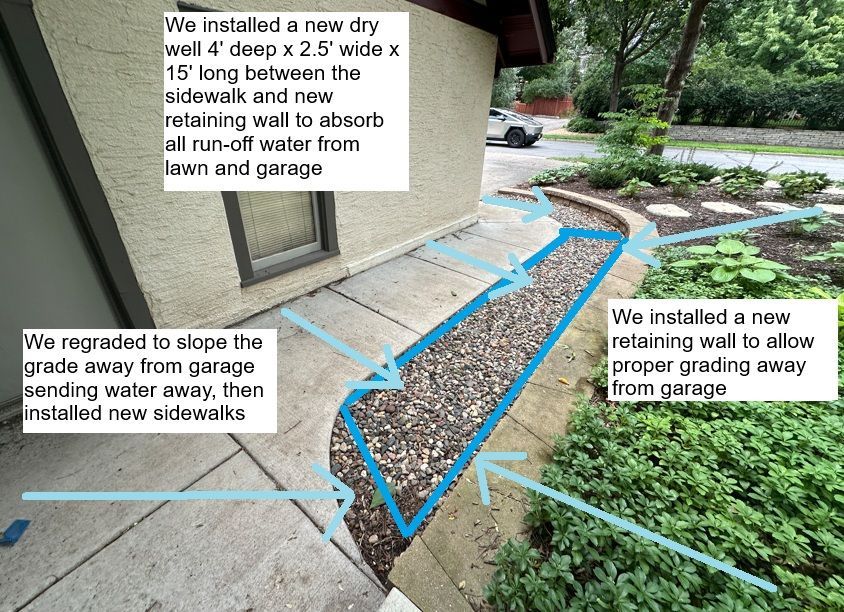
If your yard already has issues, pooling near the garage, erosion, water heading toward the house, those need to be addressed as part of any redesign. Sometimes that means regrading and drainage work before plantings go in. In the Lake of the Isles project, we installed underground downspouts, drain tile behind the retaining wall, and a dry well before any plants went in the ground. The pretty stuff came after the water was going where it should.
The Design Is What Makes It Work
Anyone can rip out a lawn and plant ground covers. The difference between "gave up on the yard" and "designed this way on purpose" is planning.
Unplanned, these gardens look like a mess. Plants outgrow their spots. Colors clash. No clear path through. Bed edges wander without logic. It doesn't read as intentional, because it wasn't.
We help design spaces that everyone can tell are well planned. Sight lines, mature plant sizes, colors and textures that work together, focal points, structure.
A real design process is what separates a beautiful low maintenance yard from one that looks neglected.
A Yard That Actually Works
The goal isn't zero effort. It's effort that makes sense. Occasional weeding and dividing perennials every few years, not weekly mowing of grass that's barely hanging on.
A well-designed low maintenance landscape looks better as it matures. Ground covers fill in. Perennials establish. Pathways settle into place. Five years out, the yard has character that a lawn never would.
If you're in Minneapolis or the surrounding Twin Cities and ready to stop fighting your lawn, we'd be glad to walk through your property. Every yard is different.
Contact KG Landscape to start a conversation.
Frequently Asked Questions
How much does this cost compared to maintaining a lawn?
More upfront. Less over time. You're paying for design, plants, hardscaping, and installation rather than just seed. But you're not paying for mowing, watering, fertilizing, and weed control year after year. Most homeowners find it pays back within a few years.
Will ground covers spread into my neighbor's yard?
Depends on the variety. Some spread aggressively, some stay put. We choose based on the situation and install edging where needed.
How long until it looks filled in?
Two to three seasons for most ground covers. You can plant closer together for faster coverage, but it costs more.
What about winter?
If it's designed right, you still have something to look at. Evergreens, ornamental grasses, tree structure, hardscape. A good design accounts for all four seasons.
Can I do this myself?
You can plant ground covers yourself. The design is the hard part. Getting plant selection right, creating a layout that looks intentional, addressing drainage, building pathways that work. That's where professional help makes the difference.
About the Author
Kent Gliadon is the owner and principal designer at KG Landscape, a Minneapolis-based landscape design and build company serving homeowners across the Twin Cities for over 20 years. Kent studied landscape architecture and earned a bachelor's degree in Environmental Horticulture at the University of Minnesota, with emphasis in turf science and landscape design.
Ready to Start on Your Next Project?
Call us at (763) 568-7251 or visit our quote page.