Wet Yard Drainage Solution in Plymouth MN: Underground Gutter Drains & Sump Pump Discharge System
What Was Causing the Wet Yard in Plymouth MN?
Your backyard stays wet. You've noticed the soggy spots, the mud, maybe some frost heave damage to your patio or fence. You're thinking about French drains.
But before you start digging trenches, look up. A huge amount of water hitting your yard isn't coming from rain falling on the lawn. It's coming from your roof.
A moderate rainfall on a typical Plymouth home puts hundreds of gallons through your gutter system. Every bit of that water exits through your downspouts. Where it goes from there determines whether you have a drainage problem or not.
Then there's your sump pump. Every time it kicks on, it's pushing water out of your basement and into your yard. On a wet property, that pump might run dozens of times a day. All that water has to go somewhere.
If your downspouts dump water next to your foundation and your sump pump discharges into a side yard that drains toward your backyard, you're adding water to an already saturated situation. French drains alone might not be enough. You need to manage the sources.
The Problem With Gutters Emptying Into the Lawn
Most downspouts in Plymouth end with a short extension that dumps water a few feet from the foundation and into the . That's technically moving water away from the house, but not far enough.
The water hits the ground and soaks in. In clay soil, it doesn't drain away quickly. It spreads laterally. Some of it ends up right back against the foundation. Some of it migrates toward your patio or deck footings. All of it contributes to the saturated conditions that cause frost heave.
Sump pump discharge is often worse. The pump pushes water out through a pipe that typically exits at the side of the house. This creates a perpectuall wet area in the lawn where an active sump pump dicharges, causing muddy areas that are no fun to walk on or mow. If the yard slopes toward the backyard, all that pumped water ends up in exactly the area you're trying to keep dry.
Surface discharge also creates visible problems. Splash erosion under downspouts. Muddy channels where sump water runs. Grass that won't grow in the constantly wet strip.
How Underground Gutter Drains Help Eliminate Standing Water
Underground downspout systems capture roof water before it hits the ground and move it through buried pipe to a discharge point away from the problem areas.
The typical setup includes:
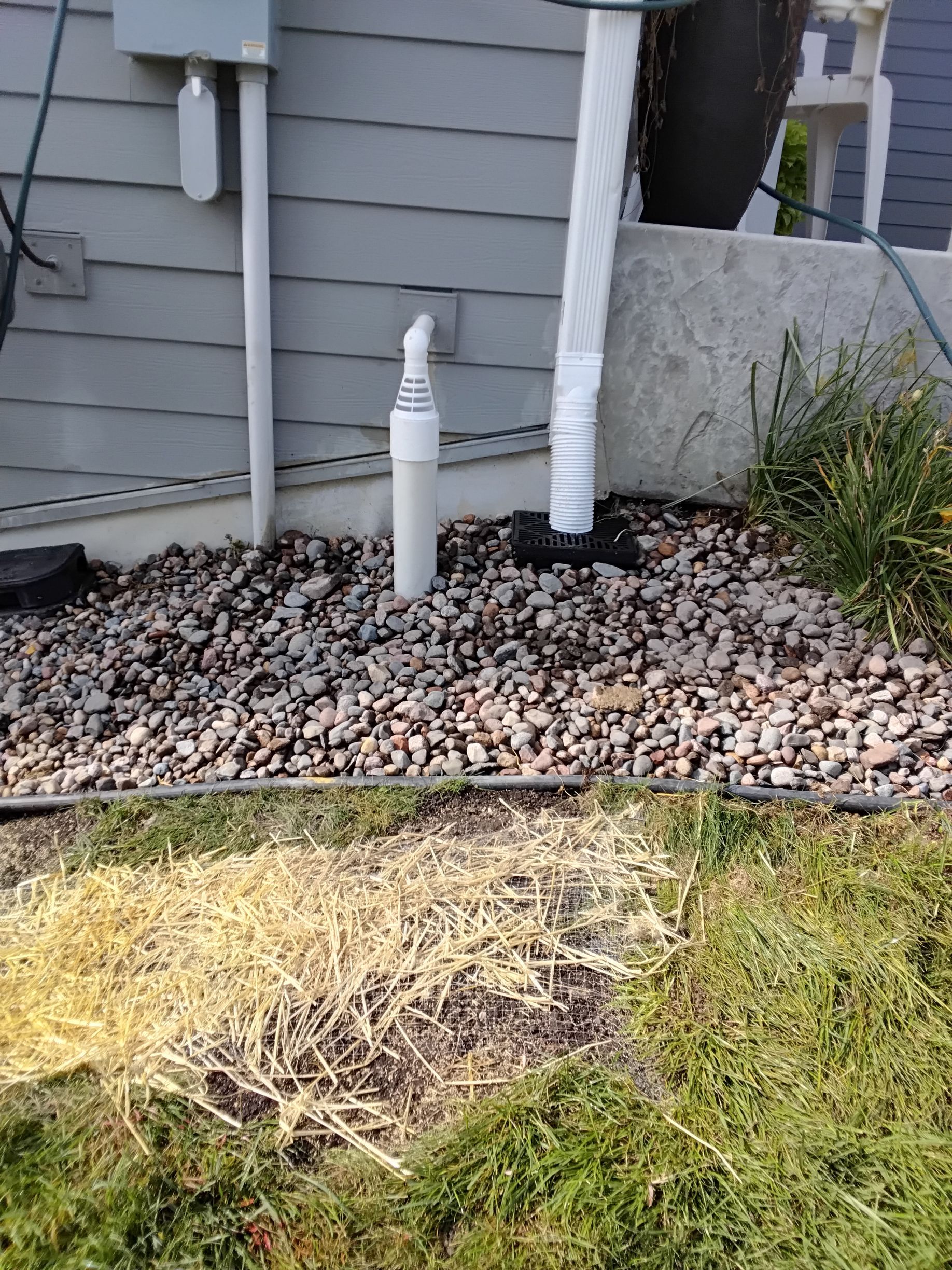
Catch basins below each downspout
These collect water from the gutter and direct it into underground pipe. They also catch debris, so leaves and shingle grit don't clog the system.

Solid PVC or corrugated pipe near the home
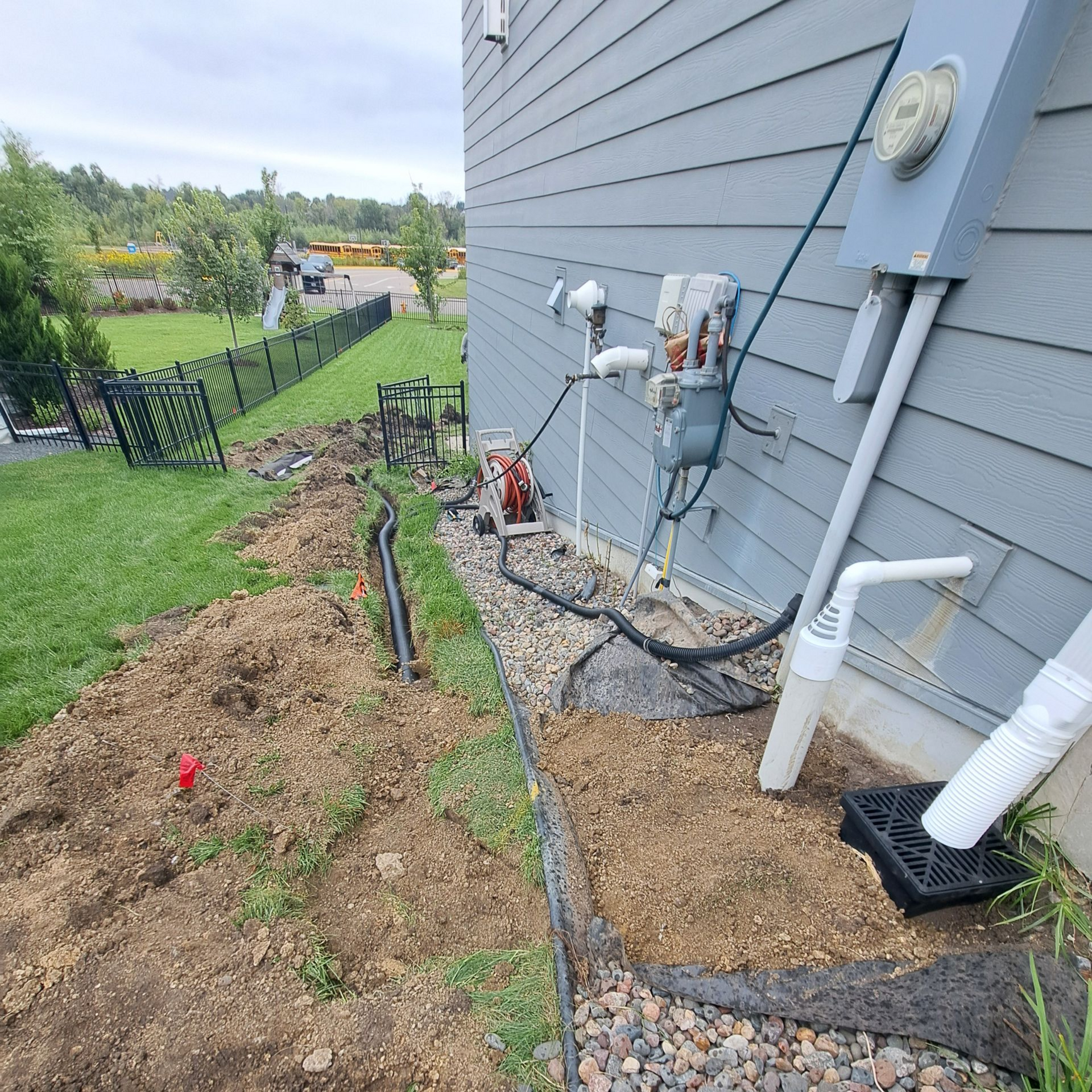
The pipe runs underground from the catch basin to the outlet location. We like to use solid pipe (no weep holes) near the house and around other features like patios, to help prevent any of the water we are trying to send away from leaking in near the home or patio for this example.
Perforated pipe after reaching 15-20' away from the house / patio
We prefer to transition to perforated pipe once the drain line is approximately 15–20 feet away from the house and any other structures. This allows some of the water to discharge gradually along the run when using a pop-up emitter, which is designed to hold water in the line. By switching to perforated pipe at a safe distance from structures, the system also functions similarly to drain tile, helping to relieve supersaturated soils along the drainage path before the water exits at the outlet location.

A discharge point at lower elevation
The water has to go somewhere. Ideally, that's a spot far from the house where it can daylight onto a slope or into a drainage area. If the yard is flat, other options include dry wells, pop-up emitters, or connection to a larger drainage system.
Proper Sump Pump Discharge Installation in Plymouth MN
For sump pump discharge, the approach is similar. The pump's discharge pipe connects to an underground line that carries water to the same outlet as the downspouts. This eliminates the surface discharge, the ice buildup in winter, and the wet channel along the foundation.

Connecting Everything Together
The real power of underground drainage comes from integration. Instead of separate systems for downspouts, sump pump, and French drains, you connect everything into one network that shares a common outlet. At KG Landscape,
we provide full service landscaping and hardscaping services that includes designing these systems to function perfectly with newly
designed landscaping features
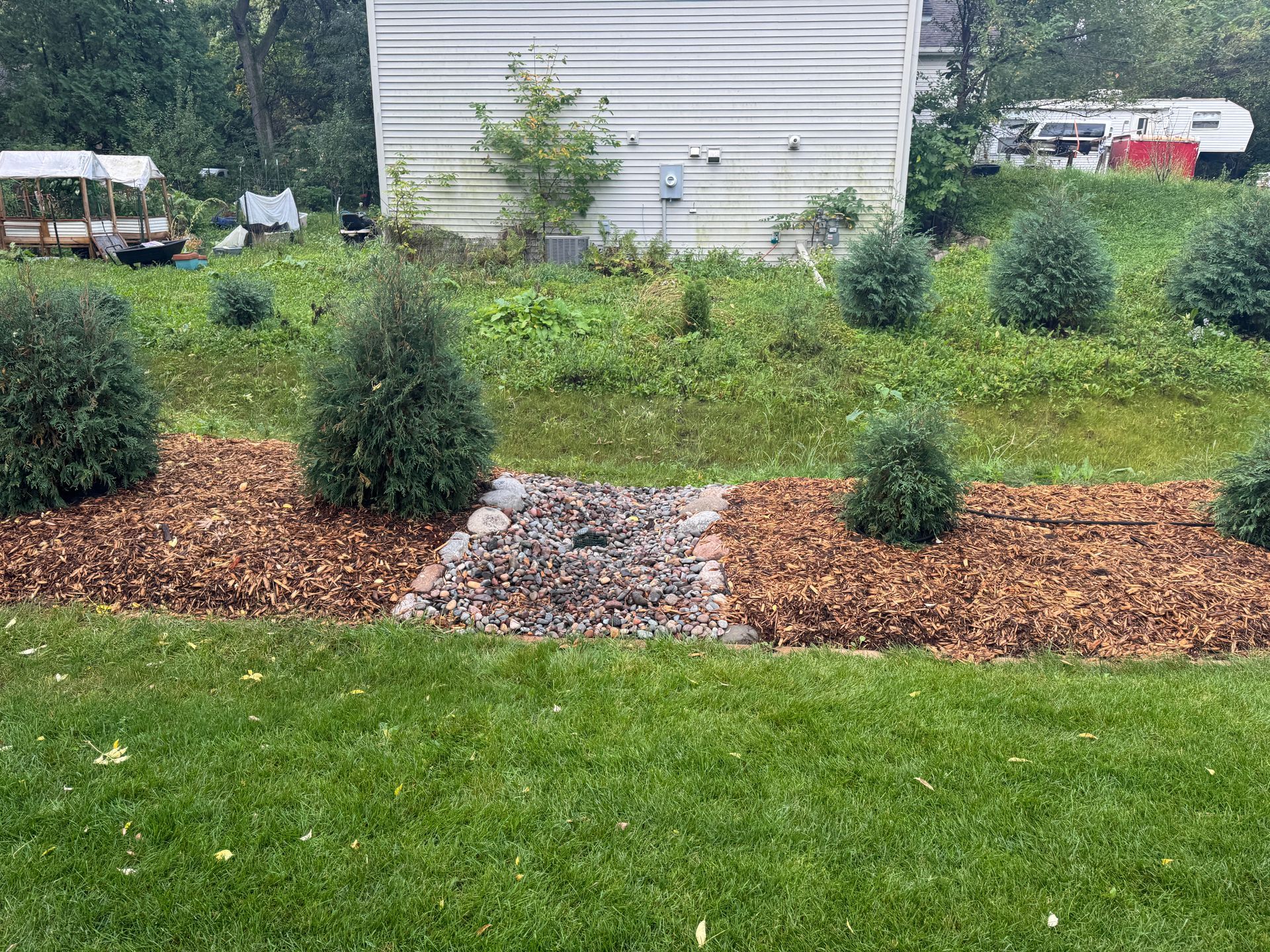
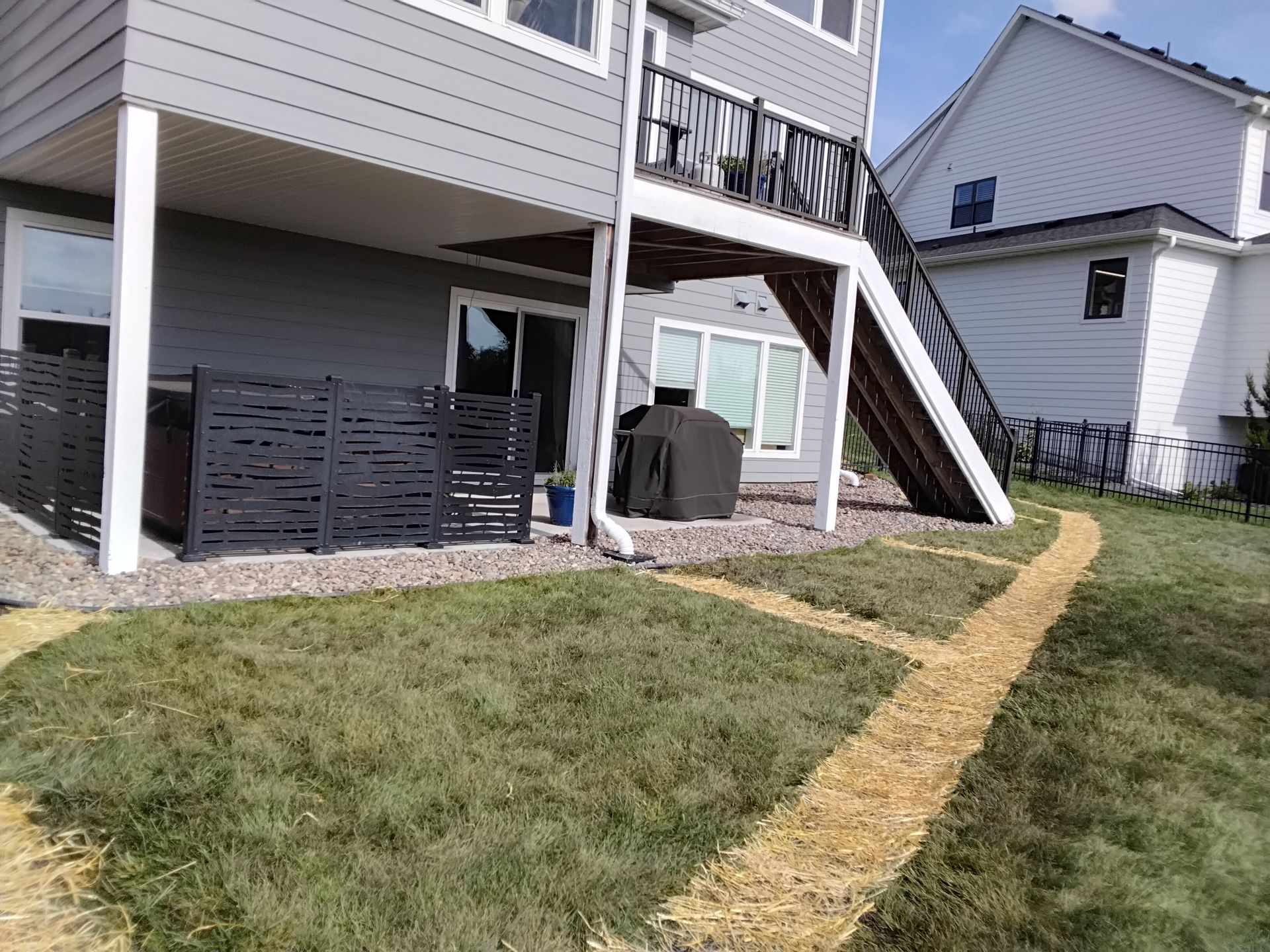
This is exactly what we did for this yard drainage solution project in Plymouth, in the Enclave at Elm Creek neighborhood where the homeowner was dealing with a saturated backyard, frost heave damage, and a sump pump that ran constantly.
The system included:
- French drains along the foundation and around the patio perimeter
- Underground downspouts from every gutter on the back and side of the house
- Sump pump discharge tied into the main drain line
- A downspout at the front corner of the house that had been draining toward the backyard, also captured and sent underground
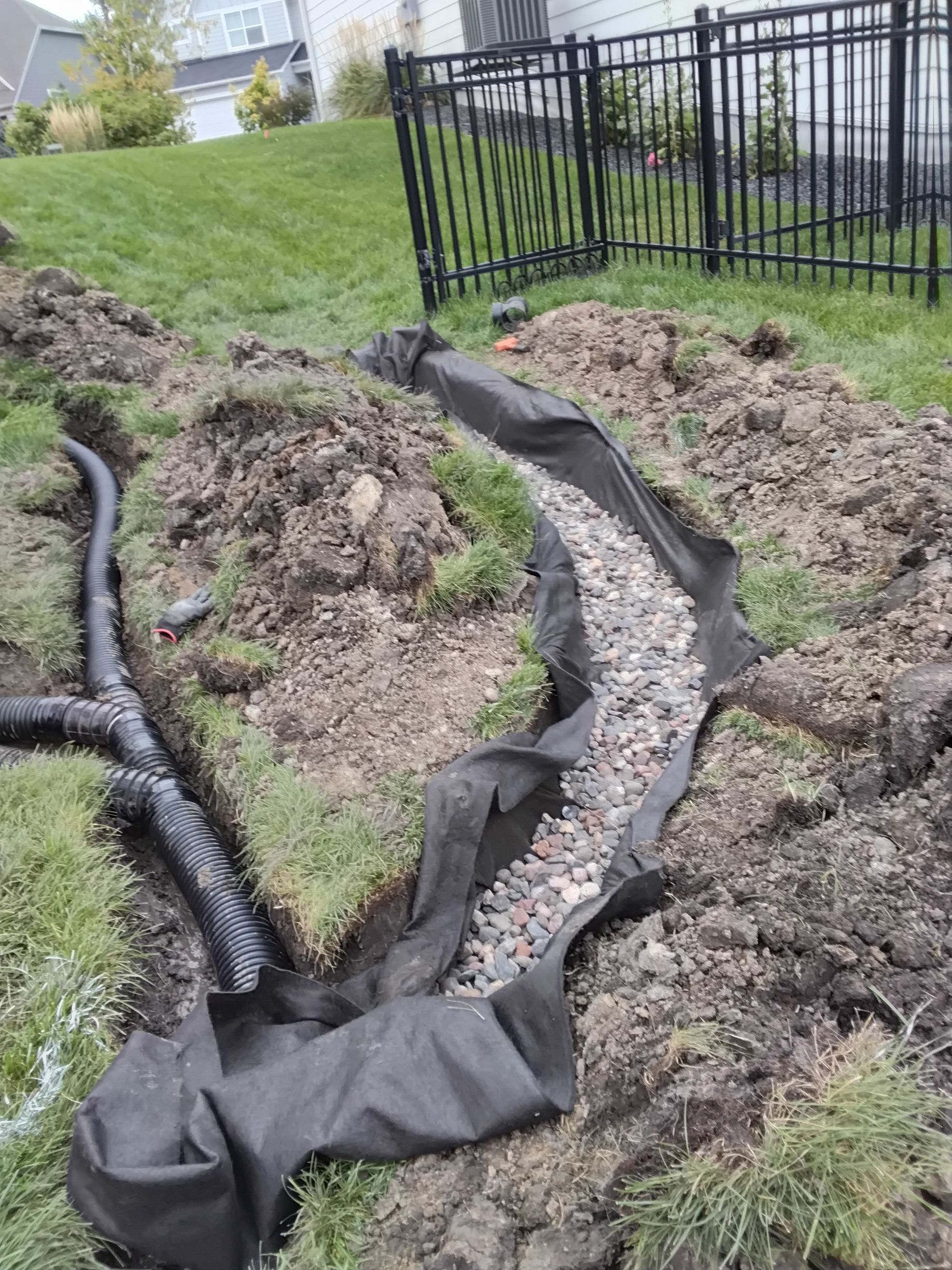

Everything flows to a 4-inch main line that runs to the back of the property and discharges at the lowest point. One outlet handles all the water. No more roof runoff soaking into the clay near the foundation. No more sump water running down the side yard into the backyard. No more saturated soil under the patio. Now, the backyard drys out quickly after rain events after we completely solved their yard drainage problems with the solutions outlined in this case study.
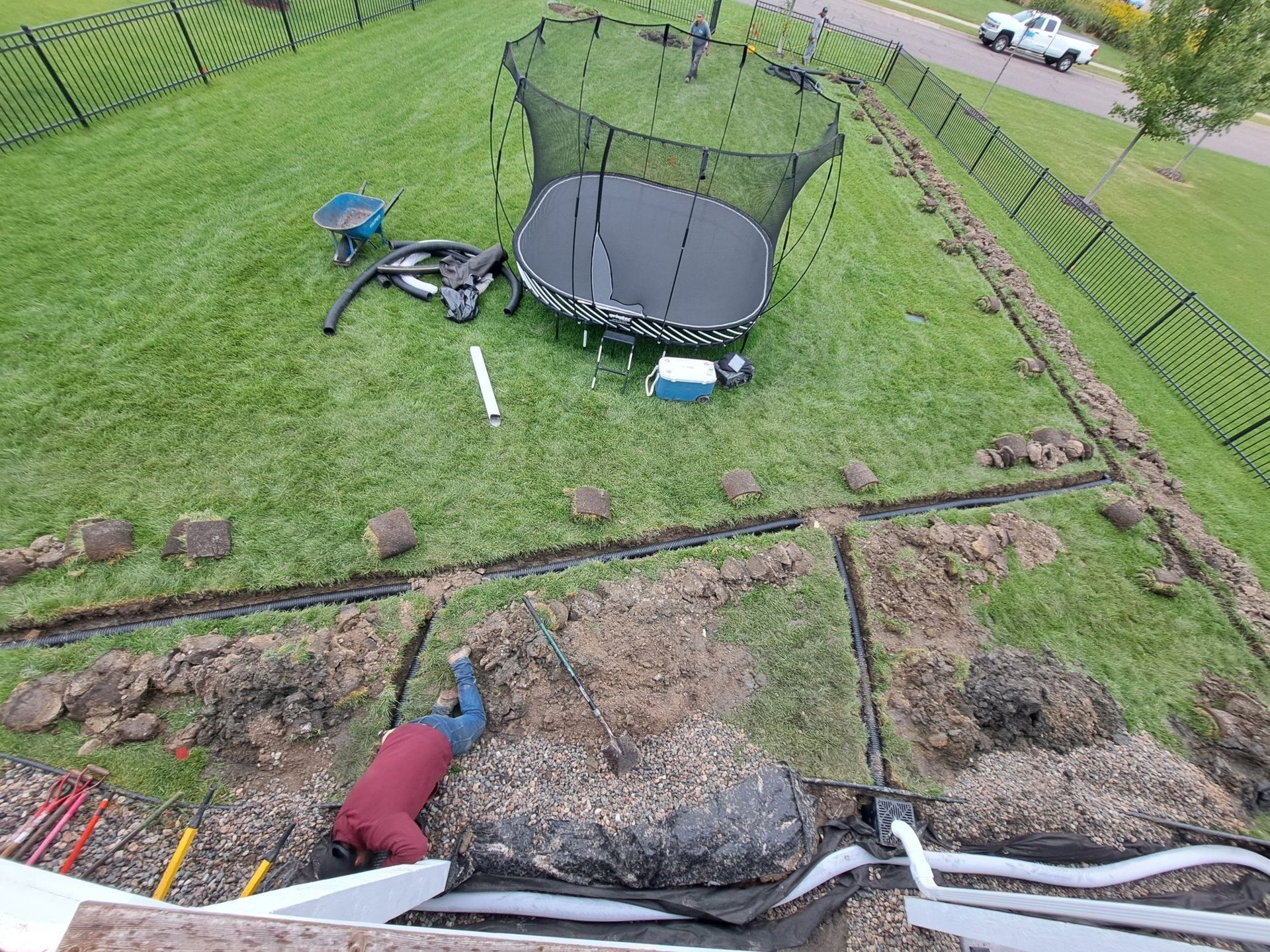
The sump pump still runs, but the water it discharges leaves the property instead of cycling back into the soil. The French drains keep the soil around the patio and footings dry. The underground downspouts keep roof water out of the equation entirely.
Why a Comprehensive Drainage Plan Matters
Fixing one water source while ignoring the others is how drainage projects fail.
If water is entering your yard from multiple sources — roof runoff, sump pump discharge, surface runoff, or even water running into your yard from a neighboring property — the solution has to address all of them. A piecemeal approach leaves weak points where water can reappear, saturate the soil, and undo the work you’ve already invested in. The result is a yard that stays wet, soft, and unusable.
Effective drainage design starts with identifying every contributing factor and organizing them into clear priorities:
First-Level Priorities – Primary Water Sources
These are the major contributors, such as roof downspouts, sump pump discharge lines, and heavy surface runoff. If these aren’t properly captured and redirected, no secondary solution will hold up.
Second-Level Priorities – Saturation & Flow Management
This includes grading corrections, French drains, drain tile systems, and swales that manage subsurface water and move it efficiently across the property.
Third-Level Priorities – Finish Grading & Surface Protection
Soil stabilization, turf establishment, rock beds, and hardscape integration ensure the system performs long-term and protects your landscape investment.
We design landscaping & drainage systems from the top down, tying all key components into one coordinated solution with a unified outlet and a clear path for water to exit the property. One comprehensive installation. No gaps. No competing systems. Just a properly engineered approach that works together to solve your drainage problems for the long run.
What to Consider for Your Property
Where do your downspouts currently discharge?
Walk around during a rain and watch where the water goes. If it's pooling near the foundation, running toward the patio, or creating wet spots in the lawn, those downspouts need to be rerouted underground.
How often does your sump pump run?
A pump that runs frequently is moving a lot of water. If that water is discharging at the surface and draining toward your backyard, it's contributing to saturation. Tying the sump discharge into an underground system keeps that water from coming back.
Do you have slope to work with?
Underground drainage needs to flow downhill. If your yard has a lower area where water can outlet, that's your discharge point. If the yard is flat, you may need a dry well or pop-up emitter. On properties where nowhere is truly lower, an outdoor sump pump system can push water out.
Are you already planning French drains?
If you're addressing wet soil around your foundation or patio, add the downspouts and sump pump to the project. Running one set of trenches and connecting everything to one main line is far more efficient than doing separate projects later.
The Result of Getting It Right
When underground downspouts, sump pump discharge, and French drains all work together, the change is dramatic.
The Plymouth homeowner whose project we've been describing had a backyard that stayed muddy for days after every rain. The patio was heaving into the siding. Catch basins from a previous attempt at drainage were popping out of the ground. The sump pump ran almost constantly.
After the comprehensive system went in, the backyard drains like the front yard. The soil around the patio and deck footings stays dry. The sump pump still runs, but the water actually leaves the property. The frost heave damage has stopped because there's nothing left to heave.
That's what managing your water sources gets you. Not a partial fix. A complete one.


Frequently Asked Questions
Can I connect my sump pump to my underground downspout system?
Yes, and it's usually a good idea. The sump pump discharge can tie into the same main line that handles your downspouts. This consolidates everything into one system with one outlet. Just make sure the pipe is sized to handle the combined flow, and include an air gap or relief point in case the underground system ever backs up.
What happens to underground downspouts in winter?
Underground pipes can freeze if water sits in them. Good design minimizes this risk of freezing in the underground pipes by maintaining proper slope so water doesn't hold in the pipe, and by disconnecting the system during deep winter when the gutters aren't flowing anyway. It's also important to help prevent ice/snow covering from covering the discharge point, which is why outlets should be at a low spot where water can exit freely.
How far from the house should the discharge point be?
At least 15 feet, and ideally further. The goal is to get water far enough away that it can't migrate back through the soil toward your foundation. On large properties, we often run the main line 30 or 40 feet to a suitable outlet. The right distance depends on your lot's topography and where water naturally wants to go.
Do I need a catch basin below every downspout?
Not necessarily, but it's usually the best approach. Catch basins collect debris and provide an access point for maintenance. For downspouts in tight spots, there are inline adapters that connect directly to the underground pipe. The right choice depends on the situation.
What size pipe should I use for underground drainage?
4-inch PVC or corrugated pipe standard for most residential applications. It handles the flow from multiple downspouts and sump pumps without backing up. For longer runs or systems collecting a lot of water, we sometimes upsize to 6-inch pipe for the main line.
Ready to Stop Fighting Water?
If your Plymouth yard stays wet despite your best efforts, look at the big picture. The water is coming from somewhere. Downspouts, sump pump discharge, surface runoff. Until you manage all the sources, you're fighting uphill.
We design drainage systems that tie everything together. One project, one system, one solution that actually works. Contact us to evaluate your property and see what a comprehensive approach would look like.
About the Author
Kent Gliadon is the owner and principal designer at KG Landscape, a Minneapolis-based landscape design and build company serving homeowners across the Twin Cities for over 20 years. Kent studied landscape architecture and earned a bachelor's degree in Environmental Horticulture at the University of Minnesota, with emphasis in turf science and landscape design.
Ready to Start on Your Next Project?
Call us at (763) 568-7251 or visit our quote page.