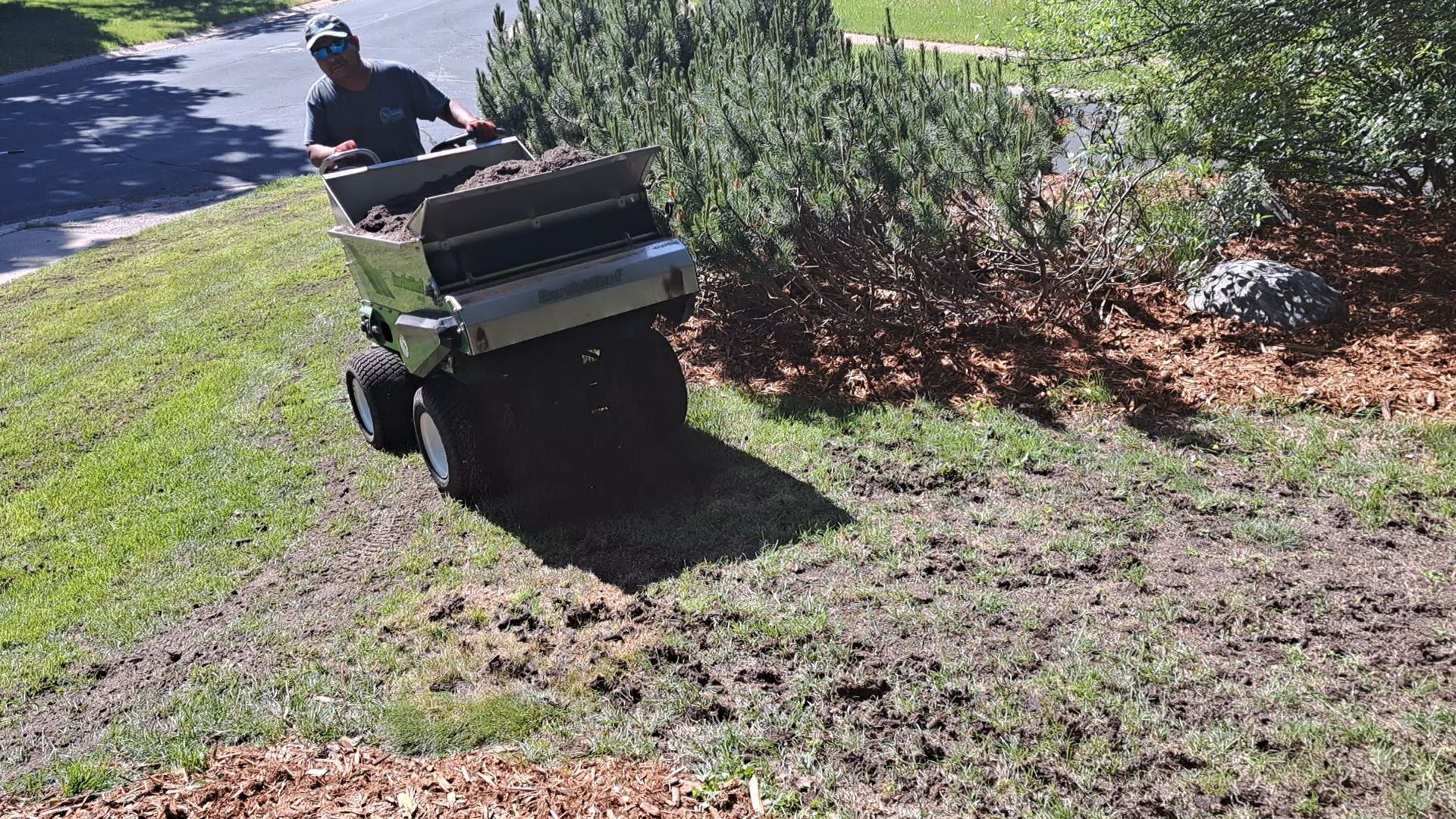
French Drains vs. Re-Grading: How to Determine the Best Fix for Narrow Side Yard Drainage Problem in the Twin Cities
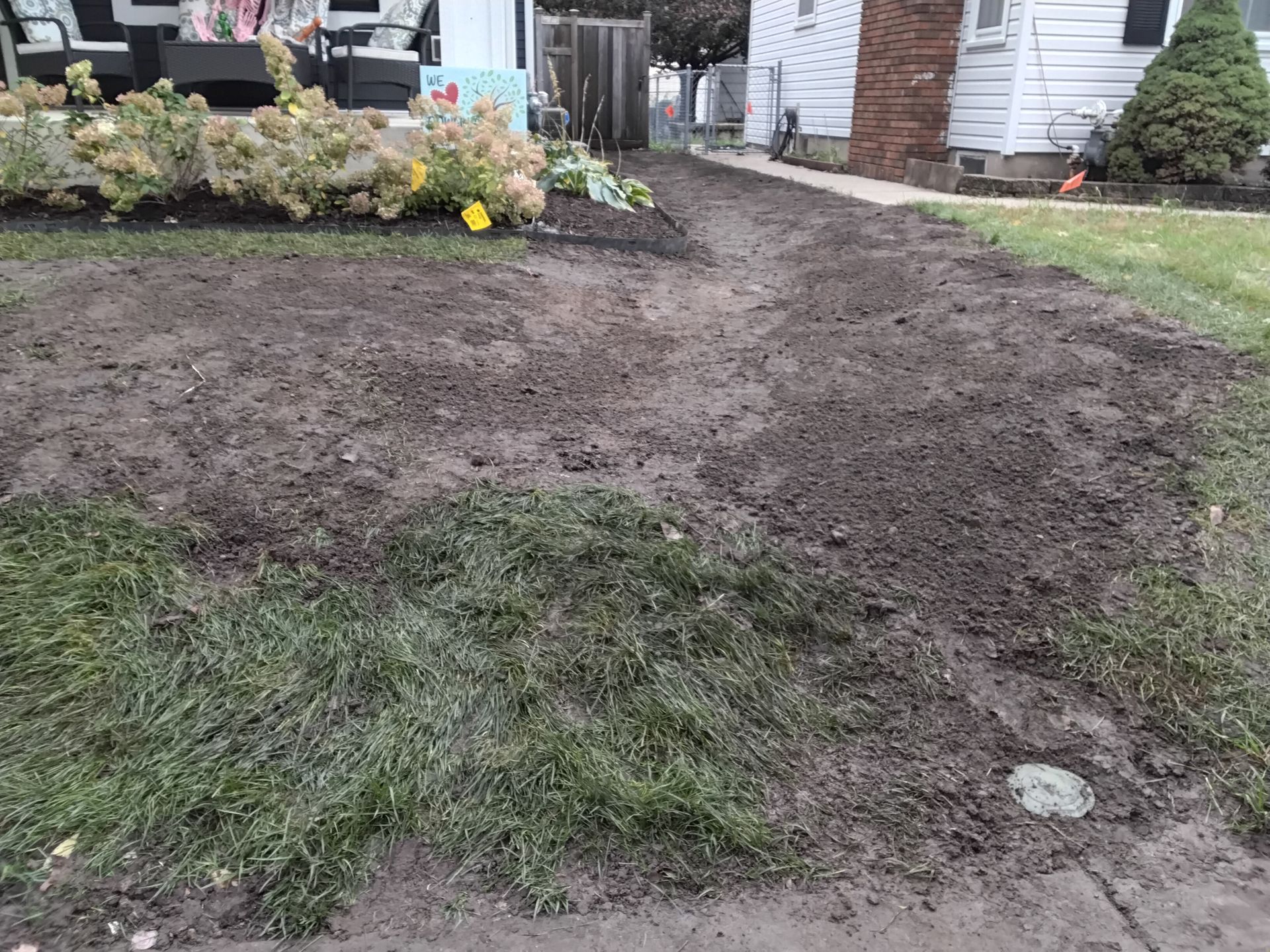
When to Use Regrading Vs. French Drain in Urban Yards
If you own a home in Minneapolis or St. Paul, there’s a good chance you’ve dealt with a soggy side yard, water pooling near your foundation, or muddy areas that never seem to dry out. With our clay-heavy soils, frequent summer storms, and spring snowmelt, yard drainage problems are one of the most common issues we see at KG Landscape.
One of the most common questions we’re asked is:
“Should I re-grade my side yard, or install a French drain?”
The answer depends on space, slope, and how much visible change you want in your yard—especially in the
narrow side yards typical of Twin Cities city lots. Below, we’ll walk through both options and explain how to decide which solution will work best for your property.
Why Drainage Is Especially Challenging in Minneapolis & St. Paul
Many homes in the Twin Cities were built on:
- Relatively flat lots
- Heavy clay soils that drain slowly
- Tight property lines, often with only 3–6 feet of side yard space
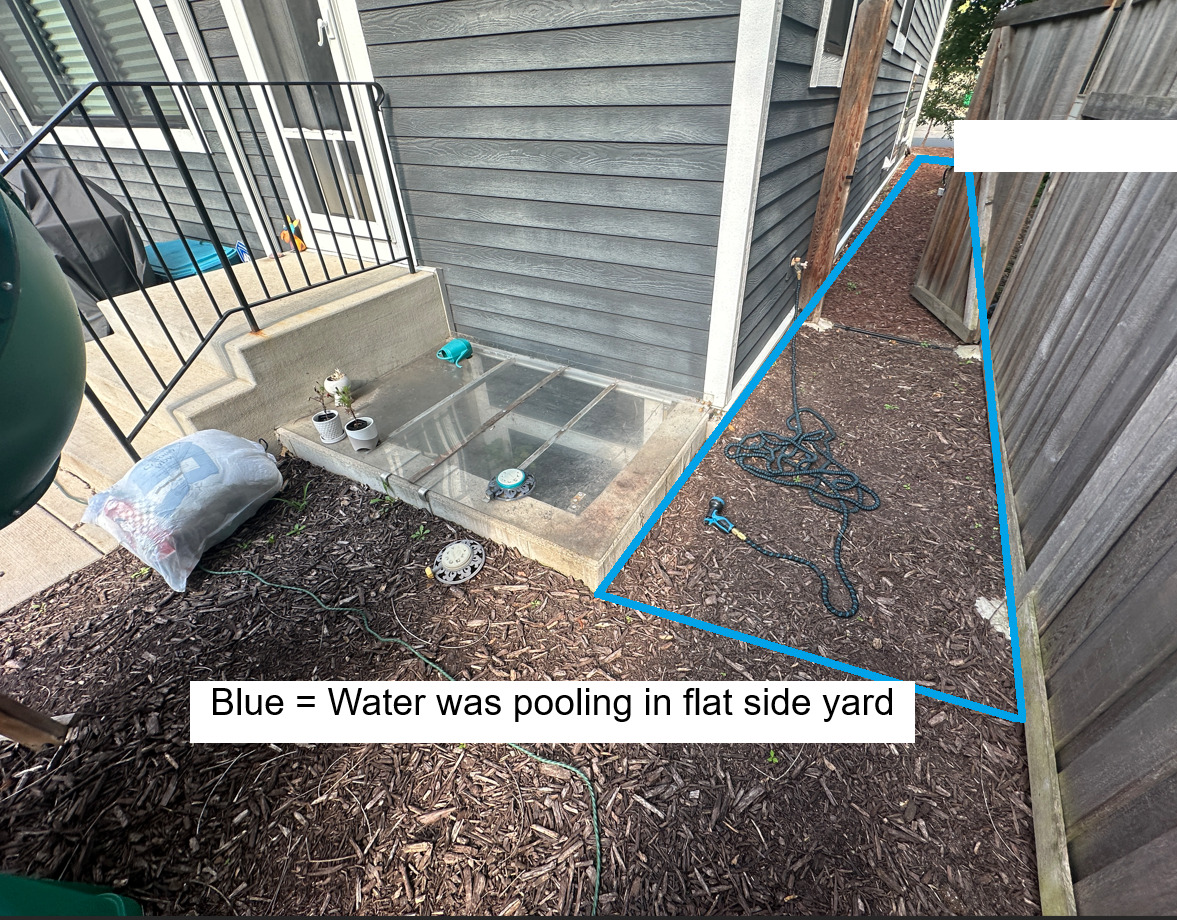
- Years of Home and Yard Changes that disrupt how water was indented to drain in the yard and within the neighborhood and between homes.
When water can’t naturally move away from the foundation, it collects along the house, leading to:
- Foundation moisture issues
- Basement water intrusion
- Erosion
- Muddy, unusable side yards
Fixing these problems properly requires more than just adding soil—it requires
intentional grading or engineered drainage systems.
Option 1: Re-Grading a Side Yard with a Swale
Re-grading involves reshaping the soil so water flows away from the foundation and toward a lower point in the yard. In some cases, this includes creating a shallow swale (a sloped channel) to direct surface water.
Pros of Re-Grading
Re-grading can be a great solution when there’s enough space to work with.
- You can
visually see water flowing away from the house
- No underground pipes that could clog or collapse
- Minimal long-term maintenance
- Performs well through Twin Cities freeze–thaw cycles
When Re-Grading Works Well
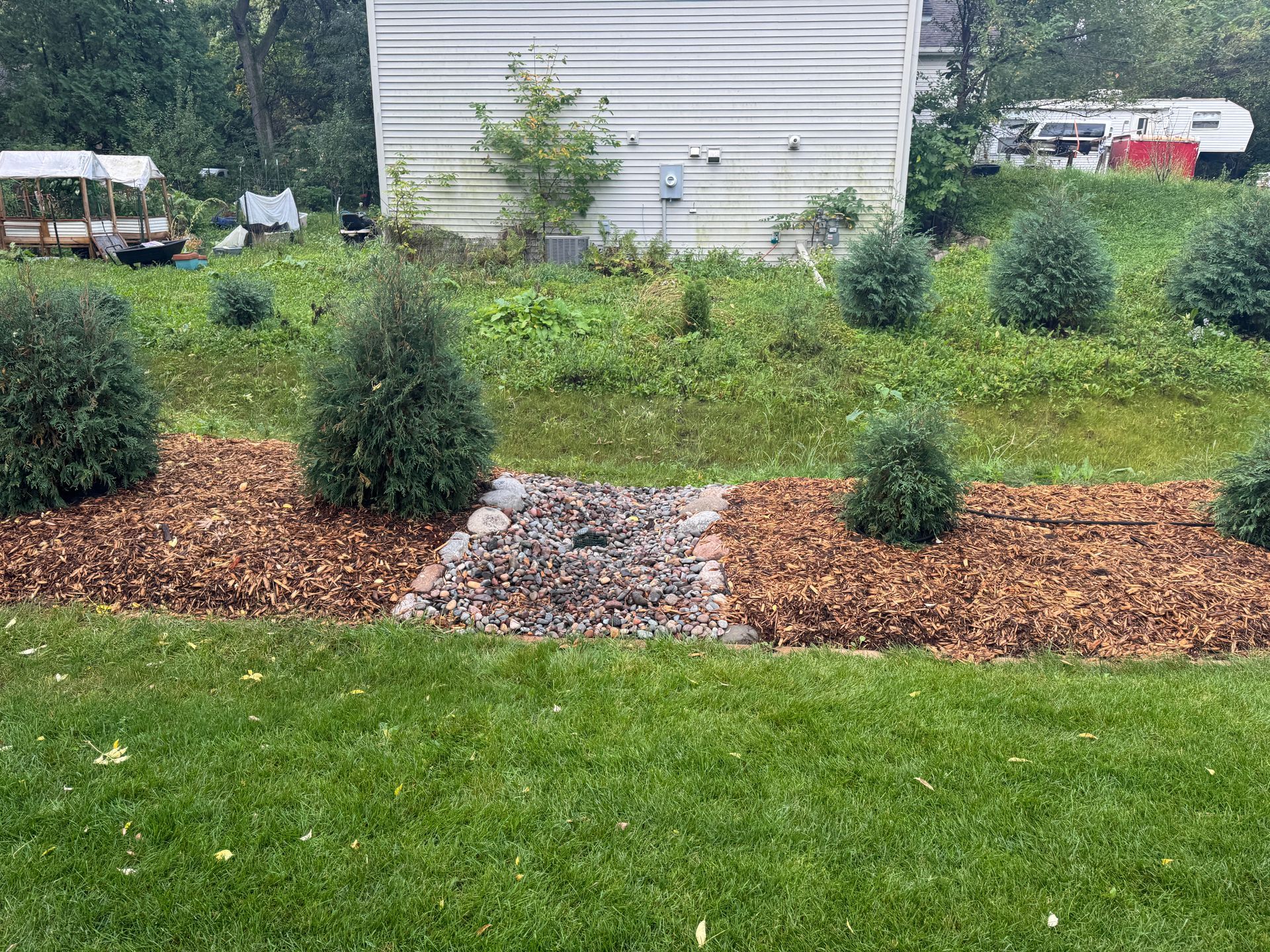
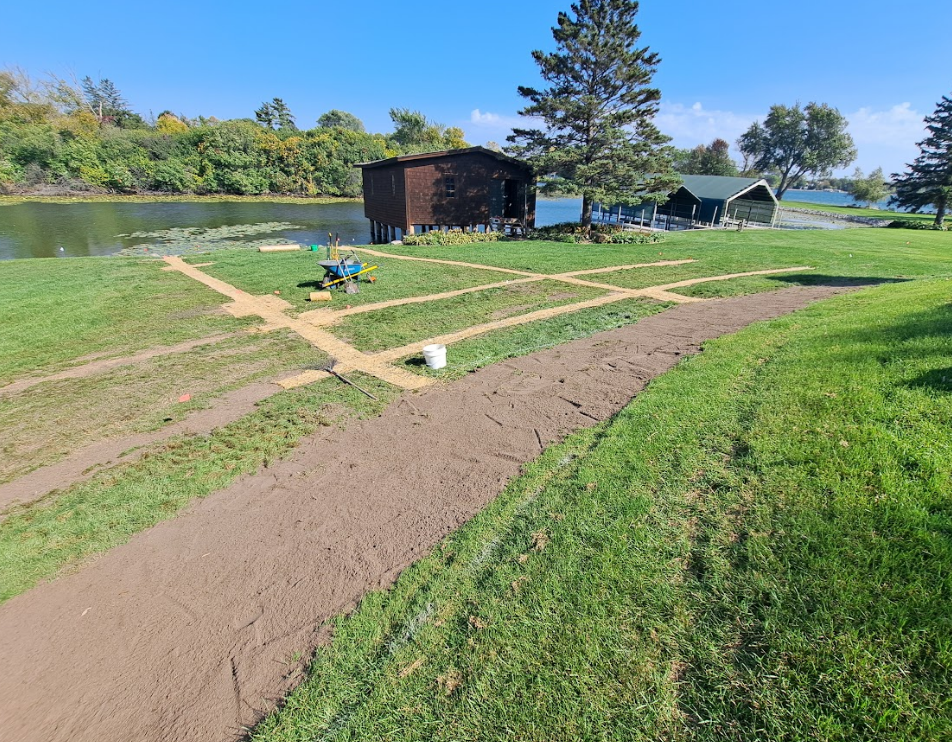
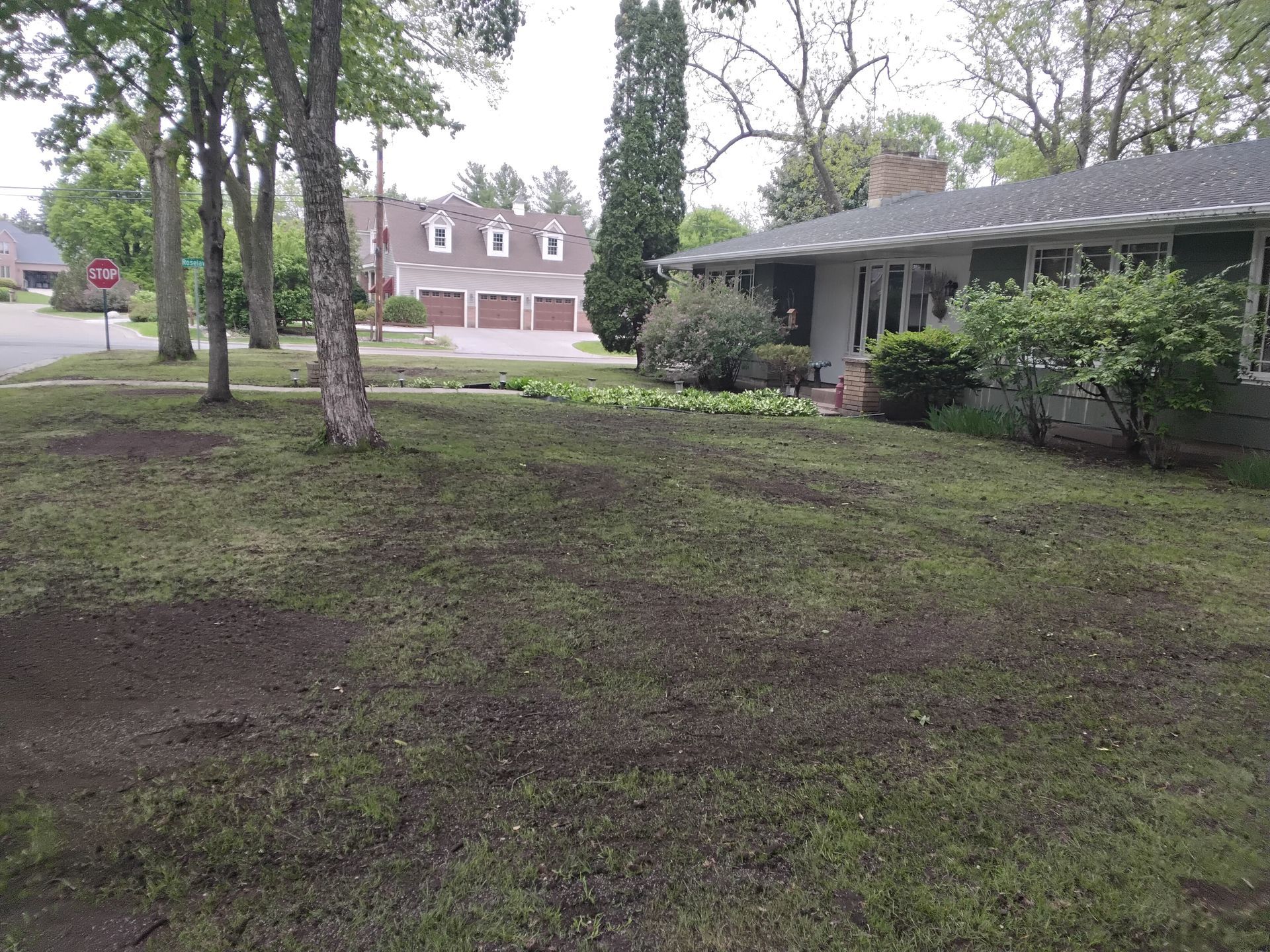
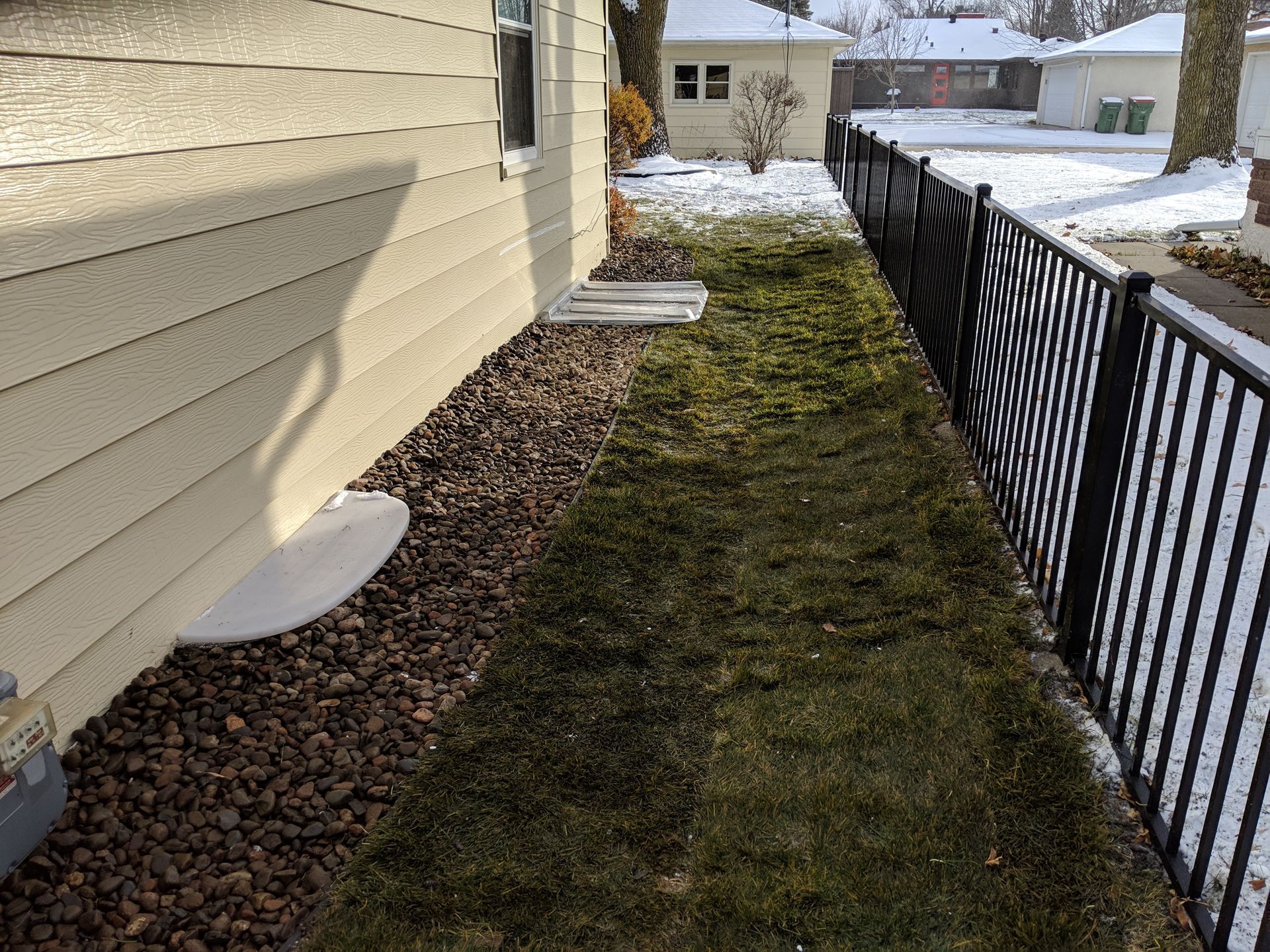
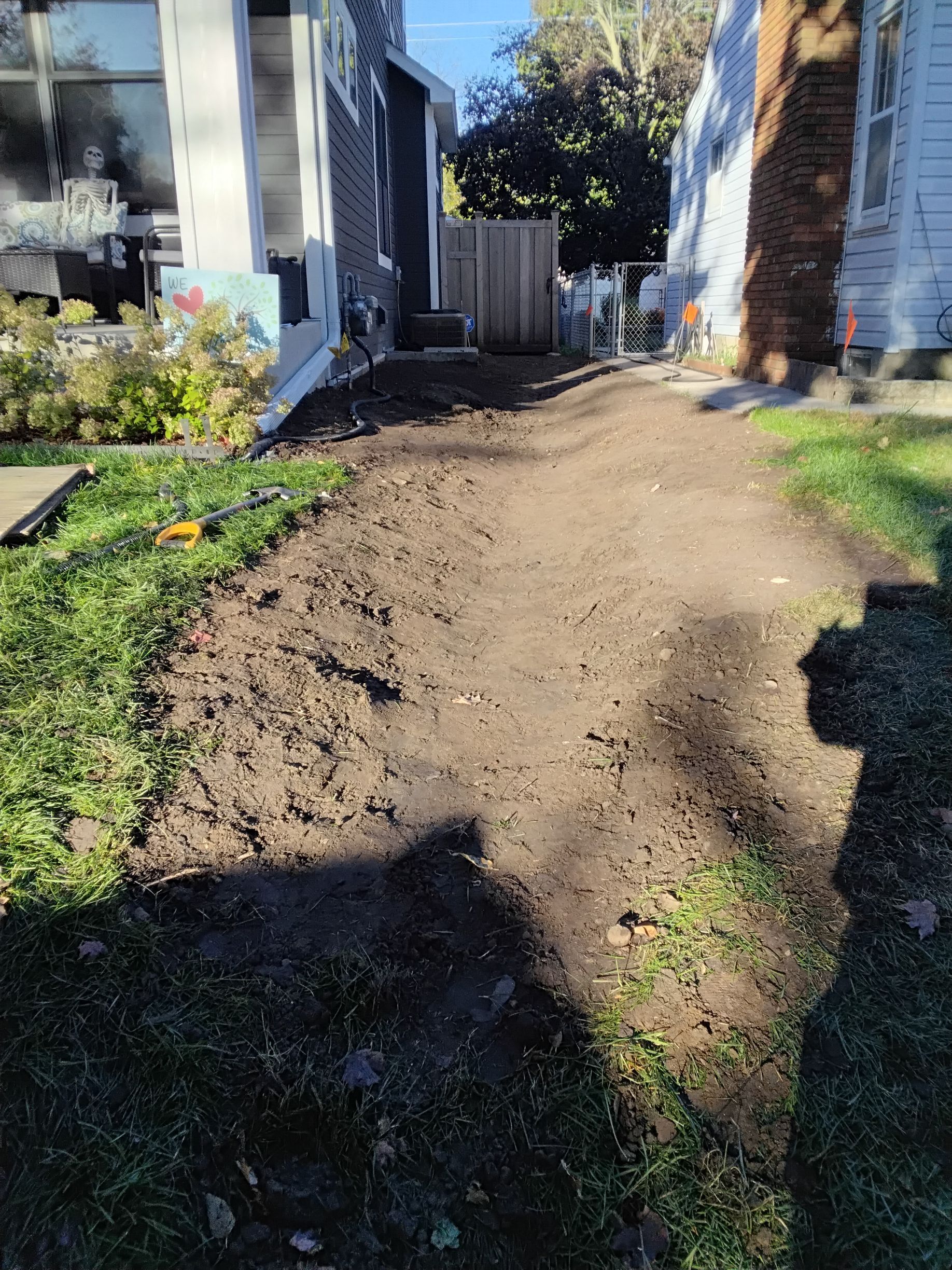
As shown in the example above, we were able to regrade the foundation landscaping within the first three feet of this home in Minneapolis, between the house and the edging line. This created a positive slope away from the foundation—helpful, but not quite enough on its own.
To improve drainage further, we then regraded a shallow swale along the side yard. This added additional slope beyond the foundation landscaping and allowed water to move farther away from the house. The swale was designed to carry water down the side yard and into the front yard, where it could connect with existing slope and continue draining toward the street.
By directing water away from the foundation, into the swale, and out to the front yard, we were able to create a complete drainage path that moved water safely away from the home.
As this example shows, when there’s enough space to work with, re-grading can be a very effective drainage solution.
The Challenge of Re-Grading in Narrow Twin Cities Side Yards
In older Minneapolis neighborhoods, side yards in certain neighborhoods are often only six feet wide or less.
To meet proper drainage standards, you typically need:
- 6 inches of slope away from the foundation
- An additional 1"
inch of drop every 4-6' linear along the length of a swale
In a narrow side yard, that leaves very little room to taper the grade back up to the neighboring property. The result can feel like:
- A noticeable drainage ditch
- Uneven walking surfaces
- A yard that clearly looks “carved out” for drainage purposes
While re-grading alone can work well in wider yards, it often becomes impractical or uncomfortable in tight urban spaces.
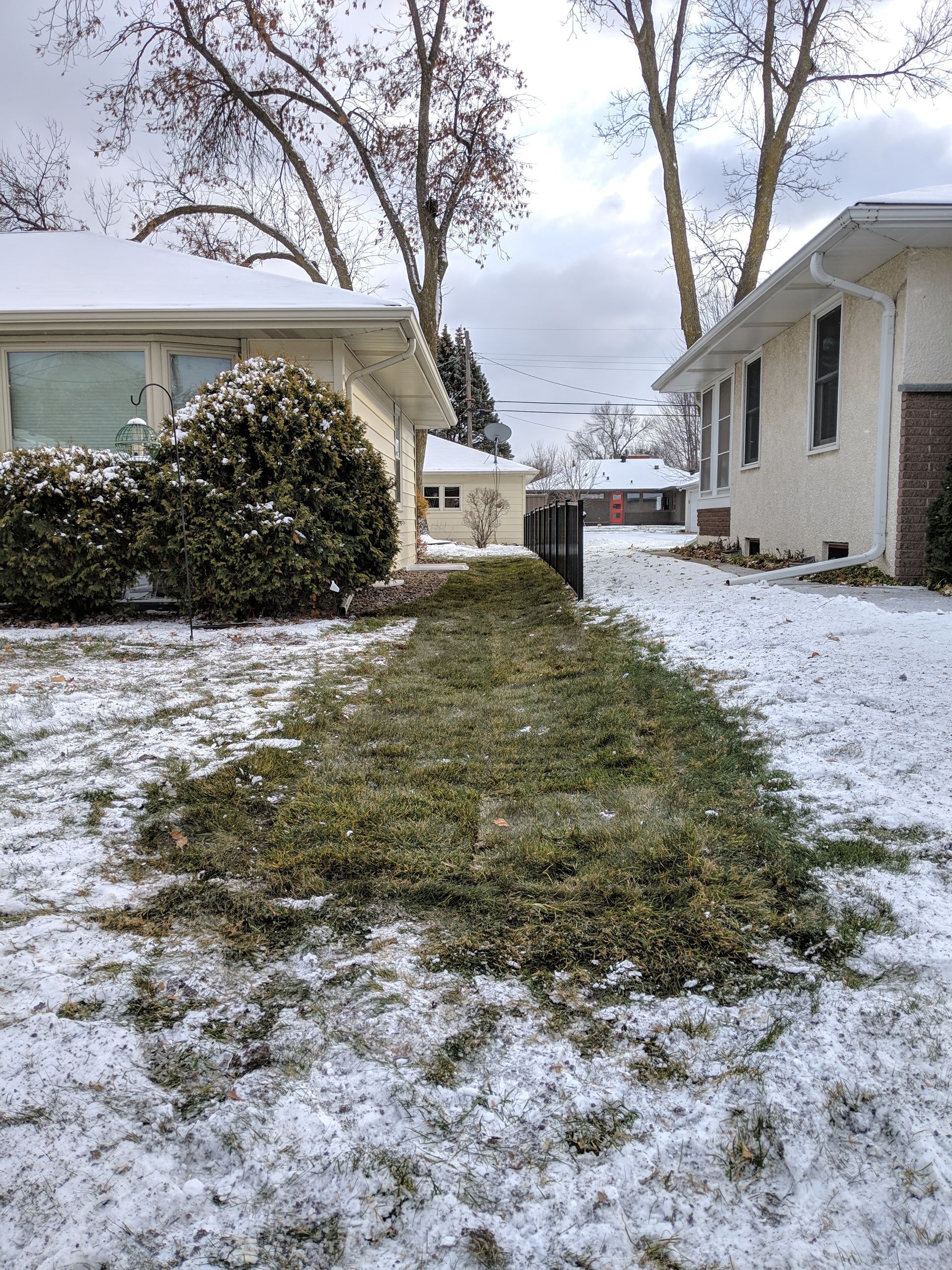
(pictures below) this the 7'-8' wide side yard regrading example in Minneapolis shown below, is a great example of how regrading a narrow side yard is highly effective, but also does become more sloped / less flat to walk on.

Option 2: French Drain (Foundation Drain Tile System)
For narrow side yards, KG Landscape often recommends a French drain, also known as a foundation landscaping drain tile system.
How this Side Yard French Drain Works
This system combines subtle grading with underground drainage:
- Soil is re-graded to create
approximately 6 inches of slope away from the foundation
- A trench is excavated to add
another 4–6 inches of vertical drop, from foundation grading into French Drain trench
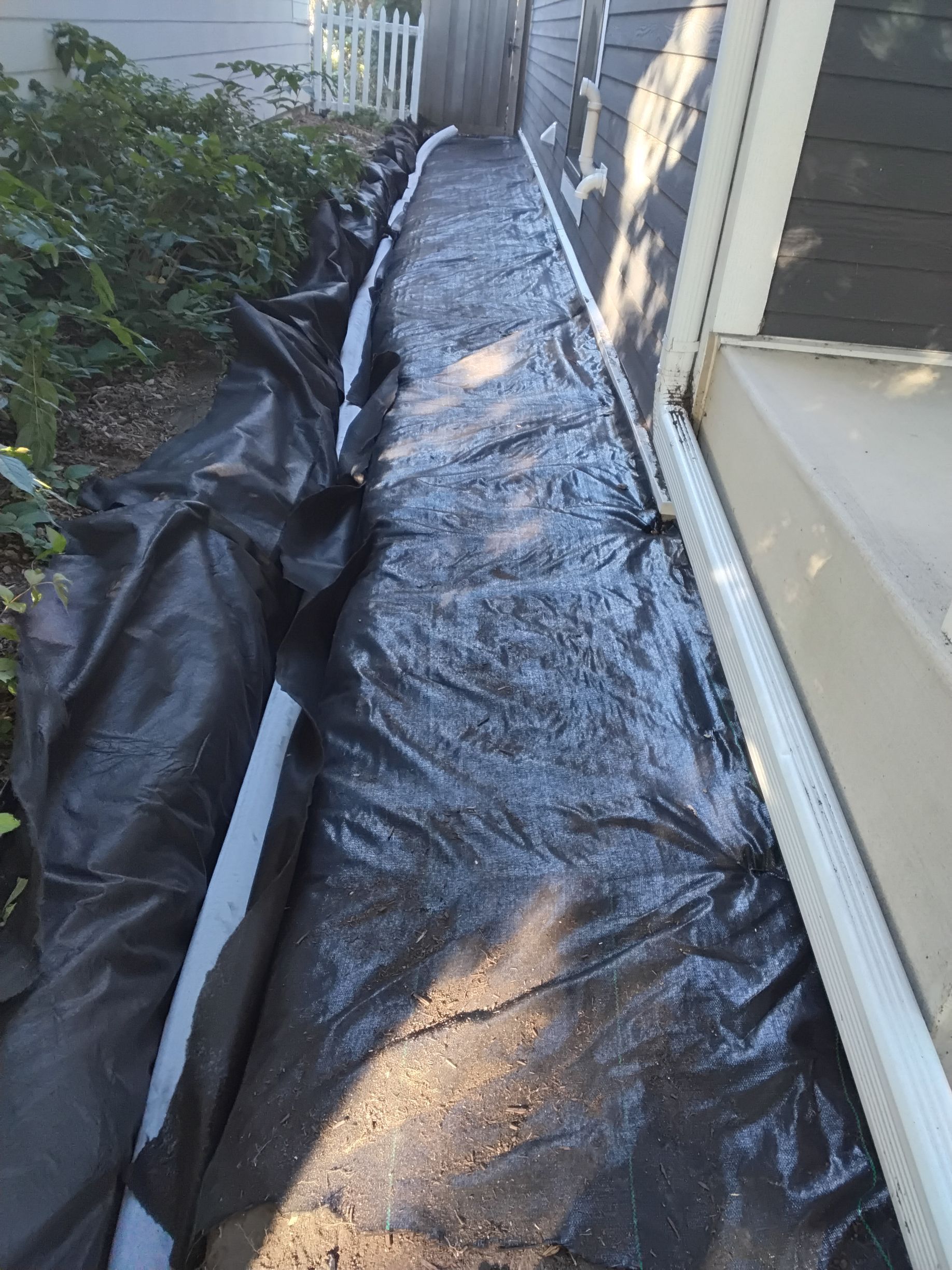
- A perforated drain pipe is installed to collect and carry water, with
another 1/4" per foot of slope in the pipe
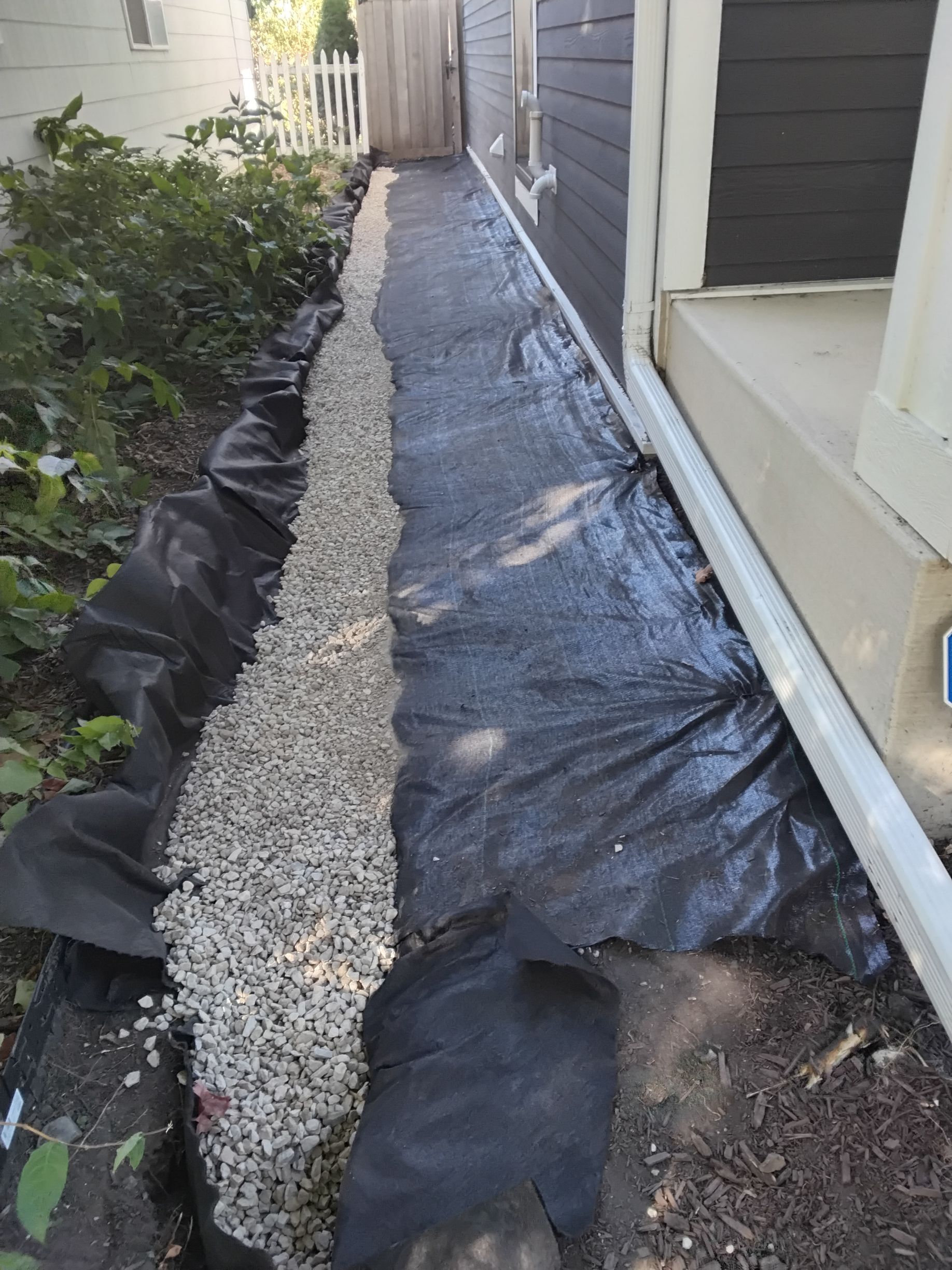
- The trench is lined with
geotextile fabric to prevent clogging and erosion
- The system is backfilled with clean drainage rock
Collected water is typically discharged to:
- The front yard
- An existing downhill slope
- A dry well or rain garden
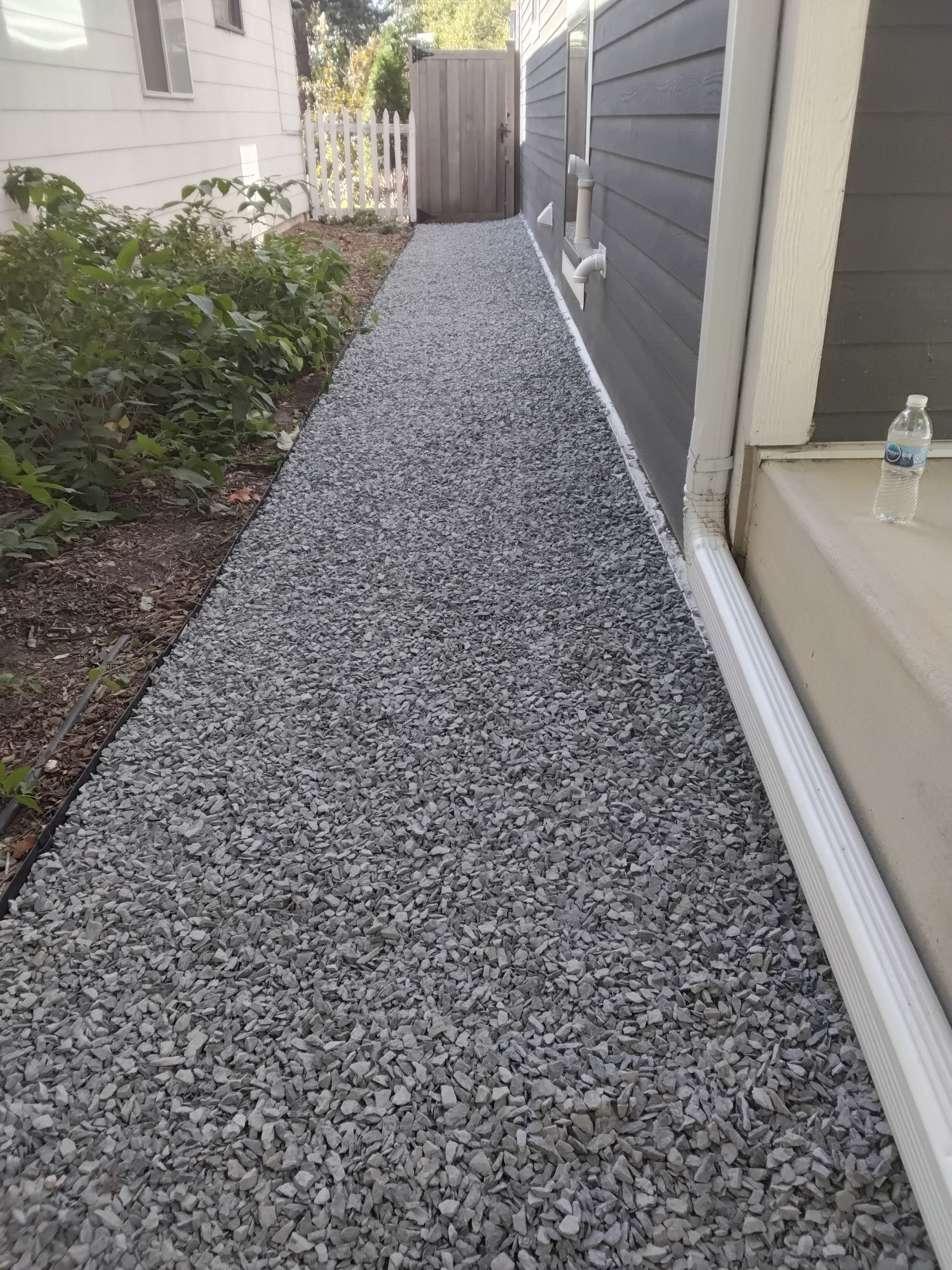
Why French Drains Work So Well in Minneapolis & St. Paul
- The finished surface is
flat and easy to walk on
- No visible swale or ditch
- Handles both surface water and subsurface moisture
- Ideal for
3–6 foot wide side yards
- Performs reliably in Twin Cities freeze–thaw conditions when properly installed
For many urban homes with 6' of space between the side of the house and the property line or even narrower, this approach offers the best balance of performance, appearance, and usability.
Re-Grading vs. French Drain: Which Is Right for Your Yard?
Both re-grading and French drains can solve drainage problems, but they work best in very different situations—especially in Twin Cities side yards where space becomes such a big factor in decision making.
KG landscaping can help determine which solution works best for your home, whether you a drainage solution repair project or a full relandscaping project with integrated drainage solution planned properly from the beginning.
Re-Grading: Best for Open, Wider Yards
Re-grading improves drainage by reshaping the surface of your yard so water flows away from your home.
Re-grading works best when:
- Your side yard is wide enough to create a gentle slope
- You don’t mind a visible grade change or swale
- When you want to see the grading work, no hidden pipes below grade
- Surface water is the primary issue
- The area doesn’t need to be perfectly flat for walking or access
Common in:
Suburban and open yard layouts where space isn’t restricted.
Worst's best when to have at least 8' of side yard width to work with.
French Drains: Ideal for Narrow City Side Yards
A French drain captures and redirects water underground, making it a strong solution for tight spaces.
French drains are a better choice when:
- The side yard is narrow, as found in many Minneapolis and St. Paul homes
- You want a hidden drainage solution with no visible slope
- Maintaining a flat, comfortable walking surface matters
- Water issues include both surface runoff and subsurface moisture
Common in:
Older city neighborhoods with limited side yard space.
Which Option Is Right for Your Home?
If your yard has enough width to support a slope, re-grading can be effective and straightforward. But for many Twin Cities homeowners dealing with narrow side yards, French drains often provide stronger drainage performance without sacrificing usability or appearance.
Need Help with a Drainage Problem?
If you’re dealing with standing water, foundation moisture, or a soggy side yard in Minneapolis or St. Paul, KG Landscape can help.
📍
Local Twin Cities expertise
💧 Proven drainage solutions
🏡 Designed for tight urban lots
Ready to Start on Your Next Project?
Call us at (763) 568-7251 or visit our quote page.