Beyond the Plow: What Snow Removal Really Means in Minnetonka
The Real Purpose of Snow Removal in Minnetonka
Most people think snow removal is just about clearing a driveway, but the truth is that safe, reliable snow management is a lot more than that. When you live in a place like Minnetonka, where lake-effect snow and freeze-thaw cycles are part of life, how the snow is handled determines how well your property holds up through winter and into spring.
Over the years, I’ve seen too many homeowners learn this the hard way. A quick plow job might look fine in the moment, but once refreeze sets in, those piles of snow start melting and running toward the house, or freezing into rutted ice patches that last for weeks. That’s not just inconvenient, it’s unsafe, and it can do serious damage to hardscapes and lawns.
When we manage snow at KG Landscape, we’re thinking about safety, protection, and long-term property care. It’s about keeping your driveway and walkways clear, but also about preventing damage to the surfaces below, preserving your investment in patios and landscaping, and protecting your home from runoff and ice buildup. Great snow removal is invisible when it’s done right, because you never have to think about it.
The Strategy Behind Professional Snow Removal
Good snow removal starts long before the first flakes hit the ground. When I plan out our winter routes, I look at each property like a system. Every home and commercial site drains differently, and each has different priorities. Maybe it’s a tight city driveway that needs quick clearing so cars can come and go, or a large estate where drifting snow builds up near retaining walls. The goal is to get snow off key areas quickly, move it to places where it won’t cause issues later, and keep surfaces safe for the entire season.
Timing is everything. If you wait until the snow starts piling up, you’re already behind. My crews monitor forecasts constantly. We’re out salting or pre-treating before a storm when needed, and plowing during the storm in multiple passes to keep conditions manageable. For commercial properties, timing is especially critical, since businesses can’t afford icy walkways or blocked parking lots.
Another big piece is using the right equipment. A lot of damage happens when contractors show up with the wrong blade type or overloaded trucks. We keep our plow blades in top condition, use rubber-tipped blades on decorative concrete and pavers, and match our salt and ice-melt applications to each surface. It’s easy to ruin a high-end patio with the wrong product, so our crews are trained to know exactly what each material can handle.
Snow removal is logistics and craftsmanship rolled into one. You need precision, planning, and the right tools to keep properties functional through the kind of winters we get here in Minnetonka.
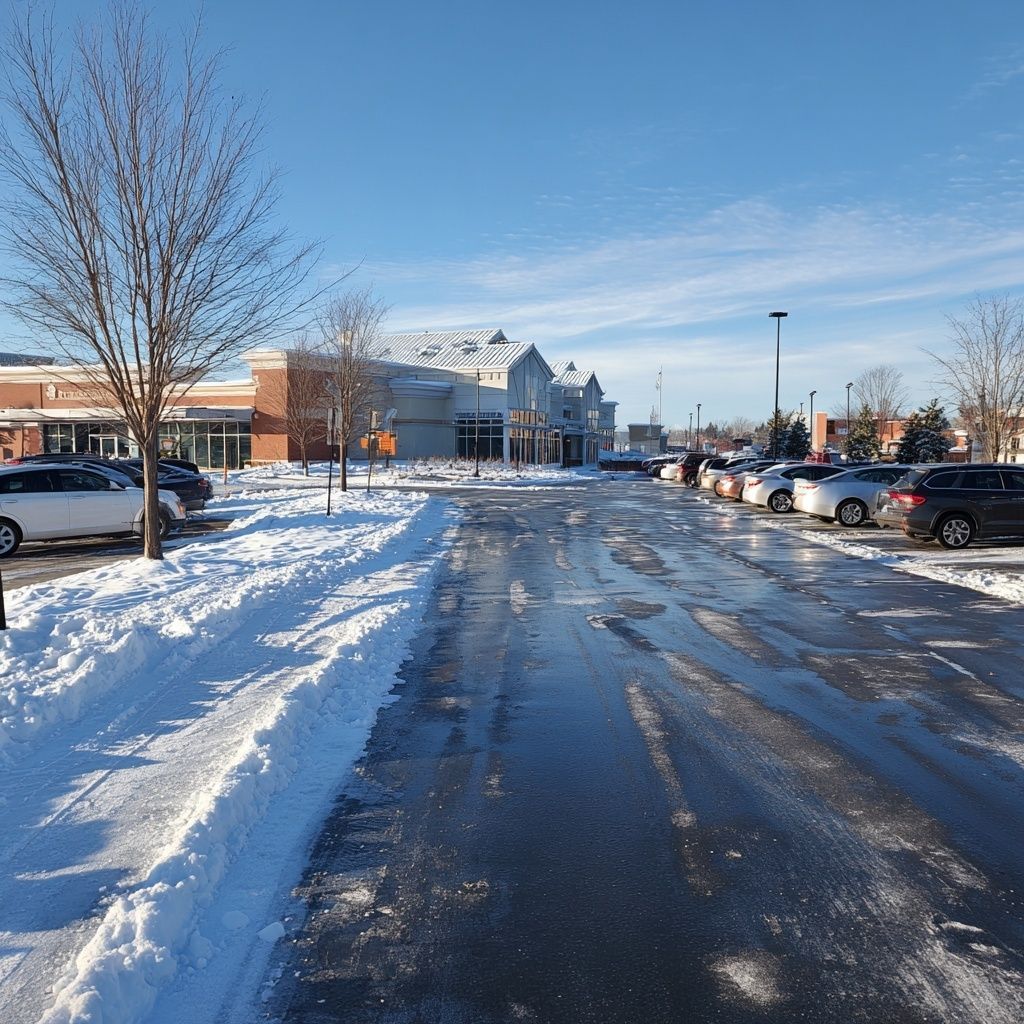
Photo: Commercial snow removal in progress on a Minnetonka business lot with proper de-icing application visible.
Protecting Driveways, Patios, and Walkways During Winter
Here’s something most homeowners don’t realize: improper snow removal can cost you thousands of dollars in spring repairs. When snow piles melt, that water has to go somewhere. If it’s left to refreeze on the surface or seep down into the joints of a patio, it can heave pavers, crack driveways, and destroy turf along the edges. I’ve rebuilt too many patios that failed simply because they weren’t protected during the winter.
We take a preventive approach. First, we identify the best snow-piling zones on your property. Snow shouldn’t be pushed toward fences, delicate plantings, or the low side of a patio. We create designated melt zones that drain safely away from structures and traffic areas.
For paver patios, we avoid metal blades that can scratch or chip edges. On high-end concrete or decorative surfaces, we use protective cutting edges that glide cleanly without scraping the finish. And we train our crews to apply ice melt conservatively and correctly. More isn’t better. Using too much or the wrong kind can eat into paver joint sand and leave white residue all over the surface come spring.
I also recommend installing proper edging and using drainage systems that give meltwater somewhere to go. Slot drains, French drains, and subsurface tile systems all play a role in preventing the kind of standing water that leads to freeze-thaw damage.
When snow removal is done correctly, your hardscapes last longer, your property stays safer, and you avoid the headaches that come with spring repairs.
Safety and Reliability for Minnetonka Properties
When you’re dealing with Minnesota winters, safety is everything. I’ve seen homeowners slip on hidden ice near front entries, cars stuck on sloped driveways, and entire yards turned into skating rinks because snow was piled wrong. A good snow removal plan prevents those issues before they start.
We use storm tracking tools to plan for timing and intensity. For larger storms, we might schedule multiple visits—first to clear the bulk of the accumulation, then to follow up and finish once the snow stops. Between events, we check melt-refreeze conditions and apply ice control products as needed. That’s how we prevent black ice from forming overnight, especially on north-facing driveways or shaded walks.
Reliability also matters. When I tell a client we’ll be there, we’re there. Our routes are organized for efficiency, and we have backup equipment in case a truck goes down mid-storm. We also use GPS tracking to confirm every property is serviced on schedule.
For homeowners who travel during the winter, our seasonal contracts include ongoing monitoring. That means even if you’re not home, your property stays clear, safe, and compliant with city ordinances.
The result is peace of mind. Whether it’s the first storm of December or a late-season blizzard in March, you can count on consistent, professional care that keeps your property safe and functional all winter long.
FAQs
How often should snow be cleared during a Minnetonka storm?
That depends on the type and duration of the storm. For moderate storms, I recommend clearing once the snow reaches three inches. In heavy, ongoing snowfalls, we perform multiple passes to keep surfaces manageable. If you wait until the storm is over, you risk compacted snow turning to ice and heavier accumulation that’s tougher on equipment and driveways. For commercial properties or long drives, it’s best to plow mid-storm, then again after it stops snowing to finish cleanup and salting. The key is not to let snow bond to the surface—it’s much easier to keep up with it than to catch up later.
What’s the safest ice melt to use on paver driveways?
Use calcium magnesium acetate (CMA) or a blended de-icer designed for pavers and concrete. Avoid rock salt (sodium chloride), since it can cause surface scaling and damage joint sand. I also suggest applying ice melt sparingly and evenly. A thin layer before an event helps prevent bonding, so you’ll need less afterward. If your pavers are newer, make sure the sealer is fully cured before using any de-icer. Always sweep up leftover granules in spring to prevent staining. We apply our own proprietary blend on decorative hardscapes—it melts efficiently without leaving residue or causing deterioration over time.
How can poor snow removal damage a lawn or patio?
Pushing snow into the same area repeatedly can suffocate grass and compact the soil, which prevents healthy growth come spring. It also creates uneven melting patterns, leading to puddles that refreeze overnight. On patios, careless plowing can chip pavers, scrape sealant, and force water into joints where it expands during freezing. Salt overspray kills grass along the edges and damages plant roots under the snowbanks. That’s why we plan designated melt zones, use blade protectors, and control ice melt carefully. With the right practices, you’ll avoid most of the long-term wear that poor snow management causes.
Do I need a contract or can I call for one-time plowing?
We offer both options, but for most homeowners in Minnetonka, I recommend a seasonal contract. That way, your property is automatically serviced during every storm, and you get priority scheduling. One-time plowing can work for lighter winters or infrequent use properties, but it usually costs more per visit and doesn’t include proactive ice control or monitoring between events. A contract gives you consistency, peace of mind, and predictable costs throughout the season. It’s especially valuable for families, frequent travelers, or properties with steep grades where missing a single event can create dangerous buildup.
How does KG Landscape plan for heavy or back-to-back storms?
Preparation starts before the season even begins. We organize route maps, assign crews, and maintain all equipment so we’re ready to roll at the first sign of snow. During back-to-back systems, we stage salt and de-icing materials in advance to avoid supply issues, and we use storm tracking to predict accumulation totals. Our goal is to stay ahead of each storm, not react after the fact. That often means partial plows between major systems and extra monitoring for ice refreeze. We also keep communication open with clients through email and text alerts, so they always know what to expect.

Ready to Start on Your Next Project?
Call us at (763) 568-7251 or visit our quote page.