Investing in Comprehensive Drainage Systems in Medina
You Can Tell When a Yard Has Good Drainage
You can tell when a yard in Medina has good drainage. It’s the one that doesn’t leave muddy tracks after a storm. The grass stays firm underfoot. The patio looks the same the next morning. You can let the dog out without worrying about paw prints across the kitchen floor.
That’s not luck. That’s design.
I talk to homeowners all the time who wish they’d thought about drainage earlier. They’ve already invested in patios, retaining walls, and new sod, but when the spring thaw hits, the water has nowhere to go. Clay soils in Medina make this worse than most places. They hold water like a sponge, and once the soil’s saturated, the damage starts—heaving pavers, soggy lawns, even cracked foundations.
Most people think of drainage as something you fix when you have a problem, but it really belongs at the beginning of your landscaping plan. Good drainage is your insurance policy. It protects everything else you build on your property.
This article walks through what makes a comprehensive drainage system worth investing in, how the different parts work together, and why it saves you money and stress in the long run.
Drainage Is the Foundation of Every Landscape Investment
If you live in Medina, you already know about our clay. It’s dense, heavy, and holds onto water for far too long. Even with a gentle slope away from the house, those fine particles trap moisture under the surface. That’s when lawns stay squishy, sump pumps run nonstop, and patios start to heave when the ground freezes.
I’ve rebuilt too many patios that failed because nobody addressed drainage first. The truth is, every great landscape starts below the surface. You can spend tens of thousands of dollars on walls, walkways, and outdoor kitchens, but if the water underneath isn’t moving where it should, none of that will last.
Proper drainage keeps your soil structure stable. It prevents erosion behind retaining walls. It stops water from pooling under patios and seeping toward your foundation. It keeps your lawn firm and usable all season long.
When I walk a property, I look for a few telltale signs: standing water in the low areas, streaks of yellow grass where water sits too long, downspouts dumping too close to the foundation, and soft spots in the yard even after several dry days. If I see those things, I know we’re dealing with a drainage problem. And in Medina, that usually means clay soil.
The best systems don’t just fix one spot. They connect the entire property—lawns, patios, walkways, and walls—so water moves efficiently from every surface to a safe discharge point. It’s not flashy, but it’s the smartest investment you can make for your yard.
How Comprehensive Systems Work Together
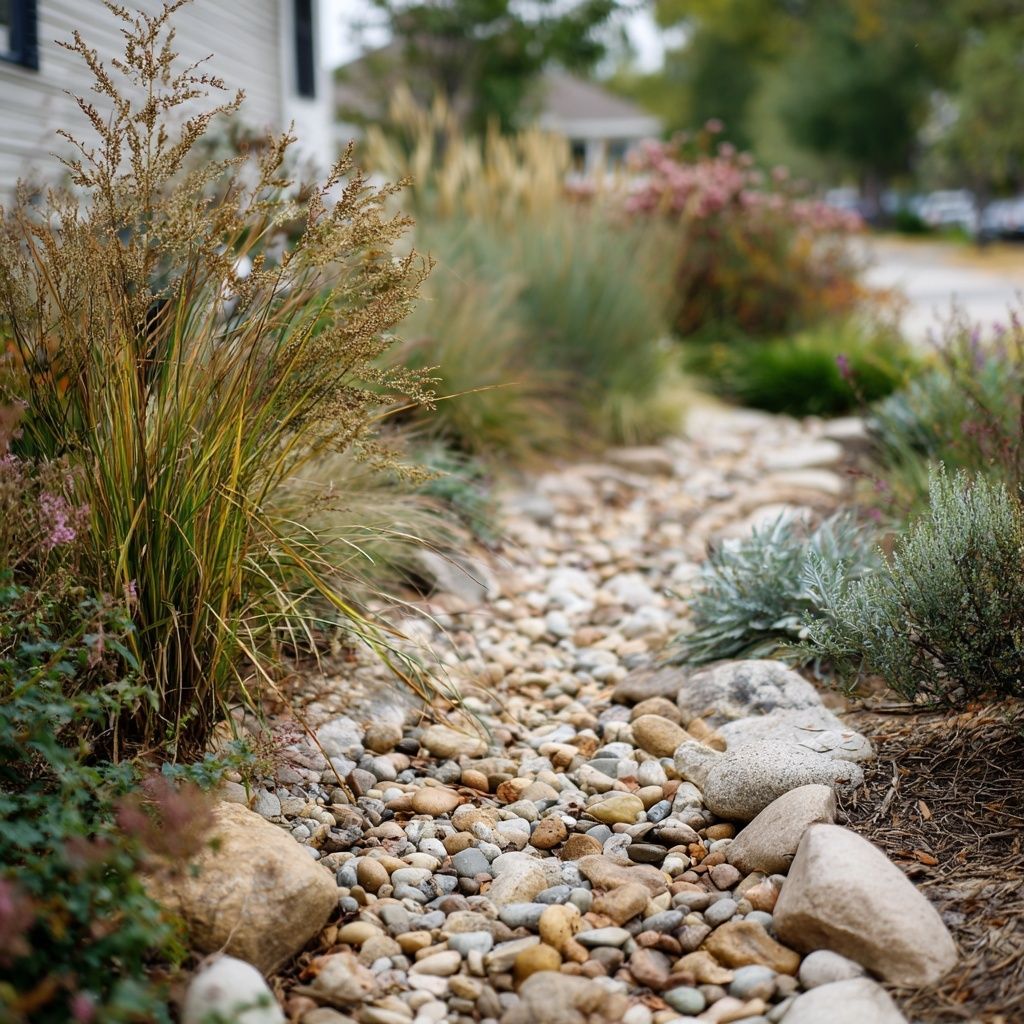
A drainage system isn’t one pipe or one trench. It’s a network designed to handle water from the surface and from the soil itself. The setup can include drain tile, French drains, grading adjustments, and surface drains that all work together.
Here’s how I explain it to clients. Drain tile is a 4-inch perforated corrugated or PVC pipe covered in a silt sock. That sock keeps sediment from clogging the system while still letting water seep in. In Medina’s heavy clay, we often replace the clay backfill around the pipe with a 50/50 sand-to-topsoil mix. That sandy mix makes it easier for water to move down through the soil and into the pipe. Without it, water can sit for days before it finds a way out.
French drains go a step further. They require a wider trench, deeper excavation, and more rock for backfill. They’re ideal for problem areas where large volumes of water need to be redirected, but they also cost more because of the labor and disposal involved. That’s why we look at each yard individually. Sometimes a standard drain tile with a sandy backfill gets the job done perfectly at a fraction of the cost.
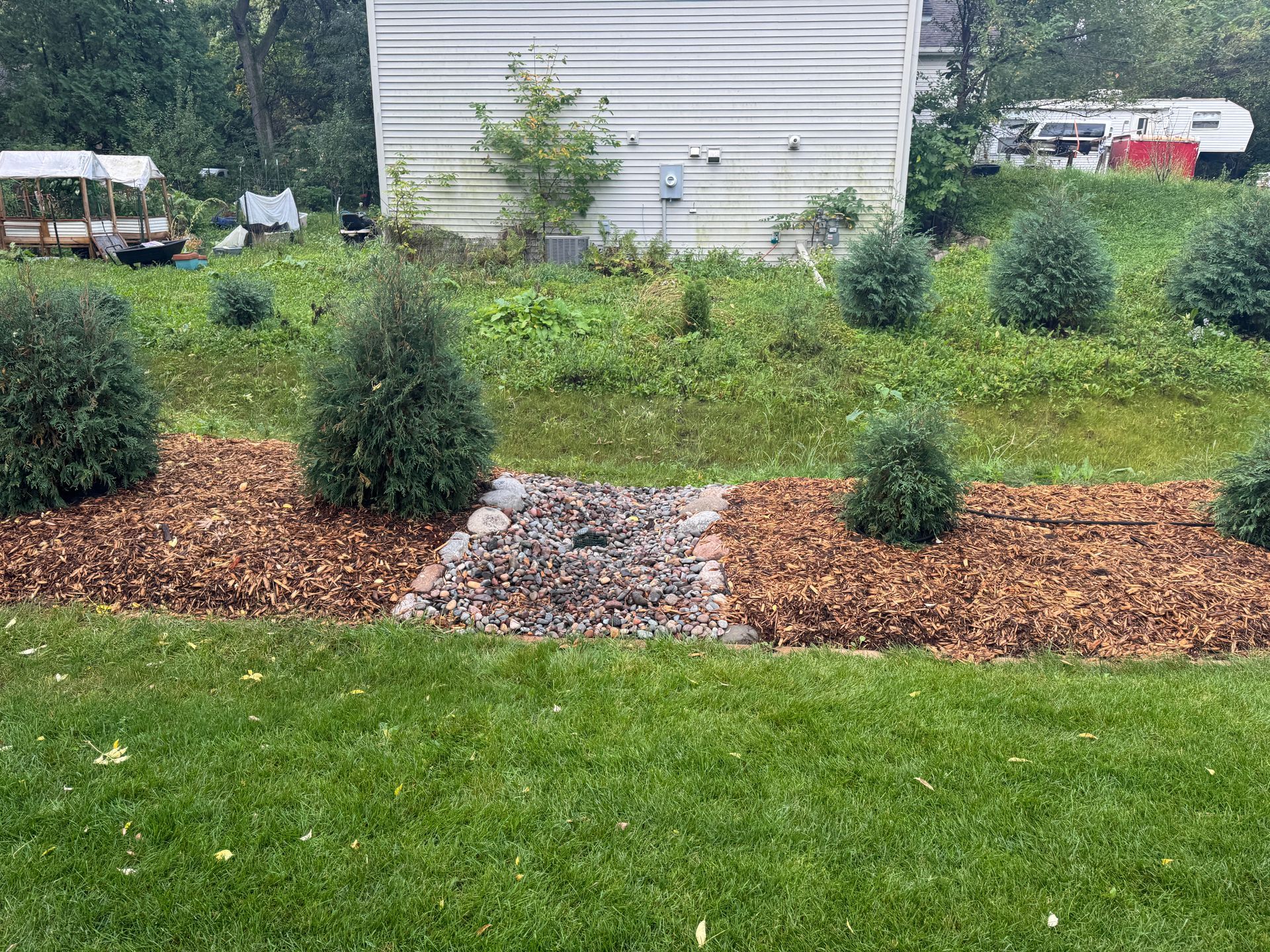
A well-designed system might also include surface drains or channel drains in areas where water naturally collects—like at the base of a slope or near a patio corner. The key is integration. The entire system has to be planned together, so you’re not solving one problem only to create another downstream.
A lot of companies install drainage as an afterthought. They “eyeball” grades instead of checking them with a transit. We don’t do that. We measure slope changes precisely to make sure every line is moving water where it should. That’s what separates a quick fix from a long-term solution.
The Real Benefits Homeowners Notice
Good drainage doesn’t just protect your hardscapes—it changes how you use your yard. Once the water’s gone, everything feels different. Lawns stay firm, dogs can run outside without coming back covered in mud, and you stop seeing puddles that take days to disappear.
Homeowners in Medina love the difference after their systems go in. They can finally use spaces they used to avoid. That mushy back corner of the lawn becomes a spot for a swing set or fire pit. Those soft areas near the patio edge become usable seating space again.
You’ll also notice fewer mosquitoes because standing water is what attracts them. Your grass grows more evenly, and you won’t have to worry about ruts or tire tracks from mowers. The whole yard feels cleaner and more enjoyable.
From a practical standpoint, drainage protects your investment. Patios last longer because the base material stays dry. Retaining walls hold their structure because there’s no hydrostatic pressure building up behind them. Walkways don’t shift or sink. Even your foundation benefits because water isn’t collecting near the house.
It’s one of those things you don’t think about once it’s done—but you notice immediately when it’s not.
FAQs
How do I know if my Medina yard needs a full drainage system instead of a quick fix?
If you see standing water after rain, muddy areas that never dry, or sump pumps running constantly, that’s a sign your lawn isn’t draining properly. In Medina’s clay soils, those symptoms won’t go away on their own. A quick fix like extending a downspout might help for a season, but it won’t solve the core issue. The only way to know for sure is with a full property evaluation. We check slope, soil composition, and how water moves across your yard during a rain event. If the water has nowhere to go, a comprehensive system is the only lasting solution.
What’s the lifespan of a professional drain tile system?
A properly installed system can last 30 years or more. The pipe material—usually 4-inch perforated PVC or corrugated pipe—won’t fail under normal soil pressure. What matters most is installation quality: correct pitch, protected outlets, and clean backfill. Systems with sandy backfill last longer because water can move freely into the pipe instead of clogging around it. Regular maintenance like clearing outlets and keeping surface drains free of debris ensures long-term performance.
Can drainage be added after landscaping is already installed?
Yes, but it’s more complicated. If you already have patios, sod, or irrigation lines, we have to carefully map those before trenching to avoid damage. It usually adds some cost, but it’s still worthwhile. In fact, most of our drainage projects happen after homeowners notice recurring water problems post-installation. We can often route new drain lines under existing features without disturbing them. The key is planning it right—no shortcuts.
Is it worth combining drainage work with new patio or wall installation?
Absolutely. It’s the most cost-effective way to do it. When the soil is already open for construction, we can integrate drainage seamlessly. The right slope, base prep, and drain tile installed under or behind the structure protect it for decades. Waiting until problems show up later means more labor, more cleanup, and higher costs. Drainage isn’t just an add-on—it’s the foundation for every outdoor structure that needs to last through Minnesota’s freeze-thaw cycles.
Ready to Start on Your Next Project?
Call us at (763) 568-7251 or visit our quote page.