The Best Trees for Your Front Yard

Planting trees in the front yard of your home can add immense value to the property with very little work. Sprawling ornamental trees or perfectly pruned evergreens create dimension and incorporate color into the landscape.

Depending on where you live, certain trees will grow better than others. Consult with a professional landscape designer in your area to determine the best trees for your front yard.

Understanding Tree Hardiness Zones

All different types of plants and tree species flourish under specific conditions. For example, it’s unlikely that you’d see a towering palm tree swaying in the Minnesotan breeze, yet you will find thousands of them lining the streets of downtown Miami. The tree’s degree of hardiness determines its ability to thrive in one location over others.

Plant hardiness describes the ability of the plant or tree to survive under adverse climatic growing conditions. Specifically, the plant’s ability to tolerate heat, cold, drought, wind, flooding or other predations are all measurements of plant hardiness.

In the Midwest, most gardeners and landscapers look for trees within zones 4 and 5. Trees that fall within these zones are typically very hardy since the climate is cold for a more extended period during the year.

To determine the best trees and plants for your location’s zone, the United States Department of Agriculture created a helpful interactive plant hardiness zone map for the entire country.

The Best Trees for Your Front Yard

Once you understand the plant hardiness zone that your property falls into, the selection of the perfect front yard tree can begin. Often, homeowners opt for smaller, flowering, ornamental trees in the front of their homes to enhance curb appeal.

Ornamental trees are a fantastic option for the front yard because they grow out instead of up. The branches spread out above the lawn, and when the tree buds bloom, it is truly a sight to behold. There are quite a few ornamental tree options available within plant hardiness zones 4 and 5 to create a beautiful front yard landscape.

Ornamental Trees

Apple

Red Dogwood

Downy Serviceberry

Shade Trees

Shade trees are a fantastic option for families with small children who like to play in the front yard. Just like the name suggests, they cast more shade than smaller ornamental trees, making them the perfect refuge for an exhausted kid on a hot summer day.

Red Maple

River Birch

Ginkgo

Evergreen (Coniferous) Trees

If you prefer that your property has a little pop of color all year round, plant some coniferous trees. Also known as evergreen trees, since they never lose their “leaves” or needles, these are a great option, especially if you love to decorate around the holidays.

Coniferous trees also offer a secure and inviting habitat for adorable critters like birds and chipmunks. There are tons of different species of coniferous trees that thrive in zones 4 and 5, so consult with your local nursery if our picks don’t pique your interest.

Colorado Blue Spruce

American Arborvitae

Wrapping Up

Adding a tree or two to your front yard can increase your property value and your landscaping beauty. Sweeping branches of flourishing flowers create shade for you to sit back and enjoy the newfound nature in your front yard.

Ready to Start on Your Next Project?

Call us at (763) 568-7251 or visit our quote page.

By Daniel . July 9, 2026
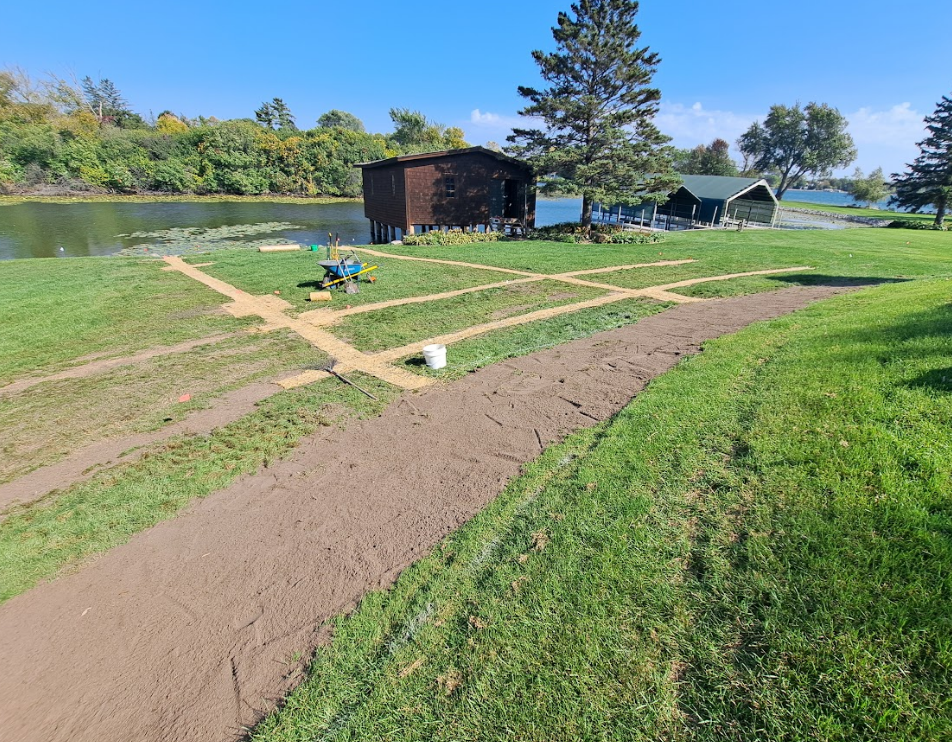
The legendary architect Louis Sullivan coined a phrase that has driven architecture and design ever since: "form follows function." While aesthetics are critical to buildings and landscapes alike, that physical beauty must always remain secondary to the fundamentals of good design. In Shoreview, Minnesota, just outside St. Paul , we encountered a landscape where, unfortunately, function followed form. Here, the realities and principles of effective drainage were downstream of their original builder's aesthetic choices. That meant water from snowmelt and rainfall was streaming into parts of the lawn where it wasn't meant to be. The standing water that had been allowed to collect in the back and side yards was putting a considerable amount of the property out of play. In order to reclaim usable space and rethink the way the land handled water, this Shoreview homeowner entrusted KG Landscape with identifying key issues, presenting potential solutions, and doing the necessary work the client decided upon to restore their lawn.
A landscape showing a lawn with freshly dug trenches and a curved dirt path leading toward two dark buildings by a lake.
By Kent Gliadon July 9, 2026
On the shores of Lake Minnetonka, perhaps the most famous of Minnesota's 10,000 lakes, an Orono, Minnesota homeowner was struggling with a back yard that was becoming more marsh than yard. The yard was a scenic one. The back porch opened up to the top of a small hill, which rolled down toward the lakefront and the boathouse. This flat space between the hill and the water would be ideal for backyard barbecues, some low-stakes games of bocce and badminton, or simply a spot to lay down a towel and get some summer reading done. Instead, this area was too waterlogged to enjoy. The runoff from the hilltop combined with unfavorable soil composition were limiting the use of the yard, closing off space while even diminishing the quality of the turf. How would this homeowner be able to reclaim this unusable land without disrupting the Lake Minnetonka shoreline that made the property so attractive? To find a solution, they turned to KG Landscape.
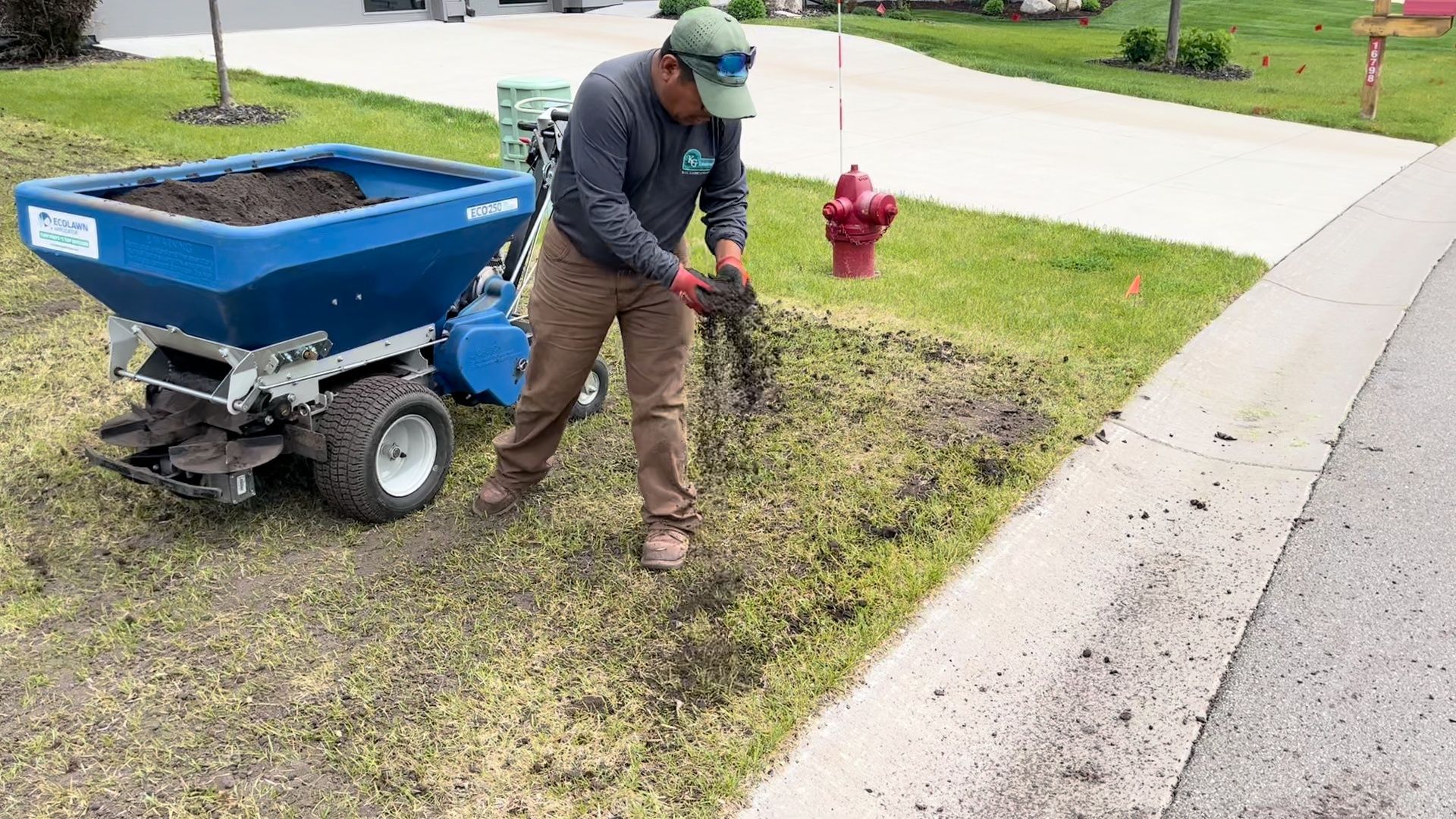
Power borrow dumping organic soil
By Kent Gliadon June 10, 2026
Can you use compost as lawn fertilizer in Minnesota? Learn how compost feeds turf, how to apply it, and where it fits. Get a free quote.
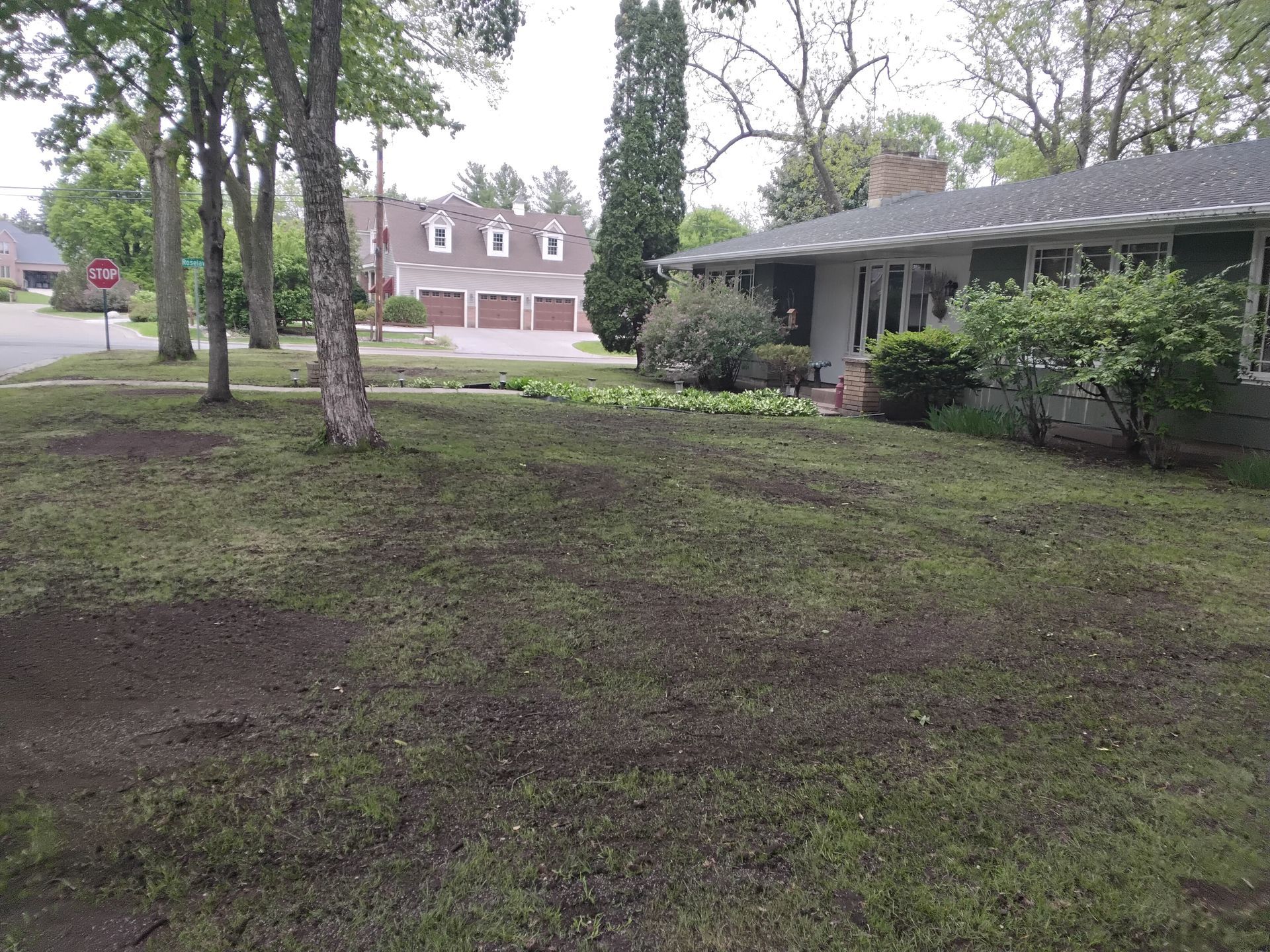
Overseeding organic soil on a lawn in Minnesota.
By Kent Gliadon June 9, 2026
Organic weed control for Minnesota lawns: what works, what doesn't, and how to manage weeds without harsh chemicals. Get a quote.
Lawn with fresh organic topdressing.
By Kent Gliadon June 7, 2026
Keep your lawn and your pets safe. Pet-safe lawn care tips for Minnesota yards, from products to timing. Get a free quote.
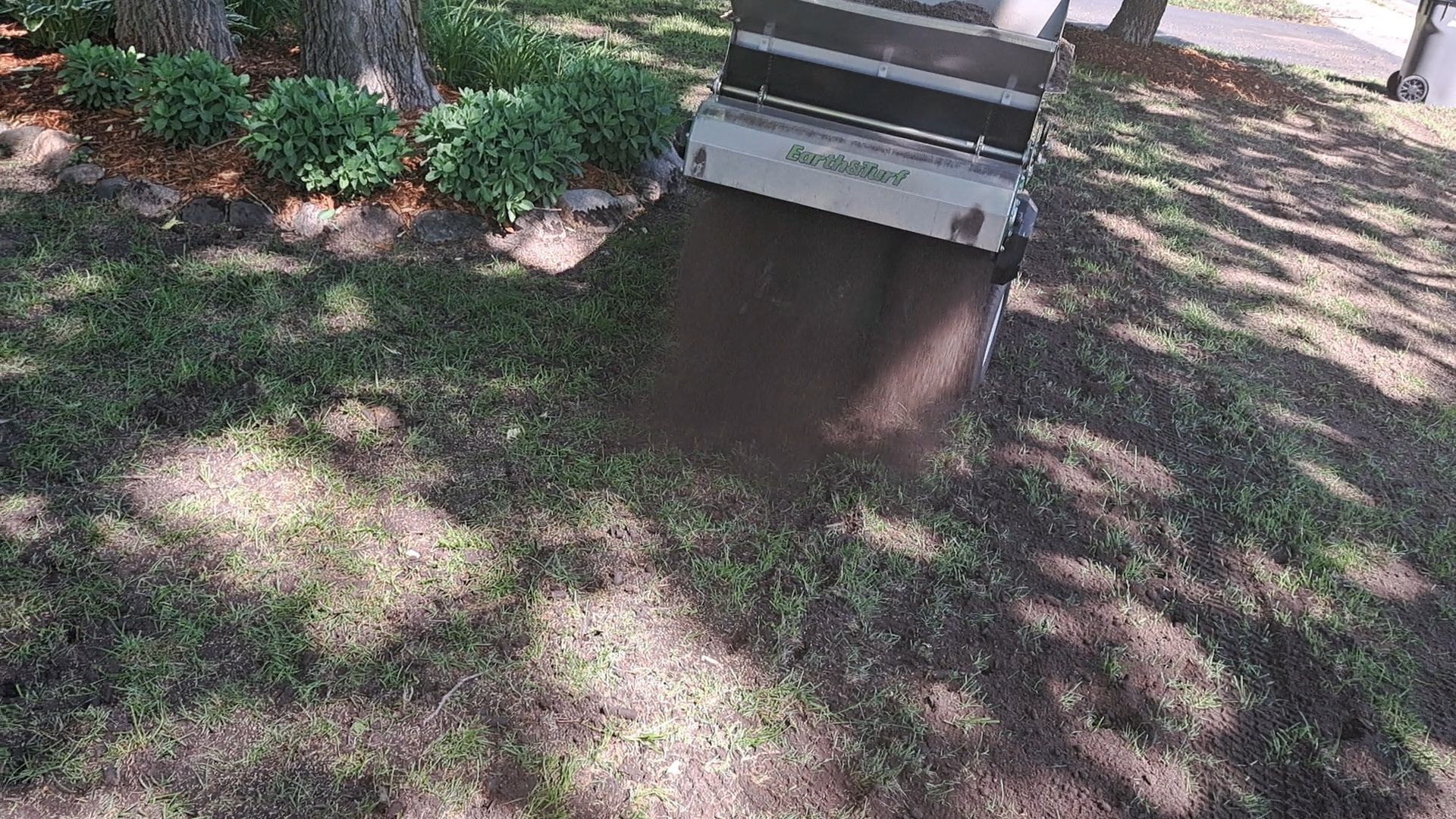
Organic Compost being distributed over lawn.
By Kent Gliadon June 6, 2026
Looking for the best organic lawn fertilizer in Minnesota? See top options, how they feed your turf, and what KG uses. Get a quote.
Spreading organic compost on Twin Cities lawn.
By Kent Gliadon June 3, 2026
Is compost a fertilizer? Learn what compost does for your Minnesota lawn, how it differs from fertilizer, and when to use it. Get a quote.
completed organic top soil on lawn
By Kent Gliadon June 1, 2026
Compost feeds the soil, fertilizer feeds the grass. Learn which your Minnesota lawn needs, when to use each, and how to apply both. Get a quote.
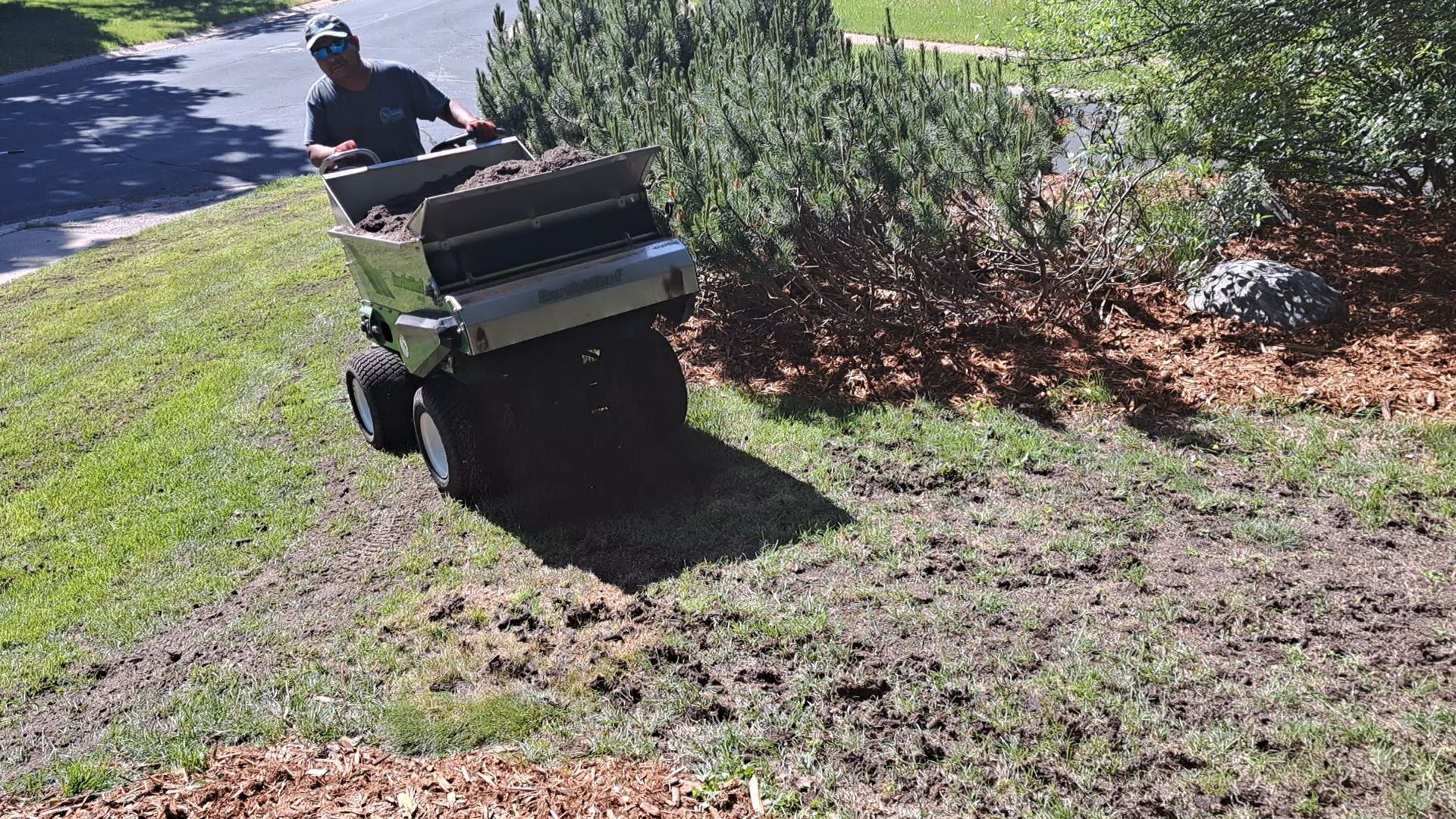
Cart tipping organic topsoil.
By Kent Gliadon May 30, 2026
Eco-friendly lawn care tips for Twin Cities yards: cut chemicals, save water, and build healthy soil naturally. Get a free quote.
Providing topdressing to lawn in Minnesota.
By Kent Gliadon May 27, 2026
Simple, proven lawn care tips for Minnesota yards: mowing, watering, feeding, and building healthy soil that lasts. Get a free quote.