From Builder-Grade to Professional: Upgrading Your Blaine Home's Landscaping
Upgrading Your Blaine Home's Landscaping
My shop is in Blaine. When we dug ten feet down for a retention pond, we hit perfect sand—no rocks, like something from a beach. That's just what's here from how the glaciers moved through this area. I know Blaine's soil because I work in it every day.
That sandy soil is actually good news for homeowners in Blaine's newer developments. But it doesn't mean your builder got everything right.
Here's what I see repeatedly in new construction around Blaine: grading that was eyeballed instead of measured, downspouts that dump water against the foundation, and landscaping that's the bare minimum needed to close on the house. Builders have very little buy-in on landscaping—it's just an expense they want done quickly so they can move to the next project.
This guide covers what builders typically skip, what Blaine's sandy soil means for your property, and which upgrades actually matter for homes in this area. The good news: Blaine homeowners often need less drainage work than homeowners in clay-heavy areas like Plymouth or Maple Grove. The catch: you still need the basics done right.
Why Builder-Grade Landscaping Falls Short
Understanding why builder landscaping disappoints starts with understanding the builder's incentives.
Builders subcontract grading and landscaping work. The grading crew's job is to get the house closed, not to ensure your yard drains perfectly for the next twenty years. They're not measuring to make sure everything's as ideal as it could be—they're eyeballing a little pitch and moving to the next lot.
The builder has very little buy-in on landscaping. It's just an expense they want completed quickly so they can close on the house and move on. Quality landscaping doesn't sell houses the way kitchen upgrades do, so it gets minimal attention.
What Gets Skipped
Precise grading measurement. The professional standard is six inches of drop within the first ten feet from your foundation. Builder crews typically eyeball this rather than measure it. Close enough to pass inspection isn't the same as correct—and the difference shows up over time.
Underground downspout routing. Builder-grade often leaves downspouts dumping water right at the foundation or running surface extensions that deposit water six feet from the house. Six feet isn't far enough when the goal is protecting your foundation.
Compaction verification. Soil settles after construction. Without proper compaction during grading, you'll see settling around the foundation within a few years—and that settling changes where water flows.
Communication about what you need. No one tells the homeowner what was done, what wasn't done, or what they might need down the road. You move in assuming everything is correct because no one said otherwise.
The Timeline Problem
These shortcuts don't reveal themselves immediately. Problems typically emerge three or more years after construction, when settling has occurred and original grading issues become visible. By then, the builder's warranty on grading has often expired, and you're left addressing problems you didn't know existed.
Pro Tip: Walk your property after a heavy rain and note where water pools or flows. Do this two to three years after moving in—that's when builder grading shortcuts typically become visible. If water sits against your foundation for more than a day after rain, your grading needs attention regardless of what the builder told you.
What Blaine's Sandy Soil Means for Your Property
Here's where Blaine homeowners have a genuine advantage over much of the Twin Cities.
When I dug ten feet down at my Blaine shop for a retention pond, I hit perfect sand with no rocks—like something from a beach. That's totally native to this area, deposited by glaciers thousands of years ago. I know exactly what's under Blaine properties because I work in this soil constantly.
The Drainage Advantage
Sandy soil drains extremely well. Water moves through it rather than sitting on top or pooling against foundations. If you have sandy soil and proper grading, drainage problems from water retention are unlikely. This is genuinely good news.
Compare this to Plymouth or Maple Grove, where heavy clay holds water and creates the drainage issues I spend significant time addressing. In those areas, water sits on the surface, pools against foundations, and requires substantial infrastructure to manage. Blaine's soil composition means many homeowners need less drainage infrastructure than they'd need in clay areas.
What Sandy Soil Does Mean
Faster drying. Sandy soil doesn't retain moisture well. During dry periods, lawns on sandy soil dry out faster than those on clay. This can mean more irrigation needs during Minnesota summers.
Potential for crabgrass. Crabgrass thrives in dry, sandy conditions. Blaine lawns may be more susceptible to crabgrass invasion than lawns in heavier soil areas. Staying ahead of crabgrass requires attention to lawn health and timely treatment.
Growing grass successfully. You can grow perfect grass on sandy soil—golf courses essentially do exactly this. It requires understanding that water moves through quickly and irrigation timing matters more than in clay soils, but it's absolutely achievable.
The Practical Implication
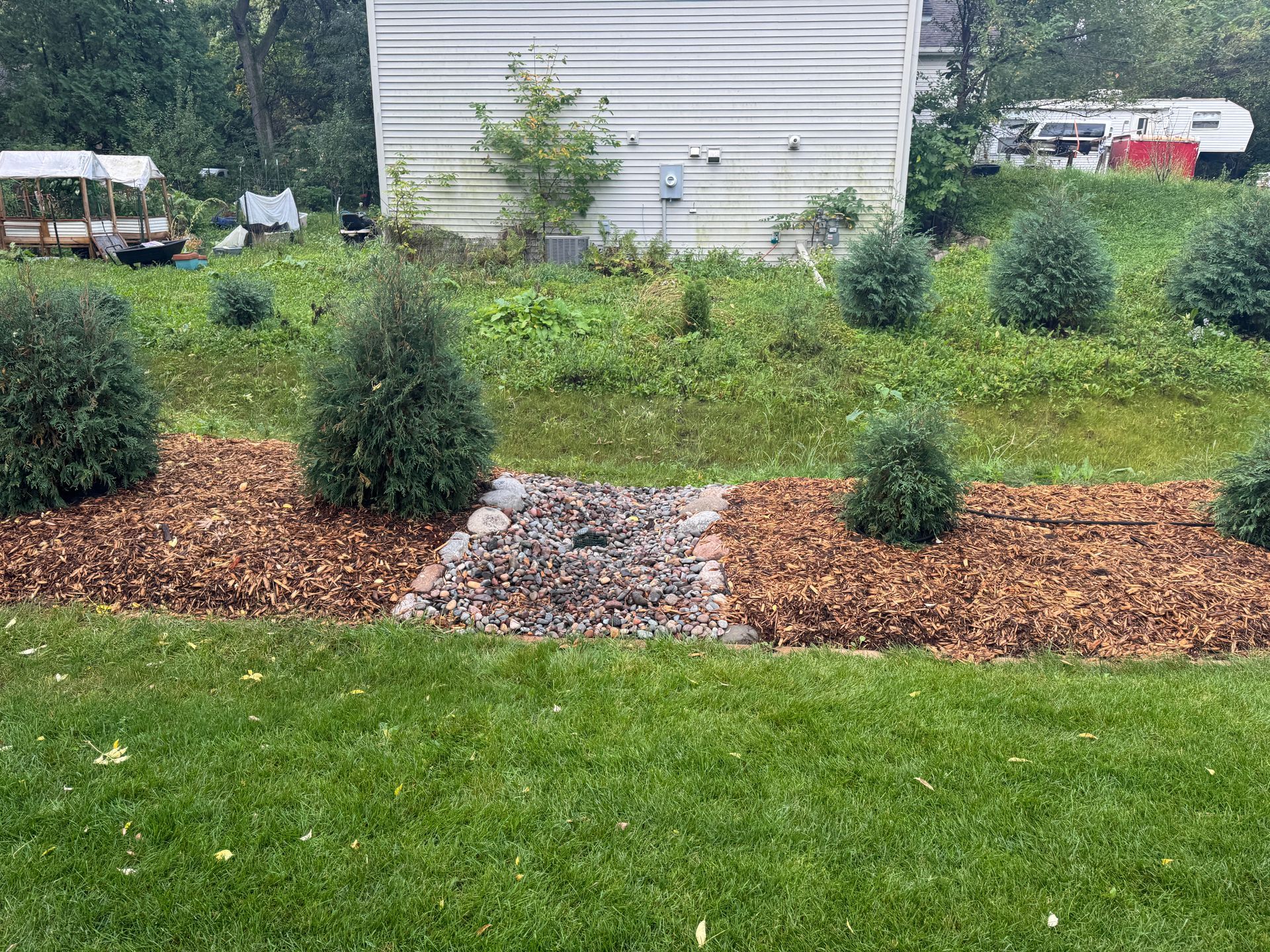
When I assess Blaine properties, I'm not automatically recommending drain tile like I might in Plymouth. The soil does much of the drainage work naturally. The focus shifts to whether basic grading is correct and whether downspouts are routed appropriately—not whether you need extensive underground drainage systems.
[Photo: Sandy soil profile or Blaine residential area] Alt text: Sandy soil typical of Blaine Minnesota residential properties Caption: Blaine's sandy soil drains naturally—good news for homeowners concerned about water problems.
The Difference Between Builder Grading and Professional Grading
The core difference between what builders deliver and what professional work looks like comes down to one thing: measurement versus eyeballing.
What Builders Do
Builder grading crews eyeball the pitch. They look at the slope, decide it looks roughly correct, and move on. They're not measuring to ensure six inches of drop within the first ten feet from the foundation. They're creating something that looks like it slopes away from the house.
For most houses, this is close enough to avoid obvious problems initially. But "close enough" and "correct" aren't the same thing—and the difference reveals itself over time as soil settles and water finds paths the original grading didn't account for.
What Professional Work Looks Like
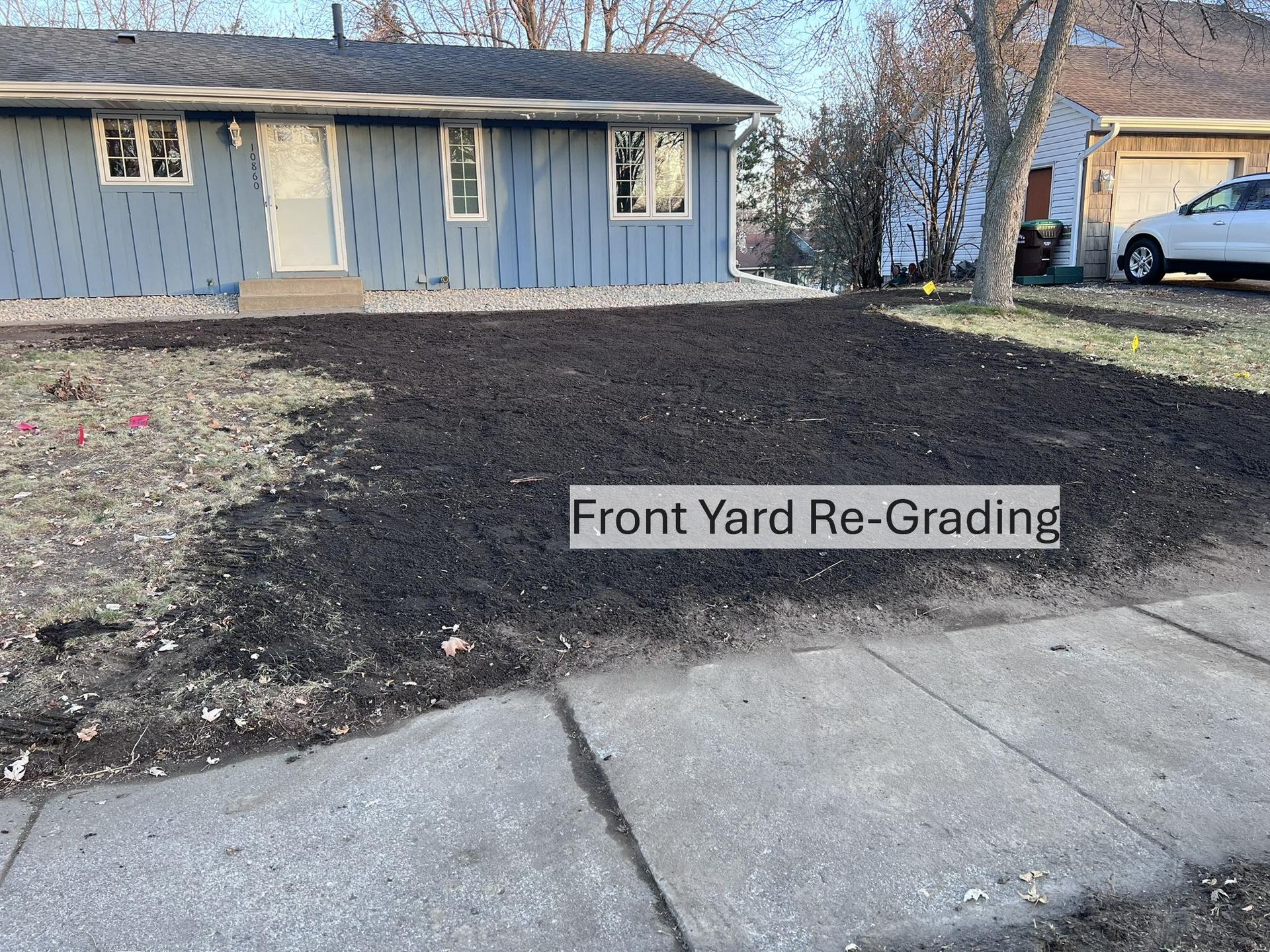
When we grade a property, we're measuring with tools. At this distance from the foundation, we need to be at this elevation. It's checked as we work and verified when it's done. Don't eyeball grading—measure it.
This isn't about being perfectionist or overengineering simple work. It's about the difference between grading that protects your foundation for twenty years and grading that creates problems within five.
The Specification That Matters
Six inches of drop within the first ten feet from the foundation. That's the standard that matters. It's specific, measurable, and verifiable. Ask your builder if they measured this specification—most can't tell you because they didn't. They eyeballed it, assumed it was close enough, and moved on.
Why This Matters Even in Sandy Soil
Blaine's sandy soil helps water drain once it's in the ground. But grading determines where water goes before it enters the soil. Poor grading can still direct water toward your foundation even in sandy soil—it just won't pool as long as it would in clay.
Getting grading right is foundation protection regardless of soil type. Sandy soil is more forgiving, but it doesn't eliminate the need for proper grading.
Pro Tip: You can check your own grading with a simple level and measuring tape. Place a level board extending from your foundation and measure the drop at ten feet out. If it's less than six inches, your grading may need correction—even if you haven't noticed water problems yet.
Upgrade Tiers for Blaine Properties
Not every property needs the same level of drainage infrastructure. Here's how to think about upgrades for Blaine's sandy soil conditions.
Good: What Builders Should Do But Often Don't
- Proper grading with verified six-inch drop within first ten feet
- Measured pitch away from house, not eyeballed
- Downspouts extended away from foundation
For many Blaine properties with sandy soil, getting "Good" right is actually sufficient. The soil handles drainage naturally once water is directed away from the foundation. This is genuinely different from clay areas where "Good" often isn't enough.
Better: Underground Downspout Routing
- Downspouts connected to underground pipes routed to curb or drainage area
- Eliminates water impact on lawn surface
- Keeps water management invisible and out of the way
- Prevents the erosion that surface extensions can cause over time
Underground routing is a meaningful upgrade for any property regardless of soil type. It's cleaner, more effective long-term, and eliminates the surface water flow that can create lawn issues and erosion patterns.
Best: Drain Tile System
- French drain or drain tile providing active drainage
- Water collected and routed away rather than relying on surface flow alone
- Necessary in clay soil areas, often optional in sandy areas like Blaine
Here's where Blaine genuinely differs from Plymouth or Maple Grove: "Best" level drainage infrastructure is often unnecessary in sandy soil. The soil itself provides drainage capacity that clay doesn't offer. Recommending drain tile to every Blaine homeowner would be overselling—most don't need it.
The Honest Assessment
When I evaluate Blaine properties, I'm looking at whether basic grading is correct and whether the soil composition matches what I expect for the area. Many Blaine homeowners can achieve excellent drainage with "Good" or "Better" tier work. Recommending "Best" when it's not needed isn't good advice—it's unnecessary expense that doesn't benefit the homeowner.
Assessing Your Builder-Grade Landscape
For Blaine homeowners ready to evaluate what their builder actually delivered, here's what to check.
Grading Assessment
Walk your property after a significant rain. Where does water flow? Does it move away from the foundation or toward it? Does it pool anywhere for more than a day?
In sandy soil, prolonged pooling is a clear signal of a grading problem—the soil should drain that water quickly. If water is sitting for extended periods, the grading is directing it somewhere it shouldn't go.
Foundation Transition
Check where soil meets your foundation. Soil should be approximately six inches below the bottom of your siding. If soil has been graded up against siding or is too close to that transition point, you have a moisture entry risk regardless of soil type.
Downspout Routing
Where does water from your downspouts go? Surface extensions that stop six feet from the house aren't adequate. Water should be routed to the curb or a designated drainage area well away from the foundation.
The Three-Year Checkpoint
If you're two to three years into owning your Blaine home, now is the ideal time to assess. Builder grading shortcuts typically reveal themselves in this window as soil settles and original grading degrades. Catching issues now is easier and less expensive than addressing them after they've caused foundation concerns.
What You Probably Don't Need
If your soil is sandy—which most Blaine properties have—and your basic grading is correct, you likely don't need extensive drainage infrastructure. Don't let anyone oversell you on drain tile if your soil drains naturally and your grading directs water appropriately. Sandy soil is genuinely forgiving when the basics are right.
[Photo: Professional landscape assessment or grading work] Alt text: Professional landscape assessment at Blaine Minnesota new construction home Caption: Assessing builder-grade work before problems emerge. The best time to address grading issues is before they affect your foundation.
Frequently Asked Questions
How much does it cost to fix builder-grade landscaping in Blaine?
Costs vary depending on what needs correction—simple grading adjustments cost less than complete regrading, and underground downspout routing is a moderate investment. The key for Blaine homeowners: sandy soil often means less drainage work compared to clay areas. Get an assessment before assuming extensive infrastructure is required.
Do Blaine homes need drain tile?
Most Blaine homes do not need drain tile due to sandy soil composition. Sandy soil drains naturally—water moves through rather than pooling. Drain tile is essential in clay areas but often unnecessary in Blaine. Focus on proper grading and downspout routing first; only consider drain tile if specific conditions warrant it.
When should I upgrade my builder-grade landscaping?
The ideal timing is two to three years after construction. This allows soil settling to reveal grading issues while being early enough to address problems before foundation concerns develop. Don't wait until you see water in your basement—assessment at the two to three year mark catches builder shortcuts while they're still simple to correct.
What's the difference between Blaine soil and Plymouth soil?
Blaine has sandy soil that drains quickly and naturally. Plymouth has heavy clay that holds water, creating drainage problems requiring more extensive solutions. Blaine homeowners typically need less drainage infrastructure—the same grading standards apply, but sandy soil is more forgiving when basics are done correctly.
The Blaine Advantage
Most of the drainage problems I address across the Twin Cities come from clay soil areas—Plymouth, Maple Grove, Medina. The heavy clay holds water, creates pooling, and requires significant infrastructure to manage properly.
Blaine's sandy soil is genuinely different. Water moves through it naturally rather than sitting on the surface. The drainage challenges that dominate my work in other areas simply don't apply the same way here.
What This Means for Upgrades
Blaine homeowners upgrading from builder-grade landscaping can often focus on getting the basics right—proper grading with actual measurement, appropriate downspout routing—without the extensive drainage infrastructure that clay-soil properties require. That translates to real savings and simpler projects.
The Catch
Basic still needs to be done correctly. Builder grading that was eyeballed instead of measured is still a problem, even in sandy soil. Water directed toward your foundation still creates risk, even if it drains faster than it would in clay. The foundation protection principles don't change just because the soil is more forgiving.
For Blaine homeowners ready to assess what their builder actually delivered—and understand which upgrades make sense for sandy soil conditions—a professional evaluation identifies what matters for your specific property and what you can skip.
Contact KG Landscape to schedule a Blaine property assessment.
Ready to Start on Your Next Project?
Call us at (763) 568-7251 or visit our quote page.