Improving Drainage and Turf Quality in St. Paul with Underground Piping Systems and Topdressing
Seldom will you find a piece of landscaping less desirable than the unintentional water feature. That's why a recent client in St. Paul, Minnesota's Macalester-Groveland neighborhood reached out to KG Landscape. Poor drainage in their yard had begun to allow standing water to accumulate, which not only damaged the lawn but was also beginning to make its way into the home's foundation. Our assignment was to determine why this water was pooling where it was, then find a way to divert it to a safer outlet.
In order to do so and to improve the health of this St. Paul lawn, our team developed a system of catch basins and underground drain pipes to capture and redirect rainwater. Additionally, we restored the damage standing water had done to the lawn with a full topdressing treatment combined with seed blankets in the most critical areas of the lawn. Upon completing the project, we successfully resolved the yard's drainage issues while also bolstering the health of the lawn.
The Problem: Why Was Water Accumulating in the Yard?
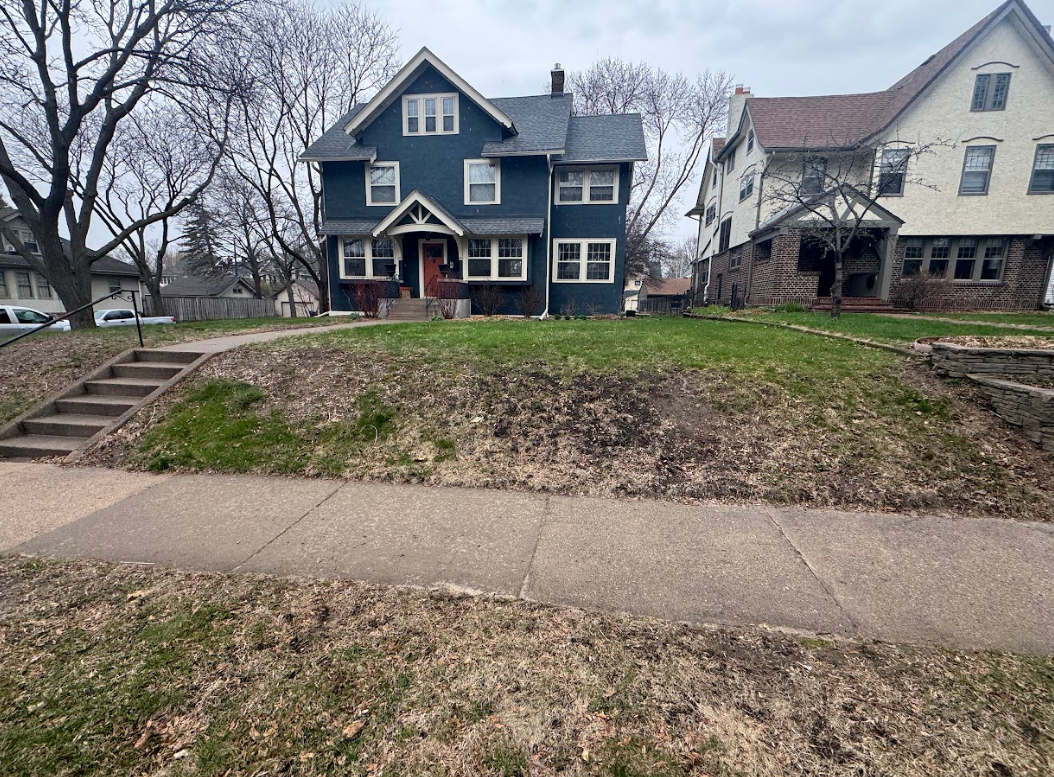
This property was typical of homes in high-density St. Paul neighborhoods, with narrow side yards and alleys rather than driveways. On this particular street, homes were slightly elevated from street level, with the ground sloping somewhat steeply to the sidewalk. The narrow parameters of a St. Paul lot, along with the proximity to neighboring homes, had placed further constraints on a positive drainage system. The result was a yard that lacked both curb appeal and utility.
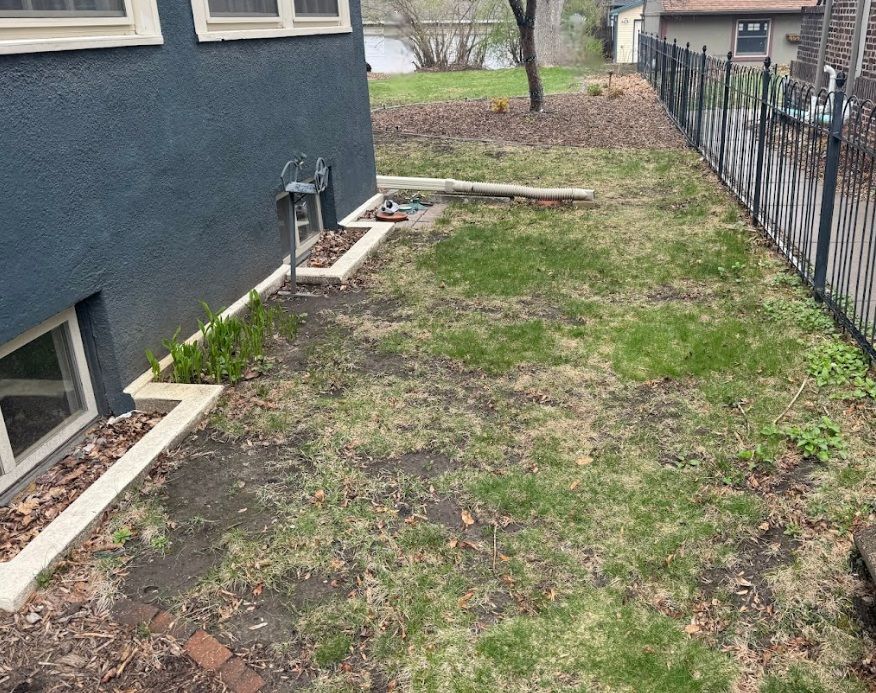
Most of the problem originated with the contour of the ground. Nearest to the house, the yard suffered from negative grading: the ground sloped down toward, not away from, the foundation of the house. This, along with flat grading in other areas, prevented surface water from draining away from the house.
The yard also suffered from a highly concentrated runoff system. The gutters sent rainwater to a single downspout, which not only had to handle a a large amount of water but also sent it to one of the most problematically graded locations in the yard. Here, standing water collected and seeped into the foundation, where it began to intrude into the basement. Inundating the ground also damaged the integrity of the lawn and compromised the yard as an outdoor living space.
Aside from the slope to the sidewalk, which was far from the foundation, the site lacked positive changes in elevation. This limited natural drainage and kept water in place days after the initial rainfall.
Compounding the issue of poor drainage was the condition of the soil. Yards in Minneapolis and St. Paul often suffer from compacted soil due to years of foot and equipment traffic, along with low topsoil depth due to erosion. When soil is heavily compacted, it is less able to take on air and water, which hinders the growth of grass and causes the ground to retain water on the surface rather than absorb it. This led to patches of dead grass around the yard, diminishing the aesthetics of the yard as well as its functionality.
Options for Improving Drainage and Lawn Health
Between the inherent grading issues of the site and the severity of the water damage those issues caused, this was not going to be an easy fix. We presented our client with three options for ameliorating drainage, from fortifying the lawn's density to devising a comprehensive underground system.
Soil and Turf Restoration Measures
Restoring the depleted soil by aerating and overseeding the lawn, as well as adding fresh topsoil, could address many of the issues the site faced. By improving soil structure and reestablishing dense grass, we would be able to reduce erosion and improve water absorption, addressing some of the standing water issues present with the current compacted soil. A healthy lawn would also improve the yard's usability, giving the client more functional outdoor space. However, we were still concerned with structural issues that turf restoration alone might not have been able to fix.
Regrading and Slope Correction
While turf restoration may have improved the absorption properties of the soil, the fact remained that the soil was being asked to absorb too much. We felt it was advisable to correct not only the flat areas but particularly the negative grading close to the house by fully regrading the site. By creating a positive slope away from the house, we would be able to stop seepage in the foundation and protect the home from costly repairs in the future.
Subsurface Drainage System
We were still mindful of how the lot's limitations, namely its flat and narrow side yards and compacted soil, further complicated the drainage issue. By installing an underground drainage solution, such as drain piping connected to collection points, we would be able to overcome the adverse natural conditions of the site, capturing excess surface and groundwater and directing it away from problem areas such as the super-saturated spots we saw near the downspout.
Better Together: The Two-in-One Solution We Chose
As we discussed our options, we realized that this wasn't an either/or situation. By synthesizing two complementary approaches, we could address the full range of issues present with the lawn, from the natural contouring issues to the structural drainage routing, that one option alone couldn't solve. Rather than regrading the site, we would integrate a subsurface drainage system with our turf restoration service, including a full topdressing.
The drainage system would replace the overworked downspout with 4" underground drain piping connected to a 12" catch basin. In turn, this would connect to a main drainage line that would safely divert excess water to the city's storm drain. This was necessary due to the fact that grading adjustments in a narrow yard with poor soil infiltration would not have been sufficient.
Improving that soil, in conjunction with a turf restoration, would be the second prong of our approach. By strengthening the feeble root system and ineffective soil of the front yard, we would be able to stabilize the ground, reducing the erosion that had weakened the yard's slope, and increasing the overall health of the lawn.
We would begin the restoration with a course of double-pass core aeration, followed by overseeding the existing grass. We would then follow those steps with a medium topdressing, supplementing the freshly aerated and seeded lawn with a 3/8" cover of quality topsoil. A light grading, rather than the full regrading task we considered, would ensure a smooth and consistent cover throughout the lawn. We would finish with a starter fertilizer specially formulated to encourage germination of the new seed.
By combining drainage with lawn restoration solutions, the KG Landscape team would seek to eliminate standing water, protect the foundation from further water intrusion, and restore the yard to a fully usable state.
How We Implemented Both Halves of Our Solution
We began the project by confirming the drainage patterns around the perimeter. With these in mind, we chose ideal locations for the two catch basins and trenches for the underground piping. We also identified restoration areas that water flow would specifically need to avoid.
Underground Drainage Installation
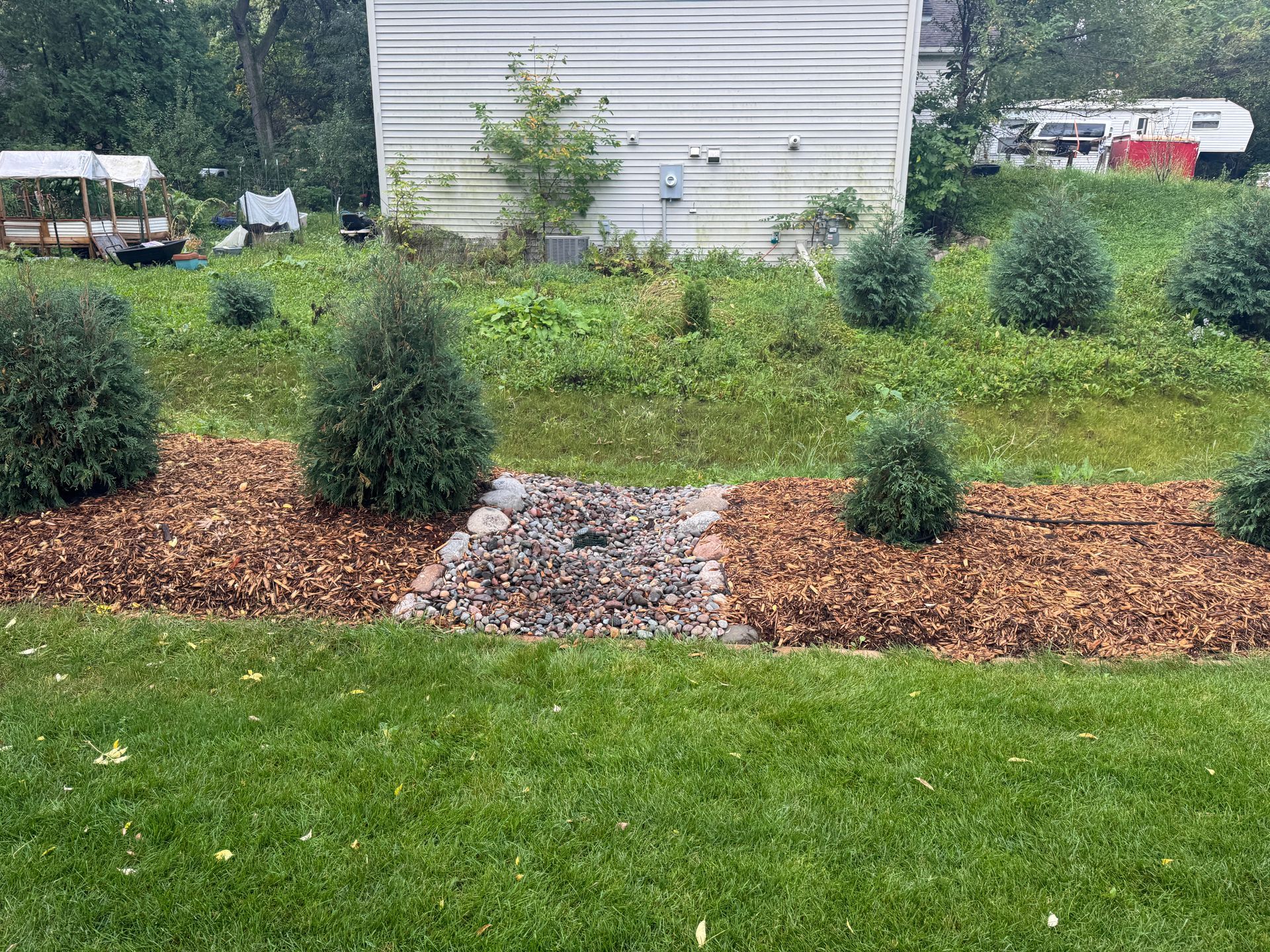
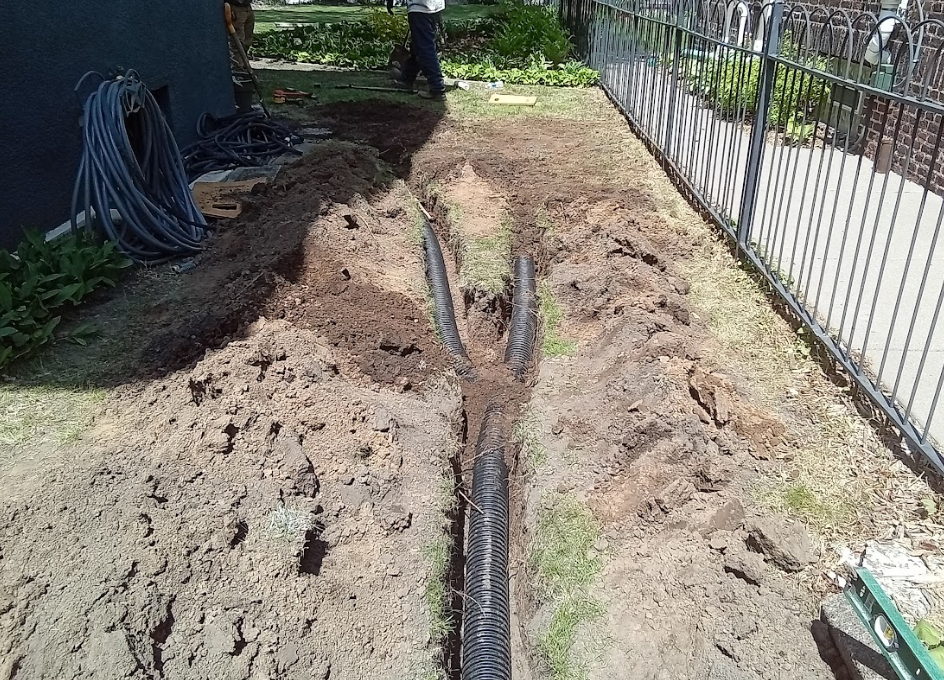
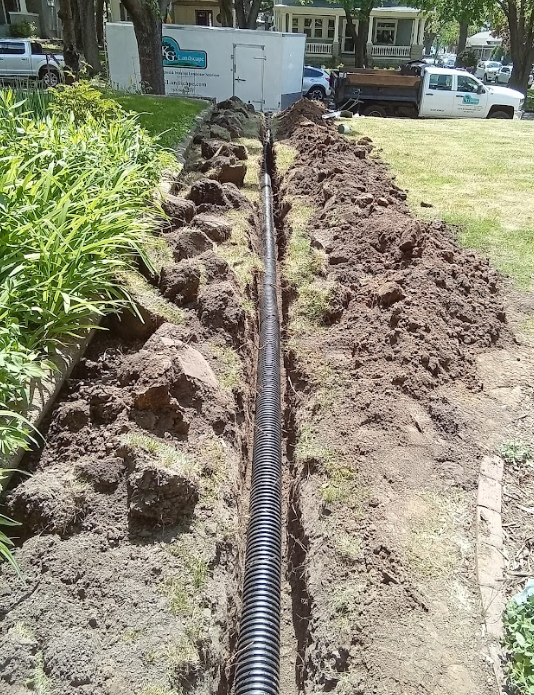
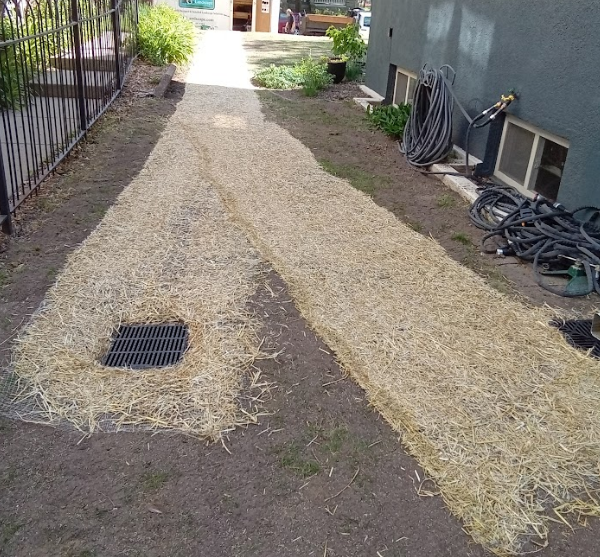
We then installed an underground gutter extension to capture roof runoff at the source. We installed the first of the two catch basins directly beneath the gutter downspout to efficiently collect roof runoff. A second catch basin was installed within the lawn to help capture excess surface water in case of heavy rain. A run of 4-inch underground drain piping would connect to this second catch basin, which in turn was connected to the main drainage line to move collected water out of the problem area.
Backfilling and Surface Restoration
Once we installed the drainage system, we prepared for the next steps by backfilling the trenches we dug for the drainage lines. All trenches were compacted to restore grade and prevent future settling.
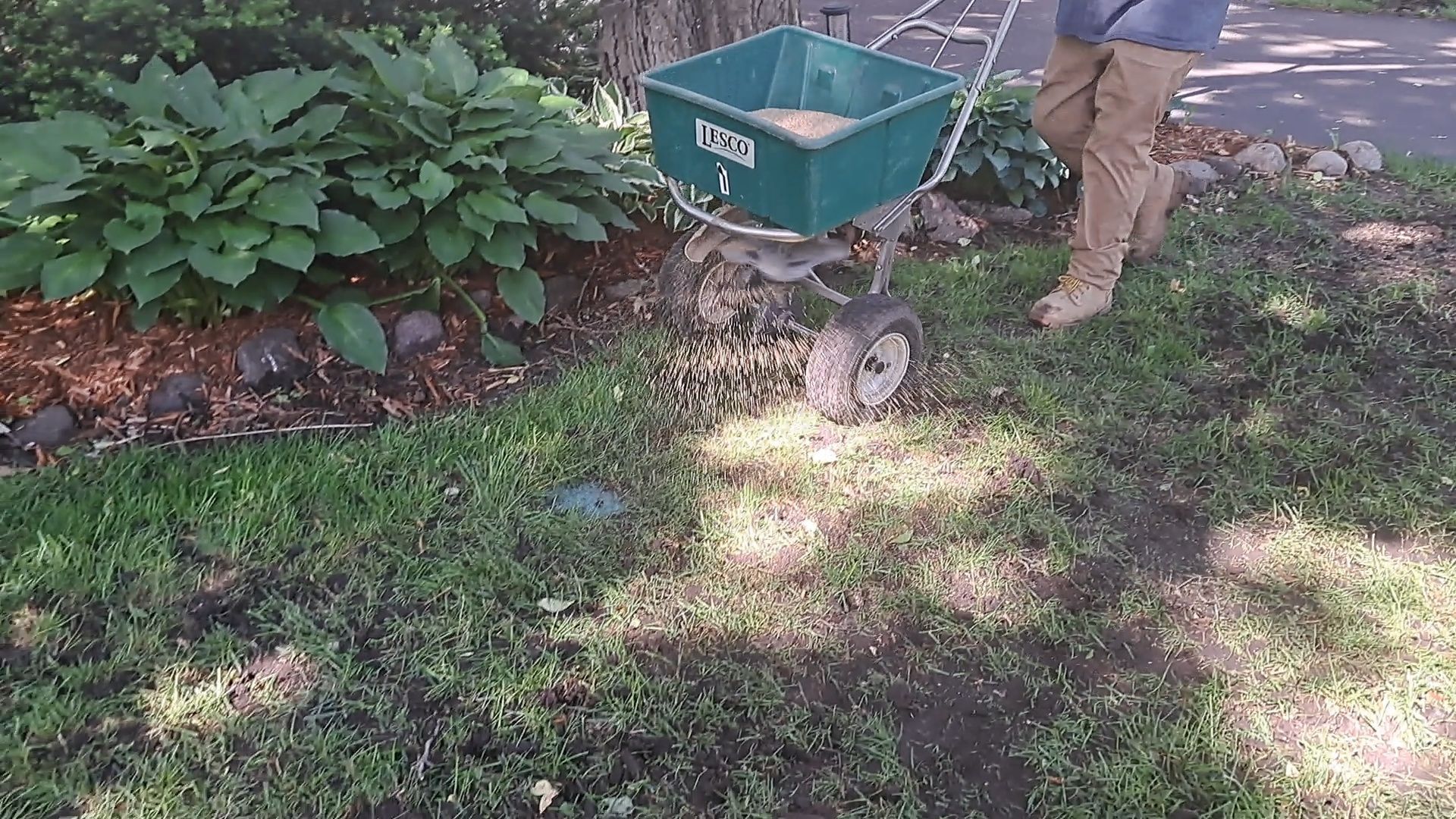
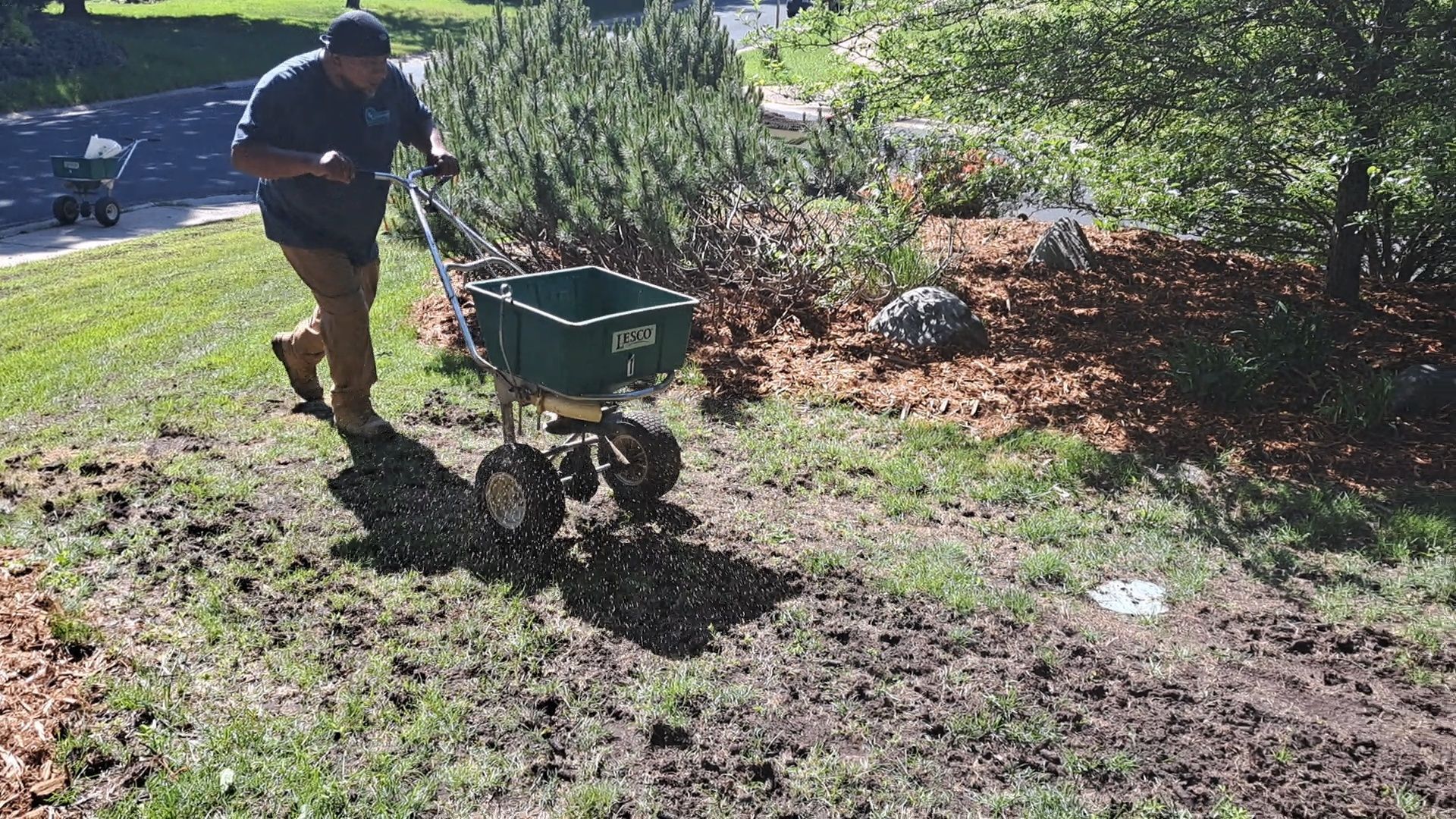
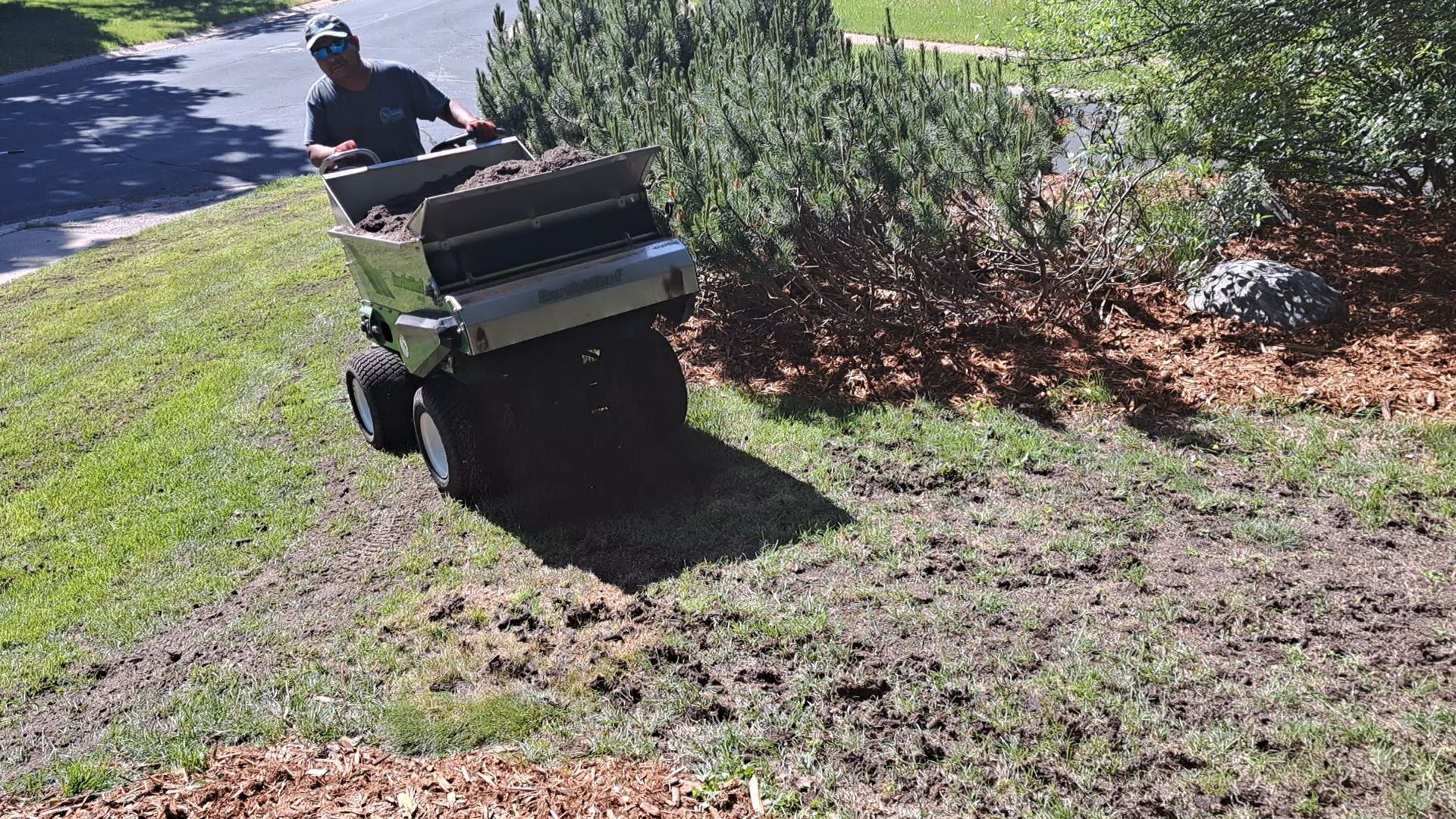
With the first half of our solution complete, it was time to move to the restoration phase. We began with a double-pass core aeration, in which our equipment dug thousands of small holes, or "plugs," to improve the soil's airflow and water infiltration. This aeration process prepared us to overseed the existing grass. This would help us achieve the lush density necessary for a healthy and well-functioning lawn. Once the soil was aerated and the seeds were planted, we moved to topdressing the soil.
Medium Topdressing and Light Grading
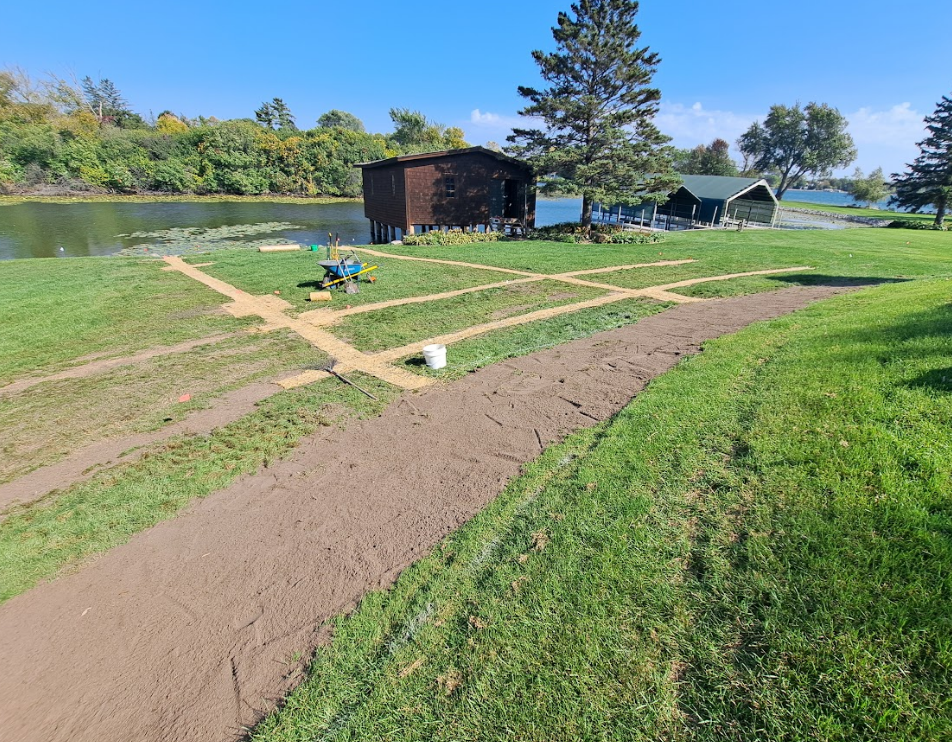
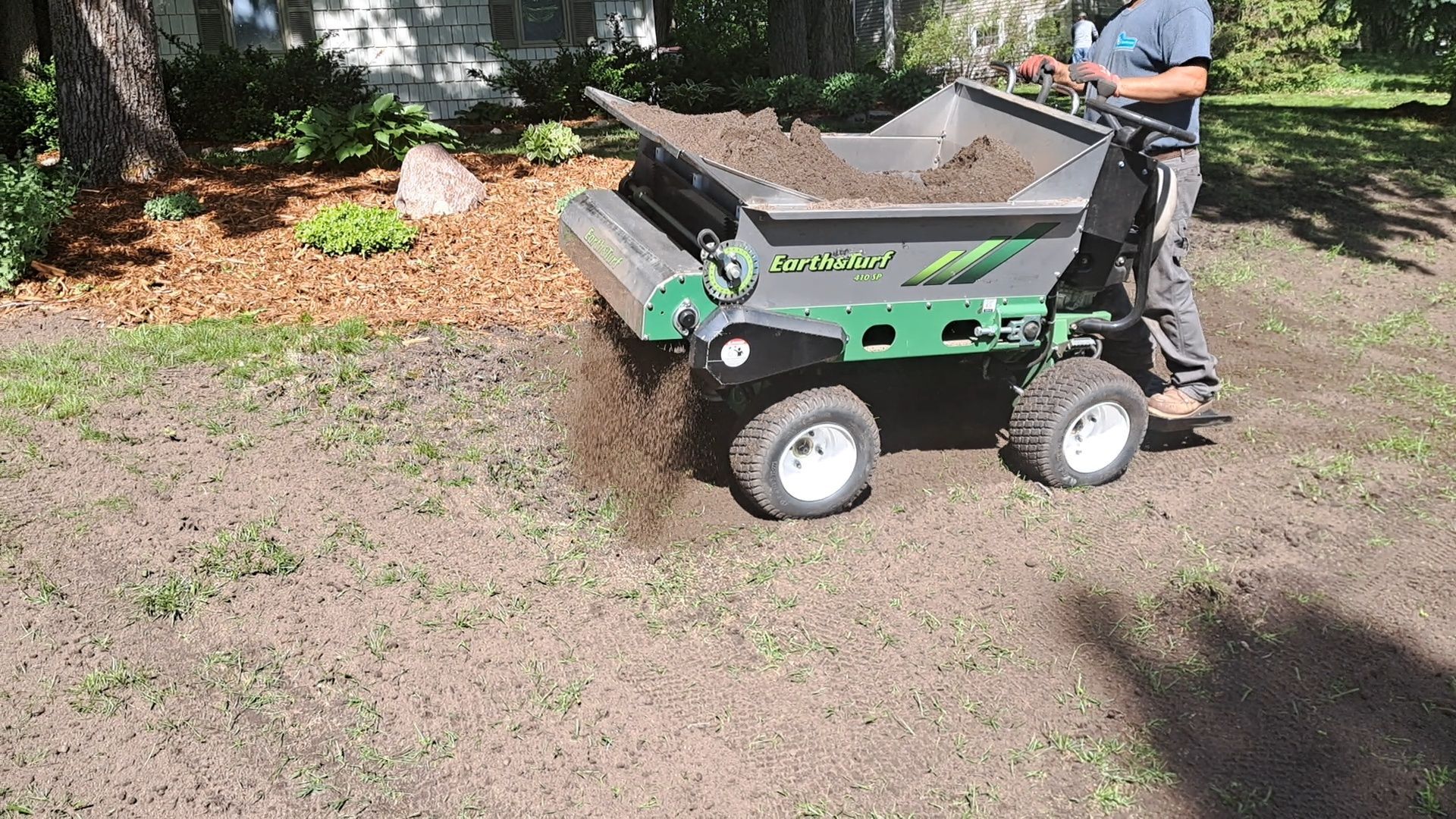
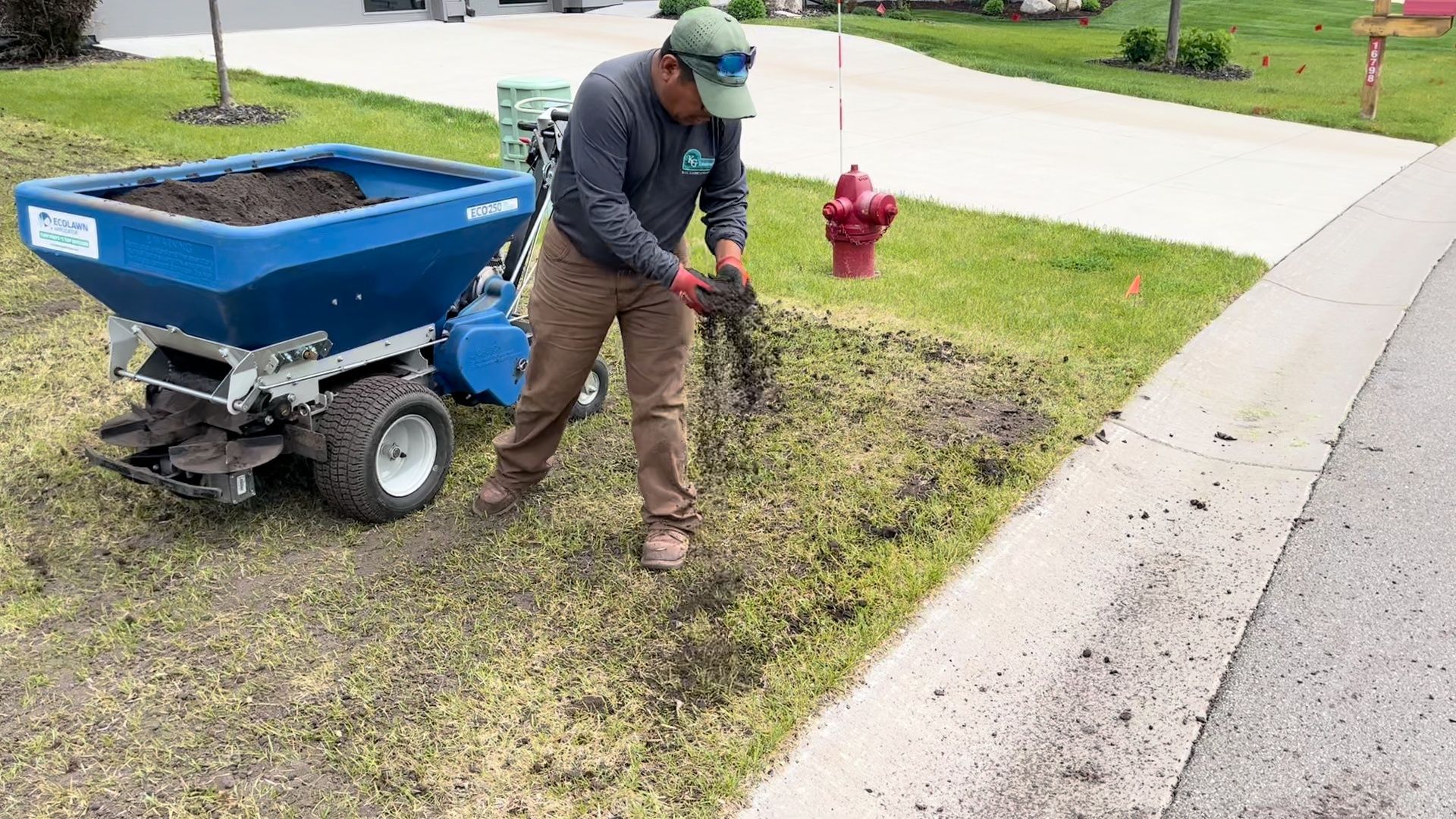
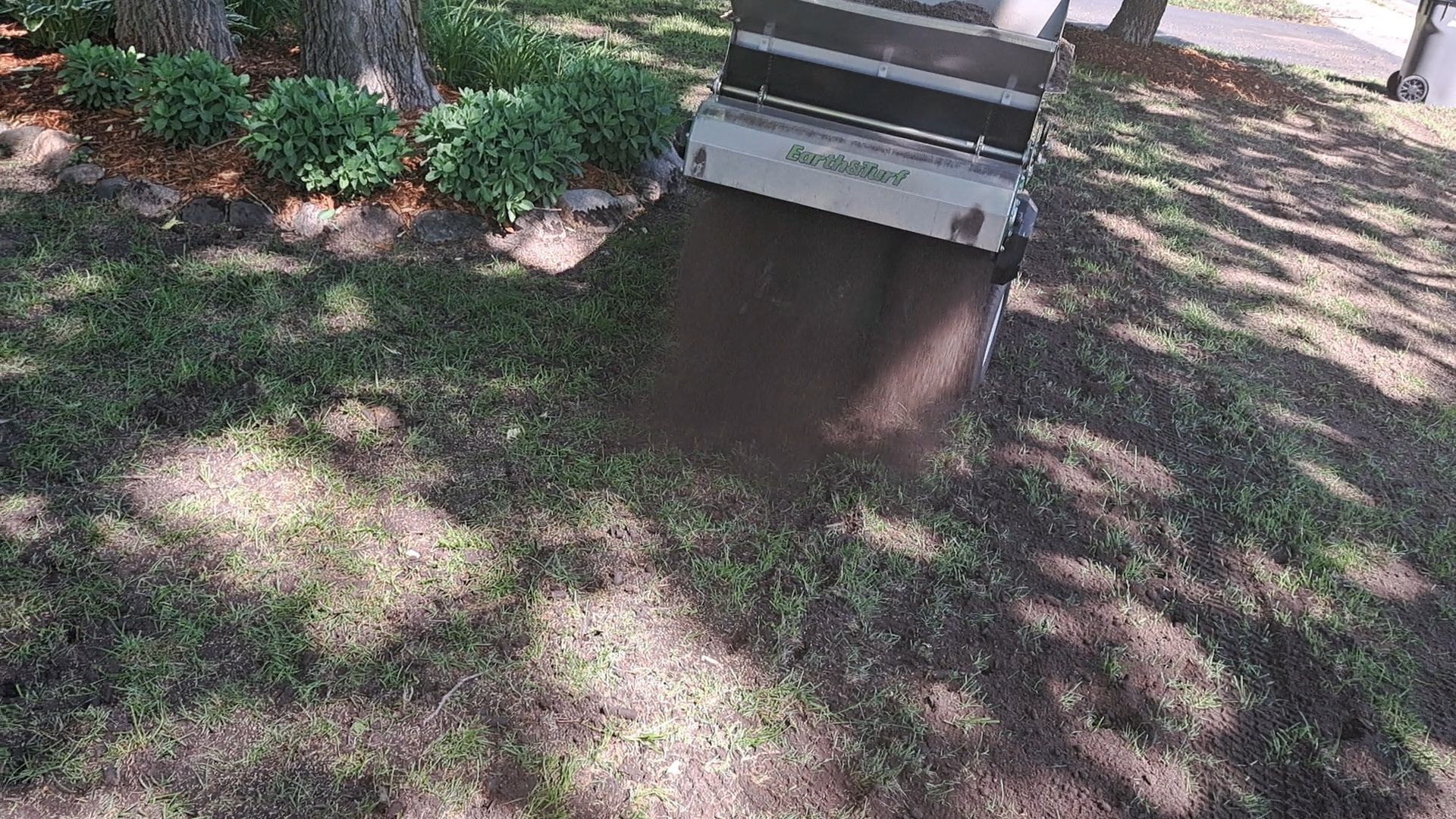
We evenly spread approximately 3/8" of topsoil across the lawn. This topsoil would improve soil structure, smooth out low areas, and enhance seed-to-soil contact. Topsoil also helps reduce the layer of thatch beneath the grass, which can complicate lawnmowing and impede nutrients from reaching roots. With the topsoil in place, we performed a light grading to create a smooth, even surface and ensure consistent drainage across the yard.
Seed Blankets
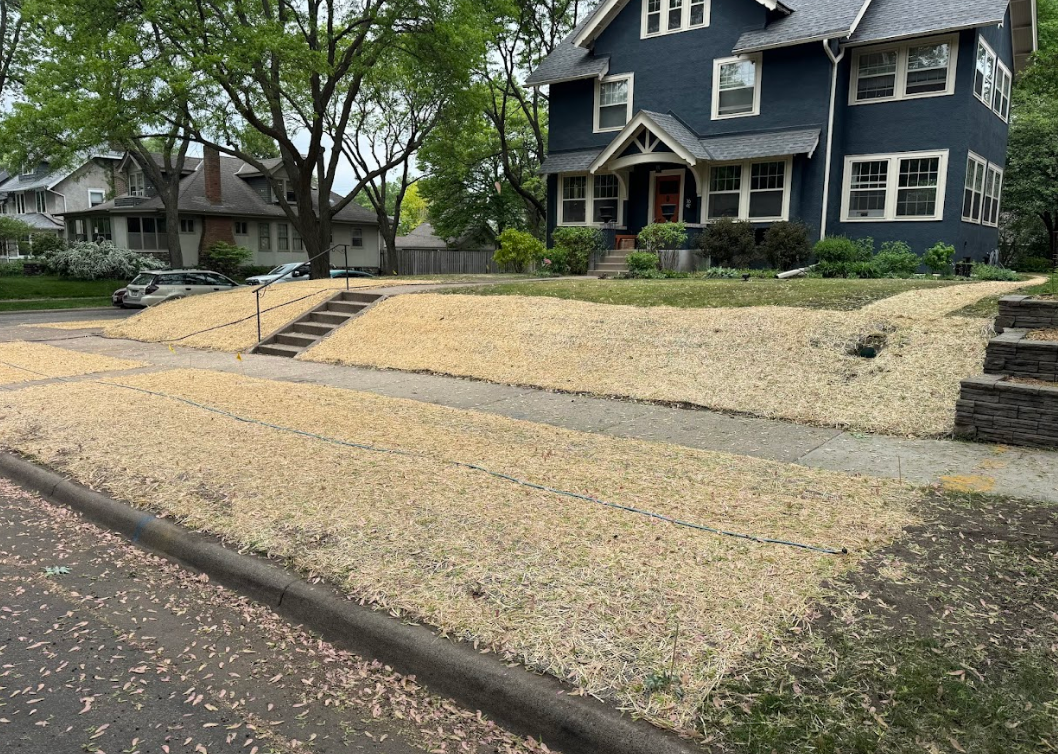
In order to protect the freshly planted seeds from washout, hungry birds, and other forces of nature, we installed seed blankets over the trenched 4” piping as well as bare and patchy areas of the yard where we most needed to promote germination. The main slope of the yard, which was most susceptible to bald spots and erosion, received special attention in this respect.
Starter Fertilizer Application
To further promote germination, we applied a starter fertilizer to support the new grass. Fertilizers not only help you grow thick, green grass, they also encourage the sturdy root development that is key to healthy turf establishment.
The Result of an Integrated Drainage/Restoration Plan
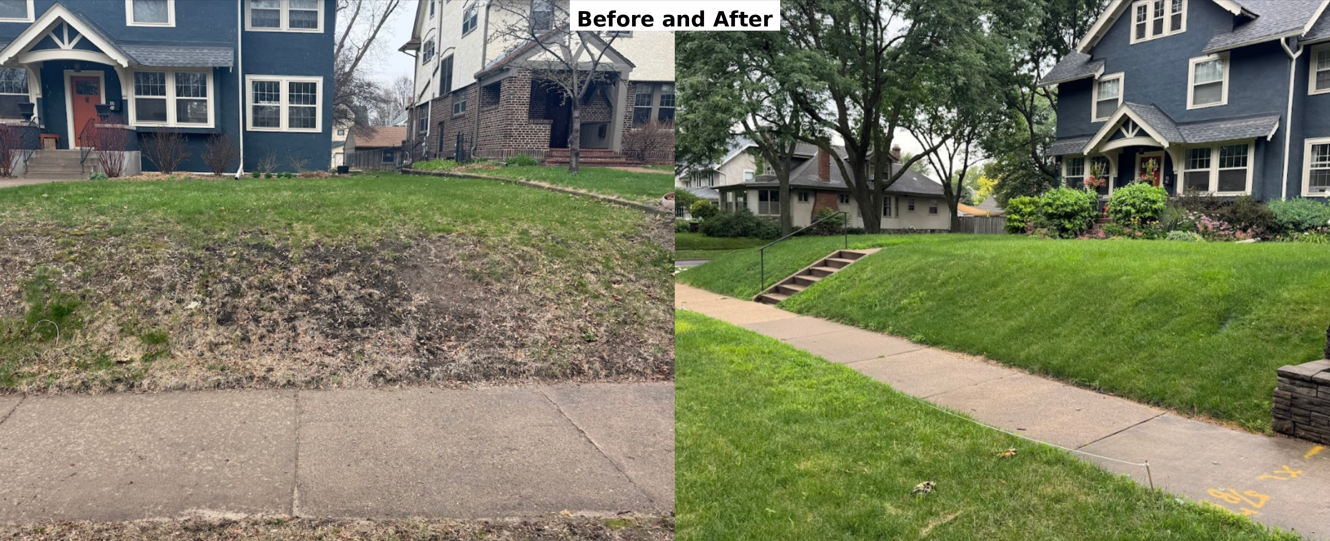
By integrating subterranean drainage strategies with the aeration, overseeding, and topdressing of a lawn restoration, our team was able to fully correct this
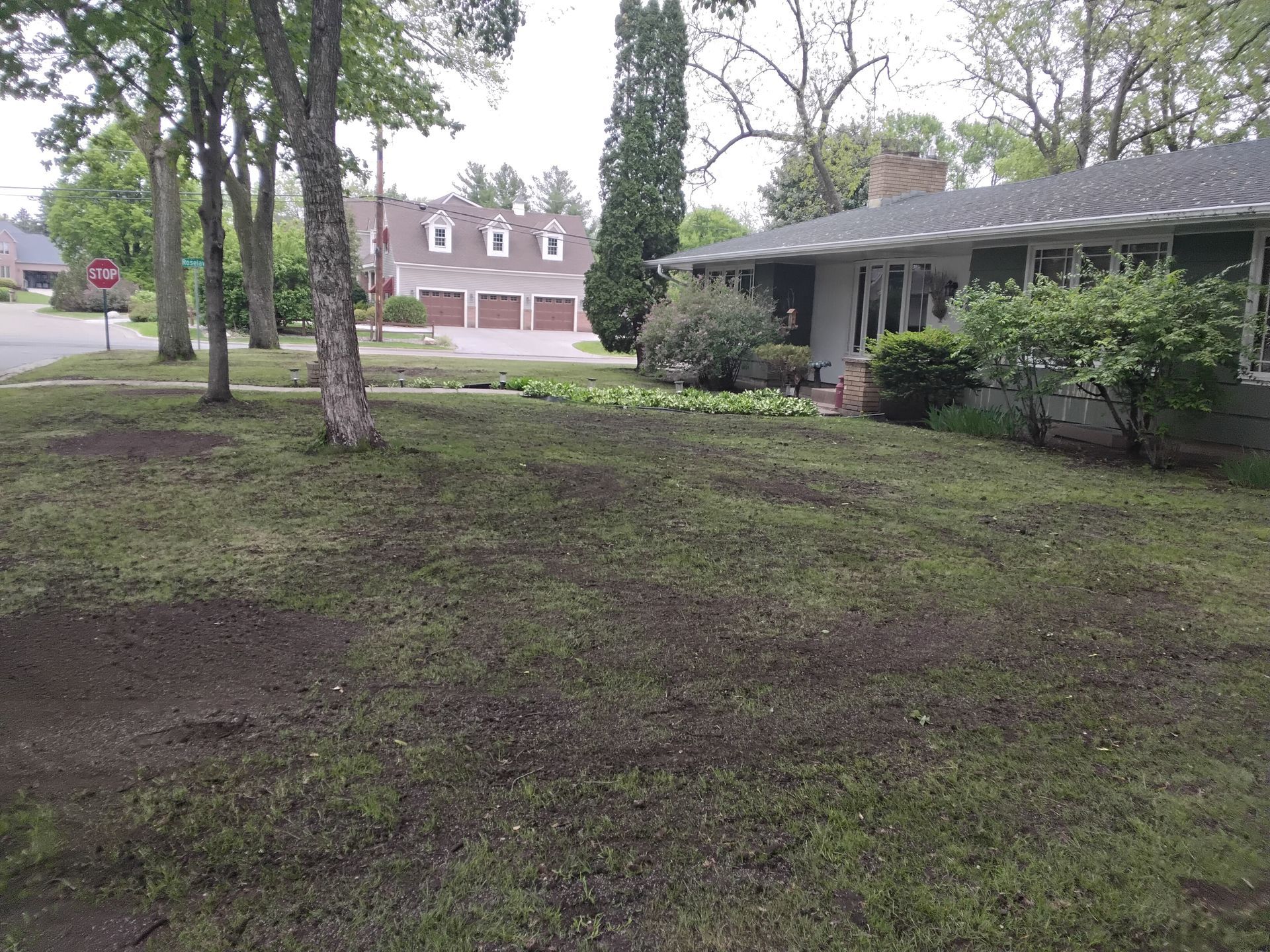
St. Paul property's water issues and improve curb appeal along the way. Excess surface water and roof runoff that once pooled in the yard and damaged the foundation now went to an underground drainage system that promoted healthy grass growth and protected the client's basement. The improved drainage and soil conditions allowed the landscape to properly shed water after rainfall, preventing the long-term saturation in which too much water ultimately harms growth. Thorough aeration and overseeding, in conjunction with a fresh infusion of nutrient-rich topsoil, reestablished strong root development and healthy grass growth throughout the yard. This new stability would help maintain the integrity of the yard's slope as well, reducing the erosion that had worn away so much of its grass cover. Once the new seed took hold, the homeowners were able to once again enjoy a dense, green lawn with a long-term solution to those unwanted water features.
Ready to Start on Your Next Project?
Call us at (763) 568-7251 or visit our quote page.