French Drains That Actually Work in Medina’s Clay Soil
Why Typical French Drains Fail in Medina
You can’t talk about drainage in Medina without talking about clay. It’s what I run into on nearly every job here. Medina has some of the heaviest clay soils in the Twin Cities, and that soil type changes everything about how water moves—or really, how it doesn’t move. Homeowners call me all the time about soggy lawns, sump pumps that run constantly, or patios that heave and crack after a winter freeze. Nine times out of ten, the real problem isn’t surface water. It’s what’s happening underground.
Clay soil is made up of tightly packed fine particles. It doesn’t let water drain through the way sandy or loamy soil does. Once it gets saturated, it stays that way. I see this constantly: a homeowner installs a “standard” French drain, and a year later, it’s clogged or frozen solid. The rock backfill holds moisture that has nowhere to go, the pipe fills with sediment, and the system just stops working.
The truth is, the average French drain design that might work great in other parts of Minnesota doesn’t hold up in Medina. The trench is often too shallow, the backfill too compacted, or the perforated pipe lacks a silt sock to keep out fine sediment. That’s why a lot of systems that look fine on paper end up failing after just a couple of freeze-thaw cycles.
I’ve seen some of these drains replaced two or three times because the installer didn’t understand the soil conditions. The real fix is not a bigger drain, it’s a smarter design that works with the clay instead of fighting it. That’s where drain tile systems come in.
Drain Tile: The Smarter Option for Clay Soils
When someone asks me how to fix a yard that never dries out, I usually recommend a drain tile system. A proper drain tile setup is a 4-inch perforated corrugated or PVC pipe wrapped in a silt sock. That sock keeps sediment out while still letting water weep into the pipe. It’s more cost-effective than a traditional French drain and works especially well when we need to cover large areas like Medina’s wide lawns.
The biggest advantage is that drain tile gives the water somewhere to go. Instead of trying to force water through dense clay, it creates an open void below the surface so water can move freely through the pipe. We install it below grade with a steady slope so gravity does the work. And because precision matters, my crews use transits to make sure every section of pipe has the right fall. That consistent slope is what separates a functional system from one that just looks good for a month.
Drain tile also lets us address multiple issues at once. If your sump pump discharge keeps creating a swamp, we can connect that line into the drain tile and route the water where it won’t cause trouble. If you’ve got pooling near a patio or a low spot by your foundation, we can intercept it before it ever reaches those areas.
In clay-heavy yards, this is the system that actually stops the mud, the sump pump cycling, and the patio movement. Once the subsoil dries out, the lawn firms up, and homeowners finally get a yard that feels usable again.
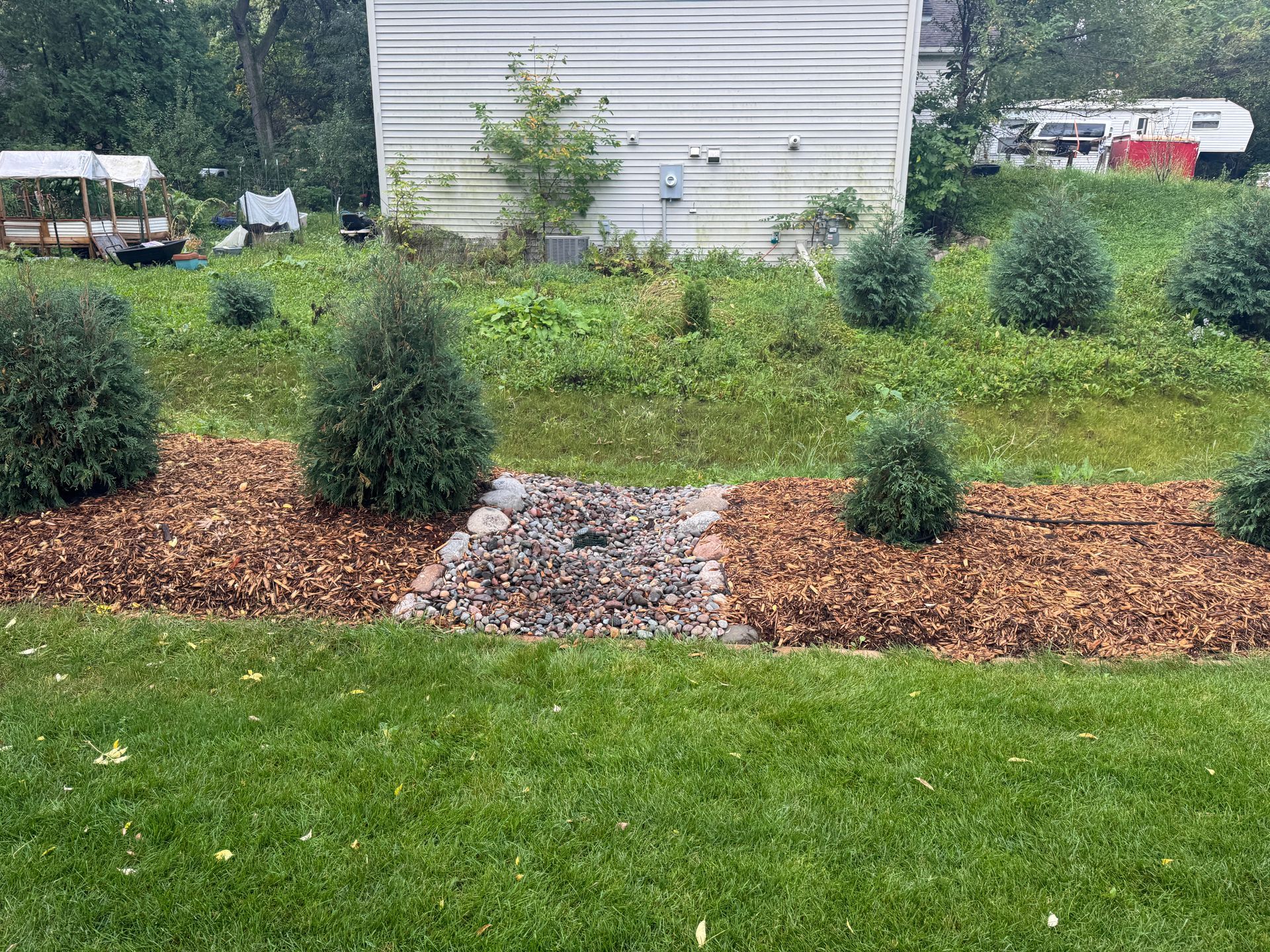
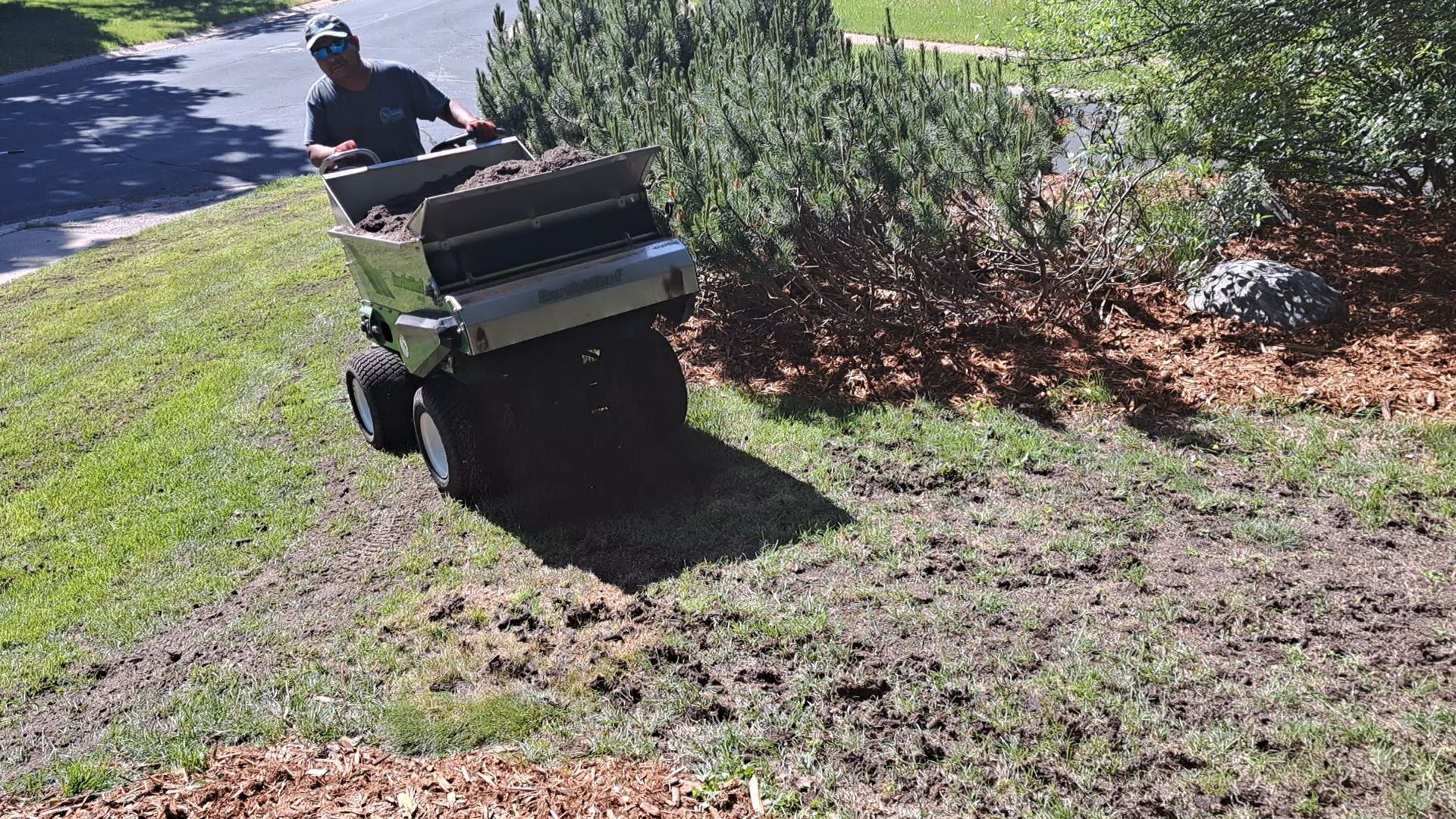
Photo: Drain tile installation showing slope and silt sock protection.
(link to grading services page)
Outbound link: (Home Innovation Research Labs – Drain Tile Installation Standards)
When to Choose a Full French Drain or Hybrid System
There are times when a full French drain makes sense, but those are usually smaller, more focused problem areas—like the side of a house where water funnels in, or between a patio and a driveway where water has nowhere to escape. A true French drain is a deeper system with larger trenches, heavy rock backfill, and a lot more soil removal. It’s more labor-intensive and more expensive, but when the conditions call for it, it’s a great long-term fix.
For Medina homeowners, I often recommend what I call a hybrid approach. It’s a drain tile system installed with a sandy backfill mix—about 50 percent sand and 50 percent topsoil. This combination creates a looser zone around the pipe so water can reach it faster than it could through solid clay. Think of it like building a sponge underground. The water filters through the sand mix and moves directly into the pipe instead of sitting on top of the soil.
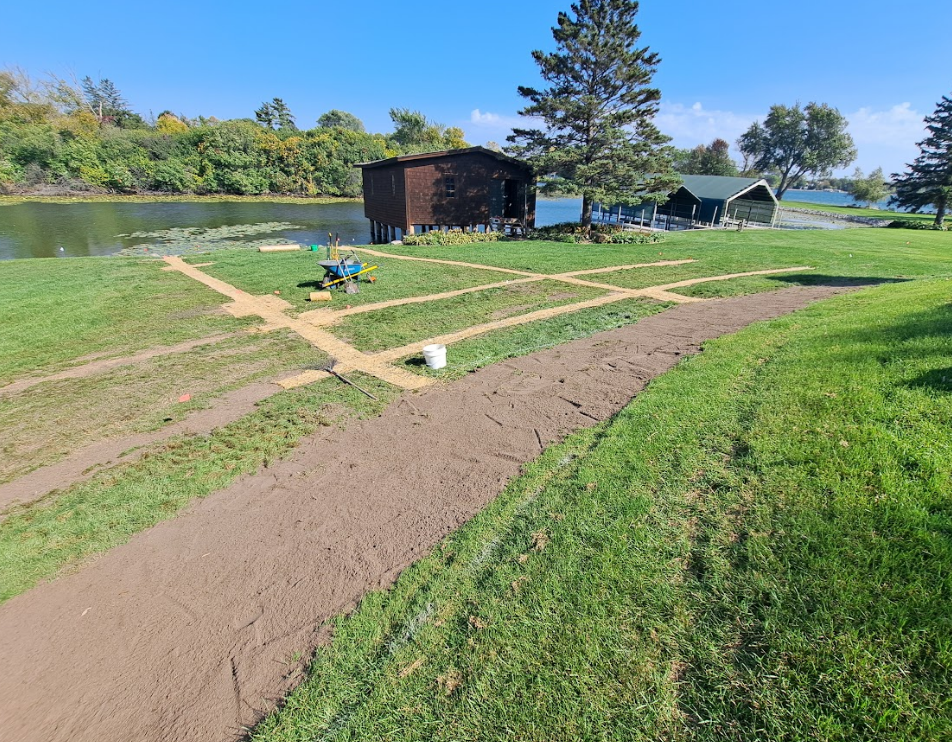
That sandy mix gives water somewhere to go, and that’s what makes all the difference in Medina’s soil. A standard drain tile buried back in its own clay trench won’t work nearly as well. I’ve had projects where homeowners called me after years of struggling with soggy side yards. One Medina homeowner had a low area between two properties that stayed wet for weeks after rain. We installed a grid of drain tile lines with the sandy backfill mix, and the difference was immediate. The area drained out within hours instead of days, and the turf finally started to grow evenly again.
A hybrid system like this sits right between a basic drain tile and a full French drain. It’s thorough enough to handle persistent water issues but far more affordable and less disruptive to install than a complete excavation. For Medina’s clay soils, it’s often the sweet spot.
The Real Payoff: Drier Lawns and Longer-Lasting Patios
After we finish a drainage project, the first thing homeowners notice is how their yard feels. It’s not just about removing puddles—it’s about getting back usable space. Medina yards with heavy clay can stay soggy for days after even a light rain. Once we install proper drain tile and grading, those lawns dry out faster, the ground firms up, and the property starts to work the way it should.
The benefits go far beyond comfort. Proper drainage protects everything you’ve invested in your landscape. Without it, supersaturated soil expands and contracts through each freeze-thaw cycle, putting pressure on patios, pool decks, and retaining walls. That’s why you see pavers shifting, steps settling, and even cracks forming in concrete. When the subsoil stays dry, those structures last decades instead of years.
Drainage also takes pressure off your home’s foundation. I’ve been called to houses where sump pumps were running nonstop because the soil was too dense to let water move naturally. Once we installed drain tile to redirect that flow, the pumps barely kicked on anymore. It’s a quieter, drier, and far more stable environment overall.
Even for families, the difference is immediate. Kids can actually play in the yard without sinking into mud, dogs stop tracking paw prints through the house, and mowing doesn’t leave tire ruts. In Medina’s newer developments, where the topsoil was stripped and compacted during construction, fixing drainage can completely change how a property feels.
A good drainage plan isn’t something you notice every day, but you’ll feel the difference every time it rains. Before investing in new landscaping, patios, or walls, it’s worth having the drainage evaluated first. Fixing it now means you won’t be rebuilding later.
FAQs
What’s the difference between a French drain and drain tile?
A French drain is more extensive—it uses a deeper trench lined with rock and a perforated pipe to move large volumes of water. Drain tile, on the other hand, is typically a 4-inch perforated corrugated or PVC pipe covered with a silt sock and buried shallower. I use drain tile in Medina’s heavy clay soils when we’re running hundreds of feet of pipe, because it’s more cost-effective. The next step up is adding a sandy backfill mix around the pipe, which helps water move faster through clay. French drains are great for high-saturation problem spots, but most lawns benefit more from strategic drain tile runs.
Why is Medina’s clay soil such a challenge for drainage?
Clay soils are made up of tiny, tightly packed particles that hold water instead of letting it drain. Even when your yard has proper grading, the ground can stay soggy for days after a rain. In Medina, that means muddy patches, constantly running sump pumps, and lawns that never fully dry out. Over time, those saturated conditions can cause patios and footings to shift or crack. Installing perforated drain tile below the surface gives that trapped water a place to go. Once it’s in the pipe, gravity takes it out and away from your yard—making it usable again instead of a swampy mess.
Can a French drain fix water problems near my patio or pool?
Yes, but it has to be designed as part of the whole drainage system, not just dropped in afterward. Around patios and pools, the goal is to keep water from getting underneath the structure where it can freeze and cause heaving or cracking. I’ll often pitch the patio surface about one-eighth to one-quarter inch per foot to shed water properly, then install drain tile or a French drain below or along the edge for insurance. For pools, slot or channel drains are sometimes needed between the house and the deck to catch runoff from both directions and keep that water away from the liner and foundation.
What kind of maintenance does a French drain need once it’s installed?
If it’s designed and installed correctly, very little. A properly lined pipe with a silt sock and solid backfill will handle years of runoff without clogging. The biggest thing is making sure your downspouts, sump pump lines, and grading still send water where it’s supposed to go. Over time, leaves or soil can build up over the drain outlet and slow things down, so I recommend checking that outlet once or twice a year. In Medina’s clay soils, it’s worth the effort—keeping water flowing smoothly means you’re protecting your lawn, your hardscapes, and your home’s foundation.
Do I need both grading and a French drain to solve yard drainage issues?
In most cases, yes. I like to think of grading as the first line of defense—it moves surface water where you want it to go. A French drain or drain tile is the second layer, catching any water that still seeps into the ground. When I regrade Medina lawns, I use transits to make sure the slope is perfect and then add underground drainage where the soil just won’t cooperate. Clay doesn’t drain naturally, so combining both systems gives you the best of both worlds: water moving away on the surface and through the soil. That’s how you get a dry, functional yard that lasts.
Ready to Start on Your Next Project?
Call us at (763) 568-7251 or visit our quote page.