Why St. Paul Retaining Walls Fail (And How to Fix Them)
By the time you see rot on the surface of a wooden retaining wall, you're looking at only a small percentage of the actual damage. I've excavated behind enough failing walls to know what's hiding inside them—and it's always worse than what's visible from the yard.
This isn't speculation. After assessing and replacing more than ten failing retaining walls across the Twin Cities, I've seen the pattern repeat consistently. Homeowners notice some soft spots or discoloration, assume the wall needs minor repair, and then watch my crew uncover deterioration that goes far deeper than anyone expected. The wall that looked like it had a few more years left actually needed replacement last year.
St. Paul's older neighborhoods—Highland Park, Summit Hill, Mac-Groveland—are full of wooden retaining walls built in the 1980s and 1990s that are now reaching end of life. If you have one of these walls on your property, this article covers what's actually happening inside it, why the materials you were told would last aren't lasting, and what it takes to build a wall that won't fail.
The Hidden Rot Problem
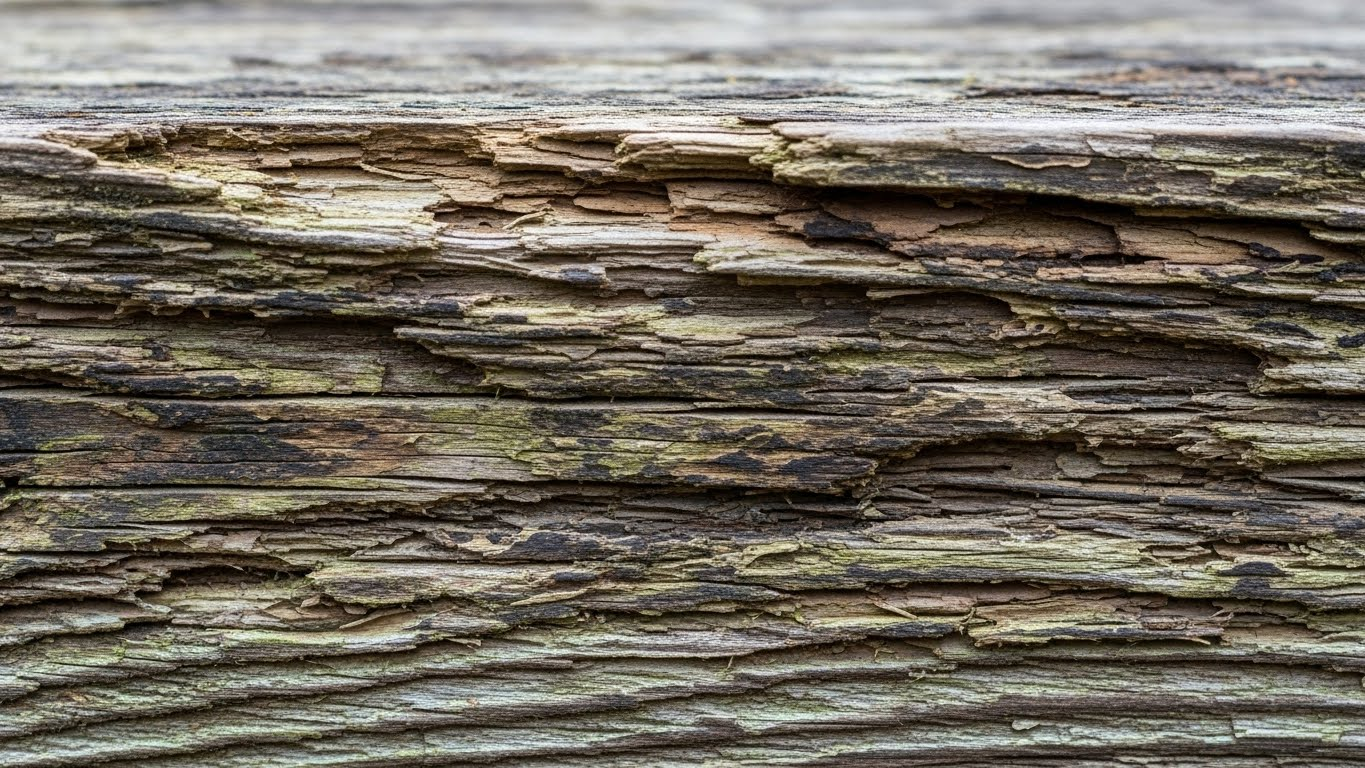
Here's what I find every time I excavate behind a failing wooden retaining wall: more rot than the homeowner expected. More rot than I expected, honestly. The surface damage that prompted the call represents a fraction of the total deterioration.
Wood in contact with soil rots. This isn't news. What surprises homeowners is that this includes treated lumber and cedar—the materials they were told would resist rot. Treatment and natural rot resistance delay deterioration, but they don't prevent it. Given enough time and constant soil contact, every wood species fails.
The moisture dynamics make this inevitable. Soil retains water. Wood absorbs that water. Freeze-thaw cycles work on saturated wood fibers. Fungi establish themselves in the damp environment. The process is slow enough that you don't notice year to year, but it's continuous.
What this means practically: a wall that looks like it needs spot repairs usually needs complete replacement. The visible rot is a symptom of structural deterioration you can't see without excavation. Catching this early—before the wall actually fails and dumps soil into your yard or your neighbor's—costs significantly less than emergency replacement.
St. Paul properties with mature landscaping often have walls that are twenty-five to thirty-five years old now. These walls were built before current best practices were standard. Many lack proper drainage entirely. If you have a wooden wall from this era, it's worth professional assessment even if it looks acceptable from the surface.
The Real Reason Wood Gets Chosen Over Stone
When I see a wooden retaining wall that's failing, I understand why it was built that way. Wood is easier to work with than stone. It doesn't require heavy equipment. And it allows contractors to skip construction steps that stone walls require—gravel backfill, drain pipe installation, proper base preparation.
That's not necessarily malicious. A contractor without the equipment or expertise for stone construction can still build a functional wooden wall. It just won't last as long, and it won't handle water pressure as well.
Here's the part that surprises most homeowners: stone construction doesn't cost dramatically more than wood. The price difference is usually the contractor's preference, not a significant budget gap. When you factor in that wood walls need replacement every fifteen to twenty years while properly built stone walls last indefinitely, the long-term economics favor stone heavily.
The real cost comparison isn't wood versus stone today. It's one stone wall versus two or three wood walls over the same period.
Pro Tip: When getting retaining wall quotes, ask specifically about backfill material and drainage. A quote that skips gravel backfill and drain pipe installation isn't saving you money—it's deferring the cost to a future rebuild. These elements are what separate walls that last from walls that fail.
Building a Wall That Won't Fail
When a retaining wall is built correctly—durable materials, proper construction method for site conditions, and functioning drainage—there's no limit to how long it can last. That's not an exaggeration. Stone walls with proper drainage have been standing for centuries.
The elements that make this possible are the same ones that get skipped when walls are built cheap:
Durable materials means stone, not wood. Stone doesn't rot, doesn't absorb water, doesn't deteriorate from freeze-thaw cycles the way wood does. The material itself is permanent.
Gravel backfill behind the wall allows water to drain rather than building pressure against the structure. Hydrostatic pressure—water pushing against the wall—is the primary force that causes wall failure. Gravel gives water somewhere to go.
Drain pipe at the base of the wall channels collected water away from the structure. Combined with gravel backfill, this eliminates the pressure that pushes walls over. Without drainage, even stone walls can fail eventually.
Construction method matched to site conditions means walls over four feet tall are reinforced with geo-grid, while shorter walls can use gravity wall construction. This isn't optional—taller walls face exponentially more soil pressure and need engineered reinforcement to handle it. Skipping geo-grid on a tall wall guarantees eventual failure.
Why Drainage Matters More Than Materials
I've seen wooden walls with excellent drainage last longer than stone walls without it. Water management is that important.
When it rains, water percolates through soil and collects behind retaining walls. Without drainage, that water has nowhere to go. Pressure builds against the wall face. Given enough pressure, any wall moves—leaning, bulging, eventually failing.
Gravel backfill and drain pipe solve this completely. Water moves through gravel easily and collects in the drain pipe, which channels it away from the wall. No pressure buildup, no failure mechanism.
Understanding retaining wall drainage principles is essential for evaluating contractor proposals.
Photo: Gravel backfill and drain pipe aren't visible once the wall is complete. But they're what determines whether it lasts ten years or indefinitely.
Learn more about our retaining wall services.
The Same Problem on Stairs and Lake Access
Wooden landscape steps follow the same pattern as wooden walls. Built with treated 4x4 lumber, frames filled with packed soil, they look solid initially. Then the same deterioration process begins—soil contact, moisture absorption, gradual rot from the inside out.
I tear out a decent amount of wooden steps and replace them with stone steps & landings. Properties along the Mississippi River bluffs, homes in Highland Park with elevation changes, older St. Paul lots with tiered landscaping—these all commonly have wooden steps that were installed decades ago and are now failing.
The replacement logic is straightforward: if wood steps are already rotting, there's no point repairing them. The repair buys a few years at best, and the underlying material continues deteriorating. Stone steps are a one-time installation. They'll outlast the house.
This applies to any wooden landscape structure in ground contact. Borders, small walls, terracing—if it's wood and it's touching soil, it has a lifespan. Stone doesn't.
Pro Tip: If you're considering repairing wooden steps or a small wooden retaining wall, compare the repair cost to replacement cost. Wood repairs buy time, but the underlying material is still deteriorating. Stone replacement is a one-time investment that eliminates the cycle of ongoing repairs.
How to Know If Your Wall Needs Attention
Not every wooden retaining wall needs immediate replacement. But understanding the actual condition—not just the surface appearance—prevents expensive surprises.
Warning signs you can check yourself:
Visible rot is the obvious one, keeping in mind that what you see understates the actual damage. Soft spots, discoloration, wood that gives when you press it—all indicate active deterioration.
Leaning or bulging means the wall is already failing. Soil pressure has overcome the wall's resistance, and the lean will only increase over time. This is not a wait-and-see situation.
Gaps opening between timbers indicate structural movement. The wall is shifting, and gaps allow soil to wash through—accelerating the failure.
Water seeping through the wall face suggests drainage isn't functioning. Even if the wall looks solid, water pressure is building that will eventually cause problems.
Soil washing out behind the wall means the structure is already compromised. Material is migrating through gaps or around edges.
Professional assessment makes sense for any wall showing these signs, for walls over twenty years old even without visible symptoms, and especially before purchasing a property with existing retaining walls. What assessment reveals—actual condition, drainage status, realistic timeline—prevents surprises that cost far more than the assessment itself.
Schedule a retaining wall assessment
Frequently Asked Questions
How much does it cost to replace a retaining wall in St. Paul?
Cost varies significantly based on wall dimensions, site conditions, and construction requirements. A short gravity wall under four feet with good access costs considerably less than a tall wall requiring geo-grid reinforcement on a property with limited equipment access. The primary cost drivers are wall height (taller walls need more engineering), total length, demolition of existing structure, and drainage requirements. One thing worth knowing: stone construction costs aren't dramatically higher than wood when you compare similar-quality installations. The perceived cost gap often reflects comparing professional stone work to basic wood construction—not an apples-to-apples comparison.
How long do wooden retaining walls last?
Most wooden retaining walls last ten to twenty years, depending on wood type, amount of soil contact, and drainage conditions. Treated lumber and cedar last longer than untreated wood, but they still deteriorate—treatment delays rot rather than preventing it. By contrast, stone walls with proper drainage have no defined lifespan. I've seen stone walls performing perfectly after fifty years. The "savings" from choosing wood gets spent on replacement within two decades, often while the stone alternative would still be decades from needing attention.
Can a leaning retaining wall be repaired?
Minor lean can sometimes be addressed without full replacement, but significant lean usually indicates fundamental failure. The question is what caused the lean—typically failed drainage, overwhelming soil pressure, or deteriorated base materials. Straightening a wall without fixing the underlying cause just resets the clock on the same failure. Professional assessment involves looking behind the wall, not just at it. If drainage is failed and materials are compromised, repair costs approach replacement costs without providing replacement longevity. Sometimes repair makes sense; often it doesn't.
Do retaining walls need drainage?
Yes—drainage is what prevents most wall failures regardless of material. Water collecting behind a wall creates hydrostatic pressure that pushes against the structure. Given enough pressure and time, any wall moves. Proper drainage includes gravel backfill that allows water movement and a drain pipe at the wall's base that channels water away. Walls built without these elements can fail even if the materials are excellent. When I assess a failing wall, insufficient drainage is almost always part of the story.
Is stone really worth the extra cost over wood for retaining walls?
Yes, because the "extra cost" is often minimal and disappears entirely when you consider longevity. A properly built stone wall lasts indefinitely. A wooden wall, even well-constructed, needs replacement within fifteen to twenty years. Over a forty-year period, you'll build two or three wooden walls for roughly the same total investment as one stone wall—plus the hassle and landscape disruption of repeated construction. Stone costs more upfront but costs less over time. The main reason wood gets chosen is contractor convenience, not homeowner economics.
Avoiding the Expensive Surprise
The worst retaining wall situations I see are the ones where homeowners waited too long. A wall that needed replacement three years ago has now failed completely, dumped soil into the neighbor's yard, and turned a planned project into an emergency. The assessment that would have cost a few hundred dollars could have prevented a situation that now costs thousands more and needs to happen immediately.
If you have wooden retaining walls on your St. Paul property—especially walls built more than fifteen years ago—the time to understand their actual condition is before they fail visibly. Surface appearance doesn't tell the full story. What's happening inside the wall, behind the wall, and in the drainage path determines how much time you actually have.
For St. Paul homeowners with aging retaining walls, or those planning new walls and wanting to do it right the first time, the starting point is honest assessment of what you're working with.
Schedule a consultation to evaluate your retaining walls and understand your options before a manageable situation becomes an urgent one.
KG Landscape serves St. Paul, Minneapolis, and surrounding Twin Cities communities with retaining wall construction, replacement, and drainage solutions built to last.
Ready to Start on Your Next Project?
Call us at (763) 568-7251 or visit our quote page.