French Drains and Drain Tile: Solving Clay Soil Drainage Problems in Orono
The builder graded it correctly. The slope runs away from the house just like it should. But three days after a rainstorm, you still can't mow your lawn without leaving ruts. Sound familiar?
This is the conversation I have regularly with homeowners across Minnesota's western suburbs—Orono, Plymouth, Maple Grove, Minnetonka, Medina. They've done everything right on paper. The grading passes inspection. Water flows away from the foundation. Yet their yards stay saturated for days after every rain, and nobody can explain why.
The answer is underneath the surface: clay soil. And understanding how clay behaves changes everything about which drainage solutions actually work. After twenty years of solving drainage problems in the Twin Cities, I can tell you that surface grading alone won't fix a clay soil property. By the end of this article, you'll understand why clay fails even when graded correctly, how to choose between French drains and drain tile, and a practical framework for deciding which solution your property actually needs.
When Correct Grading Isn't Enough
Drive through newer developments in Plymouth or Maple Grove in spring, and you'll see it—lawns that look fine but won't dry out. The same conditions exist across Orono and the western suburbs wherever clay soil dominates. The problem isn't what's happening on the surface. It's what's happening six inches down.
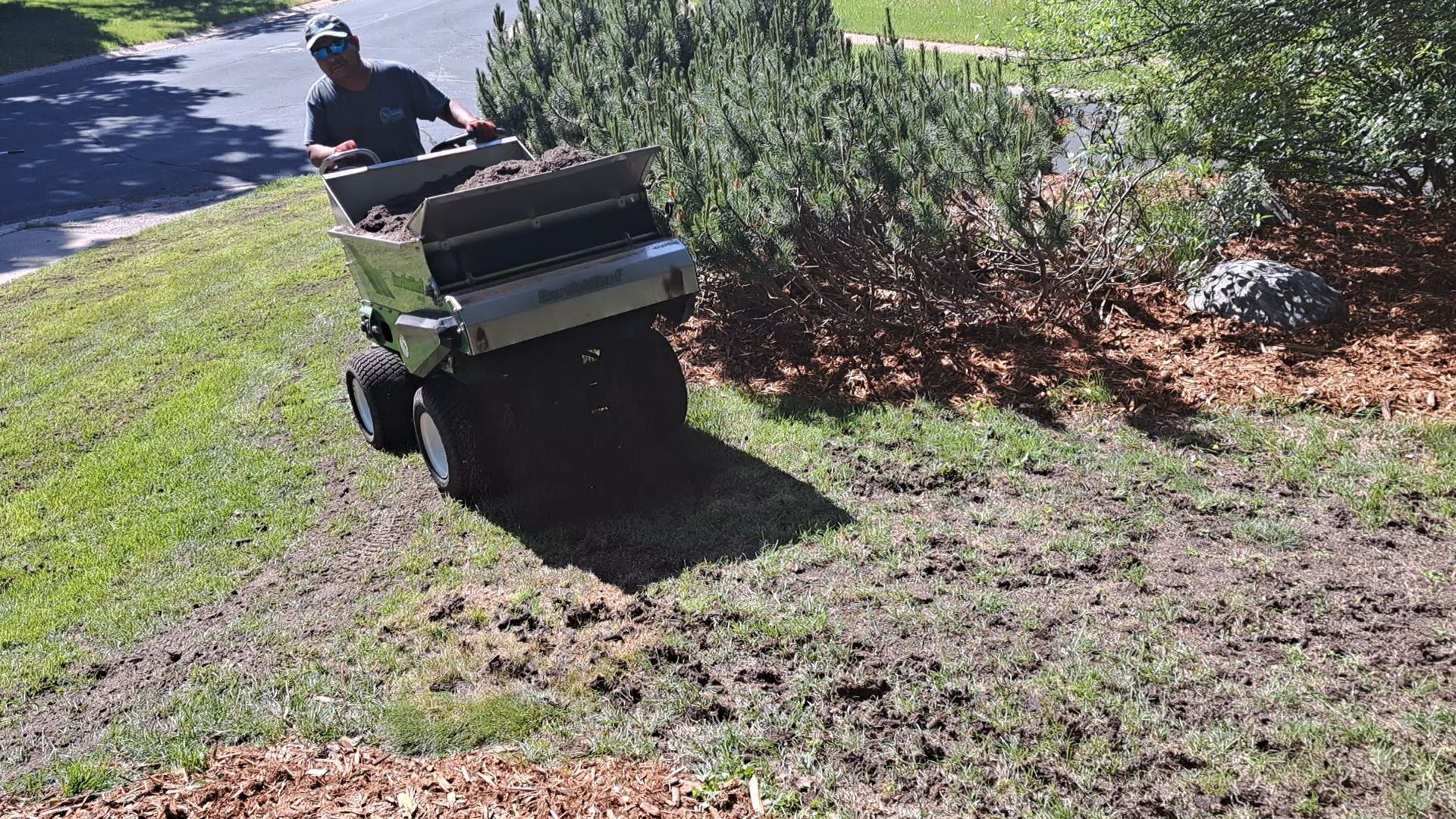
Clay soil doesn't percolate the way sandy soil does. When rain hits a sandy lawn, water moves through the soil profile and disperses. When rain hits clay, it soaks in slowly—and then just sits there. Whatever absorbs into clay takes forever to dry out. The surface can be graded perfectly, water can sheet away from the house exactly as designed, but the soil itself holds moisture like a sponge that never wrings out.
The symptom homeowners notice first: they can't mow for two or three days after a rain. The ground is too soft. Walk across it and you'll leave footprints. Try to mow and you'll leave ruts. This isn't a grading problem—it's a soil composition problem, and no amount of regrading will fix it.
Walkout basement properties are particularly affected. These lots are common in newer Orono developments and throughout the western suburbs. The builder grades the surface correctly, but the clay underneath doesn't care about surface pitch. Add irrigation to natural rainfall, and you've overwhelmed whatever drainage capacity the clay had.
French Drains vs. Drain Tile: What's the Difference?
Before choosing a solution, it helps to understand what each system actually does.
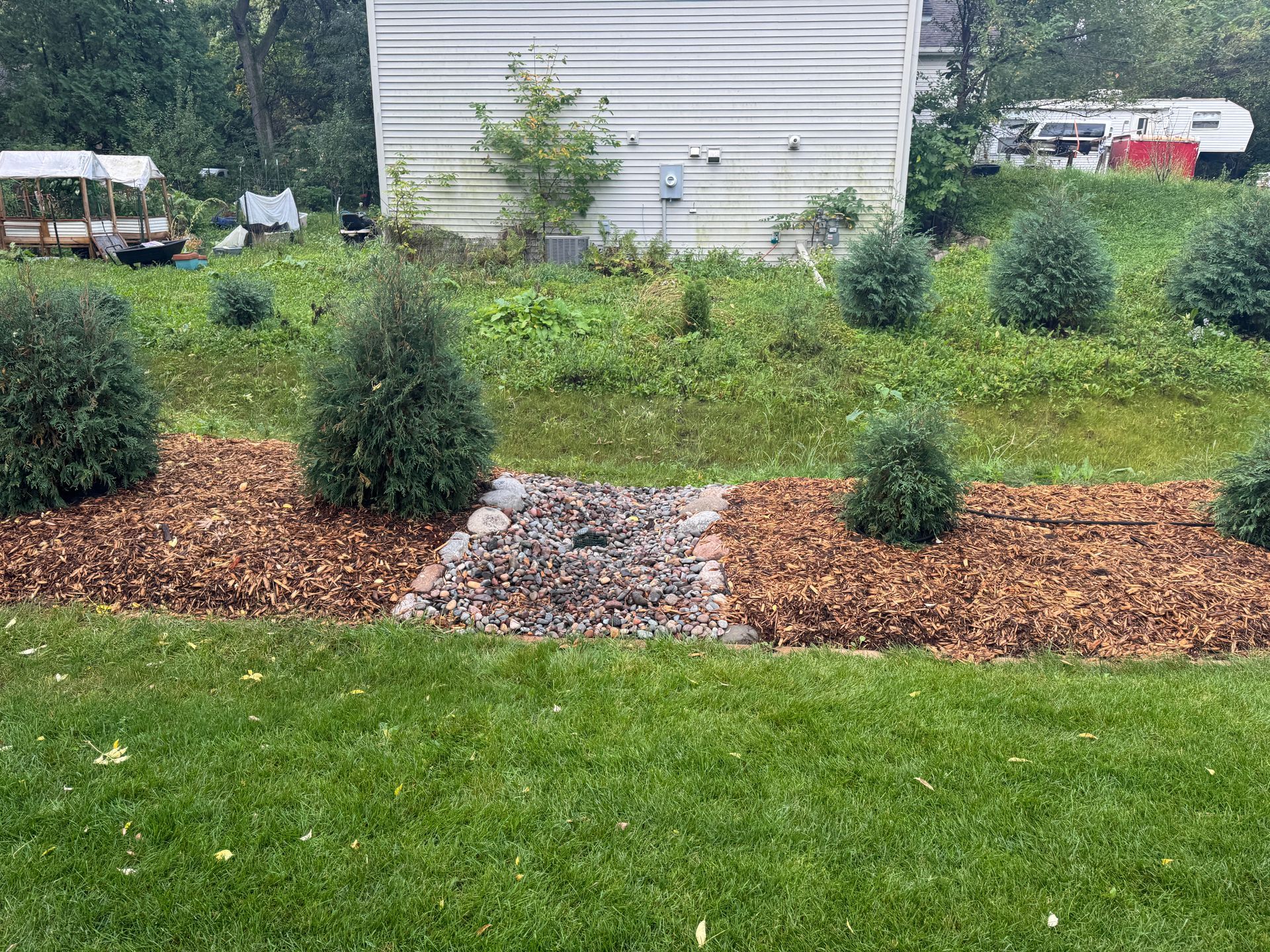
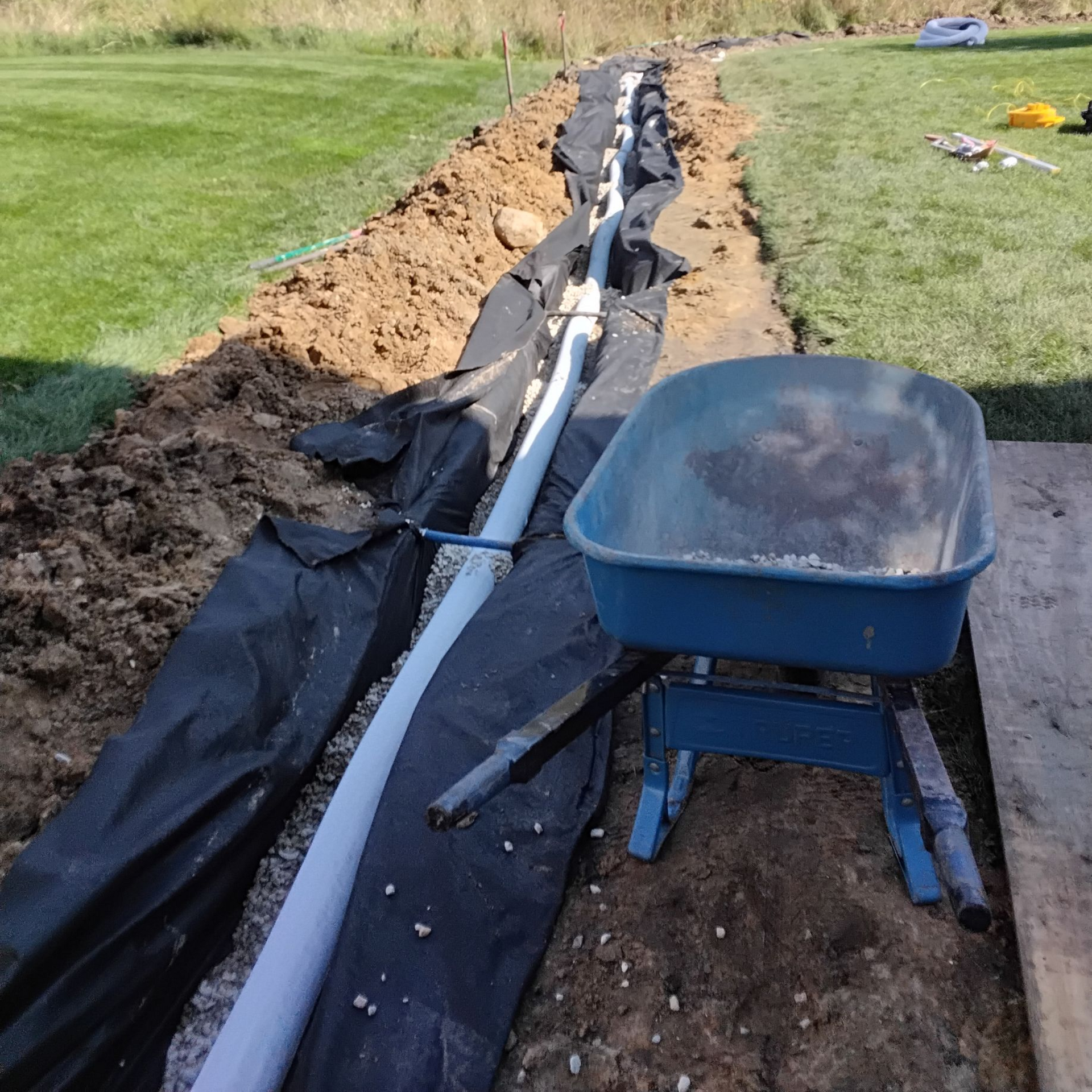
A French drain is a trench filled with gravel and a perforated pipe. It collects both surface water and shallow subsurface water, channeling it away from problem areas. French drains work well for intercepting water that's flowing toward a structure or pooling in a specific low spot.
Drain tile is a perforated pipe system installed below grade—typically deeper than a French drain—designed to actively pull groundwater out of saturated soil. Drain tile addresses the water that's already in the ground, not just what's flowing across the surface.
The distinction matters because they solve different problems. A French drain intercepts water movement. Drain tile removes water that's already saturating your soil. On clay properties, you often need drain tile because the problem isn't water flowing somewhere—it's water trapped in place.
Kent's Good-Better-Best Framework
When I assess a clay soil property to consider amendments , I think in terms of a hierarchy:
Good: Proper surface grading. This is baseline—soil sloped away from the house, six inches below the siding, with a six-inch drop in the first ten feet. Every property needs this, but on clay it's just the starting point.
Better: Underground downspouts that prevent roof water from ever reaching the lawn. A typical roof dumps thousands of gallons per rainstorm. If that water hits your clay lawn, you're adding to the saturation problem. Underground downspouts that extend all the way to the curb—not six feet from the house—keep that volume out of your soil entirely.
Best: Drain tile to actively remove water from clay that won't percolate on its own. This is the solution for properties where grading is correct, downspouts are handled, and the lawn still won't drain.
Most properties need some combination of all three. The hierarchy helps prioritize: fix grading issues first, manage roof runoff second, then add drain tile if the clay itself is the problem.
Pro Tip: Before investing in drain tile, verify your downspouts aren't part of the problem. I see properties where thousands of gallons of roof runoff dump directly onto the lawn every rain. Underground downspouts that extend to the curb—not just six feet from the house—can dramatically reduce how much water your clay soil has to handle. Sometimes that's enough. Sometimes it reveals that drain tile is definitely needed. Either way, you'll know.
When Mature Trees Destroy Your Drainage
Here's a problem I encounter regularly that rarely gets discussed: mature trees destroying drain tile systems that worked fine for years.
Tree roots don't respect drainage infrastructure. As trees grow, their root systems expand—and they're attracted to the moisture around drain tile. Over time, roots infiltrate the pipe, clog it, and eventually lift sections enough to reverse the pitch. Water that used to flow out starts pooling instead.
I've opened up drain tile systems near mature trees and found them completely entangled. There's no cleaning it out, no saving the existing pipe. It needs to be redone fresh and clean, rerouted outside the tree's root zone.
Silver maples are particularly problematic. Their aggressive root systems don't just infiltrate pipes—they lift the surrounding soil over time. I've seen side yard swales that used to direct water to the street get blocked entirely because silver maple roots raised the ground level. The drainage path that worked when the tree was young fails completely once the tree matures.
Working Around Tree Roots
The critical measurement is the tree's root zone: roughly two-thirds of the canopy diameter. If your drain tile runs through that zone, it's at risk.
Solutions involve either protecting new drainage from root intrusion—filtration fabric helps but isn't foolproof—or rerouting drain tile outside the critical root zone entirely. Sometimes neither option is practical, which leads to a harder conversation: is keeping this particular tree worth the ongoing drainage problems it creates?
That's not a question with a universal answer. But it's one worth asking before investing in drainage that a tree will destroy in ten years.

Why Drainage Projects Fail (And How to Prevent It)
The most common drainage failures I see aren't from choosing the wrong system. They're from installation shortcuts that compromise whatever system was chosen. To learn more about all of the different types of drainage solution options we provide, visit our Outdoor Drainage Solutions Page
Underground downspout mistakes:
The biggest one: terminating pipes too close to the house. Six feet from the foundation is not far enough. That water is still on your property, still saturating the soil near your foundation. Underground downspouts need to extend to the curb so water enters the street drainage system, or to a dry well or low point far enough from the house that it's no longer your problem.
Inadequate pitch is another failure point. Buried pipe needs consistent slope to drain. If sections settle or weren't pitched correctly during installation, water sits in the pipe instead of flowing out. I've seen downspout pipes that trapped water within feet of the foundation—worse than having no underground system at all.
Grading shortcuts:
The specifications aren't arbitrary. Soil should sit six inches below the bottom of your siding—that's the clearance needed to prevent moisture wicking into your wall assembly. You need a six-inch drop within the first ten feet from the foundation. Beyond that, a quarter-inch per foot slope continuing toward your drainage outlet.
These measurements require actual tools, not eyeballing. I've assessed properties where contractors swore the grading was correct, but when we measured, the pitch was half what it should be—or running the wrong direction in spots.
Pro Tip: When a contractor proposes drain tile, ask where the water goes. It has to outlet somewhere—to the street, a dry well, or a lower area of your property. If there's no clear answer for where collected water ends up, the system won't work. Water doesn't disappear; it just moves. Your job is to move it somewhere that isn't your problem.
University of Minnesota Extension offers technical guidance on drainage principles.
Matching the Solution to Your Situation
Every property is different, but the diagnostic questions are consistent:
If water pools near your foundation: Start with a grading assessment. This is the most fundamental issue and needs to be addressed regardless of what else you do.
If your lawn stays soggy but the foundation is dry: You likely need drain tile for the clay soil itself. The water isn't threatening your house, but it's making your yard unusable. This is the classic clay problem.
If drainage problems started after trees matured: Investigate root conflicts. An existing system may have been compromised, or trees may have altered surface drainage patterns by lifting soil.
If your downspouts dump onto the lawn: Address this first. Underground downspouts to the curb might solve your problem entirely—or at least clarify what else needs to happen.
The cost of wrong solutions adds up. I've seen homeowners install French drains where they needed drain tile, or add drain tile without fixing grading issues that continued to direct water toward the house. Each partial solution costs money without solving the problem. Assessment before installation isn't an extra expense—it's how you avoid paying twice.
Properties across Orono and the western suburbs share these clay soil challenges. The specific solution depends on your lot's conditions, tree placement, existing infrastructure, and where water can realistically outlet. What works for your neighbor may not work for you, even on the same street.
Frequently Asked Questions
How much does French drain installation cost in Orono?
Cost varies significantly based on the length of drain needed, depth of installation, soil conditions, and where water outlets. A short French drain intercepting water in one problem area costs far less than a comprehensive drain tile system for an entire yard. Rather than focusing on installation cost alone, consider the cost of not fixing it: foundation repairs, landscape replacement, years of an unusable lawn. The drainage investment is almost always smaller than the damage it prevents. For accurate pricing, assessment of your specific property conditions is essential.
How long does drain tile last in clay soil?
Properly installed drain tile can last decades—there's no inherent expiration date for the pipe itself. The main threat to longevity is tree roots. Systems installed near mature trees or in the path of growing trees may need replacement in ten to fifteen years as roots infiltrate and compromise the pipe. Systems installed outside root zones and with proper filtration fabric can function indefinitely with minimal maintenance. Annual inspection of outlet points and occasional flushing keeps systems performing.
Can I install a French drain myself?
For small, shallow projects in sandy soil, DIY is feasible. Clay soil complicates everything. Digging through clay is significantly harder than other soil types. Achieving proper pitch requires careful measurement and adjustment—harder to do in a trench you're standing in. And the consequences of getting it wrong are buried underground where you can't easily fix them. The most common DIY drainage failures I see involve inadequate pitch, improper outlet planning, and trenches that don't go deep enough. If you're dealing with clay and a serious drainage problem, professional installation typically costs less than doing it twice.
Why is my lawn still wet even though it's graded correctly?
This is the classic clay soil symptom. Surface grading controls where water flows—it doesn't control how fast water drains through soil. Clay soil has tiny particles packed tightly together, leaving minimal space for water to move through. Even with perfect surface pitch, water that soaks into clay just sits there. The two-to-three day drying time after rain is normal for clay, which is why drain tile becomes necessary. Drain tile actively removes water from the soil rather than waiting for it to percolate, which clay won't do efficiently.
Do I need a permit for drain tile installation in Orono?
Permit requirements depend on scope and outlet location. Drain tile that outlets onto your own property typically doesn't require permits. Systems that tie into city storm sewers or outlet into streets usually do. Larger projects that involve significant grading may trigger permit requirements regardless of outlet. The city of Orono's building department can clarify requirements for your specific project. Checking before starting avoids complications—and a good contractor will handle permit requirements as part of the project.
Getting Your Drainage Right
Clay soil properties need more than surface grading—that's the core reality homeowners across Orono and Minnesota's western suburbs face. The good news is that effective solutions exist. The key is matching the solution to your actual problem rather than guessing.
Start with the fundamentals: Is grading correct? Are downspouts managed? Then address what remains. For many clay properties, drain tile is the answer that finally lets the lawn dry out and the yard become usable again.
The framework is simple—good, better, best—but every property has specific conditions that affect which solutions make sense and where water can outlet. Trees, slope, existing infrastructure, and neighboring properties all factor in.
For homeowners ready to stop waiting three days after every rain to use their yard, the starting point is understanding what's actually happening on your property.
Schedule a drainage assessment to identify which solutions fit your situation and get a realistic plan for fixing clay soil drainage for good.
KG Landscape serves Orono, Plymouth, Maple Grove, Minnetonka, and communities across the Twin Cities western suburbs with drainage solutions designed for Minnesota's challenging clay soils.
Ready to Start on Your Next Project?
Call us at (763) 568-7251 or visit our quote page.